Tag: Tesco

  • Tesco’s profits drop by 51%

    Tesco’s profits drop by 51%

    Tesco recorded an increase in annual sales, but its earnings fell in half as it struggled with rising costs.

    While sales increased 7% to £66 billion, pre-tax earnings fell 51% to £1 billion as a result of “extraordinary” increases in supplier pricing, according to Tesco.

    The largest supermarket in the UK added that customers had “an absolutely challenging year” due to rising pricing.

    Tesco said that it has made an effort to shield customers from the full impact of rising food prices.

    The chief executive of the store, Ken Murphy, predicted that prices will increase through the first half of the year but then “moderate.” He continued by stating that he anticipated the declining sales volumes to “recover”.

    On Wednesday, Tesco said it had cut the price of its milk for the first time since May 2020, in a possible sign that price rises for a weekly shop could be starting to ease.

    As well as increases in the prices it pays suppliers, Tesco has also seen the cost of running the business – from higher energy bills to wages – climb.

    The sharp fall in pre-tax profits was mainly due to a big write-off in the value of its property portfolio. But Tesco’s operating profit also fell, dropping by 6.9% to £2.6bn.

    Analyst Sophie Lund-Yates at Hargreaves Lansdown said the dent to profits showed the effects of grocery inflation being one of the most “painful” areas of overall rising costs for consumers.

    “That’s where we’ve seen the rise of the discounters, which although much smaller, have forced the main players to up their game,” she added.

    Sue Davies, head of food policy at consumer body Which?, said the results showed Tesco was “doing very well” while the cost of living crisis is causing many of its customers to struggle.

    “It’s clear that Tesco and all the major supermarkets could be working harder to make food more affordable for customers who need help,” she said.

    In January, Tesco chairman John Allan said some food firms may have been using inflation as an excuse to hike prices further than necessary and that the retailer was trying to combat this. Last year, Tesco temporarily removed some Heinz products in a row over pricing.

    However, food suppliers hit back at Mr Allan, with the Food and Drink Federation called his comments “difficult” and adding that suppliers had seen a “massive” rise in their costs.
  • Tesco: More than 2,000 jobs set to go due to store changes

    Tesco: More than 2,000 jobs set to go due to store changes


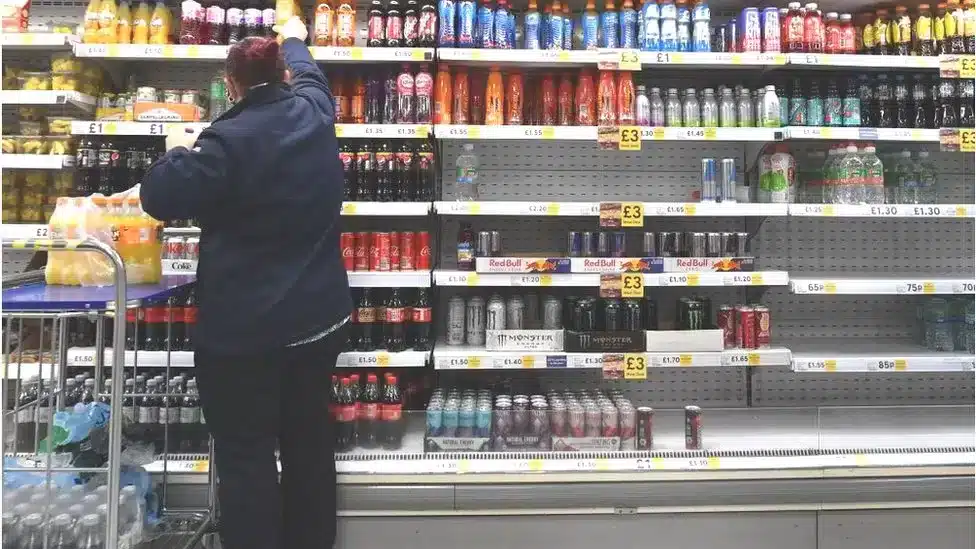
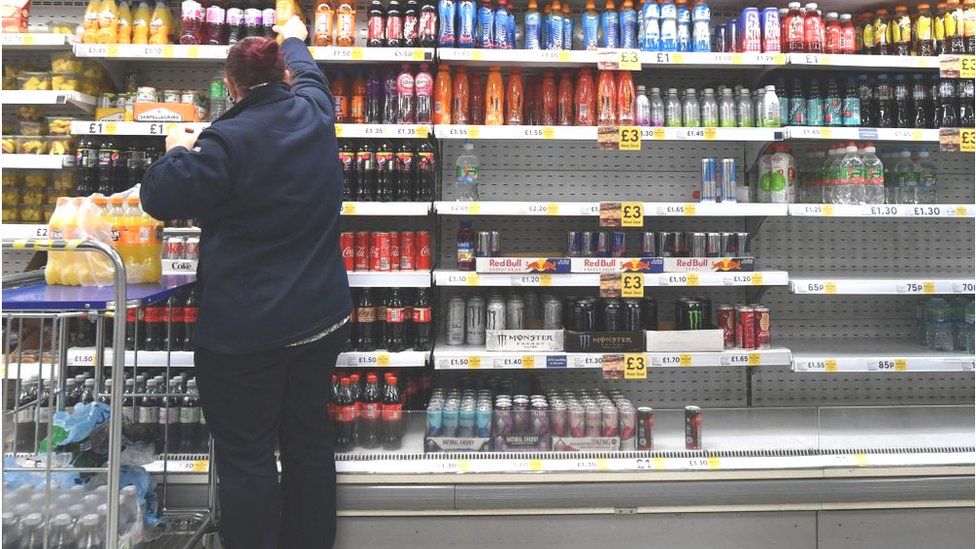
    A shop worker

    More than 2,000 roles are at risk at Tesco as it announces more changes to the way it runs its supermarkets.

    The grocer said it was planning to cut 1,750 team manager posts across hundreds of its larger stores, while closing roles elsewhere.

    A new tier of 1,800 lower paid shift leader positions will take over running its shop floors.

    Tesco also announced it will close its counters and hot delis, with staff offered alternative jobs elsewhere.

    Britain’s largest supermarket said the axing of its counter and delis from 26 February were due to lack of demand from customers. It is also closing eight pharmacies, moving overnight roles to daytime in 12 stores and reducing hours within some post offices.

    The company said team managers who take new shift leader positions will have their pay protected for two years.

    Similar changes have already happened at Tesco’s smaller stores, but the grocer is now implementing them at its larger superstores and Tesco Extra shops.

    Daniel Adams, national officer of the Usdaw union, which represents Tesco workers, said the announcement would be “especially difficult” for staff in the midst of the rising cost of living.

    “We will be doing all we can to support members throughout the process with a view to protecting jobs and, where this is not possible, securing the best possible deal for those affected,” he said.

    Jason Tarry, Tesco’s UK and Ireland boss, said the decisions were “difficult”, but added they were “necessary to ensure we remain focused on delivering value for our customers wherever we can, as well as ensuring our store offer reflects what our customers value the most”.

    “Our priority is to support those colleagues impacted and help find alternative roles within our business from the vacancies and newly created roles we have available,” he said.

    Alongside the planned team manager cuts, a further 350 jobs are at risk in a series of other changes at the company.

    It is also cutting some jobs at its head office as well as closing its Maintenance National Operating Centre in Milton Keynes.

    Tesco said it was now entering a consultation period with the Usdaw union on the proposals and pointed out that it currently has about 2,000 vacancies across the business.

    Bigger supermarkets are having to become more efficient and make savings as they face competition from discounters Aldi and Lidl.

    Last week, Asda, Britain’s third largest grocer, said it planned to remove 211 night shift managers and change the hours of 4,137 workers.

    It followed similar changes to night time working at Sainsbury’s and Tesco.

    Source: BBC

  • Tesco ‘inflating prices a little bit less and a little bit later’ than the competition

    The company warns its annual profits will be at the lower end of expectations as it invests in its prices and staff in a bid to bolster its defences against the challenge posed by discount rivals.

    The boss of the UK’s biggest retailer says it is “inflating prices a little bit less and a little bit later” than the competition as families’ budgets are squeezed.

    Tesco chief executive Ken Murphy made the claim as the chain revealed first-half profits that reflected, it said, its decision to maintain the best value possible for the customer as the cost of goods spiked amid the cost of living crisis.

    Underlying retail operating profits fell 10%, the company said, to £1.25bn for the six months to 27 August.

    It warned that, as a result of “significant” inflation pressures and consumer caution, annual profits would likely be at the lower end of its earlier guidance of between £2.4bn and £2.5bn by the same measure.

    It reported that shoppers were trading down to own label products and frozen food, and buying fewer non-food products.

    Tesco said contributing to that profit guidance too was a decision to freeze prices on more than 1,000 everyday goods.

    It also revealed a second pay rise of the year for its staff amid pressure from unions which had declared that the UK’s grocery market leader had slipped behind rivals.

    Shopworkers’ union Usdaw said that Tesco’s hourly-paid retail and customer fulfillment center staff would receive an additional 20p per hour increase from 13 November, taking the base rate from £10.10 to £10.30 per hour.

    This was on top of an increase in July of 5.8%, taking the overall increase this year to 7.85%, it said while welcoming the move.

    Tesco, like Sainsbury’s, Asda, and Morrisons, has been battling since the financial crisis a challenge to their dominance from discounters Aldi and Lidl.

    Industry data from Kantar Worldpanel last month showed Aldi had overtaken Morrisons as the fourth largest chain by market share.

    Tesco recorded UK like-for-like sales growth of 0.7% over the six months – recovering from a 1.5% decline in the first quarter – potentially reflecting a greater desire by shoppers to rein in their spending outside the home as energy and other costs surge.

    Mr Murphy told investors: “We know our customers are facing a tough time and watching every penny to make ends meet.

    “That’s why we’re working relentlessly to keep the cost of the weekly shop as affordable as possible, with our powerful combination of Aldi Price Match, Low Everyday Prices and Clubcard Prices, together covering more than 8,000 products, week in, week out.”

    “By staying laser-focused on value and sticking to our strategy of inflating a little bit less and a little bit later, our price position has got even more competitive,” he added.

    Shares – down by more than a quarter in the year to date – fell by 1.5% at the market open.

  • Queen’s funeral: Shops, pubs and schools: What’s closed (and what’s open)

    Since Monday has been designated a bank holiday, many companies will be closed and many doctor appointments have been rescheduled.

    Numerous stores, theatres, and educational institutions will be closed on Monday in observance of the Queen’s funeral.

    A number of pub groups have said they will keep venues open during the day, with Stonegate saying it plans to show the Queen’s funeral on screens when it starts at 11 am.

    A massive security operation will be in place during the funeral, and transport will be disrupted across the capital, with TFL saying it would be the “biggest event and challenge” in its history.

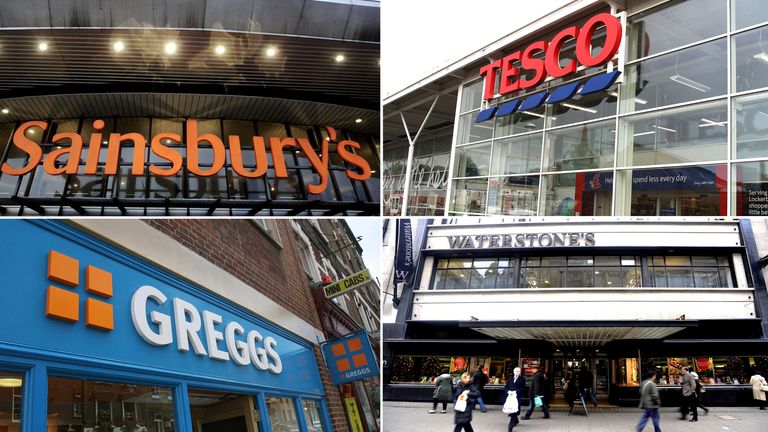
    4-way comp of Tesco, Sainsbury’s, Gregg’s and Waterstones

    Some of the biggest retailers will be closed or partially closed, so workers can pay tribute to the Queen.

    Tesco, Sainsbury’s, Morrisons, Lidl, and Aldi were among those closing their supermarket stores for the day.

    “We want to express our deepest condolences to the royal family, as well as our gratitude to Her Majesty the Queen for her unwavering service,” said Tesco’s UK chief executive Jason Tarry.

    Tesco said it would open its Express convenience stores from 5 pm, while a small number of convenience stores in central London and Windsor will remain open.

    Other retailers including Sainsbury’s also said convenience stores and petrol stations will open from 5 pm.

    Asda said it will shut its stores for the funeral, but all its supermarkets will open from 5 pm, with colleagues working on Monday evening to receive double pay.

    Retailers including Primark and Marks & Spencer and cinema chains such as Cineworld and Odeon will shut for the day.

    Waterstones said it would close all its bookstores.

    McDonald’s restaurants will be closed from midnight until 5 pm, while Greggs said almost all of its outlets would be shut.

    What stays open

    Downing Street has indicated it would be up to individual businesses to decide whether to be open or shut.

    The Prime Minister’s spokesman said the day of the funeral will operate as “a standard bank holiday”.

    “Obviously individual businesses will need to make the decisions about what’s right for them and discuss with their employees but there is obviously no one-size-fits-all approach.”

    Among businesses choosing to stay open are Premier Inn hotels.

    JD Wetherspoon said pubs in central London, railway stations and airports would open from 8am on Monday, while most of its pubs will only open from about 1pm, after the funeral takes place.