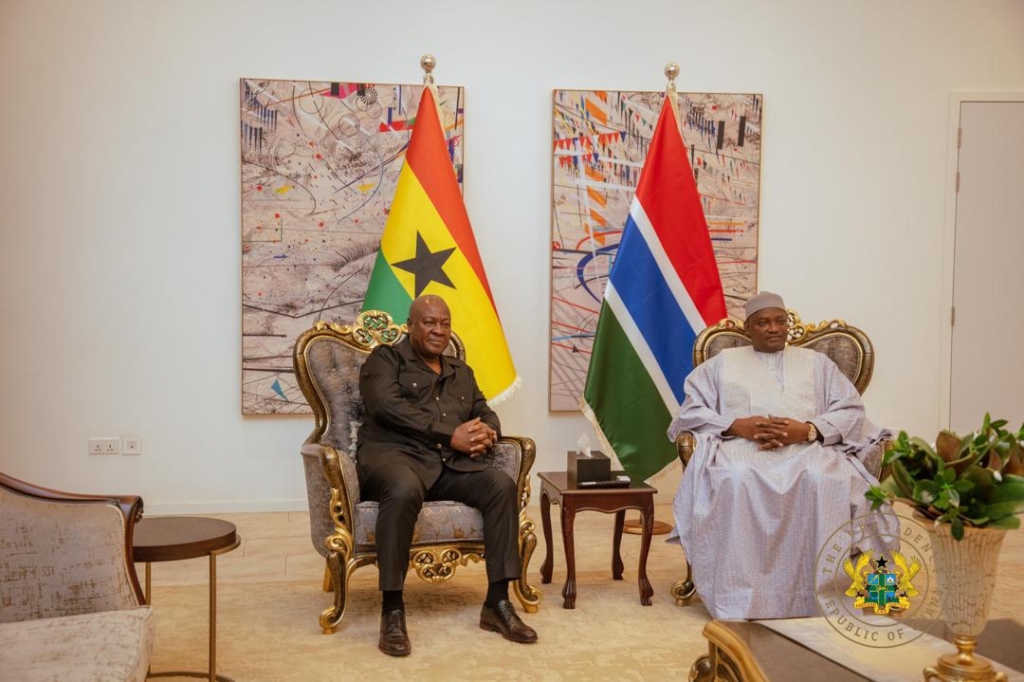
President John Dramani Mahama has arrived in Banjul, The Gambia, as part of a diplomatic tour to The Gambia and Senegal aimed at strengthening Ghana’s ties with its West African neighbours.
The visit serves as a gesture of gratitude to the leaders of both countries for attending Ghana’s presidential inauguration on January 7.
President Mahama’s meetings with his counterparts also emphasize his commitment to reinforcing regional cooperation and diplomatic relations within the sub-region.
After concluding his engagements in The Gambia, President Mahama will continue his tour in Senegal before returning to Ghana later today, Friday, January 17.
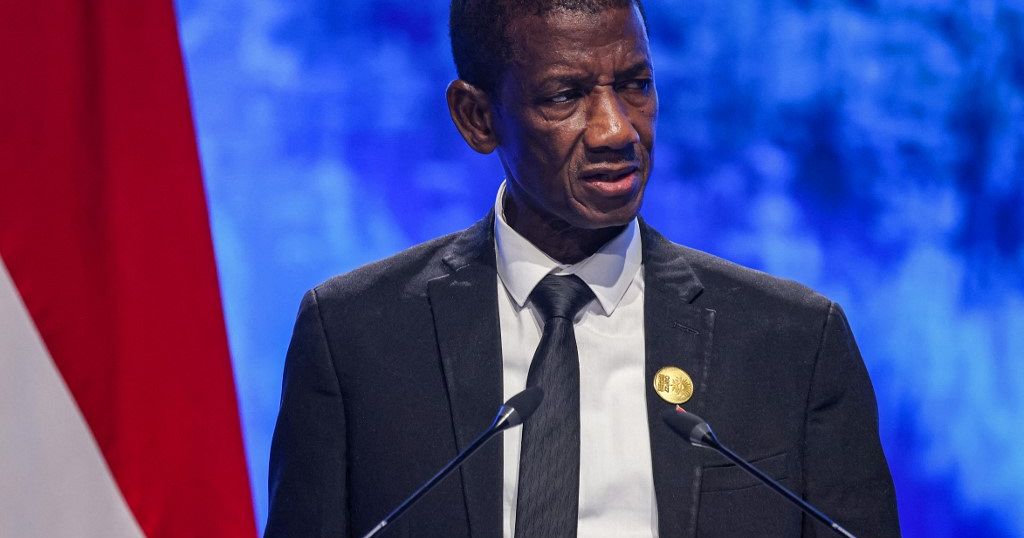
President Adama Barrow’s administration has appointed Muhammad Jallow as The Gambia’s fifth vice-president.
He succeeds Alieu Badara Joof, 65, who passed away in India while seeking medical attention.
The late Vice-President Badara Alieu Joof
Vice President Jallow is a seasoned civil servant who has held positions in a number of ministries before becoming secretary general and chief of the civil service in 2020.
As The Gambia’s deputy executive secretary, Mr. Jallow also served in the Senegalo-Gambia Secretariat.
Interpol has issued a “red notice” for foreign nations to arrest a military officer accused of plotting to overthrow the government in The Gambia last month, according to local officials.
The “red notice” issued to Lamin Jadama, a low-ranking Gambian officer, means that eight officers have now been identified as suspects in the alleged coup plot.
According to Gambian officials, he is a fugitive from justice, and anyone caught assisting or conspiring with him will face legal consequences.
Seven of the accused have been arrested, including the alleged ringleader, Lance Corporal Sana Fadera.
They appeared in the High Court in the capital, Banjul, on charges of treason and conspiracy to commit felony.
Two civilians and a police officer were also in court on charges of treason and concealment of treason.
The accused were expected to file a plea, but this did not happen.
Instead, the case was postponed as the state did not file its indictment and two of the accused soldiers did not have legal representation
Justice Basiru Mahoney ordered the state to file the indictment by 23 January. He also ordered the two unrepresented soldiers to get lawyers or for the state to provide them with legal aid.
The three men were accused of conspiring to commit a crime and concealing treason. They dispute the accusations.
They have been accused of plotting and concealing information about the attempted overthrow of President Adama Barrow in October and December 2022 in Banjul, the nation’s capital, and other locations.
They were also accused of failing to alert the appropriate authorities after learning of a plot to remove President Barrow from office from the alleged ringleader.
Last week, a national security adviser said civilians were involved with their role being to finance the alleged foiled coup.
In December, the government said it had thwarted an attempt to stage a coup and arrested some soldiers.
This is the first time the accused people have been taken to court. The military personnel will be taken to a court martial.
A parliamentary committee in The Gambia has recommended legal action against the Indian company that makes cough syrups, which is thought to be responsible for at least 70 child fatalities there.
For exporting what it called tainted drugs, it claimed Maiden Pharmaceuticals should be held liable.
In October, the WHO issued a warning urging authorities to halt the sale of the syrups.
Government labs in India said their tests on the syrups found that they were “complying with specifications”. An Indian official said last week that the WHO was “presumptuous” in blaming the syrups.
But the global health body told the BBC it was only following its mandate and “stands by the action taken”.
After weeks of investigation, the Gambian parliamentary committee has now recommended that authorities should take tough measures, including banning all Maiden Pharmaceuticals products in the country and taking legal action against the firm.
The committee said it “is convinced that Maiden Pharmaceuticals [is] culpable and should be held accountable for exporting the contaminated medicines”.
“The findings remain the same with the previous reports which indicates that Promethazine Oral Solution, Kofexmalin Baby Cough Syrup, Makoff Baby Cough Syrup and Magrip N Cold Syrup were contaminated with diethylene glycol and ethylene glycol,” the parliamentary committee said in its report.
Diethylene glycol and ethylene glycol are toxic to humans and could be fatal if consumed. But the panel added that the exact scientific cause of the children’s deaths was still under investigation.
The committee also wanted the country’s Medicine Control Agency to ensure all medicines imported into the country are properly registered and background checks conducted on manufacturers – including visiting their facilities.
The report also revealed inadequacies in the country’s healthcare system urging the government to strengthen it and provide better equipment and medicines to the country’s hospitals.
What happened?
In late July, The Gambia detected an increase in cases of acute kidney injury among children under the age of five. The government later said around 69 children had died from these injuries.
The WHO then identified four of the Maiden Pharmaceuticals’ medicines as potentially linked to the deaths of the Gambian children and issued a global alert.
After the news broke in October, India said that it was investigating the products and ordered Maiden Pharmaceuticals to stop production at its main factory in the northern state of Haryana.
On 13 December, Dr VG Somani, India’s drugs controller general, wrote a letter to the WHO saying that the samples it tested at a government laboratory “were found not to have been contaminated” with the compounds.
“As per the test reports received from [the] government laboratory, all the control samples of the four products have been found to be complying with specifications,” he added.
The test results are being further examined by a panel of Indian experts.
A senior adviser to India’s information and broadcasting ministry told the BBC last week that the WHO had been “presumptuous” in blaming the cough syrups for the deaths of the children.
“Subsequent inspections, tests and studies by Government of India’s notified bodies and technical team have shown that WHO’s presumptuous statement was untrue and incorrect,” said Kanchan Gupta, adding that the health body had “[jumped] the gun without valid scientific reasons”.
India produces a third of the world’s medicines, mostly in the form of generic drugs.
Home to some of the fastest growing pharmaceutical companies, the country is known as the “world’s pharmacy” and meets much of the medical needs of African nations.
A parliamentary committee in The Gambiahas recommended legal action against the Indian company that makes cough syrups, which is thought to be responsible for at least 70 child fatalities there.
For exporting what it called contaminated medicine, it claimed Maiden Pharmaceuticals should be held accountable.
In October, the WHO issued a warning urging authorities to halt the sale of the syrups.
The accusations had been refuted by Maiden Pharmaceuticals.
Government laboratories in India claimed that the syrups “complying with specifications” after testing them. Last week, an Indian official criticised the WHO for being “presumptuous” in blaming the syrups.
But the global health body told the BBC it was only following its mandate and “stands by the action taken”.
After weeks of investigation, the Gambian parliamentary committee has now recommended that authorities should take tough measures, including banning all Maiden Pharmaceuticals products in the country and taking legal action against the firm.
The committee said it “is convinced that Maiden Pharmaceuticals [is] culpable and should be held accountable for exporting the contaminated medicines”.
“The findings remain the same with the previous reports which indicates that Promethazine Oral Solution, Kofexmalin Baby Cough Syrup, Makoff Baby Cough Syrup and Magrip N Cold Syrup were contaminated with diethylene glycol and ethylene glycol,” the parliamentary committee said in its report.
Diethylene glycol and ethylene glycol are toxic to humans and could be fatal if consumed. But the panel added that the exact scientific cause of the children’s deaths was still under investigation.
The committee also wanted the country’s Medicine Control Agencyto ensure all medicines imported into the country are properly registered and background checks conducted on manufacturers – including visiting their facilities.
The report also revealed inadequacies in the country’s healthcare system urging the government to strengthen it and provide better equipment and medicines to the country’s hospitals.
What happened?
In late July, The Gambia detected an increase in cases of acute kidney injury among children under the age of five. The government later said around 69 children had died from these injuries.
The WHO then identified four of the Maiden Pharmaceuticals’ medicines as potentially linked to the deaths of the Gambian children and issued a global alert.
After the news broke in October, India said that it was investigating the products and ordered Maiden Pharmaceuticals to stop production at its main factory in the northern state of Haryana.
On 13 December, Dr VG Somani, India’s drugs controller general, wrote a letter to the WHO saying that the samples it tested at a government laboratory “were found not to have been contaminated” with the compounds.
“As per the test reports received from [the] government laboratory, all the control samples of the four products have been found to be complying with specifications,” he added.
The test results are being further examined by a panel of Indian experts.
A senior adviser to India’s information and broadcasting ministry told the BBC last week that the WHO had been “presumptuous” in blaming the cough syrups for the deaths of the children.
“Subsequent inspections, tests and studies by Government of India’s notified bodies and technical team have shown that WHO’s presumptuous statement was untrue and incorrect,” said Kanchan Gupta, adding that the health body had “[jumped] the gun without valid scientific reasons”.
India produces a third of the world’s medicines, mostly in the form of generic drugs.
Home to some of the fastest growing pharmaceutical companies, the country is known as the “world’s pharmacy” and meets much of the medical needs of African nations.
After India claimed that four cough syrups linked to child deaths in TheGambia passed inspection in-home tests, the WHO reaffirmed its decision to take action.
In October, the WHO issued a warning, advising authorities to halt sales of the syrups, which were produced by an Indian company.
According to a representative of the Indian government, the WHO’s accusation of the syrups was “presumptuous.”
But the health organisation claimed that it was only carrying out its mandate.
“WHO’s mandate is to issue global alerts about potential risks. WHO stands by the action taken,” an official told the BBC over email.
The health body added that the “contaminated syrups are dangerous and should not be in any medicine, ever”.
In late July, medical authorities in The Gambia detected an increase in cases of acute kidney injury among children under the age of five. The government later said around 69 children had died from these injuries.
In October, the WHO said these deaths may be linked to the four cough syrups made by Maiden Pharmaceuticals, an Indian company.
The WHO said it had tested samples of the syrups – Promethazine Oral Solution, Kofexmalin Baby Cough Syrup, Makoff Baby Cough Syrup and Magrip N Cold Syrup – and found that they contained “unacceptable amounts of diethylene glycol and ethylene glycol as contaminants”.
Diethylene glycol and ethylene glycol are toxic to humans and could be fatal if consumed.
India then said that it was investigating the products and ordered Maiden Pharmaceuticals to stop production at its main factory in the northern state of Haryana.
On 13 December, Dr VG Somani, India’s drugs controller general, wrote a letter to the WHO saying that the samples it tested at a government laboratory “were found not to have been contaminated” with the compounds.
“As per the test reports received from [the] government laboratory, all the control samples of the four products have been found to be complying with specifications,” he added.
The test results are being further examined by a panel of Indian experts.
A senior adviser to India’s information and broadcasting ministry told the BBC that the WHO had been “presumptuous” in blaming the cough syrups for the deaths of the children.
“Subsequent inspections, tests and studies by Government of India’s notified bodies and technical team have shown that WHO’s presumptuous statement was untrue and incorrect,” said Kanchan Gupta, adding that the health body had “[jumped] the gun without valid scientific reasons”.
“When many children die of mysterious sickness, it’s a tragedy that means WHO had to act quickly,” the agency told the BBC.
“WHO-contracted laboratories in Ghana and Switzerland tested the suspected cough syrups products from The Gambia and confirmed excess levels of ethylene glycol and diethylene glycol,” it said, adding that it immediately shared the results with authorities in The Gambia and India, as well as with Maiden Pharmaceutical officials.
In his letter, Dr Somani also said that the panel had requested “specific information” from the WHO on “further details essential to establish the causality” but had not received this yet. The letter did not specify what information the committee had asked for.
When contacted, Dr Somani’s office asked the BBC to get in touch with India’s health ministry. The BBC has emailed the ministry for comment.
India produces a third of the world’s medicines, mostly in the form of generic drugs.
Home to some of the fastest growing pharmaceutical companies, the country is known as the “world’s pharmacy” and meets much of the medical needs of African nations.
Dr Somani said in the letter that the WHO’s statement, which was “amplified by the global media”, had damaged the reputation of the Indian pharmaceutical industry.
Indian health officials have ordered a maker of cough syrups to halt production after they were linked to the deaths of children in The Gambia.
Maiden Pharmaceuticals broke rules “across its manufacturing and testing activities,” Indian regulators found.
The World Health Organization (WHO) issued a global alert over four of Maiden’s cough syrups linked to the deaths of almost 70 children.
Investigations are currently under way in India and The Gambia.
Regulators said that they had suspended all manufacturing activities at the New Delhi-based firm after finding it had broken a number of safety rules.
This was “in view of the seriousness of the contraventions observed during the investigation and its potential risk to the quality, safety and efficacy of the drug being produced,” they added.
Maiden did not immediately respond to a request for comment from the BBC.
Last week, the company said it was “shocked to hear media reports regarding the deaths and deeply saddened by this incident”.
This came after the WHO issued a global alert over four of Maiden’s cough syrups, warning that they could be linked to acute kidney injuries and the children’s deaths in July, August and September.
The global health organisation also warned the products “may have been distributed, through informal markets, to other countries and regions” besides The Gambia.
The medicines were identified as Promethazine Oral Solution, Kofexmalin Baby Cough Syrup, Makoff Baby Cough Syrup and Magrip N Cold Syrup.
Police in The Gambia are investigating the deaths of the children, as Gambians demand justice.
In a preliminary report released on Tuesday, police in The Gambia said the cough syrups were imported to the West African country by a US-based company.
The report also said that the majority of the 50,000 bottles of the contaminated syrups that were imported into the country had now been seized.
Police in The Gambiahave started an investigation into the deaths of 66 children, which have been linked to four brands of imported cough syrup.
Senior officials from the Medicine Control Agency and the importers have been called for questioning, the president’s office said.
President Adama Barrow said that the authorities would “leave no stone unturned” in the investigation.
Gambians, angry about what happened, are wondering who is to blame.
On Wednesday, the World Health Organization (WHO) issued a global alert over the four cough syrups – warning they could be linked to acute kidney injuries and the children’s deaths in July, August and September.
Bereaved parents have told the BBC how their children stopped being able to pass urine after being given the syrups. As their condition worsened, efforts to save their lives were fruitless.
The products – Promethazine Oral Solution, Kofexmalin Baby Cough Syrup, Makoff Baby Cough Syrup and Magrip N Cold Syrup – were manufactured by an Indian company, Maiden Pharmaceuticals, which had failed to provide guarantees about their safety, the WHO said.
The Indian government is also investigating the situation. The firm has not responded to a BBC request for comment.
Gambian health officials and Red Cross workers are now going door-to-door, as well as to pharmacies and markets, searching for the syrups as well as other medicines.
More than 16,000 products have been located so far and have been taken away for destruction, a Red Cross official told the BBC.
On Friday, President Barrow addressed the nation, expressing his regret for the loss of life saying that “the source of the contaminated drugs” would be investigated.
He announced plans to open a laboratory capable of testing whether medicines are safe and a review of relevant laws and guidelines for imported drugs.
He also said that “the child mortality figure of 66 is not at much variance with the recorded data for similar periods in the past”, which left some wondering whether the authorities thought that these deaths were unusual.
The president followed this up on Saturday evening with a more robust statement, suspending the licence of the suspected importer and announcing the police investigation.
Some of the parents who lost their children have told the BBC that they are considering taking legal action of their own against the authorities.