Customs Division of theGhana Revenue Authority (GRA) has successfully seized a substantial quantity of illicit tobacco products that were unlawfully smuggled into Ghana through unapproved border routes.
This action is a crucial step in our continued commitment to tackle the smuggling, importation, and sale of illicit tobacco products, which have been infiltrating the Ghanaian markets.
All the confiscated products had been illicitly brought into Ghanaian territory. Contravening the Public Health Act, 2012, Act 851, and the Tobacco Control Regulations (TCR), 2016 (L.I. 2247). Section 16 of the TCR states that “a person shall not manufacture, import, export, supply, possess, or offer for sale an illicit tobacco or tobacco product.’”
Furthermore, Section 15 of the Regulations stipulates that “a person shall not manufacture, import, or sell a tobacco or tobacco product unless the product is registered by the Authority,” in this case, the FDA.
The following brands were among the seized products: Oris Double Apple, Business Royals, Gold Seal, Bon, Yes, and Business Kings. Regrettably, none of these brands meet the standard requirements mandated by the laws of Ghana, including graphic health warnings, the “For Sale in Ghana” inscription, and Ghana Tax Stamps.
The investigations into this illicit trade are ongoing, and our commitment remains steadfast to identify and apprehend those responsible. Close collaboration with relevant government agencies will be maintained to ensure the arrest, prosecution, and appropriate sanctions for individuals involved.
Furthermore, all seized products will undergo destruction following legal protocols.
The street value of the confiscated items is Seven Million, Nine Hundred and Fifty-One Thousand, Two Hundred and Thirty-Eight Ghana Cedis, Thirty-Nine Pesewas (GH¢7,951,238.39).
Tobacco-related illnesses impose an annual economic burden of GHC 668 million, equivalent to 2 percent of the country’s Gross Domestic Product (GDP), according to Dr. Alex Kombat, Senior Revenue Officer of the Ghana Revenue Authority (GRA).
He noted that they also constitute three percent of all fatalities in the country.
“Generally, people continue to consume these harmful products because they are addictive and not expensive enough,” Dr Kombat said.
Dr. Kombat highlighted the government’s recognition of the necessity to impose taxes on tobacco products, aiming to raise their prices and discourage excessive consumption.
He noted that taxes have been a policy tool, including excise taxes, customs duties, value-added tax, and the National Health Insurance Levy, to deter tobacco consumption. Despite these measures, industry interference has posed challenges.
Dr. Kombat emphasized the importance of implementing tax policies to align with Article Six of the WHO Framework Convention on Tobacco Control, aiming to reduce tobacco consumption and generate revenue.
The ECOWAS directive on harmonizing excise duties on tobacco products, which includes ad-valorem and specific duties, faced industry resistance despite efforts by organizations like VALD-Ghana. Bills addressing this issue were submitted to Parliament in December 2022, though they were not passed.
“VALD kept pushing with several press conferences which eventually saw the passing of the excise duty amendment bill into law on March 31, 2023, as an Excise Duty (Amendment) Act 2023 (Act 1093) to amend the Principal Excise Duty Act 2014 (Act 878) to replace the first schedule,” Dr Kombat stated.
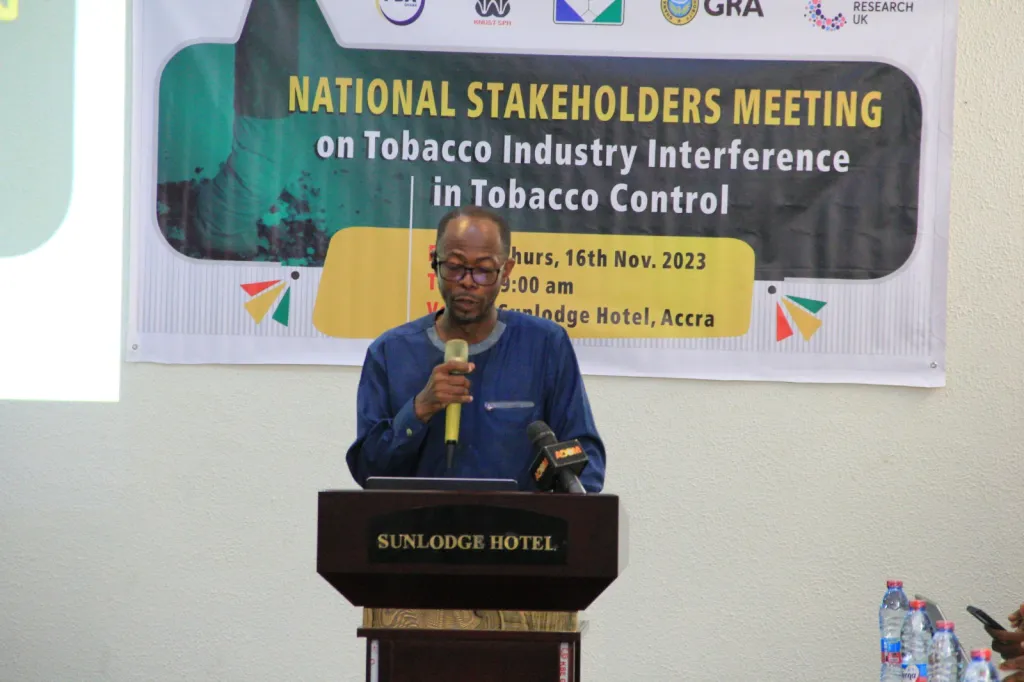
The report indicates a decrease in interference from 58% to 56% in public health policies between 2020 and 2021. Its purpose is to support the health sector in combating interference from the tobacco industry in public health policies. The report aligns with the WHO Framework Convention on Tobacco Control Article 5.3 and its guidelines.
Mr. Labram Musah, the Executive Director of Programmes of VALD-Ghana, emphasized that the Tobacco Industry Interference Index (TIII) serves as a crucial assessment tool, meticulously designed to scrutinize and quantify various forms of interference by the tobacco industry in public health policymaking. The objective is to monitor and evaluate industry tactics and ensure transparency in decision-making processes.
“The TII scrutinizes a range of indicators to assess industry interference, including Industry participation in policy development, corporate social responsibility (CSR) activities, benefits to the tobacco industry, unnecessary interactions with the tobacco industry, transparency, conflict of Interest, and preventive measures,” he pointed out.
The report highlights that tobacco control regulations in Ghana lack explicit provisions to counter the interference of the tobacco industry in policy development. Additionally, it points out a delay by the Ministry of Health in developing a code of conduct, which is crucial for providing clear guidelines to public officials in their interactions with the tobacco industry.
Furthermore, the report identifies instances of interference, such as the invitation of the Harm Reduction Alliance—a tobacco industry-affiliated organization—to participate in stakeholders’ engagement on the Narcotics Control Bill after submitting a memorandum to the Chairman of the Committee on Defence and Interior of Parliament.
The Executive Director of the Economic and Organized Crime Office (EOCO), COP Maame Yaa Tiwaa Addo-Danquah, has reaffirmed her agency’s commitment to collaborating with other organizations to ensure strict compliance with tobacco trade laws.
She emphasized that the illicit tobacco trade presents a significant challenge, as it can facilitate various criminal economic activities.
COP Addo-Danquah made these remarks during a meeting on Monday, September 18, 2023, when a delegation comprising officials from the World Health Organization (WHO) Framework Convention on Tobacco Control Secretariat (FCTC) in Geneva, Switzerland, and representatives from the Food and Drugs Authority (FDA) engaged with EOCO officials.
The discussions revolved around adopting law enforcement strategies in Ghana’s efforts to combat illicit tobacco trade and address the associated challenges.
Olivia Agyekumwaa Boateng, the Head of the Tobacco and Substance Abuse Department at the Food and Drugs Authority (FDA) and a member of the delegation, revealed that the FDA is conducting a needs assessment to gauge the extent of illicit trade and develop regulatory measures to address it effectively.
Various speakers at the meeting emphasized the dangers posed by illicit tobacco trade and underscored the importance of collaborative efforts among all stakeholders in combating this menace.
Andrew Black, the Coordinator and Development Assistant of FCTC, emphasized that despite the lucrative nature of illicit tobacco trade, it poses a significant global problem with substantial risks involved.
Dr. William Maina, the Technical Coordinator for Tobacco Control at WHO, reiterated the hazards associated with tobacco use, underscoring its highly addictive nature and its role in causing numerous non-communicable diseases, including cancer.
Dr. Maina expressed concern that while considerable efforts have been dedicated to reducing demand, purchase, and distribution of tobacco, there has been relatively limited focus on decreasing the supply. He also stressed that uncertified tobacco is detrimental to one’s health.
The meeting was attended by Dr. Joana Ansong, the WHO country representative for Non-Communicable Diseases, along with other officials from the World Health Organization Framework Convention on Tobacco Control Secretariat, the UNDP, and several Unit Heads from EOCO.
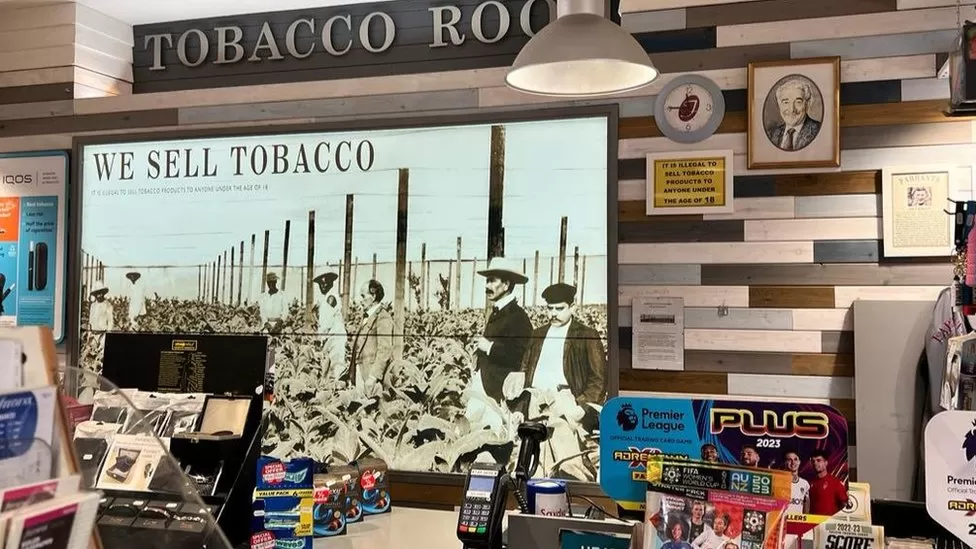
A store that came under fire for having a poster of “broken black men” on a tobacco farm removed after complaints of racism.
Misan Harriman described the Farrants billboard in Cobham, Surrey, as “triggering and racist” in a video posted to social media on Tuesday.
There is no reason why it should be there, he declared.
The store afterwards issued an apology for using the image.
Along with offering its own tobacco room where customers may purchase cigars and tobacco, Farrants also sells a variety of candies, greeting cards, newspapers, and toys.
The retailer said that the photograph, which looked to depict black people working on a tobacco plantation under the supervision of white males, was taken at the Pinar del Rio plantation in Cuba in 1907, 21 years after slavery was abolished in the nation.
The Duke and Duchess of Sussex‘s photographs were shot by Mr. Harriman, the head of London’s Southbank Centre, who also claimed that it didn’t matter if the picture genuinely showed slaves or indentured servants.
This is in a neighbourhood store. He declared that the images was really upsetting and racist.
It shows a group of broken black men at a tobacco farm, with their overseers standing nearby. I’m not joking.
Farrants posted a statement on Instagram that read: “The offending image has been removed.
“We sincerely apologise for any and all distress it may have caused.”
A statement previously displayed next to the image in the shop said it was displayed to “honour, respect and recognise” those involved in the development of Havana cigars.
Surrey Police said while no formal reports had been made, officers had spoken with the shop’s owner.
Minister of Health, Kwaku Agyeman-Manu, has called for an increase in excise duties on three unhealthy consumables namely tobacco, alcohol and sugar-sweetened beverages.
The revision is expected to rake an additional GH¢3.5 billion which the Ministry urges to be channelled into the management of non-communicable diseases (NCDs) such as hypertension, stroke, diabetes and cancers, causing 17,000 deaths annually.
The Minister of Health made this known in Accra on Monday, July 10 at a meeting to disseminate a study by the World Health Organisation (WHO) on how such health taxes could improve health outcomes in managing NCDs.
The proposal put forth calls for the implementation of a specific excise tax that would raise the retail price of cigarettes by GHS6 and alcoholic beverages by 20%, as well as the introduction of a specific excise tax that would raise taxes on beverages with added sugar by 20%.
“The ad valorem tax should be maintained while introducing a uniform specific excise tax on tobacco products, introducing a specific excise tax on alcoholic beverages (based on ethanol content) and introducing a specific excise tax on sugar-sweetened beverages (based on sugar content),” Mr Agyeman-Manu suggested.
“It presents a good opportunity to expand fiscal space to support government priorities which include health-related interventions focusing on NCD prevention, early detection and treatment to mitigate a huge financial burden on individuals and the state in future,” he stated.
Mr Agyeman-Manu added that the increase in the taxes on these products may reduce their consumption, thereby averting some 34,600 deaths.
According to the Health Minister, the concept of health tax is a powerful tool for revenue generation which has been successfully implemented in many countries.
Mr Agyeman-Manu described the NCD burden as an alarming situation that requires the immediate provision of quality preventive, promotion, diagnostic, curative, rehabilitative and palliative care services for these diseases.
“The financing of NCDs, therefore, requires additional resources beyond the traditional annual government budget and this calls for exploring innovative financing to increase domestic resources,” he stressed.
These five African multimillionaires grew incredibly wealthy by promoting smoking, one of the world’s most dangerous and deadly vices. We can’t recommend tobacco dealing as a path to creating wealth, but these folks found extraordinary success in manufacturing and distributing tobacco products.
Tribert Rujugiro Ayabatwa
Nationality: Rwandan
Company: PanAfrican Tobacco Group Holding
Tribert Rujugiro Ayabatwa founded PanAfrican Tobacco Group Holding in 1978 in Burundi. It is now the largest tobacco manufacturing company owned by an African. It manufactures cigarettes in the Democratic Republic of Congo, South Africa, Angola, Uganda, Tanzania, the United Arab Emirates, Nigeria, and South Sudan. Today, the company records over $250 million in annual revenues and employs more than 7,000 people across Africa. Its brands include Supermatch, Forum, Legends, and Yes.
Simon Rudland
Nationality: Zimbabwean
Company: Gold Leaf Tobacco
Zimbabwean tobacco tycoon Simon Rudland owns Gold Leaf Tobacco, a multinational manufacturer and distributor of the Rudland & George RG cigarette brand. The company manufactures cigarettes in South Africa for both the South African and export markets. Gold Leaf Tobacco is also a full-service contract manufacturer which produces various blends and variants of cigarettes for its clients.
Apollinaire Compaore
Nationality: Burkinabe
Company: SODICOM
Apollinaire Compaore is one of the most successful businessmen in Burkina Faso. He heads the Planor Group, which has interests in insurance, retail, and telecommunications. Through one of Planor Group’s subsidiary companies, SODICOM, he is also the representative of the multinational tobacco company Philip Morris International in Burkina Faso and the sole distributor of their products in the West African country.
Wilfred Murungi
Nationality: Burkinabe
Company: Mastermind Tobacco Kenya
The late Murungi worked as an engineer at British American Tobacco before quitting and setting up Mastermind Tobacco Kenya in the late 1980s. Mastermind is currently the only indigenous tobacco company in Kenya, with its Headquarters in Nairobi. The company is in eight countries in East, Central, and Southern Africa and is involved in growing tobacco, manufacturing, and cigarette marketing. It manufactures 12 brands of cigarettes, with its most popular brand being “Supermatch.”
Ylias Akbaraly
Nationality: Madagascan
Company: Focus Madagascar
Madagascar’s richest man is the owner of Sipromad Group, the largest conglomerate in the country. Two of its subsidiary companies, Focus Madagascar and Madagascar Tobacco Network, manufacture the Apache and Paname brand of cigarettes, which are both popular in the island country.
The Ghana Harm Reduction Alliance has contributed its voice to the mounting calls for the government to implement strategies, policies, and legislation targeted at dramatically reducing tobacco use and related substance use in Ghana.
According to the Alliance, government can pick key lessons from European country, Sweden which has implemented efforts to becoming a tobacco-free society.
In a statement issued to mark ‘World No Tobacco Day’ held on May 31, 2023, Harm Reduction Alliance stressed on the harmful impacts of tobacco use on human lives and the environment.
It cited the Global State of Tobacco Harm Reduction Report which indicates that about 5,012 deaths annually were attributed to tobacco smoking with approximately 644,429 current smokers in Ghana.
It further reiterated remarks made by the Minister of Health, Kwaku Agyeman-Manu during the launching of the World Health Organization (WHO) Framework Convention for Tobacco Control (FCTC) 2030 project held in Accra recently.
The Minister earlier noted the prevalence of tobacco smoking especially among youth people and cautioned that Ghana was faced with a dual burden of disease with the upsurge of non-communicable diseases such as hypertension, diabetes and a wide array of cancers.
Agyeman-Manu said although Ghana had made significant progress in tobacco control with the inclusion of tobacco-specific provisions in the Public Health Act, of 2012, passage of the tobacco control regulations in 2016 (L.I.2247) and the introduction of graphic health warnings, the country still has a long way to go in the pursuit of attaining a tobacco-free country.
In view of this the Harm Reduction Alliance, Ghana is advocating that Ghana takes key lessons from Sweden to achieve the feat of reducing tobacco use.
“Sweden has achieved the feat of reducing the smoking rate by a whopping 80 per cent despite a 30 per cent spurt in population growth. The Swedes began the journey to a smoke-free society with the introduction of snus, a smokeless oral tobacco product usually held in the mouth between the lips and gums which brought the smoking rate down by 55 percent,” the statement explained.
It further pointed out that policymakers in Sweden had embraced a new generation of alternative risk nicotine products such as vaping and nicotine pouches which had contributed to a decline in smoking rates.
“The effects of these tobacco harm reduction efforts had led Sweden to save more than 3,400 lives yearly. It is projected that; the EU could save about 2.84 million lives should they follow Sweden’s example. Furthermore, compared to the rest of the EU, Sweden has 44% fewer tobacco-related deaths, 41 per cent lung cancer rates and 38 per cent fewer cancer-related deaths,” it continued.
Meanwhile in 2021, the European Union (EU) earmarked the year 2040 for Member States to be ‘Tobacco-free’. This is defined to be a smoking rate below six (6) percent and with two years on, Sweden is on course to achieve a ‘tobacco-free’ society 17 years ahead of the 2040 deadline.
“Sweden’s health authorities had implemented a tobacco control policy for the past 50 years where the traditional tobacco control measures recommended by the EU run alongside an openness to alternative reduced-risk products,” the Alliance said.
“Ghana can adopt and localise the Sweden example by embracing tobacco harm reduction (THR) interventions such as friendlier approaches in regulating reduced-risk products i.e., heated tobacco, nicotine pouches and vapes. This could be implemented alongside the traditional tobacco control measures and education making the country safer for all and attractive to investors,” it advocated.
“On World vape day, Harm Reduction Alliance, Ghana would want to be associated with the comments made by the Finance Minister of Sweden in April 2022 – Mikael Damberg – “Tobacco and nicotine taxes are […] structured today so that products are generally taxed based on risk. […] Products that are judged to be more harmful to health have a higher tax.”
“Harm Reduction Alliance, Ghana would like to urge policymakers in Ghana to follow the science and not to be persuaded to make policies based on morality and ideologies. By following the example of Sweden, Ghana could save lives, improve public health outcomes, and alleviate the burden on healthcare resources” the Alliance reiterated.
In conclusion, the Alliance called for increased education and regulation of traditional tobacco use as well as the provision of safer alternatives.
Harm Reduction Alliance, Ghana is a member of the West African Drug Policy Network and the Ghana Network on Drug Policy Reforms. It advocates for the adoption of harm reduction interventions and provides outreach services for the key population of people who use drugs.
An assessment conducted by the Ministry of Health, the Food and Drug Authority (FDA), the Secretariat of the World Health Organization (WHO) Framework Convention on Tobacco Control (FCTC) (Convention Secretariat), WHO and the United Nations Development Programme (UNDP) has revealed that more than 800,000 Ghanaians continue to smoke and every year, tobacco use kills more than 6,700 Ghanaians, with 66 percent of these deaths being premature, among people under the age of 70.
These statistics denote many more Ghanaians are not able to quit tobacco or smoking, in general, irrespective of the rehabilitation and restrictive laws eschewing people from smoking.
It is on this score that the Executive Director of the Institute for Liberty and Policy Innovation, (ILAPI), Mr. Peter Bismark Kwofie has called on stakeholders in the health sector and policymakers to consciously develop an educative medium-long term gradual approach to reducing tobacco use rather than a short-term radical approach of denying consumers the right to make choices.
“ILAPI as a free enterprise organization that emphasizes freedom and individual liberty, profess other important and evidence-based alternatives to reduce the harm caused by tobacco and subsequently leading to quitting smoking.
Tobacco use is one of the leading causes of preventable deaths globally. According to the World Health Organization (WHO), tobacco use kills approximately eight (8) million people annually, with more than even (7) million of these deaths occurring in low and middle-income countries (LMICs).
In addition, it causes lung cancer, tobacco use increases the risk of heart disease, stroke, chronic obstructive pulmonary disease (COPD), and other chronic illnesses.
Experts say the most effective way to prevent tobacco-related deaths is to quit smoking completely, however, addictive smokers are reluctant and unable to quit.
This according to Mr. Bismark Kwofie calls for harm reduction strategies which is crucial as an effective public health solution.
He noted that absolutely quitting the habit of smoking has been quite unsustainable, repressive, and draconian.
Over the past decades, smoke cessation has been promulgated as the best approach to helping combustible smokers to quit. The addictive nature of the nicotine in cigarettes has made quitting smoking a prolonged and difficult process and that, many more smokers are unable to quit.
It is estimated that $115 billion is needed to be invested to help in smoking cessation from 2020–2030. In 2019, the economic cost of tobacco use in Ghana amounted to approximately GH668 million, equivalent to 0.2 percent of the country’s GDP.
The Executive Director of ILAPI is of the view that health workers, social workers, other relevant stakeholders, and policymakers should consider other alternatives which will be less costly and harmful measures to address the consumer choice addiction rate of tobacco.
“In this context, it is crucial to explore the potential benefits and drawbacks of Tobacco Harm Reduction (THR) and weigh them against the well-established harmfulness of tobacco use to develop effective strategies for reducing tobacco consumption in Ghana.” He reiterated.
The Executive Director of ILAPI stressed that THR as a public solution recognizes the harm caused by combustible cigarettes and aims to minimize the health impacts of cigarette smoking by encouraging those adult smokers who would otherwise continue to smoke to switch completely to scientifically substantiated, reduced-risk alternatives ought to be explored in our contemporary society.
Mr. Kwofie thinks that there could be a geo-cultural diversification of solutions to tobacco control but cautioned that the state should conduct and adopt empirically proven techniques as an alternative to reduce harm and death caused by Tobacco whilst not curtailing consumer choice.
“The inhumane and unscientific “Quit or Die” policy should not be reinforced. Instead of putting vapers and consumers at risk, this is a very good opportunity to raise awareness about THR in general, and encourage smokers who cannot quit smoking to adopt it.” He said.
There has been a school of thought of increasing taxes on tobacco products and banning THR products are the best initiatives to prevent people from smoking. But according to the Executive Director of ILAPI, anytime taxes (excise and consumption taxes) on products are high, the rich could buy and the middle-income and poor would engage in smuggling adding to the cost of fighting illicit transactions on tobacco.
“High taxes on tobacco products as means of cessation is not public health,” he retorted
Police in Spain have demolished three illegal tobacco factories run by a motley crew that employed low-wage Ukrainian refugees.
27 people have been detained after the operations were discovered in three different regions of Spain.
The gang is accused of smuggling sizable amounts of tobacco that were used to make fake cigarettes.
The factories had the capacity to produce more than 500,000 cigarette packs per day, which were sold both domestically and abroad.
Police said the Ukrainians, who had fled Russia’s invasion of their country, were living “crammed” into prefabricated shelters within the factories.
They were working long hours and were not leaving, to avoid detection, as some had entered the country illegally.
Meanwhile, the bosses of the organization enjoyed a “life of luxury,” allegedly laundering money for their tobacco smuggling operation.
The authorities seized tobacco products worth €37.5m ($41m; £33m), luxury vehicles, jewellery and large quantities of cash during their raid. More than 20 homes, industrial buildings and shops were searched.
The first clandestine factory was found in a chicken shed near Seville in the south at the end of 2021 – leading the authorities to uncover two other operations, in the eastern Valencia region and La Rioja in the north.
Police said the gang was also diversifying production by developing large marijuana plantations.
The investigation got assistance from the European policing agency Europol.
According to the United Nations, there are nearly eight million recorded Ukrainian refugees across Europe, who fled Russia’s February 2022 invasion. More than 160,000 have been registered in Spain.
In November, lawmakers at the European Parliament reported that labor exploitation ofUkrainians was on the rise, saying the urgency of their situation and language barriers sometimes forced refugees to take on informal and underpaid work.
The removal of cigarette butts from Spain’s streets and beaches will now be the responsibility of the tobacco industry, per new environmental regulations.
Each year, millions of butts are discarded, releasing toxic plastic waste that can take decades to decompose.
A fifth of adult Spaniards, according to data from 2020, smoke every day.
Although the regulations took effect on Friday, it is still unknown how they will be put into practice and whether they will likely be passed on to consumers.
A report by the Catalan Rezero Foundation estimated that local authorities in Catalonia were paying between €12 and €21 (£11 and $13-22) per inhabitant per year on road cleaning of cigarettes, with higher rates in coastal areas.
The report called cigarette waste the “most abundant waste” on the beaches of the western Mediterranean, adding that existing measures to tackle it – such as awareness campaigns and portable beach ashtrays – had been insufficient.
The new rules make manufacturers responsible for collecting discarded butts as well as transporting them for waste treatment.
The Mesa del Tabaco industry association has said it is still waiting for details on how the rules will be implemented, local media say.
Most cigarette butts contain filters made of cellulose acetate fibre, a type of a bioplastic.
These can take years, if not decades, to break down, and microplastic pollution can hamper plant growth too, according to scientists.
The new rules are part of a law passed last year banning single-use plastics like cutlery and straws – drawn up to comply with a European Union directive.
Ireland introduced similar legislation on Thursday, requiring tobacco companies to contribute to the cost of cigarette litter.
Almost half of litter in Ireland is cigarette-related, according to the country’s National Litter Pollution Monitoring System.
Spain has introduced a host of sweeping measures to curb smoking in recent years. Last July, smoking was banned on all of Barcelona’s public beaches, with offenders fined €30 (£27; $32).
On Tuesday, the New Zealand Parliamentapproved an iconic anti-smoking law that forbids the sale of tobacco to anyone born on or after January 1, 2009.
The government is pushing to make the nation “smoke free” by 2025, and the ban is part of that effort. Its goal is to stop the next generation from taking up smoking.
By the end of 2023, the new law will reduce the number of retailers with tobacco sales licences from 6,000 to 600.
The new law carries fines of up to NZ$150,000 (roughly $96,000) for violations.
“Thousands of people will live longer, healthier lives and the health system will be $5 billion better off from not needing to treat the illnesses caused by smoking, such as numerous types of cancer, heart attacks, strokes, amputations,” Associate Health Minister Ayesha Verrall said in a statement.
Smoking rates in New Zealand – already among the world’s lowest – are falling, having decreased from 9.4% to 8% in the past 12 months, according to Verrall.
Verrall said the legislation would help close the life expectancy gap between Maori and non-Maori citizens, which can be as high as 25% for women.
The legislation – the Smokefree Environments and Regulated Products (Smoked Tobacco) Amendment Bill – will also reduce the amount of nicotine allowed in tobacco products, aiming to make them less addictive.
According to the Ministry of Health, New Zealand’s smoking rate is now the lowest since records began, with 56,000 smokers quitting in the past year.
However, vaping – which the new legislation does not cover – remains popular among young New Zealanders. Official data shows8.3% of adults are now vaping daily, up from 6.2% in the past year.