Tag: tomatoes

  • Traders call for immediate increase in local tomato production amid price hike

    Traders call for immediate increase in local tomato production amid price hike

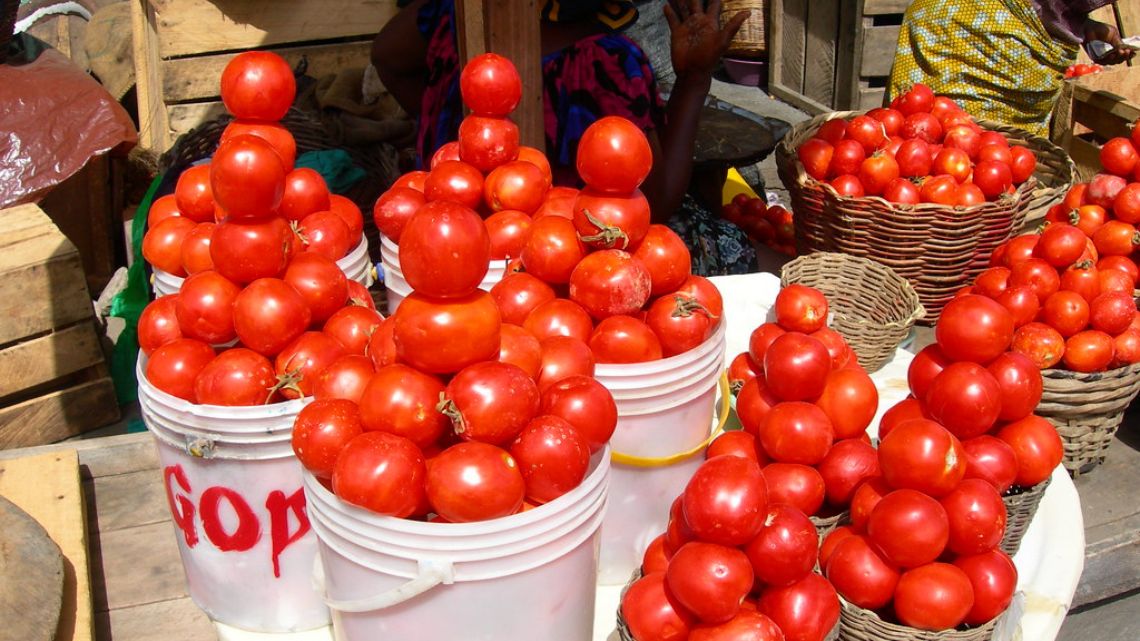
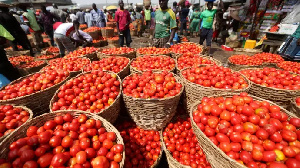
    There is growing pressure from Agbogbloshie Market traders in Accra on the government to boost domestic tomato production. The call comes with rising costs that are dampening consumer demand. Tomatoes, which used to sell at GH¢18 and GH¢22, are now selling at GH¢32, GH¢38, and even GH¢40. 


    Addressing the media on Monday, March 30, a trader at Agbogbloshie Market attributed the price increase to the export restrictions imposed by Burkina Faso.

    Burkina government, in a formal communique dated March 16, and signed by both the Trades and Agriculture ministers of the Francophone country, announced that a ban has become necessary to feed the country’s national processing units.

    This sparked widespread concerns about its potential to worsen Ghana’s tomato supply crisis, as Ghana imports approximately 70-80% of its tomatoes from Burkina Faso, worth about $400 million annually.

    Consequently, the Government of Ghana has announced plans to engage authorities in Burkina Faso, given the potency of its impact on supply in the Ghanaian market.

    In a statement shared on Friday, March 20, the Ministry of Trade, Agribusiness and Industry said the engagement will focus on resolving concerns surrounding the ban while exploring a mutually beneficial outcome for both countries.

    It said, “The engagement will focus on resolving concerns surrounding the ban while exploring a mutually beneficial outcome for both countries, given the longstanding trade ties and Ghana’s reliance on tomato imports from Burkina Faso”.

    The government also continued that, “The government reiterates its commitment to working with stakeholders to boost local tomato production under the ‘Feed Ghana’ and ‘Feed the Industry’ programmes, aimed at increasing output to meet demand on the domestic market”.

    The Ministry also urged tomato traders and the general public to remain calm while it makes an effort to reach an amicable resolution to restore normal trade flows between the two countries.

    Statement on the baon export by the Burkina Faso govt

    Also, the Burkina government says the issuance of Special Export Authorisations (ASE) has also been suspended. The Special Export Authorisations (ASE) are official permits issued by the government that allow traders to export certain goods,

    “Economic operators and the public are hereby informed that, to ensure the supply of national processing plants, the export of fresh tomatoes is suspended throughout the national territory until further notice. Consequently, the issuance of Special Export Authorisations (ASE) is suspended.

    The letter also stated that operators holding valid fresh tomato export permits have two (2) weeks from the date of signature of the communiqué to complete their export procedures. After two weeks, the permit will be considered invalid.

    “Economic operators holding valid fresh tomato export authorisations have two (2) weeks from the date of signature of this communiqué to complete their export procedures. After this period, the authorisation will be considered invalid”, the statement continued.

    The Burkinabé government warned that any violator of the directive will be sanctioned in accordance with applicable regulations.

    “Furthermore, any goods seized in violation of this measure will be returned, free of charge, to the fresh tomato processing plants established under the popular shareholding scheme,” the letter translated to English noted.

    It continued that, “The Government is counting on the understanding and cooperation of all stakeholders in the tomato sector, as well as all state technical services, particularly border control services and security forces, to ensure the proper implementation of the terms of this communiqué”.

    Kumasi vendors express frustration

    The impact of the ban is being felt well before any formal shortage sets in.

    Some tomato vendors at the Racecourse Market in Kumasi are already expressing frustration over the development, warning that prices could spike if the situation is not quickly addressed.

    The vendors are using the occasion to call on the government to prioritise the local tomato industry by revamping irrigation systems and investing in local processing facilities, longstanding concerns that have left Ghana’s tomato sector heavily dependent on imports from neighbouring countries, particularly Burkina Faso.

    Ghana has historically relied on cross-border produce flows from Burkina Faso to supplement domestic tomato supply, especially during lean seasons when local harvests are insufficient to meet demand.

    A sudden and indefinite halt to those exports is therefore expected to tighten supply significantly, with knock-on effects on prices at markets nationwide.

    Northern Ghana, which serves as the main corridor for produce trade with Burkina Faso, is expected to feel the shortage most acutely in the short term.

    Before this ban, Ghana was hit with the sad news of a fatal terrorist attack on tomato traders in mid-February.

    A truck carrying Ghanaian tomato traders was attacked by terrorists in Titao, Burkina Faso, on Sunday, February, 15. This was contained in a press release issued to media houses and signed by the Minister for the Interior and National Security, Muntaka Mohammed-Mubarak.

    In a joint statement issued in Ouagadougou on Thursday, March 19, the Burkinabè government announced an immediate nationwide halt to tomato exports “until further notice,” explaining that the move is intended to prioritise domestic supply for local processing industries.

    The directive, signed by the country’s trade and agriculture ministries, also suspends the issuance of Special Export Authorisations (ASE), effectively shutting down formal export channels for tomatoes.

    Traders with existing permits have been granted a two-week window to complete ongoing transactions, after which all authorisations will be revoked. The government warned that any breach of the directive would attract sanctions under existing laws, adding that seized consignments would be redirected to local processing factories to support domestic agro-industrial production.

    Ghana and Burkina Faso has since shared a long border. Burkina Faso remains deeply affected by insurgent violence, with cross-border implications for neighboring countries like Ghana.

    Northern Burkina Faso has faced persistent insecurity due to jihadist groups linked to al-Qaeda and ISIS. Attacks often target military posts, civilians, and traders moving across borders, disrupting local economies and cross-border trade.

    Burkina Faso remains deeply affected by insurgent violence, with cross-border implications for neighboring countries like Ghana. In 2025, Burkina Faso’s military government’s banned grain and cereal exports.

    To demonstrate their commitment, Burkinabe authorities have agreed to lift restrictions on 23 trucks carrying beans that were previously seized. Additional shipments of cereals meant for Ghana are also expected to be released in the coming days.

    Ghana, which depends on imports from Burkina Faso, had faced concerns over possible supply shortages and rising prices due to the ban.

    However, after President Mahama’s diplomatic engagements in the AES region, Gbevlo-Lartey is confident that relations between both countries have been strengthened.

    During an interview with Blessed Sogah on Connect Africa, he explained: “President Mahama has successfully addressed the situation, and further discussions between key stakeholders from both sides will ensure a concrete resolution. The issue is largely settled. For instance, 23 trucks that had been held up have been released, and the Burkinabe authorities have assured President Mahama that the remaining eight will also be let through shortly.”

    Meanwhile, on January 29, the Economic Community of West African States (ECOWAS) confirmed that Mali, Burkina Faso, and Niger had officially exited the bloc after the end of their six-month grace period due to diplomatic tensions after military takeovers and due to economic and social failures by past governments.

    The military juntas of these countries are led by Captain Ibrahim Traoré, General Assimi Goïta, and General Abdourahmane Tchiani, respectively.The trio accused the ECOWAS of failing to safeguard member states and deviating from founding principles and Pan-African spirit.

    In response to these claims, ECOWAS revealed that it did not receive formal notice before their withdrawal; therefore, it called for a dialogue to address their concerns. “The ECOWAS Commission remains seized with the development and shall make further pronouncements as the situation evolves,” it added.

    President John Dramani Mahama extended invitations to the military leaders of Mali, Burkina Faso, and Niger to participate in the official launch of ECOWAS’s 50th anniversary celebrations, which took place in Accra on April 22.

    The invitation to the Sahelian states was part of Ghana’s broader efforts to rebuild relations and enhance cooperation for a stable and united West African region.International Relations Analyst Dr. Yaw Gebe endorsed President John Dramani Mahama’s decision, describing the gesture as a positive step toward regional reconciliation.

    He, however, advised the ECOWAS to critically reflect on the underlying reasons behind the exit of the Sahel nations and emphasised the need for the bloc to adopt a more inclusive and problem-solving approach going forward.

    “My prayer and longing is that whatever the Nigerian President, Bola Tinubu or President John Mahama are doing, they should be conscious of the problems or challenges these countries are facing. The ECOWAS must be willing and ready to tackle those problems collectively. And that is a major shortcoming on the part of ECOWAS,” he said.

    Despite the formal withdrawal of Burkina Faso, Mali, and Niger from the Economic Community of West African States (ECOWAS) on January 29, citizens from these countries will still be able to use their national passports and identity cards bearing the ECOWAS logo for travel within the region.

    ECOWAS has assured that in the interest of regional cooperation and to prevent unnecessary disruptions, all relevant authorities within and outside the bloc’s member states should continue to recognize these travel documents until further notice.

    Additionally, trade and economic activities involving these three nations will not face immediate restrictions. Goods and services from Burkina Faso, Mali, and Niger will continue to receive the same treatment under the ECOWAS Trade Liberalization Scheme (ETLS) and investment policy.

    Citizens from the affected countries will also retain their right to visa-free movement, residence, and establishment across ECOWAS states, ensuring that travel and cross-border activities remain unhindered.

    Furthermore, officials from Burkina Faso, Mali, and Niger working within ECOWAS will be given full support and cooperation in carrying out their assignments.These measures will remain in place as ECOWAS leaders work on defining the future relationship between the bloc and the three nations.

    A special structure has been put in place to facilitate discussions on the next steps. The regional body emphasized that these transitional arrangements aim to maintain stability, minimize confusion, and support the people and businesses affected by the withdrawal.

  • Burkina Faso lays to rest 7 Ghanaian terror attack victims

    Burkina Faso lays to rest 7 Ghanaian terror attack victims

    Seven Ghanaian traders who were killed in a terrorist attack in Titao on Sunday, February 15, have been laid to rest in northern Burkina Faso. The victims were burnt beyond recognition during the attack.

    Earlier, the Minister for the Interior and National Security, Muntaka Mohammed-Mubarak, revealed that an investigation had been launched into the unfortunate incident, which also left three men injured, while one woman remains in critical condition.

    But speaking to the media, the Minister disclosed that the victims were buried due to the state of decomposition of their bodies.  According to the minister, the deceased were a part of a group of 18 Ghanaian tomato traders and truck drivers.

    “The seven bodies have been burnt beyond recognition. As at yesterday, we agreed they had begun decomposing and had to be buried. So the Burkina Faso authorities told us [Ghanaians] that they would bury them at 10 a.m today. But our women who are not really injured can go and witness and take as many pictures as possible,” he added.

    Additionally, the minister noted that “And the sad thing is that we lost seven of our men. Three of them got injured. One woman was critically injured, and others were not badly injured”.

    Ghana and Burkina Faso has since shared a long border. Burkina Faso remains deeply affected by insurgent violence, with cross-border implications for neighboring countries like Ghana.

    Northern Burkina Faso has faced persistent insecurity due to jihadist groups linked to al-Qaeda and ISIS. Attacks often target military posts, civilians, and traders moving across borders, disrupting local economies and cross-border trade.

    Burkina Faso remains deeply affected by insurgent violence, with cross-border implications for neighboring countries like Ghana. In 2025, Burkina Faso’s military government’s banned grain and cereal exports.

    To demonstrate their commitment, Burkinabe authorities have agreed to lift restrictions on 23 trucks carrying beans that were previously seized. Additional shipments of cereals meant for Ghana are also expected to be released in the coming days.

    Ghana, which depends on imports from Burkina Faso, had faced concerns over possible supply shortages and rising prices due to the ban.

    However, after President Mahama’s diplomatic engagements in the AES region, Gbevlo-Lartey is confident that relations between both countries have been strengthened.

    During an interview with Blessed Sogah on Connect Africa, he explained: “President Mahama has successfully addressed the situation, and further discussions between key stakeholders from both sides will ensure a concrete resolution. The issue is largely settled. For instance, 23 trucks that had been held up have been released, and the Burkinabe authorities have assured President Mahama that the remaining eight will also be let through shortly.”

    Meanwhile, on January 29, the Economic Community of West African States (ECOWAS) confirmed that Mali, Burkina Faso, and Niger had officially exited the bloc after the end of their six-month grace period due to diplomatic tensions after military takeovers and due to economic and social failures by past governments.

    The military juntas of these countries are led by Captain Ibrahim Traoré, General Assimi Goïta, and General Abdourahmane Tchiani, respectively.The trio accused the ECOWAS of failing to safeguard member states and deviating from founding principles and Pan-African spirit.

    In response to these claims, ECOWAS revealed that it did not receive formal notice before their withdrawal; therefore, it called for a dialogue to address their concerns. “The ECOWAS Commission remains seized with the development and shall make further pronouncements as the situation evolves,” it added.

    President John Dramani Mahama extended invitations to the military leaders of Mali, Burkina Faso, and Niger to participate in the official launch of ECOWAS’s 50th anniversary celebrations, which took place in Accra on April 22.

    The invitation to the Sahelian states was part of Ghana’s broader efforts to rebuild relations and enhance cooperation for a stable and united West African region.International Relations Analyst Dr. Yaw Gebe endorsed President John Dramani Mahama’s decision, describing the gesture as a positive step toward regional reconciliation.

    He, however, advised the ECOWAS to critically reflect on the underlying reasons behind the exit of the Sahel nations and emphasised the need for the bloc to adopt a more inclusive and problem-solving approach going forward.

    “My prayer and longing is that whatever the Nigerian President, Bola Tinubu or President John Mahama are doing, they should be conscious of the problems or challenges these countries are facing. The ECOWAS must be willing and ready to tackle those problems collectively. And that is a major shortcoming on the part of ECOWAS,” he said.

    Despite the formal withdrawal of Burkina Faso, Mali, and Niger from the Economic Community of West African States (ECOWAS) on January 29, citizens from these countries will still be able to use their national passports and identity cards bearing the ECOWAS logo for travel within the region.

    ECOWAS has assured that in the interest of regional cooperation and to prevent unnecessary disruptions, all relevant authorities within and outside the bloc’s member states should continue to recognize these travel documents until further notice.

    Additionally, trade and economic activities involving these three nations will not face immediate restrictions. Goods and services from Burkina Faso, Mali, and Niger will continue to receive the same treatment under the ECOWAS Trade Liberalization Scheme (ETLS) and investment policy.

    Citizens from the affected countries will also retain their right to visa-free movement, residence, and establishment across ECOWAS states, ensuring that travel and cross-border activities remain unhindered. 

    Furthermore, officials from Burkina Faso, Mali, and Niger working within ECOWAS will be given full support and cooperation in carrying out their assignments.These measures will remain in place as ECOWAS leaders work on defining the future relationship between the bloc and the three nations. 

    A special structure has been put in place to facilitate discussions on the next steps.The regional body emphasized that these transitional arrangements aim to maintain stability, minimize confusion, and support the people and businesses affected by the withdrawal.

  • A box of tomatoes has dropped from GHC8,000 to GHC400 – Agric Minister ‘reporting live’ from market

    A box of tomatoes has dropped from GHC8,000 to GHC400 – Agric Minister ‘reporting live’ from market

    Minister for Food and Agriculture, Bryan Acheampong has been sighted in a video revealing the present price for a box of tomatoes at an undisclosed market.

    In the video gone viral, the Minister while in the presence of traders seated, noted that one could purchase a box of tomatoes at prices ranging from GHC400 to GHC500.

    He suggested a further decline in the prices in months nearing the end of the year as the MOFA-engineered tomatoes make their way into the market.

    His video is believed to be a response to concerns over the escalating prices of tomatoes for some months now.

    In May this year, a female trader in Ghana expressed concern over the escalating prices of tomatoes.

    In an interview, she mentioned that a bag of tomatoes costs GHC8,000, while a basket is sold at GHC1,500. A bucket, she said was priced at GH200. As such, a single tomato was sold for GHC5.

    She also mentioned that some of her customers are opting for tomato puree as an alternative due to affordability issues and therefore called on the government to intervene and help control the rising cost of tomatoes.

    The price of a box (adaka) of tomatoes increased by more than 360% in less than six months: January 2024 – GH¢1,500, June 2024 GH¢6,000 to GH¢7,000.

    The rise in tomato prices can be attributed to many factors, including a delayed monsoon, insufficient production, and high temperatures.

    Ranked 10th among 20 items with the highest inflation rates, fresh tomatoes have seen a substantial increase compared to the national inflation rate of 25%.

    Tomato prices caused quite a stir on social media just around the time the Ghana Statistical Service (GSS) revealed a staggering 46% inflation rate for the vegetable in its April Consumer Price Index report.

    Before the GSS released its April figures, complaints flooded social media platforms like Twitter. Users from various regions lamented the exorbitant prices of tomatoes. Many shared photos depicting small quantities of tomatoes being sold at premium rates.

    The surge in tomato prices has been attributed to a supply shortage, exacerbated by the off-season period. Ghana has had to import tomatoes from neighbouring Burkina Faso, which practices year-round tomato farming.

  • Why tomato prices skyrocket every June: A seasonal phenomenon explained

    Why tomato prices skyrocket every June: A seasonal phenomenon explained

    The role of agriculture in most developing countries is the backbone of many developing economies. The food and agriculture industry plays a major role in Ghana’s economy. The marketability and proper handling of agricultural produce can ensure agrarian productivity.

    Ghana is known for its rich agricultural industry, with tomato farming being a major contributor to its economy. However, during the rainy season, Ghanaian tomato farmers face many challenges, like flooding, that significantly impact their yields and profits.

    According to Easy Track Ghana, Ghana has two rainy seasons. The heaviest rain in the south occurs from April until June, and lighter rain is possible during September and October.

    One of the main challenges Ghanaian tomato farmers face during the rainy season is the increased risk of disease and pest infestations. During this time of year, the wet and humid conditions create the perfect environment for diseases such as bacterial wilt and fungal infections to thrive. Additionally, pests such as aphids and white flies are more prevalent during the rainy season, posing a threat to the health and productivity of tomato plants.

    Another challenge Ghanaian tomato farmers face during the rainy season is the risk of flooding.

    Heavy rains can lead to waterlogged fields, drown tomato plants, and cause root rot. In extreme cases, flooding can destroy crops, leading to significant financial losses for farmers.

    Why the continuous price hike?

    The Ghanaian economy is gradually transitioning from an agricultural-led to a service—and industry-led-focused economy, which is making the contribution of the agricultural sector to national gross domestic product disproportionately low.

    The price of a box (adaka) of tomatoes increased by more than 360% in less than six months: January 2024 – GH¢1,500, June 2024 GH¢6,000 to GH¢7,000.

    The rise in tomato prices can be attributed to many factors, including a delayed monsoon, insufficient production, and high temperatures.

    Ranked 10th among 20 items with the highest inflation rates, fresh tomatoes have seen a substantial increase compared to the national inflation rate of 25%.

    Tomato prices caused quite a stir on social media just around the time the Ghana Statistical Service (GSS) revealed a staggering 46% inflation rate for the vegetable in its April Consumer Price Index report.

    Although still high, the tomato inflation rate dipped slightly from March’s 56.9%, offering a glimmer of hope that the worst may soon be over. However, this spike in tomato prices has significant implications, given that tomatoes constitute 40% of total household vegetable expenditure in Ghana.

    Before the GSS released its April figures, complaints flooded social media platforms like Twitter. Users from various regions lamented the exorbitant prices of tomatoes. Many shared photos depicting small quantities of tomatoes being sold at premium rates.

    The surge in tomato prices has been attributed to a supply shortage, exacerbated by the off-season period. Ghana has had to import tomatoes from neighbouring Burkina Faso, which practices year-round tomato farming. Last August, farmers in Ziope in the Volta Region and other tomato-growing regions in Ghana were compelled to sell their produce at an 80% discount to avoid spoilage.

    One of the challenges contributing to this supply-demand imbalance is the difficulty in preserving fresh tomatoes over extended periods. This leads to price fluctuations, with prices dropping significantly during harvest seasons and soaring during off-season periods.

    Importance of tomatoes despite price hike

    Tomatoes, as vegetables, play an important role in a healthy diet. They are also fruits rich in nutrients such as carotenoids, lycopene, beta-carotene, gamma-carotene, phytoene, and several minor carotenoids.

    According to a nutritionist, Patience Naa Adjeley Adjei, tomatoes are a good source of vitamins and minerals, including vitamin C, potassium, folate, and vitamin K.

    “These nutrients are important for overall health and well-being, despite how expensive they [tomatoes] may be.”

    She added that tomatoes contain antioxidants such as lycopene, beta-carotene, and vitamin C, which help protect the body from damage caused by free radicals. These antioxidants have been linked to a reduced risk of chronic diseases such as heart disease and cancer.

    “Tomatoes are expensive, but we need to buy them because they are low in calories and can be a great addition to a weight loss or weight management plan. They are also high in water content, which can help keep you hydrated and full.
    Why do retail prices of tomatoes remain high despite drops in wholesale prices?

    Retail prices of tomatoes are holding firm despite a significant drop in wholesale prices since the third quarter of 2023. This trend persists even as the rainy season complicates tomato cultivation, traditionally causing price increases.

    The wholesale price for a box of tomatoes imported from Burkina Faso plummeted by 43%, from GH¢3,000 (USD 249.98) in Q2-2023 to GH¢1,700 (USD 141.99) in Q3-2023. Locally produced tomatoes saw a similar decrease of 47 per cent, from GH¢1,500 to GH¢800 (USD 124.99 – 66.66). However, these decreases have not translated into lower retail prices. As of January 2024, retail prices remain unchanged.

    Consumers in Accra are frustrated, as the price of a small paint bucket of local tomatoes is still GH¢30 (USD 2.50), and the imported counterpart is GH¢60 (USD 5.00), the same rate as before the wholesale price drop.

    It is reasonable to expect that price transmission for perishable products will display seasonal variation, especially in a low-income country. However, few studies have explicitly tested for seasonal variations in price transmission.
    Climate requirements for growing open-field tomatoes

    Tomato plants flourish under specific climatic conditions, including warm, sunny days and cool nights.

    The dry climate prevents fungal diseases and ensures a healthy yield.

    However, during the rainy season in Ghana, these ideal conditions are disrupted. Excessive moisture not only hampers growth but also increases the likelihood of diseases that can reduce overall yield.

    An agricultural economist, Dr Irene Egyir, explained, “Tomatoes do not like rain. You must spend more time and resources to get tomatoes to grow in the rain. This necessity for increased effort and investment during the rainy season contributes to the higher prices seen in the market.”

    Adaptation Strategies

    The scarcity drives up prices, making tomatoes a more expensive commodity. This is exacerbated by the fact that the population in Ghana is growing, increasing the demand for this staple food item.

    Dr Egyir recalled that the population was around 6 million during her childhood, which contrasts starkly with the current population of approximately 36 million, which increases the strain on supply chains.

    “When I was growing up, those times I’m talking about, I think we were 6 million; today, we are maybe 36 million,” Dr Egyir notes, highlighting the pressure on supply chains.

    In response to these challenges, many people in Ghana have turned to processed tomatoes as a substitute for fresh ones.

    “We have changed from fresh to what we call processed tomatoes,” Dr Egyir says.

    This shift helps mitigate the impact of seasonal scarcity. Processed tomatoes, such as tomato paste and canned tomatoes, are less affected by seasonal fluctuations and can be stored longer.

    Dr Egyir further elaborates, “If the fresh supply is reduced, then, economically, it’s not so bad because the price is alright due to the unique demand for fresh tomatoes.” The availability of substitutes, like processed tomatoes, provides some relief to consumers and stabilises the market to some extent.

    What are the Tomato vendors saying?

    Saeed Jafar, a tomato retailer at the Tamale central market who also farms tomatoes, explained the retailers’ viewpoint.

    He mentioned, “Blame the rains; despite the drop, we still consider the current wholesale prices of the commodity—both local and imported—to be exorbitant, which is why we have not reduced our retail prices.”

    Although affecting customer patronage, this decision is deemed necessary for the retailers to sustain their business viability.

    Saeed Jafar recognised the difficulties faced by tomato retailers, pointing out that some traders have diversified into other businesses due to decreasing profit margins.

    He called on the government to address infrastructure issues, such as road conditions and drainage systems, to enhance market accessibility and prevent flooding during the rainy season.

    Tuzoo, a farmer in Tono in the Upper East region, also attributed the escalating costs to persistent rainfall and deteriorating road infrastructure.

    “The rains have been relentless,” Tuzoo remarked.

    “The excessive moisture is detrimental to the crops, leading to lower yields and, consequently, higher prices.”

    He elaborated that the continuous downpours have disrupted the growth cycles, causing a scarcity that drives up the cost of tomatoes.

    Beyond the challenges posed by the weather, Tuzo highlighted the dire state of road infrastructure as a significant contributing factor to the high prices.

    “Transporting tomatoes from the farms to the markets has become arduous,” he explained. “The poor condition of the roads means longer travel times and higher transportation costs, which inevitably get passed on to consumers.”

    Tuzoo called on the government to address these pressing issues. “Improving the road conditions and implementing better drainage systems are crucial,” he urged.

    “These measures will not only facilitate easier transport of goods but also prevent flooding, which can further devastate the crops.”

    It is, therefore, vital for vendors to market their produce as quickly as possible since it is perishable. Delays in marketing and improper handling of produce might result in the vendor encountering heavy losses.

    Source: Ghana.dubawa.org
  • Old video of women buying a pan of tomatoes for GHC40 pops up

    Old video of women buying a pan of tomatoes for GHC40 pops up

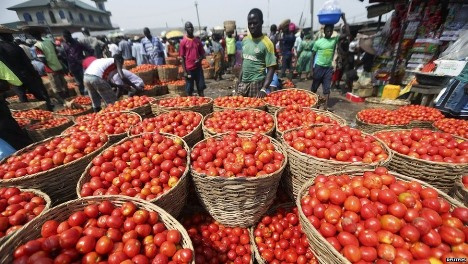
    Amid increasing cost of tomatoes in recent times, an old video of some women expressing content over the affordable cost of tomatoes have resurfaced.

    This video resurfaced on X platform as a user vented his spleen over how some market women inflate the price of the commodity.

    Currently, in Accra, the least amount on can purchase tomatoes is GHC20. But some time last year, with GHC10, one could purchase some tomatoes.

    In the resurfaced video, the women revealed how they bought a pan full of tomatoes for GHC40. It emerged that some women then sold about four tomatoes for GHC15.

    Presently a box of tomatoes is said to cost thousands of Ghana cedis.

  • A box of tomatoes in Tamale costs GHC1,500 to GHC1,700 – NPP activist tells critics

    A box of tomatoes in Tamale costs GHC1,500 to GHC1,700 – NPP activist tells critics

    A pro-activist of the New Patriotic Party (NPP) by X username, @Gen_Buhari_, has clapped back at critics of government over the exorbitant price of tomatoes in some parts of the country.

    The cost of foodstuffs has risen sharply, shocking many Ghanaians. Numerous individuals have turned to social media to voice their worries about the high cost of living, particularly as items like tomatoes, onions, and peppers are being sold at exorbitant prices.

    A female trader in Ghana has expressed concern over the escalating prices of tomatoes.

    In an interview, she mentioned that a bag of tomatoes now costs GHC8,000, while a basket is sold at GHC1,500.

    Currently, a bucket is priced at GH200. Due to the high cost, she stated that a single tomato is now sold for GHC5, meaning that with GHC20, one can purchase four tomatoes.

    But according to @Gen_Buhari_, the price of tomatoes in the Northern region come at an affordable rate, indicating that some parts of the country are not experiencing hiked prices as reported.

    “Box “adaka” of tomatoes in Tamale, cost between GHc1,500 to GHc1,700. It is nowhere close to GHc6,000 to GhC7,000 quoted earlier. NOTE: It is around 900 to 1,000 Cedis in Akumadan, Offinso North,” he wrote.

    He advised that “You can choose to stay in Accra and buy food stuff at higher prices” and cautioned that “don’t conclude it’s like that nationwide.”

    His advice has not been received well by Ghanaians who believe pragmatic measures must be taken to ensure consumers must be protected from greedy businessmen and women.

    “So we should relocate to Tamale right?” a user asked. Another wrote, “Bring it to Accra add fuel charges loading boys sometimes if you don’t think deep u won’t get this things right.”

    Businessman John Dumelo has attributed the high prices of tomatoes, onions, and peppers to insufficient production during the dry season.

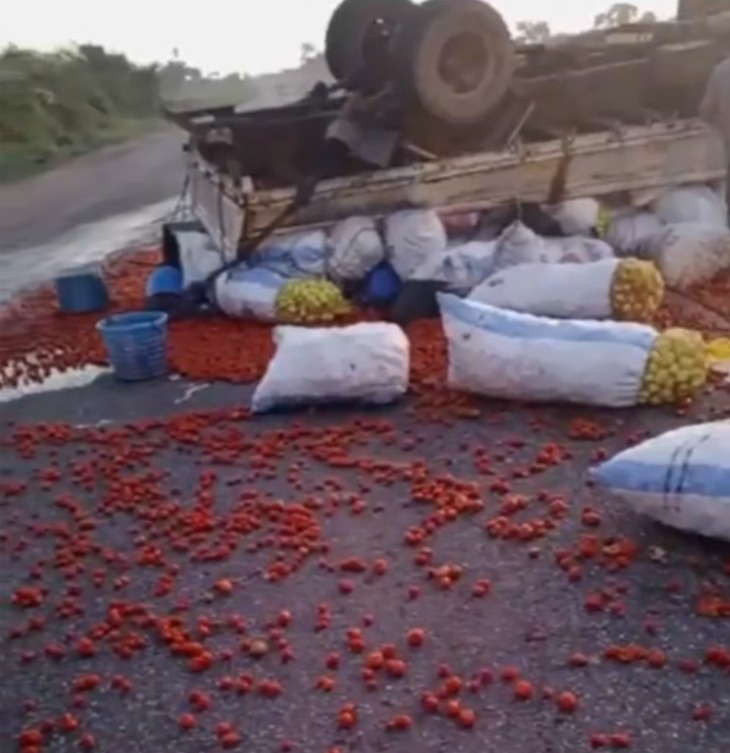
  • Two dead, others injured following truck accident on Winneba-Accra highway

    Two dead, others injured following truck accident on Winneba-Accra highway

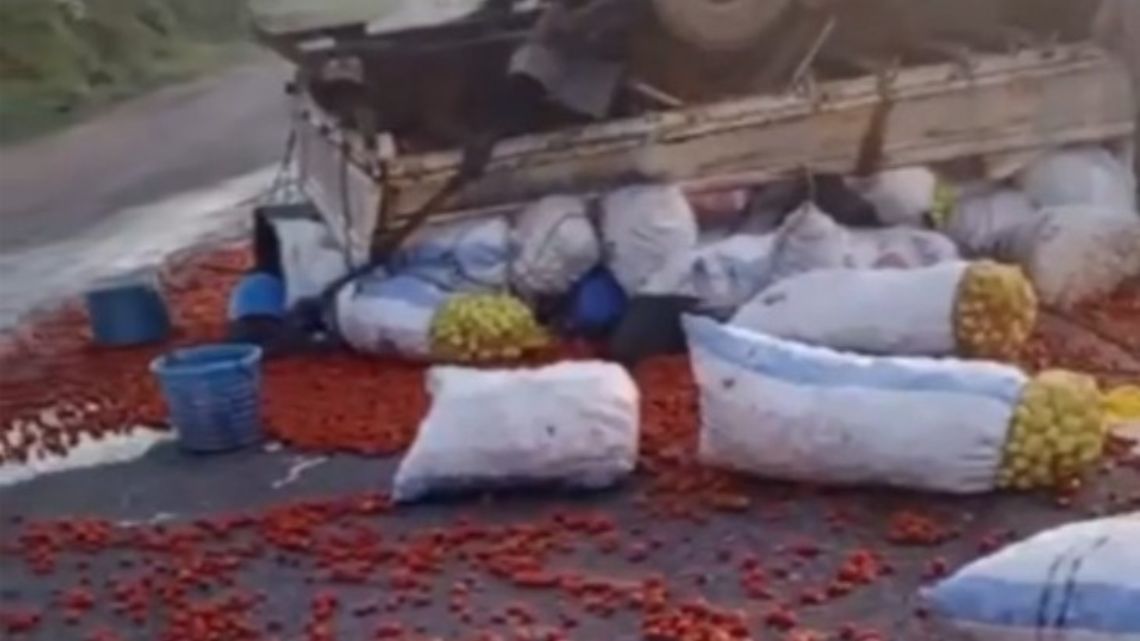
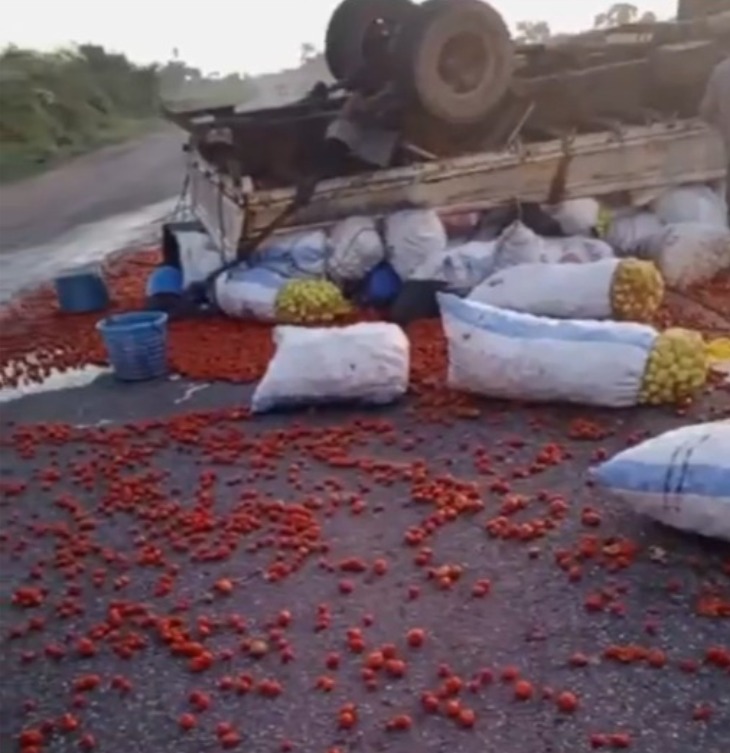
    A tragic accident on the Winneba-Accra highway has claimed the lives of two women and injured several others.

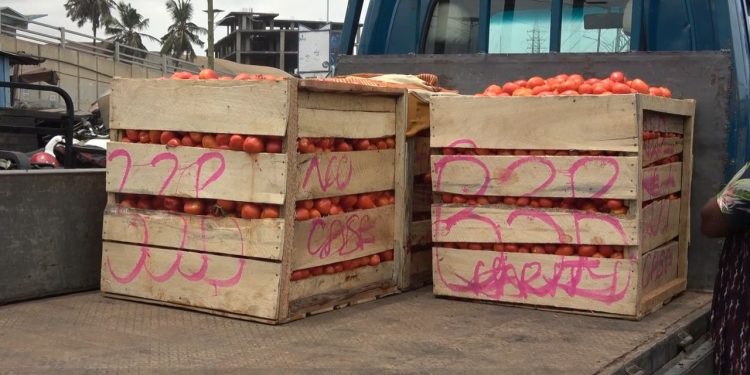
    A truck, heavily loaded with tomatoes and garden eggs, overturned in the middle of the road due to the weight of its cargo.

    The incident caused significant damage to the transported produce, leading to substantial losses.

    Emergency services promptly arrived to aid the injured and clear the roadway.

    Authorities are investigating the cause of the accident and have urged drivers to exercise caution when transporting heavy loads.

    See post below:

  • 7 vegetables you can use for stew in the absence of tomatoes

    7 vegetables you can use for stew in the absence of tomatoes

    Several vegetables can work well as replacements. Here are some options, along with tips on how to use them:

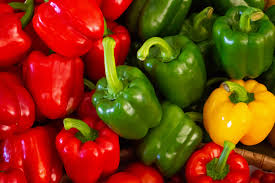
    Red bell peppers

    Flavor Profile: Sweet and slightly tangy, without the acidity of tomatoes.

    Usage: Red bell peppers can be used in salads, sauces, and stews. Roast them for a deeper, smoky flavor that can mimic the complexity of tomatoes in cooked dishes.

    Preparation tips:

    • Raw: Chop and use in salads or salsas.
    • Roasted: Roast until charred, peel off the skin, and blend into sauces or soups.

    Carrots

    Flavor profile: Sweet and earthy.

    Usage: Carrots can add sweetness and color to dishes like soups, stews, and sauces. They work particularly well when cooked and pureed.

    Preparation tips:

    • Grated: Add to salads or use as a base for sauces.
    • Pureed: Cook until soft and blend into a smooth puree for soups and stews.

    Pumpkin or squash

    Flavor profile: Mildly sweet and creamy.

    Usage: Use pumpkin or squash in place of tomatoes in soups, sauces, and casseroles. They provide a rich texture and subtle sweetness.

    Preparation tips:

    • Pureed: Cook until soft and blend into soups or sauces.
    • Cubed: Add to stews or casseroles for added bulk and flavor.

    Beets

    Flavor Profile: Sweet and earthy, with a robust flavor.

    Usage: Beets can be used in salads, soups, and sauces. Their vibrant color can mimic the visual appeal of tomatoes.

    Preparation tips:

    • Roasted: Roast until tender, then slice or cube for salads.
    • Pureed: Cook and blend into a smooth puree for sauces or soups.

    Zucchini

    Flavor Profile: Mild and slightly sweet.

    Usage: Zucchini can be used in place of tomatoes in dishes like ratatouille, soups, and stir-fries. It absorbs flavors well and adds moisture to dishes.

    Preparation tips:

    • Sliced or Diced: Add to stir-fries, stews, or casseroles.
    • Pureed: Cook and blend into sauces or soups for added texture and volume.

    Eggplant

    Flavor profile: Mild and slightly bitter when raw, but takes on a rich, savory flavor when cooked.

    Usage: Eggplant can substitute tomatoes in dishes like ratatouille, pasta sauces, and stews. Its meaty texture works well in hearty dishes.

    Preparation tips:

    • Roasted: Roast until tender and use in place of tomatoes in sauces and stews.
    • Grilled: Slice and grill, then add to salads or sandwiches.

    Tomatillos

    Flavor profile: Tangy and slightly tart.

    Usage: Tomatillos can replace tomatoes in sauces and salsas, providing a similar tangy flavor.

    Preparation tips:

    • Raw or Cooked: Use in salsas, or cook and blend into sauces for a tangy kick.

    Each of these vegetables brings its own unique flavor and texture to dishes, allowing you to replace tomatoes in a variety of recipes.

    Experiment with these alternatives to find the best match for your cooking needs and personal taste preferences.

  • GHC20 is now worth 4 tomatoes – Trader reveals

    GHC20 is now worth 4 tomatoes – Trader reveals

    A Ghanaian female trader has lamented the rising cost in purchasing tomatoes.

    In an interview, the trader noted that a bag of tomatoes now goes for GHC8,000 while a basket is sold at GHC1,500.

    Currently, a bucket goes for GH200. Due to the high cost of purchasing tomato, the trader noted that a tomato is now sold for GHC5, as such with GHC20, one can get 4 tomatoes.

    She noted that some of her customers are no longer able to purchase the fruit, as such use tomato puree as an alternative.

    She called on the government to intervene to curtail the surging cost of tomatoes.

  • 15% of farms in Ghana are operating for personal use and not for commercial gain – Report

    15% of farms in Ghana are operating for personal use and not for commercial gain – Report

    C-Energy Global Holdings reports that only 15.0% of farms in Ghana are classified as commercialized.

    Their report, titled “Creating Agriculture Financing Schemes for Sustainable Agriculture and Food Security,” further reveals that a mere 4.0% of total bank lending in Ghana has been directed towards agriculture over the last five years.

    The report identifies key challenges impeding the agriculture sector, including low mechanization, inadequate farm recordkeeping, deficient rural transportation infrastructure, and post-harvest losses.

    These challenges not only affect the sector’s performance but also hinder financial support. Agriculture portfolios are typically thin across all financier groups.

    “Agriculture however remains rain fed and on a subsistence basis with only 15% of farms in Ghana commercialized. Low mechanization, poor farm record keeping, inadequate storage & processing capacities, poor rural transportation infrastructure and post-harvest losses are the core challenges affecting agriculture sector performance and disincentivizing financing for the sector”.

    Despite efforts, agriculture in Ghana remains primarily rain-fed and on a subsistence basis, with only 15% of farms classified as commercialized.

    The report emphasizes the urgent need to address core challenges such as low mechanization, poor farm recordkeeping, inadequate storage, processing capacities, rural transportation infrastructure, and post-harvest losses, which disincentivize financing for the sector.

    To bridge existing funding gaps, the report calls for more interventions from funds and financial institutions, notably the Agriculture Development Bank and Ghana EXIM Bank, both mandated to provide funding to actors in the agriculture value chain.

    The report also highlights the growing food security risk in Ghana due to climate change, with the country being among the top 10 most severely impacted despite contributing minimally to global warming. Ghana experienced a significant rise in food prices in 2022, evidenced by a 23.8% increase in the national food price index.

    Ghana’s agriculture economy is valued at approximately $12.6 billion, contributing an average of 20% to Gross Domestic Product over the last five years. Cash crops and other commodity exports from agriculture make up 20-25% of total export revenues, with the sector employing over 35% of the total labor force.

  • Check out what tomatoes do to your skin

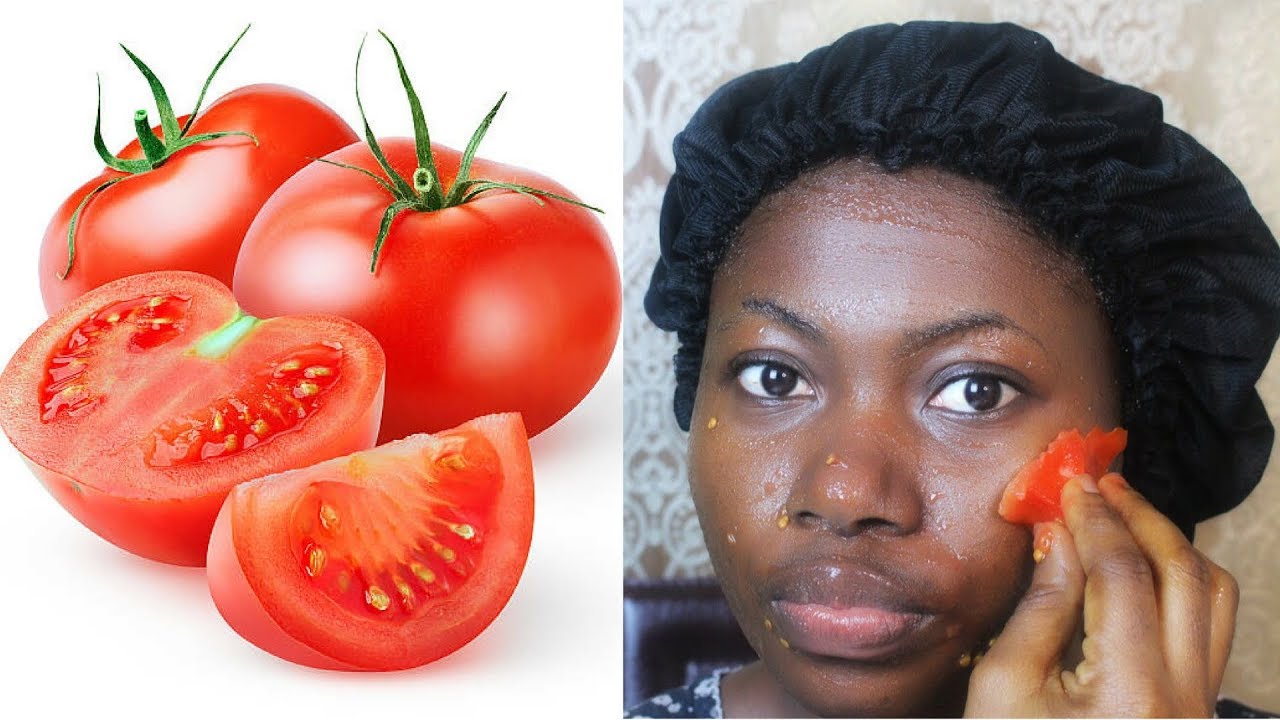
    Check out what tomatoes do to your skin

    Tomatoes are good for your skin due to several key reasons:

    1. Rich in Vitamins: Tomatoes are a great source of essential vitamins like vitamin C, vitamin A, and vitamin K. Vitamin C, in particular, is known for its antioxidant properties, which can help protect the skin from oxidative stress caused by free radicals.
    2. Antioxidant Properties: Tomatoes contain antioxidants like lycopene, which can help combat the damaging effects of UV radiation from the sun. This can help reduce the risk of sunburn and premature aging caused by sun exposure.
    3. Hydration: Tomatoes have a high water content, which can help keep your skin hydrated. Proper hydration is essential for maintaining healthy and radiant skin.
    4. Acne Prevention: The acidity in tomatoes can help regulate the skin’s pH levels, making it less favorable for acne-causing bacteria to thrive. Additionally, the vitamins and minerals in tomatoes can help reduce inflammation and redness associated with acne.
    5. Collagen Production: The vitamin C in tomatoes plays a vital role in collagen production. Collagen is a protein that helps keep the skin firm and youthful-looking. Adequate vitamin C intake can contribute to healthier skin texture and reduced wrinkles.
    6. Skin Brightening: The natural acids in tomatoes can help exfoliate the skin gently, which can contribute to a brighter complexion and the reduction of dark spots and blemishes over time.
    7. Natural Sunscreen: While not a substitute for sunscreen, the antioxidants in tomatoes can offer some level of protection against UV damage. They can work synergistically with sunscreen to enhance sun protection.

    It’s worth noting that some people may be sensitive or allergic to tomatoes, so it’s essential to do a patch test before applying tomato-based products directly to the skin. Additionally, incorporating tomatoes into your diet can provide these skin benefits from the inside out. However, for specific skin concerns, it’s always a good idea to consult with a dermatologist for personalized advice and treatment options.

    https://youtu.be/nznv8ejsQwE?si=p35T3V06-kkrZEfi
  • Tomato price decreased by 50% within months – Agric minister

    Tomato price decreased by 50% within months – Agric minister

    The Minister of Food and Agriculture, Bryan Acheampong, has stated that there has been a decline in the prices of food products in the market in recent months.

    During an interview with Francis Abban on State of Affairs, the Member of Parliament for Abetifi noted that the price of tomatoes, in particular, has decreased by 50% over the past six months.

    “Six months ago, a box of tomatoes was 100ghc and now it is 50ghc at the market today. It has dropped by 50%.

    “Today there is an abundance of foods on the market. The price of everything is going down,” he said.

    Dr. Bryan Acheampong, while expressing his concern about the high food inflation in the country, remained hopeful that the second phase of the Planting for Food program would address this challenge.

    “I find the items that we produce in Ghana at 70 [percent inflation] quite high. But it is not because of the farm gate. Maize has been stable at the farm gate for the past 2,3 years. Tomatoes have been stable at the farm gate.

    It is something that we have to deal with and that is what PFJ 2.0 is tailored to deal with. To ensure that the distribution gap from the farm gate to the market shrinks.”

    “When we talk about low prices I am not interested in it if it is going to be a disincentive to the farmer. The farmers are happy with the prices they are selling and I am happy. And under PFJ I want to find a mechanism to guarantee those farm gate prices. But I just want to ensure that the distribution margin is reduced,” he added.

    “I am hoping that when we look at inflation a year from today. It will be in single digits”, Dr. Bryan Acheampong concluded.

    The August 2023 inflation data from the Ghana Statistical Service indicates that while year-on-year tomato prices have risen by approximately 70%, there was an 8.2% decrease in tomato prices between July 2023 and August 2023.

  • Tomato prices drop due to bumper harvest

    Markets across Accra are witnessing a significant decline in tomato prices, attributed to the current surplus of vegetables during the seasonal glut.

    At the CMB tomato market, a once GHS1000-priced large wooden box of tomatoes is now available for GHS800.

    Similarly, a substantial basket that previously sold for GHS400 is now being offered at prices ranging from GHS200 to GHS250.

    Within the same market, a medium-sized plastic basket of tomatoes, previously valued at GHS150, is now being traded at GHS100.

    Madam Theresa Lartey, a representative of the Greater Accra Tomato Traders Association, with over four decades of experience in the industry, mentioned in an interview with the Ghana News Agency that the price decrease is a typical occurrence during every tomato season.

    “Tomatoes come in seasons, for instance, during Christmas and Easter, the vegetable is out of season so, prices are higher, but the month of August is when the tomato is in season, that is why as you can see, the market is flooded. 

    “Right now, sales are low, people quote whatever price they want to give you so, sometimes you sell it at the same price as you bought it from the farmers, and you don’t make any profit because if you don’t accept the price they give you, they will rot.” 

    “All the tomatoes you see here around this time is from the Ada areas, every tomato you see here is from Ghana, it is not from Burkina Faso…,” she added, saying: “The only time traders go to buy from Burkina Faso is during the lean seasons when tomatoes from Ada and Kumasi are in short supply.” 

    “Burkina Faso is able to produce tomatoes all year round because they have big dams, and we go there especially around the Easter seasons to boost availability, prices are high around that time because we have to exchange cedis for the CFA …,” Madam Lartey said. 

    She urged the government to provide support to farmers in enabling year-round cultivation to maintain price consistency.

    Tomatoes are acknowledged for their low calorie content and significant nutrients, including vitamin C and potassium.

    Furthermore, these vegetables are abundant in antioxidants and are associated with numerous advantages, such as lowering the risk of heart diseases and specific types of cancers.

    Experts emphasize that tomatoes hold a pivotal role in the diets of Ghanaian households, with an estimated annual consumption of 440,000 tons. This volume accounts for 40% of household expenditure on vegetables.

  • Banks show commitment to restore economy to its pre-DDEP level by 2023 – Ghana Banking Study

    Banks show commitment to restore economy to its pre-DDEP level by 2023 – Ghana Banking Study

    Banks have shown their determination to rebuild the industry to its pre-Domestic Debt Exchange Programme (DDEP) level of financial soundness and regain a path of growth and profitability.

    The 2023 PwC Ghana Banking Survey indicates that the financial performance data reported in the first quarter of 2023 partially confirms that this journey has commenced.

    However, the banks acknowledge the need for internal improvements to strengthen their risk shields, enhance risk agility, and enable them to withstand potential future shocks similar to the impact of the DDEP.

    As they consider investments to increase their resilience, bank executives have highlighted key actions they would like to see from the government, economic managers, and the industry’s regulator to complement their own efforts.

    These actions include the government’s rapid implementation of the Ghana Financial Stability Fund and swift and rigorous policies to bring the country’s debt-to-GDP ratio to sustainable levels.

    Additionally, good macroeconomic and macro-financial sector management is sought to bring down interest rates, inflation, and currency depreciation to levels that encourage bank lending to the real economy, thus fueling economic growth.

    Lastly, apart from the Bank of Ghana, which is the industry’s regulator, the Ministry of Finance is urged to establish a permanent framework for regular or periodic dialogue with the banking sector.

    The survey highlights the impact of the DDEP on the performance of Ghanaian banks in 2022, expresses optimism among bank executives about their future performance, and acknowledges the necessity for adopting different approaches in the future.

  • Insurgencies in Burkina Faso cause of high tomato prices – Tomato traders

    Insurgencies in Burkina Faso cause of high tomato prices – Tomato traders

    The National Tomato Transporters and Sellers Association has blamed the recent spike in tomato prices on the ongoing challenges in importing from Burkina Faso.

    According to the Queen Mother of the Greater Accra Tomato Transporters and Sellers Association, Otumfuor Charity, Ghana relies heavily on imports to meet its demand for tomatoes, but recent disruptions to the supply chain from its northern neighbour have left retailers struggling to keep up with demand.

    Speaking to Citi News, Otumfuor Charity explained, “There is indeed a shortage of tomatoes, but it is not intentional. In Ghana, from December to May, we do not harvest tomatoes. The tomatoes we consume are from Burkina Faso during this period. This year there have been ongoing conflicts in Burkina Faso, so entering the country has become increasingly difficult. Every year we go for tomatoes, but the prices don’t increase to this extent. This year has been different.”

    She also lamented the increase in the price of the product.

    “Right now, a crate of tomatoes goes for over 130,000 CFA. The high exchange rate is also not helping matters. You also need to pay for transportation, so if you borrowed money for your trade, you need to pay for the debt.”

    Bintu Mohammed, a tomato import trader, explains the dangers she went through these past few days to bring tomato products into the country.

    “It takes three days to harvest tomatoes and bring them into Ghana. When it gets here, some of the tomatoes start to rot. There are conflicts where we go to buy the tomatoes. It takes heart to travel and come back. We sometimes do not eat or drink water for the three days we travel. Human beings are beheaded before our eyes. They do not attack Ghanaians. If you show them your Ghana card, they will let you go. We do not understand the conflict. We are only there to buy tomatoes to come and sell here.”

  • Tomato: Ghana’s unexplored goldmine

    Tomatoes, in their numerous forms, are a globally famed staple crop with countless regional variants. Currently ranked 319th on the list of the world’s most traded products in 2022, it is one of the most studied commercial vegetable and greenhouse crops in the world. It is estimated that annual worldwide tomato production is 180,766,329 metric tonnes valued at $9.81 billion (https://atlasbig.com). China produces more than 35% of the world’s tomatoes, equivalent to more than 62 million tonnes. India, Turkey, the United States, and Egypt take second through fifth place, producing a combined total volume of 49,459,836 metric tonnes, representing 27.4% of global output.

    Tomatoes are grown on a total of 1,246,524 hectares of land in these four countries, while China grows enough tomatoes to sustainably feed its own people on just 1,086,771 hectares. Do you see the efficiency and productivity? However, fresh tomato exports around the world are very diverse. Over 187 million metric tonnes of tomatoes were harvested in 2020, with an estimated 3.51 million tonnes shipped abroad. In terms of fresh tomato exports, Mexico is by far the leader, with almost 1.8 million metric tonnes worth $2.62 billion. A report indicates that the top five countries, the Netherlands ($1.82B), Spain ($1.1B), Morocco ($852M), and Canada ($448M) earn hugely from exporting fresh tomatoes (https://tomatonews.com/).

    As of 2022, the United States will have imported $2.9 billion worth of fresh tomatoes, making it the highest importer in the world. Other topmost tomato-importing countries globally are Germany ($1.7 billion), France ($816.5 million), United Kingdom ($622.9 million), and Russia ($398.5 million), respectively (https://tridge.com/). However, the global production of tomatoes drastically dropped as a result of the COVID-19 pandemic, which subsequently impacted pricing of fresh and paste tomatoes in local markets across the globe. Despite these obstacles, global output is on the upswing and likely to continue expanding (https://www.gefmarket.com/post/tomato-production-across-the-world).

    Current Trends of Tomato Market in Ghana

    Approximately, 300,000 metric tonnes of tomatoes are grown in Ghana annually, with 90% consumed domestically. Three-eighths of all vegetable spending in Ghana goes toward the ubiquitous tomato due to its central role in local Ghanaian cuisines. The Roma VF, Laurano, Raki, Chocó TP, Power Rano, Rasta, Italy Heinz, Cherry and Petomech cultivars are among the most widely planted in Ghana because of their suitability for processing into tomato paste.

    Tomatoes are a fixture in every Ghanaian household, hotel, and restaurant, driving daily demand for tomato products in every region of the country. Consumers in Ghana have developed an insatiable hunger for convenience foods due to the country’s expanding middle class and growing urban population; thus, driving a rise in the demand for tomato paste, which is utilised in the cooking of many different cuisines in Ghana.

    The growing demand for tomato pastes in Ghana eventually translate into a sizable market for locally-processed tomatoes. Unfortunately, Ghana’s tomato processing industry is still quite modest, and the country relies significantly on imports to meet demand. Over 100 million dollars’ worth of tomato paste is used annually in Ghana; that’s more than 1000 metric tonnes.

    The majority of Ghana’s tomato production happens in nine of the country’s 16 regions. The Upper East, Northern, Brong East, Ahafo, Bono, Ashanti, Eastern, Greater Accra, and Volta regions are the notable production regions. There are approximately 11,728 farmers involved in tomato production in these major tomato-growing regions of Ghana. Tomato processing directly benefits an estimated 58,640 people (Trade Aid Integrated, 2021).

    The Ghana National Tomato Producers’ Federation estimates that the country’s annual tomato output is 510,000 metric tonnes, the country imports between 7,000 and 12,000 metric tonnes of tomatoes from Burkina Faso and 27,000 metric tonnes of processed tomatoes from Europe. Ghana possesses one of the largest agricultural dams in West Africa, as well as favourable topographical and agro-ecological characteristics (the Tano Dam, situated in a tomato farming region, can be used to produce tomato all year round).

    The overwhelming importation of tomato paste into Ghana can be attributed to the shortage and high price of tomato during the dry and minor seasons. About 321,000 metric tonnes of tomatoes are grown yearly at a value of USD 118 million, with another 75,000 metric tonnes imported to make up the difference.

    Moreover, during significant rainy seasons, farmers continue to face gluts and high post-harvest losses. About 30% of Ghana’s annual output of more than 510,000 metric tons of fresh tomatoes is lost every year due to spoilage.

    Tomato processing in Ghana

    The government of Ghana established two tomato processing plants, TOMACAN and Pwalugu Tomato Processing factories, in the early 1960s. Robinson and Kolavalli (2010) reported that the combined upshots of structural reforms advocated by the World Bank and the IMF, frequent breakdowns due to a lack of spare parts and obsolete machinery, incompetent financial management, weak marketing, and a lack of technical expertise led to the shutting down of both factories in the 1980s.

    Since then, the government of Ghana has tried multiple times to transform these facilities into commercial-scale tomato processing plants. As part of the 1D1F initiative, Ghana hoped to entice industrial-scale tomato processors to set up commercial processing factories in Ghana.

    As part of a public-private partnership (PPP) with the government of Ghana and with funding assistance of GHS 200,000 from the Export Development and Agricultural Investment Fund, the agro-processing firm Techiman Processing Complex built a tomato processing factory in 2014. Production at the plant had been stalled for some time due to a lack of necessary inputs. TEPCO is reportedly still trying to secure additional funding for its operations.

    The FAO estimates that Ghana’s processing capacity for fresh tomatoes per day is 1,400 metric tonnes (500 tonnes at Trusty Foods and Northern Star, 200 tonnes at Afrique Link Ltd in Wenchi and TEPCO in Techiman). Even at full capacity, these three tomato processors would only be able to process 438,000 metric tonnes of fresh tomato into 54,750 metric tonnes of tomato paste annually (assuming a paste of 36-38% brix, requiring 8 metric tonnes of fresh tomato per tonne of paste), leaving Ghana with a shortfall in its supply of tomato paste despite the country’s high demand (in excess of 100,000 tonnes a year).

    Any business that generates income from manufacturing or agricultural production and exports some or all of that produce is eligible for a corporate tax rebate of 40%-75%. To further reduce the cost of going global, exporters can claim a drawback of up to 100% of the tariffs paid on imported raw materials through a Custom Duty Drawback. Profits, Dividends, and Capital Mobility Guaranteed unconditional transferability in freely convertible currency of dividends or net profits attributable to investment in the enterprise shall be made through an authorised dealer bank, subject to the Foreign Exchange Act, 2006 (Act 723) and the regulations and notices issued under the Foreign Exchange Act. This paves the way for a complete repatriation of profits in the investment.

    Ghana’s One District, One Factory Initiative

    The policy is framed by Ghana’s overarching strategic goal of becoming a full middle-income, top-tier agro-industrial powerhouse in Africa. The strategy lays out specific and understandable instructions for executing the government’s domestic and foreign trade goals. To take advantage of export market prospects via AfCFTA and meet domestic market requirements, the government’s trade policy, as outlined in the sectoral growth of the agro-processing industry, requires the expansion and diversification of production of goods and services. It also stresses the importance of agriculture to Ghana’s economy and the role that agro-processing would play in the country’s efforts to diversify its economy. Due to the high cost of production and sometimes limited access to credit, farmers in Ghana are forced to sell fresh tomatoes for a profit, rather than to local tomato processors. This in turn makes it difficult for local tomato processors to compete with imported tomato paste, which is cheaper. During the peak season, when the processor price is higher than the fresh market price, farmers typically supply tomato factories; however, as the dry season approaches, farmers begin to shift their focus to the fresh market as tomatoes become increasingly scarce. In Ghana, locally-produced tomato paste is more affordable than imported tomato paste.

    There are multiple brands of tomato paste available in Ghana, with the majority of these brands coming from either Europe or China. Notable manufacturers of tomato paste include: Conserveria Africana, producers of Gino and Pomo tomato paste; Olam produces Tasty Tom; Trusty Foods produces La Bianca tomato paste; and Centro Esportazione Conservati imports Salsa from Italy.

    There are currently over 78,000 metric tonnes of tomato paste imported annually, and 12,000 metric tonnes exported after repackaging. The 210-gram tin of tomato paste is the best seller in Ghana’s retail tomato paste market. Interestingly, in the Ghanaian market, the most expensive tomato paste product is imported from Italy, Salsa, while the least priced is La Bianca, which is produced by Northern Star and packaged for sale by Trusty Foods locally.

    Prices of tomato paste in Ghana have soared recently as cost of import have reached an all-time high, making foreign brands more expensive than Ghanaian ones. This means that the additional cost of paying above-market prices for Ghanaian-produced tomato paste is less than the additional cost of importing tomato paste into the country, allowing the locally-processed tomato to maintain a gross margin sufficient to cover the cost of inputs and at a reasonable profit.

    Rising domestic demand for tomato

    The rising middle class is a large market for locally-processed tomatoes. However, high-value food imports have been on the rise as domestic food processing capacities remain insufficient to meet consumer demand. In a recent joint agricultural sector review forum in Accra, data on tomato production in Ghana indicates a positive productivity gain in local tomato production from 2018-2021 (MoFA, 2022). As result of the high cost of imported tomato paste, Italy is one of Ghana’s top suppliers, thus Ghana is the eighth-largest buyer of Italian tomato paste.

    The Vegetable Producers and Exporters Association of Ghana (Ghana Vegetables) reports that tomato imports from Burkina Faso have reached US$400 million annually from US$99.5 million in 2018. To meet its 800,000 metric tonnes tomato consumption, Ghana imports 90% of fresh tomatoes from Burkina Faso. This is attributed to higher imports and decreased domestic production as a direct consequence of high cost of inputs, low-quality seeds, lack of mechanisation and machinery. Ghana Vegetables is increasing production and supply by 40% to keep at least half of the money in the country.

    Ghana Vegetables reports that over 70% of Ghana’s shopping malls and shopping centres sell tomatoes from the Netherlands, Burkina Faso, and other countries (https://lnkd.in/dNwV3YhU). Any investment into local tomato processing will help local farmers and their communities improve their livelihoods, improve their farming practices and offer farmers competitive, guaranteed minimum prices through contracts.

    Source:  Kojo Ahiakpa

  • Tomatoes rot as buyers refuse to go to communities over poor roads

    Despite inadequate tomatoes in major markets in the cities pushing prices high, tomato farmers in Chinto, Yaayaso, Abodobi, and its surrounding villages in Fanteakwa South District in Eastern Region are grappling with high post-harvest losses due to extremely bad roads.

    June and July are major harvesting months for the tomato farmers in Chinto, Yaayaso, Abodobi, and its surrounding villages.

    However, the road to the communities becomes unmotorable whenever it rains. Farmers had to hire tricycles to transport the harvested tomatoes to the Obuoho community, which is about 14 kilometres away, to meet buyers reluctant to come to the community.

    Farmers sell a basket of tomatoes for GHC 80 to the buyers.

    The farmers are worried about the poor state of their roads and lack of electricity in the community, which are discouraging the youth from going into agriculture.

    “We are farmers here but our road is very terrible. We don’t have electricity too. The only thing politicians bring to us here is the ballot boxes. We farm tomatoes here, but because of the road, only a few traders come here; sadly, they buy the tomatoes at a cheaper price,” a farmer told Starr News.

    Another farmer narrated that “Whenever it rains, no car comes here because the road is deplorable, so the tomatoes get rotten on the farms. When it happens like that, we have to hire a tricycle to transport the tomatoes to meet buyers in the next community, which is about 14km before they buy our tomatoes.

    “The government has been encouraging the youth to go into farming, but look at our condition here. Our road is bad, no electricity here. If you farm, then it gets rotten because vehicles are unable to farm. Very soon, we will all migrate to cities,” the farmer lamented Ransford Amanor.

    The mini Truck driver said because of the poor roads, drivers are reluctant to come to the community. He and a few drivers who brace all odds to drive to the communities charge exorbitant fares.

    “The road is terrible for us drivers. Whenever it rains, no vehicles are able to come here for days because if you try, you will get stuck for two days. No fuel too…so whenever we make it here, we charge GHC 50 per box of tomato to Begoro, then those from Begoro to Accra charge GHC 60 cedis. Meanwhile, they buy from the farmers at GHC 80, so obviously, when the trader gets to Accra, she will sell it at a high price; that is why food prices are high in the cities, so let the president be aware,” said Ransford Amanor, a truck driver.

    A tomato trader said deplorable road in the communities deters many traders from buying from the farmers.

    “The deplorable state of the road is a great worry to us the traders. As you can see, it is about to rain so we have abandoned the farmers because the driver is afraid of getting stuck. We are going to the next community to wait for them to bring the tomatoes with the tricycle,” a trader who identified himself only as Mama, lamented to Starr News.

    The Assembly Member for Abodobi Electoral Area, Samuel Kpartey, said he has written several letters to the Fanteakwa South District Assembly for the road to be rehabilitated but to no avail.

    He said due to the poor state of the roads, teachers mostly do not accept posting to the community. The few ones who accept posting always come to school late due to lack of transportation.

    During a recent tour in parts of the Eastern Region, the Minister for Food and Agriculture Dr. Owusu Afriyie Akoto, debunked claims of food shortage in the country.

    He said evidence on the grounds and data presented by the various regional agricultural directorates point to the availability of enough food in the country; therefore, any claim of food shortage and famine in the coming next year are mere speculations.

    Dr. Owusu Afriyie Akoto, however, said the high food inflation is not a result of rising fuel prices, high cost of agrochemicals, and other external factors, including Russia’s invasion of Ukraine, which has affected the importation of some staples.

    According to the World Bank, Ghana losses $700,000 annually on post-harvest losses.

    The World Bank report also estimates that the value of PHL in Sub-Saharan Africa could potentially reach nearly US$4 billion a year out of an estimated annual value of grain production of US$27 billion.

    Source:ghanaweb.com

  • Record rains push up tomato prices in East Africa

    Tomato prices have hit a record high in Kenya, Tanzania and Uganda, making the staple food a luxury for many.

    Harvests have been smaller and poorer in quality because of prolonged heavy rains that led to flash floods, landslides, and the destruction of agricultural land.

    In Kenya, one tomato used cost about $0.05 (£0.04) but some shops have increased their prices seven-fold.

    Last year, swathes of East Africa experienced one of the wettest rainy seasons on record – with total rainfall four times higher than average, according to the Kenya Meteorological Department.

    With above average rainfall predicted across Kenya in the next few months, it is expected that prices of ready-made food will go up.

    Source: bbc.com