Conservative Member of Parliament Tobias Ellwood has stepped down from his role as the chair of a committee in the House of Commons. This decision came after he faced backlash for his remarks about Afghanistan.
In July, the ex-defense minister received negative comments for saying that the country had changed a lot during the Taliban’s time in power.
He was at risk of losing a vote of confidence from his fellow Conservative members of parliament on the defense select committee.
But people who know say that he has now quit his position, according to information received by the BBC.
Someone who knows about what happened said that he quit his job before he could be forced to leave.
Mr Ellwood first supported his statements, stating that the country’s stability was significantly higher compared to times of conflict.
However, he later said sorry because he made a mistake with his comments. He posted them on social media while he was in Helmand province.
Tag: Tory MP
-

Tory MP Ellwood resigns from his Commons position over Afghanistan controversy
-
Kwasi Kwarteng: We ‘Blew it’ up because got ‘carried away’ by economic reforms – Ex UK Chancellor admits
Liz Truss resigned after just 44 days as a result of the Tory MP’s mini-budget statement, which caused one of the most turbulent economic periods in modern history.
Former chancellor Kwasi Kwarteng has accepted that he and Liz Truss “blew it” by instituting extensive economic reforms and “got carried away.”
The Conservative MP called their low-tax, small-state plans “very exciting” and said he fully supported them, but he also acknowledged that the way they were carried out was their downfall.
The markets crashed after Mr. Kwarteng announced his “mini” budget just 17 days after Ms. Truss appointed him chancellor, forcing him to resign before Ms. Truss was also forced to resign.
“It was very exciting, you felt you were part of a project,” he told the FT Weekend Magazine.
As soon as she became PM, Ms Truss said she did not want any opinion polling as she felt politicians were obsessed with “optics”.
Despite advisers warning her and Mr Kwarteng that their plans would be seen as a “budget for the rich”, they were ignored.
Mr Kwarteng added: “People got carried away, myself included. There was no tactical subtlety whatsoever.”
He still believes the goal was correct but admitted: “Where we fell woefully short was to have a tactical plan.”
As the economic turmoil continued, despite the government U-turning on some of the recently announced policies, Mr Kwarteng went to IMF meetings in Washington as he did not want to cause more panic by not attending.
But he was called back early after, he and his allies believe, Cabinet Secretary Simon Case managed to persuade Ms Truss she had to reverse some of the measures to avoid economic ruin.
When Ms Truss told him he could no longer be chancellor on 14 October, he says he told her: “I know, I’ve seen it on Twitter.”
Mr Kwarteng said he warned her he was a “firebreak” and getting rid of him would “make her weaker, not stronger”.
“She said she was doing this to save her premiership,” he told the FT.
Last month, Mr Kwarteng said he and Ms Truss are still “friends”.
But, he added: “My biggest regret is we weren’t tactically astute and we were too impatient.
“There was a brief moment and the people in charge, myself included, blew it.”
-
PM listed Coca-Cola history as one of his interests at Stanford University
Among the interests listed by new Prime Minister Rishi Sunak during his time at Stanford University were the history of Coca-Cola and Star Wars.
A screenshot of the Tory leader’s alumni profile, shared by a political science student at the university, Tianyu M. Fang, shows details of Mr Sunak’s course at the prestigious US university.
And among his skills and hobbies is the history of Coca-Cola.
It comes after a clip of the Tory leader emerged in 2021 in which he spoke of his love for the fizzy beverage and admitted he was addicted to coke.
During the clip, Mr Sunak, who was chancellor at the time, told two school students: “I’m a coke addict. A total coke addict.”
He then realised how the statement might be perceived and added: “Coca-Cola addict for the record. I have seven fillings to show for it.”
He went on to say he now only allowed himself one coke a week and expressed his affection for a drink called “Mexican coke” which he claimed was made with “cane sugar rather than high fructose corn syrup“.
history of coca cola pic.twitter.com/Isj3DPOwXR
— Tianyu M. Fang (@tianyuf) October 25, 2022
-
The standards commissioner is investigating a former Tory MP
Chris Pincher, the disgraced former deputy chief whip, is at the center of an investigation that began last Thursday.
He is being examined for “actions causing significant damage to the reputation of the House as a whole, or of its members generally,” according to the parliament website.
Mr Pincher resigned in June over allegations he groped two men – with the resulting fallout widely attributed to bringing down Boris Johnson’s government.
Last month, it was reported that Mr Pincher would not be investigated by parliament’s watchdog.
The Independent Complaints and Grievance Scheme (ICGS) reportedly dropped the complaint because the alleged incident had happened outside of the parliamentary estate.
Mr Pincher was the Tory MP for Tamworth as Staffordshire but now sits as an independent in the Commons.
-
Tory MP: Truss’s position is ‘untenable’ and becomes fifth to publicly call for PM to go
Conservative MP Sir Charles Walker has been talking to our political editor Beth Rigby and has not held back on his feelings towards the prime minister.
“I think her position is untenable,” he said.
“She has put colleagues, the country, through a huge amount of unnecessary pain and upset and worry.
“We don’t need a disruptor in No 10. We need an uniter.
“I just think… it is just a situation that is… it can only be remedied I think, with a new prime minister.”
Asked about Ms Truss staying in her position, Mr Walker says: “Look the prime minister has had a very torrid six weeks.
“Personally, I don’t think her position is recoverable. She would obviously take a different view.
“But if you read the mood of the parliamentary party, she has lost authority and you can’t lead a party if you don’t have some authority. She doesn’t have much of that.”
Pressed on whether he is calling for Ms Truss to go, Mr Walker replied: “I think it’s her decision right now. I think if she doesn’t go right now, it will not be her decision. That agency will be taken away from her.”
Asked how long he thinks it will be before that decision gets taken one way or the other, Mr Walker says: “A week or two.”
The MP for Broxbourne, who is standing down at the next election, continued: “I’m just so cross. I’ve just had enough. And I think quite a few of my colleagues have had enough and I’ll be dismissed as being tired and emotional.
“And yes, I am tired, and I am emotional, and I am angry. And I’m in the same place as many of my friends, many of my family, and many of my constituents.”
Source: Sky News.com
-
Jeremy Hunt to meet Liz Truss at Chequers to discuss economic plans
Prime Minister Liz Truss and Chancellor Jeremy Hunt will meet at Chequers today in an effort to restore the government’s economic confidence.Mr Hunt, who took over for Kwasi Kwarteng, stated in a statement that his priority was growth “underpinned by stability.”He warned of possible tax rises and savings in public spending, saying the mini-budget went “too far, too fast”.
Pressure is growing on Ms Truss, with reports that a group of Conservative MPs is seeking to remove her as PM.
According to former Home Office special adviser Mo Hussein, there are “definitely moves afoot behind the scenes”.
“People have been organised, some of the bigger names are getting their supporters in line,” he told BBC Breakfast, adding that the next few days would be tumultuous.
Talks of plans to oust Ms Truss come amid a series of interviews with her new right-hand man on Saturday.
Mr Hunt signalled a shift away from Ms Truss’s tax-cutting agenda and indicated he would reverse some of the key pledges made by his predecessor Mr Kwarteng, who was sacked on Friday.
He said this was necessary to ensure stability in the financial markets.
“Taxes are not going to come down by as much as people hoped, and some taxes will have to go up,” the chancellor told BBC Radio 4’s Today programme. “I’m asking all government departments to find additional efficiency savings.”
It comes as the Times reported that Mr Hunt planned to delay by a year a 1p cut to the basic income tax rate – a flagship part of the 23 September mini-budget.
However, the Treasury has so far refused to confirm the report, with a spokesman saying: “We cannot speculate on any tax changes outside of a fiscal event.”
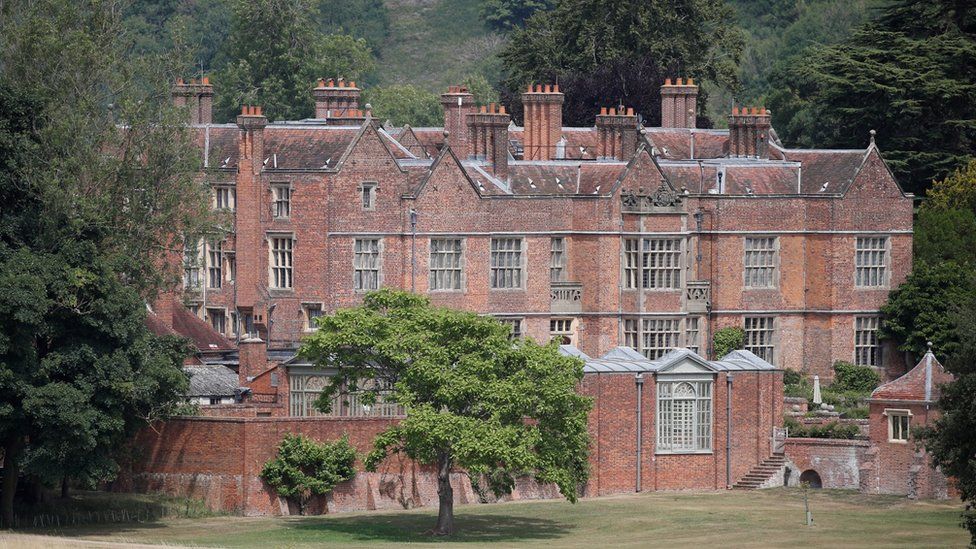
IMAGE SOURCE, REUTERS Image caption, Truss and Hunt are meeting at Chequers, the official country residence of the prime minister Mr Hunt is due to outline the government’s refreshed economic plan in a statement on 31 October, a task his predecessor was building up to following the aftermath of his mini-budget.
In his latest statement, released on Saturday night, Mr Hunt said: “My focus is on growth underpinned by stability. The drive on growing the economy is right – it means more people can get good jobs, new businesses can thrive and we can secure world-class public services. But we went too far, too fast.
He also said he intended to be “honest with people” about the “very difficult decisions” that had to be made “both on spending and on tax to get debt falling”.
“I will set out clear and robust plans to make sure government spending is as efficient as possible, ensure taxpayer money is well spent and that we have rigorous control over our public finances,” Mr Hunt added.
Meanwhile, the PM’s authority has come under increasing pressure – with some Tory MPs telling the BBC’s Laura Kuenssberg Mr Hunt’s appointment means Ms Truss is “in office, but not really in power”.
The prime minister’s hopes of survival could hinge on what she and her chancellor decide over the next two weeks.
There will be a budget at the end of the month that needs to convince financial markets and prove politically palatable to a fuming, mutinous Tory party.
Today’s meeting at the prime minister’s country residence is their first chance to have detailed discussions about the government’s new fiscal plan – which is expected to junk the tax-cutting agenda Liz Truss promised during the Tory leadership contest.
Jeremy Hunt has been clear that nothing is off the table and that tax rises and spending cuts will be needed. But many Conservative MPs are furious Liz Truss has led the government into this chaos and are talking privately about trying to turf her out.
One former minister predicted Ms Truss would be gone within weeks – but for now, she limps on, hoping the current turmoil subsides.
The imminent talks come as Andrew Bailey, the governor of the Bank of England, warned that interest rates may need to be raised higher than previously expected in order to keep UK inflation under control.
“As things stand today, my best guess is that inflationary pressures will require a stronger response than we perhaps thought in August,” Mr Bailey said in Washington, less than three weeks before the Bank’s monetary policy committee is due to meet.
Turning to his initial conversations with the new chancellor, Mr Bailey described an “immediate meeting of minds on the importance of stability and sustainability”.
Elsewhere in the US, President Joe Biden weighed in on the political situation in the UK, saying he “wasn’t the only one that thought it was a mistake” when asked about Ms Truss’s original economic plan.
He called the outcome “predictable” but said, while he disagreed with the prime minister’s policies, it was up to the British people.
Mr Biden also dismissed concerns about the strength of the dollar. “The problem is the lack of economic growth and sound policy in other countries,” he told a White House pool reporter.
Following the mini-budget, the pound plummeted to a record low against the dollar and the cost of government borrowing climbed as markets reacted to the package – which was not accompanied by an official assessment of how the UK economy would perform.
-
Chancellor’s career on the rim of the bin
At a time when the UK’s international financial credibility is on the line, the chancellor concluded it was a better option to bail out early of a gathering of finance ministers, at the world’s financial institutions in Washington, than stay put.
Why? Because 3,600 miles away, the prime minister was in discussions with Conservative MPs and others – their entire joint programme for government hovering above the shredder.
I’m told Liz Truss and Kwasi Kwarteng were in touch yesterday and it was his decision to make a dash for it to come home early.
He does so knowing that the centerpiece of his few short days as chancellor sits on the rim of the bin, as does his reputation and his career.
Tory MPs at every level of the party are suggesting he could be out of his job soon too.
But earlier, a Downing Street source told me that “the chancellor is doing an excellent job and they [the PM and chancellor] are in lockstep”.
So does Truss want him to continue in the job in the coming months? “Yes”, is the answer.
It is going to be a very interesting day in Westminster. It would not be a surprise if an almighty U-turn happens and happens today.
Source:BBC.com, Chris Mason
-
Liz Truss is clearly ready to fight for her vision – the problem is, her party isn’t
During what may yet turn out to have been only the first Conservative leadership contest of 2022, Liz Truss was extremely careful to position herself as the continuity candidate to Boris Johnson. That display of apparent loyalty was to prove pivotal with many party members when they selected her over the Johnson assassin, Rishi Sunak. Yet as Truss’s first month as prime minister has now shown, she is not the continuity Johnson candidate at all. Instead, she glories in being a radical disrupter.
This was evident from day one when Truss appointed a cabinet overwhelmingly from the Tory right while banishing prominent ministers of the Johnson era. It became explosively obvious two weeks later, when Kwasi Kwarteng slashed taxes on the rich, setting off the chain of events that has transformed British party politics and left the Tory party’s ratings in tatters. On Wednesday, it was starkly confirmed in Truss’s party conference speech in Birmingham – a defiant address that contained no mention of Johnson whatever, let alone any endorsement of his policies.
On the day of her leadership victory a month ago, Truss said she had campaigned as a Conservative and would now govern as a Conservative. It’s the kind of platitude that new leaders often spout. But the Tory party that heard those words must have thought it implied some degree of continuity with the recent past.
It did not. In Truss’s mouth, the words implied what she had always intended them to mean: a decisive shift to the Thatcher/Reagan economic right of the kind that has long been the dream of the party’s free-market thinktanks but is fundamentally at odds with Johnson’s messy, big-government pragmatism.
Truss’s speech was an unapologetic confirmation that this is what we are now witnessing. She sees hers as a different and very particular form of Conservatism. She is not interested – as Johnson was, albeit in his own, slapdash way – in making compromises with any other forms. Hers is a Year Zero approach.
At three separate points in the speech, she used the phrase “new approach”. All three usages felt very deliberate and significant. They signalled that this is a prime minister who, now that she has got hold of the steering wheel, will not look in the rear-view mirror, and will drive until she is stopped.
In one of these references, directed explicitly at trying to reassure the financial markets, Truss spoke of “taking a new approach based on what has worked before”. It is important to deconstruct that remark. What had “worked before”, in this reading, was not anything that Johnson had been doing. The reference was to Margaret Thatcher’s taming of the trade unions, her privatisations of nationalised industries, and her deregulation of the City in the 1980s.
In other words, this was a not-so-coded warning that, whatever the financial turmoil of the past two weeks, Truss is unbowed. She still sees market deregulation and low taxes as the absolute core of the strategy, whatever happened after the mini-budget.
All Conservative leaders talk about deregulation and low taxes. The words have been guaranteed applause lines in any Tory politician’s conference speech over the past four decades. They may seem little more than pieties. But Truss’s use of them is different. She is more ideological and visceral, not just compared with Johnson but also with Theresa May, David Cameron, or John Major. Truss’s real commitment is to a Thatcher of her imagining (in reality, Thatcher was more subtle). It has an almost theological quality, and it was reflected in a speech that made no concessions to her critics.
She is also, at least in her own self-image, up for the fight. In spite of the U-turns in the past days, on the top rate income tax band and the Office for Budget Responsibility, Truss had no word of apology or empathy this time. It is clear she will cut benefits in real terms if she can. When she mentioned leveling up, which she also did on three separate occasions, it was to promise to level up Britain “in a Conservative way”. By this, she did not mean the government investment that Johnson was always implying (though not delivering). When Truss says “in a Conservative way”, she means her way – cutting taxes and regulations – and that she at least is prepared to weather the disruption and opposition.
Yet if Truss is prepared to fight for this approach, the same can hardly be said for many in her party. The Tory party feels exhausted and feels as if it is increasingly going through the motions of being a governing party. No one attending the Birmingham conference could have missed the unease.
It manifested itself in myriad different ways, from the criticisms made by a newly energized Michael Gove, through the readiness of ministers such as Penny Mordaunt to stand up for inflation-proof benefits, to the gallows humour in fringe meetings. When the Ipsos pollster Gideon Skinner told one fringe gathering that current polls would show a general election loss of 181 Tory MPs, the man sitting next to me whispered: “Actually, that feels quite reassuring right now.”
Birmingham settled nothing. The conference was the Tory party’s “What on earth have we done?” moment. As a result, Truss found herself fighting for her political life. There genuinely was talk about whether to act quickly and find a new leader (or bring back Johnson). Truss’s speech will get her through the coming weekend. But it was a dishonest speech, more important for its omissions and its concealments than for anything that spoke, let alone with empathy, to a party that is beginning to feel its luck has run out.
The U-turns this week have in fact disabled the prime minister’s attempt to drive her agenda forward. They will hardly be the last. The return to Westminster will move the spotlight on to the parliamentary party once again. The Gove-Sunak wing of the party now possesses an effective veto over what the Truss-Kwarteng wing gets to do. This will shape the dark machinations (which have already begun) of the coming days and weeks.
The truth is that the post-Brexit electoral coalition assembled by Johnson in 2019 was always so volatile and idiosyncratic that anyone else would have struggled to be the continuity leader once he stepped down. Yet Truss is proving something else besides. The fracturing and narrowing of the Tory party over the past decade are now so great that it has resulted in the party being simultaneously ungovernable and unable to govern. It is possible that Truss herself may soon be toppled. Yet no one else would do much better. It is time for the Conservatives to go into opposition. Only then can they try to decide what governing as a Conservative now means.
DISCLAIMER: Independentghana.com will not be liable for any inaccuracies contained in this article. The views expressed in the article are solely those of the author’s and do not reflect those of The Independent Ghana
Source: The Guardian, Martin Kettle
-
James Cleverly: Keep views on government policy “around the cabinet table” – ministers urged
The 45p tax rate was introduced in Chancellor Kwasi Kwarteng’s tax-cutting mini-budget last month and overturned last week. On Tuesday, Home Secretary Suella Braverman accused Tory MPs of launching a “coup” against the PM.
Foreign Secretary James Cleverly has urged his ministerial colleagues to keep their views on government policy “around the cabinet table” as Liz Truss faces an open split within her top team over the 45p tax rate U-turn.
The senior cabinet member warned his peers that it is “always better to feed straight into the boss” if there are any issues regarding “policy or the relationship with other ministers”.
On Tuesday, Home Secretary Suella Braverman accused Tory MPs of staging a “coup” against the PM over the 45p tax rate – a policy which was unveiled in Chancellor Kwasi Kwarteng’s tax-cutting mini-budget last month and reversed last week.
“She chose the words that she chose,” the foreign secretary told Sky News, responding to Ms Braverman’s comments.
“My view is anything to do with policy or the relationship with other ministers – always better to feed straight into the boss”.
Fellow cabinet minister Simon Clarke also publicly disclosed his objection to the reversal of the policy.
The Levelling Up, Housing and Communities secretary posted on social media: “Suella speaks a lot of good sense, as usual.”
The tax cut for the wealthiest 1% was one of a raft announced by Mr Kwarteng in his mini-budget less than two weeks ago that led to market turmoil – with the pound plummeting, the Bank of England having to step in to rescue pension funds, and mortgage products being withdrawn.
Despite standing by the policy in the opening days of the conference, Mr Kwarteng confirmed on Monday it would no longer go ahead, saying the measure had become a “distraction” from his objective to grow the economy.
Yesterday, Ms Truss told Sky News’ political editor, Beth Rigby, she had “absolutely no shame” in performing the dramatic U-turn.
Mr Cleverly told Kay Burley that “a lot of discussions weren’t able to be had” over the chancellor’s mini-budget proposals because of the death of the Queen.
The foreign secretary also disputed that a U-turn took place, adding: “What you’re describing as a U-turn is the smallest element of a really big and significant support package to families, a tax cut to families, the stimulus package for the British economy.”
Ms Truss is also facing the threat of another major split within her top team over the level of benefits.
On Tuesday, Leader of the House of Commons Penny Mordaunt joined backbench rebels in calling for welfare payments to be raised in line with inflation, which has been at around 10%, rather than earnings at 5%.
The PM has refused to commit to raising benefits in line with inflation, saying she has “not made a decision” on whether to stick to the benefit uprate promised by her predecessor Boris, Johnson.
Two additional cabinet ministers have also told Sky News that they believe benefits should be uprated in line with inflation.
Sky News understands that Chairman of the 1922 Committee of backbench Conservative MPs Sir Graham Brady has warned Ms Truss any attempt to uprate benefits by average earnings rather than by inflation is unlikely to get through Parliament.
At around 11 am, Ms Truss is due to deliver her keynote speech at the Conservative Party’s conference in Birmingham as she battles to save her premiership just one month into the job.
The PM will wrap up the event by defending her approach and pledging a “new Britain for the new era” after a week of U-turns and infighting.
The prime minister will tell her audience: “Whenever there is change, there is disruption. Not everyone will be in favour.
“We need to grow the pie so that everyone gets a bigger slice.”
She is expected to say: “I am determined to take a new approach and break us out of this high-tax, low-growth cycle.”
Ms Truss will also put her government forward as having an “iron grip” on the UK’s finances that will help everyone.
The hall in Birmingham is not expected to be full as many MPs said they were leaving on Tuesday evening ahead of train strikes on Wednesday.