Tag: Traffic Congestion

  • EXPLAINER: What Ghana’s new car number plates mean

    EXPLAINER: What Ghana’s new car number plates mean

    Ghana’s Road Traffic Regulations, 2026 (L.I. 2519) introduce detailed rules on how vehicles are registered, how number plates must look and be displayed, how often registration numbers must be renewed, and what happens to a vehicle’s number when ownership changes.

    Ghana Regional News

    What must every registered vehicle have?

    Under Regulation 10, when a motor vehicle or trailer is registered, the Licensing Authority assigns it an identification mark, or registration number.

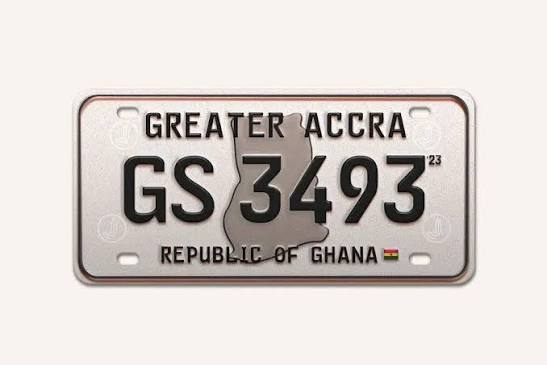
    For an ordinary motor vehicle, that identification mark must appear on two number plates. The plates must be securely fixed, upright or within 15 degrees of an upright position, and the letters and numbers must be clearly legible. The front and rear plates must also be easily distinguishable.

    The Regulations go further. The reflective characters on a plate must be clearly legible at night in clear weather and recognisable by a driver following from at least 60 metres away. Plates must also be resistant to wear and tear.

    There is also a third, retro-reflective licence plate issued by the Licensing Authority. This takes the form of a sticker placed on the inner right-hand corner of the windscreen. It carries the registration information as well as the chassis number, make and model of the vehicle.

    A motor vehicle or trailer covered by the requirement cannot legally be kept, used or driven on the road without it.

    So what do the different number plates mean?

    L.I. 2519 creates a number of identifiable categories:

    Type What identifies it under L.I. 2519


    Private vehicle: A white background, together with the region, Ghana map, Ghana flag, unique alphanumeric identification mark and registration-centre code.


    Commercial vehicle: A yellow background, with similar security and identification information.


    Diplomatic vehicle: The form and nature of the plate are to be determined by the Licensing Authority in collaboration with the Ministry responsible for Foreign Affairs, for vehicles or trailers assigned to diplomatic or international organisations.


    Government vehicle: A white background and the prefix “GV”.
    Electric vehicle Includes a green-coloured band on the left side of the plate.


    The trailer includes a yellow-coloured band on the left side.
    Equipment includes a blue-coloured band on the left side.
    A private motorcycle uses the prefix “M” and a blue background.


    Commercial motorcycles use the prefix “M” and a yellow background.


    Temporary vehicles use the prefix “TMP”.


    Defective vehicle plate uses the prefix “DV”, and must carry a unique garage identification, registration number, and expiry date.


    Particular identification mark: Allows an approved personalised inscription or name to serve as the identification mark.


    Ceremonial plate carries an approved personalised ceremonial inscription and is valid for no more than three months.

    These requirements are set out principally in Regulations 11 to 23. One point worth noting is that the Regulations themselves do not spell out a specific colour or prefix for diplomatic plates in Regulation 13.

    Instead, they leave their form and nature to the Licensing Authority and the Foreign Affairs Ministry.

    Can you cover, bend or obscure your number plate?

    No.

    Regulation 24 says a person cannot keep, use or drive a motor vehicle or trailer on a road without the required registration plate.

    It also prohibits fixing the registration number in a way that makes it obscure or difficult to distinguish.

    This means the issue is not simply whether a plate is physically attached to the vehicle. It must also be visible and readable.

    A breach attracts, on summary conviction, a fine of not less than 10 and not more than 25 penalty units, imprisonment for up to 30 days, or both.

    That makes obscured plates particularly relevant to automated enforcement such as TRAFFITECH: deliberately positioning or covering a plate so that it cannot easily be identified can itself amount to an offence.

    How often must a vehicle’s registration number be renewed?

    This is one of the biggest changes motorists need to know.

    Under Regulation 25, the owner of a motor vehicle or trailer must renew the registration number every two years by applying to the Licensing Authority.

    The Licensing Authority is required to notify the owner one month before the registration period expires.

    Once the renewal requirements have been met and the prescribed fee paid, the Authority issues a validation sticker. That sticker must be placed on the top-left corner of the licensed plates.

    Failure to renew the registration number or properly display the validation sticker can attract 10 to 25 penalty units, up to 30 days’ imprisonment, or both.

    Importantly, this two-year registration-number renewal should not be confused with the road-use certificate or roadworthiness requirements, which are dealt with separately under the Regulations.

    Can DVLA take your registration number away?

    Yes.

    Under Regulation 26, the Licensing Authority may withdraw a registration number where the owner fails to renew it in accordance with Regulation 25.

    A number may also be withdrawn if it has remained unassigned for five years or more without the owner notifying the Authority, where a court orders its withdrawal, or in another circumstance determined by the Licensing Authority.

    What happens to the number plate when you sell your car?

    This is perhaps the most important provision for people buying and selling used vehicles.

    Under Regulation 30, both the existing owner and the prospective new owner must notify the Licensing Authority of the change of ownership within 14 days.

    They must provide a completed transfer-of-ownership form, a letter changing ownership, the Certificate of Title, and any other documents required by the Licensing Authority.

    But the transfer does not happen merely because the parties have signed documents.

    Before DVLA completes the change of ownership, the Licensing Authority must physically check the chassis number and confirm that it corresponds with its records.

    Does the number plate automatically go with the car?

    No.

    The Regulations say the previous owner cannot simply transfer the vehicle registration number to the prospective owner unless the Licensing Authority approves it.

    Within 14 days of notifying the Authority about the change of ownership, the parties must present the vehicle or trailer so that its registration number can be deactivated and the number plate recalled.

    The new owner then applies for one of three things: a temporary registration number, reactivation of an existing registration number belonging to the new owner, or a new permanent registration number.

    This means, under L.I. 2519, selling the vehicle does not necessarily mean selling your registration number with it.

    What happens to the seller’s old registration number?

    The Regulations provide that after a change of ownership, the vehicle’s existing registration number is generally reserved for five years in the name of the previous owner.

    If that previous owner buys another vehicle in the same category, the Licensing Authority may reassign and activate the number for that vehicle.

    If the new vehicle is in a different category, it must instead be registered as a new vehicle.

    The five-year reservation rule does not apply in the same way to government vehicles, registered companies and diplomatic vehicles.

    The important takeaway

    L.I. 2519 changes the way motorists should think about a number plate. It is not simply a metal tag permanently attached to a particular car.

    The Regulations link a registration number to the registered owner, the vehicle category, periodic renewal and DVLA’s records. They also introduce distinctive identifiers for commercial vehicles, government vehicles, electric vehicles, motorcycles and temporary vehicles.

    Perhaps the most important practical points are these: registration numbers must be renewed every two years; plates must remain clearly visible; ownership changes must be reported within 14 days; and when a car is sold, the old registration number does not automatically pass to the buyer.
  • TraffiTech system will not take over police duties – MTTD

    TraffiTech system will not take over police duties – MTTD

    The introduction of a technology-driven traffic enforcement system,TraffiTech-GH will not replace police presence at the roads, according to Director of Education, Research and Training at the Police Motor Traffic and Transport Department (MTTD), ACP Alexander Kwaku Obeng.

    Addressing the media on Wednesday, August 26, ACP Obeng, disclosed that the system has been designed to assist the police.

    He added that, “It doesn’t necessarily mean that police physical presence will not be there.”

    “Visibility will be there, first of all, even in the case that there are certain instances that we need police to be controlling the traffic”.

    The system forms part of the National Road Safety Authority’s (NRSA) efforts to curb vehicular accidents and road traffic offences.

    The system will be designed to issue fines to individuals who violate road traffic regulations, effective in 2027. According to The NSRA’s Director-General, Abraham Amaliba, the system will replace the human factor, in which police officers manually identify traffic offenders and issue fines.

    “We are going to be using technology to regulate road traffic. We will permanently mount cameras on our roads, and some of the cameras will be on tripods and vehicles, and this will take away the human factor that extorts money and also serve as a check on drivers who engage in reckless driving.

    “There are more than sixteen offences that the camera will be capturing. So if you are overspeeding or driving recklessly, you are captured, and you receive a text message to pay a fine, and if you fail to pay within fourteen days, it compounds, and your licence will be taken, and you won’t be able to drive again.”

    The NSRA’s Director-General, Abraham Amaliba, disclosed while speaking to the media on Thursday, August 13.

    Ghana continues to record fatalities and casualties due to road accidents, with road crashes remaining a major public safety concern.

    On Thursday, August 14, eleven (11) individuals have lost their lives, and thirteen (13) others have been injured in a multiple-vehicle crash on the Ofankor-Pokuase stretch.

    The crash involved two tipper trucks, two Sprinter buses, two saloon cars and a tricycle. DO1 Emmanuel Bonnie made this known during an interview with the media on Thursday, August 14.

    The crash also disrupted traffic on the Accra–Kumasi Highway, with part of the road restricted to allow emergency personnel to carry out rescue and clearance operations.

    Motorists travelling from Pokuase and Amasaman towards Ofankor and Accra have been advised to use the outer lane, drive cautiously and give way to emergency responders working at the scene. Meanwhile, the exact circumstances that led to the collision is yet to be disclosed by authorities.

    Ghana continues to record fatalities and casualties due to road accidents, with road crashes remaining a major public safety concern.

    1,009 individuals lost their lives in road crashes between January and April 2026, while 181 pedestrian deaths were recorded during the first four months of the year, according to the National Road Safety Authority (NRSA).

    In 2025, a provisional data released by the National Road Safety Authority in collaboration with the Police Motor Traffic and Transport Department (MTTD), noted that a total of 7,289 road crashes were recorded between January and June during that period. Per the data, a total of twelve thousand three hundred and fifty-four (12,354) vehicles were involved in these crashes.

    As a result of these incidents, eight thousand three hundred (8,300) individuals sustained injuries. Additionally, one thousand three hundred and one (1,301) pedestrians were knocked down across the country.According to recent data provided by the National Road Safety Authority, on average, eight (8) lives are lost every day due to road crashes.

    Each day, forty (40) road crashes are recorded, and forty-six (46) individuals sustain injuries. Daily, sixty-nine (69) vehicles and motorcycles are involved in road crashes.To help combat the rising number of road crashes, the National Road Safety Authority has called for stricter enforcement of traffic regulations and increased public education.

    The NRSA has emphasized the need for stronger enforcement to curb the alarming trend. The Road Traffic Act 2004, an Act to consolidate and revise the Road Traffic Ordinance, 1952 (No. 55), provides for more comprehensive regulation of road traffic and road use to ensure road safety and address related matters.

    A person who drives a motor vehicle dangerously on a road commits an offence and is liable on summary conviction:(a) where (i) a bodily injury does not occur, or (ii) a minor bodily injury occurs to a person other than the driver, to a fine of not less than one hundred penalty units and not exceeding two hundred penalty units, or to a term of imprisonment not exceeding nine months, or to both;

    (b) where bodily injury of an aggravated nature occurs to a person other than the driver, to a minimum fine of two hundred penalty units and not exceeding five hundred penalty units, or to a term of imprisonment of not less than twelve months and not exceeding two years, or to both;(c) where death occurs, to a term of imprisonment of not less than three years;

    (d) where there is damage to state property, to a fine of not less than one hundred penalty units and payment for the damage caused in an amount determined by the Court.

    The Court may, upon conviction of a person under subsection (1), (a) order the payment of appropriate compensation to an injured person or to the estate of that person, or (b) order the withdrawal of the driver’s license for a period of not less than three years and not more than five years.

    A person who drives a motor vehicle on a road without due care and attention, or without reasonable consideration for other persons using the road, commits an offence and is liable on summary conviction to a fine not exceeding two thousand penalty units or to a term of imprisonment not exceeding five years, or to both.

    A person commits an offence if, without lawful authority or reasonable excuse, that person:

    (a) causes anything to be on or over a road;(b) interferes with a motor vehicle, trailer, or cycle; or(c) interferes, directly or indirectly, with traffic equipment, where it would be obvious to a reasonable person that doing so would be dangerous.

    A person who commits an offence under subsection (1) is liable on summary conviction to a fine not exceeding two hundred and fifty penalty units or to a term of imprisonment not exceeding twelve months, or to both.

    Meanwhile, over one-third of emergency cases at the Komfo Anokye Teaching Hospital (KATH) have been linked to road crashes, according to the facility’s statistics.

    Speaking to the media, Deputy Medical Director of KATH, Dr. Yaw Opare Larbi, noted that road crash victims brought to the emergency unit often do not survive because their injuries are very severe.

    “A little over 30 per cent of the cases that come to this facility, this Accident and Emergency Unit, are due to accidents, and most of the accidents, a few are domestic, but the majority of them are road traffic accidents.

    “Now in Ghana, we know that our statistics, a lot of our road accidents are from errors, driver errors, pedestrian errors. And then we know that we have some percentage that is attributable to maybe things like faulty vehicles or maybe road conditions, but a lot of the accidents are preventable,” he stated.

  • Police successfully managing traffic congestion in Accra and across the country – Service says

    Police successfully managing traffic congestion in Accra and across the country – Service says

    The Ghana Police Service has called upon Ghanaians in an earnest plea, for cooperation as it diligently strives to ameliorate prevailing traffic conditions across the nation.

    The Service reports a surge in traffic across various areas of Accra and other major cities due to New Year festivities.

    In response to this situation, the Police Service has deployed officers nationwide to assist in alleviating the traffic congestion.

    Read the brief statement below;

    The Ghana Police Service wishes all Ghanaians a Happy New Year.

    We wish to bring to your attention that there is increased traffic in some parts of Accra and other major cities across the country due to the New Year celebrations.

    We kindly urge the public to bear with us as Police officers deployed throughout the country continue to work to ease the traffic situation.

  • NRSA blames Urban Roads Department for widespread malfunctioning traffic lights

    NRSA blames Urban Roads Department for widespread malfunctioning traffic lights

    The National Road Safety Authority (NRSA) says the Urban Roads Department is solely to blame for the widespread malfunctioning traffic lights in the nation’s urban centers and the crashes that result from them.

    Data available from the Authority indicates that 48 percent of traffic lights across Ghana are dysfunctional as of June 2022.

    Greater Accra leads with 33 dysfunctioning traffic lights followed closely by the Ashanti Region with a count of 24. The rest are: Bono East-10, Western Region – 9, Bono -7, Volta Region -5, Eastern Region 3 and Upper East -3.

    Speaking in an interview on JoyNews’ The Probe on Sunday, the Director of Regulations, Impact, and Compliance at the National Road Safety Authority, Kwame Koduah Atuahene said the problem persists because the Department of Urban Roads has not demonstrated enough commitment to solving it.

    He stated that efforts should be made to lessen the situation while lowering road fatalities.

    He added that although no agency in the country has access to the needed funding, to carry out its functions, there is an urgent need to prioritise the issue of dysfunctional lights.

    “If the accidents are happening in Accra, Kumasi, Eastern Region and we are all concerned about the numbers going down, and you may not be able to fix all the traffic lights in all 16 regions, at least we should see that some effort is being made to try to minimise the stress that we all go through using the roads… they haven’t shown us much passion and I say this with a lot of regrets,” he stated.

    Meanwhile, the President of an NGO, Accident Victims Support Ghana, Reverend Cyril Crabbe wants the Department of Urban Roads to immediately deploy men to the various traffic intersections as schools reopen next week to prevent further carnage on our roads.

    “We should think about the pedestrians, especially now that schools are about to be reopened .. we have seen many students dying at intersections because there are no traffic lights.”

    He proposed the introduction of “road furniture” on the roads to ensure pedestrians safety.

    Source: Myjoyonline.com