Tag: Tramadol

  • 5 Customs officials arrested over undeclared Tramadol seizure

    5 Customs officials arrested over undeclared Tramadol seizure

    The police have arrested nine public officers, including five Customs officials, for their alleged involvement in an undeclared Tramadol consignment at Tema Port, Accra.

    The other four include an officer each from the Narcotics Control Commission, Port Security, the Energy Commission, and the Standards Authority.


    On February 26, the Customs Division of the Ghana Revenue Authority (GRA) seized a shipment allegedly from the United Arab Emirates which had been cleared as water kettles, kitchen blenders, pressing irons, energy-saving bulbs and polypropylene materials.


    Following an intelligence-led tip, Customs officers and the Central Revenue Monitoring Team conducted a joint re-examination on March 1, which revealed that the container actually held 299 cartons containing a total of 146,932,000 tablets of Tramadol Hydrochloride (250mg and 225mg), with a combined weight of 34,847.2 kilograms.


    Recently, government authorities have stepped up efforts to stop the illegal smuggling and sale of prohibited goods, like illegal drugs, across the country. Last week, five officers of the Ghana Revenue Authority Customs Division were removed from their positions for allegedly breaching its code of conduct.


    The officers have been accused of procedural breaches linked to a transit cargo operation bound for Niger.

    According to the Authority, a press statement issued on Tuesday, February 24, indicates that their removal is to allow a probe into discrepancies detected during an enforcement operation with regard to a consignment declared as transit cargo for onward movement to Niger on February 18.


    The Authority added that inconsistencies in documentation and non-compliance with established transit procedures were detected after thorough checks.


    Meanwhile, the Office of the Special Prosecutor (OSP) has disclosed that the consignment in question was destined for Burkina Faso and was transiting through Ghana.


    However, it failed to reach its intended destination and was instead offloaded in Ghana without the payment of the appropriate taxes and applicable duties.


    Consequently, the OSP disclosed that Ghana has lost an estimated GHS 10.5 million in taxes as a result of the diversion.
    “The Office of the Special Prosecutor (OSP) is investigating suspected corruption involving the diversion of fifty (50) twenty-foot containers of palm oil valued at GHS 25.8 million…. The Office has identified the involvement of some Customs officers,

    “National Security operatives, and clearing agents in a corrupt scheme. The consignment, declared as in transit to Burkina Faso, was unlawfully diverted into the local market without payment of applicable duties and taxes,” the statement noted.


    Though the GRA and the OSP have yet to disclose what was contained in the transit cargo, reports indicate that 18 articulated trucks impounded at the Akanu and Aflao border posts on February 18 were carrying assorted goods, including cooking oil, spaghetti, and tomato paste, and were suspected to be part of a broader transit diversion scheme.


    Transit cargo or trucks are goods destined for landlocked countries such as Niger, Burkina Faso, and Mali, which usually pass through Ghana’s ports before arriving at their destinations due to the absence of seaports in those countries.


    The transit cargo system is very important to Ghana’s trade and revenue monitoring system. Therefore, the country is exposed to revenue leakages and smuggling risks should there be a breach in documentation or enforcement.

    Such practice leaves a dent on Ghana’s reputation within the West African trade corridor.


    Under the Customs Act, 2015 (Act 891) and GRA guidelines, goods declared as “in transit,” passing through Ghana to another country such as Niger, must follow transit rules, which include mandatory escort to prevent diversion of goods to designated countries to avoid import duties, thereby causing huge losses to the state.


    Preliminary investigations indicated that the consignments could have led to potential revenue losses of GH¢85.3 million, with an immediate revenue exposure estimated at GH¢2.62 million.


    Post-interception examinations in the recent case uncovered material discrepancies in declared unit values, tariff classifications, and weights, which revised the suspended revenue exposure from approximately GH¢2.6 million to over GH¢85 million.

  • About GHS2.5m worth  of tramadol, other drugs destroyed in Northern Region – NACOC

    About GHS2.5m worth of tramadol, other drugs destroyed in Northern Region – NACOC

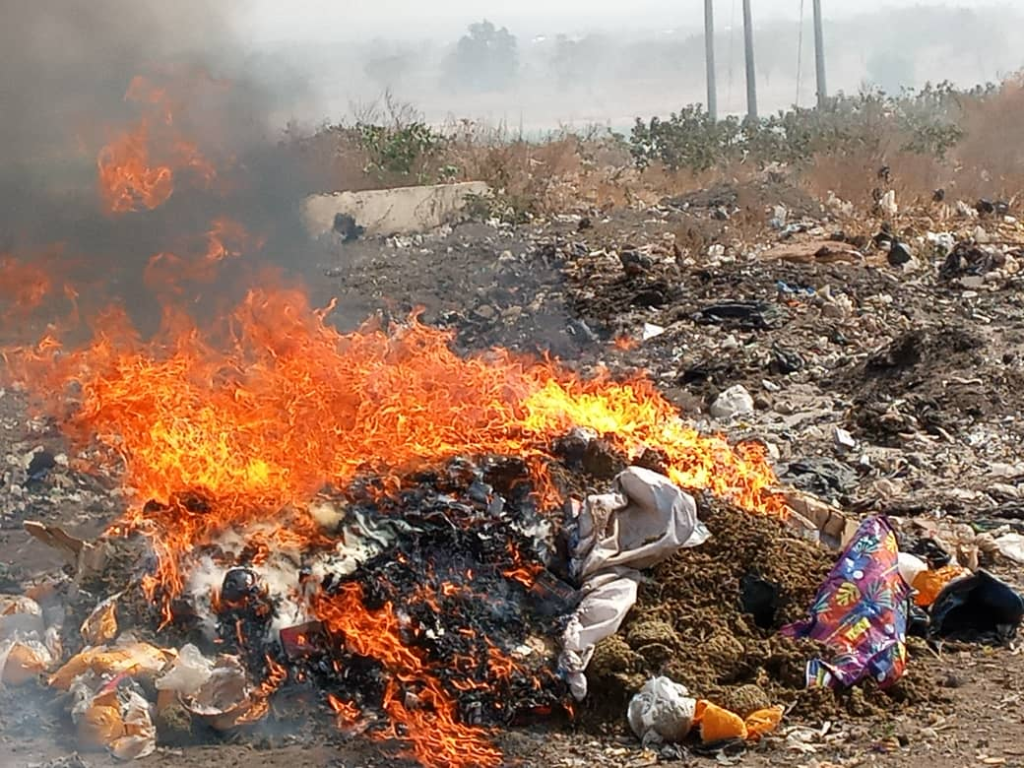
    Narcotics worth about GH₵2.5 million have been destroyed by the Northern Regional Command of the Narcotics Control Commission.

    This, according to the Substance Control Authority, forms part of the government’s intensified efforts to promote public safety and check the infiltration of unauthorised drugs in the region.

    The drugs were held at the Registry of the Circuit Court in Tamale and later destroyed after the prosecution of the persons involved in the trafficking of the drugs, following a court order issued by His Honour Francis Ayamwuni Asobayire, Circuit Court Judge.

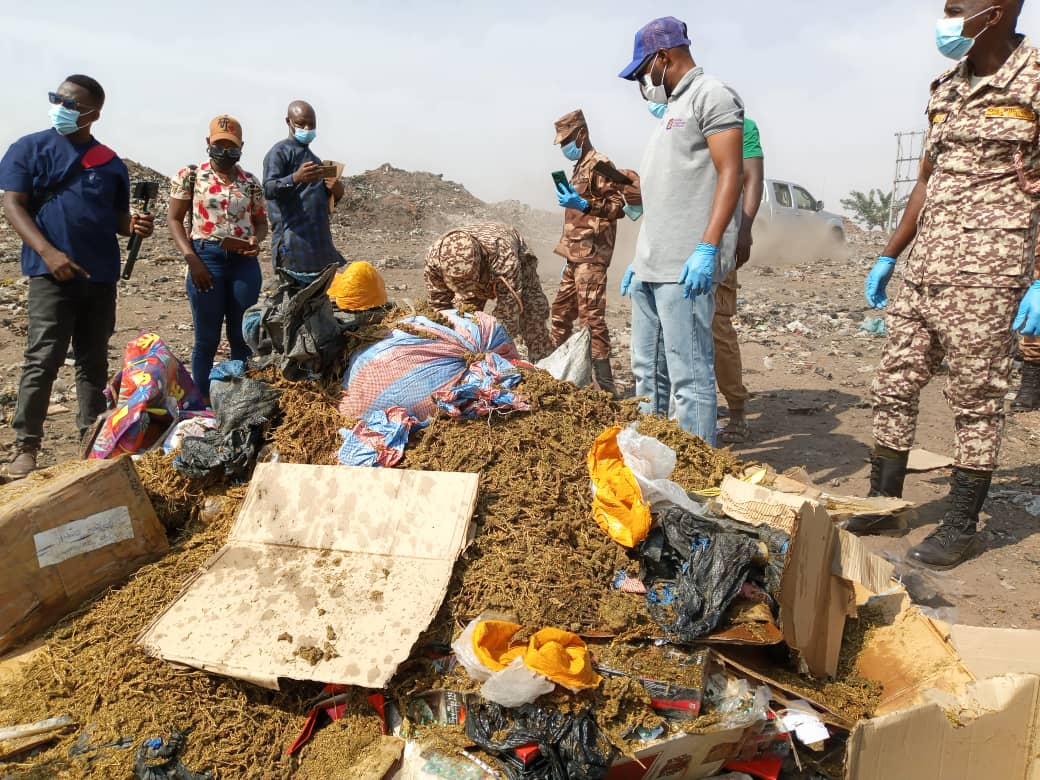
    NACOC destroyed boxes of Tafrado 120mg, blisters of Tramadol, boxes of Royal 225mg, as well as quantities of marijuana at the Gbalahi Landfill site near Tamale, which was witnessed by representatives of various state agencies, including the Ghana Police Service, and members of the media.

    Mr Issahaque Bakuri, Northern Regional Commander of the Narcotics Control Commission, said the disposal formed part of measures to curb the smuggling and abuse of illicit drugs in the country.

    “We are taking frantic measures to combat drug abuse and promote a healthier society in the region and the country at large,” he said.

    To prevent further smuggling of such prohibited drugs into the country, Mr. Bakuri indicated that security officers had been stationed at entry points across the region, and intensified efforts have been made to enhance security surveillance at both approved and unapproved entry routes to address the drug menace.

    Mr. Bakuri urged individuals battling drug addiction to seek counselling and rehabilitation services.

    More than 11 nationwide intelligence-led swoops have been conducted between March and December this year by the Narcotics Control Commission (NACOC), aimed at cracking down on illicit drug activities.

    Speaking to the media on Friday, December 19, the Acting Director of Public Affairs and International Relations at NACOC, PNCO Francis Opoku Amoah, indicated that during that period, the swoops were carried out in areas such as:

    “From March till now, we have conducted more than 11 swoops, which, in our line of work, is a good number because investigations take time. For us to have achieved this means we are doing well.

    “This year, we have carried out swoops in Fadama, Effiakuma in the Western Region, Atinkpoko, parts of the Ashanti Region, and other areas. It all depends on where the intelligence is coming from and the type of intelligence we receive,” he said.

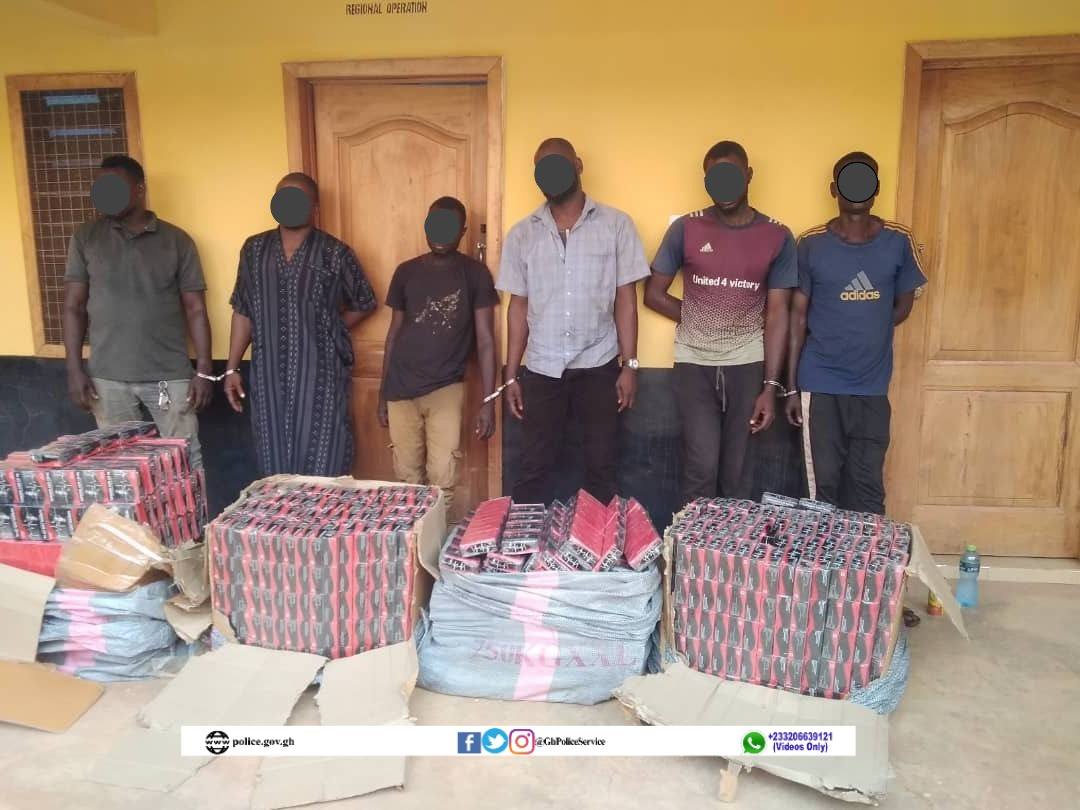
    In September, 1,195 boxes of Tramadol Hydrochloride 120mg, locally known as ‘Red,’ were confiscated, with six individuals arrested following a joint operation by the Ghana Police Service and NACOC. The seizure took place at Gbintri, near Nalerigu in the North East Region, on Thursday, September 18.

    This information was contained in a statement signed by Deputy Superintendent of Police (DSP) Robert Anabiik Anmain of the Public Affairs Unit and issued by the North East Regional Police Command on September 21.

    The trucks, with registration numbers GR 1712-16 and AW 4417-14, were loaded with Tramadol en route to Gbintri from Sankase in the Republic of Togo.

    The suspects have been identified as Alhassan Braimah, Yakubu Muntaka, Abdulai Shakur, Mumuni Iddrisu, Mumuni Yakubu, and Moses Ayorik.

    “The North East Regional Police Command, in collaboration with the Narcotics Control Commission (NACOC) in Nalerigu, has intercepted 1,195 boxes of Tramadol Hydrochloride 120mg, popularly known as ‘Red,’ a restricted drug concealed in a truck, and arrested six suspects at Gbintri near Nalerigu in the North East Region.

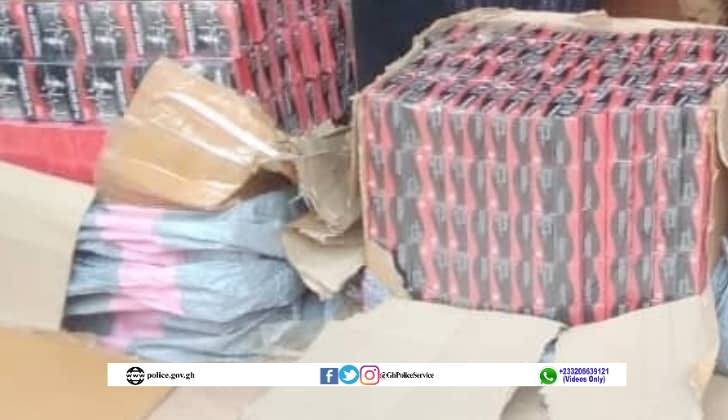
    “A search of the trucks uncovered the 1,195 boxes of Tramadol Hydrochloride 120mg, popularly known as ‘Red,’ concealed among other goods in the truck with registration number GR 1712-16. The exhibits have since been secured for evidential purposes.

    During interrogation, the suspects admitted that the consignment was destined for Moses Ayorik at Gbintri for onward delivery to another individual at Gushegu,” part of the statement read.

    According to the statement, the apprehended individuals are in police custody, assisting with investigations. In addition, efforts are underway to trace and arrest other individuals connected to the case.

    Officials of the Ghana Revenue Authority (GRA) at the Transit Terminal, on Thursday, June 19, intercepted a shipment disguised as general merchandise and headed for Niger. The officials uncovered 100 cartons of Tramadol (50 of 250mg and 50 of 120mg), also known on the streets as “Red.”

    The operation, led by CRO William Kpodo and the monitoring team, has now been escalated to the Tema Collection’s Investigation Unit, in collaboration with the Narcotics Board, Port Security, and the Joint Port Control Unit (JPCU).

    In March, the Ghana Revenue Authority (GRA) Customs Division intercepted contraband goods at Tema Port. Boxes containing opioids were confiscated before noon.

    There were 26 cartons of Rahol Tapentadol 250mg, 160 cartons of Tafradol Tapentadol 120mg, 40 cartons of Timaking Tapentadol 120mg, four cartons of Timaking Tapentadol 250mg, 190 cartons of Diazole Loperamide 2mg, and 320 cartons of Chlorpheniramine Maleate.

    The drugs were worth approximately GH₵20 million. The shipment was en route to Niger, its final destination. Engaging the media, Health Minister Mintah Akandoh condemned the use of land borders to smuggle drugs, and announced that the impounded consignment would remain in the safe custody of the Authority.

    “There are only two designated areas for the import and export of medication: Tema Port and Kotoka International Airport. Drugs are not imported through our land borders,” he said.

  • NE/R: Court jails two men 10 years each for tramadol possession

    NE/R: Court jails two men 10 years each for tramadol possession

    The two out of the four individuals who were arrested after the Ghana Police Service and the Narcotics Control Commission (NACOC) seized 1,195 boxes of tramadol hydrochloride 120mg, popularly called “Red,” at Gbintiri near Nalerigu, have each been sentenced to 10 years in prison.


    The Nalerigu Circuit Court Presiding Judge, Justice Francis Asobayire, also imposed a fine of 5,000 penalty units each, equivalent to GH¢60,000. Under the charge arrangement, those who fail to pay will serve an additional 10 years in prison.

    The convicts, Mumuni Iddrisu and Alhassan Braimah, were charged with unlawful possession of drugs. Reports indicate that the two were found with over 4,500 packs of the restricted substance, concealed in 25 five-litre yellow gallons and 100 boxes of tramadol.

    They will serve their sentences at the Gambaga local prison. Meanwhile, investigators found the four other suspects, Yakubu Muntaka, Abdulai Shakur, Mumuni Yakubu, and Moses Ayorik, not guilty.


    On Tuesday, September 23, the Ghana Police Service and the Narcotics Control Commission announced the seizure of 1,195 boxes of tramadol hydrochloride 120mg after the arrest of six individuals.


    The seizure, according to the authorities, took place at Gbintiri, near Nalerigu in the North East Region, on Thursday, September 18. This information was contained in a statement signed by Deputy Superintendent of Police (DSP) Robert Anabiik Anmain of the Public Affairs Unit and issued by the North East Regional Police Command on September 21.


    The trucks with registration numbers GR 1712-16 and AW 4417-14 were loaded with tramadol en route to Gbintiri from Sankase in the Republic of Togo. “The North East Regional Police Command, in collaboration with the Narcotics Control Commission (NACOC) in Nalerigu, has intercepted 1,195 boxes of Tramadol Hydrochloride 120mg, popularly known as ‘Red,’ a restricted drug concealed in a truck, and arrested six suspects at Gbintiri near Nalerigu in the North East Region.


    “A search of the trucks uncovered the 1,195 boxes of Tramadol Hydrochloride 120mg, popularly known as ‘Red,’ concealed among other goods in the truck with registration number GR 1712-16. The exhibits have since been secured for evidential purposes. During interrogation, the suspects admitted that the consignment was destined for Moses Ayorik at Gbintiri for onward delivery to another individual at Gushegu,” part of the statement read.


    According to the statement, the apprehended individuals were in police custody, assisting investigations. The authorities revealed that efforts were underway to trace and arrest other individuals connected to the case.


    Meanwhile, officials of the Ghana Revenue Authority (GRA) at the Transit Terminal on Thursday, June 19, intercepted a shipment disguised as general merchandise and headed for Niger.


    The officials uncovered 100 cartons of tramadol (50 of 250mg, 50 of 120mg), also known on the streets as “red.” The operation, led by CRO William Kpodo and the monitoring team, has now been escalated to the Tema Collection’s investigation unit in collaboration with the Narcotics Board, Port Security, and JPCU.
    In March, the Ghana Revenue Authority (GRA) Customs Division intercepted contraband goods at Tema Port.

    Boxes containing opioids were confiscated before noon. There were 26 cartons of Rahol Tapentadol 250mg, 160 cartons of Tafradol Tapentadol 120mg, 40 cartons of Timaking Tapentadol 120mg, 4 cartons of Timaking Tapentadol 250mg, 190 cartons of Diazole Loperamide 2mg, and 320 cartons of Chlorpheniramine Maleate.


    The drugs are worth approximately GH₵20 million. The shipment was en route to Niger, its final destination.
    Engaging the media, Health Minister Mintah Akandoh condemned the use of land borders to smuggle drugs and announced that the impounded consignment would remain in the safe custody of the Authority.


    “There are only two designated areas for the import and export of medication—Tema Port and Kotoka International Airport. Drugs are not imported through our land borders,” he said.


    He called on stakeholders and security agencies to confiscate any drugs brought in through the land borders. The Health Minister indicated that authorities would swiftly seek a court order for the proper disposal of the consignment. Following the court order, the consignment was destroyed.


    Ghana is witnessing a surge in drug consumption and addiction among young people. As such, the Ministry of Youth Development and Empowerment, led by George Opare Addo, has introduced an initiative to address the rising issue of substance abuse among young people through a campaign called “Ghana Against Drugs (GAD) – Red Means Stop,” which aims to combat the problem effectively.


    In a recent interview, Minister for Youth Development and Empowerment, George Opare Addo, revealed that a survey conducted on tertiary students discovered that about 28 out of every 100 university or college students abuse codeine and cough syrup.


    On Thursday, August 28, he indicated that 12 in every 100 tertiary students are involved in cocaine abuse. The Minister further reported that 11% of the participants admitted to overusing heroin.


    “Codeine and cough syrups stand at 28%. And then you will be amazed to know that 12% of our university and tertiary students are abusing cocaine and 11% heroin,” he added.


    According to him, more than half of the respondents admitted to consuming marijuana-infused products. In July, Minister for Health, Hon. Kwabena Mintah Akandoh, declared opioid abuse a national emergency.


    During the induction of a new cohort of pharmacists joining the Pharmacy Council of Ghana, the inductees were charged to aid the government’s efforts in combating the opioid crisis, particularly the misuse of tramadol.


    Hon. Akandoh reminded the new pharmacists of their motto, “Amicus Humanis Generis” (Friends of the Human Race), urging them to uphold it with compassion, ethics, and excellence.
    The ceremony, held under the theme “The Future is Now: Young Pharmacists at the Forefront of Preventing Opioid Misuse in Ghana,” highlighted both the promise and responsibility that lie ahead for the nation’s newest healthcare professionals.


    Hon. Akandoh described the event as a “special day” marking the beginning of a crucial professional journey. “You have reached this milestone through dedication, hard work, and perseverance,” he said. The Minister emphasised the critical and evolving role of pharmacists in Ghana’s healthcare landscape, describing them as “frontline healthcare providers, educators, patient advocates, and guardians of public health.”


    He noted that pharmacists’ work has a direct impact on health outcomes and the well-being of the public. The Minister highlighted how pharmacists are central to the government’s broader health agenda, including the MahamaCares and Free Primary Health Care initiatives.

    These programs, he said, rely on pharmacists to deliver accessible, quality healthcare and manage chronic diseases at the community level.


    The Ministry of Health extended its congratulations to all newly inducted pharmacists and commended the Pharmacy Council for its unwavering commitment to excellence in healthcare delivery.
    In April, the Ministry of Health destroyed a significant consignment of illicit opioid-containing drugs that had entered Ghana under questionable circumstances.


    The consignment, which consisted of 128 boxes of Tafrodol, 92 boxes of Timaking Tapentadol, and 10 boxes of Rahol Tapentadol, totaling 230 boxes, posed serious risks to public health, particularly due to the potential for widespread misuse and addiction among the youth.


    The destruction of the drugs took place at Vigour-DW Enterprise, a waste management company based in Ashaiman, and was supervised by key regulatory and legal authorities.

    The operation was carried out in strict compliance with a court order. In a rare and symbolic gesture, the Ministry chose to publicly incinerate the drugs, sending a strong message to those involved in the illegal drug trade.


    Minister for Health, Hon. Kwabena Mintah Akandoh, emphasized that this action was only the beginning in the fight against illicit drug trafficking.


    “We will not stop here. After the safe disposal of this consignment, we will further investigate the clearing agent and the importer, and hand them over to the Attorney General for prosecution,” he stated firmly.


    A BBC Africa Eye investigation uncovered that Aveo Pharmaceuticals, based in Mumbai, has been producing unlicensed, highly addictive opioids that are illegally exported to West Africa.


    These drugs, packaged to resemble legitimate medications, contain a dangerous combination of tapentadol, a powerful opioid, and carisoprodol, a muscle relaxant banned in Europe due to its addictive properties.


    This combination, which is not licensed for medical use anywhere in the world, can cause severe side effects, including respiratory distress, seizures, and fatal overdoses. Despite these risks, the drugs have gained popularity as cheap, readily available street substances in Ghana, Nigeria, and Côte d’Ivoire.


    The Pharmaceutical Society of Ghana (PSGH) has condemned the illegal importation of dangerous opioids and called for a thorough investigation into the matter.


    The Society urged multiple agencies—including the FDA, the Pharmacy Council, the Ghana Revenue Authority (GRA) Customs Division, the Criminal Investigation Department (CID) of the Ghana Police Service, the Narcotics Control Authority, and the National Intelligence Bureau—to probe the issue and hold those responsible accountable.


    “If any local pharmaceutical company is found to have breached regulatory protocols, appropriate sanctions should be enforced to maintain the integrity of the pharmaceutical supply chain in Ghana,” PSGH stated in a press release issued on February 24.


    Ghana’s Food and Drugs Authority (FDA) has revoked the Good Manufacturing Practices (GMP) certification of Aveo Pharmaceuticals, an Indian pharmaceutical company, after investigations linked it to the illegal distribution of opioid-based medications in West Africa.


    As part of the crackdown, the FDA also directed Samos Pharma, a Ghana-based importer, to terminate all business relations with Aveo Pharmaceuticals and Westfin International. Additionally, the registration of six products from Masters Pharmaceutical Limited, which intended to use Aveo as a contract manufacturer, has been suspended.

  • Six arrested as police, NACOC seize 1,195 boxes of Tramadol at Gbintri

    Six arrested as police, NACOC seize 1,195 boxes of Tramadol at Gbintri

    1,195 boxes of Tramadol Hydrochloride 120mg locally known as ‘Red’ have been confiscated, with six individuals arrested, following a joint operation by the Ghana Police Service and the Narcotics Control Commission (NACOC).

    The seizure took place at Gbintri, near Nalerigu in the North East Region on Thursday, September 18. 

    This information was contained in a statement signed by Deputy Superintendent of Police (DSP) Robert Anabiik Anmain of the Public Affairs Unit and issued by the North East Regional Police Command on September 21.

     The trucks with registration numbers GR 1712-16 and AW 4417-14 were loaded with Tramadol en route to Gbintri from Sankase in the Republic of Togo. The suspects, have been  identified as Alhassan Braimah, Yakubu Muntaka, Abdulai Shakur, Mumuni Iddrisu, Mumuni Yakubu, and Moses Ayorik. 

    “The North East Regional Police Command in collaboration with the Narcotics Control Commission (NACOC) in Nalerigu, has intercepted 1,195 boxes of Tramadol Hydrochloride 120mg, popularly known as “Red,” a restricted drug concealed in a truck and arrested six suspects at Gbintri near Nalerigu in the North East Region.

    “A search of the trucks uncovered the 1,195 boxes of Tramadol Hydrochloride 120mg, popularly known as “Red,” concealed among other goods in the truck with registration number GR 1712-16. The exhibits have since been secured for evidential purposes.During interrogation, the suspects admitted that the consignment was destined for Moses Ayorik at Gbintri for onward delivery to another individual at Gushegu,” part of the statement read. 

    According to the statement, the apprehended individuals are in police custody assisting investigations. In addition, efforts are underway to trace and arrest other individuals connected to the case.

    Officials of the Ghana Revenue Authority (GRA) at the Transit Terminal on Thursday, June 19, intercepted a shipment disguised as general merchandise and headed for Niger.

    The officials uncovered 100 cartons of Tramadol (50 of 250mg, 50 of 120mg), also known on the streets as “red.”

    The operation, led by CRO William Kpodo and the monitoring team, has now been escalated to the Tema Collection’s investigation unit in collaboration with Narcotics Board, Port Security and JPCU.

    In March, the Ghana Revenue Authority (GRA) Customs Division intercepted contraband goods at Tema Port.

    Boxes containing opioids were confiscated before noon today. There were 26 cartons of Rahol Tapentadol 250 mg, 160 cartons of Tafradol Tapentadol 120 mg, 40 cartons of Timaking Tapentadol 120 mg, 4 cartons of Timaking Tapentadol 250 mg, 190 cartons of Diazole Loperamide 2 mg, and 320 cartons of Chlorpheniramine Maleate.

    The drugs are worth approximately GH₵20 million. The shipment was en route to Niger, its final destination.

    Engaging the media, Health Minister Mintah Akandoh condemned the use of land borders to smuggle drugs and announced that the impounded consignment would remain in the safe custody of the Authority.

    “There are only two designated areas for the import and export of medication—Tema Port and Kotoka International Airport. Drugs are not imported through our land borders,” he said.

    He called on stakeholders and security agencies to confiscate any drugs brought in through the land borders.

    The Health Minister indicated that authorities would swiftly seek a court order for the proper disposal of the consignment. Following the court order, the consignment was disposed of.

    Ghana is witnessing a surge in drug consumption and addiction among young people.

    As such, the Ministry of Youth Development and Empowerment, led by George Opare Addo, has introduced an initiative to address the rising issue of substance abuse among young people through a campaign called “Ghana against Drugs (GAD) – Red Means Stop,” which aims to combat the problem effectively.

    In a recent interview, Minister for Youth Development and Empowerment, George Opare Addo, revealed that a survey conducted on tertiary students discovered that about 28 out of every 100 university or college students abuse codeine and cough syrup.

    On Thursday, August 28, he indicated that 12 in every 100 tertiary students are involved in cocaine abuse. The Minister for Youth Development and Empowerment further reported that 11% of the participants admitted to overusing heroin.

    “Codeine and cough syrups stand at 28%. And then you will be amazed to know that 12% of our university and tertiary students are abusing cocaine and 11% heroin,” he added.

    According to him, more than half of the respondents have admitted to consuming marijuana-infused products. In July, Minister for Health, Hon. Kwabena Mintah Akandoh, declared Opioid abuse a national emergency.

    During the induction of a new cohort of pharmacists who join the Pharmacy Council of Ghana, the inductees were charged to aid the government’s efforts in combating the opioid crisis, particularly the misuse of tramadol.

    Hon. Akandoh reminded the new pharmacists of their motto, “Amicus Humanis Generis” Friends of the Human Race, urging them to uphold it with compassion, ethics, and excellence.

    The ceremony, held under the theme “The Future is Now: Young Pharmacists at the Forefront of Preventing Opioid Misuse in Ghana”, highlighted both the promise and responsibility that lie ahead for the nation’s newest healthcare professionals.

    Hon. Akandoh described the event as a “special day” marking the beginning of a crucial professional journey. “You have reached this milestone through dedication, hard work, and perseverance,” he said.The Minister emphasised the critical and evolving role of pharmacists in Ghana’s healthcare landscape, describing them as “frontline healthcare providers, educators, patient advocates, and guardians of public health.”

    He noted that pharmacists’ work has a direct impact on health outcomes and the well-being of the public. The Minister highlighted how pharmacists are central to the government’s broader health agenda, including the MahamaCares and Free Primary Health Care initiatives.

    These programs, he said, rely on pharmacists to deliver accessible, quality healthcare and manage chronic diseases at the community level.

    The Ministry of Health has extended its heartfelt congratulations to all newly inducted pharmacists and commends the Pharmacy Council for its unwavering commitment to excellence in healthcare delivery.

    In April, the Ministry of Health destroyed a significant consignment of illicit opioid-containing drugs that had entered Ghana under questionable circumstances.

    The consignment, which consisted of 128 boxes of Tafrodol, 92 boxes of Timaking Tapertado, and 10 boxes of Rahol Tapentadol, totaling 230 boxes, posed serious risks to public health, particularly due to the potential for widespread misuse and addiction among the youth.

    The destruction of the drugs took place at Vigour-DW Enterprise, a waste management company based in Ashaiman, and was supervised by key regulatory and legal authorities.The operation was carried out in strict compliance with a court order. In a rare and highly symbolic gesture, the Ministry chose to publicly incinerate the drugs, sending a strong message to those involved in the illegal drug trade.

    Minister for Health, Hon. Kwabena Mintah Akandoh, emphasized that this action was only the beginning in the fight against illicit drug trafficking.

    “We will not stop here. After the safe disposal of this consignment, we will further investigate the clearing agent and the importer, and hand them over to the Attorney General for prosecution,” he stated firmly.

    A BBC Africa Eye investigation uncovered that Aveo Pharmaceuticals, based in Mumbai, has been producing unlicensed, highly addictive opioids that are illegally exported to West Africa.

    These drugs, packaged to resemble legitimate medications, contain a dangerous combination of tapentadol, a powerful opioid, and carisoprodol, a muscle relaxant banned in Europe due to its addictive properties.

    This combination, which is not licensed for medical use anywhere in the world, can cause severe side effects, including respiratory distress, seizures, and fatal overdoses. Despite these risks, the drugs have gained popularity as cheap, readily available street substances in Ghana, Nigeria, and Côte d’Ivoire.

    The Pharmaceutical Society of Ghana (PSGH) has condemned the illegal importation of dangerous opioids and called for a thorough investigation into the matter.

    The Society has urged multiple agencies—including the FDA, the Pharmacy Council, the Ghana Revenue Authority (GRA) Customs Division, the Criminal Investigation Department (CID) of the Ghana Police Service, the Narcotics Control Authority, and the National Intelligence Bureau—to probe the issue and hold those responsible accountable.

    “If any local pharmaceutical company is found to have breached regulatory protocols, appropriate sanctions should be enforced to maintain the integrity of the pharmaceutical supply chain in Ghana,” PSGH stated in a press release issued on February 24.

    Ghana’s Food and Drugs Authority (FDA) has revoked the Good Manufacturing Practices (GMP) certification of Aveo Pharmaceuticals, an Indian pharmaceutical company, after investigations linked it to the illegal distribution of opioid-based medications in West Africa.

    As part of the crackdown, the FDA has also directed Samos Pharma, a Ghana-based importer, to terminate all business relations with Aveo Pharmaceuticals and Westfin International. Additionally, the registration of six products from Masters Pharmaceutical Limited, which intended to use Aveo as a contract manufacturer, has been suspended.
  • Tamale: Over GHS700k-worth Tramadol impounded by Watchdog committee

    Tamale: Over GHS700k-worth Tramadol impounded by Watchdog committee

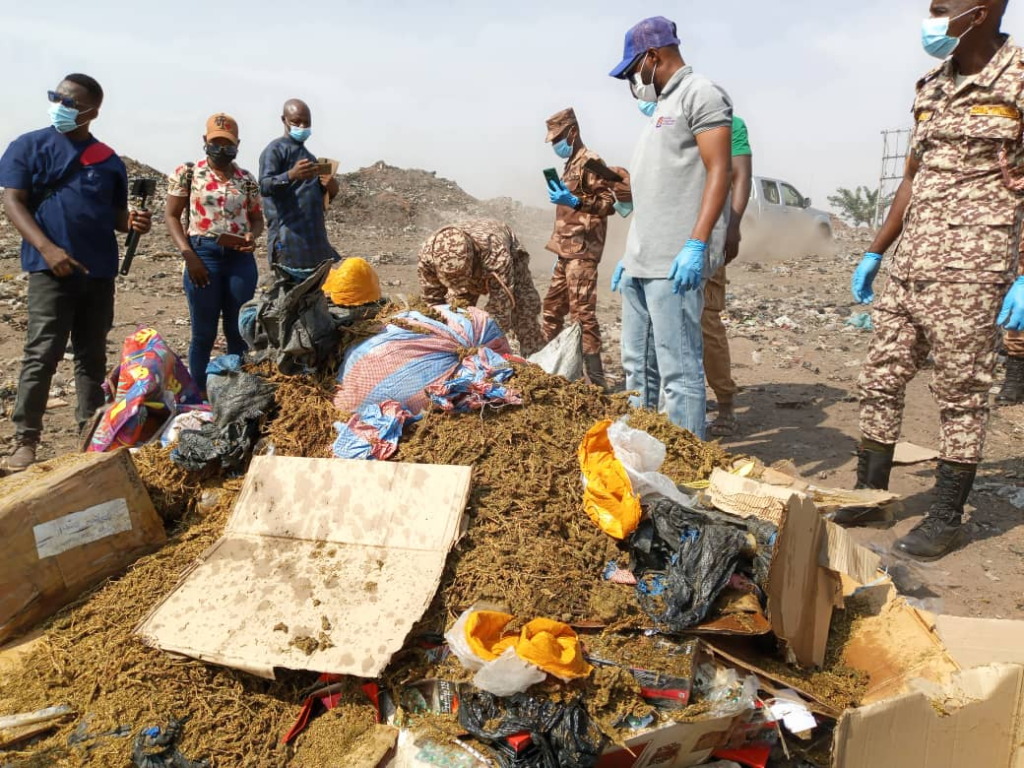
    Over GHS 700,000 worth of Tramadol 120 and 225 have been intercepted and destroyed by the Aboabo Pilots-Fong, a local organization dedicated to the elimination of illicit drugs in Tamale.

    There has been a surge in incidence of Tramadol and other drug abuse cases in the greater Tamale metropolis over the past years.

    Speaking to journalists in Tamale, chairman of the watchdog committee Jamal Yahaya Iddi narrates how they intercepted the drugs.

    “We had information and have to track the ‘pusher’ who is from Accra for over a week before getting him at his house on arrival with the drug.”

    He assured the committee is poised on flushing out drug pushers in the metropolis.

    “Tamale is becoming a hub for drug trafficking which is a looming disaster and that’s what we are fighting. If not in the next five years this town will be doomed.

    “We are committed to doing the work and insha Allah we will fish them out and make sure they are properly punished.”

    He laments how Tramadol abuse is destroying the youth.

    “Tramadol is killing the youth. They are all going mad and behaving abnormal and this we must all work to stop.”

    The illicit drugs eradication committee was constituted in January this year by the Gulkpe Naa of Tamale with approval from relevant stakeholders.

    The formation of the committee was premised on the alarming rate of intake of Tramadol and other related hard drugs.

    Several quantities of drugs have since been destroyed by members of the committee.

    The Aboabo forest in Tamale has in recent times become a hub of illicit drug activities.

    In Ghana, only 50 and 100 grams of Tramadol has been approved for use.

    However, there is a surge in the use of 120 and 225 grams by the youth which is seemingly destroying them.

  • Lagos police intercept container loaded with tramadol, codeine

    A 40-foot container loaded with drugs suspected to be Tramadol and codeine has been intercepted by the police in Apapa Area Command of Lagos State on Thursday.

    The container was intercepted on water and taken to a bonded terminal in Apapa.

    A team of officers from Customs and the National Drugs Law Enforcement Agency (NDLEA) joined the Area B Commander, Olasoji Akinbayo, for inspection.

    Channels TV reports that the Area B Commander has recently intercepted similar imports and has transferred the case and two suspects to government prosecutors.

    The latest intercepted container is expected to also be handed over to appropriate authorities for further investigation and prosecution.

    On Tuesday, the National Security Adviser, Babagana Monguno, hinted that drug trafficking was one of the factors fueling insecurity across the country.

    Drug addiction and trafficking were one of the major issues the Federal Executive Council, chaired by the President Major General Muhammadu Buhari (Retd), discussed at its last meeting, according to Monguno.

    According to him, Nigeria has moved from a transit hub to a drug production centre.

    He noted that 17 meth labs were recently shut down in the country and called for a wholesome national approach to stopping the drug menace.

    Source: mynigeria.com

  • Urine test results: Pastor who threatened to kill Jean Mensa was high on cannabis, tramadol

    A urine test conducted on Pastor Kwabena Owusu Agyei, who was arrested for allegedly threatening EC Chairperson, Jean Mensa, has come out positive for two substances; tramadol, and tetrahydrocannabinol.

    The self-styled man of God after his arrest on Tuesday, June 9, 2020, was found to be in possession of dried leaves suspected to be Indian Hemp.

    A drug test for eight banned substances was subsequently conducted on him at the Police Hospital.

    A medical report, signed by Police Superintendent, Dr. Adwoa Nuro-Panin of the Police Hospital and in possession of ABC News revealed that Pastor Owusu Agyei tested negative for six of the drugs, except for tetrahydrocannabinol and Tramadol.

    Tetrahydrocannabinol or THC is the psychoactive substance that produces the “high” associated with smoking marijuana.

    Source: abcnewsgh.com

  • Pastor who threatened to kill EC boss tests positive for Tramadol, weed

    Apostle Kwabena Owusu Adjei has tested positive for Tramadol and Tetrahydrocannabinol after a urine sample test conducted by the Police Hospital in Accra after his arrest on Tuesday, June 9, 2020, by National Security Operatives.

    The 56-year-old man tested positive for Tramadol and Tetrahydrocannabinol in a test conducted and results signed by Supt/Dr. Adwoa Nuro-Panin, MWACP (Psychiatry) and sighted by Peacefmonline.com.

    The self-styled preacher, Apostle Kwabena Owusu Adjei who was seen in a viral video threatening and castigating President Akufo-Addo and the Electoral Commission Chairperson, Jean Mensa has been arrested.

    He displayed that if the voters’ register is allowed to be changed, the Electoral Commissioner will die, adding that Ghana will not allow a small family to dictate to the nation.

    Arrest

    In a video seen by Peacefmonline.com, the Apostle was arrested on Tuesday morning at what appears to be his home (coded location) during a live interview with Accra based Hot FM.

    He was apprehended by the plain cloth security personnel immediately he started ranting again during the interview.

    The officers with an arrest warrant interrupted the interview and whisked him away in a black vehicle.

    Indian Hemp

    In another video seen in an office where he was taken to after the arrest, the Prophet in handcuff was seen holding a substance suspected to be Indian Hemp wrapped in a brown paper and being search thoroughly by the security personnel.

    Remand

    The accused person pleaded not guilty to threat of death, contrary to Section 75 of the Criminal and Other Offences Act, 1960 (Act 29), offensive conduct conducive to the breach of peace and possession of narcotic drugs.

    He has been remanded by the court to reappear on June 23, 2020.
    Source: Peace FM

  • Pastor who threatened to kill EC boss tests positive for Tramadol, weed

    Apostle Kwabena Owusu Adjei has tested positive for Tramadol and Tetrahydrocannabinol after a urine sample test conducted by the Police Hospital in Accra after his arrest on Tuesday, June 9, 2020, by National Security Operatives.

    The 56-year-old man tested positive for Tramadol and Tetrahydrocannabinol in a test conducted and results signed by Supt/Dr. Adwoa Nuro-Panin, MWACP (Psychiatry) and sighted by Peacefmonline.com.

    The self-styled preacher, Apostle Kwabena Owusu Adjei who was seen in a viral video threatening and castigating President Akufo-Addo and the Electoral Commission Chairperson, Jean Mensa has been arrested.

    He displayed that if the voters’ register is allowed to be changed, the Electoral Commissioner will die, adding that Ghana will not allow a small family to dictate to the nation.

    Arrest

    In a video seen by Peacefmonline.com, the Apostle was arrested on Tuesday morning at what appears to be his home (coded location) during a live interview with Accra based Hot FM.

    He was apprehended by the plain cloth security personnel immediately he started ranting again during the interview.

    The officers with an arrest warrant interrupted the interview and whisked him away in a black vehicle.

    Indian Hemp

    In another video seen in an office where he was taken to after the arrest, the Prophet in handcuff was seen holding a substance suspected to be Indian Hemp wrapped in a brown paper and being search thoroughly by the security personnel.

    Remand

    The accused person pleaded not guilty to threat of death, contrary to Section 75 of the Criminal and Other Offences Act, 1960 (Act 29), offensive conduct conducive to the breach of peace and possession of narcotic drugs.

    He has been remanded by the court to reappear on June 23, 2020.

    Source: Peace FM

  • I’m addicted to tramadol, weed and other drugs – Street boy begs for help

    The journey of life they say comes with so much twists and turns; so complex for the less fortunate.

    Benabi discovery chanced on young Ernest Ashatey, who became a street child at a tender age of nine years. Ernest, a native of Dodowa, narrating his rather sad story, mentioned that he left home as a result of ill-treatment and abuse meted out to him by a supposed stepmother.

    Ernest eventually got hold of her working capital, a sum of thousand Ghana Cedis. “This was what I came to the street with,” he said.

    Having received training from Elijah, a senior colleague, Ernest Ashatey seems to know the streets better.

    However, he is of the hope to vacate the streets in no time, but on condition that a philanthropist or any humanitarian advocate comes his way.

    Ernest was asked if he engages in drugs, and he responded in the affirmative. “I take in Tramadol, weed, and 225, but I don’t take in alcohol”, he said.

    But he doesn’t play around the ladies, only he’s done one or two before, he mentioned.

    Ernest Ashatey, just like any of his colleagues, seems to be going through very challenging and risky times on the streets, having nowhere to put their heads even as the raindrops.

    Ernest has a desire to be a great footballer, and perhaps join the National team, but that can only manifest if a good samaritan reaches out to him.

    These were his words, even as the interview came to a close.

    Watch the full video below:


    Source: Benabi Discovery