A tragic accident occurred at Denkyira Nyinawusu when a tricycle, referred to as ‘Abobo Yaa,’ crashed into a fuel tanker, leading to the deaths of two people, as reported by the National Ambulance Service.
Firefighters from Diaso were quick to extricate the bodies from the wreckage and handed them over to the National Ambulance Service, who then transferred the remains to the Ghana Police Service for further investigation and preservation.
Witnesses say the fuel tanker, which was on its way from Accra to Subin, had developed a mechanical issue and was parked on the side of the road when the tricycle collided with it.
After the bodies were removed, fire personnel took steps to manage the situation with the leaking tanker, cooling it down to avoid any risk of fire or explosion while waiting for a replacement tanker to unload the fuel.
The police were on-site to manage the traffic flow, as the incident had blocked one lane of the road.
In a tragic accident in Sunyani Mantukwa, Sunyani West Municipality, Bono Region, seven young men have died after their tricycle, known locally as “Pragya,” collided with a Toyota RAV4.
The collision, reported by EDHUB on X, resulted in the immediate death of all seven individuals on the tricycle.
An eyewitness revealed that the driver of the Toyota RAV4, who was the sole occupant of the vehicle, fled the scene to avoid potential mob retribution due to the horrific nature of the crash.
“A tricycle (Pragya) occupied by seven (7) boys collided with a Toyota RAV4 at around 10 PM last night at Sunyani Mantukwa in the Sunyani West Municipality of the Bono Region, reportedly killing all seven boys on the sp0t.
“According to an eyewitness who reported to the EDHUB, the driver of the Toyota RAV4 was the only occupant of the vehicle and quickly fled the scene to avoid a mob due to the horrific nature of the incident,” the report stated.
A study conducted by theCentral Region office of the National Youth Authority (NYA) has revealed that the majority of perpetrators of teen pregnancy, child marriage, and sexual and gender-based violence are commercial tricycle and motorcycle riders.
The research was initiated following reports of rising incidents of sexual and gender-based violence (SGBV) and sexually transmitted infections (STIs) in the region.
Mrs. Anita Nana Seguah Ansah, Central Regional Director of the NYA, shared these findings during a one-day training of trainers workshop for tricycle and motorcycle riders.
The workshop aimed to educate them on the adverse effects of teen pregnancy, child marriage, and other harmful practices.
Organized by the NYA in collaboration with the Central Regional Coordinating Council and sponsored by the United Nations Population Fund (UNFPA), the workshop sought to reduce the prevalence of teen pregnancy and child marriage in the region.
Participants were drawn from Komenda-Edina-Eguafo-Abrem, Cape Coast, Assin Fosu, Awutu Senya East (Kasoa), Gomoa East, Agona East, and Agona West.
Mrs. Ansah highlighted that the research predominantly implicated tricycle and motorcycle riders.
She expressed hope that these riders would return to their communities as ambassadors, disseminating information to help reduce SGBV, child marriage, and teen pregnancy cases.
Similar workshops have been held in Gomoa West, Cape Coast, and other districts, with feedback indicating an improvement in the situation.
The NYA is committed to replicating these workshops across all districts in the region to reduce SGBV, child marriage, and STIs among the youth.
Assistant Superintendent of Police (ASP) Mrs. Vida Yankey, Agona Swedru District Commander, discussed the causes, effects, and punishments associated with SGBV.
She expressed concern about the high rates of defilement and teen pregnancy in the Swedru Municipality.
ASP Yankey, also the Agona Swedru Divisional Coordinator of the Domestic Violence and Victim Support Unit (DOVVSU) of the Ghana Police Service, warned tricycle and motorcycle riders against engaging in such crimes, noting that offenders could face a minimum of 15 years in prison.
The DOVVSU Divisional Coordinator further detailed the punishments for rape, defilement, incest, sexual harassment, and other domestic violence issues, urging riders to desist from such actions to maintain peace.
Peer Educator of the Planned Parenthood Association of Ghana (PPAG), Ms. Abigail Appiah, spoke about STIs, warning riders about the dangers and advising them to use condoms to prevent infections.
She cautioned against self-medication and the excessive intake of antibiotics for STIs, recommending proper treatment at health facilities.
Public Health Nurse at the Agona West Municipal Health Directorate, Mrs. Dorcas Sam-Mensah, urged riders to be responsible and prioritise their health to avoid complications.
She expressed concern over the numerous teen pregnancy cases inthe municipality, attributing them to poverty, a lack of education, and inadequate parental care and control.
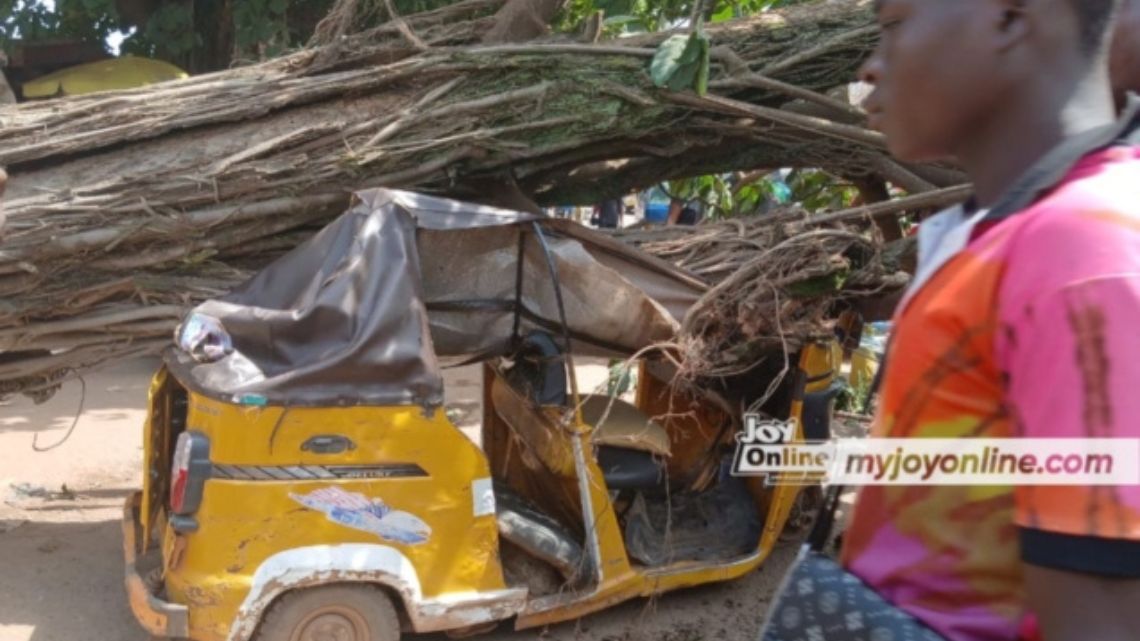
A tricycle rider sustained injuries when a weak tree in the Central Business District of Kumasi fell on his tricycle during the busy hours of Wednesday morning.
The injured rider, believed to be in his early thirties, has yet to be identified.
Eyewitnesses reported that the tree, which had been observed as weak for weeks, fell on a van, with parts of its branches landing on the tricycle.
The incident occurred while the tricycle was negotiating a curve.
A section of the tree’s stem fell on the windscreen of the tricycle, causing injury to the rider.
Eyewitnesses informed Luv News that the tree had been leaning to one side of the road since the onset of the rains, showing signs of danger.
Tricycle and commercial motorbike (okada) riders across the nation have hinted at plans to boycott the 2024 general elections if the government fails to demonstrate a genuine commitment to formalizing their operations beforehand.
Expressing their grievances at a press conference in Kumasi on February 22, 2024, the National Secretary for the National Union of Tricycle Operators of Ghana (NUTOG), Mr. Hamza Hafiz, reiterated the vital role tricycle operations play in providing employment opportunities for youth.
Mr. Hamza emphasized the significant contribution of tricycle operations to youth employment, with over 35,000 individuals benefiting from job opportunities within the sector, thereby aiding in reducing the nation’s unemployment rate.
However, Mr. Hamza expressed concern over the apparent lack of commitment displayed by political parties, particularly the governing New Patriotic Party (NPP), in legalizing their operations.
He stressed that the threat of an election boycott would only be rescinded if any political party demonstrated genuine commitment to advocating for their cause, engaging with them, and promising to legalize their operations if they emerge victorious in the elections.
Mr. Hamza urged the NPP government to take immediate action to formalize their operations, thereby ensuring sustainable employment opportunities for the youth. Failure to do so, he warned, would result in the government forfeiting the support of tricycle and okada riders in the upcoming general elections.
A principal community health nurse at Bonkro in the Afram Plains South district, Eastern Region, Yunbow Michael Jordan, went above and beyond when he assisted in delivering a pregnant woman in a tricycle due to the absence of a delivery bed at the CHPs compound facility.
On December 29, 2023, Justina Kwame, 32, arrived at the health facility with the intention of delivering her child. However, the lack of a delivery bed necessitated a decision to transport her to Maame Krobo clinic. Unexpectedly, labor commenced around 10:00 am during their journey.
Undeterred by the challenging circumstances, Nurse Yunbow Michael Jordan displayed exceptional dedication and skill, successfully delivering the baby boy in the tricycle. Following the delivery, both mother and newborn were promptly transferred to Maame Krobo clinic for further medical attention.
Nurse Jordan recounted the challenging situation, stating, “they came to Bonkro to deliver, but we don’t have a delivery bed, so we were taking her to Krobo when labor set in, and I had to deliver her in the tricycle. We didn’t have water and other delivery items with us, but we managed. When we reached the next community, we requested water to keep both mother and baby clean.”
The incident highlights the healthcare challenges faced by communities in the Afram Plains South Area, characterized by poor road conditions and inadequate access to health facilities and midwives.
Nurse Yunbow Michael Jordan, who is also a BSc. Public Health student nurse at Wisconsin International University College, has a history of intervening in such delivery situations. In 2018, he assisted a pregnant woman in labor while en route to Dome, a remote community in the area, underscoring the persistent challenges in the region’s healthcare infrastructure.
The healthcare challenges are further underscored by statistics from the Eastern Regional Health Directorate, revealing alarming figures of maternal deaths. In 2021, 89 institutional maternal mortalities were recorded, and between January and September 2022, 62 cases were reported.
Expressing deep concern over the high number of maternal mortality in the region, Dr. Winfred Ofosu, the Eastern Regional Health Director, emphasized the significant social implications of every maternal death on families and communities. He highlighted the ripple effect on orphaned children, husbands losing their wives, and the broader societal impact.
Dr. Ofosu stressed the link between maternal deaths and high disability rates among women. Each maternal death, he noted, is associated with approximately 15 more women experiencing various forms of disabilities resulting from pregnancy or childbirth complications.
To address this pressing concern, the Eastern Regional Health Directorate of the Ghana Health Service launched the “Zero Tolerance for Maternal Deaths” initiative in 2022 under the theme “Stop Preventable Maternal Deaths and Disability.”
Dr. Ofosu emphasized that many maternal deaths are preventable, pointing to issues such as blood shortages in health facilities, delays in transporting and referring pregnant women due to poor road networks, and inadequate ambulances. The initiatives seek to address these issues and contribute to the reduction of maternal mortality in the region.
The Kumasi Metropolitan Assembly (KMA) has decided to implement a fine of GH¢500 for the release of tricycles that are seized for violating the ban on tricycle activities within the Central Business District.
Numerous tricycles were confiscated, and their owners were apprehended during the Assembly’s enforcement of the ban on August 1.
Although the Assembly announced the ban on July 25, it encountered strong opposition from operators, resulting in a gradual rollout.
However, the enforcement was ramped up on August 1. Currently, twelve defiant operators are undergoing trial and have been granted bail at a rate of GH¢30,000 each.
During its 2nd Ordinary Meeting on July 28, the Assembly passed a resolution stipulating that any subsequently impounded tricycles would be required to pay GH¢500 before being released.
Furthermore, taxis and trotros found engaging in illegal loading at unauthorized areas will also face a fine of GH¢500.
Sprinter and bus operators will be subject to fines of GH¢800 and GH¢1000, respectively, for similar offenses.
Cargo vehicles that violate the same directive will be subject to fines ranging from a minimum of GH¢600 to a maximum of GH¢1500.
A strong security presence has been established at the premises of the Kumasi Metropolitan Assembly (KMA) to prevent a potential incursion by tricycle operators who are opposing a directive aimed at restricting their movement within certain parts of the metropolis.
On a recent Monday, irate tricycle operators gathered at the KMA premises demanding the release of their impounded tricycles.
The situation escalated and armed police officers were summoned to maintain order, resulting in a confrontational clash.
In order to prevent a recurrence of such events, both police and military personnel have been stationed at the KMA premises.
The Public Relations Officer of the KMA, Henrietta Afia Konadu, asserted that the Assembly will not retract its decision to enforce the directive.
She explained that among the individuals apprehended on August 7, roughly five or six were not actual tricycle operators but were enticed to participate in causing disruptions. These individuals claimed they were responding to a call to cause disturbances at the KMA premises.
“At present, they are in police custody. We have informed the police that we wish for the case to go to court, allowing the legal system to determine the outcome of the situation. We currently hold 43 tricycles in our custody, as there were initially 46, but three were forcefully removed,” she clarified.
The KMA’s directive has sparked a contentious debate about the role of tricycles in the city.
Some individuals perceive tricycles as a source of inconvenience and contributors to traffic congestion, while others argue that tricycles are a crucial mode of transportation, particularly for the economically disadvantaged.
The KMA has reiterated its commitment to upholding and enforcing the directive.
Tricycle operators in the Ashanti Region are intensifying their protest against a directive that limits their movement within certain parts of the Central Business District, as the Kumasi Metropolitan Assembly remains steadfast in its commitment to enforce the policy.
On Wednesday, August 2, the tricycle operators took to the streets, blocking a major road leading to Kejetia, causing significant disruptions to traffic and daily activities.
This demonstration comes in response to the KMA’s decision to ban tricycles, commonly known as “pragya” or “aboboyaa,” from operating within the central business district of Kumasi.
The ban was implemented to address traffic congestion and improve pedestrian safety in the bustling area.
The tricycle operators heavily rely on transporting passengers and goods within the city center, and they voiced their frustration and concerns over the ban.
They argued that this decision would negatively impact their livelihoods and result in many of them losing their jobs.
In their demand to the KMA, the tricycle operators are urging a reconsideration of the ban and are seeking constructive dialogue with their representatives to find a viable solution that protects their interests while also addressing the city’s traffic challenges.
The road blockade leading to Kejetia resulted in a traffic gridlock, with commuters and motorists caught in the midst of the protest. Police officers were promptly dispatched to manage the situation and ensure public safety.
Earlier, on August 1, nine tricycle operators were arrested and subsequently granted bail following clashes with some city guards.
The leadership of the Pragya Workers Association of Ghana contends that the reasons given by the Assembly to restrict their movement are not convincing enough.
In an interview with the media, Secretary of the group, expressed concern about being pushed out of the Central Business District onto highways, thereby increasing the risk to their safety.
“When you look at the demarcation, they are now clearly sacking us from the Central Business District to the highways for the cars to kill us more. Are they looking for the betterment of Pragya drivers, or what? Because this decision will further expose us to more risk, than their decision to minimise congestion”.
The Kumasi Metropolitan Assembly began implementing the directive to restrict tricycles from operating within the central business district (CBD) on July 25, as part of its efforts to address congestion within the metropolis.
While tricycle riders strongly oppose the decision, the head of the transport department at KMA, Randy Wilson, remains unwavering in the assembly’s determination to enforce the directive as a means to tackle the congestion issue in the metropolis.
At least 10 tricycle operators have been arrested after clashing with city guards as the Kumasi Metropolitan Assembly (KMA) began the implementation of a ban on tricycle movement in the Central Business District (CBD).
Heavy police and military presence has been deployed in the marked-out areas to enforce the ban.
The KMA announced the directive to restrict tricycles from operating within the CBD to address congestion issues in the metropolis.
Tricycle riders opposed the decision, but the head of the transport department at KMA, Randy Wilson, emphasized the assembly’s commitment to the directive.
Wilson cited that tricycles were not legally allowed for commercial purposes according to traffic regulations and added that the city needed to take steps to limit certain activities due to congestion concerns.
“KMA is supposed to plan and regulate public transport within its area of jurisdiction,” Wilson said, adding, “On April 29, 2023, at a general assembly meeting, it was resolved that the transport reorganization that has been planned should ensure that we have the unstrung stations, the normal union stations that are operating from terminals, the cargo vehicles, and then we also added the tricycles as providers of public transport services.”
“We started engagements with the tricycle operators,” Wilson continued, “Legally, from the traffic regulations 2180, tricycles are not supposed to be used for commercial purposes. So from the national level, it is an illegality.
The KMA had initially planned to implement the ban on June 15, 2023, but it deferred the date to allow for ongoing sensitization activities.
The assembly’s Public Relations Officer, Henrietta Afia Konadu Aboagye, clarified that the directive was a restriction rather than a complete ban, and the assembly would enforce it with checkpoints and vehicle impoundments for those who defy the ban.
“The directive is not a ban, but a restriction on their movement in the CBD. So we met with their executives on May 9 to let them know that the move was to reduce congestion in the CBD. They asked for some time to speak with their members.”
“We realized that the education took a bit longer, so the directive which was scheduled to take effect on the 15th, cannot take effect. We are still in the process of sensitization,” she said.
“The recalcitrant ones who will force their way into the CBD will have their vehicles impounded and taken to the Central Police Station or the assembly’s towing site, where they will be fined,” she added.
An 18-year-old tricycle rider, Hubert Osei Poku, has been sentenced by a Circuit Court in Dormaa-Ahenkro, Dormaa Central Municipality of the Bono Region.
He has been fined 220 penalty units for his involvement in conspiracy to commit a crime and stealing two she-goats.
Poku pleaded guilty to the charges and will be required to pay a fine of GH¢2,640.00, equivalent to 220 penalty units.
The value of each penalty unit is GH¢12.00. In the event of default, Poku will serve a 12-month prison term.
Another individual involved in the case, identified as Isaac, remains at large.
Police Inspector Emmanuel Asare, the prosecutor, presented the case before the Court presided over byJudge Osei Kofi Amoako. According to Inspector Asare, the complainant resided in Awase, a suburb of Dormaa-Ahenkro.
On Sunday, May 7, 2023, at around 2:00 a.m., while the complainant was driving home, an unregistered blue tricycle (priagya) overtook him at high speed near the Islamic Junior High School.
Inspector Asare stated that the complainant became suspicious due to the excessive speed of the tricycle, considering the numerous thefts reported in the area.
The complainant pursued and caught up with the tricycle near the Awase gas filling station. He exited his car intending to question the occupants. However, as Inspector Asare explained, the moment the complainant approached the tricycle, its occupants abandoned it and fled.
Two she-goats were discovered tied in the trunk of the tricycle with their mouths sealed using black adhesive tape.
The complainant immediately alerted the Dormaa-Ahenkro Police night patrol team, who arrived at the scene and brought the tricycle and goats to the police station.
Through intelligence gathering, the initial rider of the tricycle, a witness in the case, was identified and arrested.
The witness disclosed that on Saturday, May 6, 2023, at around 7:00 a.m., the convict had borrowed the tricycle to use as a spare rider for a taxi business.
The prosecutor further explained that the convict was later apprehended at his hideout.
During interrogations, he admitted to the offenses in his cautioned statement and implicated the second accused as his accomplice.
The National Insurance Commission (NIC) has directed insurance companies to stop issuing insurance policies for motorcycles and tricycles used for commercial purposes.
“The Commission hereby directs all insurance companies to desist from issuing insurance policies to cover motorcycles and tricycles used for all commercial purposes, except courier and delivery services,†the Commission noted in a statement.
According to the Insurance Commission, usage of motorcycles and tricycles to carry fare-paying passengers are illegal.
“We wish to bring your attention that regulation 128 of the Road Traffic Regulations, 2012 (Legislative Instrument 2180) prohibits the usage of motorcycles and tricycles to carry fare-paying passengers and also prohibits the DVLA from licensing motorcycles and tricycles to be used to carry fare-paying passengers.â€
The Commission further added that “henceforth, accident victims who were fare-paying passengers on motorcycles or tricycles will not qualify for compensation from the Motor Compensation Fund.
Two tricycle operators have crushed and battling for their lives over a lady in Lamasheigu, a suburb of Tamale.
They two, Salifu Mustafa 25 and Fuseini Dawuda 31 are currently at the emergency ward of the Tamale Teaching Hospital in critical conditions.
Salifu Mustafa is alleged to have been dating one Memunatu Alhassan who is a girlfriend to Fuseini Dawuda.
The two in the early hours of Wednesday, June 3, 2020 met at the tricycle station in Lamashegu where a fight transpired leading to severe injuries of the two men.
This happened after Fuseini Dawuda allegedly accused Salifu of having an affair with his girlfriend.
The police is yet to conduct an investigation into the matter.
The operators of tricycles which are popularly known in the Tamale metropolis as “yellow yellow” have been lamenting over low patronage of their services since the outbreak of the COVID-19 in Tamale.
Some tricycle drivers who spoke to GhanaWeb explained that they used to pick three passengers as a full capacity but since the outbreak hit Tamale, they were been directed by the Tamale Metropolitan Assembly (TeMA) to pick only two, instead of three, which has had a dire effect on their daily earnings.
“The coming of the disease seems to slow down our business because we used to pick three passengers at a go but we are now told to reduced to two and even the two passengers, when we go out, we don’t earn the amount we used to earn ” they explained.
Speaking to Alhassan, who is one of the drivers explained that, they don’t understand why “Yellow Yellow” operators are the only people asked to reduce passenger intake when the same directive hasn’t been meted out on commercial vehicle drivers; trotro and taxi drivers.
“Our concern is that we haven’t heard or seen any Taxi or trotro drivers been asked to load below their capacity but we the “Yellow Yellow” drivers when they see us load with three passengers which is our normal capacity, they arrest us and accused us of spreading the virus,” he said.
He also indicated that, they feel been unfairly targeted by the Metro Assembly, adding that, members of the â€Yellow Yellow” who sometimes load with the three passengers due to the economic hardship, they are arrested and made to pay exorbitant fines and sometimes, even suffer beatings in the hands of the police, which he said isn’t fair and must be looked into.
They, therefore, appealed to the Tamale Metropolitan Assembly to review the directive and to also ensure that even if such directive is to be held, and it does not only apply to Yellow yellow operators but cut across.
The Municipal Chief Executive (MCE) of New Juaben South, Isaac Apaw-Gyasi, has said that the ban on Pragya activities in the municipality was to reorganise riders and to sensitise them on COVID-19 but not keep them out of business.
He clarified that most of the Pragya riders were gleefully flouting all the protocols against the spread of COVID-19 without recourse to their own safety and that of their passengers.
“…a lot of them are not following the protocols. We were all told that if you have a car that takes three people, you are supposed to take two and if you have a car that takes four people, you are supposed to take three; in other words, trying to exercise some form of social distancing.
“It may interest you to note that I have called them to advise them. Actually, I have visited them, had an encounter with them…so a lot of education has gone on,” he narrated as he expressed disappointment that the riders were not heeding to advice.
According to the MCE, it has become difficult for the Assembly to track activities of the riders because most of them do not belong to any transport union.
He said the worst of it all was that most of them did not have licenses of operation but were on the road working.
“What we notice is that a lot of them don’t belong to any group and therefore are all floating riders and that makes it difficult to keep track of their activities and were without licenses.
“We all have to be proactive to protect the people of New Juaben, so, I held a meeting with them and told them about the complaints that have come from the citizens.
“I sat down with the Emergency Response team…and a decision was taken that we invite their organization and talk to them so that there could be some break in their activities for us to use the period to sensitise them one more time and also for them to know the dreaded COVID-19,” he said.
Mr. Apaw-Gyasi emphasised that at the meeting, the committee and the riders together agreed that they go on break for the two weeks while a comprehensive data is organised on them as well as educate them on dangers of not observing the social distancing.
He disclosed that the Emergency Response Committee would meet with the riders within the week to take further decisions as to whether or not the two weeks ban would be reduced.
The Asokwa District Police Command has arrested eleven sex workers in connection with the death of their customer at Asafo in the Kumasi metropolis of the Ashanti Region.
The yet-to-be-identified man who is believed to be in his 30s fell from a window of Anidaso hotel where he had enjoyed the services of one of the prostitutes.
He died instantly from the fall.
The incident happened on Sunday, May 10, 2020.
The police say the sex worker had screamed after the deceased allegedly struggled with her in the hotel room, which attracted some of her colleagues to the room.
Superintendent Christopher Owusu Mpianin, the Asokwa District Police Commander, said they are investigating the matter to determine whether the rickshaw driver was pushed to his death by the sex worker or he jumped out of the window to commit suicide.
He told Adehye FM’s Elisha Adarkwah that the body of the deceased has been deposited at the Komfo Anokye Teaching Hospital morgue for identification and autopsy.
The Tricycle (Pragyia) riders at Dormaa-Ahenkro in the Dormaa Central Municipality of the Bono Region on Monday resumed operations following the temporary lifting of a ban on their operations by the Regional Coordinating Council (RCC).
The Bono RCC about couple of weeks ago placed a ban on the use of tricycle for fare paying passengers as a step for the adherence to the measures and observation of protocols by government and health authorities to prevent the spread of the Coronavirus disease (COVID-19) in the region and country in general.
The country has so far recorded 1,550 confirmed cases of the COVID-19, with 11 deaths and 155 recoveries with the Bono Region yet to record a confirmed case.
Though the ban has been lifted, mandatorily a tricycle can pick two passengers at a time while both rider and the passenger must strictly observe all the necessary protocols and measures against the spread of the disease.
Speaking in an interview with the Ghana News Agency (GNA) at Dormaa-Ahenkro, Mr Samuel Yeboah, a Public Relations Officer of Tricycle Owners and Riders Association of Ghana, in charge of Dormaa Municipal, Dormaa East and West Districts, said the Association had set up a task force to monitor and ensure strict enforcement of the directives by the riders.
“Members of the task force who are also riders will be policing to stop any rider caught flouting any of the protocols,†Mr Yeboah said.
“The task force will confiscate the keys of the rider, alert the executives of the Association, the Motor Traffic and Transport Department and the owner of the tricycle before the necessary sanction is applied to prevent any future breach of the protocolsâ€, he said.
Mr Yeboah said they were determined to enforce all measures, protocols, rules and regulations to the letter among its members to assist government to fight the COVID-19.
The Bono Regional Coordinating Council (RCC) has lifted the ban on the use of tricycle (pragyia) by fare paying passengers, and cautioned riders to adhere to safety measures.
The RCC has also directed owners of the tricycles to stop minors from using the machines and ensure that riders picked two instead of three passengers at a time.
Barely a month ago, the RCC imposed a ban on the use of the tricycles as a means to stem the spread of the COVID-19 in the region.
Critics described the ban, which received serious public outcry as unnecessary as it created huge unemployment among the youth in the region.
But the Deputy Bono Regional Minister, Stevens Siaka said the RCC had directed the Regional Executives of the Motor Cycle Owners and Tricycle Riders Association to ensure riders acquired license.
He said the RCC intended to present quantities of nose masks to the Association to be distributed among the riders to protect themselves and passengers who used their machines.
Mr. Siaka who is the Member of Parliament for Jaman North said concerted and decisive efforts were required to successfully stem the spread of the virus and advised the public to comply with government directives on health and safety protocols.
The Bono Regional Coordinating Council (RCC) has lifted the ban on the use of tricycle (pragyia) by fare-paying passengers and cautioned riders to adhere to safety measures.
The RCC has also directed owners of the tricycles to stop minors from using the machines and ensure that riders picked two instead of three passengers at a time.
Barely a month ago, the RCC imposed a ban on the use of the tricycles a means to stem the spread of the COVID-19 in the region.
Critics described the ban, which received serious public outcry as unnecessary as it created huge unemployment among the youth in the region.
But, in an interview with the Ghana News Agency (GNA) in Sunyani on Thursday, Mr. Stevens Siaka, the Deputy Bono Regional Minister said the RCC had directed the Regional Executives of the Motor Cycle Owners and Tricycle Riders Association to ensure riders acquired license.
He said the RCC intended to present quantities of nose masks to the Association to be distributed among the riders to protect themselves and passengers who used their machines.
Mr. Siaka who is the Member of Parliament for Jaman North said concerted and decisive efforts were required to successfully stem the spread of the virus and advised the public to comply with government directives on health and safety protocols.
The Paramount Chief of Bole and President of Bole Traditional Council, Bolewura Sarfo Kutuge Feso (I) in consultation with the council of elders and Ghana Police Service has put a total ban on the ridding of tricycles popularly called “cambu†and motor king by children below 18 years in Bole Traditional Area with effect from Friday, 21 February 2020.
“Any child who is caught in this illegal riding of tricycles (cambu/motor king) across Bole Traditional Area will have himself to be blame,” a statement signed by the Bolewura said.
The Bolewura has entreated the police to deal with any minor who is found ridding any kind of tricycle in Bole Traditional Area.
He encouraged the public to comply with this directive to protect lives and properties.
The people of the Northern region love their motorcyles and that is the most popular means of transport.
Meanwhile, in January this year alone, the region recorded nine deaths and 13 injuries from 15 motorbike accidents.
The Northern Regional Director of the Road Safety Commission, Alexander Ayata, at a stakeholder engagement said the death toll from the use of motorbikes is alarming, therefore, there is the need for massive campaign to reduce the deaths.
The Catholic Church in the region has, therefore, instituted the “No Helmet No Entry†policy in all Catholic Church facilities in the region to encourage the use of helmet by the people.
The ban on minors too is expected to reduce the number of accidents.