Tag: UCC

  • UCC lecturer and his teaching assistant die in fatal accident on Accra–Cape Coast Highway

    UCC lecturer and his teaching assistant die in fatal accident on Accra–Cape Coast Highway

    A Senior Lecturer in the Department of Geography and Regional Planning at the University of Cape Coast (UCC), Dr Kwabena Koforobour Agyeman, and his teaching assistant, Mr Peter Amoadu-Asmah, have been confirmed dead following a fatal road accident at Third Ridge Junction on the Accra–Cape Coast Highway.

    This information was confirmed by the UCC Management through a statement issued on Tuesday, April 28. The statement read, “Our thoughts and prayers are with them during this difficult time. His invaluable contributions and presence will be deeply missed by colleagues, students, and all who had the privilege of knowing and working with him”.

    The unfortunate incident which occurred early hours of Tuesday, April 28, involved a Toyota Corolla and a HOWO tipper truck. Ghana has reported a surge in the number of fatalities resulting from road crashes this year.

    On Saturday, April 18, the Ghana National Fire Service (GNFS) reported the death of one person following a vehicular accident that occurred at Gomoa Ankamu (Apam Junction) in the Central Region.

    Earlier this month, an accident on the Buipe-Tamale road claimed the lives of four individuals. The fatal crash involved a Sprinter Benz bus traveling from Buipe to Kumasi, and a trailer truck at Sawaba No. 2. The deceased included two females and two males, two of whom died on the spot.


    According to the GNFS, the trailer truck fled the scene, leaving behind the victims and wreckage as emergency responders rushed in to manage the situation.

    Meanwhile, 19 passengers are receiving medical attention at the Buipe Government Hospital.
    Weeks ago, a head-on collision on the Accra-Kumasi Highway claimed the life of an individual on Saturday, March 7. The deceased male, reportedly the owner of a Toyota Voxy, crashed into a parked MAN Diesel truck at Teacher Mantey.


    Detailing the incident on Facebook on Sunday, March 8, the Ghana National Fire Service (GNFS) stated that the Toyota Voxy had badly crashed into the stationary truck prior to the arrival of the rescue team.
    Weeks ago, eleven (11) persons sustained injuries following a head-on collision at Eduadjei on the Cape Coast-Takoradi Highway. The victims, eight males and two females, are receiving medical attention at the Elmina Polyclinic.

    Per the Central Regional Fire Service’s account, the two vehicles, an Opel Astra (WR 4860-13) traveling from Cape Coast towards Komenda, collided head-on with a Nissan mini bus (CR 1414-23) heading from Takoradi to Cape Coast. Meanwhile, officials have yet to ascertain the cause of the accident.


    The National Road Safety Authority (NRSA) recorded one thousand five hundred and four (1,504) deaths, compared to one thousand two hundred and thirty-seven (1,237) fatalities reported in the same period in 2024, representing a 21.58 percent increase in the first half of 2025.


    According to provisional data released by the National Road Safety Authority in collaboration with the Police Motor Traffic and Transport Department (MTTD), a total of 7,289 road crashes were recorded between January and June this year. Per the data, a total of twelve thousand three hundred and fifty-four (12,354) vehicles were involved in these crashes.


    As a result of these incidents, eight thousand three hundred (8,300) individuals sustained injuries. Additionally, one thousand three hundred and one (1,301) pedestrians were knocked down across the country.


    According to recent data provided by the National Road Safety Authority, on average, eight (8) lives are lost every day due to road crashes. Each day, forty (40) road crashes are recorded, and forty-six (46) individuals sustain injuries. Daily, sixty-nine (69) vehicles and motorcycles are involved in road crashes.


    To help combat the rising number of road crashes, the National Road Safety Authority has called for stricter enforcement of traffic regulations and increased public education.


    The NRSA has emphasized the need for stronger enforcement to curb the alarming trend. The Road Traffic Act 2004, an Act to consolidate and revise the Road Traffic Ordinance, 1952 (No. 55), provides for more comprehensive regulation of road traffic and road use to ensure road safety and address related matters.


    A person who drives a motor vehicle dangerously on a road commits an offence and is liable on summary conviction:
    (a) where (i) a bodily injury does not occur, or (ii) a minor bodily injury occurs to a person other than the driver, to a fine of not less than one hundred penalty units and not exceeding two hundred penalty units, or to a term of imprisonment not exceeding nine months, or to both;


    (b) where bodily injury of an aggravated nature occurs to a person other than the driver, to a minimum fine of two hundred penalty units and not exceeding five hundred penalty units, or to a term of imprisonment of not less than twelve months and not exceeding two years, or to both;(c) where death occurs, to a term of imprisonment of not less than three years;


    (d) where there is damage to state property, to a fine of not less than one hundred penalty units and payment for the damage caused in an amount determined by the Court.


    The Court may, upon conviction of a person under subsection (1), (a) order the payment of appropriate compensation to an injured person or to the estate of that person, or (b) order the withdrawal of the driver’s license for a period of not less than three years and not more than five years.


    A person who drives a motor vehicle on a road without due care and attention, or without reasonable consideration for other persons using the road, commits an offence and is liable on summary conviction to a fine not exceeding two thousand penalty units or to a term of imprisonment not exceeding five years, or to both.


    A person commits an offence if, without lawful authority or reasonable excuse, that person:


    (a) causes anything to be on or over a road;(b) interferes with a motor vehicle, trailer, or cycle; or(c) interferes, directly or indirectly, with traffic equipment, where it would be obvious to a reasonable person that doing so would be dangerous.


    A person who commits an offence under subsection (1) is liable on summary conviction to a fine not exceeding two hundred and fifty penalty units or to a term of imprisonment not exceeding twelve months, or to both.


    Meanwhile, over one-third of emergency cases at the Komfo Anokye Teaching Hospital (KATH) have been linked to road crashes, according to the facility’s statistics.


    Speaking to the media, Deputy Medical Director of KATH, Dr. Yaw Opare Larbi, noted that road crash victims brought to the emergency unit often do not survive because their injuries are very severe.


    “A little over 30 per cent of the cases that come to this facility, this Accident and Emergency Unit, are due to accidents, and most of the accidents, a few are domestic, but the majority of them are road traffic accidents.


    “Now in Ghana, we know that our statistics, a lot of our road accidents are from errors, driver errors, pedestrian errors. And then we know that we have some percentage that is attributable to maybe things like faulty vehicles or maybe road conditions, but a lot of the accidents are preventable,” he stated.


  • Prof. Denis Aheto takes over as UCC’s interim Vice-Chancellor

    Prof. Denis Aheto takes over as UCC’s interim Vice-Chancellor

    The University of Cape Coast (UCC) has complied with a recent directive from the Ghana Tertiary Education Commission (GTEC), which called for a reshuffling of the institution’s leadership.

    In line with the directive, the institution has appointed its Pro Vice-Chancellor, Professor Denis Worlanyo Aheto, as interim Vice-Chancellor on Wednesday, September 24. According to a press statement from UCC, he assumes the role with immediate effect and serve until further notice.


    On Monday, September 22, GTEC declared its intention to ignore any requests from UCC that had to do with accreditation, salaries (government subventions), GETFund support, Book and Research Allowances, Post-Retirement Contracts, Financial Clearance for Recruitment, and any other related matters.


    According to GTEC, UCC has refused to take action on Prof. Johnson Nyarko Boampong’s appointment as Vice-Chancellor despite an earlier directive issued on October 8, 2024, to date.

    “Accordingly, the Ghana Tertiary Education Commission (GTEC) will, with immediate effect, not process any request from the University of Cape Coast (UCC) in respect of the following until there is full compliance with the directive and evidence of compliance is furnished to the Commission,” it added.


    GTEC on Friday, September 19 ordered the Vice-Chancellor of the University of Cape Coast (UCC) to step down over prolonged tenure. In a letter dated Friday, September 19, 2025, GTEC noted that Prof Nyarko has been in his current position beyond the compulsory retirement age of 60.


    This, it emphasized, violates Article 199(1) of the 1992 Constitution, which stipulates that public officers must retire at age 60 unless otherwise provided.“The Office of the Vice-Chancellor, being an office established under Section 7(1) of the University of Cape Coast Act, 1992 (PNDCL 278), is a public office under the meaning and intendment of Article 199(1).

    Hence, anyone acting in the office of the Vice-Chancellor is presumptively mandated to proceed on compulsory retirement upon attaining 60 years,” the letter stated.


    According to GTEC, the University of Cape Coast Statutes (2016), sets the Vice-Chancellor’s tenure at an initial four years; however, it can be extended to three years if the person hasn’t already reached the official retirement age set by law.


    In this regard, GTEC instructed Pro-Vice-Chancellor, Professor Denis Worlanyo Aheto, to act as Vice-Chancellor in the interim. Meanwhile, the Commission has asked the UCC Governing Council to put the hiring of a new VC on hold until the court or authorities settle the matter.


    In 2024, reports suggested that the Governing Council of the University of Cape Coast (UCC) removed Professor Johnson Nyarko Boampong from his position as Vice-Chancellor.

    Professor Johnson Nyarko Boampong officially assumed office in August 2020 after being appointed in June 2020 and was expected to end on July 31, 2024.Despite an earlier claim of a two-year extension to his term, the Governing Council declared this extension null and void, according to reports.

    In a statement signed by UCC’s Governing Council Chairman, Professor Harold S. Amonoo-Kuofi, it stated “Please note that the purported renewal/extension of your appointment as Vice-Chancellor at the Council’s meeting on the 28th of July 2023, for a term of two (2) years effective 1st August 2024, is void and consequently same is revoked as it breaches the University’s Statutes on renewal of appointment of the Vice-Chancellor.”
    The notice further explained that while extensions to Prof.

    Boampong’s appointment is permissible; no official extension decision has been made.“While your appointment may be extended by 2 years at a time up to a maximum of 5 years beyond your retirement age by contract, as provided in Article 199 clause (4) above, there has not yet been any such contractual extension.”And such extension applies only to your appointment as a member of the University in general, but not applicable to your position as the Vice-Chancellor, since the University’s Statutes has placed a limit on same in Statute 8.2.”


    Prof. Boampong has been encouraged to submit a formal application if he wishes to continue in his role.“You may, however, apply to Council for its consideration in line with laid down procedure for the purpose of renewing your term as Vice-Chancellor for a period not exceeding your retirement age and which does not breach the Constitution and the University’s Statutes,” he is reported to have stated.

    In an unrelated development, the Ghana Tertiary Education Commission has raised alarm over the increasing trend of individuals adopting honorary titles such as “Doctor” and “Professor” after receiving such recognitions from institutions in Ghana and abroad.


    GTEC noted that these titles, often used by awardees, tend to confuse and mislead both the public and academic communities.The Commission said it is compelled to clarify its stance on the matter to safeguard academic integrity.“In light of this trend, the Commission has observed the use of the titles Doctor (Dr) and Professor (Prof) by recipients of such awards.


    These practices are deemed misleading and serve to misinform both the academic community and the general public. In the meantime, the Ghana Tertiary Education Commission has been dragged to court by the Vice-Dean of the Faculty of Law at the University of Cape Coast (UCC), Dr Elijah Tukwariba Yin, over its decision to oust the school’s Vice Chancellor, Prof Johnson Boampong, from office.


    The plaintiff argues that GTEC violated a subsisting High Court injunction, issued arbitrary threats, and unlawfully withheld statutory services.

    Therefore, Dr Yin has demanded that the court ensure that GTEC withdraws letters calling for the removal of the VC and naming an acting VC and future declarations void. He has petitioned the court to bar Prof. Aheto from acting as VC. The University of Cape Coast is the second respondent to the suit.

  • UCC’s accreditation reinstated by GTEC amid VC retirement dispute

    UCC’s accreditation reinstated by GTEC amid VC retirement dispute

    The Ghana Tertiary Education Commission (GTEC) has lifted the ban it placed on the University of Cape Coast (UCC) regarding the school’s accreditation status, following efforts to oust the Vice Chancellor (VC), Professor Johnson Boampong.

    In a statement signed by the Acting Director of Corporate Affairs on Wednesday, September 24, the Commission attributed the recent update to Prof. Boampong’s decision to contest the matter in court and the evidence provided by the school for complying with GTEC’s directive.

    “Following the evidence provided by the Registrar of the University of Cape Coast (UCC), complying with the directive issued by GTEC on September 19, 2025, as well as Prof. Johnson Boampong taking up the case in court, GTEC, with immediate effect, restores all services that were earlier withdrawn to UCC,” the statement said.

    On Monday, September 22, GTEC declared its intention to ignore any requests from UCC that had to do with accreditation, salaries (government subventions), GETFund support, Book and Research Allowances, Post-Retirement Contracts, Financial Clearance for Recruitment, and any other related matters. According to GTEC, UCC has refused to take action on Prof. Johnson Nyarko Boampong’s appointment as Vice-Chancellor despite an earlier directive issued on October 8, 2024, up to date.

    “Accordingly, the Ghana Tertiary Education Commission (GTEC) will, with immediate effect, not process any request from the University of Cape Coast (UCC) in respect of the following until there is full compliance with the directive and evidence of compliance is furnished to the Commission,” it added.

    GTEC on Friday, September 19 ordered the Vice-Chancellor of the University of Cape Coast (UCC) to step down over prolonged tenure. According to a letter dated Friday, September 19, 2025, GTEC noted that Prof Nyarko has been in his current position beyond the compulsory retirement age of 60.
    This, it emphasized, violates Article 199(1) of the 1992 Constitution, which stipulates that public officers must retire at age 60 unless otherwise provided.
    “The Office of the Vice-Chancellor, being an office established under Section 7(1) of the University of Cape Coast Act, 1992 (PNDCL 278), is a public office under the meaning and intendment of Article 199(1). Hence, anyone acting in the office of the Vice-Chancellor is presumptively mandated to proceed on compulsory retirement upon attaining 60 years,” the letter stated.
    According to GTEC, the University of Cape Coast Statutes (2016), sets the Vice-Chancellor’s tenure at an initial four years; however, it can be extended to three years if the person hasn’t already reached the official retirement age set by law.
    In this regard, GTEC has instructed Pro-Vice-Chancellor, Professor Denis Worlanyo Aheto, to act as Vice-Chancellor in the interim. Meanwhile, the Commission has asked the UCC Governing Council to put the hiring of a new VC on hold until the court or authorities settle the matter.
    In 2024, reports suggested that the Governing Council of the University of Cape Coast (UCC) removed Professor Johnson Nyarko Boampong from his position as Vice-Chancellor. Professor Johnson Nyarko Boampong officially assumed office in August 2020 after being appointed in June 2020 and was expected to end on July 31, 2024.
    Despite an earlier claim of a two-year extension to his term, the Governing Council declared this extension null and void, according to reports.
    In a statement signed by UCC’s Governing Council Chairman, Professor Harold S. Amonoo-Kuofi, it stated “Please note that the purported renewal/extension of your appointment as Vice-Chancellor at the Council’s meeting on the 28th of July 2023, for a term of two (2) years effective 1st August 2024, is void and consequently same is revoked as it breaches the University’s Statutes on renewal of appointment of the Vice-Chancellor.”
    The notice further explained that while extensions to Prof. Boampong’s appointment are permissible, no official extension decision has been made.
    “While your appointment may be extended by 2 years at a time up to a maximum of 5 years beyond your retirement age by contract, as provided in Article 199 clause (4) above, there has not yet been any such contractual extension.
    “And such extension is applicable only to your appointment as a member of the University in general, but not applicable to your position as the Vice-Chancellor, since the University’s Statutes has placed a limit on same in Statute 8.2.”
    Prof. Boampong has been encouraged to submit a formal application if he wishes to continue in his role.
    “You may, however, apply to Council for its consideration in line with laid down procedure for the purpose of renewing your term as Vice-Chancellor for a period not exceeding your retirement age and which does not breach the Constitution and the University’s Statutes,” he is reported to have stated.
    In an unrelated development, the Ghana Tertiary Education Commission has raised alarm over the increasing trend of individuals adopting honorary titles such as “Doctor” and “Professor” after receiving such recognitions from institutions in Ghana and abroad.
    GTEC noted that these titles, often used by awardees, tend to confuse and mislead both the public and academic communities.The Commission said it is compelled to clarify its stance on the matter to safeguard academic integrity.
    “In light of this trend, the Commission has observed the use of the titles Doctor (Dr) and Professor (Prof) by recipients of such awards.These practices are deemed misleading and serve to misinform both the academic community and the general public.
    In the meantime, the Ghana Tertiary Education Commission has been dragged to court by the Vice-Dean of the Faculty of Law at the University of Cape Coast (UCC), Dr Elijah Tukwariba Yin, over its decision to oust the school’s Vice Chancellor, Prof Johnson Boampong, from office.
    The plaintiff argues that GTEC violated a subsisting High Court injunction, issued arbitrary threats, and unlawfully withheld statutory services.
    Therefore, Dr Yin has demanded that the court ensure that GTEC withdraws letters calling for the removal of the VC and naming an acting VC and future declarations void. He has petitioned the court to bar Prof. Aheto from acting as VC. The University of Cape Coast is the second respondent to the suit.

  • Professor Ernest Davis named as Director-General at GES

    Professor Ernest Davis named as Director-General at GES

    Professor Ernest Kofi Davis, currently serving as the Provost of the College of Education Studies at the University of Cape Coast (UCC), has been appointed as the new Director-General of the Ghana Education Service (GES).

    The announcement was made via the GES’ official Facebook page on Monday, January 27.

    Professor Davis brings a wealth of academic and leadership experience to the position. He earned his Ph.D. in Mathematics Education from Monash University in Australia, and has been recognized as a Carnegie African Diaspora Fellow for his contributions to educational advancement in Africa.

    In addition to his academic qualifications, he is an active member of the Ghana Mathematics Association, an organization dedicated to fostering excellence in mathematics education across Ghana. Professor Davis has also held influential roles in educational research, notably as the Vice President of the Ghana Education Research Association (GERA-Ghana), which aims to improve educational standards through research and evidence-based practices.

    Professor Davis takes over from Dr. Eric Nkansah, who was appointed as Director-General in October 2022 by former President Nana Addo Dankwa Akufo-Addo. Although Dr. Nkansah’s tenure was brief, he focused on addressing challenges such as teacher welfare, curriculum updates, and improving educational infrastructure. Professor Davis is now tasked with continuing these efforts and shaping the future of Ghana’s education system.

  • UCC postpones freshmen reopening date amid unforeseen circumstances

    UCC postpones freshmen reopening date amid unforeseen circumstances

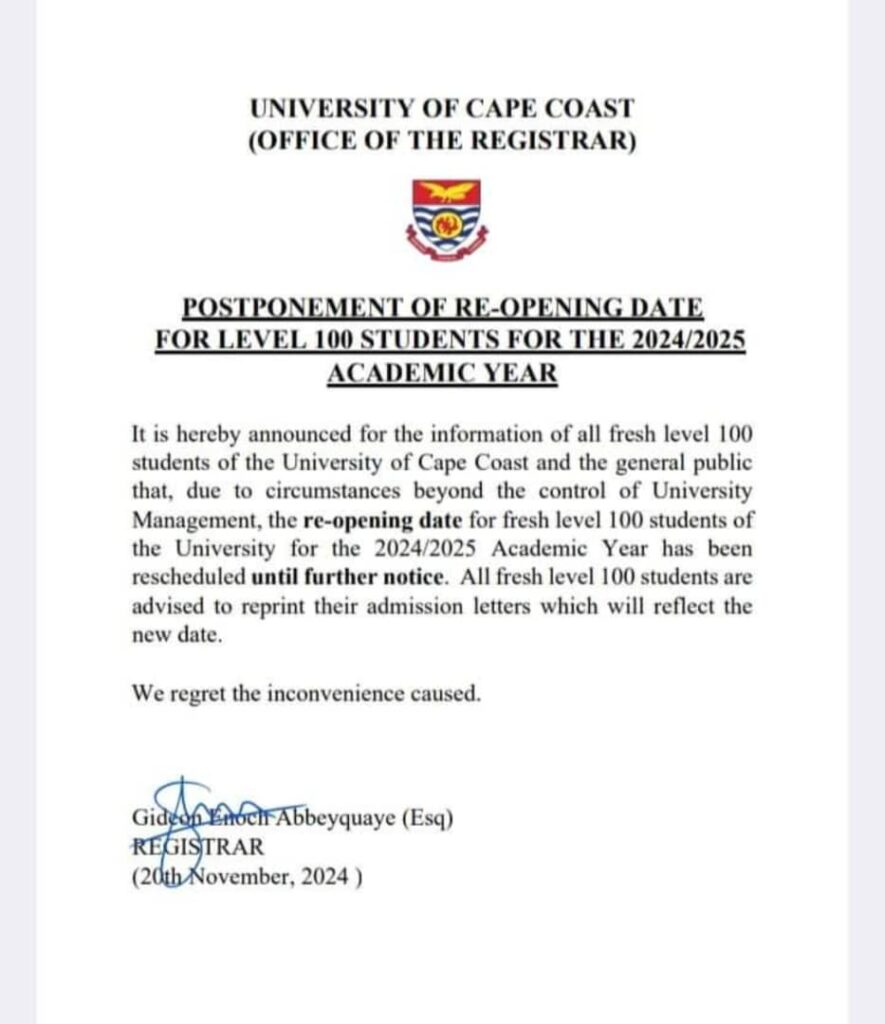
    The University of Cape Coast (UCC) has indefinitely postponed the reopening date for Level 100 students for the 2024/2025 academic year.

    In a statement issued on November 20, UCC explained that the decision was due to circumstances beyond its management’s control.

    The university has also directed all incoming Level 100 students to reprint their admission letters to reflect the revised reopening date.

    “It is hereby announced for the information of all fresh level 100 students of the University of Cape Coast and the general public that, due to circumstances beyond the control of University Management.

    “The re-opening date for fresh level 100 students of the University for the 2024/2025 Academic Year has been rescheduled until further notice. All fresh level 100 students are advised to reprint their admission letters which will reflect the new date.”

  • More students cohabiting at universities – UCC study reveals

    More students cohabiting at universities – UCC study reveals

    A recent study by the University of Cape Coast (UCC) has revealed a significant rise in cohabitation among university students residing in private hostels.

    This trend, characterised by living together and engaging in sexual relationships without marriage, is growing due to the increased freedom offered by these private accommodations, compared to the more regulated university halls.

    The research also indicates that some students cohabit for economic reasons, pooling resources to share rental costs. While most students view cohabitation negatively, a small number see it as enjoyable and normal.

    Additionally, the study highlights that this cohabitation trend is linked to higher rates of teenage pregnancy and child marriage.

    Professor Georgina Yaa Oduro, Head of the Sociology and Anthropology Department at UCC, presented these findings at a workshop aimed at combating child marriage and gender-based violence.

    The workshop, organized by the United Nations Population Fund (UNFPA) and the Ministry of Chieftaincy and Religious Affairs, was designed to enhance the understanding of traditional council registrars from eight regional houses of chiefs and the National House of Chiefs about these issues.

    “If you are on campus and in the halls, you have the hall masters, tutors, and the hall council to control you. In the girls’ hostels, for example, guys cannot visit the halls after 10:00 PM,” Prof. Oduro said.

    “But in the private hostels, comparatively, you have the freedom to do whatever you want.”

    Professor Georgina Yaa Oduro from the University of Cape Coast (UCC) reported concerning findings from her study on cohabitation among university students in private hostels.

    She revealed that students involved in these relationships are taking on all the responsibilities of married couples, including sexual activities and domestic chores such as cooking, cleaning, and managing finances.

    The study highlighted that female students, in particular, are struggling to balance their academic responsibilities with the demands of these domestic roles, leading to missed or delayed lectures and negatively impacting their studies.

    Furthermore, the study found that cohabitation among students often involves gender-based violence, including coerced sex, forced abortions, and frequent arguments, largely due to the unregulated nature of these relationships.

    Professor Oduro shared a tragic case of a 22-year-old UCC student who took his own life this year following a dispute with his cohabiting partner.

    She noted that many of these relationships dissolve after graduation and expressed concern over the lack of focus on this issue.

    Professor Oduro called for a united effort from stakeholders—parents, educators, school administrators, and community and religious leaders—to address these challenges.

    She also voiced alarm over the misuse of emergency contraceptives among young women and advised against their overuse.

  • UCC Governing Council terminates Prof. Boampong’s appointment as VC

    UCC Governing Council terminates Prof. Boampong’s appointment as VC

    The University of Cape Coast (UCC) Governing Council has officially ended the tenure of Professor Johnson Nyarko Boampong as Vice-Chancellor.

    Prof. Boampong, who began his four-year term in August 2020, saw his appointment terminated on July 31, 2024.

    Despite earlier reports suggesting a two-year extension of his term, a notice from Professor Harold S. Amonoo-Kuofi, Chairman of the University’s Governing Council, has declared this extension null and void.

    “Please be advised that the purported renewal or extension of your appointment as Vice-Chancellor, decided at the Council’s meeting on July 28, 2023, for an additional two years starting August 1, 2024, is null and void. This extension breaches the University’s Statutes regarding the renewal of a Vice-Chancellor’s appointment,” the notice stated.
    The notice further clarified that while the Vice-Chancellor’s appointment could be extended, no such extension has been formally agreed upon.

    It explained, “Although your appointment may be extended by up to two years at a time, with a maximum extension of five years beyond your retirement age, this is applicable only to your general role within the University, not specifically to the Vice-Chancellor position. Statute 8.2 of the University’s Statutes places a limit on such extensions.”

    Prof. Boampong has been advised that if he wishes to pursue an extension, he should formally apply to the Council following the established procedures.

    “You may apply to the Council for consideration to renew your term as Vice-Chancellor for a period not exceeding your retirement age and in compliance with the University’s Constitution and Statutes,” the notice concluded.

  • UCC level 300 student conducts ICT training for visually impaired peers

    UCC level 300 student conducts ICT training for visually impaired peers

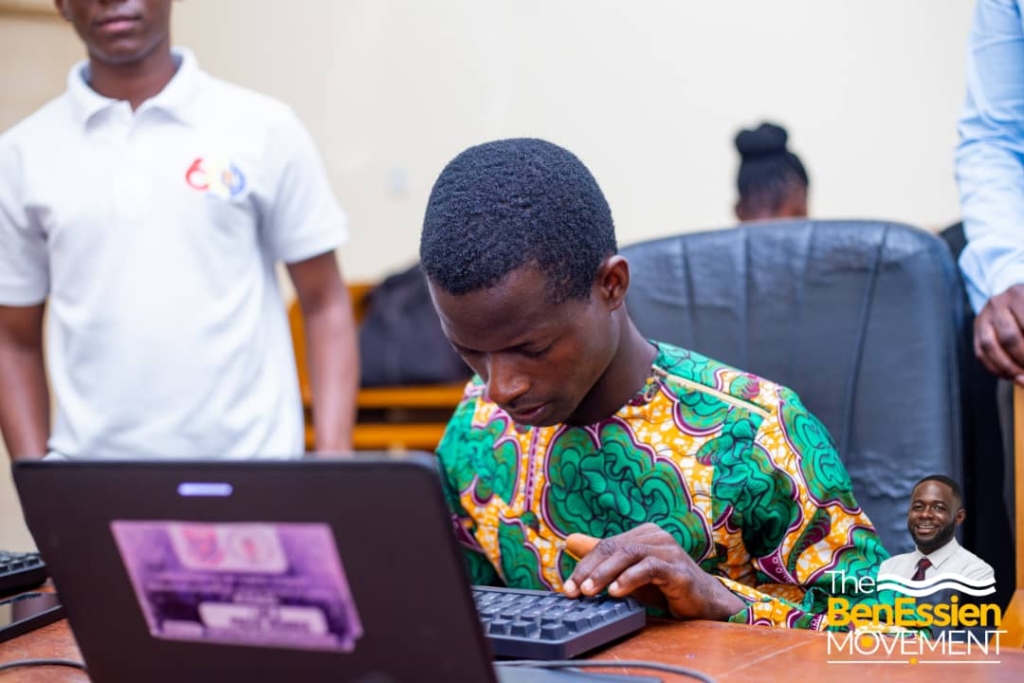
    In an effort to empower visually impaired students with crucial ICT skills, a third-year student at the University of Cape Coast, Ben Essien, collaborated with the Association of Students with Special Needs to organize a three-day training program.

    Taking place from Thursday, May 9th, to Saturday, May 11th, 2024, the training aimed to equip students with the necessary knowledge to effectively navigate computers and develop proficiency in basic computer skills.

    Traditionally, visually impaired students have relied on the braille system for reading and writing. However, the manual nature of braille presents challenges, especially with time-sensitive assignments.

    Recognizing the importance of embracing technology, Mr. Essien emphasized the significance of introducing ICT skills to visually impaired students, enabling them to independently type and navigate computers.

    One of the beneficiaries, Opoku Anokye, expressed gratitude to the Ben Essien movement for its dedicated efforts in empowering individuals with special needs. He praised the initiative as a heartfelt demonstration of support for those with disabilities.

    Another beneficiary underscored the importance of the training, noting her lack of basic IT knowledge prior to the sessions. She expressed appreciation for learning essential skills such as word formatting and eagerness to continue learning throughout the program.

    Reflecting on the initiative, Mr. Ben Essien reiterated the importance of providing special needs students with essential IT skills to enhance their future prospects. He thanked all participants for their enthusiasm and commitment to the training.

    The ICT Skills Training Exercise represents a significant stride towards inclusivity and empowerment, highlighting the University of Cape Coast’s dedication to supporting students with special needs in their academic and professional journeys.

  • UCC medical student supports 10 fellow students by paying their fees

    UCC medical student supports 10 fellow students by paying their fees

    Abraham Norman Nortey, who is currently pursuing his Bachelor of Medicine & Bachelor of Surgery-GEM studies at UCC School of Medical Sciences, stands out as a beacon of altruism within the academic realm.

    Despite the demanding nature of medical studies, Nortey’s remarkable generosity has captured the hearts of many.

    Originating from a modest background but harboring ambitious aspirations, Nortey, doubling as an entrepreneur and student, has gone beyond expectations by covering the tuition fees of not just one, but ten university students.

    His journey to this philanthropic feat underscores resilience and a fervent belief in the transformative power of education.

    Recognizing the financial barriers hindering numerous aspiring scholars, Nortey’s act transcends mere monetary support; it symbolizes the unlocking of doors to opportunity for those previously marginalized.

    In his own words, Nortey expressed, “It’s about more than just paying fees. It’s about opening doors of opportunity for those who might not have had the chance otherwise,” Nortey shared in a heartfelt interview.


    His benevolence has impacted students across various disciplines, from Computer Science to Economics, instilling hope and igniting aspirations across the University of Cape Coast campus.

    Notably, Nortey’s philanthropic endeavors extend beyond a singular gesture. He has committed to covering academic fees for an additional ten students in the 2023/2024 academic year, totaling GH¢ 36,000. This includes both full and partial payments, alleviating the financial burdens of deserving individuals.

    Professor Felicia Boateng, Dean of the UCC School of Medical Sciences, lauded Nortey’s exemplary character, emphasizing his academic prowess coupled with compassion and empathy. Nortey’s altruistic act has not only inspired his peers but has also garnered admiration from the entire university community.

    Nortey’s selflessness has initiated meaningful dialogue on campus, prompting reflections on the impact of kindness and the potential for positive change. Humbly, Nortey remarked, “I never imagined my contribution could hold such significance for others. If it inspires even one person to embrace the ethos of giving back, it’s all worthwhile.”

    Undoubtedly, Nortey’s legacy will endure, resonating not only within academia but within the lives of the beneficiaries whose futures have been illuminated by his benevolence. One beneficiary aptly described Nortey’s story as a beacon of hope, highlighting the profound impact of choosing kindness amidst life’s challenges.

  • AgriConnect Initiative equips Ghanaian students with laptops and connectivity for Agriculture Education

    AgriConnect Initiative equips Ghanaian students with laptops and connectivity for Agriculture Education

    The AgriConnect initiative, developed by theSOFTtribe in partnership with the Mastercard Foundation, has begun delivering laptops and connectivity to students across various universities in the country.

    Since February 5th, the AgriConnect team has distributed laptops to students at the University of Ghana, University of Cape Coast (UCC), and Kwame Nkrumah University of Science and Technology (KNUST). Over 1,000 students have already received their devices, with thousands more expected to benefit in the coming months.

    AgriConnect aims to provide education and training opportunities for youth interested in agriculture, including young women and persons with disabilities, to leverage emerging opportunities in the industry.

    With over 3,500 students from 10 participating institutions already registered, the program is set to provide 10,000 students enrolled in agriculture-related faculties with laptops and connectivity. Additionally, participants will engage in three supplementary courses focused on value chain development in agriculture, agribusiness and entrepreneurship, and digital literacy, designed to enhance their readiness for the job market.

    Mr. Tetteh Antonio, CEO of theSOFTtribe Limited, expressed satisfaction with the response to AgriConnect and reiterated the project’s commitment to providing viable career opportunities in agriculture, particularly through technology-driven approaches.

    As part of the initiative, students are required to contribute a small fraction of the cost for the laptops, which they will retain after the program ends, as well as the connectivity, which they will receive for one year.

    Aligned with Ghana’s national economic plan, Ghana Vision 2020, and the National Youth Policy (2010), AgriConnect seeks to make agriculture a lucrative venture for Ghanaian youth, thereby fostering employment and sustainable livelihoods.

    The participating institutions include Damongo Agricultural College, Ejura Agricultural College, Kwadaso Agricultural College, KNUST College of Agriculture and Natural Resources, Ohawu Agricultural College, Pong Agricultural College, University of Cape Coast School of Agriculture, University of Development Studies Faculty of Agriculture, Food and Consumer Sciences, University of Ghana School of Agriculture, and Wenchi Agricultural College.

    In the coming weeks, the AgriConnect team will continue its engagement with students at participating universities, facilitating registration and payment processes, and providing support in navigating the learning platform for the supplementary courses.

  • Disabled students picket overdue Scholarship disbursements

    Disabled students picket overdue Scholarship disbursements


    Students with disabilities from the University of Education, Winneba, and Cape Coast University took to the streets in Accra, staging a protest at the Scholarship Secretariat to demand the prompt release of overdue scholarship funds pledged by the government.

    Represented by the Association of Students with Disabilities, the frustrated students argue that the delayed funds are posing a serious threat to their educational pursuits.

    The leader of the group, Aminu Mahama, conveyed their concerns to Citi News, stating, “We were told last year that we would be paid…We were more patient with them and most of us did not pay our school fees because we had it in mind that with the scholarship, we would be paid but that did not happen.”

    According to the students, the management of their respective universities has issued warnings of course deferment if the promised payments are not received promptly.

    In a determined effort to address the issue, the group has declared their intention to spend the night at the Scholarship Secretariat if they do not receive a favorable response.

    Aminu Mahama further alleged that the government has consistently failed to fulfill its commitments regarding these scholarships, causing significant distress among the affected students.

    “We kept on doing the follow-up this year and so we came here and wanted to know the very day they would be paying us because we were on the verge of deferring our courses and we are now doing everything we can to ensure that the monies are released to ensure we don’t defer our courses,” he added.

  • Social media users call for reopening of closed hospitals mid senior staff strike

    Social media users call for reopening of closed hospitals mid senior staff strike

    Amid the ongoing strike by the Senior Staff Association of Public Universities (SSA UoG), social media users are urging authorities to step in, expressing concern for the well-being of affected students.

    Arguing that the lives of ill students are in jeopardy due to the strike, these users emphasize the potential worsening of the students’ health during the ongoing industrial action.

    “Today Mark exactly 10 days Public Universities hospitals got shutdown due to strike action by the Senior Staff Association of Public Universities (SSA UoG). Sadly, students can not get access to healthcare which should be a basic needs. I want to plead with authorities to help,” a X user posted.

    The University of Cape Coast took the drastic step of indefinitely closing its hospital on January 19, 2024, in response to the senior staff strike.

    The strike, declared by the Senior Staff Association of Public Universities in Ghana (SSA-UoG) and the Federation of Universities Senior Staff (FUSSAG) on January 17, 2024, is a nationwide protest against the government’s alleged disregard for their welfare.

    The association cites the government’s failure to fulfill obligations such as payment of their two-tier pension and overtime allowances as key reasons for the strike.

    The withdrawal of services, including healthcare, administration, and security, has led to the closure of the university’s hospital.

    During this period, the university’s communication team advises students to seek care for minor conditions at their respective hall infirmaries.

    For severe conditions, students are directed to the school student’s clinic near the Sam Jonah Library, which will operate from 8 a.m. to 6 p.m. every day excluding weekends.

    Additionally, the ongoing medical exam for fresh students has been temporarily suspended until further notice.

  • Over 6,800 trained teachers graduate from UCC

    Over 6,800 trained teachers graduate from UCC

    The University of Cape Coast (UCC) celebrated the graduation of 6,819 students from the Institute of Education within the College of Education Studies.

    The graduation ceremony consisted of two sessions, with the first session comprising 2,873 students who completed five-semester sandwich programs in education.

    The second session included 3,946 graduates who participated in three-semester programs and were also beneficiaries of the Ministry of Finance’s Ghana CARES Obantanpa TUC Programs.

    Among the graduates, there were notable achievements, with 578 students graduating with first-class honors, 3,493 with second-class upper honors, 1,946 with second-class lower honors, 581 with third-class honors, and 229 with passes. Mr. Eric Osei was recognized as the overall best student with a Grade Points Average (GPA) of 3.97, receiving a laptop, an undisclosed amount of cash, and a plaque.

    During the ceremony, Professor Johnson Nyarko Boampong, the Vice Chancellor of the University of Cape Coast, encouraged the graduating teachers to embrace technological and innovative teaching methods to make a meaningful impact on their students.

    He emphasized the importance of staying informed about educational policies, adapting to changes, and enhancing communication and instructional techniques.

    The Vice Chancellor also highlighted the significance of building rapport and demonstrating empathy towards students to create a friendly academic environment conducive to students reaching their full potential.

    The Vice Chancellor acknowledged the positive strides in infrastructural development at the University of Cape Coast (UCC) but highlighted a deficit, particularly in students’ accommodation on campus. This shortage has forced many students to seek housing in hostels and apartments around campus, leading to an increase in theft and robbery incidents. The Vice Chancellor expressed the school’s commitment to addressing the accommodation challenge through collaboration with the UCC branch of the Ghana Universities’ Staff Superannuation Scheme, aiming to find sustainable solutions.

    Professor Boampong outlined achievements in the College of Education Studies, including mentoring other Colleges of Education, organizing development programs for in-service teachers, and participating in initiatives like the Ghana CARES Obatanpa program for non-professional teachers in private schools. The college has also undertaken projects to improve teaching and learning in selected low-performing basic schools in Cape Coast.

    He proudly mentioned UCC’s position as the top-ranked university in Ghana and West Africa, and among the top 10 in Africa. The Vice Chancellor emphasized the university’s commitment to strategic partnerships to consolidate its achievements.

    Prof. Boampong appealed for a violence-free campus during the 2024 general elections, urging tolerance among the university community. He emphasized the potential dangers associated with conflicts and war. The valedictorian, Mr. Osei, encouraged his fellow graduates to continue adding value to themselves and using their knowledge and skills for the benefit of society.

  • UCC visually impaired student successfully graduates with PhD

    UCC visually impaired student successfully graduates with PhD

    Dr. Ben Nyanihorba Ayamba, the inaugural visually impaired UCC PhD graduate, successfully completed the rigorous seven-year journey in Guidance and Counselling, earning his doctorate degree.

    The achievement was celebrated at the university’s 56th Congregation, where he was one of 103 PhD graduands among 3,034 postgraduate students.

    Acknowledging his determination, Dr. Ayamba received the Special Chancellor’s Award of US $2,000. UCC, in its 56th congregation, graduated a total of 18,539 undergraduate and postgraduate students.

    Despite losing his sight in 1995, Dr. Ayamba persevered through rehabilitation and pursued education, eventually attaining his PhD in 2023.

    His journey, marked by faith and resilience, underscores the importance of supportive environments, with UCC’s resource center for Persons with Disabilities playing a crucial role in facilitating his academic success.

    “The Lecturers were also helpful; knowing our situation, especially those of us with visual impairment, they put the right methodologies in place to help us get the content and the necessary skills and competencies before completion,” he said.

    Instead of keeping their disabled child hidden from society, Dr. Ayamba pleaded with parents to seek advice and assistance so they can enroll their child in the right institutions and discover their potential and interests.

    “Some parents think once the child is disabled, he cannot do anything. They should contact the social welfare and the Ghana Blind Union and other organisations for the physically challenged,” he said.

    “There are a lot of educational facilities and rehabilitation centres to assess the capabilities of the child to know where they fit best; whether in an inclusive school, a mainstreaming school or to be placed in a special school,” he added.

    Despite his retirement in 26 days, Dr. Ayamba said he was still available for the country because he had earned a PhD in guidance and counseling.

  • Over 6k teacher trainees graduate from UCC

    Over 6,000 teacher trainees have graduated from the University of Cape Coast (UCC) in the Central Region.

    During the ceremony, Vice Chancellor, Professor Johnson Nyarko Boampong entreated graduating teachers of the school to embrace technological and innovative teaching methods to make the best impact on their students.

    He urged them to stay informed about educational policies and adapt accordingly while sharpening their communication and instructional techniques.

    He said as teachers, it was critical for them to build rapport and have empathy towards their students to create a friendly academic environment where the students could reach their full potential.

    The Vice Chancellor was addressing the first and second sessions of the university’s 56th congregation which graduated 6,819 students at the Institute of Education of the College of Education Studies.

    Education Studies, he said they were mentoring many Colleges of Education and organising continuous development programmes for in-service teachers in the Central Region in areas including good governance, finance, administration, and academic research.

    He said in collaboration with the Ministry of Finance and the Trades Union Congress, the college was running special programmes for non-professional teachers in private schools under Ghana CARES Obatanpa programme.

    He added that it also undertook a project to adopt selected low-performing basic schools in Cape Coast to improve teaching and learning.

    The Vice Chancellor further flaunted UCC’s position as the topmost ranked university in Ghana and West Africa and among the top 10 ranked universities in Africa.He said the feat was unprecedented in any university in Ghana and assured that they would continue to forge strategic partnerships in areas of their core mandates to consolidate their achievements.

    Prof. Boampong appealed to the university community to ensure that the campus was violence-free going into the 2024 general elections.He admonished the student body, members of staff and management to be tolerant of one another, reminding them of the potential dangers which accompanied conflicts and war.

    The valedictorian, Mr Osei, encouraged his colleagues to continue to add value to themselves and put their knowledge and skills to use to benefit society.

  • Healthcare delivery at UCC at standstill as management shuts down hospital over senior staff strike

    Healthcare delivery at UCC at standstill as management shuts down hospital over senior staff strike

    The University of Cape Coast (UCC) indefinitely closed its hospital starting from January 19, 2024, due to the ongoing strike by senior staff.

    The Senior Staff Association of the Public Universities in Ghana (SSA-UoG) and the Federation of Universities Senior Staff (FUSSAG) initiated a nationwide indefinite strike on January 17, 2024, citing the government’s disregard for their welfare.

    The strike is in protest of the government’s failure to fulfill the payment of two-tier pensions and overtime allowances.

    The senior staff’s strike has led to the cessation of various services, including healthcare, administration, and security, prompting the closure of the University’s hospital.

    During this period, the University’s communication team has advised students to seek care for minor conditions at their respective hall infirmaries.

    For severe conditions, students are encouraged to visit the school student’s clinic located near the Sam Jonah Library, which will be operating from eight in the morning to six in the evening every day except weekends.

    Additionally, the ongoing medical examination for fresh students has been suspended until further notice.

  • Senior Staff Strike forces UCC to shut down hospital

    University of Cape Coast (UCC) has taken a drastic action to shut down its hospital following a strike action embarked by its Senior Staff.

    The Senior Staff Association of the Public Universities in Ghana (SSA-UoG) and the Federation of Universities Senior Staff (FUSSAG) on Wednesday 17 January 2024, declared an indefinite nationwide strike due to the alleged neglect of their welfare by the government.

    The Association disclosed that the government has not fulfilled the payment of their two-tier pension and overtime allowances for an extended period.

    The strike has resulted in the withdrawal of various services, including healthcare, administration, and security leading to the closure of the University’s hospital effective today.

    According to the University’s Communication team, students, during this time are advised to seek care for minor conditions at their respective hall infirmaries.

    Also, Severe conditions are to be referred to the school student’s clinic located near the Sam Jonah Library.

    The Clinic, it said, would be working from eight in the morning to six in the evening every day excluding weekends.

    The usual ongoing medical exam for fresh students has also been suspended until further notice.

  • Carruthers Tetteh is UCC’s first-ever visually impaired law lecturer

    Carruthers Tetteh is UCC’s first-ever visually impaired law lecturer

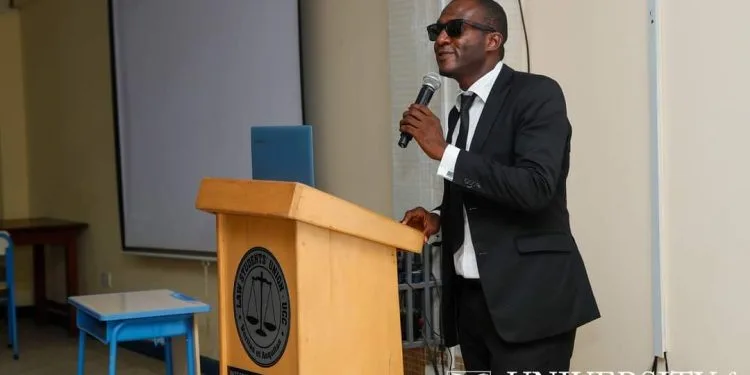
    The University of Cape Coast (UCC) has appointed Carruthers Tetteh as its first visually impaired lecturer at the Faculty of Law.

    The appointment, effective December 2023, sees Mr. Tetteh teaching Criminal Law and the Ghana Legal System. Despite losing his sight at the age of 11 due to a drug reaction, Carruthers Tetteh remained steadfast in his pursuit of a career in law.

    His passion for law and advocacy for the less privileged led him to graduate with a first-class degree in English and History in 2015 at the University of Cape Coast.

    Notably, he was the overall best-graduating student with visual impairment. Undeterred by challenges, Mr. Tetteh continued his academic journey, achieving another first-class degree in Law at the University of Cape Coast.

    Sharing his experience after the appointment, he said, “In 2002, I lost my sight as a result of a drug reaction when I was in primary five and at age 11.”

    According to him, he had adverse reactions when he took a prescribed drug after visiting a private hospital in Winneba.

    He added, “So in September 2002, when I was admitted to the Akropong School for the Blind, it dawned on me that life had really taken a different turn because I am now going to be in the midst of people who are blind.”

    On his first appearance in class, he won the hearts of the level 300s with his knowledge of Criminal Law.

    He said, “Reading Law has always been my interest from childhood. I always wanted to be in a position to advocate for the less privileged. So that has been driving my interest throughout my life.”

    He added, “At the Law Faculty, I also went all out to give out my best to set the right pace, knowing very well that I was the first student with Visual Impairment to be admitted to the Law Faculty in UCC.”

  • UCC dispels ‘unfounded’ claim of ban in Nigeria over fake degrees

    UCC dispels ‘unfounded’ claim of ban in Nigeria over fake degrees

    The University of Cape Coast (UCC) has denied the accuracy of a narrative claiming that its operations have been halted by the Nigerian Federal government.

    UCC clarified that it does not have direct operations in Africa‘s most populous nation, nor has it granted a franchise for its programs to be conducted in the country.

    This clarification comes in response to a GhanaWeb article referencing media reports in Nigeria that suggested three Ghanaian universities, including UCC, had been prohibited by the National Universities Commission (NUC) of Nigeria.

    “The University of Cape Coast (UCC) does not have any outlet or campus operating in Nigeria, neither has it granted franchise to any institution in Nigeria to run its programmes.

    “All international students, including Nigerians, wishing to study at UCC apply directly to the University for consideration,” their statement dated January 4, 2024 read in part.

    The statement further pointed out that UCC was different from the Cape Coast University (CCU) purportedly banned in Nigeria.

    It also reassured members of the university community to disregard the publication.

    UCC PRESS STATEMENT

    FOR IMMEDIATE RELEASE

    THURSDAY, 04 JANUARY, 2024.

    RE: UCC OPERATIONS IN NIGERIA BANNED

    Cape Coast, Thursday, 4th January, 2024: The attention of Management of the University of Cape Coast (UCC) has been drawn to a false news item on Ghanaweb, indicating that the operations of the University of Cape Coast have been banned in Nigeria.

    ‘The University wishes to refute the allegations as follows:

    1. The University of Cape Coast (UCC) does not have any outlet or campus operating in Nigeria, neither has it granted franchise to any institution in Nigeria to run its programmes.

    2. All international students, including Nigerians, wishing to study at UCC apply directly to the University for consideration.

    3. It is interesting to note that, in a haste to drag the image of the University in the mud, Ghanaweb, with little information and without crosschecking, quickly ran to the market with the name of a certain Cape Coast University (CCU) to represent the solid brand of the University of Cape Coast (UCC).

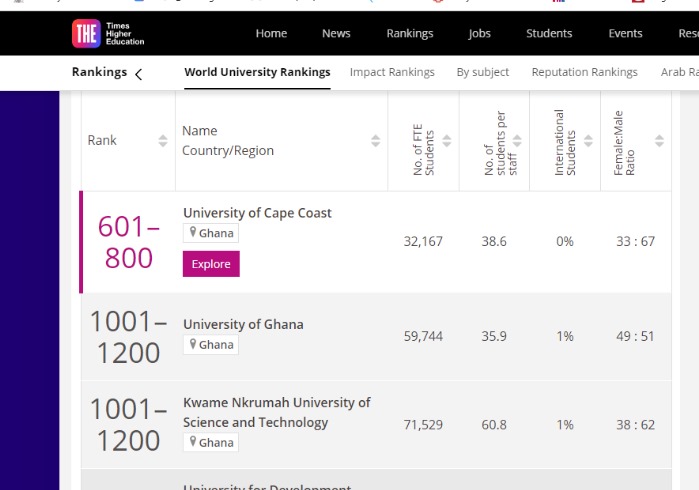
    4. Management wishes to assure its cherished stakeholders and the general public that the University holds very dear its solid brand as an excellent academic institution with world-wide acclaim and, for that matter, would not do anything untoward to tannish its hard-won reputation ‘as the Number One University in Ghana and West Africa, and the Seventh in Africa, according to the 2024 Times Higher Education (THE) World University Rankings.

    5. We would entreat all persons and institutions, as we have always done, to, at all times, verify with the university, the authenticity of certificates purported to have been issued by the University of Cape Coast.

    In the light of the above, Management wishes to entreat its stakeholders and the public to disregard the malicious publication.

    Major Kofi Baah-Bentum (Rid), Psc, APR

    DIRECTOR, DIRECTORATE OF PUBLIC AFFAIRS

    -END-

  • UCC maintains top position in Ghana, West Africa in 2024 World University Rankings

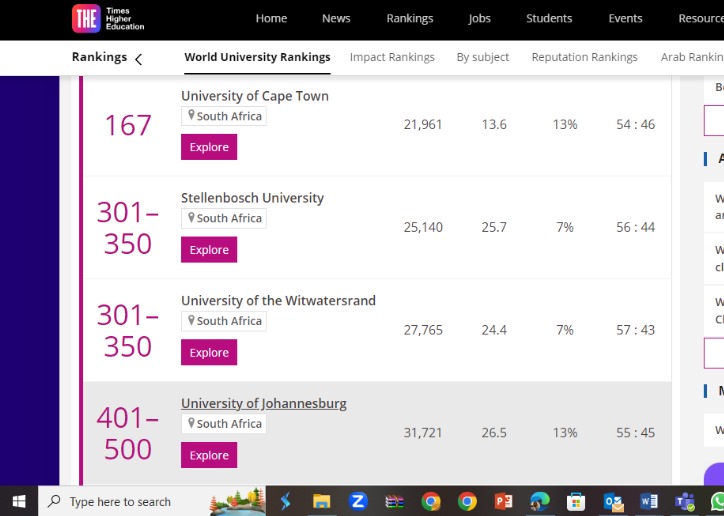
    In the 2024 Times Higher Education World University Rankings, the University of Cape Coast has once again secured the top position as the premier university in both Ghana and West Africa.

    In the 2022 and 2023 rankings, the university was celebrated as the best in Ghana, leading in West Africa, ranking fourth in Africa, and excelling as the world’s foremost university for research influence.

    In the latest 2024 rankings just released, the University of Cape Coast still holds the distinction of being the premier university in Ghana and West Africa, although it has slipped slightly from its fourth position in Africa to the seventh.

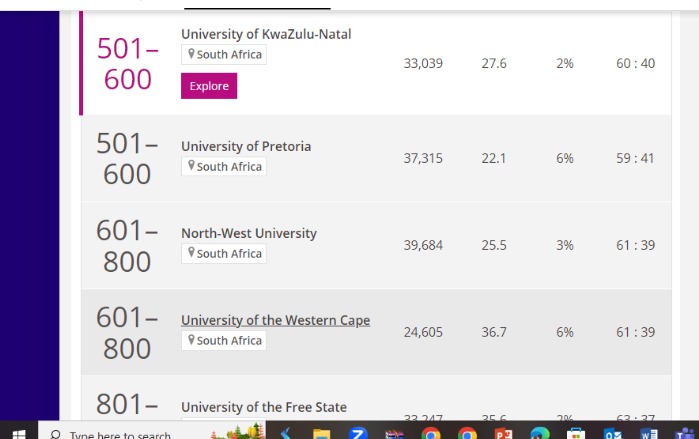
    The Times Higher Education World University Rankings 2024 encompasses 1,904 universities from various countries and regions.

    These rankings are based on the new WUR 3.0 methodology, which evaluates institutions using 18 meticulously calibrated performance indicators that gauge performance in five key areas: teaching, research environment, research quality, industry engagement, and international outlook.

    This year’s ranking involved the analysis of more than 134 million citations across 16.5 million research publications and included survey responses from 68,402 scholars globally.

    In total, 411,789 data points were collected from over 2,673 institutions that submitted data.

    The Times Higher Education World Universities Ranking is highly regarded worldwide and is trusted by students, educators, governments, and industry experts. The 2024 league table provides insights into the shifting landscape of global higher education.

    On a global scale, the University of Oxford maintained its top position for the eighth consecutive year, but there have been changes in the ranks of the top five universities. Stanford University moved up to second place, displacing Harvard University to fourth. The Massachusetts Institute of Technology (MIT) climbed two places to secure third place. The University of Cambridge slipped to fifth, having shared third place with MIT in the previous year.

    Notably, Italy’s Catholic University of the Sacred Heart made a significant debut, entering the rankings in the 301-350 bracket. The majority of new entrants this year are from Asia.

    The United States boasts the highest representation in the rankings, with 169 institutions, and is particularly dominant in the top 200, where it has 56 institutions. India is now the fourth most-represented nation, with 91 institutions, surpassing China, which has 86.

    Four European countries, including Kosovo, Bosnia and Herzegovina, North Macedonia, and Armenia, entered the rankings for the first time this year. This contrasts with the previous year, when all new entrants were from Africa.

    Regarding individual performance indicators, Stanford University leads in the teaching category, while the University of Oxford and the University of Cambridge excel in the research environment category. In the research quality category (formerly known as the citations category), MIT takes the top spot. The University of Sharjah in the United Arab Emirates garners the highest score for international outlook, while 28 institutions earn a perfect score of 100 for the industry engagement pillar.

    In addition to the 1,904 ranked institutions, there are 769 universities listed with “reporter” status, signifying that they provided data but did not meet eligibility criteria for ranking. These institutions have agreed to be displayed as reporters in the final table.

  • NAPO, others to receive doctorate degrees from UCC

    NAPO, others to receive doctorate degrees from UCC

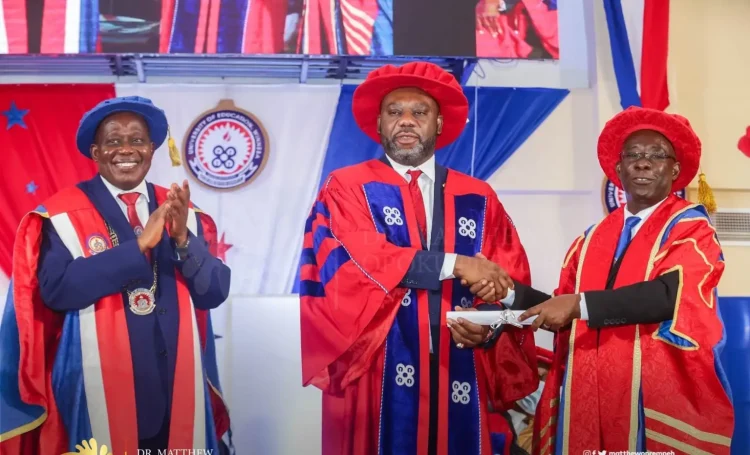
    The Ghanaian Energy Minister, Dr. Mathew Opoku Prempeh, is set to receive yet another honorary Doctorate Degree from the esteemed University of Cape Coast (UCC).

    This will mark the third such honor bestowed upon him in just two years, a testament to his outstanding contributions to the nation.


    Affectionately known as ‘Napo’ in political circles, the hardworking minister has previously been awarded two Honorary Doctorate Degrees from other prestigious universities before this latest recognition by UCC.


    The special ceremony, scheduled for Saturday, July 29, 2023, will be a momentous occasion where the Minister of Energy, along with other dignitaries, will be celebrated for their remarkable achievements.


    Dr. Mathew Opoku Prempeh has left an indelible mark on Ghana’s development, particularly in his roles within the Energy and Education Ministries over the last six years.

    As the Education Minister, he played a pivotal role in introducing the government’s flagship policy, the free Senior High School (SHS) program, which has had a significant impact on the country’s educational landscape.


    His dedication and positive contributions to the country’s transformation have earned him numerous accolades, including recognition from international organizations like the United Nations (UN).


    Notably, Dr. Prempeh has been instrumental in energizing the Ministry of Energy, bringing vitality to its operations under his leadership.


    Apart from his academic honors, Dr. Mathew Opoku Prempeh has received recognition from various reputable international organizations, a testament to his exemplary work and dedication to public service.


    On the same day, the University of Cape Coast will also honor other distinguished personalities, including Ehunabobrim Prah Agyensaim VI, Dr. K.K Sarpong, Prof. Harold Stwart Amonoo-Koufi, Dr. Deborah Rose, Dr. Yaw Adu-Agyei Gyamfi, and Prof. Daniel A. Wubah.

    It promises to be a day of celebration and recognition of exceptional achievements in various fields.

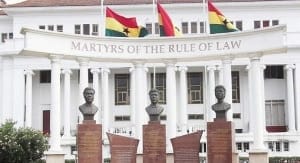
  • The nine Supreme Court Justices against anti-LGBTQ+ application

    The nine Supreme Court Justices against anti-LGBTQ+ application

    On July 19, 2023, Supreme Court rejected an application attempting to halt the passage of the Promotion of Proper Human Sexual Rights and Ghanaian Family Values Bill 2021, commonly known as the anti-LGBTQ+ bill.

    Chief Justice Gertrude Torkornoo presided over the nine-member panel, which unanimously dismissed the application filed by Dr. Amanda Odoi, a Research Fellow with the Centre for Gender Research, Advocacy, and Documentation (CEGRAD) at the University of Cape Coast (UCC), along with another individual.

    The court’s ruling was based on the lack of sufficient reasons provided by the plaintiffs to compel parliament to suspend its proceedings on the anti-gay bill.

    Below are the nine Justices who sat on the application:

    1. Chief Justice Gertrude Torkornoo

    2. Paul Baffoe-Bonnie

    3. Gabriel Pwamang

    4. Mariama Owusu

    5. Henrietta Mensa-Bonsu

    6. Yonny Kulendi

    7. Barbara Ackah-Yensu

    8. Samuel Asiedu

    9. George Koomson

    Dr. Amanda Odoi withdrew a contempt charge against Speaker of Parliament Alban Bagbin for allowing the House to proceed with the Bill despite a pending case before the courts.

    On July 5, 2023, the Parliament of Ghana adopted the motion of the Constitutional, Legal, and Parliament Committee on the Promotion of Proper Human Sexual Rights and Ghanaian Family Values Bill (anti-LGBTQI bill) during its second reading.

    Currently, the bill is at the consideration stage, where the House will review it clause by clause and address the proposed amendments made by the Constitutional and Legal Affairs Committee.

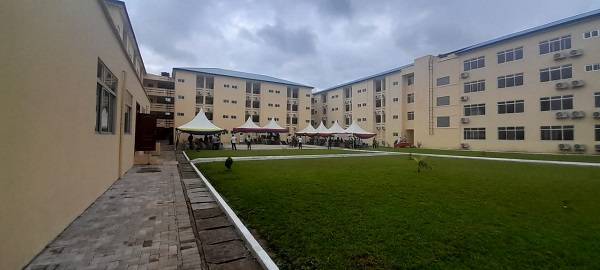
  • UCC commissions modern resort, conference center at Agona Nyakrom

    UCC commissions modern resort, conference center at Agona Nyakrom

    The University of Cape Coast (UCC) has inaugurated an ultra-modern training resort and conference center at Agona Nyakrom.

    Situated on a 50-acre land, the facility will provide training for students and faculty, offer short courses, and host academic engagements.

    It includes 162 standard bedrooms, 16 executive bedrooms, 10 seminar rooms, and various auxiliary facilities.

    This development marks the first phase of an extensive educational project, with plans for future expansion and the establishment of a satellite campus.

    The Minister of Education, Dr. Yaw Osei Adutwum, commended UCC for their commitment to education, emphasizing the importance of benefiting host communities.

    He urged the university to extend its Neighbourhood Academic Initiative and highlighted the Ministry’s dedication to strengthening the public education system.

    The Vice-Chancellor of UCC, Prof. Johnson Nyarko Boampong, emphasized the institution’s dedication to quality and inclusive education, as well as the economic opportunities and tourism promotion associated with the new facility.

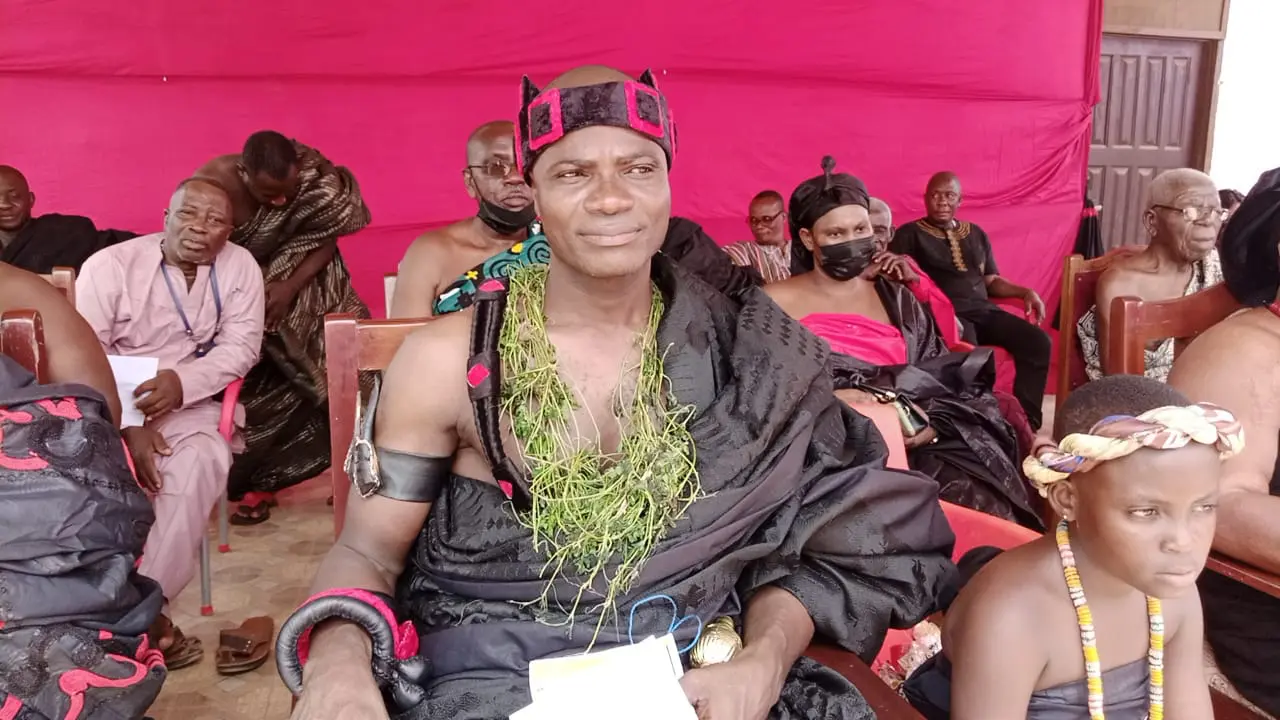
    The Paramount Chief of Agona Nyakrom Traditional Area, Okofo Okatakyi Nyarko Eku X, suggested considering distance education programs at the center to ensure accessibility for those seeking tertiary education.

    He stated that: “I am aware that current­ly, the university runs distance education programme in Diploma in Education from a rented premises in Swedru and other places”.

  • UCC lecturer allegedly flies home from Germany using his Ghana card

    UCC lecturer allegedly flies home from Germany using his Ghana card

    Dr. Emmanuel Acheampong, a lecturer at the University of Cape Coast (UCC), has shared an incident where the Ghana card came to his rescue, preventing him from missing his flight from Germany to Ghana after misplacing his passport.

    During an interview on Okay FM on Friday morning, Dr. Acheampong upon arrival at the airport in Hamburg, he realized that he had inadvertently left his passport at home.

    But for the Ghana card, he was able to resolve the challenge and make his way back home.

    “Yesterday I was coming from Europe to Ghana. At the airport, I joined the queue to check in and when it got to my turn to be processed, I strangely could not find my passport. I checked all my bags and I could not find my passport so I called home and I was told I had left my passport at home,” Dr Acheampong told Okay FM.

    “I had one option, which was to rebook the flight and that would cost me extra money. Then I remembered that some time ago, there were media reports that it is possible for one to travel to Ghana on a Ghana card, and I had my Ghana card in my purse.”

    “So I approached the airline, Air France and showed my Ghanacard to them to prove that I am a Ghanaian and I had reason to travel to Ghana. Because the Ghanacard is machine-readable, they scanned and confirmed that I am a Ghanaian.”

    “They also conferred with the Immigration officials at the airport, but unfortunately for me, by the time they completed these processes, I missed that particular Airfrance flight, but I was rebooked on KLM because of the alliance between Air France and KLM. So I travelled to Ghana from Hamburg through Amsterdam on my Ghana card,” he added.

    He noted that confirming his identity was not a challenge as he had linked his Ghana card to his passport and driver’s license.

    “Interestingly, because I had linked my passport and my driver’s license to the Ghanacard, they were able to see all that when they scanned it that I am indeed a Ghanaian citizen.”

    “The good thing is that the Ghanacard is machine readable so you can insert it into any readable machine and every piece of information on it will show, and that’s exactly what the airline did without my passport.

    “And when I got to Ghana, I realised that Ghana Immigration Service had a special desk which processed holders of Ghanacard. So I didn’t go through the normal Immigration channel where you had to show your passport. I went through the special desk. I didn’t know something like that existed.”

    Dr. Acheampong admitted that until his personal experience, he did not believe the Ghanacard could be used to travel.

    “Honestly I was surprised I could use the Ghanacard to travel. Some months ago when reports emerged that the Ghanacard could be used as a travel document, many people didn’t believe it. Honestly, I also didn’t believe it,” he admitted.

    “But I was caught up yesterday because if I lost that flight, I would have spent some money to rebook it so I said no, let me try it because the government has announced that the Ghanacard could be used to travel. I tried it and thankfully it worked. It saved me time and money, and I am happy to be back home.”

    He described the Ghanacard as a very good initiative and urged Ghanaians to embrace it, as well as other digitization efforts in the country by the government.

    “The Ghanacard is a very good initiative. Not only the Ghanacard, but also efforts to digitise many aspects of our economy and national life is very important. Wherever you go, before any office or government would engage you, you’ll first have to be identified as the real person.”

    “It is a good effort and Ghanaians should embrace it. My own experience shows that some of these initiatives can help, especially in situations such as I found myself in.”

    His assertion if confirmed to be true, goes to confirm that the Ghana card is recognized as an electronic passport in 197 countries, per Vice President Dr Bawumia who announced preparations in 2021.

    “The Ghana card will be recognized as an e-passport and can be read and verified in all [International Civil Aviation Organization] ICAO compliant borders (in 197 countries and 44,000 airports in the world). When this happens, holders of the Ghana card will be allowed to board any flight to Ghana.”

    “Furthermore, the good news for diasporan Ghanaians is that when the Ghana Immigration Service is linked to the NIA architecture, diasporan Ghanaians who hold the Ghana card should not have to obtain visas to travel to Ghana,” he said on November 2, 2021.

  • Kwaprow Chief and Assemblyman likely to serve 3-month jail term for threatening life of UCC lawyer

    Kwaprow Chief and Assemblyman likely to serve 3-month jail term for threatening life of UCC lawyer

    A Cape Coast High Court has fined Nana Kwesi Mensah III, Chief of Kwaprow, and John Kilson Mensah, a Kwaprow Assembly Member, GHS6000 each for contempt of court.

    On October 11, 2022, the two defendants forcibly entered Solomon Faakye’s office, the head of the legal affairs office at the University of Cape Coast, and threatened him with death if he continued to handle cases involving their and their community’s encroachment on UCC land.

    Counsels for the applicants, Philip Young, Anastasia Asante and Emmanuel Yaw Hukpatsi, argued that the respondents’ action, which sought to disrupt the work of officers of the court, brought the reputation of the court into disrepute and was therefore contemptuous of the court.

    The two offenders will each be imprisoned for three months in default.

    They signed a bond promising to behave well for 18 months by the High Court, which was presided over by Her Ladyship Malike Awo Woanyah Dey J.

    Encroachment of UCC Lands

    The UCC, has for some time now, under the leadership of the Vice-Chancellor, Prof. Johnson Nyarko-Boampong initiated several legal actions to recover the university’s legally acquired lands from some chiefs and to stop them from selling portions of the lands to unsuspecting Ghanaians.

    Land measuring over 400 acres was acquired for the University of Cape Coast by an Executive Instrument 13 of 1972. In January 2023, members of the governing council of UCC toured the university lands that had been encroached upon by some private developers and individuals.

    The purpose of the visit was to enable the council members to see at firsthand the level of encroachment on the university land.

    The council resolved to address the massive land encroachment and had taken lawful steps to reclaim all encroached portions of land.

  • UCC senior staff call off strike

    UCC senior staff call off strike

    The senior staff Association of the University of Cape Coast (UCC) who embarked on strike action over poor conditions of service and delay in payment of allowances called off its strike on Friday after a week-long standoff.

    The move is in compliance with the directive by the National Labour Commission (NLC) after a meeting on Wednesday to allow for further negotiations with management to resolve the issues.

    The management of UCC has subsequently called a meeting with the leadership of the senior staff to find lasting solutions to their concerns and grievances.

    Christopher Aggrey, Secretary of the UCC chapter of the Senior Staff Association – Universities of Ghana (SSA-UoG, UCC), who confirmed the development in a media interview said they were expecting a favourable outcome.

    “…and if it does not turn out that way, we will see the necessary action to take,” he added.

    The senior staff laid down their tools on Thursday, April 13 in protest in what they said was “unfair treatment” by management of the institution.

    They said management had refused to honour their request to address a number of grievances including appointments, promotions, non-payment of negotiated allowances and representation on the University Council since May 2022.

    They accused management of disregarding numerous reminders on their concerns without any justification.

    Sandy Kumi-Sinatra, Chairman of the Association on campus, noted that the University did very little to address their issues even after an intervention by the NLC and the Ministry of Education.

    “Regrettably, the only engagement management of the University has had was to request the SSA-UoG, UCC Local to submit proposals for some of the issues contained in a petition to management and the Council,” he said.

    In view of that, he vowed that the strike would not be called off until their demands were met but later had to comply with the NLC’s directive after consulting the Association’s national leadership.

    The meeting between management and the senior staff was still in session as of the time of filing this report.

  • UCC Senior staff calls off strike

    UCC Senior staff calls off strike

    After striking for a week, the University of Cape Coast Senior Staff Association of Universities of Ghana has ended its industrial action.

    SSA-UoG, UCC embarked on strike last Thursday, April 13, over management’s failure to implement negotiated and agreed conditions of services of its members.

    National Chairman of the Senior Staff Association of Universities of Ghana, Isaac Donkor also in an interview with Eyewitness News on Citi FM on April 19 disclosed that the members of the Association were going to embark on a nationwide strike if the concerns and demands of the UCC chapter were not addressed.

    But all that has been put to rest by the announcement by the UCC chapter to suspend its week-long strike.

    Read the full statement below;

    “SUSPENSION OF INDEFINITE STRIKE ACTION BY SSA-UOG, UCC LOCAL

    Owing to the ruling of the National Labour Commission (NLC) on Wednesday 19th April, 2023 on a matter between the Senior Staff Association – Universities of Ghana, University of Cape Coast (SSA-UoG, UCC Local) and Management of the University of Cape Coast, the commission directed that SSA-UoG, UCC Local should call off its current strike action and equally directed Management of UCC to engage SSA-UoG, UCC Local to resolve the concerns and grievances raised and revert to the Commission on Wednesday 26th April 2023.

    In light of the directive, Management has extended an invitation to the Leadership of SSA-UoG, UCC Local to begin engagements on Friday 21st April 2023. With this step taken by Management, SSA-UoG, UCC Local in respect for the Commission’s directive wishes to suspend its strike action declared on Thursday 13th April, 2023.

    We direct members to report to work from Friday 21st April, 2023. We therefore, appeal to Management that members who may have traveled out of the jurisdiction of UCC campus during the period would report to work after the weekend.

    We express great appreciation to all members for the continuous support and trust in leadership during this period.”

  • Senior UCC staff begin indefinite strike

    Senior UCC staff begin indefinite strike

    The University of Cape Coast‘s senior personnel have started an indefinite strike because their agreed allowances, conditions of employment, and promotions are taking too long to be implemented.

    The local chapter of the Senior Staff Association of the Universities of Ghana at the University of Cape Coast says its members are not happy over delays on the part of management of the University to resolve certain pertinent issues regarding its members.

    According to the group, issues and grievances such as negotiated allowances, issues of condition of service for its members have not been implemented, promotion of its members and the inclusion within the Senior Staff rank have been tabled before management since last year but have not seen the light of day hence the action.

    Some members of the group who had red bands on their wrists and hands insisted that they will not work until their grievances are met.

    “We are not going to resume work until they fix the situation,” they said.

    The Association is also worried that the issues its members are fighting for have been negotiated and approved by other universities, but the situation is different at the University of Cape Coast.

  • UCC medical school alumnus who won 16 of 22 accolades meets Bawumia

    UCC medical school alumnus who won 16 of 22 accolades meets Bawumia

    Vice President Dr. Mahamudu Bawumia has met the University of Cape Coast (UCC) medical school graduate, Nathaniel Codjoe, who swept 16 out of 22 honors during the university’s commencement ceremony held on March 30, 2023.

    In a Facebook post shared on Monday, April 3, 2023, Dr. Bawumia disclosed that he met Nathaniel Cudjoe with his family to commend him for the feat he achieved.

    He added that he was not surprised that Cudjoe was the best in his class after his interaction with him.

    “Meet Nathaniel Codjoe, who graduated with a Bachelor of Science degree in medicine and surgery and swept 16 out of 22 awards at the just ended 2nd session of the 55th Congregation of the University of Cape Coast.

    “Interacting with him and his parents today at my office in the Jubilee House, I was not surprised he garnered such awards. He is such a brilliant chap. I wish him all the best in his future endeavours.

    “Congratulations Nathaniel. Reach for your dreams. It is possible,” parts of the post read.

    Nathaniel Codjoe was the toast of the audience at the University of Cape Coast’s graduation ceremony on Thursday, March 30, 2023, emerging as the best student in his class.

    He certainly earned the plaudits that came his way after sweeping 16 out of 22 available awards.

    GhanaWeb checks show that Dr. Codjoe is an old student of St. Peter’s Secondary School, Nkwatia-Kwahu.

    What UCC wrote about Dr. Codjoe’s feat:

    Nathaniel Cudjoe, the freshly-graduated medical doctor from the School of Medical Sciences, picked 16 awards (out of 22) at the second session of the 55th Congregation Ceremony held for graduates from the College of Health and Allied Sciences.

    Nathaniel Codjoe was adjudged the:

    1. Best Student in Anatomy
    2. Best Student in Medical Biochemistry
    3. Best Graduating Student in Physiology
    4. Best Student in Microbiology
    5. Best Student in Community Medicine
    6. Best Student in Chemical Pathology
    7. Best Student in Pharmacology
    8. Best Student in Clinical student
    9. Best Graduating Male Student
    10. Best Graduating Pre-Clinical Student
    11. Best Student in MB ChB Final Part II
    12. Best Overall Performance
    13. Best Overall Male Medical Student
    14. Best Student in Family Medicine
    15. Molecular Medicine with Certificate
    16. Best student in Ear, Nose and Throat Rotation
  • UCC insists Police promotional exam questions did not leak

    UCC insists Police promotional exam questions did not leak

    The Department of Forensic Sciences at the University of Cape Coast (UCC) has denied reports that exam questions for its police promotion exam were leaked before its conduction.

    According to a statement from the school dated February, 27, the exams were written under the watchful supervision of the University’s skilled invigilators.

    “The attention of Management of the University of Cape Coast (UCC) has been drawn to a news item aired on ADOM TV, Badwam show, on Wednesday 22nd February 2023, purporting that the questions for the Police Promotional Examination organised by the Department of Forensic Sciences of the University, leaked before the Exams were written.

    “No part of the Ghana Police Promotional examination questions written on the 13th of February 2023, were leaked to any candidate,” parts of the statement read.

    Additionally, the University denied claims that certain senior police officers acted as exam supervisors during the exams. The institution argued that it is unacceptable that there are reports circulating that some candidates are demanding their scripts be remarked, when the scripts have not yet been marked.


    “The Examinations were written under the strict supervision of the University’s experienced Invigilators. The allegation that the exams were invigilated by some Senior Officers from the Police Service is false and should be treated with the contempt it deserves.

    “The claim by the Host of the show that some candidates were calling for remarking of their scripts is not tenable because the results have not been released. The allegation of the supposed leakage, therefore, begs the question,” it said.

    The Authorities further urged stakeholders and the general public to ignore the malicious publication as it could ruin the school’s reputation.

    “The University of Cape Coast is an internationally acclaimed university with competent and credible professionals who have been in the business of conducting examinations since time immemorial.

    “Management wishes to assure its cherished stakeholders and the general public that the University holds dear to its acclaimed brand as an excellent academic institution and for that matter, would not do anything untoward to tarnish it hard-won reputation,” it added.

    The Police promotional exam measures one’s potential aptitudes for police related jobs. Individuals who pass the exams demonstrate that they are well-equipped to handle their new
    positions.

  • UCC insists Police promotional exam questions did not leak

    UCC insists Police promotional exam questions did not leak

    Reports that exam questions for the University of Cape Coast‘s Department of Forensic Sciences’ Police Promotional Examination had been leaked prior to the exams’ administration have been refuted by the school.

    The university in a statement disclosed that the examinations were written under the strict supervision of the University’s experienced Invigilators.

    The university also refuted allegations that the exams were invigilated by some Senior officers from the Police Service.

    According to the university, it is untenable that some candidates are calling for remarking of their scripts since the results have not yet been released.

    Below is the full statement

    GHANA POLICE PROMOTIONAL EXAMINATION CONDUCTED BY THE UNIVERSITY OF CAPE COAST DID NOT LEAK

    Cape Coast February 27th, 2023:

    The attention of Management of the University of Cape Coast (UCC) has been drawn to a news item aired on ADOM TV, Badwam show, on Wednesday 22nd February 2023, purporting that the questions for the Police Promotional Examination organised by the Department of Forensic Sciences of the University, leaked before the Exams were written.

    The University wishes to refute the allegations as follows:

    1. No part of the Ghana Police Promotional examination questions written on the 13th of February 2023, were leaked to any candidate.

    2. The Examinations were written under the strict supervision of the University’s experienced Invigilators. The allegation that the exams were invigilated by some Senior Officers from the Police Service is false and should be treated with the contempt it deserves.

    3. The claim by the Host of the show that some candidates were calling for remarking of their scripts is not tenable because the results have not been released. The allegation of the supposed leakage, therefore, begs the question.

    4. The University is privy to the hand-written extract that was shown to viewers during the programme. A careful analysis of the material exhibited shows some inconsistencies in comparison with the test item that was administered to the candidates during the exams.

    The purported material being shown around as a leaked paper, has no question attached to it.

    Again, it is strange to note that the material in question appeared two days after the examination. How could this constitute a leaked question?

    5. It is regrettable that the media house did not contact the University for its side of the story contrary to the ethics of Journalism.

    6. The University of Cape Coast is an internationally acclaimed university with competent and credible professionals who have been in the business of conducting examinations since time immemorial.

    7. Management wishes to assure its cherished stakeholders and the general public that the University holds dear to its acclaimed brand as an excellent academic institution and for that matter, would not do anything untoward to tannish it hard-won reputation.

    In light of the above, management wishes to entreat stakeholders and the general public to disregard the malicious publication.

  • UCC was established to exclusively train science teachers – Kojo Yankah

    The Founder of the African University College of Communications (AUCC), Kojo Yankah, has been explaining the purpose for which the University of Cape Coast was established and its transformation over the years.

    The renowned educationist, speaking to Samuel Attah-Mensah on FootPrints on Citi TV said the University of Cape Coast was specifically established in 1962 to train science teachers who would have in turn trained the technicians needed to fuel the country’s industrial drive.

    “The University of Cape Coast was founded as a university for science education. The first principal was called Professor Bakum. This story is missing from our history books, and I deeply regret it. This is something we have missed talking about because the idea of Dr. Kwame Nkrumah setting up the university was to train science teachers. He had the vision of industrialization, and he had the vision of Ghana going scientific, so all teachers that the University of Cape Coast was to produce were to be science teachers.”

    He revealed that deliberate efforts were made by the first president of the country, Dr. Kwame Nkrumah, who paid slightly higher salaries to teachers who graduated from the university, all in hopes of encouraging enrolment.

    “The thing about the University of Cape Coast was that if you came out from the University and because you had done science education, your salary range was higher than the one who had gone to the University of Ghana, Legon.”

    He also bemoaned the neglect of the exclusive training of science teachers which he said if the authorities of the university had not transitioned from their initial mandate, Ghana would have been competing highly with its peers globally.

    “Imagine that if the University of Cape Coast produces even 200 science teachers every year since 1963, this country with the information age, the technology age, we would have gone far because the Kwame Nkrumah University of Science and Technology was established to train the technicians, but you needed the teachers to train the technicians which the University of Cape Coast was training.”

    He was also deeply concerned about the conversion of the country’s polytechnics into full-fledged universities that do a lot of courses in the humanities.


  • Danquah Institute holds symposium on breast cancer; 154 screened, 6 cases detected at UCC

    The Danquah institute has held a symposium at the University of Cape Coast (UCC) to mark the global month-long advocacy of breast cancer in the Central Region.

    This forms part of efforts to reduce cases of breast cancer, increase its awareness for early detection and encourage the public to break the myth surrounding the disease.

    The symposium organised in partnership with the Women’s Commission under the Senior Staff Association of the University of Cape Coast and the Breast Care International had a total of one hundred and fifty- four (154) students and staff from the University community screened.

    Out of the number screened, it emerged that six cases (6) were recorded between the ages of 20- 40years with the youngest 21 and oldest 40 years respectively.

    Speaking on the theme for the event, “Breast Cancer Knowledge, Attitudes and screening Practices in Ghana” the Pro Vice-Chancellor of the University of Cape Coast, Professor Mrs. Rosemond Boohene noted that breast cancer is a health red flag which has been hoisted very high to attract the attention of policy makers, health experts, traditional authorities and the ordinary citizens.

    Expressing her appreciation to the Danquah Institute for bearing the cost of the screening and consultation exercise for the University community by bringing on board the Breast Care International, she stressed that breast cancer is the leading type of cancer in women.

    “When the pandemic hit, people with breast cancer found themselves in a difficult situation with a lot of them at high risk of contracting the virus due to overwhelmed hospitals with some extreme cases even postponed” – she recounted.

    She observed that in 2020, there were 2.3 million diagnoses of breast cancer and 685,000 deaths globally, with higher mortality rate of women in developing countries.

    Declaring her unflinching support to win the global fight against the disease, the Professor of Enterprise Development at the Centre for Entrepreneurship and Small Enterprise at the School of Business of the UCC, explained that the global breast cancer awareness initiative of the World Health Organisation aims to reduce the cancer mortality by 2.5% per year.

    “The WHO has introduced three measures to achieve this goal through health promotion for early detection, timely diagnosis and comprehensive breast cancer management, and the school together with all partners supports the course through the first and second measures because we believe in contributing to a healthy Ghana in our own small way hoping to see more partnership with the Danquah Institute to achieve the third measure.”


    Delivering a speech on behalf of the Executive Director of the Danquah Institute, the Board Secretary of the Institute, Lawyer Mansa Williams said the Institute prides itself in creating more of such platforms for dialogue and to add to knowledge for informed decision making for policy makers on subject of national importance and the wellbeing of the people.

    She remarked “the programme is important to change attitudes towards the fight against the disease because breast cancer is an ailment the country and globally can’t be taken for granted as it affects mostly women. In Ghana, 31.8% of cancer cases were breast cancer and mostly diagnosed at the advanced stages unlike in the developed world high percentage of cases are detected at the early stages.”

    She urged that the narrative in our parts of the world especially Ghana is changed with conscious effort to deepen our knowledge about the disease, change our attitudes and cultivate the habit to screen frequently.

    She observed that last year the institute successfully held a similar event which involved a panel discussion with eminent persons with vast experience on the subject to sensitize the general public and duty bearers to rise to the occasion by putting in place effective policies to help mitigate the dangers the disease is having on the human resource capital especially women and girls.

    In conclusion, she stated that the Institute is committed to hold more of these events by moving out of Accra to make the desired impact as the Institute is aware of the seriousness of breast cancer in order not to lose lives.

    Resource person for the symposium, who is a retired Radiographer and renowned breast cancer advocate with the Breast Care International (BCI), Madam Grace Animwaa addressing the University community and invited dignitaries underscored the need to overcome fear in getting scanned as the effects of radiography seems to cause more fright to women.

    The advocate who has worked at the Komfo Anokye Hospital and with over 30 years of experience in mammography however admitted that there is a level of negative effect in coming into contact with radiation but it shouldn’t deter the public most especially women as the advantage of knowing the status and taking charge of the breast outweighs the dangers when diagnosis is delayed.

    Other dignitaries that graced the occasion are the Deputy Director of the Danquah Institute, Dr. Hayford Ayerakwa, the Womens’ Commissioner of Senior Staff Association-UCC, Mrs. Joana Akinola, Director of the Centre for Gender, Research, Advocacy and Documentation-CEGRAD, Dr. Georgina Yaa Oduro, a representative of the Central Regional Minister, Hon Justina Marigold Assan, the President of Breast Cancer Survivors’ Association, Mrs Vivian Gyasi Sarfo and others.

    The session of the symposium where survivors shared their stories was moderated by Dr. Doris Akyere Boateng, a Fellow of the Danquah Institute and senior lecturer at the University of Ghana, Social Work department.

    Board Secretary of the Danquah Institute, Lawyer Mansa Williams

    Source: Peacefmonline


  • Leverage current hardship to restructure the economy – Sam Jonah

    Chancellor of the University of Cape Coast (UCC), Dr Sir Sam Jonah, has challenged the State to leverage on the current challenges bedevilling the country to restructure the economy, starting from the agriculture sector.

    He observed that Ghana’s economy, since independence, had been largely import-driven and the insatiable appetite for “everything foreign” was central to her challenges.

    Speaking at the 60th Anniversary grand durbar of the UCC, Dr Sir Jonah indicated that the hardship, albeit global, presented the best opportunity for Ghana to start producing its own goods.

    “Unless and until all of us take concrete measures and actions and implement them to have integrated economy, which will make us less dependent on foreign goods, I am afraid that our economic challenges will be further exacerbated,” he said.

    The cost of food was a major component of every country’s economy and, therefore, it behoved on all stakeholders to take critical steps to improve accessibility and affordability.

    “It is unconscionable that most of the tilapia and frozen chicken Ghanaians consumed are imported from China and the Netherlands and also rely on Burkina Faso for onion and tomatoes.”

    Sir Sam Jonah said the Chinese, having taken over and destroyed the country’s lands, were now producing cocoa and exporting cassava, gari and yam.

    Figures from the Ghana Statistical Service indicate that Ghana’s inflation soared to a record 37.2% in September from 33.9% in August, with food as a major driver.

    Additionally, the country’s currency has assumed a free fall against the dollar with a dollar selling around 14 cedis, a situation that has sparked public hue and cry, especially among traders.

    The free fall of the cedi means that there is higher demand for the dollar than there is supply due to overdependence on foreign countries for most of Ghana’s needs.

    He, therefore, charged the UCC to lead the national effort in using cutting edge technologies and research to assist with the efficient implementation of the government’s economic and agricultural policies.

    “Our School of Agriculture must lead the change in the production of improved varieties of our local foodstuffs, better yielding crops, cheaper poultry and aquaculture feeds among others,” he said.


    “We are entrusting this school with the responsibility of ensuring that we grow we what we eat and eat what we grow.”

    Dr Sir Jonah urged the university, as the best university in Ghana and West Africa, to establish strong bonds with relevant institutions such as the Council for Scientific and Industrial Research and other local bodies pertinent to the development of agriculture.

    “As a university, the success in this endeavour will make us more relevant in the noble fight for our economic emancipation.”

    Source: GNA

  • Encroachment on govt lands: Pres vows to reclaim all state lands

    The President Akufo-Addo, has stated that government is prepared to take the necessary steps in reclaiming all state lands including University of Cape Coast (UCC) lands that have been encroached on by developers across the country.

    He explained that, one-third of the UCC’s legally acquired land for instance had been taken over by encroachers, saying, “This is unacceptable.”

    President Akufo-Addo said this at a durbar held at the campus of the University of Cape Coast (UCC) to climax the 60th anniversary celebration of the establishment of the University.

    He inaugurated a number of facilities namely, the School of Graduate Studies Building, a six-storey guest house and School of Medical Sciences Auditorium and adjoining facilities.

    The anniversary was on the theme: “60 years of quality higher education: expanding the frontiers.”

    President Akufo-Addo said: “I am saddened with this state of affairs especially because it is happening in Cape Coast of all places, the cradle of Ghana’s education system”

    He, therefore, called on the chiefs and people of the area to ensure cessation of this unfortunate activities, saying, “We must begin to see the university not only as a national asset and asset of the Central Region but most importantly also as an asset of the people of Cape Coast in particular.”

    Touching on the current economic challenges, he said, graduates of UCC and Ghanaians in general, should continue to be inspired by the patriotic endeavours showed by members of the Aborigines RightS Protection Society which was founded in Cape Coast which ensured indigenous ownership of landS as they were threatened by European colonialists.

    “It is this same example of patriotic endeavour, this same spirit of determination and tenacity by the Aborigines that we must summon up today to enable us navigate the current difficult headwinds that have engulfed the economy of our country so that we must come out stronger and more empowered than we were before to continue our journey towards our destiny of prosperity and freedom,” he said.

    President Akufo-Addo commended the UCC for the feat it had chalked over the years and therefore charged management to ensure that the institution remain pure and unadulterated un the provision of quality academic and intellectual discourse and in finding solution to complex and far-reaching problems across borders and disciplines.

    He expressed anticipation of witnessing products of the University making positive impact and building a strong and distinctive workforce in Ghana, West Africa and across the world.

    He further urged management, staff, students and stakeholders to put their shoulders to the wheel to ensure further development and transformation of the University.

    He noted that the achievement of UCC over the years had been remarkable as it was reflected in considerable growth of faculty, students and infrastructure.

    He gave an assurance of his commitment towards redeeming a pledge made last year of supporting the construction of students’ accommodation facility for the University.

    “I acknowledge the need for further expansion of infrastructure to meet current demands and support for the free SHS initiative of this administration,” he said.

    He said, the current administration would offer the needed support to expand its infrastructure for the benefit of the numerous senior high school graduates who now qualify to access university education yearly.

    The government, he said, would not renege on its commitment in providing quality education and equal opportunities for future generations to have a good education.

    “Regardless of the difficulties currently confronting our nation, government will continue to intervene and remain responsible for the provision of free and quality basic and secondary education for all,” he indicated.

    He noted that education was the key to the development of any country and said his administration’s commitment to the Free SHS remains unshaken.

    The Vice Chancellor of UCC, Prof. Johnson NyarkoBoampong, in his address, appealed to the government for financial clearance to recruit additional staff to compliment the efforts of the overstretched academic staff.

    The University, he said, was currently pursuing international institutional accreditation exercise and said, it would ultimately enhance the process to increase the competitiveness of UCC.

    He indicated that the University was pursuing a creative path to transform UCC into a world class competitive entrepreneurial university.

    The Chancellor of UCC, Sir Sam Essuon Jonah, in his address, underscored the need for the University to be innovative in the training of students in order for them to meet the changing global demand.

    He urged the School of Agriculture to lead the way in coming out with better yielding crop varieties in ensuring increase in crop production.

  • We will soon take back all public lands – President warns encroachers

    President Akufo-Addo has assured of government’s resolve to retrieve all public lands that have been encroached upon across the country.

    He said government was prepared to take the necessary steps to reclaim the lands to be used for the intended developmentpurposes for which they were legally acquired.

    The President issued the caution while responding to an appeal by the Management of the University of Cape Coast (UCC) when he addressed the  60th Anniversary grand durbaron Thursday.

    In the case of the UCC, President Akufo-Addo observed that almost one third of the University’s lands had been lost to encroachers, describing it as unfortunate and unacceptable.

    “I am saddened by this state of affairs, especially because it is happening in Cape Coast of all places, the cradle of Ghana’s education,” he said.

    He, therefore, called on the chiefs and all stakeholders to immediately cease further sales of the university’s land to ensure its advancement through a raft of planned development projects.

    “We must begin to see the university not only as a national asset and an asset for the Central Region but, most importantly, as an asset for the people of Cape Coast in particular.”

    Established in October 1962, UCC launched its 60th Anniversary on Thursday, April 21, this year, on the theme: “60 Years of Quality Higher Education, Expanding the Frontiers.”

    The university started with an initial intake of 165 with two programmes in Arts and Sciences in 1962.

    It currently has more than 74,000 students pursuing 425 programmes of study including Law, Medicine, Pharmacy, Nursing and Midwifery, and Optometry.

    The anniversary is to celebrate its achievements and impact on Ghana and the globe in its 60 years of existence and reflect on its setbacks to re-strategise for higher feat.

    The six-month-long celebration was marked by a number of activities including professorial and memorial lectures, health walks, college days.

    The rest were media engagements, Chancellor’s Day, games and sporting activities, alumni homecoming, and awards and dinner night.

    The colourful durbar, which crowned the celebration, was attended by hundreds of stakeholders including, Ministers of State, Members of Parliament and delegations from partner universities.

    Minutes before the durbar, the President commissioned selected projects in the university including the School of Graduate Studies building, a six-storey guesthouse, and the School of Medical Sciences Laboratory and its Administration Block.

    President Akufo-Addo commended UCC for its impact oneducation, business, agriculture and medicine and for blessing Ghana with a good number of competent personalities across all fields.

    He commended Professor Johnson Nyarko Boampong, the Vice-Chancellor, for providing leadership to produce entrepreneurs in the face of complaints that universities were not producing enough practical-oriented graduates fit for the world of work.

    “I assure you that government will do everything possible to ensure that this vision is realised not only at the UCC but also within the broader spectrum of our tertiary educational landscape,” he said.

    “Indeed, this is the way to go if our university education is to remain relevant and continue to contribute to our national development.”

    He charged the institution to remain “pure and unadulterated” in the provision of quality academic and intellectual discourseto find solutions to the complex problems across borders and disciplines.

    Touching on the hardships bedevilling the Ghanaian economy, the President urged citizens to be patriotic and determined in unison to enable the country to surmount the difficulties hindering its journey towards prosperity.

    Dr Sir Sam Jonah, the Chancellor of the UCC, urged alluniversities in Ghana to take active steps to wean themselves off government subvention if they were to remain relevant.

    He observed that with the proliferation of tertiary educational institutions in Ghana, it was unsustainable for universities to rely on government’s scarce resources.

    To maintain academic excellence and remain relevant, universities must find creative and innovative strategies for accessing funding.

    “We should think out of the box in designing our fundraising initiatives. In this regard, we should tap into the alumni we have across the world,” he said.

    “We must actively pursue public private partnership not onlyto expand infrastructure but also to increase the numbers of faculty staff. This calls for us to be even more entrepreneurial.”

    Touting the achievements of the UCC, Prof Boampongexpressed pride in the university being adjudged the ‘Best University in Ghana and West Africa and Fourth in the world in the Times Higher Education World University Rankings’ for the second consecutive time.

    He described the feat as unprecedented in the history of any university in Ghana, which demonstrated its contribution to education and impact on research in Ghana.

    He said the authorities had undertaken a raft of initiatives including the construction of edifices to improve teaching and learning and enhance the quality of graduates produced.

    Prof Boampong appealed to the President to give the school clearance to recruit new academic staff to improve academic work.


    He observed that government’s Free Senior High School policy had resulted in a significant increase in class sizes for which reason new lecturers were needed to lessen the burdened on the overstretched academic staff.

    He commended successive governments for their contribution to the growth of the University and pledged its resolve to continue to contribute to national development.

    Source: GNA

  • Climate Change: Ghana urged to increase investment in training for food security

    Professor Joseph Shevel, the President of the Galilee International Management Institute, Israel, has urged Ghana to increase investment in education and training to spur sustainable growth in agriculture to ensure food security in the face of looming water crisis due to climate change.

    He warned that the worsening situation of dwindling waterbodies owing to global warming could plunge the country into “civil war” if immediate actions were not taken to mitigate it, particularly in the area of agriculture.

    He said 50 per cent of Ghana’s population was into agriculture but contributing only 20 per cent to Gross Domestic Product (GDP) in the midst of abundant rainfall and waterbodies, making the sector “inefficient.”

    In contrast, he said with very little rainfall and only three per cent of the population doing agriculture in Israel, the sector was thriving and serving the entire country.

    He attributed Israel’s success to high investment in education and training and challenged universities in Ghana to lead the change.

    Prof Shevel was speaking on the topic: “Emerging higher education frontiers experiences from Israel, lessons for African Higher Education Institutions” at an International Symposium organised by the University of Cape Coast (UCC) as part of its 60th Anniversary celebration.

    It was on the theme: “60 Years of Quality Education, Expanding Frontiers: Experiences and Lessons from International Partners,”

    chaired by Professor Johnson Nyarko Boampong, the Vice Chancellor.

    Prof Shevel said: “Half of Israel is desert and experiences less than one hundredth of millimeters of rainfall per year while the southern part experiences 20 millimeters a year. But in Ghana, you can have 20 millimeters in one day.”

    “In Israel, 90 per cent of the water is reused. It is not a secret and it is also not unholy because it is Israel. Most of our agriculture today use recycled water.”

    Israel produces oranges, watermelon, lemons and grapes in the desert through the dripping system.

    “And if we can do it there, we can do it here. It is only a matter of know-how and the universities can lead it,” he said.

    In 2017 alone, Israel exported 60 million flowers to Europe on Valentine’s Day and Ghana could do same with the necessary training, Prof Shevel said.

    Israel was the only country in the Middle East with no oil and mineral resources, including water, but it had a bigger GDP than all the other countries in the bloc due to education, he said.

    While Ghana invested less than two per cent of GDP in education, Israel invested 7.3 per cent.

    Prof Shevel said Israel was the number one in the world in research and development and had the biggest share in the technology industry with 63 different companies through education.

    “Education generally is a problematic field for politics because we see the results of education usually in the next generation but politicians want to see the results before the next election,” he observed.

    Ghana, he said, had also been successful in some areas in which Israel had failed, hence the need to share experiences and learn from each other for mutual growth.

    Prof Boampong, on his part, emphasised the need for institutions of higher learning to establish global partnerships in order to create mutually beneficial relationships.

    He noted that it was through such international collaborations that the UCC attained it current status as the topmost ranked university in Ghana and West Africa, and the fourth in Africa.

    The event was attended by delegations from the Bucknell University, University of Cincinnati, University of Rhode Island, University of Limerick, Millersville University, and International Youth Fellowship of Korea.

    They took turns to share their experiences and beneficial collaborations with the UCC and the areas they had thrived.

    Source: GNA

  • UCC: KiDi speaks on obstructed performance

    Musician KiDi has apologised to his fans for missing the advertised performance at the University of Cape Coast’s (UCC) SRC Week events.

    The “Champagne” singer explained via an Instagram Stories post that despite being ready to entertain fans, he was unable to do so because of a technical issue.

    “Sorry UCC,” KiDi said.

    “I really wanted to give you guys a show [but] I couldn’t do that with a dysfunctional sound system,” he noted.

    The multiple award-winning singer and record producer had apparently “waited for 3 hours for the problem to be solved” but to no avail.

    “Thank you for the love still,” he concluded.

    On Saturday, KiDi came on stage as part of the UCC’s SRC Week celebrations at Casford Field.

    While the cheering fans waited for KiDi to sing, the microphone malfunctioned.

    Per a video circulating on Twitter, he could be seen testing the microphone several times with no luck except for echoes and disturbing feedback.

    He eventually walked off stage, much to the disappointment of fans.

    Social media reacted by criticizing the school for its poor sound system.

    Meanwhile, KiDi’s latest project is an extended play (EP) that has 4 songs on it and is called ‘4Play’.


  • Prof. Anamuah-Mensah laments shortage of science, math teachers in schools

    A former Vice Chancellor of the University of Education, Winneba (UEW), Prof. Jophus Anamuah-Mensah has expressed worry about the inadequate number of science and mathematics teachers to champion the teaching and learning of the subjects in the schools.

    “It is lamentable that after more than 50 years, many senior high schools do not have qualified science and mathematics teachers,” he said.

    He, therefore, underscored the need to take a closer look at various programmes comprising; content, pedagogy, assessment and the need to use data in the training of teachers going forward.

    Prof. Anamuah-Mensah, made the call at a lecture organised by the College of Education Studies of the University of Cape Coast (UCC) as part of activities being held to mark the UCC@60 anniversary celebrations.

    It was on the theme: “College of Education Studies: past, present and future.”

    Prof Anamuah-Mensah underscored the need for the college to take the initiative in strengthening Science, Technology Engineering, and Mathematics (STEM) education by introducing engineering and robotics in its partner basic education schools.

    He indicated that with the introduction of STEM education in senior high schools and the construction of state-of-the-art STEM special schools, the college should be ready to offer STEM as an integrated programme with its accompanying engineering studies, aeronautics, biomedicine, coding and robotics as practically oriented subjects in the training of STEM teachers.

    Prof.Anamuah-Mensah indicated that the College should not place emphasis on Internally Generated Funds (IGF) alone but also on producing quality human resource for the country.

    He further called for the adoption of endogenous knowledge systems such as herbal medicine, traditional healing, blacksmithing, vulcanising, fishing practices, farming practices, food production, traditional stories and poems, extraction processes, traditional games and toys.

    “These are the cultural heritage of our people and they are easily available resources that can support the teaching of a number of school subjects including science, mathematics, language, and history,” he said.

    He further said: “robust research into these may yield valuable products for the country. A strong research base in this area is required to unearth this knowledge for our development.”

    The provost of the College of Education, Prof Ernest Kofi Davis, in an address, stated that the College had supported the government’s agenda over the year, saying, “For example, the College through the Institute of Education is graduating the first batch of students on the new B.Ed. curriculum run at the Colleges of Education in Ghana.”

    He explained that, the College developed a tailored Post Diploma programme based on the new B.Ed. curriculum run at the Colleges of Education to upgrade Diploma holders upon the request of the Ministry of Education and the Ghana National Association of Teachers (GNAT).

    He indicated that the College was collaborating with schools within the Cape Coast metropolis and Regional and Metropolitan Education offices through the Adoption of Schools project.

    “Through this project, departments within the College work closely with local schools to identify school level problems and work collaboratively with them to solve the problems,” he said.

    He further said that: “This collaboration has brought the College and the Cape Coast Metropolitan Education officer closer in our bid to find ways to improve learning outcomes of students in the Metropolis.”

  • UCC investigate culprits behind false robbery attack

    The University of Cape Coast has said that it has opened investigations into the prank robbery attack that happened on their campus.

    On Tuesday, social media was awash with reports of the university being attacked by suspected armed robbers.

    But management of the school came out to deny the report, clarifying that it was a plot by some of the students.

    According to Joy News, the management of UCC is working with security personnel to identify the culprits who masterminded reports of the supposed robbery attacks on campus.

    According to them, school sources state that “No student has come out to say that I was robbed at gunpoint.”

    The report adds that the university will continue to search for the students who caused fear and panic by circulating those videos and pictures on social media.

    Unconfirmed reports however states that the students behind the hoax robbery attack wanted to escape an Interim Assessment (IA).

    Source: www.ghanaweb.com

  • Alleged armed robbery attacks on UCC campus

    Chaotic scenes from the University of Cape Coast Campus have been shared on social media following alleged attacks of students by men armed with knives and guns.

    According to students, over the years, they have battled issues of robbery on campus, sometimes at knifepoint .

    The situation seems to have worsened with the return of continuing students to campus to write their end of semester exams following the re-opening of schools after some of the restrictions brought on by the Covid-19 pandemic were lifted.

    Many of them have taken to social media with the hashtag #UCCLivesMatter and that is currently trending at number one on Twitter with calls for the police to act swiftly.

    https://twitter.com/heisniiafro_/status/1315810380459978753?ref_src=twsrc%5Etfw%7Ctwcamp%5Etweetembed%7Ctwterm%5E1315810380459978753%7Ctwgr%5Eshare_3&ref_url=https%3A%2F%2Fwww.myjoyonline.com%2Fnews%2Fnational%2Falleged-armed-robbery-attacks-on-ucc-campus%2F
    https://twitter.com/Ankamagyimi/status/1315818804686061570?ref_src=twsrc%5Etfw%7Ctwcamp%5Etweetembed%7Ctwterm%5E1315818804686061570%7Ctwgr%5Eshare_3&ref_url=https%3A%2F%2Fwww.myjoyonline.com%2Fnews%2Fnational%2Falleged-armed-robbery-attacks-on-ucc-campus%2F

    However, school authorities and the University of Cape Coast Police seem unaware of the occurrence.

    According to the police they have two dedicated patrol teams on campus but as of the time of this report were unaware of the situation.

    Source: myjoyonline

  • UCC, technical universities, others to reopen on August 24 for continuing students

    All continuing students of the University of Cape Coast (UCC), University of Health and Allied Sciences (UHAS), technical universities and some other colleges are to return to school on August 24, 2020 to complete the academic year.

    This is according to the latest update given by the President, Nana Akufo-Addo on Sunday, August 16, 2020.

    He announced that “through online learning portals, almost all continuing students in our universities have completed their studies for the academic year with the exception of the University of Cape Coast, University of Health and Allied Sciences, technical universities and some other colleges. After extensive stakeholder consultations, the decision has been taken for continuing students of these tertiary institutions to return to school on 24th August to finish their academic year.”

    “Just as was done for final year students who returned to school, government through the Ministry of Education and the Ghana Education Service will ensure that all these tertiary institutions are disinfected.”

    Public and private universities across the country were instructed to resume academic work as final year students were asked to return to school on June 15, 2020.

    The partial reopening as announced by the government saw final year university students resume, lectures to enable them to take their exit exams.

    FInal year Senior and Junior High Schools students were also asked to do same.

    The SHS students are still writing their West African Senior School Certificate Examination (WASSCE), while most of the universities have ended the academic year for the final students.

    Source: citinewsroom

  • UCC establishes resilient Network Operating Centre, installs over 300 CCTV cameras

    The University of Cape Coast (UCC) has set up an ultra-modern resilient Network Operating Centre to promote teaching and learning and to improve security on the campus.

    The centre comes with an IP based Close Circuit Television (CCTV) system, an e-learning server for teaching and research, and a CCTV camera control room, among others.

    Additionally, more than 300 IP based CCTV cameras were installed at vantage points, including the main administration, main streets, the halls of residence and the library to monitor activities of the university.

    At a short ceremony to commission the centre, Professor Joseph Ghartey-Ampiah, the out-going Vice-Chancellor, said the move was part of initiatives to digitise the university.

    According to him, security had become more technological than mere manpower and called for effective collaboration between the Directorate of ICT and the security to provide maximum protection for the university community.

    He expressed delight about the digitisation process and encouraged the incoming university administration to continue with the process to further improve teaching and learning.

    Prof Ghartey-Ampiah expressed the hope that more CCTV cameras would be installed at examination centres to check malpractices.

    Mr Abraham Brew Sam, the ICT Consultant for UCC, explained that the new network system would ensure that the university had a better feel of internet access on campus.

    He said the next phase of the digitisation process of the university would be to improve the faculty networks for easy integration onto the new Networking system for smooth teaching and learning.

    In a related development, the Vice-Chancellor also commissioned the School of Business building Complex and a 25-unit three-storey lecture theatre, both constructed through the Internally Generated Funds (IGF) of the university.

    The lecture theatre was constructed at the cost of GH¢20 million by Top international construction with the consultant being the Directorate of Physical Development and Estate Management of the University.

    Professor Ghartey-Ampiah commended the directorate and the contractors for a good job done and charged them to ensure that the facility is well maintained.

    For his part, Mr Philip Ntim Owusu, Directorate of Physical Development and Estate Management, explained that laboratories for the School of pharmacy and smart classrooms for e-learning, which were not part of the original plan were added to the facility.

    Source: GNA

  • UCC VC wins defamation case against National Tribute Newspaper, GH¢2.3m damages awarded

    A whopping GH¢2.3m has been awarded as damages to the Vice-Chancellor of University of Cape Coast (UCC), Professor Joseph Ghartey Ampiah and Director of Physical Planning and Development and Estate Management, Philip Ntim Owusu in a legal battle against the National Tribute Newspaper.

    According to a press release by the institution, the newspaper on June 21, 2018, and July 12, 2018, published highly defamatory articles about Professor Joseph Ghartey Ampiah and Philip Ntim Owusu.

    The articles which were captured under the headlines, “UCC VC, others hot over dubious deals as BNI starts investigation” and “VC and others in more troubles” sought to suggest that the aforementioned personalities were involved in scandalous IT-related contracts and appointments.

    But at the end of the legal battle in a Cape Coast High presided over by Justice Emmanuel Lodoh on June 29, 2020, damages of GH?1.5million has been awarded in favour of the “Vice-Chancellor and GH?800,000 in favour of the Director of Physical Development and Estate Management.”

    “A cost of GHc20,000 was also awarded to each plaintiff.”

    Below is the full statement:

    Source: www.ghanaweb.com

  • UCC appoints new Vice-Chancellor, Registrar

    The University of Cape Coast (UCC) has appointed Professor Johnson Nyarko Boampong, as its new Vice-Chancellor.

    Prof. Nyarko Boampong is currently the Provost of the College of Health and Allied Sciences of UCC.

    The University has also announced the appointment of a new Registrar, Jeff Teye Emmanuel Onyame, who is currently the Director of Academic Affairs.

    The University announced the two appointments in a statement signed by John Kofi Anyan, its outgoing Registrar and Secretary of Council.

    According to the statement, at its Special Meeting held on Wednesday, June 17, the Council of UCC took the decision to appoint the two officers.

    It says Prof. Nyarko Boampong will be in office for 4-year term and his tenure will take effect from August 1, 2020.

    Mr Emmanuel Onyame tenure of office will also take effect from August 1, 2020, the statement noted.

    Source: Daily Guide Network

  • UCC gets new Vice-Chancellor and Registrar

    The University of Cape Coast has appointed Professor Johnson Boampong as its new Vice-Chancellor.

    Jeff Teye Emmanuel Onyame has also been appointed as the registrar of the university.

    According to a press release signed by John Kofi Nyan, secretary of the  University of Cape Coast Council, the decision was reached at a special meeting held on Wednesday, June 17, 2020.

    Professor Johnson Nyarko Boampong will start his four-year term effective August 1, 2020.

    Professor Johnson Nyarko Boampong who is currently the Provost of the College of Health and Allied Sciences will take over from the incumbent Vice-Chancellor, Professor Joseph Ghartey Ampiah whose term of office ends on 31st of July 2020.

    Mr. Onyame will be taking over from Mr. John Kofi Nyan.

    He is currently the Director, Directorate of Academic Affairs.

    Please find the press release below

    Meanwhile, final year students of the University of Cape Coast (UCC) who reported to school on Monday June 15 have expressed satisfaction about the COVID-19 protocols put in place by the university authorities.

    More than 4,500 final students are expected to report at UCC to complete their respective courses.

    The students, some of whom reported to school as early as 7am were, however, left frustrated as they waited for hours to go through registration before they were granted access to their rooms.

    Two students are to occupy a room which formerly accommodated four.

    A visit to the various halls of residence at the university revealed that only a hand full of students had arrived as of 11:20am.

    Artisans were seen fixing hand washing and other facilities as students waited patiently to go through registration process for re-allocation of rooms at the Oguaa hall.

    The situation was not different from Adehye, Atlantic and Casford Halls.


    Source: citinewsroom 

  • Universities to reopen today after over three-month shutdown

    Public and Private Universities across the country say they are ready to resume academic work as final year students return to school today, June 15, 2020.

    The partial reopening as announced by the government will see final year University students resume lectures to enable them to take their exit exams.

    Chairman of Vice-Chancellors Ghana, Professor Ebenezer Oduro says adequate measures have been put in place to protect students, teaching and non-teaching staff.

    “All universities are obliging to reopen and so come the 15th, Monday, all universities will reopen so students who want to come to campus are free to come to campus. Those who for one reason or the other feel that they are safe where they are and they have access to internet facilities and they will want to stay at home while we continue our online things,” he said.

    Earlier, the Vice-Chancellors called for the provision of adequate personal protective equipment to supply students.

    Prof. Oduro Owusu at a different forum said it will not auger well for the schools if students demand on PPE and the schools are unable to make any provision.

    “Students will start demanding PPE immediately they arrive on campus and if we are unable to supply them, you can rest assured that certain words will go to the public.”

    “So we are pleading with you and your very good team to ensure that these PPEs are well provided,” Prof. Owusu stated.

    The government over the weekend made available Personal Protective Equipment (PPE) and logistics to 234 universities in the country.

    Addressing journalists in Accra, Information Minister Kojo Oppong Nkrumah said the 234 tertiary institutions are dotted across the country.

    “In all, we are expecting about 200,000 persons to benefit from these logistics. In terms of the specific logistics, everybody is getting three face masks which are reusable so that will be about 600,000 unit of face masks,” he added.

    The Minister said over 1,700 veronica buckets, over 200,000 two hundred ML units of hand sanitizers, and over 3,400 packets of soap and another 3,400 packets of tissue are being distributed.

    “About 900 thermometers are also going to all of these schools in addition to the disinfection and other exercises that are going on there,” he added.


    Source: citinewsroom 

  • UCC lecturer marries his beautiful student – See pictures!

    The entering of a marriage institution is very vital in the lives of many people across this continent. The African society have been holding the norms of traditional marriages since time immemorial. It is the aim of every young lady to get married to a very promising or successful man when the time comes for her to marry.

    Therefore, decisions regarding marriages are very important since one ought to think through well before deciding and accepting to marry someone. In the olden days, people use to marry at a very tender age, but recently due to cultural infiltration from the Western Civilization, the average age for someone (especially) ladies to enter into marriage is now between 23-30 years.

    Factors such as schooling, career accomplishments, and other life objectives come to play in determining the time one will want to marry. It is now normal for ladies to decide to marry after completing their first degree in studies.

    This has been epitomized by the marriage of one University of Cape Coast Student who just completed her first degree in 2019. Miss. Florence Antwi enrolled in the UCC in 2015 where she studied Commerce with options in Accounting. But little did she know that she would meet her husband in her third year of study and there was no probability that it would even be her own lecturer.

    Dr. Idun Asare, the lecturer in question here, lectured Miss Florence in Business Research Methods in her third year, and as fate would have it, they got to know themselves better and started studying themselves and hoping for a future together.

    They kept their relationship to themselves and away from the students and other lecturers in the department. As a result of this, it was almost impossible for her classmates to know that she had something doing with the lecturer. A professional relationship indeed!

    Miss Florence graduated in September 2019 and it was clear that anytime on wards, she would be married by her Lecturer whom she had dated for a while now. It has been almost 7 months since Miss Florence started her mandatory national service and to the surprise of her classmates, she has been married just last Friday 22nd May, 2020 by Dr. Idun Asare.

    However, due to the current social distancing measures implemented by the government, they only had their traditional marriage privately and would be having their white wedding any time soon when these restrictions have been eased.

    The is some of the unusual things to happen to anyone but University they say, is a universal world!

    Pictures from their Traditional wedding have been posted below.

    Source: operanewsapp.com

  • UCC, UEW lead in fake certificates by public sector employees Audit Service

    The University of Cape Coast (UCC) and the University of Education Winneba (UEW) confirmed the highest number of fake and unverified certificates by public sector employees, MyNewsGh.com reports

    According to the Ghana Audit Service Payroll Report, the University of Cape Coast confirmed 45 certificates as fake submitted by public sector workers for employment, and 2,986 as unverified certificates.

    The University of Education Winneba, on the other hand, did not confirm any fake certificates but has not been able to verify 8,967 certificates submitted by public sector workers for employment.

    The University of Ghana and the KNUST confirmed 16 and 0 fake certificates, as well as two and 46 unverified certificates respectively.

    In all, 19,346 were submitted with only 7,284 confirmed. A whooping 12,001 are number of certificates unverified.

    To ascertain the authenticity of the outstanding doubtful academic certificates, the Ghana Audit Service provided data to the heads of Ministries, Departments and Agencies/Metropolitan, Municipal and District Assemblies to liaise with the awarding institutions to confirm and submit a report for its further review within 3 months after the publication of this report.

    The Ministry of Education recorded the highest number of 11,518 certificates unverified whilst 53 are fake.

    It is followed by the Local Government Service and Ministry of Health with unverified certificates of 141 and 101 as well as fake certificates of three and one respectively.

    The Interior and Finance Ministries recorded 56 and 26 unverified certificates, whilst the Judicial Service registered 18 unverified certificates.

    The Auditor-General urged heads of the affected MDAs/MMDAs to conduct further investigation and institute disciplinary action against the 62 employees whose certificates were declared by the universities as fake.


    Source: My News GH

  • Court dismisses contempt case against UCC VC and others, award GH¢15, 000 against plaintiff

    The Cape Coast High Court has dismissed a contempt application presented by Mr Henry Tackie, Managing Director of Barony Construction Limited and Tacoa Construction Limited.

    The applicant was seeking to commit three officials of the University of Cape Coast (UCC) to contempt of court.

    The indicted officials were Vice Chancellor of the University of Cape Coast (UCC), Professor Joseph Ghartey Ampiah; Director of Physical Development and Estate Managenet, UCC, Mr Philip Ntim Owusu; and Head of Legal, UCC, Solomon Faakye.

    Mr Henry Tackie had filed the application through his Laywer, Charles William Zweness for contempt before the court, alleging that the three officers of the university had seized a property while a matter concerning the property was pending before the court.

    However, the court, presided over by his Lordship Emmanuel Lordoh, after discharging the respondents for lack of evidence also awarded a cost of GH¢15,000 against the applicant.

    Source: www.ghanaweb.com