Tag: UK prime minister

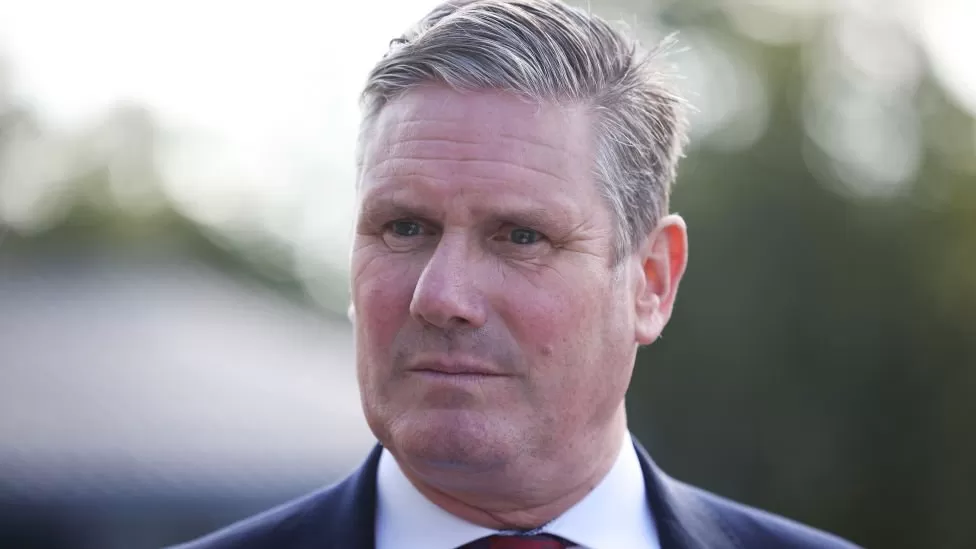
  • UK Prime Minister Keir Starmer resigns

    UK Prime Minister Keir Starmer resigns

    Keir Starmer has been under pressure to resign since May after Labour lost more than 1,000 council seats in England’s local elections and heavy rebellion from his own legislators. Following months of mounting pressure, he has finally stepped down.

    he is the seventh Minister the UK has had in the last ten years.

    He announced his resignation on Monday, June 22, around 9:30 am, in a formal statement delivered outside 10 Downing Street, London. 

    U.K. Prime Minister Keir Starmer announced Monday that he will stand down as Labour leader and prime minister, ending months of political turmoil and opening a contest to replace him.

    The move comes less than two years after Starmer led Labour to one of its largest parliamentary majorities in the 2024 general election.

    During the resignation speech, he mentioned that he will remain in post until all contest and any arrangements for a new leader is finalised to ensure a smooth transition of power. 

    He described his entry into Downing Street as the“proudest moment of my life,” adding that, under his tenure, Britain’s reputation in the world had been restored, with investment secured and improvements in workers’ rights delivered.

    However, Starmer conceded that Labour colleagues had since been asking whether he was best placed to lead the party into the next general election.

    “I have heard the answer from my parliamentary party. I accept that answer with good grace. I will resign as leader of the Labour Party.”

    Labour’s former Greater Manchester mayor, Andy Burnham, won a decisive victory in a special election on June 18, potentially setting up a challenge for the party’s leadership and, by extension, the U.K.’s premiership.

    Starmer and Finance Minister Rachel Reeves have been battling discontent over fiscal policy within their own ranks, while welfare reforms and the appointment of Peter Mandelson, an associate of the late sex offender Jeffrey Epstein, as U.S. ambassador, further damaged intra-party relations.

    An Ipsos poll published on Friday suggested that 52% of the British public think Starmer should stand down as prime minister, five percentage points higher than in May, while 35% think he should continue.

    U.K. gilt yields jumped on Friday following Burnham’s by-election win. However, he has been keen to placate markets lately, distancing himself from previous statements in which he suggested the U.K. was “in hock to the bond markets.”

    UK Prime Ministers in the last decade

    Over the past decade, the United Kingdom has seen an unusually high turnover of prime ministers, with seven leaders holding office between 2016 and 2026.

    David Cameron was the first in this sequence, serving from 2010 until July 2016, when he resigned following the Brexit referendum. He was succeeded by Theresa May, who led the Conservative Party from July 2016 to July 2019, a period dominated by Brexit negotiations. Boris Johnson then took over in July 2019 and remained in office until September 2022, overseeing the completion of Brexit and managing the COVID‑19 pandemic.

    After Johnson, Liz Truss briefly became prime minister in September 2022, but her tenure lasted only 45 days, making her the shortest‑serving prime minister in UK history. Rishi Sunak followed in October 2022 and served until July 2024, leading for about one year and nine months.

    Keir Starmer then became prime minister in July 2024 after Labour’s general election victory. His leadership lasted until June 2026, just under two years, when he announced his resignation amid internal party pressure and electoral setbacks. His departure opened the way for a successor from Labour to be chosen later in 2026.
  • Rishi Sunak leads Penny Mordaunt in the final hours of the PM race

    After Boris Johnson announced his withdrawal from the campaign to become the United Kingdom’s next Prime Minister, Rishi Sunak has emerged as the frontrunner.

    Among Conservative MPs, the former chancellor presently has the most declared supporters.

    The focus now shifts to whether his remaining opponent, Penny Mordaunt, will satisfy the requisite 100 MPs when nominations end at 14:00 BST.

    Mr Johnson withdrew from the race to succeed Liz Truss on Sunday.

    The former prime minister – who was in No 10 until just seven weeks ago – claimed he had met the threshold required to stand but in a statement said “you cannot govern effectively unless you have a united party in Parliament”, adding that now was “simply not the right time”.

    Many of Mr Johnson’s supporters were caught by surprise at his withdrawal. Essex MP James Duddridge, who gave the first indication that Mr Johnson was intending to run in the Tory leadership race, simply tweeted: “Well that was unexpected. Off to bed!”

    With Mr Johnson out of the leadership race, several MPs have begun switching their nominations to the two remaining candidates.

    Some 180 out of 357 Tory MPs have gone public with who they are backing, with Mr Sunak garnering support from 155 and Ms Mordaunt securing 25 backers.

    Ms Mordaunt’s team said she was still in the running and within “touching distance” of getting enough backers, while Mr Sunak’s team said they were taking nothing for granted.

    Damian Green, a former cabinet minister in Theresa May’s government and who is backing Ms Mordaunt, said her numbers are “well above” the published figure.

    “We’re confident of getting to 100 before the deadline of two o’clock and putting to colleagues that the case that Penny is the person best positioned to unify the party,” he told BBC Radio 4’s Today Programme.

    If she does reach 100 backers, the race could then go to an online ballot of Conservative Party members, with the winner of that being announced by Friday.

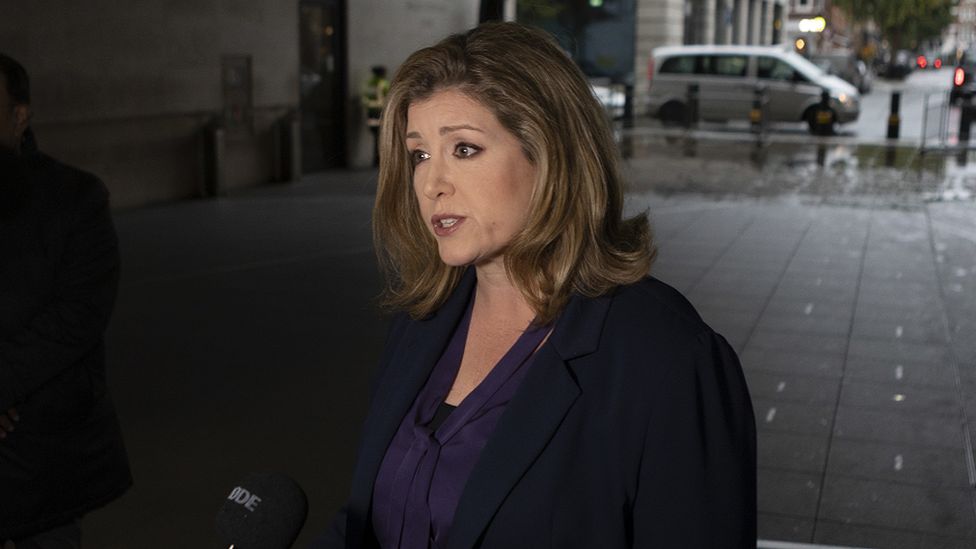
    Penny Mordaunt in an interview outside the BBC on Sunday
    IMAGE SOURCE,PA MEDIA Image caption, Penny Mordaunt in an interview outside the BBC on Sunday

    Mr Sunak is the firm favourite to replace Ms Truss as PM and could do so by as early as Monday afternoon if Ms Mordaunt fails to meet the benchmark.

    Chancellor Jeremy Hunt, who scrapped many of Ms Truss’s major economic plans announced in September’s mini-budget, has endorsed Mr Sunak.

    In a piece in the Daily Telegraph on Monday, Mr Hunt said: “To restore stability and confidence, we need a leader who can be trusted to make difficult choices.

    “We have a leader who can do just that in Rishi Sunak.”

    He added that Mr Sunak had been “proved right” over his “unfunded tax cut” warnings during the summer’s Tory leadership campaign.

    Whoever wins the race will be the UK’s third prime minister in less than two months.

    But there are growing calls from opposition parties for an immediate general election – with Labour’s Deputy Leader Angela Rayner saying Mr Sunak had not given a public interview since the leadership process began.

    “The Tories are about to hand Rishi Sunak the keys to the country without him saying a single word about how he would govern,” she said. “No one voted for this.

    “Perhaps it’s not surprising he’s avoiding scrutiny: after all, he was so bad that just a few weeks ago he was trounced by Liz Truss.

    “It’s why we need an election now – people deserve a vote on the future of the country.”

    SNP’s Westminster leader Ian Blackford also said Tory MPs should put pressure on their next leader to immediately call for a general election.

    “That the Tories can foist upon us a third prime minister in just three years without an election, in the midst of a cost-of-living crisis and economic crisis of their making, speaks to how unfair and undemocratic this Westminster system is,” he said.

    Former culture secretary Nadine Dorries has said it would now be impossible to avoid a general election, taking aim at the remaining two candidates.

    Ms Dorries, a long-time ally of Mr Johnson, tweeted that Mr Sunak and Ms Mordaunt, “despite requests from Boris, refused to unite, which would have made governing utterly impossible”.

    Ms Truss, who replaced Mr Johnson in No 10 following a lengthy leadership campaign in the summer, resigned as prime minister after 45 days in office marked by turmoil. She will become the shortest-serving prime minister in British history when she stands down.

  • I faced ‘great economic and international instability’ – Outgoing UK PM

    On Thursday, October 20, Liz Truss, the UK Prime Minister announced her resignation after 44 days in office.

    Speaking outside the No. 10 Downing Street, Truss indicated that she cannot fulfil the mandate to which she was elected, hence her decision to resign.

    She explained that she came into office at a time of “great economic and international instability”.

    She added, “I recognise… given the situation I cannot deliver the mandate on which I was elected by the Conservative Party.”

    Liz Truss noted that she had already informed King Charles but that she will remain in office until a successor is elected.

    The Conservative Party leader’s resignation comes a few days after she sacked Chancellor of the Exchequer Kwasi Kwarteng.

    Kwarteng was sacked on October 14 amidst the government’s tax cuts that are believed to have sparked financial market turmoil.

    In a letter reacting to his dismissal, he said “You have asked me to step aside as your Chancellor, I have accepted.

    “When you asked me to serve as your Chancellor, I did so in full knowledge that the situation we faced was incredibly difficult, with rising global interest rates and energy prices. However, your vision of optimism, growth and change was right,” his letter read.


  • Liz Truss admits budget mistakes and apologises

    The UK’s prime minister apologised as she admitted her government had made mistakes over the mini-budget last month that spooked the financial markets.

    Liz Truss was speaking after new finance minister Jeremy Hunt ripped up her economic plans.

    He dramatically reversed most of the tax cuts and spending proposals that his predecessor Kwasi Kwarteng announced less than a month ago.

    “Now I recognise we have made mistakes,” Truss, who has only been in office a little more than a month, told the BBC. “I’m sorry for those mistakes, but I fixed the mistakes. I’ve appointed a new chancellor. We have restored economic stability and fiscal discipline.”

    Hunt’s swift U-turn on Truss’ mini-budget has undermined the PM’s authority and some have questioned how much longer she can remain in office.

    Responding to questions about her future, Truss said she wanted to focus on “delivering for the British public”.

    “We are in difficult economic times, we are in difficult international times with the war being perpetrated in Ukraine,” she added. “And now is the time to focus on delivering.”

    Hunt said almost all the previous tax measures are to be reversed in a move aimed at raising £32 billion (€37 billion) a year.

    A planned 1% cut in the basic rate of income tax for next April is being cancelled.

    He also said the massive energy support package will not be continued beyond next April. Instead, a Treasury-led review into how best to support homes and businesses with energy bills will be launched.

    The former health and foreign affairs minister has been racing to overhaul the government’s financial plans since he replaced Kwarteng, who was sacked on Friday.

    Kwarteng’s unfunded tax cuts announced on 23 September sent the pound tumbling, borrowing costs soaring, and sparked a collapse in support for the ruling party.

    On Sunday, Hunt and Truss held a crisis meeting at her country residence to prepare a new budget plan. Defending the government’s new direction, he acknowledged his predecessor’s mistakes and warned of “difficult decisions” to come.

    Opinion polling shows Truss’ Conservatives trailing the UK’s main opposition party, Labour.

    Its leader, Sir Keir Starmer, said Truss was “clinging onto power” and that her government “no longer have a mandate from the British people”.

    Source: Euronews

  • Truss departs for Balmoral to be sworn-in as PM

    The plane carrying soon-to-be prime minister Liz Truss has departed RAF Northolt in London, heading for Aberdeen.

    She will be then conveyed to Balmoral, where she will meet the Queen after Boris Johnson, who is currently en route to the highlands himself

    The new prime minister is expected to make her first speech outside Downing Street and explain what she wants to do in government.

    Will she be speaking outside the building, as is customary, or inside if the weather proves too inclement? The forecast in London this afternoon is for more rain in the capital.

    Later on, Truss is set to start naming her Cabinet. Business Secretary Kwasi Kwarteng is expected to become chancellor, while Suella Braverman, the current attorney general, is expected to be named home secretary. Education Secretary James Cleverly is slated to become foreign secretary.

    Jacob Rees-Mogg, currently minister for Brexit opportunities and government efficiency, has been tipped to replace Kwarteng as business secretary.

    Current Home Secretary Priti Patel and Culture Secretary Nadine Dorries have already said they will step down from their current roles.

    The day’s proceedings

    Boris Johnson meets the Queen at Balmoral Castle where he will offer his resignation as prime minister. At this point, there is a short period – normally a matter of minutes – with no prime minister.

    It is then Liz Truss’s turn to meet the monarch, having also made the 500-mile trip to Balmoral. The Queen will ask her to form a government. Truss will be appointed through a ceremony called “kissing hands” – though there’s no actual kissing involved.

    Having been formally appointed, Truss returns to London.

    Source: BBC