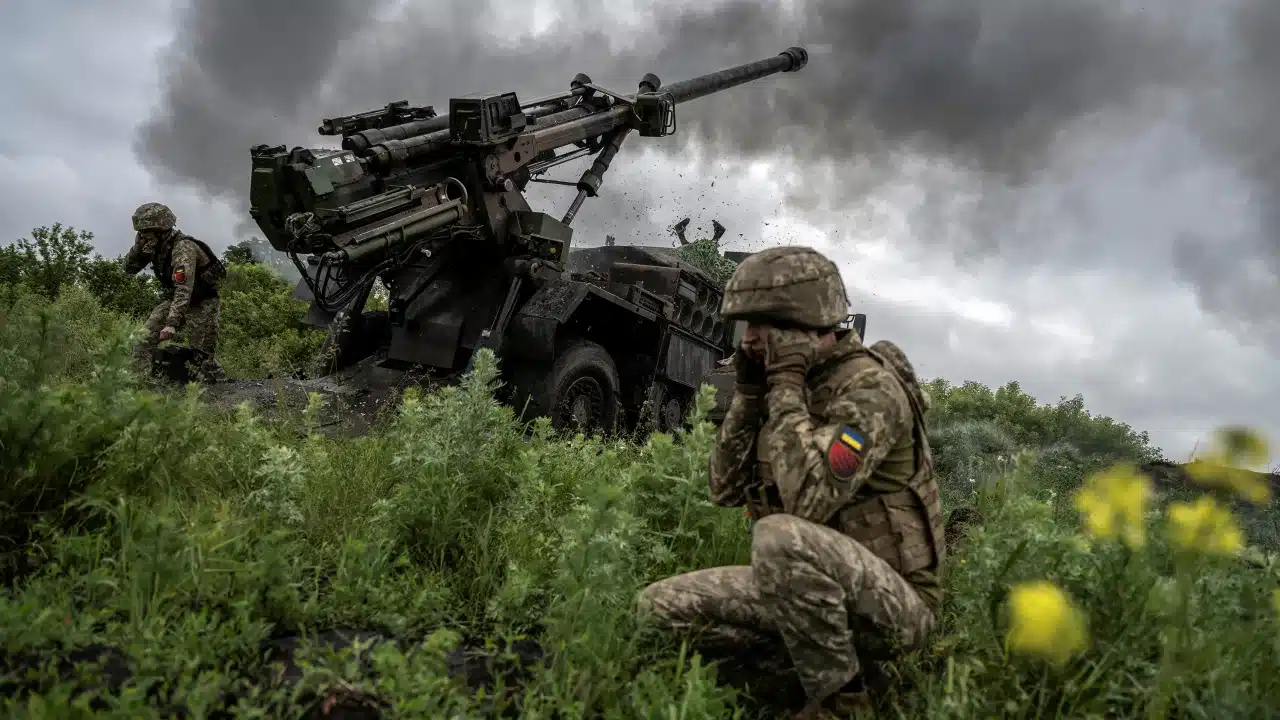
A Ghanaian man, one of 14 individuals reportedly forced into Russia’s war with Ukraine, fears for his life as he recalls the terrifying experience of being trapped on the frontlines.
Seeking better opportunities, these men found themselves caught in a conflict they neither understood nor wanted to be part of.
Michael, a 33-year-old phone vendor from Accra’s busy Kwame Nkrumah Circle (a name he uses for safety), never imagined he would end up in the war.
In June 2024, frustrated with his financial struggles, he saw an opportunity he thought could change his life. Instead, it led him straight into the chaos of the Russia-Ukraine conflict.
“I borrowed GH¢20,000 from family members and added it to my savings to pay for the visa and flight,” he said.
Another victim, Joseph (not his real name, also trapped on the frontlines in Donetsk), added, “We paid the money to our agent because we trusted him. He’s my nephew.”
A group of 14 men, reportedly recruited by a man named Abraham Boakye, was promised well-paying security and agricultural jobs in Russia. Motivated by the opportunity, they made their way through Togo and arrived in Russia on August 6, 2024. However, their dreams were quickly shattered when they reached Kostroma, located northeast of Moscow.
Upon arrival, they were told that instead of starting the promised jobs, they would first undergo military training. Shortly after, a Russian team took charge of them and presented a contract written entirely in Russian, a language none of them understood. Despite the language barrier, the men signed the contract, and their passports were confiscated.
After 21 days of training, they were sent to the Donetsk oblast in Ukraine, which is under Russian control, marking the beginning of their terrifying experience.
Three men, who spoke with Media General’s Godwin Asidiba, recounted their forced involvement in Russia’s war effort, detailing their captivity and perilous duties.
They were assigned to transport the bodies of dead soldiers and deliver bombs to the frontlines. Each day, they endured a grueling three-hour trek to the front, haunted by constant fear and despair.
As his health worsened, one of the men stationed near the frontlines of the conflict shared, “I can’t stand without assistance.” To keep me going, they give me drug injections. “I just want to go home,” he told the reporter over the phone.
The journey has left more than just physical scars. Many members of their group are either dead, missing, or living with permanent injuries.
Meanwhile, their families back in Ghana are filled with worry, desperately reaching out to authorities for assistance, but receiving no meaningful response.
In hopes of securing a better future, one of the men, Adjei (not his real name), left his wife and two children behind in Ghana. After paying an initial sum of 400,000 rubles, he continued to send money back home as promised.
To shield their families from the grim truth, his colleagues – Michael and Joseph (not their real names) – also sent money, making it appear as though everything was fine.
However, the men are exhausted and their families are equally disheartened. Despite multiple reports to the Ghana Police Headquarters, no action has been taken, according to a report by 3news.com.
Gideon Sarfo, Michael’s nephew, expressed his frustration “We’ve been waiting for answers, but all we get are closed doors and broken promises. My uncle’s life is at stake, and no one seems to care.”
Michael’s mother, grappling with her own health issues, is devastated and inconsolable.
“She’s had a stroke and asks about him every day. If she learns the truth, it might kill her,” a family member disclosed.
A few of the men have managed to flee, putting their lives in danger as they make their way back to Ghana. One escapee recounted the perilous journey, highlighting the constant threat of Russian forces as he navigated through treacherous terrain.
“We witnessed our friends’ deaths up close. We did not wish to suffer the same fate,” one person said, adding that, “We battled our way out.”
The report, however, stated that upon their arrival in Ghana, the National Intelligence Bureau (NIB) apprehended the escapees for questioning.
Although they were eventually released, their identification documents were confiscated, and they continue to live in hiding, fearing further repercussions.
“Because they thought I might be working with the National Intelligence Bureau, the men in Kumasi declined to meet when I asked them to do an interview. Their psychosis highlights the severe trauma they experienced.
“Attempts to contact the Ghanaian Embassy in Russia via email and the Ministry of Foreign Affairs by visiting their office in Accra have not been answered. According to sources, both organisations are aware of the problem but have done nothing about it,” the journalist who uncovered this story said.
Meanwhile, efforts to locate the alleged recruiter, Abraham Boakye, have been unsuccessful. Despite claims that the case is under investigation, his office in Dome, Accra, remains locked.
The men’s suffering worsened when Boakye allegedly misappropriated 130,000 rubles from each of their initial 400,000 ruble salaries.
What began as a pursuit of a better life has now become a desperate fight for survival. As their hopes for rescue fade with each passing day, their pain and uncertainty only intensify.