Tag: Ukraine defence minister

  • Crimean attacks will continue – Ukrainian defence minister

    Crimean attacks will continue – Ukrainian defence minister

    Oleksii Reznikov, Ukraine’s defence minister, declares that Ukraine will keep attacking the Russian-occupied Crimea and the Kerch Bridge that connects it to the Russian mainland while simultaneously acknowledging that the plan for Ukraine’s lethargic counteroffensive is running late.

    Ukraine has kept up its airstrikes within Crimea while Russia has pounded the southern port city of Odesa and the surrounding area over the past week. A week after seaborne drones hit the Kerch bridge, Ukrainian drones bombed an ammo stockpile on Tuesday.

    According to Reznikov in an interview with CNN, “all these targets are official targets because it will lessen their ability to fight against us (and) will help to save the lives of Ukrainians.”

    Asked if Ukraine’s goal is to permanently disable the bridge, Reznikov responded: “It’s normal tactics to ruin the logistic lines of your enemy to stop the options to get more ammunition, to get more fuel, to get more food, etcetera. That’s why we will use these tactics against them.”

    Reznikov also accused Russia of operating as “a terrorist state.”

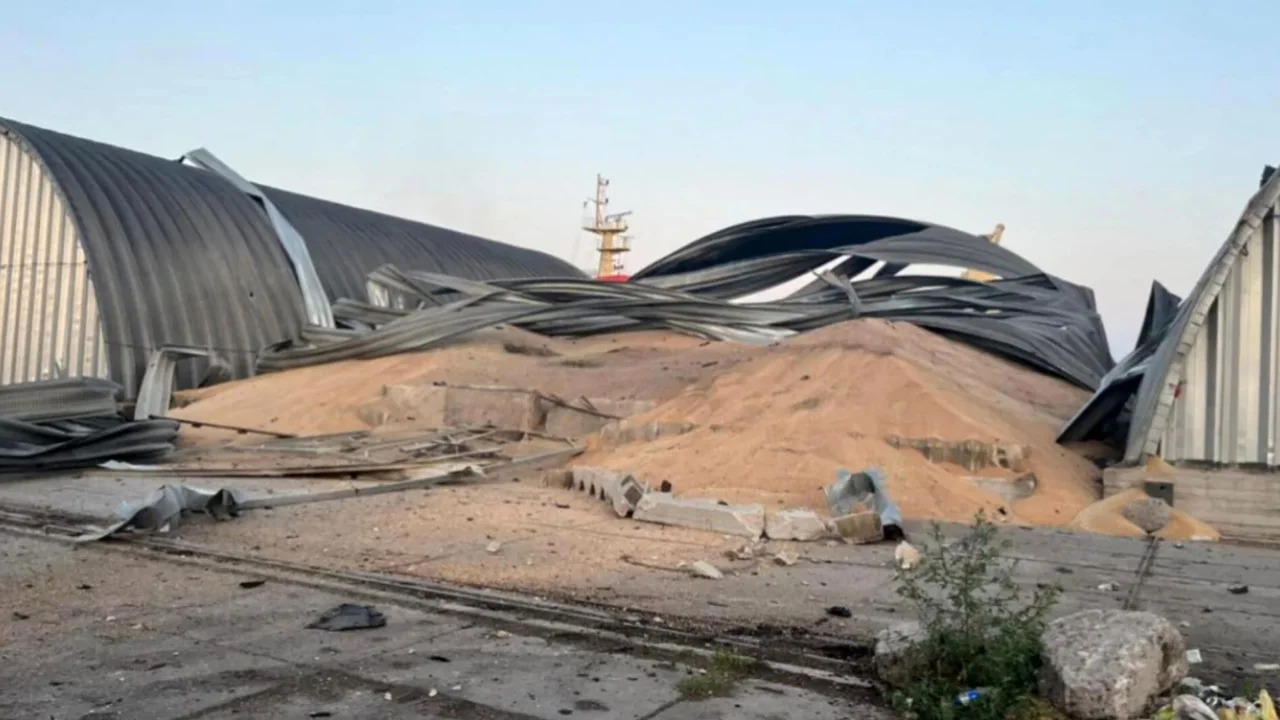
    The fifth night of Russian strikes in Odesa badly damaged more than two dozen landmarks in the historic city center. Drones meanwhile pounded the region’s port infrastructure, targeting crucial grain stocks days.

    The barrage comes after Moscow withdrew from a crucial grain deal that allowed for the safe export of Ukrainian wheat to international markets, exacerbating a global food crisis.

    “This approach is absurd, but it’s real and that’s why it’s new evidence they are a terrorist state,” Reznikov told CNN’s Alex Marquardt on Saturday.

    Senior Russian officials have said the spike in attacks is a response to a deadly explosion on the strategic Kerch bridge in Russian-occupied Crimea earlier this month.

    “(Russia) tried to explain that it’s a response for some explosions in their territories, but they are fighting with the civilians,” Reznikov said. “That’s why I call them looters, rapists and murderers.”

    Asked if Ukraine plans to ramp up attacks against Russian ships in the Black Sea in retaliation, he said, “We have capacity. We have weapons as we did with the cruiser Moskva and if they threaten us in the Black Sea, we’ll have to respond.”

    The pride of Russia’s fleet, guided-missile cruiser Moskva, sank in the Black Sea in April, in an attack claimed by Ukrainian officials.

    Ukrainian air defense forces have struggled to counter Russia’s renewed attacks on Odesa in recent weeks, as Kyiv attempts to break Moscow’s tight defenses in the southeastern regions.

    But Ukraine’s grueling counteroffensive has not resulted in any significant breakthroughs, despite Western allies donating billions of dollars worth of aid to bolster Kyiv’s military might and putting hundreds of soldiers through training.

    Reznikov however insisted the operation is “going to plan,” saying: “Our generals, our commanders, they see the real situation on the battlefield. And again, I have to repeat the main value for us is life of for our soldiers.”

    But asked if the plan is behind schedule, he acknowledged that it is.

    If Ukrainian forces can successfully puncture Moscow’s sizeable defense lines along Ukraine Sea of Azov coastline that links Crimea to Donbas, Reznikov said it would be “a good result” for Kyiv.

    “We have to do it thinking about the lives of our soldiers instead of Russians. They’re using the soldiers as cannon fodder.

    “It’s a war and I think that we will show to the world again that we will win this war,” he said, referring to Ukraine taking back territory in the Kherson and Kharkiv regions.

    Reznikov said that F-16 training for Ukrainian pilots will begin in August, adding that if Kyiv had the fighter jets now they would “certainly” have helped make more progress in the counteroffensive.

    Reznikov also said he would share a report with the United States about the use of controversial US-supplied cluster munitions in Ukraine this week, “probably Monday or Tuesday.”

    Highly destructive cluster munitions are outlawed by the UK, France, Germany and other key US allies, but the US and Ukraine are not signatories to the ban, nor is Russia.

    Russia’s invasion of Ukraine has shifted the security landscape in Europe, triggering Western allies to rethink their national security strategy and reigniting calls from Kyiv to join NATO.

    The NATO summit in the Lithuanian capital of Vilnius in July kicked off with heightened pleas from Ukrainian President Volodymyr Zelensky to invite Ukraine into the bloc, despite resistance from allies amid Kyiv’s war with Russia.

    In his interview with CNN, Reznikov acknowledged that Ukraine will likely only be able to join the alliance once the war is over, referencing Article 5, which requires members to come to the defense of any fellow member under attack.

    “”After the victory, after then, it will be in the interest of NATO because we became a real eastern shield of NATO or eastern shield of Europe,” he said.

    Ukraine has gained “real combat experience – how to deter Russians, to defeat them, to beat them with using NATO standard weaponry,” he added.

    He predicted that Ukraine’s membership bid will be accepted in July 2024, when the NATO summit is scheduled to take place in Washington to mark the 75th anniversary of the alliance.

    Asked if he thought the war would be over by next summer, he quickly answered, “Yes. We will win this war.”
  • We are a de facto member of Nato alliance – Ukraine defence minister

    We are a de facto member of Nato alliance – Ukraine defence minister

    The Ukrainian defense minister claims that due to a shift in Western nations’ “thinking approach,” Ukraine has effectively joined NATO. Previously, Western nations were afraid that providing military assistance may be perceived by Russia as an escalation.

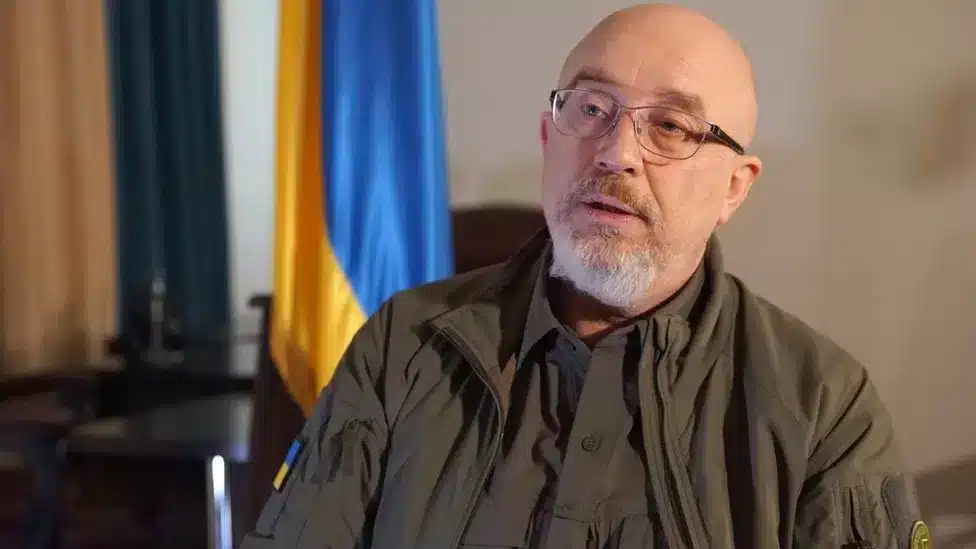
    In an interview with the BBC, Oleksii Reznikov said he was sure Ukraine would receive long-sought weapons, including tanks and fighter jets, as both Ukraine and Russia seemed to be preparing for new offensives in the spring.

    “This concern about the next level of escalation, for me, is some kind of protocol,” Mr Reznikov said.

    “Ukraine as a country, and the armed forces of Ukraine, became [a] member of Nato. De facto, not de jure (by law). Because we have weaponry, and the understanding of how to use it.”

    Russian President Vladimir Putin has framed his invasion of Ukraine as an existential battle against Western countries that want to weaken Russia.

    Russian figures have argued they are fighting Nato in Ukraine, as the West has supplied the country with weapons in what they call a war of aggression.

    Ukraine, for years, has sought to join the military alliance between the US, Canada and 28 European countries, something President Vladimir Putin has described as a security threat for Russia.

    Ukrainian President Volodymyr Zelensky has pushed for fast-track accession, but it is unclear whether full membership is something the alliance members will seriously consider even after the war is over, despite pledges of support.

    Article 5 of the Nato Treaty says an armed attack against any member should be considered an attack against all.

    Mr Reznikov, however, denied that his comments would be seen as controversial, not only by Russia but, perhaps, by Nato itself, as the alliance has taken steps not to be seen as a party to the conflict.

    “Why [would it be] controversial? It’s true. It’s a fact,” Mr Reznikov said. “I’m sure that in the near future, we’ll become member of Nato, de jure.”

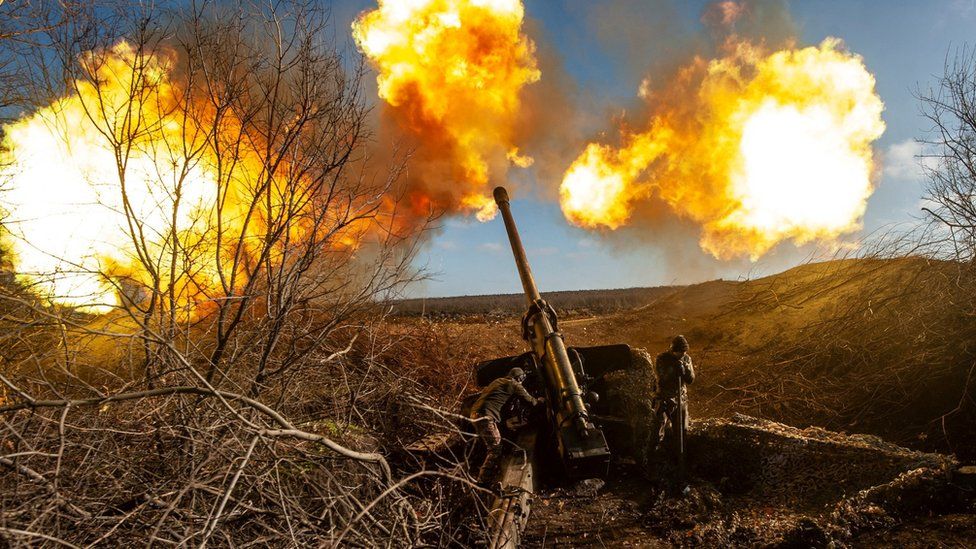
    Ukrainian forces fire at Russian positions at the front line near Soledar, Donetsk region, Ukraine
    Image caption, Soledar, a small town in the eastern Donetsk region, has been experiencing some of the war’s most intense fighting

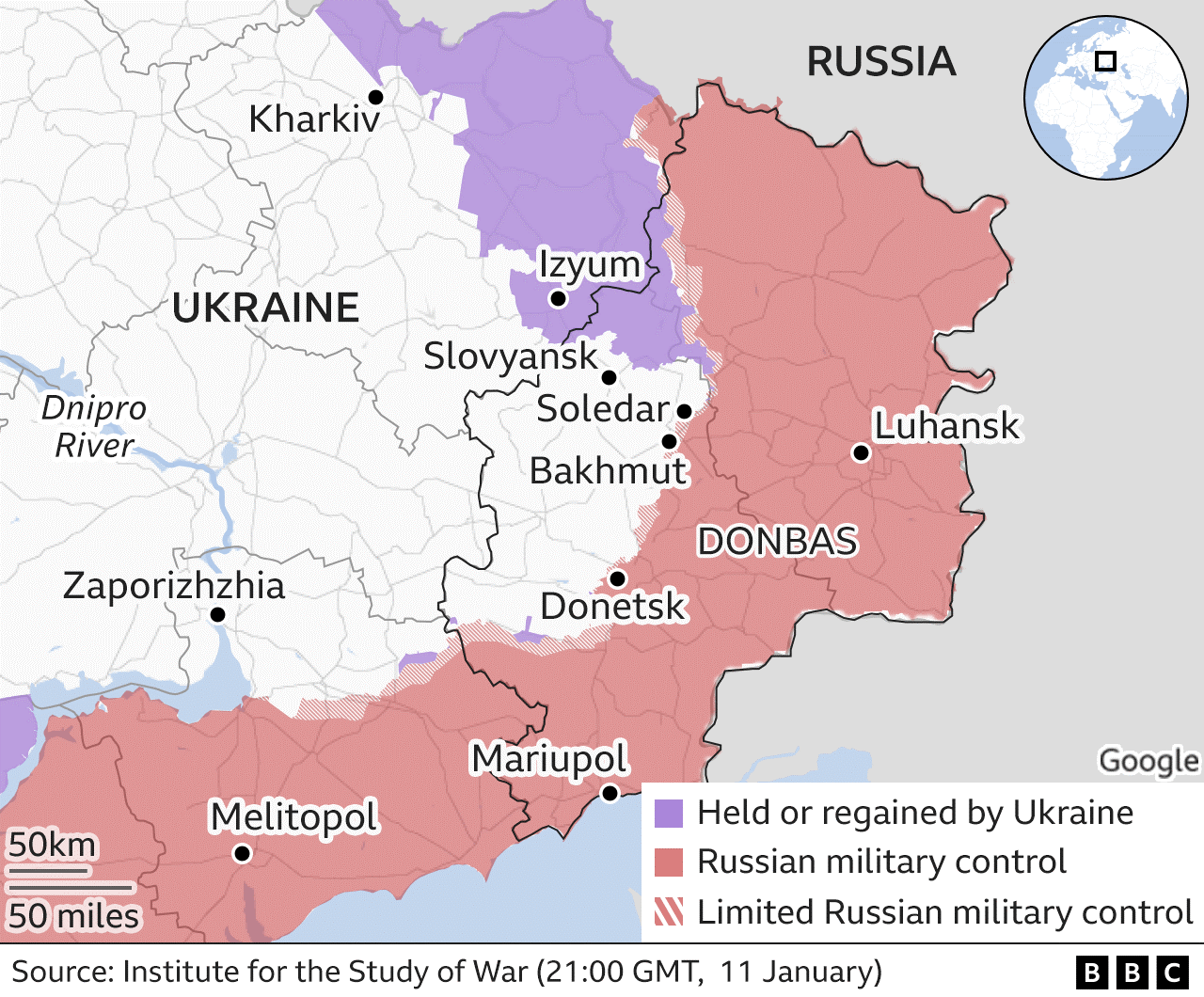
    The defence minister spoke in the capital, Kyiv, as Ukrainian and Russian forces continued to fight for the small town of Soledar, in the eastern Donetsk region, in some of the most intense battles in the nearly 11-month-old war.

    The Russian offensive is led by the mercenary Wagner Group, whose founder Yevgeny Prigozhin, a long-time Putin ally, has become a vocal critic of the Russian army’s performance in Ukraine.

    On Tuesday, Mr Prigozhin claimed that his fighters had seized control of the town, an allegation that was dismissed by Ukraine and, remarkably, by the Kremlin, in what was considered a rebuff to Mr Prigozhin.

    The situation in Soledar was “very difficult”, Mr Reznikov said, but “under control”. He said Wagner fighters were being used in “wave after wave after wave” of attacks, leading to a high number of deaths, and that Mr Prigozhin was interested in the possible economic benefits of seizing the town, home to Europe’s largest salt mines.

    “They’ll earn money from blood,” he said.

    Soledar is about 10km (six miles) from Bakhmut, a strategic city where Ukrainian and Russian forces have been engaged in a months-long war of attrition that has caused widespread destruction and heavy losses on both sides. There, Wagner mercenaries have also been deployed in large numbers, and Mr Prigozhin is believed to have made the capture of Bakhmut a personal goal.

    The group, Mr Reznikov said, “need to deliver some kind of proof to declare they’re better than the regular armed forces of the Russian Federation”. If seized, Bakhmut could pave the way for a Russian push towards Kramatorsk and Slovyansk, two Ukrainian strongholds in Donetsk, a region that has been a key target for President Putin.

    Map shows areas of control in the Donetsk region of eastern Ukraine

    Any gains would be, more than anything else, of extreme symbolic value for Russia. They would come after a series of humiliating setbacks, including a chaotic retreat from the north-eastern region of Kharkiv and the withdrawal from the southern city of Kherson, the only regional capital Russian forces had captured in the war.

    Mr Reznikov claimed that “approximately 500 or 600” Russian fighters were being killed every day across the country, while Ukraine was losing a tenth of that, figures that could not be independently verified. He believed Russia could be trying to gather “forces, ammunition and weapons” for an offensive from areas it already occupies in the south and east.

    Ukraine, in the meantime, needed time to regroup and rearm while it waited for the delivery of Western weapons. “Spring is the best period to refresh the movement for all sides,” he said. “We understand they’ll be ready to start and, surely, we have to be ready to start.”

    However, he did not repeat a claim that Russia could be preparing another invasion from Belarus, a warning that has been dismissed by the head of the Ukrainian military intelligence agency. The movement from the north, Mr Reznikov said, “would take a lot of time and they [Russia] have no resources”.

    Mr Reznikov spoke a day after the Russian defence ministry replaced the commander of its forces in Ukraine, a surprise announcement that was seen as a sign of a power struggle. Gen Valery Gerasimov, one of the architects of last year’s invasion, would return to the post that was being held by Gen Sergei Surovikin, who had been appointed in October.

    The change, Mr Reznikov said, was a result of the “conflict between Mr Prigozhin and the armed forces of the Russian Federation”. Gen Surovikin oversaw the recent brutal attacks on Ukraine’s energy infrastructure that, according to Mr Reznikov, “reduced the [Russian missile] stocks without any results”, repeating a Ukrainian claim that “they’re running out of missiles”.

    As Poland and Britain revealed plans to deliver battle tanks for the first time, Mr Reznikov said he was sure Ukraine would receive “tanks, fighting aircrafts or jets, and long-range weaponry to hit targets in 300km (186 miles) as well”, because “things were changing” in Western countries.

    He dismissed concerns that the announcements could trigger a Russian response, despite now-familiar threats from Moscow. “I have a war in my country,” he said. “They’re hitting my cities, my hospital, my kindergartens, my schools. They killed a lot of civilians, a lot of civilians. They’re an army of rapists, murderers and looters. What’s the next level of escalation?”

    Source: BBC