The United Nations Security Council has approved an African Resolution spearheaded by Ghana, calling for support and funding for operations addressing all threats to global peace and security in Africa.
According to an official release to the Ghana News Agency on Thursday night, this innovative Peace Support funding model goes beyond the traditional United Nations peacekeeping operations.
As outlined in the resolution, all peace support operations led by the African Union and mandated by the UN Security Council will receive funding from UN assessed contributions, covering up to 75% of their annual budgets.
The remaining funds are expected to be jointly mobilized by the United Nations and the African Union from the international community as extra-budgetary resources.
In the face of significant shortfalls in resource mobilization, the Security Council has committed to exploring all feasible options, the release noted.
“The dramatic outcome of the complex and difficult negotiations comes 10 days before the end of Ghana’s term as a non-permanent member of the UN Security Council,“ said the release.
“When Ghana announced its priorities at the beginning of its term in January 2022 to secure agreement of the Security Council to change its traditional response to international peace and security, especially in Africa, where violent extremism and terrorism had overtaken traditional conflicts that attracted UN peacekeeping, many had expressed skepticism.”
“Attempts in the past to agree on the use of UN assessed contributions to support African-led operations had failed in the face of opposition from some Permanent Members of the Council and other large contributors to the UN.”
During its two-year term, Ghana aspired to achieve these goals. As the President of the Council in November 2022, both President Nana Addo Dankwa Akufo-Addo and Foreign Minister Shirley Ayorkor Botchwey conducted high-level signature debates on the escalating threats of violent extremism and terrorism in Africa, focusing on the Sahel and coastal West Africa.
The release indicated that the leaders advocated for the funding of Africa-led operations through UN assessed contributions. Additionally, they recommended a balanced approach to funding, addressing both military operations and tackling the socio-economic and climatic root causes of conflicts.
“One key objective was to starve terrorists of conditions for radicalisation and recruitment from vulnerable communities,” the release emphasised.
“With the adoption of the framework resolution, it is understood that the plans of ECOWAS and relevant security initiatives in our region, such as the Accra Initiative and the Multi National Joint Task Force, battling Boko Haram, will potentially benefit from the needed resources and international support to defeat terrorism and violent extremism in the ECOWAS region.”
Commenting on the adoption of the Resolution, the Minister for Foreign Affairs and Regional Integration, Madam Shirley Ayorkor Botchwey declared: “Today is a great day for Africa and for diplomacy.
“Working with our partners around the world, we have taken a giant step to end the many threats to international peace and security in our region.
“Our people deserve the peace, stability and progress that successful peace support operations will bring. The distractions to our regional integration project and the pressure on development resources from our security needs would ease as we go forward.
“I congratulate President Akufo-Addo for his leadership. I also commend our team in NewYork, my own Ministry and the Multi-Stakeholder Working Group on the United Nations Security Council, which I set up to advise me.”
A fresh attempt will be made at the UN Security Council today for a vote on a resolution urging a halt to the conflict in Gaza.
Diplomatic negotiations are underway to finalize the wording of the resolution to prevent a US veto. The main point of contention revolves around the inspection and monitoring of humanitarian aid entering Gaza.
The United Arab Emirates, the author of the draft resolution, stated that high-level discussions are ongoing to achieve a resolution with significant impact.
Secretary of State Antony Blinken emphasized efforts to ensure that UN actions don’t complicate the delivery of aid to Gaza.
In an earlier vote this month, the majority of the UN Security Council favored an immediate ceasefire, but the US vetoed the demand, and the UK abstained. Israel maintains its opposition to a permanent ceasefire, insisting on the dismantling of Hamas before ending the conflict.
Geneva-based aid agencies expressed profound frustration and anger over the ongoing suffering of Gaza civilians, especially children, ahead of the UN Security Council’s vote on a ceasefire.
Unicef’s James Elder criticized the lack of attention to international law’s requirements to protect medical facilities, food, and water, stating he is “furious” and fears the Christmas period may bring “more savage attacks.”
Margaret Harris of the WHO called the situation “unconscionable” and expressed despair at the international community’s failure to address conflicts affecting the most vulnerable populations.
The leader of the UN, António Guterres, is sad that the UN Security Council did not ask for fighting to stop in the Gaza Strip. He says the UN has not been able to act.
Speaking at a meeting in Qatar, Guterres says people lost trust in the organization. But he said, “I promise that I will keep trying and not give up. ”
On Friday, the US said no to the resolution asking for a quick stop to fighting in Gaza. They think it would have been risky and not possible.
Guterres used a special UN rule to bring up an important issue that he thinks could cause problems for world peace. This led to a vote being held. He said, “There is a big chance that the humanitarian system will break down. “
The UN Security Council will decide on a resolution proposed by the UAE for a quick ceasefire in Gaza to provide humanitarian help.
Two days later, UN chief Antonio Guterres used his power to bring up a matter to the council that is not often used. may cause problems for keeping peace around the world.
The US does not want to stop the fighting and is expected to vote against the decision to stop it.
The US Secretary of State, Antony Blinken, has asked Israel to do better at keeping civilians safe. He said there is a difference between what Israel promises and what is really happening.
At the same time, the Palestinian health ministry in the occupied West Bank reports that six Palestinians died in an Israeli attack on al-Fara refugee camp.
Hamas attacked Israel in October. They killed 1,200 people and took 240 hostages. Some hostages were released when there was a short break in the fighting.
Hamas leaders in Gaza say that Israel has killed over 17,177 people in its counterattack, including around 7,000 children.
The UN Security Council will meet soon to decide if they should ask for the fighting to stop in Gaza right away.
Two days after UN chief Antonio Guterres used Article 99 of the UN’s charter, this happened.
No one in his position has done this in many years.
The rule lets the secretary-general tell the council about any issues that could harm world peace and safety.
The United Arab Emirates made a proposal that needs at least nine votes in favor and no objections from the United States, Russia, China, France, or Britain to pass.
In Port-au-Prince, thousands of Haitians have fled their homes due to the rising gang violence, which has claimed more than 2,400 lives so far this year.
The Carrefour-Feuilles district was taken over by gang members this week, according to the UN, and 5,000 people fled the area.
As government efforts to stop the violence failed, local aid organisations have suspended essential services.
A decision regarding the dispatch of a multinational force to assist in reestablishing order must be made by the UN Security Council soon.
In Carrefour-Feuilles and nearby areas, where there has been a lot of fighting between gangs for several months, many people were seen carrying suitcases or loading their cars with their belongings to leave.
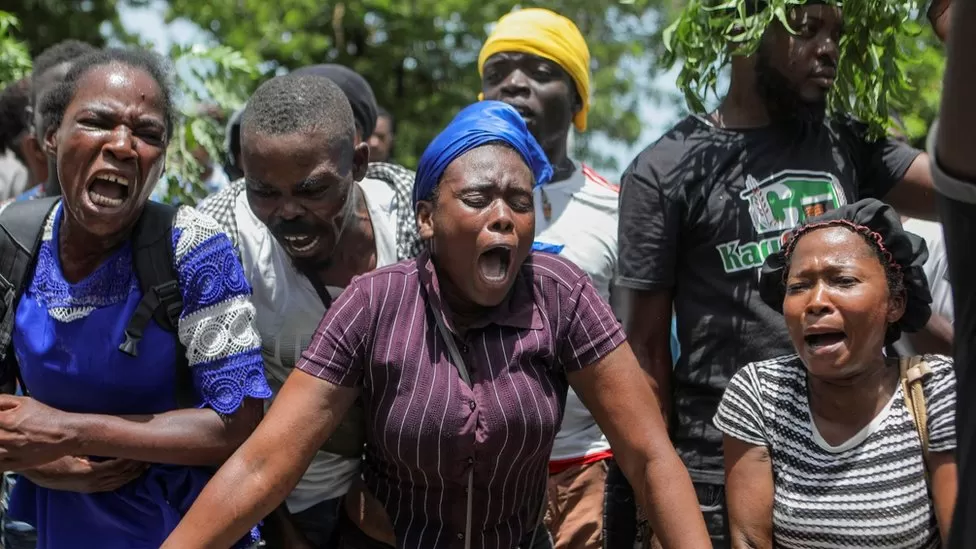
A video from Reuters news agency showed women crying next to the body of a man who was murdered by gang members.
According to Reuters, a lot of people who were able to get away gathered at a nearby military base and asked for assistance in dealing with the gangs.
Haiti is one of the poorest and most-violent countries in the world due to many years of instability, disasters, and economic problems.
Gang fighting has increased a lot since President Jovenel Moïse was killed in 2021. This made many parts of the country not under the control of the government anymore.
The fighting over land has led to more people needing to leave their homes, not enough food to go around, many people being killed, people being taken against their will, and sexual crimes happening more often.
According to Ravina Shamdasani, a spokesperson for the UN rights office, this year, at least 2,439 Haitians have died, 902 have been hurt, and 951 have been taken by force.
She said that news from Haiti this week has shown that the violence against the people there is very brutal.
She said that people joined together to form vigilante groups to fight against the gangs, but unfortunately, these groups caused 350 individuals to be killed since April. Out of these, 310 were said to be members of a gang, and one of them was a police officer.
As per early information shared by a local rights group, 30 individuals lost their lives and more than a dozen were injured in assaults in the city on Thursday.
The US embassy, which has already sent home workers who are not needed urgently, shut down on Thursday because there was continuous shooting nearby.
Haiti’s government said they will send all their people to bring back order to Carrefour-Feuilles. However, the police force that is not well-prepared has had difficulties in dealing with gangs who have a lot of weapons.
The International Red Cross said that within a few days, the level of violence increased significantly. This was especially true in the places where they were collaborating with local organizations.
The street barriers put up by fighting gangs were preventing people from getting assistance, it said.
Ann Lee, one of the founders of a crisis response group called CORE in the US, said that a lot of global organizations had left because of more and more threats and violence towards their employees.
Someone who works for us had a tragic event happen. Her daughter passed away because she had a sudden health problem and couldn’t reach the hospital in time. We have a worker whose brother was killed by cutting off his head.
Ms Lee said that every member of CORE’s team in Haiti personally knew someone who had been a victim of the violence.
UN Secretary-General Antonio Guterres said in a report on Tuesday that a strong military presence from multiple countries is necessary to bring back peace and take away weapons from the gangs.
Kenya has said that it is willing to take charge of such a group. The council will think about the issue in the next few weeks.
The majority of attendees at a three-day meeting in the parliament of the Democratic Republic of Congo have decided to end military control in two eastern provinces that have been severely impacted by long-running insecurity.
In order to combat armed groups operating in the provinces of Ituri and North Kivu, the central government imposed the state of siege in May 2021, replacing civil rule with military control.
However, Secretary General Antonio Guterres’ report to the UN Security Council last week stated that the situation in the two provinces, where about four million people have been evacuated, has gotten worse.
“The siege situation provided us nothing…The populace is sick of it. Let the civilians regain control,” Béatrice Nyiramugeyo, a member of parliament who attended the conference, told the BBC Great Lakes.
According to MP Fabrice Adenonga, 195 of the 196 attendees of the consultative conference that ended on Wednesday voted in favour of lifting the state of siege, according to UN-backed Radio Okapi.
President Félix Tshisekedi must now “eventually react” to the situation, according to government spokesman Patrick Muyaya, who spoke at a press conference in Kinshasa.
Chief Prosecutor of the International Criminal Court (ICC), has announced on Thursday, July 14, 2023, the initiation of a fresh investigation into suspected war crimes in Sudan.
Karim Khan made the announcement in a report to the UN Security Council, after three months of war between feuding generals that have plunged the northeast African country back into chaos.
The ICC has been investigating crimes in Sudan’s Darfur region since 2005 after a referral by the UN Security Council, and the Hague-based court has charged former leader Omar al-Bashir with offenses including genocide.
“The simple truth is that we are… in peril of allowing history to repeat itself — the same miserable history,” Khan told the UNSC.
“The current security situation in Sudan and the escalation of violence during the current hostilities are matters of great concern,” he said as he announced the fresh probe.
Khan said there had been a “wide range of communications” about alleged war crimes and crimes against humanity in Sudan since the fighting broke out in April.
Alleged sexual and gender based crimes were a “focus” of the new investigation, he added.
Around 3,000 people have been killed and three million displaced since violence erupted between Sudan army chief Abdel Fattah al-Burhan and his former deputy Mohamed Hamdan Daglo’s Rapid Support Forces (RSF) paramilitary group.
The pair were key figures in a 2021 military coup that derailed the country’s transition to civilian rule, following the ousting and detention of Bashir in 2019.
– Mass grave –
Allegations of atrocities have mounted during the fighting, with the top UN official in Sudan calling Wednesday for the warring sides to face “accountability.”
The UN has also warned of fresh crimes in Darfur, saying Thursday that the bodies of at least 87 people allegedly killed last month by the RSF and their allies had been buried in a mass grave in Darfur.
Khan said the risk of further war crimes was “deepened by the clear and long-standing disregard demonstrated by relevant actors, including the government of Sudan, for their obligations.”
The lack of justice for crimes in Darfur in the early 2000s, when Bashir set his Janjaweed militia upon non-Arab minorities, had “sown the seeds for this latest cycle of violence and suffering,” he added.
Bashir was charged with genocide, war crimes and crimes against humanity including murder, rape and torture and the court has been demanding his extradition to The Hague ever since, without success.
After Bashir was toppled in 2019, Khartoum announced it would hand him over to the court for prosecution, but this never happened.
Even before the recent fighting there was a “further deterioration in cooperation from Sudanese authorities,” Khan said.
Bashir, 79, as well as Ahmad Harun and Abdel Raheem Hussein, two leading figures in the former dictator’s government who are also wanted by the ICC, are still at large.
So far the only suspect to face trial for violence committed in Sudan is senior Janjaweed militia leader Ali Muhammad Ali Abd al-Rahman, also known by the nom de guerre Ali Kushayb.
Rahman’s defense lawyers are expected to open their case next month, and Khan said the latest Sudan fighting “cannot be permitted to jeopardize” the trial.
The United Nations says 300,000 people were killed and 2.5 million people displaced in the 2003-4 Darfur conflict.
A summit of leaders from Sudan’s neighbors met in Cairo on Thursday, urging an end to the fighting, but gun battles, explosions and the roar of fighter jets again shook the capital Khartoum, residents told AFP.
Volker Türk, the head of the UN’s human rights office, has called for a “prompt, thorough, and independent investigation” on the shocking finding near the region’s capital, El-Geneina.
The International Criminal Court (ICC) announced that it had opened a new inquiry into alleged war crimes in Sudan shortly after Türk made his demand. This announcement occurred after 90 days of rising bloodshed between the rival groups of the Sudanese Armed Forces (SAF) and the Rapid Support Forces (RSF).
ICC Chief Prosecutor Karim Khan made the announcement in a report to the UN Security Council Thursday, saying “we are in the midst of a human catastrophe.”
Inside the mass grave were bodies of ethnic Masalit who along with other non-Arab communities are often targeted by Arab militias, supported by the RSF, according to Human Rights Watch.
The deceased were allegedly killed last month by the paramilitary RSF and their allied militia, the UN Human Rights Office said in a statement Thursday.
“According to credible information gathered by the Office, those buried in the mass grave were killed by RSF and their allied militia around 13-21 June in El-Geneina’s Al-Madaress and Al-Jamarek districts…,” the statement said.
The statement added that the bodies included victims of the violence that occurred following the assassination of Khamis Abbaker, the Governor of West Darfur, on June 14, and others who died due to untreated injuries.
Türk strongly condemned the killings and said he was “appalled by the callous and disrespectful way the dead, along with their families and communities, were treated.”
He urged the RSF and other parties involved in the conflict to abide by international law and facilitate prompt searches for the deceased, and their collection and evacuation, without discrimination based on ethnic background.
“The RSF’s leadership and their allied militia as well as all parties to an armed conflict are required to ensure that the dead are properly handled, and their dignity protected,” Türk stressed.
West Darfur remains one of the most conflict-ridden areas in the Sudanese Darfur region, with a long history of severe violence.
International aid agency Save the Children said Thursday its staff fleeing the city of El Geneina, the West Darfur capital, saw hundreds of bodies, including those belonging to children, along the road.
“We spent 49 days indoors as outside the snipers did not stop. Our only wish was to get up in the early morning hours to get one jerry can of water before the fighting starts again,” said Ahmed, who works for Save the Children in West Darfur, according to a press release from the organization.
“When we finally managed to leave there were bodies everywhere on the ground in Geneina town. There were thousands of men, women and children, no one was spared. There are flies everywhere,” said Ahmed, who recently escaped the violence and is now taking refuge in Kassala state.
Last month CNN also reported that activists had identified hundreds of bodies left on the streets of West Darfur.
The recent killings reflect the atrocities committed during the early 2000s, where hundreds of thousands of people lost their lives in an ethnic cleansing campaign led by the Janjaweed, an Arab militia that preceded the RSF.
ICC Chief Prosecutor Khan called for urgent action into the alleged war crimes, saying that attacks on civilians, particularly targeting children and women, are prohibited by the Rome Statute.
“The current security situation in Sudan and the escalation of violence during the current hostilities are matters of great concern to the Office,” he said.
“As we speak there are women and children in fear of the lives.”
Khan also said the ICC was investigating reports of fresh crimes in Darfur after the UN’s revelations about the mass grave of at least 87 people in Darfur.
The ICC has been investigating crimes in Sudan’s Darfur region since 2005 after a referral by the UN Security Council, and the Hague-based court has charged former leader Omar al-Bashir with offenses including genocide.
Khan said the risk of further war crimes was “deepened by the clear and long-standing disregard demonstrated by relevant actors, including the government of Sudan, for their obligations.”
The United Nations Security Council has concluded the peacekeeping mission in Mali, following a request from the ruling military to withdraw the international force involved in combating an armed rebellion.
The mission, known as MINUSMA, has faced challenges and government restrictions in recent years, particularly after Mali collaborated with Russia’s Wagner mercenary group in 2021.
In a resolution drafted by France, the 15-member Council unanimously called for the mission to begin the process of ending its operations, transferring its tasks, and safely withdrawing its personnel. The objective is to complete this process by December 31, 2023.
UN peacekeepers have played a crucial role in protecting civilians from the violence of the armed rebellion, which has resulted in the loss of many lives. Concerns have been raised about the security situation deteriorating once the mission leaves, as Mali’s under-equipped army will be left to face fighters who control significant portions of territory in the desert regions of the north and center, along with around 1,000 Wagner fighters.
The Security Council resolution grants MINUSMA the authority to respond to imminent threats of violence against civilians in its immediate vicinity and contribute to the safe delivery of humanitarian assistance, with civilian leadership, until September 30.
It asked UN Secretary-General Antonio Guterres to work with the Malian authorities on a plan to transfer MINUSMA’s tasks and present it to the Security Council by August 15. It called on Mali to cooperate fully with the UN during MINUSMA’s withdrawal.
When asking for MINUSMA to leave, Malian Foreign Minister Abdoulaye Diop told the Security Council earlier this month there was a “crisis of confidence” between the UN operation and the Malian authorities.
Until December 31, MINUSMA is also authorised to provide security for UN personnel, facilities, convoys, installations and equipment and associated personnel, and execute operations to extract UN personnel and humanitarian workers in danger and provide medical evacuations.
International reaction
The United States deputy ambassador, Jeffrey DeLaurentis, expressed regret at the military government’s decision to abandon the UN mission. He also said “some domestic actors” in Mali are calling for harassment of peacekeepers and urged the mission to ensure the safe and orderly transfer of UN facilities and equipment to UN-designated places.
“The UN has a responsibility to minimise the risk that its assets fall into the hands of those looking to destabilise Mali, or bring harm to its people, including violent extremist organisations and the Wagner Group,” he said.
The United Kingdom’s Ambassador to the United Nations, Barbara Woodward, expressed her disappointment that Mali requested the departure of peacekeepers during a period when the region is experiencing escalating instability and humanitarian challenges.
On the other hand, Russia’s Foreign Minister, Sergey Lavrov, reaffirmed his country’s unwavering support for Mali, both in terms of military-technical assistance and humanitarian and economic aid.
Mali has been grappling with an armed rebellion since a revolt in 2012. In response, the UN Security Council deployed MINUSMA in 2013 to assist in the restoration of stability through international and local efforts.
The decision to terminate what has been the deadliest of all such UN operations across the world was the only one left to them after Friday’s UN Security Council vote on the future of the peacekeeping force in Mali.
Over the course of its more than 10-year deployment, 187 peacekeepers have died.
The UN is leaving Mali, but not because of the number of casualties. Despite a dire security situation that shows no signs of abating, the nation’s military administration is certain that the 12,000 foreign troops must leave.
Once the UN peacekeepers have departed, Mali will be even more dependent on the Russian mercenary Wagner group, which is thought to have 1,000 fighters in the country, for security back-up.
Across northern and central regions of Mali, a vast country that extends from tropical West Africa deep into the Sahara Desert, jihadist armed groups stage regular attacks.
Despite Wagner’s fearsome reputation, there must be questions about its effectiveness in fighting the militants, even if manpower is boosted with extra fighters redeployed from the war in Ukraine.
The recent falling out between Russia President Vladimir Putin and Yevgeny Prigozhin, the leader of the mercenary outfit, may raise questions about the exact arrangements under which these forces are deployed.
For Russia’s president their presence is a useful way of needling France and the US and bolstering the Russian footprint in West Africa.
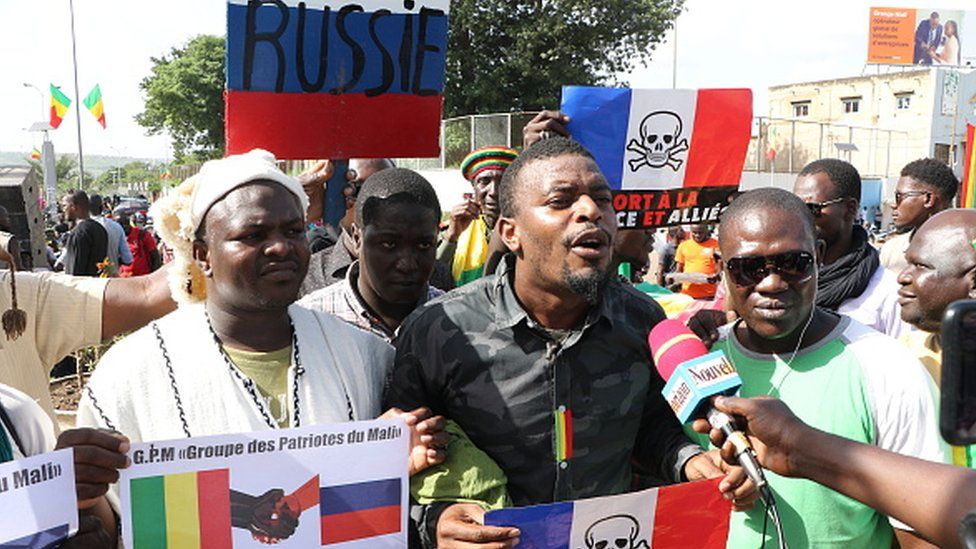
Image caption, The presence of Russia’s Wagner forces has been welcomed by some Malians
But Wagner will not have the scale of air-strike power, armoured units and logistical support, backed up with US satellite intelligence, that was at the disposal of the French force Barkhane – which pulled out last year after the breakdown of trust between Mali and the former colonial power.
Wagner units seem more likely to prioritise the holding of a few key bases, from where they may venture out on raids and patrols, rather than an overall strategic push.
The 11 months during which Mali has relied on Wagner rather than French support have seen jihadist groups intensify their activities and extend their reach.
Once the UN has also left, that trend could accelerate, while the mercenaries’ hard-line approach could further alienate Tuareg and Peulh (also known as Fulani) pastoralist communities.
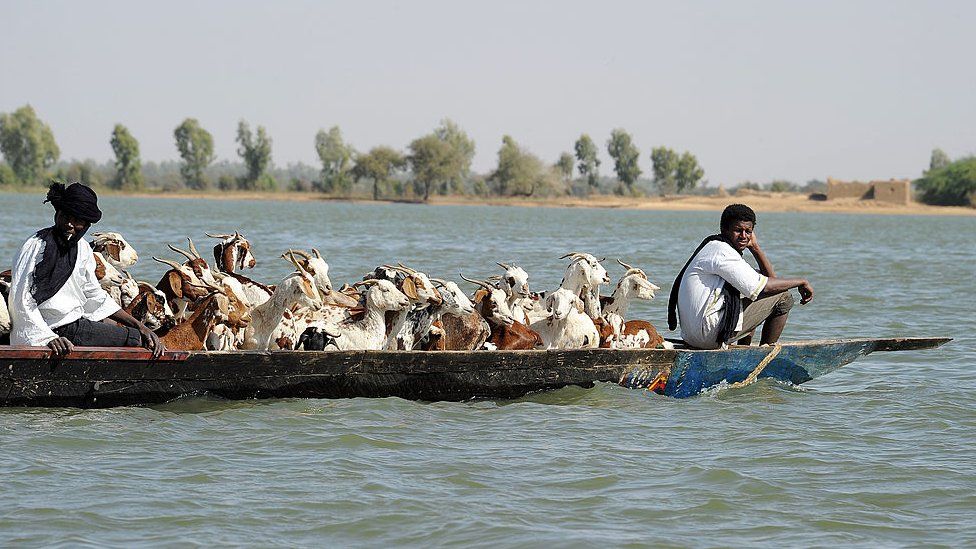
Tensions between farming and livestock herding communities have already added fuel to the violence in parts of central Mali, where the fertile inland delta of the River Niger should be West Africa’s rice basket.
Amidst the insecurity, more than 1,500 schools are closed and local economic life is badly disrupted. The Malian state and basic public administration and essential services are entirely absent from many parts of the north.
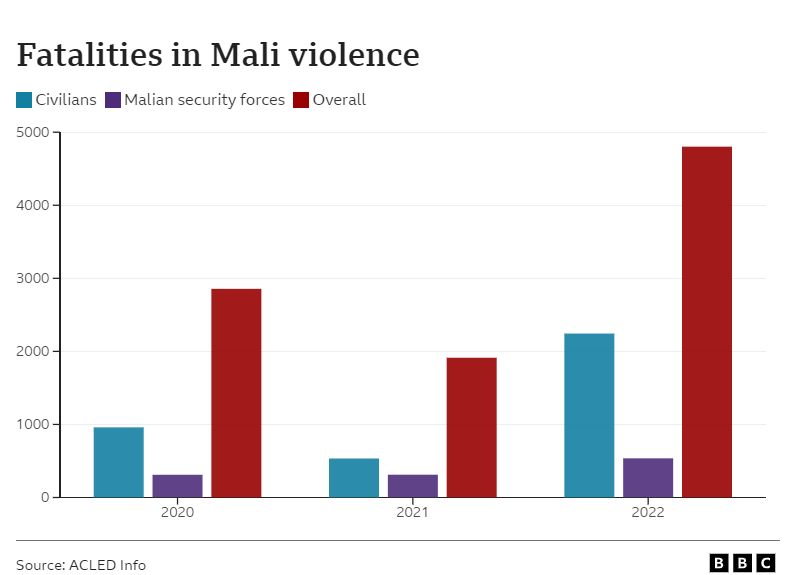
The monitoring group Acled reports that 1,576 people were killed in 682 incidents so far this year.
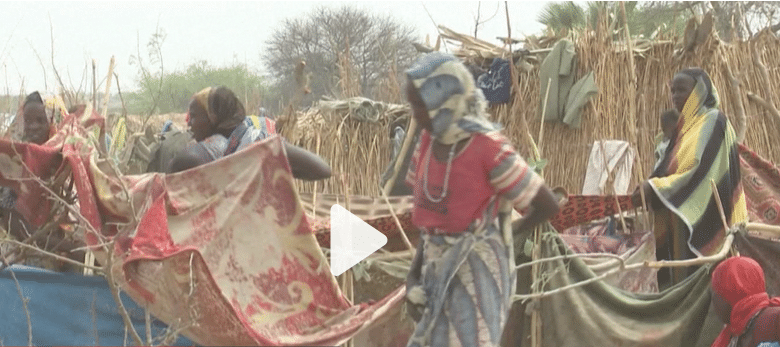
Conditions are particularly bad in the north-east, where thousands of civilian villagers have now taken refuge in camps surrounding the small desert town of Ménaka. It is communities up north that are more likely to suffer from the UN mission’s withdrawal.
The army claims some recent successes but in reality is struggling to cope. Even the fringes of Bamako, the capital, hundreds of miles to the south, have been attacked.
Mali’s military ruler Colonel Assimi Goïta – who seized power in a coup in August 2020 – has been demanding that the UN force, known as Minusma, take on a much more aggressive anti-terrorist role, in support of the national army.
But the UN troops have had a peacekeeping mandate – to shield civilians from militant attack, support basic public services and humanitarian relief and underpin a 2015 agreement. Under that deal, ethnic Tuareg separatists in the north agreed to remain within a united Mali – in return for decentralisation of power to the local level.
Image caption, It is communities up north that are more likely to suffer from the UN mission’s withdrawal
Aggressive anti-terrorist fighting was in fact the job of France’s Barkhane unit, whose departure last August was largely blamed on Mali’s decision to invite Wagner into the country.
Yet still frustrated at Minusma’s reluctance to back its muscular agenda, Mali has now decided that the UN force must also now get out “without delay”, although the UN Security Council says it will aim to do so within six months.
But there is more to this wrangle. Col Goïta is also upset that the UN troops will not fall into line in support of his determination to reassert the national sovereignty of the central government and his lack of interest in properly implementing the decentralisation promised under a 2015 peace agreement with northern Tuareg rebels who had been fighting for Azawad, an independent homeland in the Sahara.
Moreover, relations with not just the UN but several Western governments and also many of Mali’s regional neighbours have been soured by mistrust and resentment for the past two years.
In September 2021 Prime Minister Choguel Maïga accused France at the UN General Assembly of abandoning the country “in mid-air”, even as French troops continued to die in the campaign against the jihadists. Within months the government had turned instead to Wagner.
Fellow members of the regional body, Ecowas, already exasperated by Col Goïta’s procrastination over a timetable for restoring democracy, condemned the presence of the mercenaries as a threat to the security of the whole region.
Then over the course of the next 18 months, the government imposed progressively more impediments to the operation of the UN force by, for example, delaying permission for troop rotations and by limiting the UN’s rights to fly – seemingly to prevent oversight of the areas where Wagner’s men were active, and even where the lives of injured troops were at risk.
Moreover, once the French combat troops had gone, the peacekeepers were also more vulnerable to attack.
Last July, amidst a continuing dispute with Ecowas over the transition timeframe, Mali arrested 49 soldiers from Ivory Coast who had arrived to guard UN premises under a longstanding arrangement and accused them of spying. All but three remained in detention until January, when they were finally freed after long, drawn-out negotiations.
As operating conditions for the UN force became progressively more difficult, Ivory Coast, Germany, the UK and Sweden announced plans to withdraw their contingents.
But the final breakdown in relations came with the publication this May of a UN investigation into the killing of civilians at the village of Moura in central Mali in March 2022.
Although the junta refused to let Minusma visit the site, the UN force managed to reach nearby communities, interview survivors and obtain proof of the identity of 238 victims.
Its verdict was damning: more than 500 people had been killed in Moura in March 2022 by the army and allied “foreign” fighters – a clear allusion to Wagner.
The government responded with fury, threatening a judicial enquiry against the members of the investigation team. It accused them of spying, plotting and threatening state security.
After this, its demand for the rapid winding-up of the UN force could hardly come as a total surprise.
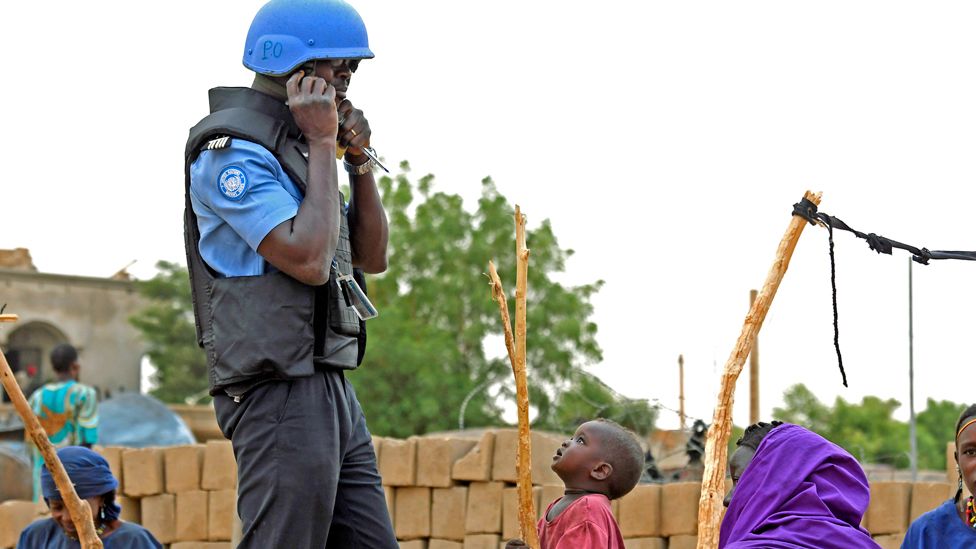
Image caption, The vast majority of those working with the UN force are from Africa
Moreover, anti-Minusma opinion had been mobilising for months.
“It is the entire Malian nation together that is rediscovering itself,” said one contributor to a recent TV discussion show.
The TV show presenter himself described the campaign to press for the departure of the UN force – the bulk of which is made up of African soldiers – as “yet another battle against the oppressor and the West”.
Col Goïta has just secured the backing in a referendum for a new constitution strengthening presidential power and authorising military leaders to run in elections planned for next year. With the UN out of the way, he will have a freer hand to drive forward with his agenda.
However, ordinary Malians, particularly in the fragile centre and north, may miss the UN force. While it proved unable to halt jihadist attacks, it did provide a level of containment, ensuring an essential minimum of calm and stability in key towns, so that basic services, administration and welfare could operate.
And its presence at least kept alive the deal with northern groups who have lost all faith in the military government.
With the UN peacekeepers gone, parts of the north where the army and Wagner struggle to make themselves felt may actually drift even further towards de facto autonomy.
Far from Bamako’s heated city politics, everyday life for many communities will probably just get even more difficult.
Paul Melly is a consulting fellow with the Africa Programme at Chatham House in London.
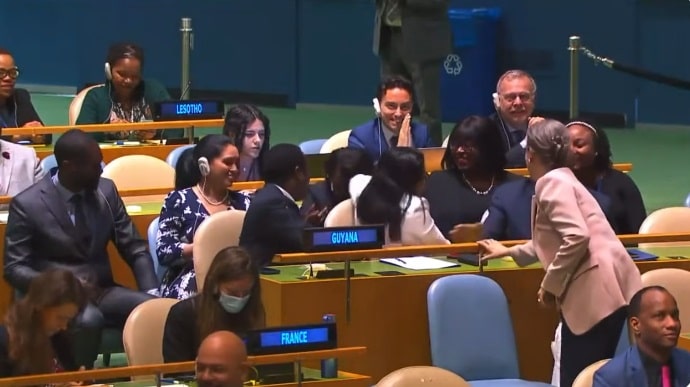
Africa will be represented by Sierra Leone and Algeria as newly elected non-permanent members of the UN Security Council.
Sierra Leonean President Julius Maada Bio hailed this achievement as a significant milestone for the nation, describing it as a testament to Sierra Leone’s successful transition from war to peace and its status as a resilient democratic country.
In addition to Sierra Leone and Algeria, Guyana, Republic of Korea, and Slovenia were also elected as non-permanent members following a vote by the General Assembly.
These five countries will join Ecuador, Japan, Malta, Mozambique, and Switzerland as non-permanent members of the Council.
The newly elected members will assume their seats on January 1 and serve until December 31, 2025.
The UN Security Council consists of 15 countries, with five permanent members—China, France, Russia, the UK, and the US—who hold veto power over resolutions.
In a face-to-face meeting at the UN Security Council on Monday, Russian Foreign Minister Sergey Lavrov was criticized by Western diplomats for his nation’s unjustified attack on Ukraine.
The conference was titled “Maintenance of international peace and security,” and Lavrov was in charge of it because Russia is presently the Security Council’s rotating president. When Russia launched its invasion of Ukraine in February 2022, it was the final time it presided over the Security Council.
UN ambassadors for the United States, United Kingdom and Switzerland all used their speeches at the meeting to condemn Russia’s invasion. The three women – the US’s Linda Thomas-Greenfield, Britain’s Barbara Woodward and Switzerland’s Pascale Baeriswyl – all voiced strong, direct criticism of Russia and Lavrov, at times looking directly at the top Russian diplomat.
“Our hypocritical convener today, Russia, invaded its neighbor, Ukraine, and struck at the heart of the UN Charter. This illegal, unprovoked and unnecessary war runs directly counter to our most shared principles – that a war of aggression and territorial conquest is never, ever acceptable,” Thomas-Greenfield said.
“As we sit here, that aggression continues. As we sit here, Russian forces continue to kill and injure civilians. As we sit here, Russian forces are destroying Ukraine’s critical infrastructure. As we sit here we brace ourselves for the next Bucha, the next Mariupol, the next Kherson, the next war crime, the next atrocity,” she added.
Opening the session, UN Secretary-General Antonio Guterres also condemned Russia’s actions.
“Russia’s invasion of Ukraine, in violation of the United Nations Charter and international law, is causing massive suffering and devastation to the country and its people and adding to the global economic dislocation triggered by the Covid-19 pandemic,” he said, sitting right next to Lavrov.
Russian diplomats have been largely cut off from various international conferences since Moscow launched its full-scale invasion of Ukraine last year. However, the leadership of the Security Council, UN’s most powerful body, rotates alphabetically among its 15 member nations. Five countries – China, France, Russia, the UK and the US – have permanent seats on the council. The remaining 10 members are elected for two-year terms by the UN General Assembly.
Russia assumed the presidency on April 1, an event that multiple diplomats described as an “April Fool’s joke.”
The meeting on Monday was attended by Elizabeth Whelan, whose brother Paul Whelan has been detained in Russia for more than four years. The US considers Whelan to be wrongfully detained. The US government was unable to secure Whelan’s release last year when it brought home two other Americans who the US said had been wrongfully detained in Russia – Trevor Reed in April and Brittney Griner in December.
European Union countries issued a joint statement before the meeting, condemning Russia’s actions in Ukraine and criticizing Lavrov’s appearance at the meeting.
“Russia is trying to portray itself as a defender of the UN charter and multilateralism. Nothing can be further from the truth. It’s cynical,” said Olaf Skoog, European Union representative to the UN. “We all know that while Russia is destroying, we are building. While they violate, we protect.”
In his opening remarks, Lavrov launched into a tirade of unsubstantiated accusations against Ukraine and its western allies, blaming the conflict on them.
“As was the case during the Cold War, we have reached the dangerous, possibly even more dangerous threshold,” Lavrov said, accusing the “United States and its allies” of “abandoning diplomacy and demanding clarification of relations on the battlefield.”
Lavrov repeatedly described the Ukrainian government as “the putchists” and “the Nazi Kyiv regime,” a baseless claim that Russia has repeatedly made to justify its illegal invasion of the country. Lavrov also criticized Western countries for not recognizing the Ukrainian peninsula of Crimea as Russian territory, despite “a referendum being held there.”
Russia forcefully annexed Crimea in 2014 after holding a sham referendum there. Ukraine and its Western allies consider the area occupied Ukrainian territory. The UN overwhelmingly rejected the referendum as illegitimate and the annexation as illegal.
Despite Ukraine pleading with other council members to oppose the action, Russia has assumed the leadership of the UN Security Council.
On a rotating basis, each of the 15 council members has the presidency for one month.
In February 2022, when Russia last held the president, it started a full-scale invasion of Ukraine.
It denotes that a nation whose president is wanted internationally for alleged war crimes is in charge of the Security Council.
The arrest warrant for Vladimir Putin was issued last month by the International Criminal Court, a non-UN body.
Notwithstanding UkraiUkraine receives Leopard tanks from Germanyne’s complaints, the US claimed it was powerless to prevent Russia, a permanent council member, from taking the helm.
The other permanent members of the council are the UK, US, France, and China.
The role is mostly procedural, but Moscow’s ambassador to the UN, Vasily Nebenzia, told the Russian Tass news agency that he planned to oversee several debates, including one on arms control.
He said he would discuss a “new world order” that, he said, was coming to “replace the unipolar one”.
Ukrainian Foreign Minister Dmytro Kuleba called Russia’s presidency “the worst joke ever for April Fool’s Day” and a “stark reminder that something is wrong with the way international security architecture is functioning”.
Ukraine’s presidential adviser, Mykhaylo Podolyak, said the move was “another rape of international law… an entity that wages an aggressive war, violates the norms of humanitarian and criminal law, destroys the UN Charter, neglects nuclear safety, can’t head the world’s key security body”.
President Volodymyr Zelensky called last year for the Security Council to reform or “dissolve altogether”, accusing it of failing to take enough action to prevent Russia’s invasion.
He has also called for Russia to be removed of its member status.
But the US has said its hands were tied as the UN charter does not allow for the removal of a permanent member.
“Unfortunately, Russia is a permanent member of the Security Council and no feasible international legal pathway exists to change that reality,” White House press secretary Karine Jean-Pierre told a news briefing this week.
She added the US expects Moscow “to continue to use its seat on the council to spread disinformation” and justify its actions in Ukraine.
The UN Security Council is an international body responsible for maintaining peace.
Five nations are permanently represented on the Security Council. They reflect the post-war power structure that held sway when the council was formed.
Members of this group work alongside 10 non-permanent member countries.
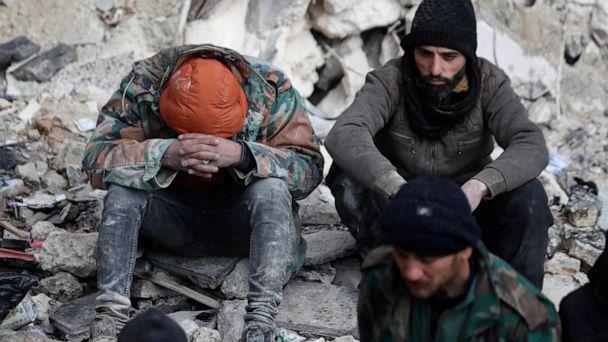
Though the UN warned that the extent of the disaster is still not entirely clear, it is now known that more than 21,000 people died in the earthquakes that occurred on Monday in Turkey and Syria.
Rescuers are still looking through the rubble for survivors, but more than four days after the initial earthquake, optimism is waning.
After losing their homes, tens of thousands of people have spent a chilly fourth night in temporary shelters.
The president of Turkey dubbed the earthquake “the disaster of the century.”
A significant global relief effort is intensifying. The World Bank committed $1.78 billion (£1.38 billion) in aid to Turkey on Thursday, including immediate funding for the restoration of essential infrastructure and assistance for those impacted by the earthquakes.
Another donation came from the US, which pledged a package of $85m to both countries.
Meanwhile, the efforts of 100,000 or more rescue personnel on the ground are being hampered by logistical hurdles including vehicle shortages and devastated roads.
UN chief Antonio Guterres warned the full extent of the catastrophe was still “unfolding before our eyes,” especially in Syria, where a long-running civil war has devastated the country.
On Thursday, the first UN humanitarian aid crossed the border into north-western Syria through Idlib’s Bab al-Hawa crossing.
The crossing is the only way UN aid can reach the region without travelling through areas controlled by Syrian government forces.
Mr Guterres promised more help was on the way, and he urged the UN Security Council to allow supplies to be delivered through more than one border crossing.
“This is the moment of unity, it’s not a moment to politicise or to divide, but it is obvious that we need massive support,” he said.
Munira Mohammad, a mother of four who fled Aleppo in Syria after the quake, told Reuters on Thursday that her family was in desperate need of heating and more supplies, saying: “Last night we couldn’t sleep because it was so cold. It is very bad.”
The White Helmets rescue group said the only UN convoy that reached the region did not contain specialised equipment to free people trapped beneath the rubble.
Warnings of second disaster
Officials said on Friday that 18,342 people had died in Turkey, surpassing the more than 17,000 killed when a similar quake hit northwest Turkey in 1999.
An earlier update from Syria had put the toll there at 3,377.
The tremor ranks among the most deadly natural disasters of the century – surpassing others such as the 2011 earthquake and tsunami in Japan.
Resat Gozlu, a survivor in south-eastern Turkey who is now living on the floor of a sports complex with his family, said rescue workers did not arrive until three days after the quake.
He said many remain trapped under the rubble and others died of hypothermia.
“If this continues there could be serious health issues and illness,” he told the BBC.
The World Health Organization (WHO) earlier warned a second humanitarian disaster will strike unless survivors can get access to shelter, food, water and medicine “very fast”.
The WHO’s Regional Director for Europe, Dr Hans Kluge, told the BBC the organisation’s staff in Turkey’s Gaziantep were sleeping in cars because “there’s still hundreds and hundreds of aftershocks”.
Dr Kluge said communities in Syria depended on water reservoirs, which were the first to fall. He said the reservoirs need to be replaced or the country faces cholera outbreaks – which he said was an issue before the earthquake.
On Monday, theUN Security Council will vote to extend permission for the delivery of aid from Turkey.
Humanitarian workers in the final pocket of Syria controlled by the opposition are concerned that if the UN is forced to halt aid deliveries from Turkey across the border, the cholera epidemic already ravaging the area will worsen.
The four million residents of the region, who endure appalling conditions, are heavily reliant on the food and medical supplies that are transported across the border thanks to a 2014 UN Security Council resolution that permitted such shipments despite the Syrian government’s objections.
The Security Council is due to vote on Monday, a day before the current authorisation expires, on renewing it for a further six months. Health workers in the zone, which comprises most of the province of Idlib and parts of Aleppo province in northwestern Syria, fear the consequences should Syria’s ally Russia veto it or place further restrictions on the programme.
“The capabilities of the health sector are already very weak, and we suffer from an acute shortage of medicines, medical supplies and serums,” said Zuhair al-Qurat, the head of Idlib’s health directorate.
“Stopping cross-border aid will have a multiplier effect on thecholera outbreak in the region,” he told Reuters.
Though diplomats say Russia has indicated it will allow the authorisation’s renewal, uncertainty remains.
Russia’s deputy UN ambassador Dmitry Polyanskiy told Reuters the implementation of the current resolution – adopted in July – was “far from our expectations” and a final decision would be made by Moscow on Monday.
Catastrophic consequences
Top UN officials, including aid chief Martin Griffiths, have warned that ending the operation would be “catastrophic”.
Idlib has recorded more than 14,000 suspected cholera cases and Aleppo more than 11,000 since the outbreak began in September, making them the second and fourth worst-hit provinces in Syria respectively.
They are particularly vulnerable because they rely on water from the Euphrates river to drink and irrigate crops, and because the health sector in opposition-held Syria has been battered by more than a decade of war.
The UN authorisation allows agencies to bring in hygiene kits, chlorine tablets to disinfect water and equipment for eight cholera treatment centres with more than 200 beds. Non-governmental groups also truck safe drinking water to homes.
Without it, international NGOs would not have international legal cover and could not keep up with the pace and quantities of aid needed, three aid workers told Reuters.
That is in part because large donor countries trust that aid brought in through the UN will not be politicised, unfairly distributed or seized by hardline armed groups.
The chlorine used to disinfect water presents a particular challenge. The chemical has been used in Syria as a weapon of war, prompting concerns among donors that would slow down its procurement for cholera treatment by humanitarian organisations other than the UN, the aid workers said.
“These centres and health facilities would be suspended. Supplies … transhipped specifically for the cholera pandemic in the northwest would be interrupted – fluid, serums, injections, oral medications,” said Mohammad Jassim, the International Rescue Committee’s northwest Syria coordinator.
Even if the resolution is renewed for another six months, health workers have already suffered from short-term renewals, leaving them unable to plan ahead, said Osama Abou el-Ezz, the head of the Syrian-American Medical Society (SAMS) in Aleppo.
Mozambique replaced Kenya at the UN Security Council on Tuesday with a promise to prioritise the fight against terrorism.
The country will serve at the council as a non-permanent member for the next two years.
“We are going to deal a lot with terrorism,” said Mozambican ambassador to the UN, Pedro Comissário.
Mozambique has been battling an Islamist insurgency in its northern Cabo Delgado province for the past five years. The conflict has displaced over one million people and killed around 4,000 others, according to official data.
Mr Comissário said the country would also push for reforms at the Security Council to address “African concerns”.
“It is necessary to pay attention to reforming the Security Council to reflect African concerns, a region that has suffered historical injustice. We have no permanent member on the Security Council,” said Mr Comissário.
The Security Council has five permanent members – the United States of America, Russia, France, the United Kingdom and China – and 10 non-permanent members.
This historic event occurred on Tuesday, November 1, 2022.
The UN Security Council is the principal organ for the maintenance and furtherance of international peace and security.
Addressing the Press Corps of the United Nations (UN) in New York, Ghana’s Permanent Representative to the United Nations, Ambassador Harold Adlai Agyeman, reiterated Ghana’s commitment to ensuring global peace and security.
Prior to the event, the Ministry of Foreign Affairs and Regional Integration had outlined a series of events to commemorate Ghana’s new role.
In June 2021, Ghana was elected by the UN General to serve a two-year term on the Security Council from January 2022 to December 2023.
As part of its duties regarding its new role, Ghana is to explore and implement measures geared towards addressing threats against peace and security.
Meanwhile, Ghana has already rolled out plans to address violent extremism and terrorism in Africa after it assumed the Presidency of the United Nations Security Council on Tuesday.
According to Mr Agyeman, the first of the two signature events for the month will be an open debate, addressing the theme of “Integrating effective resilience-building in peace operations for sustainable peace”, and will be chaired by Shirley Ayorkor Botchwey, Ghana’s Minister for Foreign Affairs.
He said the debate will seek to foster “a focused conversation on balancing kinetic and non-kinetic components of peace operations, particularly in the continent of Africa”.
Subsequently, the second signature event will focus on counter-terrorism in Africa and will be held on November 10.
Additionally, he mentioned that this debate will explore how such efforts can be best supported by the Council, including through the provisioning of adequate, predictable and sustainable funding.
The UN Security Councilhas voted for the resumption of negotiations between parties to the disputed Western Sahara.
The Thursday resolution called for the parties to resume negotiations “in good faith with a view to achieving a just, lasting and mutually acceptable political solution” for Western Sahara.
Thirteen countries in the 15-member council voted in favour of the resolution, with Kenya and Russia abstaining.
Western Sahara, a former Spanish colony, is disputed by the Algerian-backed Polisario Front and Morocco.
Morocco controls around 80% of Western Sahara and the rest is held by the Polisario movement – which fought with Morocco for years after Spanish forces withdrew in 1975.
The 16-year-long insurgency ended with a UN-brokered truce in 1991 and the promise of a referendum on independence which has yet to take place.
Iran has agreed to supply Russia with surface-to-surface missiles and additional drones, according to two senior Iranian officials and two Iranian diplomats.
On October 6, Iran’s First Vice President Mohammad Mokhber, two senior Revolutionary Guard officials, and an official from theSupreme National Security Councilarrived in Moscow for talks with Russia about the delivery of the weaponry.
“The Russians had asked for more drones and those Iranian ballistic missiles with improved accuracy, particularly the Fateh and Zolfaghar missiles family,” said one of the Iranian diplomats, who was briefed about the trip.
“Where they are being used is not the seller’s issue. We do not take sides in the Ukraine crisis like the West. We want an end to the crisis through diplomatic means,” the diplomat said.
A top White House source told the BBC that Vladimir Putin’s veiled threats to use nuclear weapons to defend territory in Ukraine are being taken “seriously” by the US.
John Kirby said the US was not changing its “strategic deterrent posture”, but that Mr Putin spoke irresponsibly.
On Wednesday Russia’s leader warned his country would use all the means at its disposal to protect its territory.
It came as four Ukrainian regions part-occupied by Russian forces are about to stage snap votes on joining Russia.
Ukraine and its allies call these votes a sham exercise, designed to give spurious legitimacy to an illegal annexation.
“It is a dangerous precedent for Mr Putin to be using this kind of rhetoric in the context of a war clearly that he’s losing inside Ukraine,” National Security Council spokesman Mr Kirby told the BBC.
“We have to take these threats seriously and we do… We’ve been monitoring, as best we can, his nuclear capabilities, I can tell you that we don’t see any indication that we need to change our strategic deterrent posture at this point.”
“But it’s not going to work,” he said. “No one’s going to recognise it. And what needs to happen is Mr Putin needs to leave Ukraine. He needs to stop this war.”
Russia’s conduct in Ukraine was strongly condemned at a special meeting of the UN Security Council in New York on Thursday.
“This week, President Putin said Russia wouldn’t hesitate to use ‘all weapon systems available’ in response to a threat to its territorial integrity – a threat all the more menacing given Russia’s intention to annex large swaths of Ukraine in the days ahead…” said US Secretary of State Anthony Blinken.
“This from a country that in January of this year joined the other permanent members of the Security Council in signing a statement affirming that ‘nuclear war can never be won and must never be fought.”
But Russian Foreign Minister Sergei Lavrov accused some Security Council members of trying to impose a false narrative on Moscow’s operations in Ukraine and restating allegations that ethnic Russians had been persecuted by Ukrainian government forces.
“There’s an attempt today to impose on us a completely different narrative to show Russian aggression as the origin of all the tragedy,” Mr Lavrov said.
“This ignores the fact that for over eight years the Ukrainian army and fighters from the nationalist formations killed and continue to kill inhabitants of [the east Ukrainian region of] Donbas with impunity simply because they refused to recognise the results of the coup d’etat in Kyiv. They decided to uphold their rights, which were guaranteed by the Ukrainian Constitution, including the right to freely use Russian, their mother tongue.”
Russia attempts to justify its invasion by saying it is fighting neo-Nazis, a claim widely dismissed by the international community, as well as resisting Nato expansion.
In his speech on Wednesday, President Putin also announced a call-up for reservists in a move analysts say is a sign that Russia’s forces in Ukraine are struggling to hold on to the strip of the territory they occupy in the east and south.
After weeks of disagreement — especially between the United States and China — the UN Security Council will meet Thursday to discuss the coronavirus pandemic for the first time.
Led by Germany, nine of the council’s 10 non-permanent members requested the closed-door meeting — a video conference to maintain social distancing — last week, fed up with the body’s inaction over the unprecedented global crisis.
Talks are moving in the right direction, diplomats said, and Washington is no longer insisting UN language refer to the virus as coming from China, which had infuriated Beijing.
Secretary-General Antonio Guterres is expected to focus on efforts to fight the pandemic, peacekeeping missions and fostering unity between the non-permanent members and the five permanent ones.
There are two competing texts up for debate.
One, spearheaded by Tunisia on behalf of the 10 non-permanent members and obtained by AFP, calls for “an urgent, coordinated and united international action to curb the impact of COVID-19” and urges an immediate global ceasefire on humanitarian grounds.
That draft resolution has been in development since March 30, though a vote on it is not yet scheduled.
The second text, proposed by France, focuses on Guterres’s call last month to cease all hostilities around the world as part of a “humanitarian pause” to fight the pandemic.
That one has so far only had input from the permanent members, which diplomats from non-permanent countries told AFP has been “very frustrating.”
Efforts to convene a meeting have been stymied by the hospitalization of British Prime Minister Boris Johnson and Chinese reticence to participate without first setting a clear agenda.
Richard Gowen, a specialist at the International Crisis Group, told AFP: “It is important to recognize that the main driving force behind the cooperation of the 10 non-permanent members is the bad behaviour of the five permanent members.”
Several of these non-permanent workers “waged a fierce campaign to win their seat” on the Council and “are dumbfounded by the bickering between China and the United States” that prevent the body from “agreeing on the great crisis of our time.”
A Western ambassador, speaking anonymously, said the two blocs needed each other.
“The permanent cannot pass a text without the voices of the non-permanent, the non-permanent cannot impose a text on the permanent because they have a veto. We must necessarily agree and we will try to ‘hear’,” they said.
In the Security Council, at least nine votes out of 15 are necessary to adopt a resolution, without a veto of one of the five permanent members.