Tag: UN

  • Over 130 civilians killed by DR Congo rebels – UN

    Over 130 civilians in the eastern Democratic Republic of the Congo have been killed.

    According to a UN assessment, the M23 rebel group was responsible for at least 131 deaths at the end of November this year.

    Investigations, according to the report, have established that there were fatalities among civilians in two villages, Kishishe and Bambo, in the Rutsuhuru district of North Kivu province.

    According to the UN, the victims were put to death in what seemed to be retaliation for the current government offensive.

    In retaliation for the battles between the M23 and other groups, it claims that “this brutality was carried out as part of a campaign of killings, rapes, kidnappings, and looting against two villages in the Rutshuru region.”

  • Mali demands shift in strategy in order to renew the UN mission

    The future of the UN mission in Mali (Minusma), according to Mali’s transition leader Col Assimi Goita, will rely heavily on a change in strategy and better relations with the country’s army.

    Col Goita tweeted that he had met with UN Chief of Peacekeeping Operations Jean-Pierre Lacroix, who is on a two-day tour in Mali ahead of Minusma’s mandate renewal.

    The state-linked L’Essor quoted Mr Lacroix as saying that this was about ensuring there was an agreement between Mali and the UN “so that when the time comes, the recommendations at the level of the [UN] Security Council are in line with the objectives of the Malian authorities”.

    UN peacekeepers have been in the country since 2013, but relations with Bamako have recently deteriorated.

    Several countries, including Germany and Cote D’Ivoire, have announced plans to withdraw from the mission or scale down their presence.

  • UN aims for a record $51.5 billion aid ‘lifeline’ for 2023

    The United Nations and its partners have launched an unprecedented $51.5 billion aid appeal for 2023, with tens of millions more people expected to require humanitarian assistance.

    According to the UN Global Humanitarian Overview, an additional 65 million people will require assistance next year, bringing the total to 339 million across 68 countries.

    That is more than 4% of the world’s population, or roughly the population of the United States.

    “It’s a phenomenal number and it’s a depressing number,” UN Emergency Relief Coordinator Martin Griffiths told reporters in Geneva on Thursday, adding that it meant “next year is going to be the biggest humanitarian programme” the world has ever seen.

    “Humanitarian needs are shockingly high, as this year’s extreme events are spilling into 2023,” Griffiths said, citing the war in Ukraine and drought in the Horn of Africa.

    “For people on the brink, this appeal is a lifeline.”

    More than 100 million people have been driven from their homes as conflict and climate change heighten a displacement crisis.

    The overlapping crises have already left the world dealing with the “largest global food crisis in modern history”, the UN warned.

    It pointed out that at least 222 million people across 53 countries were expected to face acute food shortages by the end of this year, with 45 million of them facing the risk of starvation.

    “Five countries already are experiencing what we call famine-like conditions, in which we can confidently, unhappily, say that people are dying as a result,” Griffiths said.

    Those countries – Afghanistan, Ethiopia, Haiti, Somalia and South Sudan – have seen portions of their populations face “catastrophic hunger” this year, but have not yet seen countrywide famines declared.

    Meanwhile, nine months of war between Russia and Ukraine have disrupted food exports and about 45 million people in 37 countries are currently facing starvation, the report said.

    This year’s appeal represents a 25 percent increase compared with last year.

    But donor funding is already under strain with the multiple crises. The UN faces the biggest funding gap ever, with its appeals funded only about 53 percent in 2022, based on data through to mid-November.

    “Humanitarian organisations are therefore forced to decide who to target with the funds available,” a UN statement said.

  • Libya: Top official urges UN special envoy to prompt election talks

    An influential Libyan official said that the United Nations’ special envoy should meet with the joint electoral committee made up of rival Libyan factions, to start constitutional arrangements for elections.

    Aguila Saleh, the influential speaker of Libya’s east-based parliament, was speaking to reporters in Cairo after meeting Arab League Secretary-General, Ahmed Aboul Gheit.

    Saleh said the joint committee could send their recommendations to the High National Election Commission, which would then be responsible for holding elections.

    Earlier this month, Abdoulaye Bathily, the new UN special envoy for Libya warned that the first anniversary of Libya’s postponed elections is quickly approaching and that further delaying a vote could lead the troubled north African nation to even greater instability, putting it “at risk of partition.”

    “The Libyan executive body’s term is over,” said Saleh, calling for a peaceful transfer of power and a return to previous electoral procedures.


    Source: African News

  • UN panel accuses South Sudanese officials of letting gang rapes occur

    UN experts have urged South Sudanese authorities to look into officials accused of supervising systematic gang rapes, some of which involved girls as young as nine.

    On Monday, the South Sudan Commission on Human Rights stated that it had reasonable grounds to believe that a county commissioner in the northern oil-rich state of Unity orchestrated gang rapes at a military camp.

    The UN experts said in a statement that the documented abuses included beheadings, rape victims being forced to carry severed heads, victims being burned alive, and days of brutal sexual assaults.

    “Conflict-related rape and sexual violence in Unity State has become so systematic and is a direct result of impunity,” commission member Barney Afako said.

    Investigators say sexual abuse has been used as a weapon by all sides in South Sudan’s civil conflict, which erupted in 2013 and triggered Africa’s biggest refugee crisis since the 1994 Rwandan genocide.

    In the abuses outlined in Unity, multiple witnesses said the state official planned and ordered the attacks, which were led by his deputy and followed strikingly similar patterns in different areas, according to the UN statement.

    In response, Michael Makuei, South Sudan’s information minister and government spokesman, dismissed the commission’s statement as a fabrication.

    “They come and sit in hotels here in Juba and fabricate these false reports on South Sudan to make a living,” he told the Reuters news agency. “… I am saying these are false reports fabricated against the government.”

    The commission said the abuses cut across all political affiliations. It said one governor in the opposition in the state of Western Equatoria was appointed to his post despite being responsible for the 2018 abduction, rape, torture and sexual slavery of more than 400 women and girls.

    Lam Paul Gabriel, military spokesman for Vice President Riek Machar’s Sudan People’s Liberation Movement/Army in Opposition (SPLM/A-IO), said it had had no hand in the reported crimes.

    “This report is misplaced because they do not know who is fighting who in those areas where these accusations are made,” Lam said.

    Attempts to reach officials from Unity and Western Equatoria to comment were unsuccessful.

    South Sudan gained independence from Sudan in 2011 but two years later descended into a spiral of brutal ethnic violence and revenge killings.

    A peace agreement was signed in 2018, but 9.4 million people will require humanitarian aid next year, representing more than three-quarters of the population, according to UN figures.

    The UN Human Rights Council set up the Commission on Human Rights in South Sudan in 2016 to monitor rights and make recommendations on accountability.


  • Iran refuse UN probe into  protests

    As he decried the UN enquiry, Iran’s foreign ministry spokesman wore a gas mask, a reference to Germany’s alleged supply of chemical weapons during the Iran-Iraq war.

    Iran has stated that it will not cooperate with a United Nations fact-finding mission investigating its response to ongoing anti-government demonstrations because the investigation is “political.”

    During a news conference on Monday, foreign ministry spokesman Nasser Kanani told reporters that Tehran will have “no form of cooperation with this political committee that has been framed as a fact-finding committee.”

    Last week, Iran announced it had formed a local fact-finding mission, comprised of representatives from the government, the judiciary, the parliament and others, to investigate “events, riots and unrest” during the past few weeks.

    According to Kanani, this constituted a “responsible” act by the Iranian state and refuted any need for a UN investigation.

    “[The UN investigation was] taking advantage of human rights mechanisms to exert political pressure on independent countries,” Kanani said.

    The UN Human Rights Council last week voted to establish a fact-finding mission to investigate potential abuses in Iran’s handling of anti-government demonstrations that have erupted across the country.

    The protests began after the death in custody of 22-year-old Mahsa Amini in September, following her arrest by morality police for allegedly not adhering to the country’s mandatory dress code.

    Of the 47-member council, 25 voted in favour of a resolution that demands Tehran cooperate with the council’s special rapporteur on Iran, including by granting access to areas inside Iranian territory, such as locations where people have been arrested.

    There were 16 abstentions and six nations – Armenia, China, Cuba, Eritrea, Pakistan and Venezuela – voted against the measure.

    The UN has said more than 300 people have died during the protests and nearly 14,000 arrested. Other human rights organisations have provided higher figures, but Iran has not released any official tallies, apart from saying that more than 50 security personnel have been killed.

    Several people have received preliminary death sentences for participating in “riots”, according to the Iranian judiciary, while an official said the Iranian Supreme Court has begun hearing appeals for those sentenced to execution.

    In the past two weeks, protests have been most intense in Iran’s Kurdish-majority northwestern provinces, with the Islamic Revolutionary Guard Corps (IRGC) confirming it is “strengthening” its presence there.

    The elite forces also renewed its missile and drone attacks in neighbouring Iraq’s northern regions last week, which it has threatened to continue if Kurdish groups [can we name them?] based there are not disarmed.

    New Iraqi Prime Minister Mohammed Shia al-Sudani is expected in Tehran on Tuesday to meet with President Ebrahim Raisi and discuss the issue.

    Focus on Germany’s role

    Top Iranian officials have repeatedly accused the United States, Israel, the United Kingdom, France, Germany and Saudi Arabia of being behind the country’s unrest.

    In the past few weeks, Iran has particularly ramped up its rhetoric against Germany, as the European power has expressed repeated support for the protests in Iran.

    Along with Iceland, Germany presented the formal call for the formation of the special UN council meeting on Iran that led to the passage of the resolution.

    Iran’s foreign ministry on Monday summoned the German ambassador to Tehran for the second time since the start of the protests to condemn “interventionist and baseless” remarks by German officials and to denounce the UN meeting.

    During his news conference on Monday, the Iranian foreign ministry spokesman carried a black gas mask and held the session with the mask on his podium.

    It was meant as a reminder of the use of chemical weapons by Saddam Hussein during the eight-year Iran-Iraq war in the 1980s.

    Tehran has long accused Germany of supplying Hussein with chemical weapons. Kanani said up to 80 percent of the chemical weapons used during the war were supplied by German companies.

    In its blacklisting of European individuals and entities in response to European Union sanctions last month, Tehran imposed sanctions on two German companies that it said were responsible for “delivering chemical gases and weapons” to Iraq during the war.


  • Food aid to Ethiopia’s Tigray is ‘not meeting needs,’ according to the UN

    Even though all four road corridors are now open, access to some parts of Tigray remains restricted, according to the World Food Programme.

    Even as a ceasefire takes hold in war-torn northern Ethiopia, aid deliveries into Tigray are “not matching the needs” of the region, according to the UN food agency.

    The World Food Programme (WFP) and its partners “need access to all parts of the region to deliver food and nutrition assistance to 2.3 million vulnerable people,” according to a statement issued by the WFP on Friday.

    Restoring intervention deliveries to Tigray was a key component of a November 2 agreement to end a two-year war that has killed untold numbers of people and triggered a humanitarian crisis.

    The WFP said all four road corridors into Tigray had reopened since the ceasefire and humanitarian flights were flying into main cities, allowing a significant increase in aid supplies to reach the region.

    However, it added that “access into some parts of eastern and central zones of Tigray remain constrained – affecting up to 170,000 mothers and children in need of food assistance.”

    Aid into the region ground to a halt in late August when fighting resumed between the Ethiopian government and its allies, and fighters loyal to Tigray’s rebellious authorities.

    Even before the suspension of aid, the UN had warned many in Tigray already faced starvation, with some 90 percent of its six million people dependent on food assistance.

    The region was isolated from the world for more than a year and faced severe shortages of medicines and limited access to electricity, banking and communications.

    Since November 15 when road access improved, WFP said nearly 100 trucks had transported 2,400 metric tonnes of food and 100,000 litres (26,417 gallons) of fuel into the region.

    Humanitarian flights carrying passengers to Mekele, the regional capital, have resumed for the first time since August, after receiving government approval. Aid charters into Shire, a northern city, also commenced for the first time ever.

    It said an estimated 13.6 million people across Tigray and its neighbouring regions of Amhara and Afar were dependent on humanitarian aid as a result of the war, which broke out in November 2020.

    Tigray’s authorities had been resisting central rule for months when Ethiopian Prime Minister Abiy Ahmed accused their leadership of attacking federal army camps and sent troops into the region.

    The two parties signed a peace deal in South Africa on November 2 that agreed to unfettered aid into Tigray.

  • Women in Africa face the highest risk of being murdered by family members, UN reports

    UN has reported that , women and girls in Africa are more likely than anywhere else in the world to be killed by intimate partners or other family members.

    According to the report, the continent has the highest level of violence against women in relation to its female population.

    In 2021, approximately 45,000 women and girls worldwide will have been murdered by intimate partners or other family members.

    When broken down, this means that more than five women or girls are killed by someone in their own family every hour.

    The report released jointly by the UN Office on Drugs and Crime (UNODC) and UN Women, says that even as the numbers are shocking, the true scale of femicide may be much higher.

    By absolute numbers, Africa had the second-highest cases of female intimate partner/family-related killings, at 17,200, with Asia leading at 17,800. The Americas had 7,500 cases and 2,500 in Europe.

    “Data on gender-related killings committed in the public sphere are particularly scarce, making it difficult to inform prevention policies for these types of killings,” it says.

    The UN is calling for the strengthening of protection mechanisms for women human rights defenders and women’s rights activists.

    “I call upon governments and partners across the world to increase long-term funding and support to women’s rights organisations,” UN Women executive director Sima Bahous said.

    The UN report comes as the global commemoration of 16 days of activism against gender-based violence begins on Friday.

  • Sudan rebels: Thirteen killed after groups clash

    UN has reported that, thirteen people were killed and 12 others were reported missing after fierce fighting between two rival factions of the rebel Sudanese Liberation Movement-Nur (SLM-Nur) group in Central Darfur state, western Sudan.

    The UN humanitarian agency (OCHA) in Sudan said in a statement issued on Thursday that the clashes began on November 19 in the Umu and Arshin areas of the Shamal Jebel Marra locality.

    According to the privately owned Al-Intibaha news site, six people were abducted and four others were injured.

    The fighting later spread to the nearby villages of Daya, Wara, and Kia, with an estimated 5,600 people fleeing their homes and moving to displaced people’s camps, according to OCHA.

    The situation remains tense as there are reports that both parties are mobilising their forces for fresh attacks, according to the UN.

    In October, similar clashes between the two groups left at least 13 people killed and 15 others wounded.

    SLM-Nur is one of the few rebel groups that did not sign the 2020 Juba peace agreement, which the government signed with former rebel groups in Darfur and southern regions.

    There has been division within SLM-Nur in recent months, as some factions have defected.

  • Zaporizhzhia shelling: UN demands stop to fighting at Ukraine nuclear site


    More than a dozen powerful explosions have been recorded near a huge Russian-occupied nuclear power plant in south Ukraine since Saturday evening.

    The head of the UN nuclear watchdog, Rafael Grossi, made an urgent appeal for a stop to the fighting at the Zaporizhzhia plant, Europe’s biggest.

    “Whoever is behind this, it must stop immediately,” he said. “You’re playing with fire!”

    The plant stands on the River Dnipro, on the front line in the war.

    Russia’s military accused Ukrainian forces on the other side of the river of shelling the area under its control. There was no immediate word from the Ukrainians who have previously suggested Russian forces shell the area themselves despite having their troops there.

    The area around the plant, including the nearby Russian-occupied town of Enerhodar, had been under regular attack for months but there had been a period of calm before the new explosions this weekend, which continued into Sunday morning.

    Monitors from Mr Grossi’s organisation, the International Atomic Energy Agency (IAEA), witnessed some of the explosions from their windows.

    Citing information provided by officials at the Russian-controlled plant, the IAEA team said there had been damage to some buildings, systems and equipment at the site, but nothing so far “critical for nuclear safety and security”. There were no reports of casualties.

    Zaporizhzhia graphic

    “The news from our team yesterday and this morning is extremely disturbing,” Mr Grossi said. “Explosions occurred at the site of this major nuclear power plant, which is completely unacceptable.”

    He called once again for the two warring sides to agree and implement a nuclear safety and security zone around the plant as soon as possible.

    “I’m not giving up until this zone has become a reality,” he said. “As the ongoing apparent shelling demonstrates, it is needed more than ever.”

    Russian state media quoted an official from Russian nuclear power operator Rosenergoatom as saying 15 shells had been fired at the plant’s facilities, landing near a dry nuclear waste storage facility and a building that houses fresh spent nuclear fuel, but no radioactive emissions had been detected.

    The plant was overrun by Russian forces a few weeks after Moscow invaded Ukraine on 24 February.

    Russia annexed the Zaporizhzhia region and other Ukrainian territory in September but has been pushed back on the battlefield in the south, notably in Kherson region, and the two armies face each other across the River Dnipro (known as the Dnieper in Russian).

    Map showing nuclear plant in Ukraine
    Source: BBC
  • ‘Local politics was not part of my plans’ – Elvis Ankrah’s big breakthrough into politics

    Elvis Afriyie Ankrah had just finished reading a Master’s degree course in International Relations and was hoping that he would receive a callback from the Economic Community of West African States (ECOWAS) to start his dream job with them.

    And as is the case for most young graduates, the urge to experience working in any environment that presented him with much more made his hopes even greater.

    But Elvis Ankrah said something that jolted his dream sideways and put that long-time dream on permanent hold.

    And it all started when he was approached by one of the stalwarts of the National Democratic Congress (NDC), Ato Ahwoi, to take up an unusual job: a spokesperson for a presidential candidate.

    The job was for him to deputise as a spokesperson for the late former president of Ghana, Prof. John Evans Atta Mills, who was by then campaigning to become Head of State.

    He explained to GhanaWeb TV’s Edward Smith Anamale that when that call came through, it was not one of the things on his mind.

    “I went to do my Masters in International Relations and when I came back, I was on the verge of… I’d actually gone to ECOWAS to put in an application for a job and I was expecting a response because I had spoken with Dr. Chambas and all that, and then Mr Ato Ahwoi called me and said he wanted me to be the deputy campaign spokesperson for Prof Mills’ presidential primaries.

    “It was a very difficult decision to make: go to ECOWAS, go and earn some good dollars because I studied international relations so that had been my interest; to work with an international agency: ECOWAS, AU or the United Nations, so local politics was not part of my plan,” he explained.

    Elvis Afriyie Ankrah, however, explained in the election Desk interview on GhanaWeb TV that after a while, he agreed to take on that job, also because of something profound that Ato Ahwoi said to him.

    “And he said, go and do this thing for us, and after several months, I eventually agreed because he told me something: ‘If you go to your ECOWAS or UN and after 15 years you come back to Ghana, don’t you know you’ll be a stranger, and your colleagues would have gone ahead of you? So, what will happen to all the experience you gathered as SRC president and NUGS.

    “So, that really got me thinking so I took up the challenge and so, myself, Ludwig and Rojo, we went round with Prof Mills around the whole Ghana. We went to almost every city, town, village – every nook and cranny. It was a very eye-opening experience and that is where I gathered a lot of data and network with the grassroots,” he explained.

    Source: Ghanaweb.com 

  • Climate activists call Russian officials war criminals

    A group of Ukrainian activists has disrupted a high-level meeting of Russian officials at the UN climate summit in Egypt.

    It’s the first time Russia was speaking publicly at COP27.

    Russian Deputy Environment Minister Sergei Anopriyenko had just started talking when a young woman stood up shouting: “You are killing my people. You are shooting bombs at our people.”

    Then another held a banner bearing the slogan Fossil Fuels Kill.

    Seconds later, Viktoriya Ball stood up and shouted “you are war criminals” before walking out.

    She told me outside the plenary room that Russia should not be at COP27.

    “This conference is about making a better place for people and planet. But Russia is committing genocide, ecocide, they are destroying Ukraine, and fossil fuels are paying for war in my country,” she said.

    Alyona Lovita, who came to Sharm el-Sheikh from Lviv, Ukraine, said she protested for her relatives living under bombardment.

    After protesters were escorted out by UN security, Russian officials continued their event, telling the meeting that “we cannot stop climate change”.

    Source: BBC.com 

  • Treaty prohibiting use of fossil fuels was proposed at the United Nations Climate Summit

    The world should confront climate change the way it does nuclear weapons, by agreeing to a non-proliferation treaty that stops further production of fossil fuels, a small island nation leader urged Tuesday.

    The proposal by Tuvalu came as vulnerable nations pushed for more action and money at international climate talks in Egypt, while big polluters remained divided over who should pay for the damage industrial greenhouse gas emissions have done to the planet.

    “We all know that the leading cause of climate crisis is fossil fuels,” Tuvalu Prime Minister Kausea Natano told his fellow leaders.

    The Pacific country has “joined Vanuatu and other nations calling for a fossil fuels non-proliferation treaty,” Natano said. “It’s getting too hot and there is very (little) time to slow and reverse the increasing temperature. Therefore, it is essential to prioritize fast-acting strategies.”

    Vanuatu and Tuvalu, along with other vulnerable nations, have been flexing their moral authority against the backdrop of recent climate-related disasters. The idea of a non-proliferation treaty for coal, oil and natural gas has previously been advanced by campaigners, religious authorities including the Vatican, and some scientists, but Natano’s speech gave it a boost in front of a global audience.

    A year ago at climate talks in Glasgow, a proposal to call for a “phase out” of coal — the dirtiest of the fossil fuels — was changed at the last minute to “phase down” by a demand from India, earning the wrath of vulnerable countries.

    Since then the global energy crunch triggered by the Russian invasion of Ukraine has prompted a scramble by some countries and companies seeking to tap fresh gas and oil sources.

    Pushing back against that, vulnerable nations also called for a global tax on the profits of fossil fuel corporations that are making billions of dollars daily from sky-high energy prices.

    “It is about time that these companies are made to pay a global carbon tax on their profits as a source of funding for loss and damage,” said Gaston Browne, prime minister of Antigua and Barbuda. “Profligate producers of fossil fuels have benefited from extortionate profits at the expense of human civilization.”

    The idea of a windfall tax on carbon profits has gained traction in recent months amid sky-high earnings for oil and gas corporations even as consumers struggle to pay for heating their homes and filling their cars. For the first time, U.N. climate conference delegates are to discuss demands by developing nations that the richest, most polluting countries pay compensation for damage wreaked on them by climate change, which in climate negotiations is called “loss and damage.”

    Barbados Prime Minister Mia Mottley said fossil fuel companies should contribute to those funds, which would provide vulnerable countries with financial aid for the climate-related losses they are suffering.

    Other leaders rejected the idea.

    “I think this is not the place now to develop tax rules, but rather to jointly develop measures to protect against the consequences of climate change,” German Chancellor Olaf Scholz told reporters.

    If the small islands can’t get a global tax on fossil fuel profits, Antigua’s Browne suggested going to international courts to get polluters to pay. Scientists from Dartmouth College calculated specific damages for all the world’s countries and how much was caused by other nations, saying it would work well in international court cases.

    Browne quoted William Shakespeare’s “Macbeth” in sharing his frustration with lack of action.

    “Tomorrow and tomorrow and tomorrow creeps in this petty pace from day to day to the last syllable of recorded time. And all our yesterdays have lighted fools the way to dusty death,” Browne said.

    Despite 27 climate summits “tomorrow has not come,” he said.

    Speaking for a country that has suffered from the consequences of climate change recently, Somalia’s president said it faces “one of the worst droughts in modern history.”

    President Hassan Sheikh Mohamud said more than 7 million Somalis, or about half the population, cannot meet their basic food needs as the Horn of Africa region has seen two years of failed rains.

    “We are trying desperately to respond,” he said. The drought has killed thousands of people, many of them children. It is also reshaping Somalia’s landscape as the country struggles with one of the world’s fastest urbanization rates as many people flee parched areas.

    Pakistani Prime Minister Shahbaz Sharif told fellow leaders how his country was struck by catastrophic floods in recent months that affected 33 million people and caused more than $30 billion in economic damage.

    “This all happened despite our very low carbon footprints,” Sharif said, insisting: “Of course it was a manmade disaster.

    Sharif called for additional financial support for his country and others suffering from the effects of climate change, saying money to help Pakistan rebuild after the floods should be on top of other aid and not come in the form of loans. Further debts, he said “would be a financial death trap.”

    The president of Malawi, meanwhile, praised those leaders present in Egypt for simply showing up.

    “The temptation to abstain from COP this year was great,” President Lazarus Chakwera said, referring to the talks by their U.N. acronym, “because of the great and unprecedented economic hardships your citizens are suffering.”

    “But you resisted this temptation and chose the path of courage,” he said.

    Chakwerea said any agreements forged at the two-week meeting should recognize the different abilities of countries such as the United States and China, and developing nations like his own.

    There is growing pressure on Beijing to step up its climate efforts given its massive economic clout.

    So far, the world’s biggest polluter has insisted that it cannot be held to the same standards as developed economies like the United States or Europe because it is still lifting millions of its citizens out of poverty.

    Beijing’s climate envoy said Tuesday that the meeting in Egypt should focus on “implementation” of existing pledges.

    “The developed countries will take the lead in effectively scaling up their emission reduction targets and achieving carbon neutrality ahead of time,” Xie Zhenhua said, according to an official translation of the speech.

    Xie said it was up to developed countries to “achieve substantive results” on measures for adapting to climate change and financial aid for the poor that are “of greatest concern to developing countries.”

    The U.S. mid-term elections were hanging over the talks, with many environmental campaigners worried that defeat for the Democrats could make it harder for President Joe Biden to pursue his ambitious climate agenda.

    Also hanging over the conference was the fate of one of Egypt’s most prominent jailed pro-democracy activists, Alaa Abdel-Fattah, who has been imprisoned for most of the past decade. He stopped even drinking water Sunday, the first day of the conference, vowing he is willing to die if not released, his family said.

    Numerous world leaders raised his case in meetings with Egypt’s President Abdel Fattah el-Sissi, and the head of the U.N. human rights office called for his immediate release.

    Egypt’s longtime history of suppressing dissent has raised controversy over its hosting the annual conference, with many climate activists complaining that restrictions by the host are quieting civil society.

    Source: AP news.com 

  • Cholera: Death toll rise in Haiti, with the outbreak becoming ‘worse and worse every day’

    Haiti’s health ministry has announced that, a deadly resurgence of cholera has claimed 136 lives so far.

    According to the Haitian Health Ministry’s statement, 89 of those infected died in hospitals or cholera treatment centres, while 47 died at home.

    To address the crisis, the Haitian government is collaborating with international health organisations.

    “We have been receiving 250 people a day lately. There’s a surge in cases in most parts of the metropolitan area. This is very concerning for us as we have a limited capacity with around 350 beds in our cholera treatment centers,” said Alexandre Marcou, a communications officer for medical NGO Médecins Sans Frontières, speaking to CNN on Wednesday.

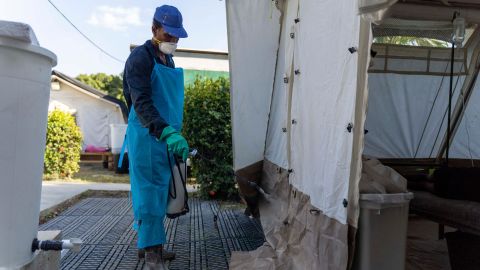
    A worker disinfects around a clinic run by Doctors Without Borders in Cité Soleil, Port-au-Prince, Haiti, October 7, 2022.
    A worker disinfects around a clinic run by Doctors Without Borders in Cité Soleil, Port-au-Prince, Haiti, October 7, 2022. Richard Pierrin/AFP/Getty Images

    People who live in areas with shortages of safe drinking water or inadequate sanitation are vulnerable to cholera, which can result from consuming bacteria-contaminated food or water.

    Although vaccines exist and symptoms can be “easily treated,” according to the World Health Organization, cholera remains an insidious killer through dehydration in the developing world.

    Just one month ago, the Health Ministry had documented only eight cholera deaths, all in the densely populated capital Port-au-Prince.

    Now, according to Marcou, the virus is spreading in remote areas of the country, which health services struggle to access and monitor.

    “These places are harder to know what is going on there in real time due to the current crisis. It is clear the situation is getting worse and worse every day,” he said.

    Until this year, the disease appeared to have been largely stamped out of the country, after a nationwide public health effort.

    The last outbreak began in 2010, when cholera spread from a camp of United Nations peacekeepers into the population.

    That outbreak ultimately reached 800,000 cases and claimed at least 10,000 lives. Though the UN has acknowledged its involvement in the outbreak, it has not accepted legal responsibility. Rights organizations have not stopped calling for financial compensation for victims.

  • Economic woes: UN warns of worsening food crisis in Sri Lanka

    UN agencies in Sri Lanka say they have raised $79 million in aid, but they need another $70 million to help the country’s growing poor.

    According to the UN, the number of people in Sri Lanka who need immediate humanitarian assistance has more than doubled to 3.4 million, indicating a worsening food crisis in the south Asian island nation, which declared bankruptcy in July amid an unprecedented economic crisis.

    UN agencies working in Sri Lanka said in a joint statement on Tuesday that they had raised $79 million to feed those in need, but that the growing number of poor people required an additional $70 million.

    “Food insecurity in Sri Lanka has increased dramatically due to two consecutive seasons of poor harvests, foreign exchange shortages, and reduced household purchasing power,” the statement said.

    UN agencies had estimated in June that 1.7 million out of the 22 million population in Sri Lanka required help.

    The UN said its revised plan aims at feeding 2.1 million people, including pregnant mothers and school children and providing livelihood support to 1.5 million farmers and fishermen.

    Worst crisis

    Sri Lanka is facing its worst economic crisis since its independence from the United Kingdom in 1948 and has been enduring soaring inflation, power blackouts, and fuel rationing since last year.

    The country defaulted on its $51bn external debt in mid-April and is in talks with the IMF for a $2.9bn bailout.

    Months of protests against high prices and shortages of food and medicines led to the toppling of President Gotabaya Rajapaksa in July.

    The UN has said that the poverty rate in the South Asian nation has doubled to 25.6 percent this year, up from 13.1 percent last year.


  • UN rights chief: Life of Alaa Abd el-Fattah in grave danger

    Volker Turk, the UN High Commissioner for Human Rights, has urged Egypt to release hunger striker and popular activist Alaa Abd el-Fattah immediately.The life of hunger striker Alaa Abd el-Fattah is in grave danger, according to UN High Commissioner for Human Rights Volker Turk, who renewed his call for Egypt to release him immediately.

    “I urge the Egyptian government to immediately release Abd el-Fattah from prison and provide him with the necessary medical treatment,” Turk said in a statement on Tuesday, warning that the activist “is in great danger.”

    “His dry hunger strike puts his life at acute risk.”

    Abd el-Fattah, a prominent activist and blogger who is a dual British and Egyptian citizen, was jailed in 2014 for five years on charges of participating in an unauthorised gathering. He was re-arrested in 2019, and in December 2021, was sentenced to another five years on charges of spreading false news.

    The 40-year-old has been on a hunger strike for 220 days against his detention and prison conditions.

    Abd el-Fattah informed his family that he would stop drinking water on Sunday in an escalation of his protest. His mother said she did not receive a letter she usually receives from him when she visited on Monday.

    Without water, Abd el-Fattah’s health could rapidly deteriorate. The escalation of his protest has coincided with the COP27 climate summit, the UN’s annual gathering of world leaders to discuss global warming, being held this year in Egypt.

    Ravina Shamdasani, Turk’s spokesperson, said that the official had personally spoken with Egyptian authorities to appeal for Abd el-Fattah’s release, most recently on Friday.

    Asked whether there was a risk he may have already died, given the lack of communication, Shamdasani told a briefing in Geneva, “We are very concerned for his health and there is a lack of transparency, as well around his current condition”.

    Turk noted that the resumption in April of Egypt’s Presidential Pardon Committee “had resulted in numerous individuals being released”.

    But he called “on the Egyptian authorities to fulfil their human rights obligations and immediately release all those arbitrarily detained, including those in pre-trial detention, as well as those unfairly convicted”.

    “No one should be detained for exercising their basic human rights or defending those of others,” he said.

    Prisoners of conscience

    Abd el-Fattah’s detention has become a prominent issue at the COP27 summit in Sharm el-Sheikh, which his sister Sanaa Seif – herself a former political prisoner – is attending to campaign for his release.

    Activists at COP27 have also been posting prolifically on Twitter under the hashtag #FreeAlaa, and several speakers have ended their speeches with the words “you have not yet been defeated” – the title of his book.

    According to rights groups, Abd el-Fattah is among more than 60,000 prisoners of conscience in Egypt since President Abdel Fattah el-Sisi came to power, deposing former President Mohamed Morsi in 2013.

    Asked about the case, Egyptian foreign minister and COP27 President Sameh Shoukry told CNBC that prison authorities would provide Abd el-Fattah with healthcare. Egyptian officials have said previously that he was receiving meals.

    British Prime Minister Rishi Sunak and French President Emmanuel Macron both directly met Egyptian President el-Sisi on Monday and increased the pressure for his release, hours after three Egyptian journalists said they had begun their own hunger strikes over his fate.

  • Italy permit migrant boat to dock but many remain stranded

    After a week at sea, migrants from one of four rescue boats that Italy had barred from docking have been allowed to disembark, according to the charity that operates the vessel.

    A total of 89 people on board the Rise Above were permitted to alight.

    However, people continue to board three other rescue boats as Rome vows to stop irregular migrants from crossing the Mediterranean.

    Prime Minister Giorgia Meloni has stated that she wants people traffickers to stop “deciding who enters Italy.”

    Her right-wing government has been criticised for denying safe port to the rescue boats.

    But Chiara Cardoletti, the UN refugee commissioner’s representative in Italy, said that Italy had been on the front line of the migrant crisis for too long and she called on the European Union to find a common strategy.

    “We appreciate what Italy has done by allowing boats to enter territorial waters, allowing children, women and people with medical problems to disembark,” she told the BBC. “Italy cannot be left alone, the European Union must step forward and find appropriate and faster solutions.”

    On Monday, three people leapt into the water from the Geo Barents after being refused permission to disembark in the Sicilian port of Catania. They were among about 250 migrants told to remain on two boats in Catania after officials deemed them “healthy”.

    Mission Lifeline, a German charity that runs the Rise Above, said in a statement that it was “relieved that the rescued people are finally safe on land” at Reggio Calabria on the Italian mainland, a few kilometres from Sicily. Many of the 89 who disembarked were described as minors.

    Authorities told Italian media that they had been allowed to leave because they had been picked up in a so-called save and rescue (SAR) incident in the Mediterranean, whereas those on the two boats docked in Sicily were not.

    The charity condemned what it called an “undignified political game” that had kept them at sea. The crew of the Rise Above have not yet been able to leave the boat, according to Italian reports.

    Mission Lifeline said the Rise Above was by far the smallest of the three vessels in port and its passengers had suffered badly in recent heavy seas.

    Italy is one of the main entry points into Europe. Since the start of the year, 85,000 migrants have arrived on boats, according to the UN.

    Migrants set sail in small, overcrowded boats from North Africa, often get into distress and are rescued by charity vessels.

    Over the weekend, two boats docked in Sicily, carrying a large group of migrants.

    Most were allowed to leave, but 35 men on the Humanity 1 and another 215 on the Geo Barents, which is run by Médecins Sans Frontières (MSF), were told they would have to stay on board.

    A fourth boat, Ocean Viking, run by French charity SOS Mediterranée, remains off the coast of Sicily with some 234 migrants aboard. They were picked up from the sea off Libya 17 days ago and have repeatedly demanded access to an Italian port.

    Both SOS Humanity, which runs Humanity 1, and MSF have argued that everyone on board their ships is vulnerable, as they were rescued from the sea.

    SOS Humanity is also taking the Italian government to court, alleging that a decree by an Italian minister, allowing the migrants to be kept on the ships, breaks both Italian and international law.

  • Ukraine war: US affirms ‘communications’ with Kremlin

     US National Security Adviser Jake Sullivan says, communication channels between Washington and Moscow remain open.

    The announcement comes as the White House refuses to deny reports that Mr. Sullivan has been leading talks with Russia to avoid a nuclear escalation in Ukraine.

    Mr Sullivan stated in New York that maintaining contact with the Kremlin was “in the interests” of the US.

    He insisted, however, that officials were “clear-eyed about who we are dealing with.”

    The Wall Street Journal reports that Mr Sullivan has held confidential discussions with his Russian counterpart, Security Council secretary Nikolai Patrushev, and senior Kremlin foreign policy aide Yuri Ushakov, over the past several months.

    Senior officials told the paper the men had discussed ways to guard against the risk of nuclear escalation in the war in Ukraine, but had not engaged in any negotiations around ways to end the conflict.

    Last month, Mr Sullivan said any use of nuclear weapons would have “catastrophic consequences for Russia”. He told the US broadcaster NBC that senior officials had “spelled out” the scope of the potential US response in private discussions with Russian officials.

    US National Security Council spokeswoman Adrienne Watson refused to confirm the story, telling the paper that “people claim a lot of things”, while Kremlin spokesperson Dmitry Peskov accused Western newspapers of “publishing numerous hoaxes”.

    But White House press secretary Karin Jean-Pierre said on Monday that the United States reserved the right to hold talks with Russia.

    And Mr Sullivan – who is said to be one of the most senior advisers to US President Joe Biden still pushing for discussions with Russia – said maintaining contact with Moscow was in the “interests of every country who is affected by this conflict”.

    Last week, the Washington Post reported that senior US officials were urging Kyiv to signal an openness to hold negotiations with Russia and drop their public refusal to discuss an end to the war while President Vladimir Putin remained in power.

    But Mr Sullivan told a public event in New York that the Biden administration had “an obligation to pursue accountability” and pledged to work with international partners to “hold the perpetrators of grave and grotesque war crimes in Ukraine responsible for what they have done”.

    “I was just in Kyiv on Friday. and I had the opportunity to meet with President [Volodymyr] Zelensky and my counterpart Andriy Yermak, with the military leadership and also to get a briefing on just what level of death and devastation has been erupted by Putin’s war on that country,” Mr Sullivan said.

    Concerns have been heightened in recent months that Russia could resort to using nuclear weapons in a desperate attempt to defend four regions of eastern and southern Ukraine that it illegally annexed.

    Meanwhile, Ukraine has invoked its war-time martial laws to take control of the assets of five strategically important companies.

    Some of the companies – which include two energy companies and firms that make engines, vehicles and transformers – are linked to oligarch Vyacheslav Bohuslayev, who was arrested on suspicion of collaborating with Russia.

    President Zelensky said the move would help Ukraine’s defence sector meet the needs of the military, which is currently engaged in counteroffensives in southern and eastern Ukraine.

  • Abducted teenagers released, welcomed by UN

    The United Nations has welcomed the release of 21 teenagers – most of them girls – abducted by gunmen in the north-western state of Katsina.

    The victims were working on a farm when they were seized by armed kidnappers last week in Faskari area.

    In a statement, the UN children’s agency, Unicef, says the news of their release is “pleasant”.

    But it adds that the children shouldn’t have been kidnapped in the first place, saying “no one, especially children should be a target of abduction or violence of any kind”.

    The UN agency has offered to support the Katsina state government to rehabilitate the freed hostages.

    State police spokesperson Gambo Isa told the BBC the victims were aged 15 to 18. Seventeen of them were females.

    He declined to say whether a ransom was paid but added that the underage farm workers were targeted after the farm owner refused to pay a levy imposed on farmers by gangs.

    The Nigerian authorities have been struggling to tackle the country’s widespread insecurity with armed gangs kidnapping people for ransom. Schoolchildren have been frequently targeted in the past.

    Nigeria is due to hold presidential elections in February and the insecurity is one of the key issues dominating the campaigns.

    Source: BBC

  • Ghana to receive $500m from UN to assist in achieving SDGs

    The United Nations has pledged to support Ghana with over $500 million under its newly-proposed Cooperation Framework, aimed at achieving the Sustainable Development Goals (SDGs). 

    UN Resident Coordinator in Ghana, Charles Abani, explained that “this is a gross increase in the value that comes through the UN system into Ghana.” 

    He further explained that “the 261 (million) that we announced at the Global Citizens Festival is the core part of that, and that has been secured already.”

    Ghana aims to align its development priorities in partnership with CSOs and the private sector to achieve the SDGs together. The Agenda 2030 is said to have five overarching themes, known as the five Ps, namely; People, Planet, Prosperity, Peace, and Partnerships, which span across the 17 SDGs.

    The UN plays a crucial role in supporting countries in their efforts to implement the 2030. 

    In 2018, the Government of Ghana and the United Nations in Ghana jointly signed the UN Sustainable Development Partnership 2018-2022 (UNSDP), a five-year strategic framework that sets out the collective vision and response of the UN system to national development priorities. 


    Also, a total of $440 million was expended in assisting the country towards achieving her developmental needs.

    Meanwhile, in a recent report by the United Nations Development Programme (UNDP) dubbed “The Impact of the War in Ukraine on Sustainable Development in Africa’, the organisation highlighted the impact of the war on African countries. 

    It maintained that “Africa is facing a double crisis with the combined effects of the war in Ukraine and of the COVID-19 pandemic – now is a critical time for action.”

    However, the organisation indicated that “it is time to intensify efforts and reframe development finance, strengthen resilience in African economies, and foster economic transformation as a key driver for change in Africa.”

    Speaking on the report’s specifics, Mr. Abani revealed that the UN is working with Ghanaian organisations to prevent the effects of these foreign variables that impede sustainable development. 

    “We need to ensure that we are investing in things that matter most. We should work more on strengthening Ghana’s institutions and the capacity of Ghanaians,” he added. 

    Source: The Independent Ghana

  • Past eight years eight hottest on record, UN report warns

    The UN’s weather and climate body outlines ‘chronicle of climate chaos’ as COP27 talks get under way in Egypt.

    The past eight years are on track to be the hottest ever recorded, a United Nations report has found, as UN chief Antonio Guterres warned that the planet was sending “a distress signal”.

    The UN’s weather and climate body released its annual state of the global climate report on Sunday with another warning that the target to limit temperature increases to 1.5C (2.7F) was “barely within reach”.

    The acceleration of heat waves, glacier melts and torrential rains has led to a rise in natural disasters, the World Meteorological Organization said as the UN’s COP27 climate summit opened in the Red Sea resort town of Sharm el-Sheikh, Egypt.

    “As COP27 gets under way, our planet is sending a distress signal,” said Guterres, who described the report as “a chronicle of climate chaos”.

    Representatives from nearly 200 states gathered in Egypt will discuss how to keep the rise in temperatures to 1.5C, as recommended by the Intergovernmental Panel on Climate Change (IPCC), a goal some scientists say is now unattainable.

    Earth has warmed more than 1.1C since the late 19th century with roughly half of that increase occurring in the past 30 years, the report showed.

    This year is on track to be the fifth or sixth warmest ever recorded despite the impact since 2020 of La Nina, a periodic and naturally occurring phenomenon in the Pacific that cools the atmosphere.

    “All the climatic indications are negative,” World Meteorological Organization head Petteri Taalas told Al Jazeera from Sharm el-Sheikh. “We have broken records in main greenhouse gas concentrations, carbon dioxide, methane and nitrous oxide [levels].”

    “I think the combination of the facts that we are bringing to the table and the fact that we have started seeing impacts of climate change worldwide … are wake-up calls, and that’s why we have this climate conference,” he said.

    Surface water in the ocean hit record high temperatures in 2021 after warming especially fast during the past 20 years. Surface water is responsible for soaking up more than 90 percent of accumulated heat from human carbon emissions.

    Marine heat waves were also on the rise, adversely affecting coral reefs and the half-billion people who depend on them for food and their livelihoods.

    The report warned that more than 50 percent of the ocean surface experienced at least one marine heatwave in 2022.

    Sea level rise has also doubled in the past 30 years as ice sheets and glaciers melted at a fast pace. The phenomenon threatens tens of millions of people living in low-lying coastal areas.

    “The messages in this report could barely be bleaker,” said Mike Meredith, science leader at the British Antarctic Survey.

    In March and April, a heatwave in South Asia was followed by floods in Pakistan, which left a third of the country underwater. At least 1,700 people died, and eight million were displaced.

    In East Africa, rainfall has been below average in four consecutive wet seasons, the longest in 40 years, with 2022 set to deepen the drought.

    China saw the longest and most intense heatwave on record and the second-driest summer. Similarly in Europe, repeated bouts of high temperatures caused many deaths.

    ‘Loss and damage’ talks

    The UN warning was made as delegates at the summit agreed to hold discussions on compensation by rich nations to poorer ones most likely to be affected by climate change.

    “This creates for the first time an institutionally stable space on the formal agenda of COP and the Paris Agreement to discuss the pressing issue of funding arrangements needed to deal with existing gaps, responding to loss and damage,” COP27 President Sameh Shoukry told the opening session.

    Poorer nations least responsible for climate-warming emissions but most vulnerable to its impacts are suffering the most and are, therefore, asking for what has also been called “climate reparations”.

    This item, added to the agenda in Egypt on Sunday, is expected to cause tension. At COP26 last year in Glasgow, high-income nations blocked a proposal for a loss and damage financing body and instead supported three years of funding discussions.

    The loss and damage discussions now on the agenda at COP27 will not involve liability or binding compensation but they are intended to lead to a conclusive decision “no later than 2024”, Shoukry said.

    “The inclusion of this agenda reflects a sense of solidarity for the victims of climate disasters,” he said.

    Source: Aljazeera.com 


  • Commonwealth head: ‘115 people dying every day as a result of climate change’

    Baroness Scotland, Secretary General of the Commonwealth, has told Sky News that “armageddon” is beckoning and 115 people are dying each day from the effects of climate change.

    She told Sky News that if we do not act, “we will not have a planet worth living on”.

    She said: “Just look at what’s happened in the last few months to countries like Bangladesh – 60% of the country under water.

    “Antonio Guterres (UN secretary general) talked about it as ‘monsoons on steroids’.

    “This was Armageddon. More than $40bn of damage. And you’ve got thousands of people affected and millions of people who are going to be now put in a position of real devastation and hunger.”

    Baroness Scotland went on: “All of us, all of humanity, has to be focused on this.

    “And if we have to drive everybody else to do that, which they must do, then we will.

    “But those of us who understand it have to speak out. We have to be able to say to everybody, this is everybody’s business and you can’t run away from it, because if you do, our whole humanity is at risk. This is about saving the planet.

    “We’ve got 115 people dying every single day as a result of climate change.

    “That is our reality.”

  • UN General Assembly rebukes US embargo on Cuba

    The UN General Assembly votes 185-2 to condemn the US embargo on Cuba, marking the 30th time the UN has condemned the decades-old US policy.

    The United Nations General Assembly (UNGA) has strongly condemned the United States embargo on Cuba, which Havana has demanded be lifted amid the Caribbean island’s economic crisis.

    On Thursday, 185 countries overwhelmingly supported a non-binding resolution condemning the embargo, with the United States and Israel voting against and Brazil and Ukraine abstaining.

    It was the UN’s 30th vote condemning the US policy, which has been in place for decades.

    “The United States opposes this resolution, but we stand with the Cuban people and will continue to seek ways to provide meaningful support to them,” US Political Coordinator, John Kelley, told the UNGA on Thursday.

    “If the United States government was really interested in the welfare, human rights and self-determination of Cubans, it could lift the blockade,” countered Yuri Gala, Cuba’s deputy representative at the UN.

    The US imposed the embargo in 1960, following the Cuban revolution led by Fidel Castro and the nationalisation of properties belonging to US citizens and corporations.

    Two years later the measure – which prohibits trade between the two countries, among other restrictions – was strengthened.

    US President Barack Obama took considerable steps to ease tensions with Cuba during his time in office, including formally restoring US-Cuba relations and making a “historic” visit to Havana in 2016.

    That year, the US also abstained for the first time during a UN vote condemning the embargo.

    Former US President Donald Trump, however, scrapped such efforts and took a more hardline approach, stepping up sanctions and rolling back steps towards normalisation.

    Current President Joe Biden’s administration has not deviated substantially from Trump’s policies but has taken a handful of steps to relax restrictions on remittances and flights to Cuba.

    Tensions between Havana and Washington also have escalated over issues such as migration, security, and regional relations in recent months.

    Ahead of Thursday’s UN vote, Cuban Foreign Minister Bruno Rodriguez accused the Biden administration of continuing down a path of “maximum pressure”. Rodriguez said that during Biden’s 14 months in office, the embargo had cost the Cuban economy about $6.35bn.

    US representatives countered that economic penalties were a response to human rights abuses by the Cuban government, which cracked down on protests in July 2021 demanding political freedom and better economic conditions.

    Cuba has sanctioned nearly 400 people for participation in the protests, giving many lengthy prison sentences.

    The crackdown prompted condemnation from rights groups as well as new sanctions from the US.

    Havana has pushed back against criticism of its human rights record. “Cuba does not need lessons on democracy and human rights, much less from the United States,” Gala said on Thursday.

  • UN Security Council President holds meeting with Mozambican Foreign Minister

    Mr Harold Adlai Agyeman, President of the United Nations Security Council for the month of November and Permanent Representative of Ghana to the UN, has held a meeting with Madam Veronica Macamo, Foreign Minister of Mozambique.

    A statement issued by the Ghana Permanent Mission to the UN and copied to the Ghana News Agency said the meeting, which took place in New York focused on Mozambique’s preparations towards assuming membership of the Council from January 2023.

    Mr Agyeman used the opportunity to share Ghana’s experiences and outlined best practices that Ghana had explored since joining the Council.

    Source: GNA


  • AU: Ethiopia’s warring parties reach a “cessation of hostilities” agreement

    The African Union has announced that Ethiopia’s government and Tigrayan forces have formally agreed to end fighting following talks in South Africa.

    The parties in the conflict in Ethiopia’s northern region of Tigray have agreed on a “permanent cessation of hostilities”, the African Union mediator said, just over a week after formal peace talks began in South Africa.

    Former Nigerian President Olesegun Obasanjo, in the first briefing on the peace talks, also said Ethiopia’s government and Tigray authorities have agreed on “orderly, smooth and coordinated disarmament” along with “restoration of law and order,” “restoration of services” and “unhindered access to humanitarian supplies.”

    The agreement marked a new “dawn” for Ethiopia, he said, speaking at a press conference.

    The war, which broke out in November 2020, pits regional forces from Tigray against Ethiopia’s federal army and its allies, who include forces from other regions and from neighbouring Eritrea.

    “It is now for all of us to honor this agreement,” said the lead negotiator for Ethiopia’s government, Redwan Hussein.

    Tigray’s rebels hailed the deal and said they had made “concessions.”

    “We are ready to implement and expedite this agreement,” said the head of their delegation, Getachew Reda.

    “In order to address the pains of our people, we have made concessions because we have to build trust.”

    “Ultimately, the fact that we have reached a point where we have now signed an agreement speaks volumes about the readiness on the part of the two sides to lay the past behind them to chart a new path of peace,” said Reda.

    The conflict, which has at times spilled out of Tigray into the neighbouring regions of Amhara and Afar, has killed thousands of people, displaced millions from their homes and left hundreds of thousands on the brink of famine.

    Urgent need for aid

    Neither Eritrea nor regional forces allied with the Ethiopian army took part in the talks in South Africa and it was unclear whether they would abide by the agreement reached there.

    Eritrean forces have been blamed for some of the conflict’s worst abuses, including gang rapes, and witnesses have described killings and lootings by Eritrean forces even during the peace talks.

    Obasanjo, who has been leading the African Union’s mediation team, said the implementation of the agreement would be supervised and monitored by a high-level African Union panel. He praised the process as an African solution to an African problem and said the agreement would allow humanitarian supplies to Tigray to be restored.

    A critical question is how soon aid can return to Tigray, whose communications and transport links have been largely severed since the conflict began. Doctors have described running out of basic medicines like vaccines, insulin, and therapeutic food while people die of easily preventable diseases and starvation.

    United Nations human rights investigators have said the Ethiopian government was using “starvation of civilians” as a weapon of war.

    “We’re back to 18th-century surgery,” a surgeon at the region’s flagship hospital, Fasika Amdeslasie, told health experts at an online event Wednesday. “It’s like an open-air prison.”

    A humanitarian source said their organization could resume operations almost immediately if unfettered aid access to Tigray is granted.

    “It entirely depends on what the government agrees to … If they genuinely give us access, we can start moving very quickly, in hours, not weeks,” said the source, who spoke on condition of anonymity because they were not authorised to speak publicly.


  • Iranian police launch an investigation after a video shows a man being beaten, shot

    Central command says offenders will face legal consequences according to the rules.

    Police in Iran has launched an investigation after a video showed riot police repeatedly kicking and then shooting a man.

    The two-minute clip was posted on social media on Tuesday, in the seventh week of the protests that erupted across Iran after the death of a young woman in custody.

    It shows policemen walking in an alley at night and using their batons to beat a man lying on the ground. The man, whose lower body and feet are visible in the angle of the video, tries to protect his head and body from the hits and kicks.

    The officers in riot gear then leave him on the ground but moments later, another police member arrives and starts beating him with a baton. The final moments of the video, which was shot on a mobile phone from an overlooking building, show a policeman shooting the man at point-blank range with what appears to be a pellet shotgun.

    On Wednesday, the central command of the Iranian police said in a short statement carried by state media that it had launched an investigation to determine the exact time and place of the incident and identify violating officers.

    “The police in no way condones violence and unconventional behaviour and offenders will certainly face legal measures according to the rules,” it said.

    British-based rights group Amnesty International also posted the video on Twitter, calling it “another horrific reminder that the cruelty of Iran’s security forces knows no bounds” and urging the United Nations Human Rights Council to investigate.

    The release of the video comes amid the protests that broke out shortly after the death of Mahsa Amini on September 16.

    The 22-year-old woman died in a hospital in Tehran after collapsing in a “re-education” centre that she had been taken to by the country’s so-called “morality police” following her arrest due to alleged non-compliance with a mandatory dress code. Her family has challenged an official investigation that found she was not beaten and died of pre-existing conditions.

    Dozens of people, including security forces, are believed to have been killed during the protests, but authorities have not published an official tally. Many more have been wounded or arrested, and Iran this week began holding the first court cases for “rioters”.

    The UN has expressed “concern” about developments in Iran, while the United States and Albania are due to hold an informal Security Council meeting on the protests on Wednesday that can be attended by all UN members.

    Iranian officials have denounced the meeting as politically motivated and criticised the special UN rapporteur on human rights in the country for agreeing to brief it.

    In a speech delivered on Wednesday, Iran’s supreme leader, Ayatollah Ali Khamenei, repeated once again his claim that the United States, Israel, and others have been behind unrest across Iran.

    The events of the past few weeks constitute not only “street riots” but also a “hybrid war”, Khamenei said.

    “Enemies, meaning the US, the Zionist regime (Israel), some insidious and treacherous European powers, and some groups came to the field with everything at their disposal and tried to hurt the nation using their intelligence and media organisations and social media and employing past experiences in Iran,” he added.

    The supreme leader for the first time said some of the many young people who have taken to the streets in the protests were “our own children”, but had been misled and acted as a result of “excitement and feelings, and some carelessness”.


  • DR Congo expels Rwandan ambassador as M23 rebels seize towns

    Kinshasa orders Ambassador Vincent Karega to leave the country within 48 hours after accusing Kigali of supporting M23 rebels.

    The Democratic Republic of the Congo’s government has ordered Rwandan Ambassador Vincent Karega to leave the country within 48 hours after accusing Kigali of supporting M23 rebels, who have seized two towns in the DRC’s east, raising tensions between the two countries.

    Saturday’s announcement by government spokesman Patrick Muyaya came after a meeting of the defence council, presided over by President Felix Tshisekedi, in the wake of rebels seizing control of Kiwanja and Rutshuru in the province of North Kivu.

    DR Congo has repeatedly accused Rwanda of backing the rebels, an allegation Rwanda has repeatedly denied. The decision to expel Karega is expected to further ratchet up tensions between the two countries whose relations have been fraught for decades.

    Muyaya said that in recent days “a massive arrival of elements of the Rwandan element to support the M23 terrorists” against DR Congo’s troops had been observed.

    “This criminal and terrorist adventure” had forced thousands of people to flee their homes, he added.

    Rebel advance

    The latest advance by rebel fighters prompted the UN peacekeeping mission, known as MONUSCO, to increase its “troop alert level” and boost support for the army.

    Fierce fighting erupted on Saturday morning between the Congolese army and M23 rebels in Kiwanja, which is 70km (43 miles) from the North Kivu capital, Goma.

    John Banyene, a local civil society leader, later told The Associated Press that the rebels now controlled both Kiwanja and Rutshuru Centre. AFP, quoting unnamed officials, said the rebels had seized control of the towns.

    “As we speak, we confirm that the M23 rebels and their allies control the town of Kiwanja, but the armed forces of the Democratic Republic of Congo are not giving up,” Banyene told journalists in Goma.

    There was no immediate confirmation from Congolese authorities or the military on the reported seizure of the two towns.

    Ongoing fighting

    The M23 was formed in 2012, claiming to defend the interests of Congolese Tutsis, a group sharing the ethnicity of Rwanda’s President Paul Kagame, against Hutu armed groups, seizing Goma, the largest city in DR Congo’s east, the same year. After a peace deal in 2013, many M23 fighters were integrated into the national military.

    The group resumed fighting in late 2021 after lying dormant for years, accusing the government of having failed to honour an agreement over the demobilisation of its fighters.

    It has since captured swathes of territory in North Kivu, including the key town of Bunagana on the Ugandan border in June.

    Since May, M23 has waged its most sustained offensive in years, killing dozens and forcing at least 40,000 people to flee in only a week’s time. Nearly 200,000 people had already been displaced over the past year even before the latest surge in violence.

    The M23’s resurgence has inflamed regional tensions and spurred deadly protests against the UN peacekeeping mission in DRC, which civilians accuse of failing to protect them.

    Rwanda denies the charges and counters that DR Congo works with the Forces for the Liberation of Rwanda (FDLR), a notorious Hutu rebel movement involved in the 1994 genocide of Tutsis, which Kinshasa also denies.

    In August, a report by UN experts said they had “solid evidence” that members of Rwanda’s armed forces were conducting operations in eastern DR Congo in support of the M23 rebel group.

    Rwanda, though, has repeatedly denied the allegations and has accused Congolese forces of injuring several civilians in cross-border shelling.

    Source: Aljazeera.com


  • Russia says it will supply up to 500,000 tonnes of grain to poorest countries

    Moscow has said it will supply hundreds of thousands of tonnes of grain to poor countries over the next four months, with assistance from Turkey. 

    TASS news agency, citing agriculture minister Dmitry Patrushev, said only 3% of food exported under an UN-brokered deal had gone to the poorest countries and that Western nations accounted for half of all shipments.

    The agreement was signed back in July to release several million tonnes of grain from blockaded Ukrainian ports.

    The World Food Programme said the war in Ukraine has exacerbated a global hunger crisis as the conflict has pushed up the costs of food, fuel, and fertilizers.

    Source: Skynews.com 


  • Russia has cancelled a grain export agreement with Ukraine

     TASS has indicated that Russia has suspended its participation in a grain export deal following overnight attacks on ships in Crimea.

    The UN-mediated agreement, signed in July, allowed shipments of Ukrainian grain to be exported from blockaded ports.

    “Taking into account… the terrorist act by the Kyiv regime with the participation of British experts against the ships of the Black Sea Fleet and civilian vessels involved in ensuring the security of the “grain corridor”, the Russian side suspends participation in the implementation of agreements on the export of agricultural products from Ukrainian ports,” the ministry said in a statement.

    It earlier said the drone attacks were mostly repelled, although a ship received minor damage.

    Social media videos purport to show fires and black smoke in the Bay of Sevastopol.

    A UN spokesperson has said they are in touch with Russian authorities and that all sides should refrain from doing anything to imperil the deal.

    In the last few minutes, Russia’s agriculture minister Dmitry Patrushev said only 3% of the food exported under the UN-brokered deal had gone to the poorest countries – and that Moscow intends to supply 500,000 tonnes of grain to these nations over the next few months.

    On Wednesday, UN aid chief Martin Griffiths said he was “relatively optimistic” the deal would be extended beyond mid-November. 


  • United Nations to sign a new Cooperation Framework with Ghana, committing $500 million to the country

    The United Nations will sign a new Cooperation Framework with Ghana to provide the country with $500 million.

    The UN Sustainable Development Cooperation Framework, described as the most important instrument for planning and implementing UN development activities in Ghana, is set to be signed today and will be implemented over a three-year period.

    A Director of the UN Operations in Ghana, Ifeoma Charles-Monwuba, who represented the UN Country Director at a health walk in Accra over the weekend, disclosed this in an interview with the media after the exercise.

    The instrument outlines the UN development system’s integrated contributions to the Sustainable Development Goals (SDGs) along with a commitment to leave no one behind, to a fundamental and human rights-based approach, to gender equality and women’s empowerment, to building resilience and sustainability, and to strengthening accountability.

    Anniversary

    The walk was a platform to commence activities to mark the 77th anniversary of the formation of the United Nations on the theme: “Building on the 3Ss — Solidarity, Sustainability and Science — Towards a more Resilient Ghana”.

    Participants were drawn from the staff of the Ministry of Foreign Affairs and Regional Integration, the Ghana Armed Forces, the Police Service, the Immigration Service, and the Prisons Service.

    The walk started from the forecourt of the State House and took participants through some principal streets of Accra and back to the State House.

    Ms Charles-Monwuba said the health walk was also to sensitise Ghanaians to the presence of the UN in Ghana and to demonstrate the collaboration between Ghana and the world body.

    Collaboration

    “It is also to demonstrate the collaboration and good hospitality the UN in Ghana has enjoyed from the Government and people of Ghana, and also for the health benefit of the exercise,” she added.

    Other activities lined up to mark the anniversary included a debate by students, a flag-raising ceremony, and a reception for the diplomatic community and the host government.

    Ms Charles-Monwuba said these were to showcase Ghana as a strong member state of the UN, and also to show that the UN was in Ghana to stay and serve.

    The Director II of the Multilateral Relations Bureau of the Ministry of Foreign Affairs and Regional Integration, Joyce Asamoah-Koranteng, urged Ghanaians to play their respective parts in raising the flag of Ghana.

    The signing ceremony will be attended by the Minister of Finance, the Minister of Foreign Affairs and Regional Integration, the UN Resident Coordinator, and heads of UN agencies, funds and programmes, and the diplomatic community.


  • Campaigners call for benefits to rise in line with inflation this winter

    Campaigners are calling on the government to raise benefits in line with inflation and not to wait until next April to to ensure the poorest families do not go cold or hungry this winter.

    Figures released today show that inflation is now at 10.1%. This reading is important for the Treasury as the figure is usually used as the benchmark to raise benefits and the state pension.

    If the government decides to uprate benefits by inflation, 10.1% is the percentage they will be increased by and this will come into effect from next April.

    But campaigners say Chancellor Jeremy Hunt should confirm today if benefits will be uprated in line with inflation – and is calling for the rises to be brought forward.

    “It is morally indefensible that the government should still be considering leaving people with even less ability to pay for what they need, when their own party pledged to make sure the value of benefits keeps up with prices only months ago,” says Rebecca McDonald, chief economist at the Joseph Rowntree Foundation.

    Becca Lyon, head of child poverty at Save the Children, adds: “[The government] cannot wait until April – targeted support for low-income families is needed now to ensure children do not go hungry or cold this winter.”

    Source: BBC

  • War crimes: UN finds Russia and Ukraine possibly guilty

    A UN investigation determined that Russian forces were responsible for the “vast majority” of human rights breaches in Ukraine during the early weeks of the conflict, including potential war crimes against civilians.

    The Independent International Commission of Inquiry on Ukraine found that Russian forces had indiscriminately shelled areas they were trying to capture and “attacked civilians trying to flee”.

    It also found abuses committed by Ukraine, including two cases of people who were out of action who were shot, wounded, or tortured.

    “Russian armed forces are responsible for the vast majority of the violations identified, including war crimes,” the Council said in the report.

    Ukrainian forces have also committed international humanitarian law violations in some cases, including two incidents that qualify as war crimes.”


  • Uganda to seek assistance from France in the DR Congo crisis

    Uganda’s President Yoweri Museveni says he plans to invite French President Emmanuel Macron for talks on how to resolve the conflict in neighbouring Democratic Republic of Congo.

    “I’m going to write to [Mr] Macron and invite him here to discuss African and world issues, including Europe,” President Museveni told the outgoing French ambassador during a meeting on Monday evening.

    He added: ““I would like really to sit down with Mr Macron and we talk strategically. Europe has nothing to lose if they work well with Africa.”

    DR Congo is battling rebel activity in large swathes of its eastern region. One of the main armed groups there, the M23, has recently made gains against the army to occupy a strategic border town and areas around it in North Kivu province.

    President Macron last month met the leaders of Rwanda and DR Congo on the sidelines of the UN General Assembly in New York.

    They discussed how to put an end to the activities of armed groups in DR Congo.


  • Greece-Turkey border: UN blasts ‘deeply distressing’ discovery of 92 naked migrants

    The UN refugee agency has expressed great worry over the finding of around 100 naked males at the Greek-Turkish border.

    Two countries have laid blame for the fate of the 92 migrants.

    Greece criticised Turkey for its “behaviour,” calling it a “shame for civilization.”

    Turkey branded its neighbour’s claims as “fake news” and accused it of “cruelty”.

    As both sides blamed each other, the United Nation’s refugee agency called for an investigation and said it was “deeply distressed by the shocking reports and images”.

    Greek police said they rescued the 92 men who were discovered naked, and some with injuries, close to its northern border with Turkey on Friday.

    They said an investigation by them and officials from the EU border agency Frontex, found evidence that the migrants crossed the Evros river into Greek territory in rubber dinghies from Turkey.

    “Border policemen… discovered 92 illegal migrants without clothes, some of whom had injuries on their bodies,” the statement said.

    Greek authorities said the men were immediately given clothing, food and first aid.

    It was not clear how and why the men had lost their clothes.

    Frontex said the men were mainly from Afghanistan and Syria, and that the organisation’s fundamental rights officer had been informed of a potential rights violation.

    Greek minister for civil protection, Takis Theodorikakos, accused Turkey of “instrumentalising illegal immigration” in the latest in a row over migration between the neighbours.

    Speaking on Greek television he claimed that many of the migrants had told Frontex that “three Turkish army vehicles had transferred them” to the river which acts as a border between the two countries. The BBC has not been able to independently verify this claim.

    “One would expect a working explanation from the Turkish government’s side,” Mr Theodorikakos said.

    A day earlier, Greek Migration Minister Notis Mitarachi said in a tweet that Turkey’s treatment of the migrants was a “shame for civilisation”. He said Athens expected Ankara to investigate the incident and “protect… its border with the EU”.

    The dispute has reached the highest level of government in Turkey, with tweets on behalf of the president denying any responsibility for what had happened and blaming Greece for the “inhuman” situation.

    “The Greek machine of fake news is back at work,” President Recep Tayyip Erdogan’s top press aide Fahrettin Altun wrote on the social media site.

    He described the allegations as “futile and ridiculous”, accusing Greece of not respecting the refugees by posting their pictures.

    In response, the UNHCR said it is “deeply distressed by the shocking reports and images”, but said it had not been able to speak to the group directly yet – something which it hoped would happen in the coming days.

    “We condemn any cruel and degrading treatment and call for a full investigation,” the UNHCR told the BBC.

    The discovery of the men comes days after a leaked report by an EU agency criticized some senior staff at Frontex for covering up illegal pushbacks of migrants by Greece to Turkey, something Athens denies. Frontex says such practices by its staff are a thing of the past.

    Last month, Turkish President Recep Tayyip Erdogan used a UN address to accuse Greece of transforming the Aegean Sea into a “cemetery” and said it had “oppressive policies” on immigration.

    Greece was on the frontline of a European migration crisis in 2015 and 2016, when around a million refugees fleeing war and poverty in Syria, Iraq, and Afghanistan arrived in the country, mainly via Turkey.

    The number of arrivals has fallen since then, but Greek authorities said they had recently seen an increase in attempted arrivals through the Turkish land border and the Greek islands.

    Greece has urged Turkey to respect a 2016 deal with the European Union in which Ankara agreed to contain the flow of migrants to Europe in exchange for billions of euros in aid.

    Athens will soon extend a 25-mile (40-kilometer) fence along its northern border with Turkey to prevent migrants from entering the country, Mr Theodorikakos said.


  • Haiti: People will die as the country nears rock bottom – UN

    The United Nations has issued warning that hunger has reached catastrophic levels in one of Haiti’s largest slums, as gang violence and economic crises push the country to the “breaking point.”
    According to the UN, about 20,000 people in the capital’s poor Cité Soleil neighbourhood have severely limited access to food and may face hunger.

    Across Haiti, almost five million are struggling with malnutrition.

    “Haiti is facing a humanitarian catastrophe,” a top UN official said.

    “The severity and the extent of food insecurity in Haiti are getting worse,” Jean-Martin Bauer, the Haiti country director for the UN’s World Food Programme added.

    The poorest nation in the Americas is suffering acute political, economic, health and security crises which have fuelled a rise in violence and paralyzed the country.

    Powerful gangs have blocked Haiti’s main fuel terminal, crippling its basic water and food supplies.

    In the Cité Soleil neighbourhood, the UN said levels of food insecurity had reached the highest level on its classification system – Phase 5 – meaning residents have dangerously little access to food and could be facing starvation.

    Mr Bauer said Haitians “have gone through the gauntlet”.

    Anger at the government’s handling of the country’s multiple crises has boiled over into anti-government protests. These have escalated to looting with at least one woman reportedly killed in clashes.

    On Tuesday, the World Health Organisation said there had been 16 cholera deaths and 32 confirmed cases, three years after an epidemic of the water-borne disease killed 100,000 people.

    Another UN official said 100,000 children under the age of five were severely malnourished and are especially vulnerable to cholera.

    Prime Minister Ariel Henry has asked for foreign military help, but the call has been criticised by some Haitians who see it as foreign interference.

    The UN has since called for the immediate deployment of a special international armed force to Haiti, but it is not yet clear which countries would provide the members of such a force and what its task would be.

    Gangs have taken control of key highways and Varreux, Haiti’s largest fuel terminal. With food and fuel deliveries suspended as a result, more and more Haitians are going hungry.

    Several warehouses run by aid organisations have also been looted, resulting in the most vulnerable going without food and drinking water.

    Haiti is one of the poorest countries in the world and has suffered a number of recent crises, most notably the assassination of its president, Jovenel Moïse, in July 2021 and a massive earthquake that left more than 2,200 people dead just a month later.


  • Black Sea grain deal: Russia readies to quit deal, writes to UN with demands

    Russia’s Geneva U.N. envoy told Reuters on Thursday that Moscow has expressed reservations to the UN about a pact on Black Sea grain exports and is prepared to reject renewing the accord next month unless its demands are met.

    The July accord, mediated by the UN and Turkey, allowed Ukraine to resume grain exports from Black Sea ports that had been closed since Russia’s invasion. Moscow obtained assurances for its own grain and fertiliser exports.

    The agreement helped stave off a global food crisis: Russia and Ukraine are two of the world’s biggest grain exporters and Russia is the number one fertiliser exporter. But Moscow has repeatedly complained about its implementation, arguing it still faces difficulty selling fertilizer and food.

    In an interview with Reuters, Gennady Gatilov, Russia’s ambassador to the United Nations in Geneva, said Moscow had delivered a letter to U.N. Secretary-General Antonio Guterres on Wednesday setting out a list of complaints. U.N. officials are due in Moscow on Sunday to discuss the renewal of the agreement.

    “If we see nothing is happening on the Russian side of the deal – export of Russian grains and fertilisers – then excuse us, we will have to look at it in a different way,” he said.

    He declined to make a copy of the letter available. A spokesperson for the United Nations did not immediately respond to a request for comment.

    \Asked if Russia might withhold support for the grains deal’s renewal over the concerns, he said: “There is a possibility…We are not against deliveries of grains but this deal should be equal, it should be fair and fairly implemented by all sides.”

    Gatilov, a career diplomat who was deputy minister of foreign affairs before taking up the Geneva post, said that he saw fading prospects for a negotiated settlement to the nearly eight-month war in Ukraine. He cited what he called “terrorist acts” such as an explosion on a bridge to Crimea.

    “All this makes it more difficult to reach a political solution,” he said.

    Washington has said that Russian claims to be open to talks on the war’s future amount to “posturing” as it continues to strike Ukrainian cities.

    Asked about the prospect of a meeting between President Vladimir Putin and U.S. President Joe Biden, Gatilov said it was not feasible given the levels of U.S. military support for Ukraine. “It makes the U.S. a part of the conflict,” he said.

    However, he was more upbeat on other negotiated outcomes such as on aid access and a further prisoner swap, calling these “a possibility”.


  • African states divided on UN vote against Russia

    Twenty-six African countries voted in favour of a UN resolution rejecting Moscow’s contentious referendums in four Ukrainian regions that it declared part of Russia.

    Nineteen countries abstained, including Eritrea that had previously voted to reject a UN resolution condemning Russia’s invasion of Ukraine.

    Mali, the Central African Republic, Ethiopia, Congo-Brazzaville, South Africa, Sudan, Uganda and Zimbabwe also abstained.

    Burkina Faso, Cameroon, Equatorial Guinea and Sao Tome were absent from the UN General Assembly during the vote.

    Earlier this month, Ukraine’s Foreign Minister Dmytro Kuleba toured Africa to counter Russia’s apparent hold on the continent and persuade leaders to support Kyiv.

    He cut the visit short after Russia intensified the bombardment of Ukraine.

    Source: BBC

  • Close to a million affected by South Sudan floods – UN

    The UN Office for the Coordination of Humanitarian Affairs (Ocha) reports that over 900,000 people have been affected by floods in 29 countries throughout South Sudan and in the southern portion of the Abyei administrative territory.

    It says the worst affected states are Northern Bahr El-Ghazal, Warrap, Unity, and Western Equatoria.

    Increasing water levels reported in Rubkona and Bentiu towns in Unity State were putting pressure on existing dykes, the UN agency said.

    It added that the collapse of a key bridge in Western Bahr El-Ghazal State continues to hamper humanitarian response to some 50,000 people living in the area.

    Funding shortfalls and insecurity have hampered humanitarian work, Ocha added.


  • Despite widespread vaccination, cholera cases rise in Malawi

    As officials battle to control an outbreak that has claimed the lives of more than 117 people so far, the number of cholera cases in Malawi has more than tripled in the previous two months.

    According to the UN, nationwide cases have increased from 1,000 to more than 4,200 since August.

    The first case of cholera, which spreads mainly through contaminated food and water, was reported in March in southern Malawi.

    But the disease has now spread to 22 of Malawi’s 28 districts. Experts have warned that the situation could be worsened by the onset of the rainy season in November.

    The government has been conducting a mass cholera vaccination in the southern Africa nation, which is one of the poorest in the world.

    Data from the World Health Organization show that this is the worst outbreak so far this year globally.

    The country’s cholera response plan currently has a funding gap of more than $13m (£11.8m).

    Malawi is currently facing one of its worst economic periods and has witnessed street protests sparked by shortages in fuel, electricity, and forex, as well as drugs and medical supplies.


  • Ghana’s Marcia Ashong among 2022 most influential people of African descent

    Ashong’s recognition in the Business and Entrepreneurship category was for her spirited leadership role in championing the inclusion and elevation of talented women.

    The founder and chief executive officer of TheBoardroom Africa (TBR Africa), Marcia Ashong, has been recognized as one of the 100 Most Influential People of African Descent (MIPAD) in the 100Under40Edition of #Class2022.

    MIPAD was set up under the International Decade for People of African Descent, proclaimed by the United Nations General Assembly’s Resolution 68/237, and, having started in 2015, will be observed until 2024.

    MIPAD identifies high achievers of African descent in the public and private sectors from around the world as a progressive network of actors who will join together in the spirit of recognition, justice, and development of Africa, its people on the continent, and across the diaspora.

    Ashong’s recognition in the Business and Entrepreneurship category was for her spirited leadership role in championing the inclusion and elevation of talented women on to boardrooms across a wide range of public and private corporate organizations across the entire African continent.

    TheBoardroom Africa officially launched in 2016, but in many ways, it had been operating years before then.

    Ashong says her own journey navigating the corporate ranks as a young executive inspired the desire to build what has now become Africa’s most vibrant community of female executives.

    “What started with a handful of women across a few countries has now developed into a continent-wide movement for change,” she said.

    Today, TBR Africa is enhancing and amplifying the potential of Africa’s exceptional female leaders. They support companies hoping to unlock the power of diversity and improve business performance, by connecting them with exceptional female leaders.

    TBR Africa also works with women to equip them with the resources they need to navigate their journeys in and outside the boardroom.

    The membership of TBR Africa has grown to more than2,500 women leaders from 2,067 organisations across the continent. Over the past four years alone, the company has placed over 70 women on boards and investment committees, 23 of them in 2021 alone, and it is on track to place another 25 women this year.

    Some executives in the TBR Africa network come from companies such as Actis, General Electric, the African Finance Corporation, Google, GlaxoSmithKline, Standard Chartered, Uber, and other top global multinationals.

    DISCLAIMER: Independentghana.com will not be liable for any inaccuracies contained in this article. The views expressed in the article are solely those of the author’s, and do not reflect those of The Independent Ghana

    Source: Asaasenews

  • UN says aid truck hit by debris from Ethiopian drone strike

    Debris from a drone strike in northern Ethiopia’s Tigray region has damaged a truck carrying humanitarian aid and belonging to the World Food Programme (WFP) and injured the truck’s driver, the United Nations agency said on Monday.

    The WFP said the drone strike on Sunday hit near an area called Zana Woreda in northwestern Tigray, as two trucks were delivering relief supplies to families displaced by the nearly two-year long conflict.

    “Flying debris from the strike injured a driver contracted by WFP and caused minor damage to a WFP fleet truck,” the spokesperson said, adding it was not possible to say yet whether further distributions would be suspended in the area.

    “WFP calls on all parties to respect and adhere to international humanitarian laws and to commit to safeguarding humanitarian workers, premises and assets.”

    The WFP truck was delivering food to internally displaced people as hundreds of thousands have been uprooted by renewed fighting since August 24 after a five-month ceasefire broke down. Since then, no truck carrying food aid has entered Tigray, the WFP said.

    It added that an estimated 13 million people in Tigray and the neighbouring regions of Amhara and Afar are in “desperate need of food assistance”.

    According to Reuters, two humanitarian workers, who asked not to be named, said that other food distribution operations by other aid agencies had been disrupted by shelling in Tigray as well.

    Ethiopia’s government had asked aid organisations to avoid working in areas where they are taking preventive actions against the Tigray People’s Liberation Front (TPLF) attacks, according to the government’s communication service.

    The communication service also said that in the past, aid transport vehicles had been hijacked and that the TPLF had transported its combatants on trucks painted with UN logos.

    The “TPLF has been appropriating trucks assigned to deliver humanitarian assistance … towards the purposes of transporting its fighters instead of aid delivery,” the government communications service said in a statement.

    The latest news from around the world.Timely. Accurate. Fair.

    “The government strongly advises aid organizations to ensure that the vehicles they use for aid are not used by terrorists,” it said, referring to the TPLF, which it considers a “terrorist” group.

    The conflict pits Prime Minister Abiy Ahmed’s government against the TPLF, which used to dominate Ethiopia’s ruling coalition.

    The government accuses the TPLF of trying to reassert Tigrayan dominance over Ethiopia. The TPLF accuses Abiy of over-centralising power and oppressing Tigrayans.

    At least 17 people have died in air strikes on Tigray since fighting resumed on August 24 and halted aid into the stricken northern region.

    The UN’s Commission of Human Rights Experts on Ethiopia last week said it had reasonable grounds to believe Abiy’s government was “using starvation as a method of warfare” in Tigray.

    The government rejected the allegations, calling them “politically motivated”.


    Source: Aljzeera

  • Reports: Deadly clash between rival Libyan government forces

    Five people have been killed and 13 others hurt in clashes between two opposing forces that support the UN-backed government of Libya on Sunday, according to AFP, which cited medical sources.

    The gun battle in Zaouia, some 40km (25 miles) west of the capital Tripoli, was between fighters linked to the defense ministry and those with ties to the interior ministry, local media reported.

    The victims included a 10-year-old girl, the report said.

    The fighting broke out over a dispute about fuel smuggling which is common in the country, a security source told AFP.

    The clashes come amid a political crisis between backers of rival Libyan Prime Ministers Abdulhamid Dbeibah and Fathi Bashagha, whose forces are vying for control of the oil-rich nation.

    Mr Dbeibah’s government was installed last year as part of a United Nations-led peace process, while Mr Bashagha was appointed by Libya’s eastern-based parliament in February.

  • Zambian president flew commercial to and from UN General Assembly in New York

    Zambian president Hakainde Hichilema attended is back home after attending the 77th United Nations General Assembly session during the week.

    He arrived back in the capital, Lusaka, aboard an Emirates Airlnes flight along with his wife and members of his delegation.

    A red carpet was rolled for the First Couple as they disembarked and were greeted by officials at the airport.

    “We’ve arrived safely from New York, where we attended the 77th Session of #UNGA. Used the opportunity to meet captains of industry & other development partners to showcase why #Zambia should be their top investment destination. It’s good to be home,” the President captioned three photos posted on his Twitter handle.

    During his time in the US, the Hichilemas were among a handful of presidential couples who were invited to a reception hosted by the US president Joe Biden at the America Museum for Natural History, AMNH, in New York.

    Mrs. Hichilema posted a photo with the Bidens with the caption: “It was an honour to meet President Joe Biden @POTUS and First Lady Dr. Jill Biden @FLOTUS.

    Last year, the president, who was barely two months in office, attracted praise in social media for his style of transport and his delegation.

    Hichelima boarded a Qatar Airways commercial flight to New York and took along with him two ministers as part of austerity measures.

    In a Facebook post, the President said his focus areas during the engagements in New York will be on economic development, jobs, business opportunities, education and quality health care services for the people of Zambia.

    “Just like we promised before taking office, we will ensure prudent management of public resources and have therefore travelled with a lean team that is composed of Ministers of Foreign Affairs and Finance, Honourables Stanley Kakubo and Dr Situmbeko Musokotwane respectively,” he wrote.

    Source: Ghanaweb

  • UN reveals South Sudanese rape victims lacking support

    United Nations experts warn have disclosed that rape victims in South Sudan lack access to medical and trauma care.

    This includes even those who have been gang-raped multiple times in the ongoing conflict in the country.

    Women are no longer bothering to report repeated sexual assaults, according to a UN panel on human rights in South Sudan.

    Some women have been raped up to five times in the last nine years, the panel said.

    “Just imagine what it means to be raped by multiple armed men, pick yourself up for the sake of your children and then for it to happen again and again and again,” said Yasmin Sooka, the chairperson of the panel.

    She added: “These women are asking us when it will stop – 2013, 2016, 2018, 2021 and now in 2022 – they say they keep telling their stories and nothing changes.”

    In several villages in Western Equatoria State and Unity State – where fighting in ongoing – there is no medical care to rape victims, the panel said.

    “Women raped by armed forces while collecting firewood are threatened with death if they report it,” said Prof Andrew Clapham, a member of the panel.

    The experts have been participating in meetings at the UN General Assembly in New York to speak about the situation in South Sudan.

  • Liz Truss likely to move UK embassy to Jerusalem

    Liz Truss, who is following Donald Trump’s lead, says she is thinking of moving the British embassy in Israel from Tel Aviv to Jerusalem. This would be a radical change from decades of UK foreign policy.

    In a meeting on the sidelines of the UN general assembly in New York, the prime minister told Israel’s caretaker leader, Yair Lapid, about a “review of the current location” of the building, Downing Street said in a statement.

    The status of Jerusalem, which Israelis and Palestinians claim as their capital, is one of the most sensitive issues in the long-running conflict.

    East Jerusalem, along with the West Bank and Gaza Strip, has been considered occupied Palestinian territory under international law since the six-day war in 1967.

    Like the vast majority of the international community, the UK’s position until this point has been that the divided city should host consulates, rather than embassies until a final peace agreement is reached.

    Trump’s 2018 fulfillment of an election campaign promise to recognise Jerusalem as Israel’s capital prompted international condemnation and led to protests and clashes in which Israeli forces killed dozens of Palestinians. The then UK prime minister Theresa May criticised the move at the time.

    On Thursday, the Israeli prime minister tweeted his thanks to Truss for what he described as “positively considering” the move. “We will continue to strengthen the partnership between the countries,” he said.

    The Guardian understands that the embassy move was one of a range of options put forward to Truss by Foreign Office staff in late 2021 during her stint as foreign secretary. However, she did not make any substantial policy changes during her two years at the foreign office.

    The prime minister appears to have first publicly floated the idea of relocating the embassy in a letter to the Conservative Friends of Israel (CFI) parliamentary group during the Tory leadership campaign over the summer.

    She wrote: “I understand the importance and sensitivity of the location of the British embassy in Israel. I’ve had many conversations with my good friend … Lapid on this topic. Acknowledging that, I will review a move to ensure we are operating on the strongest footing within Israel.”

    At a hustings with CFI, she vowed that “under my leadership, Israel will have no stauncher friend in the world. That’s what I’ve done as foreign secretary and trade secretary. I don’t just talk the talk – I walk the walk.”

    Pressed in the House of Commons on 6 September by the backbench Tory MP Michael Fabricant to follow the US and move the embassy from Tel Aviv to Jerusalem, the Foreign Office minister Amanda Milling said: “The British embassy to Israel is in Tel Aviv. I am aware of the possibility of a review, but will not speculate further on this point.”

    Her remarks suggest the review is only just under way, but advocates of the move inside the Conservative party claim the proposal will prove less controversial than even a few years ago due to the Trump administration setting a precedent, and the thaw in relations between Israel and some Arab countries following the Abraham accords.

    Downing Street has been contacted to explain how long the review will take.

    Other than the US, only three states have embassies to Israel in Jerusalem – Kosovo, Honduras and Guatemala – which all moved from Tel Aviv after the US relocation.


  • More ‘distortions, dishonesty and disinformation’ from Russia say UN foreign secretary

    After Russia’s foreign minister delivered a speech, James Cleverly, the foreign secretary, said that we have since heard additional “distortions, dishonesty, and disinformation” from Russia.

    At a UN Security Council meeting, Mr. Cleverly said: “President Putin invaded Ukraine illegally and without justification. He ignored the resounding pleas for peace I heard in this council on 17 February”.

    He adds that Russia has tried to “lay the blame on those imposing sanctions” for Vladimir Putin’s invasion.

    “Every day, the devastating consequences of Russia’s invasion become more clear,” he added.

    “We see the mounting evidence of Russian atrocities against civilians, including indiscriminate shelling and targeted attacks on more than 200 medical facilities and 40 educational institutions – and horrific acts of sexual violence.”

    Mr Cleverly then went on to talk about food security.

    He said: “We are not sanctioning food, it is Russia’s actions that are preventing food and fertilizer from reaching developing countries.”

  • Impose tax on fossil fuel firms ‘feasting’ on windfall profits – UN chief urges rich countries

    Although the UN’s chief cannot direct its members to implement windfall taxes, his remarks do send an “important signal”.
    All wealthy nations are being urged to impose a windfall tax on fossil fuel companies by the head of the United Nations.

    The industry is “feasting on hundreds of billions of dollars in subsidies and windfall profits while household budgets shrink and our planet burns”, Antonio Guterres told world leaders in New York.


    Money raised should be used to help people struggling with rising food and energy bills, as well as to compensate countries suffering the most severe effects of climate change, the secretary-general told the United Nations General Assembly, which is expected to be dominated by discussions of Russia’s invasion of Ukraine.


    In spite of demanding “polluters must pay”, Mr Guterres cannot mandate action from developed countries, many of which are grappling with extreme weather, high food and energy prices, and the Ukraine war.


    But Antony Froggatt, from international affairs, think tank Chatham House, said the statement “is an important signal” and highlights the “unequal nature of the current crisis, with some countries, companies, and citizens benefiting hugely”.


    But Mr Guterres has previously urged an end to funding for more oil and gas exploration and production, “which has not stopped these taking place”, Mr Froggatt added.


    The European Union plans to raise about €140bn (£121bn) by imposing windfall taxes on energy companies’ “abnormally high profits”, a move that could put pressure on Prime Minister Liz Truss


  • UK Foreign Secretary to call out Russia’s atrocities at UN Security Council

    UK Foreign Secretary, James Cleverly is expected to call out Russia’s atrocities at a UN Security Council meeting on Thursday.

    James Cleverly will be in New York on Tuesday, September 20 to attend United Nations General Assembly high-level meetings as part of the 77th UN General Assembly (UNGA).

    A statement from the Foreign, Commonwealth and Development Office of the UK said the Foreign Secretary will travel alongside the Prime Minister to meet his global counterparts “to take action on a series of global challenges, including Russia’s malign activity and building stability in the Middle East.”

    Ahead of arriving in New York, Foreign Secretary James Cleverly said: “We live in an increasingly unstable, divided world. As Foreign Secretary, I will work to bring countries together to tackle aggression, overcome challenges and promote our democratic values. We will judge others on actions not words. Every day the devastating consequences of Russia’s barbaric tactics become clearer. There must be no impunity for Putin’s hostility.”

    James Cleverly is also due to hold meetings with his counterparts from the US, Ukraine and India and attend a G7 Foreign Ministers’ dinner.

    This will be the Foreign Secretary’s first overseas trip since he took his new role. His main event of the week will be a special UN Security Council session on Thursday.

    The statement added that the UN Security Council session will focus on the situation in Ukraine.

    “…ensuring that Russia does not get away with its actions unpunished. The Foreign Secretary will give the UK’s intervention at the meeting, exposing Russian aggression and tactics as they seek to justify their illegal war.”

    Cleverly is due to have his first bilateral meeting in his new role with the US Secretary of State Antony Blinken later on Tuesday.

    He is also due to meet Ukrainian Foreign Minister, Dmytro Kuleba, India’s Subrahmanyam Jaishankar and Canada’s Melanie Joly on Wednesday and Australia’s Penny Wong on Thursday.

    On arrival in New York, he is due to attend a global food security event hosted by the United States, European Union and African Union as 50 million people worldwide face being just one step away from famine.

    Also this week, the Foreign Secretary will join partners, including fellow G7 Foreign Ministers, for an event on nuclear safety, as concerns around the Zaporizhzhia Nuclear Power Station in Ukraine continue to grow.

    Stability in the Middle East will be a recurring theme on the agenda in New York, with discussions set to take place on Yemen, Syria and the Gulf.

    Source: Myjoyonline

  • UN sees life expectancy, education and income decline

    Over the past two years, nine out of 10 countries have slid backwards on the UN’s Human Development Index.

    Decades of progress in terms of life expectancy, education and economic prosperity have begun showing a decline since the pandemic, a new UN report says.

    Covid-19, the war in Ukraine and the impact of climate change are blamed for putting global development in reverse.

    The Human Development Index was launched in 1990 in an effort to look beyond GDP as a measure of well-being.

    Switzerland sits at the top of the index this year with a life expectancy of 84 years, an average of 16.5 years spent in education and median salary of $66,000.

    At the other end of the scale is South Sudan where life expectancy is 55, people spend just 5.5 years in school on average and earn $768 a year.

    Chart showing the rise and fall of the human development index

    In the US, for example, life expectancy at birth has dropped by more than two years since 2019. In other countries the decline is much higher.

    Over the years since the index was introduced, many countries have faced crises and slid backwards, but the global trend consistently moved upwards. Last year was the first time the index declined overall since calculations began and this year’s results solidified that downward trend.

    The impact has been uneven though. Two-thirds of rich countries rebounded last year while most others continued to decline.

    This year’s index is based on data from 2021. “But the outlook for 2022 is grim,” says Achim Steiner, one of its authors, who points out that more than 80 countries are facing problems paying off their national debt.

    “Eighty countries being one step away from facing that kind of crisis is a very serious prospect,” he says.

    “We are seeing deep disruptions, the tail end of which will play out over a number of years.”

    Source: BBC

  • Pakistan floods: Biggest lake subsides amid race to help victims

    After last-ditch efforts to keep it from bursting its banks, officials say the water levels in Pakistan’s largest lake are beginning to decrease.

    In Sindh province, Manchar Lake is dangerously filled following record-breaking monsoons that submerged a third of Pakistan.

    Its banks were deliberately breached to protect surrounding areas and more than 100,000 people have been displaced.

    Teams are racing to rescue thousands still stranded in Pakistan’s worst climate-induced disaster in years.

    “We see the water is now starting to come down,” provincial minister Jam Khan Shoro told the BBC. “If we didn’t make the breaches, several towns with big populations would have been destroyed and many more people in danger.”

    Floods in Pakistan have affected some 33 million people and caused at least 1,343 deaths, Pakistan’s National Disaster Management Agency said.

    Officials have said a little over a quarter of a million people are in shelters, a fraction of those who need help.

    Damaged infrastructure is also hampering aid and rescue operations, which cannot keep pace with demand. Some connecting roads in Sindh province have either collapsed, are flooded or are backed up for days with queuing traffic.

    Manchar Lake straddles two districts – Jamshoro and Dadu – with an urban population of more than 1 million.

    A man rows a boat with submerged houses in the background, following rains and floods during the monsoon season in Mehar, Pakistan August 31, 2022.
    IMAGE SOURCE, REUTERS
    Image caption,

    Towns that became virtual islands – Mehar (pictured here) west of Lake Manchar, and Johi to the north-east

    Johi, a town near the lake, has been surrounded by water and now resembles an island. Its residents have built an improvised dyke to slow down water coming into the area, as they did during floods in 2010. Authorities told the BBC they do not know yet if the measure will work this time.

    Meanwhile, the UN children’s agency UNICEF has said more children are at risk of dying from the disease in Pakistan because of the shortage of clean water.

    This year’s floods – Pakistan’s worst climate-induced natural disaster in years – have been caused by record torrential rainfall and melting glaciers in the country’s northern mountains.

    Pakistan’s climate change minister, Sherry Rehman, told the BBC that richer countries needed to do more to help poorer countries faced with the devastation caused by climate change.

    “Richer countries have got rich on the back of fossil fuels… and have been burning their way to kingdom come,” she said in an interview with BBC News.

    The disaster has highlighted the stark disparity between countries that are the largest contributors to climate change and countries that bear the brunt of its impact. Pakistan produces less than 1% of global greenhouse gas emissions but its geography makes it extremely vulnerable to climate change.

    Low-emission countries like Pakistan, Ms Rehman said, “are now feeling the heat – quite literally of other people’s development and greed”.

    “We have made an appeal to the developed world that this is the time to actually do more.”

    She acknowledged flood aid from countries including the US, Qatar, and Turkey – but said international support would be needed to help make Pakistan’s infrastructure climate resilient.

    “We neither have the money or the technical capacity.”