Tag: UNDP

  • Over 50% of Ghanaians want E-levy and COVID-19 levy scrapped – Report

    Over 50% of Ghanaians want E-levy and COVID-19 levy scrapped – Report

    The 2025 Pre-Budget Survey, conducted by KPMG in partnership with UNDP, has shed light on the priorities of businesses in Ghana as the government prepares its budget.

    The survey, which involved 233 companies from diverse sectors, indicates strong support for removing the E-levy and COVID-19 levy.

    Over half of the respondents, 50%, have voiced their opposition to these levies, while 72% advocate for the introduction of the 24-Hour Economy Policy as a means to foster economic growth.

    According to the survey, there is a prevailing sense of optimism among businesses regarding the government’s fiscal policies, with 80% of respondents expressing confidence that the 2025 budget will pave the way for economic recovery.

    This optimism largely stems from expectations of tax relief and the successful implementation of the 24-Hour Economy initiative.

    While many are calling for the removal of these taxes, businesses have raised concerns about the potential revenue shortfall this would create. As a result, they have proposed alternative solutions to ensure the country’s fiscal stability.

    Among these suggestions are expanding the tax base to include the informal sector, reintroducing road tolls, and privatizing state-owned enterprises that are not performing well.

    Additionally, businesses have emphasized the importance of creating an environment conducive to the success of the 24-Hour Economy Policy.

    Key recommendations for this include enhancing security, providing a stable electricity supply, improving transport infrastructure, and offering tax incentives to businesses.

    Felix Kwakye Ofosu, the Minister of State for Government Communications, confirmed that the government will eliminate the E-Levy and the COVID levy in the upcoming budget, which is scheduled for presentation on March 11, 2025. This decision is part of the government’s 120-day Social Contract, which includes 26 pledges aimed at revitalizing the economy.

    Other notable initiatives in the 2025 budget include the introduction of a 10% tax on betting winnings, an emissions levy, the establishment of a Women’s Development Bank, and policies designed to create jobs. Moreover, the government plans to introduce a ‘No-Academic-Fee’ policy for first-year students at public universities.

  • Explore alternative power sources for EV rollout – UNDP to govt

    Explore alternative power sources for EV rollout – UNDP to govt

    Consultant for the Energy Commission, Dr. Godwin Kafui Ayetor, has called on the government to prioritise alternative power sources to support the country’s rollout of electric vehicles (EVs), citing challenges with Ghana’s EV charging infrastructure.

    Speaking at a public forum organised by the Public Interest and Accountability Committee (PIAC) on November 21, 2024, in Kumasi, Dr. Ayetor expressed concern over Ghana’s reliance on the national grid, emphasising its vulnerability to power fluctuations.

    He advocated for incentives to encourage private sector investment in renewable energy-powered charging stations to reduce dependence on the grid.

    “The current reliance on the national grid is unsustainable given the frequent power fluctuations. Incentivising the private sector to invest in renewable energy-powered charging stations will ensure a more reliable and sustainable EV infrastructure,” Dr. Ayetor stated.

    Highlighting the limited infrastructure, he noted that Ghana has only seven charging stations, all situated in Accra, leaving other regions without access and hindering the widespread adoption of EVs.

    Dr. Ayetor urged regulators and government agencies to develop a comprehensive framework for strategically placing charging stations across the country. He proposed mapping out key locations in cities like Accra to improve coordination and accessibility.

    His remarks come in the wake of concerns raised by the United Nations Development Programme (UNDP) and the Energy Commission (EC) about the infrastructure needed to support Ghana’s EV rollout.

    These concerns were outlined during a joint event where the Market Opportunity Study on Electric Vehicle Charging Stations in Ghana was presented.

    The report analysed Ghana’s current EV charging and battery swap infrastructure, identifying significant opportunities and challenges in advancing the EV sector.

  • GRA opens innovative IT training center at Tema

    GRA opens innovative IT training center at Tema

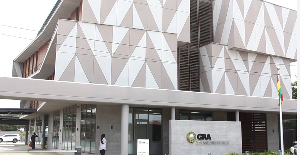
    The Ghana Revenue Authority (GRA) has inaugurated a state-of-the-art two-story Information Technology Training Centre in Tema, funded by KFW German Bank for Development.

    Launched in 2021, this IT Centre aligns with GRA’s objective to modernize tax compliance and digital processes.

    The commissioning event also marked the beginning of a three-day service enhancement training program for 60 front-line GRA staff, primarily from the Customs Division and the Domestic Tax Unit.

    This training was conducted in collaboration with partners including the UK Government and the United Nations Development Programme (UNDP).

    Deputy Finance Minister Dr. Alex Apaabeng, who officiated the opening, emphasized the GRA’s commitment to adopting a customer-centric approach in its client interactions. He acknowledged the need to adapt to global changes.

    Dr. Apaabeng highlighted that their efforts to improve service delivery have garnered support from significant partners such as the World Bank and PFW. He remarked that the training provides a valuable opportunity for staff to enhance their specialized skills, which is crucial for improving the taxpayer experience. Drawing from his own expertise as a taxpayer and tax professional, he noted that effective training is essential for boosting compliance and encouraging voluntary adherence to tax obligations.

    “When we are equipped to understand these things, that’s when we are able to translate it into a good tax-payer experience to enhance our service. Taxpaying is a very difficult task, but once the taxpayer is educated, feels respected, and is able to assess what their taxes are used for, then voluntary compliance is enhanced, and I believe this very training will help us achieve that.” 

    He explained that improved voluntary compliance lowers costs for both the tax enforcement agency and taxpayers regarding compliance expenses. He emphasized that the training would provide staff with essential skills to enhance service delivery.

    He encouraged GRA front-line staff to maintain professionalism in their interactions with customers, noting that this greatly influences customers’ decisions to comply with tax regulations.

    “So, I entreat you all to take this training seriously and give it all the necessary attention it deserves while we update ourselves in the service delivery to shape our country.”

    The Deputy Finance Minister remarked that while Ghana’s tax-to-GDP ratio of 14 percent is commendable given the operational challenges faced by the authority, there is still significant room for improvement as a middle-income economy, especially compared to other African countries that achieve rates around 20-21 percent.

    The Commissioner-General of GRA, Ms. Julie Essiam, stated that the purpose of the training is to enhance staff professionalism in line with the authority’s fourth strategic plan, which aims for excellence in service delivery to taxpayers.

    Ms. Essiam highlighted that the concept of customer centricity has become a guiding principle for tax authorities globally, including the USA.

    She emphasized that this training will be foundational in the GRA’s journey to transform its engagement with taxpayers through a more collaborative approach.

    “It’s not only about imparting knowledge but also embedding the cultural excellence that will sound through every layer of the GRA because the effectiveness of the tax system hinges loudly on those that we service,” she added.

    Lead Advisor and Senior Programme Manager for the Ghana Revenue Programme by the UK Government, Mr. Elorm Segbefia, shared that his organization is collaborating with the GRA on two key areas: tax policy and revenue administration.

    He explained that the goal is to help the GRA adopt a customer-centric approach, utilizing customer behavioral analytics to anticipate needs and enhance the overall experience.

    Mr. Segbefia expressed optimism about the upcoming GRA customer survey, expecting to see improved service delivery reflected in the results, which should lead to increased voluntary tax compliance and revenue generation.

  • Ghana has not been abandoned by Denmark – Danish Ambassador

    Ghana has not been abandoned by Denmark – Danish Ambassador

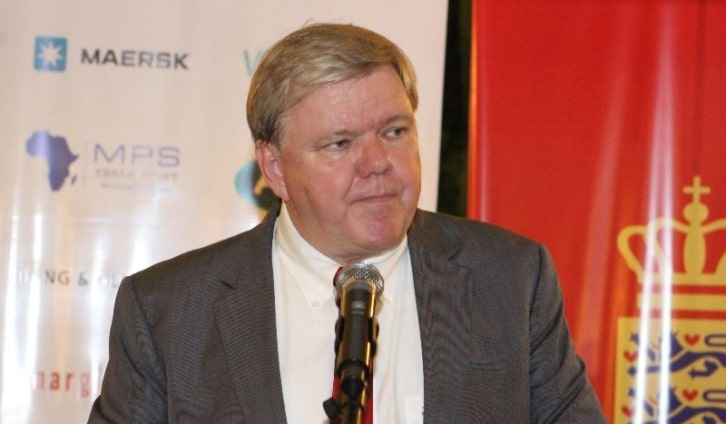
    The Danish Ambassador to Ghana has emphasized Denmark’s commitment to Ghana, stating its focus on providing innovative solutions and expertise to the country as a long-time partner.

    Mr Tom Nørring said the future relationship between Denmark and Ghana, built on solid partnerships and ownership, must be the sustainable way forward.

    “It’s important for me to say clearly that Denmark has not left Ghana, we have not closed down for business. On the contrary, we are an important donor to the EU as well as the UN agencies such as UNDP, UNFPA, UNICEF and others,” the Ambassador said.

    Mr Nørring, speaking at a reception at his residence to mark the 174th anniversary of Denmark’s Constitution, said Danish Non-Governmental Organisations (NGOs) were currently implementing projects of approximately 15 million USD in Ghana to help the most vulnerable.

    The reception had the Diplomatic Corps, Danish Community in Ghana, Ministers of State, Chief Executives of State Enterprises, Ambassadors and their staff, and the media in attendance.

    Denmark, officially the Kingdom of Denmark, celebrates Constitution Day every year on June 5 and the signing of the Danish constitution of 1849.

    On Constitution Day, Danes celebrate the fundamental pillars of democracy: Rule of law and human rights, including freedom of speech and indeed personal freedom.

    Ghana and Denmark have profound ties, with shared history that traces back to 1660 when Danish companies engaged in trade with the Gold Coast.

    Formal diplomatic relations between the two nations were established in the wake of Ghana’s independence, with Denmark opening its embassy in Accra in 1961, followed by Ghana reciprocating the gesture in 1966.

    The Ambassador said, at the Danish embassy, it had reoriented its engagements with Ghana to technical cooperation within water, meteorology, the maritime sector and statistics with a strong focus on business and investments.

    He said, Danish companies were keen on exploring future partnerships with public and private actors in Ghana in areas such as water supply and waste management, agriculture and food, the maritime and infrastructure sectors and, as a new area, tech, and digitalisation, which were in line with the priorities of the Government of Ghana.

    Mr Nørring said, “We look forward to continue working with Ghana and our EU partners to make sure that the framework conditions are continuously developed to provide the predictability needed to untap the full potential of the private sector and an increasingly more equitable society creating opportunities for all.”

    Apart from strengthening our economic and commercial relationship with Ghana over the past few years, Mr Nørring said, Denmark had been working on establishing a more targeted political and strategic partnership between the two countries.

    Such partnership, he noted, would focus on promoting green, sustainable and inclusive economic growth, promoting peace and stability in Ghana and West Africa and promoting democratic governance and human rights.

    The Ambassador said, recognising the threat of spill-over from the conflicts in the Sahel, the Embassy was exploring how Denmark could support Ghana both with military capacity building and with civilian conflict prevention in the north of the country to avoid violent extremism.

    Mr Francis Asenso-Boakye, Minister, Works and Housing, who represented the Government, commended the efforts of Denmark in undertaking Strategic Sector Cooperation programmes, which had yielded significant benefits for Ghana.

    Those programmes, he reiterated, had focused on crucial areas such as water supply and wastewater management in Tema, the enhancement of Ghana’s maritime sector, and the utilisation of administrative data to improve decision-making in the production of official statistics in Ghana.

    Additionally, Mr Asenso-Boakyi said, the Ghana Statistical Service’s collaboration with Statistics Denmark had resulted in the establishment of stronger statistical frameworks, enabling Ghana to gain valuable insights to drive evidence-based policy decisions.

    In pursuit of a well-functioning and sustainable water provision system, he noted that the Tema Metropolitan Assembly had forged a partnership with the esteemed municipality of Aarhus with a dedication to achieving a shared vision.

    Key to that partnership is the establishment of a robust and reliable system that ensures sufficient high-quality water for residents and businesses in Tema, while concurrently addressing environmental concerns related to wastewater management.

    The Works and Housing Minister said, “These remarkable initiatives reflect the depth of our cooperation and the shared desire to create positive change for our respective nations. They exemplify the essence of our partnership, rooted in mutual understanding, respect, and a common goal of progress.”
  • Unemployment, main cause of violent extremism in sub-Saharan Africa – UNDP

    Unemployment, main cause of violent extremism in sub-Saharan Africa – UNDP

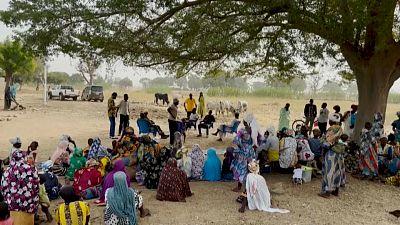
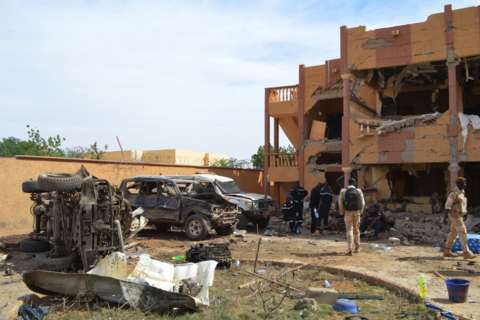
    The United Nations have revealed that the lack of employment opportunities in sub-Saharan Africa is what is allowing jihadist organizations and other violent extremists to draw an increasing number of new members.

    The findings from the survey of nearly 2,200 men and women challenge traditional assumptions about what drives people to violent extremism, according to the United Nations Development Programme (UNDP).

    – Jobs, family and friends –

    The UNDP relies on interviews conducted in 2021 and early 2022 in eight countries: Burkina Faso, Cameroon, Chad, Mali, Niger, Nigeria, Somalia and Sudan.

    Nearly 1,200 respondents were former members of violent extremist groups, including volunteer recruits. The majority belonged to some of the most prominent groups in the region, including Boko Haram, the Shebab, and the al-Qaeda affiliated Group for the Support of Islam and Muslims (GSIM, JNIM in Arabic).

    A quarter of volunteer recruits cited a lack of job opportunities as their primary reason for joining, an increase of 92% from the findings of a similar 2017 study.

    “In many countries, where income and job opportunities are lacking, desperation drives people to take opportunities from anyone,” UNDP boss Achim Steiner noted at a press conference.

    Just under a quarter (22%) said they wanted to join family or friends.

    Religion was the third reason for joining, cited by 17% of people, down from 57% in 2017. Some 40% of those surveyed cited religion as a key factor then.

    In addition, nearly half of those surveyed cited a specific triggering event pushing them to join these groups with nearly three-quarters (71%) citing human rights violations, often committed by state security forces, as their “tipping point.”

    – New epicenter –

    Terrorism deaths have declined over the past five years globally, but attacks in sub-Saharan Africa have more than doubled since 2016, the UNDP says, counting 4,155 attacks from 2017 to 2021, killing more than 18,400 people.

    By 2021, nearly half of all terrorism-related deaths were in that region, with more than a third of them in just four countries – Somalia, Burkina Faso, Niger and Mali – making sub-Saharan Africa “the new global epicenter of violent extremism,” Steiner says.

    The UNDP notes, however, that the shift in violent extremist group activity from the Middle East and North Africa to sub-Saharan Africa has received relatively little attention from the international community, which has been preoccupied with the climate crisis, the Covid-19 pandemic, growing authoritarianism and the war in Ukraine.

    “We believe there is an urgent need to try to get the attention of the international community … to better understand how violent extremist groups manage to penetrate nations, states and communities,” Steiner said.

    – Counter and prevent –

    “Security-focused counterterrorism responses are often costly and not very effective. Unfortunately, investments in preventive approaches to violent extremism are woefully inadequate,” commented Steiner.

    The report recommends greater investment in basic social services, child protection, education and quality livelihoods. It also calls for scaling up possible exit routes for recruits and investing in community-based rehabilitation and reintegration services.

    “It is very important to invest in incentives, which promote disengagement,” according to Nirina Kiplagat, UNDP’s regional advisor for the prevention of violent extremism in Africa.

    She calls on local communities to play a central role in supporting sustainable pathways out of violent extremism, alongside government amnesty programs.

    Source: African News

  • UN cites poverty as major factor fueling poverty in Africa

    UN cites poverty as major factor fueling poverty in Africa

    A new UN report has suggested the most common factor driving people to join extremist groups in sub-Saharan Africa is not religion, but the need for work.

    The report by the UN Development Programme surveyed thousands of people in eight African countries, including Mali, Nigeria and Somalia.

    Only 17% of respondents said that religion was the reason for joining radical groups, whereas 40% said poverty was their main motivation.

    Education is also important, with one extra year of education significantly reducing a person’s likelihood of joining an extremist group.

    In 2021, nearly half of deaths attributed to terrorist groups took place in sub-Saharan Africa.

    Source: Ghanaweb

  • A climate social benefit: Schooling the next generation

    A community in Ghana has supported a school with savings from an agroforestry initiative to educate their children.

    The things that we depend on and value, including forests, water, energy, wildlife, and agriculture are experiencing the effects of a changing climate. This is impacting lives, particularly communities that directly depend on these resources.

    There is therefore the need to engage communities as key agents in addressing climate change to leverage indigenous knowledge for climate solutions. This is because implementing climate actions with equity not only increases community resilience but also enables communities to derive extra social benefits.

    “We didn’t have a Junior High School (JHS). So, since we started this agroforestry project, our income has improved, and we made contributions to a Village Saving & Loans Scheme and then invested some in putting up the JHS. We also received other community donations and the government will be adopting the school soon”, stated Osei Poku, Chairman of the Parent Teacher Association (PTA) at Akwaduro in the Asunafo North Municipal Assembly of the Ahafo Region of Ghana.

    The Akwaduro community is one of the communities involved in a local climate initiative being implemented by the United Nations Development Programme (UNDP), in partnership with the Ghana Cocoa Board and Mondelez International. The project supports the communities to intercrop economic trees with food and cash crops on and off forest reserves.

    According to Osei, their children were walking three kilometers to attend JHS in neighboring towns and the distance was posing challenges. Besides the unique perspectives, skills, and wealth of knowledge that the communities bring to the project to help achieve its goal of restoring the degraded forest in the landscape, they are also gaining multiple benefits from caring for nature.

    “As a mother, I can say I am happy. Proceeds from the farm have helped me build a house, buy land in the city, and above all, I am able to look after my children in the school. I am happy to say that my first born has completed a Technical University and now working in Canada,” Naomi Nkansah, a project beneficiary in Akwaduro stated.

    The Headmaster of the Akwaduro M/A School, Mr Kwesi Bio confirmed the community’s support of the school and eulogized their contribution.

    “The members of the community have really done well with the JHS. We wrote a letter to the Ghana Education Service (GES), and they are very happy with the community action as this demonstrates partnership to complement government’s efforts. The GES is in the process of adopting the JHS”, Kwesi noted.

    Ghana is said to be losing its rainforest faster than any other country in the world, and this is attributed mainly to illegal logging, agriculture practices, and illegal mining activities. The agroforestry initiative is to contribute to the country’s efforts to avert the looming climate crisis by reducing emissions while helping to improve livelihoods.

    “Indeed, community-driven initiatives impact people’s lives and thus contribute to efforts to protect the environment. It is good to see how this community is maximizing the full social benefits of our forest restoration project to impact the next generation”, noted Stephen Kansuk, Head of Environment and Climate at UNDP Ghana.

    It is important to engage all actors to take action for nature to build community resilience to climate change impacts. This way, we can bring about more social benefits for a sustainable world for everyone.

  • Lifting 100 million out of poverty by 2025 still possible, despite recession threat

    A flagship UN poverty study released on Monday, the International Day for the Eradication of Poverty, finds that significant poverty reduction is possible, and new ways of calculating the problem can help humanitarians and governments better target aid.

    The Multidimensional Poverty Index (MPI), a joint analysis from the UN Development Programme (UNDP) and the Oxford Poverty and Human Development Initiative (OPHI) at the University of Oxford, goes beyond measuring poverty as a measurement of poverty, and looks at other indicators, from access to education and health, to living standards such as housing, drinking water, sanitation and electricity.

    Using this way of calculating the issue, the study shows that, even before the COVID-19 pandemic and the current cost-of-living crisis are accounted for, some 1.2 billion people in 111 developing countries are living in acute multidimensional poverty – nearly double the number who are seen as poor when poverty is defined as living on less than $1.90 per day.

    Joined up thinking

    Because there are different aspects of poverty in different regions, the study calls for the development of strategies that tackle the issue to be tailored to specific countries and regions.

    It also identifies recurring patterns of poverty (“deprivation bundles”), that commonly affect those at risk. For example, more than half of those living in poverty lack both electricity and clean cooking fuel, whilst a third are deprived of nutrition, cooking fuel, sanitation and housing at the same time.

    The experience of families in Lao PDR, for example, shows the interconnected nature of living in poverty, and the complexity of reducing it.

    Children are sent to collect firewood because of a lack of cooking fuel, so they can’t go to school. Simply providing funds to build a school would, therefore, make no sense, without first fixing the fuel problem.

    Historic improvement

    Despite the scale of the challenge, significant improvements have been made in reducing poverty.

    In India, some 415 million people left multidimensional poverty in a 15-year period – a historic change – and data gathered before the COVID-19 pandemic show that 72 countries had significantly reduced poverty over recent years.

    The report showcases success stories from countries that have used integrated poverty reduction strategies: Nepal’s investment in sanitation, for example, has improved access to drinking water, child nutrition, and, through a reduction in diarrhoea and child mortality.

    Reacting to the findings, Achim Steiner, the head of UNDP, said that, at a time when government budgets are being squeezed, cutting-edge data and analytics can pinpoint the areas where spending will have the most impact.

    For example, the report shows, he said, “that decarbonization and expanding access to clean energies will advance climate action, and is also critical for nearly 600 million multidimensionally poor people who still lack access to electricity and clean cooking fuel.”

    The study, he continued, will be “vital to inform UNDP’s efforts across the globe as we work with our partners from the United Nations and beyond to reach our bold objective of helping lift 100 million people out of multidimensional poverty by the year 2025”.

    In India, five out of six people in multidimensional poverty were from lower tribes or castes.
    In India, five out of six people in multidimensional poverty were from lower tribes or castes.

    ‘The world is moving backwards: UN chief

    In his message marking the Day, the UN Secretary-General, António Guterres, warned that the goal of eradicating poverty is being undermined, and “the world is moving backwards”.

    The UN chief declared that the COVID-19 pandemic set back more than four years of progress, and also cited widening inequality, the “gathering shadow” of a global recession, and the climate crisis as reasons for the faltering efforts.

    Mr. Guterres said that the theme for this year’s Day – “Dignity for all in practice” – must be a rallying cry for urgent global action, to finally “consign poverty to the pages of history”.

    Source: UN

  • UNDP commits 700,000 dollars to SMEs in Ghana

    The United Nations Development Programme (UNDP) has committed 700,000 dollars in support of Micro, Small and Medium Enterprises (MSMEs) operations in six assemblies in Ghana.

    These are the Kumasi Metropolitan Assembly, Ketu South, Sefwi- Wiawso, and Jomoro municipal assemblies, and the Sagnarigu and Kassena–Nankana West district assemblies.

    Mr Stephen Kansuk, the Head of Environment and Climate at UNDP, said the funds would help promote business development, service support, energy and resource efficiency to help businesses to save costs.

    “We engaged and audited 15 businesses including, manufacturing MSMEs and hotels across the six assemblies and it showed that businesses employed about 1000 workers, with over 80 per cent youth and about 70 per cent women, he said.

    Areas audited included utility consumption (water and electricity), internet and Liquified Petroleum Gas (LPG), equipment being used, building architecture and maintenance culture.

    Mr Kansuk said this at a training workshop on Energy Efficiency for journalists in Takoradi, organised by the Energy Commission with support from the UNDP to strengthen their capacity to ensure good corporate governance.

    He said the findings on energy consumption showed that almost all facilities had manually operated compound/outside lights kept on for several hours.

    Room appliances such as television sets were mostly on standby mode even when not being used, while air condition facilities had low-efficiency ratings, he said.

    The study recommended that all fluorescent lambs should be replaced with Light Emitting Diode, photo sensors should be installed to control compound lights, and energy-efficient air conditioners with a minimum of the three-star rated inverter must be used to save energy.

    On the use of water, he said most of the facilities used high water-volume water closet systems with high litres cistern capacities.

    He recommended an efficient WC system for example, (a six-litre cistern) and as well as a waste segregation system.

    Mr John Adjei, Senior Manager, Energy Efficiency Regulation, Energy Commission, said gadgets like transformers, chargers including phone and laptop chargers, desk printers, electric water heaters, water dispensers, television sets, sound systems and decoders were “agents of power thefts.”

    He advised participants to turn off unused office equipment including personal computers, and air conditioners, and also close windows and doors tightly when air conditioners were on.

    Mr Kennedy Amankwah, who spoke on Energy Management, suggested the appointment of energy managers, who would coordinate the efficient use of energy resources and ensure cost savings.

    The Ghana Statistical Service and World Bank COVID-19 Business Tracker revealed many businesses, including MSMEs, were affected by the pandemic.

  • UNDP commits 700,000 dollars to SMEs in Ghana

    The United Nations Development Programme  (UNDP) has committed 700,000 dollars in support of Micro, Small and Medium Enterprises (MSMEs) operations in six assemblies in Ghana.

    These are the Kumasi Metropolitan Assembly, Ketu South, Sefwi- Wiawso, and Jomoro municipal assemblies, and the Sagnarigu and Kassena–Nankana West district assemblies.

    Mr Stephen Kansuk, the Head of Environment and Climate at UNDP, said the funds would help promote business development, service support, energy and resource efficiency to help businesses to save costs.

    “We engaged and audited 15 businesses including, manufacturing MSMEs and hotels across the six assemblies and it showed that businesses employed about 1000 workers, with over 80 per cent youth and about 70 per cent women, he said.

    Areas audited included utility consumption (water and electricity), internet and Liquified Petroleum Gas (LPG), equipment being used, building architecture and maintenance culture.

    Mr Kansuk said this at a training workshop on Energy Efficiency for journalists in Takoradi,  organised by the Energy Commission with support from the UNDP to strengthen their capacity to ensure good corporate governance.

    He said the findings on energy consumption showed that almost all facilities had manually operated compound/outside lights kept on for several hours.

    Room appliances such as television sets were mostly on standby mode even when not being used, while air condition facilities had low-efficiency ratings, he said.

    The study recommended that all fluorescent lambs should be replaced with Light Emitting Diode, photo sensors should be installed to control compound lights, and energy-efficient air conditioners with a minimum of the three-star rated inverter must be used to save energy.

    On the use of water, he said most of the facilities used high water-volume water closet systems with high litres cistern capacities.

    He recommended an efficient WC system for example, (a six-litre cistern) and as well as a waste segregation system.

    Mr John Adjei, Senior Manager, Energy Efficiency Regulation, Energy Commission, said gadgets like transformers, chargers including phone and laptop chargers, desk printers, electric water heaters, water dispensers, television sets, sound systems and decoders were “agents of power thefts.”

    He advised participants to turn off unused office equipment including personal computers, and air conditioners, and also close windows and doors tightly when air conditioners were on.

    Mr Kennedy Amankwah, who spoke on Energy Management, suggested the appointment of energy managers, who would coordinate the efficient use of energy resources and ensure cost savings.

    The Ghana Statistical Service and World Bank COVID-19 Business Tracker revealed many businesses, including MSMEs, were affected by the pandemic.

    Source: GNA 

  • Restoring resilience of women in shea: Improved technology is facilitating shea production in Ghana

    “To process our shea, we no longer need to spend a lot of time at the factory.
    Majeed Neena, a member of one of the women’s shea groups that UNDP has helped with new equipment to assist their shea processing, says it is more than pleasing to see how much we produce in less time.

    Many households in Ghana rely on shea and its byproducts for their livelihood, particularly in the Northern and Savannah regions.
    Shea is harvested or processed into shea butter, which provides financial benefits to around 470,000 women farmers.
    Women’s “gold” is a common description of shea butter.

    Despite the great importance of shea to women, shea butter production has been largely done through manual labour-intensive processes.

    This not only affects the quality of the shea products but also poses a great threat to women’s health. It has therefore become necessary to support women shea producers to improve their production efficiency with appropriate technology.

    Empowering women for sustainable livelihoods

    “I used to go through the traditional method of making shea butter solely with my hands, making the process very tiring”, Majeed Neena added.

    To help address the challenges the women face in the shea value chain, the United Nations Development Programme (UNDP) has been providing comprehensive support to women cooperatives in the shea landscape through various integrated programmes including the Ghana Shea Landscape Emission Reductions Project.

    A group of selected women were also supported through the UNDP Global Environment Facility Small Grants Programme to receive Ecocert for Fair-Trade Certification to sell shea products in the international market.

    In addition, these selected women received $200,000 from the UNDP Africa Regional programme through the Assistant UN Secretary-General and Regional Director for Africa, Ms. Ahunna Eziakonwa, during her visit last year to Ghana.

    The support is to help the women acquire more machinery to facilitate their operations. These supports have gone a long way to help the over 3000 women in shea production in 14 communities in the Kumbungu District of the Northern Region of Ghana, who are members of Ripples Ghana, an NGO.

    Today, many women in the shea groups are excited about the enormous benefits they derive from the support they have received.

    “Our production capacity has increased from 75 kilograms of shea at a centre per week to 125 kilograms when we started using the new machines we received. I am now able to engage more women,” noted Hajia Rabiatu Abukari, Producer of Malti Products and Director of Ripples Ghana, a shea-producing NGO in the Northern Region of Ghana.

    The shea processing machinery was locally manufactured. These include crashers, kneaders, millers, roasters, washers, and grilling mills. As part of the support, the women also rehabilitated their structures to meet good local factory standards.

    “We are aging and don’t have enough energy to manually crush the shea nut. We are grateful for this immense support”, stated Hajia Fatimata, a leader of one of the women shea-producing groups at Malti Products.


  • Let’s do more to empower women – UNDP

    Dr. Angela Lusigi, the United Nations Development Programme (UNDP) Resident Representative in Ghana, has called for the socio-economic empowerment of women to become self-reliant.

    She said if women become economically independent, it would position the country to push economic growth and facilitate accelerated national development.
    “Women are bread-winners of the home, and it is prudent to empower them through the use of modern technologies to enable them to build on what they do”,
    Dr. Lusigi stated, when she addressed a durbar of women farmers and processors at Ayorya in the Kintampo South District of the Bono East Region.


    The women are mostly engaged in local food processing, including groundnut oil and groundnut paste Dr. Lusigi indicated “women are developers, and we need to link them to modern
    technologies to enable them to improve on their productivity in business”, saying, “trends are changing around the globe, and we must put women on the modern scale of production”.

    After inspecting a groundnuts oil and paste processing factory constructed by the UNDP for the women at Ayorya, Dr. Lusigi said she was optimistic that the beneficiaries would work hard to improve productivity and enhance their socio-economic lives.

    The facility, inaugurated in June this year, has a total production capacity of 200 metric tons of groundnut paste and oil on a monthly basis.
    According to Dr. Lusigi, the facility would benefit more than 300 women in the local communities and urged the farmers to produce more to feed the factory.
    Madam Hannah Chiama, the President for the Ayorya Women Association, expressed gratitude to the UNDP for economically empowering the women in the area, saying the association had initiated a Village Savings and Loans programme to support themselves.

    Source: GNA

  • UNDP launches $1m Black Volta afforestation project

    The United Nations Development Programme (UNDP) has launched a $ 1 million dollar ‘One Tree Planted’ programme to plant five million trees by 2024 to restore degraded areas in the Black Volta landscape.

    The programme was launched under the UNDP Global Environment Facility Small Grant Programme (GEF/SGP) at Maluwe in the Bole-Bamboi District of the Savannah region of Ghana.

    The ‘One Tree Planted’, according to the UNDP Resident Representative, Dr Angela Lusigi, would enhance capacity and supply various seedlings including Cassia, Mahogany, Cashew, and Mango to selected communities in the Black Volta landscape for planting. The aim is to fight environmental degradation and promote sustainable livelihood enterprises in the landscape.

    “This programme is about not leaving anyone behind. We are all expected to be involved in tree planting on farms, in open spaces, around towns, school compounds and in forest areas. Plant at least one tree and maintain it for people and for the planet,” Dr Lusigi said.

    Dr Lusigi stated that the programme was aimed at contributing to the Government of Ghana’s Green Ghana agenda by supporting the communities to invest in sustainable land management and the conservation of the Black Volta Basin ecosystem.

    She stated that it would also focus on providing alternative livelihood support systems to enhance the wellbeing of the people, while sustaining the environment.

    The National Coordinator of the UNDPGEF Small Grant Programme in Ghana, Dr George Ortsin said that the UNDPGEF Small Grants Programme would devote $1milion direct funding support to the ‘One Tree Planted’ programme while mobilising additional support from other development partners.

    “I am glad to say that the Terra Fund for financing Africa’s Top 100 Tree Restoration Projects and Enterprises has committed US$150,000 over the next three-years to support the programme. We would want to appeal to other donors to join the implementation of the programme,” Dr Orstin stated.

    He indicated that, the UNDPGEF Small Grant Programme was already supporting five communities in the Bole-Bamboi District with agroforestry and the ‘One Tree Planted’ Programme was to complement the existing agroforestry initiative.

    The Programme Lead in Maluwe, Hannah Boaduwaa said “Currently, we have almost 2000 farmers in five communities in the landscape, who are restoring the degraded landscape under the UNDPGEF Small Grant Programme. The farmers have integrated food crops into their woodblocks, and this is our contribution to climate change mitigation and adaptation because we are reducing poverty whiles protecting the environment.”

    She said the goal of the ‘One Tree Planted’ programme was to restore about 170 hectares of degraded areas in the Black Volta landscape to contribute to Ghana’s climate action agenda.

    The Chief of Maluwe (Maluwewura), Sulemana Bramani, expressed appreciation to UNDP and pledged the commitment of the communities in the area to the success of the programme.

  • One of 2 COVID-19 patients is a UNDP staff in Ghana

    ClassFMonline.com can confirm that one of the two cases of COVID-19 confirmed in Ghana on Thursday, 12 March 2020 by the Noguchi Memorial Institute of Medical Research (NMIMR) is of a male staff with the UNDP office in Ghana.

    The UN Information Officer in Ghana, Cynthia Prah, confirmed the information to ClassFMonline.com and said the UNDP would soon issue a statement on the matter.

    Meanwhile, the UN has asked all its Ghana staff to work from home.

    In an internal memo to its staff, the UNDP said: “This is to let you know that we were informed last night that one of our UNDP colleagues tested positive for COVID-19.

    “We want to first let you know that our colleague is in good hands, has followed the necessary protocols, and is now under medical observation and receiving excellent care at an assigned government hospital.

    “We, hence, want to assure you that there is no need for concern within our team …”, portions of the memo read.

    The UNDP staff is a foreign national speculated to be a Norwegian.

    The other case is of a Ghanaian who came into town from Turkey.

    Health Minister Dr Kweku Agyemang-Manu, who broke the news at an emergency press conference Thursday night, said the two patients have been quarantined and are stable.


    Source: classfmonline.com