Tag: Unesco World Heritage Site

  • Video: A look at the current state of James Fort, the site where Nkrumah wrote his autobiography

    Video: A look at the current state of James Fort, the site where Nkrumah wrote his autobiography

    UNESCO World Heritage Site and significant historical landmark in Ghana, James Fort in Accra, has reportedly fallen into disrepair.

    According to Bright Simons, a vice president at IMANI Africa, the fort where Ghana’s first President, Dr. Kwame Nkrumah, wrote his autobiography and campaigned during imprisonment, is now in its worst condition since its construction in 1673, over 330 years ago.

    Simons noted that UNESCO has urged Ghana to restore James Fort along with other forts in the country. However, the Ghanaian government has cited financial constraints as the reason for being unable to comply with UNESCO’s directives.

    “Imagine the sadness of all who care about Ghana’s heritage when they see its current state (check the video and pictures below).

    This is the worst state it has ever been in for approximately 330 years. UNESCO has repeatedly told Ghana to fix its forts and castles (it has the most in Africa).

    “Ghana says it can’t fix its forts and castles unless UNESCO brings the money. UNESCO says it can chip in, but Ghana must lead. After much hassle, Ghana committed GHS 2M (less than $150k).

    Woefully short! Time to outsource heritage sites to commercial operators on a merit basis,” Simons wrote in a series of posts shared on X on Saturday, June 29, 2024.

    He added, “Saddest of all: perhaps the biggest attraction of James Fort – Nkrumah’s jail cell where he wrote his autobiography and campaigned to victory in Ghana’s first multiparty democratic elections – has simply rotted to mould! By the end of the rainy season, nothing would be left!

    The IMANI vice president presented images of the fort, revealing a severely deteriorated structure. Most of the fort’s roofs were decayed and had collapsed, leaving its internal structures exposed to the elements.
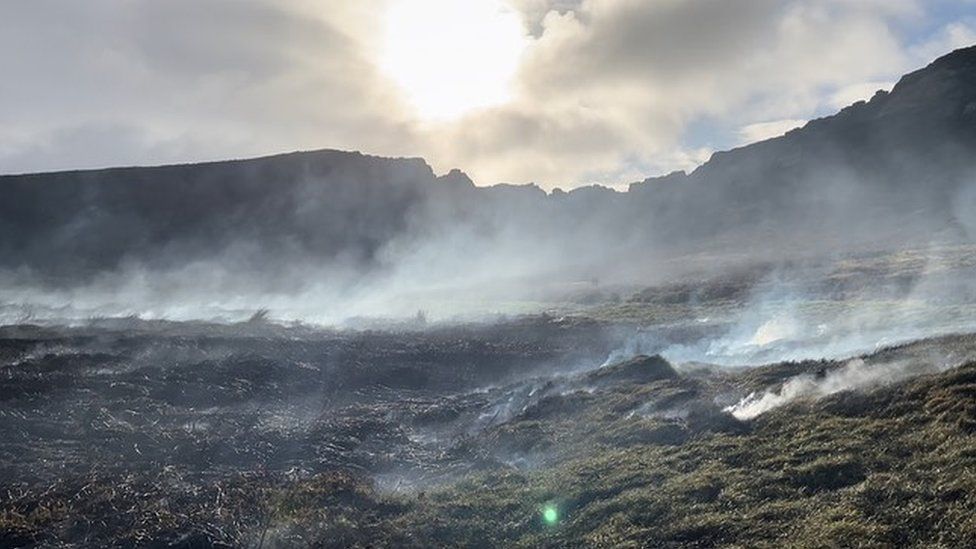
  • Easter Island: Sacred statues suffer fire damage

    The mysterious statues on Easter Island have suffered fire damage, some of which is considered to be irreversible.

    According to Chile’s undersecretary of culture, a number of the stone-carved statues were damaged by the fire.

    Easter Island has nearly 1,000 of megaliths, known as moai. They have oversized heads and generally stand about 4m (13ft) high.

    They were carved by a Polynesian tribe more than 500 years ago.

    The fire, which broke out on Monday, affected “nearly 60 hectares (148 acres)”, Carolina Perez Dattari, the cultural heritage official, tweeted.

    It is reported to have been started deliberately and is centered around Easter Island’s Rano Raraku volcano – which is an Unesco World Heritage Site.

    Easter Island lies 3,500km (2,174 miles) off the coast of Chile. It relies on tourism and reopened just three months ago following its closure during the Covid-19 pandemic. The site has now been closed again while a conservation team examines the extent of the damage.

    The island’s Mayor Pedro Edmunds told local media: “The damage caused by the fire can’t be undone.”

    The director of the Ma’u Henua community which looks after the national park described it as “irreparable and with consequences beyond what your eyes can see”.

    “The moai are totally charred,” Ariki Tepano said through the park’s official social media pages.

    Fire in Easter Island
    IMAGE SOURCE, RAPA NUI MUNICIPALITY Image caption, The fire, which broke out on Monday, affected nearly 60 hectares (148 acres)

    The are some 1,000 giant stone statues and carvings on Easter Island- the largest of which weigh 74 tonnes and stand 10m tall.

    The figures were carved by the indigenous Rapa Nui people sometime between the years 1400 and 1650, and positioned to form a ring around the island, facing inland.

    Best known for their deep-set eyes and long ears, they also sport impressive multi-tonne hats made from a different rock type.

    They were figures of spiritual devotion for the Rapa Nui, embodying the spirit of a prominent ancestor. Each one was considered to be the person’s living incarnation.

    One of the statues – known as the Hoa Hakananai’a – is housed in the British Museum, gifted by a British naval captain to Queen Victoria in the 1860s.

    The Chilean government and the island’s authorities requested it is returned in 2018.

    But the island’s mayor suggested he would prefer a financial commitment from the museum to ensure the upkeep of the remaining moai on the island.