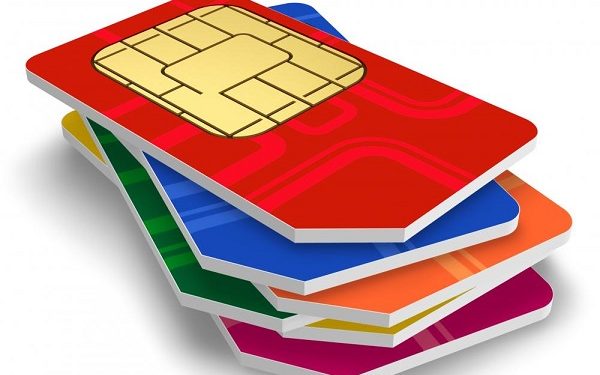
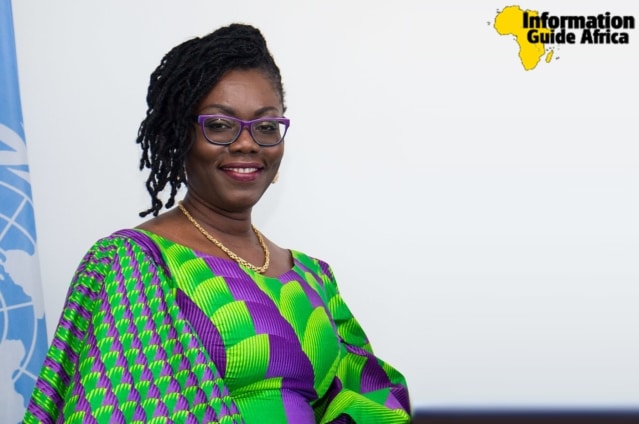
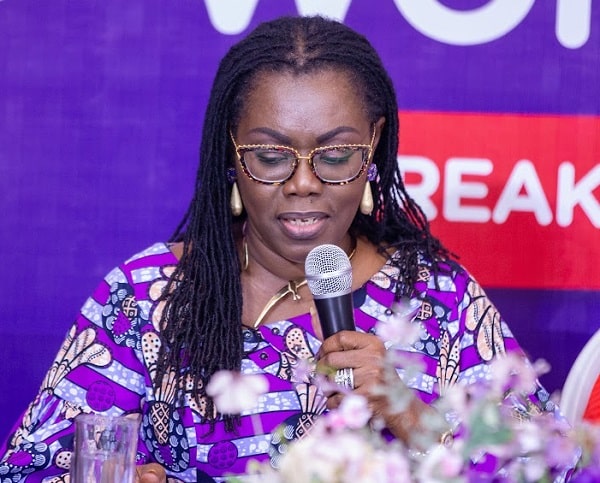
The Minister of Communications and Digitalization, Ursula Owusu-Ekuful, has that all unregistered merchant SIMs will be blocked permanently at the end of June 2023.
According to the minister, almost 280,000 merchant SIMs have not been registered, offering fraudsters an opportunity to use them in perpetuating their activities.
“I have also been informed that almost 280,000 merchant SIMs have not been registered. A viral video doing the rounds on social media a few weeks ago indicated that some criminal networks have actually acquired merchant SIMs to facilitate fraudulent activities. Let me reiterate once again, that all unregistered merchant SIMs will be blocked permanently at the end of June 2023,” she stated.
Mrs. Owusu-Ekuful urged victims of illegal acts to notify the National Communications Authority (NCA) for action to be taken against the perpetrators.
She further advised subscribers who were unable to complete the second stage of the registration process to contact the NCA to have their SIMs registered.
“I will urge victims of illegal acts to notify theNational Communications Authority(NCA) and action will be taken to deter this process. I have also heard complaints that though they had registered their SIMs, those SIMs were blocked. My information is that several of these complaints are people who didn’t complete the second stage of the process as required. Such people should contact the NCA to have their SIMs registered and owners of the SIMs will get their numbers back after duly registration.
She added, “They must act timeously as the NCA will announce when this moratorium will end after which all unregistered SIMs will permanently be blocked from the networks. If your line has been blocked, and you still need it, please go and register. There may be however some whose SIMs are blocked inadvertently in full registration. Kindly notify the NCA and a full investigation will be conducted to be determined if this was really the case and why it happened”.
The Minister of Communications and Digitalisation announced that Mobile Network Operators (MNOs) are working with the Bank of Ghana to facilitate the retrieval of funds for individuals whose monies are locked up in mobile money accounts.
Numerous subscribers have voiced their concerns regarding the inability to access their funds on mobile money accounts after their SIM cards were deactivated for failing to re-register them.
The Minister assured subscribers that the MNOs and the Bank of Ghana are working together to resolve the issue as soon as possible.
The Minister of Communications and Digitalization, Ursula Owusu-Ekuful, has appeared before Parliament to address concerns and provide information regarding the SIM card re-registration process.
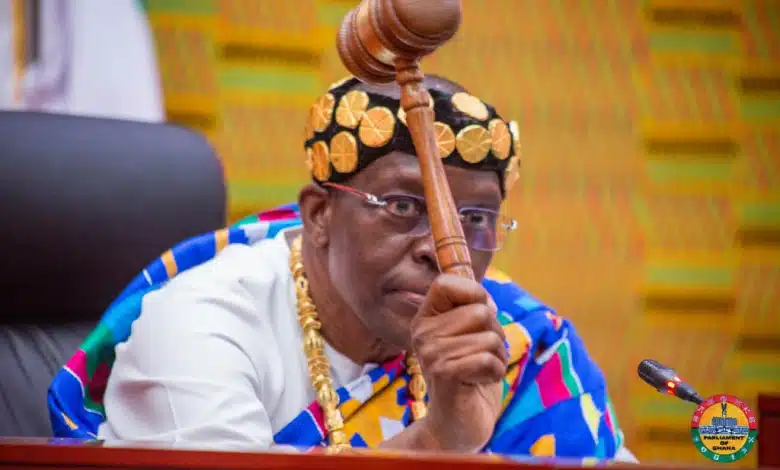
This move comes after the deactivation of over 8 million subscribers’ SIM cards, including those of prominent individuals such as the Speaker of Parliament, Alban Bagbin, following the expiration of the May 31 deadline for re-registration.
The speaker of parliament, Alban Bagbin’s SIM card has been deactivated despite registration, according to Sam George, MP for Ningo-Prampram.
Over 8 million unregistered SIM cards were deactivated by the various telecommunication firms after the May 31 deadline announced by the government for the registration exercise.
Although the Minister of Communications, Ursula Owusu-Ekuful has been scheduled to appear before Parliament on Thursday, June 8, 2023, to apprise the legislators on the exercise, Sam George stressed the need for the Minister to appear on time to address concerns raised regarding the process.
“Over 8 million SIM cards have been disconnected including the [that of the] Speaker of Parliament. His official SIM card has been disconnected even though it was registered in the name of the Parliament of Ghana. My SIM card was [also] disconnected.
“We are insisting that the National Identification Authority provides us with theGhana Card, so we can register our SIM cards. It is important that the Minister appears before us to answer questions, if possible, even today because people’s livelihoods have been affected and people’s mobile monies have been stacked due to the disconnection.”
As per the directive from the National Communications Authority (NCA), all active and unregistered SIM cards are required to be deactivated today, Wednesday May 31.
The Minister of Communications, Ursula Owusu-Ekuful announced the commencement of the re-registration of all mobile SIM cards on October 1, 2021, and the exercise was expected to have lasted for a period of six months but was extended several times for tangible challenges faced by SIM card users.
Vice President, Dr. Mahamudu Bawumia had earlier explained that the re-registration exercise was to rid the country’s cyberspace of fraud, monitor and track down persons who use their phones for criminal activities.
The Vice President’s comments were corroborated by the Inspector General of Police (IGP), Dr. George Akuffo-Dampare who said the re-registration exercise by the government had assisted the Service in its operations to clamp down on cybercrime in the country when he appeared before the Public Accounts Committee on January 20, 2023.
Government on February 14, 2023, disclosed that a total of 25,150,522 SIM cards had been successfully registered in Ghana as of February 9, 2023, and also encouraged the public to comply with the registration timelines.
All unregistered SIM cards were set for deletion on April 17, 2023, but the decision was rescinded after several consultations.
But a day before the final deadline, hundreds ofGhanaians rushed to the National Identification Authority’s Headquarters in Accra in a last-minute attempt to secure a Ghana Card which is mandatory for the re-registration exercise to enable them register their SIM cards to avoid deactivation.
The Minister for Communication and Digitisation, Ursula Owusu-Ekuful says there is an urgent need to bridge the gender digital gap in the country.
This, according to her, is the reason why government, through the Ministry of Communication, is implementing the “Girls-in-ICT” project.
She added that the country is gradually shifting away from a manual regime to the digital space, hence the need to encourage more girls.
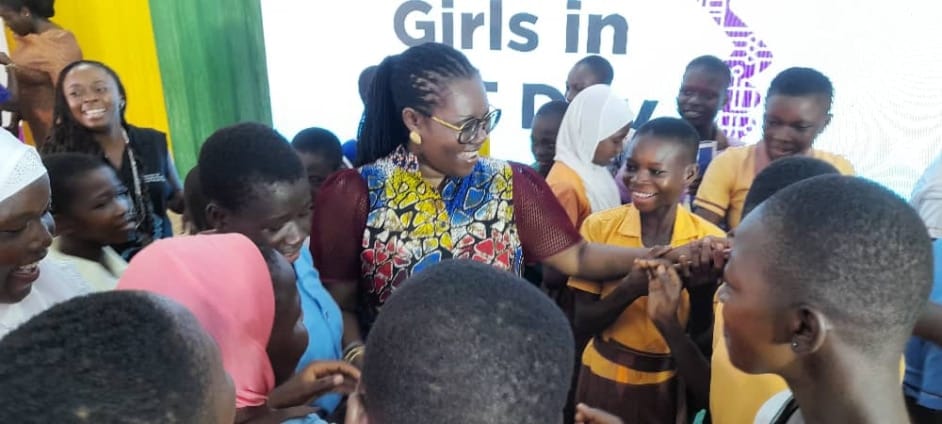
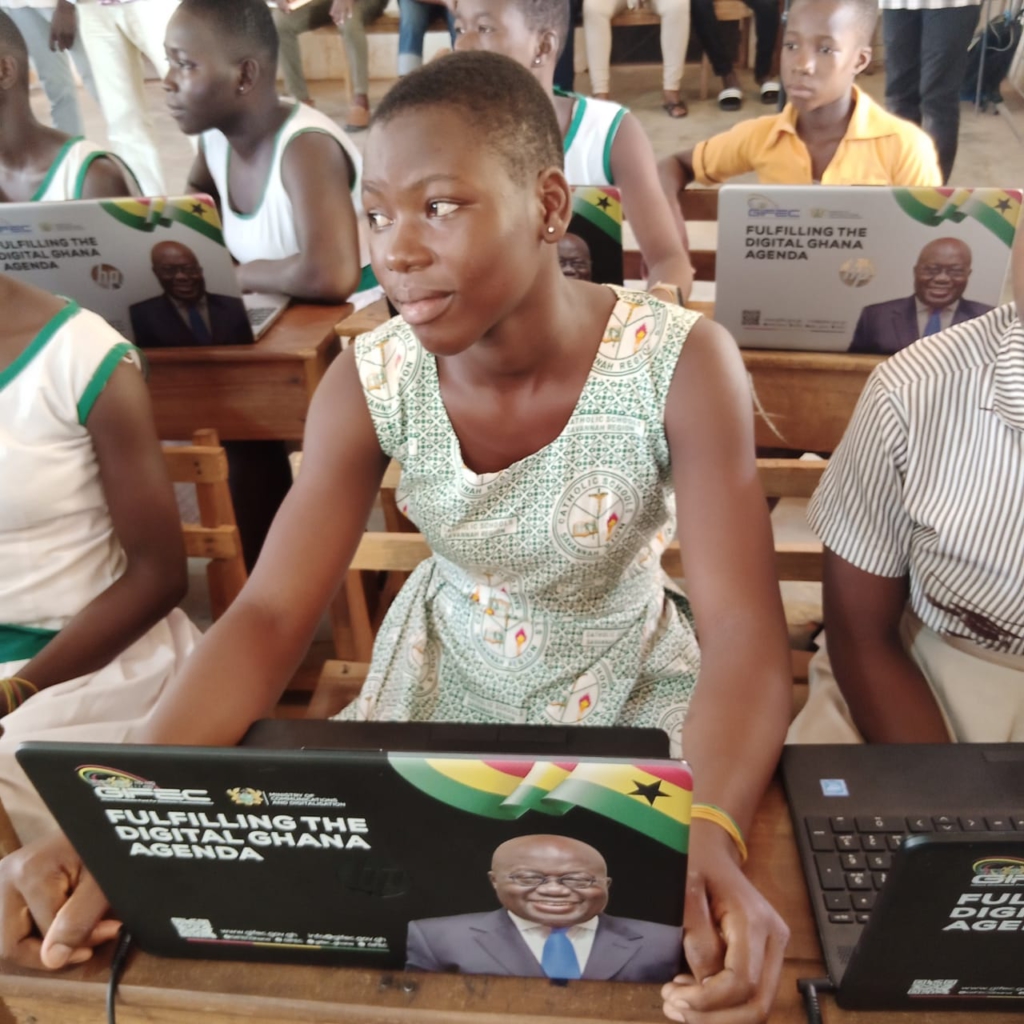
Girls exhibiting practical knowledge on ICT during the visit by the Minister
Mrs Owusu-Ekuful said this at the climax of a National ‘Girls-In-ICT’ training programme organised by GIFEC for about one thousand basic school girls and one hundred teachers drawn from districts across the regions.
According to the Minister, parents, chiefs, and opinion leaders have no choice but to support the Ministry by encouraging the girl child to develop an interest in ICT for their personal and career growth.
“We (government) are building a digital future and Ghana is gradually moving away from the manual to digital space. We need to demystify ICT for all and encourage girls to take interest in that field for the country to benefit fully from the digital transformation agenda and bridge the gender digital divide”, Mrs. Ursula Owusu-Ekudul stated.
She further appealed to the Ghana Education Service among others, to put in place a system that will enhance girls’ skills in ICT.
On her part, the Deputy Minister for Education, Gifty Twum Ampofo, appealed to parents and families to create avenues at home to enable their children to have easy access to mobile phones to learn online.
She said parents should add it to their responsibilities because their children cannot afford these devices but cautioned the girls not to abuse the opportunity when given mobile phones.
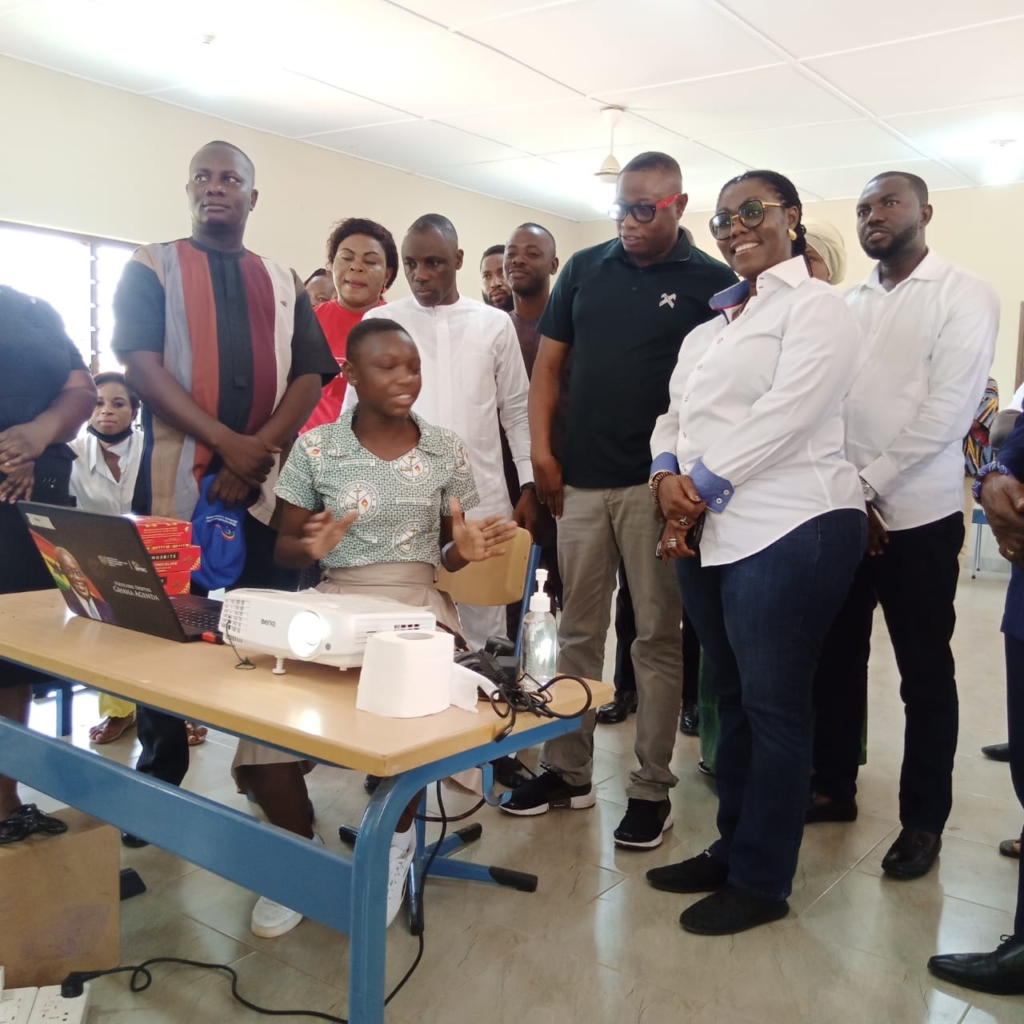
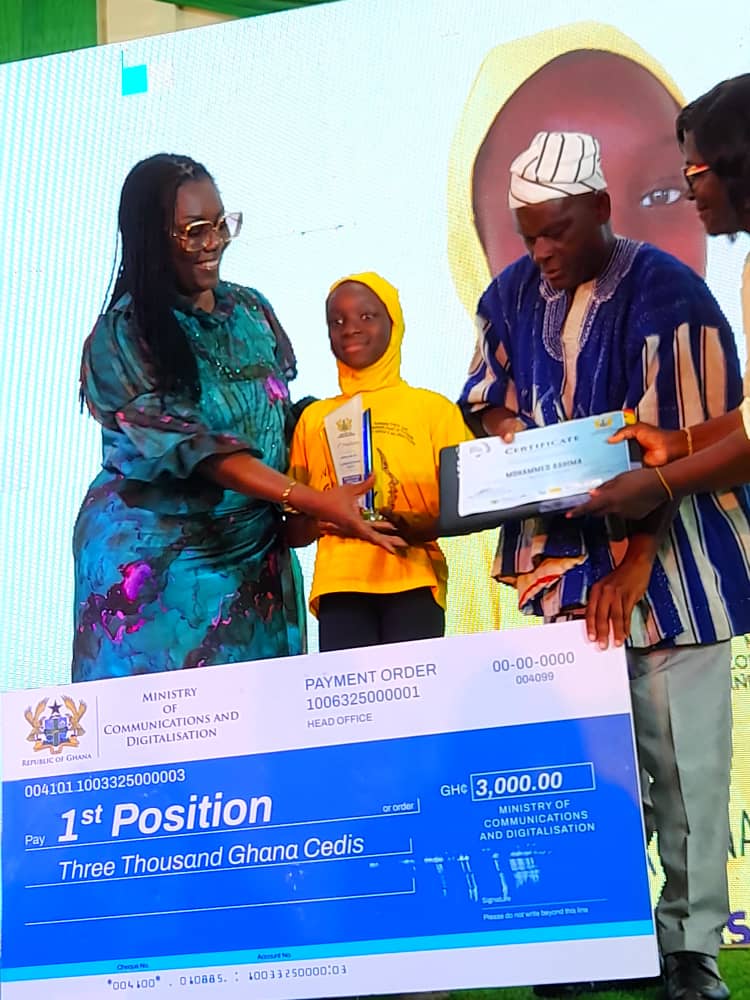
At the end of the training program, an 11-year-old basic six pupil, Mohammed Rahimmah from T.I Ahmadiya Islamic School at Kpalbusi in the North-East Gonja District of the Savannah beat about 99 other girls to emerge the overall best in the Girls-In-ICT project competition in the region.
She went home with a cash prize of GH₵3,000, a plaque, certificate, and laptop.
Also, an ICT laboratory will be sited in her district.
Ms Mohammed Rahimmah, receiving her award from Mrs Owusu-Ekuful
Other award winners were Alfreda Frimpong and Salu Saratu Alele who emerged 2nd and 3rd respectively. Each received GH₵2,500, laptops, plaques, and certificates of participation.
ICT Labs will also be established in their districts.
The rest of the awardees (97 girls) were all given a laptop each and a certificate and plaque.
Meanwhile, 40 out of the 100 basic school teachers who were also taken through similar ICT training in Damongo, were awarded as best ICT teachers in the region.
Government will by the end of this year, complete the construction of some 560 rural telephony sites under the Rural Telephony and Digital Inclusion Project to extend basic voice and data connectivity to under served and unserved communities across Ghana.
Mrs Ursula Owusu-Ekuful, the Minister of Communications and Digitalisation, who made this known said 1,008 rural sites under the project, had already been constructed nationwide between 2020 and 2022.
The government, she added, hoped to complete the remaining projects as soon as practicable.
“We are optimistic that out of the 1,008 remaining sites to be completed, 560 rural sites will be completed by the end of this year,” she said.
The Minister said this in a speech read on her behalf by Madam Ama Pomaa Boateng, the Deputy Minister of Communications and Digitalisation, at the celebration of the 2023 World Telecommunication and Information Society Day (WTISD) on Wednesday, organised by the Ministry and the National Communication Authority (NCA).
The WTISD is to help raise awareness of the benefits citizens and economies could derive from the use of the internet and other information and communication technologies (ICTs) to bridge the digital divide.
The global theme for this year is: “Empowering the Least Developed Countries through Information and Communication Technologies,” with the local theme being: “Public-Private Partnership for Connectivity.”
Mrs Owusu-Ekuful said investment in ICT was crucial in bridging the technology usage gap, hence the Government had undertaken numerous projects, including the National Roaming Policy, to address challenges of network coverage.
“It is a step towards ensuring that all citizens, regardless of their location, have access to reliable telecommunication services,” she said.
The Government had committed $2.6 million to supporting innovation centres to train 3,000 people by 2024.
“The Ministry also has an agreement with the Smart Africa Alliance, through the Smart Africa Digital Academy, to train up to 22,000 people by 2023,” she added.
Professor Ezer Osei Yeboah-Boateng, the Deputy Director General of Technical Operations, NCA, said over the years, the Government, through the Ministry of Communications and Digitalisation, had been pushing the digital agenda to bridge the digital divide and improve literacy and access to connectivity.
“Projects such as the Rural Telephony, UMTS900, Girls-in-ICT, Community Information Centres, National Roaming amongst others, have all been implemented by the Ministry and its agencies and are steadily running and being monitored to improve connectivity,” he added.
At the beginning of this year, there were over 22.8 million internet subscriptions in Ghana with a penetration rate of 71.94 per cent, he said, which signified a major increase in connectivity as compared to previous years.
Despite that, Prof Yeboah-Boateng said the country needed to implement firm initiatives and collaborations to ensure sustainability, emphasising public-private partnership as key to the attainment of that goal.
“We have made progress, however, there is still room for improvement as we seek and have pledged to empower Least Developed Countries to connect to the rest of the world.” “Government cannot do this single-handedly and this is the rationale behind the Government’s creation of an enabling environment for investment and for the private sector to thrive.”
Mr Abdourahamane Diallo, the Country Representative, UNESCO, assured of UN’s continuous support to the Government to help bridge the ICT in Ghana.
Government plans to finish building 560 rural telephony sites by the end of this year as part of the Rural Telephony and Digital Inclusion Project, which will provide basic voice and data connectivity to underserved and unserved regions across Ghana.
Ursula Owusu-Ekuful, the Minister of Communications and Digitalisation, who made this known, said 1,008 rural sites, under the project, had already been constructed nationwide between 2020 and 2022.
The government, she added, hoped to complete the remaining projects as soon as practicable.
“We are optimistic that out of the one thousand and eight (1,008) remaining sites to be completed, five hundred and sixty (560) rural sites will be completed by the end of this year,” she said.
The Minister said this in a speech read on her behalf by Madam Ama Pomaa Boateng, the Deputy Minister of Communications and Digitalisation, at the celebration of the 2023 World Telecommunication and Information Society Day (WTISD) on Wednesday, organised by the Ministry and the National Communication Authority (NCA).
The WTISD is to help raise awareness of the benefits citizens and economies could derive from the use of the Internet and other information and communication technologies (ICTs) to bridge the digital divide.
The global theme for this year is: “Empowering the Least Developed Countries through Information and Communication Technologies,” with the local theme being: “Public-Private Partnership for Connectivity.”
Mrs Owusu-Ekuful said investment in ICT was crucial in bridging the technology usage gap, hence the Government had undertaken numerous projects, including the National Roaming Policy, to address challenges of network coverage.
“It is a step towards ensuring that all citizens, regardless of their location, have access to reliable telecommunication services,” she said.
The Government had committed $2.6 million to support innovation centres to train 3,000 people by 2024.
“The Ministry also has an agreement with the Smart Africa Alliance, through the Smart Africa Digital Academy, to train up to 22,000 people by 2023,” she added.
Professor Ezer Osei Yeboah-Boateng, the Deputy Director General of Technical Operations at NCA, said over the years, the Government, through the Ministry of Communications and Digitalisation, had been pushing the digital agenda to bridge the digital divide and improving literacy and access to connectivity.
“Projects such as the Rural Telephony, UMTS900, Girls-in-ICT, Community Information Centres, National Roaming amongst others, have all been implemented by the Ministry and its agencies and are steadily running and being monitored to improve connectivity,” he added.
At the beginning of this year, there were over 22.8 million internet subscriptions in Ghana with a penetration rate of 71.94 per cent, he said, which signified a major increase in connectivity as compared to previous years.
Despite that, Prof Yeboah-Boateng said the country needed to implement firm initiatives and collaborations to ensure sustainability, emphasising public-private partnership as key to the attainment of that goal.
“We have made progress, however, there is still room for improvement as we seek and have pledged to empower Least Developed Countries to connect to the rest of the world.”
“Government cannot do this single-handedly and this is the rationale behind the Government’s creation of an enabling environment for investment and for the private sector to thrive.”
Mr Abdourahamane Diallo, the Country Representative of UNESCO, assured of the UN’s continuous support to the Government to help bridge the ICT in Ghana.
Vice President, Dr Mahamudu Bawumia has joined the Minister for Communications and Digitalisation, Ursula Owusu-Ekuful, to inaugurate the Christina Akua Brago Diawuo Library and Technology Hub in honour of her mother.
Speaking at the state-of-the-art edifice’s inauguration in Akim Oda in the Eastern Region, Dr. Bawumia said digitalisation is critical to the country’s future.
The Vice President said this initiative will undoubtedly shape the community’s future, complementing government’s mission to digitise all sectors of the economy by equipping the youth with ICT skills.
“Digitalisation is the future of the globe. Hence, there is a need to equip our youth to be prepared for the competition ahead,” Dr. Bawumia said. “The government of Ghana has prioritised education and deliberately made efforts in motivating girl-child education.”
The facility comes with a Huawei Idea Hub, and will serve as a valuable resource for local schools by providing students with access to virtual learning experiences and allowing them to connect with other students from different parts of the world.
The facility is funded by the Ghana Investment Fund for Electronic Communications (GIFEC), Huawei Ghana, MTN Ghana and the Ghana Library Authority.
On his part, the Administrator of GIFEC, Prince Ofosu Sefah, said the project will significantly reduce disparity in access to ICT between urban and rural populations in Ghana.
“It will also ensure that the impact of ICT is felt in every facet of citizens’ lives; in education, health, commerce, agriculture and even entertainment, as ICT remains a key factor in the economic and social development of countries because it has positive effects on economic growth, productivity and employment,” he said.
GIFEC, since its establishment, has provided innovative solutions to ensure universal access and digital inclusion in the country’s remotest parts and to all marginalised communities through three main programme areas: infrastructure development, equipment and resource provision, and capacity building.
Again, in an attempt to provide basic and intermediate skills to enable students use digital technologies in more meaningful and beneficial ways, GIFEC has since 2017 to date equipped ICT laboratories for over 947 basic and senior high schools to improve teaching and learning of ICT, with 91 in the Eastern Region alone.
Through this initiative, a total of about 17,000 citizens from various backgrounds have been trained in various ICT programmes across the country. It has also facilitated the Girls in ICT Programme, which has trained about 8,000 girls and 800 teachers.
Its Digital Transformation Centres Programme (DTC), implemented in partnership with the ITU, CISCO and NORAD, has also trained 10,000 citizens across the country.
Brian Wulang, Director of Enterprise Business, Huawei, expressed the company’s excitement to be part of “this incredible initiative aimed at promoting digital literacy and empowering individuals, especially the youth, to unlock their full potential”.
“The youth are our future, and the onus lies on us to ensure that they have the right tools and skillset to excel in the future. As the world is on a digital quest to advance and transform societies, we believe that technology should be available and accessible to all,” said Wulang.
For many years, Huawei has been at the forefront of technological innovation and is passionate about leveraging technology to improve people’s lives.
Minister of communications, Ursula Owusu-Ekuful, has disclosed how she turned down the chance to pursue additional study at the esteemed Yale University in order to wed the love of her life.
In New Haven, Connecticut, the United States, Yale University is a private Ivy League research institution. One of the top institutions in the world, it was established in 1701.
The Minister who also doubles as the Member of Parliament for Ablekuma West Constituency highlighted the pressure single women face in the Ghanaian society and how they are tagged as ‘unwhole’ just because they are without a man.
This, she believes, has a great influence on decision-making by women and pushes them to settle down in marriages just to please family and friends.
Speaking at the 2023 International Women’s Day organized by eTranzact Ghana Ltd, Mrs. Owusu-Ekuful admitted that although it was a crucial decision to choose marriage over education at Yale University, she has no regrets at all.
“Letter to my 25-year-old self is to tell her that, five years from now, will it really matter? Will what you’re stressing about, agitating over really matter…at that stage I was torn between getting married and going to Yale.
“We do give in to a lot of pressure from family, friends and the church that if you are not married, you’re not whole and that is the ultimate you can have in life.”
“I had the opportunity to go to Yale and there was a young man who was wooing her at the time and she decided that okay, let me go and get married”, she said.
The Minister advised women to weigh every opportunity that comes their way and also know their priorities which will help them make the right choices.
“…those are crossroads moments in our lives, whatever decision you take in your life will influence your future and we have to take it carefully. Maybe if I had gone to Yale, I wouldn’t be sitting here as a Member of Parliament and your Minister today and so the Lord knew, but that was a decision I had to take,” the MP stated.
Mrs. Ursula Owusu-Ekuful is married to Dr. Sam Ekuful, a senior consultant and owner of Ekuful Eyecare.
Minister of Communications and Digitization, Mrs. Ursula Owusu-Ekuful, has encouraged women, especially young girls, to maintain focus and make decisions that will improve their life.
She claimed that young women frequently face a wide range of challenges that, if carefully considered, could distort their priorities.
International Women’s Day
Sharing an advice at forum organised by the eTranzact Ghana on Wednesday, March 8, 2023, to mark this year’s International Women’s Day in Accra, Mrs. Owusu-Ekuful, said “We do come to crossroads moments in our lives and whatever decisions you take in life will influence your future and we have to take it carefully.”
The 2023 theme for International Women’s Day is “DigitALL: Innovation and technology for gender equality.”
The theme highlights gender gaps in STEM education and careers — and calling attention to the online harassment many women face.
No regrets
Mrs. Owusu-Ekuful explained that as a young lady in her 20s, she entered marriage which she ended it in a divorce five years down the lane when she felt it was not a right decision.
For her, her decision to leave her first marriage although came with its own challenges, it has helped her to become who she is today.
“Five years on, I knew it was a wrong decision; that marriage didn’t last,” Mrs Owusu-Ekuful said, stressing that although her marriage didn’t last, she is glad she took that decision to marry.
For her, whether marriage is good or bad, “marriage isn’t the ultimate, you are the ultimate.”
She also admonished young ladies not to live a life of regrets, observing that every decision one takes has consequences and one must be prepared to bear the outcomes of her decisions.
For her, it is always better to look at the positive side of one’s decisions, pointing out that “the most painful thing you can do to yourself is to live a life of regrets—pros and cons follow every decision you take but look at the brighter side.”
Mrs. Owusu-Ekuful further encouraged young ladies to take decisions that will help them to achieve their goals in life and also affect the lives of the people around them positively.
eTranzact Ghana
eTranzact Ghana has emerged as a proven leader in electronic payments and aggregation solutions. Since the commencement in 2006, the company has been tailoring electronic payment solutions for banks and private businesses of all types and sizes throughout Ghana.
The company offers a complete portfolio of payment options and services that help simplify payment acceptance in all spheres of industry.
Follow your dream
For her part, a Deputy Minister of Finance, Mrs. Abena Osei-Asare, admonished women to go all out to achieve their dreams, stressing that “You have what it takes to make your dream come true so follow your passion and dream.”
She further encouraged women to believe in themselves, saying “believe in yourself and follow your instincts and be ready to learn from your failures and successes.”
She advised women not to let fear hold them back in the pursuit of their dreams.
The Deputy Finance Minister also urged women to value people that bring happiness in their lives.
The Member of Parliament for the Korle Klottey Constituency, Dr. Zanetor Agyeman-Rawlings, who also took part in the event admonished women to beware of men that come to their lives to control them.
She encouraged women to have confidence in themselves and not to be intimidated by fear, urging them to have a determined mind and spirit.
For her, “it is alright to ask for help,” and that women should not to feel shy in seeking help on things they lack sufficient knowledge on.
Other speakers, including Ms. Nilla Selormey, a member of eTranzact Board; Dr. Auma Obama, Sociologist, Community Activist & Author; Ms. Cecila Ewurasi Dei-Anang, Digital Transformation Advisor at the Tony Blair Institute for Global Change & Director, eTranzact Board, took turns to speak at the event.
Communications and Digitalisation Minister, Ursula Owusu-Ekuful, has revealed that, there are a total of 42,451,296 SIMs including newly registered ones in Ghana’s system.
However, as at February 9, 2023, only 33,793,132 have completed stage 1 of the registration while 8,68,164 are yet to link their Ghana Cards to their SIMs.
This was captured in the Order Paper of the house on February 14, 2024 as a response to the question on the progress of SIM card re-registrations in the country currently.
“Mr. Speaker, there are a total of 42,451,296 SIMs including new registrations. As at 9th February 2023, the total number of people who have completed stage 1 of the registration i.e. linking their Chana Card to their SIMs are 33,793, 132 representing 79.60% of the total number of SIMS in Ghana. The number of unregistered SIMs i.e. those who have not attempted to link their Ghana Cards to their SIMs are 8,658, 164 representing 20.40%. The number of people who have completed the process of the SIM registration i.e. stage 2 (Biometric Capture) are 25,150,522 representing 59.25% and unregistered SIMs under stage 2 is 17,300,774 representing 40.75%,” she said.
With regards to the data, Ursula Owusu said 19,514 SIMS have been registered out of 32,287 total number of SIMs.
“Mr Speaker, the total number of Data SIMs is 32,287. 19,514 of these have been successfully registered while 12,773 are unregistered. A Self-Service App has been developed to enable people complete the registration exercise in the comfort of their homes,” she added.
The Minister for communication, therefore, urged MPs to advise their constituents to register their SIMs.
“Mr Speaker, I continue to appeal to appeal to colleague members of Parliament to encourage their constituents to go and register their SIMs to ensure that the governments
Communications Minister Ursula Owusu-Ekuful says the Interior Ministry and the National Identification Authority (NIA) must endeavour to increase their registration centres and days to enable more Ghanaians to register for the Ghana Card.
The Ghana Card has become a crucial public document without which one cannot register his or her SIM Card.
If the proposed Electoral Commission constitutional instrument goes through, citizens cannot register to vote without the Ghana Card.
Responding to questions in Parliament, Ursula Owusu-Ekuful explained that whilst the National Identification Authority (NIA) is not under her ministry, she continues to urge the Interior Minister to act.
“We will continue to encourage them [Interior Ministry] to increase the number of registrations per day in the country,” she said.
She, however, stated that “the Ministry of Communication and Digitalisation as part of the SIM registration exercise continues to collaborate with the National Identification Authority to enable seamless registration of SIM cards.”
She added that the Ministry of Interior is however the supervisory ministry of the NIA and not the Ministry of Communication and Digitalisation and urged for the question of extension of days for Ghana Card registration to be extended to the Interior Ministry.
Minister of Communications and Digitalization of Ghana, Mrs. Ursula Owusu-Ekuful says the addition of Ghana as a Member State of the Digital Cooperation Organization (DCO) will aid in knowledge sharing and cooperation on fostering flourishing digital economies for prosperity and rapid growth.
Speaking on Ghana’s membership of DCO, she mentioned that she “believes our membership of DCO will enable us achieve this faster, working in partnership with, learning from and sharing the experiences of our member states and observers. Ghana is committed to DCO because cooperation promotes economic growth through coordinated economic and social development programmes”.
H.E. Deemah AlYahya, Secretary-General of the DCO on her part said: “I am very pleased to welcome the Republic of Ghana to the DCO. Ghana is one of the leaders among African nations in adopting new technology and in the wise use of policies, such as its Digital Finance Policy, that support new areas of development and bring positive benefits to the community. The DCO was created to encourage knowledge sharing and exchange for the good of all nations, and I believe that Ghana has many lessons to share with the DCO and our ecosystem of nations.”
Ghana’s addition to DCO is to make the international mission realize its digital prosperity for all.
Ghana becomes the twelfth nation to ascend to the DCO, an international organization that was founded to support countries to build their digital economies as an essential driver of sustainable growth and development.
Ghana is well-established as a leader in utilizing the power of communications and digital technologies to support economic growth.
Ghana was the first country in sub-Saharan Africa to launch a cellular mobile network in 1992, and one of the first countries in Africa to be connected to the internet and to introduce ADSL broadband services.
Ghana is also a leader in digital payments and mobile money, with the second-highest data penetration rate and fastest-growing mobile money market in sub–Saharan Africa which has greatly enhanced financial inclusion. As the newest member of the DCO, Ghana will now bring that experience and expertise to share with the other Member States.
The DCO brings together the Ministries of Communications and IT of 12 nations – Bahrain, Cyprus, Djibouti, Ghana, Jordan, Kuwait, Pakistan, Oman, Nigeria, Rwanda, Morocco, and Saudi Arabia. – that collectively represent nearly $2 trillion in GDP and a market of nearly 600 million people, more than 70% of whom are under the age of 35.
The DCO is focused on empowering youth, women, and entrepreneurs, leveraging the accelerative power of the digital economy and leapfrogging with innovation to drive economic growth and increase social prosperity.
Through cooperation, dialogue, and the creation of mutually advantageous cross-border legislation, we seek to establish within our member nations the optimal infrastructure and policies for the rapid creation of inclusive and equitable digital economies within which all people, businesses, and societies can innovate and thrive.
In pursuit of our members’ common interests – for example, in the areas of digital skills training, data protection, intellectual copyright, regulation, taxation, and entrepreneurship – DCO works collaboratively with governments, the private sector, international organizations, NGOs and civil society to enable more inclusive digital transformation and the growth of digital industries.
The DCO’s key initiatives include programs to enhance cross-border data flows, promote market expansion for SMEs, empower digital entrepreneurs and advance digital inclusion among women and youth, and other underrepresented populations.
Citing the Council on Foreign Relations, an American think-tank specialising in U.S. foreign policy and international relations, she argued in a keynote address at the ‘Seats for Ladies in STEM’ initiative (S4LIS) launch that increasing women’s participation in STEM careers has the power to close the gender pay gap and boost women’s cumulative earnings by US$299billion over the next ten years, expediting global economic development in the process.
A brainchild of the Ghana Chamber of Telecommunications, S4LIS aims to close the yawning gender gap within the Science, Technology, Engineering and Mathematics (STEM) ecosystem of Ghana.
In view of the above, she said any development agenda to be championed by government will not gloss over the need to implement interventions which address the inequality in education and specific job environments.
The ministry, she said, “Has been supporting this agenda with its Girls-in-ICT Initiative, whereby girls are encouraged to pursue careers in the evolving and lucrative ICT industry and in recognition of the many more girls in deprived communities who need exposure to the programme.
“It is therefore gratifying to note that the Chamber is focusing on a more concerted effort aimed at ensuring that, in the next 5 years, we achieve near-parity when it comes to gender distribution in the field of STEM in Ghana. This for me is important, because it has implications for our national development,” U Owusu-Ekuful stated.
Commitment, collaboration critical for S4LIS success
She said: “The ministry puts much priority on digital skills as one critical pillar for the draft Digital Economy Policy, which is currently receiving inputs from stakeholders. I would encourage the drafting team to align S4LIS as one of the initiatives to be pursued in the strategies for the policy’s implementation.
Fast-tracking sustainable development
On her part, Chairperson of the Ghana Chamber of Telecommunications and Chief Executive Officer (CEO) of Vodafone Ghana, Patricia Obo-Nai, called for deliberate policies and strategies to have a lot more women actively participating in the STEM ecosystem; and said scientific work and technological innovations are “missing the invaluable perspectives and contributions of our women.
“So, as part of creating these concrete and practical measures to effectively bridge this gender gap in Ghana, the Ghana Chamber of Telecommunications with support from the Ministry of communications is today launching an industry sustainability initiative termed ‘Seats for Ladies in STEM’.”
She said the Seats for Ladies in STEM Initiative’s objective is to fast-tract Ghana’s sustainable development through STEM, by increasing the percentage of women taking up STEM-related jobs from 30 percent in 2021 to 40 percent by 2031 through a number of initiatives.
“Together, we can create a more diverse digital workforce and promote growth and innovation across our country, thus developing more holistic solutions which benefit all in society – directly impacting the lives of many young ladies and creating futures for their offspring as well,” said Mrs. Obo-Nai.
Accordingly, she told reporters in an interview conducted on the margins of the NITA ICT Stakeholders’ forum with the theme “Regulating ICT Businesses in Ghana; Opportunities and Challenges” that “from January 2023 we are going to see a higher enforcement of the regulations in this area.”
And that will become a thing of the past beginning January 2023, Mrs. Owusu-Ekuful said, to ensure that globally acceptable standards govern the ICT ecosystem and professionals with the requisite certification and capacity to man the systems being deployed within the public and private sectors in order to put the ICT sector in the forefront of the country’s economic development and transformation.
“There’s a quiet revolution going on. We are not making noise, but the impact on the daily lives of people is being felt across the board – even for those who are non-literate. The benefits of these initiatives cannot be quantified, and it enjoins all of us to ensure we have a strong regulator that is ensuring the businesses thrive, and consumers receive value for their money on products, goods, and services rendered by the industry,” she said.
She said the processes have begun to build NITA’s capacity, and provide it with the needed resources and support to ensure it provides cutting-edge and international best practices regulatory services to the ICT sector – so as to promote and ensure a vibrant ecosystem with opportunities for further growth of businesses and ease of doing business for citizens.
Mrs. Owusu-Ekuful further added that NITA, as the regulator, will also concentrate on protecting consumer interest in the ecosystem while monitoring compliance with contractual obligations to the government, users, and other legal regulatory requirements.
NITA’s duties under its renewed resolve to regulate the ICT space will cut across the industry from service providers, practitioners, infrastructure, and operations to e-commerce, public sector ICT, and public key infrastructure, she said.
On his part, the Director General of NITA, Richard Okyere-Fosu, said effective collaboration within government (other regulators), with the industry, academia, developing partners and the international community will ensure that the agency’s efforts to regulate the ICT sector will enable more opportunities, promote fair play, promote quality and standards, and help grow the sector for the benefit of all stakeholders.
Some of the regulatory verticals NITA has identified so far include ICT vendors or service providers, ICT professionals, commercial data centre providers, commercial cloud infrastructure providers, e-commerce providers, public sector ICT, and public key infrastructure
NITA is currently working with different consultants and partners (such as Smart Africa, GIZ, and World Bank Sponsored eTransform Project) under different projects in the development of regulations for the above-mentioned verticals, Mr. Okyere-Fosu said.
“At different stages in the development of specific regulations, we will engage the needed stakeholders within the sector to get their input. This will improve acceptability and adherence when these regulations are rolled-out. We, therefore, entreat members of the community to stay in touch and be informed accordingly,” he added.
The Minister of Communications and Digitalisation, Ursula Owusu-Ekuful has advised young girls not to shy away from Science, Technology, Engineering and Mathematics (STEM) education.
Delivering a speech at the closing ceremony of the 2022 Seeds for the Future Program, the Minister explained that STEM education was necessary in enhancing digital skills to shape and better the lives of females.
She reiterated her calls for more girls to participate in STEM-related courses and be able to stand out among their peers as they view the world from a different perspective.
“Careers are gender-neutral, don’t shy away from choosing STEM as your lifetime career, nor should you be afraid to demonstrate your leadership skills.”
The eight-day Seeds for the Future Program offered about 50 outstanding Ghanaian tertiary ladies the opportunity to learn about the latest trends in digitalisation and enable them to explore how digital technologies can be used to address common societal problems.
The project is an initiative started in 2021 under the Huawei Seeds for the Future digital skills training programme.
The Minister commended Huawei for its commitment to such an initiative, adding that it would go a long way to harness the potential of young women and enable them to compete equitably in the ICT space.
According to her, Huawei in partnership with the Ministry of Communications and Digitalisation has successfully trained over 25,000 Senior High School girls in Cyber Security and Privacy Protection this year, with over 40 schools benefiting from the initiative.
She encouraged beneficiaries of the programme to take the intensive online training seriously and place Ghana on top of the Global Seeds ladder.
“I must add that digital adoption and use can also offer women, and girls, in particular, opportunities to overcome hurdles they may face in the physical world. Digital access can empower women and girls, help expand their sense of self in the world, increase civic engagement, and raise awareness of their rights.
“It will also facilitate flexible working hours, enabling women to combine their caregiving roles and careers effectively, working from home with digital platforms,” Mrs Owusu-Ekuful said.
According to her, having access to digital technology can help women and girls feel more confident about themselves, get more involved in their communities, and become more aware of their legal rights.
“I also believe that if we better understood the role of technology and the opportunities therein and find a better way to communicate it to our young girls, whiles at the same time showcasing female role models in the field, we stand a better chance of churning out more and more technology-focused young women. This has been our underlying principle and finds expression in our girl-focused initiatives,” the Minister noted.
“As we continue to rely more and more on ICT in all aspects of our lives and government continues to invest heavily in ICT infrastructure, it is essential that we prioritize cybersecurity and take steps to prevent and manage security threats as a way of protecting our investments,” Ursula Owusu-Ekuful added.
She further encouraged investments toward the development of experts and talents to ensure that systems and networks are secure and resilient while protecting individuals, businesses, and society.
“The government considers cybersecurity as an important component of the entire digital transformation agenda and has therefore taken deliberate steps to ensure that we are all protected,” she added.
The Communications and Digitalisation Minister, however, commended this year’s all-girls cohort of the ‘Seeds for Future’ progam adding that the initiative has over the years developed a strong talent foundation for Ghana, particularly among young women.
She also expressed gratitude to Huawei Ghana for their relentless support, outcomes and achievement under the program.
Meanwhile, Managing Director of Huawei Ghana, Tommy Liang in his remarks said over the past weeks, a group of 50 talented women and girls from various universities across the country have benefited from the ICT-focused initiative.
“While in the program, these students received training in cutting-edge ICT technologies such as 5G, AI, Big Data, Cell Site Design, AR and VR. They also had the chance to be mentored by professionals during the Tech4Good program, and they created solutions to developmental challenges,” he recounted.
Mr. Liang further encouraged female participation in the program which he believes can empower and inspire them to pursue careers in the male-dominated field of ICT.
The 14th in a series of peer-reviewed academic conferences put on by the ITU, Kaleidoscope 2022, will focus on “Extended Reality-How to Boost Quality of Experience and Interoperability.”
Ursula Owusu-Ekuful, Minister of Communications and Digitalization, remarked during the program that the globe has witnessed considerable advancements in cutting-edge technology in the sectors of virtual, augmented, and mixed realities.
“The world has witnessed major advancements in emerging technologies in the Virtual, Augmented and Mixed realities and with growing use in business and also the more developmental areas of science, health and education. We all are aware and agree on the enormous potential impact of XR on the global economy. A recent PwC report finds that VR and AR have prospects to deliver a $1.5 trillion boost to the global economy by 2030.”
“For the most disconnected who incidentally may have the greatest need of these new technologies, it still is a distant dream. As Kaleidoscope this year turns attention to improving quality of experience for extended realities, we must also remember that there exist challenges that threaten to leave some 3.7 billion people behind and unconnected. These barriers, including a lack of awareness, the need for advanced capabilities (skills and capacity development), limited access (XR hardware, software) and affordability are hurdles on our path to harnessing the full potential of extended realities particularly in less-privileged societies.”
In his opening remarks, Dr. Collins Yeboah-Afari, Director-General of GI-KACE, noted that data on Extended Reality (XR) had revealed that more than half of Africa’s population did not have access to a completely digital experience. This, in his opinion, is one of the causes for which the Ghanaian government, through its many Ministries and implementing organizations, is a strong supporter of the Digitalization Agenda.
The importance of the metaverse community was emphasized by Mr. Chaesub Lee, Director of the ITU Telecommunication Standardization Bureau. The metaverse community is an online virtual reality platform that enables users to connect with one another through avatars.
Mr. Chaesub announced that Kyebi was the Ghanaian ITU Smart Sustainable City at the occasion.
The Kaleidoscope 2022 brings together a wide range of views from universities, industry, and research institutions.
The Kaleidoscope conferences aim to identify emerging developments in information and communication technologies (ICTs) and areas in need of international standards to aid the sustainable development of the interconnected world.
The Kaleidoscope 2022, which has as its theme “Extended Reality-How to Boost Quality of Experience and Interoperability,” is the fourteenth in a line of academic conferences that have undergone peer review and are sponsored by the ITU.
The globe has seen major advancements in cutting-edge technology in the sectors of virtual, augmented, and mixed realities, said Ursula Owusu-Ekuful, Minister of Communications and Digitalization, during her speech at the event.
“The world has witnessed major advancements in emerging technologies in the Virtual, Augmented and Mixed realities and with growing use in business and also the more developmental areas of science, health and education. We all are aware of and agree on the enormous potential impact of XR on the global economy. A recent PwC report finds that VR and AR have prospects to deliver a $1.5 trillion boost to the global economy by 2030.”
“For the most disconnected who incidentally may have the greatest need of these new technologies, it still is a distant dream. As Kaleidoscope this year turns attention to improving the quality of experience for extended realities, we must also remember that there exist challenges that threaten to leave some 3.7 billion people behind and unconnected. These barriers, including a lack of awareness, the need for advanced capabilities (skills and capacity development), limited access (XR hardware, software) and affordability are hurdles on our path to harnessing the full potential of extended realities, particularly in less-privileged societies.”
In his opening remarks, Dr. Collins Yeboah-Afari, Director-General of GI-KACE, noted that data on Extended Reality (XR) had revealed that more than half of Africa’s population did not have access to a completely digital experience. This, in his opinion, is one of the causes for which the Ghanaian government, through its many Ministries and implementing organizations, is a strong supporter of the Digitalization Agenda.
The importance of the metaverse community was emphasized by Mr. Chaesub Lee, Director of the ITU Telecommunication Standardization Bureau. The metaverse community is an online virtual reality platform that enables users to connect through avatars.
Mr. Chaesub announced that Kyebi was the Ghanaian ITU Smart Sustainable City at the occasion.
An innovative city that makes use of information and communication technologies as well as other methods to enhance the quality of life is referred to as a smart sustainable city.
The Kaleidoscope 2022 brings together a wide range of views from universities, industry, and research institutions.
The Kaleidoscope conferences aim to identify emerging developments in information and communication technologies (ICTs) and areas in need of international standards to aid the sustainable development of the interconnected world.
The NCA, an agency of the government, has directed mobile network carriers to deactivate the SIM cards of subscribers who have started the registration process but haven’t finished it yet.
Many members are now unable to access the money in their mobile wallets as a result of the development.
According to her, such subscribers will be made to use different IDs for registration soon accusing the minority of misleading Ghanaians into boycotting the Ghana card registration exercise when it began.
“People did not have their Ghana Card because members of the NDC and the minority urged Ghanaians to register for the Ghana Card when the exercise commenced in 2018. Infact the minority caucus issued a statement on 10th June 2018 and had a Press conference indicating their opposition to the Ghana Card registration exercise and indicating that they will not participate in the exercise. That is a fact and a matter of records. So for them to now say they never opposed the Ghana Card registration exercise is factually incorrect and this is a house of records,” she said.
“Mr. Speaker, I indicated in my statement of 11th November as well that we’re looking at making other arrangements for those who genuinely do not have Ghana Cards to enable them to complete the SIM Card registration exercise and that will be announced in due course.”
Minority Chief whip Muntaka Mubarak who was singled out for a mention by the minister as those who championed a crusade against the Ghana cards charged Ursula to rather concern herself with the numerous challenges the public is going through as a result of the re-registration exercise and stop accusing the NDC wrongly.
“Mr Speaker the minister is a senior member of this House, and she knows that in this House If you want to make such reference you either quote the official records or you have your evidence. Mr. Speaker, I challenge the Minister to provide any evidence that I in this Chamber stood to say what she’s claiming I said.”
“Mr. Speaker if she cares to know her statement is rather irritating the ordinary Ghanaians…my SIM is blocked, Minister you have to be responsible in your statement, don’t just irritate people, if there are real challenges try to deal with it, don’t just trivialize the challenges we’re having.”
Crowds are starting to assemble at the various MNO offices just five days after the National Communications Authority (NCA) ordered the Mobile Network Operators (MNOs) to block the SIM cards of users who have not finished the process to link their Ghana Cards to their SIM cards.
As of 6:00 AM on December 5, 2022, subscribers could be spotted congregating at the Dansoman MTN location in the Ablekuma West community of the Greater Accra Region.
The situation was the same at the MTN branch in Darkuman, where a large number of subscribers thought to be a part of the “stubborn academy” were seen forming a line in front of the office
At the AirtelTigo office on Oxford Street Osu R.E in the Klottey Korley municipality of the Greater Accra Region, it was same.
The Ghana Chamber of Telecommunications issued a statement to inform the public that starting from the close of 30 November 2022, its members, “AirtelTigo, MTN and Vodafone” will “begin deactivating some category of SIM cards in compliance with the Ministry of Communications and Digitalisation‘s directive issued on November 11, 2022.”
The statement, which was released on Wednesday, 30 November 2022, stressed that “only subscribers that have completed stage 1 (linkage to Ghana card) but are yet to complete stage 2 (biometric capture) of the SIM registration, will have their SIM cards blocked.”
The Chamber also encouraged “all subscribers who have acquired Ghana cards but are yet to complete stage 2 (biometric capture) to do so without delay.”
“Our members are obliged by the directive to completely deactivate all subscriber SIMs which have not completed the biometric capture registration by close of business today, November 30, 2022,” the Chamber’s statement continued.
It said: “Subscribers with Ghana cards can avoid this inconvenience by completing the registration process,” and pledged that: “Our members remain committed to supporting the efforts of all stakeholders to ensure that every customer in every part of the country is able to register their SIM card(s) with the Ghana card.”
Since November 20, the telecommunications companies in Ghana have been blocking data services for subscribers who have only linked their Ghana Card and SIMs (Stage 1) but have not captured their biometric data (Stage 2) as part of the SIM registration process as directed by the Ursula Owusu-Ekuful-led Ministry of Communications and Digitalisation
Government’s decision to eliminate the daily limit on electronic money transactions that will be subject to the Electronic Transfer Levy(E-Levy) has been opposed by the National Communications Officer of the Convention People’s Party (CPP), Sylvester Sarpong.
The Electronic Transfer Levy (E-Levy), which is currently imposed at a rate of 1.5%, will be reduced to 1.0 percent, according to Finance Minister Ken Ofori-Atta, who also noted that the GH100 threshold would not applicable with the new rate.
Reacting to this, Sylvester Sarpong, popularly known as Soprano questioned the rationale behind the removal of the threshold.
He argued that the creation of the threshold sought to protect the poor in society, per comments by government officials, hence its removal implies that the poor no longer exist in the country.
“We are asking them (the government) to bring the E-Levy rate to 0.5 (percent) so that Ghanaians can support it. We also want to ask whether we no longer have poor people in this country. I am talking to Queen Ursula of Dansoman.
“Honourable Queen Ursula of Dansoman previously stated that people who are able to spend GH¢100 in Ghana are not poor and that those who spend less are poor people. So, I’m asking Queen Ursula whether every Ghanaian is now rich for the government to remove the breathing space it gave on the E-Levy,” he said in the local parlance.
The Minister for Communication and Digitalisaion, Ursula Owusu-Ekuful, prior to the approval of the E-levy Bill explained that anyone who has more than GH¢100 on them in a day for transactions should not be considered poor and should pay taxes on their digital transactions.
“We have made it a part of this policy that up to a GH¢100 a day per a person is exempt. This, the state is saying, if you’re sending up to a GH¢100 a day, cumulatively, you can send up to GH¢3000 a month, that is all going to be tax-free.
“Now, if you have more than a GH¢100 to send a day, then you’re not poor. So, if you really are poor and you are in a position to send GH¢100 a day, then we need to re-classify the definition of who the real beneficiaries of these are, and it is only the sender who pays, not the receiver,” she clarified.
The Minister of Communications, Ursula Owusu-Ekuful has denied reports that mobile subscribers without a Ghana Card which is the main document for the registration of SIM cards have had their numbers deactivated.
Telecommunication Networks have since Thursday, December 1, been applying sanctions to unregistered subscribers, including the deactivation of SIM cards that have successfully passed the first phase of registration but are yet to complete the second stage.
There are, however, reports that subscribers without Ghana cards to complete the registration process have also had their SIM cards deactivated.
But responding to some of these concerns raised by the ranking member of the Communication committee of Parliament, the Minister said these reports are inaccurate.
“People who did not have Ghana Cards have had their cards blocked, and I said No, that has not happened. It is those who have completed the first phase of the exercise by linking their cards to the SIM cards but had not gone on to do the biometric capture that has had their Ghana Cards blocked.”
Meanwhile, police officers have been deployed to some SIM registration centers in the Ashanti Regional capital, Kumasi to avert possible chaos, after hundreds of customers whose SIM cards have been blocked thronged the various centers.
There is growing frustration among affected customers at the various centers who say they cannot access major services on their mobile phones like calls, data and mobile money transactions after their SIM cards were deactivated.
The customers claim that despite going through the re-registration successfully, they have had their SIM cards deactivated.
A technical advisor at the Office of the Vice President, Dr Kabiru Mahama, has condemned some cabinet ministers and NPP MPs who abandoned parliamentary work to cheer the Black Stars in Qatar.
Parliament on Tuesday, November 29, began the debate on the 2023 budget, which is considered crucial to the government’s efforts to reach an agreement with the International Monetary Fund for a bailout.
But on the day the debate commenced, less than 30 NPP MPs were in the Chamber to participate in the Budget debate.
Subsequently, photos of some leading cabinet ministers in Qatar including the Minister for Communications and Digitalisation Ursula Owusu-Ekuful surfaced online, attracting condemnation by some Ghanaians who described the development as insensitive.
Speaking on the Big Issue on Citi TV/Citi FM, Dr. Mahama said President Akufo-Addo would be appalled by the lack of critical reflection by the MPs.
“I am sure that this is something the President will be very appalled at because the Members of Parliament are expected to sit through the debate of the budget.
“That exercise of discretion by the cabinet ministers involved in this particular case was exercised without critical reflection on the situation because nothing justifies the fact that you are in this situation, and you go to Qatar to cheer the Black Stars.”
The MP stated in a tweet that one benefit of the Black Stars’ loss to Uruguay in their final World Cup group match in Qatar in 2022 is that the authorities who disregarded their responsibilities will return home.
Parts of the MP’s tweet said, “Now can our government officials come back home to their real duties.”
The minority caucus in parliament expressed concern on Tuesday about the absence of members from the Majority side of the House.
Though no official reason was given for the mass absence of the majority members, GhanaWeb checks show that some of the majority Members of Parliament (MPs) were out of the jurisdiction.
At least three of them were spotted in Qatar, where the 2022 FIFA World Cup is ongoing.
One of the MPs who has been in Qatar for the past two weeks is Mustapha Ussif of Yagaba-Kubori, who doubles as Minister of Youth and Sports.
Minister of Communications and Digitalisation, who doubles as the Member of Parliament for Ablekuma West Constituency, Ursula Owusu-Ekuful, was also spotted in Qatar, according to social media posts.
Minister of Energy and Manhyia South MP, Dr. Matthew Opoku Prempeh is also in Qatar cheering on the Black Stars.
Patrick Yaw Boamah, Okaikwei Central MP is also in Qatar, where he has been sharing photos of himself on the streets and at the stadium supporting Otto Addo and his charges.
The Black Stars were eliminated from the 2022 FIFA World Cup after losing by 2-0 to Uruguay in their final match of the group stages.
Giorgian de Arrascaeta’s two goals for Uruguay were not enough to get them through to the next round of the tournament as South Korea beat Portugal 2-1.
The Black Stars had a slow start in the game as Uruguay was on fire from the blast of the whistle.
However, Ghana’s first chance in the game which fell to Jordan Ayew nearly saw him score but Sergio Rochet pulled a good save which saw Kudus go in for a rebound.
The chief executive officer of the Ghana Chamber of Telecommunications, Dr. Ken Ashigbey, has said the blocking of some 9 million unregistered SIM cards will have a telling toll on the revenue of Mobile Network Operators in the country.
Dr. Ashigbey explained that if each of the nine million subscribers spends, at least, GHS20 every month on all the various networks; that’s a huge revenue loss.
That notwithstanding, the blocking of SIMs has to be done even though it is worrying, he said.
Dr Ashigbey raised these concerns while speaking in an interview on Thursday, 1 December 2022.
The Chamber issued a statement to inform the public that starting from the close of 30 November 2022, its members, “AirtelTigo, MTN and Vodafone” will “begin deactivating some category of SIM cards in compliance with the Ministry of Communications and Digitalisation’s directive issued on November 11, 2022.”
The statement, which was released on Wednesday, 30 November 2022, stressed that “only subscribers that have completed stage 1 (linkage to Ghana card) but are yet to complete stage 2 (biometric capture) of the SIM registration, will have their SIM cards blocked.”
“Our members are obliged by the directive to completely deactivate all subscriber SIMs which have not completed the biometric capture registration by close of business today, November 30, 2022,” the Chamber’s statement continued.
It said: “Subscribers with Ghana cards can avoid this inconvenience by completing the registration process,” and pledged that: “Our members remain committed to supporting the efforts of all stakeholders to ensure that every customer in every part of the country is able to register their SIM card(s) with the Ghana card.”
Since November 20, the telecommunications companies in Ghana have been blocking data services for subscribers who have only linked their Ghana Card and SIMs (Stage 1) but have not captured their biometric data (Stage 2) as part of the SIM registration process as directed by the Ursula Owusu-Ekuful-led Ministry of Communications and Digitalisation.
The National Communications Authority (NCA) and the Ministry of Communications will decide on the next steps for SIM card re-registration and blocking, according to Sylvester Tetteh, MP for Bortianor-Ngleshie-Amanfro.
This occurs before the sim card re-registration exercise deadline.
This was because most of the people complained that they did not have Ghana cards and could not re-register their SIM cards.
Despite the extension, it appeared people were still reluctant to go register their sim cards; therefore, the Minister stated that from December 1, 2022, all unregistered SIM cards would be blocked.
Speaking with Atinka FM‘s Kaakyire Ofori Ayim on the AM Drive on Atinka 104.7 FM, Mr. Sylvestor Tetteh said that as MPs, they had not received a full briefing on the position of the Minister of Communications at the time of speaking, and that as the deadline approaches, there will be an emergency meeting with the Ministry and the National Communications Authority (NCA) to review the whole exercise from their point of view.
That, he said, will inform the stakeholders in their next line of action.
Although he admitted that some had genuine challenges in re-registering their sim cards, Mr Sylvestor Tetteh observed that some people were just being stubborn and therefore refused to re-register their sim cards.
“Some people boldly declare that they will not re-register their SIM cards, claiming that no one can harm them and that it is sometimes surprising.”
“We will go in numbers to collect data and examine the number of SIM cards in this country, how many have been registered, and how many are still available. We will also determine how many people have legitimate reasons for not registering, as well as the problems with Ghana cards, the number of cards issued by the NIA, and other factors. We’ll go over everything and then make our decision. But, for the time being, we have not received an official report from the ministry; however, as soon as we do, the committee will review it.”
He said that after the investigations when they realise that the people have genuine challenges, they will offer support but when they realise that the people don’t have any challenges but have just decided not to re-register their sim cards, then the committee will support the NCA and the Ministry to carry on with their action so that Ghanaians will be protected.
Mrs Ursula Owusu-Ekuful, Minister of Communications and Digitalisation, has advised secretarial and internet café operators to provide innovative services to remain in business.
“Digital technology keeps evolving but at the core of digitalization is computer and internet access. Interestingly, those are your basic input. You, therefore, cannot be out of business once you adopt the right approach,” she said.
The Minister gave the advice at the launch of the National Association of Secretarial and Internet Café Operators-Ghana (NASICOG), in Accra.
It was on the theme: “Ghana’s Digitalization agenda, the role of internet café operators and secretarial service providers”.
The event also saw the inauguration of a seven-member National Executive Board to spearhead the operations of the Association.
In a speech read on her behalf, the Minister said Government had recognised the contribution of NASICOG members to the Digital Transformation Agenda and that Government would continue to provide the enabling environment to facilitate the growth of all businesses in Ghana.
She said many of the interventions rolled out by Government since 2017 had led to massive improvements in the delivery of services and experiences, with NASICOG members playing a pivotal role.
Mrs. Owusu-Ekuful noted that the emergence of mobile devices such as smartphones and laptops had negatively affected the patronage of internet cafés.
The Minister said that, however, was an opportunity for the Association to re-orient its members by building their capacity to serve as facilitators of access to those services.
Mr Bruce Thomas Suallah, NASICOG President, said even though NASICOG had the potential to drive Ghana’s Digitalisation agenda to the desired expectation, nobody cared about their operations.
“Whether we do things right or not no one cares. Institutions that have deployed online services do not engage us in anything,” he bemoaned, saying the Association was ready to support Government executing any technology-related programme.
The National President said they would soon organise workshops for institutions and agencies that had deployed online services to train NASICOG members on how to effectively use their systems, and appealed to the institutions not to turn down those requests.
He also appealed to Telecommunication Companies to consider a special package for them because they used a greater chunk of their data.
He urged the West African Examination Council (WAEC) to consider making the National President of NASICOG a member of the WAEC board.
“In this way, the flow of information from WAEC to NASICOG members and from the members to WAEC would be fast and effective.”
“Payment for the yearly subscription of Biometric Machine should be abolished. This is because for the past three years, we have recorded very low turnout in the NOVDEC registration. As a result, we feel re-activation of the Biometric Machine should be made free,” he added.
He asked members to remain resolute and committed to the course of NASICOG and asked all who were yet to register with the Association to do so.
National Association of Secretarial and Internet Café Operators-Ghana (NASICOG) was birthed in 2020, on Telegram and WhatsApp platforms.
A constitution was drafted and adopted in September, 2020, after which 157 members contributed GH¢20.00 each for the registration of the Association at the Registrar General’s Department.
On October 7, 2021, the Association received its registration certificate.
Their major objective, among others, is to provide a common front that will promote their activities in a professional way and seek the general welfare of members.
After the deadline of November 30, 2022, the Ghana Chamber of Telecommunications has stated that it is prepared to deactivate all unregistered SIM cards.
An excerpt from the press release stated, “Honored consumers of the various networks… users with Ghana cards can avoid this inconvenience [of deactivation] by completing the registration process.”
“Our members remain committed to supporting the efforts of all stakeholders to ensure that every customer in every part of the country is able to register their SIM card(s) with the Ghana card,” it added.
The Minister for Communications and Member of Parliament for Ablekuma WestConstituency, Ursula Owusu-Ekuful, has urged the minority in parliament to reconsider their decision not to approve any further loans by government.
According to her, the country may face a more difficult financial situation if these loans are disapproved.
She explained that one of the loans which have to do with her ministry will be funding for entrepreneurial skills, development training and start-up capital to start the innovation ecosystem and also provide jobs in the country.
She added that there is a need for parliament to approve these loans as digital technology provides us opportunities in these difficult times.
“This loan facility that the world bank board has already approved and are willing and eager to give this money to us but we cannot contract any loans without parliamentary approval. This loan for the Ghana Digital acceleration project will provide funding for entrepreneurial skills, development training and start-up capital to stare up the innovation ecosystem of our country.
“If we didn’t learn anything form the pandemic; it is that one lesson we all must have learnt is that without digital technology it is impossible for any country to grow its economy to communicate in the rapidly unfolding environment in which we live.
“Yes, we are having economic challenges but the Digital technology provides us with the ladder to climb out if the difficulties we currently face and so even though the minority has already taken the stand that they will not approve any further loans. I urge upon them that they should take another look at their position and reconsider because if we don’t take the right decision today, our country will be in probably even more difficult circumstances tomorrow,” she told journalists in parliament.
The minority side in parliament has vowed that it will not approve any further loan agreement by the government of Ghana in Parliament.
According to the minority, the approval of further loans will worsen the debt situation of the country.
Member of Parliament for Asuogyaman Constituency Thomas Nyarko Ampem said in an interview that “Government of Ghana has brought a loan agreement for us to approve and three different loans agreement. One for two hundred million dollars and two each for one hundred and fifty million dollars. We have taken a very simple decision that looking at our debt situation we are unable to support further approvals for further loans because believe that if you are in a hole you don’t continue to dig further.”
It is based on this the Minister of Communication has asked the minority to reconsider their decision.
The Minister for Communications and Member of Parliament for Ablekuma West Constituency, Ursula Owusu-Ekuful, has urged the minority in parliament to reconsider their decision not to approve any further loans by government.
According to her, the country may face a more difficult financial situation if these loans are disapproved.
She explained that one of the loans which have to do with her ministry will be funding for entrepreneurial skills, development training and start-up capital to start the innovation ecosystem and also provide jobs in the country.
She added that there is a need for parliament to approve these loans as digital technology provides us opportunities in these difficult times.
“This loan facility that the world bank board has already approved and are willing and eager to give this money to us but we cannot contract any loans without parliamentary approval. This loan for the Ghana Digital acceleration project will provide funding for entrepreneurial skills, development training and start-up capital to stare up the innovation ecosystem of our country.
“If we didn’t learn anything form the pandemic; it is that one lesson we all must have learnt is that without digital technology it is impossible for any country to grow its economy to communicate in the rapidly unfolding environment in which we live.
“Yes, we are having economic challenges but the Digital technology provides us with the ladder to climb out if the difficulties we currently face and so even though the minority has already taken the stand that they will not approve any further loans. I urge upon them that they should take another look at their position and reconsider because if we don’t take the right decision today, our country will be in probably even more difficult circumstances tomorrow,” she told journalists in parliament.
The minority side in parliament has vowed that it will not approve any further loan agreement by the government of Ghana in Parliament.
According to the minority, the approval of further loans will worsen the debt situation of the country.
Member of Parliament for Asuogyaman Constituency Thomas Nyarko Ampem said in an interview that “Government of Ghana has brought a loan agreement for us to approve and three different loans agreement. One for two hundred million dollars and two each for one hundred and fifty million dollars. We have taken a very simple decision that looking at our debt situation we are unable to support further approvals for further loans because believe that if you are in a hole you don’t continue to dig further.”
It is based on this the Minister of Communication has asked the minority to reconsider their decision.
Three loan deals totaling $500 million have been rejected by the minority members of the parliament’s finance committee due to Ghana’s unmanageable debt levels.
Digitalization, GIFMIS, and certain health infrastructure are the intended uses of the $200 million building and two other $150 million buildings.
However, the NDC MPs sought from the finance ministry a precise debt restructuring path before it can consider alternative loan facilities during the committee meeting where Ursula Owusu-Ekuful, the Minister for Communications and Digitalization, was present.
Ampem Nyarko, the MP for Asuogyaman, cautioned the media that his party would oppose any effort to increase borrowing until the government had a handle on the nation’s debt crisis.
“We have taken a very simple position that looking at our debt situation, we’re unable to support further approvals for further loans because we believe that if you’re in a hole you don’t continue to dig further. We are waiting for the Finance Minister to give us a clear-cut to take us out of this debt situation; we need to know our debt sustainability plans otherwise we in the minority are clear that we’re unable to support any additional borrowings by this government,” he said.
“I am confident that further engagements will enable us achieve the meeting of minds so that these critical facilities that the World Bank has already approved, it’s willing and it’s eager and waiting for those approvals to enable them disburse, will also be forthcoming shortly,” she said.
Ursula Owusu-Ekuful, Minister of Communications and Digitalization, is urging Ghanaian “techpreneurs” to be at the forefront of efforts to drive the digital economy’s contribution to growth of the country’s GDP as the pace of introduction for new technologies accelerates, creating change in societal outcomes beyond the scope of existing norms and laws.
In order for this to occur, a cooperative regulatory framework must be created, she added, so that technology-related services that cross different industries are subject to the necessary, coordinated oversight where several regulators are engaged.
Following adoption of the ICT for Accelerated Development (ICT4AD) policy in 2003, Ghana developed several legislative reforms and a supportive regulatory environment; leading to investments in and adoption of technologies for various sectors of the economy. These initiatives began the country’s preparation for the digital economy, with its attendant opportunities and risks.
And over the last few decades, the policy and infrastructure-related reforms – with telecom services as the main driver – unlocked economic pathways by leveraging the mobile phone as a tool for connectivity, information services and digital financial services.
“These developments have led to the advancement of a local tech entrepreneurial ecosystem, related skills development, digital government platforms and the explosion of data and other emerging technologies – such as Artificial Intelligence, Advanced Data Analytics, IoT, blockchain metaverse and quantum computing,” Mrs. Owusu-Ekuful stated.
It is therefore vital to take cognisance of these developments, and set a new policy and strategic direction for the contemporary realities of the digital economy and evolving fourth industrial revolution (4IR), she added.
“Ultimately,” she said, “this new policy must address the issue of how to increase the digital economy’s contribution to the growth of our national GDP: addressing priorities such as job-creation and unlocking value in high-potential sectors while strengthening inclusion, safeguarding national interests and national security, and augmenting efficiency in public service delivery.”
New policy’s vision
Continuing, Mrs. Owusu-Ekuful said this policy seeks to establish an open, secure, hyper-connected and inclusive digital economy that unleashes the innovative genius of digital entrepreneurs across various sectors; creating sustainable jobs for the youth, enabling efficient delivery of government services, and positioning Ghana as a regional digital hub.
In the fifth and final rolling-out phase of the ICT4AD 2003 policy which applies from 2019 – 2022, the focus shifts to “sustaining economic development and growth toward improving national prosperity and global competitiveness”.
“As we look backward at what we have achieved so far in ICT development outcomes and set forth a future path, we are also influenced by lessons learned from the COVID-19 pandemic – reflected in the GhanaCARES programme’s focus on fast-track digitisation to achieve economic transformation,” Mrs. Owusu-Ekuful said.
She said government’s commitment to delivering seamless and efficient digital governance for citizens is reflected in the Ghana Integrated Digital Transformation (GIDT) Blueprint and its recommendation on anchoring digital government transformation on a robust Common National Digital Architecture (CNDA).
“The vision places firm sights on the next stage of digitalisation via harnessing technologies such as big data analytics and artificial intelligence to enhance precision in decision-making, and to deliver targetted outcomes including enhancing domestic revenue mobilisation,” she said.
She added: “Ultimately, this policy’s vision speaks to leadership, focus and empowerment in the evolving digital economy; through building capabilities and capacity in harnessing emerging technologies of the Fourth Industrial Revolution (4IR) to drive national economic transformation”.
She claims that when correctly examined, the use of data can bring the state enormous sums of money.
Speaking in a media interview on the sidelines of Ghana digital economy policy document workshop held in Accra, the Communications and Digitalization Minister, Ursula Owusu-Ekuful said government will focus on safeguarding data collected, analyze and utilized properly for the better of the Ghanaian economy.
“If you look at the revenues that these tech giants are generating from managing, analyzing and utilizing the data that we freely give them, the Facebook, google, WhatsApp and all those mega-platforms, then it gives effect to the saying that data is the new oil because if we effectively analyze and utilize it properly, it can generate a lot of revenue for the state for our own development,” she said.
She urged Ghanaians who were yet to complete the SIM card re-registration process to do so before the November 30, 2022 deadline.
The Minister said the affected Ghanaians will not have access to data and their SIM will be de-activated if they fail to meet the November ending deadline.
She said a total of 20,892,970 subscribers have so far completed the SIM card registration exercise.
She claims that this is a component of the government’s digitalization strategy, which aims to use cutting-edge technologies from the fourth industrial revolution to spur a change in the way the country’s economy is run.
Ursula Owusu-Ekuful stated, “The formation of a digital economy will create sustainable jobs for the teeming unemployed youth in the country, as well as facilitate the effective delivery of government services,” during the Ghana Digital Economy Policy Document Workshop in Accra.
“We seek to establish an open, secure, hyperconnected and inclusive digital economy that unleashes innovative genius of digital entrepreneurs across various sectors creating sustainable jobs for the youth, enabling efficient delivery of government services and positioning Ghana as a regional digital hub,” she stated.
The Communications and Digitalization Minister further said the creation of a digital economy will help develop a robust and safe micro-economic environment.
In a press statement sighted by GhanaWeb, the Minister noted that the move forms part of measures to reduce SIM related fraud incidents in the country.
She added that a total of 20,892,970 subscribers have completed the SIM card registration.
In the release sighted by GhanaWeb, the minister said, “All SIM cards which have completed the first stage of the registration exercise but not done the second phase will be blocked from accessing data services on 20th November 2022 and completely deactivated on 30th November 2022.”
Ursula Owusu-Ekuful added that after consultations with relevant key stakeholders are completed, an announcement will be made regarding persons who genuinely do not have Ghana cards to participate in the re-registration exercise.
In a press statement sighted by GhanaWeb, the Minister noted that the move forms part of measures to reduce SIM related fraud incidents in the country.
She added that a total of 20,892,970 subscribers have completed the SIM card registration.
Ursula Owusu-Ekuful added that after consultations with relevant key stakeholders are completed, an announcement will be made regarding persons who genuinely do not have Ghana cards to participate in the re-registration exercise.
SIM cards that have been linked to Ghana Cards but not done the second phase of registration will be blocked from accessing data services on November 20 and completely deactivated on Wednesday, November 30, 2022.
The Communications and Digitalisation Minister, Ursula Owusu-Ekuful, announced this in a statement issued on Friday, November 11.
She said an announcement will be made on measures to accommodate persons who do not have Ghana Cards to register their SIM cards.
This is expected to take place after ongoing consultations have been completed, she noted.
Currently, a total of 30,011,082 SIM cards have been linked to Ghana Cards, thereby completing the first phase of the registration process.
As of November 9, 20,892,970 subscribers had completed both the linkage and capture of their biometric data.
“One key reason why some of those who have linked phone numbers to Ghana Cards have been unable to complete the bio capture of stage two is because they used other people’s cards to link their numbers. This includes vendors who used the cards of others without the knowledge or consent of the card owners,” the statement said.
“Their inability to complete phase two attests to the robustness of the authentication process designed into the SIM registration architecture. It will flush out all fakes. You cannot use someone else’s Ghana Card to register your SIM,” the Minister outlined.
Ursula Owusu-Ekuful asked subscribers facing challenges in registering their SIM cards to contact the National Communications Authority (NCA) or their respective network operators for necessary assistance.
According to her, the priority of the Communications Ministry is to ensure digital inclusion and to provide a secure environment for Ghanaians to access digital services.
“The Ministry has been working tirelessly on the development and implementation of policies to this effect. We can all attest to the fact that there has been a noticeable decline in SIM-related fraud since the commencement of the registration exercise.”
“Despite the ample opportunity afforded all to complete the registration of their SIM cards, some who have the Ghana Cards and have begun the process have failed to complete the registration. That is their choice and we cannot begrudge them,” the Minister added.
The Minister of Communications and Digitalisation, Ursula Owusu-Ekuful has hinted at possible sanctions for persons who deliberately refused to take part in the SIM Re-registration exercise.
This comes on the back of the expiration of the October moratorium granted by the Ministry to get SIM users to re-register their cards.
Mrs. Owusu-Ekuful, however, maintained that her ministry is in talks with the National Identification Authority (NIA) to address the challenges of registrants with genuine concerns.
Speaking on the sidelines of the Technology Breakfast Meeting organised to deepen the awareness of the government’s digitalization drive among public sector chief executives, she entreated Ghanaians to support measures the government is putting in place to protect the digital space.
“We all need to ensure that we protect the systems that we are putting in place. This is one aspect of it, but the SIM re-registration is also another aspect of it. There are some who have genuine concerns, and we are working with the NIA to [address them]. But there are others who have the Ghana cards but have not completed the process. So clearly, either they do not intend to, or are unwilling to, so we will have some measures to announce in due course soon,” the Minister of Communication and Digitalisation explained.
The Ministry announced in October that 28,959,006 SIM cards have been linked to Ghana Cards so far.
This number represents 67.28% of the 42,749,662 total SIM cards issued nationally.
Furthermore, 18,930,664 SIM Cards have been fully registered, representing 44.28% of the total SIM cards issued.
The ministry acknowledged that some of our citizens have had difficulties obtaining Ghana Cards to enable them to undertake their SIM registration.
This led to the announcement of a grace period for persons who have started but not completed the process to re-register their SIM cards until October 31.
Announcing the directive, she said government has partnered with Microsoft and E Solutions, its local partner, to roll-out the Smart Workplace platform – the virtual office for government workers which provides the needed tools for staff communication, collaboration and meetings without participants being in the same space.
“With all these tools available, I am happy to announce that the use of personal emails for government business will no longer be permitted by end of this year. Any government agency that has not yet been on-boarded should contact NITA to be on-boarded before close of the year. Please let me repeat: it will not be acceptable to use personal emails to do official government business from next year,” she stated.
She further warned that any public official who insists on using his or her private email in conducting government business will outrightly lose his or her job.
“By the end of this year, all organisations working in the public and civil service should be on the SMART workplace platform to use the secure email services that are on there. For the CEOs and public service officers, as we are writing it into the business processes in the public service, if you don’t use the secure email services you could use lose your job because you are compromising security of the entire organisation’s data. And, we can’t allow individuals to put our entire systems at risk,” Mrs. Owusu-Ekuful stated.
She was speaking at a Technology Breakfast Meeting organised the National Information Technology Agency (NITA) in collaboration with the State Interests and Governance Authority (SIGA) and Office of the Head of Civil Service (OHCS).
“If we didn’t have the systems in place to be able to facilitate this, then we could have been edgy. But, we can comfortably thump our chest and say that NITA is in a position to ensure every public sector official has an official email to do their business so that official information stays within the official domain,” she added.
She said the public sector ICT ecosystem must have the right architecture, security protocols, business continuity set-up, maintenance culture and operate according to best international practices; and users and managers of the system must be guided by standards and specified operating protocols to minimise risks such as cyber-attacks, data loss, breaches and leakages, system outages and the like.
“You Chief Directors and CEOs present here today are key stakeholders in achieving a digital public sector, and by extension a digital Ghana. Your leadership and support in driving the needed reforms that come with introduction and use of digital initiatives is key. You will have to lead by example and set the right tone for your staff to understand and appreciate the reforms being rolled out,” she stated.
The event’s objectives were to: introduce decision-makers within the public service to highlights of Ghana’s Digitalisation agenda; get the decision-makers to appreciate their layer of the digitalisation framework and the role they play in its realisation; re-introduce the Smart Workplace TM (Government Virtual Office) to the executives, and adoption-strategies to ensure their institutions are on boarded and utilising the Smart Workplace; and the cessation of using private emails for government business.
Addressing the executives, Director General of NITA, Richard Okyere-Fosu, said the country’s efforts to digitalise its economy have come a long way with some good success stories to share – adding that government has thus far invested over US$500million and continues to invest in the effort to digitalise this economy.
“Most of this investment by government is to provide the needed infrastructure and enabling environment that provides the basic and needed framework to allow all other sectors within the public sector to also digitalise or automate the delivery of their mandate,” he stated.
“It is therefore important as public sector executives for us to know and align with what government has already done, what government is doing, and what government plans to do in the area of digitalisation,” he added.
This, according to him, will ensure that state agencies avoid duplication of resources and efforts, but rather consolidate, optimise their initiatives within the technology space, and deploy interoperable technologies which can communicate with existing and future systems.
“It is also our duty to lead the adoption of ICT in our various institutions to promote transparency, accountability, efficiency and improved productivity. Furthermore, we will have to provide the needed leadership by leading the change management process in efforts to digitalise the public sector,” he stated.
Time to be technology-driven
On his part, the Director-General of SIGA, Ambassador Edward Boateng, said with Ghana at the forefront of digitalisation in Africa, it has become increasing important that state owned enterprises work smart to become more efficient and productive.
“There is a need to employ technology to reduce waiting times, offer a more effective customer service experience, and enhance service delivery,” he stated.
He said SIGA in partnership with NITA is driving this agenda, and urged all specified entities to come on board with them in this journey as there will be the introduction of a digitalisation KPI into the Annual Performance Contract.
“SIGA and NITA are ever-ready to provide consultancy services to entities that need to set up their Information Technology Platforms to get started,” he stated.
Communications Minister, Ursula Owusu-Ekuful, has held bilateral discussions with her counterpart, the Singaporean Minister for Communications and Information, Josephine Teo on cybersecurity cooperation.
The talks spanned Critical Information Infrastructure protection, regulation of Cybersecurity Service Providers, capacity building and professional exchanges between officials of the Cyber Security Agency of Singapore and the Cyber Security Authority of Ghana.
They agreed to deepen collaboration for cybersecurity skills development and experience sharing on the protection of Critical information infrastructures and regulation of cybersecurity services, among others.
The meeting was held on 20th October 2022 on the sidelines of the 7th Singapore International Cyber Week (SICW) organised by the Cyber Security Agency of Singapore. The Minister was accompanied by the Ag. Director-General of the Cyber Security Authority, Dr Albert Antwi-Boasiako.
Josephine Teo congratulated Ghana on its election to the International Telecommunications Union (ITU)’s Council at the just ended ITU Plenipotentiary Conference in Bucharest, Romania and expressed appreciation for Ghana’s support for the United Nations – Singapore Cybersecurity Fellowship which Ghana has been participating in.
Ursula Owusu-Ekuful invited Mrs. Josephine Teo and David Koh, Commissioner of Cybersecurity & Chief Executive, Cyber Security Agency of Singapore, to participate in Ghana’s National Cybersecurity Awareness Month in October 2023.
She also had discussions with representatives of INTERPOL’s Global Complex for Innovation (IGCI) which is based in Singapore. The IGCI is the INTERPOL’s technology arm, responsible for technology innovation in policing as well as leading global cybercrime response. They discussed improving collaboration and support for Ghana’s criminal justice sector through capacity building and assistance with investigations into cybercrimes and digital forensics capabilities.
As part of the events marking the SICW, Mrs Owusu-Ekuful participated in a Ministerial Roundtable on the theme “Cyber Resilience in the New Normal” and emphasized that governments should work with industry to protect and enhance the resilience of cyberspace.
She indicated that combating cybercrime and malicious activities in cyberspace requires a multi-stakeholder approach with the roles and responsibilities of government agencies and other collaborating partners clearly defined.
She shared Ghana’s experiences in working with relevant stakeholders through the Joint Cybersecurity Committee and the Industry Forum established under the Cybersecurity Act, 2020 (Act 1038) and also highlighted the decentralised nature of Ghana’s National Computer Emergency Response Team (CERT) as another example of multi-stakeholder approach towards cybersecurity development.
Mrs Owusu-Ekuful is the first African Minister to speak at the SICW.
The Cyber Security Authority (CSA) has been exchanging best practices with the Cyber Security Agency of Singapore as Singapore is ranked among the top countries in the world with a robust and sustained cybersecurity ecosystem, according to the ITU’s Global Cybersecurity Index.
The 7th Singapore International Cyber Week sought to strengthen multi-stakeholder partnerships and collaboration in a rapidly evolving global cyber and digital threat landscape.
The Minister for Communications and Digitalization, Ursula Owusu-Ekuful, has served notice to persons who are yet to complete their SIM registration process to do so before October 30.
According to her, some Ghanaians have been able to complete the first stage of the registration but are yet to complete the process with their biometric details.
These persons she noted, should take advantage of the SIM self-registration app to complete the process or risk having their SIM cards blocked.
In a release sighted by GhanaWeb on October 21, 2022, she said: It is however disconcerting that almost 10 million people who have linked their SIM Cards to their Ghana Cards (i.e. completed Stage 1 registration) have not completed their Stage 2 registration.
“There is no excuse for this since these individuals have their Ghana Cards, have started the process, and had ample opportunity to fully register their SIM Cards, including through the use of the self-registration app which is the first of its kind in the world,” she added.
Read the full release below:
PRESS STATEMENT ON SIM REGISTRATION EXERCISE
I commend the millions of Ghanaians and non-Ghanaian residents in Ghana who have diligently registered their SIM Cards in accordance with the SIM Registration directives since the process commenced on 1st October 2021.
The primary objective of the SIM Registration exercise, as we have continually emphasized, is to protect us all against fraud, promote our collective security and advance our transformational digital agenda.
Mobile phones and SIM-enabled devices have become essential livelihood tools and underpin many digital innovations we find indispensable, but despite the immense benefits of modern digital technology, there are also significant risks, some of which we are seeking to mitigate through the SIM registration exercise.
We must ensure a safe digital ecosystem for us all. Government has no intention of just inconveniencing or overburdening citizens or depriving them of the use of their SIM Card enabled devices.
The good news is that despite the challenges that this exercise has encountered, including challenges with the acquisition of Ghana Cards, we have chalked significant successes we should be proud of. Between 1st October 2021 and 4th October 2022;
• 28,959,006 SIM Cards have been linked to Ghana Cards (Stage 1 registration); representing 67.28% of the 42,749,662 total SIM cards issued nationally
• 18,930,664 SIM Cards have been fully registered (Completed both Stages 1 and 2) – representing 44.28% of the total SIM cards issued. This equates to 69.64% of all Stage 1 registrations.
• 13,720,687 unique Counts of Ghana Cards have been used so far for the registration exercise
While we have not yet achieved our target, by every measurable yardstick and against the challenges that we have as a developing economy, this is quite an achievement. 14 million Ghanaians and non-Ghanaians can sleep safely, comforted by the fact that their 18.8 million SIM Cards are safe and secure. We have made good progress, and this is a collective gain that we must celebrate.
It is however disconcerting that almost 10 million people who have linked their SIM Cards to their Ghana Cards (i.e. completed Stage 1 registration) have not completed their Stage 2 registration. There is no excuse for this since these individuals have their Ghana Cards, have started the process and had ample opportunity to fully register their SIM Cards, including through the use of the self registration app which is the first of its kind in the world.
There may be some who are opposed to the SIM Card registration exercise for either ideological, philosophical, or political reasons. Let me just remind them that they may be exercising their right to opt-out of this exercise but all actions have consequences. All unregistered SIMs will be deactivated. Regulation 1(b) of the Subscriber Identity Module Registration Regulations, 2011 (L.I 2006) states that “A network operator or service provider shall not activate a Subscriber Identity Module for a subscriber unless the subscriber complies with the directives given by the Authority under the Act and the National Communications Authority Act, 2008, (Act 769) on the registration of Subscriber Identity Module.”
This imposes a legal obligation on all Network Operators to activate ONLY SIMs registered in the manner prescribed by the NCA on their network. Any SIM which is not duly registered in accordance with NCA directives cannot be activated on any network in Ghana.
The Authority, NCA, therefore, has the power to issue DIRECTIVES detailing the entire procedure for SIM registration and to impose penalties/sanctions for noncompliance with the Directives.
As a responsible government, we will ensure that they enforce the law to the letter.
We also acknowledge that some of our citizens have had difficulties obtaining Ghana Cards to enable them undertake their SIM registration, although 1.3 million Ghanaians have also been issued their Ghana cards but have not collected them. This is regrettable and we will continue to engage the National Identification Authority to expedite the process.
At the end of July 2022, I announced a two-month extension of the deadline for registration to 30 September 2022. Following consultation with the industry, I hereby announce the following:
1. All SIM Cards that have been linked to Ghana Cards (i.e. completed Stage 1 registration), but have not completed their Stage 2 registration will be blocked from the end of October. This is not an extension of the deadline but a temporary moratorium to encourage these individuals to complete the process. If they have any peculiar challenges, they should contact the NCA.
These good people have the Ghana card, have started the process, and will be encouraged to complete it with this gentle reminder. All other unregistered SIMs will also be blocked progressively.
2. The NCA is in discussions with the NIA on registered amputees and other categories of persons and will make an announcement shortly on arrangements made to accommodate them. The provision made earlier for SIMs active outside Ghana and diplomats still stands.
3. All data-only SIMs including those issued by Surfline, Busy Internet, Telesol, and any institution such as ECG, have up to the end of November to complete registration.
4. Some people have registered more than ten (10) SIM Cards for personal use and the database has identified it and will clean it up. They should, as a matter of urgency, delink the unwanted SIM Cards immediately because any excess SIM Cards over the individual limit of 10 SIMs per person will be removed from the database and blocked.
This will also address issues of pre-registered SIMS. Let me remind all SIM card vendors that it is an offense to pre-register and sell SIM cards. The NCA has been directed to conduct mystery shopping and enforce the law against those miscreants. If found guilty, they could be imprisoned for up to 5 years.
Let me conclude by stating that the government is fully committed to ensuring that we have a safe digital ecosystem underpinning our collective cybersecurity. A successful SIM Card registration exercise is an essential part of this goal and I therefore appeal to us all to put our national interest first and do the right thing for this country.
As we celebrate our successes on the SIM Card registration, the government will continue to uphold its commitment to protect all citizens. We encourage all of us to live up to our obligations to each other and to the state. We need your cooperation to ensure that this essential SIM Card registration exercise succeeds.
A strong digital economy, according to Richard Okyere-Fosu, director general of the National Information Technology Agency (NITA), depends on the ongoing registration of the Subscriber Identity Module (SIM) card.
The re-registration of SIM cards was crucial to the fight against cybercrime, he said, because a digital economy requires a database and digital ID among other things to survive.
To make society a safer place to live in, Mr. Okyere-Fosu pleaded with everyone to refrain from politicizing the registration process.
Speaking at the launch of a new office of eSolutions consulting in Accra, the Director General of NITA said, “The exercise is important for all of us to note. Let’s not play politics with it because if you register your SIM, we know who you are, if you commit a crime, we know who you are and it’s important.”
“We talk about cybersecurity when people are doing things hiding behind unregistered SIMs or SIMs that are registered in other people’s names and they are committing crimes, we need to know who is committing the crime so SIM registration is very important. It’s just like our national ID card.it’s very important. For our digital economy, we must have an ID payment platform and ID is digital ID, SIM registration and all those things are important,” he added.
She warned vendors to desist from pre-registering and selling SIM cards to customers as the act was an offence which could lead to the imprisonment of culprits for up to 5 years.
Ursula Owusu-Ekuful urged culprits to, as a matter of urgency, delink the SIM cards and work in accordance with the law.
The announcement by the Minister of Communications and Digitalization, Ursula Owusu-Ekuful, that persons who have linked their Ghana Cards to their SIM Cards but have not proceeded to fully reregister their SIM will lose data and voice services at the end of October 2022 has given rise to many questions.
The questions have raised concerns about whether or not the government of the day is actually serious about its attempts to streamline the SIM registration system in the country.
Critics have questioned whether or not the sector minister will ever go by her word with regards to the blocking of unregistered SIM cards in the country.
The latest announcement by the minister, which she describes as a grace period, brings the number of times she has given a deadline for the registration to four.
Here are all the times Ursula Owusu-Ekuful has given deadlines for the SIM re-registration but has not lived up to them:
March 2022
The government of Ghana stated in 2021 that effective October, all SIM cards in the country should be re-registered.
This was because the government has identified that there was a challenge with the 2010/2011 SIM registration where there were records of fake ID numbers as well as fictitious names for existing SIM registration databases.
The government explained that the integrity of existing SIM registration databases was therefore compromised by the non-verification of the identities used for registration.
The deadline for that registration was supposed to be in March 2022.
July 31, 2022
When the March 2022 deadline ended, the Minister of Communications and Digitalisation, Ursula Owusu-Ekuful, announced an extension of the date.
This was the second time a new deadline had been given.
The new deadline was said to be at the end of July 2022.
September 30, 2022
Again, at the end of the previous deadline, the minister returned to give a new extended date for September 30, 2022.
In this instance, however she indicated that the end of August 2022, people who had not fully or partially registered their cards would be prevented from undertaking certain services on their networks.
When the time came, a number of such culprits did experience this ‘punishment’ but it was short-lived.
October 31, 2022, grace period
In the most recent statement, the sector minister, Ursula Owusu-Ekuful, stated that the government had decided to give a grace period to persons who have linked their Ghana Card to their SIM in the reregistration process.
She added that this was a moratorium to serve as encouragement for such people to complete their registration.
“All SIM Cards that have been linked to Ghana Cards (i.e. completed Stage 1 registration), but have not completed their Stage 2 registration will be blocked from the end of October.
“This is not an extension of the deadline but a temporary moratorium to encourage these individuals to complete the process. If they have any peculiar challenges, they should contact the NCA.
“These good people have the Ghana card, have started the process and will be encouraged to complete it with this gentle reminder. All other unregistered SIMs will also be blocked progressively,” part of the statement read.
The Ministry of Communications and Digitalisation has revealed that effective October 31, 2022, all unregistered SIM cards will be blocked from receiving data and SMS services, as well as making or receiving calls.
In a statement sighted by The Independent Ghana, the ministry headed by its minister, Ursula Owusu-Ekuful, clarified that the new deadline is not an extension, but a temporary moratorium to enable persons that have linked their Ghana Cards to the SIM cards to complete the registration process.
“This is not an extension of the deadline but a temporary moratorium to encourage these individuals to complete the process. If they have any peculiar challenges, they should contact the NCA. These good people have the Ghana card, have started the process and will be encouraged to complete it with this gentle reminder. All other unregistered SIMs will also be blocked progressively,” part of the statement read.
However, the Ministry stressed that “All SIM Cards that have been linked to Ghana Cards (i.e. completed Stage 1 registration), but have not completed their Stage 2 registration will be blocked from the end of October.”
Unregistered SIM cards were supposed to have been blocked by October 1 after the July 31st deadline was shifted to September 30th 2022.
Meanwhile, Mrs Ursula Owusu-Ekuful has cautioned persons with more than the 10 SIMs to delink the excess numbers as it exceeds the threshold.
She warned that the system will identify and block the excess SIM cards. Still on some impermissible acts, the Minister said SIM card vendors selling pre-registered SIMs could spend 5 years in prison if caught and found guilty.
On data-only SIMs, the minister added that they have till the end of November 30 to complete the reregistration exercise.
“All data-only SIMs including those issued by Surfline, Busy Internet, Telesol, and any institution such as ECG, have up to the end of November to complete registration.
“Some people have registered more than ten (10) SIM Cards for personal use and the database has identified it and will clean it up. They should, as a matter of urgency, delink the unwanted SIM Cards immediately because any excess SIM Cards over the individual limit of 10 SIMs per person will be removed from the database and blocked.
“This will also address issues of pre-registered SIMS. Let me remind all SIM card vendors that it is an offence to pre-register and sell SIM cards. The NCA has been directed to conduct mystery shopping and enforce the law against those miscreants. If found guilty, they could be imprisoned for up to 5 years,” the statement continued.
According to data put out by the minister, a total of 18,930,664 SIM Cards have been fully registered while 28,959,006 SIM Cards have been linked to Ghana Cards – representing 67.28% of the 42,749,662 total SIM cards issued nationally.
This is between 1st October 2021 and 4th October 2022.
At the end of this month, those who have linked their Ghana Cards to their SIM Cards but have not yet fully reregistered their SIMs will no longer have access to voice and data services.
The unregistered SIM cards of those who haven’t started the process at all will also be “progressively” blocked.
In a statement sighted by GhanaWeb, the sector minister clarified that the grace period granted to persons who have linked their Ghana Card to their SIM in the reregistration process was not an extension of the September 30 deadline but a moratorium to serve as encouragement for them to with the registration.
“All SIM Cards that have been linked to Ghana Cards (i.e. completed Stage 1 registration), but have not completed their Stage 2 registration will be blocked from the end of October.
“This is not an extension of the deadline but a temporary moratorium to encourage these individuals to complete the process. If they have any peculiar challenges, they should contact the NCA.
“These good people have the Ghana card, have started the process and will be encouraged to complete it with this gentle reminder. All other unregistered SIMs will also be blocked progressively,” part of the statement read.
She advised that such persons who have exceeded the threshold delink the excess numbers warning that the system will identify and block it if they do not do so.
She also admonished SIM card vendors against selling pre-registered SIMs stating they could spend 5 years in prison if found guilty of the act.
On data-only SIMs, the minister added that they have till the end of November 30 to complete the reregistration exercise.
“All data-only SIMs including those issued by Surfline, Busy Internet, Telesol, and any institution such as ECG, have up to the end of November to complete registration.
“Some people have registered more than ten (10) SIM Cards for personal use and the database has identified it and will clean it up. They should, as a matter of urgency, delink the unwanted SIM Cards immediately because any excess SIM Cards over the individual limit of 10 SIMs per person will be removed from the database and blocked.
“This will also address issues of pre-registered SIMS. Let me remind all SIM card vendors that it is an offence to pre-register and sell SIM cards. The NCA has been directed to conduct mystery shopping and enforce the law against those miscreants. If found guilty, they could be imprisoned for up to 5 years,” the statement continued.
According to data put out by the minister, a total of 18,930,664 SIM Cards have been fully registered while 28,959,006 SIM Cards have been linked to Ghana Cards – representing 67.28% of the 42,749,662 total SIM cards issued nationally.
This is between 1st October 2021 and 4th October 2022.
Ghana has been re-elected as a council member of the International Telecommunication Union (ITU), to continue contributing its quota to the United Nation’s specialized agency that oversees global telecommunication operations.
The election for the Council membership, which was held on Monday, was the high point of the ongoing ITU Plenipotentiary Conference 2022 in Bucharest, Romania.
Ghana secured 145 votes and ranked 2nd among the 13 countries elected to the
Council from Region D in Africa, which is the highest number of votes that Ghana has secured at an ITU Council election.
The ITU Council acts as the Union’s governing body in the interval between
Plenipotentiary Conferences, held every four years.
Its role is to consider broad telecommunication policy issues to ensure that the Union’s activities, policies, and strategies fully respond to today’s dynamic, rapidly changing telecommunications environment.
The Minister for Communication and Digitalisation, Mrs Ursula Owusu-Ekuful, who led Ghana’s electoral campaign pledged that Ghana would continue to make a valuable contribution to the ITU council while making sure that it provides its service to telecommunication in a resourceful, open, and futuristic way.
She explained that the government has already done a lot through initiatives such as the innovative Rural Telephony Project and Sectoral Computer Emergency Response Teams (CERTS) to secure cyberspace amongst others.
In a related development, Rev. Ing. Edmund Yirenkyi Fianko, the Acting Director of Engineering at the National Communications Authority (NCA) was elected to ITU’s Radio Regulations Board (RRB) for the 2023-2026 term.
In total, forty-eight ITU Member States were elected to the Council ITU Radio Regulations Board (RRB).
She made this statement during a speech at the 2022 International Telecommunication Union (ITU) Plenipotentiary Conference in Bucharest, Romania, where she also reaffirmed her nation’s dedication to advancing the digital agenda and ensuring that no one is left behind.
“Ghana is fully committed to the strategic direction set by the ITU to ensure the universal connectivity that will propel the needed global digital transformation. Closing the digital divide to facilitate equitable connectivity, which is vital to support the economic transformation of Ghana, is our primary objective. We are of the opinion that we can transform COVID-19 from a global crisis to an opportunity through digital technology,” she stated.
In line with this, she said, government is poised to implement the Digital Ghana Agenda in its quest to position the country as the African continent’s digital gateway.
“Utilising ITU guidelines, Ghana is actively promoting cybersecurity not only for our benefit but for the sub-region as a whole. Ghana’s ranking on the 2021 ITU Global Cybersecurity Index improved to 86.69 percent from 32.6 percent in 2017. We seek partnerships and international cooperation to do even better for our entire sub-region,” she said.
She added that creation of the African Continental Free Trade Area (AfCFTA) with its secretariat headquartered in the country is a pointer to the African continent-wide marketing strategy powered by digitalisation; and said the country is extending its digital infrastructure to its borders to enable seamless connection to neighbouring countries.
The minister also highlighted that initiatives have been employed to narrow the digital divide and empower citizens to embrace the use of Information Communication Technologies (ICTs).
“We are implementing a Rural Telephony project to connect over three million people. These previously unconnected people now have equal access to the innovations introduced by government in Ghana’s digital transformation journey,” she mentioned – also citing mobile money interoperability, digital skills development and focused interventions to reduce the gender digital divide and create opportunities for the youth through the ‘Girls in ICT’ programme, and nurturing new businesses at Digital Incubation Centres.
According to Dr. Albert Antwi-Boasiako, acting director general of the Cyber Security Authority (CSA), Ghana had logged a total of 9,769 contacts by the end of the third quarter of this year, of which 431 were real cybersecurity incidents.
Dr. Antwi-Boasiako notes that out of the total, 5,389 of the attacks are categorized as direct advisories, which “means that over 5,000 instances which may have caused varying degrees of loss to victims were prevented and various sums of money were saved.”
Dr. Antwi-Boasiako was speaking at the launch of National Cyber Security Awareness Month (NCSAM) on Monday, 3 October 2022 in Accra, and further said the top-five most reported incidents include online fraud, unauthorised access to protected systems, online blackmail, online impersonation and publication of non-consensual intimate images.
“Most of these attacks are perpetrated through social media using social engineering and phishing techniques. Lack of awareness on cyber risks as well as inadequate cybersecurity control measures are the main vulnerabilities being exploited by perpetrators,” he stated.
Acknowledging that cybercrimes and cybersecurity-related matters are borderless and thus both local and international collaborations are paramount in tackling them, Dr. Antwi-Boasiako said heightening collaborations with various stakeholders will play a significant role in ensuring the CSA executes its mandate successfully.
And it is for this reason that the Authority is committed to working closely with the Joint Cybersecurity Committee (JCC), which was inaugurated in July this year in accordance with sections 13 and 14 of Act 1038 for the implementation of effective cybersecurity measures, he stated.
Touching on this year’s NCSAM on the theme ‘Regulating Cybersecurity: A Public-Private Sector Collaborative Approach’, he said the multifaceted nature of cybersecurity requires a collaborative effort to ensure security of the country’s cyberspace.
“The nature of cyberspace and associated technologies, including the Internet, requires international collaboration for effective responses to cybersecurity incidents. Consequently, this year’s celebration is to highlight the need for such collaborations and encourage the needed partnerships as we implement Act 1038,” he stated.
He, therefore, implored stakeholders to honour their obligation to invest in cybersecurity, saying: “It is my expectation that organisations will dedicate a minimum of between 15 percent and 25 percent of their ICT budget to cybersecurity if we are to make any meaningful and sustainable progress in addressing our cybersecurity challenges”.
According to the World Economic Forum, cybercrime cost the world at least US$6trillion in 2021 and could lead to over US$10trillion in annual damages by 2025. Research by IBM also indicates that it takes 280 days to find and contain the average cyberattack, while the average attack costs US$3.86million.
On her part, the Deputy Communications and Digitalisation Minister, Ama Pomaa Boateng who represented sector minister Ursula Owusu-Ekuful, expressed the ministry’s commitment to full enforcement of the Cybersecurity Act.
The ministry, she further noted, is committed to NCSAM and urges the public-private sector institutions and Civil Society Organisations to participate fully in the activities this October by organising awareness programmes for their stakeholders and constituents
She said this in an address at the 2022 International Telecommunication Union (ITU) Plenipotentiary Conference held in Bucharest, Romania, where she reiterated the country’s commitment to championing the digital agenda and leaving no one behind.
The minister also reaffirmed that the country is committed to the strategic direction set by the ITU to ensure universal connectivity that will propel realisation of the desired global digital transformation.
“Ghana is fully committed to the strategic direction set by the ITU to ensure the universal connectivity that will propel the needed global digital transformation. Closing the digital divide to facilitate equitable connectivity, which is vital to support the economic transformation of Ghana, is our primary objective. We are of the opinion that we can transform COVID-19 from a global crisis to an opportunity through digital technology,” she stated.
In line with this, she said, government is poised to implement the Digital Ghana Agenda in its quest to position the country as the African continent’s digital gateway.
The minister further indicated the country’s preparedness in terms of cybersecurity, and called for support in that sector to ensure a secure and resilient cyberspace for sustained digital transformation.
“Utilising ITU guidelines, Ghana is actively promoting cybersecurity not only for our benefit but for the sub-region as a whole. Ghana’s ranking on the 2021 ITU Global Cybersecurity Index improved to 86.69 percent from 32.6 percent in 2017. We seek partnerships and international cooperation to do even better for our entire sub-region,” she said.
She added that creation of the African Continental Free Trade Area (AfCFTA) with its secretariat headquartered in the country is a pointer to the African continent-wide marketing strategy powered by digitalisation; and said the country is extending its digital infrastructure to its borders to enable seamless connection to neighbouring countries.
The minister also highlighted that initiatives have been employed to narrow the digital divide and empower citizens to embrace the use of Information Communication Technologies (ICTs).
“We are implementing a Rural Telephony project to connect over three million people. These previously unconnected people now have equal access to the innovations introduced by government in Ghana’s digital transformation journey,” she mentioned – also citing mobile money interoperability, digital skills development and focused interventions to reduce the gender digital divide and create opportunities for the youth through the ‘Girls in ICT’ programme, and nurturing new businesses at Digital Incubation Centres.