After a 10-day search and rescue operation, the US Navy has concluded efforts to locate two elite Seals navy force members who disappeared off Somalia’s coast on January 11.
The Seals were involved in intercepting a dhow carrying weapons when one of them fell into rough waters during the boarding process.
The second Seal attempted a rescue but neither resurfaced.
“We regret to announce that after a 10-day exhaustive search, our two missing US Navy Seals have not been located and their status has been changed to deceased,” the US Central Command said on Sunday, adding that it was “now conducting recovery operations”.
Japanese and Spanish forces, along with ships and aircraft, aided in the search, covering over 21,000 square miles in the Gulf of Aden.
The Seals were part of a naval unit focused on intercepting illegal shipments in the region, unrelated to the ongoing operation protecting vessels in the Red Sea from attacks by Yemen’s Houthi rebel group.
The US Navy intervened to halt an aggressive attempt by Houthi-controlled boats to board the Maersk Hangzhou, a container ship, in the Red Sea.
Originating from Yemeni territories under Houthi control, four small vessels engaged the ship, approaching dangerously close.
In response to the distress signal from the Maersk Hangzhou, US warship helicopters engaged the attackers. After coming under fire, they eliminated three Houthi boats in self-defense, resulting in the loss of their crews, while the fourth boat escaped.
Houthi forces have increasingly targeted Red Sea shipping since November, launching over 100 drone and missile strikes against passing vessels, focusing on those associated with Israel as retaliation for the conflict in Gaza.
The Maersk Hangzhou, registered in Singapore and operated by a Danish company, became the latest target in these series of attacks.
Following this incident, Maersk, a global shipping leader, has temporarily suspended its Red Sea operations for two days. This decision comes shortly after resuming the route, bolstered by a US-led mission to safeguard maritime traffic in the region.
The attack occurred early in the morning, around 06:30 Yemeni time, with the Houthi boats employing mounted weaponry and small arms in an attempt to board the ship, getting within 20 meters.
The ship’s crew issued a distress call, and their security team engaged in a firefight, as reported by the US Central Command (Centcom).
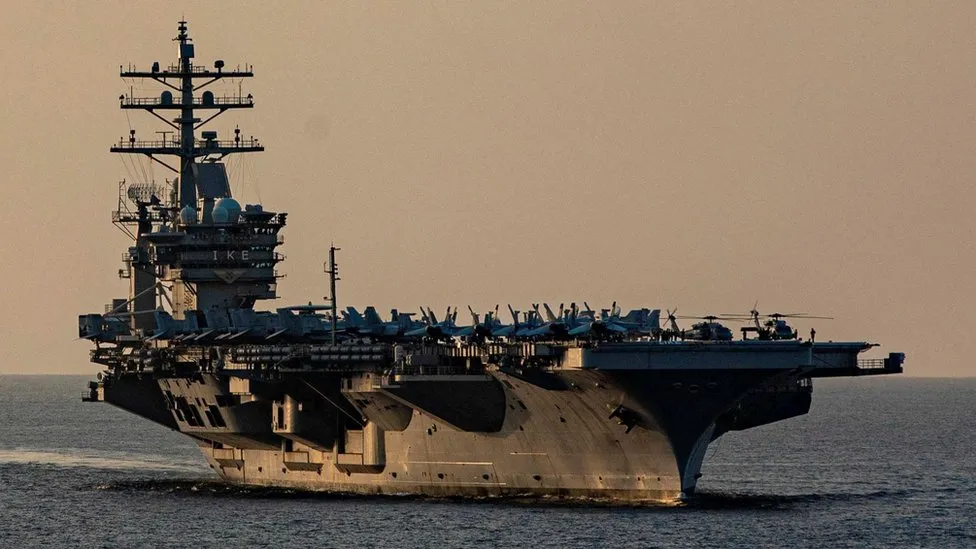
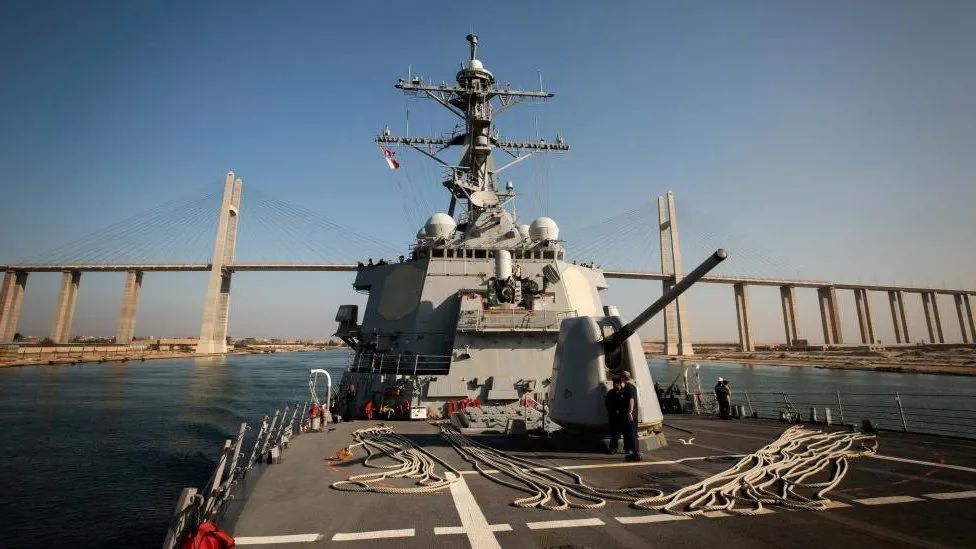
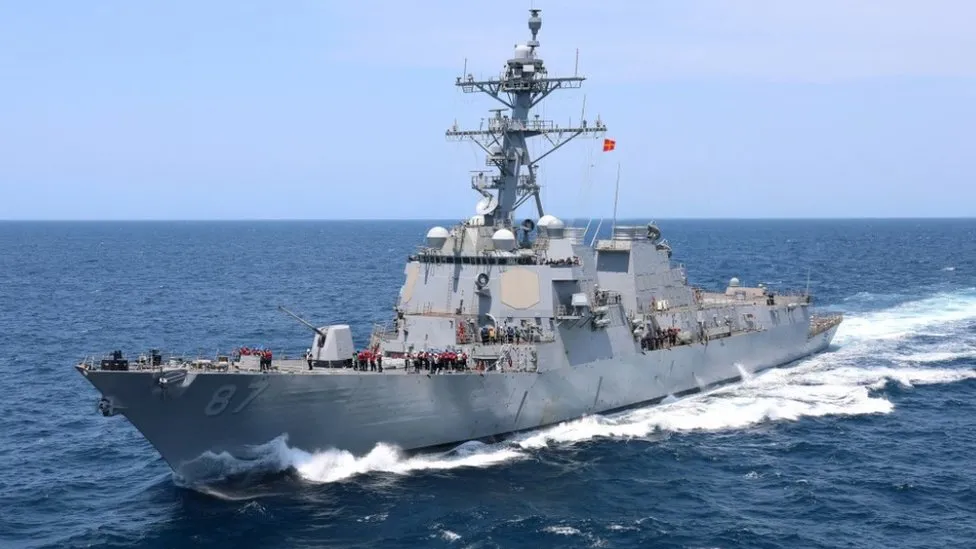
Helicopters from the nearby USS Eisenhower aircraft carrier and USS Gravely destroyer responded to the call for help and were shot at while “in the process of issuing verbal calls to the small boats”.
The helicopters “returned fire in self-defense, sinking three of the four small boats, and killing the crews”, Centcom said. It added that the fourth boat “fled the area” and no damage had been recorded to US personnel or equipment.
It was the second attack on the Maersk Hangzhou in 24 hours, after it was attacked with missiles on Saturday.
The anti-ship missiles were fired from Houthi-controlled areas as the destroyers Gravely and Laboon responded on Saturday, according to a previous Centcom statement.
A US Navy admiral told AP the missile attack was the first successful strike since a global patrol was launched on 18 December.
Centcom said while the ships were responding to the distress call, two anti-ship missiles were fired from Houthi-controlled areas at the pair of US navy vessels.
The USS Gravely destroyed the inbound ballistic missiles, Centcom said, adding it was the twenty-third “illegal attack by the Houthis on international shipping” since 19 November.
Centcom added the Maersk Hangzhou is “reportedly seaworthy and there are no reported injuries” on board.
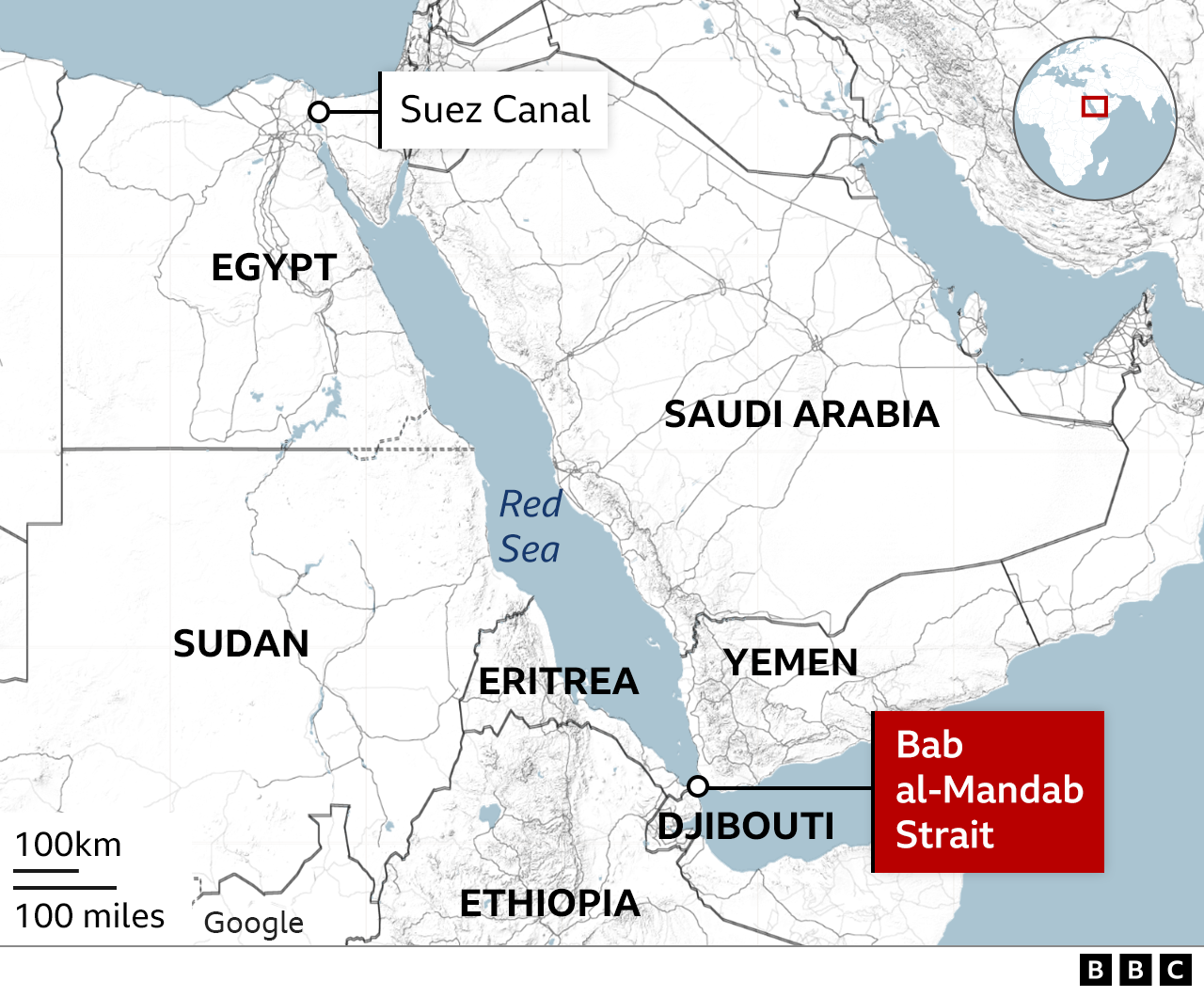
Separately, the United Kingdom Maritime Trade Operations (UKMTO) organisation reported an incident in the Red Sea about 55 nautical miles (101km) to the south-west of the Yemeni port of Hodeidah.
In a statement, the organisation said an unidentified ship had reported “a loud bang accompanied by a flash on the port bow of the vessel” and several explosions.
No damage was recorded and all members of the crew were reported unhurt, with the vessel escaping the area to a nearby port, the statement said.
The rise in Houthi attacks over several weeks has led many shipping firms, including Maersk, to divert their vessels away from the Red Sea, travelling around the horn of Africa instead.
To reach the Suez Canal in Egypt – which connects to the Mediterranean Sea – ships must pass through the tiny Bab al-Mandab Strait, just off the coast of Houthi-controlled areas in Yemen.
The Tehran-sponsored rebels have previously claimed to only target “Israel-linked” commercial ships in response to the war in Gaza, saying the attacks are an attempt to stop Israeli attacks on Palestinians.
In a statement on Sunday, UK Foreign Secretary David Cameron said he told Iran’s foreign minister that Tehran “shares responsibility for preventing these attacks given their long-standing support to the Houthis”.
Watch: Yemen’s Houthis released video in November showing armed men dropping from a helicopter and seizing a cargo ship
In response, the US launched Operation Prosperity Guardian – an international coalition to safeguard shipping in the the region.
In an interview with the Associated Press, US Navy Vice Admiral Brad Cooper said the Houthis do not seem to be ending their “reckless” attacks in light of the maritime taskforce.
He added that 1,200 commercial ships have passed through the Red Sea since the operation was launched, with none hit by drone or missile strikes until Saturday.
After the international taskforce was announced, the US Department of Defense said the Houthis had carried out over 100 drone and ballistic missile attacks since November. These attempted strikes targeted 10 commercial ships linked to more than 35 different countries, it added.
Maersk said last week that it was preparing to resume journeys through Red Sea – after diverting to the much longer route around the Cape of Good Hope because of recent Houthi attacks on shipping.
Sunday’s attacks have led to another 48 hour pause.
The Red Sea is one of the world’s most important shipping lanes as it links markets in Europe with Asia.
Analysts have warned the attacks could see a rise in prices, as it is also one of the most important routes for oil and liquefied natural gas shipments produced in the Middle East.
A American military ship destroyed three flying machines after three regular boats were attacked in the Red Sea, according to the US military.
The USS Carney helped ships from 14 countries, including the UK, on Sunday after they were attacked from areas of Yemen controlled by Houthi rebels backed by Iran.
Two ships were hit by missiles, but no one got hurt.
A person from the Houthi group said their navy attacked two ships from Israel.
The Israeli army said the boats were not linked to Israel.
The Houthis, who are supported by Iran, took over some of Yemen in 2014 and caused a civil war.
Lately, it started attacking ships connected to Israel in the Red Sea because of Israel’s conflict with Hamas, which is backed by Iran, in Gaza.
The US military in charge of the Middle East said that the USS Carney found a missile blowing up near a cargo ship on Sunday morning.
It later destroyed a flying robot that was flying towards the Carney itself, but Centcom said it was not clear if the robot was trying to attack the Carney.
That day, the Unity Explorer got a little damaged when a missile from the Houthi-controlled area hit it.
The US ship found and destroyed another drone that was coming towards it while it was helping a ship in trouble.
Later, two more boats – one of them partly owned by the UK, both flying the flag of Panama – said they were hit by missiles. While going to help another ship, the USS Carney destroyed a third drone.
Centcom stated that the attacks put the lives of the ships’ crews in danger and posed a clear threat to global trade and maritime safety.
“We think that Iran is helping the Houthis in Yemen with these attacks,” the statement said.
The United States will think about the best ways to respond, with the help of its friends from other countries.
Earlier this week, a US warship caught armed men who had taken control of a tanker connected to Israel near Yemen.
Centcom said that rebels from Houthi-controlled area in Yemen fired two missiles at the warship.
The Houthis say they are part of a group connected to Iran that opposes Israel, the US, and the West.
A United States Navy ship caught armed men who took control of a tanker linked to Israel off the coast of Yemen on Sunday, according to US defense officials.
The attackers tried to get away on a boat, but the US warship followed them.
The US Central Command said that rebels from Houthi-controlled territory in the country fired two missiles at the warship.
The Houthis have said they will attack Israel because of its fighting with Hamas in Gaza.
Israel started fighting back after the attack on October 7th in southern Israel. 1,200 people died and over 240 were taken as hostages.
Since that time, over 14,500 people have died in the Gaza Strip. About 40% of them were children, according to the health ministry run by Hamas.
The Houthis say they are part of a group of countries and organizations that resist Iran.
The Central Park was the tanker that was targeted on Sunday, according to the ship’s company.
Zodiac Maritime Ltd, a company owned by the Ofer family from Israel, is in charge of taking care of Central Park. They are based in London and manage ships internationally.
Zodiac Maritime announced that the 22 crew members were from Russia, Vietnam, Bulgaria, India, Georgia, the Philippines, and the captain was from Turkey.
The rebels might attack the tanker that was carrying phosphoric acid unless it changes course and goes to a port in Yemen.
According to a statement from the US military, the USS Mason asked that the assailants free the commercial ship with assistance from other ships.
Five people with weapons tried to run away on a fast boat, but the USS Mason followed them and they gave up in the end.
The US said that two missiles were shot at the warship but missed and landed far away.
The recent attacks were done by the Houthis, who have been carrying out a series of attacks.
They shot many missiles and drones at Israel after Israel started its operation.
The US said that its warship in the Red Sea stopped all the missiles and drones.
Houthi rebels said they took control of an Israeli cargo ship in the Red Sea last week. Israel said the boat was not from Israel, and no people from Israel were on board.
The Houthis have been fighting a long war with Yemen’s government, supported by Saudi Arabia, since 2014.
Two US Navy sailors in California have been arrested on charges related to providing sensitive military information to China.
Jinchao Wei, a 22-year-old naturalized US citizen, is accused of conspiring to send national defense information to a Chinese agent. Petty Officer Wenheng Zhao, 26, was arrested for accepting money in exchange for sensitive photos and videos.
It remains unclear whether the same Chinese agent is connected to both cases.
Both individuals were apprehended on Wednesday in California. Jinchao Wei was arrested while on his way to work at Naval Base San Diego.
Prosecutors made the announcement regarding the charges during a news conference in San Diego on Thursday.
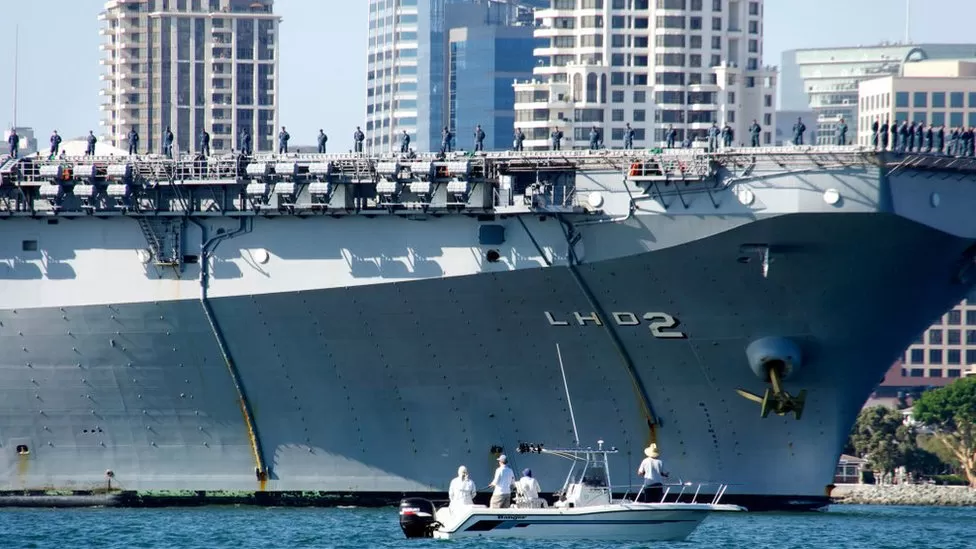
Jinchao Wei, who served as a machinist’s mate on the USS Essex, an amphibious assault ship, possessed security clearance and had access to sensitive information concerning the vessel.
According to the indictment, a Chinese agent approached him in February 2022 while he was in the process of becoming a US citizen. The agent allegedly paid him thousands of dollars for photographs, videos, technical manuals, and blueprints of the ship.
Furthermore, Justice Department officials disclosed that Jinchao Wei also provided the agent with details of US Marines involved in a maritime training exercise.
“When a soldier or sailor chooses cash over country and hands over national defence information in an ultimate act of betrayal, we have to be ready to act,” said US Attorney Randy Grossman.
China has so far refuted any knowledge of the purported action.
The Wall Street Journal cited Liu Pengyu, a spokeswoman for China’s embassy in Washington, as saying: “The US government and media have routinely exaggerated examples of ‘espionage’ relating to China.
“China firmly opposes the US side’s groundless slander and smear of China,” he added.
Mr. Zhao, also known as Thomas Zhao, was employed at Naval Base Ventura County near Los Angeles. In 2021, he was reportedly approached by a Chinese agent who masqueraded as a researcher seeking information for investment decisions.
The agent paid Mr. Zhao nearly $15,000 (£11,800) in exchange for photos, videos, diagrams, and blueprints of a radar system deployed on a US military base in Okinawa, Japan, as per authorities’ statements.
If found guilty, Mr. Wei could face a prison sentence of 20 years to life, while the charges against Mr. Zhao carry a maximum penalty of 20 years.
Both individuals were charged in separate cases.
Authorities have categorized this alleged espionage as part of a larger effort by China to obtain US military secrets.
Earlier this year, a Chinese spy balloon floating over the United States created tension between the two countries. However, American authorities later confirmed that it did not collect any sensitive information.
“The Department of Justice will continue to use every tool in our arsenal to counter threats from China and to deter those who aid them in breaking our laws and threatening our national security,” said Assistant Attorney General Matthew Olsen.
It was not clear if either Mr Wei or Mr Zhao had hired lawyers who could comment on their behalf.
They asserted that the launch occurred just hours after the USS Annapolis, a nuclear-powered US submarine, docked at Jeju Island, the largest island in South Korea.
The US has steadily increased its presence in the waters east of the Korean peninsula, part of its own show of force amid signs of Pyongyang’s growing willingness to conduct nuclear attacks.
Just last week, a nuclear-armed submarine, the USS Kentucky, became the first such vessel to come to South Korea in more than forty years.
North Korea responded in much the same way, again test-firing ballistic and cruise missiles in an apparent attempt to demonstrate its capacity to strike both the US vessels and South Korean territory.
The tests were accompanied by strong words from despotic leader Kim Jong-un, who warned such increased presence would likely meet the hermit kingdom’s criteria for a nuclear attack.
Both Korean nations have continued to ramp up military drills in recent months.
Experts have warned that further proof-testing of new missile designs within North Korean territory also risks contaminating the country’s water supply.
Dr Olli Heinonen, formerly director general of nuclear watchdog the International Atomic Energy Agency, previously said: ‘Water from melting snow and rain can enter in through cracks and wash out fission products and plutonium.
‘It can transport it with the groundwater, into a small river passing the [test] site, and on to agricultural sites and towns downstream.’
He added: ‘Such contamination could enter into food chains and accumulate in agriculture products, fish, meat and eventually in people.’
In the 1990s, a devastating famine is estimated to have killed as many as three million people in North Korea.
According to testimony from people living under the Kim regime, the situation is now almost as dire as it was then, following the government’s decision to seal its borders in 2020, cutting off vital supplies.
Nuclear contamination would further exacerbate food shortages in a country where, due to the government’s strict informational policing, an unknown portion of some 26 million people are likely facing starvation.
On Wednesday, North Korea claimed to have launched an intercontinental ballistic missile using solid fuel, just days after threatening to take down US Navy reconnaissance aircraft over neighbouring waters.
The launch comes after a number of other recent intercontinental ballistic missile (ICBM) tests by North Korea, which have alarmed rivals as the isolated, autocratic country intensifies its efforts to create weapons that could potentially strike important US cities.US Navy
The launch, according to a White House statement, “risks destabilising the security situation in the region.”
Japanese Prime Minister Fumio Kishida, speaking from the sidelines of the NATO summit meeting on Wednesday, called the launch “unacceptable’” and a threat to regional stability and the international community.
Wednesday’s test was of the Hwasong-18, a powerful solid-fueled ICBM of a type that Pyongyang last launched in April, according to the state-run Korean Central News Agency (KCNA).
Leader Kim Jong Un said at the time the Hwasong-18 would provide the country with a “powerful strategic attack means” and boost its nuclear capabilities.
Pyongyang tested the liquid-fueled Hwasong-17 in March.
The ICBM fired on Wednesday flew about 1,000 kilometers, staying airborne for 74 minutes, according to Japan’s Defense Ministry – a marginal advancement on the ballistic missiles it tested earlier this year.
Here’s what we know about the ICBMs in North Korea’s arsenal.
Unknown to most, Kim Jong Un’s sister has become the defiance voice against the US
The Hwasong-17 is a liquid-fueled ICBM unveiled in 2022, when North Korea held its first long-range missile test in more than four years. Liquid-fuel technology is comparatively easier to master.
The Hwasong-18, meanwhile, is a solid-fueled missile, according to Pyongyang – which makes it far more advanced, and would allow North Korea to launch long-range nuclear strikes more quickly.
Solid-fueled ICBMs are more stable, and can be moved more easily to avoid detection before a launch that can be initiated in a matter of minutes, experts say – compared to liquid-fueled missiles that may need hours before launch, giving time for adversaries to detect and neutralize the weapon.
North Korea’s advancement from the Hwasong-17 last year to the Hwasong-18 this year suggests its missile program is making progress, experts say, reflecting Kim’s goal of matching the military capabilities of other nations like the United States or European countries.
Successive launches allow North Korea to gather more data to refine its missile technology.
ICBMs could, at least theoretically, put the entire US mainland in range of a North Korean nuclear warhead – but there’s a lot of unknowns about the missile’s capability to deliver a nuclear payload on target.
Past tests have shown the possible range of North Korea’s missiles – the tests in March and April all traveled about 1,000 kilometers (621 miles). And the Hwasong-17 test last year flew 1,090 kilometers (681 miles), lasting 68 minutes before landing in the sea.
The 74-minute flight time of the latest missile is a few minutes longer than those tested in March and April.
It’s not clear what kind of payloads were involved in these tests. The weight of the payload affects how far a missile can fly, so without this information, observers cannot know for sure the missile’s actual range.
Another question is whether a North Korean nuclear warhead could survive reentry into Earth’s atmosphere.
ICBMs are fired into space, where they speed along outside Earth’s atmosphere before their payloads undergo a fiery reentry process, much like a space shuttle or space capsule, before plunging down on their targets.
If the process of reentering the atmosphere isn’t executed with pinpoint accuracy and with materials that can withstand the immense heat generated, the warhead will burn up before reaching its target. The angle at which the warhead reenters the atmosphere can make the process more difficult.
“The launch of Hwasong-18 shows that it has a range of about 15,000 kilometers based on the altitude, distance and the flight time of the missile,” said Yang Wook, a researcher at Asan Institute for Policy Studies in Seoul.
“However, it cannot be evaluated that North Korea has succeeded in obtaining full technology of an ICBM as it hasn’t proved the functions for reentry and accuracy using multi-warheads that are required for the use of the missile,” Yang said.
Here’s how US missile defense could be fooled by an ICBM
Kim has laid out an ambitious plan to give North Korea a credible nuclear deterrent, meaning an arsenal powerful enough to prevent any adversary, most notably the US, from attacking.
Experts have said the leader has set a long list of weapons modernizations in recent years that he is now working through – with ICBMs only one of those items. Other goals may include launching a military satellite, or putting a nuclear-powered submarine to sea.
Previously, North Korea has announced plans to enhance the accuracy of its missiles and increase the range up to 15,000 kilometers (9,320 miles).
These ambitions were made clear last year when Kim dramatically ramped up the frequency and intensity of weapons testing, which eased slightly this year, but remains at much higher levels than in past years.
The country fired more missiles in 2022 than any other year on record – at one point launching 23 missiles in a single day.
These tests also refocused attention on North Korea’s nuclear goals, with Kim vowing to develop his nuclear forces at the “highest possible” speed last year. The US and international observers began warning last year that an underground nuclear test could be imminent, after satellite imagery showed new activity at North Korea’s nuclear test site. Such a test would be the country’s first since 2017.
Joseph Dempsey, research associate for defense and military analysis at the International Institute for Strategic Studies, said more North Korean tests are likely in the works.
“North Korea’s emergent ICBM force is still relatively untested … further developmental tests to verify their reliability and operation within a range of flight parameters are to be expected,” he told CNN.
The test on Wednesday sparked strong condemnation from neighboring countries.
South Korean President Yoon Suk Yeol, currently at the NATO summit in Lithuania, said he would call for “strong international solidarity” among bloc members in response to the launch. On Wednesday morning, he presided over an emergency National Security Council meeting from Lithuania.
US and South Korean officials met shortly after the test to share information, according to South Korea’s Joint Chiefs of Staff (JCS). Both countries are analyzing the launch.
The Japanese chief cabinet secretary lodged a protest against North Korea through embassy channels in Beijing.
The United Nations Security Council has passed resolutions prohibiting Pyongyang’s ballistic missile testing, but last year China and Russia blocked new resolutions, which the US sees as a green light for North Korea to continue its programs.
In an effort to recover what Washington claims was a Chinese “surveillance balloon,” which was shot down over the Atlantic Ocean after being spotted in US airspace last week, the US Navy has released the first official pictures.
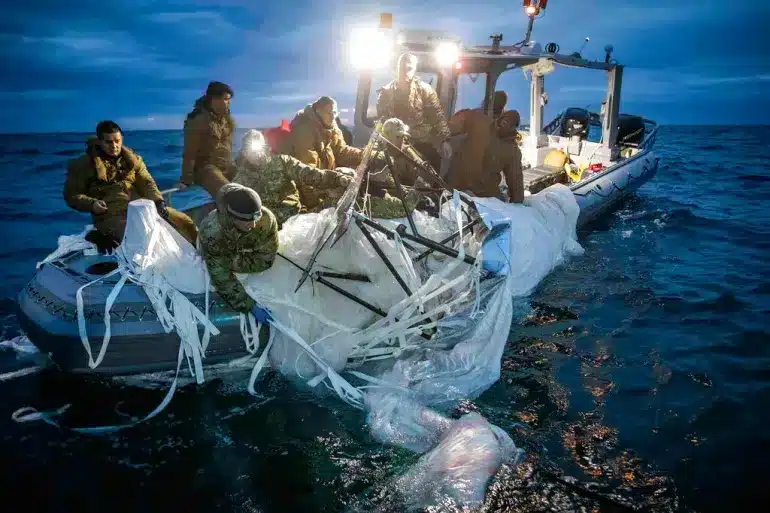
A rigid-hull inflatable boat was pictured being leaned over by US Navy members from an explosive ordnance group as they pulled in large sections of the balloon’s white outer fabric and shell structure on Tuesday.
Using underwater drones, warships and inflatable vessels, the Navy is carrying out an extensive operation to gather all the pieces of the device, which spent several days flying over North America last week before being shot down on Saturday off the coast of South Carolina.
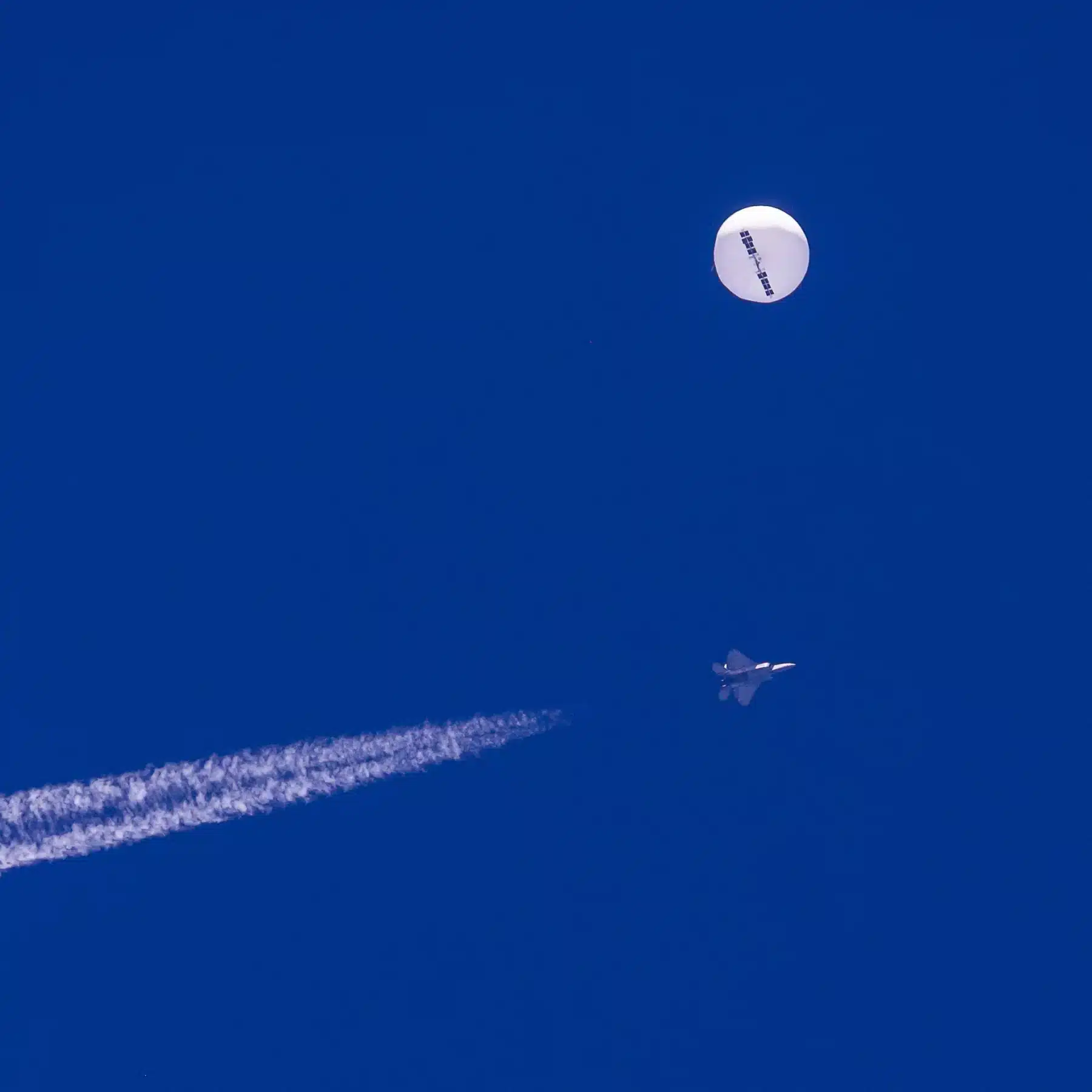
The balloon measured approximately 60 metres (200 ft) tall and was carrying a long sensor package underneath, which the head of US Northern Command, General Glen VanHerck, said earlier this week was about the size of a small, regional jet.
While Beijing has said the balloon was an “unmanned civilian airship” that was primarily gathering weather data and had blown off course, Washington denounced its presence in US airspace as an “unacceptable” violation of the country’s sovereignty.
VanHerck said on Monday that the teams involved in the balloon recovery efforts were taking precautions to safeguard against the chance any part of the balloon was rigged with explosives.
The Navy is also using ships to map and scan the sea floor for all remaining parts of the balloon so US analysts can get a full picture of what types of sensors were used and to better understand how the balloon was able to manoeuvre.
The incident has heightened tensions between the two countries, prompting US Secretary of State Antony Blinken to postpone a planned visit to the Chinese capital that had been expected to begin on Sunday.
China said the decision to shoot down the device “seriously impacted and damaged” its relationship with the US, butWhite House national security spokesperson John Kirby, on Monday, said Washington was not seeking confrontation.
Kirby dismissed China’s contention the balloon was for meteorological purposes, saying “it strains credulity … that this was some kind of weather balloon that was floating on the winds”.
On Tuesday, US Senate Majority Leader Chuck Schumer told reporters that “the [Biden] administration is looking at other actions that can be taken” in response to the balloon, though he did not provide further details.
While the top Democratic legislator acknowledged that US-China relations were “tense”, Schumer defended President Joe Biden’s administration amid criticism from Republicans, saying its actions were “calm, calculated and effective”.
“This is one area where we don’t need politics. So we need Democrats and Republicans to come together,” Schumer said.
This image provided by the US Navy shows sailors recovering the balloon off the coast of Myrtle Beach, South Carolina, February 5, 2023 [US Navy via AP Photo]
Members of the Republican Party have accused the administration of failing to bring down the balloon quickly enough and taking a “weak” stance towards China.
A Pentagon spokesman said on Tuesday that China declined a US request for a phone call between the US defence secretary, Lloyd Austin, and his Chinese counterpart, Wei Fenghe.
The Pentagon submitted the request for a secure call on Saturday, immediately after shooting down the balloon, Brigadier General Patrick Ryder said in a statement.
“Unfortunately, [China] has declined our request. Our commitment to open lines of communication will continue,” Ryder said.
Relations between the two powers have been strained in recent years by a number of issues, from disputes over technology and trade to the status of the self-ruled island of Taiwan, which Beijing sees as part of its territory.
Cooperation between the US and China, the first and second largest economies in the world, respectively, is critical to tackling global issues such as climate change.
Biden and Chinese President Xi Jinping – who held in-person talks on the sidelines of the G20 summit in Bali, Indonesia in November – have previously stressed they are not looking for confrontation or a new Cold War.
Beijing says the aircraft, which was a meteorological airship that had veered off course, was shot down in the Atlantic Ocean.
The Chinese surveillance balloon that was shot down off the coast of South Carolina over the weekend has debris that the US Navy is attempting to recover. The debris fell into the Atlantic Ocean.
According to General Glen VanHerck, commander of the North American Aerospace Defense Command and US Northern Command, the balloon was shot down in US airspace and fell into US territorial waters after having been flying at a high altitude over North America since the end of January.
“Our U.S. Navy component is currently conducting recovery operations, with the U.S. Coast Guard assisting in securing the area and maintaining public safety,” VanHerck said in a statement on Sunday.
The US said earlier that the balloon was about the size of three school buses and that debris was spread out over 11km (7 miles) of ocean.
The incident has further strained relations between the US and China with Washington cancelling Secretary of State Antony Blinken’s planned visit to Beijing after the discovery of the craft.
Beijing has said the uncrewed “airship” was used for meteorological research and was blown off course because of bad weather and its “limited” steering capabilities.
On Monday, Beijing urged the US to exercise restraint over the incident. It insists the balloon, which was flying at a height of about 18,300 metres (60,000 ft) before it was shot down, entered US airspace by accident.
“China firmly opposes and strongly protests against this,” China’s Vice Foreign Minister Xie Feng said in remarks to the US embassy in China. “The Chinese government is closely following the development of the situation.”
Senior Colonel Tan Kefei, a spokesperson atChina’s Ministry of National Defence, said on Sunday that China reserved the right to take necessary measures in dealing with similar situations describing the US action as an “overreaction”.
The balloon first entered US airspace in Alaska on January 28 before moving into Canadian airspace on January 30. It then re-entered US airspace over northern Idaho on January 31.
Canada also confirmed the presence of the balloon in its airspace.
Surveillance balloons — typically equipped with high-tech, downward-pointing imaging gear — offer the opportunity to monitor sites at a closer range than satellites and can provide clearer images than fast-moving satellites.
While their movement is often left subject to weather patterns, they can also be equipped with a “guiding apparatus” to control their path.
The US has said the Chinese balloon was flying over sensitive sites in Montana to collect information, and recovering the remnants could provide the US with clues about China’s surveillance capabilities.
Montana is home to the Malmstrom Air Force Base, where there are some 150 silos for intercontinental ballistic missiles, including the nuclear-capable Minuteman III.
The Senate is due to be briefed on the incident including details of the balloon’s surveillance capabilities this week, Senate Majority Leader Chuck Schumer said, adding that the administration of President Joe Biden was considering measures against the Chinese for “their brazen activities”.
Republicans in Congress have criticised Biden for not taking action sooner.
The president has said he approved the order to shoot down the craft last week but was advised it would be best to carry out the operation over water because bringing down the balloon over land from an altitude of 18,300 metres (60,000 ft) would pose an undue risk to people below.
“Clearly this was an attempt by China to gather information, to defeat our command and control of our sensitive missile defence and nuclear weapon sites,” said Mike Turner, a Republican and chairman of the House Intelligence Committee. “And that certainly is an urgency that this administration does not recognise.”
“It defies belief to suggest there was nowhere” between Alaska and the Carolinas where the US could have safely shot down the balloon,” said Senate Republican leader Mitch McConnell.