Venezuelan President Nicolas Maduro closed his country’s embassy and consulates in Ecuador to support Mexico after Ecuadorian police raided the Mexican Embassy in Quito.
Maduro and other presidents in a virtual meeting supported Mexico’s request to kick Ecuador out of the United Nations because of the raid on April 5th. But Maduro was the only one who said he would close embassies and bring back staff.
“Everyone has strongly condemned Ecuador’s move,” Maduro said. “No one is defending this cruel act in the world today. ”
Ecuador’s President Daniel Noboa told police to go to the Mexican Embassy to capture their ex-Vice President Jorge Glas, who broke the law and had been hiding there since December. Mexico gave him permission to stay just a few hours before the police found Glas in a bedroom and took him out by force.
The very unusual use of force was strongly criticized by governments worldwide because diplomatic buildings are seen as foreign territory and should not be violated according to the Vienna treaties.
Noboa did not go to the meeting on Tuesday. He said last week that he allowed the raid to protect national security. His government says that Glas was wanted for his criminal convictions, not for political reasons. They also accused Mexico of breaking the Vienna treaties by giving Glas asylum.
Mexico stopped talking to Ecuador after the raid and told its diplomats to come back home. It wanted to get support from the CELAC meeting to help with its case at the UN and in front of the International Court of Justice.
Honduras President Xiomara Castro, who is in charge of CELAC, started the meeting on Tuesday by reading a suggested message criticizing Ecuador’s actions. Then she showed a video of Ecuadorian officials entering Mexico’s Embassy, with exciting music playing.
The President of Mexico, Andres Manuel Lopez Obrador, said again that Ecuador should be kicked out of the United Nations until it says sorry and promises not to do it again.
Lopez Obrador said that if we don’t do this, we won’t be able to live in a world with rules and laws. “We would be living in a world with gorillas. ”
The president of Mexico said that even Augusto Pinochet, who was the leader of Chile from 1973 to 1990, did not attack Mexico’s embassy when Chilean people who opposed him went there for safety. Lopez Obrador said that Pinochet was too scared to attack our embassy, the scary ruler.
Maduro said he has asked all diplomats to come back to Venezuela until international law is back in Ecuador.
Maduro said that Glas, who is currently in a very secure prison in the port city of Guayaquil, should be taken back to the Mexican embassy and given asylum because of his political beliefs.
Noboa got more criticism for not showing up at CELAC’s online meeting. While leaders were unsure about his choice, he shared a video on Instagram talking about making law enforcement better. He also posted another video declaring an emergency for the country’s electricity sector during long power outages in Quito.
Maduro said that he should have come and taken responsibility for himself in front of Ecuador, Latin America, the Caribbean, and the world, but he did not show up. “I’m from Venezuela and I can tell you that he’s hiding. The people of Ecuador need to know this. ”
The Venezuela Embassy in Quito looked shut on Tuesday. People waiting outside, along with reporters, couldn’t get answers from embassy staff while trying to take care of paperwork.
The Mexican government did not answer right away when asked for their thoughts on Venezuela’s announcement.
During Maduro’s 11 years as president, over 7. 7 million people from Venezuela have moved out of the country. Many of them have gone to live in other countries in Latin America and the Caribbean. Ecuador has the sixth-most Venezuelan migrants.
“Ecuadorian leaders and groups that help migrants believe that there are 475,000 people from Venezuela living in Ecuador. ” More than 231,000 people live in Ecuador legally. This information is from the 2023 census.
Tag: Venezuela
-
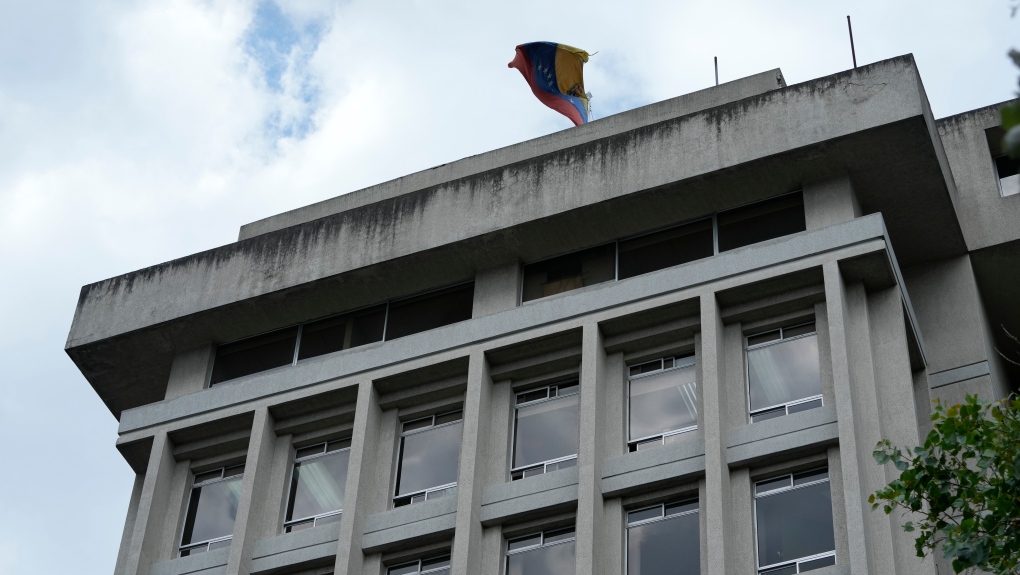
Venezuela protests the police raid by closing its embassy in Ecuador
-
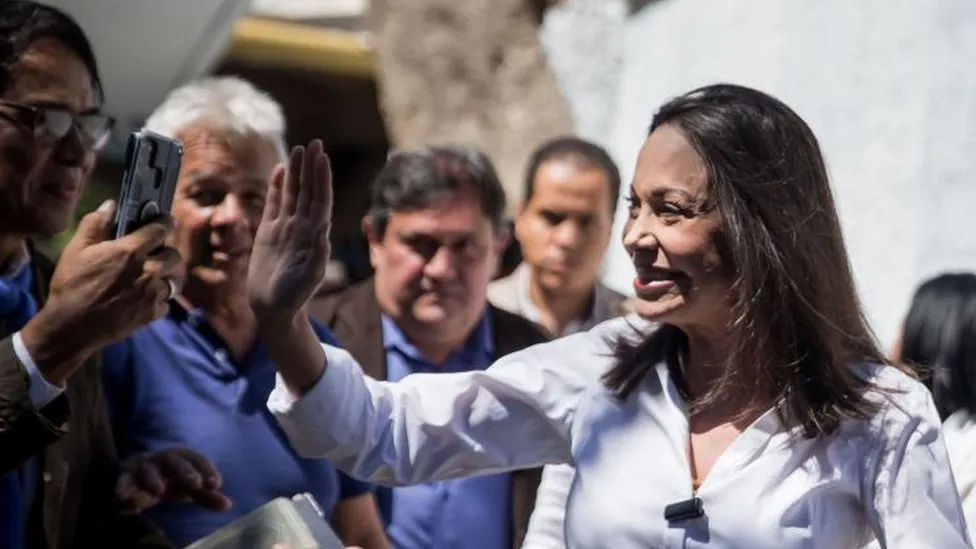
United States of America threatens to reinstate oil sanctions against Venezuela
The US is warning that it will put sanctions back on Venezuela‘s oil industry. This is happening after Venezuela’s highest court decided to keep a ban on opposition candidate MarÃa Corina Machado.
Ms Machado won an important election to become the main candidate for the opposition party in the 2024 presidential election.
However, on Friday, Venezuela’s highest court decided that Ms Machado is not allowed to run for public office for 15 years.
The oil industry is very important for Venezuela’s economy.
The US put limits on Venezuela’s oil business after President Nicolás Maduro began his second term in 2019. Many people didn’t think the election was fair.
The US made the sanctions less strict in October after the Maduro government and the opposition agreed to work together. This agreement is a step towards having fair and free presidential elections in the second half of 2024.
Not long after the agreement was made in Barbados, the US Treasury gave permission for a short time to do business with Venezuela’s oil and gas industry.
But it said that Venezuela needed to keep its promises about the elections in order to renew the license. This included allowing MarÃa Corina Machado and other opposition candidates to participate.
The oil exception will end on April 18th. The US said it won’t renew it unless the government and the opposition in Venezuela make political progress, especially by allowing all candidates to run in the upcoming election.
The US said it would put sanctions back on Venezuela’s state-owned gold mining company, which helps the Maduro government get foreign money.
Ms Machado won the opposition’s primary in October by getting more than 90% of the votes. This has given hope to Venezuelans who want a new government that she could become president – if the election is fair.
As part of the Barbados agreement, the Maduro government agreed to let people from other countries watch the election.
The Supreme Court, controlled by Maduro supporters, decided to keep Ms Machado banned. This has led many people, including Ms Machado herself, to believe that the Barbados deal is no longer going to happen.
Ms Machado promised to stay strong and said she was given a job in the primary that she will do. She said “We will win and they will lose. ” They can’t have an election without me.
Jorge Rodríguez, a friend of Mr. Maduro, who spoke for the government in the Barbados discussions, said that the government did what it promised. He said, “Those who wanted to appeal appealed and also promised to accept the decision. “ -

US imposes further sanctions on Venezuela
The United States has put back some punishments on Venezuela. This happened a few days after the top court in the South American country said no to the main person running against the current leader, MarÃa Corina Machado.
She won the primary election by a lot and now she is the main candidate for the opposition to run for president in 2024.
However, on Friday, Venezuela’s highest court agreed to prevent Ms. Machado from running for public office for 15 years.
MsMachado said she will keep running for president even though she was banned.
In October, the US made its sanctions on Venezuela less strict after President Nicolás Maduro’s government and the opposition agreed to hold fair elections in 2024.
As agreed, the Maduro government, which was re-elected in 2018 in an election that many people didn’t think was fair, said it would let other countries watch the next election.
The “Barbados deal” allows opposition candidates who were not allowed to run for office to now appeal against the bans. This agreement was made in Barbados, where both sides met.
In return, the US, which supported the Barbados agreement, reduced some of its punishments on Venezuela.
However, on Friday, the Supreme Court rejected the appeals filed by Ms Machado and another well-known opposition leader, Henrique Capriles. The court allowed some unknown politicians to participate again.
The US government said they were very worried about the decision to not let MarÃa Corina Machado participate.
It said it went against what Maduro and his representatives agreed to in the Barbados electoral roadmap. They promised to let all parties choose their candidates for the presidential election.
On Monday, the sanctions on Venezuela’s mining sector started again.
The US government said to American companies that they need to stop doing business with a Venezuelan mining company called Minerven by February 13th.
Minerven has been punished by the US before. In 2019, Ofac said Maduro and his government were using a gold mining company called Minerven to make themselves rich and hurt the people of Venezuela.
The US government put sanctions back on the mining industry, but hasn’t put them back on Venezuela’s oil industry yet. This shows that they are taking their time and may put more sanctions on later if they don’t like what’s happening.
John Kirby, a spokesperson for national security at the White House, said on Monday that the Maduro government has until “spring” to keep their promises. “They have to make choices before we decide what choices we will make. ”
Ms Machado promised that she will stay strong and stick to her beliefs. She said she was chosen in the primary election and she will do what she promised. She also said that she is confident they will win and their opponents should be ready to lose. “They can’t have elections unless I’m there. ”
Jorge Rodríguez, a friend of Mr. Maduro who spoke for the government at the talks in Barbados, said that the government did what it promised. He said, “Those who wanted to appeal did, and promised to accept the decision. “ -
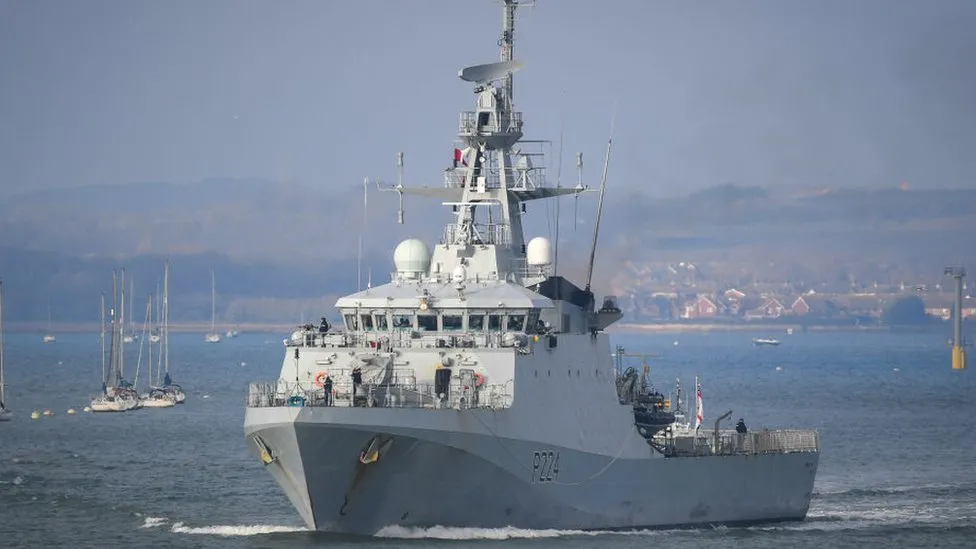
UK to deploy warship to Guyana amid rising tensions with Venezuela
The United Kingdom is gearing up to dispatch a warship to Guyana as a demonstration of both diplomatic and military support for the former British colony, according to BBC sources.
This move comes in response to renewed claims by neighboring Venezuela over a disputed part of Guyanese territory, known for its abundant oil and mineral resources.
The Ministry of Defence has confirmed that HMS Trent, an offshore patrol vessel originally tasked with drug-smuggling interdiction in the Caribbean, will engage in joint exercises with Guyana after the Christmas season.
The decision to redirect HMS Trent was prompted by Venezuela’s recent threats to annex the Essequibo region of Guyana, heightening concerns of a potential invasion and the specter of South America’s first interstate war since the Falklands Conflict in 1982.
As South America’s sole English-speaking nation and a member of the Commonwealth, Guyana finds itself at the center of this territorial dispute.
Venezuela has persistently asserted ownership over Essequibo, a sprawling 61,000 square mile region that encompasses a significant portion of Guyana. Notably rich in gold, diamonds, bauxite, and with substantial offshore oil deposits, the region has become a focal point of contention between the two nations.
While Guyana’s economy is experiencing rapid growth, Venezuela faces severe economic challenges. President Nicolas Maduro of Venezuela conducted a controversial referendum on December 3 to reaffirm popular support for the country’s claim to Essequibo, a move widely contested. Despite challenges to the results, Maduro proceeded to publish new maps and legislation, officially incorporating Essequibo into Venezuela. He appointed a new governor, offered identity cards to residents, and directed the state oil company to issue extraction licenses in the disputed region.
Following a meeting with Guyana’s President Irfaan Ali, Maduro committed to avoiding the use of force. However, he maintains his territorial claim, and both nations remain in disagreement over the legal resolution of the border dispute.
This heightened tension has led the Lloyd’s insurance market in London to designate Guyana as one of the riskiest shipping zones, reflecting the uncertainty and potential hazards arising from the ongoing territorial dispute.
A Ministry of Defence spokesperson told the BBC: “HMS Trent will visit regional ally and Commonwealth partner Guyana later this month as part of a series of engagements in the region during her Atlantic Patrol Task deployment.”
HMS Trent has a crew of 65, a top speed of 24 knots and a range of 5,000 nautical miles.
It is armed with 30mm cannon and a contingent of Royal Marines. It can also deploy Merlin helicopters and unmanned aircraft.
HMS Trent left its home port of Gibraltar in early December and is currently alongside in Bridgetown, Barbados for Christmas.
The warship is expected to anchor off the capital of Guyana, Georgetown, and conduct visits, joint activities and training with the country’s navy and other allies. It cannot go alongside because the port is too shallow.
The vessel is mainly used for tackling piracy and smuggling, protecting fisheries, counterterrorism, providing humanitarian aid, and search and rescue operations, but the Royal Navy says it is also designed for border patrols and defence diplomacy.
The decision to send HMS Trent to Guyana is part of a growing UK effort to show international diplomatic support for Guyana.
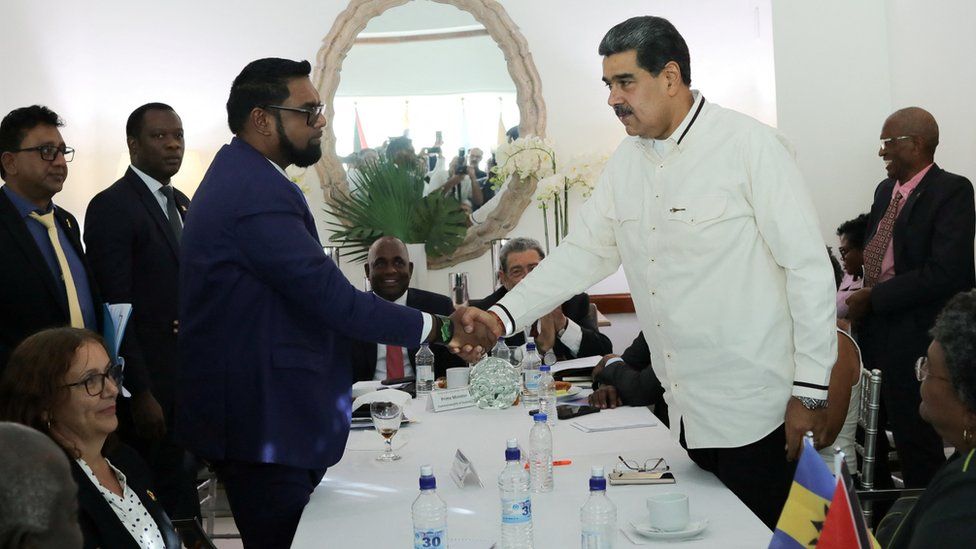
Image caption,Irfaan Ali, President of Guyana (left), and Venezuelan President Nicolás Maduro have agreed not to use force but tensions remain This week the Foreign Secretary Lord Cameron said the UK would “continue to work with partners in the region to ensure the territorial integrity of Guyana is upheld and prevent escalation”.
David Rutley, the Foreign Office Minister for the Americas, visited Georgetown on 18 December, the first G7 representative to do so since Venezuela renewed its claim.
He promised Guyana the UK’s “unequivocal backing” and welcomed Venezuela’s promise to avoid using force.
Mr Rutley continued: “The border issue has been settled for over 120 years. Sovereign borders must be respected wherever they are in the world.
“The UK will continue to work with partners in the region, as well as through international bodies, to ensure the territorial integrity of Guyana is upheld.”
Venezuela’s Foreign Minister, Yvan Gil, criticised the visit, accusing the UK of destabilising the region.
In a post on X – formerly Twitter – he said: “The former invading and enslaving empire, which illegally occupied the territory of Guayana Esequiba and acted in a skilful and sneaky manner against the interests of Venezuela, insists on intervening in a territorial controversy that they themselves generated.”
Venezuela disputes the border which was established under an international agreement in 1899.
Guyana was formerly known as British Guiana before it secured its independence in 1966.
-

Road in Venezuela on fire as vehicle crashes into other cars
Officials say that at least eight people died in a car crash near the city of Caracas in Venezuela.
A big truck crashed into a bunch of cars that were stopped on the road after being in a crash.
One of the cars seemed to be carrying a very easily ignitable liquid.
Videos show the highway between Guarenas and Caracas on fire.
Firefighters and emergency services from Caracas have been sent to put out the fire and help the injured people.
The governor of Miranda state, where the crash site is, said that 16 vehicles caught fire in the incident. It happened after 07:00 local time (11:00GMT).
A video on social media shows a burned bus flipped on its roof on the road.
The deputy minister of risk management, Carlos Pérez Ampueda, explained what happened during the tragedy.
“There was a small accident with a truck and three cars on the road between Caracas and Guarenas. The road was being fixed with new asphalt,” he said on the local radio station Unión Radio.
He said a truck drove into the crash scene. “He said the first accident happened at 7:00 and the second at 7:15. ”
He also said that the lorry driver might not have been able to see the first accident because of bad weather.
But people in Venezuela have been using social media to say that the roads in many areas of the country have not been taken care of during the economic crisis.
Some people also said that large trucks that were not properly maintained had been in several recent crashes. -
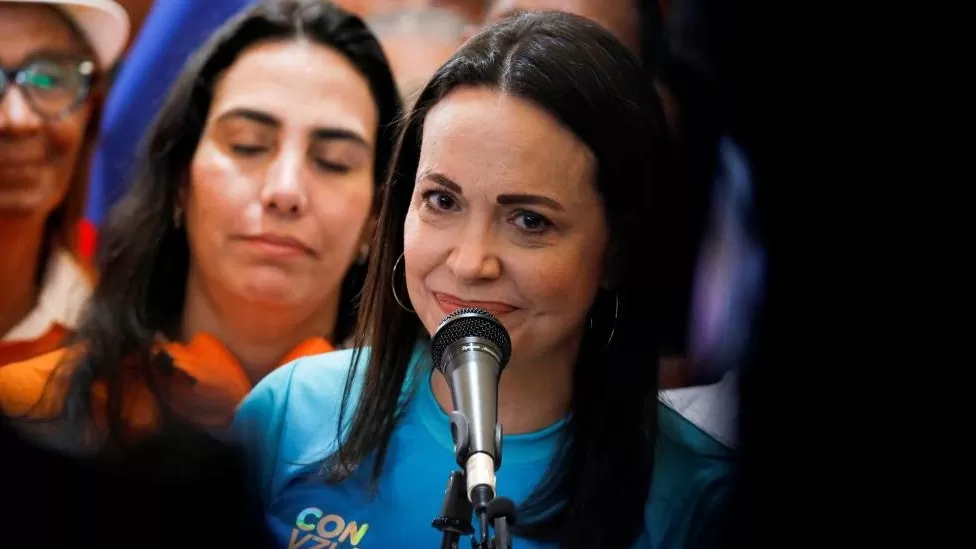
Venezuela opposition conducts vote to select candidate for unity
Venezuela’s opposition is having a vote to pick someone to run for president in 2024.
Opposition parties have arranged the poll without any assistance from the National Electoral Council, which is led by a close friend of President Nicolás Maduro.
MrMaduro, who has been the leader since 2013, is likely to try to become the leader again in the 2024 election.
The opposition believes that their best way to defeat him is by coming together and supporting one candidate.
Opposition parties have not participated in previous presidential elections because many of their candidates were either imprisoned or disqualified from running. But they want to participate in 2024 even though they know it will be difficult.
They discussed their plan to have a primary election as soon as May 2022 and officially shared the news in October 2022.
But when they asked the National Electoral Council (CNE) for help to organize the primary, the CNE, which is mostly made up of people who support the government, did not respond until September 2023. At that time, the CNE recommended delaying the primary until November.
The opposing group said no and decided to plan and hold the primary election on their own. It says there will be over 3,000 places where people can vote.
The group of 13 candidates has become smaller to just 10 people. This happened because Henrique Capriles, who has tried to become president before but didn’t succeed, Freddy Superlano from the Popular Will party, and Roberto Enríquez from the Copei party, decided to not participate in the race anymore.
Polls show that the clear favorite is María Corina Machado, a 56-year-old former politician.
Although it is highly likely that Ms. Machado will win the primary, it is uncertain what will happen if she is selected.
This is because Ms Machado has been forbidden from being in charge for 15 years. She was banned in June by the comptroller-general, Elvis Amoroso, who is a friend of Maduro and now leads the CNE.
MsMachado is sure that if she wins the primary election, the government will feel so much pressure that they will put her back in her previous position.
On Tuesday, there was an agreement signed in Barbados between opposition negotiators and government representatives. However, there was confusion about a certain aspect of the agreement. The opposition negotiator believed it allowed disqualified candidates to participate in elections, while the leader of the government delegation disagreed with this interpretation.
The United States made some of its restrictions on Venezuela’s oil and gas industry less strict because Venezuela agreed to let international observers monitor its presidential election in 2024.
The US Secretary of State, Antony Blinken, was happy about the agreement, but gave a warning that the US could put sanctions back if the government of Maduro in Venezuela does not start allowing opposition presidential candidates by the end of November. -
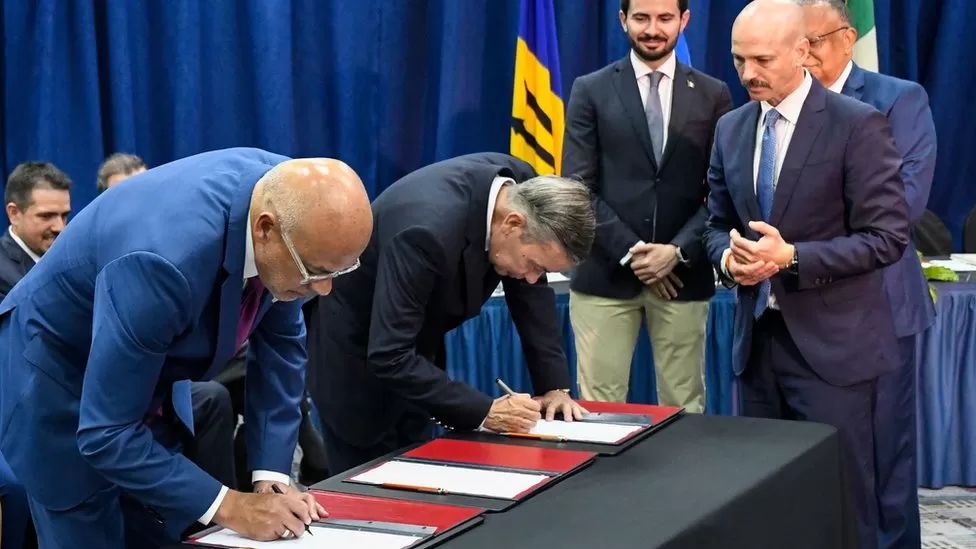
Venezuela takes action to ensure credible elections
Government officials and opposition representatives from Venezuela have agreed to a plan that sets the foundation for fair presidential elections that everyone agrees should happen.
The government said they will ask other countries to come and watch the election happening later in 2024.
The 2018 election was thought to be unfair. The agreement was made in Barbados.
The agreement is a special achievement after 11 months of no progress in the talks.
However, experts say that it does not solve the problems that the opposition has been trying to fix.
There is no talk about freeing political prisoners or allowing certain opposition candidates to participate in the 2024 election.
The US, EU, Canada, and UK welcomed an agreement in Venezuela as an important step towards restoring democracy. They believe it is crucial for inclusive discussions to continue.
But it’s important to note that there is still a lot of work to be done. The statement asks for the immediate release of all people who have been unfairly arrested, for elections to be fair and independent, for the courts to be fair and independent, for freedom of speech (including for journalists), and for people to be treated with dignity and have the right to participate in politics.
The agreement signed on Tuesday has 12 points. These points include promises to make sure all candidates can use public and private media, and to ensure they can move freely and safely across the country.
The two groups have agreed to update the lists of voters, both in Venezuela and other countries, so that Venezuelans who have moved away can still vote.
However, there is already a disagreement about the qualifications that candidates need to have in order to run for the presidency.
The paper states that anyone who meets the requirements set by the constitution can register for the presidential election.
The leader of the opposition group, Gerardo Blyde, said that this could give a chance for opposition candidates who have been prevented from holding positions to “regain their rights. ”
However, the head of the government team, Jorge Rodríguez, seemed to say something different. He said that people who were not allowed to be candidates by the comptroller-general would not be allowed to participate in the 2024 election.
The problem is very controversial because many well-liked opposition leaders have been banned by the comptroller-general, who is a close friend of President Maduro.
One of the candidates in Sunday’s election to choose someone to represent the opposition in the 2024 election is believed to be María Corina Machado, who is considered the top contender.
The 56-year-old ex-legislator has said no to leaving the competition. She believes that if she becomes the opposition candidate on Sunday, the Maduro government will have to give in and allow her to participate.
The government hasn’t officially said who they will choose as their candidate, but many people think Mr. Maduro will run again.
The Maduro government wants the deal on Tuesday to help reduce the strict rules imposed by the US, which became stricter after his win in 2018. The US says his victory was not fair or valid.
The United States is very interested in resolving the crisis in Venezuela because a lot of Venezuelans have been forced to leave their country due to the bad economy, and many of them are going to the United States.
Venezuela has a lot of oil, more than any other country. If the US eases up on the restrictions they have on Venezuela’s oil industry, it would help both countries’ economies. -
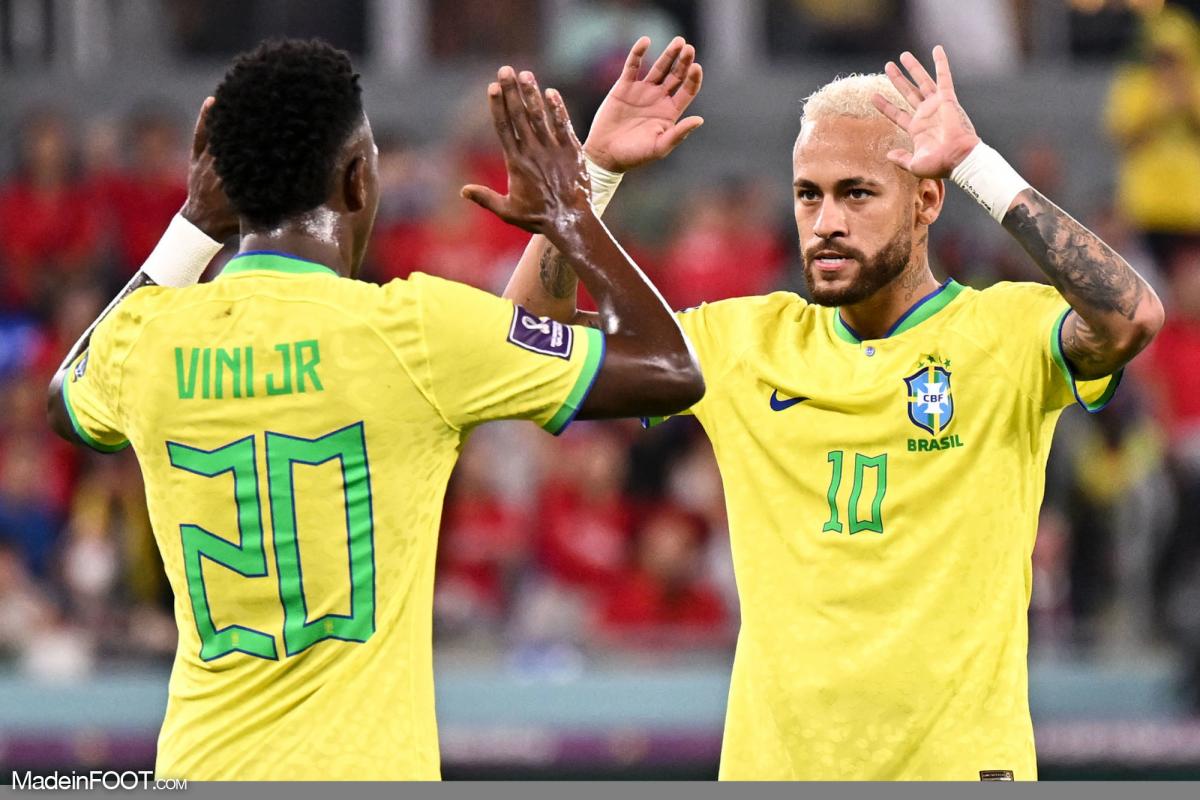
Neymar, Vinicius team-up excites Brazil’s coach Diniz ahead Venezuela clash
Brazil’s interim coach, Fernando Diniz, is eagerly anticipating the prospect of Neymar (31) and Vinicius Jr (23) teaming up in the 2026 World Cup qualifier against Venezuela.
He emphasises his commitment to fostering team unity as he temporarily leads the squad.
Diniz assumed his role after Tite’s departure, which followed Brazil’s quarter-final exit at the World Cup in Qatar. It’s worth noting that Real Madrid coach Carlo Ancelotti is set to take over next year.
Nevertheless, at 49 years old, Diniz, who juggles his responsibilities with Fluminense, remains determined to leave his mark on the national team and maintain their position atop the South American qualifying competition.
“(Neymar and Vinicius) are extremely good players, very intelligent and skilled, and they like each other. There is also Rodrygo, a player of a very high level,” he said.
“We hope they get on well in tomorrow’s game, as they have done in training, and that they can have a great game.”
Vinicius, who usually plays in the same position as Neymar, returns to the squad after missing the first two qualifiers through injury.“My first interaction with Vinicius was excellent; today he is one of the greatest players in world football. Let’s hope he is comfortable playing,” he added.
Finding balance and building unity is Diniz’s main objective in order to have a “competitive team”.
“I feel a positive camaraderie from the players, who like each other very much, forming that feeling of family. The older ones know how to welcome very well those who arrive; both my committee and the players called up,” he said.
Brazil is set to play against Venezuela in Cuiaba before embarking on a match against Uruguay in Montevideo five days later.
-

Tocorón prison: Venezuela recaptures gang-run prison with its own zoo
Venezuela claims it has taken back control of a well-known prison that was previously run by a dangerous criminal gang called Tren de Aragua.
Around 11,000 security officers were sent to Tocorón prison, which had been controlled by prisoners for a long time.
Prisoners could move around easily within the prison. The prison was like a hotel with a pool, nightclub, and mini zoo.
The minister in charge of prisons said that all the prisoners would be removed from the jail.
Tocorón not only had imprisoned bad people but also had their partners and relatives living there with them, to be close to them.
Gladys Hernández, a woman, said she was waiting to find out where they were taking her husband, according to AFP news agency.
“She said she used to live there, but they made us leave. ”
The jail was also used as the main base for the Tren de Aragua, which is Venezuela’s most powerful international gang.
Tren de Aragua, who was in jail, controlled a criminal group that operated in many Latin American countries, even reaching Chile.
The people involved in this group do bad things like forcing people into slave labor, operating illegal sex businesses and taking money from immigrants by threatening them.
The group made sure the prison had lots of nice things, like rooms to play games and a small zoo with flamingos and an ostrich.
Prisoners were able to bet on horse races, borrow money from an informal bank, and party at a nightclub called “Tokio”.
During Venezuela’s economic crisis, it was difficult to find food and basic items. A newspaper said that people would go to Tocorón to buy things they couldn’t find anywhere else.
The AFP journal reported that security guards were taking motorcycles, TVs, and microwaves out of the jail when the prisoners were being transferred.
Ronna Rísquez, who wrote the book Tren de Aragua: The gang that changed organized crime in Latin America, spoke to BBC Mundo’s Valentina Oropeza and said that Tocorón operated like a small city.
The writer also said that getting rid of the prisoners does not automatically mean the gang is gone too.
She said that their main place of work has been shut down, but the leaders of this group and its branches in other countries can still keep working.
Officials did not provide much information about how they entered the prison. The military said that someone had been hurt, a mayor who passed away from hitting his head on the armored car’s door.
The authorities are wondering if they made a deal with the Tren de Aragua because the operation at the dangerous gang’s jail went smoothly.
The government of President Nicolás Maduro praised the security forces for restoring order at the prison and praised their quick and effective actions.
However, a later announcement said that a “second part” of the operation had started, and the government said they were trying to catch all of the criminals who had escaped.
A few local news have said that the leader of the Tren de Aragua gang, Héctor Guerrero Flores, might be one of the people who ran away, but the government hasn’t identified any of the escapees.
Guerrero Flores was in jail for 17 years because he committed murder and sold drugs.
But, according to Carlos Nieto, a coordinator with a group that fights for prisoners’ rights called A Window to Freedom, he was very strong and could apparently move in and out of the prison whenever he wanted, even though he eventually became a full-time inmate. -
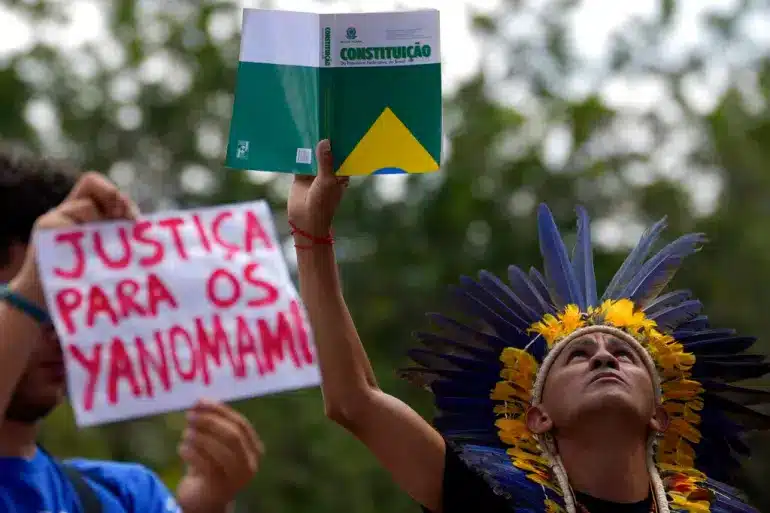
Brazil’s Yanomami Indigenous people face crisis, calls for action
Amazonian indigenous communities are under attack as corporate interests aggressively expand their operations.
As illegal gold miners threaten them with violence and obstruct the delivery of supplies like food and medicine to their troubled region, Brazilian officials claim that the Yanomami Indigenous people are forced to live in appalling conditions.
Weibe Tapeba, the Indigenous Health Secretary, stated on Tuesday that the government needs to remove the miners, some of whom are heavily armed, from a section of the Yanomami reservation close to the Venezuelan border.
“It looks like a concentration camp,” Tapeba said of the Yanomami’s living conditions in a radio interview. “It’s an extreme calamity. Many Yanomami are suffering from malnutrition and there is a total absence of the Brazilian state.”
The statement comes three days after Brazil declared a public health emergency for the Yanomami people in the Amazon rainforest, who suffer from malnutrition and diseases like malaria due to the actions of the miners.
Under former far-right President Jair Bolsonaro, critics have said the government largely stood by as Indigenous rights were violated and forests were torched, allowing business interests to illegally extend their reach into the Amazon.
An April 2022 report by the Hutukara Yanomami Association found a 46-percent increase in the area of land on the Yanomami reservation that was scarred by “garimpo”, or wildcat gold mining, in 2021.
Tapeba also said that an invasion of about 20,000 illegal gold miners contaminated rivers and their fish with mercury, poisoning a food source for the Yanomami and causing children to lose their hair.
President Luiz Inacio Lula da Silva, who defeated Bolsonaro in the 2022 elections and was sworn in earlier this month, visited the region last weekend after photos were published of Yanomami children and elderly so malnourished that their ribs were protruding.
Lula has promised to crack down on illegal business activity in the Amazon, protect Indigenous communities and reverse the massive deforestation that proliferated during Bolsonaro’s time in office.
On Monday, Justice Minister Flavio Dino also stated that there was “evidence of genocide” that was under investigation.
“Health teams cannot get here because of the heavily armed bandits. This can only be resolved by removing the gold miners, and that can only be done by the armed forces,” said Tapeba, who was appointed by Lula’s government.
The group Survival International warned in December that malnutrition among the Yanomami was reaching critical levels, citing a report by UNICEF showing that children under the age of five were dying of preventable disease at 13 times the national average.
In a statement, Survival International director Fiona Watson called the situation “a deliberate, man-made crisis, stoked by President Bolsonaro, who has encouraged the mass invasion and destruction of the Yanomami’s lands”.
Bolsonaro’s government, which was in power from 2019 to 2022, has faced widespread criticism for turning a blind eye to illegal activities in the Amazon, leading to increased violence as the interests of loggers, miners and other illicit operations clashed with Indigenous people and land defenders.
In October 2021, the Catholic Church’s Indigenous Missionary Council said there were 182 murders of Indigenous people in 2020, compared with 113 murders in 2019, a 61-percent increase.
On Monday, Brazilian authorities said that a fish trader was likely behind the 2022 assassination of Indigenous expert Bruno Pereira and British journalist Dom Phillips in the Amazon.
The suspect, Ruben Dario da Silva Villar, allegedly ordered the murders because Pereira, a former employee of Brazil’s federal Indigenous agency FUNAI, was causing losses to his illegal fishing operation.
Deforestation also reached dizzying heights during Bolsonaro’s tenure, increasing 150 percent in December over the previous year. Bolsonaro, a noted agribusiness ally, had pushed for development in the Amazon as a way to increase economic activity and address poverty.
-
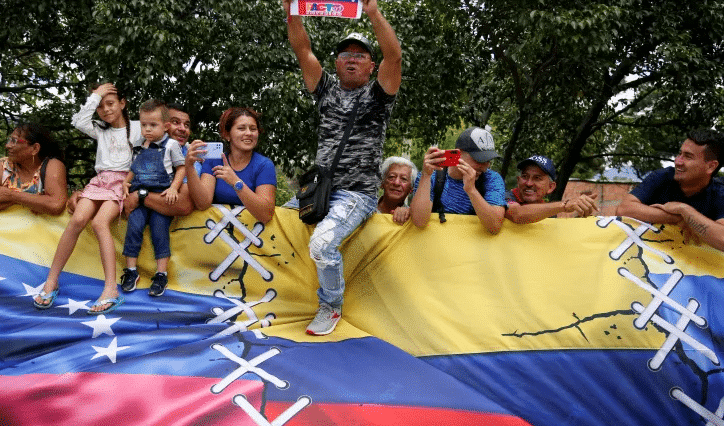
Colombia, Venezuela to fully reopen shared border
According to a statement from Colombia Migration, Venezuela and Colombia will fully restore their common border on January 1 to permit the transportation of goods and people via the Tienditas International Bridge.
The border crossing between the South American nations was previously restored in September in western Venezuela’s Tachira state after political ties under Gustavo Petro, the new president of Colombia, were reinforced.
Nicolas Maduro of Venezuela and Petro were each named ambassadors to Bogota and Caracas, respectively.
The restoration of the 2,200km (1,367 miles) common border between Colombia and Venezuela, as stated by Colombian authorities since September, would be progressive.
Government representatives from Venezuela were monitoring the Tienditas Bridge’s infrastructure last week.
“We completely reopen the border between our countries in order to guarantee the movement of cargo and passengers, and to promote trade and tourism in Colombia and Venezuela, not only by land but also by air and river,” said Colombia’s Minister of Transport Guillermo Reyes Gonzalez on Saturday.
Two bridges in Tachira and the western Zulia state allow people and freight to cross the border already. In November, flights between the two major cities—Caracas and Bogota—restarted.
According to official figures from Colombia, the value of the trade between the two nations is approximately $580 million.
-
Venezuela takes the first step out of its political impasse
The Venezuelan government and opposition have reached a preliminary agreement to resolve the country’s political crisis.
During talks in Mexico, the two issued a joint statement asking for the release of billions of dollars frozen abroad to help fund social projects.
It comes after years of failed attempts to break the political impasse.
In response, the United States announced that it would allow the American oil company Chevron to resume some operations in Venezuela.
President Nicolás Maduro has become increasingly authoritarian since his election in 2013.
His crackdown on opposition activists ultimately led to the US imposing sanctions on his regime and recognising opposition leader Juan Guaidó as interim president in 2019 after a contested election.
Since then, several rounds of talks aimed at finding a way out of the political deadlock have gone nowhere – with the last negotiations failing just over a year ago.But now, the government and the opposition – with the help of Norway as mediator – have drawn up an agreement that aims to ensure that billions of dollars frozen abroad will be gradually released by a UN-managed fund, to be put towards healthcare, education and food aid.
The funds were blocked by foreign banks over the alleged irregularities in the 2018 elections.
The progress made on Saturday has been welcomed by the US, who described it as a step in the right direction.
It also said oil company Chevron would be able to resume some activity in Venezuela, including importing Venezuelan crude in the US.
The agreement represents “hope for all of Latin America,” Mexican Foreign Minister Marcelo Ebrard said in comments cited by AFP.
The BBC’s South America correspondent Katy Watson warns, however, that it is still early days for the talks.
No progress has been made so far on one critical issue – the 2024 presidential election.
The Venezuelan opposition is calling for free elections, while President Maduro is seeking full recognition of his rule from the US and European countries.
Venezuela has been caught in a downward spiral for years with growing political discontent further fuelled by skyrocketing hyperinflation, power cuts, and shortages of food and medicine.
-
US and Mexico makes pact to lessen migration from Venezuela
A deal between the US and Mexico permits some Venezuelan migrants to enter the US; but, those who do so illegally will be deported to Mexico.
The agreement is expected to reduce strain at the US-Mexico border, as Venezuelans continue to depart the crisis-hit country in large numbers.
Starting immediately, flights will be arranged for 24,000 migrants to arrive in the United States.
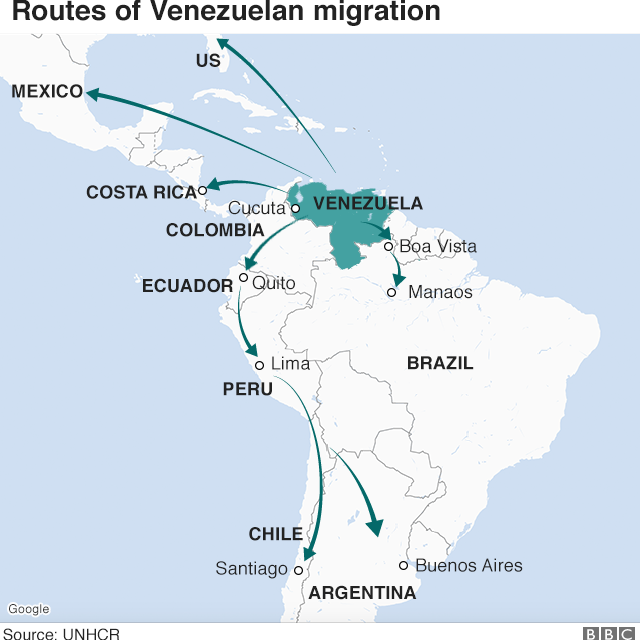
Some six million people have left Venezuela in the past five years.
The exodus is one of the largest migrations in the world, fuelled by violence, food, fuel, and medicine shortages, and repression by the government of President Nicolás Maduro.
It has seen people desperate to improve their lives walking thousands of miles along dangerous routes to try to reach the US-Mexico border, where they then try to enter illegally or claim asylum.
Under the new deal, which is effective immediately, the 24,000 eligible Venezuelan migrants – a tiny fraction of those who have fled – will be allowed to access the US by air, and stay for up to two years.
They must still be in Venezuela, and not have made the trek to the US-Mexico border, the US Department of Homeland Security said in a statement.
They will also need to have a person or organization based in the US to provide financial support and back up their claim to be part of the programme.
It will come as a huge relief to those who are set to benefit from it. In theory, they will be spared the exhausting and dangerous journey to the US border and instead will be able to fly into the country, where support measures are in place.
However, one major policy shift is that any undocumented Venezuelans who cross the southern border now face expulsion to Mexico – where previously, authorities usually did not accept expulsions of Venezuelans.
This is a part of a controversial Trump-era policy called Title 42, which allows the US to swiftly expel undocumented migrants, thus taking away their chance to claim asylum. It was brought in during the pandemic to help prevent the spread of Covid-19 in holding facilities, officials said.
Until now most Venezuelans who crossed into the US were not turned back – instead, they were temporarily allowed in and had the chance to apply for asylum.
Now, Venezuelans found to have entered the US illegally – of which there are many thousands – could be sent to Mexico.
The US and Mexican governments have said the policy is designed to discourage people from making the perilous trek across South America and Mexico – which they have been doing in record numbers over the past year as Venezuela’s economic and political situation worsens.
The programme is based on a similar US model called Uniting for Ukraine, which offered safe haven to more than 100,000 Ukrainians who fled their country after Russia invaded earlier this year.
The so-called “humanitarian parole programme” has been launched with the US midterm elections looming in November.
The Biden administration is undoubtedly hoping the idea of helping Venezuelans who are fleeing poverty, political turmoil, and violence will play well politically, especially if it is combined with also expelling thousands who crossed the southern border illegally.
However, with the vote so close, it may have a limited impact, and in the meantime, many thousands of desperate and tired Venezuelan migrants are caught in the middle.
The BBC uses the term migrant to refer to all people on the move who have yet to complete the legal process of claiming asylum. This group includes people fleeing war-torn countries, who are likely to be granted refugee status, as well as people who are seeking jobs and better lives, who governments are likely to rule are economic migrants.
-
Venezuela releases 7 American inmates; the US releases 2
Seven Americans were released by Venezuela in exchange for the release of two of President Nicholas Maduro’s wife’s nephews who had spent years in prison due to drug smuggling convictions in the US.
The Biden administration exchanged the most imprisoned Americans ever, including five oil executives who had been held for nearly five years, on Saturday.
“These individuals will soon be reunited with their families and back in the arms of their loved ones where they belong,” President Joe Biden said in a statement.
“Today, after years of being wrongfully detained in Venezuela, we are bringing home” the seven men, whom the president cited by name. “We celebrate that seven families will be whole once more.”
The prisoner swap amounts to a rare gesture of goodwill by Maduro as the socialist leader looks to rebuild relations with the US after vanquishing most of his domestic opponents.
The deal follows months of back-channel diplomacy by Washington’s top hostage negotiator and other US officials – secretive talks with a major oil producer that took on greater urgency after sanctions on Russia put pressure on global energy prices.
Those freed include five employees of Houston-based Citgo – Tomeu Vadell, Jose Luis Zambrano, Alirio Zambrano, Jorge Toledo and Jose Pereira – who were lured to Venezuela in 2017 to attend a meeting at the headquarters of the company’s parent, state-run-oil giant PDVSA. Once there, they were hauled away by masked security agents who burst into a Caracas conference room.
Also released was Matthew Heath, a former US Marine corporal who was arrested in 2020 at a roadblock in Venezuela on what the Department of State has called “specious” weapons charges, and Osman Khan who was arrested in January.
The US freed Franqui Flores and his cousin, Efrain Campo, nephews of “First Combatant” Cilia Flores, as Maduro has called his wife.
The men were arrested in Haiti in a Drug Enforcement Administration sting in 2015 and immediately taken to New York to face trial. They were convicted the following year in a highly charged case that cast a hard look at US accusations of drug trafficking at the highest levels of Maduro’s administration.
The Biden administration has been under pressure to do more to bring home the roughly 60 Americans it believes are held hostage abroad or wrongfully detained by hostile foreign governments.
While much of the focus is on Russia, where the US has so far tried unsuccessfully to secure the release of WNBA star Brittney Griner and another American Paul Whelan, Venezuela has been holding the largest contingent of Americans suspected of being used as bargaining chips.
At least four other Americans remain detained in Venezuela, including two former Green Berets involved in an attempt to oust Maduro in 2019.
“To all the families who are still suffering and separated from their loved ones who are wrongfully detained – know that we remain dedicated to securing their release,” Biden said.
-
Mexico: The most dangerous country in the world for environmental advocates
According to a report released on Wednesday by the advocacy group Global Witness, Latin America saw the highest number of environmentalist deaths worldwide in 2017.
Up to 200 environmentalists were killed worldwide in 2021, with 75 percent of the deaths taking place in Latin America. The entire number was 227 in 2020.
Mexico had the most deaths at 54 and jumped from its number of 30 reported in 2020. Colombia and Brazil came next, with 33 and 26 cases respectively.
Mexico, Brazil, Nicaragua, and Peru together accounted for over half the total deaths. Indigenous people were the recipients of more than 40% of the attacks, said the report.
In Mexico, officials believe local authorities are implicated in about 40% of the killings based on preliminary investigations.
Land conflicts biggest cause
“These lethal attacks continue to take place in the context of a wider range of threats against defenders who are being targeted by the government, business and other non-state actors with violence, intimidation, smear campaigns, and criminalization,” the organization said in its report.
“This figure is likely to be higher as the reasons behind attacks on land and environmental defenders are often not properly investigated nor reported,” it added.
Global Witness said land conflicts such as resource exploitation, logging, mining, and large-scale agriculture were behind many attacks.
Killings related to mining and extraction activities were highest with 27 cases. Mexico, the Philippines, and Venezuela had 14, 6, and 4 cases respectively.
-
After 7 years Colombia and Venezuela reopen border crossing
Colombia’s newly elected president, Gustavo Petro, made the reopening a centrepiece of his campaign. Seven years had passed since the Simon Bolivar international bridge was closed.
Colombia and Venezuela on Monday reopened their border after years of impasse.
The reopening was a key campaign promise of left-wing Colombian president Gustavo Petro, who assumed office last month. The two countries subsequently re-established diplomatic relations.
“This is a historic day for the country, for the region, and for the Americas in general,” Petro said.
On foot, Petro crossed the Simon Bolivar international bridge, dividing the Venezuelan town of San Antonio from Colombia’s Cucuta and Villa del Rosario. Having crossed the border, he met with a Venezuelan delegation including Transport Minister Ramon Velasquez and Industry Minister Hipolito Abreu.
Petro and the Venezuelan delegation accompanied the first cargo truck to cross the border after the reopening.
“I want the first people who benefit to be those who live on either side of the border, those who risked (illegal crossings),” Petro said in later comments.
“The result should be a qualitative jump in human rights all along the Colombian-Venezuelan border,” he said.
Petro said that a second road bridge near Cucuta would open within weeks.
The Simon Bolivar bridge had officially been closed to trade for nearly seven years. Venezuelan President Nicolas Maduro ordered border crossings closed in 2015 during what he described as a crackdown on smuggling.
Cargo transport had previously only been allowed through one northern crossing.
In 2019, tensions between the two countries rose after the Colombian government attempted to deliver truckloads of aid to the Venezuelan opposition.
The border was then shut down for a year. It was then reopened to traffic by foot.
-
Venezuelans on spiritual mountain retreat reported missing
Emergency workers are searching for a group of people who disappeared while on a spiritual retreat in the Andes.
Drones and dogs are being deployed to comb the mountainous area around La Grita, in Venezuela’s Táchira state.
An official with the civil protection team said between 16 and 20 people were missing, but local media suggest the number could be higher.
Relatives say they have not heard from their loved ones since they left for the retreat on 22 August.
Neighbours told local paper La Nación that a number of local families had packed food and camping mats and set off into the mountains on what they described as a four-day spiritual retreat.
A priest in La Grita said the group had followed a woman who claimed to have received a revelation by the Virgin Mary.
In his Sunday sermon, the priest warned of the dangers of believing in “fanatics” who made claims about the end of the world being nigh.
Yesnardo Canal of the local civil protection authority said a newborn and a number of children were among the missing.
On Tuesday, a search team combed through the area where locals had reported seeing the group but found nothing.
La Grita is located at a height of 1,440m (4,725ft) but the surrounding moorlands reach a height of 3,000m.
The mayor of the area said that the families’ disappearance was “very suspicious”. “There are several theories [of what may have happened] but we won’t know what really happened until the investigations have been concluded,” the official added.
Source: BBC
-
London’s High Court rules against Venezuela’s Maduro in $1 billion gold battle
London’s High Court has rejected President Nicolas Maduro’s latest efforts to gain control of more than $1 billion of Venezuela’s gold reserves stored in the Bank of England’s underground vaults in London.
The court ruled on Friday that previous decisions by the Maduro-backed Venezuelan Supreme Court aimed at reducing opposition leader Juan Guaido’s say over the gold should be disregarded.
It marked the latest victory for Guaido, who has won a series of legal clashes over the bullion after the British government recognized him rather than Maduro as the Latin American country’s president.
“I have … concluded that the Guaido Board succeeds: that the STJ (Venezuelan supreme court) judgments are not capable of being recognized,” the judge in the case said.The Maduro and Guaido camps have each appointed a different board to the Central Bank of Venezuela (BCV) and the two have issued conflicting instructions concerning the gold reserves.
Lawyers for the Maduro-backed BCV board said the central bank was considering an appeal after Friday’s ruling, while Guiado, who has seen some international support falter over the last 18 months, called it an important victory.
Maduro’s legal team has said he would like to sell some of the 31 tonnes of gold to finance Venezuela’s response to the pandemic and bolster a health system gutted by years of economic crisis.
Guaido’s opposition has alleged that Maduro’s cash-strapped administration wants to use the money to pay off his foreign allies, which his lawyers deny.
“This decision represents another step in the process of protecting Venezuela’s international gold reserves and preserving them for the Venezuelan people,” Guaido said in a statement.
“This type of honest and transparent judicial process does not exist in Venezuela.”
In the British government in early 2019 joined dozens of nations in backing Guaido, after he declared an interim presidency and denounced Maduro for rigging the 2018 elections.
Guaido at that time asked the Bank of England to prevent Maduro’s government from accessing the gold. Maduro’s central bank then sued the Bank of England to recover control, saying it was depriving the BCV of funds needed to finance Venezuela’s coronavirus response.
Legal experts have said the latest case has been unprecedented as it has seen one country’s highest courts interpreting the constitution of another.
“This is an unfortunate ruling,” said Sarosh Zaiwalla at Zaiwalla & Co, which represented the Maduro-backed central bank, adding that it would continue to pursue the case despite Friday’s decision.
“The BCV remains concerned that the cumulative effect of the judgments of the English Court appears to accord a simple statement by the UK Government recognizing as a head of state a person with no effective control or power over any part of that state,” Zaiwalla added.
Source :reuters.com
-
Alex Saab: Detained Venezuelan diplomat ordered on house arrest by Cabo Verdean court
Alex Saab, a Venezuelan diplomat who has been in a Cabo Verdean prison since June 2020 on a U.S. arrest warrant is said to have had his application seeking his removal from prison approved by the Barlavento Court of Appeal.
The court on Thursday, January 21, 2021, said Alex Saab, 49, should rather be placed under house arrest while he fights an extradition request to face corruption charges in South Florida.
This, the court said, should be adhered to, till the apex court of Cabo Verdean gives its final verdict on the case.
“For the practical effect of this article, the extradited person, as already exposed, and once he has financial possibilities and has already requested it, must qualify a residence for the purposes of his stay, which will be approved by the competent authorities, the criminal police, to safety effects and in order to avoid the serious danger of escape,†a portion of a document from the court reads.
“Prosecutors in Cabo Verde said in a statement that the decision for house arrest was partly based on the fact that Saab has remained provisionally detained longer than the maximum allowed,” reports Times Union.
Mr. Saab, a known businessman closely associated with the current Venezuelan government was arrested by police in Cape Verde last year on his way to Iran aboard a private jet.
According to Times Union, U.S. officials believe Saab holds many secrets about how Maduro, his family and top aides allegedly siphoned off millions of dollars in government contracts amid widespread hunger in the oil-rich nation.
Prior to the approval of Saab’s application, a survey assessing the decisions of the Cape Verdean government in the case showed that citizens in that country are unhappy with the actions the government has taken so far.
The survey report said the government acted unfairly by taking a side when it should have remained neutral in the impasse between the U.S. and Venezuela over the arrest and detention of Saab.
Venezuela, which said it had given Saab a diplomatic status is of the view that he cannot be extradited to the U.S. because he is their diplomat and was on an assignment for them when he was arrested.
Besides the three countries involved in the case, other African countries also waded into the matter. A group of lawyers including Nigeria’s famed human rights lawyer and former president of the West African Bar Association, Femi Falana, earlier this month jointly wrote to the president of Cape Verde, Jorge Carlos Fonseca, to call for Alex Saab’s immediate release.
They said his detention is illegal and a breach of international law.
Source:Â www.ghanaweb.com
-
Venezuela charges Americans with terrorism, conspiracy
Venezuela has charged two former US soldiers with terrorism and conspiracy for allegedly taking part in a failed bid to topple President Nicolas Maduro, the attorney general said on Friday.
Luke Alexander Denman, 34, and Airan Berry, 41, were among 17 people captured by the Venezuelan military, which said it had thwarted an attempted invasion by mercenaries in the early hours of Sunday.
Attorney General Tarek William Saab said they had been charged with “terrorism, conspiracy, illicit trafficking of weapons of war and (criminal) association,” and could face 25-30 years in prison.
Eight attackers were reportedly killed in the incident.
Saab said Venezuela had requested an international arrest warrant for the capture of former US army medic Jordan Goudreau, who allegedly organized and trained the mercenary force.
Maduro has accused President Donald Trump of being behind the alleged invasion — and Saab said Friday the Venezuelans involved would be tried for “conspiracy with a foreign government.”
Trump has roundly rejected the accusation, telling Fox News on Friday: “If I wanted to go into Venezuela I wouldn’t make a secret about it.”
“I’d go in and they would do nothing about it. They would roll over. I wouldn’t send a small little group. No, no, no. It would be called an army,” he said. “It would be called an invasion.”
Venezuela said on Monday it had arrested the two former US special forces soldiers and on Wednesday Maduro, who showed the pair’s passports on state television, said they would be tried.
The US army has confirmed they were former members of the Green Berets who were deployed to Iraq.
Secretary of State Mike Pompeo said the US government would “use every tool that we have available to try to get them back.”
– Bay of Pigs ‘remake’ –
Maduro described the raid as a “remake” of the failed 1961 Bay of Pigs invasion, when Cuban exiles covertly financed and directed by the US government attempted to overthrow then Cuba leader Fidel Castro.
Announcing the arrests, Saab said Venezuela’s opposition leader Juan Guaido, who is backed in his challenge to Maduro’s authority by the United States and more than 50 other countries, was behind the mission.
Saab accused Guaido of signing a $212 million contract with “hired mercenaries” using funds seized by the US from the state oil company PDVSA.
On Friday the attorney general said arrest warrants had also been requested for US-based Venezuelans Juan Jose Rendon and Sergio Vergara.
Rendon, an advisor to Guaido, admitted in an interview with CNN that he had signed a contract with Silvercorp USA, a private security firm founded by Goudreau.
The Iraq and Afghanistan veteran admitted the existence of the operation in a video and claimed Silvercorp was contracted by Venezuela’s opposition.
In the video, Goudreau showed what he claimed was a contract signed by Guaido, whose press team denied the allegation.
He also told The Washington Post that he hired Denman and Berry as “supervisors” and had known them for years.
Rendon told CNN the contract was “exploratory” and that no green light was given to an operation in Venezuela. He also denied Guaido was involved.
Despite the Venezuela regime’s accusations against Guaido, he has not been charged with anything.
Source:Â france24.com
-
Venezuela prison riot leaves dozens dead
A riot erupted at a prison in central Venezuela on Friday, killing at least 40 people and injuring 50 more, including a National Guard officer who was wounded by an explosion and the warden, who suffered a knife wound, authorities said.
The upheaval at the Llanos Penitentiary Center started with an inmate protest demanding that their relatives be allowed to deliver them food and then an armed confrontation broke out between inmates and guards, lawmaker MarÃa Beatriz MartÃnez told The Associated Press.
The National Guard officer was injured by a grenade explosion, said MartÃnez, who had access to an early report prepared by the town’s security forces. The prison is located in the city of Guanare, 450 kilometers (280 miles) south-west of the capital of Caracas.
Venezuela’s minister of penitentiary services, Iris Varela, confirmed the riot, telling the local newspaper Ultimas Noticias that a group of inmates attacked officers standing guard outside the prison.
The warden was injured by at least one inmate wielding a knife, Varela said.
A once-wealthy oil nation, Venezuela is gripped by a deepening political and economic crisis. Street violence is common in the nation that has had nearly 5 million residents flee in recent years as public services crumble.
Venezuela has roughly 30 prisons and 500 jails that can hold an estimated 110,000 inmates. Human rights officials say the prisons are violent and badly overcrowded, with gangs that traffic weapons and drugs in control.
According to the human rights group Venezuelan Prison Observatory, the Guanare prison was built to hold 750 inmates but is jammed beyond capacity with 2,500 inmates.
A similar riot occurred a year ago in a nearby jail also in the state of Portuguese, where 29 inmates died at a police jail that housed several hundred detainees. Violence broke out when armed inmates objected to officers entering the jail.
Source:Â france24.com
-
Venezuela asks IMF for $5 billion to tackle coronavirus
President Nicolas Maduro’s government has requested $5 billion from the International Monetary Fund (IMF) to deal with the coronavirus pandemic in Venezuela, where 33 cases have been reported so far.
“We come up to your honorable organism to request your assessment, regarding the possibility of granting Venezuela a financing facility for $5 billion from the Emergency Fund of the Rapid Financing Instrument (IFR), resources that will contribute significantly to strengthen our detection and response system ” reads the letter signed by Maduro.
Venezuelan Foreign Affairs Minister Jorge Arreaza published the letter on his Twitter account on March 17.
“President Nicolas Maduro has formally requested financing for $5 million to the International Monetary Fund to strengthen the response capacity of our health system during the Covid-19 contingency. Another timely action to protect the people,†Arreaza wrote.
It is the first time Venezuela turns to the International Monetary Fund in almost 20 years. In 2007, Former President Hugo Chavez announced the country was withdrawing from the IMF because he believed it served U.S. interests, but the decision to withdraw was not materialized.
In January last year, the IMF suspended activity with Venezuela because of the political crisis in which it is immersed.
The letter, dated March 15th, 2020, is addressed to the Managing Director of the IMF, Kristalina Georgieva, and mentions the “hard and unexpected battle the world is facing today against the outbreak of the new coronavirus”.
“Only under the spirit of solidarity, brotherhood and social discipline we will be able to overcome the situations that come our way, and we will know how to protect the life and well being of our people,†it adds.
Maduro has placed the country in quarantine to prevent the spread of the coronavirus, and has suspended all work and school activities.
“I want to announce that starting Tuesday, March 17, Venezuela will enter into social quarantine, the entire country, the 23 states and the capital district, all into social quarantine, into collective quarantine,” Maduro said on Monday. He confirmed 16 new coronavirus cases, reaching a total of 33.
Source: www.aa.com.tr
-
IMF rejects crisis-hit Venezuela’s request for $5 bn virus aid
The International Monetary Fund on Tuesday rejected economically devastated Venezuela’s request for a $5 billion loan to help it cope with the onslaught of coronavirus on the country that an aid agency warned is as prepared as war-torn Syria.
President Nicolas Maduro made the request earlier Tuesday but, in a statement hours later, the Washington-based institution indirectly cited a dispute over Maduro’s leadership in denying his petition.
In a letter to IMF chief Kristalina Georgieva, Maduro said a $5 billion loan from the IMF’s Rapid Financing Instrument (RFI) “will contribute significantly to strengthening our detection and response systems.”
It was the country’s first loan request to the IMF since 2001.
“Unfortunately, the Fund is not in a position to consider this request,” because there is “no clarity” on international recognition of the country’s government, the Washington-based institution said in a statement.
“As we have mentioned before, IMF engagement with member countries is predicated on official government recognition by the international community, as reflected in the IMF’s membership. There is no clarity on recognition at this time,” the statement said.
More than 50 countries including the United States have not recognized Maduro for more than a year, after switching allegiance to opposition leader Juan Guaido who declared himself acting president.
Guaido branded Maduro a usurper over the president’s 2018 re-election in polls widely seen as fraudulent.
But US sanctions and other international pressures have failed to dislodge Maduro, who is backed by Venezuela’s creditors China and Russia and retains the support of the powerful military.
Five years of crisis
The RFI from which Maduro sought the assistance is a mechanism by which all IMF member countries can get financial assistance without the need to have a full-fledged economic program in place.
Venezuela’s health system is in tatters after five years of economic and political crisis that has sent millions of people fleeing for lack of basic staples.
“We hardly have five percent of the medicine stocks we need,” Douglas Leon Natera, head of the Venezuelan Medical Federation, told AFP earlier.
Jan Egeland, general secretary of the Norwegian Refugee Council, placed Venezuela in the same category as war-torn Syria and Yemen in its preparedness.
Like those countries, “there will be carnage” when the virus reaches parts of Venezuela given that “health systems have collapsed,” warned Egeland.
The country has 33 reported coronavirus cases, according to John Hopkins’ global tally, and Maduro has ordered a lockdown in the capital Caracas and six other states.
“At this crucial moment and aware of the high level of contagion of this disease, we will continue to take rapid and vigorous measures” to stop the advance of the pandemic, Maduro wrote in his letter to Georgieva.
“We are convinced that in permanent coordination with the WHO (World Health Organization) and the support among the countries of the world, we will be able to overcome this difficult situation.”
The country has banned flights to and from Europe, as well as Colombia, Panama and the Dominican Republic. It has also suspended school and university classes as well as sports events.
Source: AFP
