Public health in Ghana is at risk as veterinarians encounter significant challenges during meat inspections, raising serious concerns about food safety.
Emmanuel Eshun, a veterinary technologist at the Veterinary Services Directorate and President of the Veterinary Medical Technologist Association of Ghana (VEMTAG) explained that economic implications complicate the meat inspection process.
He noted that there is often backlash from affected individuals who prioritize financial concerns over public health standards. Mr. Eshun indicated that when a meat inspector discovers tuberculosis (TB) in an animal valued at GHC15,000 and subsequently condemns it, substantial financial losses occur.
“That leads to significant financial loss,” he said, resulting in “opposition from the people we are dealing with, and that is one of the biggest challenges,” he told The Independent Ghana in a yet-to-be-aired interview.
Dr. Yayra Nuapah, a veterinarian at the University of Ghana’s Veterinary School of Medicine, corroborated the risks associated with meat inspections. “You could be maimed or stabbed if someone notices that you are standing in the way of his or her livelihood at the detriment of other people. So there are real challenges. Sometimes it is difficult for those who work there,” he remarked.

Mr. Eshun emphasized the importance of effective communication about veterinary practices. He believes that sharing findings with the public is crucial, stating, “We must actively share our findings and demonstrate the evidence to foster public understanding.” However, he also acknowledged the reluctance to disclose certain information that could induce public fear. For example, an outbreak of avian influenza could panic farmers and consumers, complicating veterinarians’ efforts to communicate effectively.
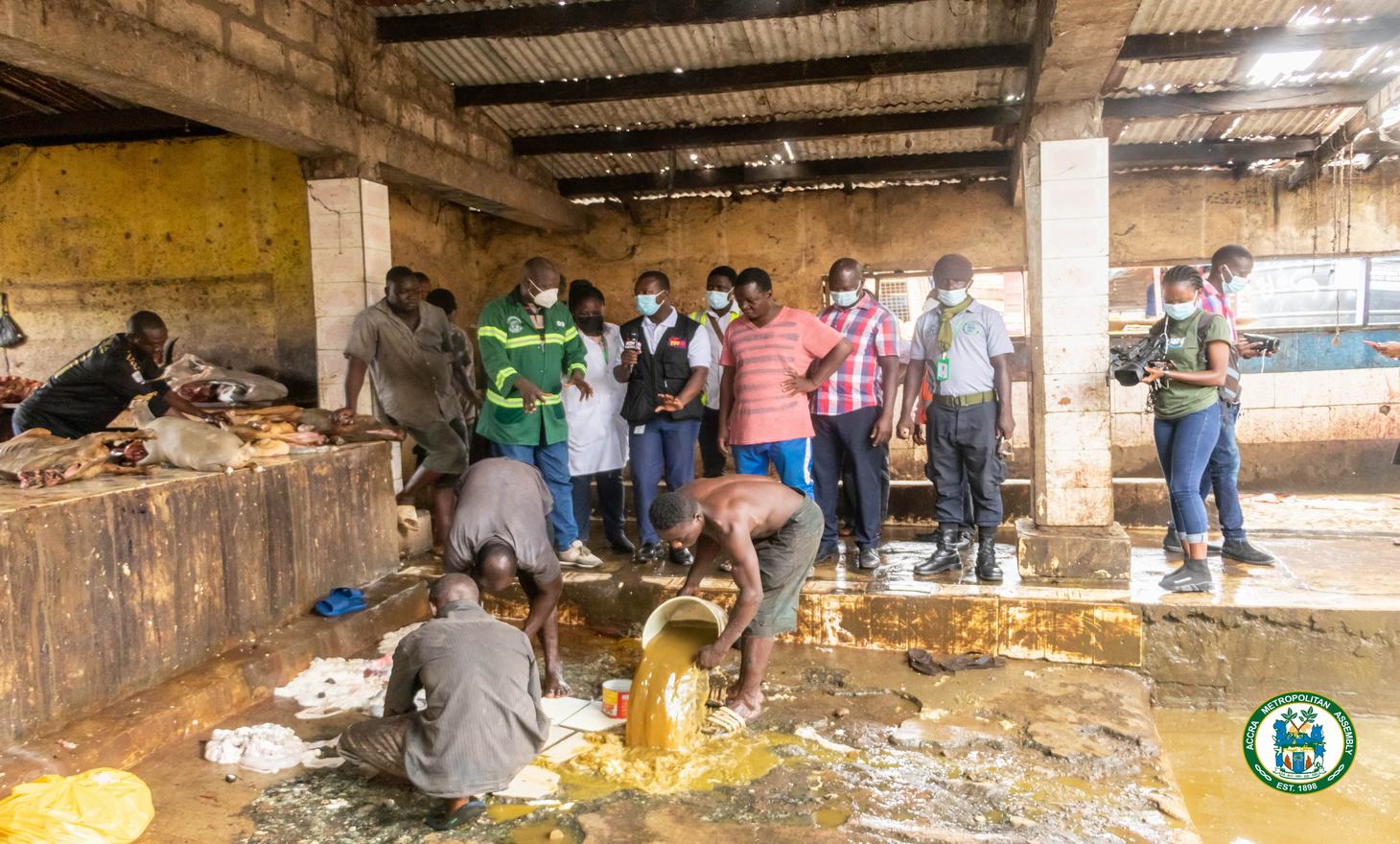
In 2021, the Accra Metropolitan Assembly (AMA) clamped down on an abattoir in Avenor that had been operating for over two decades under continually deteriorating conditions.
Environmental health officers who engaged the media noted that all efforts by the AMA to get it renovated to meet accepted hygiene and sanitary standards have proven futile.
In addition to these concerns, Mr. Eshun raised alarms about poor animal care practices prevalent in Ghana, warning that these issues contribute to the spread of zoonotic diseases—illnesses that can transfer from animals to humans. He stated, “Insufficient animal care, including the lack of vaccinations and proper housing, fosters conditions ripe for zoonotic disease transmission.”
The role of ectoparasites—external parasites such as ticks, fleas, and mites—also significantly contributes to the spread of zoonotic diseases. Mr. Eshun explained that these parasites thrive in poorly cared-for environments and can carry harmful pathogens affecting both animals and humans.
He cautioned, “Failing to maintain regular grooming and hygiene for animals increases the prevalence of ectoparasites, heightening the risk of diseases like Lyme disease and flea-borne illnesses.”
As veterinarians face threats and economic pressures in their efforts to ensure food safety, the implications for public health remain critical. The challenges they encounter underscore the urgent need for improved animal care practices and greater support for veterinary professionals to protect both animal and human health.
It is the role of the Veterinary Service Directorate to among other things; provide animal health services for the national livestock in order to further the expansion of the livestock and poultry industries in the country, protect public health by controlling animal diseases communicable to human beings, alleviate suffering among animals and protect the health and safety of pet and zoological animals.