Ghanaian musician and TV presenter Mzbel has raised concerns regarding Adwoa Penamang, who claims to be the wife of Yaw Sarpong.
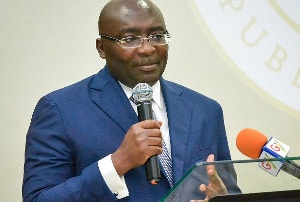
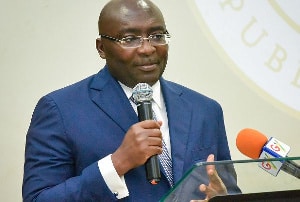
Mzbel questioned Penamang’s actions in granting interviews and scrutinizing the usage of funds donated by Vice President Dr. Mahamudu Bawumia to the veteran gospel artist.
The disputes surrounding the funds given to Yaw Sarpong during his illness are troubling to Mzbel, especially considering his condition.
During a panel discussion on Wontumi TV, Mzbel wondered if Penamang expected the money donated by Bawumia to be handed over to her.
Vice President Bawumia had contributed GH¢100,000 towards assisting Yaw Sarpong during his health struggles.
In an interview with Auntie Naa on Oyerepa FM, Adwoa Penamang disclosed that she had been mistreated and neglected by the family since Yaw Sarpong fell ill.
Penamang mentioned suggesting using some of the family’s money to complete the musician’s housing project, but her advice was ignored.
Despite claiming to be Yaw Sarpong’s wife for forty years, both the family and the musician deny her status as his spouse.
Yaw Sarpong has been battling a stroke, with hopes for a full recovery to continue his ministry.
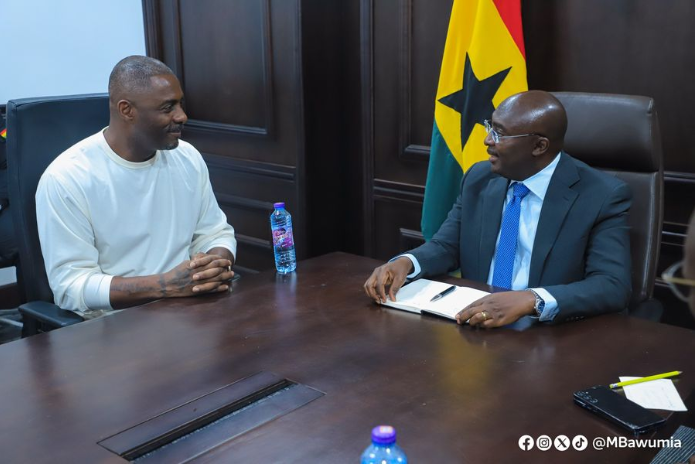
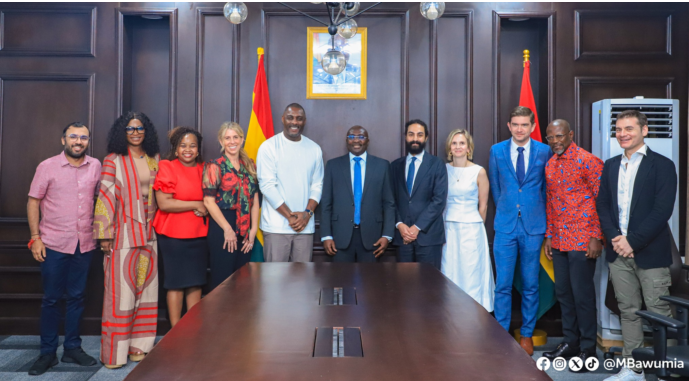
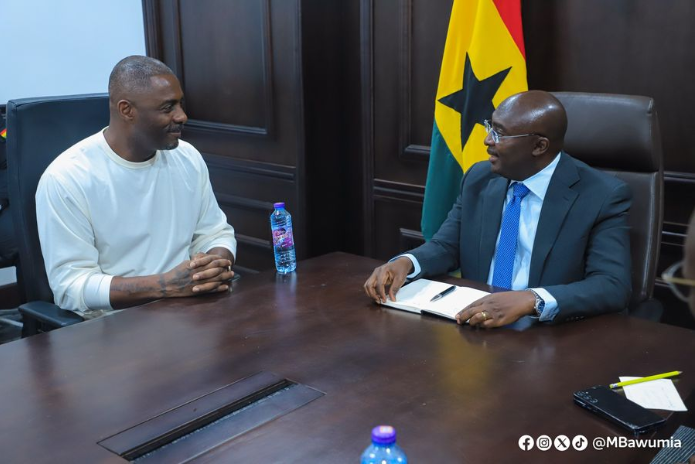
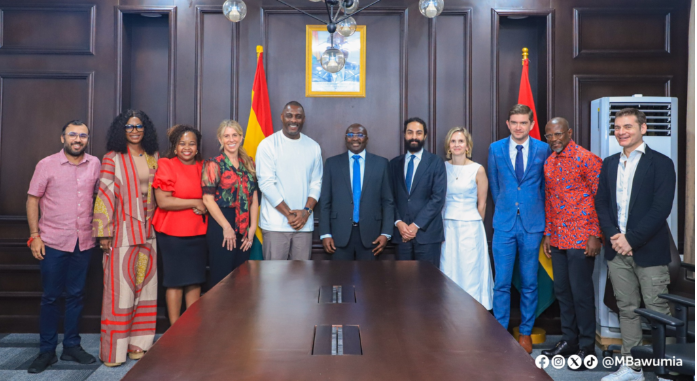
Focused on integrating Ghanaian artists into the global financial ecosystem, the discussions centred on the implementation of a cutting-edge blockchain-based financial system.
The proposed system aims to empower African artists by enabling seamless global payments for their music and arts, transcending geographical barriers.
Leveraging Ghana’s advanced digital payments infrastructure, Dr. Bawumia emphasized the potential success of the initiative and expressed confidence in its ability to unlock international opportunities for Ghanaian creatives.
Set to launch later this year, the innovative financial system is poised to be a game-changer, providing a platform for Ghanaian creatives to thrive on the global stage.
The Vice President extended gratitude to Idris Elba for his unwavering dedication to advancing the African creative arts economy.
Gyamfi’s comments come in response to Bawumia’s recent address at the University of Professional Studies in Accra (UPSA).
During the address on February 7, the Vice President outlined several visions aimed at improving Ghana if given the opportunity.
These visions included the cancellation of the E-levy, emissions tax, VAT on electricity, and the introduction of digital interventions to enhance the healthcare sector.
However, Gyamfi took issue with Bawumia’s credibility, particularly highlighting a controversial statement where the Vice President likened himself to a “driver’s mate,” suggesting he is under the control of the President and incapable of making decisions independently.
Gyamfi criticised Bawumia’s utterances as gibberish and lacking credibility, referencing past instances where the Vice President’s promises were allegedly unfulfilled.
He cited an example from 2020 when Bawumia announced the construction of an ultra-modern harbour in Cape Coast, which, according to Gyamfi, turned out to be unsubstantiated.
“Was it not the same Bawumia who stood at Cape Coast just this 2020 and said that good people of Cape Coast, I have good news for you, we are building for you an ultra-modern harbour when at the time, not a single block had be laid anywhere for the construction of the harbour. Even his own president when he was asked about this interview denied knowledge, that should tell you how dishonest this President is.
“I am trying to tell you Bawumia lacks credibility, his message is gibberish, his message is junk, there is nothing you can do with the words of a liar,” Sammy Gyamfi stated.
Watch video below:
If the messenger lacks credibility, his message is gibberish. There is nothing you can do with the words of a liar – Sammy Gyamfi on Vice President Dr. Bawumia.#TheKeyPointspic.twitter.com/ZOn8XcvUVq
Recalling the event, Kufuor revealed that at the time, Bawumia served as a research assistant to the Governor of Ghana.
During a conference in London, Vice President Bawumia, even in his early career stage, showcased his prowess by delivering a compelling message to an international audience composed of financial experts and influential government figures.
Kufuor, who was the President at the time, distinctly remembers being impressed by the content of Bawumia’s speech and the confidence with which he delivered it.
Intrigued by the young leader’s potential, Kufuor made the decision to reach out to Bawumia.
Despite having never spoken to him before, Kufuor expressed his admiration for the Vice President’s performance and encouraged him to persevere on his path.
He shared a prophetic belief that Bawumia was destined for greatness and foresaw a promising future for the young leader. “I met him far away in London, this young man delivered a message at an international conference of giants of the city of London in the financial world and some very powerful members of government.
He finished his speech and he was going to sit down but there was something in his statement and about him. I was impressed with him, I have never spoken to him before but I asked someone to call him and I told him he should carry on like that, prophetically he is meant for greatness and then you will go far,”John Agyekum Kufuor stated during an address at University of Professional Studies Accra (Accra) where Vice President would be delivering his vision for Ghana ahead of the 2024 general elections.
A recent poll conducted by the Centre for Sustainable African Development Initiatives (C-SADI) in the UK and The Outcomes International in Ghana has indicated that Vice President Dr. Mahamudu Bawumia is the leading contender in the New Patriotic Party’s (NPP) flagbearership race.
The poll found that Dr. Bawumia commands significant support from delegates, with 80.8% backing him.
Kennedy Agyapong, the MP for Assin Central, is projected to secure the second position with 10.4% of the vote, followed by Dr. Owusu Afriyie Akoto (1.1%) and Francis Addai-Nimoh (0.4%). However, 7.3% of delegates remain undecided.
H.E. Dr. Mahamudu Bawumia has the highest level of support among the delegates, with about 80.8% followed by Hon. Kennedy Agyapong (10.4%), Hon. Dr. Owusu Afriyie Akoto (1.1%), and Hon. Francis Addai-Nimoh (0.4%). 7.3% of the delegates are still undecided,” the report said.
The poll’s results align with other recent surveys, all of which have consistently shown Vice President Dr. Mahamudu Bawumia with a substantial lead. During the NPP’s Super Delegates Conference, Kennedy Agyapong caused a notable upset when he secured the second position behind Dr. Bawumia with 132 votes, representing 14.30% of the votes. Alan Kyeremanten had been expected to come second. According to the poll, Dr. Bawumia is considered the favorite due to his vision for the party and the country, his competence, and his perceived ability to win the presidential election in 2024.
“The main bases for assessing candidates by delegates are the vision of the candidate for the party, the vision of the candidate for the country, and the candidate’s competence.
The NPP delegates believe that the party has a strong chance of breaking the two-term limit (commonly referred to as “the 8”) if the government’s performance improves and the party remains united after the primaries.
The NPP is set to hold its presidential candidate (flagbearer) election on November 4, 2023, with more than 200,000 delegates participating. All recent polls have consistently indicated that Dr. Bawumia is the frontrunner in this race.
A group of constituency chairmen from the New Patriotic Party (NPP) in the Adanse enclave of the Ashanti Region in Ghana are demanding an apology and correction from the campaign team of John Alan Kwadwo Kyerematen. The chairmen claim that they have been misrepresented in terms of their preferred candidate for the upcoming flagbearer contest within the party.
Reports emerged that the chairmen were inaccurately portrayed in a video following John Alan Kyerematen’s visit to the area as part of his campaign for the party’s flagbearer position. The group of chairmen, who have openly endorsed Vice President Dr. Mahamudu Bawumia for the role, expressed their displeasure over the portrayal of their statements and views in the video.
They clarified that, out of respect for the democratic process and their party, they attended John Alan Kyerematen’s campaign event. However, they emphasized that their endorsement of Dr. Bawumia as their preferred candidate remains steadfast and unchanged. They also pointed out that only one out of the six constituency chairmen in the Adanse enclave does not support Dr. Bawumia, and even that individual does not support Kyerematen either.
The chairmen took issue with how their statements were allegedly misused and manipulated to imply support for Kyerematen in the media, particularly on UTV. They consider this misrepresentation to be misleading and unfair. As a result, they are demanding that Kyerematen’s campaign team issues a retraction and apology for the video that they believe distorted their views.
The NPP has a special delegates congress scheduled for August 26, 2023, during which the number of approved candidates for the party’s flagbearer position will be reduced from 10 to five. This contest is a significant event for the party as it determines who will represent them in the upcoming presidential elections.
Read the full statement by the group below:
RETRACT AND APOLOGISE TO US FOR THE ERRONEOUs MISREPRESENTATION ASHANTI CONSTITUENCY CHAIRMEN TO ALAN
Our attention has been drawn to the circulation of a video which erroneously and unfairly misrepresents our position and views with respect to our preferred choice for the upcoming presidential elections in our party.
We are highly livid and worried about how our statements have been mischievously pieced together to portray a supposed declaration for Hon. Alan Kyerematen, and same shown on UTV during their major news bulletin.
We the Constituency chairmen of the Adanse enclave have already openly and boldly declared our support for the Vice President, HE Dr. Mahamudu Bawumia, as our choice for the flag-bearership race, and this is a decision that we don’t intend to rescind nor reverse. To set the records straight, among the 6 constituency chairmen of the Adanse Enclave, it is only the New Edubiase constituency chairman who doesn’t support Dr. Bawumia, and even with that, he doesn’t support Hon. Kyerematen either.
We as constituency chairmen thought it was the right, appropriate and honourable thing to do, when we received and honoured the invitation of Hon Alan Kyerematen’s team to the delegates durbar since he’s also one of the presidential aspirants and a stalwart of our party. We accorded him that respect just as we would accord any other presidential aspirant the same respect a d audience. But for his team to misrepresent our statements is something we find absolutely wrong and unfair.
We therefore demand an unqualified apology from them. Thank you.
Vice President Mahamudu Bawumia has assured members of the New Patriotic Party (NPP) that the party will retain power beyond the two terms of president Nana Addo Dankwa Akufo-Addo which ends in 2024.
Bawumia, widely rumoured to be interested in succeeding Akufo-Addo as party flagbearer and president in January 2025 told supporters in the Ayawaso Central Constituency weeks back that the NPP as a party of ideas will win the 2024 polls and by that ‘break the eight.’
‘Break the Eight’ is a terminology that the NPP has adopted for its 2024 election, referring to retaining political power beyond the eight years that each party has spent before being voted out under the 1992 Constitution.
Bawumia took potshots at the former president John Dramani Mahama, who is expected to lead the main opposition National Democratic Congress (NDC) in 2024 labeling Mahama a policy-less politician despite being in politics for the past three decades.
“So, don’t worry, by the grace of God, we are going to break the eight. We know who the opposition is, we know the way forward, we will fight with our record and our vision, and that is a vision I know the people of Ghana are going to buy into. The NPP is a party of ideas,” Bawumia stressed.
Bawumia is seen as a frontrunner in the New Patriotic Party (NPP) flagbearership race slated for later this year, even though he has yet to openly declare his candidature, senior aides have assured that he will run to lead the NPP into election 2024.
John Mahama is currently touring the country seeking the National Democratic Congress (NDC_ flagbearership nod to lead the party into the 2024 polls. He will come up against Kwabena Duffuor and Kojo Bonsu in a primary slated for May 13.
The governing New Patriotic Party (NPP) may be able to hold onto power in the 2024 Presidential elections, according to Vice President Dr. Mahamudu Bawumia.
According to him, the party’s efforts since 2017 have been sufficient for it to retain power and continue its rule.
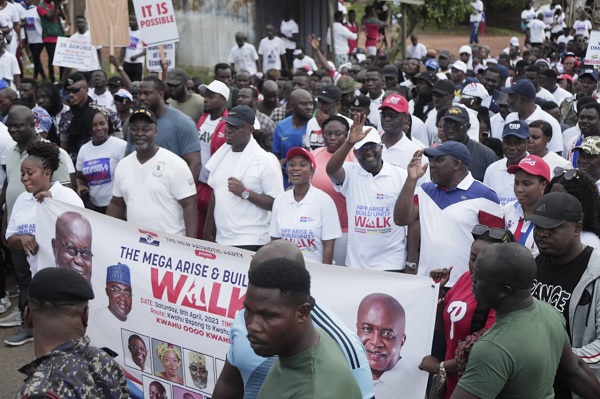
The Vice President stated, “The NPP’s records much outweigh those of the parties aiming to grab power from them in the 2024 general elections,” at Mpraeso in the Eastern Region after the party had organised a health walk as part of festivities to mark this year’s Kwahu Easter celebration.
them in the 2024 general elections.
He said in terms of educational and road infrastructures, the party’s records stand tall, hence Ghanaians will not allow deceptions from other political parties, particularly the National Democratic Congress (NDC) to win their votes.
Dr Bawumia has, therefore, challenged the NDC to point one transformational project that the party did during its tenure in office.
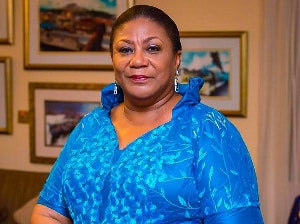
As Rebecca Akufo-Addo celebrates her 72nd birthday on March 12, 2023, Vice President Dr. Mahamudu Bawumia has paid tribute to the first lady.
Dr. Bawumia wished the first lady God’s continuous blessing and protection as she reached the milestone in a Facebook post.
The Vice President addressed her as “Auntie Becky” and wrote, “Auntie Becky, my desire for you on this day is that may God continue to bless and protect you, and may you continue to touch humanity positively.”
Prior to this, President Nana Addo Dankwa Akufo-Addo, also in a Facebook post, celebrated his wife on her birthday.
“Happy Birthday to my beautiful Rebecca,” he said while sharing two images of his wife on Facebook.
Rebecca Akufo-Addo became First Lady after Nana Addo Dankwa Akufo-Addo won the December 7 elections in 2016 and was subsequently sworn in as president on January 7, 2017.
She is using her office to champion the cause of women and children and as an ambassador for the fight against cancer.
Government has promised the Twasam family a respectable funeral for their late son, Christian Atsu.
Atsu, the deceased winger for the national team, died in an earthquake that shook Turkey two weeks ago and his body was retrieved on Saturday, February 18.
As part of plans to bury him in his homeland, arrangements were made for a Turkish Airline flight to transport his body to Ghana.
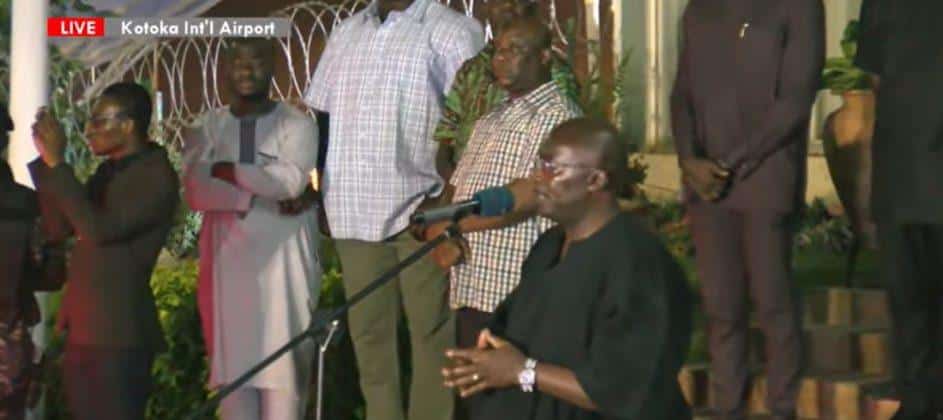
Speaking at the Kotoka International Airport, where a homecoming ceremony was held for the late Atsu, the Vice President revealed plans to laisse with the family to give Atsu a befitting burial.
Touching on his life as a humanitarian, Dr Bawumia stated that Atsu deserves to be honoured.
“He played for the Black Stars and he was much loved so we will sorely miss him. This loss is a very painful one and this is a sad day for Ghana. We all prayed and prayed, we hoped against hope for everyday that passed, but God knows best,” he said.
He described the Turkey incident as a tragedy that has robbed Atsu’s beneficiaries and the entire Ghanaian populace of joy.
He offered condolences to the Twasam family on behalf of President Nana Akufo-Addo.
The casket of Christian Atsu has been departed from the airport awaiting traditional family rites.
As stated by the government, the policy is to permit government to pay for imported oil products with gold in a direct barter using gold bought by the central bank.
The Vice President explained the move, which was made in the midst of the cedi’s depreciation against the US dollar and the rise in fuel prices, as an intervention to help stabilize fuel product prices as well as reduce pressure on Ghana’s foreign exchange because Ghana would be able to pay for imported oil through direct gold barter rather than using up its foreign exchange reserve.
The ‘Gold-for-Oil’ programme has since been implemented with the first oil consignment arriving last month.
Below is everything you need to know about the policy:
2. The prime objective of the programme is to use additional foreign exchange resources from the BoG’s DGP programme to provide foreign currency for the importation of petroleum products for the country which currently stands at about USD350 million per month.
3. The government has begun the implementation of the Gold-for-Oil Programme where gold purchases under the BoG’s DGP Programme mainly through the Precious Minerals and Marketing Company (PMMC) and where required from aggregators and mining firms is used to purchase petroleum products.
4. This is intended to free up foreign exchange resources to meet petroleum imports of the country thereby reducing pressures on the Bank of Ghana’s foreign reserves and the banking sector emanating from the Bulk Import, Distribution and Export Companies (BIDECs) request for foreign exchange.
5. The programme also aims to procure petroleum products at very competitive prices through Government-to-Government (G2G) arrangements. The programme will ensure that the cost of importing the products from international oil traders will always be comparatively lower.
6. The consequent reduction in foreign exchange pressures, the reduction in premiums charged by international oil traders as well as efficiency gains from the value chain will translate to lower ex-pump prices in the country. The G4O Programme Process Flow and Requirements:
7. Under the programme, all the dore gold produced and exported by companies with licensed small-scale concessions including community mines through the PMMC shall be purchased by the BoG. The Ministry of Lands and Natural Resources has issued directives towards the realisation of the programme.
8. The purchased dore gold is used for the payment of oil supply to Ghana. Payment for oil supply is to be done in two channels: by way of barter trade or via broker channel.
The Barter Channel:
• For suppliers willing to take gold in direct exchange for petroleum products, BoG will provide equivalent volume of gold. Both the Bank and the International Oil Trading Companies (IOTCs) are required to open Gold Metal Accounts in a mutually agreed gold refinery for the purpose of gold transfer.
• BoG accumulates refined gold in its metal account at a refinery nominated by a supplier to fund petroleum product shipments.
• BoG transfers equivalent amount of gold based on petroleum products supply invoice from its metal account to a supplier’s metal account on receipt of Quality Certificate (QC) of the product supplied and final invoice from Bulk Oil Storage and Transport Company (BOST). The Broker Channel:
• BoG executes a Gold Supply Agreement under which it sells gold to a gold broker, which provides forex cover to pay for petroleum products.
• Gold Broker buys dore gold from BoG and deposits the proceeds in BoG gold holding account.
• BoG transfers funds from gold holding account to an Escrow Account to pay for petroleum product shipment on receipt of QC and final invoice from BOST.
9. BOST, a state company, operates as an off taker for petroleum products, and therefore executes an agreement with IOTCs for the import of petroleum products to Ghana, for onward sale to licensed BIDECs.
10. BIDECs buy directly from BOST with cash and or a letter of credit (guarantee) from a reputable financial institution.
11. BOST and the National Petroleum Authority (NPA) ensure that the cedi proceeds from the sale of imported petroleum products will be collected and deposited with a collection bank in favour of BoG. The collection bank is required to transfer collected funds into BoG’s G4O proceeds account within 48-hours which is then used to fund the next cycle of gold purchases.
Pricing of Products:
12. To ensure that the price of petroleum products imported under the G4O programme reflects at the pumps to benefit the consumer, the NPA will regulate the prices of these products in the interim to correct market failure until the policy matures.
13. NPA will work with BOST to negotiate prices with the international oil traders to ensure that the landed cost of products procured under the programme are always competitive. NPA will approve the IOTC that will be selected to supply products to BOST under the programme based on the competitiveness of the offers made by them. BOST will sign supply contracts only after approval has been granted by the NPA.
14. The price at which BOST will sell the products to BIDECs will be approved by the NPA. The price at which the BIDECs will sell the products to Oil Marketing Companies (OMCs) will also be approved by the NPA.
15. The applicable exchange rate for pricing the products supplied under G4O will be based on the average rate at which the gold was purchased from the licensed gold exporters by BoG.
16. The NPA will put measures in place to ensure that OMCs that lift products supplied under the G4O programme pass the price on to consumers accordingly. In this respect, BIDECs and OMCs who lift and supply G4O products will sell at the ex-refinery and ex-pump prices that will be determined by the NPA. If there must be a comingling of products supplied under G4O and other sources, the ex-refinery and ex-pump prices will be computed using a weighted average.
17. All BIDECs and OMCs who wish to purchase products under the G4O programme will be required to sign off an undertaking confirming their willingness to comply with the terms and conditions for partaking in the purchase and sale of G4O products.
18. To ensure that the impact of the G4O programme on ex-pump price will be significant and effectively monitored, the number of BIDECs and OMCs who will be permitted to lift G4O products will be controlled. Payment Structure:
19. BOST will be required to pay for products supplied to it under G4O into an Escrow Account at BoG within 60 days of receipt of products from the international oil traders.
20. BIDECs will be required to pay for products procured from BOST within 15 days of loading. Payment for the products will either be on a cash basis or with a 15-day letter of credit (LC) from reputable commercial banks.
21. BOST will be required to provide BoG with copies of the LCs from BIDECs for verification and to give BoG the assurance that receipt of payments will be made on agreed dates.
Laycan allocation for product imports:
22. The NPA will ensure that adequate laycan slots are allocated to BOST to import products under the programme.
23. NPA will advise BOST on the projected demand on a monthly basis.
On September 26, 2019, Dr. Bawumia made these remarks while seeing the Nsawam Prisons facility where the Brompton Portfolio makes toilet paper.
Read the entire article as it appeared in its original form on September 27, 2019 on Laudbusiness.
According to Vice President Dr. Mahamudu Bawmuia, Ghana can today brag of having fourteen (14) indigenous toilet roll manufacturing businesses operating there.
He said these when he toured the Brompton Portfolio’s toilet paper manufacturing factory located at the Nsawam Prisons in the Eastern Region on Thursday, 26th September 2019.
Addressing the media, Vice President Bawumia indicated that the One District One Factory (1D1F) initiative was launched as one of the pillars for President Nana Akufo-Addo’s industrialisation agenda.
“We know that in this country we have a huge dependence on imports and so the import bill tends to be very high and we rather export a lot of our primary commodities. The vision of the President is for us to move away from the export of the primary commodities to the manufacturing of these commodities, and this is the background for the One District One Factory initiative. And once we do that we are able to save on scarce foreign exchange, we are able to grow local industries and we’re able to create jobs. These really are three critical advantages of one District one factory,” he said.
He added: “One of the achievements in this particular one District one factory initiative is in the area of the manufacture of toilet rolls in Ghana.
“When we came into office there were nine companies existing which dealt with toilet roll manufacturing. Since then in the last two-and-a-half years we’ve added five additional factories. So Ghana’s capacity to produce toilet rolls has increased generally by about 50% which is very significant.
“Given the success of One District One Factory, Government as we stated in our manifesto, is going to use the power of its procurement to support local industries, and it is for this reason you would have heard yesterday that I announced that Cocoa Board and for that matter the Ministry for Agriculture will have to now purchase locally manufactured fertilizer because we have the factories now under 1D1F to produce that fertilizer.
“We don’t have to import it anymore, so the Ministry of Agriculture and Cocoa Board will now have to use all the government procurement of fertilizer, source it locally.
“We are also saying if you look at the 14 manufacturers of toilet roll that we have in Ghana, 1D1F has brought five, we had an existing 9 already, and the capacity of that 14 is able to meet most of our demand for toilet rolls in Ghana, so why import?
“So we are saying from the next procurement cycle, all government institutions – whether it’s the military or the police or the hospitals or the schools, because the taxpayer funds all government institutions – if you’re going to buy toilet roll, all that toilet roll must be bought from local manufacturing companies. So we are using the taxpayer’s money to support our local industries. This will create jobs, will save foreign exchange, will grow the economy and this is the vision of One District One Factory.”
The Vice President continued, “This is the policy going forward. We are going to use our taxpayers’ money to support local manufacturing companies in the context of 1D1F. This is not a new policy, it is something that we had in our manifesto before we came into office but now we have built sufficient capacity in certain areas and therefore we can actualize that particular policy.
“The future is very bright by the grace of God. If we continue to pursue the policies and the vision of Nana Addo Dankwa Akufo-Addo, the One District One Factory will become a reality.”
He claims that the purpose of this gathering is to accelerate the implementation of the African Continental Free Trade Agreement through a solution-driven approach.
He claimed that, regrettably, the story of this stunning continent has been one of poverty, conflict, bad government, corruption, and underdevelopment in the majority of the globe.
“The time has come for Africa and Africans to define our own narrative. We cannot allow poverty and underdevelopment to be the destiny of Africa, a continent so blessed with every natural resource imaginable – oil, gas, minerals, and sunshine.”
“We have approximately 65% of all available arable land available to feed 9 billion people globally by 2050 and we are home to the most youthful population in the world.”
“We have everything we need to transform Africa into a global powerhouse of the future,” he said.
This, he said is largely due to the “colonial” economic model characterised by small individual economies, fragmented and disconnected regional markets, over-reliance and low productive capacities that we have practised for 60 years.
“As growing economies, we often struggle to attract much-needed investments.
“However, with the collaborated strength from all 55 Member States, we have a population of 1.2 billion, the majority of whom are young, and a GDP of US$ 2.5 trillion, making Africa the eighth (8th) largest economy in the world,” he said.
He noted that this positions Africa as an attractive investment destination. “With the right investment, we will be able to sustain economic growth and create the job opportunities that the continent desperately needs,” he added.
The Vice President admitted that AfCFTA is a real game-changer, and once fully realised: “We can increase intra-African trade by some US$ 35 billion and reduce external imports by some US$ 10 billion annually.
“This will mean more opportunities for growth for our small businesses and the potential to lift more than three million people out of poverty.”
He made this call at the Kwahu Summit ongoing at the Safari Valley in the Eastern Region.
He explained that like the vision of our forebears, the African Continental Free Trade Area has set the stage for Africa’s industrialisation drive, but, it will take concrete, strategic actions by governments and businesses on the continent, the right mix of policies, a greater sense of purpose for more robust intra-African trade to happen to support economic diversification and the much-needed industrialisation of the continent.
To bring about the transformation needed, he proposed three broad areas that need to be prioritised.
First is the need for smart investments in critical infrastructure. “As a continent, we need to produce and trade our way out of poverty and underdevelopment, and we cannot do that without investing in smart infrastructure across the continent.
“While the last decades have seen some positive investments, there is the need for additional resources to finance the ‘arteries for trade’, which include the physical infrastructure such as roads, rail, and energy; digital infrastructure such as data centres to facilitate the digital transformation and financial infrastructure to allow for integrated financial markets.
“These investments will be critical to delivering the success of the AfCFTA.”
The second is to unleash productive capacities across the continent.
With that Dr Bawumia explained that “We must create platforms for knowledge brokerage and access to information on critical products and services on the continent to allow 445 million small businesses across the continent to plug into the value chains of these mega industries.”
For his part, the founder and Chairman of Africa Prosperity Network, the organisers of the Africa Prosperity Dialogues, Mr Gabby Otchere-Darko thanked all the participants for choosing to be part of this historic gathering.
According to him, this is historic because Africa is creating the right environment for the private sector to join forces to assert a leading voice and play the leadership role in how best and how fast the continent can build and drive a vibrant, single market in Africa and for the shared prosperity of Africa’s nearly 1.4 billion citizens.
He revealed that next month, Africa’s political leaders will once again meet in Addis Ababa, to talk about the continent’s common destiny.
“Our voices here in Adukrom should resonate in Ethiopia. This year, incidentally, marks the 60th anniversary of the Organisation of African Unity, which was set up to promote the unity and solidarity of the African States.”
Vice President, Dr. Mahamudu Bawumia, in October 2020 stated that the government will not use taxpayers’ money to pay depositors whose investments have been locked up in the defunct Menzgold Company Limited.
He said, “Menzgold is not a licensed financial institution. We are talking about licensed financial institutions but if you set up your 419 institutions and the Bank of Ghana warned repeatedly that people should not do business with Menzgold because they were not a licensed financial institution, so, you can’t use taxpayers’ money to pay locked-up funds of an institution that is not a licensed financial institution.”
Read the full story originally published on October 24, 2020 by Classfmonline
Dr Bawumia told Agya Owusu on Techiman-based Link89.1 FM in the Bono East Region during his recent tour of that part of Ghana that, unlike the situation where the government rescued 4.4 million depositors whose funds got locked up in some banks and specialized deposit-taking institutions who were collapsed by their regulatory authorities over infractions and insolvency, the customers of Menzgold are not entitled to such rescue since they defied all warning from the Bank of Ghana to do business with an unlicensed financial institution.
“Menzgold is not a licensed financial institution. We are talking about licensed financial institutions but if you set up your 419 institutions and the Bank of Ghana warned repeatedly that people should not do business with Menzgold because they were not a licensed financial institution, so, you can’t use taxpayers’ money to pay locked-up funds of an institution that is not a licensed financial institution,” Dr. Bawumia said.
Two weeks ago, some aggrieved customers of the gold-trading company said they deserve a bailout just like the other companies that were licensed by the Securities and Exchange Commission (SEC) and collapsed with a “written letter” because their operations were contrary to their terms of the license.
According to the aggrieved customers, they deserve a bailout since Menzgold was under the regulation of SEC.
When Dr. Bawumia welcomed the board and leadership of the Association to the Jubilee House on Monday, December 12, 2022, to discuss issues affecting Ghanaian farmers, particularly the impact of climate change and the significance of irrigation to year-round farming, he made the aforementioned statement.
The vice president used the occasion to outline the various steps the government is taking to ensure the building of dams, particularly the multipurpose Pwalugu Dam, whose construction the vice president said the government will oversee with the help of the World Bank and also invite participation from the private sector.
“In the meantime, GH¢253 million has been allocated in the 2023 budget towards the construction of the Pwalugu dam,” he told the farmers.
He noted that when completed Pwalugu will, at 25,000 hectares, almost double the amount of irrigable land in Ghana while controlling yearly flooding from the spillage of the Bagre dam and provide 60mw of electricity.
John Philpot, an international human rights attorney from Montreal, Canada, has commended Ghana’s ‘gold-for-oil’ strategy, which Vice President Dr. Mahamudu Bawumia recently developed and put into action.
Philpot, who has extensive knowledge of international politics pertaining to the continent and has previously lived in Africa, said Ghana’s decision is a courageous as well as the appropriate step because it would stop currency depreciation and stabilize prices.
He continued by predicting that other other nations would soon adopt a similar policy.
“The U.S dollar is having a lot of inflation so..it has less value because of the inflation…Gold is more of a universal value and they (Ghana) are doing this to internally avoid the devaluation of their currency and I think this is going to be a tendency worldwide,” Philpot said during an interview with Press TV Iran.
“It would appear that [the policy] will avoid poverty and stabilise prices because countries in Africa, their money is pegged to the U.S dollar. Prices go up much faster and the money is much less value for the people working in the salaries of those countries. I lived in Tanzania…people I know living on Tanzanian salaries were having a very hard time. This [gold for oil policy] will stabilise prices,” he said.
He said Ghana’s move is a “return to multilateral approach and obviously having better relations with Russia and China and other countries too…The United Nations was built on the concept of sovereignty. You are not sovereign if the U.S. dollar controls your economy so if they get a form of universal or more democratic trade, it increases your sovereignty.”
Vice President Dr Mahamudu Bawumia announced recently that Ghana would kick off a policy of using gold reserves to purchase refined crude productsfrom the world market from 2023 rather than using the U.S. dollar.
In a speech delivered at the 2022 Ghana Energy Awards held the night of Sunday, November 27th, the Vice President said the move is aimed at stopping the cedi’s depreciation and its attendant effects on the local economy.
“A major source of cedi depreciation has been the demand for foreign exchange to finance the import of oil products…Persistent cedi depreciation increases the cost of living with higher prices for fuel, transportation, utilities, food and so on,” Bawumia said.
““…To address this fundamental challenge of the persistent depreciation and its impact on fuel, utility prices, food and so on, government has decided to implement a policy of using our gold to buy oil products. That is something new and it is the barter of sustainably mined gold for oil and is one of the most important policy changes in Ghana since independence. If we implement it as we have envisioned, it will fundamentally change our balance of payments and significantly reduce the persistent depreciation of our currency with its associated increases in fuel, electricity, water, transport and food prices,” he added.
In a similar move, the reserve bank of Zimbabwe introduced gold coins into the market in July this year amidst rising inflation and rapid depreciation of the local currency.
The introduction of the gold coins was part of the Central Bank’s measures to tackle the country’s currency crisis through exchange rate stabilisation.
Whenever the subject of the economy came up, the opposition National Democratic Congress (NDC), which is theoretically in charge of the EMT, promptly enlisted Vice President Dr. Mahamudu Bawumia, the member of parliament for Suame stated it was curious.
He cited how, despite economic challenges under the John Atta-Mills administration, then-Vice President John Dramani Mahama was not ‘attacked’ as head of EMT in order to make the argument that the president bears primary responsibility for the economy.
“When the Minority Group discusses the current economic challenges, they chuck along the Vice President as chair on Economic Management Team of cabinet. President Mills after 2011 had GDP growth rate drop from 14.4% in 2010 to 9.5% in 2011. Into 2012, GDP swung down again, the Vice President (then John Mahama) was chair of EMT but nobody roped him in.
“The reason is that the Finance Minister manages the economy for and on behalf of the president not the Vice President. In the cabinet set up, in the committee system, the Vice President is not the chairman of the Economic Committee. Vice Presidents have never been.
The MP who also doubles as the Minister of Parliamentary Affairs made the submissions on Tuesday, December 6, 2022 during his final submissions on the 2023 Budget Statement and Economic Policy of Government debate in Parliament.
Ghana is currently facing economic headwinds with a domestic debt programme facing opposition from stakeholders – largely from institutional bondholders.
Government is hoping to close a deal on debt restructuring at home in order to be able to access an International Monetary Fund (IMF) facility to support the failing economy.
Minister of Finance Ken Ofori-Atta on December 6 announced that government was restructuring bonds held by institutional investors, putting them into four groups stretching 15 years. With interest also spread in four tranches in four years.
The Domestic Debt Exchange programme as it is called has faced some stiff opposition from major professional groups and workers union in the country.
Ekwow Spio-Garbrah, a former Trade Minister, has stated that 30% is President Nana Addo Dankwa Akufo-Addo’s best score when it comes to how he has managed the economy and how he has dealt with the corruption fight.
Speaking in an interview with Metro TV he said, the records relative to the economy and corruption are evident in international anti-graft reports and rating agencies downgrading Ghana to junk status.
“On a scale of 1-10, where ten is the highest it would be very difficult for them to go above two. They can’t go beyond two. it would be very difficult. I won’t say zero or one because they have done something.
“But it can’t go beyond two or three, unfortunately, just because of this year. Maybe, last year or before covid-19 they were 4, 5, 6 at different times,” Dr. Spio-Garbrah said.
“But the last few months especially, with the depreciation of the cedi, they are now in the 1, 2, 3 range,” he added.
According to Spio-Garbrah, the Akufo-Addo-led government has ‘failed’ with the corruption fight, especially against galamsey which has caused the distraction of water bodies across the country.
“I don’t want to make it zero but you are the journalist who has shown Ghanaians numerous videos, films, and debates about our water bodies – just to give one area of general concern,” he observed.
Dr. Ekwow Spio-Garbrah also took a swipe at the Vice President Dr. Mahamudu Bawumia questioning his economic abilities to rescue Ghanaians from the present predicament.
“They painted him [Dr. Bawumia] as the wonder kid of the NPP who can perform all kinds of magic. Lock inflation up and give it to the IGP. Locks interest rates and gives it to the IGP. He locks things up and gives them to the IGP. But when they are looking for the key they can’t find it,” he stressed.
Former New Patriotic Party parliamentary hopeful for Kpone Katamanso, Hopeson Adorye, has said that there is no wayVice President Dr Mahamudu Bawumia will be the flagbearer of the party for the 2024 elections.
According to him, the Minister for Trade and Industry, Alan Kyerematen, is going to win the party’s presidential primaries because he has the support of the grassroots of the party.
Adorye, who made these remarks in a Neat FM interview monitored by GhanaWeb, said that Dr Bawumia will take the 3rd position at best during the NPP’s primaries.
“… mark this down, Bawumia will come third in the general primaries. Trust me NPP members know what is good for the party. I have been telling people that there is a spirit in this part.
“Before the national executive election, all the ministers in the country, most of the MPs (Members of Parliament) and all regional chairmen said the incumbent general secretary was going to win. But in the end, it was what the grassroots of the party wanted that carried the day,” he said.
Hopeson Adorye was reacting to a viral video of some supporters singing the praises of the vice president at the funeral service for Sanitation Minister Cecilia Dapaah’s late mother in the Ashanti Region, Kumasi, as Alan was arriving for the funeral.
Adorye said that the incident was planned by supporters of Bawumia as an act of revenge for him being hooted at a funeral he attended in Kumasi previously.
He believes that the free trade agreement has the potential to drastically alter the economics of African nations.
Dr. Bawumia said during a courtesy call after the AfCFTA Policy Network members visited Ghana that the government will continue to support technology and digital initiatives to ensure Ghana fully benefited from the trade agreement.
Ghana currently serves as the host secretariat for the African Continental Free Trade Area. The free trade pact is aimed at boosting intra-African trade and strengthening Africa’s trading position on the global market.
They also invited Dr. Bawumia to an upcoming flagship programme of the network — the Africa Globalized Investment Summit in Seychelles in 2023.
The APN was established in 2019 as the lead and largest international non-governmental organisation (NGO) focused primarily as a think tank on AfCFTA implementation
The delegation included the Board Chairman of the APN, Dr Joe Tackie; the Executive Director, Louis Afful; the Deputy Executive Director, Emmanuel K. Bensah; the Executive Director, APN Women of Africa Network, Audrey Biney; the Executive Counsel of Women of Africa and Leader, USA delegation, Joyce Williams.
The rest were the Special Advisor to APN Executive Director, Kwasi Okyere-Boateng; the Head of Administration, Hannah Hayford Affriyie; President/Co-Founder of African Professionals Network, Prof. Faisal Ellis; the Director of Strategic Partnerships, University of Cincinnati, Jenny Sutmoller; the Vice-Provost of International Affairs, Raj Mehta; Julia Lartey of Jex Travel and Tours Ltd, and member of APN, Gertrude Ankah Nyavi.
During a protest against Vice President Dr. Mahamudu Bawumia, Chief Biney, the Deputy National Organizer of the National Democratic Congress (NDC), and Emmanuel Adumua-Bossman, the Deputy Chief of Staff, got into a fight.
The altercation started when the Deputy Chief of Staff, who was meeting the protesters to accept their petition on behalf of the vice president, overheard Chief Biney claim that a member of the Ghana Police Service had infiltrated the crowd.
Adumua-Bossman responded to the allegation by saying that Chief Biney’s accusation of the police was unfair.
“These officers have been here trying to protect life and property and also to ensure that this thing moves on as smoothly as possible. So, to accuse them of something they may not even be aware of is a bit unfair,” he said.
But this did not sit well with Chief Biney who retorted, “Don’t say I am accusing them unfairly, you were not there… The person infiltrated, the media has a video. He is a police officer”.
“I reported him. What the police were to do was to arrest him. If the police tells me that if somebody infiltrates it will create a problem and I, as a citizen, I’m able to identify somebody and I report to you and you shepherd him away. What do you want me to do?” he questioned.
Adumua-Bossman, however, maintained that the police were doing their work the best way, they see it.
He intimated that the NDC’s deputy national organizer’s accusations were baseless and unnecessary. He then went on to receive that petition and thanked the demonstrators.
The protest started at Kawukudi Park, through 37 to the Lands Commission junction, and turned right to the DVLA, where the demonstrators presented a petition to the Office of the Vice President.
Dr. Edward Omane Boamah, a former minister of communications, has criticized Vice President Dr. Mahamudu Bawumia for the persistent devaluation of the Cedi versus the US Dollar.
He poked fun at the Vice President on Facebook on October 13 by saying that the US dollar should be receiving his congrats instead.
According to him, this is because the dollar’s overwhelming domination over the local currency has rendered the Vice President a laughing stock.
Dr. Omane Boamah wrote: “Dr. Mahamudu Bawumia must be sending massive congratulations to the dollar. The dollar has humiliated him beyond recognition.”
The Vice President together with the then-candidate Nana Addo Dankwa Akufo-Addo ahead of the 2016 elections berated the National Democratic Congress over what they said was the depreciation of the Ghana Cedi against major trading currencies.
The duo indicated that they will implement policies and measures to curb the free fall of the Cedi when voted into office.
Upon assumption of office, however, the Cedi has largely lost more ground against the dollar, only intermittently stabilizing against the dollar.
It will be recalled that in 2017, Vice President Bawumia while giving an account of the first 100 days in office of the New Patriotic Party (NPP) government, indicated that they have been able to “arrest” the fall of the Ghana Cedi against the Dollar.
But in recent times, the Cedi has fast depreciated crossing GH₵11.00 against the US dollar on the forex market. The situation has contributed partly in the surge in prices of goods and services as traders lament that without an increment, the exchange rate will erode their profit.
Vice President Dr. Mahamudu Bawumia has received much praise for turning the political conversation away from personal jabs and onto issues, particularly economic ones.
Prior to the 2016 elections, Dr. Bawumia ran on a number of issues and criticized the National Democratic Congress, which was in power at the time, for its handling of the economy.
He claimed that the economy had been dragged down by the NDC under the leadership of John Dramani Mahama and promised a recovery under the Nana Akufo-Addo/Bawumia ticket if they were elected.
On the Cedi depreciation, the NPP touted that former President Kufuor had done better in bringing the Cedi at par with the dollar however the NDC, whom they labelled as bad managers of the economy, had allowed it to depreciate when they assumed office in 2009.
Dr. Bawumia, who was hailed as an ‘economic messiah’ however promised to restore it once NPP was elected into office.
“We will stabilize the cedi and bring down interest rates. We will transform the financial sector,” he tweeted on August 25, 2012.
Having assumed office in 2017, Vice President Bawumia while giving an account of the first 100 days in office of the New Patriotic Party (NPP) government, indicated that they have been able to “arrest” the fall of the Ghana Cedi against the Dollar.
But the Cedi has largely lost more ground against the dollar, only intermittently stabilizing against the dollar in recent times.
The Vice President has been the target of public criticism as he doubles as the head of the Economic Management Team (EMT).
Felix Kwakye Ofosu, an aide to former President John Mahama, latched out at Dr. Bawumia describing him as a ‘liar in chief’ over failed promise to stabilize the Cedi.
He said the EMT led by the Vice President has become “hopeless and hapless” as the Cedi has fast crossed GH₵11.00 against the US dollar on the forex market
“The exchange rate is hurtling towards GHC12 to a dollar. The present managers of the economy led by Bawumia are both hopeless and hapless in the face of this unprecedented catastrophe,” Kwakye Ofosu wrote on his Facebook wall on October 13.
Member of Parliament for Daboya-Mankarigu Constituency Alhaji Asei Mahama Seini, who is also a Deputy Minister of Health, has expressed worry over the extent of devastation of flood waters in his constituency.
The situation, according to the lawmaker, is affecting livelihoods and appealed to the Roads Minister to come to their aid.
All entry and exit points to the capital of the North Gonja District have been cut off as a result of torrential rains and the spillage of the Bagre Dam.
This year has seen unprecedented flooding across the northern belt following the spillage of the Dam some weeks ago.
Major roads have been washed away in these areas.
The Daboya-Mankarigu roads from Busunu in the eastern part and Tolon in the northern part of Daboya have been cut off, bringing business and other related activities to a standstill.
During a tour of the constituency to assess the impact of devastation caused by the flood, the unhappy MP told journalists that the situation has heightened poverty among farmers.
“It is a worrying situation that all economic activities have come to a halt such that people cannot even cart their goods from their farms to the markets. In fact, it has heightened poverty among farmers,” he bemoaned.
MP for Daboya-Mankarigu Constituency Alhaji Asei Mahama Seini
According to him, a team of engineers has been dispatched to fix portions of the roads in the Constituency affected by the floods.
He also commiserated with his constituents who have been affected greatly by the unfortunate situation.
Road construction
Since 2015, the Daboya-Mankarigu road has been on contract to one Mr. Peter Mahama.
The contractor is a brother of the former president John Dramani Mahama.
It will be recalled that in 2020 and 2021 respectively, a similar incident occurred cutting off the Daboya-Mankarigu enclave from other parts of the Savannah Region.
Daboya bridge
The Roads Minister, Kwesi Amoako Atta, in 2017, when the Yapei and Buipe bridges were closed down for rehabilitation works, gave the assurance that an alternative bridge will be constructed on the White Volta in Daboya to ease the pressure on the Yapei and Buipe bridges.
In April 2021 and at the 45th congress of the Gonjaland Youth Association in Bole, Vice President Dr. Mahamudu Bawumia announced that construction of the Daboya bridge will begin in June.
“One project that is very dear to my heart and the government is the construction of the Daboya bridge, I have been informed that design works are ongoing and barring any unforeseen challenges, work will begin this year,” he announced to loud applause.
Felix Kwakye Ofosu, a former deputy minister of communications, has criticized Vice President Dr. Mahamudu Bawumia for the most recent lowering of Ghana’s credit ratings by Moody’s.
Ghana’s long-term issuer and senior unsecured debt ratings were lowered from Caa1 to Caa2 by the international rating agency Moody’s Investors Service, and the ratings were put under review for a possible downgrade.
Moodys claims that the downgrade reflects the recent macroeconomic deterioration of Ghana’s economy, which has led to further heightened government liquidity issues, challenges with debt sustainability, and a higher probability of default on debt.
“Without external support, the government’s policy levers to arrest a worsening macroeconomic backdrop and heavier debt burden are extremely limited; the government’s small revenue base, large and increasingly absorbed by interest payments, further intensifies the policy dilemma between competing objectives, including servicing debt while meeting essential social needs,” Moody’s said on its official website on September 30, 2022.
Felix Kwakye Ofosu, while reacting to the downgrade in a tweet shared on October 3, 2022, intimated that Vice President Mahamudu Bawumia as the head of Ghana’s Economic Management team is responsible for the economic meltdown.
“Moody’s downgrades Ghana again. This time to Caa2. Bawumia has been an unmitigated disaster and a complete waste of time as head of the Economic Management Team,” the tweet the former deputy minister read.
This is the second time in less than two weeks that Ghana’s credit ratings have been downgraded. The Long-Term Local-and Foreign-Currency Issuer Default Ratings (IDRs) of Ghana have downgraded by the international credit rating agency, Fitch Ratings, on September 23, 2022.
In a release posted on its website (fitchratings.com), the agency indicated that it normally does not give credit ratings below CCC.
“Fitch Ratings has downgraded Ghana’s Long-Term Local- and Foreign-Currency Issuer Default Ratings (IDRs) to ‘CC’, from ‘CCC’. Fitch typically does not assign Outlooks to issuers with a rating of ‘CCC’ or below,” parts of the release read.
The ‘CCC’ rating implies that Ghana is considered a “junk” country in terms of investment and any investor who buys a bond issued by the Government of Ghana is at a high risk of not getting his/her investment.
The Chancellor of the Kumasi Technical University (KsTU), Dr Kwame Addo Kufuor, has entreated lecturers of the university to support artisans at the Suame industrial enclave to develop technologies to support the industrialisation of the country.
In doing so, he asked them to drop their academic degrees and big vocabularies and come to the level of the artisans in order to get their collaboration.
He said experience had shown that it was easier to get the collaboration of people when they had a sense of belonging, hence the need for the lecturers to rather make the approach.
“If you speak all the big English, there is no way they will be willing to collaborate. However, if you go to them speaking the local language and explain things to them, they will listen to appreciate what you are telling them,” he said.
This is because discussing mechanical problems in the local languages with the artisans will lead to finding solutions and enhancing performance.
First of its kind, the ceremony was quite a colourful one and attracted a host of dignitaries as well as the family of the chancellor.
The dignitaries included the Guest of Honour, Vice-President Dr Mahamudu Bawumia, former president John Agyekum Kufuor, who is an elder brother of the Chancellor, former Speaker of Parliament, Prof Mike Oquaye, Chancellor of the University of Cape Coast, Sir Sam Jonah, the Ashanti Regional Minister, Simeon Osei-Mensah, and Apagyahene Oheneba Owusu Afriyie IV, the family head of the new Chancellor.
Also present were Mrs Addo Kufuor and their two sons, as well as some senior lecturers of the KsTU.
Investment
In his address, Vice-President Bawumia paid glowing tribute to the chancellor, who he said had paid his dues to the nation through his service in the public sector.
“The university could not have picked a worthier leader than you.
“Your worth of experience as Board Chairman of Suame Magazine Industrial Development Organisation (SMIDO) indicate your in-depth knowledge and already established interest in Vocational and Technical Education,” he said.
He said it was apt that the first chancellor of the university was a son of the land of Ashanti Kingdom who has been put in good stead to help propel the university onto greater heights to achieve world-class university status.”
Role
Dr Kufuor said the call to be a Chancellor was an opportunity to help develop the young university students into world class talents in order to serve Ghana and raise the image of Africa on the world stage.
He also acknowledged that his new role would require him to lead the university and provide the necessary support and assistance to the council, faculties and administration to transform KsTU to one of the “topmost institutions for information and communication development and training in Ghana and beyond.
“I have confidence in the ability, creativity and ingenuity of the Ghanaian youth.
“It is my firm belief that with the right type of education and training, our young people can create and achieve whatever their counterparts have attained anywhere in the world,” he said.
Collaboration
To achieve this, the KsTU Chancellor called for more collaboration among the academia, industry and agriculture to drive industry and practical work experience for students.
He thus advised KsTU to reach out to share knowledge of mutual value with local senior institutions like the Kwame Nkrumah University of Science and Technology and also other universities in the country.
Such collaboration, he explained, would also ensure that “graduating students come out of the university with considerable exposure to the workplace and the confidence to work in such an environment.”
Appreciation
He was grateful to the university governing council for selecting him as a chancellor and pledged to bring his experience and expertise in academia and administration to bear during his reign.
Vice President Dr. Mahamudu Bawumia has stated that the nation will continue to increase the production and consumption of its oil and gas reserves while balancing its social, economic, and environmental requirements and emissions.
Ghana has established a goal of completely switching over to renewable energy by 2070.
“We must therefore take action to hasten the extraction and use of our oil and gas reserves even if as a government we are completely committed to reaching net zero carbon emissions by 2070.
“This means that even while we would like to help reduce emissions, we believe that a balance between our social, economic, and environmental needs must be reached and maintained,” he added
The Vice President spoke at the Ghana International Petroleum Conference (GhIPCon 2022) in Accra and emphasised that fossil fuels, particularly natural gas, will continue to be part of the country’s energy mix in the short-term, while strategies will be put in place to increase the share of renewable energy in the mix over the medium- to long-term.
In his view, happenings on the international energy market require that Ghana and African countries that have contributed little to global emissions and have huge untapped hydrocarbon resources ought to be forward-thinking – not only in terms of energy transition but also all aspects of the energy-mix.
“For example, how do we insulate the energy sector from global economic shocks; especially, considering how the Russia-Ukraine war has affected the energy sector in the last few months?
“So, I expect this conference to become a sounding-board for our governments in the West Africa region for how we can be full participants in the energy transition process, while remaining faithful to the needs and aspirations of our people,” he further explained.
Themed ‘Energy transition in the African petroleum downstream context: prospects, challenges and the way forward’ and organised by the National Petroleum Authority (NPA), the three-day event brings together leading experts and policymakers in the West African petroleum downstream industry to shape its future.
For his part, NPA’s Chief Executive Officer, Dr. Mustapha Abdul-Hamid, said the demand for transportation fuels will wane over the longer-term or rapidly decline – depending on two variables: policy and technology innovation.
Consequently, he said, downstream investment and operating strategies must account for the fundamental shift in regulations and demand trends.
“The reality of fulfilling the energy transition commitment is that there will be further pressure on government spending to ensure our diversification process meets global needs. It is therefore imperative that we intensify our efforts.
“But it is not just about the pace of change. It is also about the scale of change. Every country, every sector and every company has announced its ambition to be a Net Zero Emissions energy company or society by 2050 or sooner,” Dr. Abdul-Hamid, added.
He revealed that the country’s commitment to lower emissions has, so far, culminated in the reduction of sulphur content in transport and industrial fuels from a maximum of 5000ppm to a maximum of 50ppm and the ongoing Cylinder Recirculation Model policy – which is expected to contribute in achieving LPG penetration of 50 percent by 2030.
A pro-Alan member, Alhaji Hindu Abdallah says that after Bawumia formally declares his political aspirations, he will run a campaign for him.
Vice-President Dr. Mahamudu Bawumia is being supported by Alhaji Hindu Abdallah, a well-known activist and Alan Kyerematen’s Northern Region coordinator, to run as the candidate for the governing New Patriotic Party (NPP).
According to him, he is not supporting Bawumia because he is a Muslim or a Northerner, adding the economist is the best thing to have happened to the party.
“Don’t get me wrong… I’m not supporting Bawumia because he is a Northerner or Muslim but rather I am supporting him because he is competent and the best to lead the party,” the former Northern regional organizer of the NPP told Radio Tamale.
Alhaji Abdallah said he will campaign for Bawumia once he makes his political ambitions known publicly and officially.
“If Bawumia comes out today to declare his intention to contest asNPP flagbearer you cannot leave me out as his lead campaigner,” he said. “You can peddle all the falsehood in the world but the truth is that I am a diehard Bawumia person.”
Vice President Dr. Mahamudu Bawumia spoke about current global economic issues and how Ghana is dealing while in Kenya a few days ago to attend President Ruto’s inauguration.
In an interview with Kenyan media, Dr. Bawumia also emphasized the advantages of the African Continental Free Trade Area (AfCFTA), whose secretariat is Ghana, and how it will significantly contribute to the continent’s continuing economic progress.
“African trade must be independent; this is something we are really passionate about.
He told The Standard that there are several prospects and untapped potential.
When asked about the current economic situation facing Ghana specifically with high levels of inflation, Bawumia emphasised it is a problem affecting all global economies following the global pandemic and Russia’s invasion of Ukraine.
“We are trying to deal with the issue in this context of very squeezed and tight budgets. On the monetary side, the Central Bank is trying to contain inflation through a number of interest rate increases. Ultimately, you deal with this crisis by expanding your production. If it is a food crisis, then we need to increase food production” he told KTN News in an interview.
To further lessen the burden on families in Ghana in terms of increasing living costs, Dr. Bawumia said government continues to offer free secondary school education to citizens and is exploring other ways in which it can help all Ghanaians cope with the global crisis.
“For the government, central to Ghana’s recovery is a bottom-up economic model that includes all Ghanaians from all over the country, from all backgrounds. The NPP’s ongoing digitisation agenda is an example of this strategy that is helping all Ghanaians move forward and not be left behind,” Dr Bawumia said.
The Vice President, during his time at the Bank of Ghana, helped to reduce inflation from 40 percent to just 10 percent and is now drawing on his decades of experience to help Ghana move forward and recover.
Dr. Bawumia claims that the action will encourage tax compliance while making tax payment less onerous.
Speaking during the 10th Annual International Tax Conference organized by the Chartered Institute of Taxation on August 24, 2022, he noted that the issue of alleged malpractices of some tax officials would become a thing of the past when the system is unveiled.
“For the purpose of promoting tax compliance, the Commissioner-General has maintained a system of Tax Clearance Certificates (TCC) in accordance with Sections 10 & 11 of the Revenue Administration Act. This process of obtaining the clearance certificate has been done manually with the issuance of handwritten certificates over the years. It has been characterized by delays in the issuance by GRA, challenges in verifying genuine TCCs by recipients, the use of fake TCCs, and alleged malpractices of some Tax Officials among others.
“It is from this background that I directed the leadership of the GRA to automate the process of obtaining Tax Clearance Certificates and I am glad to announce to you that this process has been completed and will go live by October,†the Vice President was quoted by myjoyonline.com.
The Vice President also mentioned that the platform will ensure that there are no outstanding tax returns and payments.
“The electronic copy Tax Clearance Certificate is also sent to the requestee- a third Party who has demanded the Certificate. Unsuccessful applicants are then served with reasons for their denial of the automatic TCC.
“From the foregoing, it is evident the issue of fake TCC will be a thing of the past, delays would be eliminated, and there would be enhanced transparency through the automatic verification and electronic issuance of the TCC to the Taxpayer and the requesting institution,†he stated.