Tag: violence

  • A/R: Violence erupts in Broadekwano–Asisiriwa, two killed, three injured

    A/R: Violence erupts in Broadekwano–Asisiriwa, two killed, three injured

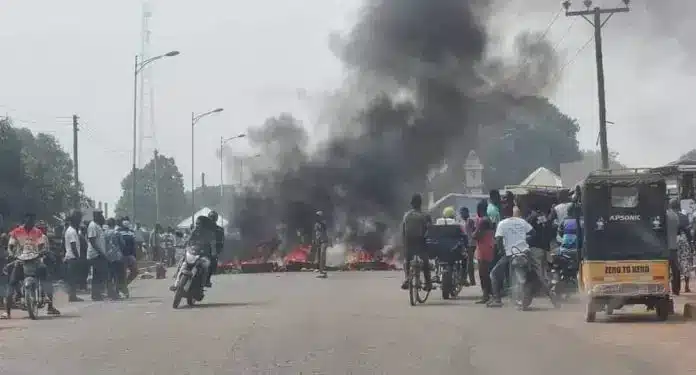
    Violence erupted in Broadekwano and Asisiriwa in the Bosomtwe District of the Ashanti Region following an alleged misunderstanding between local youths on Tuesday, April 7.
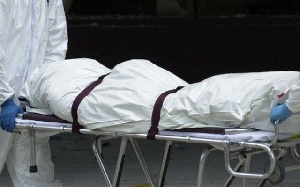
    The incident has left two young men dead and three others in critical condition.

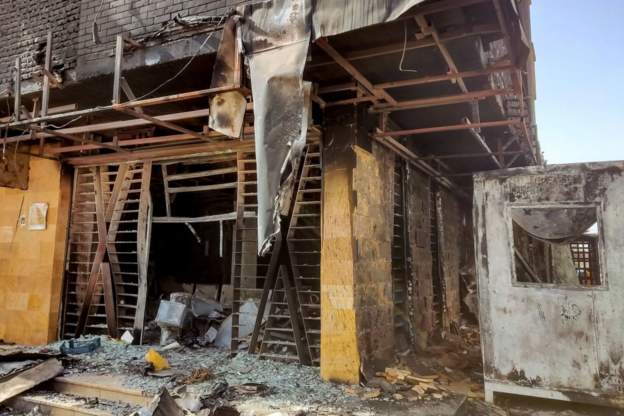
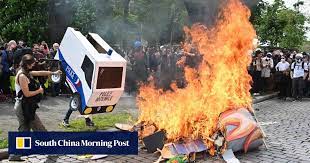
    A commercial sprinter bus owned by a resident of Asisiriwa was set ablaze by aggrieved youths. Reports indicate that the clash stemmed from an alleged relationship between a young woman from Broadekwano and a young man from Asisiriwa.

    Last year, violent clashes between residents and herdsmen in Gbeniyiri and surrounding communities in the Sawla-Tuna-Kalba District of the Savannah Region have claimed the lives of four individuals and injured five others.

    The injured are receiving treatment at various health facilities in the area.

    The violence erupted after a resident was killed during a robbery attack. In revenge, some relatives of the deceased launched an attack on herdsmen suspected to be behind the crime.

    Last year, several properties were destroyed, with more than 50,000 individuals displaced due to the tension in the area. The ongoing conflict in Gbenyiri stems from a land dispute between a Gbenyiri resident and the chief’s son, which began on Saturday, August 23.

    The unresolved conflict is spreading to Kalba and other parts of the district. Despite the deployment of 400 police personnel to the area to ensure law and order, clashes between the rival groups persisted.

    Unknown assailants shot a middle-aged man to death near Kalba, a suburb of the Sawla-Tuna-Kalba District in the Savannah Region, on Sunday, September 7.

    The gunmen ambushed the deceased person and opened fire as he rode his motorcycle. According to the police, the deceased, whose identity is yet to be revealed traveled from his community, Uro to Kalba to charge his mobile phone due to the lack of power in his area.

    The body of the deceased has since been deposited at the St. Anne’s Catholic Hospital in Damongo by the Ghana Police Service. The incident is amid the ongoing protracted conflict in Gbenyiri, which has claimed multiple lives.

    The latest death brings the official toll from the conflict to 32.
    Residents have, however, expressed fear over the security situation. Speaking to the media, a resident noted, “With this killing, who do you think will trust the system again? Some of us suspected this to happen because the guys are still around in Kalba town, and if you deceive yourself and go there, they will just end your life like this farmer. To me, this reaffirms the fears and mistrust in the system. The authorities need to do more than just talk and go”.

    Meanwhile, a seven-member mediation committee has been established by the Interior Ministry in response to the ongoing land conflict in Gbenyiri in the Savannah Region.

    The committee has been tasked with a one-month mandate to assist the government in finding a lasting solution to the tension in the area.

    During the inauguration ceremony at the Interior Ministry in Accra, the sector Minister, Mubarak Mohammed Muntaka, noted that the establishment of the committee was a recommendation from the National Security Council.

    The Inspector General of Police (IGP), Christian Tetteh Yohunu, alongside senior officials from the Armed Forces, Prisons Service, and Immigration Service, have already visited Kalba, Sawla, and other affected communities in efforts to bring calm to the area.

    In a related development, President John Mahama has initiated steps to restore peace in the Sawla-Bole area of the Savannah Region following renewed tensions between the Gonja and Brifor communities.

    Upon his return from a state visit to Singapore, the President received a full briefing from the National Security Coordinator and the Minister for the Interior on the latest developments in the conflict.

    While abroad, Mr. Mahama held a telephone conversation with the King of Gonja, Yagbonwura Jira Bikunuto Jewu Soale I, during which they discussed measures to end the clashes and foster lasting peace in the area.

    As part of efforts to de-escalate the situation, the President has dispatched a government delegation led by the Minister for the Interior, Hon. Muntaka Mohamed-Mubarak, to engage the Yagbonwura and other key stakeholders.

    Meanwhile, security has been reinforced with the deployment of additional police and military personnel to the conflict zone. President Mahama has urged all parties to support the peace initiatives being rolled out, stressing the importance of dialogue in resolving outstanding disputes.

    He has further directed the government delegation to work closely with the Regional Security Council, traditional authorities, and community leaders to ensure calm is restored and law and order upheld.

    Minister for the Interior, Muntaka Mohammed-Mubarak, has assured the Overlord of Gonja, Yagbonwura Bii-Kunuto Jewu Soale I, that the government will take every necessary step to restore peace in the Sawla-Bole area.

    “We have taken note of all the concerns, and we have also assured him that we will do everything humanly possible to ensure that peace will be restored. But we need his cooperation and the cooperation of all others. Surely, what talking can solve, dance cannot solve,” he stated.

    “Surely, what talking can solve, dance cannot solve, so we are hoping that after all the lengthy discussion and the conclusion that we have come to, we will go and implement our part, we are hopeful that they will also listen to us and also adhere to whatever agreement that we’ve had,” he noted.

    Less than a week ago, the sector minister imposed a curfew on the Sawla-Tuna-Kalba township and its surrounding communities in the Savannah Region. The curfew is in effect from 6:00 p.m. to 6:00 a.m., commencing on Wednesday, August 27, 2025, and remains in place until further notice.

    This measure was taken in response to the recent outbreak of conflict in the area. In addition to the curfew, there is a total ban on the possession of firearms, ammunition, or any offensive weapons. Any individual found with such items will be arrested and prosecuted.

    Furthermore, no two or more persons are permitted to ride on motorbikes throughout the day, and the wearing of war regalia has also been prohibited.

    Last year, intense security measures were implemented in the Bole and Sawla districts of the Savannah Region due to the chieftaincy dispute between the Bolewura and the Jahori clan.

    This heightened security response followed a ruling by the Tamale High Court concerning the dispute between the Jahori and Bolewura factions.

    In response to the court ruling, youths from Bole set fire to houses belonging to members of the Jahori community residing in both Bole and Sawla districts.

    The devastating fires resulted in significant property losses for the affected individuals, leaving many tenants in despair and tears. In recent years, the country has witnessed a number of casualties and destruction of property arising from chieftaincy disputes.

    The Minister for the Interior, Muntaka Mubarak, has also reviewed the earlier curfew hours imposed on Bawku and Nalerigu townships following recent attacks.

    The previous curfew, which ran from 6 a.m. to 2 p.m., has been revised to 6 p.m. to 6 a.m. The minister took this decision after receiving advice from the National Security Council.

    The Bawku Municipality in the Upper East Region and the East Mamprusi Municipality in the North East Region are affected by the new directive.

    The curfew has created an environment conducive for the evacuation of students from educational institutions in the affected areas, some of whom had unfortunately been targeted during the conflict.

    In a statement issued on July 27, the government announced that it is stepping up its approach from peacekeeping to peace enforcement in Bawku and other affected areas due to the recent escalation of violence, which threatens to derail the peace-building process.

    These heightened tensions and conflicts have had an impact on the country’s global peace ranking. Ghana has been ranked 61st out of 163 countries in the 2025 Global Peace Index (GPI), marking a continued decline in its standing on peacefulness.

    The latest ranking follows a downward trajectory from 55th in 2024, 51st in 2023, and 40th in 2022.

    Despite the decline, Ghana still ranks ahead of several of its West African neighbors, including Senegal (69th), Liberia (70th), and Nigeria (148th).

    The Global Peace Index, compiled annually by the Institute for Economics and Peace (IEP), measures the peacefulness of nations based on 23 indicators across three broad domains: societal safety and security, ongoing domestic and international conflict, and militarization.

  • Obrachire SHS assault: 3  SWESBUS students to appear before court

    Obrachire SHS assault: 3 SWESBUS students to appear before court

    The three students of the Swedru School of Business, in connection with the assault of a student at Obrachire Senior High Technical School, are expected to appear in court in the coming days. They were arrested by the Ghana Police Service on Monday, February 23.


    The suspects, Joseph Amoh, 20; Benedict Appiah, 18; and Bilal Mamud, 18, allegedly pelted stones at the victim, identified as Fiadzigbe, during a district inter-schools athletics competition on the same day.


    Fiadzigbe has since suffered a broken tooth and multiple facial injuries following the assault. In a video that has gone viral, the trio was seen attacking the student for reasons best known to them.

    However, Fiadzigbe has maintained that he did nothing to incur the cruel treatment by his fellow students.


    Narrating the circumstances surrounding the incident, Fiadzigbe noted, “They threw a stone at me when I was looking for a place to sit so that I could use the medicine on my eye. I didn’t do anything. I was just standing there.”


    “When I turned, I saw my colleagues running, but I didn’t know what was happening. By the time I realised, the stones came to hit me.”


    Prior to this development, the Ghana Police Service on Monday gave the management of Swedru School of Business a 24-hour ultimatum to produce the students who had allegedly committed the crime. Speaking to the media, the Director-General of the Police Criminal Investigations Department (CID), Lydia Yaako Donkor, warned that the Service would go to all lengths to ensure their arrests.


    “If you fail to produce them, we are going to adopt means to produce these suspects. This is because what we are seeing is not an act of indiscipline, it is a criminal act, and I do not want to storm this school in my name.


    “As law enforcement, when incidents of this nature occur, we have to investigate and arrest. We have a number of ways by which we can make the arrest. But because this is a school environment, we are not going to adopt one of those means. That is why I am giving you, as a school authority, that responsibility to produce them,” she said.


    But in a press statement issued today, the police indicated that, “About 9:00 pm of the same day, the authorities of Swedru School of Business brought to the Swedru Divisional Police Command three suspects, all students in the aforementioned school.”


    Meanwhile, the Ghana Education Service and the Ministry of Education have condemned the violence, calling for those responsible to face the full rigours of the law.

    The Ghana Education Service Central Regional Directorate has further suspended all zonal inter-school sporting activities among Senior High Schools (SHSs) and Senior High Technical Schools (SHTSs) in the region, to allow a thorough probe into the matter.


    Violence during inter-schools athletics competition has become a norm in Ghana, recently, the Ghana Education Service slapped a two-year ban on three Senior High Schools in the Eastern Region over acts of hooliganism.


    The schools include the Koforidua Senior High Technical School (SECTECH), New Juaben Senior High School (NJUSCO), and Nsutam Senior High Technical School (NSUTECH). Until 2028, these schools will not be allowed to participate in all sports and related co-curricular activities.


    This comes after stakeholders’ investigations proved that these schools were involved in hooliganism during the just-ended Regional Super Zonal Sports Competition.


    In a letter dated February 11, 2026, the Eastern Regional Education Directorate stated the joint expression of regret by the affected schools’ sports executives and school authorities following the chaos that happened during the zonal games on February 4 and 6, 2026.


    “Koforidua Senior High Technical School (Sectech), New Juaben Senior High School (Njuasco), New Nsutam Senior High Technical School (Nsutech).

    The Management of Eastern Regional Education Directorate and the Regional 2 Cycle Schools’ Sports Executives express their displeasure in the recent incidents before, during, and after the Regional Super Zonal Sports (Games) Competition,” parts of the statement said.


    It continued that their students, during the regional games, violated some provisions that guide the conduct of students as far as GES laws are concerned.


    It said, “in accordance with the Ghana Education Service Code of Conduct (2.17 Physical and Psychological Violence) and the Eastern Region Schools and Colleges Sports Association (ERSCSA) Code of Discipline: ARTICLE VII (Disturbances/Riots/Hooliganisms) and ARTICLE VIII (Sanctions/Punishments), the students in your school were found engaging in acts of hooliganism which are unacceptable and contradicts to the rule of discipline in GES.”


    This section prohibits any acts of physical assault, intimidation, bullying, or psychological abuse among students, stressing that violence, whether physical (fighting, attacking, causing injury) or psychological (harassment, threats, humiliation), is a serious breach of discipline.


    The penalties for violations under Article VII. Sanctions include:Suspension or banning of schools from sports and extracurricular activities. Withdrawal of privileges such as hosting or participating in competitions.


    Additional disciplinary measures imposed by GES or the regional sports association. The severity of punishment depends on the gravity of the offence, with repeat or violent incidents attracting harsher sanctions.


    In addition, the affected schools have been directed to pay a GHC 500 fine and be charged for any damage caused to any property or individual, or injury that was caused.


    GES said, “…….liable to a fine of Five hundred Ghana cedis (GhC500.00). b. surcharged to pay for the cost of any damage/injury to Property or Individual, which shall be determined by a Committee based on the extent of the damage/injury,” urging authorities of the affected schools to caution all their students, both old and new, to avoid further sanctions.


    “Please ensure that your students, staff, old students and other supporters adhere to all rules and regulations governing GES and ERSCSA to avoid any further disciplinary actions. Management counts on your cooperation,” GES added.


    The ban by the GES comes barely a week after a student of Koforidua Senior High Technical School (SECTECH) was hospitalised and given medical care after a violent attack by some Form Two students of New Juaben Senior High School during a clash at the Eastern Regional Inter-Schools Sports Festival in Koforidua.


    According to reports, the victim, identified as Jerome Appiah, was eating waakye on his way to campus when the Juaben students attacked him with a machete, leaving him with a deep wound to the shoulder and bleeding profusely.


    This prompted fears of reprisal attacks and heightened security concerns. Police intervened and quickly ushered Jerome to the Eastern Regional Hospital, where he was receiving treatment and was said to be in stable condition.


    To prevent an escalation, the Headmaster of Koforidua SECTECH, Emmanuel Frimpong Benjabeng, joined by other teachers, rushed to the Koforidua Youth Resource Centre, where the inter-schools sports festival was being held.


    However, while the headmaster was in an engagement with the New Juaben South Municipal Education Director, Mustapha Haruna Appiah, he was informed that further disturbances had broken out, forcing him to leave the meeting abruptly.


    Later, it emerged that a teacher of SECTECH, Henry Kudiabor, had also sustained a head injury after being struck by a flying stone during clashes involving students of Nsutam Senior High Technical School, who were allegedly pelting stones.


    The New Juaben South Municipal Education Director, Mustapha Haruna Appiah, expressed concern over the recurring violence and called on the police and event organisers to investigate the incident thoroughly and tighten security to prevent further attacks.


    This added to a worrying trend of rising indiscipline and violent confrontations among students in Ghanaian schools, particularly second-cycle schools nationwide.


    Last year was marked by at least five major violent incidents recorded between January and July 2025, from Kinbu’s teacher assault to Nalerigu’s fatal shootings.

  • Domestic violence laws up for review as Gender Ministry engages stakeholders

    Domestic violence laws up for review as Gender Ministry engages stakeholders

    The Ministry of Gender, Children, and Social Protection (MoGCSP), through its Domestic Violence Secretariat, convened a stakeholders’ meeting to assess existing laws and introduce new strategies aimed at strengthening protections for survivors of domestic violence.

    The event, which took place on February 26, 2025, brought together legal experts, social workers, civil society groups, development partners, and other key stakeholders to examine the effectiveness of current domestic violence legislation.

    Speaking at the meeting, Gender Minister Dr. Agnes Naa Momo Lartey highlighted the different forms of domestic violence, including physical, emotional, sexual, and financial abuse.

    She pointed out that while these issues were once regarded as private matters, legal advancements have encouraged public discussions and established structured intervention measures.

    The Minister pointed out the necessity of incorporating modern technology, including AI and digital tools, into strategies aimed at tackling domestic violence.

    At the meeting, legal expert Sheila Minkah-Premo provided an in-depth breakdown of domestic violence legislation, covering Act 732, the Legislative Instrument (L.I.), and the National Plan of Action. She examined the legal structure, detailing its provisions and how they impact survivors and service providers.

    Conversations also focused on improving assistance systems for those affected.

    As part of this initiative, the Ministry introduced an upgraded Boame SGBV Mobile Application, designed to offer quick support and essential resources to victims of sexual and gender-based violence.

    The event reaffirmed the Ministry’s resolve to enhance legal protections and improve the support framework for survivors.

    “The advocacy from you as stakeholders cannot be overemphasized, and the Ministry is grateful for your input,” the Minister stated.

  • 64 arrested following deadly clashes in Nkwanta South

    64 arrested following deadly clashes in Nkwanta South

    A series of coordinated dawn raids in Dadiase have led to the arrest of 64 individuals connected to the recent Nkwanta South clashes, which resulted in over six deaths and significant property damage.

    This crackdown is part of ongoing efforts to restore peace and order in Nkwanta, a region grappling with escalating violence.

    The operations, which began on Monday morning, were launched in response to rising tensions and unrest in Nkwanta and surrounding areas.

    So far, around 115 individuals have been detained since the recent gun violence began.

    Of those arrested, 51 have been granted bail, while 64 remain in custody for further investigation.

    Locals interviewed by Adom News have expressed approval of the swift action by security forces.

    Many hope these measures will help reduce the unrest and promote dialogue between the conflicting groups.

    During his visit to Nkwanta South, National Security Coordinator DCOP Abdul Razak Osman reiterated the government’s commitment to maintaining safety and stability in the region and encouraged peaceful negotiations.

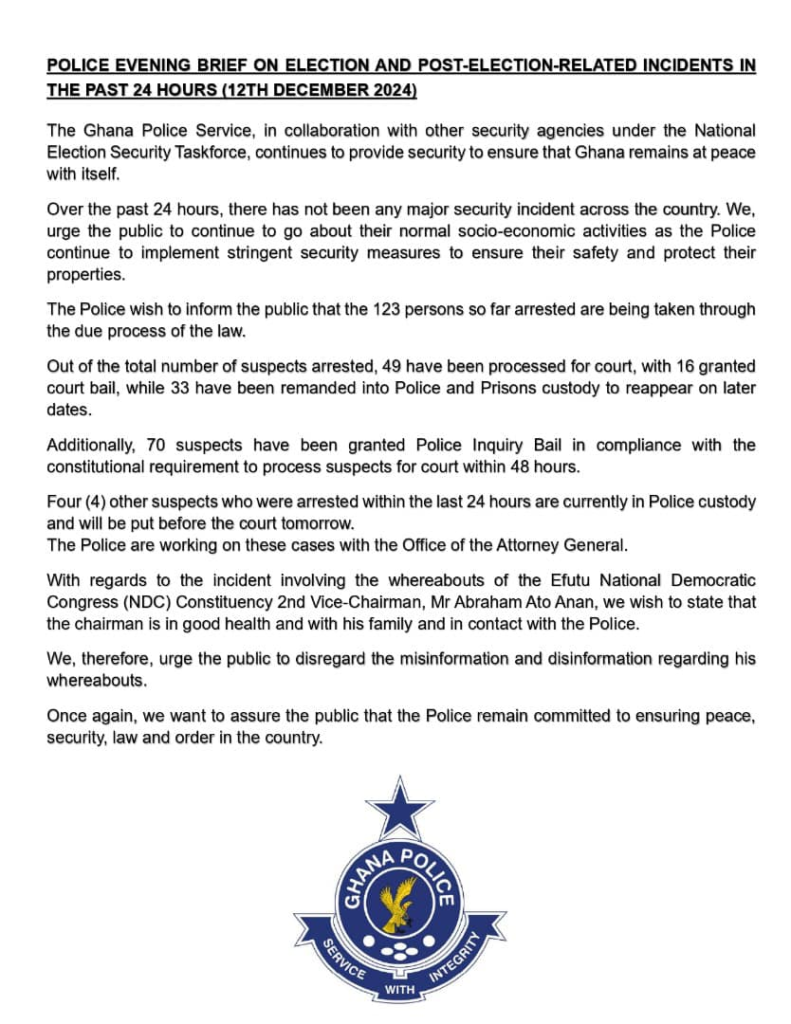
  • 16 granted bail, 33 remanded into custody and 123 arrested – Police on post-election violence

    16 granted bail, 33 remanded into custody and 123 arrested – Police on post-election violence

    The Police have announced that 123 persons have so far been arrested in connection with post-election violence, with 16 suspects granted court bail and 33 remanded into Police and Prisons custody.

    “Out of the total number of suspects arrested, 49 have been processed for court, with 16 granted court bail, while 33 have been remanded into Police and Prisons custody to reappear on later dates,” the Police said in a statement.

    The statement further revealed that “70 suspects have been granted Police Inquiry Bail in compliance with the constitutional requirement to process suspects for court within 48 hours.” Four additional suspects arrested within the past 24 hours are currently in Police custody and will be put before the court tomorrow.

    The Police assured the public that they are working closely with the Office of the Attorney General to handle these cases efficiently.

    Addressing concerns regarding the whereabouts of the Efutu National Democratic Congress (NDC) Constituency 2nd Vice-Chairman, Mr Abraham Ato Anan, the Police clarified that “the chairman is in good health, with his family, and in contact with the Police.” The statement urged the public to “disregard the misinformation and disinformation regarding his whereabouts.”

    The Police further assured the public that there has not been any major security incident across the country in the past 24 hours.

    “We urge the public to continue to go about their normal socio-economic activities as the Police continue to implement stringent security measures to ensure their safety and protect their properties,” the statement concluded.

  • Lack of investment and effective planning responsible for 2024 post-election violence – Criminologist

    Lack of investment and effective planning responsible for 2024 post-election violence – Criminologist

    A criminologist at the Kwame Nkrumah University of Science and Technology (KNUST), Jones Opoku-Ware, has attributed recent chaos in the aftermath of the 2024 general elections to the lack of ineffective planning by security agencies.

    He pointed out that resources are often concentrated on the lead-up to and the duration of elections, while post-election issues receive little attention.

    Discussing the unrest in certain regions after the general elections, Mr. Opoku-Ware remarked, “We didn’t pay much attention to the aftermath of the election. If you look at the security arrangements, a lot more focus and resources are dedicated to before and during the election, but we usually overlook what happens after the election results are declared.”

    He also clarified that, against popular belief, violence can emerge not only from the losing parties but also from those who are anticipated to win.

    He remarked, “The violence may not necessarily come from people who have lost but probably from those who are likely to be declared as winners.”

    He also noted that, contrary to common assumptions, violence can be sparked not only by the losing parties but also by those who are expected to emerge victorious.

    Following December 7 elections, several regions across the country have witnessed ongoing post-election violence. Reports suggest that the violent actions are being carried out by supporters of the National Democratic Congress (NDC), the party that won the election.

    In the past three days, a number of state institutions, including the Forestry Commission in Sunyani, the National Disaster Management Organisation (NADMO) in Accra, Electoral Commission offices in various districts, and the Metro Mass Transport yard in Kaneshie, have been targeted by groups of thugs.

    In some cases, looters have stolen government property such as computers, agricultural supplies, and other assets.

    As of now, the Ghana Police Service has apprehended 106 individuals believed to be involved in these acts of violence across the country.

  • 89 arrested in police’s intensified effort to avert post-election violence

    89 arrested in police’s intensified effort to avert post-election violence

    Security forces are now focusing on maintaining peace and order following the recent elections. Extra steps have been taken to ensure safety and prevent any further disturbances.

    While there have been a few instances of looting, vandalism, and property damage in some areas, authorities are actively addressing these incidents.

    According to ACP Grace Ansah Akrofi, the Director of Public Affairs, 89 people have been arrested so far for their involvement in various crimes related to these acts. Of these, 40 individuals are directly connected to the vandalism, looting, and destruction of property, and all will face court action.

    ‘We would like to caution the public to desist from such acts of violence since the perpetrators will be arrested and taken through the due process of the law”.

    Some of the measures put in place to ensure safety and security include; “showing visibility through patrols with the other security agencies, conducting intelligence-led operations within communities to fish out perpetrators, providing static security at targeted state facilities, engaging government officials and other stakeholders through reaching out to them, a special investigation team reviewing all videos that have come to our attention to help identify perpetrators and take them through the due process of the law.

      ACP Ansah Akrofi said, ‘We would also like to thank the all Ghanaians for their support throughout the process we urge all stakeholders to remain calm and wish to assure you of safety and security as well as the protection of properties”.

    1. Let’s campaign peace, not conflict –  NCCE pleads with politicians

      Let’s campaign peace, not conflict – NCCE pleads with politicians

      A member of the National Commission for Civic Education (NCCE), Bright Kobla Agbodeka, has urged politicians to avoid using harsh language when interacting with the public.

      He believes this would help reduce tensions and maintain the peace that Ghana has enjoyed over the years.

      During a Parliamentary Candidates Dialogue in the Afadzato South constituency, Mr. Agbodeka cautioned that inflammatory language could escalate conflicts between political opponents, leading to violence among supporters.

      He called on Ghanaians to refrain from violence, highlighting that peace is essential for a stable and prosperous society.

      He also pointed to the NCCE’s 2004 research project, Matters of Concern (MOC), which surveyed over 9,000 respondents.

      The findings revealed that education, employment, healthcare, infrastructure, the economy, and agriculture were the most pressing concerns for voters.

      These concerns, Mr. Agbodeka noted, should guide political candidates in shaping their campaigns and policies.

      “That is why we are subjecting these concerns to those who want to represent us for their ideas that will go a long way in addressing their challenges and we expect that at the end of the dialogue we will be more informed about their qualitative ideas and opinions on the issues,” he said.

      Touching on the Commission’s theme for 2024 activities, he said “Together we can build Ghana, so get involved.”

      Ghanaians should not ferment any form of violence because it will guarantee a civil and stable society for all, he said.

      The NCCE’s 2024 theme, “Together we can build Ghana, so get involved,” was also highlighted by Mr. Agbodeka, who stressed that nation-building is a collective effort, requiring input from all citizens.

      Ellen Amankwa, the Afadzato South District Officer for the NCCE, echoed the sentiment, urging candidates to present their views without resorting to insults. She also encouraged their supporters to pay close attention to the candidates’ positions.

      Assistant Superintendent of Police Godfred Awiredu, Chairman of the Inter-Party Dialogue Committee (IPDC), assured the public that efforts would be made to ensure peace during the elections.

      Togbi Ayidzoe VI, Regent of Ve Golokuati, advised the candidates to make realistic promises, warning that unfulfilled pledges could damage their credibility.

      “A day will come when you will be called to render accounts to the people based on promises you make,” he added.

      Frank Afriyie of the NDC and Tracy Semanu Tegbey of the LPG participated in the dialogue and discussed the NCCE’s findings on voter concerns.

      Unfortunately, James Etornam Flolu of the New Patriotic Party was unable to attend due to an emergency.

    2. Kenya to deploy additional 600 police officers to Haiti to combat gang violence

      Kenya to deploy additional 600 police officers to Haiti to combat gang violence

      Kenya has committed to sending an additional 600 police officers to Haiti in the coming weeks to assist in combating gangs that have taken control of much of the capital, Port-au-Prince, and surrounding areas.

      This increase will raise the number of Kenyan personnel, who have been deployed gradually since June to support Haiti’s struggling police force, to a total of 1,000.

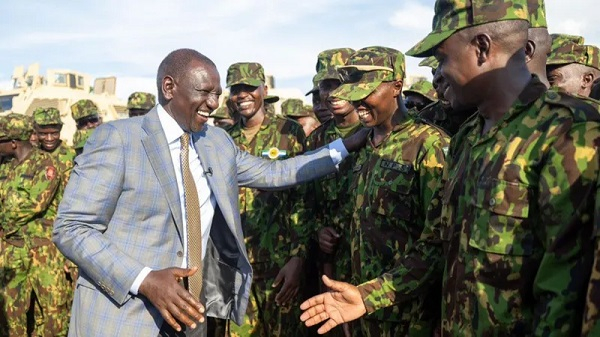
      During a visit to Haiti, President William Ruto expressed his support for transforming the current Kenya-led security initiative into a comprehensive United Nations peacekeeping operation.

      Several other nations have also pledged to contribute at least 1,900 additional troops.

      The situation in Haiti remains volatile, with a UN human rights expert warning that gangs are expanding their reach into new territories, resulting in further displacement.

      The UN Security Council is expected to meet by the end of the month to consider renewing Kenya’s existing mandate for another year, which could pave the way for a full UN mission in 2025.

      This development would enhance funding and resources for the operation, which has faced challenges due to inadequate equipment.

      While addressing the Kenyan officers at their base in Port-au-Prince, President Ruto praised their achievements over recent months.

      “There are many people who thought Haiti was mission impossible, but today they have changed their minds because of the progress you have made.”

      He expressed confidence that they would prevail over the gangs and committed to seeking improved equipment for them.

      The nearly 400 Kenyan officers on the ground were going out on patrol “working hand-in-hand with Haitian forces to protect the people and restore security”, Ruto said.

      “Our next batch, an additional 600, is undergoing redeployment training. We will be mission-ready in a few weeks’ time and look forward to the requisite support to enable their deployment,” he added.

      Nonetheless, there has been criticism in Haiti regarding the absence of a decisive action against the gangs.

      A UN human rights expert who recently visited the area stated that the mission is under-equipped and requires helicopters, night vision goggles, and drones.

      “The Multinational Security Support Mission (MSS), authorised by the UN Security Council in October 2023, has so far deployed less than a quarter of its planned contingent,” William O’Neil said on Friday.

      The smuggling of arms and ammunition into the country persisted despite an international embargo, enabling gangs to expand their influence into new regions, he noted.

      The UN expert, who traveled to the southeastern part of the country, reported that the police lacked the logistical and technical resources needed to combat the gangs effectively.

      He quoted a policeman in Jérémie as saying: “The situation borders on the impossible. We have to learn to walk on water.”

      Sexual violence had drastically increased and more than 700,000 people were now displaced, Mr O’Neil said.

      “This enduring agony must stop. It is a race against time.”

      He said the solutions already existed, but efforts had to be “redoubled immediately”.

      “It is crucial to stifle the gangs by giving the MSS Mission the means to be effective in supporting the operations of the Haitian National Police, as well as to implement the other measures provided for by the United Nations Security Council, including the sanctions regime and the targeted arms embargo.”

    3. Election 2024: Over 300 officers under training – DCOP Waabu

      Election 2024: Over 300 officers under training – DCOP Waabu

      Deputy Commissioner of Police (DCOP) Prince Gabriel Waabu, has revealed that the service is poised for a successful 2024 elections

      Speaking in an interview with JoyNews, he noted that over 300 officers are currently undergoing vigorous training as part of measures to ensure an incident-free 2024 elections. 

      During the interview, DCOP Waabu disclosed that the Ghana Police Service is partnering with sister institutions including the Ghana Prisons Service to ensure that the upcoming elections is devoid of any violence

      “Sensitisation is ongoing. We and sister security, the Prison service, Fire , immigration, all are on the table. They are all doing what they can too,” he said. 

      He added that the service has secured equipment meant to facilitate the elections. 

      “Equipment has been gotten and as of now, we still have recruits under training and all is geared towards the 2024 elections and I tell you what, officers over 300 are good to go to college and they will definitely pass out before 2024 elections. 

      “So these are some of the ways and the measures that we have put in place to see to it that the 2024 elections becomes a success,” he added. 

    4. Violence cannot be condoned, we must protect our development – NCCE

      National Commission for Civic Education (NCCE) District Director for Nabdam, Joachim Elbazar, has emphasized that any form of violence is detrimental to sustainable development and should not be promoted.

      Mr Elbazar highlights the negative consequences of violence witnessed in neighboring countries, including food shortages, property destruction, and the maiming of energetic youth.

      He underscores the vulnerability of youth to recruitment by violent extremists and emphasizes the importance of providing them with relevant information to deter them from engaging in such activities.

      Elbazar made these remarks while addressing residents of Zanlerig-Gane during a community cinema event, part of the European Union-funded project named Preventing and Containing Violent Extremism (PVCE).

      The project, implemented in eight border regions of Ghana, focuses on creating awareness about violent extremism, conducting public education, and fostering security consciousness, social inclusiveness, community cohesion, and situational awareness among citizens.

      Rebecca Colecraft, Assistant District Director of NCCE, echoes the sentiment, urging residents to refrain from activities that could jeopardize the peace of the country.

      “I want to encourage the youth that yes, things don’t look too good now, but we can only make this place better if we are together and decide to make it better by protecting one another and being each other`s keeper.

      “The extremists have nothing to lose because they have no family or property here, but it is our loved ones and property that we would lose in the end, so, everyone should stay focused and be guarded,” she stated.

      Rebecca Colecraft emphasized that violence in any form has never contributed to the development of any nation. She urged residents to remain vigilant and encouraged them to report anything suspicious, emphasizing the importance of collective efforts in maintaining peace and security.

      Mrs Naomi Denzabre, a resident, commenting on the videos, said, “This video is a great lesson to all of us and would eventually humble those who find pride in saying if it is war, we will fight, it clearly exposed our ignorance about war and its devastating effect.

      “This has reaffirmed why we need peace as a country and must live in harmony regardless of our economic woes because there is no wealth in fighting ourselves”.

    5. Chad summons diplomat from Israel over Gaza conflict

      Chad summons diplomat from Israel over Gaza conflict

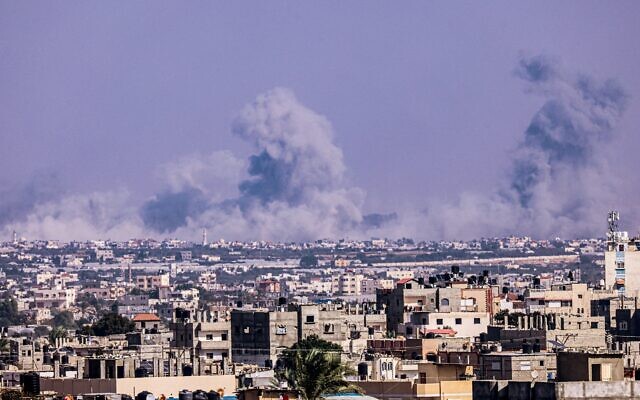
      Chad has summoned its Chargé d’Affaires in Israel for consultations in response to what it described as “unprecedented deadly violence in the Gaza Strip.”

      The government expressed condemnation for the loss of innocent lives and urged a ceasefire that could lead to a lasting resolution of the Palestinian issue.

      Chad, a predominantly Muslim nation, had severed diplomatic ties with Israel in 1972 but restored relations in 2019.

      This move makes Chad the first African country to recall its envoy from Israel since the conflict began in October.

      Several other nations, including Turkey, Chile, Bahrain, Honduras, Colombia, and Jordan, have also recalled their ambassadors from Israel in response to the ongoing violence.

    6. Security Policy Expert emphasizes the importance of educating #OccupyBoGprotest demonstrators to prevent violence

      Security Policy Expert at the Centre for Security Dialogue and Peace Advocacy, Anthony Acquaye, has underscored the importance of educating participants and stakeholders in the upcoming #OccupyBoGprotest scheduled for tomorrow to mitigate the risk of violence during the demonstration.

      This call comes in the wake of the recent #OccupyJulorBiHouse protest, organized by a group called Democratic Hub on September 21, 2023, which witnessed clashes between protesters and the police, resulting in violence.

      The expert’s statement highlights that even peaceful demonstrations have, on several occasions, spiraled into violence, making it crucial to educate protesters to prevent a repeat of such incidents.

      These instances have been linked to various factors, including police misconduct, deviations from planned protest routes, abrupt route changes enforced by security forces, and more.

      To ensure that a peaceful demonstration remains nonviolent, Mr. Acquaye encourages all stakeholders, including the police, protest organizers, individual demonstrators, and journalists, to collaborate in defining and understanding the nature of the demonstration being conducted.

      “As a Security Policy Expert, it is equally crucial to draw the attention of all stakeholders; the Police, organizers of demonstrations, individual protesters and journalists that, if the right type of demonstration is not collaboratively established and agreed by all major stakeholders, a peaceful demonstration can result in a violent demonstration.

      “For a demonstration to be peaceful, it is cardinal to establish and understand the type of demonstration and how it is done among all stakeholders for the purpose of effective security operational command and control to ensure law and order,” part of the statement read.

      The security policy expert emphasized the significance of informing protesters on the nature of the rally and its path in order to prevent potential violence.

      He emphasized that the protest will include a Matching Demonstration as well as a Rally Demonstration, and that protesters will not be permitted to occupy the Bank of Ghana.

      “So, in actual sense, if clearly, the statements from the Minority leader and Ghana Police Service all agreed in principle then the title given to tomorrow’s demonstration as ‘Occupy BOG Domo’ does not fit into the matching type of demonstration as have been agreed by both stakeholders but instead the picketing type of demonstration, this can create some kind of misunderstanding among protesters since they will not be allowed by the Police to occupy Bank of Ghana.

      “To avoid crop up of violence, proper education must go down to the protesters for them to understand that, they are not going to occupy BOG but rather they will be having a route Match demonstration combined with Rally demonstration in order to prevent rise of anger on Police officers who may be seen as standing block to stop them from occupying BOG,” he stressed.

      “Moreover, it is paramount to use this opportunity to advise the Ghana Police Service to be more professional in exercising their powers to ensure command and control to avoid the outbreak of violence, and to the organizers of the demonstration, who must also ensure they caution their members to avoid coming along with any offensive material such as stones, pepper spray catapults etc, that may trigger violence,” the statement added.

      The planned demonstration by the minority and some civil social organizations on October 3, 2023, is expected to begin at the Obra Spot, Kwame Nkrumah Circle – Adabraka – Ridge Roundabout – National Theatre Traffic Light – High Court Complex Traffic Light – Atta Mills Highway – U-turn to the Independence Square as the final destination.

      The organizers’ goal is to have the Governor of the Bank of Ghana, Dr. Ernest Addisson, and his deputies resign from their positions for their responsibilities in driving the country into the current economic crisis.

    7. US expresses concern as violence worsen in Mali

      US expresses concern as violence worsen in Mali

      The danger of the bloodshed in Mali escalating has alarmed the United States, which has pointed to assaults on UN forces as evidence.

      Matthew Miller, the spokesperson for the State Department, expressed strong disapproval of the attacks, deeming them “unacceptable.” He went on to condemn both the violence itself and the broader menace posed by armed groups operating in the region.

      On a separate note, the UN peacekeeping mission in Mali, known as Minusma, announced on Monday that it had been compelled to evacuate the northern town of Ber ahead of schedule due to worsening security conditions. The mission reported that its withdrawing troops encountered two instances of attacks, leading to injuries among some of the soldiers.

      The US State Department emphasized that these attacks underscore the escalating threat of violence and the pivotal significance of all parties in Mali finding peaceful resolutions to their differences.

      “It is critical that Minusma be permitted to conduct its withdrawal in a safe and orderly manner, and we call on the transition government to cooperate fully until the final Minusma element departs,” it adds.

      “Though the Christian leadership and the wider Ghanaian community are not utterly surprised by the statement, we find such statement to be unfortunate and intended to subtly intimidate our lawmakers and business community into kowtowing to the cultural desires and the value preferences of a small but financially influential minority group in the US in particular and the western countries in general.”

    8. Burkina Faso: Suspected jihadist assault claims lives of at least 20 individuals

      Burkina Faso: Suspected jihadist assault claims lives of at least 20 individuals

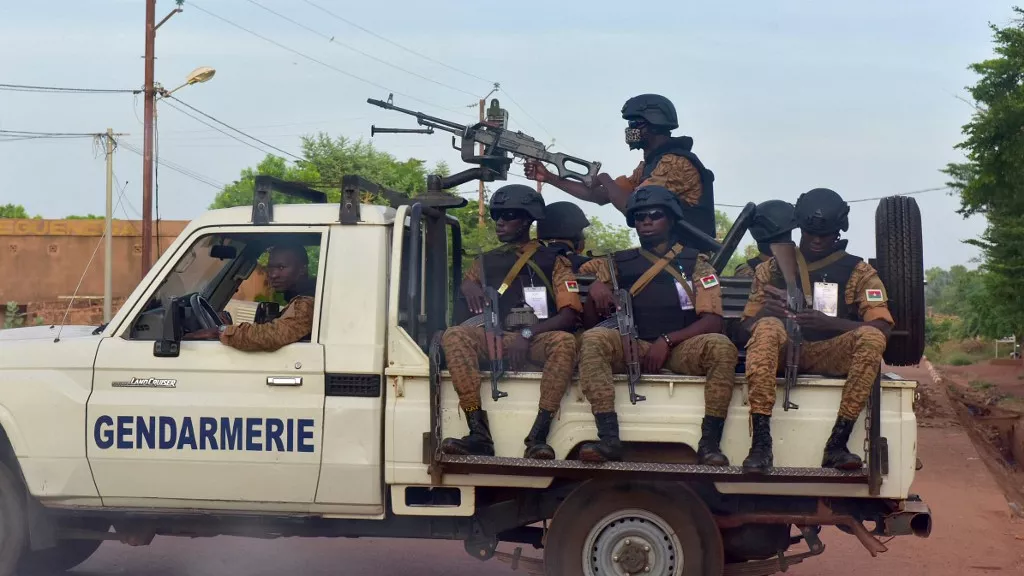
      On Sunday, in the region of Center-East bordering Togo, specifically in Nohao near the town of Bittou, a suspected jihadist attack resulted in the tragic loss of twenty lives in Burkina Faso, as reported by AFP on Monday.

      According to a security source, the assault claimed the lives of approximately twenty individuals, primarily consisting of shopkeepers. However, a trader presented a more dire account, indicating that “25 people were killed” and detailing that “more than fifteen transport trucks were looted and subsequently set ablaze by the terrorists.”

      Furthermore, another merchant disclosed that around “ten individuals were wounded,” necessitating their evacuation to Bittou. These traders had been returning from Cinkansé, a trading hub on the border with Togo, after their market activities.

      “We deplore the loss of life whose bodies were deposited” at “the morgue of the CHR (Regional Hospital Center) of Tenkodogo”, capital of the Center-East region, said in a press release a local official, Sami Beranger Pooda, who does not specify any figures.

      Another attack occurred “Thursday around 6 p.m.”, according to the same security source, and “targeted a convoy of several dozen vehicles carrying goods”.

      Starting from 2015, Burkina Faso has found itself ensnared in an escalating cycle of violence attributed to jihadist factions associated with both Islamic State and Al-Qaeda. According to data from ACLED (Armed Conflict Location & Event Data Project), this includes over 5,000 incidents since the commencement of 2023.

      Regrettably, this wave of violence has resulted in the internal displacement of over two million individuals within the country.

      In the middle of July, President Captain Ibrahim Traoré, who assumed authority in September 2022 through a coup d’état, lamented the escalating frequency of assaults against civilians. He expressed his belief that the jihadists were displaying “cowardice” through these increasingly prevalent attacks.

    9. Tense poll amid fears of violence in Sierra Leone election

      Tense poll amid fears of violence in Sierra Leone election

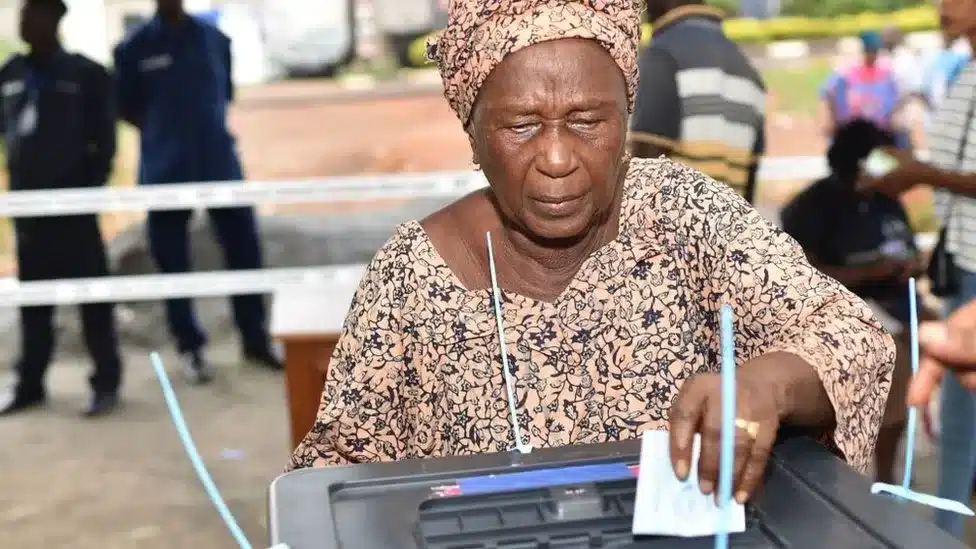
      After a difficult, violent campaign, Sierra Leoneans are casting their votes in the general election.

      On Wednesday, the main opposition party alleged that one of its supporters was shot dead by police, which the police have denied.

      Supporters of both main parties have been accused of attacking opponents.

      This election is taking place against the background of a troubled economy, the rising cost of living, as well as concerns about national unity.

      The voters are choosing a president, MPs and councillors in the West African country’s fifth election since the civil war ended in 2002.

      The 11-year conflict cost an estimated 50,000 lives, but since then the country has a tradition of largely peaceful, free and credible elections, according to Marcella Samba Sesay, chairperson of the NGO National Elections Watch.

      With strong party loyalty among the 3.3 million registered voters, the campaigns have focused on shoring up their parties’ bases rather than articulating and debating policy issues.

      Who are the candidates?

      President Julius Maada Bio, 59, of the Sierra Leone People’s Party (SLPP) is running for a second five-year term. His main rival among the 12 challengers is Dr Samura Kamara, 72, of the All People’s Congress (APC).

      This is a repeat of the race in 2018, which saw Mr Bio narrowly win following a second round run-off.

      How much violence has there been?

      There has been an uptick in violence compared to five years ago, according to the West Africa Network for Peace-building Sierra Leone. It has counted 109 violent incidents since April.

      This week, the APC said one person was killed by security forces as its supporters gathered for a protest at its headquarters in Freetown on Wednesday.

      The police alleged the shots were fired from the direction of the APC building.

      Dr Kamara has also said that his motorcade came under attack and there were reports that the APC office was set ablaze in the city of Bo last weekend.

      The SLPP has said that it too has faced attacks in opposition strongholds.

      https://emp.bbc.com/emp/SMPj/2.49.3/iframe.htmlMedia caption,

      What you need to know about the elections

      President Bio has called for “peaceful elections” and “no violence”. The African Union has also expressed concerns over reported incidents of violence and intimidation in parts of the country.

      Sierra Leoneans have been alarmed by campaigners’ rhetoric, the Reuters news agency reports.

      “All I want is peace. I am scared by the high level of hatred I see being exhibited on social media by political extremists on both sides,” a student from Freetown who wanted to remain anonymous told Reuters.

      What about women?

      This election comes months after a landmark law which says women must make up 30% of all positions in both the public and private sector – including in parliament.

      But analysis from Sierra Leone’s Institute for Government Reform (IGR) suggest the next parliament will fall short of this.

      Parties have put forward lists of candidates running in each of the country’s districts to be elected on a proportional representation basis. But according to the IGR, not enough women are placed high enough on those lists to make sure the 30% threshold is crossed.

      Out of the 13 candidates running for president only one is a woman – the little-known Iye Kakay.

      How does the election work?

      The APC has also expressed concerns about the transparency of the counting process and has cast doubt on the electoral commission’s ability to hold fair elections.

      The commission has defended itself, saying measures have been put in place to ensure the credibility of the voting and counting process.

      Results should be known within 48 hours of polls closing.

      To be declared the winner of the presidential race, the leading candidate must secure 55% of the votes cast, otherwise a run-off will be held between the two candidates with the highest number of votes.

    10. Somalia: 8 people killed in Puntland violence

      Somalia: 8 people killed in Puntland violence

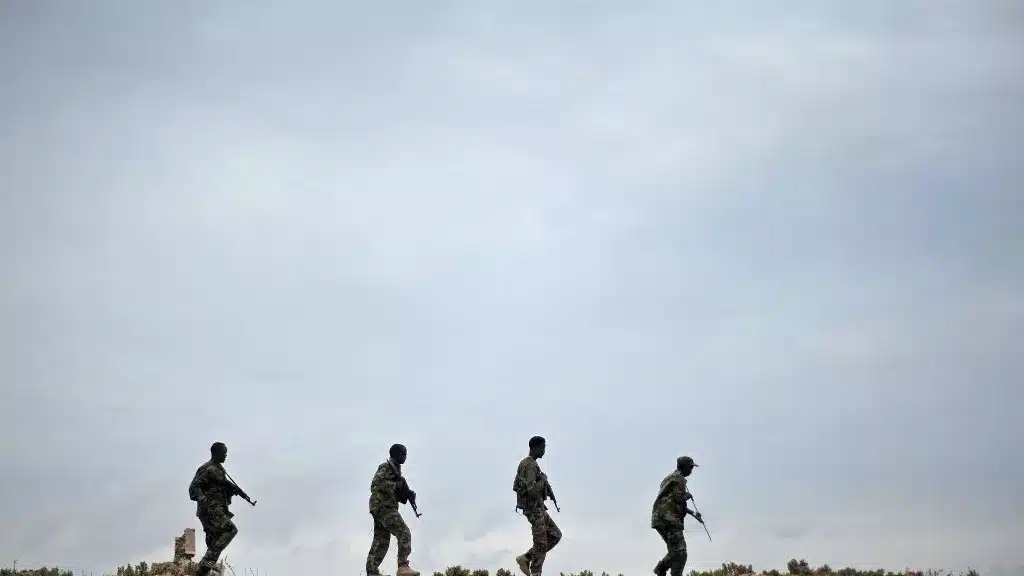
      In fighting on Tuesday outside parliament in Puntland, a semi-autonomous state in northern Somalia, between local security personnel and armed militiamen supporting the opposition, at least eight people were killed, according to police and witnesses.

      The violent clashes in the state capital, Garowe, occurred during a parliamentary session to debate amendments to the local constitution, which the opposition sees as an attempt by the President of Puntland to extend his term of office.

      “Eight people were killed in the clashes and around ten others were injured, including civilians”, said Abdiweli Hassan, a police officer in Garowe.

      The clashes broke out when armed men loyal to opposition members clashed with security forces protecting parliament and tried to disrupt the session, he said, assuring that calm had now returned.

      Somali Prime Minister Hamza Abdi Barre called on both parties to settle their differences through dialogue “rather than arms”.

      One witness, Mohamed Nur Ali, said he had seen six bodies. “The clashes were very intense, and both sides used heavy machine guns,” he added.

      Another witness, Nimo Adan, said she was caught in the firefight and saw several people killed.

      In May, Puntland held local elections, the first direct elections in Somalia for more than half a century, outside the breakaway region of Somaliland.

      The opposition accused the President of Puntland State, Said Abdullahi Deni, of manipulating the electoral process and seeking to amend the Constitution to allow him to extend his term of office, which ends in January 2024.

      An arid, oil-rich region in north-east Somalia, Puntland declared its autonomy in 1998 and relations with the central government in Mogadishu have often been strained.

      Somalia has not held a national election by direct universal suffrage since 1969, when the dictator Siad Barré took power in this country in the Horn of Africa.

      At the end of May, Somalia announced the signing of an agreement between the government and the federated states providing for the introduction of direct universal suffrage from 2024 and the transition to a presidential system.

      The agreement is intended to put into practice the often repeated but never implemented promise of “one person, one vote” from the local elections scheduled for 30 June 2024.

      Up until now, elections have been held according to a complex indirect process based on the clans that structure Somali society.

      But opposition figures have denounced the overhaul of the political system, rejecting the new electoral timetable which provides for elections to the parliaments and presidencies of the federated states on 30 November 2024, which would mean a de facto extension of the terms of office of some presidents, including Said Abdullahi Deni, due to expire before that date.

    11. RSF of Sudan is suspected of murdering the governor of West Darfur

      RSF of Sudan is suspected of murdering the governor of West Darfur

      Authorities in Sudan claim that the paramilitary Rapid Support Forces (RSF) assassinated the governor of the West Darfur province.eople

      Only hours earlier, Khamis Abbakar had accused both the RSF and allied militias of committing genocide against people from the Masalit ethnic group.

      Mr Abbakar, who was killed in El Geneina, had warned that the attacks had spread across the city and called for international intervention.

      The RSF has not commented on the allegation.

      There has been similar violence in the cities of Nyala and Zalingei.

      UN Secretary General Antonio Guterres has said he’s appalled by the escalating ethnic and sexual dimension of the violence against civilians in Darfur.

      The region has seen periods of conflict since the early 2000s when millions were displaced and hundreds of thousands killed after Arab militias were deployed to fight non-Arab rebels.

    12. UN nations slam France over racism, police violence

      UN nations slam France over racism, police violence

      As France prepared for another day of large-scale protests, a number of states raised concerns about about police violence, particularly against protestors.

      Attacks on migrants, racial profiling and religious intolerance were also raised during the Universal Periodic Review (UPR) – which all 193 UN countries must undergo every four years.

      France must “take measures to, in a transparent manner, address allegations regarding excessive use of force by police and gendarmerie against protesters during demonstrations”, Sweden’s representative told the Human Rights Council in Geneva

      Other countries raised similar concerns, including Denmark, Liechtenstein and Norway, but also Russia, Venezuela and Iran – three countries that themselves regularly face accusations of police violence and other serious and widespread human rights violations.

      “We are concerned about the harsh and sometimes violent measures aimed at dispersing peaceful citizens,” Russia’s representative Kristina Sukacheva, told the council.

      The criticism came as France braced for up to 1.5 million protesters to fill its streets to mark the May 1 labour day, even as President Emmanuel Macron tries to steer the country on from a divisive pension law that has sparked anger, pan-bashing and social unrest.

      It echoed growing outcry in France of the police for disproportionate use of force in dealing with the crowds, amid the months of protests over the move to raise France’s pension age from 62 to 64.

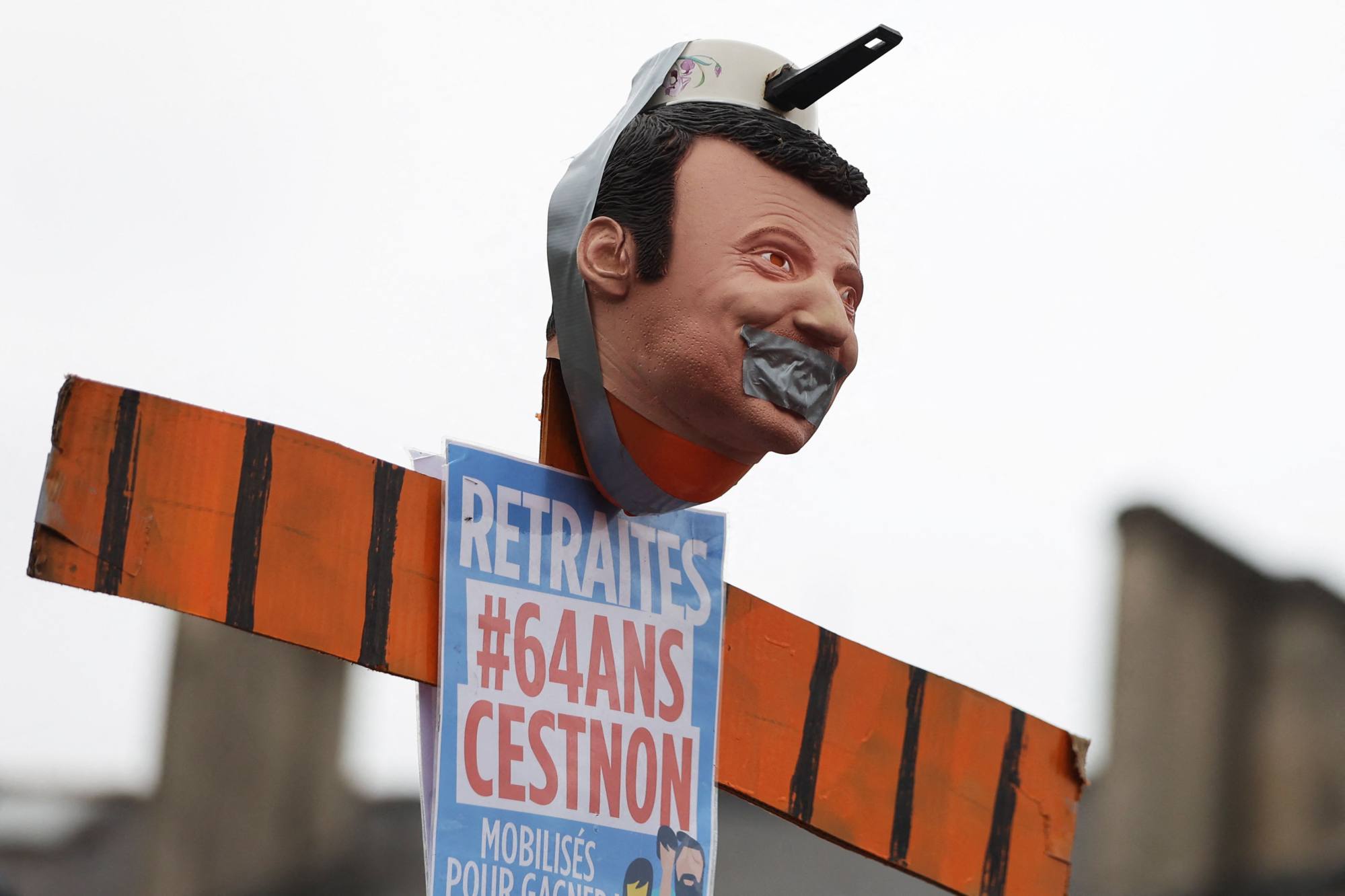
      A placard reading “64 years, it’s no” with a structure representing the face of the French President Emmanuel Macron with a pan on his head during a demonstration. Photo: AFP

      A placard reading “64 years, it’s no” with a structure representing the face of the French President Emmanuel Macron with a pan on his head during a demonstration. Photo: AFP

      During Monday’s review, several countries including the United States and China called on France to do more to battle racial and religious discrimination.

      Hong Kong Politics Newsletter

      US representative Kelly Billingsley said her country urged Paris to “expand efforts to counter crimes and threats of violence motivated by religious hatred such as antisemitism and anti-Muslim hate, including cases of harassment, vandalism, and assault”.

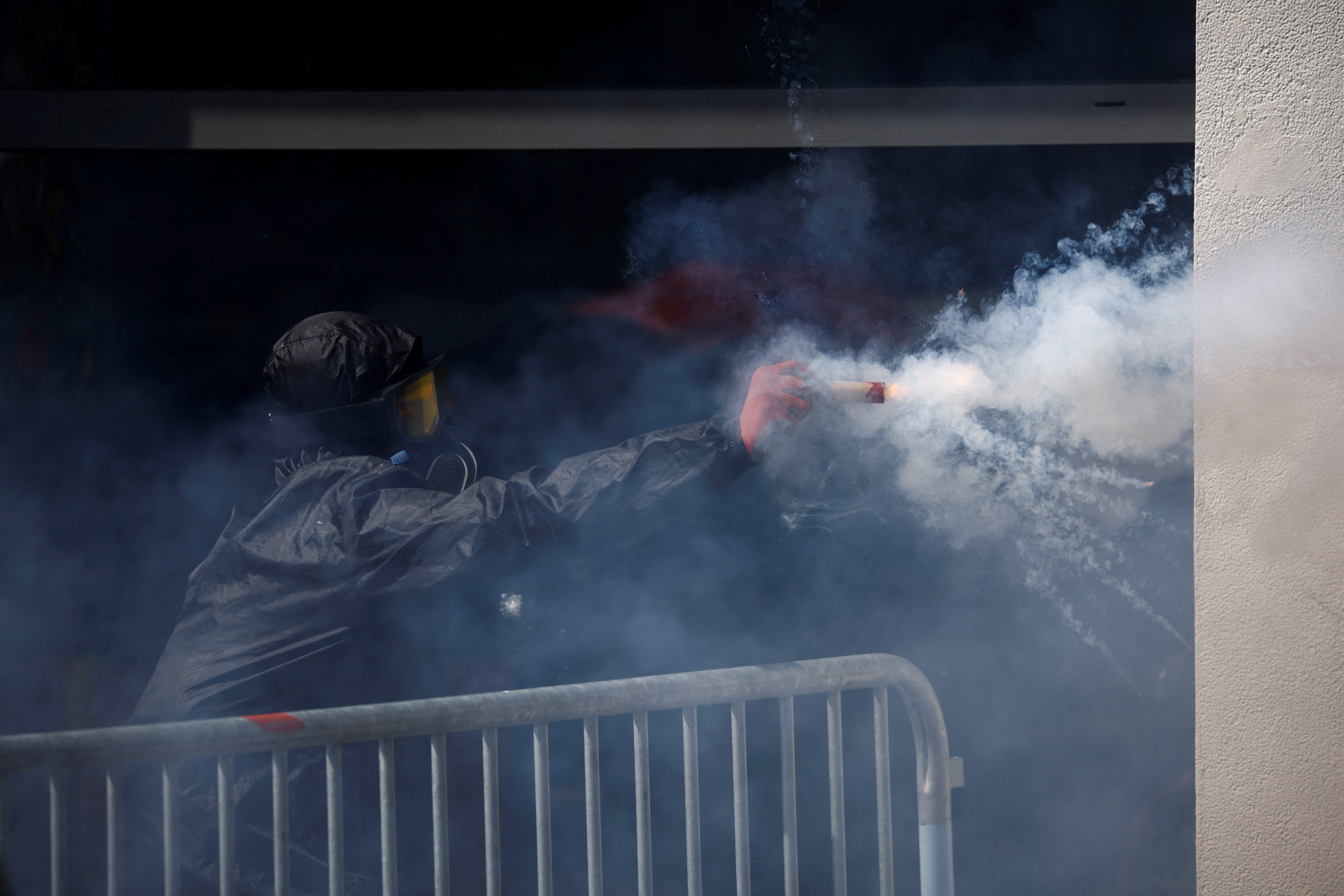
      A demonstrator fires fireworks towards the police during the traditional May Day labour march. Photo: Reuters

      A demonstrator fires fireworks towards the police during the traditional May Day labour march. Photo: Reuters

      The Chinese representative decried “a rise of racism and xenophobia” in France, urging it to “stop … measures that violate rights of migrants”.

      Brazil and Japan decried “racial profiling by security forces”.

      Sabrine Balim, a judicial adviser with the French interior ministry, told the council the use of force was “strictly supervised, controlled, and in the case of erroneous use, sanctioned”.

      She also stressed that “France condemns any form of racial profiling”.

    13. DRC: Despite the words of Pope Francis, violence continues in the East

      Pope Francis’ strong words against the suffering they are enduring have warmed the hearts of people in the eastern Democratic Republic of Congo (DRC), but his visit to Kinshasa has not marked a truce in the fighting and violence.

      Throughout the papal visit, from Tuesday to Friday, fighting continued in North Kivu province, where M23 rebels captured new villages, sources in the province said.

      Diplomacy had been activated in recent months to try to silence the guns and bring the DRC closer to Rwanda , accused of supporting this rebellion on the offensive since the end of 2021. In vain so far.

      It was because of this insecurity that the pope canceled the visit he was initially to make to Goma , capital of North Kivu, replacing this trip with a meeting in Kinshasa with victims of atrocities committed for nearly 30 years in this province and those neighbouring Ituri and South Kivu.

      With their testimonies in front of the cameras, the presence of women with severed arms, the pope’s indignation at the “bloody and illegal exploitation” of the country’s wealth, “the whole world” is now “aware” of what is passes here, believes Théoneste Bahati Gakuru, 34, Goma resident and human rights defender.

      Théoneste now hopes that the international community will “take measures to put an end to this disastrous situation”.

      Johnson Ishara, 30, a shopkeeper in Goma, and Calvin Maliro, a youth representative from a commune in Beni, another town in North Kivu affected by the violence, believe that the pope “will continue his plea” for an end to the misfortunes from eastern Congo.

      “We are innocent, we don’t know anything about politics,” says Kathungu Matumaini, a nurse in Beni, asking that her “tears and prayers” be heard.

      “Your tears are my tears, your suffering is my suffering,” the pope said on Wednesday before the dramas that were described to him. The next day, he called on young people, gathered by the thousands in a stadium, to reject tribalism , corruption, and to act for the future of their country.

      “We must take ownership of his message… It is time for young people to stop living in the bush to orchestrate massacres,” analyzes Jean-Marie Ndjaza, spokesperson for the Lendu community in Ituri. “We must avoid making more victims” in the province, pleaded the official.

      But in Ituri either, the violence did not let up during the visit of the sovereign pontiff.

      On Wednesday, a new incursion by armed men killed at least seven people there, in the “chiefdom” (grouping of villages) of Walese Vonkutu. The attack is attributed to the ADF rebels, which the jihadist group Islamic State (IS) presents as its branch in central Africa, but apparently associated with a local militia.

      A particular community was targeted. “We do not understand this new modus operandi”, notes, helpless, Dieudonné Malangai, a member of local civil society.

      The ADF is accused of repeated massacres of civilian populations in Ituri and North Kivu as well as attacks, including one in January against a Pentecostal church in North Kivu, claimed by IS.

      In South Kivu, the words of the pope echo for some residents of Bukavu the fight led by Denis Mukwege, Nobel Peace Prize 2018 for his action in favour of women victims of rape.

      For Furaha Citera, head of a women’s organization, François reinforces the Congolese doctor in his fight for “the establishment of a special tribunal for the Congo, to fight against atrocities”.

      The pope’s words “arouse hope in the hearts of the victims, because the sovereign pontiff will be their ambassador”, also wants to believe in Bukavu Paulin Mulume , 30, an activist in a citizens’ movement.

      In the meantime, South Kivu continues to grapple with a noria of militias, an infernal cycle of reprisals between communities and persistent obscurantist practices. This week, a 5-year-old albino boy was killed and his body found without a head or legs.

      Source: African News

      • Women in Africa face the highest risk of being murdered by family members, UN reports

        UN has reported that , women and girls in Africa are more likely than anywhere else in the world to be killed by intimate partners or other family members.

        According to the report, the continent has the highest level of violence against women in relation to its female population.

        In 2021, approximately 45,000 women and girls worldwide will have been murdered by intimate partners or other family members.

        When broken down, this means that more than five women or girls are killed by someone in their own family every hour.

        The report released jointly by the UN Office on Drugs and Crime (UNODC) and UN Women, says that even as the numbers are shocking, the true scale of femicide may be much higher.

        By absolute numbers, Africa had the second-highest cases of female intimate partner/family-related killings, at 17,200, with Asia leading at 17,800. The Americas had 7,500 cases and 2,500 in Europe.

        “Data on gender-related killings committed in the public sphere are particularly scarce, making it difficult to inform prevention policies for these types of killings,” it says.

        The UN is calling for the strengthening of protection mechanisms for women human rights defenders and women’s rights activists.

        “I call upon governments and partners across the world to increase long-term funding and support to women’s rights organisations,” UN Women executive director Sima Bahous said.

        The UN report comes as the global commemoration of 16 days of activism against gender-based violence begins on Friday.

      • Sierra Leone families arrive to identify loved ones killed in protests

        The families of Sierra Leoneans who died in protests against the spiralling cost of living arrived at a morgue in the capital Freetown on Monday to identify their loved ones.

        A small crowd gathered outside the Connaught Hospital, where officials said the remains of 31 people were waiting to be identified.

        Hawa Kamara said she had come from Makeni, around 200 kilometers (120 miles) northeast of the capital, “to identity the corpse of my brother who… was killed on his way home by a bullet.

        “We just want the government to hand over his corpse to us for a dignified burial in his hometown,” she said.

        Desmond Samai said he, too, had lost his 34-year-old brother.

        “We took the body home for burial but were advised to take the corpse to the mortuary at Connaught Hospital and report to police. Since then we haven’t been allowed to bury him.”

        Morgue official, Sinneh Kamara, said the “majority of the bodies had bullet wounds,” adding that five were policemen and 26 were civilians.

        No official toll has been released.

        Clashes occurred in Freetown and other cities, such as Makeni and Kamakwie in the north of the country, on August 10 when an economic protest descended into violence between the security forces and demonstrators.

        Sierra Leone has had a reputation for relative stability since the end of a brutal 1991-2002 civil war that claimed some 120,000 lives.

        Its population of eight million people live in one of the poorest nations in the world, ranking 182 out of 189 countries in the UN’s Human Development Index, a benchmark of prosperity.

        The economy, heavily dependent on minerals, was devastated by the war.

        Efforts at rebuilding were set back by an Ebola epidemic in 2014-2016, a fall in world commodity prices and the coronavirus pandemic — all of which have disrupted trade and investment and hit exports.

        Source: Africanews

      • Egypt court seeks live TV execution of woman killer

        Egyptians were horrified after video footage went viral last month purportedly showing Mohammed Adel stabbing to death Nayera Ashraf, who had rejected his advances, outside her university

        A court in Egypt has called for a legal amendment to allow live broadcasts of the execution of the killer of a female student.

        Egyptians were horrified after video footage went viral last month purportedly showing Mohammed Adel stabbing to death Nayera Ashraf, who rejected his advances, outside her university.

        In a letter to parliament, the court that sentenced the 22-year-old to death said the broadcast of even a part of the proceedings could achieve the goal of deterrence.

        Egypt does not broadcast executions, which are always carried out by hanging inside prisons.

        A 2015 United Nations survey said nearly eight million Egyptian women were victims of violence.

        Source: asaaseradio.com

      • Schoolgirl shot as violence erupts in Lagos over ‘Okada Ban’

        A schoolgirl was hit by a stray bullet at Iyana Ipaja, Lagos, on Wednesday during a violent clash between a mob protesting the ban on ‘okada’ (commercial motorcyclists) in certain areas and security operatives of the Lagos State Task Force.

        The girl, who is yet to be identified, was promptly taken to Peak Health Hospital where she was stabilised before she was referred to the General Hospital, Orile Agege for treatment, a medical officer at the former told PREMIUM TIMES.

        The violence, which broke out on Wednesday morning, was as a result of a restriction placed on the operations of motorcycles and tricycles by the state government. Videos circulated on social media revealed how people were scampering for safety as the clash erupted.

        The protesters also shattered glasses of vehicles and lit bonfires on the highway, disrupting movement and business activities. Vehicles belonging to the Lagos State Traffic Management Authority (LASTMA) were also burnt by the protesters.

        ‘No life lost’- Police

        The Lagos State police spokesperson, Bala Elkana, told PREMIUM TIMES that the victim of the stray bullet was hit at Aboru when a faceoff occurred between operatives of Lagos State Task Force and miscreants.

        Mr Elkana said the operatives of the task force and police officers carried out the enforcement exercise in the area and 86 motorcycles were impounded.

        “The riders of the impounded motorcycles and thugs in large number advanced to Iyana-Ipaja and attacked police officers on duty at Iyana Ipana roundabout, Alaguntan junction and Aboru junction,” he said.

        Mr Elkana said no life was lost in the attack, “but Salifu Umar, an Inspector of police was injured by the hoodlums.”

        He said one LASTMA vehicle and two Neighbourhood Watch patrol bicycles were burnt by the hoodlums.

        He said 34 suspects were arrested in connection with the violent attacks and will be charged to court.

        A similar violence occurred at Ijora area of the state on Monday when a mob protested the restriction. The police said 24 suspects were arrested during the said attack for blocking major roads in Ijora, “burning tyres, looting and stealing from unsuspecting road users and causing obstructions in the area.”

        Source: premiumtimesng.com