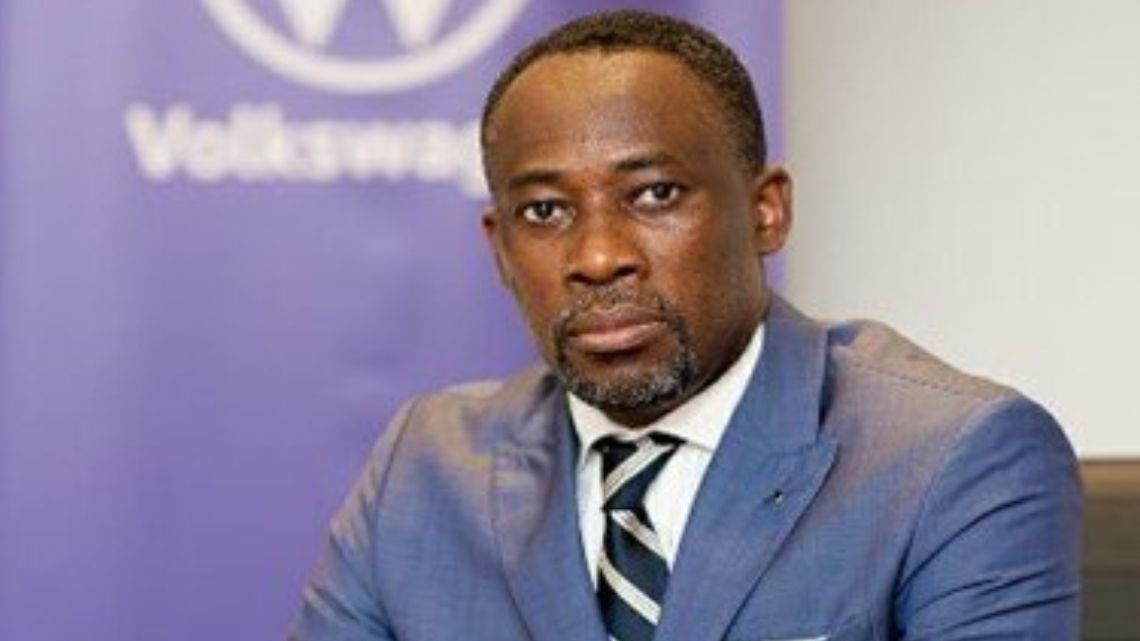
Chief Executive Officer of Volkswagen Ghana, Jeffery Peprah, has highlighted the six local vehicle assembly companies’ competency to supply the country’s vehicle needs.
He noted that a total of 120,000 vehicles were imported into the country.
Out of this figure, 6,000 were new vehicles, he said during an interview on Citi FM.
The six automobile assemblers registered under the Ghana Automotive Development Programme (GADP), including Volkswagen, Toyota, Rana Motors, Sinotruck, Japan Motors, and Kantanka, have urged the government to limit the importation of second-hand vehicles to boost the local industry.
“Out of the new 6,000, 4,700 were assembled locally and this is coming from six different automobile assembling companies,” Jeffery Peprah said.
According to him, the local vehicle assembly companies have 140,000 to 141,000 units that can be produced locally.
Mr. Peprah defended the pricing of locally assembled vehicles, stating that the price reflects the value of each purchase. He outlined several benefits that buyers of locally assembled vehicles would enjoy compared to purchasing imported second-hand vehicles.
“Looking at the pricing perspective at the moment, our new vehicles locally assembled are very competitive and as well as the things that come with them, especially you have a vehicle locally made with a five-year warrant, which is a very potential thing for the market here. Buyers have a warrant for servicing for five years and that is a big plus for the buyers”.
Mr. Peprah stated that implementing some restrictions on imports would incentivize local companies to expand their production capacities.
“If we are able to have a locally assembled product and with our capacities growing and once we have the numbers too growing, we will quickly move into more production phase where we will manufacture more products,” he added.
Chief Executive Officer of Volkswagen Ghana, Jeffery Peprah, has noted that a total of 120,000 vehicles were imported into the country.
Out of this figure, 6,000 were new vehicles. He made this revelation while highlighting six local vehicle assembly companies’ competency to supply the country’s vehicle needs on Citi FM.
The six automobile assemblers registered under the Ghana Automotive Development Programme (GADP), including Volkswagen, Toyota, Rana Motors, Sinotruck, Japan Motors, and Kantanka, have urged the government to limit the importation of second-hand vehicles to boost the local industry.
“Out of the new 6,000, 4,700 were assembled locally and this is coming from six different automobile assembling companies,” Jeffery Peprah said.
According to him, the local vehicle assembly companies have 140,000 to 141,000 units that can be produced locally.
Mr. Peprah defended the pricing of locally assembled vehicles, stating that the price reflects the value of each purchase. He outlined several benefits that buyers of locally assembled vehicles would enjoy compared to purchasing imported second-hand vehicles.
“Looking at the pricing perspective at the moment, our new vehicles locally assembled are very competitive and as well as the things that come with them, especially you have a vehicle locally made with a five-year warrant, which is a very potential thing for the market here. Buyers have a warrant for servicing for five years and that is a big plus for the buyers”.
Mr. Peprah stated that implementing some restrictions on imports would incentivize local companies to expand their production capacities.
“If we are able to have a locally assembled product and with our capacities growing and once we have the numbers too growing, we will quickly move into more production phase where we will manufacture more products,” he added.
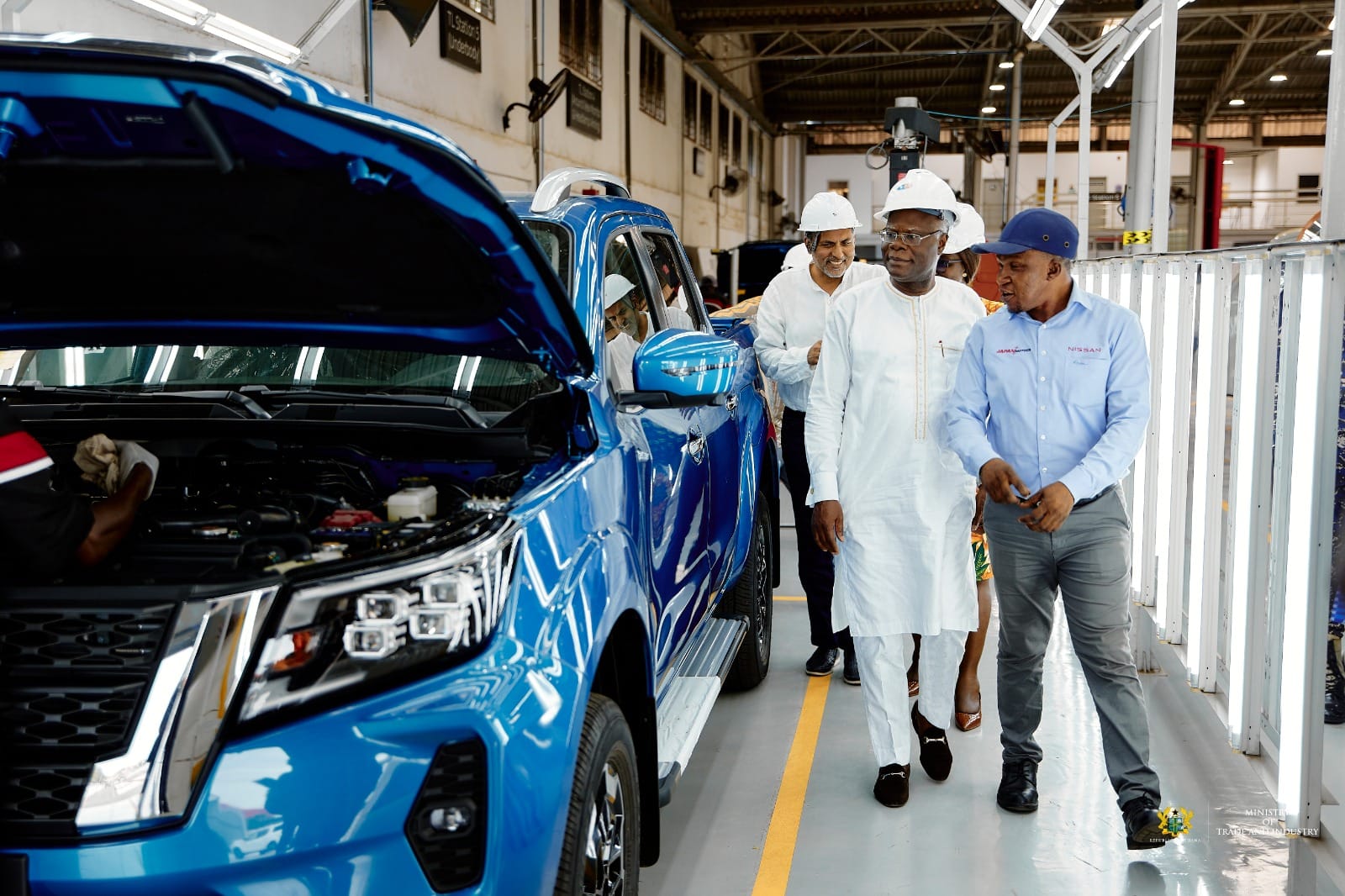
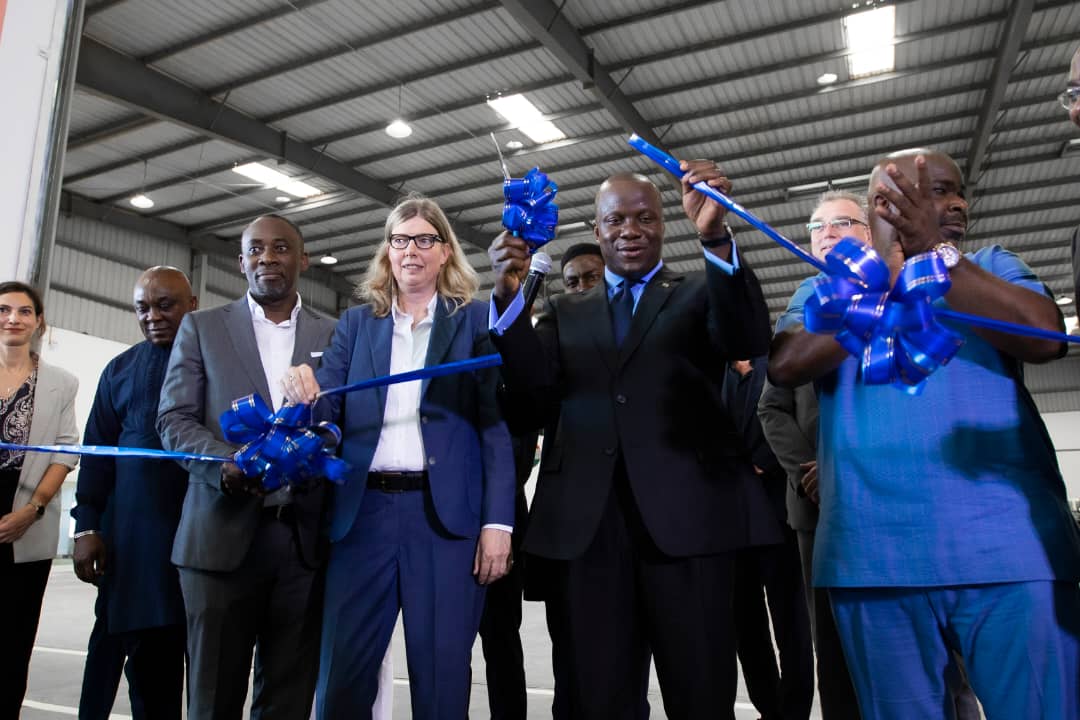
With a capacity to produce more than 5,000 automobiles and pickup trucks per year, Volkswagen(VW) Ghana Limited has constructed a vehicle assembly factory in Tema Free Zone.
The new, more upscale Tema assembly facility will take the place of the old Accra site, which inaugurated in August 2020.
Mr Jeffery Oppong Peprah, Managing Director of VW Ghana, in an interview with the Ghana News Agency at the commissioning, said the company had so far spent about eight million Euros in establishing a branch of the Germany Company in Ghana.
Mr Peprah said having the plant in Tema was strategic as it provided them with space to expand, adding that their proximity to the Tema Port also gave them a great advantage in exporting to other countries within the sub-region.
He said VW was currently producing six of its brands in Ghana namely, T-Cross, Teramount, Tiguan, Amarock, Passat, and Polo, which he stated best fit the local market.
Touching on the quality of the cars assembled in Ghana, he gave the assurance that the products were the same as those manufactured in their other plants in South Africa and Germany.
He said the vehicles as part of standards checks, undergosuspension tests, and fuel quality tests, among others.
He indicated that even though the quality was the same, the prices were affordable due to the VAT-free incentive from the government to buyers of the locally assembled vehicles as well as the non-payment of import tax on the vehicles compared to the imported ones.
He commended the Government for the initiative on the automotive industry, as according to him, countries that have developed, used automobiles as a backbone, adding that theGovernment must speed up the implementation of the remaining parts of the automotive policy to ensure they receive the benefits of their investments.
Mr Peprah noted that the ban on the importation of used vehicles which have devastating effects on the environment and health was yet to be fully implemented by the Government.
He added that auto financing policies must also be rolled out to provide the needed support for potential buyers of locally assembled vehicles.
Mr Samuel Abu Jinapor, the caretaker Minister of Trade and Industry, and substantive Minister of Lands and Natural Resources, recalled that the establishment of the VW plant in Ghana was an offshoot from a Memorandum of Understanding (MoU)which was signed between the Government of Ghana and German Chancellor when she visited Ghana in 2018.
Mr Jinapor said the government showed its commitment to the MOU through the Ghana Automotive Development Policy (GADP) which was approved by Cabinet, saying currently Ghana has six vehicle assembling plants producing nine brands of vehicles.
He reiterated that government knows the importance of the automotive industry to the growth of the economy and as a key strategic industry which provided skilled employment to the people, technology transfer, sustainable jobs, and local supply chain opportunities.
He said the Ghana Integrated Aluminium Development programme, which operates under his ministry was another initiative aimed at supporting the automotive industry and adding value to the country’s aluminium, bauxite and other minerals.
He gave the assurance that the automotive component manufacturing policy would be laid before Cabinet in a few days to provide the needed full support for the companies.
The government in Berlin wants to reduce dependence on the country’s most important trading partner. But German businesses are not convinced.
The Port of Hamburg, Germany’s biggest seaport, is considered the country’s gateway to the world. But above all, it is a gateway to China, which is the port’s largest customer. In the first half of 2022 alone, more than 1.3 million containers from China arrived here.
Now, Chinese shipping giant COSCO wants to take a 35% stake in the harbor, and its operators would like that, too. They say this would make the container terminal a prime transshipment hub in Europe for the world’s largest shipping company. But the Economy Ministry in Berlin has reservations and may not approve COSCO’s investment in the Hamburg Port. The dispute over COSCO’s involvement illustrates how rethinking ties with China impacts the German economy.
Germany’s dependence on Russian gas has proved to be a weak point following Russia’s invasion of Ukraine. This realization has led the government to revisit the country’s relationship with China as well. Some 5,000 German companies operate in China today.
How to deal with an autocracy that has been Germany’s largest trading partner for years? How to deal with the country that EU documents refer to as a “partner,” a “competitor” and “strategic rival” — with the balance shifting toward the latter?
‘End of naivety’
German Economy Minister and Vice-Chancellor, Robert Habeck from the Green Party, has already announced a “more robust trade policy” toward China. “The time of naivety toward China is over,” Habeck declared in mid-September after a meeting of G7 economy ministers.
Back in May, Habeck denied the VW Group guarantees for investments in China. That came as a shock: For decades, German companies’ business in China had been backed by guarantees on both investments and exports.
“In the near future, if German companies want to invest, if they trade with China, they are likely to do so at their own risk and will no longer be able to rely on government guarantees and safeguards,” says China expert Tim Rühlig of the German Council on Foreign Relations (DGAP). He sees a change of course: the German government “no longer wants to provide incentives for German companies to expand business in China,” Rühling tells DW in an interview.
But that does not stop them from doing so anyway. According to a study by Jürgen Matthes, an economist with the German Economic Institute (IW), the German industry invested around €10 billion in China in the first half of this year alone — a record figure.
Car manufacturers and chemical companies in particular are continuing to seek a foothold in the Chinese market. According to a study published by the Rhodium Group in mid-September, the four German industrial giants — carmakers VW, BMW, Mercedes and chemical company BASF — alone account for a third of European direct investment in China.
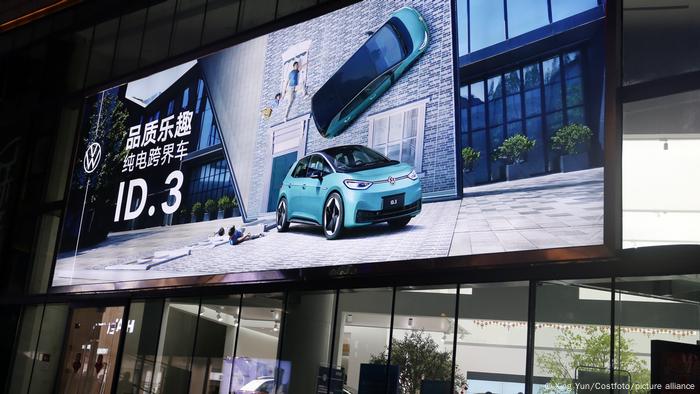
Volkswagen is one of the major German investors in China
Or is the dependence overestimated?
80% of European investments are made by just 10 large European companies, according to Jörg Wuttke, president of the European Chamber of Commerce in China. “The others are not leaving China, but are currently interested in other countries for new investments and are also thinking about diversification,” Wuttke observes.
Europe’s top ten companies, however, are heavily reliant on China, he warns, pointing to dependence on China for imports of rare-earth elements, preliminary products for the pharmaceutical industry, and photovoltaic systems. But dependence on China is fundamentally different from reliance on Russian energy, he says: “We have a pipeline with oil and gas from Russia. But from China, we have a ‘pipeline’ with toys, furniture, sports equipment, clothing, and shoes. Most of those products — I would say 90% of them — are easily replicable elsewhere.”
Around 3% of German jobs depend on exports to China, economist Matthes points out. “That’s over 1 million jobs. That is a considerable number, but over 45 million people are employed in Germany today,” he says, and concludes: “On a macroeconomic level, the dependence on China as an export market is relevant, but it’s not as huge as media reports often make it out to be.”
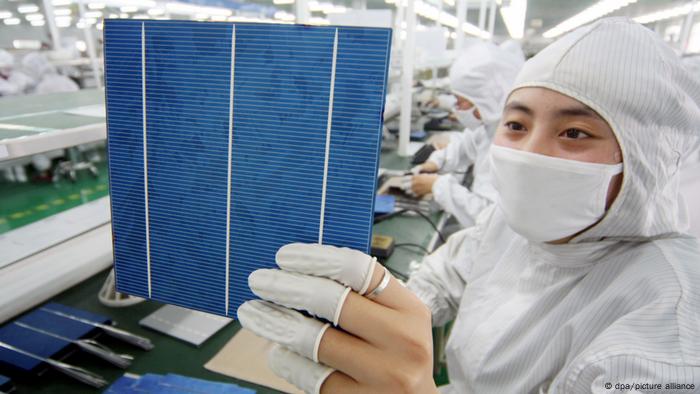
Important for the energy transition: Solar cells from China
Pressure from the Green Party
Nevertheless, within Germany’s new center-left coalition government of Social Democrats (SPD), neoliberal Free Democrats (FDP), and environmentalist Greens, the latter in particular are putting pressure on companies to rethink their ties with China.
At the beginning of September, Foreign Minister Annalena Baerbock told business leaders: “We can’t afford to just hope that things won’t be so bad after all with these autocratic regimes.” The Green Party politician, who stands for “a values-based and feminist foreign policy,” announced the development of a new China strategy as part of a new National Security Strategy. “It is important to the German government and to me personally that we transfer what we have learned from our dependence on Russia to our new China strategy,” she says.
The Economy Ministry is considering ways to encourage companies to turn to other Asian countries, instead of China. Government investment and export guarantees are being reappraised. The government-owned KfW Bank is to examine whether it could scale back its China program and instead offer more loans for business in countries including Indonesia.
Last year, the Federation of German Industries (BDI) was already debating rules for foreign trade policy cooperation with autocracies. It suggested a “concept of responsible coexistence in foreign economic policy and clear boundaries for any cooperation.”
For many managers, however, the change of course in the Economy Ministry goes too far.
“Government support and protection of German companies’ business in China must remain, in principle,” Friedolin Strack, chief executive of the Asia-Pacific Committee of German Business (APA), told the news agency Reuters.
Chinese investments should be welcome in Germany and Europe, he insisted. Whether this should also apply to the specific case of COSCO’s entry into the Hamburg Port, however, Strack did not want to say.
Volkswagen Group (VOWG_p.DE) on Thursday said that it was withdrawing its outlook for 2020 amid uncertainty related to the coronavirus outbreak which caused a fall in demand and group revenue to drop 8% in the first quarter of this year.
Volkswagen said it expected first quarter revenue at around 55 billion euros ($59.83 billion), down from 60.01 billion euros in the year-earlier period.
The full year outlook “can no longer be achievedâ€, Volkswagen said.
Electric vehicles will debut in Rwanda today through a partnership between Volkswagen and Siemens under a pilot project.
The vehicles, to be launched in the presence of Prime Minister Edouard Ngirente, are dubbed e-Golf. Rwanda is the first African country where Volkswagen is testing electric cars.
Today’s launch will see four of the cars unveiled on the local market with one charging station at the Volkswagen facility at the Special Economic Zone.
Officials at the firm say that more cars will join the market in the coming months to bring the number to about 20 cars and 15 charging stations across the city.
Siemens role in the partnership involves setting up charging stations.
Michaella Rugwizangoga, the Chief Executive Officer of Volkswagen’s operations in Rwanda, said the cars are fully electric, not hybrid.
Prior to today’s launch, Siemens, alongside the City of Kigali and Rwanda Energy Group, conducted an assessment of the city’s grid to establish whether it can support innovation.
They said that the findings showed that the city’s grid was adequate to support the charging stations at the launch and consequent phases of the pilot project.
In June this year, Rwanda Energy Group said that there not adequate demand for energy in Rwanda compared to production capacity and called for firms to consume more energy.
The pilot project will involve data collection and analysis on aspects such as performance of the electric cars, reception by consumers, consumer trends and suitable conditions for the cars.
Nadege Gaju, the Head of Sales and Marketing, said that it’s this data that will inform the consequent rollout of the project’s other phases.
The electric vehicles will be added to the firm’s fleet to operate under its Mobility Solutions initiative where activities include ride-hailing, corporate car sharing and rentals.
They will not be sold into the market at the moment and will be under the custody of Volkswagen Rwanda during the pilot project.
Rugwizangoga said that the pilot project is also part of the Volkwagen’s global ambitions of phasing out the combustion engines in the next decade as the firm seeks greener ambitions.
About the Car
The electronic car will be of the Volkswagen Golf Model. They are however not assembled in Rwanda but are produced in Germany and imported.
A fully charged car officials say can cover up to 230 Kilometres in ideal conditions. However, the distance is subject to conditions such as altitude, terrain and gradient among other factors.
Rugwizangoga said that the firm is currently training drivers and technicians on the driving and maintenance of the electric cars.
Volkswagen entered the Rwandan market in June 2018 to assemble and also introduce a mobility solution.
During the launch of the facility in 2018, the firm said that they had the capacity to produce up to 1000 cars annually under the models (Passat, Polo, Amarok and Terramont)
It was expected to produce 90 cars by March this year.
Company executives were tight-lipped on the number of cars produced so far as well as the sales into the local market citing confidentially.
Volkswagen Rwanda’s model involves Semi Knocked Down kits during assembly.
A semi-knocked-down kit is whereby partially assembled parts and shipped in and then all put together for sale to customers.
The components of the cars are shipped from various markets such as South Africa, the US and Argentina.
They, however, disclosed that the Terramont model has the highest demand in the Rwandan market.
The ride-hailing app Move operated by the firm reported 250 drivers, 60,000 downloads with 30,000 active users.