Tag: VRA

  • Improve VRA’s operations to lead power generation in Ghana – Energy Minister charges new Board

    Improve VRA’s operations to lead power generation in Ghana – Energy Minister charges new Board

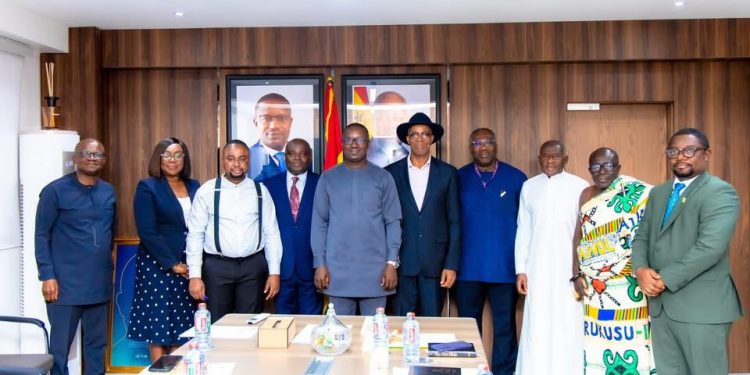
    Minister for Energy and Green Transition, Hon. John Abdulai Jinapor, has admonished the newly appointed governing board of the Volta River Authority (VRA) to improve the Authority’s operations.

    At the inauguration of the new board on Tuesday, June 24, the Energy Minister indicated that VRA must position itself as the leader in Ghana’s power generation sector.

    “The fortunes of VRA have stagnated and dwindled over the years as a result of government policies. We will provide strategic guidance and direction to bring VRA back as the lead power generator in the sub-region and Africa.”

    “This board has been entrusted with the task of improving VRA’s operations, optimising hydro and thermal assets, and firmly anchoring renewable initiatives within the Authority’s core mandate. VRA must work to be the lead institution when it comes to power generation,” he said.

    He warned the board against letting down President John Dramani Mahama and assured them of the government’s full backing to ensure the successful execution of their duties.

    “The Ministry will give you the needed support to deliver on your mandate. His Excellency the President has absolute confidence in the capabilities of the members of this board. As a board, you should lead VRA to champion the reforms in the power sector.”

    The members of the new governing board are Ing. Jabesh Amissah-Arthur (Chairman), Ing. Edward Ekow Obeng-Kenzo (Ag. Chief Executive), Dr. Lawrence Ofosu Adjare, Hon. Collins Dauda, Hon. Fred Kwesi Agbenyo, Lawyer Wonder Victor Kutor, Awulai Attibrukusu III, and Lawyer Peggy Addo.

    The VRA, which was established in 1961 under the Volta River Development Act, is responsible for the generation, transmission, and distribution of electricity in Ghana.

    Its core mission is to power economies and improve living standards by providing reliable and environmentally responsible energy services.

    It is confronted with significant challenges such as increasing debt, limited cash flow, and the need for improved operational efficiency.

    The Ghana National Gas Company Limited (GNGLC) is facing a debt crisis, and this is due to the inability of the Volta River Authority to meet its debt service obligations. GNGLC’s debt to the Ghana National Petroleum Corporation (GNPC) as of June 30, 2024, was over $626 million from an excess of $559 million in the same period two years ago.

    Contributing to its financial strain are delayed remittances from power distributors, costly and inefficient power purchase deals, as well as surging operational expenses.

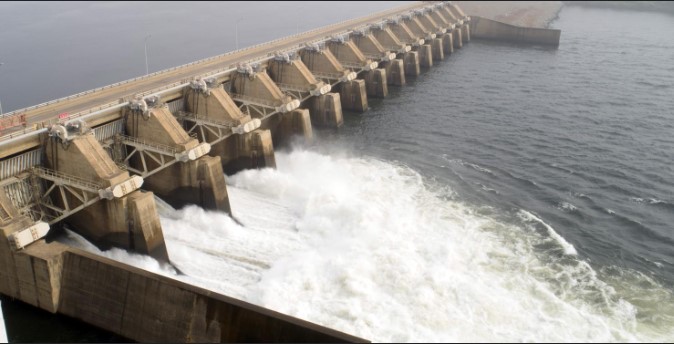
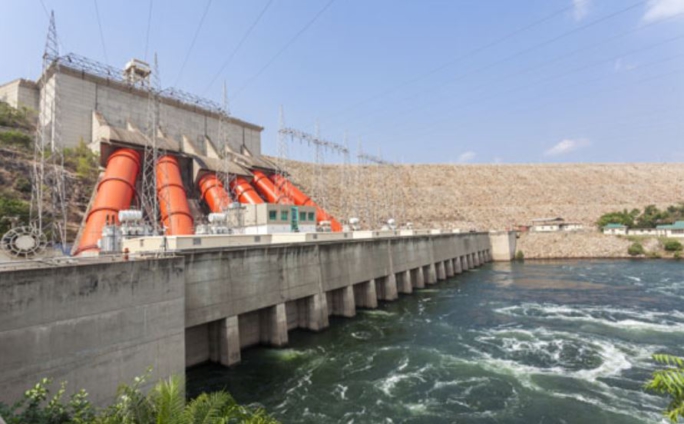
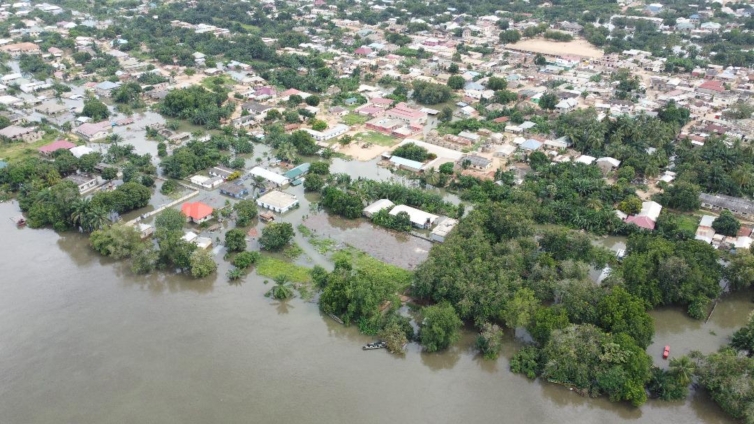
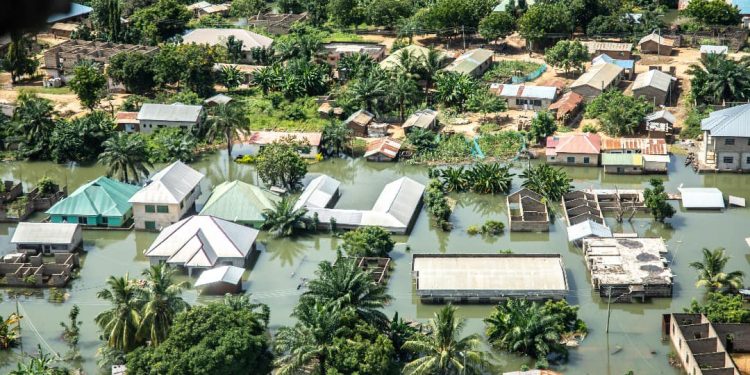
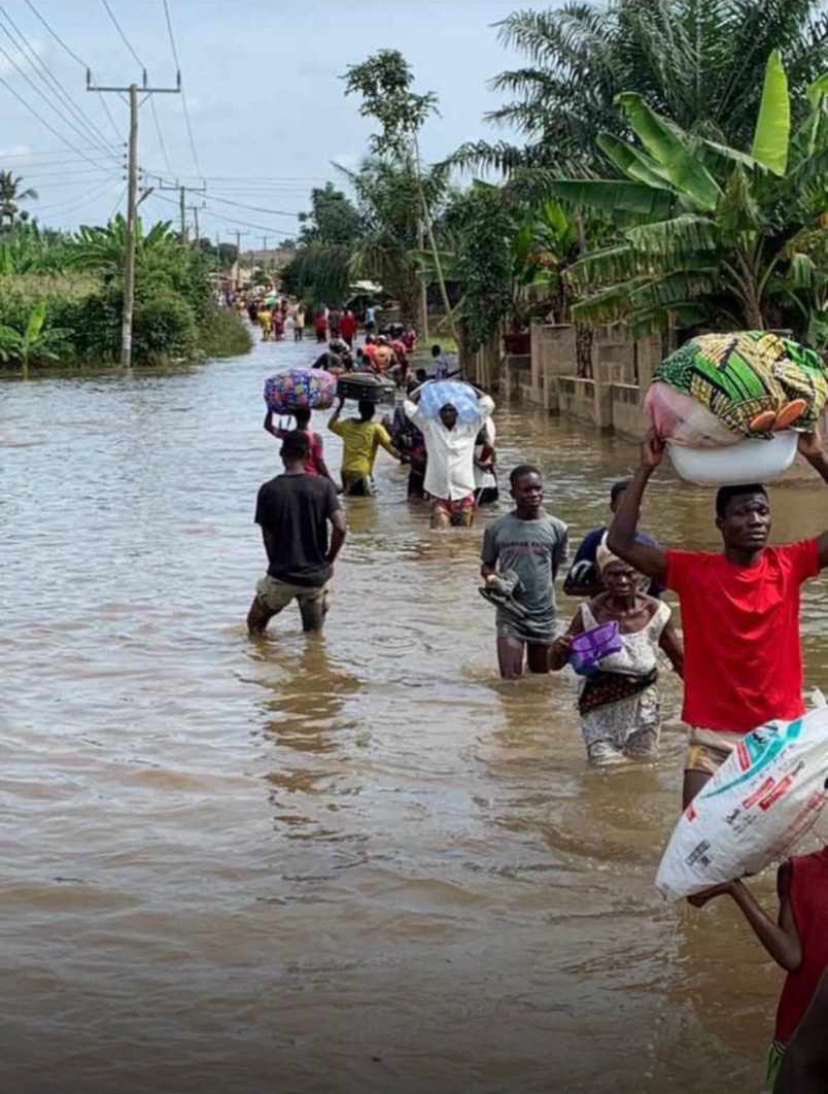
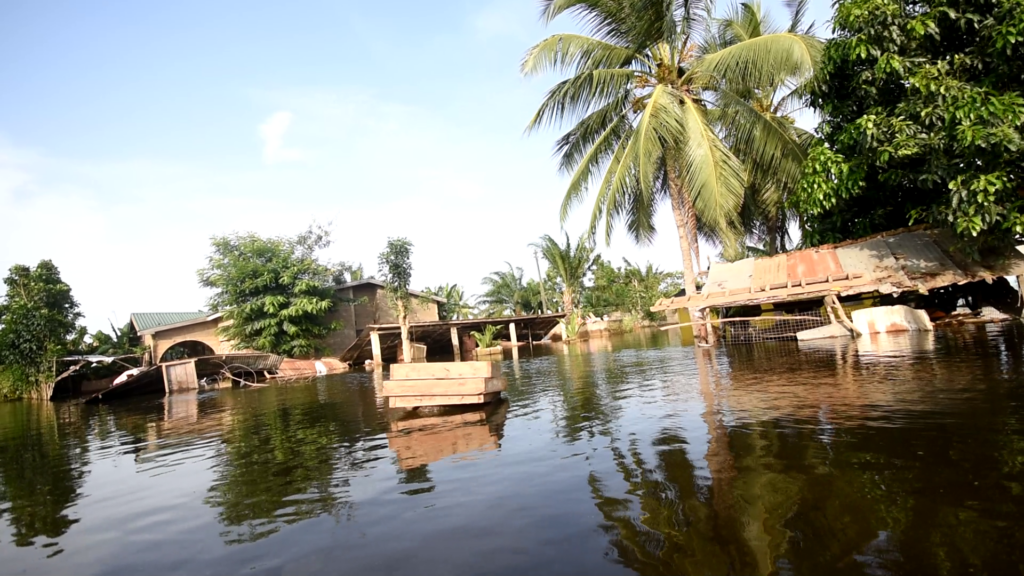
    The Authority also drew sharp criticism following the 2023 Akosombo Dam spillage, which led to major flooding and the displacement of thousands across affected communities.

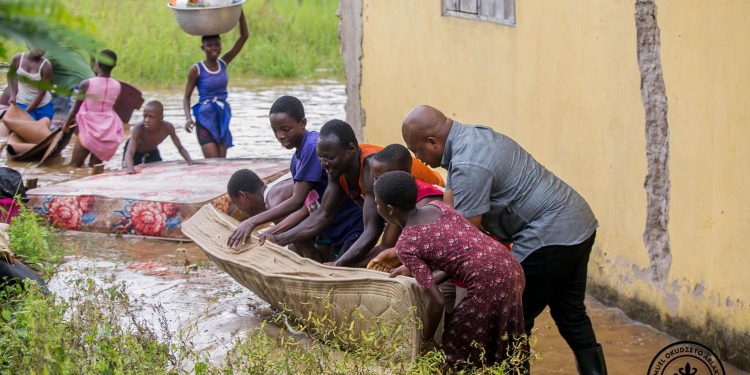
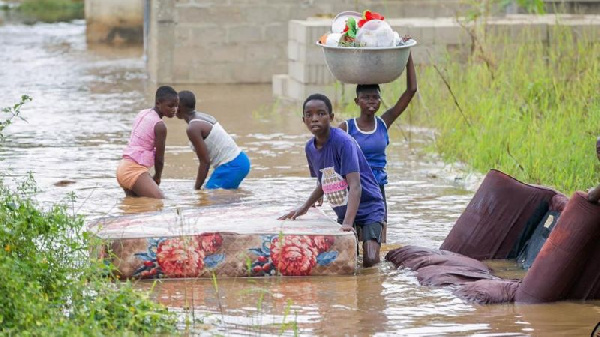
    The flood, which began mid-September and lasted over six weeks, displaced approximately 38,624 residents and wreaked havoc on properties, schools, health centres, and farmlands in communities such as North, Central, and South Tongu, Ada, and Kpong. Nearly 1,247 homes, 94 schools, and 17 health facilities were destroyed, while agricultural losses were estimated at $78 million. 

    President Mahama tasked a five-member committee to investigate the 2023 Akosombo Dam spillage. The committee concluded its probe with a report highlighting how poor preparedness and communication by the Volta River Authority (VRA), the National Disaster Management Organisation (NADMO), and local authorities intensified the devastating impact of the disaster.
  • Akosombo Dam spillage was inevitable – Ex VRA CEO

    Akosombo Dam spillage was inevitable – Ex VRA CEO

    Former Chief Executive Officer (CEO) of the Volta River Authority (VRA), Ing. Kirk Koffi, has noted that the devastating effects of the Akosombo Dam spillage cannot be blamed on any individual or group.

    Speaking to the media on Wednesday, May 21, he stated that the spillage was necessary to prevent disaster and not as a result of negligence.

    “No, no, it all depends… direct rainfall can impact what it comes from anywhere. It’s just a result of the inflow. You cannot hold them responsible because they would have died anyway.”

    According to him, the Volta River Authority (VRA) had to spill excess water to prevent damage to the Dam as well as ensure safety.

    “By September 2023, when we were to see a downward trend in the inflow, it picked up, which was an indication, and they had to spill a little bit more. Those who run the facility don’t bridge the dam; if you do, everybody downstream will go, and you will not save anybody. That is, if the water overflows. 2023 was an unusual year,” he explained.

    The flood, caused the spillage, which began mid-September 2023 and lasted over six weeks, displaced approximately 38,624 residents and wreaked havoc on properties, schools, health centres and farmlands in communities such as North, Central and South Tongu, Ada, and Kpong.

    Nearly 1,247 homes, 94 schools, and 17 health facilities were destroyed, while agricultural losses were estimated at $78 million.

    The five-member committee, inaugurated by President John Dramani Mahama, spent two months investigating the causes and response to the spillage and submitted its 110-page report to the Minister for Energy and Green Transition, John Abdulai Jinapor, on May 7.

    While the committee acknowledged that the primary cause of the spillage was to protect the dam from destruction, it strongly criticized the weak emergency response mechanisms that followed.

    It noted that the VRA’s Emergency Preparedness Plan (EPP), though technical and shared with stakeholders, suffered setbacks.

    “While VRA had socialised the document with all stakeholders and conducted a simulation exercise for some selected communities before the spill, high turnout and divisions amongst some District Chief Executives (DCEs)/Metropolitan Chief Executives (MCEs) and Members of Parliament (MPs) could have derailed clear communication lines for implementing the plan and distribution of relief items,” the report noted.

    Central to the committee’s findings was the failure of effective coordination among key agencies. Moreover, the response from government institutions revealed worrying gaps.

    “While there were efforts to provide immediate assistance, gaps in communication, resource allocation, and community engagement were identified,” the committee reported. It added that “operational challenges, such as a lack of local disaster preparedness plans and inadequate evacuation resources, hampered the emergency response process.”

    According to the report, other challenges included failed resettlement attempts, cultural resistance, and lack of consultation. 

    “The people lament that their opinions were not sought in selecting the sites for the resettlement, and therefore, have refused to relocate and are requesting that the resettlement project be halted as the objective is not served,” the report said.


  • Poor preparation, communication by VRA, NADMO and local authorities worsened impact of Akosombo Dam spillage – Report

    Poor preparation, communication by VRA, NADMO and local authorities worsened impact of Akosombo Dam spillage – Report

    The committee tasked to investigate the 2023 Akosombo Dam spillage has concluded its probe with a report highlighting how poor preparedness and communication by the Volta River Authority (VRA), the National Disaster Management Organisation (NADMO), and local authorities intensified the devastating impact of the disaster.

    The five-member committee, inaugurated by President John Dramani Mahama, spent two months investigating the causes and response to the spillage and submitted its 110-page report to the Minister for Energy and Green Transition, John Abdulai Jinapor, on May 7.

    While the committee acknowledged that the primary cause of the spillage was to protect the dam from destruction, it strongly criticised the weak emergency response mechanisms that followed.

    It noted that the VRA’s Emergency Preparedness Plan (EPP), though technical and shared with stakeholders, suffered setbacks.

    “While VRA had socialised the document with all stakeholders and conducted a simulation exercise for some selected communities before the spill, high turnout and divisions amongst some District Chief Executives (DCEs)/Metropolitan Chief Executives (MCEs) and Members of Parliament (MPs) could have derailed clear communication lines for implementing the plan and distribution of relief items,” the report noted.

    Central to the committee’s findings was the failure of effective coordination among key agencies. Moreover, the response from government institutions revealed worrying gaps.

    “While there were efforts to provide immediate assistance, gaps in communication, resource allocation, and community engagement were identified,” the committee reported. It added that “operational challenges, such as a lack of local disaster preparedness plans and inadequate evacuation resources, hampered the emergency response process.”

    According to the report, other challenges included failed resettlement attempts, cultural resistance, and lack of consultation.

    “The people lament that their opinions were not sought in selecting the sites for the resettlement, and therefore, have refused to relocate and are requesting that the resettlement project be halted as the objective is not served,” the report said.
    The committee highlighted grievances from communities both upstream and downstream regarding compensation.


    “The affected people in these communities have not been adequately compensated for the devastating impact the floods had on their properties and source of livelihoods,” it noted.
    To avert future disasters, the committee called for urgent reforms, including better stakeholder coordination, improved community engagement, and the implementation of stricter land use regulations.

    The flood, which began mid-September 2023 and lasted over six weeks, displaced approximately 38,624 residents and wreaked havoc on properties, schools, health centres, and farmlands in communities such as North, Central, and South Tongu, Ada, and Kpong.

    Nearly 1,247 homes, 94 schools, and 17 health facilities were destroyed, while agricultural losses were estimated at $78 million.
    The immediate past government had allocated GH¢220 million as a form of support to the victims.

    However, it appeared that such funds never reached the victims, as they, and Member of Parliament for North Tongu, Samuel Okudzeto Ablakwa, threatened to drag the government to court.

    However, the incumbent government under the leadership of President John Mahama has pledged to compensate the affected individuals.

  • I will sack you if Akosombo Dam flooding recurs – President Mahama to VRA leadership

    I will sack you if Akosombo Dam flooding recurs – President Mahama to VRA leadership

    President John Dramani Mahama has made it clear that the leadership of the Volta River Authority (VRA) will face removal or be asked to step down if another flood disaster like the 2023 Akosombo Dam spillage occurs under their watch.

    Speaking during a national address on Wednesday, May 7, to mark 120 days since his administration took office, Mahama highlighted the actions being taken to prevent a repeat of the incident.

    He noted that a technical team, led by former VRA boss Ing. Kirk Koffi, was tasked with investigating the disaster and coming up with long-term solutions to manage future risks.

    “This administration set up a committee chaired by Ing. Kirk Koffi, a former VRA CEO. The committee has recommended strategies to prevent future occurrences, including establishing what is called a controlled spill flood plan and implementing downstream engineering solutions for flood management,” Mahama said.

    He directed that the committee’s suggestions be put into effect without delay.

    “I have directed that the recommendations be implemented immediately,” he stated.

    Mahama also sent a clear message that the VRA’s top officials will be held responsible if these recommendations are not properly carried out.

    “I have further indicated that if they are not properly implemented and another destructive VRA flooding occurs like in 2023, the VRA CEO and deputies must resign or be sacked,” he declared.

    The Akosombo Dam spillage in 2023 caused widespread devastation, forcing thousands from their homes and drawing heavy criticism over the lack of emergency planning.

    With this warning, Mahama reinforced his commitment to accountability and proactive management of national infrastructure in the face of growing environmental threats.

  • Ghana Gas grapples with debt amid VRA payment challenges

    Ghana Gas grapples with debt amid VRA payment challenges

    Ghana National Gas Company Limited (GNGLC) is grappling with a severe debt issue, primarily driven by the Volta River Authority’s (VRA) failure to meet its financial obligations. As of June 30, 2024, GNGLC’s debt to the Ghana National Petroleum Corporation (GNPC) soared to over $626 million, up from $559 million in the same period last year. This marks a worrying 12.1% increase, compared to the 7.4% growth recorded in the first half of 2023.

    A Public Interest Accountability Committee (PIAC) report for the first half of 2024 highlights that VRA’s ongoing financial struggles have hindered its ability to pay for gas supplied by GNGLC. Furthermore, the volume of raw gas received by GNGLC from GNPC slightly declined to 22,158,283.5 MMBtu in the first half of 2024, from 22,730,386.70 MMBtu during the same period in 2023.

    In the first half of 2024, the invoiced value of gas supplied was $144 million, compared to $9.3 million in the same period last year. GNGLC only received a credit note for $121 million, leaving an outstanding debt of $22 million for the period. When added to the opening balance of $604 million, this totals a debt stock of $626 million.

    The PIAC report underscores the significant implications of this rising debt for the operational viability of both GNGLC and VRA. It also raises concerns about potential violations of the Petroleum Holding Funds (PHF) statutory framework, as natural gas sales are a crucial revenue source for the fund.

    Additionally, payments received by GNGLC through the Cash Waterfall Mechanism (CWM) have fallen short. By the end of June 2024, cumulative payments through the CWM reached $10 million, covering invoices from November 2023 to April 2024. This is significantly lower than the $18.2 million received in the same period in 2023, further exacerbating GNGLC’s financial woes and increasing debt exposure.

    PIAC emphasized that urgent action is needed from stakeholders to ensure the long-term financial stability of these key players in Ghana’s energy sector. Addressing VRA’s financial difficulties and enhancing the efficiency of the CWM are crucial steps to mitigating the current crisis and preventing further debt escalation for GNGLC.

  • Edward Obeng Kenzo appointed as acting VRA CEO

    Edward Obeng Kenzo appointed as acting VRA CEO

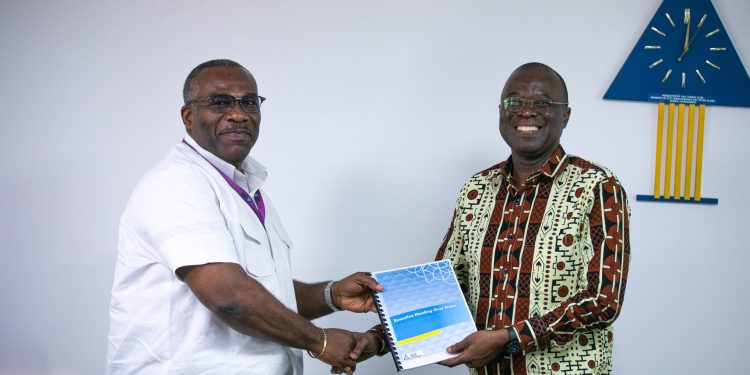
    Edward Ekow Obeng-Kenzo has assumed the role of Acting Chief Executive Officer (CEO) of the Volta River Authority (VRA), following a government directive.

    His appointment takes effect while the VRA board remains unconstituted, and he will serve in an acting capacity until a final decision is made by the incoming board.

    A formal handover ceremony took place on Wednesday, February 5, during which outgoing CEO Emmanuel Antwi Darkwa officially transferred leadership to Obeng-Kenzo.

    This transition signals a new phase in the VRA’s leadership, with Obeng-Kenzo now responsible for guiding the authority in fulfilling its mandate of delivering reliable and sustainable energy solutions for Ghana. His confirmation as the substantive CEO will depend on the board’s decision once it is officially formed.

    Profile: Edward Ekow Obeng-Kenzo

    Edward Ekow Obeng-Kenzo is a seasoned business executive with a strong background in the power sector. He has spent 24 years in the industry, specializing in operational efficiency, engineering, and strategic management.

    Obeng-Kenzo holds a Master’s in Public Administration (MPA) and a Bachelor of Science (BSc Hons) in Mechanical Engineering, both from the Kwame Nkrumah University of Science and Technology (KNUST). He is also a member of the Ghana Institution of Engineering.

    Before stepping into his current role, he served as Director of the Thermal Generation Strategic Business Unit (SBU) at VRA. His previous positions include Plant Manager of the Tema Thermal Power Complex (TTPC), Operations Manager at TTPC, and Project Manager for the Tema Thermal 2 Power Project, a 49.5MW Siemens Emergency Power Plant.

    In his leadership role, Obeng-Kenzo is responsible for setting strategic direction across key operational departments within the VRA, including Hydro Generation, Engineering Services, Technical Services, Environment & Sustainable Development, Commercial Services, Thermal Generation, Strategic Projects & New Business, Utility Services, Water Resources, and Renewable Energy.

    His appointment comes at a crucial time for the authority as it seeks to strengthen its role in Ghana’s energy sector.

  • GFA to meet with FIFA officials over the introduction of VAR in the Ghana Premier League

    GFA to meet with FIFA officials over the introduction of VAR in the Ghana Premier League

    Officials from the Ghana Football Association (GFA) are set to hold discussions with representatives from FIFA on implementing Video Assistant Referee (VAR) technology in Ghana.

    Scheduled for October 31 to November 1, 2024, the meeting will focus on assessing Ghana’s preparedness to introduce VAR in its football leagues, an essential step towards enhancing match officiating and aligning with global standards.

    FIFA’s team, headed by VAR specialists Inokuchi Takaaki and Michael Bailey, will review the country’s capacity to implement the technology, including meeting FIFA’s Implementation Assessment Approval (IAA) requirements, which are mandatory for any FIFA Member Association seeking VAR integration.

    Key GFA representatives, including Alex Kotey, head of Referees and VAR project lead, along with VAR instructor Emmanuel Aglago and head of legal affairs Marian Mensah, will be in attendance.

    If FIFA’s approval is granted, it would pave the way for VAR to be introduced in the Ghana Premier League, addressing ongoing concerns about officiating quality in local matches.

  • VRA to add fresh layer of rocks to revamp kpong dam

    VRA to add fresh layer of rocks to revamp kpong dam

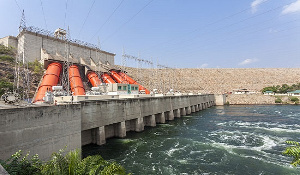
    The Volta River Authority (VRA) has disclosed plans to refurbish the 160-megawatt Kpong Dam and its spillway gates in Akuse, Eastern Region, over 40 years after it was first built.

    This announcement came during a stakeholder meeting involving local chiefs, assembly members, and key opinion leaders from Akuse, Torgome, Fodzoku, Natriku, and nearby communities.

    The gathering focused on the project’s possible effects and gathered insights from the community on managing both its benefits and challenges.

    In a conversation with the Ghana News Agency, Mr. Kwaku Wiafe, VRA’s Director of Engineering Services, explained that the stakeholder engagement was intended to brief the public on the planned restoration.

    He detailed that the goal of the project is to restore the dam’s dyke, as wave activity over the years has displaced several rocks along the dam’s structure.

    Initially, VRA considered minor repairs but later determined that reinforcing it with new rocks would effectively extend the dam’s operational life.

    “Since the dam at Akuse only permits water from Akosombo to pass and if the water is coming from Akosombo, the spillway must be prepared to allow it to pass, otherwise it will overtop it, which is why we must ensure that our spillways are extremely dependable in light of climate change and other issues,” he said.

    He added that “So the reliability of the spillways is critical to the dam’s safety, and by improving the stability of the dyke and the reliability of the spillways, the overall safety of the dam is enhanced, which goes a long way towards protecting both downstream communities and ensuring that the asset’s integrity is maintained so that Ghanaians can continue to benefit from a reliable power supply.”

    In addition, the director said that VRA was also going to rehabilitate the deplorable 10-kilometre road from Okwenya Junction to Akuse for haulage trucks and other motor vehicles.

    He mentioned that this decision came after agitation from both VRA staff, the natives of Akuse, and other motorists. The road would be improved into a first-class road.

    Some of the stakeholders raised concerns about some fish species going extinct and potential water pollution but in response, Mr. Wiafe explained that the way and manner the work was going to be done would not cause water pollution.

    It would not also affect fishing because they were not going to use the fishing landing site, and also those that haulage trucks would not be allowed to go beyond 15 kilometres per hour speed limit.

    The road would be watered regularly to suppress dust.

    Mr. Emmanuel Darko Thompson, a civil engineer at VRA, stated in a presentation that they intended to restore the upstream dykes as well as the spillway gate.

    He noted that the objective was not to replace the gate, but rather to restore it, particularly the corroded gates.

    He mentioned that they had planned to restore the dykes with 150,000 cubic meters of rocks.

    “If we don’t repair the dam’s dykes and it collapses, it will impact everyone in the nation as well as productivity and economic growth,” he added.

    Mr. Ibrahim Mahama, the assembly member for Akuse, urged the VRA to extend the road restoration project to Asutuare.

  • Kpong Dam set for major renovation after four decades

    Kpong Dam set for major renovation after four decades

    Volta River Authority (VRA) has announced plans to renovate the 160-megawatt Kpong Dam and spillway gates, located in Akuse in the Eastern Region, over 40 years after its initial construction.

    This announcement was made during a stakeholders’ engagement meeting attended by local chiefs, assembly members, and opinion leaders from Akuse, Torgome, Fodzoku, Natriku, and neighbouring communities.

    The purpose of the meeting was to discuss the project’s implications and gather input from the communities regarding their concerns and suggestions to mitigate any potential positive and negative impacts.

    In an interview with the Ghana News Agency, Kwaku Wiafe, VRA’s Director of Engineering Services, explained the importance of engaging stakeholders and community members. He noted that the goal was to inform them about the restoration plans for the Kpong Dam.

    He added that the project seeks to rehabilitate the dyke, which is constructed from rocks that have gradually shifted along the dam’s length due to water wave action over the past four decades.

    Initially, the VRA considered repairing the structure, but it became clear that adding a new layer of rocks would effectively rebuild the dam, significantly extending its lifespan.

    “Since the dam at Akuse only permits water from Akosombo to pass, and if the water is coming from Akosombo, the spillway must be prepared to allow it to pass; otherwise, it will overtop it, which is why we must ensure that our spillways are extremely dependable in light of climate change and other issues,” he said.

    He added that “So the reliability of the spillways is critical to the dam’s safety, and by improving the stability of the dyke and the reliability of the spillways, the overall safety of the dam is enhanced, which goes a long way towards protecting both downstream communities and ensuring that the asset’s integrity is maintained so that Ghanaians can continue to benefit from a reliable power supply.”

    Additionally, the director announced that the VRA plans to rehab the deteriorating 10-kilometre road from Okwenya Junction to Akuse, improving it to a first-class standard for haulage trucks and other vehicles. This decision follows complaints from VRA staff, local residents, and other road users.

    Some stakeholders voiced concerns over potential threats to fish species and water pollution. In response, Mr. Wiafe assured that the construction process would prevent water pollution and have no impact on fishing, as it would avoid the fishing landing site. He added that haulage trucks would adhere to a strict speed limit of 15 kilometres per hour, and regular watering of the road would control dust.

    In his presentation, VRA civil engineer Emmanuel Darko Thompson shared plans to restore the upstream dykes and rehabilitate the spillway gate, focusing on addressing corrosion rather than replacement.

    He mentioned that the dykes would be reinforced with an additional 150,000 cubic metres of rocks to strengthen the structure.

    “If we don’t repair the dam’s dykes and it collapses, it will impact everyone in the nation as well as productivity and economic growth,” he added.

    Mr. Ibrahim Mahama, the assembly member for Akuse, urged the VRA to extend the road restoration project to Asutuare.

  • Government yet to respond to our opposition to Bui Power proposed merger – VRA Senior Staff

    Government yet to respond to our opposition to Bui Power proposed merger – VRA Senior Staff

    Members of the Senior Staff Association of the Volta River Authority (VRA) have voiced their dissatisfaction with the government’s lack of response regarding their opposition to the proposed merger with the Bui Power Authority.

    This frustration comes after a closed-door meeting on October 3, where VRA senior staff met with the Minister of State for Energy, Herbert Krapah.

    During this meeting, the government allegedly indicated it would retract the merger bill from Parliament.

    In an interview with Citi News, Applause Ebenezer Sedziafa, the Divisional Secretary for the VRA branch of the Public Sector Workers Union, expressed disappointment over the situation but confirmed that the VRA would persist in advocating for its demands.

    “We are still waiting for the Minister to issue a statement.

    We are concerned given the assurance we received. We haven’t decided on the next steps yet but are considering our options carefully.

    “We don’t want to act prematurely. We’re taking things step by step, and we remain in control. Our demands stand. Staff members are still wearing red bands, and we are ready, waiting for the Minister’s response,” he said.

  • “Neither here nor there” – VRA Senior Staff blasts govt’s proposed merger in energy sector

    “Neither here nor there” – VRA Senior Staff blasts govt’s proposed merger in energy sector

    Chairman of the Senior Staff Association of the Volta River Authority (VRA), Theophilus Tetteh Ahia, has expressed ongoing concerns regarding the government’s proposed merger of the Bui Power Authority and the VRA.

    He questions whether this merger will genuinely lead to lower energy costs for consumers.

    This statement comes in light of a recent government bill aiming to consolidate the Electricity Company of Ghana Limited (ECG), Bui Power Authority, Northern Electricity Distribution Company (NEDCO), and the VRA into two distinct entities.

    In an interview with Eyewitness News on Citi FM on Friday, Mr. Ahia raised critical points about the current challenges within the energy sector.

    He noted that the VRA currently provides the lowest cost per kilowatt-hour in Ghana’s energy market.

    Furthermore, he highlighted that Independent Power Producers (IPPs) account for approximately 50% of the nation’s energy supply, casting doubt on the effectiveness of the proposed merger.

    “There is a big problem in the sector. The VRA today is the cheapest in terms of cost per kilowatt hour in the market space in Ghana. The IPPs are there and contribute about 50% of the energy demand of this country.

    “So when we say we are merging Bui and VRA, that notwithstanding again, the cost per kilowatt hour at Bui is far higher than VRA.”

    “So the agenda to say when I put Bui and VRA together it is going to bring the cost down to the consumer is neither here nor there. How will that happen?” Ahia stated.

  • It’s risky to merge VRA, ECG, others  than beneficial – IES

    It’s risky to merge VRA, ECG, others than beneficial – IES

    The Institute for Energy Security (IES) has called on the government to reconsider a contentious draft bill that seeks significant reforms in the nation’s power sector, citing huge risk factors.

    The proposed bill includes plans to merge the Volta River Authority (VRA) with the Bui Power Authority, consolidate the Electricity Company of Ghana (ECG) with the Northern Electricity Distribution Company (NEDCo), and establish a new, independent Thermal Power Authority.

    Staff groups from the VRA have expressed strong objections to these restructuring plans, contending that they could adversely affect the power sector and diminish the VRA’s operational efficiency.

    In a statement released on Sunday, September 8, 2024, and signed by its Executive Director, Nana Amoasi VII, the IES outlined the potential dangers associated with the proposed changes.

    “While the proposed merger and restructuring of Ghana’s power sector may have its proponents, we believe that the risks far outweigh the benefits in its current form,” the statement noted.

    It stressed the need to strengthen the current institutions rather than dismantling them.

    “The focus should be on stabilising and strengthening the existing institutions such as the VRA, Bui Power Authority, ECG, and NEDCo, rather than dismantling them,” the statement added.

    The IES therefore urged the government to reconsider the draft bill and explore alternative solutions that will protect Ghana’s energy security, affordability, and long-term sustainability.

  • Merging NEDCo, Bui Power, ECG a threat to security of national energy – VRA

    Merging NEDCo, Bui Power, ECG a threat to security of national energy – VRA

    Staff groups of the Volta River Authority (VRA) have strongly opposed a draft bill proposing the merger of VRA with the Bui Power Authority, warning that such a move could pose a significant threat to the security of the country’s energy supply.

    The bill, currently under consideration, also includes provisions to consolidate the Electricity Company of Ghana (ECG) with the Northern Electricity Distribution Company (NEDCo) and to create a separate Thermal Power Authority by extracting VRA’s thermal plants from its portfolio.

    However, VRA workers are alarmed by these proposed changes, emphasizing that “the Volta River Authority was built for the people and not the highest bidder.” They argue that the mergers would weaken VRA’s ability to sustain the national grid and deliver reliable power to Ghanaians.

    A major concern raised by the workers is the potential impact on the existing relationship between VRA and NEDCo. According to the staff, an expired Memorandum of Understanding (MOU) between the two entities ensured VRA’s continued support in providing power and expanding infrastructure for NEDCo. Despite the need for renewal, VRA management has shown little interest in extending the agreement, leaving workers concerned about the future.

    Additionally, the hydroelectric dams, critical assets of VRA, are not the only resources considered for amalgamation under the new bill. Other reforms being pushed by the Ministry of Energy include the creation of a Ghana Thermal Authority, a Ghana Hydro Authority, a Ghana Power Distribution Authority, a Ghana Nuclear Power Corporation, and a Ghana Energy Regulatory Authority.

    In a statement issued on Wednesday, VRA staff groups argued that these reforms would not only undermine VRA’s contributions to the national energy grid but could also jeopardize the country’s energy security. They expressed fears that the separation of NEDCo from VRA could disrupt consistent power supply in the northern regions and negatively affect VRA’s financial health, particularly given ECG’s inconsistent payments to VRA.

    The workers went further to accuse the government of attempting to privatize VRA’s assets, stating, “We see this attempt as a grand scheme to sell VRA assets to cronies.”

    The staff also recalled assurances given by the VRA Board Chairman in May 2024 that there were no plans to privatize the Authority’s thermal assets, a promise that now appears uncertain.

    The VRA workers pledged to resist the proposed reforms, warning that they would use all legal means available to prevent what they see as an attack on affordable electricity and energy security in Ghana.

    “The Staff of VRA, with the support of Ghanaians, shall fearlessly resist and use all legitimate means at our disposal to ensure that the people of Ghana are not robbed of affordable electric power and energy security under the guise of mergers and privatization,” the statement concluded.

    As the debate over the proposed mergers continues, the future of VRA, and its role in Ghana’s energy landscape, hangs in the balance.

  • Give us adequate resettlement before impending Akosombo Dam spillage begins – Mepe residents

    Give us adequate resettlement before impending Akosombo Dam spillage begins – Mepe residents

    Residents in flood-affected areas of the Lower Volta Basin are urging the government to finalize resettlement plans before the Volta River Authority (VRA) proceeds with its scheduled controlled spillage.

    After enduring months in temporary camps and deteriorating homes, these residents demand that the government honor its commitment to provide adequate resettlement housing. They feel neglected and abandoned by officials.

    Desmond Selase Aggor, Channel One News’ Volta Regional Correspondent, visited the affected communities to gauge their readiness for the VRA’s planned controlled release from the Akosombo Dam.

    The spillage, which started on September 15, 2023, followed rising water levels from heavy rainfall and has severely impacted numerous communities.

    By early October 2023, the increased water release had exacerbated flooding, leading to widespread displacement and damage.

    The floodwaters submerged entire areas, including parts of the Central and North Tongu Districts, where around 25% of Mepe was underwater.

    Residents have been forced into makeshift camps, facing overcrowding, limited clean water, and poor sanitation, which heightens the risk of waterborne diseases. Despite these conditions, some are still living in these temporary shelters ten months later.

    In interviews, Mepe residents expressed frustration over the lack of compensation. 66-year-old Asitorakor Akuovi, who lost her home and possessions, has yet to receive any aid.

    Mankralo Togbe Korsi Nego IV of the Mepe Traditional Area criticized the government for failing to fulfill its promises and called for compensation and better communication from the VRA before the spillage.

    Flooding has also damaged road infrastructure, with Mepe residents urging for urgent repairs. Doris Zowada, a 68-year-old from the island community of Awadiwoe-Kome in the Central Tongu District, described the ongoing hardships from the flood’s impact on her home and farm.

    Togbe Kwabla Sakpiti V, Chief of New Bakpa, noted that while support was initially provided, it has since ceased, and government projects have stalled.

    He praised corporate entities like Citi FM/Channel One TV for their continued aid and warned of further damage from the planned spillage.

    As the VRA prepares for the spillage, affected communities are calling for the completion of government resettlement projects and the provision of alternative accommodations. Some Assembly members in the Central and North Tongu Districts are ready for the spillage but are concerned about the government’s failure to provide adequate housing.

    The Ghana Education Service in the Volta Region reports that lessons have been learned from last year’s floods and that preparations are underway. They have urged parents to take preventive measures before the spillage.

    Thomas Moore Zonyrah, District Chief Executive for Central Tongu, highlighted ongoing preparations by NADMO, VRA, and local assemblies in response to the anticipated spillage.

  • Impending water spillage from Akosombo Dam won’t cause serious damage – VRA

    Impending water spillage from Akosombo Dam won’t cause serious damage – VRA

    The Volta River Authority (VRA) anticipates that the Akosombo Dam’s next phase of water spills will cause little harm.

    A planned controlled water release from the dam in the upcoming weeks has been announced by the VRA.

    The Authority hopes to draw significant conclusions from last year’s events.

    Ben Sackey, the VRA’s director of environment and sustainable development, announced that the authority has started engaging with a wide range of stakeholders.

    “Every year, we come and have an education on the latest spill, the district assembly can bear witness to that, since 2011. But, the number of people and those who were part was limited, but from what has happened [that is why we have engaged lots of people], the Director of Environment and Sustainable Development at VRA stated.

    Starting on September 15, 2023, the spillage caused the loss of farmlands and the forced relocation of about 39,000 people.

    For the purpose of preserving the Dam’s integrity, it was stepped up for three weeks.

    As a result, there was severe flooding in eight districts spread over three regions: Ada East, Keta Municipal, Ketu South Municipal, Anlo, North Tongu, Central Tongu, South Tongu, and Shai Osudoku.

  • VRA to engage affected parties before and after Akosombo dam water spillage

    VRA to engage affected parties before and after Akosombo dam water spillage

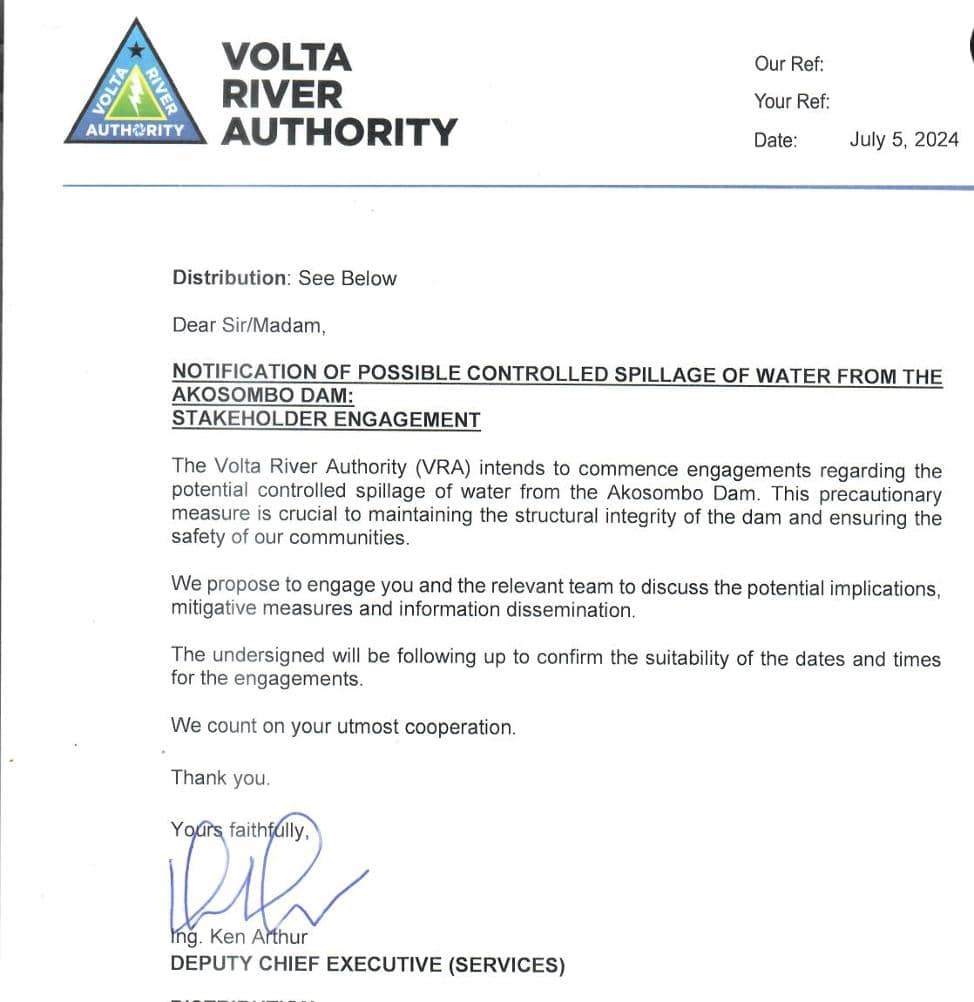
    The Volta River Authority (VRA) has issued a notification to over 40 stakeholders, including the Minister for the Interior and local assemblies within the Akosombo Dam’s catchment areas, about the possibility of excess water spillage.

    This announcement, signed by Ing. Ken Arthur, Deputy Chief Executive in Charge of Services at the VRA, calls for proactive stakeholder engagement as a precautionary measure.

    The VRA highlighted the importance of early engagement to ensure both the structural integrity of the Akosombo Dam and the safety of nearby communities. Although a spillage is not confirmed, the VRA stresses the necessity of prompt preparation and stakeholder involvement.

    This notice is part of VRA’s ongoing commitment to uphold safety protocols around the dam and to respond swiftly to any potential risks arising from water level changes.

    The communication stated, “The Volta River Authority (VRA) intends to commence engagements regarding the potential controlled spillage of water from the Akosombo Dam. This precautionary measure is crucial to maintaining the structural integrity of the dam and ensuring the safety of our communities.”

    It further added, “We propose to engage you and the relevant team to discuss the potential implications, mitigative measures, and information dissemination.”

    In October 2023, the VRA conducted a controlled spillage of the Akosombo Dam to prevent overflow, which led to the displacement of residents in low-lying areas. The most affected communities were in the North and Central Tongu districts, where over 35,857 people were displaced, and numerous homes and farmlands were destroyed.

    The floods had a significant impact on more than 30,000 individuals in the North Tongu district, who found themselves in urgent need of assistance from government agencies and charitable organizations.

    By initiating these engagements, the VRA aims to prevent a repeat of last year’s devastating floods and ensure that all stakeholders are adequately prepared for any eventualities.

  • VRA warns of potential spillage of water from Akosombo Dam

    VRA warns of potential spillage of water from Akosombo Dam

    The Volta River Authority (VRA) has announced its plans to initiate discussions with key stakeholders regarding the potential controlled release of excess water from the Akosombo Dam.

    In a notice signed by Ing. Ken Arthur, VRA’s Deputy Chief Executive in Charge of Services, over 40 stakeholders, including the Minister for the Interior and local assemblies within the dam’s catchment areas, were informed of the upcoming engagements in preparation for possible spillage.

    “The Volta River Authority (VRA) intends to commence engagements regarding the potential controlled spillage of water from the Akosombo Dam. This precautionary measure is crucial to maintaining the structural integrity of the dam and ensuring the safety of our communities,” the notice read.

    It added that “We propose to engage you and the relevant team to discuss the potential implications, mitigative measures and information dissemination.”

    Below is the notice.

    On September 15, 2023, VRA began the controlled release of excess water from the Akosombo Dam, resulting in severe flooding in nearby areas, particularly within the Lower Volta region.

    The controlled spillage continued until October 30, 2023, when VRA announced its conclusion.

    Government sources reported that the flooding affected over 88,000 people and 5,000 homes.

    Citi FM and Channel One TV and their audiences were relocated to construct resettlement and health centres for those impacted.

    The government also announced a GH¢220 million compensation package for victims.

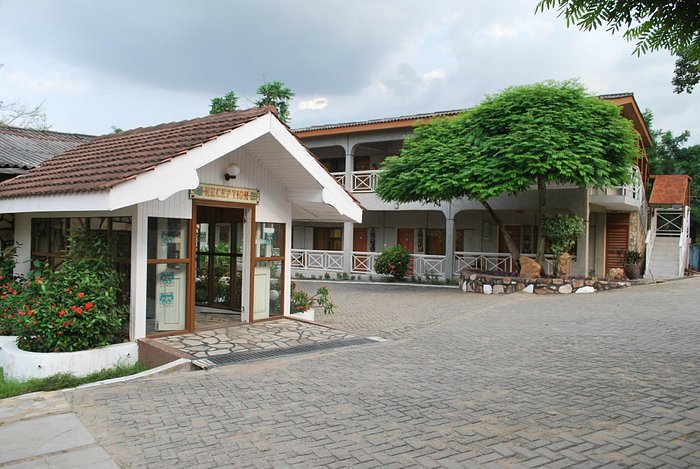
  • VRA has sold its Akosombo Hotel to Bryan Acheampong – Okudzeto

    VRA has sold its Akosombo Hotel to Bryan Acheampong – Okudzeto

    A piece of recent information revealed by the Minister for Food and Agriculture, Bryan Acheampong, has revealed that he is now the owner of the Volta River Authority’s Akosombo Continental Hotel.

    Mr Acheampong made this known when he vowed to gift the Member of Parliament for North Tongu, Okudzeto Ablakwa a house and a hotel if the MP can substantiate claims that Rock City Hotel is incurring losses.

    If Ablakwa “is able to prove that Rock City’s 2023 account recorded losses, in fact, in his constituency, North Tongu, there is a hotel owned by Rock City—Akosombo Continental Hotel. If he’s able to prove it, that hotel is for Rock City, and I will give it to him as well. He should prove it.”

    Reacting to this information in an interview on Metro TV, Mr Ablakwa clarified a misinformation made by Mr Acheampong.

    According to him, the Akosombo Continental Hotel is not in the North Tongu Constituency but in the Asuogyaman constituency.

    Mr Ablakwa expressed shock over the fact that the hotel has been acquired by the Agric Minister.

    “Let me state for the record, I think he missed his bearing. He said Akosombo Hotel in my constituency. Some people have sent me messages saying when he came to your constituency to buy a hotel you didn’t protest but he is doing it in Accra and you are making noise.”

    “Let me state it on record that Akosombo Hotel is not in my constituency. It is in the eastern region of the Asuogyaman constituency.”

    “It is next door to my constituency. It is quite revealing. I didn’t know that the VRA had sold the hotel to him so we are grateful that he has shared that information,” he said.

    @nurudeen.m..yakub Evidence based Oversight Responsibility. Hon SOA has putting out the facts and figures from GRA that indeed Rock City declared a loss in 2023. #handsoffourhotelsdemo #yppppppppppppppppppppppp #trending #24hourseconomy @Sammy Gyamfi @Samuel Ablakwa Okudzeto @Beatrice Annan @Hajia Safia Iddrisu @King Poborsky TV @AnnanPerryArhin ♬ original sound – Nurudeen M. Yakubu Yalley
  • Akosombo Dam Spillage: 8 months on and over 200 people still live in tents

    Akosombo Dam Spillage: 8 months on and over 200 people still live in tents

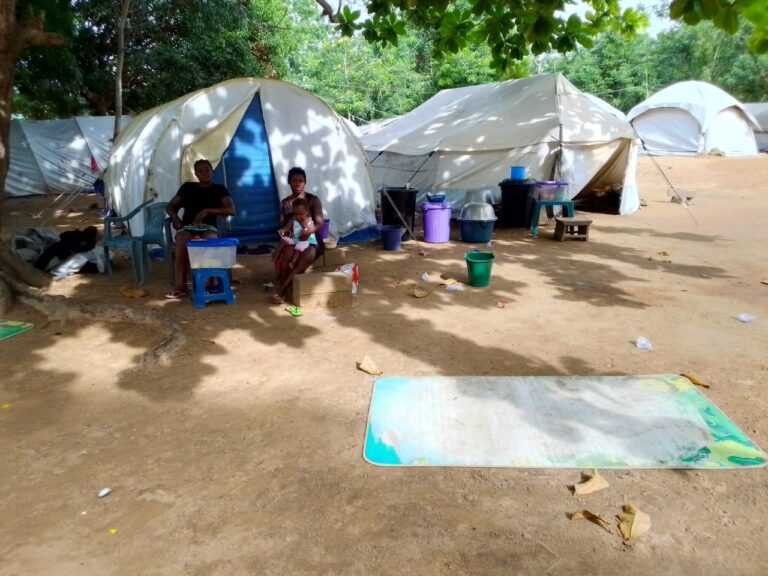
    More than eight months after the Volta River Authority (VRA) released excess water from the Akosombo Dam, causing severe flooding in Degorme, Mepe, Volta Region, over 200 flood victims are still grappling with displacement, residing in temporary tents.

    These affected residents feel neglected and abandoned, lamenting the lack of substantial government assistance to aid in their recovery.

    The VRA initiated the release of excess water from the Akosombo Dam in September 2023 due to rising inflows and high water levels, a necessary measure to avert potential dam failure.

    However, this action had severe repercussions for surrounding communities, displacing approximately 39,000 individuals and causing extensive property damage.

    The flooding brought normal life to a halt, resulting in school closures, disrupting education for many students, and halting farming and trading activities, which are vital for local economies.

    Presently, residents of Degorme Camp II endure harsh living conditions, unable to return to their homes due to destruction. Forced to dwell in makeshift tents, they face ongoing challenges in the camp, highlighting the urgent need for sustained support and assistance.

    The affected residents of Mepe urgently need government intervention. The continuation of their current conditions poses severe risks to their health and well-being. Immediate support in the form of food, water, medical care, and proper housing is critical.

    The VRA asserts that the controlled spillage was necessary to maintain the structural integrity of the Akosombo and Kpong Dams. Engineers emphasize that managing water levels is crucial to prevent dam failure, which would have catastrophic consequences.

    With the rainy season approaching, the urgency of the situation in Degorme Camp II cannot be overstated.

    The government and relevant authorities must act swiftly to provide the necessary relief and support to the flood victims, enabling them to rebuild their lives after this devastating event.

    For the affected residents, immediate and sustained assistance is not just a need but a lifeline. Their future depends on it.

    Sophia Abbah, a leader at Degorme Camp II, expressed the residents’ frustration and desperation. “We feel completely abandoned. Without food, water, or medical care, our situation is getting worse by the day,” she said.

    The affected residents of Mepe urgently need government intervention. The continuation of their current conditions poses severe risks to their health and well-being. Immediate support in the form of food, water, medical care, and proper housing is critical.

    The VRA asserts that the controlled spillage was necessary to maintain the structural integrity of the Akosombo and Kpong Dams. Engineers emphasize that managing water levels is crucial to prevent dam failure, which would have catastrophic consequences.

    With the rainy season approaching, the urgency of the situation in Degorme Camp II cannot be overstated.

    The government and relevant authorities must act swiftly to provide the necessary relief and support to the flood victims, enabling them to rebuild their lives after this devastating event.

    For the affected residents, immediate and sustained assistance is not just a need but a lifeline. Their future depends on it.

  • Cash Waterfall Mechanism was made to favors IPPs – VRA Senior Staff

    Cash Waterfall Mechanism was made to favors IPPs – VRA Senior Staff

    Senior Staff Association (SSA) of the Volta River Authority (VRA) expresses concern over the impact of the revised Cash Waterfall Mechanism on the company’s operations.

    Implemented in April 2020 and revised in 2023 under the Energy Sector Recovery Programme (ESRP), the Cash Waterfall Mechanism aims to ensure fairness and transparency in distributing energy revenues among electricity distribution companies.

    However, the Senior Staff of VRA argues that the reality contradicts this intention, citing that Independent Power Producers (IPPs) receive a fixed amount of $43 million monthly.

    Despite VRA generating 67.5 percent of power for the national grid, with IPPs contributing only 32.5 percent, revenue distribution disproportionately favors the IPPs, according to the association’s statement.

    “Currently, all available plants are running 24/7. That cannot be said about IPPs, yet at the end of the month, they are given $43 million which is more than half of all the payments made into the CWM by the ECG,” portions of the statement said.

    “Will IPPs accept this kind of treatment meted to VRA?”the Association quizzed.

    The Association further dismissed calls for the privatisation of VRA.

    “We wish to reiterate that VRA is the only strategic state-owned power utility providing and guaranteeing the energy security for the people of Ghana and for that matter none of its assets must be put on sale.

    “The Authority is efficient in operating and managing its assets and thus should be allowed to operate its diverse generation mix, devoid of any unwarranted privatisation.”

    Read full statement below:

  • ECG, GRIDCo and VRA operations are being disrupted by political influence – Kwame Jantuah

    ECG, GRIDCo and VRA operations are being disrupted by political influence – Kwame Jantuah

    Energy expert, Kwame Jantuah has asserted that the primary obstacle hindering the effective performance of the Ghana Grid Company Limited (GRIDCo), the Electricity Company of Ghana (ECG), and the Volta River Authority (VRA) is political interference.

    He argued that political appointees within these institutions should step aside to allow technical experts to carry out their duties effectively.

    Mr Jantuah’s comments come in response to Asantehene Otumfuo Osei Tutu II’s call to diversify GRIDCo, ECG, and VRA. Otumfuo Osei Tutu II believes that privatizing these entities will enhance their efficiency.

    During the commissioning of a 430-kilometer natural gas pipeline by Genser Energy in Kumasi on April 17, Otumfuo Osei Tutu II emphasized the importance of government involving the private sector in establishing and managing companies.

    “VRA and others are all government establishments, let’s give it out and diversify them into the private sector and get more money there and get the right people to do it. GRIDCo and others let’s give them the money and get the qualified people, diverse government from it and let them work. Electricity Company is in a situation where we don’t know, but that also must be diversified and given to the private sector.

    “Why are we still holding on when we don’t have the money? We’re not able to collect all the taxes we want, we’re going to IMF and all those for money. We’re hanging onto industries we cannot maintain and run.”

    He added “It’s about time we face reality and decide on what government should be doing and what the private sector should be doing. This is a testimony of the private sector, and they were able to attract investors.”

    He urged the government to privatize VRA and other state-owned enterprises to attract more investment and create employment opportunities.

    Mr Jantuah, speaking on the Ghana Tonight show on TV3, questioned the feasibility of entrusting these critical sectors to the private sector. He raised concerns about whether banks could raise the necessary funds and highlighted potential issues such as capital flight.

    Furthermore, Jantuah underscored the importance of having technical experts manage technical institutions to ensure continuity and effectiveness, advocating for a reduction in political interference.

    He pointed out that the politicization of institutions such as the Public Utilities Regulatory Commission (PURC), ECG, and GRIDCo is detrimental to their operations.

    “Does the private sector have the wherewithal to do this? Even if you go to the banks, can banks raise the money? I remember when we discovered oil we tried to syndicate banks to raise money for exploration, were we able to do it? Let us be honest, I respect Otumfuo highly, he is my relative and I respect him but can we do it? Can we trust the privatise sector? Isn’t it capital flight?

    “PDS, when they came, what happened? The internationals that come to Ghana to work, do they not change the money into their currencies and take it away,? Isn’t it our local forex that they change the money away?

    “We have to be sure that we have streamlined our laws, you need technical people to run technical institutions so that when the government changes those technical people are still there this issue about the president nominating everybody, that is where you get the politics in there. This PURC, ECG GRDICO thing, it is politics.”

  • VRA saw to relocation of AMERI Power Plant, not politicians; stop taking credit – Dr Steve Manteaw

    VRA saw to relocation of AMERI Power Plant, not politicians; stop taking credit – Dr Steve Manteaw

    The co-chair of the Ghana Extractive Industry Transparency Initiative (GHEITI), Dr. Steve Manteaw, has advocated for reducing government control over state enterprises in the energy sector.

    His call comes in the wake of criticism from the National Democratic Congress (NDC) towards President Akufo-Addo’s decision to relocate the AMERI Power Plant and rebrand it as the Kumasi 1 Thermal Power Plant.

    The NDC has argued that the decision is impractical and costly. In contrast, the governing New Patriotic Party (NPP) has celebrated the move, highlighting it at a commissioning ceremony held on Wednesday.

    Dr. Manteaw has suggested that the Volta River Authority, which funded the relocation and infrastructure construction, should be allowed to operate without unnecessary publicity or “fanfare.”

    Speaking on Joy FM’s Top Story, on Wednesday, he said “why should politicians be taking credit for work done by a technocratic institution like VRA? If you have state-owned enterprises, they are supposed to be companies and they do their work as expected of them. 

    “And then you have politicians taking credit for the work done by a company. If it is not the politicisation of these institutions, what else could that be? VRA was set up to do these kinds of things and they are doing it. So why should politicians be dancing around and making fanfare of it? I don’t understand it,” Dr Manteaw stated.

    Dr. Steve Manteaw highlighted the risks of political interference in state enterprises, warning that such interference could lead to their collapse. He emphasized the need to confront politicization head-on, stating that without addressing this issue, the challenges facing the energy sector would persist.

    Drawing on the example of the GCB Bank, Dr. Manteaw pointed out that privatizing the bank was necessary to rescue it from decline and to stop interference from successive governments.

    Dr Manteaw said that the politicisation led to the over-exposure of GCB “ to the extent that the bank was brought to its knees and the government had to take a decision to privatise it. The government was directing where loans should go. And loans, credit facilities were established beyond the capability and capacity of DCB to Tema Oil Refinery.”

    “In the end, we came to the brink of collapse of both Tema Oil Refinery and GCB. I mean it’s high time politicians wash their hands off the operations of state enterprises. We’ve had enough of that. Look at GNPC, same problem.

    “There is politicisation of that institution to the extent that workers’ morale today is so low in that cooperation. I think the time has come for us to see how we dilute government control over state enterprises,” Dr Mantaew said.

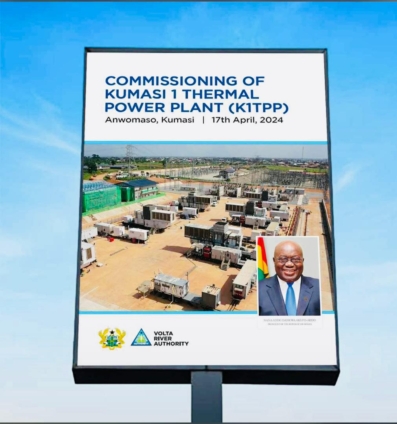
    President Nana Akufo-Addo officially commissioned the first phase of the Anwomaso 1 Thermal Power Plant in Kumasi on Wednesday, April 17. With a total installed capacity of 150 megawatts, the plant represents a significant milestone in efforts to ensure sustainable electricity supply, particularly in the Ashanti Region.

    Addressing the gathering at the commissioning, President Akufo-Addo highlighted the increasing demand for power as the country’s population and economic activities continue to expand. He emphasized the importance of projects like the power station in boosting the country’s energy supply to meet the needs of Ghanaians.

    The Kumasi 1 Thermal Power Project was initiated after the expiration of the BOOT agreement between Ameri Energy Limited and the Government of Ghana (GoG) on the former Ameri power plant. In 2022, the plant was handed over to the GoG and subsequently transferred to the VRA.

    The Minister of Energy, Dr. Matthew Opoku Prempeh, and the VRA made a strategic decision to relocate the plant to Kumasi, funding the project entirely from the VRA’s internally generated funds.

    The project is being executed in two phases. The first phase involved the relocation of the first six TM2500 units with a total generation capacity of 150MW. The second phase, scheduled for completion in June 2024, will increase the plant’s capacity to 250MW.

    The project is being carried out by VRA’s in-house team of engineers, with support from selected service providers. However, the NDC has alleged a $35 million investment in the relocation of the plant from Takoradi to Kumasi.

    President Nana Akufo-Addo officially commissioned the first phase of the Anwomaso 1 Thermal Power Plant in Kumasi on Wednesday, April 17. With a total installed capacity of 150 megawatts, the plant represents a significant milestone in efforts to ensure sustainable electricity supply, particularly in the Ashanti Region.

    Addressing the gathering at the commissioning, President Akufo-Addo highlighted the increasing demand for power as the country’s population and economic activities continue to expand. He emphasized the importance of projects like the power station in boosting the country’s energy supply to meet the needs of Ghanaians.

    The Kumasi 1 Thermal Power Project was initiated after the expiration of the BOOT agreement between Ameri Energy Limited and the Government of Ghana (GoG) on the former Ameri power plant. In 2022, the plant was handed over to the GoG and subsequently transferred to the VRA.

    The Minister of Energy, Dr. Matthew Opoku Prempeh, and the VRA made a strategic decision to relocate the plant to Kumasi, funding the project entirely from the VRA’s internally generated funds.

    The project is being executed in two phases. The first phase involved the relocation of the first six TM2500 units with a total generation capacity of 150MW. The second phase, scheduled for completion in June 2024, will increase the plant’s capacity to 250MW.

    The project is being carried out by VRA’s in-house team of engineers, with support from selected service providers. However, the NDC has alleged a $35 million investment in the relocation of the plant from Takoradi to Kumasi.

    “But let it be known that when dumsor was collapsing the businesses of inhabitants of the Ashanti Region and beyond, it was John Mahama’s Ameri Power plant (howsoever it is called) that was brought in to save the situation.”

  • Voltage and power quality will be addressed by Kumasi 1 Thermal Power Project – VRA

    Voltage and power quality will be addressed by Kumasi 1 Thermal Power Project – VRA

    The inauguration of the Kumasi 1 Thermal Power Project on Wednesday, April 17th by President Akufo-Addo, is poised to tackle voltage and power quality concerns in Kumasi and northern Ghana.

    The Volta River Authority (VRA) affirmed that this initiative will elevate system voltages, thereby enhancing overall system stability.

    The initiative aims to enhance system voltages, thereby improving overall system stability in the region.

    Notable dignitaries expected to attend the event at Anwomaso Kumasi include Asantehene Otumfuo Osei Tutu II, Energy Minister Dr. Matthew Opoku Prempeh, and VRA CEO Ing. Emmanuel Antwi Darkwa.

    This endeavor follows a comprehensive grid impact study conducted by the Ghana Grid Company (GRIDCo), recommending a minimum of 250MW of power generation in the Ashanti Region to ensure grid reliability and stability.

    Additionally, the VRA asserts that siting a power plant in Kumasi will enhance power quality and reliability for consumers in central and northern Ghana, while efficiently optimizing the nation’s strategic energy assets.

    The project, funded entirely by the VRA’s internal resources, aims to maximize the utilization of gas resources in the western region and create employment opportunities in Kumasi and its environs. Moreover, it provides avenues for practical training in thermal power operations for students of institutions like Kwame Nkrumah University of Science and Technology (KNUST) and Kumasi Technical University.

    Background:

    The Kumasi 1 Thermal Power Project emerged following the conclusion of the BOOT agreement between Ameri Energy Limited and the Government of Ghana concerning the former Ameri power plant. In 2022, the plant transitioned to Ghanaian ownership and was subsequently transferred to the VRA. The strategic decision to relocate the plant to Kumasi led to the project’s renaming as the Kumasi 1 Thermal Power Project, wholly funded by the VRA’s internally generated funds.

    Implemented in two phases, the first phase, initiated in May 2023 and commissioned on Wednesday, involves relocating six TM2500 units with a total generation capacity of 150MW. The second phase, slated for completion in June 2024, aims to further increase the plant’s capacity to 250MW. Execution of the project is overseen by VRA’s in-house engineering team, with support from selected service providers.

  • Claims of power supply shortage made by IPGG entirely baseless – VRA

    Claims of power supply shortage made by IPGG entirely baseless – VRA

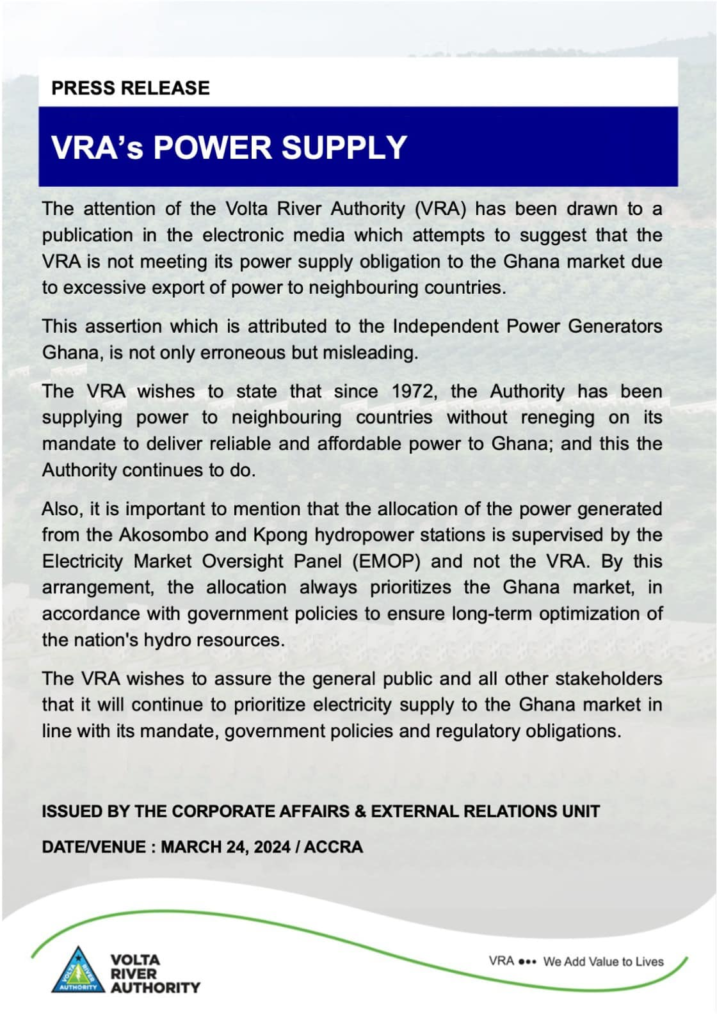
    The Volta River Authority (VRA) dismisses assertions by CEO of the Independent Power Generators, Ghana (IPGG), Dr. Elikplim Kwabla Apetorgbor, regarding the effects of its export operations on Ghana’s energy supply, denouncing his claims as inaccurate and misleading.

    A statement released by the VRA stated, “The Volta River Authority (VRA) has taken note of a recent media publication alleging that the VRA is failing to fulfill its power supply commitments to the Ghanaian market due to excessive power exports to neighboring countries. This claim, purportedly made by the Independent Power Generators Ghana, is entirely baseless and misleading.”

    The VRA reaffirmed its dedication to meeting obligations to the domestic energy market and rejected any insinuation that its export operations were undermining this commitment.

    “The VRA remains steadfast in its dedication to providing reliable power supply to Ghana, and any insinuations to the contrary are unfounded,” the statement added.

    Read full statement:

  • VRA accused of exporting excess power, causing outages – IPGG alleges

    VRA accused of exporting excess power, causing outages – IPGG alleges

    CEO of IPGG, Dr Elikplim Kwabla Apetorgbor, stated that the VRA is prioritising exporting power to neighbouring countries, neglecting its domestic responsibilities.

    According to Dr Apetorgbor, although the VRA has been tasked with exploring export markets to alleviate government idle-capacity burdens, it must do so within legal boundaries.

    He emphasised the importance of meeting domestic demand while maintaining the required 18% reserve margin.

    Dr Apetorgbor criticised the VRA for exporting hydro-generated electricity to Burkina Faso, Togo, and Benin while Ghanaian taxpayers bear the cost of expensive thermal generation, leading to power cuts.

    He highlighted that over 200MW is consistently exported, which he deemed illogical.

    Meanwhile, citizens, businesses, and households across various parts of the country have been enduring prolonged intermittent power outages.

  • ECG/VRA reportedly issuing bills to victims of Akosombo dam spillage despite no electricity usage

    ECG/VRA reportedly issuing bills to victims of Akosombo dam spillage despite no electricity usage

    Residents of Mepe in the Volta region are reportedly grappling with an unexpected burden in the aftermath of the Akosombo dam spillage that destroyed their livelihoods.

    According to reports emerging from the area, residents are being issued electricity bills for homes left uninhabited due to the disaster.

    Despite the flooding rendering many homes inaccessible and meters submerged, the Electricity Company of Ghana (ECG) in collaboration with the Volta River Authority (VRA) is reportedly issuing bills to affected residents, demanding payment for electricity usage even when none has occurred.

    One resident, who reported the incident on social media, expressed frustration over the situation, stating, “Since this incident occurred till now, some of us have not gained access to our homes again. And this household, both the meter was all drowned in the water and since then till today that I’m talking to you, no one is staying in this house.”

    https://twitter.com/ddhellali/status/1754796935003660707?s=46

    The resident further explained that despite the meters being submerged and rendered inoperative, ECG and VRA have managed to read the meters and billed them for an amount totaling GHs 2,325.98.

    “This months’ bill arrived, meanwhile, the meter is spoiled and nobody is in the house, but they managed to bring this bill to us,” lamented the resident, highlighting the absurdity of the situation.

  • VRA allegedly engaged in corrupt activities worth $52m dollars in 2022

    VRA allegedly engaged in corrupt activities worth $52m dollars in 2022

    Volta River Authority (VRA) was allegedly engaged in corrupt activities worth $52m dollars in September 2022, under the leadership of CEO Emmanuel Darkwa, according to a report by Ghana Crimes.

    The X user, Ghana Crimes, in a post on indicated that VRA submitted a formal request to the Public Procurement Authority (PPA) during the specified month, detailing their intention to procure specific equipment through a sole-source tender. 

    Ghana’s procurement regulations explicitly state that when a state institution, such as VRA, seeks approval for a sole-source contract award from the PPA, they are prohibited from including any additional third-party companies beyond those initially presented to the Public Procurement Authority.

    Notably, the request explicitly named a particular company with which VRA purportedly intended to engage in the procurement process.

    However, the situation took an unexpected turn when the approved procurement from the PPA revealed discrepancies.

    Contrary to the details presented in VRA’s request, it was disclosed that the specified company was not the exclusive entity with which VRA conducted business.

    This apparent deviation from the initial request raises serious concerns, as it constitutes a clear violation of Ghana’s procurement laws.

    “In September 2022, VRA, led by CEO Emmanuel Darkwa, submitted a request to the Public Procurement Authority, expressing their intention to acquire certain equipment through a sole-source tender, specifying the particular company with which they planned to engage. However, contrary to what was stated in their request, the approved procurement from the PPA revealed that the mentioned company wasn’t the sole entity with which VRA conducted business,” it stated.

    Adding complexity to this revelation is the fact that VRA, the entity in direct communication with the PPA, allegedly failed to reach out to the manufacturer explicitly mentioned in their initial letter as the intended partner for the procurement.

    The disclosed contract amount for this transaction is a substantial $52 million, further amplifying the gravity of the situation.

    “This is a clear violation to Ghana’s procurement laws which suggests that when a state institution writes to PPA to seek for approval for a sole source contracts award, they do not add up any other third party company to what has already been presented to the Public Procurement Authority. What makes this disclosure intriguing is that VRA, the entity that communicated with the PPA, did not reach out to the manufacturer explicitly mentioned in their letter as their intended partner. The contract amount stood at $52 million,” it added.

  • Former PIAC chairman and chiefs take legal action against Electrochem

    Former PIAC chairman and chiefs take legal action against Electrochem

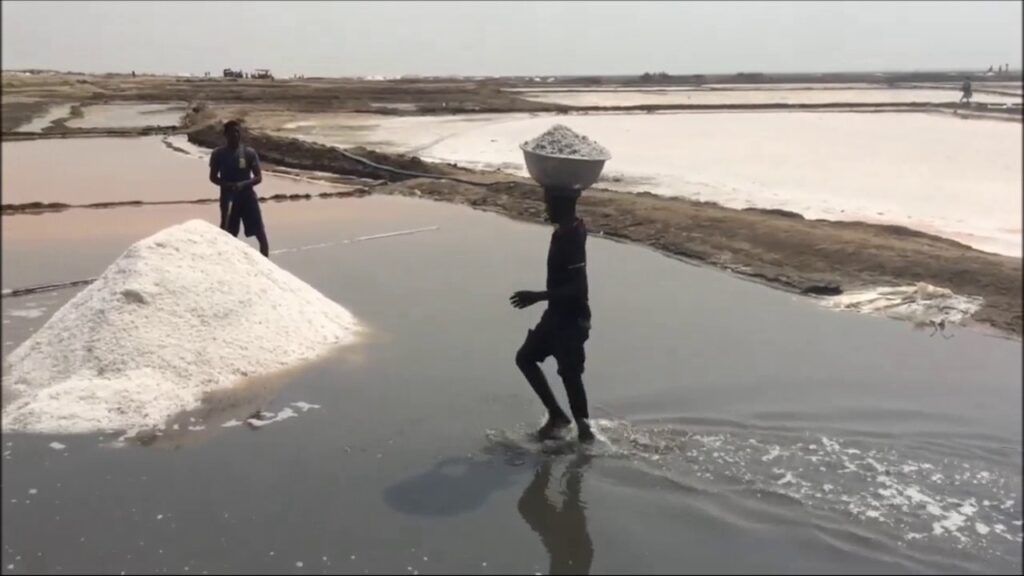
    A private citizen and four chiefs of Ada have filed two separate lawsuits seeking an injunction to stop Electrochem Ghana Limited from mining salt at Ada in the Greater Accra Region.

    Noble Wadzah, a former Chairman of the Public Interest and Accountability Committee (PIAC) and Nene Amartey Korley, Chief of Aminapah and three other chiefs, also want the High Court to, among other reliefs, declare the lease granted Electrochem illegal.

    Joined to the legal action are the Ministry of Lands and Natural Resources, State Interest and Governance Authority (SIGA), Minerals Commission and the Ada East District Assembly.

    The plaintiffs’ case is anchored on the grounds that the Electrochem deal was in gross violation of PNDC Law 287 and the Master Plan for the development of the salt industry in the Ada area. They are also claiming that the lease is an affront to the rights of indigenes who have lived within the Songhor Salt enclave for centuries.

    They also accused Electrochem of violating some terms of the lease agreement.

    PIAC former Chairman’s case

    In his suit filed before an Accra High Court, Mr Wadzah said the legal action was prompted by a letter from the district assembly directing salt miners on the Ada Songhor Lagoon site to vacate by December 31, 2023.

    He wants a judicial review of the lease agreement and a declaration by the court that the Electrochem lease is illegal, particularly when the company’s obligations in the lease do not conform with PNDCL 287 and the Master Plan.

    Mr Wadzah argues that Electrochem was required by the lease agreement to pay GHS2.3 million, which is 10% of the offer price of the lease as a deposit by August 31, 2021.

    Court documents show that it was not until September 7, 2021, that Mr Daniel McKorley, Executive Chairman of the McDan Group wrote to the branch manager of ADB Head Office, to request the transfer of the said amount to SIGA to make the deposit on behalf of Electrochem, which is a subsidiary of the McDan Group.

    Mr Wadzah also argues in his lawsuit, failure to make the deposit by the agreed date meant that Electrochem was in breach of the lease agreement.

    Further, Mr Wadzah stated that President Nana Akufo-Addo, who holds the Songhor Lagoon salt deposits in trust for the owners, must ensure that the salt is mined, and the salt industry developed in compliance with PNDC Law 287.

    SALT
    President Akufo-Addo was at the commissioning of the Electrochem Project in August last year.

    He said a cursory look at Electrochem’s business plan showed that it had no plans to operate with the master plan for the area but rather to completely marginalise and eliminate small-scale mining at the lagoon site.

    “The Interested Party’s [Electrochem] acts of impunity have been fueled by the failure of the second and third respondents [Minerals Commission and SIGA] to ensure that the lease granted to the Interested Party and the divestiture respectively were granted in accordance with the law,” he added.

    Chiefs’ suit

    The case of the four chiefs is that they and their community stand to suffer greater hardship and irreparable damage if the Minerals Commission, the Ada East Assembly and Electrochem are not restrained from their lands until the final determination of the case.

    In their case filed before the Tema High Court on January 17, 2024, the chiefs claim that the government knew that the Terkpebiawe clan owned the Songhor Lagoon.

    According to the chiefs, although they had responded to a notice published by the Minerals Commission, indicating that their lives could be affected by the lease, the government failed to consult the principal members of the Terkpebiawe Clan but went ahead to grant the lease to Electrochem on October 29, 2020.

    Aminers
    Artisanal salt miners in Ada say they’ve mined the commodity in the Songhor lagoon for centuries but are being ejected because of Electrochem

    “Our villages fall within the concession area and the indigenes of the villages have put up properties in the said areas. The properties in these villages include houses, schools, churches and other structures put up by the indigenes for the commercial activities,” they said.

    The chiefs noted that although the Ada East District Assembly knew of the concession granted Electrochem, it kept issuing business permits to indigenes to win salt. The permits gave the indigenes the green-light to put up structures and buy machines to facilitate their salt-winning activities.

    “The defendants are aware of the fact that Parliament is re-examining the agreement between the State and the third defendant [Electrochem] but the defendants continue to intimidate and oppress the indigenes with the sole purpose of getting them out of their land even though they have not put in place any plan of resettling them,” the plaintiffs said.

    Citing an example of the harassment their communities were suffering, the chiefs said on December 14, 2023, the district assembly “ordered all persons occupying the lands within concession area to vacate the land for the third defendant [Electrochem].”

    Aminers Artisanal salt miners in Ada say they’ve mined the commodity in the Songhor lagoon for centuries but are being ejected because of Electrochem


    Source:The Fourth Estate

  • Sad news hits Mepe as major bridge collapses

    Sad news hits Mepe as major bridge collapses

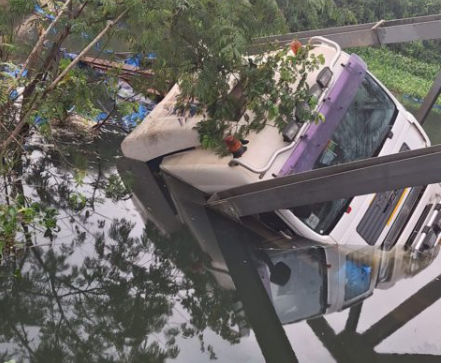
    The town of Mepe, already grappling with the aftermath of flooding caused by the Volta River Authority (VRA) spillage, faces yet another unfortunate event as a crucial steel bridge at Saikope has collapsed. 

    This bridge, vital for connecting the North Tongu town of Juapong to the Central Tongu capital town of Adidome, succumbed to the weight of a fully loaded trailer carrying salt.

    Fortunately, there have been no reported fatalities resulting from the collapse, but the incident adds another layer of difficulty for the residents of Mepe. The collapse occurred despite warnings, as authorities had previously placed a sign indicating a “weak bridge ahead” for the awareness of road users.

    In response to the collapse, District Chief Executive Osborn Devine Fenu issued a public advisory via his personal Facebook Page. Motorists are urged to take an alternate route through another Mepe town, Dadome, to access Adidome and Juapong safely.

    Investigations into the cause of the collapse are pending, but the DCE has alleged overloading of the truck as a potential factor. However, it should be noted that authorities had already signaled the compromised state of the bridge by placing warning signs, suggesting a possibility of structural weakness.

    A crucial point in the ongoing situation is the maximum load limit sign at the bridge, indicating a threshold of 25 tons. Until investigations conclude, it remains unclear whether the collapse was primarily due to the weakened state of the bridge or the excess tonnage carried by the trailer.

    The incident highlights the challenges faced by Mepe, with a combination of flooding and now a disrupted transportation route. The community awaits the outcome of investigations to determine the exact cause of this unfortunate event and to chart a path towards necessary repairs and restoration of essential connectivity.

  • Akosombo Dam Spillage: Charity alone is not enough, find a lasting solution – Kofi Bentil tells Govt

    Vice President of IMANI Africa, Kofi Bentil, strongly condemned the government’s response to the Akosombo Dam spillage, labeling it as both inadequate and a hastily made decision.

    Expressing his views during a panel discussion themed “Building Resilience: A Socio-Economic Response to Natural Disasters” at the Africa Leadership Initiative West Africa (ALIWA), Mr. Bentil voiced disappointment in the government’s poorly planned efforts to address the immediate concerns of affected residents.

    While acknowledging the commendable efforts of Citi FM and Citi TV in providing relief and implementing long-term solutions in the heavily affected areas of the Lower Volta Region, Mr. Bentil underscored the importance of not solely relying on charitable initiatives.

    He emphasized the necessity for a robust and coordinated national-level approach.

    Expressing his astonishment at the lack of a serious government response, Mr. Bentil questioned the ad-hoc arrangement at the national level.

    “I am still shocked that we have a disaster of that nature and there was no serious government response; what we saw was not serious. Look, Citi FM has done a yeoman’s job, but is that their responsibility? When you have a disaster of that magnitude, it is not charity that solves the problem.”

    “At a national level, what I saw was an ad-hoc arrangement. Where is NADMO? Where is the Ministry of Interior? Where is the State in dealing with this in a way that is not ad-hoc or knee-jerk? Don’t we have systems in place that can take care of this? I am saying this because we are due for a major earthquake, and if we cannot deal with this, then God help us all.”

    He queried the absence of organizations like NADMO, the Ministry of Interior, and the State in dealing with the situation in a more systematic manner, raising concerns about the preparedness for a potential major earthquake.

    Highlighting the urgency of the matter, Mr. Bentil called on Parliament to conduct a thorough investigation into the spillage. He emphasized that the flooding was not a natural disaster but a consequence of deliberate actions, pointing out that someone initiated the release of water despite being aware of downstream residents.

  • Proactive strategy needed to manage water levels in  Akosombo Dam – Dr Ampomah-Benefo to VRA

    Proactive strategy needed to manage water levels in Akosombo Dam – Dr Ampomah-Benefo to VRA

    Dr. Ampomah-Benefo from the Centre of Scientific and Industrial Research (CSIR) has recommended to the Volta River Authority (VRA) the adoption of a proactive strategy in managing water levels at the dam.

    Dr. Ampomah-Benefo discouraged the practice of waiting until the dam reaches a critical point before initiating water release.

    Speaking during a panel discussion on “Building Resilience: A Socio-Economic Response to Natural Disasters” at the Africa Leadership Initiative West Africa (ALIWA) on Thursday, January 25, Dr. Ampomah-Benefo stressed the importance of monitoring rain patterns and releasing excess water before the dam reaches its maximum capacity.

    In his advice to the VRA, Dr. Ampomah-Benefo stated, “We know how much is coming to our bucket, whether it is coming slowly or not. So, wherever it is coming from, you know how much is coming into your bucket and how much you let out to make the water stay. It is raining whenever, but we can know when it will be full.”

    According to Dr. Ampomah-Benefo, this proactive approach allows for better control over water levels, mitigates the risk of reaching critical points, and ensures a more effective response to changing weather patterns.

    Meanwhile, Kofi Bentil, Vice President of IMANI Africa and a panel member, strongly criticized the government’s handling of the Akosombo Dam spillage, labeling it as both unserious and a knee-jerk reaction.

    Mr. Bentil expressed disappointment in the government’s insufficient and poorly planned response to address the immediate concerns of affected residents.

    He commended the coordinated efforts of Citi FM and Citi TV in providing relief and implementing long-term solutions to heavily affected areas in the Lower Volta.

    However, he stressed that such responses should not solely rely on charitable initiatives, emphasizing the need for a robust and coordinated national-level approach.

    “I am still shocked that we have a disaster of that nature and there was no serious government response. What we saw was not serious. Look, Citi FM has done a yeoman’s job, but is that their responsibility? When you have a disaster of that magnitude, it is not charity that solves the problem.

    “At a national level, what I saw was an ad-hoc arrangement. Where is NADMO? Where is the Ministry of Interior? Where is the State in dealing with this in a way that is not ad-hoc or knee jerk? Don’t we have systems in place that can take care of this? I am saying this because we are due a major earthquake, and if we cannot deal with this, then God help us all.”

  • Ablakwa to take legal action against government, VRA

    Ablakwa to take legal action against government, VRA

    The Member of Parliament (MP) for North Tongu, Samuel Okudzeto Ablakwa, has given an ultimatum, stating his intention to sue the government and the Volta River Authority (VRA) unless prompt measures are taken within weeks to construct resettlement facilities for victims of the Akosombo dam spillage whose homes have collapsed.

    In a Thursday interview with Citi News, the MP conveyed deep concern about the government’s perceived inaction, pointing out the distress faced by thousands of affected individuals months after the floods.

    Ablakwa emphasized the urgent need for housing units and criticized what he saw as the government’s neglect.

    He highlighted the obligation of the VRA and the central government to use taxes and contingency votes for emergencies like this, urging them to acknowledge their duty of care.

    Expressing dissatisfaction with the perceived neglect, Ablakwa called on public officials to act promptly, stating that they are obligated to do so.

    He concluded by emphasizing the people’s right to swift resettlement and compensation, warning of the possibility of initiating a class-action lawsuit if the government remains negligent and derelict in its responsibilities.

    “And I must be honest with you, I haven’t been pleased at all. The neglect has been unconscionable. Public officials must know that they owe a duty of care, and they are not doing anybody a favour. It is an obligation, it is a must. So wherever they are, let’s just be kind to them and say that probably they are mobilising. They are just keeping too long in the mobilisation. They should hurry up and come back and get to work and resettle our people.”

    “The people deserve their houses back, they deserve to be compensated, and I hope that they don’t compel me to initiate a class action in court. Because at some point we can’t continue any longer with the private initiatives.

    “And if we see that the government is still negligent and derelict, we will have to commence legal action. A class action to compel the government to do the right thing. I hope that we don’t have to get there,” he said.

  • 2 arrested for duping donors of VRA-induced flood victims 

    2 arrested for duping donors of VRA-induced flood victims 

    Two persons are in the grips of the police for duping donors of the VRA-induced flood victims.

    Their arrest, according to the North Tongu MP, Samuel Okudzeto Ablakwa, was facilitated by the Ministry of National Security and the National Signals Bureau.

    In a tweet announcing their arrest, the MP said he received several complaints about the operations of the two suspects, Promise Ahorgah and Mawuli Kwaotse.

    “A good number of Ghanaians both home and abroad have reported to me about how these two deceived them through elaborate impersonation methods and collected hundreds of thousands of Ghana Cedis which were not handed over to flood victims as the donors intended,” he said. 

    He, thus, commended the agencies that made the arrest possible for the prompt response to his complaint.

    “I wish to commend the Ministry of National Security and the National Signals Bureau for their prompt response to my complaint by tracking and apprehending two unscrupulous individuals who corrupted my disaster fundraising flyers and duped many unsuspecting Ghanaians,” he added.

    Further, he revealed that an Accra High Court presided by Her Ladyship Lydia Osei-Marfo on Friday, December 15, 2023, ordered their continuous detention. 

    “The duo are to reappear in court on the 9th of January, 2024,” he added. 

    The MP who unequivocally condemned the move by the two suspects said: “It is sheer evil for heartless characters to take advantage of the trauma and devastation of fellow Ghanaians to defraud and exploit compassionate citizens who seek to offer empathetic assistance to their compatriots in distress.”

    “May I add that all those criminals out there scamming Ghanaians in my name through fake social media accounts and those promising protocol recruitments and other dubious opportunities at outrageous amounts should know that their days are numbered. We shall get them!” he said.

    The MP ended with a note of caution to the general public to be extra vigilant.

  • I have experienced Ghanaians generosity – Okudzeto Ablakwa overwhelmed by donations towards dam spillage victims

    I have experienced Ghanaians generosity – Okudzeto Ablakwa overwhelmed by donations towards dam spillage victims

    Member of Parliament for North Tongu, Samuel Okudzeto Ablakwa, has expressed gratitude to the Ghanaian populace for what he terms their unwavering and unexpected show of love to the flood victims in the Volta Region.

    According to the lawmaker, he is overwhelmed by the kind of donations undertaken by some Ghanaians to ensure the safety and well-being of the citizens who were affected by the Akosombo Dam-induced floods.

    In a conversation with Bola Ray on Starr Chat, he added that Ghanaians, in the face of the hardship in the flood-hit areas in the Volta Region, have outdone themselves.

    “I want to take a moment to celebrate Ghanaians. To be honest with you Bola Ray, I have been so moved by the generosity and compassion of Ghanaians. You know, we’ve always known we are nice people, we are warm, and Ghanaians are hospitable, but I have experienced it. You know, as we say on the streets, ‘feeligadochi’. You know, I’m just lost for words. I mean, first-hand experience. People just call you; look, we are in your constituency; where are you? You don’t have to call anybody or beg anybody. People are just pouring in,” he stressed.

    The Volta River Authority (VRA) initiated its controlled spillage of the Akosombo and Kpong Dams on September 15, 2023, due to the consistent rise in the upstream water level of the Akosombo Dam, primarily caused by rainfall.

    Since the spillage exercise began, some communities downstream of the Volta River have been submerged due to the excessive water from the dam.

    Residents in these areas were left stranded as their homes were submerged by the flood.

    However, several Ghanaians have come to their rescue by providing food, money, shelter and clothes for the victims.

  • Keta South MP denies receiving relief items from VRA for victims of dam spillage

    Keta South MP denies receiving relief items from VRA for victims of dam spillage

    The Member of Parliament for Ketu South, Abla Dzifa Gomashie, has vehemently denied allegations suggesting that she and two other MPs in the southern part of the Volta Region received relief items from the Volta River Authority (VRA).

    Madam Gomashie clarified that the circulated news is false and misleading, emphasizing that neither she nor Kwame Sefe (MP for Anlo) nor Kwame Dzudzorli Gakpey (MP for Keta) have received any such items from the VRA.

    She took the opportunity to provide context to a photo associated with the claims, explaining the nature of the activities she and the other two MPs were engaged in.

    Madam Gomashie further clarified that any relief items received were directed to Municipal and District Chief Executives (MCEs and DCEs) and officials from the National Disaster Management Organization (NADMO).

    “We have come across a news item published in Opera News on the above subject matter, which purported that the Volta River Authority (VRA) has donated some relief items to flood victims in three constituencies in the Volta Region and received by us, namely Hon. Abla Dzifa Gomashie, MP of Ketu South; Hon. Kwame Sefe, MP for Anlo and Hon. Kwame Dzudzorli Gakpey.

    “The picture accompanying the story is misleading, as the two Members of Parliament were there to witness the arrival of the goods but have not received the said donation for their constituencies. We only signed for medications which the Directors of Municipal and District Health Officials received on behalf of their hospitals,” she wrote in an official statement.

    Dzifa Gomashie emphasized that the public should dismiss the circulated news item and view it with disdain. She underscored the individual initiatives undertaken by herself and her colleagues from the affected communities to provide relief to their constituents.

    Madam Gomashie reiterated that, since the Akosombo Dam spillage leading to floods, there has been no instance where the Volta River Authority (VRA), responsible for the floods, has provided any relief support to them.

    “We wish to state emphatically, that, this publication and its claims are false, and must be treated with the contempt it deserves.

    “Since numerous communities in our respective constituencies got flooded as a result of the spillage of the Volta Dams in Akosombo and Kpong by the VRA. We have personally been out there mobilizing through the help of individuals and organizations to obtain relief items for our people. At no point in all these efforts, have we had the VRA donate any items to us as Members of Parliament for onward distribution to the fond victims in our respective constituencies,” she added.

    Meanwhile, the Minister of Finance, Ken Ofori-Atta, has announced, through the 2024 Budget Statement and Economic Policy, that the government has committed GH¢220 to take of reliefs for the affected persons in the Volta Region, as well as some other regions affected by floods in the country.

    “Honourable Speaker, government has budgeted an amount of GH¢220 million to support the relief phase for the communities affected by he Akosombo Spillage, as well as floods upstream in the Oti, Savannah, and Bono East Regions,” he said.

  • VRA Directors’ salary increased from GHC299k to GHC725k despite GHC138m loss – Dafeamekpor claims

    VRA Directors’ salary increased from GHC299k to GHC725k despite GHC138m loss – Dafeamekpor claims

    Member of Parliament for South Dayi, Rockson-Nelson Dafeamekpor, has criticized the management of the Volta River Authority (VRA) for purportedly providing its staff, including the director, with excessively high remunerations.

    Mr Dafeamekpor pointed out that despite VRA recording a loss of over GH¢138 million in 2022, documentation indicates a substantial increase in staff salaries, exceeding GH¢90 million, with the director alone seeing a rise of over GH¢400,000.

    In posts shared on X on Wednesday, November 15, 2023, the MP raised questions about the rationale behind such actions by the authority.

    “In 2022, VRA grew by 3% with a mkt share of 54.27%. Operating Y declined by 7% & Profit eroded from Ghc355.4m in 2021 to a loss of Ghc138.4m (Ghc493.8m) in 2022. Staff wages increased from Ghc316.63m in 2021 to Ghc397.65m in 2022. Director’s fees went up from Ghc299k to Ghc725k.

    “Why must Directors of a Company that moved it from a profit margin of Ghc355.4m in 2021 to a net loss of Ghc138.4m a yr later, be permitted to increase Board fees from Ghc299k to Ghc723k? Why?” he wrote.

    The MP’s social media post included what was claimed to be a parliamentary report from the Committee on Employment, Social Welfare, and State Enterprises. This report purportedly illustrated a decrease in profit and a simultaneous rise in salaries for VRA staff.

    According to the document, the VRA provided an explanation, stating that the salary increments were a result of the annual salary reviews and adjustments conducted by the authority.

  • Pharmacist drags VRA hospital to court, demands GH¢12m for ‘medical negligence’

    A 29-year-old pharmacist has reportedly filed a lawsuit against the Volta River Authority Hospital in Aboadze, Western Region, after allegedly being injected with the wrong drugs.

    The pharmacist, seeking GH12 million in damages, claims to have suffered mental and physical incapacitation due to the administration of IM Atracurium 50mg instead of Antigen D.

    However, there are conflicting reports, with some suggesting that the pharmacist rejected the prescribed medicine as it was deemed expensive and opted for drugs from her workplace, which were administered by a nurse without proper verification.

    “VRA hospital prescribed a drug she needed. She said theirs was too expensive, so she’ll get it from the hospital she works at instead. She got someone to bring the drug from her hospital.

    “The wrong drug was sent to her. She didn’t check. She kept the drug in her hospital fridge and told no doctor or nurse on duty about it.

    “In the evening, after the shift change, a VRA nurse who attends the same church as her was on duty. She told the nurse to take the drug from the fridge and inject her with it. The nurse didn’t check the drug either. Possibly presumed she was a pharmacist and knew what she needed.

    “Sometime after the injection, she began to have seizures. She ended up in her current state. The hospital took care of her bills & sacked the nurse. She later returned to sue the hospital for using the wrong drug she brought to them,” the second account said.

  • VRA, Energy Minister to answer to Parliament over Akosombo dam spillage on Wednesday

    VRA, Energy Minister to answer to Parliament over Akosombo dam spillage on Wednesday

    The Minister of Energy and the Volta River Authority (VRA) management are scheduled to appear before Parliament on Wednesday, November 8, to deliver an update on the Akosombo Dam spillage and its impact on communities along the Volta River basin.

    Over the past few weeks, numerous residents in parts of the Volta and Eastern Regions have been forced to leave their homes, as their properties, including farmlands, have been inundated and destroyed by the excess water released from the dam.

    During a parliamentary session, Dr. Matthew Opoku Prempeh, the Minister of Energy, reassured that his department is committed to providing the necessary accountability.

    “Even though VRA is under the Ministry of Energy, we take responsibility. It is a national disaster, an emergency. It is not only affecting people in the South… I am not the lead government agency.”

    “There is an inter-ministerial advisory team, but we will take responsibility and come to inform you about what VRA has done and hasn’t done once we have completed everything… And I do pledge that if it is next week Wednesday, I will be here with VRA,” he stated.

  • We have not signed any contract to fumigate areas affected by dam spillage – VRA, Zoomlion

    We have not signed any contract to fumigate areas affected by dam spillage – VRA, Zoomlion

    Both the Volta River Authority (VRA) and Zoomlion Ghana Limited have denied entering into any contract for the fumigation of the Lower Volta regions affected by the recent spillage from the Akosombo Dam.

    Initially, the VRA had informed JoyNews that they had signed a contract with the sanitation company for the fumigation operation. Ing. Kwame Osei Mensah Darkwa, the VRA’s Emergency Preparedness Coordinator, had emphasized their commitment to ensuring the safety and livability of homes, public spaces, and the entire community in the aftermath of the floods.

    However, in separate press releases dated Monday, October 30, 2023, both Zoomlion and VRA refuted any contractual arrangements for fumigation in the flooded areas.

    Zoomlion’s Communication Directorate, while denying any contract with VRA, clarified that on October 23, 2023, Zoomlion had voluntarily donated relief items valued at over GHȼ500,000 to assist the spillage victims. Furthermore, Zoomlion expressed its intention to conduct fumigation operations as soon as the receding waters allowed for such measures.

    The company reaffirmed its commitment to upholding corporate social responsibility standards and continuing to support the communities in the Volta Region and other regions across Ghana.

    In contrast, the VRA stated that they had not awarded any such fumigation contract.

    “We wish to state that VRA has not awarded any contract to Zoomlion for the fumigation of communities impacted by the controlled spillage.

    “VRA acknowledges the assistance being offered by institutions, companies, groups, and individuals, and will continue to work with all stakeholders in our relief efforts for the communities impacted by the controlled spillage from the Akosombo dam,” it said.

  • Zoomlion refutes VRA contract claims for fumigating flood-impacted areas

    Zoomlion refutes VRA contract claims for fumigating flood-impacted areas

    Zoomlion Ghana Limited, a private waste management company, has refuted reports that it has been hired by the Volta River Authority to fumigate Lower Volta areas that have been devastated by floods caused by overflowing water from the Akosombo and Kpong dams.

    “We want to emphasise that Zoomlion has not been contracted by VRA to undertake any fumigation activities in the said affected areas”, the company said, adding that the “allegations are baseless and lack any factual basis”.

    “Management categorically refutes these misleading, false and unfounded assertions”, the company insisted.

    The business announced that on Monday, October 23, 2023, a number of relief goods valued at more than 500,000 cedis were given to the spillage victims by its executives and management.

    Additionally, it noted that “a sister company, Ecozoil, also donated almost 500 life jackets to the media and rescue team supporting the situation on the ground”.

    “At the same presentation event, the company, in addition to the items presented, announced its intention to also fumigate the areas once the water had receded”, the company explained.

    Zoomlioj said it remains “unwavering in our commitment to upholding our corporate social responsibility and providing steadfast support to the communities in the Volta Region and in other ways to our mother Ghana, despite the unwarranted distractions caused by such baseless accusations”.

    “We want to reassure all stakeholders that our dedication to serving and uplifting communities remains resolute, and we will continue to prioritise the well-being and support of those in need, irrespective of such false allegations”, Zoomlion added.

  • VRA ends controlled spillage of Akosombo dam after 45 days

    VRA ends controlled spillage of Akosombo dam after 45 days

    On October 30, 2023, the Volta River Authority (VRA) officially ceased the spillage of the Akosombo Dam, as stated in a press release.

    “The Volta River Authority (VRA) wishes to inform the public, particularly residents living along the Lower Volta River and its environs that the controlled spillage from the Akosombo dam, which began on September 15, 2023, has ended,” the statement said.

    The Volta River Authority (VRA) has officially halted the spillage of the Akosombo Dam while maintaining its dedication to relief and rehabilitation efforts until the affected communities regain their normalcy. The VRA expressed gratitude to various government agencies and stakeholders for their support in assisting the impacted communities.

    The spilling of excess water from the Akosombo and Kpong Hydro Dams commenced on September 15 due to rising water levels. Several weeks into the spillage, numerous residents in the Lower Volta Basin suffered the loss of their homes and farmlands due to the resultant floods. A total of nine districts were affected by this event.

    Heartbreaking stories emerged from the South, Central, and North Tongu districts of the Volta Region, where the devastation was particularly severe. Communities such as Battor, Tefle, Mepe, Sogakope, Adidome, and Anlo found themselves submerged under water. According to the National Disaster Management Organisation (NaDMO), over 26,000 people were displaced and left homeless.
    In response, various institutions and individuals stepped forward to provide relief items to the affected residents. Prominent political figures, including President Akufo-Addo and Vice President Dr. Mahama Bawumia, visited the impacted communities. Both the National Democratic Congress (NDC) leadership and the Minority caucus extended their assistance to the flood victims.

    Additionally, the VRA initiated a significant disinfection and fumigation effort in the flood-affected communities. This operation is expected to cover areas like Mepe in the North Tongu District of the Volta Region, where floodwaters are gradually receding.

    In an interview with JoyNews, the VRA’s Emergency Preparedness Coordinator, Ing. Kwame Osei Mensah Darkwa, emphasized the VRA’s unwavering commitment to ensuring the safety and habitability of homes, public spaces, and the entire community in the aftermath of the floods.

  • VRA reports drastic reduction in water level at Akosombo Dam spillage

    VRA reports drastic reduction in water level at Akosombo Dam spillage

    The Volta River Authority (VRA) has reported a significant reduction in the water inflow into the Akosombo dam.

    The VRA noted that the water level had reached a lower level as of Friday, October 27, mainly due to the closure of the gate and a reduction in the amount of water being spilled.

    Controlled water spillage from the Akosombo and Kpong Dams commenced on September 15, 2023, owing to a consistent increase in the inflow pattern and water level of the Akosombo reservoir.

    This inundation has affected thousands of residents in areas such as South Tongu, North Tongu, Central Tongu, Asuogyaman, and various other locations.

    During an interview with the the Deputy Chief Executive Officer of VRA, Ing. Edward Obeng-Kenzo, explained, “We started closing the gate and reducing the amount of water that we are spilling. That’s why the waters in the communities are receding back into the riverbanks. As of today, we have spilled about 20,000 volumes of water. The level is about 277.06, as of 12:00 PM today. The water level has reduced drastically; the level has been dropping over the period of time.
    He also mentioned a decrease in water levels and assured readiness to address any unexpected developments, saying, “If there are any surprises, we are sure we can contain them at the level we are at now. We are still observing in case there are any surprises”.

    https://www.youtube.com/watch?v=J01WGRGvHCs
  • Bypass road built by VRA to facilitate movement of relief items to Mepe

    Bypass road built by VRA to facilitate movement of relief items to Mepe

    The Volta River Authority (VRA) has constructed a bypass road connecting Saint Kizito School to the Battor-Mepe road in the North Tongu District.

    This road serves as a means to facilitate easy access to flood victims and provide swift delivery of humanitarian relief items and response measures.

    It also ensures that relief items, drugs, health services, and supplies reach the residents of Mepe promptly while preventing them from crossing contaminated floodwaters, thus reducing the risk of waterborne diseases.

    Mr. Emmanuel Antwi-Darkwa, the Chief Executive of the Volta River Authority, was present in Mepe to oversee the distribution of relief items and drugs, assuring the flood victims of the Authority’s commitment to improving their living conditions.

    He encouraged the affected people to communicate their additional needs to VRA.

    The VRA has reportedly allocated a significant portion of its GH¢20 million budget for disaster relief efforts, which includes providing portable toilets, sachet water, maize, diapers, sanitary towels, mosquito nets, toilet paper, baby food, and other essential consumables.

    Additionally, the Authority’s Health Services are conducting healthcare education and medical screening services in the affected communities, focusing on various health concerns such as cholera, enteric fever, dysentery, worm infestations, skin infections, snakebites, malaria, and respiratory diseases.

    Mr. Divine Osborne Fenu, the North Tongu District Chief Executive (DCE), expressed gratitude to the VRA for its ongoing support and thanked Ghanaians, corporate entities, and public institutions for their assistance during this challenging period.

  • GHC9m has been spent on Akosombo Dam spillage victims so far – VRA

    GHC9m has been spent on Akosombo Dam spillage victims so far – VRA

    The Volta River Authority (VRA) has revealed that it has expended a total of GH¢9 million thus far to alleviate the suffering of the 36,000 individuals affected by the flood caused by the Akosombo Dam spillage.

    This sum is a portion of the GH¢20 million fund earmarked to address the challenges faced by residents in nine districts across the Volta and other regions.

    During a press conference held in Accra on Monday, October 23, the Deputy Chief Executive in charge of Services at the VRA, Ken Arthur, conveyed that the authority has intensified its efforts to alleviate the hardships experienced by the flood victims.

    Ing. Arthur further assured that all affected individuals will be assisted, leaving no one behind in the relief efforts.

    “Acknowledging the many challenges facing the affected communities, VRA and the entire relief team are engaged in regular supply of food items such as rice, maize, beans, gari, sugar, mackerel, cooking oil, palm oil, tomato paste, groundnuts, biscuits, fruit juice, powdered milk and drinking water.”

    “Other non-food relief items include mosquito repellent creams, mosquito nets, blankets, mattresses, solar-powered lanterns with telephone charging features, sanitary items and many more,” he said.

    Mr. Arthur also noted that the VRA has engaged Zoomlion to deliver sanitation services to the affected communities.

    “Zoomlion has been contracted to provide mobile toilets, service them and also provide sanitation services at the safe havens.

    “An access road has been created in Mepe to the St. Kizito centre to avoid accessing by boat.”

    Additionally, he mentioned that there has been a clearance of weeds from the Sogakope bridge to enhance the river’s flow towards the ocean.

    “We wish to assure the public that VRA will continue to monitor the situation and provide the needed support, together with the National Disaster Management Organisation (NADMO) and the other relevant agencies, to ensure the well-being of the affected communities.

    “The authority reiterates that no one will be left behind in this emergency situation,” he emphasised.

    Mr. Arthur emphasized that the VRA deeply empathized with all the affected individuals and remained steadfast in its commitment to collaborate with NADMO and all pertinent agencies to provide relief and support to the victims.

    Tragic narratives have surfaced from the districts of South, Central, and North Tongu in the Volta Region, where the devastation has been immeasurable.

    Once thriving communities like Battor, Tefle, Mepe, Sogakope, Adidome, and Anlo have been engulfed by the unforgiving floodwaters since the VRA spilled water from the Akosombo Dam on September 15.

    According to the National Disaster Management Organisation (NaDMO), over 26,000 people have been uprooted and left homeless. Several organizations and individuals have stepped forward to offer relief items to the affected residents.

  • Akosombo Dam spillage: NADMO, VRA now being blamed, but the people refused to leave – Sanitation minister

    Akosombo Dam spillage: NADMO, VRA now being blamed, but the people refused to leave – Sanitation minister

    Minister of Sanitation and Water Resources, Freda Prempeh, has expressed her discontent over the blame games currently happening as far as the repurcussions of the Akosombo Dam spillage is concerned.

    The Minister said, Volta River Authority (VRA), the National Disaster Management Organization (NADMO), and the Water Resources Commission (WRC) right from the beginning of the year, warned the affected residents of the impending spillage, and the need for their evacuation and relocation, however, “they refused to leave”.

    She said “A stitch in time saves nine, we cannot sit back and allow situations like that …now people are blaming government, people are blaming VRA, people are blaming NADMO but these three institutions did a lot of education right from January till September,” she added.

    “The Akosombo spillage even though VRA, NADMO, the Water Resources Commission came together to educate the people in the community, did simulation exercises with them even at Mepe, yet they refused to leave, they didn’t want to be evacuated”.

    On her path, the “millions of money” the government is currently spending to resolve the current menace could have been avoided if the victims had headed to the warnings of the VRA, NADMO among others.

    “They stayed on till the end when we started spilling, unfortunately, look at what is happening and government has to spend millions of money on relief items, education; the whole area, the water is contaminated,” she said at an event in Accra on October 23.

    Amid all of this, she assured that the government however in collaboration with relevant agencies, is presently allocating funds to assist individuals who had chosen not to evacuate, despite warnings from the aforementioned agencies’ education, sensitizations and numerous warnings.

    In mid-September, the Volta River Authority (VRA) initiated the discharge of excess water from the Akosombo and Kpong Dams to prevent the hydroelectric facility from potential collapse.

    This water release resulted in a substantial deluge that swiftly inundated communities surrounding the dam, spanning several kilometers. It impacted eight districts across three constituencies: North, Central, and South Tongu.

    To address the crisis, the government has established an inter-ministerial committee, led by the Chief of Staff, to oversee an emergency response.

    President Nana Addo Dankwa Akufo-Addo personally visited Mepe last week to gain a firsthand understanding of the situation.

  • We opened Akosombo dam to prevent a catastrophe from happening – VRA

    We opened Akosombo dam to prevent a catastrophe from happening – VRA

    The Volta River Authority (VRA) has refuted any responsibility for the ongoing flooding caused by the Akosombo Dam, which has affected several districts in the Volta and other regions.

    The Authority maintains that it acted correctly to prevent unforeseen consequences.

    Addressing the press on Monday, October 23, the Deputy Chief Executive Officer (CEO) of VRA, Ing. Kenneth Arthur, stated that if the spillage had not been executed, it would have jeopardized the integrity of the Akosombo Dam.

    In his assessment, the country might have faced a dam breach, resulting in far more severe consequences.

    “This event was quite unavoidable and you will bear with me that the prediction of weather is not an exact size. You could have an idea of what will happen, but in the midst of the event, that is when it will unfold to reality.”

    “VRA has a mandate to keep the water level up to safe levels beyond which we stand the risk of a dam break which is an unimaginable event. In that worst case, if VRA allows it to happen it means that the impact will be far greater than what we have seen. So I will say that VRA acted in the right sense, we took all the necessary steps to make sure that the dam was not compromised.”

    This is in response to the Volta River Authority’s (VRA) decision to open the spillways of the Akosombo and Kpong dams.

    Mepe is one of the towns severely affected by flooding in the Volta Region, which is among the eight districts hardest hit by this man-made disaster along the Lower Volta Basin.

    Several facilities have been converted into emergency shelters to house the families displaced downstream by this calamity.

    As residents tally their losses in makeshift shelters, schools in the area have also been closed.

    However, the VRA asserts that its actions were taken in the “right sense” to avert any unfortunate incidents.

  • Akosombo Dam spillage victims: Togbe Afede XIV offers sympathy, donates GH100k

    Akosombo Dam spillage victims: Togbe Afede XIV offers sympathy, donates GH100k

    Paramount Chief of Asogli, Togbe Afede XIV, has voiced his concern regarding the severe flooding resulting from the release of water from the Akosombo and Kpong dams.

    This ongoing spillage has impacted numerous communities across eight districts, leading to the submersion of numerous homes and business establishments, and consequently, the displacement of a significant number of residents.

    During a visit to some affected communities in the lower Volta Region, the Agbogbomefia said “We are all one people, we are all Ghanaians, and we are all from Volta Region, our lives are inextricably linked, so whatever impacts our people here, positively or negatively, has implications for all of us as well.”

    “Indeed, meeting the people and talking to the chief, it’s really a bad thing they are living through. To have woken up one day and lost your property, or house, it’s very difficult in our country. It’s hard to imagine their plight, I have tried so many times to imagine that in my shoes.”

    “This could have been avoided. Standing right at GRIDCO sub-station almost fully submerged, we have seen the situation in people’s homes, it’s really mind-boggling. They will live with the pain for some time. It’s not that it will have a clear path and go down the slope, this will be stagnant water for a very long time.

    “People cannot go about their jobs as they used to do, schooling, and working, are all disrupted. People are suffering from the kind of things they eat. Truly, my heart, our hearts go out to them, we want to be able to stand by them, it’s a difficult moment and that is why we are here. We indeed share in their pains,” he emphasised.

    Togbe Afede XIV further presented GH¢100,000 as a form of relief for victims severely impacted by the spillage.

    He urged all Ghanaians to support the government in bringing the situation under control.

    “It behoves all of us as Ghanaians to share in their pains and see what we can do as individuals to alleviate their sufferings. We are happy the MP and the chiefs are doing their best. And we all should take it very seriously.

    “We have come to lend our widow’s mite to them, in an attempt to alleviate their problems to minimize their sufferings. We will give cash donations to support the fund, as the first attempt by us, and we have contributed GH¢100,000, towards that,” he reiterated.

    He recommended that the Volta River Authority (VRA) implement measurements for both the inflow of water into the dam and the outflow of water into the spillways.

    Starting from October 9, 2023, extensive areas of land and downstream communities near the Akosombo and Kpong dams experienced flooding. This occurred during the second-phase release of water from these two dams, which collectively contribute around one-third of Ghana’s electricity supply.

    The controlled spillage was initiated by the Volta River Authority (VRA) at the Akosombo and Kpong dams, both located in the Eastern Region, beginning on September 15, 2023, due to an abundance of water in both reservoirs attributed to substantial rainfall.

    The consequences of this spillage have been felt by almost all communities along the lower Volta Basin, leading to widespread power outages in the affected areas.

  • Water supply system at Aveyime restored

    Water supply system at Aveyime restored

    In line with its Emergency Preparedness Plan launched in May 2023 to assist communities affected by the regulated release of water from the Akosombo and Kpong Dams, the Volta River Authority (VRA) has effectively reinstated the water supply infrastructure in Aveyime, located in the North Tongu District.

    The flooded township’s raw water intake pumps at Aveyime were relocated to higher ground, accompanied by the construction of a pump protection shed with power panels integrated into the water treatment system.

    The team put in continuous effort by digging trenches and installing pipes to ensure an immediate supply of safe drinking water to the community.

    The Deputy Chief Executive (Services), Ken Arthur, is scheduled to hand over the newly commissioned water system to the people of Aveyime on October 19, 2023, thereby ensuring access to clean potable water for essential needs such as drinking, cooking, and bathing.

    VRA is dedicated to offering substantial relief to the affected communities, striving to improve the lives of flood victims. This water supply restoration is the initial step towards a series of similar efforts, with plans to extend access to clean water to every resident in the affected areas.

    In regions where water supply is temporarily cut off, VRA dispatches daily shipments of clean potable water to these communities. Furthermore, thousands of sachet water bags are provided for drinking. This focus on quick and clean water supply aims to prevent waterborne diseases from spreading in these communities and ensures that a fundamental human need is met.

    While VRA continues to distribute essential relief items such as medicine supplies, canned food, toiletries, drugs, mattresses, buckets, rice, sugar, mosquito nets, and more to the flood victims, the organization is extending its technical expertise to offer assistance to the impacted communities. VRA, as a company of engineers, is committed to delivering more than just relief items and medications to the flood victims. They aim to proactively provide technical solutions and support to these communities.

    VRA is resolutely fulfilling its promise to leave no one behind, standing by the communities in their time of need and delivering on their commitment to provide relief to the flood victims.

  • Tain Hospital faces shutdown tendencies as VRA cuts power due to GHC2m debt

    Tain Hospital faces shutdown tendencies as VRA cuts power due to GHC2m debt

    The Tain District Hospital, located in Nsawkaw within the Bono Region, faces a shutdown tendency due to the termination of its electricity supply by the Volta River Authority (VRA).

    Accumulating a debt of over GHC2 million owed to the VRA over a span of four months, from May to September 2023, the hospital experienced power disconnection on Friday, October 13, 2023. This action was a result of the outstanding debt related to the $36.6 million 60-bed hospital.

    Subsequently, the hospital’s management has been forced to utilize a power plant, incurring a cost of GHC 15,000 for fuel as of Tuesday, October 17, 2023. This financial burden is proving to be unsustainable and exacerbates the hospital’s existing financial challenges.

    Dr. Philip Taah-Amoako, the Medical Superintendent of the hospital, laments that this ongoing situation severely hampers their ability to efficiently provide high-quality healthcare services to the community.

    “As it stands now, electricity to the hospital has been disconnected because we are indebted to VRA and this is having a negative impact on us because we are unable to discharge on our core mandate”.

    Dr. Taah-Amoako further states that if the current circumstances persist, the hospital’s management will be forced to initiate the closure of the facility in the upcoming days.

    “If the situation remains like this, we will have to close the hospital down within the next 48 hours because the pressure is unbearable”.
    Two newborns lost.

    He expresses distress that apart from having to refer cases elsewhere, the hospital has tragically lost two newborns since the disconnection occurred last week.

    The way forward

    He urgently calls for authorities to step in and facilitate the swift restoration of power to the hospital, enabling the provision of essential healthcare services to the residents of Nsawkaw and its environs.

    In the meantime, investigations by GhanaWeb reveal that the hospital has been in debt to the VRA, accumulating an amount of GHC6.4 million since 2021.

  • Affected communities were taken through simulation exercises – VRA on dam spillage

    Affected communities were taken through simulation exercises – VRA on dam spillage

    The Volta River Authority (VRA) has revealed that it conducted simulation exercises in collaboration with the affected communities prior to the commencement of the Akosombo Dam spillage.

    VRA, entrusted with the responsibility of maintaining the world’s largest man-made lake and ensuring the integrity of one of the most potent dams, plays a crucial role in securing Ghana’s electricity needs and supporting the communities within its vicinity. Controlled spills are a vital aspect of safeguarding the integrity of hydroelectric dams worldwide, and on certain occasions, they can result in flooding if the actual rainfall patterns significantly deviate from expectations.

    In order to protect lives and livelihoods, VRA consistently engages in community interactions, training, and support systems for potential flood situations. Over the past 13 years, VRA has maintained an ongoing dialogue with communities and key stakeholders regarding emergency response protocols. This year was no exception, as VRA conducted workshops on Emergency Preparedness in various communities.

    These workshops emphasized the probable impacts of a dam break or planned spill and instructed individuals on the actions they should take when notified of such an event. Before making the decision to conduct the spill, VRA executed a simulation exercise called “Exercise Da Wo Ho So 2023” in May 2023. The goal was to ensure that all relevant stakeholders were well-prepared for flood-related events, testing the effectiveness of emergency response procedures and the capabilities of concerned parties. The insights gained from this exercise were used to enhance response readiness.

    Recognizing the significance of these simulations, the Chief Director of the Ministry of the Interior, Mrs. Adelaide Anno-Kumi, and a delegation from the US Embassy, North Dakota National Guards, were invited to provide technical support and validate the Emergency Preparedness Plan.

    Other key stakeholders who played diverse roles in the emergency simulation exercise included the National Disaster Management Organization (NADMO), Ghana Police Service, Ghana Navy, Armed Forces, Ambulance Service, Fire Service, Planning Officers, District Chief Executives such as Hon. Divine Osborne Fenu and Hon. Sarah Pobee, and several traditional leaders.

    The simulation exercise was conducted, concurrently at the three (3) District Assemblies namely Asuogyaman, Ada East and North Tongu while complementary simulations took place in the six remaining districts. The main objective was to “Test response to (excessive) spillage of 5,000 to 10,000 m3/s of water from the Akosombo dam resulting in extensive flooding of downstream districts.”

    A dry run was conducted from the established National and District Emergency Operation Centers (EOCs) to assess the emergency communication channels. Vital information about the exercise was communicated to the pertinent Relief Agency personnel.

    Community members were trained on home evacuation procedures, as well as basic first aid and safety responses for early warning and notifications. They collaborated with relief agency personnel to understand the search and rescue process for individuals trapped in flooded areas during a potential spillage event.

    Simulations included the evacuation of trapped individuals to designated safe havens from communities at higher risk of flooding. Mepe, identified as a high-exposure community, had an EOC set up within it, with the District Chief Executive, Hon. Divine Osborne Fenu, leading the simulation exercise. Relief Agency personnel explained all communication and evacuation protocols to Mepe’s residents.

    Realistic simulations covered voluntary evacuations, first aid, search and rescue activities, among others. Selected members of the Mepe community participated, while other residents observed and posed questions.

    As part of its Emergency Preparedness Plan, VRA allocated funds to support the purchase of relief items by NADMO, ensuring financial support for immediate evacuation and relief efforts in flood scenarios.

    The controlled spilling from the Akosombo dam has been incrementally carried out since September 15, 2023, starting from 20,000 cubic feet per second and currently at 180,000 cubic feet per second. This increase was necessary due to significant changes in the rainfall pattern, filling the dam to critical levels.

    The Akosombo dam’s geographical footprint represents approximately 3% of the country’s total land area, more than twice the size of the Greater Accra Region. The increased spilling was vital to prevent dam breakage and catastrophic floods.

    As the controlled spill continues, VRA is committed to aiding the affected communities. In addition to funds allocated to NADMO, they have supplied essential relief items, including rice, canned food, legumes, cereals, nuts, provisions, oil, sachet water, and medical supplies to target various diseases. Distribution of these items to designated safe havens is ongoing, with Sogakope serving as the Medical Supply Distribution Depot.

    VRA, in collaboration with NADMO, is providing potable water to affected communities in tankers and is in the process of restoring the water supply system in Aveyime in the North Tongu District.

    VRA remains dedicated to providing the necessary support to the affected communities, vowing not to leave anyone behind.