Tag: war crimes

  • A-G pushes for laws against genocide, war crimes in African States

    A-G pushes for laws against genocide, war crimes in African States

    Ghana’s Attorney-General and Minister for Justice, Godfred Dame, has called for African countries to enact laws addressing genocide, war crimes, and crimes against humanity.

    Speaking at the Annual Conference of States Parties to the International Criminal Court (ICC) held in The Hague, Netherlands, on Monday, November 2, the Attorney-General highlighted the need for robust legal frameworks in African nations to support the ICC’s mandate.

    He explained that this could be achieved “either through the domestication of the Rome Statute into our laws, so that national courts assume jurisdiction over offences created by the Rome statute, or the passage of a specific legislation affirming the creation of such offences with punishment duly prescribed according to international standards and a forum for punishment of same within our respective domestic legal jurisdictions duly stipulated.”

    The Attorney-General also emphasized the importance of national jurisdictions having the capacity to investigate and prosecute international crimes effectively, as the ICC alone cannot address all international crimes.

    “The ICC by itself lacks the capacity to investigate and prosecute all international crimes committed in the territories of states,” he said, adding that the Court must be seen as responsive to crimes committed anywhere in the world.

    “The Court must be seen to have its searchlight everywhere and to be responsive to war crimes, genocide, crimes against humanity and the crimes of aggression committed anywhere without equivocation,” he stated.
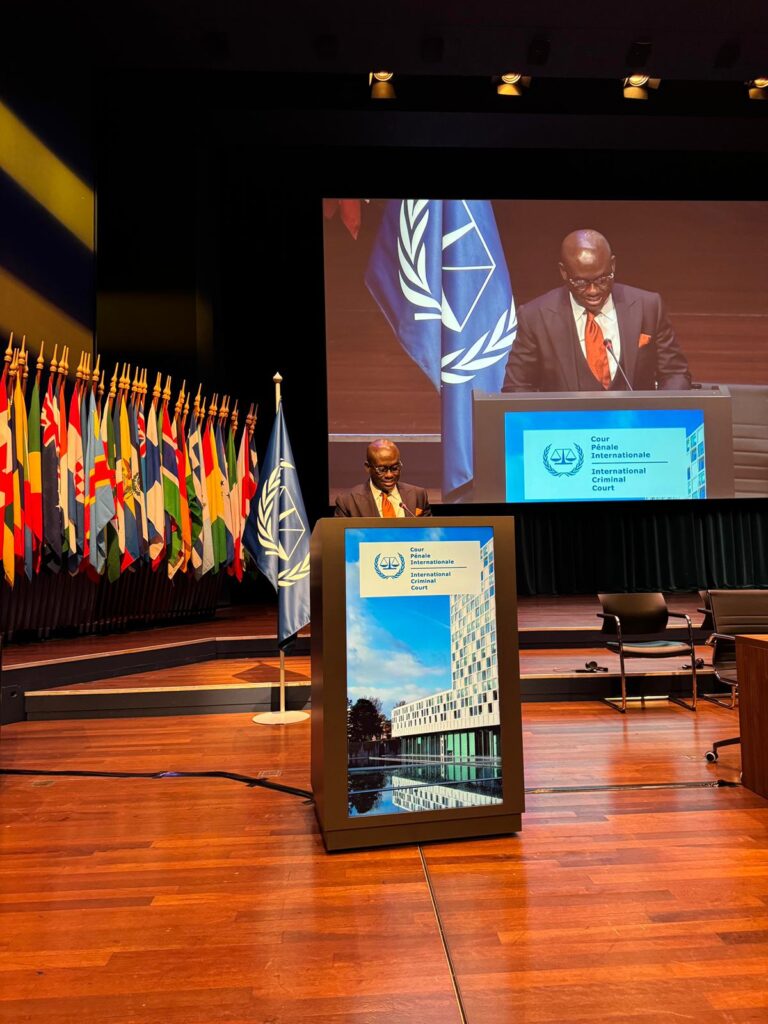
    He noted that Ghana believes “the best form of support for the ICC is by African nations consolidating democracy in their jurisdictions and avoiding conditions suggestive of impunity calling for the intervention of the ICC.”

    Additionally, Mr. Dame called for fairness and equity in ICC staff recruitment, ensuring a wide geographical and gender balance while maintaining high standards of efficiency, competence, and integrity.

    “This will no doubt give equal opportunity to competent nationals of all States Parties to bring their varied experiences and perspectives to bear at the Court to enhance institutional efficiency while ensuring impartiality in the workings of the Court,” he explained.

    He expressed optimism for implementing the Moratorium on Recruitment of candidates from Non-States Parties and the new Tenure Policy of the Court, adding, “In this respect, we look forward to the effective implementation of the Moratorium on Recruitment of candidates from Non-States Parties and the new Tenure Policy of the Court.”

    During his delivery, Mr. Dame congratulated Ambassador Päivi Kaukoranta and the Bureau for their leadership of the States Parties, acknowledging their efforts throughout the year.

    He also highlighted the ICC’s collaboration with the Africa Centre of International Criminal Justice (ACICJ) at the GIMPA Law School in Ghana. Established in May 2017, the Centre promotes international criminal law and justice in Africa and globally through research, capacity-building, and advocacy.

    The Attorney-General noted the visits of ICC President Piotr Hofmanski to the Centre in September 2022 and ICC Prosecutor Karim Khan in October 2024, where the latter delivered the Third Eminent Lecture on International Criminal Justice.

    Mr. Dame led Ghana’s delegation, which included Ghana’s Ambassador to the Netherlands, Francis Danti Kotia, and Deputy Head of Mission, Yaowi Senalor.

    The Twenty-Third Session of the Assembly of States Parties (ASP) to the Rome Statute of the International Criminal Court (ICC) in The Hague is scheduled to conclude on December 7, 2024.

  • Australian soldier loses war crimes defamation case

    Australian soldier loses war crimes defamation case

    Ben Roberts-Smith, Australia’s most-decorated living soldier, has faced a historic defeat in a defamation case against three newspapers.

    The publications had accused him of war crimes committed in Afghanistan, specifically the killing of unarmed prisoners.

    This civil trial marked the first instance in which a court assessed allegations of war crimes by Australian forces. Judge Anthony Besanko ruled that four out of the six murder allegations, which Roberts-Smith vehemently denied, were substantially true.

    However, the newspapers failed to prove additional claims of assault against a woman with whom he was involved and threats made to a junior colleague regarding falsifying field reports. Nevertheless, allegations of bullying were upheld.

    It’s important to note that Roberts-Smith has not been charged or found guilty in a criminal court, where a higher burden of proof applies. Despite his decorated military career, including being awarded the Victoria Cross, his public image was tarnished by reports published in 2018 by The Sydney Morning Herald, The Age, and The Canberra Times, highlighting alleged misconduct between 2009 and 2012.

    Roberts-Smith argued that five of the reported killings occurred legally during combat, while disputing the existence of the sixth. The ruling by Justice Besanko upheld the newspapers’ reporting on four murders but did not find evidence to support two of the allegations.

    These included:

    • A handcuffed farmer the soldier had kicked off a cliff – a fall which knocked out the man’s teeth, before he was subsequently shot dead
    • A captured Taliban fighter who was shot at least 10 times in the back, before his prosthetic leg was taken as a trophy and later used by troops as a drinking vessel
    • Two murders which were ordered by Mr Roberts-Smith to initiate or “blood” rookie soldiers.

    Outside court, the outlets called the judgement a “vindication” for their reporting.

    Investigative reporter Nick McKenzie – who wrote the stories alongside Chris Masters and David Wroe – summed it up in one word: “justice”.

    “It’s a day of justice for the brave men of the SAS who stood up and told the truth about who Ben Roberts-Smith is: a war criminal, a bully and a liar.”

    “[And] today is a day of some small justice for the Afghan victims of Ben Roberts-Smith.”

    The case was dubbed by some as “the trial of the century”, lasting 110 days and rumoured to have cost up to A$25m ($16.3m, £13.2m).

    More than 40 witnesses – including Afghan villagers, a government minister and a string of pseudonymised current and former SAS soldiers – gave extraordinary and at times bizarre evidence about every facet of Mr Roberts-Smith’s life.

    There was talk of laptops burned in backyards and classified information buried inside a child’s pink lunchbox, as well as damaging testimony from a private investigator, Mr Roberts-Smith’s ex-wife, and his ex-girlfriend.

    But the case also exposed some of the inner workings of Australia’s top special forces. The trial heard from soldiers who said any potential misconduct was rarely reported due to a “code of silence” within the regiment, while others defended their actions as necessary.

    Defence Minister Richard Marles declined to comment on the case, because it is a civil matter.

    But war historian Peter Stanley told the BBC ahead of the judgement that the case was “a litmus test” for allegations of Australian wrongdoing in Afghanistan.

    “The Ben Roberts-Smith episode is just a precursor to the major series of war crimes investigations, allegations, prosecutions, and possibly convictions that we’ll see over the next few years.”

    A landmark report in 2020 found credible evidence that Australian forces had unlawfully killed 39 civilians and prisoners in Afghanistan from 2007 to 2013.

    Three years on, local media has said that more than 40 soldiers are being investigated for their roles in alleged war crimes. But so far charges have only been laid against one, Oliver Schulz.

  • Sudan hospital strikes potential war crimes

    Sudan hospital strikes potential war crimes

    Data obtained by BBC News Arabic, has it that both parties in Sudan’s conflict may be committing war crimes against medical facilities and personnel.

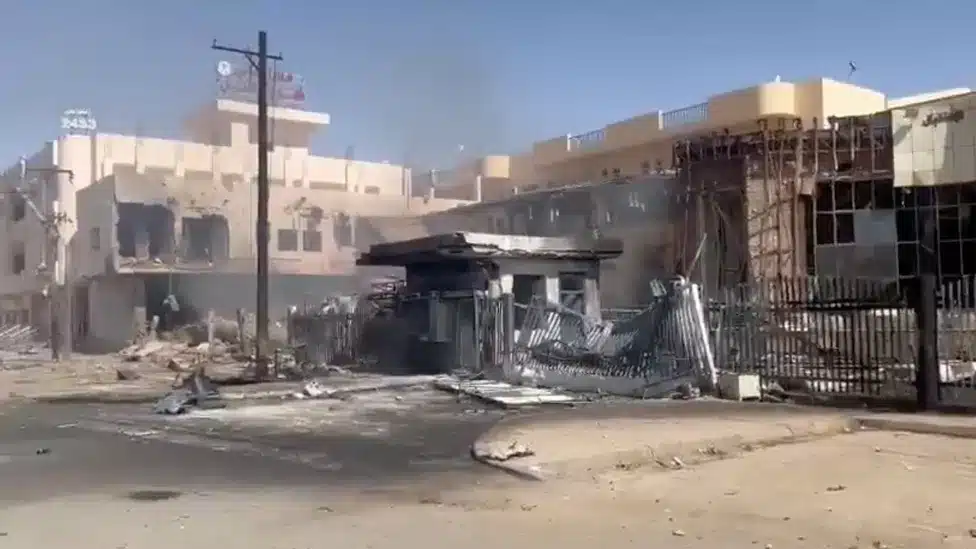
    Hospitals have been hit by airstrikes and artillery fire while patients were still in the building and doctors have also been singled out for attack – all of which are potential war crimes.

    Only a handful of the 88 hospitals in the capital, Khartoum, remain open after weeks of fighting, according to Sudan’s Doctors Union.

    The BBC team used satellite data and mapping tools, analysed user-generated content on a huge scale, and spoke to dozens of doctors, to build a picture of how hospitals and clinics are being affected.

    The World Health Organization (WHO) called the attacks “a flagrant violation of international humanitarian law” adding that they “must stop now”.

    The fighting in Sudan began on 15 April and was triggered by a power struggle between former allies – the leaders of the regular army and the paramilitary Rapid Support Forces (RSF).

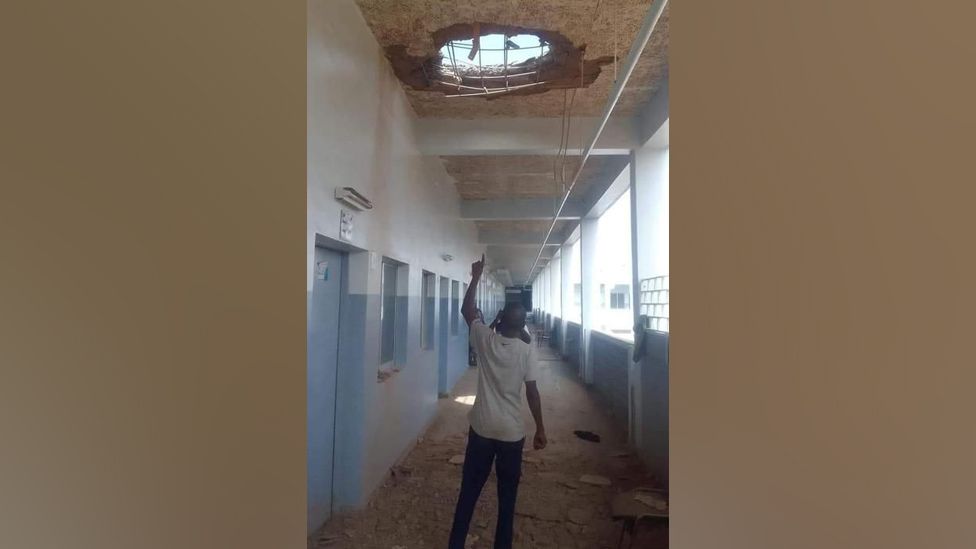
    Khartoum’s Ibn Sina hospital is one of a number the BBC has identified as having been targeted in an airstrike or by artillery fire when medics were treating civilian patients.

    Dr Alaa is a surgeon at the hospital and was present when the attack happened on 19 April.

    “There wasn’t any warning. Ibn Sina hospital where I worked was hit by three bombs, while a fourth bomb hit the nurses’ house which was entirely set on fire,” he said.

    Interior of damaged hospital
    Image caption,An image from inside Ibn Sina hospital shows the damage there after an attack

    Christian de Vos, an international criminal law expert with NGO Physicians for Human Rights, says this could be classed as a war crime.

    “The duty to warn of any impending airstrike to ensure… that all civilians are able to evacuate a hospital prior to an airstrike – that is very clear under the laws of war,” he said.

    Looking at the images of the attack, forensic weapons expert Chris Cobb-Smith said it could have been caused by artillery fire.

    Uncertainty over the kind of weapon used means it is hard to be sure which side was responsible, or whether this was a targeted attack.

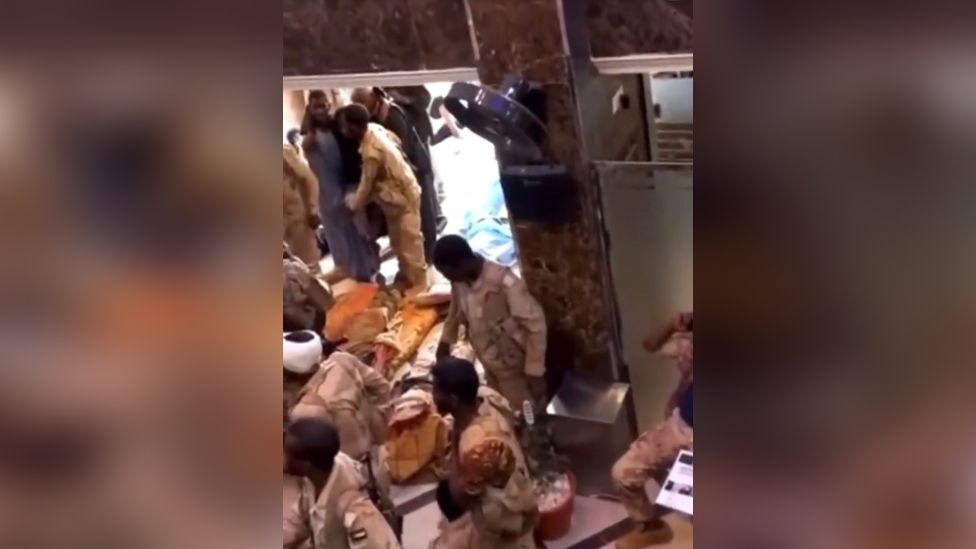
    Soldiers seen inside a hospital
    Image caption,A still taken from a video appears to show RSF fighters entering Khartoum’s Al Saha hospital

    Another medical facility hit was the East Nile hospital – one of the last operating in that part of the capital.

    The BBC has seen evidence of RSF fighters surrounding it with their vehicles and anti-aircraft weapons.

    There have been reports of patients being forcibly evacuated from the building. But we have also spoken to witnesses who say civilians continued to be treated alongside the RSF soldiers.

    On 1 May, a public area next to the East Nile hospital was hit by a Sudanese army airstrike. There was no warning, according to sources the BBC has spoken to.

    Five civilians died in that attack.

    There was a further airstrike two weeks later but there has been no independent confirmation of the number of injured.

    The WHO has reported that nine hospitals have been taken over by fighters from one side or the other.

    “The preferential treatment of soldiers over civilians [is] not an appropriate use of a medical facility and it may well constitute a violation of the laws of war,” Mr De Vos said.

    A political advisor to the RSF, Mostafa Mohamed Ibrahim, denied that they were preventing the treatment of civilians. He told the BBC: “Our forces are just spreading… they are not occupying and don’t stop civilians from being treated in these hospitals.”

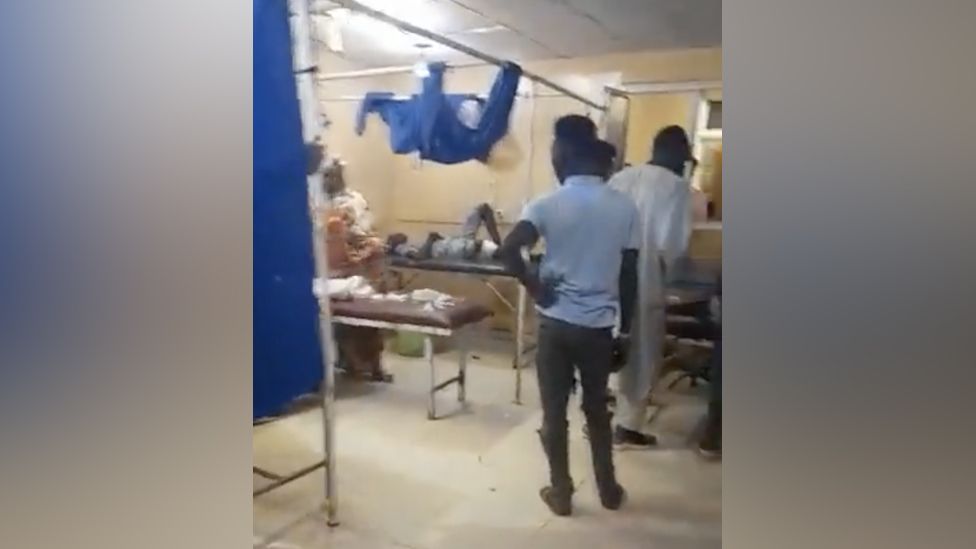
    The view inside a hospital
    Image caption,The fighting has made it increasingly difficult for civilian patients to be treated

    The Sudanese army did not provide a response to this investigation’s findings.

    There is also evidence of another potential war crime – the targeting of doctors.

    The BBC has seen social media messages threatening doctors by name, even sharing their ID number. The messages accuse them of supporting the RSF and receiving money from abroad.

    In a widely circulated video, Major-General Tarek al-Hadi Kejab from the Sudanese army said: “The so-called central committee of doctors, should be named the committee of rebels!”

    Sudanese doctors’ organisations have been monitoring threats which they say are coming from both sides and the BBC has spoken to doctors who have gone into hiding.

    “We know that this is a tactic that is used in wars, for pressure, that is illegal in all international laws. Unfortunately, this has pushed medical staff into a propaganda war – between the RSF and the Sudanese army,” said Dr Mohamed Eisa from the Sudanese American Physicians Association.

    Doctors around the world have been calling for an end to the targeting of their colleagues.

    At a conference in London last week, Sudan’s Doctors for Human Rights said medical staff had been killed, ambulances targeted and hospitals forced to close their doors.

    Dr Ahmed Abbas said: “We’re gathering all the evidence of these transgressions, which are crimes against humanity and war crimes, and this could be presented to international judicial authorities, or national authorities in Sudan.”

  • Senior US general says Russian attacks on civilians constitute war crimes

    The top United States general has condemned Russian missile strikes on Ukraine that killed civilians, suggesting they met the definition of war crimes under the international rules of war.

    “Russia has deliberately struck civilian infrastructure with the purpose of harming civilians,” Army General Mark Milley, chairman of the Joint Chiefs of Staff, said at NATO headquarters in Brussels.

    “They have targeted the elderly, the women, and the children of Ukraine,” he said. “Indiscriminate and deliberate attacks on civilian targets is a war crime in the international rules of war.”