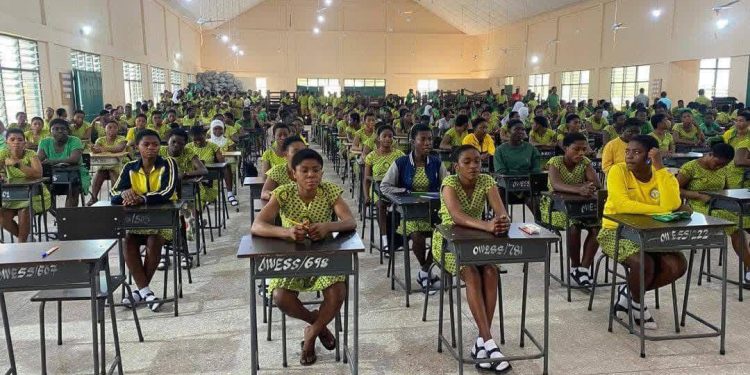
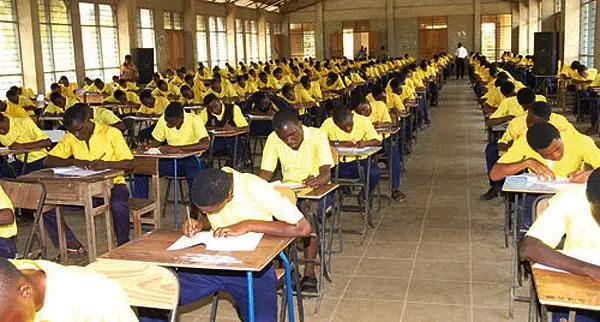
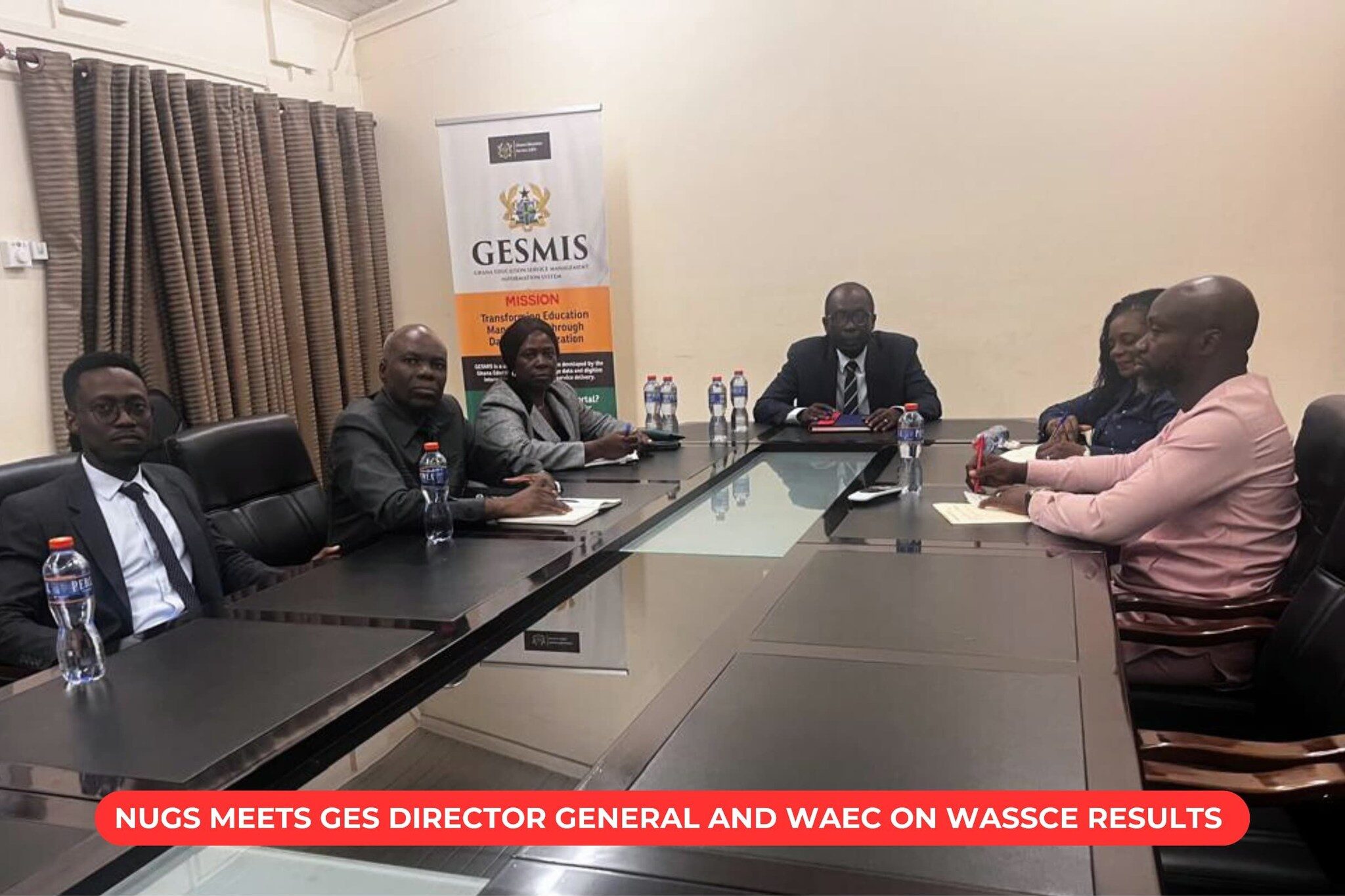
Between 313,000 and 328,000 students applied for Category A Senior High Schools (SHSs), according to the Education Minister, Haruna Iddrisu.
Speaking to media on Saturday, September 12, Mr Haruna Iddrisu noted that this is a challenge as these category A schools have only about 76,000 available places.
He further noted that this figure accounts for more than half of the total student population enrolled on the Computerized School Selection and Placement System (CSSPS).
The non-placement of about 55,000 students has sparked anxiety among parents and students regarding their admission prospects.
But the Education Minister says measures are being implemented to address and resolve challenges associated with the CSSPS.
“I admit that we have a problem as a country. I am not interested in dealing with the symptoms; I want to deal with the real problems,” he said.
Challenges with CSSPS include issues ranging from unsuccessful placement and difficulties with school selection to requests to change placements from day to boarding and vice versa.
Some frustrated parents who spoke to the media on Wednesday, September 8, disclosed that, after failing to resolve their concerns in previous days, they had to spend the night at the facility and return at dawn to seek assistance.
According to a parent “I left home as early as 3 a.m. and got here at 4 a.m. The officials started work around 8 a.m. We were asked to write our reasons for changing from day to boarding. After collecting the forms, they told us to wait.I came early today and pleaded with them to attend to us. So I am still waiting”.
Meanwhile, candidates who obtained a grade 9 in English Language and/or Mathematics have been offered the opportunity to choose an available school themselves through the CSSPS.
Speaking at a press briefing on Monday, September 7, Deputy Minister for Education, Dr Clement Apaak, noted that the affected individuals are select schools and programmes with available vacancies through the CSSPS.
“Accordingly, candidates who obtain a score of 9 in either English Language or Mathematics or in both subjects will be allowed to access the self-placement system and select from schools and programmes with available vacancies. The objective is to ensure that no young person is unnecessarily left behind whilst maintaining the integrity of the placement and examination systems,” Dr Apaak said.
As per the provisional results released by the West African Examinations Council (WAEC) for the 2026 WASSCE for school candidates, a total of 74,692 candidates who sat for the exams obtained an F9 in Core Mathematics, representing 14.82 percent of the candidates who wrote the subject.
According to the results, 306,234 candidates, representing 60.75 percent, obtained grades between A1 and C6 in Core Mathematics. This means that while more than half of the candidates obtained credit passes in the subject, a significant number failed to achieve a passing grade.
Core Mathematics recorded the lowest A1-C6 performance among the four core subjects. In comparison, 315,094 candidates, representing 62.40 percent, obtained A1 to C6 in English Language, while 309,605 candidates, representing 62.08 percent, recorded grades between A1 and C6 in Integrated Science.
Social Studies recorded the highest performance, with 393,918 candidates, representing 78.04 percent, obtaining grades from A1 to C6.
Core Mathematics also recorded a high number of F9 grades compared with the other core subjects.
Integrated Science recorded 76,136 F9 grades, representing 15.27 percent, slightly higher than the 14.82 percent recorded in Core Mathematics.
In English Language, 55,940 candidates, representing 11.08 percent, obtained F9, while Social Studies recorded the lowest F9 figure, with 39,416 candidates, representing 7.81 percent.
Every organisation operates with limited resources. CEOs therefore have a responsibility to ensure that capital is directed toward opportunities that support strategic priorities and generate appropriate returns.
Capital allocation involves difficult choices: where to invest, where to wait, and where to stop.
Strong CEOs treat capital as a strategic resource rather than simply a financial resource.
Review one major investment and ask whether it remains the best use of the organization’s capital today.
Why This Matters?
Disciplined capital allocation strengthens returns, resilience, and long-term enterprise value.
About the Author
Ernest De-Graft Egyir, CEO advisor, Thought Leader and Founding CEO of Chief Executives Network Ghana, convenes the Ghana CEO Summit and has served on Ghana’s Economic Dialogue Planning Committee.
Several recruits have been sent home from security services training schools for submitting doctored WASSCE results for admission. The Interior Minister, Muntaka Mubarak Mohammed, disclosed this while speaking at a ceremony to open new classroom facilities at the Asokore Mampong Roman Catholic School.
Ghana’s security services include the Police, Prisons, Immigration, Fire Service, Narcotics Control Commission and the Ghana Armed Forces. According to him, the recruits were identified after the West African Examinations Council (WAEC) conducted a thorough verification of their results and found them to be fraudulent.
“It’s so shocking that a lot of people forged their results. I don’t know how they think that they will be employed in the Police, Prisons, Immigration, Fire Service, Narcotics Control Commission, or Armed Forces, and the certificate you present won’t be checked,” he said.
“As we speak, many have been dismissed from the training because they have doctored their results slips,” he added, warning prospective applicants to ensure they meet the required qualifications before applying to join any of the security services,” he added.
The recruitment exercises into the Ghana Police Service, Ghana Prisons Service, Ghana National Fire Service, and the Ghana Immigration Service began in November, 2025.
The exercise was grouped into five stages; online application, documentation, body selection, aptitude test and medical examination.
In March, government made a U-turn regarding the number of personnel to be recruited into the country’s security services.
Originally, 20,000 personnel were expected to be recruited, but this has now been increased to 40,000. These recruits will be deployed gradually from now until 2029.
President Mahama, together with heads of security agencies, Interior Minister Mohammed Muntaka Mubarak, and Acting Defence Minister Cassiel Ato Forson, reviewed and approved the decision on Monday, March 16.
According to a press release by the presidency indicated, “Following a briefing on the process, the President has directed that the number of men and women to be recruited to the various security agencies should be increased from twenty-thousand (20,000) to forty thousand (40,000) over a four year period”.
Present at the meeting were the Chief of Staff, Secretary to the President, Senior Presidential Advisor on Governmental Affairs, National Security Coordinator, Inspector General of Police, Director General Prisons, Director General Fire Service, Comptroller-General of the Ghana Immigration Service and the Director General of the Narcotics Control Commission.
Meanwhile, the government’s ongoing recruitment into Ghana’s security services continues to dominate discussions in Parliament and among scores of Ghanaians. However, the Minority in parliament has pressed the government to refund about GH¢113 million of registration fees collected from applicants who failed to progress to the medical screening stage.
Most applicants were dropped from the recruitment process, which began last year, after failing an online aptitude test organised by the government.
The online test which was confronted with a lot of challenges, according to reports, was generated using artificial intelligence (AI).
In a media engagement on Wednesday, March 11, the Interior Minister, Mubarak Mohammed Muntaka, revealed that the government will only employ only 5,000 individuals out of the 105,000 applicants who have made it to the last stage.
He further disclosed that about 500,000 applications were submitted by Ghanaian youth. “Are you going to allow over 400,000 people to go and do medicals when you know you have space for only 5,000? How fair are you to the people? You need to devise a method to slow down the numbers and have a reasonable figure.
“So at 65, as we speak, we still have 105,000 that have qualified for medicals when in actual sense the total number that we can now take after medicals is 5,000,” he added.
Speaking at a press briefing on Wednesday, March 10, Mr. Muntaka explained that authorities set the pass mark for the recruitment examinations at 65 to control the number of candidates progressing to the medical stage.
Reacting to the Interior Minister’s revelation, the Minority of Parliament has called the entire recruitment process a Ponzi scheme to extort from suffering youth.
The caucus has questioned why the government would accept applications from half a million persons when it intends to employ a small number.
With immediate effect, the Minority in Parliament has pressed the government to refund monies collected from the affected applicants.“Already, we have a national security threat and unemployment on our hands. You promised them jobs. You didn’t add any conditions. Then you turn around, you politically expand the age limit from twenty-five to thirty-five, signaling that there is more room and more access, more financial clearance, which was a lie.
“You knew from the very beginning you were recruiting only 5,000, and yet you did all this to lure half a million people, took their money, milked them GH¢113 million cedis and over, only to turn around yesterday, after you have knocked them out by technology and internet disruptions from the aptitude test,” he said.
The development has left scores of Ghanaians, particularly affected applicants, criticising the government. Some unsuccessful applicants say they answered the questions without engaging in examination malpractice, yet failed the test, while others who allegedly outsmarted the system have qualified.
Prior to the test, the Ministry of the Interior Ghana warned applicants against cheating, stating that the system used for the online aptitude test had been designed to detect and disqualify individuals who attempted any form of malpractice.
Some applicants have also recounted how they purchased recruitment forms for multiple security agencies, including the Ghana Police Service, Ghana Prisons Service, Ghana National Fire Service, and the Ghana Immigration Service, but were denied the opportunity to proceed after failing the aptitude test.
Under the recruitment guidelines, applicants who fail the aptitude test are automatically eliminated from the process, regardless of the number of forms purchased, since only one test is taken for all the security agencies. Others have also disclosed that although they initially qualified for the test, they were later disqualified after revisiting their recruitment portals.
Despite the frustrations expressed by many disqualified applicants, the Interior Minister, Mubarak Mohammed Muntaka, maintains that the recruitment exercise has been free and fair, unlike those organised by previous governments.
He explained that the government introduced a third-party aptitude test with a pass mark of 65% as a measure to manage the large number of applicants.
Meanwhile, some grassroots members of the National Democratic Congress (NDC) who were disqualified from the process have expressed disappointment in the government. They claim the administration has turned its back on them despite their role in helping the party return to power.
However, the Minister indicated that the recruitment process will not end this year. According to him, applicants who successfully pass the medical examination but are unable to secure placement this year will be considered for employment in the following year.
“I know a lot of young people may be disappointed, but they should exercise restraint as this is not going to be the first and last recruitment that the government is going to have,” the Minister noted.
Recruitment into Ghana’s security services has frequently been criticised as a process susceptible to corruption, with reports alleging that some individuals pay substantial sums of money to secure positions within agencies such as the Ghana Police Service, Ghana Prisons Service, Ghana National Fire Service, and the Ghana Immigration Service.
The provisional results of the 2026 West African Senior School Certificate Examination (WASSCE) have been released by the West African Examinations Council (WAEC).
Candidates can now access their results online and begin calculating their provisional aggregates for tertiary admission applications. To check your results, you will need a valid WASSCE Result Checker containing a serial number and PIN. A result checker can be purchased by dialling *713*3998# or by visiting buycheckercodes.com.gh.
After purchasing the checker, proceed to the official WAEC results portal at https://ghana.waecdirect.org/ and enter your Index Number, examination details, serial number, and PIN to access your results.
How Is the WASSCE Aggregate Calculated?
Once you have viewed your grades, you can calculate your provisional WASSCE aggregate following the guide below.
Step 1: Know Your Grade Points
Before you can add anything, you need to convert your letter grades (like A1 or C6) into numbers. The WASSCE grading system uses a standard scale:
Step 2: Choose Three Relevant Core Subjects
For many university programmes, the three core subjects usually include:
English Language
Core Mathematics
Integrated Science or Social Studies, depending on the programme
Check the admission requirements of your preferred university to know which core subjects apply.
Step 3: Choose Three Relevant Elective Subjects
Select the three elective subjects required for the programme you want to study.
Do not simply choose your best three electives if they are not relevant to your intended course.
Step 4: Add the Six Grade Points
Add the points for your three relevant core subjects and three relevant elective subjects.
For example:
English Language — B3 = 3
Core Mathematics — B2 = 2
Integrated Science — C4 = 4
Elective 1 — B2 = 2
Elective 2 — B3 = 3
Elective 3 — C4 = 4
Your aggregate will be:
3 + 2 + 4 + 2 + 3 + 4 = Aggregate 18
Generally, the lower your aggregate, the better your overall score.
Check the Requirements of Your Preferred University
Your calculated aggregate should therefore be treated as a provisional estimate. Before submitting an application, check the official admission requirements of the university and programme you intend to pursue.
If your aggregate is higher than the cut-off for your first-choice programme, you may still have other options, including considering related programmes with different entry requirements or improving specific grades through a future WASSCE for Private Candidates examination.
The release of the 2026/2027 Computerized School Selection and Placement System (CSSPS) results, initially scheduled for Monday, August 31, has been postponed to Friday, September 4.
According to the Ministry of Education, the rescheduling follows calls from parents, guardians, students, and Heads of Schools for additional time to submit students’ data to the platforms of the West African Examinations Council (WAEC) and the CSSPS.
The Ministry’s data shows that Heads of Schools, parents, or guardians have yet to upload the school choices of approximately 20,000 qualified students onto the CSSPS platform.
The CSSPS platform has been designed to allow Junior High School (JHS) graduates to secure placement in Senior High Schools (SHS), as well as Technical and Vocational Education and Training (TVET) institutions.
Meanwhile, the West African Examinations Council (WAEC) has withheld the subject results of 2,722 candidates from 229 schools who sat for the 2026 Basic Education Certificate Examination over their alleged involvement in examination malpractice. In addition, WAEC has cancelled the results of 601 candidates for engaging in various forms of examination malpractice. This information was contained in a press statement signed by Head of Public Affairs John K. Kapi on Wednesday, July 29.
SOE sector records GHS19.8bn net profit in 2025, ending a 4-year cycle of losses -SIGA reports.#TIG#TIGNEWS Bompata | Tamale SHS | Kumasi | Chimsom | Accra Sports Stadium pic.twitter.com/BPnmqDDWwU
According to WAEC, the new development was approved at the 37th Meeting of the Final Awards and Examiners’ Appointment Committee for the BECE, held on July 21. The release of the results will pave the way for the placement of successful candidates into Senior High Schools (SHS) across the country.
The Minister assured the public that he would not interfere in the work of the assessment body. “As I’ve always indicated as Minister, I don’t interfere with the work of assessment institutions like WAEC. It is within their domain,” Mr Iddrisu said.
The Minister acknowledged the challenges parents and students face during the school placement process, particularly due to limited infrastructure and the growing demand for senior high school education.
While conceding that available resources have not been sufficient to tackle the issue in its entirety, he stressed that the government is pursuing measures to bridge the gap. Among these measures is the Sustainable Development for Improved Access to Tertiary Education and Jobs (STAR-J) project, which seeks to strengthen and expand infrastructure within the education sector.”Justifiably so, in truth, we have not had the resources to respond head-on to this challenge. To resolve it, we need adequate resources to expand infrastructure by way of classroom blocks and other educational facilities,” he said.
Mr Iddrisu appealed for patience as the government works to improve the placement system. “You may have to give me another year, then I’ll be better off in resolving the school placement issues,” he said.
According to him, the government is undertaking a review of the Computerised School Selection and Placement System (CSSPS) to strengthen accountability and ensure that school placements are awarded on merit, eliminating opportunities for favouritism and external interference. “We have had to set up a review committee of the placement system itself and subject it to scrutiny. Does it respect merit? Is it influenced by favouritism? Are politicians taking advantage of it to reward protocol rather than merit?” he stated.
According to him, reforms are being introduced to ensure that parents and students make school choices based on actual results. “We intend to run an open, transparent placement system,” he said.
The Minister added that under the new arrangement, BECE candidates will select schools only after their results have been released, allowing them to make informed decisions based on their grades.
“Parents, take note: based on the aggregate of your son or daughter, you will know where your child belongs,” he said.
In early July, the Ghana Education Service (GES) revealed that this year’s BECE candidates would begin selecting their senior high schools from July 20 to August 7. The education authority disclosed this in a notice dated July 6, announcing a nationwide training and sensitisation exercise on the 2026 School Selection Guidelines and Placement Procedures.
GES further announced that the school selection process for BECE candidates would commence while the sensitisation exercise was ongoing. “Please note that BECE candidates will start selecting their schools from Monday, July 20, to Friday, August 7, 2026,” it stated.
The statement further invited regional and metro/municipal/district directors of education to attend a training and sensitisation exercise on the 2026 School Selection Guidelines and Placement Procedures at their respective regional education offices.According to the statement, the exercise is aimed at preparing education directors to effectively supervise the school selection and placement process.
The Service noted that the nationwide exercise was scheduled to take place from Wednesday, July 15, to Tuesday, July 28, 2026.
“This training and sensitisation exercise is intended to provide deeper insight into the selection guidelines and enable you to offer effective oversight throughout the exercise,” the statement said.
The West African Examinations Council (WAEC) has withheld the subject results of 2,722 candidates from 229 schools who sat for the 2026 Basic Education Certificate Examination (BECE) over their alleged involvement in examination malpractice. In addition, WAEC has cancelled the entire results of 601 candidates for engaging in various forms of examination malpractice.
This information was contained in a press statement signed by Head of Public Affairs John K. Kapi on Wednesday, July 29.
According to WAEC, the new development was approved at the 37th Meeting of the Final Awards and Examiners’ Appointment Committee for the BECE, held on July 21.
The release of the results will pave the way for the placement of successful candidates into Senior High Schools (SHS) across the country.
The Minister assured the public that he would not interfere in the work of the assessment body.
“As I’ve always indicated as Minister, I don’t interfere with the work of assessment institutions like WAEC. It is within their domain,” Mr Iddrisu said.
The Minister acknowledged the challenges parents and students face during the school placement process, particularly due to limited infrastructure and the growing demand for senior high school education.
While conceding that available resources have not been sufficient to tackle the issue in its entirety, he stressed that the government is pursuing measures to bridge the gap. Among these measures is the Sustainable Development for Improved Access to Tertiary Education and Jobs (STAR-J) project, which seeks to strengthen and expand infrastructure within the education sector.
“Justifiably so, in truth, we have not had the resources to respond head-on to this challenge. To resolve it, we need adequate resources to expand infrastructure by way of classroom blocks and other educational facilities,” he said.
Mr Iddrisu appealed for patience as the government works to improve the placement system.
“You may have to give me another year, then I’ll be better off in resolving the school placement issues,” he said.
According to him, the government is undertaking a review of the Computerised School Selection and Placement System (CSSPS) to strengthen accountability and ensure that school placements are awarded on merit, eliminating opportunities for favouritism and external interference.
“We have had to set up a review committee of the placement system itself and subject it to scrutiny. Does it respect merit? Is it influenced by favouritism? Are politicians taking advantage of it to reward protocol rather than merit?” he stated.
According to him, reforms are being introduced to ensure that parents and students make school choices based on actual results.
“We intend to run an open, transparent placement system,” he said.
The Minister added that under the new arrangement, BECE candidates will select schools only after their results have been released, allowing them to make informed decisions based on their grades.
“Parents, take note: based on the aggregate of your son or daughter, you will know where your child belongs,” he said.
Meanwhile, in early July, the Ghana Education Service (GES) revealed that this year’s BECE candidates would begin selecting their senior high schools from July 20 to August 7.
The education authority disclosed this in a notice dated July 6, announcing a nationwide training and sensitisation exercise on the 2026 School Selection Guidelines and Placement Procedures.
GES further announced that the school selection process for BECE candidates would commence while the sensitisation exercise was ongoing.
“Please note that BECE candidates will start selecting their schools from Monday, July 20, to Friday, August 7, 2026,” it stated.
The statement further invited regional and metro/municipal/district directors of education to attend a training and sensitisation exercise on the 2026 School Selection Guidelines and Placement Procedures at their respective regional education offices.
According to the statement, the exercise is aimed at preparing education directors to effectively supervise the school selection and placement process.
The Service noted that the nationwide exercise was scheduled to take place from Wednesday, July 15, to Tuesday, July 28, 2026.
“This training and sensitisation exercise is intended to provide deeper insight into the selection guidelines and enable you to offer effective oversight throughout the exercise,” the statement said.
A statement purported to be from the West African Examination Council (WAEC) was trending online yesterday following the devastating floods that wrecked major parts of Accra on Monday, June 29.
Homes, communities, market centres and shops were heavily flooded, with affected victims still counting their losses.
In the statement, which was shared yesterday and sourced to WAEC, it claimed that some of the examination papers of the just-ended West African Senior Secondary Council Examination (WASSCE) had been swept away.
Consequently, the Ghana Education Service is considering the option of allowing the affected students to rewrite and would communicate a revised examination timetable and further details in due course.
However, GES has described the circulating statement as fake and urged the public to disregard it.
The Service also called on the public to verify information before sharing it, advising students, parents and other stakeholders to rely only on official GES communication channels for updates.
Meanwhile, the Ghana Education Service (GES) announced that Ghana will rejoin the international West African Senior School Certificate Examination (WASSCE), starting from the May/June 2026 examination cycle.
In 2020, the Akufo-Addo-led administration introduced the “Ghana-only WASSCE” under the then Education Minister, Yaw Osei-Adutwum. In the last five years, Ghanaian Senior High School candidates sat a localised version of the West African Senior School Certificate Examination (WASSCE), separate from the international May/June exams written by Nigeria, Sierra Leone, Liberia, and The Gambia.
Also, it was reported that, due to COVID-19, which became a global pandemic, Ghana adjusted its exam calendar to fit its own reopening schedule for schools, which differed from other WAEC member countries.
At the time, the government explained that the move was to deal with cross-border leakages of exam papers, which were undermining credibility. By isolating Ghana’s exam, they could better control distribution and monitoring.
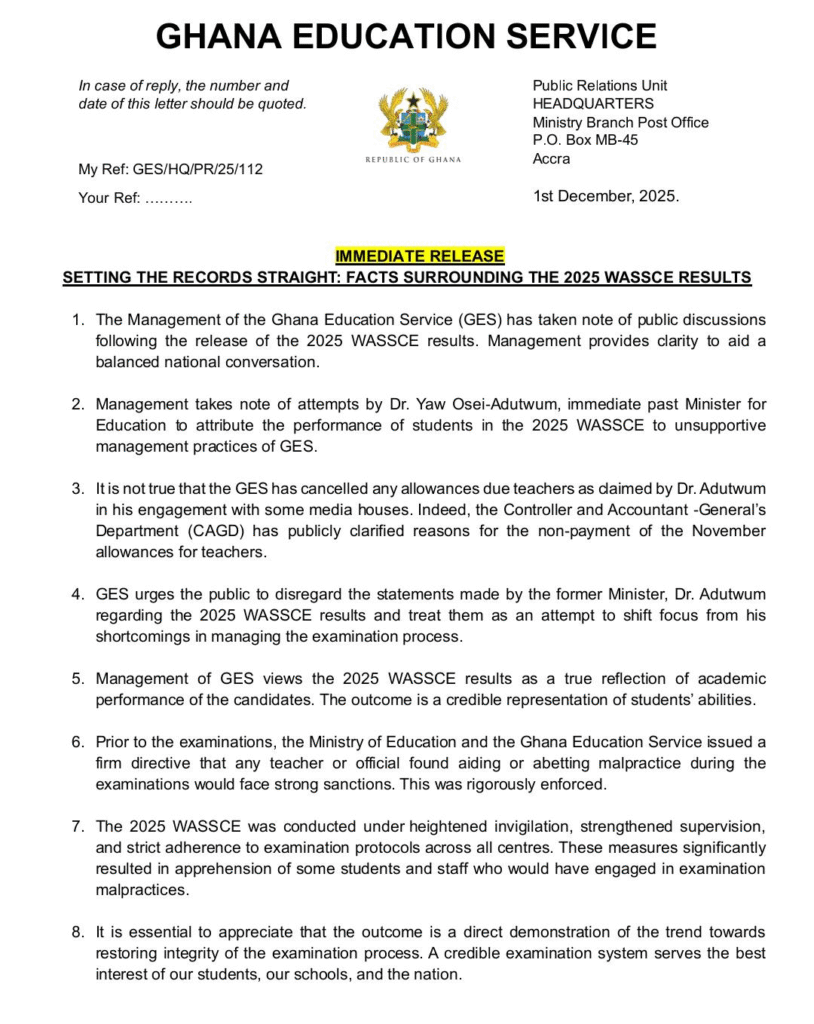
However, following the release of the 2025 provisional results by the education regulator, GES announced in a statement dated December 1, explaining facts surrounding the 2025 WASSCE results.
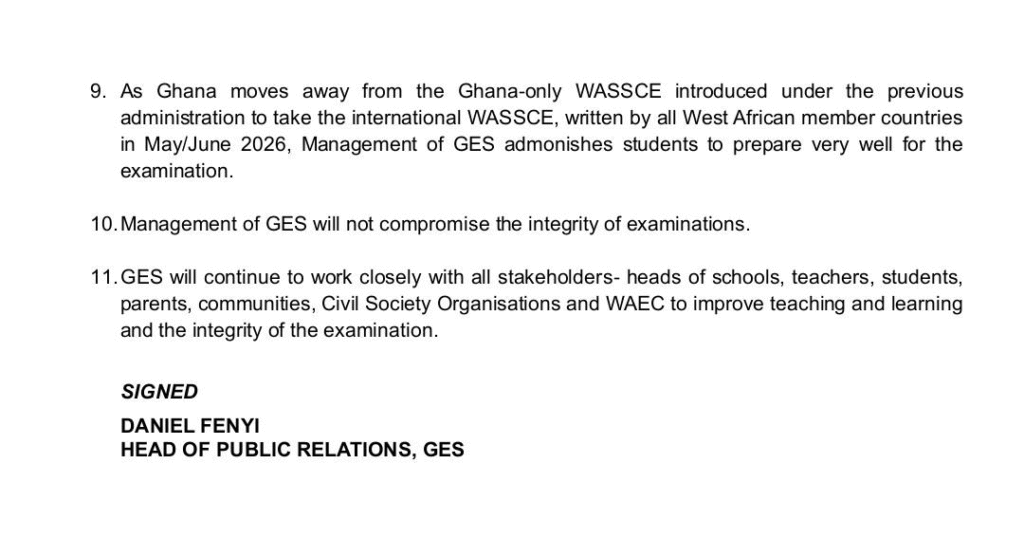
The statement revealed that: “As Ghana moves away from the Ghana-only WASSCE introduced under the previous administration to take the international WASSCE, written by all West African member countries in May/June 2026…”
Consequently, it urged candidates to adequately prepare for the exams in the coming year, as it seeks to adopt the necessary measures to uphold the integrity of the exams without compromise.
“…the Management of GES admonishes students to prepare very well for the examination. Management of GES will not compromise the integrity of examinations. GES will continue to work closely with all stakeholders, heads of schools, teachers, students, parents, communities, Civil Society Organisations, and WAEC, to improve teaching and learning and the integrity of the examination,” parts of the statement read.
While GES, in its statement, didn’t explain the reason behind the return to the international WASSCE in 2026, according to WAEC, students in all five member countries write the same WASSCE because it ensures uniform standards of assessment, comparability of results, and credibility across the sub-region.
It also helps students move freely across any of the West African countries to pursue higher education using their exam certificates and, later, even secure job opportunities since their certificates are recognized equally.
Meanwhile, GES’ statement wasn’t only intended to announce the return to the international WASSCE next year, but also to address some remarks made by the former Education Minister, Dr. Adutwum, when the 2025 WASSCE results were released.
Dr. Adutwum, in reaction to the abysmal performance by the students, particularly across the four core subjects, blamed the government. According to reports, Dr. Adutwum suggested that “the performance of students in the 2025 WASSCE was due to unsupportive management practices of GES,” adding that the government’s cancellation of allowances for teachers is a contributory factor to the students’ performance.
2025 WASSCE performance
WAEC released the provisional results of the 2025 West African Senior Secondary Certificate Examination (WASSCE) on Saturday, November 29.
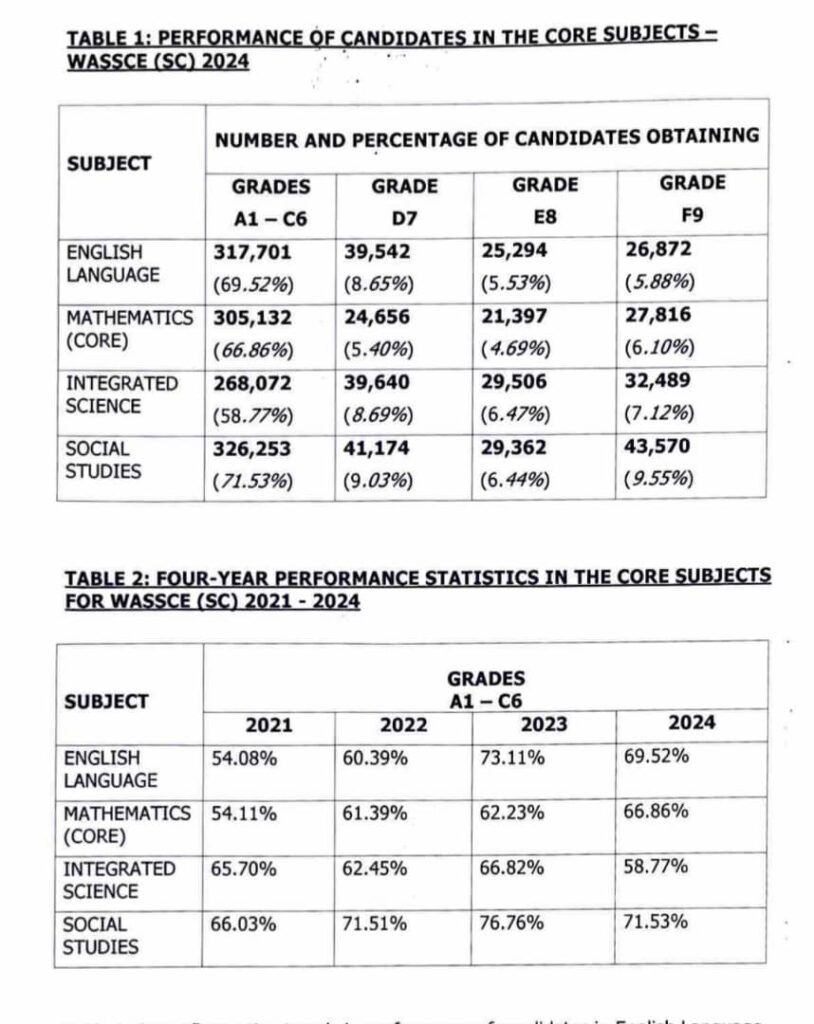
The results showed a massive surge in outright failure rates (Grade F9) across all four core subjects compared to the 2024 performance.
According to the provisional results released by WAEC, the percentage of students who failed Social Studies increased steeply from 9.55% in 2024 to 27.50% in 2025, representing a 188% increase.
The other core subjects, namely Integrated Science and English Language, also saw a doubling of their previous failure rates.
For Integrated Science, the failure rate increased by 8.93 percentage points; that is, the 2024 rate was 7.12%, and in 2025 it rose to 16.05%.
The failure rate for English Language also rose from 5.88% in 2024 to 12.86% in 2025. Core Mathematics recorded the sharpest decline, with the proportion of candidates who failed rising from 6.10% in 2024 to an alarming 26.77% in 2025, more than four times higher.
Consequently, only 48.73% of candidates achieved grades A1 to C6, a steep drop from the 66.86% recorded in 2024. In absolute terms, 209,068 candidates passed Core Mathematics, while 114,872 (26.77%) failed outright with an F9. Put simply
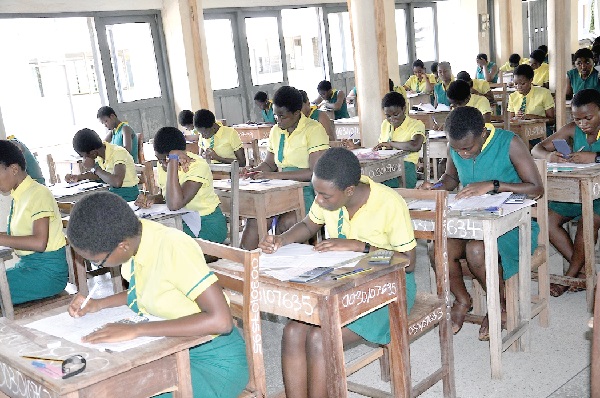
Bawku Senior High School (SHS) has been thrown into chaos after some final-year students allegedly assaulted a teacher. The assault, according to the Bawku Municipal Director of Education, Isaac Agbeko Azasoo, came after teachers prevented the students from engaging in examination malpractice in the ongoing West African Senior School Certificate Examination (WASSCE).
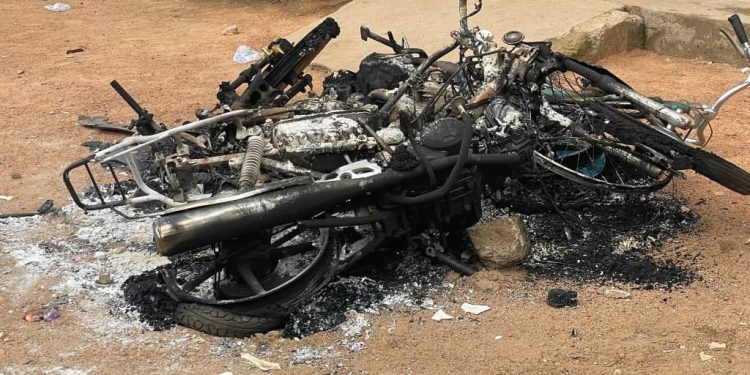
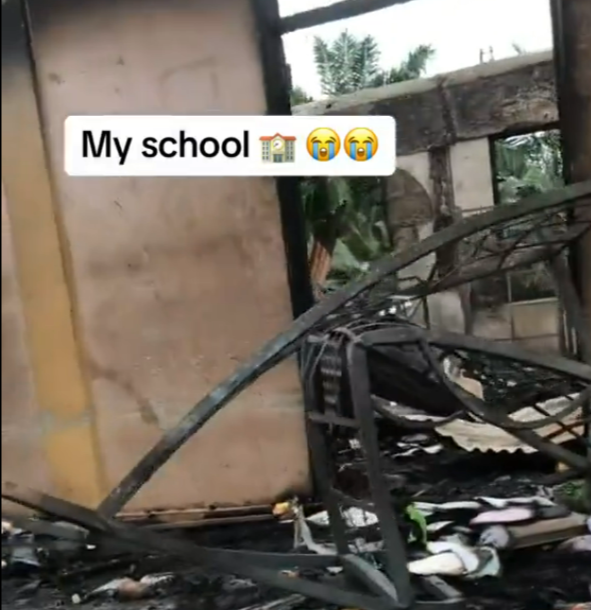
The incident resulted in the vandalisation of school facilities, destruction of staff personal belongings, burning of motorbikes, and damage to electricity meters, as well as parts of the school’s common market.
Giving details of the incident, the Bawku Municipal Director of the Ghana Education Service (GES), Isaac Agbeko Azasoo, noted that two teachers, one of whom is severely injured, have been referred to the Upper East Regional Hospital in Bolgatanga for further treatment.
He added, “Some of the students were not happy with the strict enforcement of examination regulations. They thought they were close to completing school and decided to vent their anger on some teachers. Properties belonging to both staff and the government have been destroyed”.
Meanwhile, calm has been restored at the school following the intervention of military personnel. In February this year, the Ministry of Education frowned upon the persistent assaults on teachers in some Senior High Schools (SHSs).
According to a press release issued by the Ministry of Education on Thursday, February 19, it has observed violent attacks on teachers by students, emphasizing that it is working to address the situation through stringent measures.
“The Ministry notes with grave concern incidents involving assaults on teachers and related acts of violence in schools across the country. We take strong exception to these developments and are determined to nip them in the bud. Perpetrators will face severe consequences under Ghanaian law,” parts of the release read.
President Mahama has condemned the rising attacks on teachers by students. His remarks come after a video capturing a group of final-year students from Kade Senior High School (SHS) ambushing and beating the teacher outside the school premises.
The teacher, identified as Mr. Michael Quayson, was attacked by the students while he was invigilating the WASSCE exam and strictly enforcing rules. The students slapped and struck him, allegedly using sticks and tree branches, while others recorded the attack.
Speaking on Monday, January 5, 2026, while addressing the Delegates Conference of the Ghana National Association of Teachers (GNAT) in Accra, Ghana, President Mahama highlighted the need for the students to be prosecuted and not allowed to go scot free. According to him, such acts are criminal, slamming the conduct of the students as an audacious “sense of entitlement”.
“Disciplinary action. I saw that video of, I think, a math teacher being beaten because, when he was invigilating, he refused to allow our children to cheat. They had a sense of entitlement and asked, “Why did you not allow us to cheat?”.I mean, how is that? This is assault. It’s criminal, you know, the President mentioned.President Mahama expressed his disdain about the case being settled out of legal proceedings.
“The unfortunate thing is that the matter went to the police station, and the parents of the students went to the police and said they had settled the matter amicably. But when we inquired, the police also said that the teacher was compensated, so he didn’t want to press charges anymore,” he added.
He recommended, “But I said, at least the children should have been booked. They should have been taken through the legal process. And at least, if nothing else, they should have been bonded to be of good behaviour for a period of time. Then we would believe that justice had been done.”
This, he believes, will serve as a deterrent to others, as an amicable settlement was the best resolution.
“But just for parents to come and pay a little compensation, it will encourage others to do the same, you know, adding that, “And so, as for assaults on teachers, I am with you 100%. We will deal with it.”
Violence in SHSs has become a trend in the country. Between January and February this year, Ghana recorded five violent clashes in SHSs.
These incidents have witnessed students possessing weapons, destroying properties and others engaging in brutal confrontations.
Stakeholders on the other hand, have bemoaned the growing indiscipline and insecurity on school campuses, prompting calls for an immediate intervention.
The Ghana Education Service (GES) in the Eastern Region has slapped a two-year ban on three Senior High Schools over acts of hooliganism.
The schools include the Koforidua Senior High Technical School (SECTECH), New Juaben Senior High School (NJUSCO), and Nsutam Senior High Technical School (NSUTECH). Until 2028, these schools will not be allowed to participate in all sports and related co-curricular activities.
This comes after stakeholders’ investigations proved that these schools were involved in hooliganism during the just-ended Regional Super Zonal Sports Competition.
In a letter dated February 11, 2026, the Eastern Regional Education Directorate stated the joint expression of regret by the affected schools’ sports executives and school authorities following the chaos that happened during the zonal games on February 4 and 6, 2026.
“Koforidua Senior High Technical School (Sectech), New Juaben Senior High School (Njuasco), New Nsutam Senior High Technical School (Nsutech). The Management of Eastern Regional Education Directorate and the Regional 2 Cycle Schools’ Sports Executives express their displeasure in the recent incidents before, during, and after the Regional Super Zonal Sports (Games) Competition,” parts of the statement said.
It continued that their students, during the regional games, violated some provisions that guide the conduct of students as far as GES laws are concerned.
It said, “in accordance with the Ghana Education Service Code of Conduct (2.17 Physical and Psychological Violence) and the Eastern Region Schools and Colleges Sports Association (ERSCSA) Code of Discipline: ARTICLE VII (Disturbances/Riots/Hooliganisms) and ARTICLE VIII (Sanctions/Punishments), the students in your school were found engaging in acts of hooliganism which are unacceptable and contradicts to the rule of discipline in GES.”
This section prohibits any acts of physical assault, intimidation, bullying, or psychological abuse among students, stressing that violence, whether physical (fighting, attacking, causing injury) or psychological (harassment, threats, humiliation), is a serious breach of discipline.
The penalties for violations under Article VII. Sanctions include:Suspension or banning of schools from sports and extracurricular activities. Withdrawal of privileges such as hosting or participating in competitions.
Additional disciplinary measures imposed by GES or the regional sports association. The severity of punishment depends on the gravity of the offence, with repeat or violent incidents attracting harsher sanctions.
In addition, the affected schools have been directed to pay a GHC 500 fine and be charged for any damage caused to any property or individual, or injury that was caused.
GES said, “…….liable to a fine of Five hundred Ghana cedis (GhC500.00). b. surcharged to pay for the cost of any damage/injury to Property or Individual, which shall be determined by a Committee based on the extent of the damage/injury,” urging authorities of the affected schools to caution all their students, both old and new, to avoid further sanctions.
“Please ensure that your students, staff, old students and other supporters adhere to all rules and regulations governing GES and ERSCSA to avoid any further disciplinary actions. Management counts on your cooperation,” GES added.
The ban by the GES comes barely a week after a student of Koforidua Senior High Technical School (SECTECH) was hospitalised and given medical care after a violent attack by some Form Two students of New Juaben Senior High School during a clash at the Eastern Regional Inter-Schools Sports Festival in Koforidua.
According to reports, the victim, identified as Jerome Appiah, was eating waakye on his way to campus when the Juaben students attacked him with a machete, leaving him with a deep wound to the shoulder and bleeding profusely.
This prompted fears of reprisal attacks and heightened security concerns. Police intervened and quickly ushered Jerome to the Eastern Regional Hospital, where he was receiving treatment and was said to be in stable condition.
To prevent an escalation, the Headmaster of Koforidua SECTECH, Emmanuel Frimpong Benjabeng, joined by other teachers, rushed to the Koforidua Youth Resource Centre, where the inter-schools sports festival was being held.
However, while the headmaster was in an engagement with the New Juaben South Municipal Education Director, Mustapha Haruna Appiah, he was informed that further disturbances had broken out, forcing him to leave the meeting abruptly.
Later, it emerged that a teacher of SECTECH, Henry Kudiabor, had also sustained a head injury after being struck by a flying stone during clashes involving students of Nsutam Senior High Technical School, who were allegedly pelting stones.
The New Juaben South Municipal Education Director, Mustapha Haruna Appiah, expressed concern over the recurring violence and called on the police and event organisers to investigate the incident thoroughly and tighten security to prevent further attacks.
This added to a worrying trend of rising indiscipline and violent confrontations among students in Ghanaian schools, particularly second-cycle schools nationwide.
Last year was marked by at least five major violent incidents recorded between January and July 2025, from Kinbu’s teacher assault to Nalerigu’s fatal shootings.
The Ghana Education Service (GES) has released funds to all Senior High Schools (SHS) and Senior High Technical Schools (SHTS) across the country for the ongoing 2026 West African Examinations.
This information was disclosed by the Head of Public Relations at GES, Daniel Fenyi, on Tuesday, April 21 through a press statement.
The funds will cover the costs associated with the 2026 WASSCE practical examinations.
The 2026 WASSCE which began on Tuesday, 21 April will come to a close on Friday, 19 June 2026.
Meanwhile, the Ghana Education Service has announced that Ghana will rejoin the international WASSCE starting from the May/June 2026 examination cycle.
In 2020, the Akufo-Addo-led administration introduced the “Ghana-only WASSCE” under the then Education Minister, Yaw Osei-Adutwum. In the last five years, Ghanaian Senior High School candidates sat a localized version of the West African Senior School Certificate Examination, separate from the international May/June exams written by Nigeria, Sierra Leone, Liberia, and The Gambia.
Also, it was reported that, due to COVID-19, which became a global plague, Ghana adjusted its exam calendar to fit its own reopening schedule for schools, which differed from other WAEC member countries.
At the time, the government explained that the move was to deal with cross-border leakages of exam papers, which were undermining credibility. By isolating Ghana’s exam, they could better control distribution and monitoring.
However, following the release of the 2025 provisional results by the education regulator, GES announced in a statement dated December 1, explaining facts surrounding the 2025 WASSCE results.
The statement revealed that: “As Ghana moves away from the Ghana-only WASSCE introduced under the previous administration to take the international WASSCE, written by all West African member countries in May/June 2026…”
Consequently, it urged candidates to adequately prepare for the exams in the coming year, as it seeks to adopt the necessary measures to uphold the integrity of the exams without compromise.
“…the Management of GES admonishes students to prepare very well for the examination. Management of GES will not compromise the integrity of examinations. GES will continue to work closely with all stakeholders, heads of schools, teachers, students, parents, communities, Civil Society Organisations, and WAEC, to improve teaching and learning and the integrity of the examination,” parts of the statement read.
President Mahama has condemned the rising attacks on teachers by students. His remarks come after a video capturing a group of final-year students from Kade Senior High School (SHS) ambushing and beating the teacher outside the school premises.
The teacher, identified as Mr Michael Quayson, was attacked by the students while he was invigilating the WASSCE exam and strictly enforcing rules. The students slapped and struck him, allegedly using sticks and tree branches, while others recorded the attack.
Speaking on Monday, January 5, 2026, while addressing the Delegates Conference of the Ghana National Association of Teachers (GNAT) in Accra, Ghana, President Mahama highlighted the need for the students to be prosecuted and not allowed to go scot free. According to him, such acts are criminal, slamming the conduct of the students as an audacious “sense of entitlement”.
“Disciplinary action. I saw that video of, I think, a math teacher being beaten because, when he was invigilating, he refused to allow our children to cheat. They had a sense of entitlement and asked, “Why did you not allow us to cheat?”.I mean, how is that? This is assault. It’s criminal, you know, the President mentioned.
President Mahama expressed his disdain about the case being settled out of legal proceedings.
“The unfortunate thing is that the matter went to the police station, and the parents of the students went to the police and said they had settled the matter amicably. But when we inquired, the police also said that the teacher was compensated, so he didn’t want to press charges anymore,” he added.
He recommended, “But I said, at least the children should have been booked. They should have been taken through the legal process. And at least, if nothing else, they should have been bonded to be of good behaviour for a period of time. Then we would believe that justice had been done.”
This, he believes, will serve as a deterrent to others, as an amicable settlement was the best resolution.
“But just for parents to come and pay a little compensation, it will encourage others to do the same, you know, adding that, “And so, as for assaults on teachers, I am with you 100%. We will deal with it.”
Meanwhile, the West African Examinations Council (WAEC) released the provisional results of the 2025 West African Senior Secondary Certificate Examination (WASSCE) on Saturday, November 29.
The results showed a massive surge in outright failure rates (Grade F9) across all four core subjects compared to the 2024 performance.
Stakeholders and some experts attributed the massive failure of students to the intensified crackdown on examination malpractice. Exam malpractice among students during the WASSCE is a common trend in Ghana. There have been incidents where teachers allow students to cheat at a fee, and some headteachers of schools also bribe teachers to either assist students in the exam hall or allow them to assist each other.
On some occasions, some students enter exam halls with foreign materials despite being explicitly warned not to do so.
The results of students in the 2025 WASSCE
According to the provisional results released by WAEC, the percentage of students who failed Social Studies increased steeply from 9.55% in 2024 to 27.50% in 2025, representing a 188% increase.
The other core subjects, that is, Integrated Science and English Language, also saw a doubling of their previous failure rate.
For Integrated Science, the failure rate increased by 8.93%; that is 2024 rate was 7.12%, and in 2025 it increased to 16.05%.
The failure rate for the English Language also rose from 5.88% in 2024 to 12.86% in 2025. Core Mathematics recorded the sharpest decline, with the proportion of candidates who failed rising from 6.10% in 2024 to an alarming 26.77% in 2025, more than four times higher.
Consequently, only 48.73% of candidates achieved grades A1 to C6, a steep drop from the 66.86% recorded in 2024. In absolute terms, 209,068 candidates passed Core Maths, while 114,872 (26.77%) failed outright with an F9. Put simply, for every four students who sat for the exam, one failed Core Mathematics
National Coordinator for the District Road Improvement Programme (DRIP), Nii Lante Vanderpuye, has attributed the decline in students’ performance in the 2025 West African Senior School Certificate Examination (WASSCE) to addiction to social media and poor reading culture.
Speaking to the media on Thursday, December 4, Nii Lante Vanderpuye noted that reading culture and study habits among students have been compromised by the growing obsession with digital platforms.
“I am not surprised by the result. As a nation, as parents and guardians, we have been taken in by modern trends and the technical innovations in our lives. Our children are not focusing enough on what will help them concentrate on their education. One of the things we must look at critically is how to reconcentrate their focus away from tablets and media, because it is making the children lazy,” he cautioned.
Meanwhile, the Ghana Education Service (GES) has indicated that the results obtained by candidates who sat for the 2025 WASSCE reflect their true abilities. Speaking to the media on Monday, December 1, Daniel Fenyi of the GES Public Relations Unit noted that the West African Examinations Council (WAEC) cannot be blamed for the results, as they only assess what the candidates produce.
According to him, “Indeed, we perfectly agree, and not that we just agree, but we work closely with WAEC. We monitor, we supervise, and we collaborate with them to conduct these examinations. And so it is not that we agree, that is actually the case, that the results you see are a true reflection of the competencies of our learners.
“You wouldn’t train your learners for three good years, take them through all the lessons, teach them, expose them to all the nec
The Executive Director of Eduwatch, Kofi Asare, has revealed that deliberate efforts to ban the use of phones can help reduce poor academic performance and indiscipline in schools.
According to him, research has proven that students failed their West Africa Examination Council (WAEC) 2025 examinations, particularly in Mathematics, due to the overwhelming us of devices meant to aid academic research
“So, if we are deliberate in banning the use of mobile phones… it will also lead to much more discipline in our schools,” he spoke on TV3’s The Key Points on December 6, 2025
National Coordinator for the District Road Improvement Programme (DRIP), Nii Lante Vanderpuye, has attributed the decline in students’ performance in the 2025 West African Senior School Certificate Examination (WASSCE) to addiction to social media and poor reading culture.
Speaking to the media on Thursday, December 4, Nii Lante Vanderpuye noted that reading culture and study habits among students have been compromised by the growing obsession with digital platforms.
“I am not surprised by the result. As a nation, as parents and guardians, we have been taken in by modern trends and the technical innovations in our lives. Our children are not focusing enough on what will help them concentrate on their education. One of the things we must look at critically is how to reconcentrate their focus away from tablets and media, because it is making the children lazy,” he cautioned.
His comments come after this year’s WASSCE results showed a significant decline, raising concerns among education stakeholders. According to the provisional results released by WAEC, the percentage of students who failed Social Studies increased steeply from 9.55% in 2024 to 27.50% in 2025, representing a 188% increase.
The other core subjects, that is, Integrated Science and English Language, also saw a doubling of their previous failure rate. For Integrated Science, the failure rate increased by 8.93%; that is, the 2024 rate was 7.12%, and in 2025 it increased to 16.05%.
The failure rate for English Language also rose from 5.88% in 2024 to 12.86% in 2025. Core Mathematics recorded the sharpest decline, with the proportion of candidates who failed rising from 6.10% in 2024 to an alarming 26.77% in 2025—more than four times higher.
Consequently, only 48.73% of candidates achieved grades A1 to C6, a steep drop from the 66.86% recorded in 2024. In absolute terms, 209,068 candidates passed Core Maths, while 114,872 (26.77%) failed outright with an F9. Put simply, for every four students who sat for the exam, one failed Core Mathematics.
The core subjects are foundational: English, Mathematics, Integrated Science, and Social Studies are the backbone of Ghana’s education system. Failure in these means students lack the basic skills needed for higher education or employment.
The failure of core subjects by candidates this year comes with several major concerns career opportunities, social consequences, and the impact it is likely to have on the country’s economy.
Students with F9 grades or who failed in any of the core subjects now have their dreams of pursuing higher education, whether in Ghana or abroad, truncated. They will also be limited in securing many formal jobs, which will, in turn, create long-term barriers to social mobility.
However, the University of Ghana’s (UG) decision not to adjust its admission requirements for the 2025/2026 academic year has been criticized by Hamza Suhuyini, a member of the National Democratic Congress (NDC) communication team.
Speaking to the media on Wednesday, December 3, Hamza Suhuyini described the decision as “unacceptable,” noting that the 2025 West African Senior School Certificate Examination (WASSCE) results show a sharp rise in Grade F9 failures across all four core subjects compared to 2024.
“The UG’s decision not to increase their cut-off point is extremely unacceptable. I think the universities need to be flexible. It is possible that this failure could be due to factors beyond the students themselves,” he said.
Just after the West African Examinations Council (WAEC) released the provisional 2025 WASSCE results, the University of Ghana, through a statement, directed its prospective applicants to check and update their records on its admission portal until December 5 at 5 pm.
The statement, dated November 29 and signed by the institution’s Director of Academic Affairs, Lydia Anowa Nyako-Danquah, advised applicants to revisit the portal and upload and do a final check for accuracy, particularly of their full names and date of birth, before the formal admission process begins.
The statement read, “Following the release of the 2025 West African Senior School Certificate Examination (WASSCE) results, applicants for undergraduate admission to the University of Ghana (UG) are advised to log in again to the UG applications portal to: 1. Review the accuracy of entries, particularly: Full Name and Date of Birth; Examination records (Index Number, Exam Month, Exam Year)”.
UG advised students to be guided in their selection of programmes so they do not choose options they don’t qualify for. It also added that admissions are still open for applicants who wish to apply.
“Refer to the UG 2024/2025 entry cut-off aggregates for various programmes at and make realistic choices. Please note that applications for 2025/2026 admissions are still open, and interested persons may purchase e-vouchers at designated banks or through the USSD code 8879# on all mobile telecommunication networks”, UG noted.
After the WASSCE, some students buy admission forms before their WASSCE results are released. They apply using “awaiting results,” meaning they submit their details but leave the grades section blank.
Meanwhile, the Ghana Education Service (GES) has indicated that the results obtained by candidates who sat for the 2025 WASSCE reflect their true abilities. Speaking to the media on Monday, December 1, Daniel Fenyi of the GES Public Relations Unit noted that the West African Examinations Council (WAEC) cannot be blamed for the results, as they only assess what the candidates produce.
According to him, “Indeed, we perfectly agree, and not that we just agree, but we work closely with WAEC. We monitor, we supervise, we collaborate with them to conduct these examinations. And so it is not that we agree, that is actually the case, that the results you see are a true reflection of the competencies of our learners.
“You wouldn’t train your learners for three good years, take them through all the lessons, teach them, expose them to all the necessary books and content they have to be exposed to, only for them to churn out these results.”
The Member of Parliament (MP) for Pru East, Emmanuel Boam, has alleged that candidates who participated in the West African Senior School Certificate Examination (WASSCE) during the Akufo-Addo government obtained excellent grades because they were allowed to cheat.
Speaking to journalists on Tuesday, December 2, the MP noted that the Akufo-Addo government allowed candidates to engage in exam malpractice to boost pass rates and make the Free Senior High School (Free SHS) policy appear successful.
“There hasn’t been any organised and well-orchestrated examination malpractice than what we saw under the past government.It was properly coordinated between institutions that were compelled to align.
“How do you tie the rating of schools to WASSCE results and threaten headteachers with removal when they lack the basic resources to run their institutions?
“The system was so compromised that students were asked to pay money for examination support, and you had groups of teachers solving questions elsewhere and passing them on to invigilators,” he alleged.
Meanwhile, the Ghana Education Service (GES) has indicated that the results obtained by candidates who sat for the 2025 WASSCE reflect their true abilities. Speaking to the media on Monday, December 1, Daniel Fenyi of the GES Public Relations Unit noted that the West African Examinations Council (WAEC) cannot be blamed for the results, as they only assess what the candidates produce.
According to him, “Indeed, we perfectly agree, and not that we just agree, but we work closely with WAEC. We monitor, we supervise, we collaborate with them to conduct these examinations. And so it is not that we agree, that is actually the case, that the results you see are a true reflection of the competencies of our learners.
“You wouldn’t train your learners for three good years, take them through all the lessons, teach them, expose them to all the necessary books and content they have to be exposed to, only for them to churn out these results.”
WAEC, on Saturday, November 29, released the provisional results of the 2025 WASSCE. The results show a massive surge in outright failure rates (Grade F9) across all four core subjects compared to the 2024 performance.
According to the provisional results released by WAEC, the percentage of students who failed Social Studies increased steeply from 9.55% in 2024 to 27.50% in 2025, representing a 188% increase.
The other core subjects, that is, Integrated Science and English Language, also saw a doubling of their previous failure rate. For Integrated Science, the failure rate increased by 8.93%; that is, the 2024 rate was 7.12%, and in 2025 it increased to 16.05%.
The failure rate for English Language also rose from 5.88% in 2024 to 12.86% in 2025. Core Mathematics recorded the sharpest decline, with the proportion of candidates who failed rising from 6.10% in 2024 to an alarming 26.77% in 2025—more than four times higher.
Consequently, only 48.73% of candidates achieved grades A1 to C6, a steep drop from the 66.86% recorded in 2024. In absolute terms, 209,068 candidates passed Core Maths, while 114,872 (26.77%) failed outright with an F9. Put simply, for every four students who sat for the exam, one failed Core Mathematics.
The core subjects are foundational: English, Mathematics, Integrated Science, and Social Studies are the backbone of Ghana’s education system. Failure in these means students lack the basic skills needed for higher education or employment.
The failure of core subjects by candidates this year comes with several major concerns—career opportunities, social consequences, and the impact it is likely to have on the country’s economy.
Students with F9 grades or who failed in any of the core subjects now have their dreams of pursuing higher education, whether in Ghana or abroad, truncated. They will also be limited in securing many formal jobs, which will, in turn, create long-term barriers to social mobility.
National development impact: A large cohort of underqualified youth weakens the skilled workforce, affecting productivity and innovation. High failure rates can lead to frustration, unemployment, and, in some cases, social unrest. Also, if failure rates are concentrated in certain regions or schools, it highlights inequality in access to quality teaching and resources.
Aside from these disturbing failures, WAEC’s data shows a massive crackdown on examination malpractice. The Ghana Examinations Committee approved severe sanctions against thousands of candidates and dozens of educational personnel.
The subject results of 6,295 candidates have been cancelled over their smuggling of unauthorised materials like notes, textbooks, and printed material into the examination hall.
Also, the entire results of 653 candidates have been cancelled for smuggling mobile phones into the examination hall, while the subject results of 908 candidates and the entire results of 158 candidates remain withheld pending investigations into various suspected offences.
Results for candidates from 185 schools were withheld for alleged collusion. In addition, 35 persons, including 19 teachers, who compromised the integrity of the examination face legal and disciplinary action.
Already, 19 of those individuals have been arraigned before the court and convicted to fines or prison terms. Before the exams, the GES had warned 2025 candidates sitting for the West African Senior School Certificate Examination against examination malpractice, threatening a twelve- to fifteen-year jail term for culprits.
This was announced by the Dormaa Central Municipal Public Relations Officer of the GES in the Bono Region, Nana Kumi Agyemang, during an engagement with the Ghana News Agency. According to him, offenders risk the cancellation of their entire examination, and he also said that offenders risk having their entire results cancelled or withheld.
He also revealed that 2,179 candidates, comprising 1,075 males and 1,104 females, from four Senior High Schools (SHSs), are writing the exams in the Municipality. The schools include Christ Apostolic Church SHS, Dormaa SHS, Adehyeman SHS, and Salvation Army SHS.
As part of the measures put in place to ensure compliance with exam rules, Nana Kumi also revealed that the police have been deployed to various centres to monitor the students.
This is also to prevent the students from using AI to solve their questions.
“A monitoring team has been deployed to ensure the successful conduct of the exams, while the police have also been engaged to maintain law and order. Mobile phone use at the centres has been banned, and invigilators and supervisors are strictly enforcing the directive.
“The candidates are also under strict supervision to prevent the use of Artificial Intelligence (AI) for the examination,” Nana Agyemang added.
He also warned candidates to stay away from sneaking prohibited materials like papers with answers or anything of that sort to the exam halls, urging them to face their papers with courage.
“Candidates must avoid carrying prohibited materials into the examination halls. They should rather be confident and courageous in tackling their papers.”
He also remarked on the rise in female participation, “The steady increase in the number of female candidates is encouraging. This can be attributed to government interventions such as the Free SHS policy, the distribution of free sanitary pads, and intensified education and counselling by girl-child education coordinators.”
Before the examination council sent caution to the 2025 WASSCE candidates, they had cancelled and withheld the subject results and entire results of some two thousand, two hundred and twenty-eight (2,228) candidates who sat for the 2025 Basic Education Certificate Examination (BECE).
The Council made this known after revealing that it had released provisional results of candidates who sat for the BECE for School Candidates, 2025.
Following the completion of investigations into several cases of irregularity detected during the conduct of the examination and marking of scripts, the 36th Meeting of the Final Awards and Examiners’ Appointment Committee for the BECE, 2025, held on Friday, August 15, 2025, approved the cancellation of the subject results of 718 candidates and the entire results of 177 candidates.
The committee also withheld the subject results of 1,240 candidates and the entire results of 93 candidates.
The Ghana Education Service (GES) has announced that Ghana will rejoin the international West African Senior School Certificate Examination (WASSCE), starting from the May/June 2026 examination cycle.
In 2020, the Akufo-Addo-led administration introduced the “Ghana-only WASSCE” under the then Education Minister, Yaw Osei-Adutwum. In the last five years, Ghanaian Senior High School candidates sat a localized version of the West African Senior School Certificate Examination (WASSCE), separate from the international May/June exams written by Nigeria, Sierra Leone, Liberia, and The Gambia.
Also, it was reported that, due to COVID-19, which became a global plague, Ghana adjusted its exam calendar to fit its own reopening schedule for schools, which differed from other WAEC member countries.
At the time, the government explained that the move was to deal with cross-border leakages of exam papers, which were undermining credibility. By isolating Ghana’s exam, they could better control distribution and monitoring.
However, following the release of the 2025 provisional results by the education regulator, GES announced in a statement dated December 1, explaining facts surrounding the 2025 WASSCE results.
The statement revealed that: “As Ghana moves away from the Ghana-only WASSCE introduced under the previous administration to take the international WASSCE, written by all West African member countries in May/June 2026…”
Consequently, it urged candidates to adequately prepare for the exams in the coming year, as it seeks to adopt the necessary measures to uphold the integrity of the exams without compromise.
“…the Management of GES admonishes students to prepare very well for the examination. Management of GES will not compromise the integrity of examinations. GES will continue to work closely with all stakeholders, heads of schools, teachers, students, parents, communities, Civil Society Organisations, and WAEC, to improve teaching and learning and the integrity of the examination,” parts of the statement read.
While GES, in its statement, didn’t explain the reason behind the return to the international WASSCE in 2026, according to WAEC, students in all five member countries write the same WASSCE because it ensures uniform standards of assessment, comparability of results, and credibility across the sub-region.
It also helps students move freely across any of the West African countries to pursue higher education using their exam certificates and, later, even secure job opportunities since their certificates are recognized equally.
Meanwhile, GES’ statement wasn’t only intended to announce the return to the international WASSCE next year, but also to address some remarks made by the former Education Minister, Dr. Adutwum, when the 2025 WASSCE results were released.
Dr. Adutwum, in reaction to the abysmal performance by the students, particularly across the four core subjects, blamed the government. According to reports, Dr. Adutwum suggested that “the performance of students in the 2025 WASSCE was due to unsupportive management practices of GES,” adding that the government’s cancellation of allowances for teachers is a contributory factor to the students’ performance.
GES, in response, stated that: “Management takes note of attempts by Dr. Yaw Osei-Adutwum, immediate past Minister for Education, to attribute the performance of students in the 2025 WASSCE to unsupportive management practices of GES. It is not true that the GES has cancelled any allowances due teachers, as claimed by Dr. Adutwum in his engagement with some media houses. Indeed, the Controller and Accountant-General’s Department (CAGD) has publicly clarified reasons for the non-payment of the November allowances for teachers.”
It went on to charge the public to treat Dr. Adutwum’s remarks as a move to deflect attention from his failures in handling the examination process.
“GES urges the public to disregard the statements made by the former Minister, Dr. Adutwum, regarding the 2025 WASSCE results and treat them as an attempt to shift focus from his shortcomings in managing the examination process,” the education agency added.
It continued that: “Management of GES views the 2025 WASSCE results as a true reflection of the academic performance of the candidates. The outcome is a credible representation of students’ abilities. It is essential to appreciate that the outcome is a direct demonstration of the trend towards restoring the integrity of the examination process. A credible examination system serves the best interests of our students, our schools, and the nation.”
WAEC released the provisional results of the 2025 West African Senior Secondary Certificate Examination (WASSCE) on Saturday, November 29.
The results show a massive surge in outright failure rates (Grade F9) across all four core subjects compared to the 2024 performance.
According to the provisional results released by WAEC, the percentage of students who failed Social Studies increased steeply from 9.55% in 2024 to 27.50% in 2025, representing a 188% increase.
The other core subjects, that is, Integrated Science and English Language, also saw a doubling of their previous failure rates.
For Integrated Science, the failure rate increased by 8.93%; that is, the 2024 rate was 7.12%, and in 2025 it increased to 16.05%.
The failure rate for the English Language also rose from 5.88% in 2024 to 12.86% in 2025. Core Mathematics recorded the sharpest decline, with the proportion of candidates who failed rising from 6.10% in 2024 to an alarming 26.77% in 2025, more than four times higher.
Consequently, only 48.73% of candidates achieved grades A1 to C6, a steep drop from the 66.86% recorded in 2024. In absolute terms, 209,068 candidates passed Core Maths, while 114,872 (26.77%) failed outright with an F9. Put simply, for every four students who sat for the exam, one failed Core Mathematics.
The core subjects are foundational: English, Mathematics, Integrated Science, and Social Studies are the backbone of Ghana’s education system. Failure in these means students lack the basic skills needed for higher education or employment.
The failure of core subjects by candidates this year comes with several major concerns, including career opportunities, social consequences, and the likely impact on the country’s economy.
The provisional results of students who sat for the 2025 WASSCE have been released by the West African Examinations Council (WAEC).
The examination council released the results on Saturday night, November 29. The results have highlighted a growing concern in Ghana’s education sector. The results reveal a significant spike in outright failure rates (F9) across all four core subjects compared to 2024. Core Mathematics recorded the sharpest decline, with the proportion of candidates who failed rising from 6.10% in 2024 to an alarming 26.77% in 2025, more than four times higher.
Consequently, only 48.73% of candidates achieved grades A1 to C6, a steep drop from the 66.86% recorded in 2024. In absolute terms, 209,068 candidates passed Core Maths, while 114,872 (26.77%) failed outright with an F9. Put simply, for every four students who sat for the exam, one failed Core Mathematics.
The results have sparked several concerns, with experts expressing worry about possible frustration among some students who failed Core Maths and excelled in other subjects. Given that Core Mathematics is a core subject that one is mandated to pass to secure entry into most higher education opportunities, particularly in Ghana, the country is set for a looming crisis.
Core maths is considered a foundation for careers like engineering, medicine, economics, ICT, finance, and science. A mass failure means a huge limitation for the pool of qualified candidates for these critical professions.
Also, as Ghana’s economy is gearing towards STEM (Science, Technology, Engineering, Mathematics) skills due to the evolving global workspace, high failure rates in Maths threaten the country’s ability to produce skilled graduates for modern industries.
One of the concerns about failing Core Maths is the social consequence. These students mostly face limited career options, frustration, and unemployment risks.
Also, another core subject which students failed was Social Studies. The percentage of students who failed Social Studies also saw a steep increase from 9.55% in 2024 to 27.50% in 2025, representing a 188% increase.
The other core subjects, that is, Integrated Science and English Language, also saw a doubling of their previous failure rate.
For Integrated Science, the failure rate increased by 8.93%; that is 2024 rate was 7.12% and in 2025 it increased to 16.05%.
The failure rate for English Language also rose from 5.88% in 2024 to 12.86% in 2025.
Aside from these disturbing failures, WAEC’s data shows a massive crackdown on examination malpractice.
The Ghana Examinations Committee approved severe sanctions against thousands of candidates and dozens of educational personnel.
The subject results of 6,295 candidates have been cancelled over their smuggling of unauthorised materials like notes, textbooks, and printed material into the examination hall.
Also, the entire results of 653 candidates have been cancelled for smuggling mobile phones into the examination hall, while the subject results of 908 candidates and the entire results of 158 candidates remain withheld pending investigations into various suspected offences.
Results for candidates from 185 schools were withheld for alleged collusion.
In addition, 35 persons, including 19 teachers, who compromised the integrity of the examination face legal and disciplinary action. Already, 19 of those individuals have been arraigned before the court and convicted to fines or prison terms.
Before the exams, the Ghana Education Service (GES) has warned 2025 candidates sitting for the 2025 West African Senior School Certificate Examination (WASSCE) against examination malpractice, threathening a twelve to fifteen-year jail term for culprits.
This was announced by the Dormaa Central Municipal Public Relations Officer of the GES in the Bono Region, Nana Kumi Agyemang, during an engagement with the Ghana News Agency.
According to him, offenders risk the cancellation of their entire examination, and he also said that offenders risk having their entire results cancelled or withheld.
He also revealed that 2,179 candidates, comprising 1,075 males and 1,104 females, from four Senior High Schools (SHSs) are writing the exams in the Municipality. The schools include Christ Apostolic Church SHS, Dormaa SHS, Adehyeman SHS and Salvation Army SHS.
As part of the measures put in place to ensure compliance with exam rules, Nana Kumi also revealed that the police have been deployed to various centres to monitor the students. This is also to prevent the students from using AI to solve their questions.
“A monitoring team has been deployed to ensure the successful conduct of the exams, while the police have also been engaged to maintain law and order. Mobile phone use at the centres has been banned, and invigilators and supervisors are strictly enforcing the directive.”
“The candidates are also under strict supervision to prevent the use of Artificial Intelligence (AI) for the examination,” Nana Agyemang added.
He also warned candidates to stay away from sneaking prohibited materials like papers with answers of anything of that sort to the exam halls, urging them to face their papers with courage.
“Candidates must avoid carrying prohibited materials into the examination halls. They should rather be confident and courageous in tackling their papers.”
He also remarked on the rise in female participation:
“The steady increase in the number of female candidates is encouraging. This can be attributed to government interventions such as the Free SHS policy, the distribution of free sanitary pads, and intensified education and counselling by girl-child education coordinators.”
Before the examination council sent caution to the 2025 WASCE candidates, they had cancelled and withheld the subject results and entire results of some two thousand, two hundred and twenty-eight (2,228) candidates who sat for the 2025 Basic Education Certificate Examination (BECE).
The Council made this known after revealing that it had released provisional results of candidates who sat for the BECE for School Candidates, 2025.
Following the completion of investigations into several cases of irregularity detected during the conduct of the examination and marking of scripts, the 36th Meeting of the Final Awards and Examiners’ Appointment Committee for the BECE, 2025, held on Friday, August 15, 2025, approved the cancellation of the subject results of 718 candidates and the entire results of 177 candidates.
The committee also withheld the subject results of 1,240 candidates and the entire results of 93 candidates.
The West African Examinations Council (WAEC) is considering the introduction of computer-based testing (CBT) in response to malpractices in the West African Senior School Certificate Examination (WASSCE) and Basic Education Certificate Examination (BECE).
Speaking on Channel One TV’s Breakfast Daily on Friday, September 12, 2025, WAEC’s Head of Public Affairs, Mr. John Kapi, revealed that the computer-based testing will replace the traditional paper-based format. According to him, the Council has already had discussions and will soon conduct a trial before its nationwide rollout.
“Gradually, we are also thinking about computer-based testing, which is something that we have thought about. We have had a technical committee meeting. We want to pilot that with one of our small examination, the general and advanced business certificate examination.examinations
“This is an examination that does not have a large candidature, so we can manage them at the regional capital, where we are sure of internet connectivity, and once we are able to do that, we believe we can begin the process, so that if that works, we can replicate,”Mr. Kapi said.
The 2025 Basic Education Certificate Examination (BECE), a crucial entry point to secondary education, has been marred by what appears to be one of the most alarming cases of organised malpractice ever exposed.
A JoyNews Hotline investigation, spearheaded by GH Probe’s Francisca Enchil, uncovered how officials of the Ghana Education Service (GES), together with supervisors, headteachers, and invigilators, turned the national assessment into a coordinated racket—sacrificing academic integrity for monetary gain.
At both Derby Avenue RC Basic and St. George’s Anglican Basic in Accra, invigilators asked for GH¢60 daily, supervisors accepted GH¢400 cash envelopes, and candidates were told to contribute to an ‘Aseda Offertory.’
Instead of upholding strict monitoring, supervisors doubled as guards for invigilators, tipping them off whenever WAEC or National Security officials approached. Teachers and headteachers, though prohibited from the premises, roamed exam centres, bribed their way through, and in some instances fed answers straight to candidates.
The exposé has triggered outrage. The Acting Director-General of the Ghana Education Service, Prof. Ernest Kofi Davis, has warned that teachers face dismissal if caught. Civil society voices, such as Kofi Asare of Africa Education Watch, caution that Ghana is “teaching children corruption in basic schools”—a dangerous normalisation of dishonesty.
Meanwhile, the West African Examinations Council (WAEC) announced that at least 14 individuals had been arrested across the country for their involvement in malpractice in the 2025 West African Senior School Certificate Examination (WASSCE).
The victims, according to the Council, were teachers, students, and invigilators. Speaking to the media on Friday, September 5, Head of Public Affairs at WAEC, John Kapi, noted, “As part of our commitment to upholding the integrity and credibility of our examination, we have deployed—for we had to employ a number of staff, as well as our own specialized personnel—to monitor the examination centres. Our monitoring teams have observed irregular activity at a number of the examination centres.”
Three of the convicts were sentenced to a combined 20 months behind bars, as declared by the Kasoa-Ofaakor District Magistrate Court. The convicts include a teacher at Ghana College SHS, Samuel Armah, and two university students, Kwame Oteng Nkansah and Amedeka James.
Armah, an invigilator, was sentenced to eight months’ imprisonment with a fine of 80 penalty units. He was caught dictating answers from his mobile phone to candidates during the Social Studies Paper 1.
Nkansah, a level 100 student of Accra Technical University, impersonated one Quayson Francis Atta of Ghana College SHS. He received a jail term of six months with a fine of 80 penalty units.
A level 100 student of the University of Ghana, James, was also granted a six-month jail term after attempting to write the exam in place of his twin brother, Amedeka Justice.
On Monday, August 25, authorities caught an invigilator at the Forces SHTS with a phone loaded with exam questions while the West African Senior School Certificate Examination (WASSCE) was in progress.
His phone contained exam questions on Picture Making and Oral English. On Wednesday, August 20, WAEC commenced the 2025 WASSCE with a total of 461,640 candidates who sat for the Oral English exam.
The practical papers commenced on August 4. The number of students who sat for this year’s exams saw a 0.22 percent increase from 2024, when a total of 460,611 candidates sat for the WASSCE. This year’s candidates comprise 207,381 males and 254,259 females.
Ahead of the exams, the Ghana Education Service (GES) released funds to cater for the 2025 WASSCE practical examinations for all Senior High Schools (SHSs) and Senior High Technical Schools (SHTSs) across the country. An amount of GH¢15,849,920 was released, according to reports.
According to GES, in a statement issued on Saturday, July 27, and signed by the Head of Public Relations, Daniel Fenyi, the funds were expected to provide all necessary materials and supplies for the practical exams.
“The Management of the Ghana Education Service (GES) announces that funds had been released to all Senior High Schools (SHS) and Senior High Technical Schools (SHTS) across the country to cover the fees for the 2025 WASSCE practicals. This payment ensures that all practical examinations scheduled for the 2025 WASSCE are fully supported, including the provision of the required materials and other essential resources,” the Service noted.
WAEC cancelled and withheld the subject results and entire results of some 2,228 candidates who sat for the 2025 BECE. The Council made this known after revealing that it had released provisional results of candidates who sat for the BECE for School Candidates, 2025.
Following the completion of investigations into several cases of irregularity detected during the conduct of the examination and marking of scripts, the 36th Meeting of the Final Awards and Examiners’ Appointment Committee for the BECE, 2025, held on Friday, August 15, 2025, approved the cancellation of the subject results of 718 candidates and the entire results of 177 candidates.
The committee also withheld the subject results of 1,240 candidates and entire results of 93 candidates. Meanwhile, the subject results of some candidates from 119 schools have been cancelled.
In addition, the subject results of some candidates from 87 schools have been withheld for further scrutiny. The withheld results may be cancelled or released based on the outcome of investigations by September 6, 2025. WAEC has indicated that candidates whose results have been cancelled or withheld should visit their website for details and reasons for the withholding or cancellation of results.
The West African Examination Council (WAEC) has announced that at least 14 individuals have been arrested across the country for their involvement in malpractice in the 2025 West African Senior School Certificate Examination (WASSCE).
According to the Council, the victims include teachers, students, and invigilators Speaking to the media on Friday, September 5, Head of Public Affairs at the West African Examination Council, John Kapi noted, “As part of our commitment to upholding the integrity and credibility of our examination, we have deployed for we had to employ a number of staff, as well as our own specialized personnel, to monitor the examination centres. Our monitoring teams have …. of irregular activity at a number of the examination centres”.
Three out of the victims will spend a combined 20 months behind bars, the Kasoa-Ofaakor District Magistrate Court has ruled. The convicts include a teacher at Ghana College SHS, Samuel Armah, and two university students, Kwame Oteng Nkansah and Amedeka James.
Armah who is an invigilator has been awarded an eight months in prison with a fine of 80 penalty units. He was caught dictating answers from his mobile phone to candidates during the Social Studies Paper 1.
Nkansah, who is a level 100 student of Accra Technical University, impersonated one Quayson Francis Atta of Ghana College SHS. He therefore received a jail term of six months with a fine of 80 penalty units.
A level 100 student of the University of Ghana, James, has been granted a six-month jail term after an attempt to write the exam in place of his twin brother, Amedeka Justice.
On Monday, August 25, authorities caught an invigilator at the Forces SHTS with a phone loaded with exam questions during the ongoing West African Senior School Certificate Examination (WASSCE).
His phone contained exam questions on Picture Making and Oral English. On Wednesday, August 20, the West African Examination Council commenced the 2025 WASSCE. A total of 461,640 candidates sat for the Oral English exam.
The practical papers commenced on August 4. The number of students who sat for this year’s exams saw a 0.22 percent increase. In 2024, a total number of 460,611 sat for the WASSCE. This year’s candidates compromise 207,381 males and 254,259 females.
Ahead of the exams, the Ghana Education Service (GES) released funds to cater for the 2025 WASSCE practical examinations for all Senior High Schools (SHSs) and Senior High Technical Schools (SHTSs) across the country.
An amount of GH¢15,849,920 was released, according to reports. According to GES, in a statement issued on Saturday, July 27, and signed by the Head of Public Relations, Daniel Fenyi, the funds are expected to provide all necessary materials and supplies for their practical exams.
“ The Managaement of the Ghana Education Service (GES) announces that funds have been released to all Senior High Schools (SHS) and Senior High Technical Schools (SHTS) across the country to cover the fees for the 2025 WASSCE practicals.
“This payment ensures that all practical examinations scheduled for the 2025 WASSCE are fully supported, including the provision of the required materials and other essential resources,” the Service noted.
Additionally, the Service explained that the move is intended to shield guardians as well as parents from extra cost and also create a conducive environment in ensuring that students excel in the upcoming exams.
“With the release of the funds, GES seeks to facilitate a smooth and well-cordinated examination process that enables students to focus on their academic work, while relieving parents and guardians of any such financial burden,” it stated.
The GES cautioned school authorities against diverting the funds from its intended purpose, warning that any misappropriation will attract strict sanctions in accordance with existing financial regulations and disciplinary procedures.
“Regional, district and school authorities are, therefore, strongly urged to ensure the due application of the funds for their intended purpose to guarantee efficiency and accountability. Management will continue to monitor the utilisation processes to ensure compliance and to maintain high standards in the administration of the examination.
“The Ghana Education Service appreciates the cooperation of all stakeholders in advancing quality education and remains dedicated to creating an enabling environment for the success of all students,” part of the release read.
In an unrelated event, the West African Examinations Council has cancelled and withheld the subject results and entire results of some two thousand, two hundred and twenty-eight (2,228) candidates who sat for the 2025 Basic Education Certificate Examination (BECE).
The Council made this known after revealing that it had released provisional results of candidates who sat for the BECE for School Candidates, 2025.
Following the completion of investigations into a number of cases of irregularity detected during the conduct of the examination and marking of scripts, the 36th Meeting of the Final Awards and Examiners’ Appointment Committee for the BECE, 2025, held on Friday August 15, 2025 approved the cancellation of the subject results of 718 candidates and the entire results of 177 candidates.
The committee also withheld the subject results of 1,240 candidates and entire results of 93 candidates. Meanwhile, the subject results of some candidates from 119 schools have been cancelled. In addition, the subject results of some candidates from 87 schools have been withheld for further scrutiny.
The withheld results may be cancelled or released based on the outcome of investigations by September 6, 2025. WAEC has indicated that candidates whose results have been cancelled or withheld should visit their website for details and reasons for withholding or cancelling the results.
Meanwhile, the Council will dispatch the results of school candidates to their respective schools through the Metropolitan/Municipal/District Directors of Education.
The results are also available on the Council’s official website at www.waecgh.org for candidates who so desire to access them online.
A total of 603,328 candidates, comprising 297,250 males and 306,078 females from 20,395 participating schools, entered for the school examination that commenced on June 11.
This includes 72 candidates with visual impairment, 239 with hearing impairment and 161 candidates with other test accommodation needs. The examination was conducted at 2,237 centres across the country. Out of the total number, 2,526 candidates were absent.
Ahead of the exams, Minister for Education, Haruna Iddrisu, entreated the candidates to remain focused and stay away from exam malpractices.
Barely 72 hours after the commencement of the exams, the West African Examination Council announced that 10 individuals had been caught engaging in exam malpractice.
“These 10 culprits have been handed over to law enforcement agencies. Their actions are criminal under WAEC law, and the police will now work to prosecute them in court.”
“There was one supervisor who had a mobile phone. He had taken smart shots of the questions and posted them on social media. In addition, six other invigilators were found with mobile phones containing pictures of the examination questions,” Head of Public Affairs John Kapi told JoyNews.
Two months ago, four persons were handed a 30-day prison sentence by the Kintampo Circuit Court in the Bono East Region for their involvement in examination malpractices during the recent Basic Education Certificate Examination (BECE).
Presiding Judge Lily Amoah Kankan issued the ruling on Tuesday, June 17. Two others were fined, while three were remanded into police custody for further investigation.
Diana Tii, a teacher at Krabonso D/A School, was caught distributing photocopied materials to candidates in the exam hall. In addition to her 30-day sentence, she signed a two-year bond to be of good behaviour.
Sylvester, also a teacher, was found to have aided one Diana, a candidate, in sneaking the photocopies into the exam hall. He received the same 30-day sentence.
Paul Busi, a student of Kintampo College of Health, was caught with computing questions on his phone. After pleading guilty with remorse, he was fined 100 penalty units, equivalent to GHS1,200. Edmond Merrato Boi, a teacher at Just Love International School in Kintampo, was caught solving computing questions at the school’s dining hall.
He pleaded guilty with explanation and was sentenced to 30 days in prison with hard labour. Samuel Waabero, an administrator at the same school, was also caught solving computing questions in the dining hall.
He received the same sentence after pleading guilty with explanation. Three other suspects are to reappear in court on July 2, 2025.
Belinda Yaa Adjeiwaa, a fashion designer from Techiman, was found with photocopied answers to the Computing Paper 2. She has been remanded into police custody.
Haruna Mohammed, a teacher at Kintampo SHS, was caught with a mobile phone containing Social Studies questions during the exam. He is also on remand.
Sadique Abubakar, another teacher, was caught with answers to the Computing Paper 1 Objective Test. He was granted court bail of GHS10,000 with two sureties and is expected back in court on the same date.
Proprietor of The Big Six Educational Complex located at Meduma in the Kwabre East Municipality, Afoakwa Sarpong, was also apprehended over an alleged case of assault by imprisonment. On Monday, June 17, the Educational Director for Kwabre East Municipal, Nana Adu Mensah Asare, accompanied by Ms. Mavis Okyere Anane, Public Relations Officer of the Education Directorate, effected the arrest of Mr. Afoakwa Sarpong.
The arrest stemmed from a disturbing incident that occurred on 16th June during the just-ended Basic Education Certificate Examination (BECE).
Mr. Sarpong is said to have unlawfully prevented two Junior High School (JHS) candidates, whose names have been withheld, from writing the Mathematics paper, citing their failure to pay registration fees. Preliminary reports indicate that the suspect confined the two candidates in a separate room at the examination centre and released them only after the examination had concluded. He has been handed over to the Mamponteng District Police Command. The number of candidates that registered for this year’s BECE (SC) is 5.99% higher than the 2024 entry figure. Overall, 569,236 candidates participated in the 2024 BECE, comprising 282,703 boys and 286,533 girls from 19,505 schools. Special accommodations were provided for 59 visually impaired candidates, 263 with hearing impairments, and 161 others requiring specific assistance. The exam took place at 2,123 centres nationwide, though 3,845 candidates were marked as absent. The BECE for Private Candidates had 1,390 participants, 750 males and 640 females, taking the exam at 15 centres across the country’s regional capitals. Among them, 57 candidates did not show up for the exam. Some 33 school candidates and 3 private candidates had their results withheld due to investigations into possible irregularities. WAEC also flagged subject results from 149 schools, pending further investigations into reported malpractices. Following thorough investigations, the Final Awards and Examiners’ Appointment Committee, at its 35th meeting on October 16, 2024, decided to nullify the subject results for 377 school candidates and 3 private candidates. Also, two teachers were arrested in Jachie Pramso, Ashanti Region, over alleged examination malpractice, following the earlier arrest of three teachers and two residents in Bekwai.
Three persons implicated in exam malpractice during the 2025 West African Senior School Certificate Examination (WASSCE) will spend a combined 20 months behind bars, the Kasoa-Ofaakor District Magistrate Court has ruled.
The convicts include a teacher at Ghana College SHS, Samuel Armah, and two university students, Kwame Oteng Nkansah and Amedeka James. Armah who is an invigilator has been awarded an eight months in prison with a fine of 80 penalty units.
He was caught dictating answers from his mobile phone to candidates during the Social Studies Paper 1. Nkansah, who is a level 100 student of Accra Technical University, impersonated one Quayson Francis Atta of Ghana College SHS. He therefore received a jail term of six months with a fine of 80 penalty units.
A level 100 student of the University of Ghana, James, has been granted a six-month jail term after an attempt to write the exam in place of his twin brother, Amedeka Justice.
Meanwhile, addressing the media on Friday, September 5, the Ghana Education Service (GES), the Service announced the arrest of fourteen (14) individuals for exam malpractice.
According to the Service, the victims include teachers, students and invigilators.
Speaking to the media on Friday, September 5, Head of Public Affairs at the West African Examination Council, John Kapi noted, “As part of our commitment to upholding the integrity and credibility of our examination, we have deployed for we had to employ a number of staff, as well as our own specialized personnel, to monitor the examination centres. Our monitoring teams have …. of irregular activity at a number of the examination centres”.
On Monday, August 25, authorities caught an invigilator at the Forces SHTS with a phone loaded with exam questions during the ongoing West African Senior School Certificate Examination (WASSCE).
His phone contained exam questions on Picture Making and Oral English.
On Wednesday, August 20, the West African Examination Council commenced the 2025 West African Senior School Certificate Examination (WASSCE). A total of 461,640 candidates sat for the Oral English exam. The practical papers commenced on August 4.
The number of students who sat for this year’s exams saw a 0.22 percent increase. In 2024, a total number of 460,611 sat for the WASSCE. This year’s candidates compromise 207,381 males and 254,259 females.
Ahead of the exams, the Ghana Education Service (GES) released funds to cater for the 2025 WASSCE practical examinations for all Senior High Schools (SHSs) and Senior High Technical Schools (SHTSs) across the country.
An amount of GH¢15,849,920 was released, according to reports. According to GES, in a statement issued on Saturday, July 27, and signed by the Head of Public Relations, Daniel Fenyi, the funds are expected to provide all necessary materials and supplies for their practical exams.
“ The Managaement of the Ghana Education Service (GES) announces that funds have been released to all Senior High Schools (SHS) and Senior High Technical Schools (SHTS) across the country to cover the fees for the 2025 WASSCE practicals.
“This payment ensures that all practical examinations scheduled for the 2025 WASSCE are fully supported, including the provision of the required materials and other essential resources,” the Service noted.
Additionally, the Service explained that the move is intended to shield guardians as well as parents from extra cost and also create a conducive environment in ensuring that students excel in the upcoming exams.
“With the release of the funds, GES seeks to facilitate a smooth and well-cordinated examination process that enables students to focus on their academic work, while relieving parents and guardians of any such financial burden,” it stated.
The GES cautioned school authorities against diverting the funds from its intended purpose, warning that any misappropriation will attract strict sanctions in accordance with existing financial regulations and disciplinary procedures.
“Regional, district and school authorities are, therefore, strongly urged to ensure the due application of the funds for their intended purpose to guarantee efficiency and accountability. Management will continue to monitor the utilisation processes to ensure compliance and to maintain high standards in the administration of the examination.
“The Ghana Education Service appreciates the cooperation of all stakeholders in advancing quality education and remains dedicated to creating an enabling environment for the success of all students,” part of the release read.
In an unrelated event, the West African Examinations Council has cancelled and withheld the subject results and entire results of some two thousand, two hundred and twenty-eight (2,228) candidates who sat for the 2025 Basic Education Certificate Examination (BECE).
The Council made this known after revealing that it had released provisional results of candidates who sat for the BECE for School Candidates, 2025.
Following the completion of investigations into a number of cases of irregularity detected during the conduct of the examination and marking of scripts, the 36th Meeting of the Final Awards and Examiners’ Appointment Committee for the BECE, 2025, held on Friday August 15, 2025 approved the cancellation of the subject results of 718 candidates and the entire results of 177 candidates.
The committee also withheld the subject results of 1,240 candidates and entire results of 93 candidates.
Meanwhile, the subject results of some candidates from 119 schools have been cancelled. In addition, the subject results of some candidates from 87 schools have been withheld for further scrutiny. The withheld results may be cancelled or released based on the outcome of investigations by September 6, 2025.
WAEC has indicated that candidates whose results have been cancelled or withheld should visit their website for details and reasons for withholding or cancelling the results.
Meanwhile, the Council will dispatch the results of school candidates to their respective schools through the Metropolitan/Municipal/District Directors of Education.
The results are also available on the Council’s official website at www.waecgh.org for candidates who so desire to access them online.
A total of 603,328 candidates, comprising 297,250 males and 306,078 females from 20,395 participating schools, entered for the school examination that commenced on June 11.
This includes 72 candidates with visual impairment, 239 with hearing impairment and 161 candidates with other test accommodation needs. The examination was conducted at 2,237 centres across the country. Out of the total number, 2,526 candidates were absent.
Ahead of the exams, Minister for Education, Haruna Iddrisu, entreated the candidates to remain focused and stay away from exam malpractices.
Barely 72 hours after the commencement of the exams, the West African Examination Council announced that 10 individuals had been caught engaging in exam malpractice.
“These 10 culprits have been handed over to law enforcement agencies. Their actions are criminal under WAEC law, and the police will now work to prosecute them in court.”
“There was one supervisor who had a mobile phone. He had taken smart shots of the questions and posted them on social media. In addition, six other invigilators were found with mobile phones containing pictures of the examination questions,” Head of Public Affairs John Kapi told JoyNews.
Two months ago, four persons were handed a 30-day prison sentence by the Kintampo Circuit Court in the Bono East Region for their involvement in examination malpractices during the recent Basic Education Certificate Examination (BECE).
Presiding Judge Lily Amoah Kankan issued the ruling on Tuesday, June 17. Two others were fined, while three were remanded into police custody for further investigation.
Diana Tii, a teacher at Krabonso D/A School, was caught distributing photocopied materials to candidates in the exam hall. In addition to her 30-day sentence, she signed a two-year bond to be of good behaviour.
Sylvester, also a teacher, was found to have aided one Diana, a candidate, in sneaking the photocopies into the exam hall. He received the same 30-day sentence.
Paul Busi, a student of Kintampo College of Health, was caught with computing questions on his phone. After pleading guilty with remorse, he was fined 100 penalty units, equivalent to GHS1,200.
Edmond Merrato Boi, a teacher at Just Love International School in Kintampo, was caught solving computing questions at the school’s dining hall.
He pleaded guilty with explanation and was sentenced to 30 days in prison with hard labour. Samuel Waabero, an administrator at the same school, was also caught solving computing questions in the dining hall.
He received the same sentence after pleading guilty with explanation. Three other suspects are to reappear in court on July 2, 2025.
Belinda Yaa Adjeiwaa, a fashion designer from Techiman, was found with photocopied answers to the Computing Paper 2. She has been remanded into police custody.
Haruna Mohammed, a teacher at Kintampo SHS, was caught with a mobile phone containing Social Studies questions during the exam. He is also on remand.
Sadique Abubakar, another teacher, was caught with answers to the Computing Paper 1 Objective Test. He was granted court bail of GHS10,000 with two sureties and is expected back in court on the same date.
Proprietor of The Big Six Educational Complex located at Meduma in the Kwabre East Municipality, Afoakwa Sarpong, was also apprehended over an alleged case of assault by imprisonment.
On Monday, June 17, the Educational Director for Kwabre East Municipal, Nana Adu Mensah Asare, accompanied by Ms. Mavis Okyere Anane, Public Relations Officer of the Education Directorate, effected the arrest of Mr. Afoakwa Sarpong.
The arrest stemmed from a disturbing incident that occurred on 16th June during the just-ended Basic Education Certificate Examination (BECE).
Mr. Sarpong is said to have unlawfully prevented two Junior High School (JHS) candidates, whose names have been withheld, from writing the Mathematics paper, citing their failure to pay registration fees.
Preliminary reports indicate that the suspect confined the two candidates in a separate room at the examination centre and released them only after the examination had concluded. He has been handed over to the Mamponteng District Police Command.
The number of candidates that registered for this year’s BECE (SC) is 5.99% higher than the 2024 entry figure.
Overall, 569,236 candidates participated in the 2024 BECE, comprising 282,703 boys and 286,533 girls from 19,505 schools.
Special accommodations were provided for 59 visually impaired candidates, 263 with hearing impairments, and 161 others requiring specific assistance.
The exam took place at 2,123 centres nationwide, though 3,845 candidates were marked as absent.
The BECE for Private Candidates had 1,390 participants, 750 males and 640 females, taking the exam at 15 centres across the country’s regional capitals. Among them, 57 candidates did not show up for the exam.
Some 33 school candidates and 3 private candidates had their results withheld due to investigations into possible irregularities. WAEC also flagged subject results from 149 schools, pending further investigations into reported malpractices.
Following thorough investigations, the Final Awards and Examiners’ Appointment Committee, at its 35th meeting on October 16, 2024, decided to nullify the subject results for 377 school candidates and 3 private candidates.
Also, two teachers were arrested in Jachie Pramso, Ashanti Region, over alleged examination malpractice, following the earlier arrest of three teachers and two residents in Bekwai.
The Ghana Education Service (GES) has warned 2025 candidates sitting for the 2025 West African Senior School Certificate Examination (WASSCE) against examination malpractice, threathening a twelve to fifteen-year jail term for culprits.
This was announced by the Dormaa Central Municipal Public Relations Officer of the GES in the Bono Region, Nana Kumi Agyemang, during an engagement with the Ghana News Agency.
According to him, offenders risk a cancellation of their entire examination, and he also said that offenders risk having their entire results cancelled or withheld.
He also revealed that 2,179 candidates—comprising 1,075 males and 1,104 females, from four Senior High Schools (SHSs) are writing the exams in the Municipality. The schools include Christ Apostolic Church SHS, Dormaa SHS, Adehyeman SHS and Salvation Army SHS.
As part of the measures put in place to ensure compliance with exam rules, Nana Kumi also revealed that the police have been deployed to various centres to monitor the students. This is also to prevent the students from using AI’s to solve their questions.
“A monitoring team has been deployed to ensure the successful conduct of the exams, while the police have also been engaged to maintain law and order. Mobile phone use at the centres has been banned, and invigilators and supervisors are strictly enforcing the directive.”
“The candidates are also under strict supervision to prevent the use of Artificial Intelligence (AI) for the examination,” Nana Agyemang added.
He also warned candidates to stay away from sneaking prohibited materials like papers with answers of anything of that sort to the exam halls, urging them to face their papers with courage.
“Candidates must avoid carrying prohibited materials into the examination halls. They should rather be confident and courageous in tackling their papers.”
He also remarked on the rise in female participation:
“The steady increase in the number of female candidates is encouraging. This can be attributed to government interventions such as the Free SHS policy, the distribution of free sanitary pads, and intensified education and counselling by girl-child education coordinators.”
The West African Examinations Council has cancelled and withheld the subject results and entire results of some two thousand, two hundred and twenty-eight (2,228) candidates who sat for the 2025 Basic Education Certificate Examination (BECE).
The Council made this known after revealing that it had released provisional results of candidates who sat for the BECE for School Candidates, 2025.
Following the completion of investigations into a number of cases of irregularity detected during the conduct of the examination and marking of scripts, the 36th Meeting of the Final Awards and Examiners’ Appointment Committee for the BECE, 2025, held on Friday August 15, 2025 approved the cancellation of the subject results of 718 candidates and the entire results of 177 candidates.
The committee also withheld the subject results of 1,240 candidates and entire results of 93 candidates.
Meanwhile, the subject results of some candidates from 119 schools have been cancelled. In addition, the subject results of some candidates from 87 schools have been withheld for further scrutiny. The withheld results may be cancelled or released based on the outcome of investigations by September 6, 2025.
WAEC has indicated that candidates whose results have been cancelled or withheld should visit their website for details and reasons for withholding or cancelling the results.
Meanwhile, the Council will dispatch the results of school candidates to their respective schools through the Metropolitan/Municipal/District Directors of Education.
The results are also available on the Council’s official website at www.waecgh.org for candidates who so desire to access them online.
A total of 603,328 candidates, comprising 297,250 males and 306,078 females from 20,395 participating schools, entered for the school examination that commenced on June 11.
This includes 72 candidates with visual impairment, 239 with hearing impairment and 161 candidates with other test accommodation needs. The examination was conducted at 2,237 centres across the country. Out of the total number, 2,526 candidates were absent.
Ahead of the exams, Minister for Education, Haruna Iddrisu, entreated the candidates to remain focused and stay away from exam malpractices.
Barely 72 hours after the commencement of the exams, the West African Examination Council announced that 10 individuals had been caught engaging in exam malpractice.
“These 10 culprits have been handed over to law enforcement agencies. Their actions are criminal under WAEC law, and the police will now work to prosecute them in court.”
“There was one supervisor who had a mobile phone. He had taken smart shots of the questions and posted them on social media. In addition, six other invigilators were found with mobile phones containing pictures of the examination questions,” Head of Public Affairs John Kapi told JoyNews.
Two months ago, four persons were handed a 30-day prison sentence by the Kintampo Circuit Court in the Bono East Region for their involvement in examination malpractices during the recent Basic Education Certificate Examination (BECE).
Presiding Judge Lily Amoah Kankan issued the ruling on Tuesday, June 17. Two others were fined, while three were remanded into police custody for further investigation.
Diana Tii, a teacher at Krabonso D/A School, was caught distributing photocopied materials to candidates in the exam hall. In addition to her 30-day sentence, she signed a two-year bond to be of good behaviour.
Sylvester, also a teacher, was found to have aided one Diana, a candidate, in sneaking the photocopies into the exam hall. He received the same 30-day sentence.
Paul Busi, a student of Kintampo College of Health, was caught with computing questions on his phone. After pleading guilty with remorse, he was fined 100 penalty units, equivalent to GHS1,200.
Edmond Merrato Boi, a teacher at Just Love International School in Kintampo, was caught solving computing questions at the school’s dining hall.
He pleaded guilty with explanation and was sentenced to 30 days in prison with hard labour. Samuel Waabero, an administrator at the same school, was also caught solving computing questions in the dining hall.
He received the same sentence after pleading guilty with explanation. Three other suspects are to reappear in court on July 2, 2025.
Belinda Yaa Adjeiwaa, a fashion designer from Techiman, was found with photocopied answers to the Computing Paper 2. She has been remanded into police custody.
Haruna Mohammed, a teacher at Kintampo SHS, was caught with a mobile phone containing Social Studies questions during the exam. He is also on remand.
Sadique Abubakar, another teacher, was caught with answers to the Computing Paper 1 Objective Test. He was granted court bail of GHS10,000 with two sureties and is expected back in court on the same date.
Proprietor of The Big Six Educational Complex located at Meduma in the Kwabre East Municipality, Afoakwa Sarpong, was also apprehended over an alleged case of assault by imprisonment.
On Monday, June 17, the Educational Director for Kwabre East Municipal, Nana Adu Mensah Asare, accompanied by Ms. Mavis Okyere Anane, Public Relations Officer of the Education Directorate, effected the arrest of Mr. Afoakwa Sarpong.
The arrest stemmed from a disturbing incident that occurred on 16th June during the just-ended Basic Education Certificate Examination (BECE).
Mr. Sarpong is said to have unlawfully prevented two Junior High School (JHS) candidates, whose names have been withheld, from writing the Mathematics paper, citing their failure to pay registration fees.
Preliminary reports indicate that the suspect confined the two candidates in a separate room at the examination centre and released them only after the examination had concluded. He has been handed over to the Mamponteng District Police Command.
The number of candidates that registered for this year’s BECE (SC) is 5.99% higher than the 2024 entry figure.
Overall, 569,236 candidates participated in the 2024 BECE, comprising 282,703 boys and 286,533 girls from 19,505 schools.
Special accommodations were provided for 59 visually impaired candidates, 263 with hearing impairments, and 161 others requiring specific assistance.
The exam took place at 2,123 centres nationwide, though 3,845 candidates were marked as absent.
The BECE for Private Candidates had 1,390 participants, 750 males and 640 females, taking the exam at 15 centres across the country’s regional capitals. Among them, 57 candidates did not show up for the exam.
Some 33 school candidates and 3 private candidates had their results withheld due to investigations into possible irregularities. WAEC also flagged subject results from 149 schools, pending further investigations into reported malpractices.
Following thorough investigations, the Final Awards and Examiners’ Appointment Committee, at its 35th meeting on October 16, 2024, decided to nullify the subject results for 377 school candidates and 3 private candidates.
Also, two teachers were arrested in Jachie Pramso, Ashanti Region, over alleged examination malpractice, following the earlier arrest of three teachers and two residents in Bekwai.
The headmaster of Nkwanta Senior High School (SHS), Solomon Sarpong Bagmae, has been temporarily relieved of his duties by the Ghana Education Service (GES) for allegedly soliciting funds to fend for students participating in the 2025 West African Senior School Certificate Examination (WASSCE ).
Per reports his termination was contained in a letter signed by Acting Oti Regional Director of Education, Irene Jacquelina Attabra.
The letter reportedly explained that his suspension is to facilitate an independent investigation. Given that, the Regional Director of Education has been instructed to take over the duties of Mr Bagmae in the interim.
This development comes at a time when the Ghana Education Service has directed school authorities to ensure that practical fees for the 2025 West African Senior School Certificate Examination received from students are refunded effective Monday, July 28.
In a press statement dated, Monday, July 28, indicated that teachers and school heads who fail to adhere to the directive shall face severe sanctions.
“The Government of Ghana has released full funding to cover the costs of the 2025 WASSCE practical examinations, including required materials and resources.
Management policies with concern that some Heads have engaged in the collection of monies from Candidates/Parents/Guardians for these same practicals. The Heads involved are therefore directed to; refund any monies collected from students in respect of WASSCE practicals,” parts of the statement read.
It instructed that school authorities ensure that the refund process is properly documented and official receipts are issued to acknowledge repayment.
GES added that regional Directors should be notified once the monies are refunded, emphazing, “Compliance with this directive will reduce the financial burden on students and parents and ensure that no learner is excluded from participation over lack of money”.
“Failure to comply will be considered a serious breach of official instructions and may attract administrative sanctions. Regional Directors are by this letter requested to share this information with all Heads of schools through their respective Municipal/Metro/District Directors of Education,” it stated.
On Saturday, July 27, the Ghana Education Service announced the release of funds to cater for the 2025 WASSCE practical examinations for all Senior High Schools and Senior High Technical Schools (SHTSs) across the country.
An amount of GH¢15,849,920 has been released, according to reports. In its statement issued and signed by the Head of Public Relations, Daniel Fenyi, the funds are expected to provide all necessary materials and supplies for their practical exams.
“ The Management of the Ghana Education Service (GES) announces that funds have been released to all Senior High Schools (SHS) and Senior High Technical Schools (SHTS) across the country to cover the fees for the 2025 WASSCE practicals.
“This payment ensures that all practical examinations scheduled for the 2025 WASSCE are fully supported, including the provision of the required materials and other essential resources,” the Service noted.
Additionally, the Service explained that the move is intended to shield guardians as well as parents from extra cost and also create a conducive environment in ensuring that students excel in the upcoming exams.
“With the release of the funds, GES seeks to facilitate a smooth and well-cordinated examination process that enables students to focus on their academic work, while relieving parents and guardians of any such financial burden,” it stated.
The GES cautioned school authorities against diverting the funds from its intended purpose, warning that any misappropriation will attract strict sanctions in accordance with existing financial regulations and disciplinary procedures.
“Regional, district and school authorities are, therefore, strongly urged to ensure the due application of the funds for their intended purpose to guarantee efficiency and accountability. Management will continue to monitor the utilisation processes to ensure compliance and to maintain high standards in the administration of the examination.
“The Ghana Education Service appreciates the cooperation of all stakeholders in advancing quality education and remains dedicated to creating an enabling environment for the success of all students,” part of the release read.
The 2025 WASSCE which began on August 4 is expected to end September 19.
Meanwhile, a leading public policy and consumer advocacy think tank, CUTS International, Accra, has opposed the system where Basic Education Certificate Examination (BECE) and WASSCE candidates pay to access their results.
Per a statement released in Accra on Monday, July 7, the West Africa Regional Director of CUTS, Mr. Appiah Kusi Adomako, described the practice as unfair and costly.
He has therefore called on the Education Ministry to shoulder the cost of providing candidates with access to their results.
“In many parts of the world, exam bodies do not charge students to access their results. In our local universities, student can access their results free of charge, as is the case in every jurisdiction. This is a basic right that should not come at a cost to students or their families,” Mr. Adomako said.
Initially, the West African Examinations Council (WAEC) printed and distributed physical results slips to schools; however, it adapted to the digital platform to make the process seamless.
Candidates now pay between GHS 15 and GHS 25 to view their results.But according to the West Africa Regional Director of CUTS, the Ministry must learn from other African countries that do not charge for results.
“Going digital was supposed to make things easier and more affordable. But instead, candidates are now forced to pay out of pocket for a service that should be free. In countries like South Africa, Egypt, Tunisia, Morocco, Kenya, and Zambia, students access their results online without paying any fee. Why should Ghana be different?.
“WAEC is not the only body that runs examinations. Students who sit for ACCA, SAT, TOEFL, GRE, IELTS, and even our own national service postings access their results or placements online for free. The same should apply here,” Mr. Adomako stressed.
Mr. Appiah Kusi Adomako also criticised the requirement for students to pay to access their Senior High School placement results through the Computerised School Selection and Placement System (CSSPS), describing it as an added financial burden.
According to him, “Accessing exam results or computerised placement into SHS should not be a luxury or a source of revenue. It should be a basic service as it pertains in other jurisdictions.
While the GES continues its efforts to alleviate financial pressures on students and parents nationwide, other challenges, particularly in conflict-prone areas, pose serious threats to access to education and student safety.
Currently, Nkwanta and its surrounding towns are experiencing a protracted conflict involving the Akyode, Adele, and Chala communities.The conflict has escalated in recent years, resulting in the loss of lives and the destruction of property.
A curfew was placed on the area by the government.The violent incidents that were recorded on June 26 and 27 affected three students.Two female students of Nkwanta Senior High School (SHS) were recently hit by gunshots while en route to school.
A male student was also killed by a stray bullet while seated in his classroom during mock examinations.SHS schools in Nkwanta South have been shut down until further notice. In response, the police service has captured some eight individuals for their roles in recent clashes in Nkwanta that have taken the lives of students.
Currently, there is a total ban on all persons in the Nkwanta Township and its environs in the Nkwanta South Municipality of the Oti Region from carrying arms, ammunition, or any offensive weapons.
Any person found with any arms or ammunition will be arrested and prosecuted.The government continues to urge chiefs, opinion leaders, youth, and people of the area to exercise restraint in the face of the challenges confronting them and to use non-violent means to channel their energies into ensuring peace in the area.
But the GES has insisted that final-year Senior High School students in the Nkwanta South Municipality of the Oti Region will participate in the 2025 West African Senior School Certificate Examination (WASSCE) despite chaos in the area.
Speaking to the media on Monday, June 30, the Head of Public Relations at GES, Daniel Fenyi, indicated that the Service is in discussions with stakeholders to ensure candidates are not affected regardless of the risk.
“Three Senior High Schools (SHS) will be writing the WASSCE, but definitely, if the conflict persists, that means they wouldn’t be able to write in Nkwanta township. So meetings are ongoing, and we hope to finalize our discussions as soon as possible to come out with the modalities on when, how, and where our children can write the WASSCE.”
According to him, one of the measures is to ensure students write the exams in the safest environment possible.”But the assurance they can get from us is that they won’t miss the WASSCE. We are putting in place every measure to ensure they write the WASSCE with their colleagues.”
“The assurance they can get from us, as the Ghana Education Service is that they won’t miss the WASSCE. We are putting in place every measure to ensure that they write the WASSCE with their colleagues all across the country, and we are making sure that the conflict goes beyond them so they can’t be punished for what they didn’t cause. So I can assure them that they will not miss this examination,” he said.
Four security posts have been established in Nkwanta and two other conflict-prone areas, ensuring safety for candidates participating in the 2025 West African Senior School Certificate Examination (WASSCE), which commenced yesterday, August 5.
This was announced by the Director-General of GES, Prof. Ernest Kofi Davis, while addressing the media on August 4. “We are ensuring security presence in the schools, so there will be no day students this year. All candidates will remain on campus under security protection until they complete their exams,” Prof. Davis stated. “Those who need to be escorted will be taken back to the safe communities they came from. We have four security posts, one in Nkwanta and three in the Northern Region,” Prof. Ernest Kofi Davis stated.
Addressing the issue of exam malpractices, Prof. Davis highlighted the Ashanti Region, where 76 out of 144 schools were implicated in various forms of misconduct. He has therefore emphatically stated that, “No examination malpractice will be tolerated this year,” he warned. “The GES Council has empowered us to dismiss individuals and supervisors found complicit in any form of cheating.”
Adding his voice to the issue of exam malpractices, Deputy Minister for Education Dr. Clement Abas Apaak warned in a press release that any teaching or non-teaching staff caught assisting in exam malpractice risk severe penalties such as termination of appointment and legal action.
“There must be zero tolerance for exam malpractice across the country; the young ones must grow in integrity and let no one of them be associated with exam malpractice.” Last month, management of the Ghana Education Service (GES) announced that all the schools under violent attacks were temporarily closed down to ensure safety of life and property.
The GES received confirmed reports of violent incidents at Bawku SHS, Nalerigu SHS, and Zuarungu SHS. These incidents resulted in the tragic loss of student lives, injuries, and significant damage to school property.
According to the Ghana Education Service, “these events, which occurred between 20th and 26th July 2025, have severely disrupted academic activities and caused deep distress among students, families, and school staff.”
“The GES condemns in no uncertain terms these acts of violence,” the statement added. Counselling services are being strengthened for both students and staff to help them manage the trauma. The Ghana Education Service has expressed its condolences to the bereaved families and affected school communities.
“We stand with them in this difficult moment and assure them of our full support. In addition, we officially announce that all the schools under violent attacks are temporarily closed down to ensure safety of life and property,” the statement added.
The GES is currently collaborating with the Ministry of Education, WAEC, Regional and District Directors, and the leadership of the affected schools to take urgent steps to ensure that the SHS 3 students are able to sit for the upcoming WASSCE under safe and fair conditions.
Special examination arrangements and secure centers are currently under consideration, the Ghana Education Service revealed. For SHS 1 and 2 students in the affected schools, the GES is exploring all viable learning avenues to ensure continuity of lessons while campuses remain closed for safety assessments. The GES has indicated that further details on these interventions will be communicated in due course.
The Service has noted that it will continue to work closely with the security agencies to enhance safety on school campuses and to protect both students and personnel. On Sunday, July 20, due to allegations of theft, a mobile phone resulted in a melee involving Gurune and Kusasi students at Zuarungu Senior High School (SHS). The government has commenced evacuation of all students in educational institutions in Nalerigu Township and its environs in the North East Region, following the murder of two students.
Unknown assailants on Saturday evening, July 26, claimed the lives of two male students of Nalerigu Senior High School (SHS) in the Northern Region. According to reports, the armed group stormed the school premises, proceeded to the dormitory, and opened fire on the two students—Lukman and Gideon.
Assembly Member for the Denugu Electoral Area, Dasmani Fuseini, and uncle to one of the deceased students, is said to have confirmed the attack to the media. The remains of the deceased students are in the custody of the police at the time of reporting. The families are working to retrieve the bodies for burial.
The police have commenced an investigation into the murder of the students that has been linked to the renewed Bawku conflict. Also in Bawku, a third-year student of Bawku Senior High School, Hakim Kundima, was killed on the school campus on Saturday evening by some armed men. Similar to the Nalerigu Senior High School incident, the armed men found their way into the school’s premises, dragged the deceased from the dormitory, and shot him. The Bawku Senior High School has been temporarily closed by the Municipal Education Directorate following the fatal shooting.
In reaction to the recent violent attacks, the Minister for the Interior, Muntaka Mubarak, on the advice of the North East Regional Security Council and by Executive Instrument, has imposed curfew hours on Nalerigu Township and its environs in the North East Region from 2pm to 6am, effective Sunday, July 27, until further notice.
The curfew has created an environment conducive for the evacuation of all students in various educational institutions in affected areas, some of whom have been unfortunately targeted in the conflict. There is a total ban on all persons in the Nalerigu township and its environs from carrying arms, ammunition, or any offensive weapons. As such, any individual found with any arms or ammunition will be arrested and prosecuted.
The government has called on the chiefs, elders, opinion leaders, youth, and people of the area to exercise restraint in the face of the challenges confronting them as well as to use non-violent means to channel their energies into ensuring peace.
Meanwhile, the government has reviewed the curfew hours for Bawku Municipality and its environs in the Upper East Region from 2pm to 6am, effective Sunday, July 27, until further notice. The government, in a statement issued on July 27, announced that it is stepping up its approach from peacekeeping to peace enforcement in Bawku and other affected areas due to the recent escalation of violence, which could derail the peacebuilding process.
The Ghana Armed Forces have been deployed to maintain law and order and take all necessary measures to protect lives and property. Residents have been advised to fully cooperate with the Ghana Armed Forces to ensure peace.
The Ghana Armed Forces has emphasised that it will employ all the necessary force to ensure peace prevails in Bawku, Upper East Region. In a press release, the Acting Director General of Public Relations, VA Arhin, explained that the new development follows a recent directive by His Excellency President John Dramani Mahama.
According to the military, its new strategies will focus on conflict zone areas, such as Bawku, Binduri, Nalerigu, and Zebilla, to restore calm and prevent further escalation.
“The Ghana Armed Forces wishes to inform the general public that following the directive by the President of the Republic and Commander-In-Chief of the Ghana Armed Forces, His Excellency John Dramani Mahama, the Ghana Armed Forces has, with immediate effect, transitioned to peace enforcement has become necessary due to the activities of armed elements that have intermittently resulted in violence, reprisal attacks and innocent deaths, highlighting a dangerous pattern that threatens not only Bawku but also the peace and security of our dear Nation.”
“Ghana Armed Forces operations during this period will be conducted in areas to include Bawku, Binduri, Nalerigu and Zebilla. This peace enforcement phase will see the Military undertake robust and purposeful operations that would enhance community protection, while ensuring sanity returns to affected areas,” parts of the release read.
The resurgence of violence was largely sparked by the return of Alhaji Seidu Abagre, a Mamprusi chief who had been enskinned in 2022, only to be exiled later when his enskinment was ruled illegal. His return to Bawku followed the withdrawal of an arrest warrant against him by a Kumasi High Court in October 2024, reigniting tensions between the Kusasi and Mamprusi communities.
A few weeks ago, a confrontation between some members of the Ghana Armed Forces and locals in Bawku resulted in the death of five civilians and the destruction of a statue of the Bawku Naba, Naba Asigri Abugrago Azoka II.
The reconstruction of the statue is expected to begin in the coming days, following a directive from His Excellency, President John Dramani Mahama. The statue, which was erected in 2024, is in honour of the Zugraan (Overlord) of the Kusaug Traditional Area, Asigri Abugrago Azoka II, a culturally revered figure in Bawku. It served as a strong emblem of tradition and communal pride.
On April 15, Otumfuo formally announced that the critical mediation sessions would take place from April 28 to May 1 at the Manhyia Palace in Kumasi. However, it was postponed due to the complexity of the dispute in the locality. Otumfuo Osei Tutu II’s involvement in the peace process has been met with widespread approval, with many hopeful that his leadership will play a critical role in restoring peace and stability to the troubled Bawku region.
The government has commended His Majesty Otumfuo Osei Tutu II for mediating the conflict and appreciates all stakeholders who are supporting the peace process. The Otumfuo mediation, with the genuine help of Nayiri and Zugraana, had almost brought finality to the conflict until the very recent killings, which have necessitated drastic actions to protect all in the interests of the greater good. The government is urging all parties to refrain from violence and support the peace process.
The Ghana Education Service (GES) has directed school authorities to ensure that practical fees for the 2025 West African Senior School Certificate Examination (WASSCE ) received from students are refunded effective Monday, July 28.
In a press statement dated, Monday, July 28, indicated that teachers and school heads who fail to adhere to the directive shall face severe sanctions.
“The Government of Ghana has released full funding to cover the costs of the 2025 WASSCE practical examinations, including required materials and resources.
Management policies with concern that some Heads have engaged in the collection of monies from Candidates/Parents/Guardians for these same practicals. The Heads involved are therefore directed to; refund any monies collected from students in respect of WASSCE practicals,” parts of the statement read.
It instructed that school authorities ensure that the refund process is properly documented and official receipts are issued to acknowledge repayment.
GES added that regional Directors should be notified once the monies are refunded, emphazing, “Compliance with this directive will reduce the financial burden on students and parents and ensure that no learner is excluded from participation over lack of money”.
“Failure to comply will be considered a serious breach of official instructions and may attract administrative sanctions. Regional Directors are by this letter requested to share this information with all Heads of schools through their respective Municipal/Metro/District Directors of Education,” it stated.
On Saturday, July 27, the Ghana Education Service announced the release of funds to cater for the 2025 WASSCE practical examinations for all Senior High Schools (SHSs) and Senior High Technical Schools (SHTSs) across the country.
An amount of GH¢15,849,920 has been released, according to reports. In its statement issued and signed by the Head of Public Relations, Daniel Fenyi, the funds are expected to provide all necessary materials and supplies for their practical exams.
“ The Management of the Ghana Education Service (GES) announces that funds have been released to all Senior High Schools (SHS) and Senior High Technical Schools (SHTS) across the country to cover the fees for the 2025 WASSCE practicals.
“This payment ensures that all practical examinations scheduled for the 2025 WASSCE are fully supported, including the provision of the required materials and other essential resources,” the Service noted.
Additionally, the Service explained that the move is intended to shield guardians as well as parents from extra cost and also create a conducive environment in ensuring that students excel in the upcoming exams.
“With the release of the funds, GES seeks to facilitate a smooth and well-cordinated examination process that enables students to focus on their academic work, while relieving parents and guardians of any such financial burden,” it stated.
The GES cautioned school authorities against diverting the funds from its intended purpose, warning that any misappropriation will attract strict sanctions in accordance with existing financial regulations and disciplinary procedures.
“Regional, district and school authorities are, therefore, strongly urged to ensure the due application of the funds for their intended purpose to guarantee efficiency and accountability. Management will continue to monitor the utilisation processes to ensure compliance and to maintain high standards in the administration of the examination.
“The Ghana Education Service appreciates the cooperation of all stakeholders in advancing quality education and remains dedicated to creating an enabling environment for the success of all students,” part of the release read.
The 2025 WASSCE is scheduled to take place from August 4 to September 19.
Meanwhile, a leading public policy and consumer advocacy think tank, CUTS International, Accra, has opposed the system where Basic Education Certificate Examination (BECE) and WASSCE candidates pay to access their results.
Per a statement released in Accra on Monday, July 7, the West Africa Regional Director of CUTS, Mr. Appiah Kusi Adomako, described the practice as unfair and costly.
He has therefore called on the Education Ministry to shoulder the cost of providing candidates with access to their results.
“In many parts of the world, exam bodies do not charge students to access their results. In our local universities, student can access their results free of charge, as is the case in every jurisdiction. This is a basic right that should not come at a cost to students or their families,” Mr. Adomako said.
Initially, the West African Examinations Council (WAEC) printed and distributed physical results slips to schools; however, it adapted to the digital platform to make the process seamless.
Candidates now pay between GHS 15 and GHS 25 to view their results. But according to the West Africa Regional Director of CUTS, the Ministry must learn from other African countries that do not charge for results.
“Going digital was supposed to make things easier and more affordable. But instead, candidates are now forced to pay out of pocket for a service that should be free. In countries like South Africa, Egypt, Tunisia, Morocco, Kenya, and Zambia, students access their results online without paying any fee. Why should Ghana be different?.
“WAEC is not the only body that runs examinations. Students who sit for ACCA, SAT, TOEFL, GRE, IELTS, and even our own national service postings access their results or placements online for free. The same should apply here,” Mr. Adomako stressed. Mr. Appiah Kusi Adomako also criticised the requirement for students to pay to access their Senior High School placement results through the Computerised School Selection and Placement System (CSSPS), describing it as an added financial burden. According to him, “Accessing exam results or computerised placement into SHS should not be a luxury or a source of revenue. It should be a basic service as it pertains in other jurisdictions.While the GES continues its efforts to alleviate financial pressures on students and parents nationwide, other challenges, particularly in conflict-prone areas, pose serious threats to access to education and student safety. Currently, Nkwanta and its surrounding towns are experiencing a protracted conflict involving the Akyode, Adele, and Chala communities. The conflict has escalated in recent years, resulting in the loss of lives and the destruction of property. A curfew was placed on the area by the government. The violent incidents that were recorded on June 26 and 27 affected three students. Two female students of Nkwanta Senior High School (SHS) were recently hit by gunshots while en route to school. A male student was also killed by a stray bullet while seated in his classroom during mock examinations. SHS schools in Nkwanta South have been shut down until further notice. In response, the police service has captured some eight individuals for their roles in recent clashes in Nkwanta that have taken the lives of students. Currently, there is a total ban on all persons in the Nkwanta Township and its environs in the Nkwanta South Municipality of the Oti Region from carrying arms, ammunition, or any offensive weapons. Any person found with any arms or ammunition will be arrested and prosecuted. The government continues to urge chiefs, opinion leaders, youth, and people of the area to exercise restraint in the face of the challenges confronting them and to use non-violent means to channel their energies into ensuring peace in the area. But the GES has insisted that final-year Senior High School (SHS) students in the Nkwanta South Municipality of the Oti Region will participate in the 2025 West African Senior School Certificate Examination (WASSCE) despite chaos in the area. Speaking to the media on Monday, June 30, the Head of Public Relations at GES, Daniel Fenyi, indicated that the Service is in discussions with stakeholders to ensure candidates are not affected regardless of the risk. “Three Senior High Schools (SHS) will be writing the WASSCE, but definitely, if the conflict persists, that means they wouldn’t be able to write in Nkwanta township. So meetings are ongoing, and we hope to finalize our discussions as soon as possible to come out with the modalities on when, how, and where our children can write the WASSCE.” According to him, one of the measures is to ensure students write the exams in the safest environment possible. “But the assurance they can get from us is that they won’t miss the WASSCE. We are putting in place every measure to ensure they write the WASSCE with their colleagues.” “The assurance they can get from us as the Ghana Education Service is that they won’t miss the WASSCE. We are putting in place every measure to ensure that they write the WASSCE with their colleagues all across the country, and we are making sure that the conflict goes beyond them so they can’t be punished for what they didn’t cause. So I can assure them that they will not miss this examination,” he said.
The Ghana Education Service (GES) has released funds to cater for the 2025 WASSCE practical examinations for all Senior High Schools (SHSs) and Senior High Technical Schools (SHTSs) across the country.
An amount of GH¢15,849,920 has been released, according to reports.
According to GES, in a statement issued on Saturday, July 27, and signed by the Head of Public Relations, Daniel Fenyi, the funds are expected to provide all necessary materials and supplies for their practical exams.
“ The Managaement of the Ghana Education Service (GES) announces that funds have been released to all Senior High Schools (SHS) and Senior High Technical Schools (SHTS) across the country to cover the fees for the 2025 WASSCE practicals.
“This payment ensures that all practical examinations scheduled for the 2025 WASSCE are fully supported, including the provision of the required materials and other essential resources,” the Service noted.
Additionally, the Service explained that the move is intended to shield guardians as well as parents from extra cost and also create a conducive environment in ensuring that students excel in the upcoming exams.
“With the release of the funds, GES seeks to facilitate a smooth and well-cordinated examination process that enables students to focus on their academic work, while relieving parents and guardians of any such financial burden,” it stated.
The GES cautioned school authorities against diverting the funds from its intended purpose, warning that any misappropriation will attract strict sanctions in accordance with existing financial regulations and disciplinary procedures.
“Regional, district and school authorities are, therefore, strongly urged to ensure the due application of the funds for their intended purpose to guarantee efficiency and accountability. Management will continue to monitor the utilisation processes to ensure compliance and to maintain high standards in the administration of the examination.
“The Ghana Education Service appreciates the cooperation of all stakeholders in advancing quality education and remains dedicated to creating an enabling environment for the success of all students,” part of the release read.
The 2025 WASSCE is scheduled to take place from August 4 to September 19.
Meanwhile, a leading public policy and consumer advocacy think tank, CUTS International, Accra, has opposed the system where Basic Education Certificate Examination (BECE) and West African Senior School Certificate Examination (WASSCE) candidates pay to access their results.
Per a statement released in Accra on Monday, July 7, the West Africa Regional Director of CUTS, Mr. Appiah Kusi Adomako, described the practice as unfair and costly.
He has therefore called on the Education Ministry to shoulder the cost of providing candidates with access to their results.
“In many parts of the world, exam bodies do not charge students to access their results. In our local universities, student can access their results free of charge, as is the case in every jurisdiction. This is a basic right that should not come at a cost to students or their families,” Mr. Adomako said.
Initially, the West African Examinations Council (WAEC) printed and distributed physical results slips to schools; however, it adapted to the digital platform to make the process seamless.
Candidates now pay between GHS 15 and GHS 25 to view their results.
But according to the West Africa Regional Director of CUTS, the Ministry must learn from other African countries that do not charge for results.
“Going digital was supposed to make things easier and more affordable. But instead, candidates are now forced to pay out of pocket for a service that should be free. In countries like South Africa, Egypt, Tunisia, Morocco, Kenya, and Zambia, students access their results online without paying any fee. Why should Ghana be different?.
“WAEC is not the only body that runs examinations. Students who sit for ACCA, SAT, TOEFL, GRE, IELTS, and even our own national service postings access their results or placements online for free. The same should apply here,” Mr. Adomako stressed.
Mr. Appiah Kusi Adomako also criticised the requirement for students to pay to access their Senior High School placement results through the Computerised School Selection and Placement System (CSSPS), describing it as an added financial burden.
According to him, “Accessing exam results or computerised placement into SHS should not be a luxury or a source of revenue. It should be a basic service as it pertains in other jurisdictions.
While the GES continues its efforts to alleviate financial pressures on students and parents nationwide, other challenges, particularly in conflict-prone areas, pose serious threats to access to education and student safety.
Currently, Nkwanta and its surrounding towns are experiencing a protracted conflict involving the Akyode, Adele, and Chala communities.
The conflict has escalated in recent years, resulting in the loss of lives and the destruction of property. A curfew was placed on the area by the government.
The violent incidents that were recorded on June 26 and 27 affected three students.
Two female students of Nkwanta Senior High School (SHS) were recently hit by gunshots while en route to school.
A male student was also killed by a stray bullet while seated in his classroom during mock examinations.
SHS schools in Nkwanta South have been shut down until further notice.
In response, the police service has captured some eight individuals for their roles in recent clashes in Nkwanta that have taken the lives of students.
Currently, there is a total ban on all persons in the Nkwanta Township and its environs in the Nkwanta South Municipality of the Oti Region from carrying arms, ammunition, or any offensive weapons.
Any person found with any arms or ammunition will be arrested and prosecuted.
The government continues to urge chiefs, opinion leaders, youth, and people of the area to exercise restraint in the face of the challenges confronting them and to use non-violent means to channel their energies into ensuring peace in the area.
But the GES has insisted that final-year Senior High School (SHS) students in the Nkwanta South Municipality of the Oti Region will participate in the 2025 West African Senior School Certificate Examination (WASSCE) despite chaos in the area.
Speaking to the media on Monday, June 30, the Head of Public Relations at GES, Daniel Fenyi, indicated that the Service is in discussions with stakeholders to ensure candidates are not affected regardless of the risk.
“Three Senior High Schools (SHS) will be writing the WASSCE, but definitely, if the conflict persists, that means they wouldn’t be able to write in Nkwanta township. So meetings are ongoing, and we hope to finalize our discussions as soon as possible to come out with the modalities on when, how, and where our children can write the WASSCE.”
According to him, one of the measures is to ensure students write the exams in the safest environment possible.
“But the assurance they can get from us is that they won’t miss the WASSCE. We are putting in place every measure to ensure they write the WASSCE with their colleagues.”
“The assurance they can get from us as the Ghana Education Service is that they won’t miss the WASSCE. We are putting in place every measure to ensure that they write the WASSCE with their colleagues all across the country, and we are making sure that the conflict goes beyond them so they can’t be punished for what they didn’t cause. So I can assure them that they will not miss this examination,” he said.
A leading public policy and consumer advocacy think tank, CUTS International, Accra, has opposed the system where Basic Education Certificate Examination (BECE) and West African Senior School Certificate Examination (WASSCE) candidates pay to access their results.
Per a statement released in Accra on Monday, July 7, the West Africa Regional Director of CUTS, Mr. Appiah Kusi Adomako, described the practice as unfair and costly.
He has therefore called on the Education Ministry to shoulder the cost of providing candidates with access to their results.
“In many parts of the world, exam bodies do not charge students to access their results. In our local universities, student can access their results free of charge, as is the case in every jurisdiction. This is a basic right that should not come at a cost to students or their families,” Mr. Adomako said.
Initially, the West African Examinations Council (WAEC) printed and distributed physical results slips to schools; however, it adapted to the digital platform to make the process seamless.
Candidates now pay between GHS 15 and GHS 25 to view their results.
But according to the West Africa Regional Director of CUTS, the Ministry must learn from other African countries that do not charge for results.
“Going digital was supposed to make things easier and more affordable. But instead, candidates are now forced to pay out of pocket for a service that should be free. In countries like South Africa, Egypt, Tunisia, Morocco, Kenya, and Zambia, students access their results online without paying any fee. Why should Ghana be different?.
“WAEC is not the only body that runs examinations. Students who sit for ACCA, SAT, TOEFL, GRE, IELTS, and even our own national service postings access their results or placements online for free. The same should apply here,” Mr. Adomako stressed.
Mr. Appiah Kusi Adomako also criticised the requirement for students to pay to access their Senior High School placement results through the Computerised School Selection and Placement System (CSSPS), describing it as an added financial burden.
According to him, “Accessing exam results or computerised placement into SHS should not be a luxury or a source of revenue. It should be a basic service as it pertains in other jurisdictions.
Meanwhile, the 2025 WASSCE is scheduled to take place from August 4 to September 19.
The Ghana Education Service (GES) has insisted that final-year Senior High School (SHS) students in the Nkwanta South Municipality of the Oti Region will participate in the 2025 West African Senior School Certificate Examination (WASSCE) despite chaos in the area.
Speaking to the media on Monday, June 30, the Head of Public Relations at GES, Daniel Fenyi, indicated that the Service is in discussions with stakeholders to ensure candidates are not affected regardless of the risk.
“Three Senior High Schools (SHS) will be writing the WASSCE, but definitely, if the conflict persists, that means they wouldn’t be able to write in Nkwanta township. So meetings are ongoing, and we hope to finalize our discussions as soon as possible to come out with the modalities on when, how, and where our children can write the WASSCE.”
According to him, one of the measures is to ensure students write the exams in the safest environment possible.
“But the assurance they can get from us is that they won’t miss the WASSCE. We are putting in place every measure to ensure they write the WASSCE with their colleagues.”
“The assurance they can get from us as the Ghana Education Service is that they won’t miss the WASSCE. We are putting in place every measure to ensure that they write the WASSCE with their colleagues all across the country, and we are making sure that the conflict goes beyond them so they can’t be punished for what they didn’t cause. So I can assure them that they will not miss this examination,” he said.
The 2025 WASSCE is scheduled to take place from August 4 to September 19.
Nkwanta and its surrounding towns have experienced protracted conflict involving the Akyode, Adele and Chala.
The conflict has escalated in recent years, resulting in the loss of lives and the destruction of property. A curfew was placed on the area by the government.
The violent incidents that were recorded on June 26 and 27 affected three students.
Two female students of Nkwanta Senior High School (SHS) were recently hit by gunshots while en route to school.
A male student was also killed by a stray bullet while seated in his classroom during mock examinations.
SHS schools in Nkwanta South have been shut down until further notice.
In response, the police service has captured some eight individuals for their roles in recent clashes in Nkwanta that have taken the lives of students.
Currently, there is a total ban on all persons in the Nkwanta Township and its environs in the Nkwanta South Municipality of the Oti Region from carrying arms, ammunition, or any offensive weapons.
Any person found with any arms or ammunition will be arrested and prosecuted.
The government continues to urge chiefs, opinion leaders, youth, and people of the area to exercise restraint in the face of the challenges confronting them and to use non-violent means to channel their energies into ensuring peace in the area.
The West African Examinations Council (WAEC) has released the provisional results for 12,452 candidates who sat for the 2025 first series of the West African Senior School Certificate Examination (WASSCE) for private candidates.
Candidates can check their results via the WAEC online portal by entering their examination number and required credentials.
The total number of candidates comprised 5,269 males and 7,998 females, while 738 registered candidates were absent from the examination.
WAEC reported instances of malpractice during both the examination and the marking process. In a statement issued on Thursday, March 28, the Council announced that the subject results of 34 candidates and the entire results of 43 others have been withheld, pending investigations into these cases.
The Council also warned the public against fraudsters who claim they can alter results for a fee through mobile money transfers. WAEC assured candidates that its results database is highly secure and that all results can be verified for authenticity.
“The Council wishes to caution members of the public to be wary of scammers who contact candidates and promise to upgrade their results for a fee payable through mobile money transfers.
“Candidates are to note that WAEC’s results database is well secured and all results can be authenticated. Institutions and organisations are therefore advised to confirm or verify results presented to them directly from WAEC or access the confirmation/verification service online at the WAEC official website, www.waecgh.org,” WAEC stated.
The West African Examinations Council (WAEC) has released the provisional results for the 2024 West African Senior School Certificate Examination (WASSCE) for Private Candidates, Second Series.
However, the results of 108 candidates have been withheld due to suspected malpractice, pending further investigations.
A total of 38,316 candidates sat for the examination, comprising 17,596 males and 21,131 females. Despite registering, 1,354 candidates were absent.
John Kapi, Head of Public Affairs at WAEC, confirmed in a statement on Friday, February 28, that irregularities were detected both during the examination and the subsequent marking process. As a result, the subject results of 303 candidates have also been withheld.
Candidates can now check their results online via www.waecgh.org.
Performance Breakdown
The results for the four core subjects show varying levels of success:
English Language: 54.79% scored A1-C6, 13.49% obtained D7, 12.90% received E8, and 13.45% had F9.
Mathematics (Core): 37.44% scored A1-C6, 11.00% obtained D7, 12.30% received E8, while 37.42% had F9.
Integrated Science: 53.31% secured A1-C6, 12.02% obtained D7, 13.68% received E8, and 18.46% had F9.
Social Studies: 87.88% achieved A1-C6, 3.11% obtained D7, 2.26% received E8, and 5.76% had F9.
Caution Against Scammers
WAEC has issued a strong warning against individuals and fraudsters who claim they can alter examination results for a fee. The council assures the public that its database remains secure and that results can only be verified through official channels.
“Institutions and organizations are encouraged to verify results directly from WAEC or use the online verification service at www.waecgh.org,” the statement added.
WAEC expressed appreciation to all stakeholders who contributed to the smooth conduct of the examination and the timely release of results.
The National Union of Ghana Students (NUGS) has called off its planned protest against the West African Examinations Council (WAEC) over the withholding and cancellation of results for some candidates of the 2024 West African Senior School Certificate Examination (WASSCE).
The demonstration, initially scheduled for Tuesday, February 25, aimed to pressure WAEC into releasing the results of affected students, whose academic futures have been cast into uncertainty, with university admissions and scholarship opportunities hanging in the balance.
However, NUGS announced the suspension of the protest just hours before it was set to begin, following an emergency meeting with WAEC officials and the Director-General of the Ghana Education Service (GES). The union disclosed on its social media platforms that WAEC had made fresh commitments during the discussions.
“Following an emergency meeting with West African Examinations Council (WAEC) officials and the Director-General of the Ghana Education Service, NUGS – National Union of Ghana Students has suspended the planned demonstration scheduled for 25th February 2025.
“WAEC has given firm assurances that all pending withheld results will be released by the 1st of March 2025,” the statement read.
This announcement has brought some relief to thousands of students and their families who have anxiously awaited clarity on the matter. The delays had caused significant frustration among students, parents, and educational stakeholders, with accusations of unfair treatment in cases related to examination malpractice.
The controversy began when WAEC withheld and canceled results for numerous candidates across the country, citing allegations of malpractice. The decision prompted widespread backlash, with many questioning the transparency and fairness of the council’s actions.
NUGS, as the main student advocacy body in Ghana, had initially demanded that WAEC release the results promptly or provide clear explanations for the withheld outcomes. The union argued that the council’s actions were having a detrimental impact on the future prospects of affected students, especially those seeking admission into tertiary institutions or applying for scholarships.
With WAEC’s commitment to resolve the issue by March 1, all eyes are now on the examination body to honor its promise and ensure that students’ academic journeys are not further derailed.
The West African Examinations Council (WAEC) has announced plans to challenge a High Court decision that dismissed its application regarding the release of withheld West African Senior School Certificate Examination (WASSCE) results.
The court ruling came after four students, representing all affected candidates, filed a case against WAEC over the withholding of their results due to alleged examination irregularities and malpractice.
In an interview with Citi News, WAEC’s Head of Legal Affairs, Rev. Victor Brew, confirmed that the council would seek a stay of execution at the Court of Appeal as part of the legal process.
“We are going to repeat the stay of execution application at the court of appeal in line with what is established procedure in court matters,” he stated.
Rev. Brew, however, assured that the broader release of results for candidates not directly involved in the ongoing legal proceedings would proceed as scheduled on February 28.
“As for 28th [February], it is for the generality of all outstanding results and just to clarify these are just a portion of all the outstanding results. So even as these 10,000 candidates went to court, we are still working and so 28th is a date to say that all results finally would have been worked on,” he explained.
He added that candidates cleared of any wrongdoing would have their results reinstated, while those found guilty of malpractice would face cancellations.
“Those that are exonerated, they would have their results uncanceled. Those that will be found culpable will have their results canceled. Perhaps the only group of people will be those students who took us to court, and we have to respect the court procedure,” Rev. Brew noted.
He also mentioned that the release would include candidates who failed to appear before WAEC for questioning regarding their withheld results.
The West African Examinations Council (WAEC) has indicated its intention to challenge a court decision preventing the release of withheld WASSCE results.
An Accra High Court had earlier rejected WAEC’s request in a lawsuit filed by four students on behalf of others whose results were held due to suspected misconduct during the examination.
In an interview with the media, WAEC’s Head of Legal Affairs, Rev. Victor Brew, confirmed that the results would still be made available on February 28, except for those directly linked to the legal dispute.
“We are going to repeat the stay of execution application at the court of appeal in line with what is established procedure in court matters.
“As for 28th [February], it is for the generality of all outstanding results and just to clarify these are just a portion of all the outstanding results. So even as these 10,000 candidates went to court, we are still working and so 28th is a date to say that all results finally would have been worked on.
“Those that are exonerated, they would have their results uncanceled. Those that will be found culpable will have their results canceled. Perhaps the only group of people will be those students who took us to court, and we have to respect the court procedure.”
He added that the results scheduled for release on February 28 would still cover students who did not attend WAEC’s inquiry regarding their withheld outcomes.
The National Union of Ghana Students (NUGS) has vowed to take legal action against the West African Examinations Council (WAEC) over its decision to withhold the results of thousands of candidates, a move the union says has unfairly impacted university admissions.
On Monday, February 17, NUGS officially informed the Greater Accra Regional Police Command of its intention to stage a protest to demand accountability from WAEC. The demonstration is expected to highlight grievances over the council’s handling of the 2024 West African Senior School Certificate Examination (WASSCE) results, particularly for students whose results have been withheld or canceled.
Speaking to Citi News, NUGS President Daniel Korley Botchway emphasized that beyond protesting, the union is prepared to take the matter to court to challenge what it views as WAEC’s misuse of authority.
“We seek to bring home the minds of Ghanaians to the abuse of power and discretionary power of WAEC that what they have done is an injustice and that it should not happen again.
“Beyond this demonstration, it will not end there. We are also going to proceed to go to court. Admissions have closed. And so we are also going to get a declaration from the court to make sure that this doesn’t happen next year,” he stated.
WAEC, which withheld the results of 10,520 candidates due to suspected widespread malpractice, has assured the public that it will conclude its investigations and release all withheld results by February 28. However, NUGS insists that the delay has already caused irreversible harm to affected students who were unable to secure placements in tertiary institutions.
As tensions rise, all eyes remain on WAEC’s next steps, with NUGS determined to ensure that future candidates do not face similar setbacks.
The West African Examinations Council WAEC has confirmed that all withheld results from the 2024 WASSCE will be released by February 28, 2025.
Speaking at a press conference on February 7, the council stated that its investigations into suspected malpractice and irregularities are almost complete.
WAEC’s Head of Public Affairs, John Kapi, assured that the probe would be finalized in time for the results to be published as scheduled.
“The Council has continued its hearing for the affected candidates and has been releasing results as appropriate. The Council wishes to assure all stakeholders that all cases of malpractice will be finalized, and results released by February 28,” Mr. Kapi stated.
The promise to release the results comes after a legal fight and threats from the National Union of Ghana Students (NUGS) to hold protests over the delay.
Although the exams were generally successful, WAEC found several cases of cheating, including copying answers, hiding cheat sheets, sneaking in phones, and working together in the exam hall.
Acknowledging the legal situation, Mr. Kapi said the rise in cheating cases was concerning and called on everyone involved to help prevent it in order to protect the exam’s reputation.
WAEC has held back over 10,500 results due to suspected cheating.
In response to the growing frustration from parents and candidates, lawyer Martin Kpebu took legal action on behalf of those affected.
On January 30, 2025, the High Court in Accra ordered WAEC to release the results immediately.
The court ruled that WAEC’s decision to withhold the results without clear reasons was unjustified, as the reasons given were ambiguous, citing both “alleged examination malpractice” and “alleged irregularities.”
Justice Ali Baba Abature, who presided over the case, emphasized that invigilators reported no malpractices or irregularities during the examination.
The West African Examinations Council (WAEC) has officially released the provisional results for the 2024 West African Senior School Certificate Examination (WASSCE) for school candidates.
In a statement issued on Monday, December 30, 2024, WAEC reported that subject results for 4,108 candidates have been cancelled, while 781 candidates have had their results withheld pending further investigation.
Among these, 483 candidates faced the cancellation of their entire results for possessing mobile phones in the examination hall, and 209 candidates had their results withheld due to other suspected infractions.
Candidates can now access their results online through the Council’s official website.
A detailed analysis of the results reveals a decline in performance across three core subjects—English Language, Integrated Science, and Social Studies—compared to the previous year. Notably, performance in Core Mathematics remained steady.
Furthermore, results from 319 schools have been withheld due to allegations of malpractice.
These alleged irregularities include the use of unauthorized materials, such as prepared notes and printed documents, possession of mobile phones, candidate collusion, and coordinated cheating schemes involving some supervisors and school administrators.
The Head of Public Affairs for the West African Examinations Council (WAEC), John Kapi, has confirmed that the Ministry of Education has released an additional GHC 35 million to support the council’s operations.
The government’s latest financial injection, channeled through the Ministry, is aimed at facilitating the continued marking of the 2024 WASSCE exams.
Previously, GHC 25 million had been disbursed as part of the government’s efforts to address WAEC’s GHC 118 million debt.
Mr Kapi emphasized that these funds will play a crucial role in accelerating the marking process, with the goal of ensuring that the results are available by the end of December.
“It is true that the Director of Finance and the Head of the National Office of WAEC have confirmed receipt of a cheque for 35 million Ghana cedis from the Ministry of Education.
“We are going to see how best we can work around the clock and ensure that we will be able to release the results by the end of this month.”
Ghanaian media figure Afua Asantewaa has concluded her sing-a-thon.
This marks her second attempt to surpass the current record of 105 hours, which was set in 2012.
For this year’s effort, she and her team selected Heroes Park in Kumasi as the venue for the record-breaking challenge.
While the attempt didn’t garner widespread attention, it drew crowds from the region who came out to support her.
Following the conclusion of her record-breaking endeavor, she shared a message on social media, expressing gratitude to Ghanaians for their unwavering support.
She wrote, “Hello, Ghana!
I just wanted to take a moment to express my heartfelt gratitude to each and every one of you for your amazing support during my Guinness World Records Longest Singing Marathon Individual attempt.
Your energy, your encouragement, and your love fueled my spirit and gave me the strength to push through the challenges.
Thank you for believing in me and for being part of this incredible journey. I am so proud to have represented Ghana on the global stage, and I am honored to have shared this experience with all of you.”
This year, Afua Asantewaa achieved a time of 121 hours and 39 minutes.
The Minister of Education, Dr. Yaw Osei Adutwum, has confirmed that the results for the 2024 West African Senior School Certificate Examination (WASSCE) will be made available by December 29, 2024. The West African Examinations Council (WAEC) is expected to publish the results following this date.
This announcement is part of the efforts to allow WAEC adequate time to complete the marking process, especially in light of the financial constraints the council has been facing. To support WAEC, the Ministry of Education recently allocated an additional GH₵25 million to strengthen its operational capacity.
Dr. Adutwum reassured the public that as of now, 50% of the objective marking has been completed, and everything is on track for the full release of results by the end of January 2025.
He further noted that provisional results may be accessible around December 28 or 29, 2024, ahead of the official announcement.
The Education Minister emphasized that these measures will allow WAEC to manage its resources efficiently, ensuring a smooth and transparent process while maintaining the quality and credibility of the examination results.
The West African Examinations Council (WAEC) has expressed frustration with the government’s payment of GH¢25 million, which only partially covers the GH¢118 million debt owed to them.
WAEC believes the amount is insufficient to allow them to release the delayed 2024 West African Senior School Certificate Examination (WASSCE) results.
The delay has raised concerns among students, parents, and schools, as WAEC’s ongoing financial issues continue to impact its work.
John Kapi, WAEC’s Head of Public Relations, criticized the payment, stating that it doesn’t meet the Council’s urgent financial needs.
“Obviously, that [the GH¢25 million] was just a drop in the ocean as far as the amount of money required for the job we are supposed to do is concerned,” Mr. Kapi indicated.
He disclosed that WAEC owes its technicians GH¢25 million, and this debt must be settled before they can start working on the equipment required to process the results.
“If we decide to invite the technicians today or even tomorrow, all they are going to ask for is the outstanding payment and so all of that GH¢25 million will go,” he explained, stressing the urgency of the situation.
The delay in releasing the WASSCE results has left many students, parents, and schools in limbo, as they rely on the results for university admissions and other important academic steps.
WAEC has stressed that more funds are needed to finish the necessary work and release the results.
Educational leaders are calling on the government to fix the funding gap quickly, warning that if the delays continue, it could harm trust in the exam system and disrupt students’ educational progress.
The Director-General of the Ghana Education Service (GES), Dr. Eric Nkansah, has expressed confidence that the 2024 West African Senior School Certificate Examination (WASSCE) results will be out by the end of the year.
In an interview with JoyNews, he confirmed that the West African Examinations Council (WAEC) had been in discussions with the Ministry of Education about the release of the results.
He also mentioned that while WAEC typically sets specific timelines, unforeseen issues can sometimes cause delays in meeting those deadlines.
“We are sure the results will be released possibly before the year ends,” he stated.
WAEC’s Director of Public Affairs, John Kapi, shared that the government has an unpaid debt of GH₵118 million, which has yet to be settled.
He pointed out that this financial shortfall is a key reason behind the delay in releasing the 2024 WASSCE results.
Mr Kapi said, “We intended by now to be processing the results, because, as we mentioned earlier, the marking of the scripts for both the theory and practical aspects is complete.”
He went on to explain that the final part left to complete is the objective section, which requires specialized equipment.
“We thought that by the 19th of this month, all things being equal, we could release the results before the office closes for the Christmas break,” he explained.
WAEC had previously encountered similar difficulties prior to organizing the exams, but the situation improved after the government made a partial payment toward its debt.
The West African Examinations Council (WAEC) has urged the government to promptly release the outstanding GHS 118 million to repair faulty scanners, enabling the timely release of the 2024 West African Senior School Certificate Examination (WASSCE) results.
The delay is due to insufficient funds for repairs and other necessary operational activities.
In a press release on December 9, WAEC stated that while the marking of essay and practical components was finalized by November 29, 2024, the scanning of objective test cards has been delayed because of a breakdown in the scanners.
“The Council is awaiting the release of additional funds out of the outstanding balance of GHC118,000,000.00 from the Ministry of Education to enable the scanning process and other post-examination processes to continue smoothly,” the statement read.
WAEC urged students, parents, and other stakeholders to ignore unofficial dates circulating on social media.
Results will be released once all post-examination issues are fully addressed.
The Council also appealed for patience from its examination officials and suppliers who are still awaiting payment.
“Payment for their services will be made as soon as the needed funds are released from the Ministry of Education,” WAEC assured.
WAEC’s appeal emphasizes the urgent requirement for the Ministry of Education to disburse the remaining funds to ensure the smooth finalization of the examination process and preserve public confidence in Ghana’s education system.
Ghana is allegedly threatened by the probability of losing the international headquarters of the West African Examinations Council (WAEC) to Nigeria due to an unsettled debt amounting to $73 million.
“Ghana is set to lose the international headquarters of the West African Examinations Council (WAEC) to Nigeria due to an outstanding debt of $73 million,” a flier shared by Accra-based GHOne read.
This comes after the West African Examination Council (WAEC) warned that the release of the 2024 West African Senior School Certificate Examination (WASSCE) results may be delayed due to the government’s outstanding debt of GH¢166 million.
Head of Public Affairs of WAEC, John Kapi further explained that government has only paid one-third of WAEC’s 2024 budget of GH¢186 million, leaving unpaid arrears of GH¢40.4 million from previous years.
The outstanding amount of GH¢166 million results from a combination of unpaid funds from the 2024 budget and arrears carried over from previous years.
He noted that WAEC owes invigilators, supervisors and script checkers over GH¢4 million and expressed fear that if these arrears are not settled on time, it could delay the release of the 2024 results.
“When it comes to the WASSCE, we still have quite a lot of money to collect. The fees for 2024 stood at GH¢186.437 million. Now, before the commencement of the examination, the government paid us GH¢60.976 million.
“And so that’s all that we got. And that represented just about a third of the amount. So, the rest of the two-thirds has still not been paid. And we still have some outstanding from 2023. That’s about GH¢40.4 million.”
He further noted “So, if you put these two together, we are hitting around GH¢165.9 million that we expect the government to provide for us so that we can conclude our activities for the year successfully. If for some reason they are not assured of payment and they choose to keep the scripts, then it is possible that the results will be delayed.”
Head of Public Affairs at the West African Examination Council (WAEC), John Kapi, has warned that the release of the 2024 West African Senior School Certificate Examination (WASSCE) results could be delayed due to an outstanding debt owed by the government.
Initially, WAEC had anticipated releasing the results between December 9 and 15.
However, Mr Kapi pointed out that the financial shortfall, particularly regarding the funds required for the marking and processing stages, may disrupt this schedule.
In a conversation with Umaru Sanda Amadu on Eyewitness News on Citi FM, Mr Kapi explained that while the government had provided initial funds to support the exams, it has not yet delivered the additional payments needed to complete the post-examination procedures.
Despite multiple meetings and assurances, the promised funds have not materialized, putting WAEC in a difficult situation as it prepares for the marking process.
“Before the exam started, we indicated that the government had given us money to be able to conduct the examination, and the assurances were that once the exam was over, more releases would be made so that we would be able to go ahead with our post-examination activities.
“But as we speak, despite meetings that have been held, we still have not had any money hitting our account yet, and so our fear is that this would jeopardize the marking exercise,” he stated.
“…The amount for the WASSCE school candidates for 2024 was GH¢186,437,617.50. So, let’s say just about GH¢186 million. We received about GH¢60.9 million to commence the examination. We were looking at the second week of December, so at least between the 9th and the 15th of December, we are sure that we will be able to release the results.
“But as we speak, lack of funds could jeopardize this and could make us move the release date forward,” Kapi stated.
The West African Examinations Council (WAEC) has revealed that several invigilators involved in malpractices during the recently concluded West African Senior School Certificate Examination (WASSCE) have either been fined or remanded, with others awaiting legal proceedings.
The WASSCE, which began on Monday, August 5, 2024, with Visual Arts project work and ended on Friday, September 20, 2024, witnessed multiple instances of exam malpractice.
WAEC identified infractions, including the distribution of answers to candidates, the smuggling of mobile phones into examination halls by both students and teachers, as well as the use of projectors and boards to display answers for students to copy.
Head of Public Relations at WAEC, John Kapi, confirmed that legal actions are already underway against some of the invigilators involved, while investigations continue. He also noted that candidates found in breach of exam regulations would face consequences in line with WAEC’s policies.
“Once we pick up a mobile phone from you, it is an obvious infraction, and with that, we cancel the entire results. With those that had the answers projected on the board, it was stopped, but you cannot stop the candidate from writing the exam at that particular moment. With those who ran away, we asked the heads of the schools to produce them,” Kapi explained.
He further added, “Every other teacher who was picked up was handed over to the police. Some have had their cases already adjudicated. They have been charged. Some have paid fines. Others still have their cases in court. Others were remanded, a number of them. For the teachers, they were reported immediately, but for the candidates, they are usually allowed to finish their exam, and after that, we investigate what happened.”
WAEC also expressed gratitude to stakeholders who reported attempts by certain schools to engage in cheating during the exams. The Council reaffirmed its commitment to maintaining the integrity of its examinations despite the challenges encountered.
This year’s WASSCE saw a concerted effort to ensure that those involved in exam malpractice are held accountable, and WAEC has vowed to continue enforcing strict measures to promote credible and fair assessments across all examination centres.
Government has released GH¢50 million to the West African Examination Council (WAEC) to support the conduct of the Basic Education Certificate Examination (BECE) and the West African Senior School Certificate Examination (WASSCE).
The Ministry of Education (MoE) in a statement on Thursday noted that disbursement reaffirms the government’s commitment to fulfilling its financial obligations to WAEC, ensuring that the Council’s operations continue without interruption.
“We wish to reassure all stakeholders, especially students, parents, guardians, and the general public, of our dedication to sustaining an environment that fosters seamless, efficient, and high-quality education for all Ghanaian students,” it added.
In June this year, the government paid WAEC an amount of GH¢47 million for the conduct of the Basic Education Certificate Examination (BECE).
Initially, WAEC had only received GH₵2.3 million of the GH₵95.83 million debt. This led the council to request at least 50% of the total amount to conduct the examination and additional funds to process and release the results.
The West African Examinations Council (WAEC) has reported the detention of six teachers and invigilators due to their involvement in examination irregularities.
Additionally, several students have been apprehended for comparable misconduct.
John Kappi, WAEC’s Head of Public Affairs, revealed that these educators were reportedly caught helping students by providing them with answers during the exams.
“In terms of teachers, I can say so far, we have about six of them who have been picked up for various offences. The candidates are a lot of them. It is not easy to give the number right now. We are still putting together the figures, and as and when we are able to compile the list, we will be able to put out the figure,” Mr Kappi told Joy News.
“We have picked up in some of the areas where we were told that they wanted to collect money, and then assist the candidates…We set our monitors around – there were actually widespread examination malpractices. They were able to pick up a number of them. In fact, it’s overwhelming.
“We have looked at the numbers, and basically, it’s about them having foreign material on them and then, in some cases, there’s a report about them writing on the board for the candidates to copy,” he said.
A fire has ravaged the girls’ dormitory at Jacobu Senior High Technical School in the Amansie Central District, Ashanti Region, just days before the affected students are set to participate in the 2024 West African Senior School Certificate Examination (WASSCE).
The the incident which has left the students stranded, consumed the dormitory along with their educational materials, practical tools, equipment, clothing, and personal belongings.
In a viral video, the commentator believed to be a student, revealed that the fire was caused by her colleague attempting to cook rice with a gas cylinder, which unfortunately sparked the blaze.
Meanwhile, the school authorities and the Ghana National Fire Service are yet to release an official report on the cause of the fire.
As a result, the victims have appealed to the government for for support in acquiring educational materials to aid their preparation for the final exams.
The loss of practical tools is particularly alarming, as they are essential for the students’ exam preparations.
WASSCE is a standardized test written by final year students in West Africa.
The exam commenced on Monday, August 19, 2024.
Students who pass the exam receive a certificate confirming their graduation from Secondary education.
A total of 460,611 candidates, including 212,954 males and 247,657 females from 1,003 Ghanaian schools are participating.
While 1,000 centers nationwide are hosting students to write this year’s exams.
Fire destroyed the girls' dormitory at Jacobu Senior High Technical School in the Amansie Central District of the Ashanti Region, causing them to lose their practical tools and equipment just days before their final exams (WASSCE). pic.twitter.com/euCO59DPX5
This incident follows another recent fire at Ahantaman Girls’ Senior High School in the Sekondi-Takoradi Metropolis, which destroyed a dormitory block on Wednesday, July 17.
The fire occurred while students were in their classes, leaving five of them with all their belongings destroyed.
Chairman of the Parents Teachers Association (PTA), Charles Mintaba, who spoke with the media stated that he suspects an electrical fault may have caused the fire.
The fire destroyed trunks, beds, bed sheets, provisions, books, and other belongings amounting to thousands of Ghana cedis. Firefighters from Sekondi responded quickly to contain the blaze.
“Though the exact cause of the fire has not been established, an electrical fault is being suspected”.
“Trunks, beds, bed sheets, provisions, books, and other belongings of students amounting to thousands of Ghana Cedis have been completely burnt”.
To replace the items lost by the students, Mr Mintaba has called on organizations, philanthropists, and individuals to extend a helping hand.
“It will be difficult for their parents to replace the burnt items immediately. We are, therefore, calling on organisations, philanthropists and other individuals to come to the aid of the school and the students,” he pointed out.
The West African Examinations Council (WAEC) has revealed that some invigilators are demanding between GHC200.00 and GHC500.00 from candidates to assist them in cheating during the upcoming West African Senior School Certificate Examination (WASSCE).
As the exams commence on Monday, August 19, with practical and theory papers, WAEC disclosed in a statement that intelligence reports had uncovered organized cheating schemes involving certain schools and exam centres across the country.
According to the statement, some supervisors at various examination centres have reportedly planned to assign teachers to invigilate subjects they teach, raising serious concerns about the fairness of the examination process.
Additionally, WAEC discovered that certain schools had registered individuals who are not legitimate students, further threatening the credibility of the exams.
“The Council has noted with concern grand schemes by a number of institutions to engage in mass cheating during the examination,” the statement read.
“Intelligence information picked up indicates that candidates in some parts of the country are being charged sums of money between GHC200.00 and GHC500.00 in order to receive assistance from invigilators; supervisors at some centres are planning to assign teachers to invigilate subjects they teach; some schools have registered persons who are not their bona fide students.”
In response, WAEC issued a stern warning to heads of schools, supervisors, and invigilators involved in these unethical practices.
The Council emphasized that those caught aiding in cheating or compromising the examination’s integrity would face severe consequences, including the nullification of candidate entries and the cancellation of results.
“The Council wishes to caution all heads of schools, supervisors, and invigilators to desist from this practice as all those involved will be dealt with according to the rules and regulations of the examination,” WAEC warned.
“Examination centres that do not comply with the rules governing the examination will be relocated to WAEC-designated centres.”
WAEC further appealed to all stakeholders, particularly supervisors and invigilators, to safeguard the integrity of the examination by maintaining the highest standards of conduct and reporting any suspicious activities.
The WASSCE examination will conclude on Friday, September 20, 2024.
The Ghana National Association of Private Schools (GNAPS) has issued a warning that it may boycott the Basic Education Certificate Examination (BECE) and the West African Secondary School Certificate Examination (WASSCE) if the West Africa Examination Council (WAEC) raises registration fees without consulting them.
Currently, students from private schools pay GH¢465 and GH¢214 for WASSCE and BECE, respectively. GNAPS is calling on the government to recognize low-fee private schools as social interventions aimed at educating children in deprived communities and to provide support accordingly.
This announcement was made during the launch of a Pre-Tertiary Private Schools Manifesto, where GNAPS highlighted key challenges they want the next government to address in Ghana’s private school education sector. Professor Damasus Tuurosong, the National President of GNAPS, also advocated for the extension of the Free Senior High School policy to private schools.
He appealed to the government to “scrap the 30% priority placement system. Just as it does for the public school candidates, the government must absorb the Basic Education Certificate Examination (BECE) and West African Secondary School Certificate Examination (WASSCE) registration fees paid by private school candidates.”
“Extend the Free SHS programme to private school students. Review the Education Regulatory Bodies Act 2020 (Act 1023) to do away with exorbitant regulatory charges by the National Schools Inspectorate Authority, National Teaching Council and National Council for Curriculum and Assessment.
“Abolish nuisance taxes that are affecting businesses and review property rates and business operations permit charged by the assemblies and above all fix the country’s economy to create a conducive business environment for the operation of private schools,” he added.
GNAPS also threatened to take action if their concerns are ignored.
“We entreat WAEC to always negotiate with GNAPS prior to any fee increase. Let me serve notice that GNAPS will lead all pre-tertiary private schools to boycott next year’s BECE should WAEC arbitrarily increase the fees.
“This year we got the notice late, it could have happened. But we are serving the notice early that from next year if there is no negotiation, private schools will not be part of next year’s BECE, and this is not a mere threat. We are lacing our boots towards that,” he stated.
The Director-General of the Ghana Education Service (GES) has instructed Senior High School principals not to recall final-year students for the completion of the West African Senior School Certificate Examination (WASSCE) registration.
Dr. Eric Nkansah stated that the GES has become aware that some Form 3 students who are already on holiday have been summoned back to school to finalize their WASSCE registration.
He clarified that once classes resume on Wednesday, April 17, students will have ample time to complete the registration process.
“We want to say unequivocally that no student should be asked to come back to school to complete the WASSCE registration. The reason is that by the time they come back to school on 17th April, they will have enough time to be able to complete their registration.
“So headmasters should note that no student should be asked to come back to school because we know that some of them are living far away and are enjoying their vacations at home – so they are not expected to come back to school to complete the registration until school reopens on 17th of April.”
He made these remarks during a press conference in Accra on Tuesday, April 2, following the conclusion of the three teacher unions’ strike, which began on March 20, 2024.
Dr. Nkansah assured that his organization was working closely with the West African Examination Council to ensure that students have ample time to complete the registration process.
He stressed that there had been rumors about a potential increase in the WASSCE registration fee, which is currently set at GH₵465.
However, the GES Director-General clarified that students enrolled in the Free SHS program are not required to pay any registration fees as the program covers their registration costs.
“All students with our government secondary schools under the Free SHS programme are not required to pay that GH₵465 because that money is already absorbed by the Free SHS programme,” he said.
The West African Examinations Council (WAEC) has commenced registration for the 2024 Basic Education Certificate Examination (BECE), West African Senior Schools Certificate Examination (WASSCE), and General/Advanced Business Certificate Examination candidates.
Registration for BECE candidates opened on Monday, March 11, 2024, and will close on Friday, April 19, 2024. The BECE exams are scheduled to be administered from Monday, July 8 to Friday, July 12, 2024.
WASSCE examinations will start on Monday, August 5, 2024, and conclude on September 27, 2024. The General/Advanced Business Certificate Examination (G/ABCE) is set to take place from Friday, August 2, 2024, to Monday, September 2, 2024.
John Kapi, Head of Public Affairs at the National Office of WAEC, made this announcement at a press conference in Accra. He also mentioned that the registration site for the G/ABCE opened on Tuesday, March 5, 2024, and will close on Friday, April 19, 2024.
Kapi explained that due to changes in the syllabus following the introduction of the common core curriculum, school candidates for BECE will be examined differently from private candidates.
“While school candidates would be examined based on the common core curriculum, the private candidates would be examined on the old syllabus. All private candidates are therefore to note and be careful when selecting their subjects.”
According to Mr. Kapi, the registration fee for the BECE per candidate is GH¢214.01, while the WASSCE registration fee for entry in seven to nine subjects is GH¢465.00.
“The figure is exclusive of the fees for practical or oral tests which range between GH¢14.50 and GH¢19.50 per test,” he added.
Mr. Kapi stated that the WASSCE examination would be a “Ghana-only version,” with registration for private candidates taking place between Friday, October 25, 2024, and Wednesday, December 18, 2024.
The registration portal will be open from April 2 to August 30, 2024, and the examination fees will vary depending on the number of subjects a candidate registers for.
He emphasized that despite the change in the examination period, the standard of the exam would remain unchanged.
“Question papers are compiled by officers across the member countries. At the end of the examination, international preliminary coordination meets are held to finalise draft marking schemes.
“Furthermore, right after the marking scheme, the International Awards Committee meets to determine the grade boundaries for all subjects. These processes ensure that the examination written by Ghana only still maintains its international status,” he said.
Mr. Kapi clarified that the WASSCE and BECE for school candidates are only available to students in their third or final year of regular Senior and Junior High School.
He emphasized that it is against the examination’s rules and regulations for schools to register students who have not been enrolled in Senior/Junior High schools from their first years and have progressed to the third year without the required continuous assessment records.
“The grading for the school examination is 70 per cent external examination score and 30 per cent continuous examination score. If for some reason some students were transferred from one school to another, they should have evidence of the necessary continuous assessment / cumulative records.”
Mr. Kapi explained that WASSCE students aiming to improve their grades in one or more subjects were required to register as private candidates.
He also highlighted that the council had implemented reasonable adjustments to ensure that candidates with special educational needs could access the examination.
Furthermore, he mentioned that the council, as part of measures to ensure test security, had conducted inspections of schools that had requested accreditation to present candidates for the examination.
The Ghana Education Service (GES) has officially rescheduled the 2024 West African Senior School Certificate Examination (WASSCE), shifting the examination period from August 5 to September 27.
This alteration deviates from the previously announced timeframe of July 1 to August 31, 2024.
Concurrently, the 2024 Basic Education Certificate Examination (BECE) remains scheduled for July 8 to July 12.
In a circular dated March 12, 2024, addressed to regional directors, the acting Director of the Schools and Instructions Division of GES, Prince C. Agyemang-Duah, communicated the revised WASSCE date.
The communication emphasized the need for all senior high school (SHS) heads to acknowledge and prepare candidates accordingly for the updated examination period.
This new schedule supersedes the earlier one and aims to provide candidates with ample time for preparation.
While no official reason was provided for the date change, sources suggest it is to ensure candidates are adequately prepared for the examination.
Head of Public Affairs at the West African Examinations Council (WAEC), John Kapi, confirmed that Ghana would proceed with the Ghana Only Version of the WASSCE-SC due to the shift in dates.
This marks the third time Ghanaian candidates will sit for the WASSCE-SC exclusively, as other WAEC member countries—Nigeria, Liberia, Sierra Leone, and The Gambia—have reverted to their traditional May/June examination calendar post-COVID-19.
Mr Kapi clarified misconceptions surrounding the Ghana Only Version, emphasizing that it adheres to the same rigorous standards as the examination administered in other WAEC member countries.
The examination process, content compilation, and grading standards remain unchanged, ensuring parity with international standards.
Despite the adjustment in the examination schedule, Mr Kapi affirmed that WAEC remains committed to releasing results promptly to facilitate students’ transition to tertiary institutions.
“It is just that we have decided to push ours further so that our students are able to make time for it to be able to write and write it well,” he explained.
“We usually have a timetable after examinations.
So, obviously yes.
Yes, I believe so,” he added.
Additionally, he noted that registration for the WASSCE-SC commenced on March 11 and will conclude on April 19, 2024.
The Minister of Education, Yaw Osei Adutwum, has defended the government’s decision to utilize sole-source procurement for acquiring past questions for Senior High School (SHS) students in 2020 and 2021.
Revealed in 2020, the government reportedly disbursed over GH¢68.5 million to a supplier for materials distributed to SHS students ahead of the 2021 West African Senior High School Certificate Examination (WASSCE).
Detailing the transaction in Parliament on March 4, 2024, the minister clarified that the government “procured 446,954 West African Senior School Certificate Examination (WASSCE) questions from Messrs Kingdom Books and Stationery at a unit price of GH¢78.00.”
The procurement, he disclosed, was financed through the Free Senior High School account.
“Mr. Speaker, in 2020, the government through its efforts to help students amidst COVID-19 to prepare for the 2020 West African Senior School Certificate Examination (WASSCE) procured 568,755 past questions for students to try their hands on before sitting for the actual exams.”
He continued: “The Ministry of Education contracted Messrs Kingdom Books and Stationery to supply 568,755 WASSCE past questions at a contract price of GHS 33,641,043.75.
“The procurement of these questions was funded through the Free Senior High School Account and the results of the 2020 WASSCE were tremendous compared to previous years’ WASSCE performance,” he stressed.
The minister also gave updates on efforts to supply textbooks to basic schools: “Mr. Speaker, the procurement process for the supply of published textbooks to Basic Schools is currently ongoing.
“The Ministry placed an advert in the Ghanaian Times on 1st June 2020, where various publishers approved by NaCCA, submitted their books and relevant documents to be taken through a Pre-Qualification procurement process,” he added.
Additionally, the minister provided updates on the textbook supply efforts to basic schools: “The procurement process for the supply of published textbooks to Basic Schools is currently underway. The Ministry initiated the process on 1st June 2020, with various publishers approved by NaCCA submitting their books and relevant documents for a Pre-Qualification procurement process.”
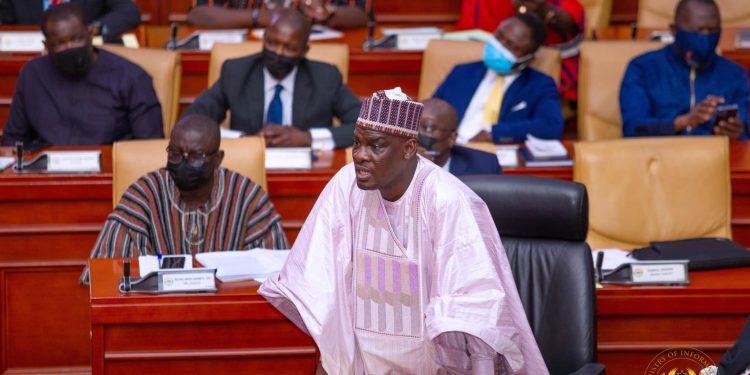

 Review major capital allocation decisions.