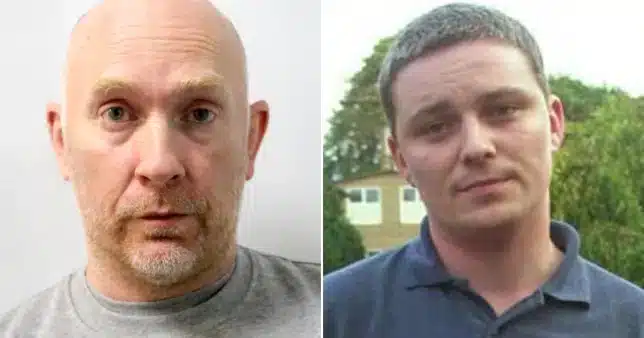
According to reports, some of the deadliest murders in the UK, including Wayne Couzens, Levi Bellfield, and Ian Huntley, will have phones put in their cells.
The concept of being able to place and receive private calls has been described as “buzzing” among inmates at HMP Frankland, often known as “Monster Mansion.”
These are thought to have taken months for workers to install so that inmates wouldn’t have to wait in lines.
Critics have called it a ‘terrible’ idea and say the scheme is open to ‘being abused’.
Former Scotland Yard detective Peter Bleksley told The Sun giving a phone to ‘someone serving a relatively small sentence’ and planning to rebuild their life outside ‘is not a bad idea’.
But he added: ‘The idea that monsters like Huntley and Bellfield are getting phones in their cells is outrageous. I can see it being abused.’
Tory MP James Daley, who sits on the Home Affairs select committee, said victims and taxpayers will be ‘sickened’.
Prisoners at Frankland – including Soham child murderer Huntley, serial killer Bellfield and rape killer cop Couzens – are housed in single cells with a TV, washbasin and toilet facilities.
Those who behave well are also allowed games consoles and DVD players.
A Prison Service spokesman told the paper that ‘phone use in prisons is subject to strict time limits, risk assessments and monitoring’.
Other notorious inmates include Lee Rigby’s killer Michael Adebolajo, nail bomber David Copeland and Sally Anne Bowman’s murderer Mark Dixie.
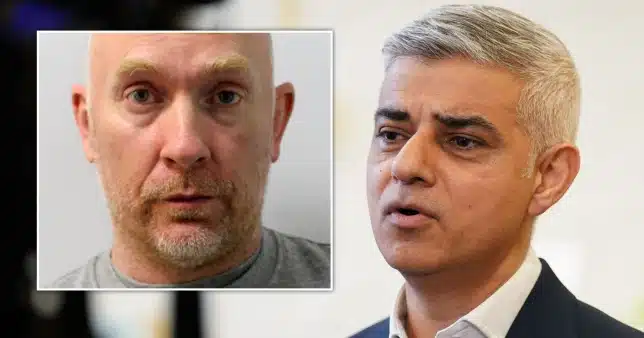
The Mayor of London has stated that killer copy Wayne Couzens should have his police pension taken away for the kidnapping, rape, and murder of Sarah Everard.
After serving in the Civil Nuclear Constabulary, Wayne Couzens is still eligible for a pension (CNC).
For killing Ms. Everard, 33, whom he kidnapped from the streets of south London in March 2021, Couzens is currently receiving a life sentence.
Although Mr. Khan requested that the Home Office reject him of it, he had already had his Metropolitan Police pension taken away, according to Sky News.
But in a letter, Mr Khan claims Couzens is still entitled to a pension from the CNC, where he served between 2011 and 2018.
The CNC safeguards nuclear facilities in the UK, and Mr Khan has written to energy secretary Grant Shapps calling for him to take the same measures as the Home Office.
His letter reads: ‘I note that Couzens joined the CNC in 2011 as a constable. When he transferred to the MPS in 2018, he did not transfer his pension service.
‘It remains there, and is not covered by the pension forfeiture certificate I was able to obtain as it sits outside the normal police pension regulations.’
A spokesman for the mayor added: ‘It will be totally unacceptable if Couzens remains entitled to a single penny of his pension – it would be very difficult for his victims and the wider public to comprehend.
‘The rules need to be tightened to ensure anyone who commits such abhorrent crimes can have their publicly-funded pension removed swiftly and in full.’
Couzens was found guilty in February of three counts of indecent exposure, which took place between November 2020 and February 2021, months before killing Ms Everard.
A Kent Police sergeant will face a misconduct hearing, and a Met Police constable a gross misconduct hearing, over the way they handled previous indecent exposure reports.
A review that accused the London Metropolitan Police Service of upholding a misogynistic, sexist, racist, and homophobic internal culture claimed the agency failed to adequately protect members of the public from abuse as well as its own female staff and allowed predatory behavior to flourish within its ranks.
“The Met has not protected its female employees or members of the public from police offenders of domestic violence, nor those who abuse their position for sexual objectives,” said the 363-page assessment by Baroness Louise Casey, issued on Tuesday.
“Even though the Met claims that violence against women and girls is a priority, it is not given the same attention as’serious violence.’ As a result, it has not been treated seriously enough in terms of resources and attention in practice.
Police Commissioner Mark Rowley said in video statement on Tuesday that the force “fully accepts” the review’s findings and intends to act on them.
“I’m sorry we’ve let you all down, and we will fix this,” he vowed, citing a “turnaround” plan to address systemic issues within the force.
The United Kingdom’s largest police force came under intense scrutiny after Wayne Couzens, a serving Metropolitan Police officer, was convicted of the kidnapping, rape, and murder of Sarah Everard, a 33-year-old London woman in March 2021. The killing sparked a national conversation about the stark issues with policing.
One day after Couzens was sentenced that year, another serving officer, David Carrick, was arrested, accused of rape. He had joined the ranks of Britain’s worst serial sex offenders – later pleading guilty to raping multiple women over a period of almost two decades, again reigniting calls for urgent reform.
Grappling with the series of scandals and a growing crisis of trust, the Metropolitan Police then appointed Casey, a member of Britain’s House of Lords who has worked for years on social welfare, to lead an independent inquiry into its institutional culture and standards of behavior.
Her review began in February 2022. It paints a damning picture both of how seriously violence against women and girls is taken, and how crimes against them are investigated. “Instead of access to fast-track forensic services, officers have to contend with over-stuffed, dilapidated or broken fridges and freezers containing evidence including the rape kits of victims, and endure long waits for test results,” the review said.
Casey called the report “rigorous, stark and unsparing” in the foreword. When asked by Britain’s PA news agencywhether there could be more officers like Couzens and Carrick in the force, she said: “I cannot sufficiently assure you that that is not the case.”
She called on the Metropolitan Police to reform itself, and said that far too many Londoners had lost faith in the force to protect them.
“It is not our job as the public to keep ourselves safe from the police. It is the police’s job to keep us safe as the public,” Casey said in the foreword, pointing out that Carrick was not caught after action taken by the Metropolitan Police, but only after one of his victims came forward and reported him to the Hertfordshire Police – spurred to speak out by a statement made by Everard’s mother.
A CNN investigation published in March revealed how police failures may have prevented Carrick, who served in one of Britain’s most elite armed police units for years, from being stopped sooner. After Carrick pleaded guilty to a total of 71 sexual offences, the Metropolitan Police admitted there were nine “missed opportunities” when he had previously come to its and other forces’ attention, although he was never charged with a criminal offense.
Those nine “opportunities” spanned decades. Between 2000 and 2021, Carrick was accused of multiple crimes including burglary, harassment, assault and rape. CNN spoke to more than a dozen police officers from multiple forces in England and examined the force’s own guidelines on handling misconduct, to identify how Carrick’s abuse could have been prevented.
An investigation into the nine incidents has found at least two occasions, in 2019 and 2021, when the Metropolitan Police did not follow those guidelines, leaving Carrick’s violent and degrading treatment of women to go unchecked, and him free to meet further victims. CNN reached out to the Metropolitan Police for the investigation and were referred to their existing statements on Carrick. They said they would not be commenting further while there are government reviews ongoing into the handling of the case.
In January, after Carrick admitted to the abuses, sending shockwaves through the country, Rowley, the police commissioner, vowed to root out the forces’ problems. “We are going to turn all those stones over, we’re going to come to the right conclusions and we’ll be ruthless about rooting out those who corrupt our integrity. You have my absolute assurance on that,” he said in an interview with UK media.
Reviewing the Metropolitan Police’s internal misconduct system was among the chief priorities for Baroness Casey. Last October, she wrote to Rowley with some of her initial views on the problems she had detected within the force’s misconduct system, among them: cases were taking too long to resolve, allegations were more likely to be dismissed than acted on, the burden of raising concerns was prohibitive, the threshold for “gross misconduct” too great and a racial disparity reflected across the system.
Those early findings were echoed in Tuesday’s report, which said that “recruitment and vetting systems are poor and fail to guard against those who seek power in order to abuse it” and that they “do not effectively root out bad officers.”
“In the absence of vigilance towards those who intend to abuse the office of constable, predatory and unacceptable behaviour has been allowed to flourish,” the report added, calling for a root to branch overhaul of the system. “There are too many places for people to hide. The integrity of the organisation remains vulnerable to threat.”
Reacting to Casey’s report, Mayor of London Sadiq Khan said in a statement that he was deeply concerned by her findings: “The evidence is damning. Baroness Casey has found institutional racism, misogyny and homophobia, which I accept. She has described the Met as defensive, resistant to change and unwilling to engage with communities.”
“This review simply must be a turning point and I expect all the recommendations to be implemented quickly and in full,” he added.
Home Secretary Suella Braverman also reacted to the review, saying, “It is clear that there have been serious failures of culture and leadership in the Metropolitan Police – which is why the Commissioner, Sir Mark Rowley, has been taking action to restore confidence in policing in London.”
“There is much more to do and the task of rooting out unfit officers means that further unacceptable cases will come to light,” she said.
But Braverman also noted that there are many officers in the force who perform their duties with the “utmost professionalism” who had been “let down” by the behavior of others.
Warning: This story contains details of child sexual assault.
A culture of misogyny and predatory behavior, fuelled by poor vetting standards, is “prevalent” in police forces across England and Wales, according to a police watchdog.
Wednesday’s report by the HM Inspectorate of Constabulary comes more than a year after the March 2021 death of Sarah Everard, who was killed by Metropolitan Police officer Wayne Couzens.
He was last year jailed for life for the kidnapping, rape, and murder of the 33-year-old in a case that exposed the failings of the police force.
Police were criticised for neglecting to take any action after Couzens allegedly exposed himself in 2015 and was involved in another incident in 2002.
Sarah Everard [File: Metropolitan Police/AFP]
The interior minister at the time, Priti Patel, ordered the police watchdog to investigate misogynistic and predatory behaviour within forces.
In some of the most concerning cases Wednesday’s report cited, police officers who had been hired without thorough checks had gone on to sexually abuse children.
A force in Cheshire, for instance, failed to properly vet a candidate who was accused of rape.
In October 2017, months after Ian Naude had been hired, the then 30-year-old answered a call to a domestic abuse emergency where he ended up meeting a 13-year-old girl.
Three days later, while “her mother was out, he drove the child to a secluded country lane and raped her, filming the offense on his mobile phone” the report said.
“Over the last decade, there have been many warning signs that these systemsaren’t working well enough. Some police officers have used their unique position to commit appalling crimes, especially against women,” the report said.
Female officers were surveyed and the report found that an “alarming number” of women reported “appalling behavior by male colleagues”.
This included allegations of sexual harassment and “serious sexual assault”.
“We concluded that far too many women had, at some stage in their career, experienced unwanted sexual behavior towards them,” the report added.
The watchdog looked at 11,277 police officers and staff and examined 725 vetting files.
Inspectors called for minimum standards for pre-employment checks and for changes to the law dealing with police complaints and disciplinary procedures.
‘Too easy’
Lead inspector Matt Parr found that “it is too easy for the wrong people to both join and stay in the police” and that there were “significant questions” over the recruitment of “thousands” of officers.
While most police officers and staff meet the required standards of behaviour, the report found “systemic failings, missed opportunities, and a generally inadequate approach to setting and maintaining standards in the police service.
“It is too easy for the wrong people to both join and stay in the police. If the police are to rebuild public trust and protect their own female officers and staff vetting must be much more rigorous and sexual misconduct taken more seriously,” said Parr.
The London force tweeted in response that it would be “ruthless in ridding the Met of those who corrupt our integrity”.
Inspectors also found cases where incidents such as indecent exposure were dismissed as a “one-off” and where applicants with links to “extensive criminality” in their families had been hired.
The report said that “over the last three or four years, the number of people recruited over whom we would raise significant questions is certainly in the hundreds, if not low thousands”.
Patel’s successor Suella Braverman said the report shines a “stark light” on problems within the police, adding it was “unacceptable” that women “continue to experience misogynistic and sexist behaviour”.