Tag: Weapons

  • Greater Accra leads in firearms surrendered under NACSA’s Gun Amnesty Programme

    Greater Accra leads in firearms surrendered under NACSA’s Gun Amnesty Programme

    The Greater Accra Region is leading in the number of firearms retrieved under the Gun Amnesty Programme led by the National Commission on Small Arms and Light Weapoms (NACSA).

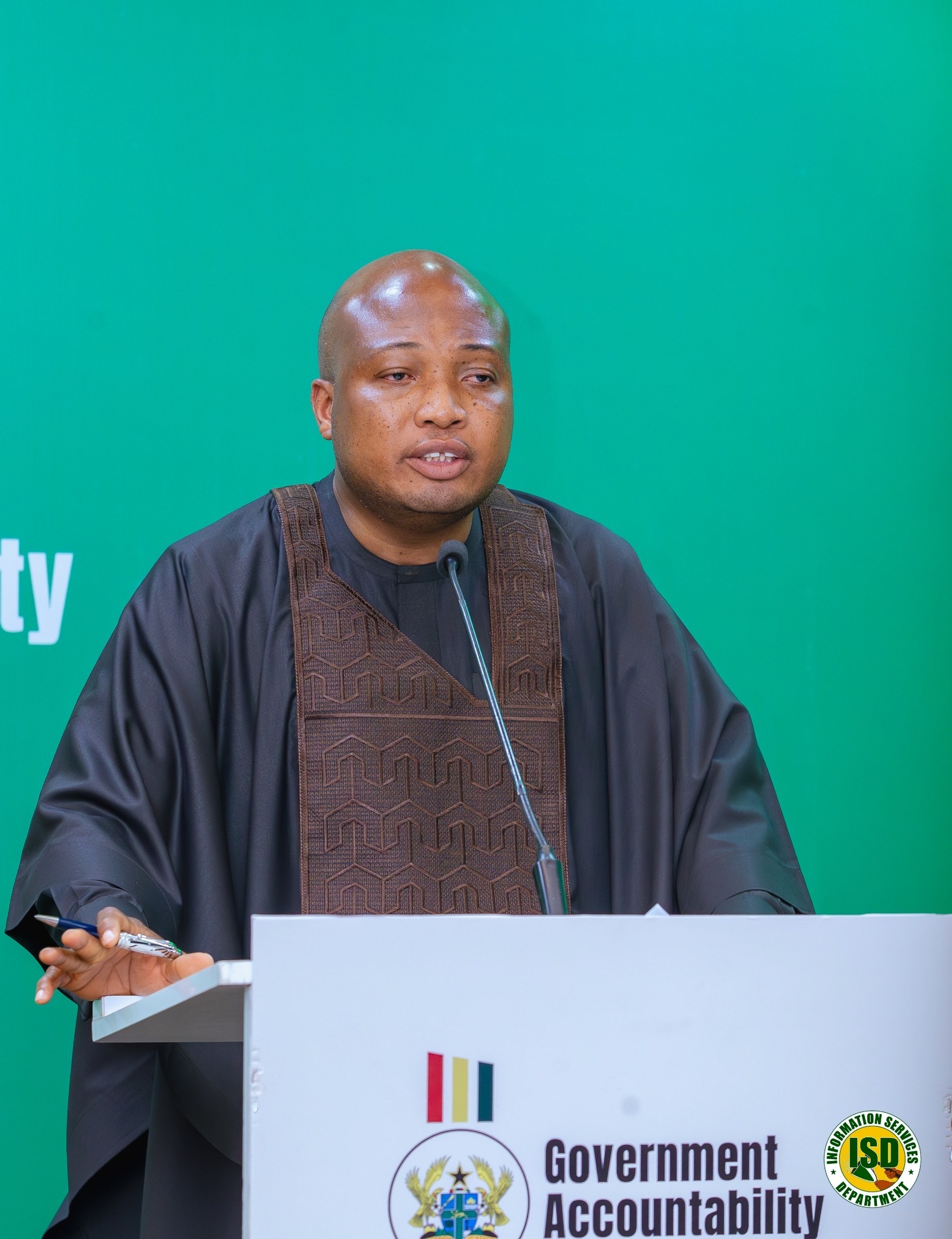
    Executive Secretary of NACSA, Dr Adam Bonaa disclosed this information in an engagement with the National Chief Imam on Friday, December 26.

    He noted,”The Greater Accra Region is one of the areas where most of the weapons we have collected are coming from. It is currently leading in terms of arms surrendered under the amnesty programme, with the support of the security commanders”.

    Dr Adam Bonaa’s meeting with the Chief Imam forms part of efforts to create awareness of the ongoing program to the Muslim community.

    The gun amnesty program is a window of grace. It offers every law-abiding Ghanaian who holds an unregistered or illicit firearm the opportunity to surrender it without fear of interrogation, arrest, or prosecution.

    From the 1st of December 2025 to the 15th of January 2026, any person who voluntarily hands over such weapons at designated collection points will be commended, not condemned. You will be recognised as a patriot contributing to the peace and safety of our nation”, the Interior Minister said during an engagement with the media.

    However, individuals who fail to surrender any illegal weapon in their possession, the Asawase Member of Parliament noted, will be treated as criminals and be made to face the full course of the law.

    “But let me be clear: when this amnesty period ends, the law will take its full course. The Ghana Police Service and all security agencies will intensify operations to recover illicit arms. Those who refuse this generous offer will be treated as criminals, and the consequences will be firm and uncompromising”, the Minister added, stressing that the effort is essential to creating a safer and more secure environment for all Ghanaians.

    The Minister also announced a temporary ban on the use of firearms during traditional festivities within the amnesty period, a measure intended to curb celebratory gunfire, prevent injuries, and save lives in communities nationwide.

    He also noted that, “We cannot continue to bury our loved ones while the tools of violence remain unchecked. The statistics are not looking good at all”.

    Also, on the gun, Minister Muntaka revealed during a session with the Public Accounts Committee (PAC) of Parliament in Accra, on Tuesday, 30 September, in response to questions on firearm regulation and monitoring, announced that gun registration, which is currently done manually, will be digitalised to make it easily accessible and less daunting for citizens.

    In a detailed explanation, he broke down what measures the Ministry intends to put in place.

    He said, “So this is what is going to happen: You register, and we have you in the registry. In the registry, we have your contact number and all your details. So, three months before expiry, we will send you a notification that your license will expire on 31st December. And you no longer need to walk to any CID office where you have to join a queue to pay for the renewal. Because the databases will be talking to each other, and over the one year, we will have recorded no criminal activities about the person we granted the license to hold the firearm, you will be able to pay through your MoMo or using your bank details. You can renew it immediately without any struggle.

    “Many people even tend to forget that the time has come for them to renew it. Maybe along the line, they just see the gun and say, “Hey, when was the last time I renewed this?” So we want to digitalise this, and by the grace of God, when we are done, by the close of the year, worst case, by the close of the year, all these things will be digitalised. It will give people the opportunity to do the renewal online without necessarily having to walk to the Police Headquarters.

    However, Mr Muntaka added that gun owners flagged for criminal activity during the renewal period will not be allowed to complete the process online.

    “The only thing is that if there’s a criminal record over the period when you want to renew, it may deny you, and that may require that you come physically. But it also helps us. Even if you change address; because we are going to link it to your Ghana Card, we will be able to tell that Maka has a gun, has not renewed it over this period, and has changed his address from Asar to Bima. We will be able to track him and either retrieve the gun from him or get him to renew his license”, he continued.

    Meanwhile, in a related development, Ghana joined sixty-nine (69) other nations in efforts to reduce and ultimately eradicate dangerous weapons, particularly nuclear bombs, from the world.

    Announcing the development on Saturday, September 27, via the X platform, the Minister for Foreign Affairs, Samuel Okudzeto Ablakwa, stated that Ghana has officially ratified the Treaty on the Prohibition of Nuclear Weapons (TPNW). The move, according to the Minister, reflects Ghana’s commitment to supporting global peace and a stable security for the world. The Minister further applauded both the Cabinet and Parliament for their unanimous approval of the treaty.

    He also recalled how Ghana’s first president, Osagyefo Dr Kwame Nkrumah, was a strong advocate of disarmament in 1962, adding that the late President would be proud of this groundbreaking step.

    “Yesterday, Ghana boldly demonstrated to the world that we shall be a Nuclear-Weapon-Free State by depositing our instrument of ratification on the Treaty on the Prohibition of Nuclear Weapons (TPNW) at the UN. I commend the Ghanaian Cabinet and Parliament for the unanimous ratification. As I indicated in my UN address, Ghana has been consistent across all political parties in advocating for total disarmament and creating a new world without nuclear weapons.

    “Ghana’s Founder, Osagyefo Kwame Nkrumah, who convened the 1962 World Without the Bomb conference in Accra, would be absolutely proud of this moment. It was an honour to meet with the inspiring Melissa Parke and Seth Shelden of the International Campaign to Abolish Nuclear Weapons (ICAN). ICAN won the 2017 Nobel Peace Prize for their groundbreaking work to attain a world without nuclear weapons. We shall triumph and end global impunity,” he wrote.

  • Ghana joins global call for disarmament, ratifies treaty banning nuclear weapons

    Ghana joins global call for disarmament, ratifies treaty banning nuclear weapons

    Ghana has joined sixty-nine (69) other nations in efforts to reduce and ultimately eradicate dangerous weapons, particularly nuclear bombs, from the world.

    Announcing the development on Saturday, September 27, via the X platform, the Minister for Foreign Affairs, Samuel Okudzeto Ablakwa, stated that Ghana has officially ratified the Treaty on the Prohibition of Nuclear Weapons (TPNW). The move, according to the Minister, reflects Ghana’s commitment to supporting global peace and a stable security for the world. The Minister further applauded both the Cabinet and Parliament for their unanimous approval of the treaty.

    He also recalled how Ghana’s first president, Osagyefo Dr. Kwame Nkrumah, was a strong advocate of disarmament in 1962, adding that the late President would be proud of this groundbreaking step.

    “Yesterday, Ghana boldly demonstrated to the world that we shall be a Nuclear-Weapon-Free State by depositing our instrument of ratification on the Treaty on the Prohibition of Nuclear Weapons (TPNW) at the UN. I commend the Ghanaian Cabinet and Parliament for the unanimous ratification. As I indicated in my UN address, Ghana has been consistent across all political parties in advocating for total disarmament and creating a new world without nuclear weapons.

    “Ghana’s Founder, Osagyefo Kwame Nkrumah, who convened the 1962 World Without the Bomb conference in Accra, would be absolutely proud of this moment. It was an honour to meet with the inspiring Melissa Parke and Seth Shelden of the International Campaign to Abolish Nuclear Weapons (ICAN). ICAN won the 2017 Nobel Peace Prize for their groundbreaking work to attain a world without nuclear weapons. We shall triumph and end global impunity,” he wrote.
    Ghana’s final ratification of the TPNW was signed in 2017 and approved by Parliament in July 2025. Ghana has been instrumental in promoting Africa’s stance as a nuclear-free continent. 

    The sixty-nine (69) countries that have ratified the treaty are: Antigua and Barbuda, Austria, Bangladesh, Barbados, Belize, Benin, Bolivia, Botswana, Brazil, Cabo Verde, Cambodia, Central African Republic, Chile, Colombia, Comoros, Congo, Cook Islands, Costa Rica, Côte d’Ivoire, Cuba, Democratic Republic of the Congo, Dominica, Dominican Republic, Ecuador, El Salvador, Fiji, Gambia, Ghana, Grenada, Guatemala, Guyana, Honduras, Indonesia, Ireland, Jamaica, Kazakhstan, Kenya, Kiribati, Laos, Lesotho, Liberia, Liechtenstein, and Madagascar.

    The others include: Malawi, Malaysia, Maldives, Mali, Malta, Mexico, Mongolia, Namibia, Nauru, Nepal, New Zealand, Nicaragua, Nigeria, Niue, Panama, Paraguay, Peru, Philippines, Saint Kitts and Nevis, Saint Lucia, Saint Vincent and the Grenadines, Samoa, San Marino, Seychelles, South Africa, Sri Lanka, the State of Palestine, Sudan, Thailand, Timor-Leste, Togo, Trinidad and Tobago, Tunisia, Uruguay, Venezuela, Vietnam, Zambia, and Zimbabwe.

    As Ghana strengthens its global stance against nuclear weapons, illegal possession of small arms remains a pressing challenge in the country. Earlier this year, U.S. Army Major Kojo Owusu Dartey was sentenced to 70 months in prison and three years of supervised release for smuggling firearms to Ghana and making false statements to federal authorities.

    The 42-year-old, based at Fort Liberty, was found guilty by a jury on April 23, 2024, on charges including conspiracy, illegal firearm dealing, false declarations in court, and exporting firearms without a license.

    According to court records and trial evidence, Dartey orchestrated a firearms smuggling operation by purchasing seven firearms in North Carolina and instructing a U.S. Army Staff Sergeant at Fort Campbell, Kentucky, to buy three more and send them to him.

    He then concealed the weapons inside blue barrels filled with rice and household goods before working with an Army Chief Warrant Officer to smuggle them through the Port of Baltimore, Maryland. The barrels were shipped to the Port of Tema, Ghana, where Ghanaian authorities later seized them and alerted the DEA attaché in Ghana and the ATF Baltimore Field Division.

    Dartey was also linked to a 16-defendant marriage fraud scheme involving soldiers at Fort Liberty and foreign nationals from Ghana. He provided information that led to its prosecution, but later lied to federal law enforcement and under oath in court about his relationship with a defense witness during the U.S. v. Agyapong trial between June 28 and July 2, 2021.

    His sentencing was announced by Acting U.S. Attorney for the Eastern District of North Carolina, Daniel Bubar, following an investigation by the Bureau of Alcohol, Tobacco, Firearms, and Explosives (ATF), the Army Criminal Investigation Division (CID), and the Department of Commerce’s Office of Export Enforcement. Assistant U.S. Attorney Gabriel J. Diaz prosecuted the case.

    In Ghana, institutions such as the National Commission on Small Arms and Light Weapons (NACSA) have called on the judiciary to impose stricter punishments on individuals found in possession of unlicensed firearms.

    In 2024, NACSA reported one million illicit pump-action guns, AK-47s, pistols, and locally manufactured arms in circulation in Ghana. The Commission described these figures as a threat to national security.

    The Head of the National Arms Marking Programme at the time, Mr. Frank Boateng Asumani, stated: “Currently, we have 2.3 million small and light weapons in circulation, out of which 1.2 million are legally registered and the remaining 1.1 million cannot be accounted for.”

    Speaking to The Independent Ghana, the Deputy Director of Policy, Planning, Monitoring, and Evaluation (PPME) at NACSA, Gyebi Asante, stressed the urgent need to review existing laws governing firearms possession to better counter current security challenges.

    “We are advocating for the law to be reviewed to suit the current situation and also be able to align with our current dispensation. It is something we have taken steps to do. Already, we have a proposed Bill, the National Arms Bill, at the Ministry of Interior to look at the document and endorse it.

    “For example, the penal sanction, when you have a law that regulates the possession of arms that can kill, you must have a strong penal sanction that can deter people from going behind the law to buy these weapons, so the law as it is now is not deterrent enough,” he added.

    He emphasized that the current penal sanctions are insufficient to deter illegal arms possession. According to him, the existing law stipulates a maximum jail term of five years or a fine of up to 1,000 penalty units, equating to 12,000 Ghana cedis.

    He added that there is no minimum penalty established, allowing judges to exercise discretion in sentencing. This loophole, he indicated, has led to situations where individuals found guilty of illegal gun possession could potentially pay as little as 100 Ghana cedis or serve a mere two weeks in jail.

    “For example, it says that you can be jailed for not more than 5 years and you can also be fined for not more than 1,000 penalty units. A penalty unit is 12 Ghana cedis, which makes it 12,000 Ghana cedis, not beyond, but it doesn’t give a minimum.

    “If you are arrested for illegally possessing a gun, the judge uses his discretion and he can decide that go and pay 100 cedis and if you don’t pay you will go to jail for two weeks because the law does not give you any minimum requirement. We see that as a serious challenge and a gap in the law that must be addressed,” he added.

    Mr. Asante revealed that the Commission has submitted to the Ministry of Interior a proposal to amend the current Arms and Ammunition (Amendment) Act, 1972 (Act 604).

    The National Arms Bill aims to close the existing gaps in the law, ultimately working towards a safer environment for all Ghanaians. Additionally, he emphasized the urgent need for the bill to be enacted into law to ensure effective control and regulation of small arms and light weapons (SALW).

    Established by an Act of Parliament in 2007, NACSA’s mandate includes regulating the possession and control of small arms and light weapons, with a particular focus on curbing illegal production, trade, transfer, and cross-border movement of such weapons that contribute to crime and insecurity.

  • Suspect involved in death of Immigration officer charged with murder; weapons found at residence

    Suspect involved in death of Immigration officer charged with murder; weapons found at residence

    The Ghana Police have rearrested the prime suspect in the gruesome murder of immigration officer Stephen King Amoah, also known as Nana Kofi.

    This follows the discovery of weapons believed to have been used in the murder of Immigration Officer Stephen Amoah.

    During a press briefing on Monday, August 4, the Director-General of the CID, COP Lydia Yaako Donkor, revealed that bloodstains were found in the living room, on a burnt, blood-soaked carpet, and on a fufu pestle suspected to have been used in the murder by the suspect.

    According to the Police, the forensic conducted on Thursday, July 24, also exposed freshly sprayed walls, hinting at an attempted cleanup by the suspect.

    “The Kwabenya Teshie Police visited the suspect’s residence, and the forensic inspection revealed the following bloodstains in the living room and evidence of attempted cleanup, freshly sprayed walls, and an empty can of spray paint. A search of a secondary crime scene near the GBC satellite area also uncovered a burnt woolen carpet and partially burnt camouflage fabric.”

    “These items were photographed, retrieved and photocopied for forensic analysis. On 24th July, the police received a warrant to search a particular room in the suspect’s house. A search in the room revealed more bloodstains, which were photographed and samples collected for forensic analysis. A further search in the bushes about 100 metres from the suspect’s house also led to the retrieval of the…” the Police said.

    The Service has noted that in the coming days, undertake a DNA exercise on the bloodstains with samples from the deceased mother and son, aiding with the process.

    “I wish to say that the initial blood sample collected was positive for human blood. To aid the investigations, the deceased mother and son has provided sample for DNA profiling. In the face of these pieces of evidence the suspect who was initially charged with kidnapping has since been rearrested and formally charged with murder. He is currently on remand following his appearance with the Adabraka District Court and is scheduled to reappear on 8th August 2025.

    “A special operation is currently underway to identify and arrest his accomplices and we are following other vital leads to gather all necessary evidence against the suspect and his accomplices. The Ghana Police Service wishes to assure the public that the investigations is ongoing and every effort is being made to ensure that all the perpetrators are prosecuted,” she added.

    The suspect is scheduled to appear in court on August 8th. The lifeless body of the immigration officer was discovered in a drainage system near GBC Satellite, opposite Comet Estate, Accra, on Wednesday, July 9.

    The deceased is said to have gone missing five days (since July 3) before his tragic death. This was contained in a press statement by the Ghana Police Service on Thursday, July 10.

    Providing more details about the tragic incident, the police noted that the murderer(s) of the 38-year-old also set his body on fire.

    The deceased’s remains have been conveyed to the Police Hospital morgue after the relatives positively identified the body as Stephen.

    The police have disclosed that their preliminary investigations indicate the deceased had gone to meet his debtor, one Bright Aweh, who had promised to pay the outstanding debt owed on Thursday, July 3, in the evening.

    The victim never returned home that night, and his phone remained switched off throughout, raising concerns among family and friends who later reported him missing.

    “Investigations revealed that on 3rd July 2025, at about 8:00 p.m., the deceased left his residence at Ashongman Estate after receiving WhatsApp images of cash bundles from one Bright Aweh, who requested to meet him at a spot at Ashongman Estate to settle an outstanding amount.

    “According to the complainant, the deceased never returned home that night, and his phone remained switched off thereafter,” the police said.

    After the deceased’s family filed a complaint at the police station, Bright Aweh was arrested to assist with the investigation.

    He admitted that he met with the deceased and alleged that he gave a cash of GHS500,000 to the deceased, instructing him “to use part of the money to pay off some debts and hold the remaining amount for later collection.”

    But the police in their statement noted that “the suspect could not clearly explain the source of the funds and gave conflicting statements.”

    Meanwhile, the police have pledged to get to the bottom of the case and ensure justice is served to the perpetrators.

    “The Regional Police Command strongly condemns such violent and criminal acts and assures the public that it is working diligently to uncover the full circumstances surrounding this incident and bring all responsible persons to justice,” it added.

    The police have also called on anyone with information relevant to the case to contact the nearest police station or call the police emergency numbers 18555 or 192.

  • Bawku curfew renewed, govt imposes weapons ban

    Bawku curfew renewed, govt imposes weapons ban

    The government has extended the curfew imposed on Bawku Municipality and its surrounding areas in the Upper East Region, following a directive from the Ministry for the Interior.

    Interior Minister Muntaka Mohammed-Mubarak, through an Executive Instrument, announced a revision of the curfew hours, which will now run from 8:00 PM to 5:00 AM, effective Monday, February 24, 2025. This adjustment was communicated in an official statement released on the same day.

    In light of ongoing tensions in the area, the government has called on traditional leaders, community elders, youth, and residents to promote peace and exercise restraint while encouraging dialogue as the path to resolving disputes.

    The statement also declared a strict ban on carrying arms, ammunition, and any offensive weapons within the affected communities. Authorities have warned that any individual caught violating this directive will face arrest and prosecution.

    The government reiterated its commitment to restoring peace and ensuring the safety of residents in the Bawku area as efforts to resolve conflicts continue.

  • C/R: 11 notorious armed land guards arrested at Asabaham

    C/R: 11 notorious armed land guards arrested at Asabaham

    The Central East Police Command apprehended 11 notorious land guards armed with weapons at Asabaham in the Ga South District of the Greater Accra Region.

    Information collected by Kasapa News’ Yaw Boagyan suggested that the land guards have reportedly been intimidating individuals and attacking expectant mothers in recent months, causing the residents to feel frightened and anxious.

    The individuals in custody are Ali Razak, aged 34; Mohammed Salis, aged 41; Mohammed Amin, aged 30; Yussif Yakubu, aged 31; and Manam Mubarak, aged 30.

    The remaining suspects are Habib Abdullai, aged 31; Samuel Ametrona, aged 26; Abdul Madid Adam, aged 35; Iddrisu Yakubu, aged 30; Nii Attoh Emmanuel, aged 42; and Isaac Boadu, aged 43.

    They were found in possession of machetes and hatchets in a green Toyota 4Runner bearing the registration number GW 4420-X at the time of their apprehension.

    The authorities stated that the suspects will be brought before the court in the forthcoming days as the investigation progresses.

  • Police detain 10 land guards for unlawful possession of weapons

    Police detain 10 land guards for unlawful possession of weapons

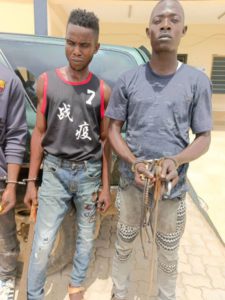
    The Central East Regional Police Command has arrested ten land guards and seized cutlasses and axes during an operation in Asabaham, Ga South Municipality.

    The suspects include Ali Razak, 34; Mohammed Salis, 41; Mohammed Amin, 30; Yussif Yakubu, 31; Manam Mubarak, 30; Habib Abdullai, 31; Samuel Ametrona, 26; Abdul Madid Adam, 35; Iddrissu Yakubu, 30; Nii Attoh Emmanuel, 42; and Isaac Boadu, 43. Most of the suspects are farmers from Atoma, with Boadu being a taxi driver from Freetown, Kasoa.

    On May 23, 2024, a complainant reported to the Central East Regional Police in Kasoa that Morton City Real Estate owns 49.640 acres of land in Asabaham, which they sell to clients for development.

    Recently, their clients have been attacked by men carrying cutlasses and guns who seize workers’ tools and demand money or force them to leave the site.

    An intelligence-led operation on June 6, 2024, resulted in the arrest of the suspects at Asabaham. The police also impounded their Toyota 4Runner with registration number GW 4420-X and found cutlasses and axes on them.

    Investigations revealed that the suspects frequently visit the lands, including those owned by Morton City, to seize tools from workers employed by developers to build houses. The threats and intimidation have caused many workers to abandon the site out of fear.

    In an interview with Adom News, Benjamin Awuzu, the owner of the land, commended the Central East Regional Police Command for their swift intervention. Awuzu also mentioned that the land guards had attacked a pregnant woman after she refused to give them money.

  • Iran keeps adding to its weapons-grade uranium stockpile – UN

    Iran keeps adding to its weapons-grade uranium stockpile – UN

    Iran has more uranium that is almost strong enough for making weapons. According to the United Nations, this is another way that Iran is trying to put pressure on the world.

    Iran wants the economic sanctions against it to be removed in return for reducing its controversial nuclear program. The program, like everything else in Iran, is controlled by Iran’s top leader, Ayatollah Ali Khamenei, and that’s probably not going to change after the helicopter crash that killed Iran’s president and foreign minister last week.

    The report from the International Atomic Energy Agency is happening at the same time as the Israel-Hamas war, which is causing a lot of tension in the Middle East. Israel and Iran attacked each other’s land for the first time last month.

    According to a report seen by The Associated Press, as of May 11th, Iran has 142.1 kilograms (313. 2 pounds) of uranium enriched up to 60 per cent. This is an increase of 20. 6 kilograms (454 pounds) since the last report by the UN watchdog in February. Uranium that is 60% pure is very close to reaching the level needed to make weapons, which is 90% pure.

    According to IAEA, about 42 kilograms (92. 5 pounds) of uranium that is enriched to 60 percent is enough to make one atomic weapon, if it is further enriched to 90 percent.

    As of May 11, the report says Iran has 6,201.3 kilograms of enriched uranium, which is 675.8 kilograms more than before.

    Iran says its nuclear program is only for peaceful reasons, but the head of the IAEA, Rafael Mariano Grossi, has said before that Iran has enough enriched uranium to make “several” nuclear bombs if it decides to. He admitted that the UN agency cannot be sure that Iran’s centrifuges have not been used for secretly enriching nuclear material.

    Iran and the IAEA have been having more problems since 2018. This is because Donald Trump decided on his own to take the United States out of the nuclear deal with Iran. Since then, Iran has stopped following the rules of the deal about its nuclear program and started doing more enrichment.

    In the old nuclear deal, Iran was allowed to make uranium up to 3.67% pure, keep 300 kilograms of it, and use basic machines to do it.

    In 2015, Iran agreed to only enrich uranium to levels needed for making electricity and in return, the economic sanctions against Iran were lifted. At that time, UN inspectors were responsible for watching over the program.

    Monday’s report said that Tehran still has not changed its mind about preventing IAEA inspectors from checking its nuclear program. They expect Iran to reconsider this decision during the discussions with the IAEA.

    The report also said that Tehran still hasn’t changed its mind about not letting IAEA inspectors keep an eye on its nuclear program. It also said that they want Iran to change its decision during talks with the IAEA.

    The report says that Grossi is very sorry that Iran won’t let inspectors in. He thinks it’s really important for them to be allowed in so they can do their job properly.

    The report recognized that the deaths of Iran’s President Ebrahim Raisi and Foreign Minister Hossein Amirabdollahian have caused a break in the talks between Tehran and the IAEA about working together better.

    Before the helicopter crash on May 19, Iran agreed to have talks with the IAEA on May 20. This was after Grossi visited earlier in the month. But those meetings didn’t happen because of the crash. Iran sent a letter on May 21. They said their nuclear team wants to keep talking in Tehran at a time that works for both sides.

    The report also said that Iran still hasn’t given the IAEA information about where the manmade uranium particles found at two places, Varamin and Turquzabad, came from and where they are now.

    The IAEA asked for something to be fixed. If it’s not fixed, they won’t be able to make sure Iran’s declarations are correct and complete. This is part of an agreement between Iran and the nuclear watchdog.

    The report said that no new monitoring equipment, like cameras, has been put back in place yet since they were taken out in June 2022. Since then, the only information available is from cameras installed by the IAEA at a workshop where centrifuges are made in Isfahan in May 2023. But Iran has not let the IAEA see this information.

    The IAEA checked some cameras in Isfahan on May 21, after a delay in April. They collected data since December 2023 and put it under separate seals from both the Agency and Iran at the locations.

  • Parliament in Tennessee passes bill allowing teachers to carry weapons

    Parliament in Tennessee passes bill allowing teachers to carry weapons

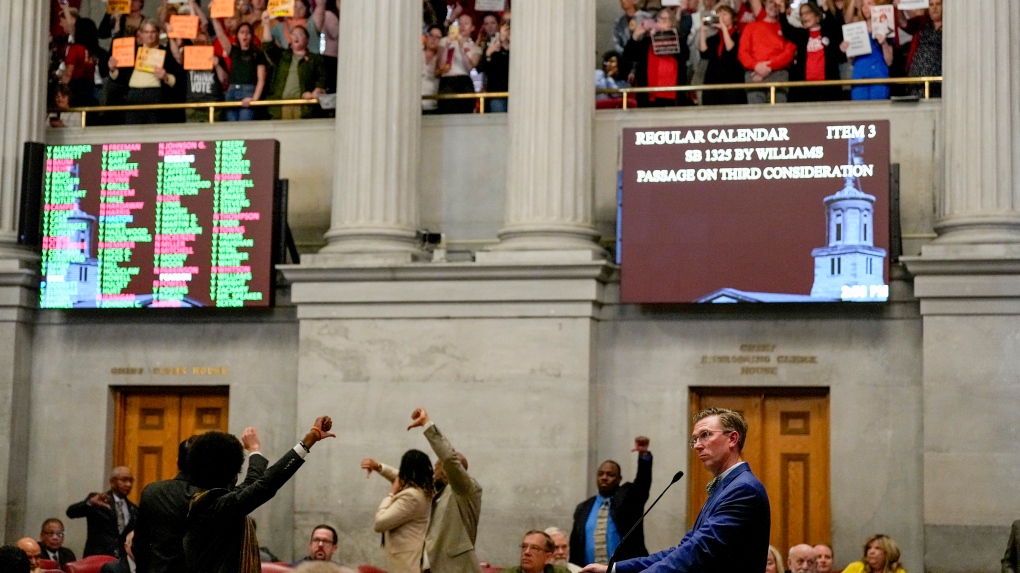
    Tennessee House Republicans were confronted by protesters shouting “You are accountable for harm” after passing a bill that would allow select teachers and staff to carry concealed firearms in public schools without disclosing their identities to parents or other teachers.

    The bill got 68 votes in favor and 28 votes against it, so it will now go to the Republican governor. Please think about Bill Lee. If he makes it a law, it would be the biggest increase in access to guns in the state since a deadly shooting at a school last year.

    The public people who didn’t like the bill yelled at the Republican lawmakers after they voted. The House Speaker, Cameron Sexton, told everyone to leave the galleries.

    Four House Republicans and all Democrats didn’t support the bill, even though the state Senate had already passed it. The rule would stop sharing which employees have guns with anyone other than school administrators and police, including students’ parents and other teachers. The school principal, school district and police must all agree for the staff to carry guns.

    The proposal offers a very different solution to The Covenant School shooting compared to what Lee suggested last year. Republican lawmakers rejected his proposal to prevent people who are considered a threat to themselves or others from having guns.

    It is unlikely that Lee will say no, because it has never happened before and lawmakers can easily disagree with him.

    “The bill’s sponsor, Republican state Rep. Ryan Williams, said that you are creating something that will stop people from doing something. ” “In our state, we have had problems with shootings. ”

    Republicans said no to ideas from the Democrats, like needing parents’ permission, letting people know if someone has a gun, and making the school district responsible if someone gets hurt or killed by staff with guns. Democrat lawmakerJustin Jones tried to change the bill’s name to the “Refusal to Protect Kids in Schools Act. ”

    “My Republican friends are keeping our state in a difficult situation to please their gun industry donors,” Jones said. “It is very wrong. ”

    It’s not certain if any school districts would use the law if it is approved. For instance, a representative for Metro Nashville Public Schools named Sean Braisted said that the district thinks it’s safest for only approved police officers to have guns on school grounds.

    Around half of the US states allow teachers or other employees with concealed carry permits to have guns at school, according to the Giffords Law Center, a group that supports stricter gun laws. The governor of Iowa approved a new law that allows trained school employees to carry a permit to protect themselves from being sued if they need to use force to protect students.

    In March 2023, a person shot and killed three children and three adults at The Covenant School, a Christian school in Nashville, Tennessee. The police later killed the shooter.

    After the shooting, people tried to convince the Statehouse to make strict gun control rules, but the Republican-led lawmakers mostly said no. They rejected gun control ideas from Democrats and even from Lee during regular yearly meetings and a special meeting, even though parents of Covenant students talked about the shooting and its long-term impacts.

    The new bill says that if a worker wants to bring a gun to school, they need to have a permit and permission from the school principal and local police. They also have to pass a background check and complete 40 hours of handgun training. They were not allowed to bring guns to school events in stadiums, gyms, or auditoriums.

    Tennessee made a law in 2016 that said school workers in two rural counties could bring guns to school, but they never actually did it.

    Tennessee Republicans have worked to make gun laws less strict, and in 2021 they agreed that people can carry handguns without needing a permit. Lee supported the change.

    The first law said that people 21 and older could carry guns in public without needing a permit. Two years later, Attorney General Jonathan Skrmetti made a agreement in a lawsuit that allowed 18- to 20-year-olds to carry handguns in public.

    After the shooting last year, Tennessee Republicans made a new law to give more protection to gun and ammo dealers, makers, and sellers from being sued. This year, the governor and lawmakers agreed that private schools with pre-kindergarten classes can have guns at their campus. Private schools that do not have pre-kindergarten classes can choose whether or not to allow people to bring guns onto their property.

    They have made some strict rules about who can have a gun. One law needs the governor’s signature to make it so that certain criminal defendants who are ruled unable to stand trial because of their mental illness or intellectual disability will have to go to a hospital for treatment and temporarily lose their right to have a gun. Another proposal needs the Senate’s agreement. It would take away the right to have a gun for young people who have committed serious crimes until they are 25 years old.

  • Europe “needs ten years to increase its stockpile of weapons” – Rheinmetall

    Europe “needs ten years to increase its stockpile of weapons” – Rheinmetall

    It will take Europe 10 years to be fully prepared to defend itself, according to the leader of Germany’s largest defense company, Rheinmetall.

    Armin Papperger said that there is no more ammunition available right now.

    He said this when Chancellor Olaf Scholz visited a ceremony for building a new factory that makes weapons in Lower Saxony.

    Defence Minister Boris Pistorius and Danish Prime Minister Mette Frederiksen were also there.

    The comments were made a day after statements from Donald Trump, who is running for president in the US, caused concern in Europe.

    The Republican candidate who is most likely to win the nomination said he told a leader from another country that he wouldn’t help Nato members who don’t pay their share, and would even support attackers to do whatever they want.

    Rheinmetall plans to spend over $300 million on the new facility. It is expected to make 200,000 artillery shells every year.

    Mr Papperger said it will take a while to get ready for an enemy who wants to attack Nato.

    “He said we will be okay in three to four years, but to be fully ready, we need 10 years. ”

    “Mr Papperger said we need to make 1. 5 million rounds of ammunition in Europe. ” He said that a lot of Europe’s weapons were sent to Ukraine, so Europe doesn’t have much left.

    “We need to help Ukraine as long as there is war. It will take at least five years and maybe 10 years to fully replenish our ammunition stocks,” he said.

    Chancellor Scholz did not say if he was worried about Mr.

  • Asantehemaa Yaa Akyaa deliberately invested in weapons used against British rule

    Asantehemaa Yaa Akyaa deliberately invested in weapons used against British rule

    The 10th Asantehemaa, Nana Yaa Akyaa, reportedly made substantial investments in sophisticated weaponry to confront and resist British threats.

    Ghanaian historian Eugenia Anderson recounts that upon assuming the role of Asantehemaa after ousting her mother, Nana Yaa Akyaa formed alliances to safeguard the kingdom during a tumultuous period.

    Amid internal disputes over the true heir to the Golden Stool following the brief reign of Nana Kwaku Duah II, Yaa Akyaa fought to secure the stool for her son, Prempeh I. This conflict resulted in a prolonged war lasting four years, during which she acted as a rival ruler of Asante, maintaining possession of the Golden Stool to prevent any opponent from being enthroned.

    Known for her wealth as a successful trader, Yaa Akyaa used her resources to support her children’s ambitions, particularly investing heavily in weaponry.

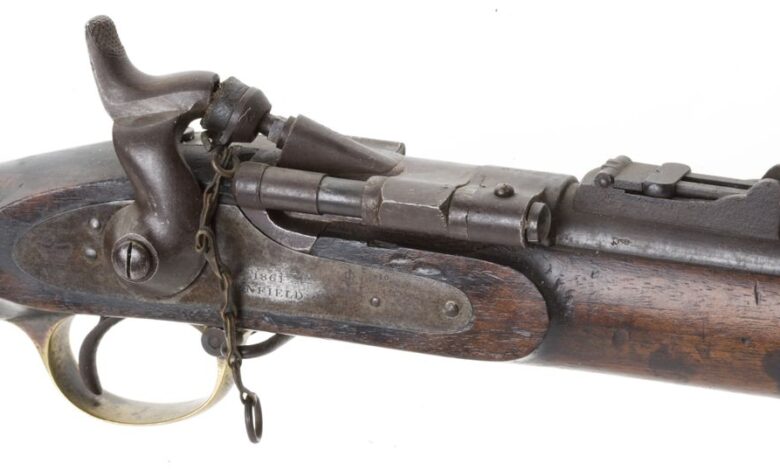
    She acquired a significant supply of snider rifles and ammunition, earning her the title “Obaa Barima.” Yaa Akyaa adamantly opposed diplomatic missions.

    In 1896, she and her son, Prempeh I, were exiled to Seychelles Island, where she passed away on September 2, 1917, at the age of 77.

  • Chief caught in possession of M16 assault rifle at Ambariya SHS arrested

    Chief caught in possession of M16 assault rifle at Ambariya SHS arrested

    A chief in the Northern Region has been apprehended for carrying an M16 assault rifle along with six fully loaded magazines at the Ambariya Senior High School in Tamale.

    The incident has raised concerns about the prevalence of illegal weapons in the region and its implications for security.

    Civil society organizations have long expressed worries about the proliferation of illicit firearms in Northern Ghana, linking it to the frequent conflicts in the area.

    The Ghana Small Arms Commission has been actively addressing the problem of illegal arms trading and combating gun violence. Nonetheless, police officers frequently uncover various weapons and ammunition hidden in vehicles throughout the region.

    Sources from the Regional Police Command have affirmed that the apprehended chief will face charges in court on Monday.

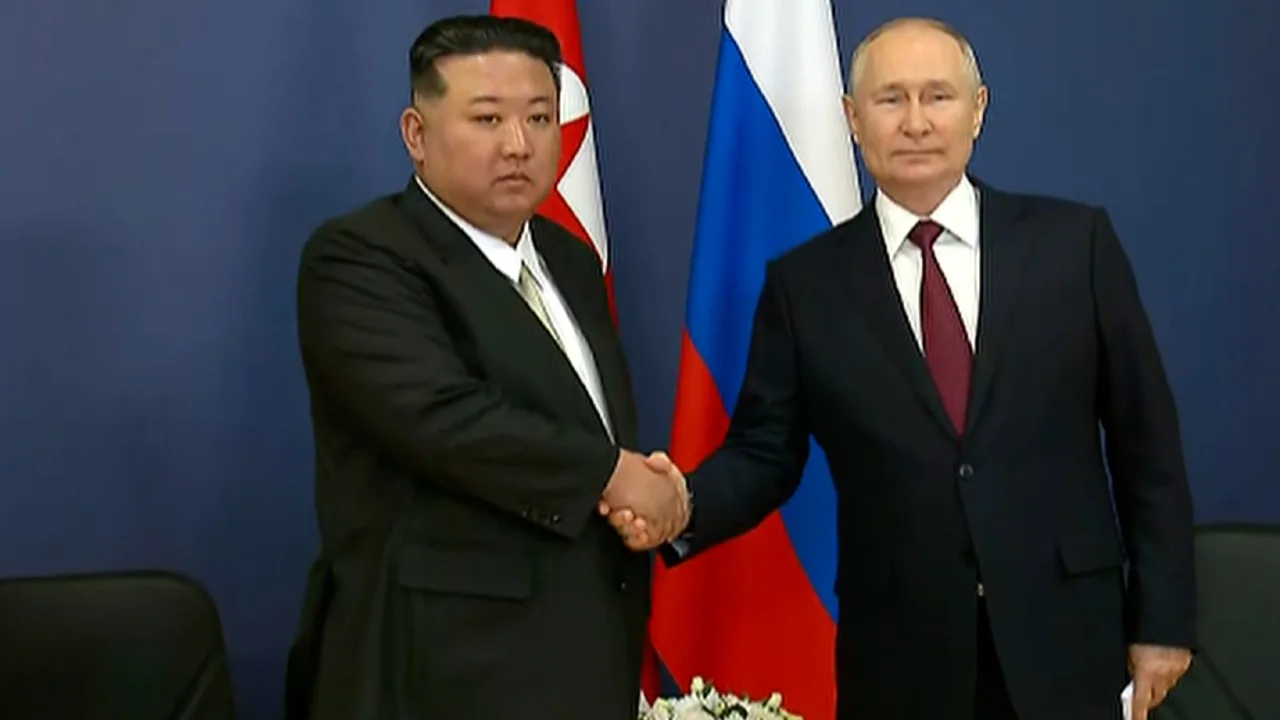
  • Kim and Putin meet for their anticipated discussion of weapons

    Kim and Putin meet for their anticipated discussion of weapons

    Russian President Vladimir Putin showed that he might be open to helping North Korea with their space and satellite program during a visit to Russia’s Vostochny space launch site. This happened before planned discussions about weapons.

    When a reporter asked Putin if Russia would assist North Korea in launching their own satellites and rockets, Putin replied, “That’s the main reason we are here. ”

    The leader of North Korea is very interested in space and rockets, and they are working hard to develop their space program. “We will present our new items,” Putin said at the Vostochny Cosmodrome, located in Russia’s far east on Wednesday. “We will discuss all the problems slowly and calmly because there is enough time. ”

    Putin’s words suggest that Russia and North Korea are getting closer, which concerns US officials. They have warned that this could lead to North Korea providing weapons to Russia for use in their struggling conflict in Ukraine in exchange for prohibited missile technology.

    A video from the Kremlin was published on Wednesday. It showed the two leaders shaking hands and then visiting the space center and rocket complex. The complex is where they put together and test the vehicles that are launched into space. This information was reported by Russian state media.

    North Korea really wants to develop space technology, but they haven’t been successful yet. They tried two times this year to put a spy satellite in space, but they didn’t work.

    In April, Kim emphasized the importance of military satellites for keeping the country safe and maintaining control over their land. He also talked about how valuable these satellites are for planning military operations in advance, according to North Korean media.

    Giving this technology to North Korea would go against the rules set by the international community. These rules are meant to make it harder for North Korea to make nuclear weapons and missiles.

    Putin said that the talks were about working together on economy, helping people, and understanding what is happening in the area. The conversation lasted a little more than an hour.

    Kim said both countries have “a lot of problems” that they can work together on. He commended Russia for protecting its independence and safety against dominant powers. He implied that the US and the West were the dominant powers. He also mentioned that he fully supports everything Russia does in response to these powers.

    “And I want to make it clear that I will always support Russia in their fight against imperialism and for independence,” said the leader of North Korea.

    After the discussions, Kremlin spokesperson Dmitry Peskov said that there are no intentions to sign any documents, as reported by Russian state media.

    Peskov said that having a good relationship means talking and working together, especially in important areas like military cooperation and discussing important security problems.

    Why it matters that Putin and Kim are meeting at a space center

    During the tour, the two leaders visited the place where Russia plans to start using its new spacecraft.

    According to state news agency TASS, the facilities were constructed to welcome and prepare rockets for launch, carry out the launches, and handle tasks after the launch.

    Experts believe that the choice of the space center as the venue for Wednesday’s summit is important.

    The meeting at Russia’s eastern spaceport is concerning because it could mean that Putin might give North Korea technology to launch satellites illegally, and in return, North Korea would provide weapons for Russia to use in their unlawful war in Ukraine. This was stated by Leif-Eric Easley, a professor at Ewha Womans University in Seoul, during an interview with CNN.

    Moscow needs more ammunition and shells because the war in Ukraine has severely weakened its military. North Korea, on the other hand, lacks many important things like money, food, and missile technology due to years of international sanctions because of its nuclear weapons program.

    North Korea also said that the meeting will improve their relationship.

    Kim came to Russia on Tuesday in his very protected private train with his friends and military leaders, as shown in pictures shared by North Korean state media.

    Kim visited the border town of Khasan and was greeted by Russian officials. He said that his trip to Russia showed how important the relationship between North Korea and Moscow is.

    Former US National Security Adviser John Bolton said on Tuesday that the meeting between Putin and Kim is very important and goes beyond just the possibility of a weapons agreement.

    Bolton told CNN that from North Korea’s perspective, this would reconnect them with Russia in an important way. It has been a while since they had such a connection, since the Soviet Union broke apart.

    According to state media, after the discussions, Kremlin spokesperson Peskov said that North Korea is a nearby country to us.

    “And no matter what others say, we will form good connections with the people living nearby in a way that is helpful for both us and them,” he stated.

    Kim’s delegation includes Ri Pyong Chol, who is the military’s second-in-command. Ri is under sanctions from the US and UN because he played a leading role in the country’s ballistic missile programs as the former head of the Department of the Munitions Industry. His sister, Kim Yo Jong, who is a high-ranking official, was seen standing next to her brother when he signed a guest book.

    Russian Defense Minister Sergei Shoigu is with Putin in Pyongyang. Shoigu went there in July. Putin said on Wednesday that Shoigu was welcomed in North Korea and that they have many questions.

    Shortly before the meeting, North Korea fired two small missiles from the Sunan area around 11:43 a. mand eleven fifty-three in the morning. The time in the area near the east coast of the Korean Peninsula, South Korea’s Joint Chiefs of Staff (JCS) reported.

    North Korea launched two missiles on Wednesday morning. These missiles flew about 650 kilometers (400 miles) before landing in the sea, as reported by the JCS.

    The US and South Korean intelligence authorities are looking at more information about the launch. The Joint Chiefs of Staff (JCS) said it was a very serious action that endangers the peace and stability of the Korean Peninsula and the world.

    Experts say it’s not common for Pyongyang to launch something when Kim is away from North Korea.

    North Korea might want to demonstrate that their military is always prepared and in control, according to Easley.

    “It is noteworthy that North Korea launches missiles despite being under UN sanctions, while Kim is in Russia for a meeting with the leader of a permanent member of the Security Council,” Easley mentioned.

    Ankit Panda, a person who knows a lot about nuclear policy, said the launch was important.

    Since 2019, Kim began to be less involved in testing and exercises. Many launches happened without him being there. “This launch could have happened because Panda said so. ”

    This happens as North Korea has started using tactical nuclear weapons and giving more control to others.

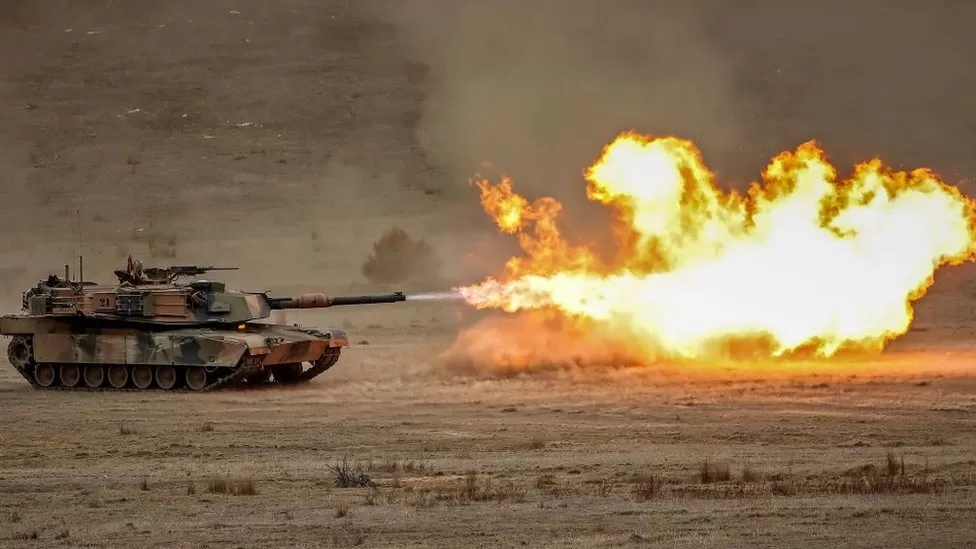
  • Ukraine war: US to provide depleted uranium tank shells to Kyiv

    Ukraine war: US to provide depleted uranium tank shells to Kyiv

    The US will be giving Ukraine weapons that some people disagree with. This is part of more than $1bn in help, including military and humanitarian aid.

    Russia criticized the decision to give American Abrams tanks ammunition that can penetrate regular tank armor.

    They are made of a stuff called depleted uranium, which is left over after removing most of the harmful stuff from uranium.

    During the night, it was reported that drones from Ukraine were believed to have attacked the Russian cities of Rostov-on-Don and near Moscow.

    A video that has not been proven to be true showed what seemed to be an explosion in the middle of Rostov. The Governor, Vasily Golubev, said that one person was slightly hurt and a few cars were harmed.

    The mayor of Moscow, Sergei Sobyanin, has said that a drone aimed at the town of Ramenskoye was destroyed, and there was no harm or damage caused.

    The announcement of a new security plan for Ukraine was made when Antony Blinken, a senior American diplomat, visited Kyiv. This made Russia very angry.

    The US is giving Ukraine $175 million worth of military equipment, including special bullets for M1 Abrams tanks. These bullets are made of uranium and will be given to Ukraine when they receive the tanks later this year.

    The rounds are made from a type of waste called depleted uranium. Depleted uranium is left over after making nuclear fuel or weapons from naturally occurring uranium. The International Atomic Energy Agency says that it cannot cause a nuclear reaction and is much less radioactive than natural uranium.

    Depleted uranium is a very dense material that can be used to make tanks stronger. It is also commonly used for making weapons because it is very heavy and can penetrate regular tank armor.

    These shells get sharper when they hit, which helps them pierce through armor better, and they catch fire when they touch something.

    Russia got very upset when the UK said they were sending depleted uranium shells to Ukraine for their tanks.

    When President Vladimir Putin said the weapons had a “nuclear component”, the UK Ministry of Defence said they had been using depleted uranium in their armor-piercing shells for a long time. They also accused Moscow of purposefully spreading false information.

    The UN group studying the effects of radiation says that exposure to depleted uranium doesn’t cause major poisoning. However, another UN agency warns that people who handle pieces of depleted uranium ammunition might face a risk of radiation.

    The US changed its decision from March when the Pentagon said it would not send any depleted uranium weapons to Ukraine.

    A US government official told the Politico news website that the US has decided to send weapons to Ukraine specifically for arming their Abrams tanks because they believe it is the most effective way to do so.

    John Kirby, a spokesperson for the National Security Council, said that they are a very common type of weapon.

    The US will also give anti-tank weapons, navigation systems for aircraft, and more ammunition for Himars missiles.

    Mr Blinken said that this new assistance will provide support and help make it even better and more successful.

    The Russian embassy in Washington criticized the decision, calling it a sign of cruelty. They also said that the US was fooling itself by not acknowledging the failure of the Ukrainian military’s counter-attack.

    Since June, Ukraine has not made significant progress in regaining its territories in the counter-offensive. However, Ukrainian military leaders say they have managed to break through Russia’s strong first line of defense in the southern region.

    Last Wednesday, a group of 16 people, which also included a child, were killed in an attack on the city of Kostyantynivka in the eastern Donetsk region of Ukraine.

    Ukraine’s President, Volodymyr Zelensky, accused Moscow of the attack, but Russia has not responded yet.

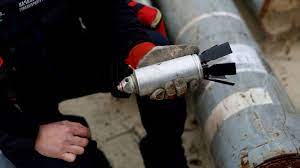
  • Biden supports decision to send controversial weapons to Ukraine

    Biden supports decision to send controversial weapons to Ukraine

    US President Joe Biden has stood by his “very difficult decision” to supply Ukraine with cluster bombs, despite concerns over their history of causing harm to civilians.

    Biden acknowledged that it took some time for him to be convinced of the necessity, but he ultimately took action due to Ukraine’s depleting ammunition supplies.

    While Ukraine’s leader expressed appreciation for the move, the decision has faced criticism from human rights organizations and certain members of the Democratic Party. Meanwhile, a Moscow envoy condemned the decision as “cynical” on the part of Washington.

    Mr Biden told CNN in an interview on Friday that he had spoken to allies about the decision, which comes ahead of a Nato summit in Lithuania next week.
    Cluster bombs are banned by more than 120 countries, but have been used by both Russia and Ukraine during the war.

    National Security Adviser Jake Sullivan told Friday’s daily White House briefing that officials “recognise the cluster munitions create a risk of civilian harm” from unexploded bombs.
    “This is why we’ve deferred the decision for as long as we could.”

    Mr Sullivan said Ukraine was running out of artillery and needed “a bridge of supplies” while the US ramps up domestic production.
    “We will not leave Ukraine defenceless at any point in this conflict period,” he said.

    The munitions have caused controversy over their failure – or dud – rate, meaning unexploded small bombs can linger on the ground for years and indiscriminately detonate later on.

    Mr Sullivan told reporters the American cluster bombs being sent to Ukraine were far safer than those he said were already being used by Russia in the conflict.


    He told reporters the US ones have a dud rate of less than 2.5%, while Russia’s have a dud rate of between 30-40%, he said.

    Mr Biden’s move will bypass US law prohibiting the production, use or transfer of cluster munitions with a failure rate of more than 1%.
    Early on in the war, when the White House was asked about allegations that Russia was using cluster and vacuum bombs, the then-press secretary said it would be a potential “war crime” if true.

    Marta Hurtado, speaking for the UN human rights office, said on Friday: “The use of such munitions should stop immediately and not be used in any place.”

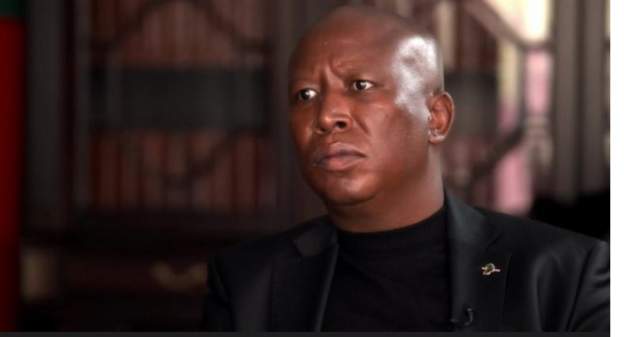
  • I will go beyond friendship and supply weapons to Russia – SA’s Julius Malema

    I will go beyond friendship and supply weapons to Russia – SA’s Julius Malema

    The leader of the Economic Freedom Fighters (EFF), the third-largest political party in South Africa, has declared he will “supply weapons to Russia” since Moscow is “in a war with imperialism”.

    In an interview with the BBC in Johannesburg, Julius Malema insisted that “South Africa is an ally of Russia” and that the ANC government’s position of non-alignment only applied to the war in Ukraine.

    “I will go beyond the friendship with Russia. In the war, I will align with Russia and I will even supply the weapons,” Mr Malema told HARDtalk’s Stephen Sackur.

    The EFF also wants South Africa to withdraw from the International Criminal Court (ICC).

    The ICC has issued an arrest warrant for Vladimir Putin for alleged war crimes but Mr Malema has pledged to prevent any attempt to arrest the Russian president if he attends next month’s Brics summit in Cape Town.

    Mr Malema made the comments following a diplomatic row in which the US ambassador to South Africa alleged that weapons and ammunition were loaded onto a Russian vessel docked in the country last December.

    The South African government has denied approving any arms shipments to Russia.