Tag: WhatsApp

  • WhatsApp to stop working on these devices in 2025

    WhatsApp to stop working on these devices in 2025

    WhatsApp will soon cease supporting 18 Android models and 3 iPhone models, affecting those with older smartphones.

    While the New Year signifies fresh beginnings for many, users who have managed to keep their devices running for over a decade may face disappointment as WhatsApp adjusts its compatibility with operating systems, making it inaccessible for older phones.

    The number of people affected won’t be massive, but for those who have diligently maintained their phones over the years, it’s worth checking if their device is on the list.

    As of January 1, 2025, WhatsApp will no longer function on Android devices running KitKat or earlier versions of the operating system. However, users with KitKat can continue using the app if they can update their phones to a more recent version of Android.

    Unfortunately, many of these older models no longer receive official updates, and upgrading them manually could void warranties and insurance while risking damage to the device.

    For those in possession of aging Android models, several phones will be impacted, including Samsung’s Galaxy S3, Galaxy Note 2, and Galaxy Ace 3, along with Motorola’s Moto G (1st Gen) and Razr HD, as well as HTC’s One X and Desire models.

    LG’s Nexus 4 and Xperia Z from Sony will also be among the affected devices. These phones are now deemed incompatible with the app as it evolves to meet the demands of newer operating systems.

    Meta, the parent company of WhatsApp, has stated that these updates are part of a routine process aimed at ensuring the app’s security and functionality, particularly with the latest smartphones.

    Come mid-2025, iPhone users will also face a similar fate. Starting May 5, WhatsApp will no longer work on iPhones running iOS versions prior to 15.1. Devices like the iPhone 5s, iPhone 6, and iPhone 6 Plus, which currently only support iOS 12.5.7, will lose access to WhatsApp. This change will apply to both the regular WhatsApp app and WhatsApp Business, as they share the same system requirements.

  • Full WhatsApp chats between Jakpa and AG admitted into evidence by court

    Full WhatsApp chats between Jakpa and AG admitted into evidence by court

    The High Court in Accra has admitted into evidence the complete WhatsApp messages exchanged between Richard Jakpa, the third accused, and Attorney-General Godfred Yeboah Dame.

    This decision was announced by trial judge Justice Afia Serwaa Asare-Botwe, who underscored that the court had previously admitted portions of the WhatsApp chats from the third accused and could not reject what the prosecution termed as the entire conversation.

    Justice Asare-Botwe emphasized that while the court has admitted the full messages, it retains the discretion to assess the weight and relevance of this evidence.

    This point was particularly pertinent as the defense raised concerns over the authenticity and completeness of the messages presented by the prosecution.

    During the court proceedings on Tuesday, June 18, Director of Public Prosecutions (DPP) Yvonne Atakora Obuobisa highlighted the volume of messages sent by Mr. Jakpa compared to the limited responses from the Attorney-General.

    The DPP argued for the admission of all of Mr. Jakpa’s WhatsApp messages to ensure a comprehensive understanding of the communications between the parties involved.

    Mr. Jakpa, under cross-examination, admitted that he had initiated contact with the Attorney-General prior to the trial. He disclosed that he obtained Mr. Dame’s contact information through his cousin, Supreme Court Judge Justice Yonny Kulendi.

    However, he also acknowledged that the messages presented in court did not encompass the entire conversation and were selectively chosen based on their relevance to his defense.

    Counsel for Mr. Jakpa, Mr. Thaddeus Sory, raised objections to the DPP’s motion to submit the full WhatsApp conversation into evidence. He argued that the defense required additional time to thoroughly review the messages to ensure their accuracy and context.

    Despite these objections, the court ruled in favor of admitting the full set of messages, reinforcing the importance of transparency and comprehensive evidence in the trial.

    This ruling has introduced a new dimension to the high-profile case, as the court now has access to the complete communication between Mr. Jakpa and the Attorney-General.

  • US govt investigates Ahmed Suale’s death; accesses his Whatsapp, photos, video etc

    US govt investigates Ahmed Suale’s death; accesses his Whatsapp, photos, video etc

    The locked iPhone and Huawei phone of investigative journalist, Ahmed Hussein-Suale have been successfully unlocked by the United States (US) government.

    Thousands of images, texts, audios, videos, and WhatsApp messages are under analysis by police investigators.

    Ahmed Hussein-Suale was assassinated near his family home in Accra on January 16, 2019, believed to be linked to his investigative work.

    Justice Minister Godfred Yeboah Dame revealed the collaboration, stating that no docket for prosecution has been submitted regarding the murder.

    US collaboration involved unlocking Suale’s phones, revealing “millions of documents” analyzed by Homicide and Cybercrime Units.

    Minister Dame emphasizes ongoing efforts to bring the perpetrators to justice and explores alternative motives for the murder.

    Investigations include satellite imagery, sketches from witness descriptions, and telecommunications analysis.

  • Sharing bank cards, Ghana card on WhatsApp can have your account hacked – Association of Banks warns

    Sharing bank cards, Ghana card on WhatsApp can have your account hacked – Association of Banks warns

    The Ghana Association of Banks (GAB) is issuing a public warning against sharing Ghana card, Visa card, or debit card details with individuals posing as bank staff on digital platforms like WhatsApp or email.

    To prevent fraud and scams, bank customers are advised not to share images revealing bank account details or identity numbers.

    GAB emphasizes that individuals should never send pictures of their Ghana Card or bank cards via WhatsApp to anyone claiming to be from their bank. If in doubt, customers are urged to contact their bank or Relationship Manager directly.

    This cautionary message aligns with the Bank of Ghana’s directive for banks to enhance cybersecurity measures to combat fraudulent activities in the banking industry.

    “Never send a picture of your Ghana Card or any of your bank’s cards, such as debit, Visa, and Mastercard, via WhatsApp to anyone purporting to be from your bank. If in doubt, contact your bank or Relationship Manager directly,” the Association stated.

    Desist from sharing bank cards, Ghana card on WhatsApp - Association of Banks warns

    While banks assure the public of increased security, GAB stresses the importance of vigilance and prompt reporting of unfamiliar incidents.

    The warning from GAB coincides with the Cyber Security Advisory (CSA) addressing the rise in online employment scams, leading to losses exceeding GHS 120,000 through fraudulent transactions.

    The CSA advises caution when encountering job postings or part-time roles offering unrealistically high salaries for minimal work, as these could be scams.

    Recent reports also highlight an online investment scheme called Pacminer defrauding close to 800,000 Ghanaians, resulting in losses exceeding GHC 90,000. The victims are urged to report such incidents promptly.

  • Here is how to use Whatsapp newly launched pin message feature for users

    Here is how to use Whatsapp newly launched pin message feature for users

    WhatsApp has introduced a new feature, Pinned Messages, aimed at simplifying the retrieval of important messages. This feature is now available globally for both individual and group chats.

    Similar to Telegram, WhatsApp users can now pin a message to the top of the chat window, with the capability to pin various message types, including text, polls, emojis, locations, and images.

    However, it’s important to note that only one message can be pinned at a time.

    While users have been requesting this Telegram-like functionality for a while, WhatsApp’s implementation limits users to pinning a single message, unlike Telegram, where multiple messages can be pinned in a conversation.

    The Pinned Messages feature proves handy for various scenarios. For instance, when visiting a friend’s place for the first time, they can pin their address at the top of the chat for easy access. In group chats, important information about an event or rules can be pinned for quick reference.

    For group chats, admins have the option to decide whether only admins or any member can pin a message.

    How to pin messages on WhatsApp:

    Step 1: Open WhatsApp >> go to chat

    Step 2: To ‘Pin’ a message, the user just has to long press on the message, and select ‘Pin’ from the context menu.

    Then, a banner will appear to select the duration of the pinned message: 24 hours, 7 days, and 30 days.

    It should be noted that seven days is the default choice. In a group chat, admins have the option to select if all members or only admins can pin a message.

  • EC received elections results through WhatsApp – EC Director

    EC received elections results through WhatsApp – EC Director

    The Electoral Commission (EC) has revealed that it used WhatsApp, a widely-used messaging app, to receive and organize the results of the NPP Super Delegates Congress on August 26, 2023.

    The event was intended to pick five presidential hopefuls out of ten candidates who want to compete for the NPP flagbearership in 2024.

    Director of Electoral Services at the EC, Dr. Serebour Quaicoe, explained that the Commission got the results through WhatsApp from 17 voting locations across the country.

    The EC projected these results on a screen for candidates’ representatives to check and confirm. Once everyone agreed, the results were written down and combined.

    Dr. Quaicoe said this method was quicker and more efficient than doing the process twice, which would have taken more time and effort. He also noted that there were no complaints from the field or the representatives; everyone accepted and signed off on the results.

    “We didn’t do double collation. We were receiving the results through WhatsApp. So what were were doing is that when the results comes through the WhatsApp, then we project the results that has come through our notice for them to compare and with what they have, so once they all agree, then we transfer them to the collation sheet, and we collate it. So were were showing them the results we were getting from the field and how the collation was also going so that nobody can complain that we didn’t have this, we did not have that, ” he said.

    He mentioned that only five representatives out of ten showed up at the EC headquarters for the result collection. Dr. Quaicoe thanked security personnel for keeping everything safe and praised everyone involved for their good behavior.

    “For the commission,. we didn’t receive any complaints from the field. The results were sent to us. We have five of the agents here. We did the collation with them. They have accepted the results. They have counter signed the collated results, taken their copies and they are gone, so it means that they don’t have any issues with the results. So farm I will say that it has been good,” he said.

    The NPP Super Delegates Congress results showed that Vice-President Dr. Mahamudu Bawumia came first with 629 votes, which is 66.29% of all the votes. In second place was Mr. Kennedy Ohene Agyapong, a Member of Parliament, with 132 votes, or 13.91%.

    Other candidates and their votes included Trade and Industry Minister Mr. Alan John Kyeremanteng with 95 votes (10.01%), Food and Agriculture Minister Dr. Owusu Afriyie Akoto with 36 votes (3.79%), former MP for Mampong Mr. Francis Addai-Nimoh and former Energy Minister Mr. Boakye Kyeremateng Agyarko, both with 9 votes each, or 0.95%.

    Some candidates who didn’t receive as much votes: former General Secretary of the NPP Mr. Kwabena Agyei Agyepong with 6 votes (0.63%), former Railways Development Minister Mr. Joe Ghartey with 4 votes (0.42%), former NPP Technology Director Mr. Kwadwo Nsafoah Poku with 3 votes (0.32%), and former Minister of State Dr. Kofi Konadu Apraku with 0 votes.

    Watch video below

  • WhatsApp introduces new feature ‘Chat Lock’ to enhance user privacy and security

    WhatsApp introduces new feature ‘Chat Lock’ to enhance user privacy and security

    WhatsApp, the popular messaging platform, is taking steps to bolster user privacy and security with the introduction of its latest feature, “Chat Lock.”

    Acknowledging the importance of safeguarding intimate conversations, WhatsApp aims to provide users with an added layer of protection for their sensitive messages.

    By implementing the Chat Lock feature, WhatsApp offers a heightened level of security, ensuring that confidential conversations remain private and inaccessible to unauthorised individuals.

    This development further emphasizes WhatsApp’s commitment to maintaining the privacy and trust of its vast user base.

    WhatsApp New Privacy Feature

    According to the reports, the new feature will also hide notifications related to the private chats. To access the messages users have to enter the device password or biometric information.

    In its official blog post unveiling the new feature, WhatsApp expressed its belief that the Chat Lock functionality would prove beneficial to individuals who occasionally share their phones with family members or find themselves in situations where someone else is holding their phone precisely when an important or confidential conversation takes place.

    The messaging platform anticipates that the feature will enhance user experience by providing an additional level of security and peace of mind in such scenarios.

    The messaging app has also shared a video revealing how the new feature will work and how users can take advantage of it. WhatsApp has made a commitment to expand the capabilities of the Chat Lock feature in the upcoming months. Users can expect a range of new options, including the ability to lock chats on companion devices and the option to create a personalized password specifically for locked chats, separate from their phone password.

    This enhancement will provide users with more flexibility and control over their privacy settings. Furthermore, it’s worth noting that the Chat Lock feature will be accessible on both iOS and Android platforms, ensuring a consistent and secure experience across different operating systems.

  • Ministers warned that due to privacy issues, WhatsApp might stop operating in UK

    Ministers warned that due to privacy issues, WhatsApp might stop operating in UK

    Ministers have been told that the UK government runs the risk of sleepwalking into a conflict with WhatsApp that could result in the messaging app being banned in Britain as the window of opportunity for a cooperative resolution is rapidly closing.

    At the centre of the row is the online safety bill, a vast piece of legislation that will touch on almost every aspect of online life in Britain. More than four years in the making, with eight secretaries of state and five prime ministers involved in its drafting, the bill, which is progressing through the House of Lords, is more than 250 pages long. The table of contents alone spans 10 pages.

    The bill gives Ofcom the power to impose requirements for social networks to use technology to tackle terrorism or child sexual abuse content, with fines of up to 10% of global turnover for those services that do not comply. Companies must use “best endeavours” to develop or source technology to obey the notice.

    But for messaging apps that secure their user data with “end-to-end encryption” (E2EE), it is technologically impossible to read user messages without fundamentally breaking their promises to users. That, they say, is a step they will not take.

    “The bill provides no explicit protection for encryption,” said a coalition of providers, including the market leaders WhatsApp and Signal, in an open letter last month, “and if implemented as written, could empower Ofcom to try to force the proactive scanning of private messages on end-to-end encrypted communication services, nullifying the purpose of end-to-end encryption as a result and compromising the privacy of all users.”

    If push came to shove, they say, they would choose to protect the security of their non-UK users. “Ninety-eight per cent of our users are outside the UK,” WhatsApp’s chief, Will Cathcart, told the Guardian in March. “They do not want us to lower the security of the product, and just as a straightforward matter, it would be an odd choice for us to choose to lower the security of the product in a way that would affect those 98% of users.”

    Legislators have called on the government to take the concerns seriously. “These services, such as WhatsApp, will potentially leave the UK,” Claire Fox told the House of Lords last week. “This is not like threatening to storm off. It is not done in any kind of pique in that way. In putting enormous pressure on these platforms to scan communications, we must remember that they are global platforms.

    “They have a system that works for billions of people all around the world. A relatively small market such as the UK is not something for which they would compromise their billions of users around the world.”

    A Home Office spokesperson said: “We support strong encryption, but this cannot come at the cost of public safety. Tech companies have a moral duty to ensure they are not blinding themselves and law enforcement to the unprecedented levels of child sexual abuse on their platforms.

    “The online safety bill in no way represents a ban on end-to-end encryption, nor will it require services to weaken encryption.

    “Where it is the only effective, proportionate and necessary action available, Ofcom will be able to direct platforms to use accredited technology, or make best endeavours to develop new technology, to accurately identify child sexual abuse content, so it can be taken down and the despicable predators brought to justice.”

    Richard Allan, the Liberal Democrat peer who worked as Meta’s head of policy for a decade until 2019, described the government approach as one of “intentional ambiguity”.

    “They are careful to say that they have no intention of banning end-to-end encryption … but at the same time refuse to confirm that they could not do so under the new powers in the bill. This creates a high-stakes game of chicken, where the government think companies will give them more if they hold the threat of drastic technical orders over them.

    “The government’s hope is that companies will blink first in the game of chicken and give them what they want.”

    Allan said another scenario could be that the government comes clean and declares its intent is to limit end-to-end encryption. “It would at least allow for an orderly transition, if services choose to withdraw products from the UK market rather than operate here on these terms. It might be that there are no significant withdrawals, and the UK government could congratulate themselves on calling the companies’ bluff and getting what they want at little cost, but I doubt that this would be the case.”skip past newsletter promotion

    Backers of the bill are unimpressed with efforts to rewrite it to suit big tech, though. Damian Collins, the Conservative MP who chaired a Westminster committee scrutinising the bill, said he did not support one amendment introduced to try to protect end-to-end encryption.

    “I don’t think you want to give companies subjective grounds for deciding whether or not they need to comply with the duties set out in the bill.”

    Collins added that the bill did not attack encryption because it would only require messaging companies sharing information that they have access to – which does not include message content. However, he said authorities should be able to access the background data behind users, including data about usage of the app, contacts, location and names of user groups.

    If users access WhatsApp through a web browser, the service can also collect information about websites visited before and after sending messages, Collins added.

    This week Politico reported that the Department for Science, Innovation and Technology wanted to find a way through the row and is having talks “with anyone that wants to discuss this with us”.

    Last year, the chief executive of the trade association Digital Content Next, Jason Kint, flagged a US antitrust complaint that contained 2019 communications between Mark Zuckerberg and his policy chief, Nick Clegg, in which they discussed flagging the importance of privacy and end-to-end encryption as a “smokescreen” in any debate over integrating the back end of Meta’s apps.

    Clegg wrote: “Are you suggesting we should lead with E2EE and not interoperability? You may be right that – as a matter of political practicality – the latter is easier to block/hinder than the former.”

    He added that it was “very easy to explain” why E2EE is helpful to users whereas integrating the interoperability of apps looks like “a play for our benefit, not necessarily users”.

  • WhatsApp to compete Zoom  with its new eight-person video call capability

    WhatsApp to compete Zoom with its new eight-person video call capability

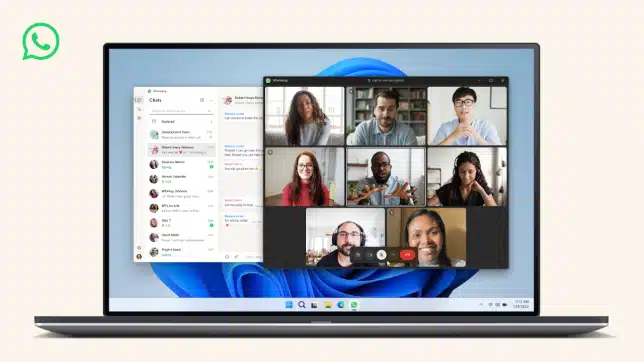
    With a dedicated Windows client, WhatsApp is stepping outside of its role as a simple messaging software to take on the industry leader in video conferencing, Zoom.

    Mark Zuckerberg unveiled on Thursday a brand-new Windows desktop client for WhatsApp that enables users to organise group calls on their PCs.

    User-hosted audio and video calls can now have up to 32 participants each.
    Despite the fact that this is well below Zoom’s 100-person capability, WhatsApp has vowed to gradually raise these caps.

    Group video calls have already been on WhatsApp’s mobile app for a while now. This update is part of a renewed effort by Meta to improve WhatsApp’s desktop clients

    Will you be using Whatsapp video calls on your computer?

      Sign up for our News Updates newsletter for the latest news, exclusives and more from Metro sent straight to your inbox

      ‘The new Windows desktop app loads faster and is built with an interface familiar to WhatsApp and Windows users,’ said WhatsApp in a statement.

      The Meta-owned messaging service has also introduced a new WhatsApp beta experience for Android tablets and a new, faster app for Mac desktops that is currently in the early stages of beta.

      Last month, Whatsapp launched ‘the number one feature’ requested by users with ‘Status Reactions’. It also announced updates to its iOS app, letting users multitask on video calls.

    • Matt Hancock describes WhatsApp messages as a “leaks major violation of trust”

      Matt Hancock describes WhatsApp messages as a “leaks major violation of trust”

      The Journalist who leaked WhatsApp chats during the pandemic has been criticized by Matt Hancock, who has expressed his ‘great disappointment’ in him.

      A “major betrayal and violation of trust by Isabel Oakeshott,” he claimed, was committed when she sent messages to the Daily Telegraph from his position as health secretary.

      Although Ms. Oakeshott called it a “ridiculous defense,” she stood by his assertion that the public had no interest in learning the contents of the mails.

      What a ludicrous defense, she opined to TalkTV.
      It is blatantly ludicrous for someone as intelligent as Matt Hancock to claim that the public has no interest in these findings in a statement.
      He is well aware of this.

      Earlier this week around 100,000 private messages from Mr Hancock’s phone were leaked to the press.

      Texts showed that Mr Hancock rejected advice to test all residents going into English care homes for coronavirus at the start of the pandemic.

      Chief medical officer Professor Sir Chris Whitty told the former health secretary there should be testing for ‘all going into care homes’.

      Matt Hancock Book Launch
      Mr Hancock with Isabel Oakeshott at the launch of his book, Pandemic Diaries earlier this year (Picture: Andrew Parsons / Parsons Media)

      But the messages suggest he rejected the guidance, telling an aide the move just ‘muddies the waters’, and introduced mandatory testing for those coming from hospitals.

      In further messages released this morning, it came to light that former education secretary Sir Gavin Williamson said some schools wanted to close during the pandemic so staff would have an ‘excuse’ not to work.

      They show Mr Williamson asked the then health secretary for help securing PPE for schools, adding: ‘Some will just want to say they can’t [open] so they have an excuse to avoid having to teach, what joys!!!’

      Ms Oakeshott said she would not get involved in a ‘slanging match’ with Mr Hancock ‘because it wouldn’t be pretty’.

      ‘He can threaten me all he likes,’ she told BBC Radio 4’s Today.

      ‘There are plenty of things I can say about his behaviour, by the way, that I’m not going to do – at least not at this stage – because this is not about Matt Hancock. It is so much bigger than that.’

      Pressed on her claim about the message he sent her, Ms Oakeshott said: ‘I’m saying that he sent me a message at 1.20am in the morning. It wasn’t a pleasant message.’

      Explaining why she had breached a non-disclosure agreement to hand the cache of WhatsApp messages to the Telegraph, she said it was not motivated by money.

      ‘Anyone who thinks I did this for money must be utterly insane,’ she said.

      ‘This is about the millions of people, every one of us in this country that were adversely affected by the catastrophic decisions to lock down this country repeatedly, often on the flimsiest of evidence for political reasons.’

      In a statement this morning Mr Hancock said: ‘I am hugely disappointed and sad at the massive betrayal and breach of trust by Isabel Oakeshott.

      ‘I am also sorry for the impact on the very many people – political colleagues, civil servants and friends – who worked hard with me to get through the pandemic and save lives.

      ‘There is absolutely no public interest case for this huge breach. All the materials for the book have already been made available to the Inquiry, which is the right, and only, place for everything to be considered properly and the right lessons to be learned.

      ‘As we have seen, releasing them in this way gives a partial, biased account to suit an anti-lockdown agenda.

      ‘Isabel and I had worked closely together for more than a year on my book, based on legal confidentiality and a process approved by the Cabinet Office.

      HARTLEPOOL, ENGLAND - DECEMBER 13: Isabel Oakeshott, journalist and presenter and partner of Richard Tice, Brexit Party candidate for Hartlepool attends the general election count at Mill Bank leisure centre on December 13, 2019 in Hartlepool, England. The current Conservative Prime Minister Boris Johnson called the first UK winter election for nearly a century in an attempt to gain a working majority to break the parliamentary deadlock over Brexit. The election results from across the country are being counted overnight and an overall result is expected in the early hours of Friday morning. (Photo by Ian Forsyth/Getty Images)
      Mr Hancock has denied sending ‘menacing messages’ to Isabel Oakeshott (Picture: Getty)

      ‘Isabel repeatedly reiterated the importance of trust throughout, and then broke that trust.

      ‘Last night, I was accused of sending menacing messages to Isabel. This is also wrong.

      ‘When I heard confused rumours of a publication late on Tuesday night, I called and messaged Isabel to ask her if she had ‘any clues’ about it, and got no response.

      ‘When I then saw what she’d done, I messaged to say it was ‘a big mistake’. Nothing more.

      ‘I will not be commenting further on any other stories or false allegations that Isabel will make.

      ‘I will respond to the substance in the appropriate place, at the inquiry, so that we can properly learn all the lessons based on a full and objective understanding of what happened in the pandemic, and why.’

    • WhatsApp will no longer work on these smartphones – Full list [update] 

      WhatsApp will no longer work on these smartphones – Full list [update] 

      Older devices frequently quit supporting WhatsApp, and the newer ones are released. In fact, as of December 31, 2022, the messaging app would no longer work on more than 49 devices. This article contains the complete list.

      WhatsApp releases updates often, and occasionally older handsets can no longer keep up. So, for instance, on iPhones running iOS 10 and iOS 11, the widely used messaging app stopped functioning on October 24, 2022. Also, this time, only two iPhones will lose access to the messaging app alongside a bunch of old Android smartphones.

      Of course, we’re talking about smartphones from a few years ago, so there’s a good chance you’ve since upgraded to a newer model. However, it is normal to see outdated smartphones in use today. Sadly, if yours is on the list, WhatsApp will no longer be available starting on December 31.

      Here is a list of those who were impacted. Since there are only 49 gadgets total in this one, we have arranged them according to alphabetical order to make it easier for users to search.

      The list of smartphones that will no longer be able to use Whatsapp

      • iPhone 5
      • iPhone 5c
      • Archos 53 Platinum
      • Grand S Flex ZTE
      • Grand X Quad V987 ZTE
      • HTC Desire 500
      • Huawei Ascend D
      • Huawei Ascend D1
      • Huawei Ascend D2
      • Huawei Ascend G740
      • Huawei Ascend Mate
      • Huawei Ascend P1
      • Quad XL
      • Lenovo A820
      • LG Enact
      • LG Lucid 2
      • LG Optimus 4X HD
      • LG Optimus F3
      • LG Optimus F3Q
      • LG Optimus F5
      • LG Optimus F6
      • LG Optimus F7
      • LG Optimus L2 II
      • LG Optimus L3 II
      • LG Optimus L3 II Dual
      • LG Optimus L4 II
      • LG Optimus L4 II Dual
      • LG Optimus L5
      • LG Optimus L5 Dual
      • LG Optimus L5 II
      • LG Optimus L7
      • LG Optimus L7 II
      • LG Optimus L7 II Dual
      • LG Optimus Nitro HD
      • Memo ZTE V956
      • Samsung Galaxy Ace 2
      • Samsung Galaxy Core
      • Samsung Galaxy S2
      • Samsung Galaxy S3 mini
      • Samsung Galaxy Trend II
      • Samsung Galaxy Trend Lite
      • Samsung Galaxy Xcover 2
      • Sony Xperia Arc S
      • Sony Xperia miro
      • Sony Xperia Neo L
      • Wiko Cink Five
      • Wiko Darknight ZT
    • Save yourself the embarrassment, WhatsApp allows you undo ‘Delete for Me’

      WhatsApp has introduced a feature that allows you to undo the “Delete for Me” action to avoid being embarrassed about accidentally deleting a message that you intended to delete for everyone on the app.

      The new “accidental delete” feature introduces a five-second window that enables users to reverse the action of deleting messages for themselves in an individual or group chat and delete them for everyone.

      When deleting an incorrectly sent message, users may inadvertently tap the “Delete for Me” button rather than the “Delete for Everyone” button.

      WhatsApp lets you undo ‘Delete for Me’ in case you hit that button too quickly

      The new feature aims to help users overcome those situations by getting the small window to reverse their original action.

      WhatsApp said its new offering would be available to all users on Android and iPhone. It was beta tested with some Android and iOS users in August, per a report by WhatsApp features tracker WABetaInfo.

      In 2017, WhatsApp introduced the “Delete for Everyone” option to let users recall a message for all people in a conversation.

      The feature was designed to address the issue of sending messages mistakenly in individual and group chats.

      Although the initial rollout of the option was limited to seven minutes, WhatsApp eventually extended that time limit to up to two days and 12 hours — or 60 hours — in August this year.

      Source: Myjoyonline.com 


    • WhatsApp is adding official support for Meta’s Bitmoji-style avatars

      Avatars, the customizable characters that are already available across Meta services like Facebook and Instagram, are officially launching on WhatsApp.

      Meta has announced that they can be used as a profile picture on the messaging service or sent in the form of one of 36 custom stickers.

      The feature “will be rolling out to users everywhere from today,” according to Meta’s press release.

      WhatsApp’s avatars feature has been steadily rolling out to beta testers for a couple of months now. They’ve been available to some (but not all) beta users on both Android and iOS since at least October, according to WABetaInfo, but they’re expected to become available for all users on mobile over the coming weeks.

      Meta’s avatars are one of a number of virtual customizable characters available across different platforms and messaging apps. Perhaps the most well known are Bitmoji, the 2D characters now owned by Snap, and both Apple and Samsung also offer system-level avatars in the form of Memoji and AR Emoji, respectively. But the feature could end up being the most significant for Meta, which is pitching its take on the feature as the thing that will one day represent its users in the so-called metaverse.

    • Mark Zuckerberg urged to spend less on metaverse after suffering ‘supersized and terrifying losses’

      When asked why his company is focused on experimental bets, Zuckerberg said: “It would be a mistake for us to not focus on any of these areas that will be fundamentally important to our future.”

      Facebook’s parent company is metaverse under pressure to focus less on the metaverse – as investors say it is an experimental bet causing “supersized and terrifying losses”.

      The tech giant changed its name to Meta last year under plans to build a virtual world that would be used by millions of people.

      But Mark Zuckerberg’s metaverse has been beset by technical problems, with user numbers far below the targets set by executives.

      Facebook Chairman and CEO Mark Zuckerberg testifies at a House Financial Services Committee hearing in Washington, U.S., October 23, 2019

      The latest figures show Reality Labs, the division building the metaverse, lost £3.16bn between July and September, compared with £2.27bn in the same period a year earlier.

      Investors rushed to dump Meta’s stock after the company warned that losses linked to the metaverse “will grow significantly” next year.

      When asked why his company is focused on experimental bets, Zuckerberg said: “It would be a mistake for us to not focus on any of these areas that will be fundamentally important to our future.”

      But analysts have said that the metaverse “feels like one big gamble” – especially given the current economic crisis – and fear the road ahead will be “long and painful”.

      The virtual reality headsets required to get the best experience in Meta’s virtual world are pricy. One costs £1,300 – putting it out of the reach of many consumers.

      Paolo Pescatore from PP Foresight said: “People are not rushing out of their seats to buy a VR headset or even watch 360-degree videos … The new device still feels like an expensive toy.”

      Earlier this week, a fund that invests in Meta called on the company to cut its yearly investment in the metaverse from $10 billion to $5 billion.

      Altimeter Capital’s CEO, Brad Gerstner, warned: “Meta has drifted into the land of excess – too many people, too many ideas, too little urgency.

      “This lack of focus and fitness is obscured when growth is easy but deadly when growth slows and technology changes.”

      Meanwhile, Insider Intelligence analyst Debra Aho Williamson has warned that Meta needs to turn its business around – focusing less on the metaverse and more on fixing its core business.

      “As Facebook Inc, was a revolutionary company that changed the way people communicate and the way marketers interact with consumers. Today it’s no longer that innovative groundbreaker.”

      Meta – which owns Facebook, Instagram, and WhatsApp – has other clouds on the horizon as it battles falling advertising sales and stiff competition from TikTok.

      Revenue in the third quarter fell for a second consecutive time to £23.83bn.

      Meta’s share price is in danger of falling to its lowest level in six years – and the stock has plunged by 61.6% since the year began.

      Source: Skynews.com


    • WhatsApp users unable to send messages as app faces global outage

      WhatsApp, the Meta-owned instant messaging app with over 2 billion users, appears to be facing an outage, according to thousands of users.

      The outage began at about 8:04am Tuesday, according to user complaints. WhatsApp has acknowledged the outage.

      DownDetector and WaBetaInfo, two web services that track the Facebook app, have confirmed the outage. DownDetector, which received over 5,000 complaints about the glitch from users in a span of an hour, shows that U.S. and India are among those most impacted by the outage. India is the largest market of WhatsApp users.

      In a statement, a Meta spokesperson said: “We’re aware that some people are currently having trouble sending messages and we’re working to restore WhatsApp for everyone as quickly as possible.”

      WhatsApp has become a critical infrastructure in many markets, used by government officials, telecom service providers and of course, billions of people. As of 2020, the service was used to send over 100 billion messages a day, a figure that is unrivaled in the industry.

      Facebook Messenger and WhatsApp together were used to exchange 60 billion messages a day as of early 2016. Apple chief executive Tim Cook said in May that iMessage and FaceTime were seeing record usage, but did not share specific figures.

      The last time Apple did share the figure, it was far behind WhatsApp’s then usage (podcast). WeChat, which has also amassed over 1 billion users, is behind in the daily volume of messages, too.

      Source: Vanguardngr.com

    • Iran unrest: What’s going on with Iran and the internet?

      Activists in Iran are expressing concern about widespread internet outages and residents being unable to access social media.

      Anger has circulated online after over a week of protests sparked by the death of a Kurdish woman in police custody.

      Internet monitoring group NetBlocks said Instagram and WhatsApp – two of the major communication tools that Iran usually allows – had been restricted.

      WhatsApp said it was working to keep Iranian users connected.

      The two Meta-owned apps have millions of Iranian users and have become increasingly popular after authorities blocked other platforms in recent years, including Facebook and Twitter.

      Telegram, YouTube and TikTok have also periodically been closed down.

      The latest intermittent blackouts follow the eruption of nationwide protests over Mahsa Amini’s death. The 22-year-old had been detained for allegedly failing to adhere to hijab (headscarf) rules.

      NetBlocks reported that the internet was partially reconnected on Thursday night but that on Friday it was suffering a “nation-scale loss of connectivity” again.

      “People in Iran are being cut off from online apps and services,” Instagram chief Adam Mosseri tweeted, adding that “we hope their right to be online will be reinstated quickly”.

      But others accused Meta of being complicit in disconnecting users.

      Meta has a team of Persian-speaking reviewers who look at and remove content that violates their rules.

      If a post that has broken Meta’s community standards has been reported by users or flagged by technology, it will be taken down.

      Some shared their evidence that content supporting the Iranian protests had been blocked by Meta.

      People also reported not being able to access their WhatsApp accounts even when trying to use a VPN and proxy.

      Ordinarily, website access is heavily restricted by government filters and only those with VPNs can access uncensored content from overseas websites. But this ban seems different.

      So what is really going on?

      The internet blackouts largely come from Iran’s biggest mobile phone operator being offline. Iran Mobile Communications Company has more than 60 million customers.

      Earlier in the week, the communications minister blamed security reasons for the disruption.

      But Isik Mater from NetBlocks told the BBC: “The internet is one of the biggest tools that the Iranian authorities have got in their hands when unrest breaks out on the streets.”

      She says because there is no private broadcast network in Iran, the internet is the “only place” where protesters can share their voice.

      Mahsa Amini
      IMAGE SOURCE,MAHSA AMINI FAMILY Image caption, Mahsa Amini died after she collapsed at a morality police detention centre

      Miss Amini’s death has unleashed anger over issues including personal freedoms and economic challenges in Iran.

      Protesters – many of whom are women who have been waving and burning their veils – say they fear an escalating crackdown.

      “We are worried that the world will forget about Iran as soon as the regime shuts down the internet – which is already happening,” one activist, who wanted to remain anonymous, said.

      Most of the protests and campaigns are organised by people over social media and if they cannot get connected then it becomes much more difficult to mobilise.

      Protesters block a street in Tehran
      IMAGE SOURCE,GETTY IMAGES Image caption, Protests over Mahsa Amini’s death have spread across Iran

      Shayan Sardarizadeh from the BBC’s disinformation unit said: “Shutting down internet connections nationwide is the nuclear option for Iranian authorities, only triggered when they fear protests are on a scale that pose an existential threat to the regime.

      “It is an effective tool that severely harms the ability of protesters to organise, communicate and inform the outside world, but it also carries a huge cost for the Iranian economy, businesses and public services.

      “However, Iranian authorities have shown time and again that when faced with a choice between a severe hit to the economy and cracking down on political unrest at any cost, they will always choose the latter.”

      Clamping down heavily on protesters and internet blackouts has worked to suppress people in Iran in the past.

      But fears are growing that the situation could escalate to something like 2019 protests that erupted over petrol price rises, the bloodiest in the Islamic republic’s history.

      During those protests, the internet was cut off for days at a time.

      Iranian President Ebrahim Raisi has said protesting is allowed in the country but “rioting” will not be tolerated.

      “Protests have always happened in Iran. The protesters are heard. However, protests must be distinguished from rioting,” he said.

      Source: BBC


    • WhatsApp brings back an old function

      WhatsApp is constantly working on adding and improving its features to provide quality service. On this occasion, it seeks to return to an ease that it had been used to offer.

      This is the help or technical support assistant that enables users to communicate with a representative who can give them a hand in the event of problems in the operation of the application. However, and for now, it will not be available to all people.

      This WhatsApp technical support can be accessed by users who have the beta or trial version. In the case of devices with Android operating system, it is version 2.22.3.5; while on iOS, it is at version 22.2.72. It is not a very old function, but it knew how to be until last year, when it disappeared.

      However, those who have this application format available can access this service by simply going to the “Settings” section; then “Help”, and finally select “Contact us”. In this way, people can interact through a chat room with an assistant who will help you solve a problem.

      It should be noted that these conversations have a green sign that identifies it as an official WhatsApp service. Problems that can be reported include everything from malfunctions to scams.

      Source24 News

    • Letter from Africa: Why Nigerians are muting their mothers on WhatsApp

      In our series of letters from African writers, Nigerian novelist Adaobi Tricia Nwaubani says children are now having to police their credulous parents on WhatsApp.

      Just a few years ago, local comedians had a field day with jokes about elderly Nigerian mothers and their nonchalant attitudes towards their mobile phones.

      They needed their children’s assistance to type and send text messages or log in to their accounts and read emails.

      And their frequent excuse for missed calls was: “My phone was in my handbag.”

      These days, the jokes have upgraded to Nigerian mothers and their infatuation with WhatsApp, the most popular messaging app in Africa.

      Nigerian comedians like Maraji have been making skits about them.

      “My mother spends her entire morning on WhatsApp,” 39-year-old Udo, whose home is in Lagos, told me.

      “Throughout while she’s having her breakfast and drinking her tea, she’s checking people’s status updates and watching videos.”

      ‘Relevant messages’

      Unlike Twitter and Instagram, WhatsApp can work even when internet connections are iffy, as is often the case in many parts of Nigeria.

      And it requires no profiles or passwords, so the generation that mostly retired from active life before access to the internet became common in Nigeria finds it easy to use. In fact, it is their internet.

      A common complaint among younger Nigerians is the number and nature of WhatsApp messages they receive from their mothers.

      “You just wake up in the morning and you see 10 videos from your mother,” 41-year-old Ihuoma, who lives in Nigeria’s capital, Abuja, told me.

      “And each one begins with: ‘You must watch this!’ ‘This will help somebody!’ Those are always the opening lines.”

      Her 76-year-old mother, Patty, told me that all the messages she forwards are “relevant”.

      “I don’t send frivolous messages at all,” she said.

      “Why I send those things to my children, it is a form of education, lifting up of minds, sharing knowledge, experiences. I consider it a sort of fellowship, sharing with my children.”

      Ihuoma has since muted her mother’s WhatsApp account and rarely opens her messages.

      For many Nigerian mothers, the ability to broadcast ready-made messages via WhatsApp is like a superpower.

      It enables them to transmit unsolicited prayers, advice and opinions.

      One woman who complained on Twitter about her mother putting onions in the corner of every room in the house – touted on WhatsApp as a way to absorb toxins – received replies saying their mothers had also followed the erroneous advice.

      “In our family group, my mother was always forwarding me and my siblings different health suggestions, concoctions to mix and drink,” said Udo.

      “When I pointed out to her that some of them are questionable, she replied: ‘You never know, just try it and see.’”

      Her mother also forwarded gory videos of kidnap victims and crime scenes, insisting that her children needed to see these to be aware and beware.

      “That’s when I left the family group and felt I could not do this any more,” Udo said.

      “My brother blocked her, which hurt her a lot. But she wouldn’t listen. She keeps forwarding.”

      Thongs, cancer and other fanciful warnings

      A number of people told me that they also had blocked their mothers on WhatsApp but did not want to let them know.

      “I was once involved in an online debate about this,” Ihuoma said.

      “Some people were of the opinion that they wanted to block their mothers but couldn’t get themselves to do that to someone who had carried them in the womb for nine months.”

      They were tired of the advice and cautions, mostly from conservative or religious mothers who have always had a problem with their more liberal-minded children’s lifestyles.

      Warnings, for example, signed by unknown medical experts, explaining how wearing thongs can cause cancer and how tight skirts can lead to heart attacks.

      All stories accompanied by videos and photos.

      Affordable internet access became common in Nigeria just a few years ago, so this generation of elderly Nigerians was hardly exposed to the wonders of Photoshop and the ingenuity of idle minds that invent stories just for fun and clicks.

      The Wuhan ‘dragon’

      And so, they tend to believe most information they come across, especially when there is visual “evidence”.

      “My mother sent me and my siblings a video of a dragon-like creature fleeing towards the sky,” said 40-year-old Grace, who lives in Lagos.

      “She said we should see, that coronavirus was finally leaving the earth.”

      Source: bbc.com

    • Whatsapp update finally stops people from adding you to groups you don’t want to be in

      A new WhatsApp update means users will no longer be added to group chats without their consent.

      The latest feature for Android and iOS devices allow users to decide who, if anyone, can add them to new groups.

      It can be enabled through the messaging app’s privacy settings, with three options now available for who is authorised to add to groups: ‘Everyone’, ‘My Contacts’, or ‘My Contacts Except…’.

      Kidi says women keep harassing him on Whatsapp

      This final option allows users to blacklist certain contacts, who will be forced to send any group chat invites through private chats. Users will then have three days to decide whether or not to accept the invite.

      The new update was first rolled out in India last month but will be available to download for all WhatsApp users from today.

      It is the latest in a string of recent updates to the world’s most popular messaging app, which is used by around 300 million people each day.

      Earlier this week the Facebook-owned app introduced an update that allows users to watch Netflix videos within the app.

      The feature, which is currently limited to the iPhone version of the app, means WhatsApp users no longer need to leave the app to preview content, similar to the way videos from Instagram and YouTube can already be viewed within WhatsApp.

      WhatsApp sues Israeli firm over phone hacking claims

      Other recent updates include biometric security support that allows Android users to secure WhatsApp with a fingerprint to prevent people from snooping on their messages.

      WhatsApp is also expected to introduce potentially the biggest update in its history over the coming months, with the introduction of support for Facebook’s Libra cryptocurrency.

      No official date has been set for Libra and various regulatory hurdles need to be overcome before its launch, though once it is ready it will allow people to send funds across Facebook’s stable of apps, including Instagram and Messenger.

      Source: independent.co.uk

    • WhatsApp sues Israeli firm over phone hacking claims

      Facebook-owned WhatsApp has filed a lawsuit against Israel’s NSO Group, alleging the firm was behind cyber-attacks that infected devices with malicious software.

      WhatsApp accuses the company of sending malware to roughly 1,400 mobile phones for the purposes of surveillance.

      Users affected included journalists, human rights activists, political dissidents, and diplomats.

      NSO Group, which makes software for surveillance, disputed the allegations.

      In a court filing, WhatsApp said NSO Group “developed their malware in order to access messages and other communications after they were decrypted on target devices”.

      Read:Facebook, Instagram and WhatsApp hit by file transfer glitch

      It said NSO Group created various WhatsApp accounts and caused the malicious code to be transmitted over the WhatsApp servers in April and May.

      “We believe this attack targeted at least 100 members of civil society, which is an unmistakable pattern of abuse,” WhatsApp said in a statement.

      The affected users had numbers from several countries, including Bahrain, the United Arab Emirates and Mexico, according to the lawsuit.

      WhatsApp said it is seeking a permanent injunction banning NSO from using its service.

      The firm, which was acquired by Facebook in 2014, said it was the first time an encrypted messaging provider had taken legal action of this kind.

      Read:Is the full stop rude when used on WhatsApp?

      WhatsApp promotes itself as a “secure” communications app because messages are end-to-end encrypted. This means they should only be displayed in a legible form on the sender or recipient’s device.

      “In the strongest possible terms, we dispute today’s allegations and will vigorously fight them,” the company said in a statement to the BBC.

      “The sole purpose of NSO is to provide technology to licensed government intelligence and law enforcement agencies to help them fight terrorism and serious crime.”

      Source: bbc.com