Tag: Wildlife

  • Govt holds workshop on wildlife protection, management of protected areas

    Govt holds workshop on wildlife protection, management of protected areas

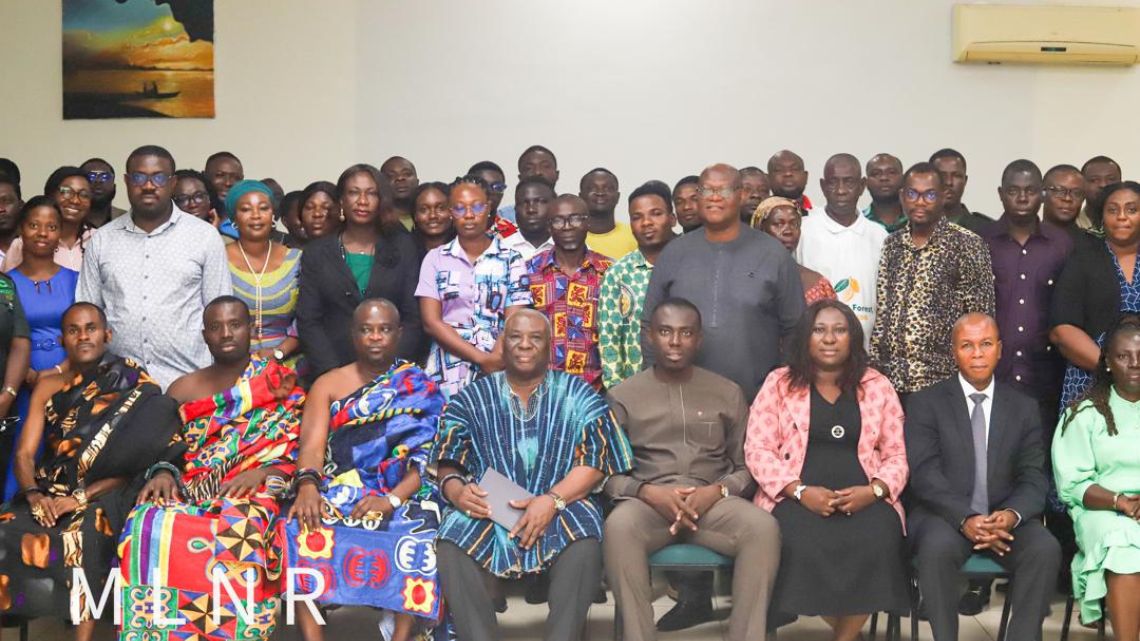
    The government of Ghana has taken a proactive step in wildlife conservation by hosting a workshop aimed at fostering understanding and proper implementation of the Wildlife Resources Management Act, 2023 (Act 1115).

    Organised by the Ministry of Lands and Natural Resources in collaboration with the Forestry Commission, the workshop, held on October 29, 2024, in Elmina, Central Region, brought together stakeholders to discuss the framework for wildlife protection and the sustainable management of protected areas.

    In his address to stakeholders, Mr Akwasi Konadu, Deputy Minister in charge of Lands and Forestry, emphasized the Act’s focus on local community involvement in wildlife management. He highlighted the introduction of Community Resources Management Areas (CREMAs), a structure that empowers communities to play a direct role in conserving wildlife resources.

    “The legislation provides for a new management structure to give legal backing to the involvement of local communities,” Hon. Konadu noted, underscoring the government’s commitment to sustainable management practices.

    Mr Konadu also outlined the Act’s updated penalty structure, which is intended to serve as a deterrent against wildlife offenses and protect Ghana’s wildlife assets. He acknowledged the pivotal role of stakeholders in the Act’s success, stating, “This workshop provides a platform for all of you to share insights, raise concerns, and make suggestions on how best to address any potential challenges in the implementation of the Act and the CREMA Model.”

    He urged attendees to renew their dedication to preserving Ghana’s natural heritage and biodiversity.

    Explaining the necessity for updating the previous Wildlife Resources Act, Lawyer Albert Agyepong from Crabbe Law Firm noted that the 2023 Act addresses conservation measures for both flora and fauna species.

    He highlighted its support for community and private sector involvement in preserving Ghana’s biodiversity, as well as a new set of licensing and permit requirements for activities related to wildlife use that align with ecological health standards.

    The workshop concluded with Technical Director for Forestry, Mr. Joseph Osiakwan, assuring participants that their feedback, ideas, and insights will be carefully reviewed and implemented to strengthen wildlife conservation efforts in Ghana.
  • Don’t hunt for bush meat during closed season for wildlife – Dep. Lands Minister to hunters

    Don’t hunt for bush meat during closed season for wildlife – Dep. Lands Minister to hunters

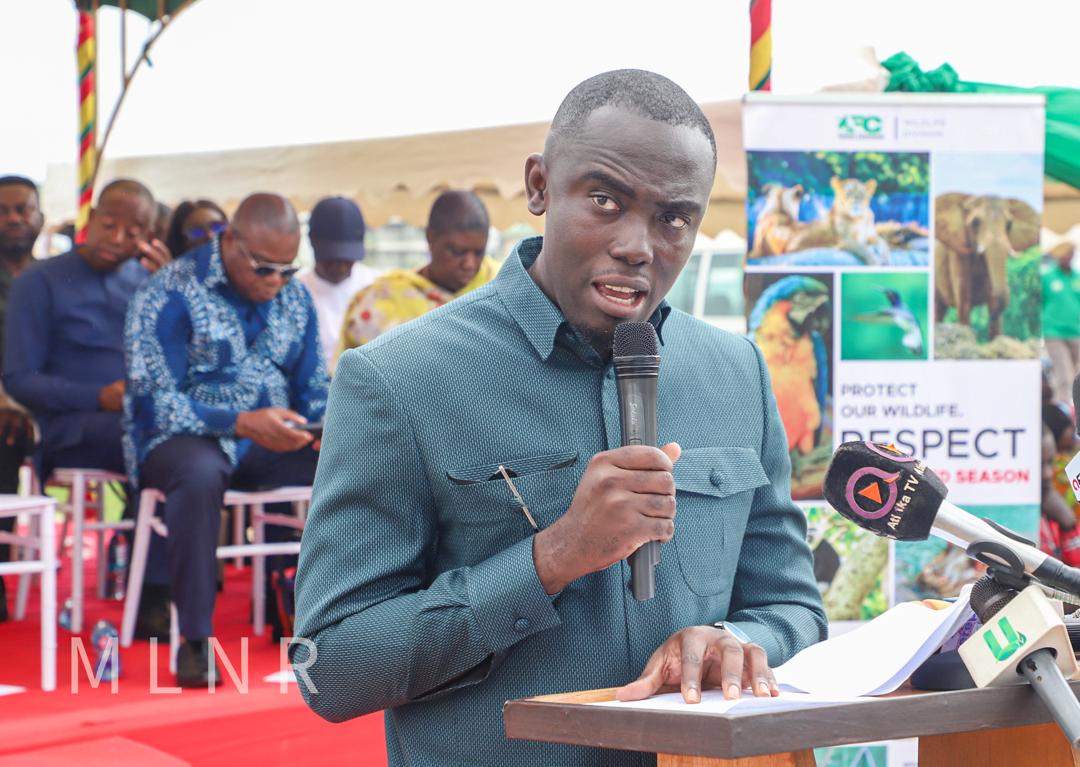
    Deputy Minister for Lands and Natural Resources, responsible for Lands and Forestry, Akwasi Konadu, has called on hunters and bush meat traders to adhere strictly to the ban on the closed season for wildlife.

    He emphasized that this practice will enhance conservation efforts and ensure sustainable wildlife utilization by allowing animals to breed and thrive.

    Speaking at the launch of the 2024 Closed Season Observation, themed “Wildlife: A Heritage We Must Conserve,” on Thursday, August 1, 2024, in Mankessim, Central Region, Hon. Konadu highlighted the importance of the closed season, which runs from August 1 to December 1 annually.

    This period prohibits the hunting, capturing, and killing of wildlife. He also mentioned the recently enacted Wildlife Resources Management Act, 2023 (Act 1115), signed by President Nana Addo Dankwa Akufo-Addo, which aims to regulate the wildlife sector to promote socio-economic development.

    One key objective of the closed season, according to Hon. Konadu, is to protect wildlife species and their habitats, thereby supporting ecotourism development.

    “Through the promotion of ecotourism, significant revenues can be mobilized to boost economic development, as seen in many African countries such as Kenya, Botswana, Zambia, Namibia, South Africa, and Tanzania,” he noted.

    The Deputy Minister also outlined several initiatives by the Ministry, alongside other state and non-state actors, to promote sound environmental management.

    These include enhancing law enforcement through specialized para-military training for Rapid Response Teams, providing logistical support for field monitoring, expanding Community Resource Management Areas (CREMAs) to foster community engagement, and promoting reforestation and afforestation models like the flagship Green Ghana Project.

    Hon. Konadu urged all stakeholders to comply with the closed season ban and support the Forestry Commission’s vision of bequeathing future generations a richer and more robust forest and wildlife heritage.

    Osagyefo Amanfo Edu VI, Omanhene of the Mankessim Traditional Area, who chaired the event, stressed the long-term generational loss that could result from ignoring the closed season rule.

    He called for a holistic approach to reap the benefits of biodiversity and urged hunters to help preserve forests and their habitats.

    He also implored Forestry Officials to strictly enforce the ban, raise awareness about its importance, and engage communities in effective wildlife management.

    Osagyefo also called on the government, through the Ministry of Lands and Natural Resources, to enforce mining laws that restrict activities in forest reserves, ensuring the sustainability of the closed season ban.

    The Chief Executive of the Forestry Commission, Mr. John Allotey, reiterated the importance of protecting wildlife and the impact of climate change on the environment and human lives.

    He emphasized that the closed season is crucial for the sustainable use of wildlife resources during breeding seasons and that regulatory mechanisms, such as requiring licenses for hunting grass cutters, will be strictly enforced.

    Hon. Ike Lord Ennu, the Municipal Chief Executive of Mankessim, appealed to all Ghanaians, particularly those in Mankessim, to respect the closed season and support government efforts to combat illegal activities in the wildlife and forest sectors.

    “We will enhance public campaigns to highlight the importance of our forests and wildlife, emphasizing their role in maintaining and improving sustainable conservation and nurturing a vibrant ecosystem,” he added.

  • Wildlife Resources Management Act, 2024 endorsed by Akufo-Addo

    Wildlife Resources Management Act, 2024 endorsed by Akufo-Addo

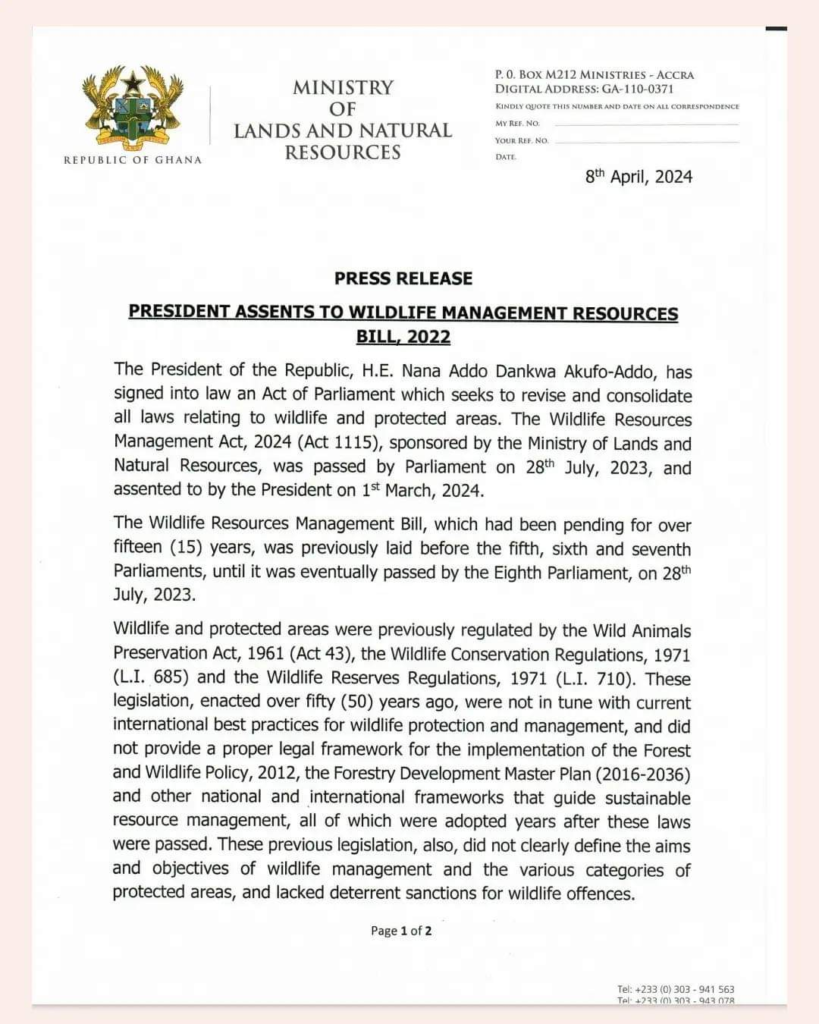
    President Akufo-Addo has enacted a new legislation, the Wildlife Resources Management Act, 2024 (Act 1115), aimed at consolidating and updating all statutes concerning wildlife and protected areas.

    Sponsored by the Ministry of Lands and Natural Resources, the Act was passed by Parliament on July 28, 2023, and officially signed into law by the President on March 1, 2024.

    This enactment marks the resolution of a long-standing legislative backlog, as the Wildlife Resources Management Bill had been pending before several previous Parliaments for over 15 years until its passage by the Eighth Parliament on July 28, 2023.

    The Minister of Lands and Natural Resources, Samuel A. Jinapor, conveyed this development in a statement issued on Monday, April 8, 2024.

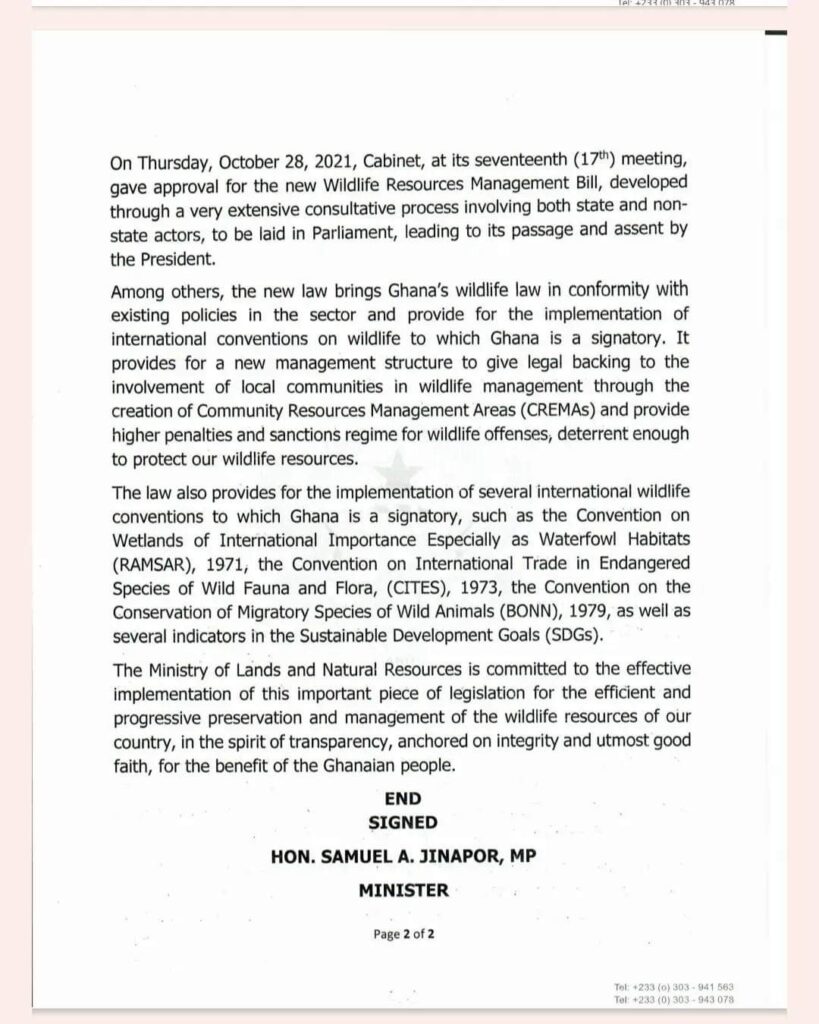
    “Among others, the new law brings Ghana’s wildlife law in conformity with existing policies in the sector and provides for the implementation of international conventions on wildlife to which Ghana is a signatory. It provides for a new management structure to give legal backing to the involvement of local communities in wildlife management through the creation of Community Resources Management Areas (CREMAs) and provide higher penalties and sanctions regime for wildlife offences, deterrent enough to protect our wildlife resources.”

    “The law also provides for the implementation of several international wildlife conventions to which Ghana is a signatory, such as the Convention on Wetlands of International Importance Especially as Waterfowl Habitats (RAMSAR), 1971, the Convention on International Trade in Endangered Species of Wild Fauna and Flora, (CITES), 1973, the Convention on the Conservation of Migratory Species of Wild Animals (BONN), 1979, as well as several indicators in the Sustainable Development Goals (SDGs),” he stated.

    Furthermore, Jinapor emphasized that the legislation incorporates the enforcement of various international wildlife agreements, including the Ramsar Convention, CITES, and the Bonn Convention, alongside relevant Sustainable Development Goals indicators.

    He affirmed the Ministry’s unwavering commitment to the effective implementation of this landmark legislation, underscoring its dedication to transparent, integrity-driven wildlife preservation and management for the benefit of all Ghanaians.

  • Akufo-Addo signs Wildlife Management Resources Bill 2022 into law

    Akufo-Addo signs Wildlife Management Resources Bill 2022 into law

    President Akufo-Addo has approved a new law, the Wildlife Resources Management Act, 2024 (Act 1115), which aims to revise and consolidate all existing laws concerning wildlife and protected areas in Ghana.

    Sponsored by the Ministry of Lands and Natural Resources, the Act was passed by Parliament on July 28, 2023, and received presidential assent on March 1, 2024.

    The Wildlife Resources Management Bill had been pending for more than 15 years, having been presented to the fifth, sixth, and seventh Parliaments before finally being passed by the Eighth Parliament on July 28, 2023.

    This information was conveyed in a statement issued by the Minister of Lands and Natural Resources, Samuel A. Jinapor, on Monday, April 8, 2024.

    “Among others, the new law brings Ghana’s wildlife law in conformity with existing policies in the sector and provides for the implementation of international conventions on wildlife to which Ghana is a signatory. It provides for a new management structure to give legal backing to the involvement of local communities in wildlife management through the creation of Community Resources Management Areas (CREMAs) and provide higher penalties and sanctions regime for wildlife offences, deterrent enough to protect our wildlife resources.”

    “The law also provides for the implementation of several international wildlife conventions to which Ghana is a signatory, such as the Convention on Wetlands of International Importance Especially as Waterfowl Habitats (RAMSAR), 1971, the Convention on International Trade in Endangered Species of Wild Fauna and Flora, (CITES), 1973, the Convention on the Conservation of Migratory Species of Wild Animals (BONN), 1979, as well as several indicators in the Sustainable Development Goals (SDGs),” he stated.

    Mr. Jinapor emphasized his ministry’s commitment to the effective implementation of this crucial legislation. He stated that the goal is to efficiently and progressively preserve and manage Ghana’s wildlife resources. This effort, he emphasized, is guided by principles of transparency, integrity, and utmost good faith, ultimately benefiting all Ghanaians.

  • Parliament approves Wildlife Resources Management Bill 2022

    Parliament approves Wildlife Resources Management Bill 2022

    On Friday, July 28, 2023, Parliament successfully passed the Wildlife Resources Management Bill 2022 after its third reading.

    The motion was presented by Deputy Minister for Lands and Natural Resources responsible for Lands and Forestry, Benito Owusu-Bio, on behalf of the Sector Minister, Samuel A. Jinapor.

    The main objective of the bill is to revise and consolidate all laws pertaining to Wildlife and Protected Areas, aligning them with existing policies and emerging trends in the natural resources sector. Furthermore, the legislation will facilitate the effective implementation of International Conventions on Wildlife, to which Ghana is a signatory.

    The newly passed legislation will also grant legal support to local communities in wildlife management through the establishment of Community Resource Management Areas (CREMAs).

    Additionally, the bill introduces stricter penalties and sanctions for wildlife offenses, aiming to serve as a deterrent and protect wildlife resources effectively.

    The Government, represented by the Ministry of Lands and Natural Resources, expresses its gratitude and commendation to all stakeholders and key actors for their valuable contributions and support throughout the review process, culminating in the successful passage of the Bill as a new piece of legislation.

  • Protecting Our Wildlife: A closer look at the Forestry Commission’s Wildlife Division

    Protecting Our Wildlife: A closer look at the Forestry Commission’s Wildlife Division

    Imagine a world without any animal species – no birds in the air, no fishes in the sea, no mammals on land, reptiles, amphibians, mollusks, or crustaceans – in fact, imagine a world without wildlife. Life indeed would be tough.

    It is an open secret that humans and wildlife depend on each other. There are a lot of benefits derived from wildlife; from food supply to medicinal purposes, pest control, and other socio-economic benefits, and that’s why countries like Ghana and others cannot risk losing its wildlife. 

    In line with protecting wildlife, Ghana has an established Forestry Commission which is responsible for the regulation of utilisation of forest and wildlife resources, the conservation and management of those resources and the coordination of policies related to them.

    As Ghana joins the world to mark World Wildlife day on March 3, 2023, the Independent Ghana, will take a dive into what the Wildlife Division of the Ghana Forestry Commission is all about and what its functions are.

    What’s Ghana’s Forestry Commission?

    The Forestry Commission (FC), a public service institution, was set up subject to the provisions of the 1992 Constitution, Chapter 21, Article 269, sub-section 1. It has two divisions; the Forest Services Division and the Wildlife Division.

    What is the Wildlife Division of the Forestry Commission?

    The Wildlife Division of the Forestry Commission is the Government Agency mandated to protect and manage Ghana’s wildlife resources. 

    It is one of the three divisions of the reconstituted Forestry Commission. 

    The Wildlife Division (Forestry Commission), currently managed by Daniel Amankwa, started as an arm of the Forestry Department of the Ministry of Agriculture superintending over wildlife issues in Ghana. In 1965, it became a full-fledged line agency of the Ministry of Forestry known as the Department of Game and Wildlife, which later changed to Wildlife Department after the adoption of the Forestry and Wildlife Policy of 1994. 

    The Division currently, is in charge of 7 National Parks, 6 Resource Reserves, 2 Wildlife Sanctuaries, 1 strict nature reserve, 5 coastal Ramsar sites and 2 National zoos. 

    To ensure that wildlife is protected the Wildlife Division of the Forestry Commission performs the following functions:  

    1. Promote management and development of wildlife outside wildlife-Protected Areas. 
    2. Develop Eco- tourism potentials of the PAs. 
    3. Promote the development of wildlife – based enterprises. 
    4. Develop linkages with other agencies and NGOs whose activities impact on wildlife. 
    5. Assist local communities to develop and manage their own reserves e.g. Boabeng Fiema and Agumatsa Wildlife Sanctuaries.
    6. Foster closer collaboration with communities closer to PAs through the promotion of community resource management areas (CREMA).
    7. Promote public awareness and education on wildlife management issues.

    The Wildlife Division of the Forestry Commission has ensured the ban of trade on grey parrots and provided models for community conservation actions. In addition, the Division manages 5 coastal Ramsar Sites, 2 Zoos in Accra and Kumasi, working assiduously to ensure that these valuable resources are in good shape. 

    Additionally, Ghana is currently working on a sustainable ecotourism development plan as part of solutions to combat climate change and its ramifications on the environment, according to Dr Richard Gyimah, the Director, Stakeholder and Ecotourism at the Wildlife Division of the  Forestry Commission. 

    The ecotourism agenda would be an avenue to generate income and contribute significantly to the economy. Ghana has significantly benefited from its ecotourism sector, it contributed about $1.2 billion, representing some 5.5 per cent of the Gross Domestic Product (GDP) in 2020.

    In 2021, the travel and tourism sector contributed around $3.1 billion to the country’s GDP.

    The Division has also rescued and assisted in the rescue of many animals, including a fully grown male black bellied pangolin, two days after the celebration of World Pangolin Day.

  • Wildlife deserts nature reserve known as Europe’s Amazon

    The human and material cost of Russia’s invasion of Ukraine is well documented. But rare species of animals and flowers that had flourished in the country’s north have also been badly hit by the invaders’ destructive use of weaponry and landmines, with fears they will take decades to recover.

    Valery Alexandrovitch is dressed like a soldier, flanked by men armed with Kalashnikovs while keeping a constant eye on the news.

    He is a forest ranger in Ukraine’s Drevlyansky nature reserve, helping to patrol what once was a pristine sanctuary for wildlife in northern Ukraine. With its marshes, lakes, woods and heathland, it is a place so rich in wildlife it has even been called Europe’s Amazon.

    But situated just 15 miles from the border with Belarus, it is in a dangerous part of the world and Mr Alexandrovitch has every reason to be wary.

    It was across this border in February that Russia sent rockets, missiles and artillery shells, followed by an invading armoured column that got all the way south to the outskirts of the capital, Kyiv, before being driven back by Ukrainian defenders armed with the latest Western weapons.

    “Russian land mines,” Mr Alexandrovitch says, perched on a fallen log beside a forest track. “That’s the worst legacy left behind by the invasion. That and the forest fires they set off with their shell fire.”

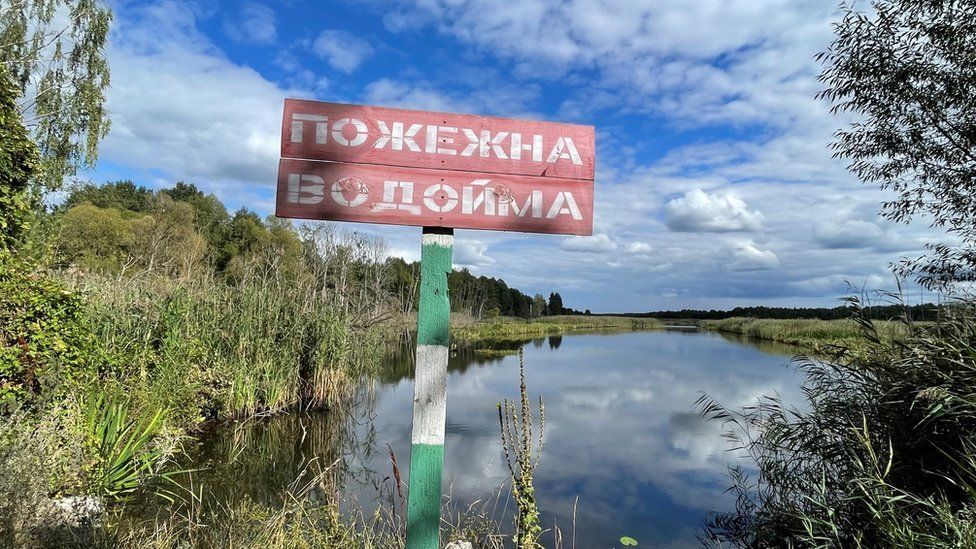
    Nature reserveImage source, BBC/Frank Gardner
    Image caption, The Drevlyansky is an important refuge for rare birds and wildfowl

    The Russians invaded Ukraine on 24 February from three sides – from the north in Belarus, their own territory in the east, and Crimea which they had seized and annexed in 2014.

    It is fair to assume preserving Ukraine’s rarer species of flora and fauna was probably not top of President Putin’s priorities when he sent his tanks rolling across the border.

    The artillery shells the Russians fired into northern Ukraine ignited forest fires that have burnt through more than 2,000 hectares (nearly 5,000 acres) of previously-untouched forest, sending wildlife scattering, incinerating recently-discovered orchids and hundreds of other rare plants.

    One look at the scorched and fire-blackened trunks of the trees suggests wildlife in this part of Ukraine will not be coming back any time soon. There is simply nothing for them to eat, nowhere for them to hide.

    Shells also landed on the nearby town of Narodychi where, according to the Ukrainians, local collaborators helped the invading Russians by guiding their artillery fire towards concentrations of troops.

    “We still have to watch out for infiltrators coming across from Belarus,” says Mr Alexandrovitch. This would explain the heavily-armed Ukrainian patrols we witnessed here near the border – small groups of fit-looking men carrying sniper rifles and walkie talkies, with Alsatians panting at their side.

    Damaged forestImage source, BBC/Frank Gardner
    Image caption, Russian shelling this year has devastated large tracts of pristine forest, driving out wildlife that has still not returned

    This part of Ukraine is a region known as Polesia, a giant oval on the map that extends into Belarus, Poland and Russia. It is home to species like lynx, wolf and moose that disappeared from most of the rest of Europe a long time ago.

    The Russian invasion is not the first disaster Polesia has endured. On 26 April 1986, reactor number four in the Chernobyl nuclear power plant exploded, sending a plume of highly radioactive particles right across Europe and contaminating parts of northern Ukraine with radionuclides.

    Chernobyl is just 40 miles (65km) away – most of the remote villages and cottages in this part of Ukraine were abandoned when the human population was hurriedly evacuated to safety.

    Yet, the wildlife largely survived that disaster, even benefitting from the newfound absence of humans.

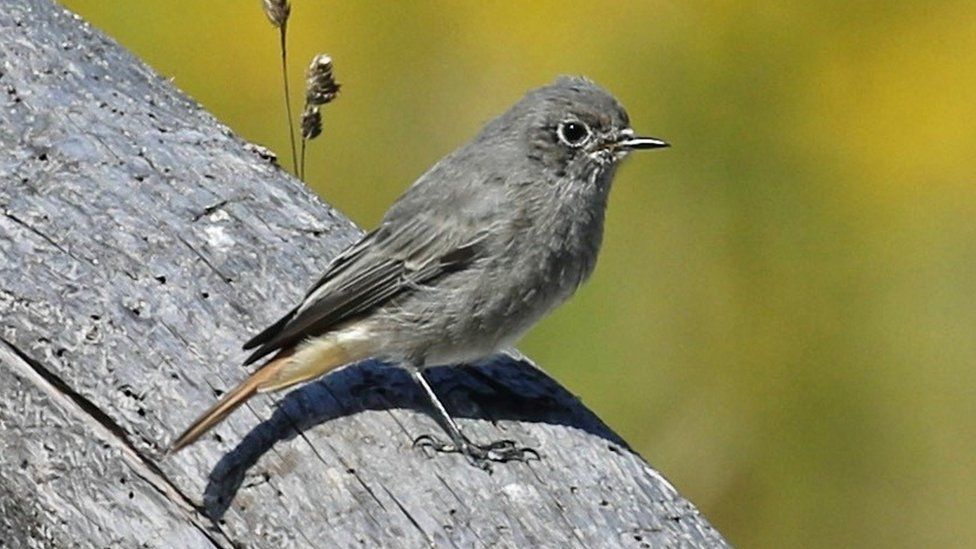
    RedstartImage source, BBC/Frank Gardner
    Image caption, The black redstart is a familiar bird in the villages of northern Ukraine

    “There have been two wolf packs in this region, and the Polesian wolf is one of the largest in the world,” Mr Alexandrovitch explains. “Before Chernobyl, they used to skirt around the villages but now, if it suits them, they would come straight through them at night.”

    The landmines planted by the Russians have left Ukraine’s part of Polesia with a very different problem. Russia is not party to the 1997 Mine Ban Treaty, although Ukraine is. Since they invaded, Russian forces have planted at least seven different kinds of anti-personnel mines in various parts of the country, mostly in unmarked minefields.

    Here in the northern forests, that means the unpaved tracks the rangers used to patrol down are now too dangerous to use. In early September one of their vehicles drove over a landmine, killing one of the occupants and badly injuring another.

    “Sometimes,” says Mr Alexandrovitch, “we come across the remains of a deer that has been blown up by a mine. The animals can’t see them. It’s so sad.”

    So, how long it will it take to make the area safe again?

    He takes a long drag of his cigarette before raising his eyes to the pine branches swaying gently in the autumn breeze. “Years,” he answers. Then he turns and adds with a sigh, “Decades, in fact.”

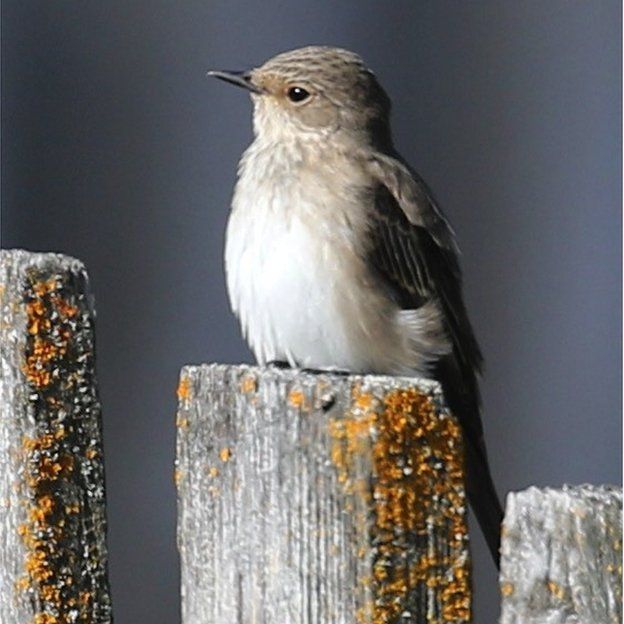
    Spotted flycatcherImage source, BBC/Frank Gardner
    Image caption, Spotted flycatcher
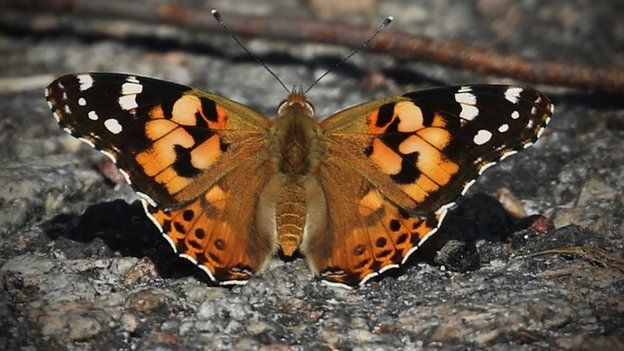
    Painted lady butterflyImage source, BBC/Frank Gardner
    Image caption, Painted lady butterfly

    Source: BBC

  • Namibia to sell 170 elephants to protect its wildlife

    170 elephants in Namibia will soon be giving-up their homes amid pressure from drought and territorial conflict with humans.

    The Pachyderms on sale would comprise entire herds in order to preserve the important social structure in elephant communities.

    The ministry says the elephants are being sold “due to drought and increase in elephant numbers coupled with human-elephant conflict incidences.”

    – Wildlife Export –

    For export purposes, the buyers must ensure that CITES requirements are met by both exporting and importing states for the trade to be authorised,

    The sparsely-populated semi-arid southern African country has been criticized of recent for shooting elephants to control overpopulation.

    According official estimates, Namibia is home to some 28,000 elephants.

    Last year the government offered for sale around 1,000 animals including 600 buffalo, 150 springboks, 60 giraffes and 28 elephants.

    Source: africanews.com

  • Wildlife in ‘catastrophic decline’ due to human destruction, scientists warn

    Wildlife populations have fallen by more than two-thirds in less than 50 years, according to a major report by the conservation group WWF.

    The report says this “catastrophic decline” shows no sign of slowing.

    And it warns that nature is being destroyed by humans at a rate never seen before.

    Wildlife is “in freefall” as we burn forests, over-fish our seas and destroy wild areas, says Tanya Steele, chief executive at WWF.

    “We are wrecking our world – the one place we call home – risking our health, security and survival here on Earth. Now nature is sending us a desperate SOS and time is running out.”

    What do the numbers mean?

    The report looked at thousands of different wildlife species monitored by conservation scientists in habitats across the world.

    They recorded an average 68% fall in more than 20,000 populations of mammals, birds, amphibians, reptiles and fish since 1970.

    The decline was clear evidence of the damage human activity is doing to the natural world, said Dr Andrew Terry, director of conservation at the Zoological Society of London (ZSL), which provides the data.

    “If nothing changes, populations will undoubtedly continue to fall, driving wildlife to extinction and threatening the integrity of the ecosystems on which we depend,” he added.

    The report says the COVID-19 pandemic is a stark reminder of how nature and humans are intertwined.

    Factors believed to lead to the emergence of pandemics – including habitat loss and the use and trade of wildlife – are also some of the drivers behind the decline in wildlife.

    New modelling evidence suggests we can halt and even reverse habitat loss and deforestation if we take urgent conservation action and change the way we produce and consume food.

    The British TV presenter and naturalist Sir David Attenborough said the Anthropocene, the geological age during which human activity has come to the fore, could be the moment we achieve a balance with the natural world and become stewards of our planet.

    “Doing so will require systemic shifts in how we produce food, create energy, manage our oceans and use materials,” he said.

    “But above all it will require a change in perspective. A change from viewing nature as something that’s optional or ‘nice to have’ to the single greatest ally we have in restoring balance to our world.”

    Sir David presents a new documentary on extinction to be aired on BBC One in the UK on Sunday 13 September at 20:00 BST.

    How do we measure the loss of nature?

    Measuring the variety of all life on Earth is complex, with a number of different measures.

    Taken together, they provide evidence that biodiversity is being destroyed at a rate unprecedented in human history.

    This particular report uses an index of whether populations of wildlife are going up or down. It does not tell us the number of species lost, or extinctions.

    The largest declines are in tropical areas. The drop of 94% for Latin America and the Caribbean is the largest anywhere in the world, driven by a cocktail of threats to reptiles, amphibians and birds.

    “This report is looking at the global picture and the need to act soon in order to start reversing these trends,” said Louise McRae of ZSL.

    The data has been used for modelling work to look at what might be needed to reverse the decline.

    Research published in the journal Naturesuggests that to turn the tide we must transform the way we produce and consume food, including reducing food waste and eating food with a lower environmental impact.

    Prof Dame Georgina Mace of UCL said conservation actions alone wouldn’t be sufficient to “bend the curve on biodiversity loss”.

    “It will require actions from other sectors, and here we show that the food system will be particularly important, both from the agricultural sector on the supply side, and consumers on the demand side,” she said.

    What do other measures tell us about the loss of nature?

    Extinction data is compiled by the International Union for Conservation of Nature (IUCN), which has evaluated more than 100,000 species of plants and animals, with more than 32,000 species threatened with extinction.

    In 2019, an intergovernmental panel of scientists concluded that one million species (500,000 animals and plants, and 500,000 insects) are threatened with extinction, some within decades.

    The WWF report is one of many assessments of the state of nature being published in the coming weeks and months in the build-up to a major summit next year.

    The UN will reveal next Tuesday its latest assessment of the state of nature worldwide.

    Source: bbc.com

  • Gambian ex-dictator’s country palace burns in wildfire

    Gambian ex-autocrat Yahya Jammeh’s palatial country residence, where he allegedly administered a self-invented Aids cure, has been partially “gutted by bushfire”, the West African state’s army said on Thursday.

    Located in Jammeh’s home village of Kanilai in western Gambia, his sprawling former private residence was engulfed by a wildfire on Wednesday, according to army spokesperson Lamin Sanyang.

    Jammeh – whose regime has been accused of murder, torture and rape – fled The Gambia in January 2017 after losing a presidential election to relative newcomer Adama Barrow.

    Some of the abuses are believed to have occurred in Kanilai.

    Three men who disappeared after plotting a coup in 2014 were exhumed in the village in 2017, for example.

    Aids patients have also alleged that Jammeh detained them in the compound in order to force them to undergo a herbal treatment of his own design.

    Sanyang said the wildfire started on Tuesday in the neighbouring village of Alla Kunda, where villagers unsuccessfully tried to extinguish the blaze, before spreading to Kanilai the following day.

    “The house where the former president used to conduct his treatment programme was gutted by bushfire,” Sanyang said, referring to Jammeh’s alleged Aids cure.

    A “mini stadium” in the complex also burned down, he said, adding that no one was hurt in the incident.

    Source: news24.com