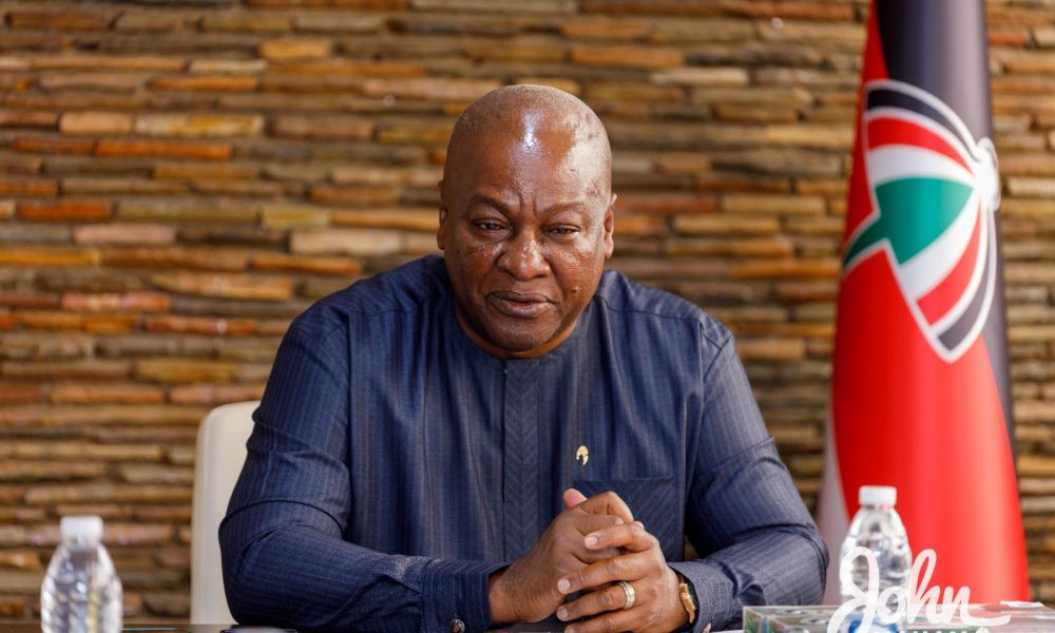
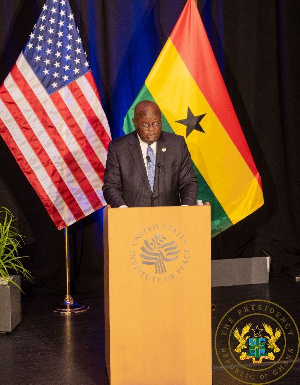
Flagbearer of the National Democratic Congress, John Dramani Mahama has shared his perspective on the concept of witchcraft and poverty.
As part of his remarks during his campaign tour, the former president explained that people often find a way to make sense of their problems by blaming it on supernatural forces, like witchcraft, which provide the tendency of failing to address the root causes of problems or take personal responsibility.
“Whenever there’s poverty and crisis, there’s an increase in witchcraft . Because people dont tend to take responsibilities for themselves. They must find someone to blame for adversity. And so if they are not able to find the opportunity, they are not able to satisfy their full potential and there is hunger and all that, they must find somebody to blame. And normally they will look for the most vulnerable person in the society. And these are the poor old women and accuse them of witchcraft. And so its a direct correlation to the increase in poverty. The increase in the accusations of witchcraft, he told the media during his tour ahead of the 2024 election.”
On Friday July 28 2023, Ghana’s parliament approved a bill designed to safeguard individuals accused of witchcraft, criminalizing their abuse or expulsion from communities.
This new legislation was proposed following the lynching of a 90-year-old woman in Kafaba, East Gonja Municipality, Savannah Region, in July 2020, which led to widespread condemnation from both local and international human rights organizations.
However president Akufo Addo is yet to assent to the proposed bill despite calls for concerned parties to do so.
Watch video below:
Whenever there's poverty and crisis, there's an increase in witchcraft – John Mahama speaks to the Anti-Witchcraft bill#MetroNewspic.twitter.com/HOhKdfShLV
CHRAJ emphasized that the bill, once enacted, would directly address witchcraft allegations and attacks in the country.
Mr. Joseph Whittal, the Commissioner for CHRAJ, made this appeal during a National Policy Dialogue on Access to Justice for Women Accused as Witches in Ghana, jointly organized by CHRAJ and Crossroads International.
He highlighted that the absence of a concrete law to penalize individuals involved in witchcraft allegations and attacks has perpetuated these harmful practices in certain regions of the country.
“The practice is still ongoing on the ground and the main instrument to cease or force the practice to come to an end is the deterrence of the Bill,” he stressed.
Mr. Whittal emphasized the need to abolish customs and traditions that violate the constitutional rights of individuals.
He mentioned that CHRAJ has been actively engaging with traditional leaders to prevent discrimination against vulnerable people and to ensure that their rights are not violated under the guise of tradition.
CHRAJ has also been working to engage with individuals who have been accused of witchcraft.
Mr. Whittal urged District Assemblies in areas where witch camps are located to take full responsibility for the welfare of the inmates.
On July 28, 2023, Ghana’s Parliament passed the Criminal Offences (Amendment) Bill, 2022.
The purpose of the bill is to amend the Criminal Offences Act, 1960 (Acts 29) to prohibit the practice of witch doctors or witch finders, and to outlaw the declaration, accusation, naming, or labeling of another person as a witch.
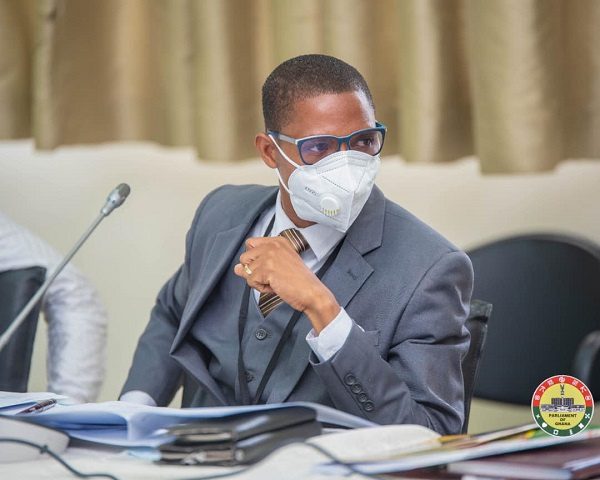
The Private Member’s Bill was sponsored by Mr. Francis-Xavier Kojo Sosu, the National Democratic Congress (NDC) Member of Parliament (MP) for Madina, along with other sponsors including Hajia Laadi Ayii Ayamba, NDC MP for Pusiga; Dr. Godfred Seidu Jasaw, NDC MP for Wa East; Madam Helen Adjoa Ntoso, NDC MP for Krachi West; and Madam Betty Nana Efua Krosbi Mensah, NDC MP for Afram Plains North.
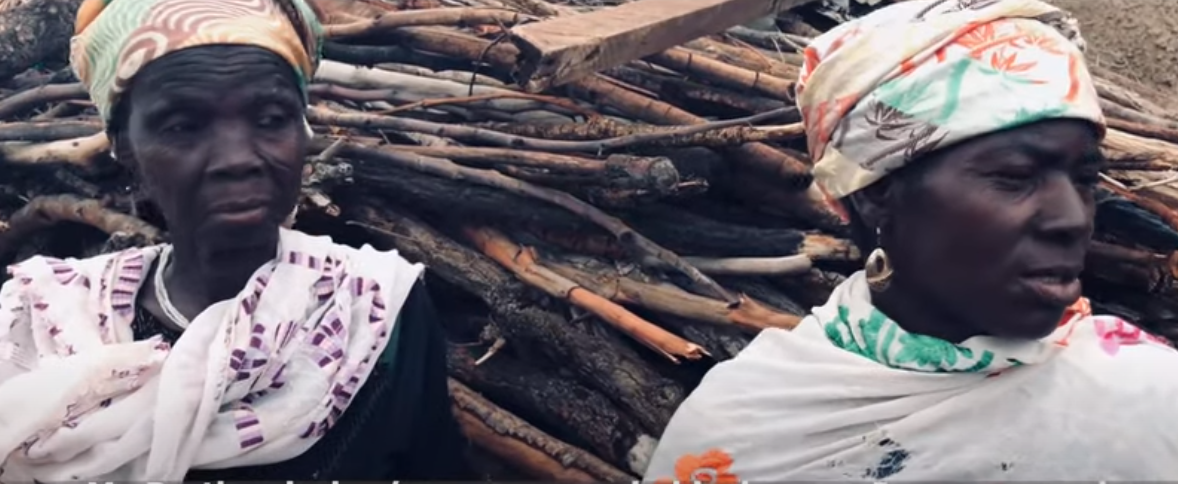
Witch camps are settlements where women accused of witchcraft are kept for safety, often due to reasons such as mental health problems.
Recently, eight women accused of witchcraft in the West African nation of Guinea-Bissau have perished from poisoning in a remote northern area. The grim incident, which occurred on February 22, was confirmed by a senior official to AFP on Thursday.
The sequence of events unfolded after the sudden and mysterious deaths of two young individuals in Culade, located in the Cacheu region. Blame swiftly fell upon women in the community, leading to a horrifying response orchestrated by an animist priest. Under coercion, the accused women were compelled to ingest poison.
Tragically, all eight women, aged over 50, succumbed to the toxic substance, while an additional 21 individuals were hospitalized in the nearby capital of Sao Domingos. Carlos Sanha, a senior administrative figure in the area, provided these distressing details.
Ghana is also known for the gruesome torture and murder of women accused of witchcraft. In 2023, Parliament passed the Criminal Offences (Amendment) Bill, 2022, (Witchcraft Bill), but it is yet to be assented to by President Akufo-Addo.
He argues that its preparation flouts Article 108 of the 1992 Ghana Constitution and he, therefore, cannot assent to them due to the constitutional issues.
The said article reads;
108. SETTLEMENT OF FINANCIAL MATTERS. Parliament shall not, unless the bill is introduced or the motion is introduced by, or on behalf of, the President— (a) proceed upon a bill including an amendment to a bill, that, in the opinion of the person presiding, makes provision for any of the following— (i) the imposition of taxation or the alteration of taxation otherwise than by reduction; or (ii) the imposition of a charge on the Consolidated Fund or other public funds of Ghana or the alteration of any such charge otherwise than by reduction; or (iii) the payment, issue or withdrawal from the Consolidated Fund or other public funds of Ghana of any moneys not charged on the Consolidated Fund or any increase in the amount of that payment, issue or withdrawal; or (iv) the composition or remission of any debt due to the Government of Ghana; or (b) proceed upon a motion, including an amendment to a motion, the effect of which, in the opinion of the person presiding, would be to make provision for any of the purposes specified in paragraph (a) of this article.
Seychelles’ principal opposition figure, Patrick Herminie, has been relieved of witchcraft allegations as prosecutors opted to dismiss the case against him.
Consistently denying the accusations, Herminie denounced them as “malicious actions” following a court appearance on Thursday.
The charges stemmed from the uncovering of two bodies exhumed from a cemetery on Mahé Island, as stated by the police.
Looking ahead, Mr. Herminie intends to contest the 2025 presidential election representing the United Seychelles Party.
“We do not have the right to arrest someone and put them in prison for nothing at all,” he said.
The president has not commented on the case.
Mr Herminie served as the Speaker of Seychelles’ parliament between 2007 and 2016.
The prosecutor told a magistrates’ court in the capital, Victoria, that he was withdrawing all charges against him.
No reasons were given for the decision.
The president has remained silent on the matter.
Mr. Herminie previously held the position of Speaker in Seychelles’ parliament from 2007 to 2016.
During a session at the magistrates’ court in Victoria, the prosecutor declared the withdrawal of all charges against him.
No explanations were provided for this decision.
Last October, Mr. Herminie and six Seychellois co-accused were released on bail.
They had been accused of possessing items intended for witchcraft use, conspiring to practice witchcraft, and engaging in services related to witchcraft, as reported by local media.
Originally, prosecutors alleged that Mr. Herminie’s name surfaced in a WhatsApp exchange between a Seychellois individual and a Tanzanian suspect apprehended at the main international airport last September.
Seychelles abandons witchcraft case against opposition figure Patrick Herminie
The Tanzanian was found with items allegedly related to witchcraft, including stones, black wooden artefacts, small bottles of brownish liquid, a collection of powders and documents with strange language and “demonic and satanic” symbols, they said.
According to prosecutors, the documents resembled those discovered in vandalized Catholic churches and other locations on Mahé, Seychelles’ largest island.
Apart from Mr. Herminie, four others involved in the initial case are no longer being prosecuted.
As reported by theSeychelles News Agency, a fresh case has been initiated against the Tanzanian individual and two others.
Last year, Mr. Herminie informed local media that over 40 police officers had conducted a raid on his party’s offices in Victoria.
He added that the officers searched for items related to witchcraft, including “bones, body parts, and objects associated with Christianity” but did not find any.
“In Seychelles’ history, there has never been until now, a political party leader arrested for superstition and witchcraft. This is something new and it is shameful for Seychelles,” he was quoted as saying at the time.
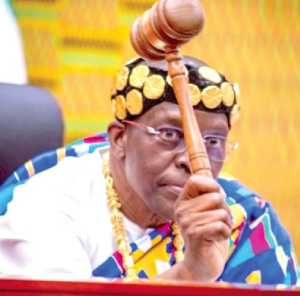
TheSpeaker of Parliament, Alban Bagbin, has disclosed parliament’s intention to seek legal interpretation regarding President Nana Addo Dankwa Akufo-Addo’s decision not to sign certain bills passed by the House, citinewsroom.com reports.
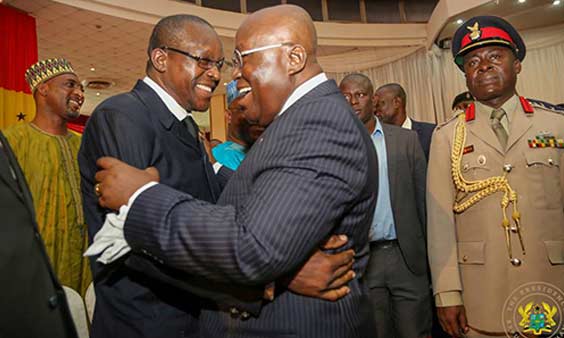
In 2023, President Akufo-Addo declined to sign the Criminal Offences Bill of 2022, the Witchcraft Bill, and the Armed Forces Bill of 2023, citing financial implications as the rationale for his refusal.
Speaker Bagbin emphasised that the constitutionality of the bills is solely within the jurisdiction of the Supreme Court.
He asserted that any allegations of misuse should be contested before the Supreme Court and not addressed unilaterally by the president.
President Akufo-Addo, pinpointing the Ghana Armed Forces Amendment Bill, sponsored by MP Francis-Xavier Sosu, highlighted financial concerns related to replacing the death penalty with life imprisonment.
In response, Speaker Bagbin stated, “The determination of any unconstitutionality is the sole purview of the Supreme Court, not the president.” He further explained that if there were apprehensions about Parliament exceeding its constitutional authority, the correct course of action would be to bring a legal challenge before the Supreme Court, rather than the executive unilaterally declaring it unconstitutional.
He added, “Again, the constitutional discretion vested in the presiding officer of parliament, asper Article 108 and subject to Article 296, suggests that any allegations of misuse of this discretion should be contested in a court of competent jurisdiction rather than being pre-emptively adjudicated upon by the president.”
The Speaker of Parliament, Alban Bagbin, has responded to President Akufo-Addo’s letter justifying his refusal to assent to the Criminal Offenses Amendment Bill 2023.
In the letter, the president cited a violation of Article 108 of the constitution and the potential financial burden on the state’s consolidated fund as reasons for his decision.
However, Bagbin, while reading excerpts of the letter to the House, criticized its content as “irregular, wrongful, and unconstitutional.”
“Vehemently, we disagree with the position taken by the president. The president has gotten it tragically wrong and I will submit in the form of a statement under Article 53 my position in this matter and allow members of the House to make comments so that we can take a clear position in this matter.”
“And I will do so during the course of this week. The president has not been properly advised. The president has not been properly informed about the processes this bill has gone through. So I will submit a detailed write-up on it for members to make their comments but I am very clear that this message and the contents are irregular, wrongful and unconstitutional,” he added.
The Speaker asserted that the president lacks a comprehensive understanding of the bill and emphasized the necessity for him to thoroughly review it.
Bagbin pointed out that it is not within the president’s authority to determine the “constitutionality” of a bill that has been presented and considered by Parliament.
He underscored that the mandate to make such determinations rests solely with Parliament and cannot be usurped by any external authority.
“The responsibility to decide whether a bill should come from a private member or not rests on the person presiding. The procedure in the act clearly states what the president is expected to do. It is not for the president to decide on the constitutionality or otherwise of a bill that has been presented and considered by parliament. This power of parliament will not be taken away by any exempt authority,” he said.
The Criminal Offences Amendment Bill 2023 which is sponsored by Francis Xavier Sosu addresses various issues, including the prohibition of declaring, accusing, naming, or labeling an individual as a witch, among other related matters.
Despite parliamentary approval, the President’s hesitance to sign these bills revolves around constitutional considerations.
In July, Parliament approved the Armed Forces Bill, which aiming to amend sections of Act 29 and the Armed Forces Act, 1962 (Act 105), with the intent of replacing the Death Penalty with life imprisonment.
President Akufo-Addo justifies his decision not to agree to the Criminal Offenses Amendment Bill 2023.
According to him, it's a violation of Article 108 of the constitution and will have a heavy financial impact on the state's consolidated fund as well. pic.twitter.com/MCVZgxidXg
Member of Parliament for Madina, Francis-Xavier Sosu, who is also the primary advocate for the Criminal Offences Amendment Bill 2023, has voiced his dismay over the president’s decision to withhold assent from the legislation.
He contends that the president opted to politicize the bill instead of prioritizing the well-being of vulnerable women.
“I think that he [President] is being misled or better still he is choosing politics over the protection of human rights. He is choosing politics over the protection of women’s rights. He is choosing politics over protecting vulnerable women in various witch camps probably dying on a daily basis,” he said.
During an interview on JoyFM’s Newsnight on Monday, December 18, 2023, he shared his reservations. These remarks come in the wake of President Akufo-Addo’s decision to withhold assent to the bill, citing constitutional concerns related to Article 108.
The Madina MP expressed dissatisfaction with the President’s rationale, finding it unclear. He pointed out that in 2021, President Akufo-Addo had supported the bill and advocated for a bipartisan approach to its passage. Therefore, it seemed perplexing that the President was now citing Article 108 as a basis for his refusal.
The Madina MP emphasized that all legal procedures were diligently followed, with the active involvement of the Attorney General. Consequently, he found it challenging to comprehend the President’s expressed concerns.
Mr Sosu said, “For me, for the President to choose petty partisanship over the protection of the greater good of our society, the human rights of our people. For me, it is quite sad.”
“You will recall that when this bill was sent to the president, I mean on the second of August, the president assented through the bill that abolished the death penalty for ordinary crimes under the Criminal Offences Act.”
“It was only when the other bills were presented that he refused to assent to the others and then decided to withdraw assent for the first one. So, the whole thing does not even make sense to me,” he lamented.
On December 4, President Akufo-Addo disclosed his inability to sign into law certain crucial bills passed by Parliament, citing specific constitutional concerns. Notably, among these bills are the Criminal Offences Amendment Bill 2023 and the Armed Forces Amendment Bill 2023.
In July, Parliament approved the Armed Forces Bill, aiming to amend sections of Act 29 and the Armed Forces Act, 1962 (Act 105), with the intent of replacing the Death Penalty with life imprisonment.
The Criminal Offences Amendment Bill 2023 addresses various issues, including the prohibition of declaring, accusing, naming, or labeling an individual as a witch, among other related matters. Despite parliamentary approval, the President’s hesitance to sign these bills revolves around constitutional considerations.
He emphasized the urgency of this legislative action, pointing to the hardships faced by women labeled as witches who endure assault and stigma.
Whittal made these remarks during the commemoration of International Human Rights Day 2023, organized by the Commission on Human Rights and Administrative Justice.
The event, held on December 11, 2023, focused on the theme, “The 75th Anniversary of the Universal Declaration of Human Rights: Implications for Human Rights Protection in Ghana.”
In his address, Whittal highlighted the importance of addressing the challenges faced by individuals accused of witchcraft and emphasized the need for legal measures to protect their rights and dignity.
“Our concern now is what the president has indicated that he has constitutional concerns, but he has no problem with the content of the bill. Our problem as a Commission is, can the president speed up, whatever he will do to bring that bill to Parliament whether it is through the Attorney General, or however he intends to. The women cannot afford any further delay.”
Parliament has successfully passed the Criminal Offences Amendment Bill 2023, commonly referred to as the anti-witchcraft bill. The primary objective of this legislation is to criminalize attacks on individuals accused of being witches.
However, on November 27, 2023, the Speaker of Parliament, Alban Bagbin, criticized President Akufo-Addo for not communicating his position on the bill to Parliament within the expected timeframe for review and assent.
In a letter sent to Parliament on Monday, December 4, President Akufo-Addo conveyed that he cannot provide his assent to the three bills, including the anti-witchcraft bill, until constitutional issues related to them are resolved.
President Akufo-Addo has chosen not to give his approval to the Criminal Offences Amendment Bill 2023, the Wildlife Resources Management Bill 2023, and the Armed Forces Amendment Bill 2023.
The Speaker of Parliament, Alban Bagbin, criticized the President on November 27, 2023, for not informing Parliament of his position on the Criminal Offences Amendment Bill 2023, which aims to criminalize attacks on alleged witches.
However, a communication from the Presidency contradicted claims that the President had decided not to approve the Bills and denied receiving them until November 27, 2023.
In a letter to Parliament on Monday, December 4, President Akufo-Addo conveyed to the House that he is unable to give his approval to the three bills until the associated constitutional matters are resolved.
The letter was read to members of the House by the Speaker of Parliament, Alban Bagbin. He said the president in his letter noted that “upon review he noted some constitutional matters related to its passage” that must be addressed before he assents to them.
The Criminal Offences (Amendment) Bill, 2022, which makes it an offence to accuse any person of being a witch, was passed by Parliament five months ago.
The Minority, championed by the MP for Tamale South, Haruna Iddrisu, maintained that the failure of the President to assent to the bill constituted a constitutional breach which should not be countenanced.
Article 106 (7) (8) (9) (10) state: “Where a bill passed by Parliament is presented to the President for assent, he shall signify, within seven days after he refuses to assent to the bill, unless the bill has been referred by the President to the Council of State under Article 90 of this Constitution.
The police say that the case is connected to finding two bodies that were dug up from a cemetery on the island of Mahé.
He said that the accusations against him are not true and that they are just trying to make him look bad for political reasons.
Mr Herminie wants to be a candidate in the 2025 presidential election for the United Seychelles Party.
On Monday, a court released him and six others from Seychelles on bail. They had to pay 30,000 Seychelles rupees ($2,100; £1,745) to be free. However, a Tanzanian suspect was not released and will remain in custody until the next court date in November.
Mr Herminie and his co-accused are facing charges, as reported by the local media. These charges include having things meant for witchcraft, planning to do witchcraft, and getting services for witchcraft.
The prosecutors say that they have evidence that the name of the opposition leader was mentioned in a message on WhatsApp. The message was exchanged between a person from Seychelles and a suspect from Tanzania, who was arrested on September 21 at the main international airport.
The Tanzanian person was discovered with things linked to witchcraft. These things included stones, black wooden objects, small bottles filled with a dark brown liquid, a mixture of powders, and papers with strange language and symbols that seemed “evil and satanic,” according to the people who found them.
The papers were like the ones found in Catholic churches and other places that were damaged in Mahé, which is the biggest island in Seychelles. The prosecutors also claimed this.
Mr Herminie, who was the leader of Seychelles’ parliament from 2007 to 2016, said to local media that over 40 police officers had searched his party’s offices in the capital city of Victoria on Friday.
He said the police looked for things related to witchcraft like bones, body parts, and things connected to Christianity but didn’t find any.
According to the Seychelles News Agency, Mr. Herminie said that his arrest was like a political performance by President Wavel Ramkalawan. He believes that the president is trying to get rid of people who can challenge him in the 2025 elections.
President Ramkalawan has not said anything about the situation.
Mr Herminie says he doesn’t think witchcraft is real.
In the history of Seychelles, no political party leader has ever been arrested for believing in superstition and witchcraft, and this still remains true today. “He said this is a new thing and it brings shame to Seychelles. ”
The Police have initiated a manhunt for two siblings who are alleged to have murdered a 60-year-old woman in Janga, located in the West Mamprusi Municipality of the North East Region.
The victim, Musah Azaratu Poanaa, was fatally shot by the suspects, who accused her of practicing witchcraft and being responsible for misfortunes within the community.
The two individuals, identified as Sumani Abila and Fataw Sumani, purportedly attributed their father’s illness in the community to the deceased after consulting a traditional healer.
Consequently, they forcibly entered her residence, pulled her from her room, and shot her with a single-barrel gun, according to information obtained by Graphic Online.
After the attack, she was promptly taken to the Walewale Municipal Hospital, but upon her arrival, medical professionals pronounced her deceased.
According to findings from Graphic Online, the North East Regional Police Command has initiated a manhunt for the suspects, who are presently evading capture.
Musah Asana, the daughter of the deceased, recounted the incident, stating that she was inside the room with her siblings on Sunday morning when the two siblings forcibly entered their residence and began firing warning shots.
She added that “they dragged my mother out of the room and shot her after accusing her of trying to kill their father”.
The North East Regional Minister, Yidana Zakaria, has strongly denounced the incident and has called for a prompt investigation to ensure that those responsible are brought to justice.
He characterized the incident as barbaric and a violation of human rights, urging individuals in the region to refrain from such acts.
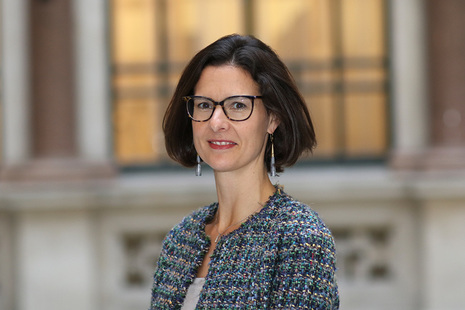
The British High Commissioner to Ghana, Harriet Thompson, has commended Ghana’s Parliament for passing a bill that criminalizes the act of declaring, accusing, naming, or labeling another person as a witch.
She expressed her appreciation while addressing inmates at the Gambaga Witches Camp during her official visit to the North East Region.
Madam Thompson told the inmates, “We are happy that this law has been approved by parliament that will stop people from being accused of witchcraft because we don’t want other people to be treated the way that some of you have been treated.”
The High Commissioner also emphasized the importance of Parliament’s actions in safeguarding the human rights of individuals.
She expressed her commitment to supporting initiatives aimed at preventing the abuse of women and protecting the rights of vulnerable groups in the North East region.
“Human rights are as important as anybody else’s human rights and so we will continue to work with other people in Ghana who are supporting you to make sure that those human rights are respected and those of your children and your children’s children.”
In July this year, Parliament approved the Criminal Offences Amendment Bill 2022, which was introduced by Madina MP Francis Xavier Sosu and four other MPs.
This bill makes it illegal to declare, accuse, name, or label another person as a witch in Ghana. Additionally, the amended bill prohibits individuals from practicing as witch doctors or witchfinders, among other provisions.
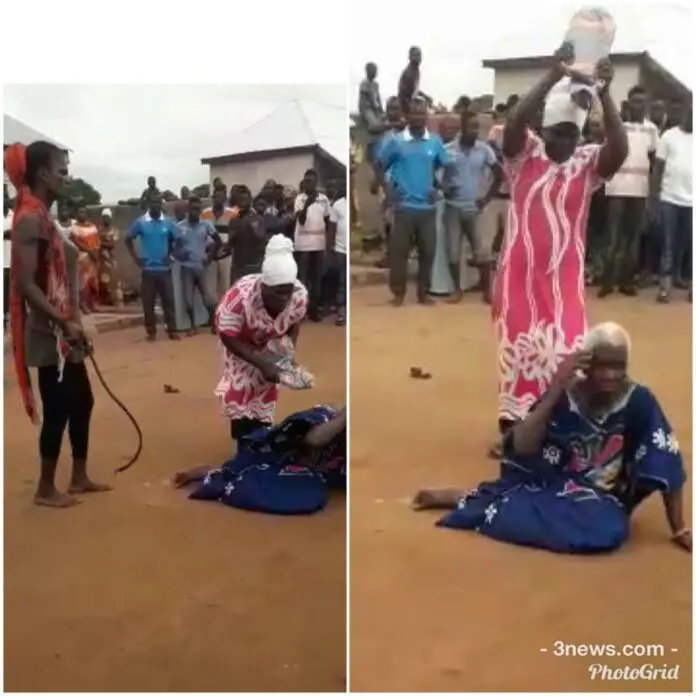
A distressing video has surfaced, capturing the brutal assault of a woman who has been accused of witchcraft.
The footage has ignited renewed concerns over the persistence of such horrifying practices despite a law criminalising the act.
This, therefore, highlights the urgent need for intervention and awareness.
The video, which has circulated on various social media platforms, exhibits two men subjecting the woman to physical and verbal abuse.
The assailants hurled accusations at her, branding her a witch and blaming her for various misfortunes in their community.
The woman was seen defenseless, enduring the whips, slaps and insults from the men.
This incident, reminiscent of previous cases, underscores the deeply ingrained belief in witchcraft that persists in certain communities, often leading to acts of violence against those accused.
It would be recalled that Akua Denteh was brutally beaten and killed heartlessly at Kafaba, in the East Gonja Municipality of the Savannah Region on Thursday, July 23, 2020, leading to her death the next day. Her death ignited widespread angry reaction across the country, with calls for the arrest and prosecution of the perpetrators.
The Salaga police subsequently arrested seven individuals including the chief of the Kafaba community, Seidu Yahaya. Hajia Serena Mohammed and Latifa Bomaye who had gone into hiding following the incident were later arrested at their hideouts.
Two female culprits are serving a twelve year jail sentence each for the act. There have been other reports of similar assaults in the media.
Witchcraft accusations often lack any form of credible evidence and disproportionately target vulnerable individuals, including the elderly and marginalized members of society.
Human rights organizations and advocates persistently calling for an end to these acts of violence, the acts continue.
Recently, Ghana passed a bill criminalising witchcraft accusations, however, sensitisation must be beefed in order to stop the assaults on suspected witches.
A woman has unveiled a heart-wrenching tale of how she ended up at the Kukuo witch camp.
In a candid revelation, the woman disclosed that her agonising journey to the camp was triggered by none other than her own son-in-law, who accused her of practicing witchcraft.
“My brother-in-law’s son saw me in his dreams. I was accused of stalking the boy using witchcraft and I was sent out of my community,” she recalled.
The witchcraft accusations phenomenon is a deeply entrenched belief system in some societies in Ghana.
These beliefs perpetuate a cycle of fear, discrimination, and social exclusion for its victims.
How the Fetish Priest confirms the ‘witch’s’ status
At Kokuo, it is believed that the main aim of a witch is to kill her fellow humans.
So to verify if one is indeed a witch, the accused is taken to a shrine, where some rituals are performed using the blood of a fowl. The ghost of the deceased is summoned, where it is requested to take justice if there is unfair play.
“We have a shrine here. When they come, we have a traditional way to do it.
We send them to that place with a fowl, and from there, we just mix some other things. We believe that spiritually, they have killed their fellow human beings.
Mostly, when they come, we send the fowl along. When we get there, we slaughter the fowl. Before slaughtering the fowl, the woman will tell the ghost that I am pure and clean, what they said I have done. I have nothing to do with it. She will make a promise to the ghost that if what they accuse me of is really my fault, the ghost should deal with me directly,” a man believed to be the apprentice of a fetish priest said.
After this, the accused is made to drink the potion.
“So then we slaughter the fowl, take a little blood from the fowl, mix it with water and give it to the woman to drink.
Later, the chief priest will then talk to the ghost that whenever the woman tries to do certain things, the ghost should deal with the woman.”
Following the ritual, the accused is then asked whether she would prefer to stay at the camp or return to her community.
Due to the threat to their lives, most of the accused decide to stay at the camp.
“After performing the ritual, the woman would be asked if she is willing to stay or go back to her previous location, majority of them stay here. Because going back to the community may cause mayhem.”
In Ghana, the activities of witch doctors are illegal.
On July 27, 2023, Parliament amended the Criminal Offences Act 1960, Act 29, thereby criminalising the declaration, accusation, naming or labelling of another person as a witch in Ghana.
This prohibits any person from practicing as a witch doctor or witchfinder.
In 2020, 90-year-old Madam Akua Denteh was lynched in the Savanah region after she was accused of being a witch.
In a viral video, the deceased was slapped, kicked, and caned at Kafaba near Salaga in the East Gonja Municipality.
Six people were later arrested, including the Kafaba Chief, Zackaria Yahaya for their roles in the gruesome killing.
Many Ghanaians, including President Akufo-Addo condemned the killing.
Three Members of Parliament in 2021 then introduced the Private Members’ Bill aiming to amend the Criminal and Other Offences Act 1960 (Act 29) to prohibit the practices of witch doctors and witchfinders.
The bill’s sponsors were Francis-Xavier Kojo Sosu, representing Madina constituency, Hajia Laadi Ayii Ayamba, representing Pusiga constituency, and Dr. Godfred Seidu Jasaw, representing Wa East constituency.
Per report, the president has assented to the amended bill.
A 60-year-old woman, Konjit Duut, was tragically beaten to death after being accused of witchcraft in Bunbuna in the Yunyoo/Nasuani district of the North East Region.
According to her family, several community members summoned Konjit Duut due to one individual’s claim that she appeared in his dream, attempting to harm him.
Allegedly, the fatal attack occurred while she was en route to inform her family in the neighboring village about the accusation made against her.
This incident occurs in the wake of a recently passed Bill in Parliament aiming to outlaw accusations of witchcraft.
It also follows a similar occurrence in June of this year in Sangbana, an event that nearly sparked tribal conflicts in the district.
Jacob Kauk, a brother of the deceased, conveyed to JoyNews that the family is demanding the apprehension and prosecution of those responsible for the crime.
He further stated that they would refrain from burying Konjit Duut’s body until their demands are met. While the Police have confirmed the incident, they have not provided additional information.
The chief of the community has denounced the assault and pledged to ensure that legal proceedings take their course.
MP for Madina Constituency, Francis Xavier Sosu, says the passage of the bill that criminalizes the declaration, accusation, naming, or labelling of another person as a witch will result in the disbandment of witches camps across the country.
Mr. Sosu informed the media that the new law explicitly makes these camps illegal, rendering them unable to continue their operation.
“By the passing of this law, it means that all witch camps stand proscribed. The law also requires that within a period the Minister for Gender, Children, and Social Protection will take steps to reintegrate people who are being held in various camps,” he stated.
“The reintegration may take various forms because when we visited the various camps there were some of the camps that is essentially like a home for some of them. So their reintegration may probably be that providing support for them where they are. Others may require that they may go back to their homes,” the Madina MP added.
Mr. Sosu expressed his firm belief that, in any approach taken, the Gender Ministry and the Social Protection unit will diligently carry out their mandate to ensure the protection and secure reintegration of individuals branded as witches back into society.
On Thursday, Parliament approved a law that criminalizes the act of declaring, accusing, naming, or labelling another person as a witch in Ghana. The amendment also prohibits the practice of witch doctors or witchfinders.
As a co-sponsor of the bill, Francis Xavier Sosu, the MP for Madina, expressed his enthusiasm, stating that this legislative passage is excellent news for all.
“The reason is that for all the 539 persons who are locked up in witch camps currently, they are looking forward to us taking some decisive steps to deal with this situation. This problem has lived with us for over 100 years to the extent that this 8th Parliament has found it needful to pass this law into law.”
“For me, it is definitely going to bring about a very serious mind shift. It is going to correct a lot of the ills in our society and I am confident that we are just building a better society for ourselves.”
In 2021, three Members of Parliament introduced the Private Members’ Bill to amend the Criminal and Other Offences Act 1960 (Act 29) to prohibit the practice by any person as a witch doctor or witchfinder.
The sponsors are MPs for Madina, Pusiga and Wa East constituencies, Francis-Xavier Kojo Sosu, Hajia Laadi Ayii Ayamba and Dr. Godfred Seidu Jasaw respectively.
On Thursday, Parliament successfully passed a significant amendment to the law, making the act of declaring, accusing, naming, or labeling someone as a witch a criminal offense.
This move aims to address the issue of witch accusations and its associated harmful consequences.
Furthermore, the approved amendment also prohibits individuals from practicing as witch doctors or witchfinders. This step is crucial in curbing the harmful practices and beliefs related to witchcraft in the country.
Speaking in Parliament, Speaker Alban Bagbin explained that the House amended the Criminal Offences Act 1960, Act 29, “to prohibit the practice by any person as a witch doctor or a witchfinder, to proscribe the declaration, accusation, naming or labelling of another person as a witch and for related matters.”
In 2020, a tragic incident occurred in the Savanah region where 90-year-old Madam Akua Denteh was brutally lynched after being falsely accused of witchcraft.
The horrifying incident, during which she was slapped, kicked, and caned, was captured in a viral video.
The incident took place in Kafaba near Salaga, situated in the East Gonja Municipality of the Savannah Region.
Following the incident, six individuals, including the Kafaba Chief, Zackaria Yahaya, were arrested for their involvement in this heinous killing. The incident sparked widespread outrage, with many Ghanaians, including President Akufo-Addo, condemning the act.
In 2021, three Members of Parliament, representing the Madina, Pusiga, and Wa East constituencies, introduced a Private Members’ Bill aimed at amending the Criminal and Other Offences Act 1960 (Act 29).
Dr. Godfred Seidu Jassaw, the MP for Wa East and one of the sponsors of the bill, expressed his expectation that the president would promptly sign the bill into law.
On the other hand, Francis Xavier Sosu, the MP for Madina and a co-sponsor of the bill, revealed that if the bill is passed, it would lead to the disbandment of witches camps nationwide. He further mentioned that the Gender and Social Protection Ministry would take necessary measures to reintegrate the inmates of these camps back into society.
The family of the woman accused of transforming from a bird to a human being in Gomoa Mampong, Central Region, has contradicted media reports claiming that she is a witch capable of shifting between human and animal forms.
In an interview on UTV conducted on Tuesday, July 18, 2023, the sister of the accused witch disclosed that her sister is suffering from a mental illness and had been unaccounted for three days.
She added that the accused witch is now 39 years old and has been mentally ill since childbirth.
“My sister stays with me. After she went missing someone called me from Senya that she was found there. I went there on Friday but I could not find her. I went back on Saturday, but I could not find her. On Sunday too, I tried but could not find her.
“It was yesterday that one of my sons told me, my sister was on TV and that she was with a woman who captures witches,” she said in Twi.
She said that she managed to find the palace in Gomoa Mampong where her sister was accosted and accused of being a witch.
The report indicated that the sister of the victim spoke to the chief and elders as well as the people who accosted her and explained matters to them.
They took her to the police station where her sister had been detained by the police. The police released her after interrogating them.
She stated that her sister told her that she was brought to Gomoa in a vehicle by a person she did not know.
President Paul Kagame of Rwanda has urged for immediate action to tackle various issues affecting Rwandan football, including the presence of witchcraft.
During a televised session titled “Ask the President” with the Rwanda Broadcasting Agency (RBA), President Kagame expressed his concern about unethical practices, particularly among coaches, such as witchcraft and bribery.
Rather than focusing on proper training and development, some individuals resort to these unethical practices, which President Kagame identified as a pressing matter that needs to be addressed.
Despite significant investments in the sports sector, Rwandan teams have faced challenges in achieving success. The national football team, for instance, has qualified for the Africa Cup of Nations only once, in 2004, and currently sits at the bottom of their qualifying group, yet to secure a victory.
Known for his passion for football and his support for the English club Arsenal, President Kagame has been actively involved in promoting sports in Rwanda. Since 2018, Rwanda’s Tourism Authority has maintained a controversial sponsorship deal worth £30 million ($42 million) with Arsenal Football Club.
Rwanda’s president, Paul Kagame mentioned in a televised “Ask the President” session with the Rwanda Broadcasting Agency (RBA), the need for immediate action to tackle various challenges affecting Rwandan football, including the issue of witchcraft.
President Kagame expressed his concerns about unethical practices, specifically mentioning the involvement of certain individuals, particularly coaches, in activities related to witchcraft within the sport.
He called for measures to address these issues and ensure the promotion of ethical conduct in Rwandan football.
“Instead of adequate training, you find them engaging in witchcraft or bribery, which is the first thing that needs to be addressed,” he said.
Despite substantial investment in the sports sector, the country’s teams have struggled to achieve success.
Rwanda’s national football team have only qualified for the Africa Cup of Nations once, in 2004, and are currently bottom of their qualifying group having yet to win a match.
Mr Kagame is a well-known football fan, and follows English club Arsenal. Rwanda’s Tourism Authority has had a controversial £30m ($42m) sponsorship deal with the club since 2018.
The families of two individuals who were lynched on accusations of witchcraft in Zakpalsi, Northern Region, are demanding justice for their loved ones.
The incident occurred on May 9, 2023, in the Mion District, resulting in the tragic deaths of Imoro Safura, a 40-year-old mother of seven, and Mba Cherefo.
As reported on graphiconline.com on May 31, 2023, the families have appealed to the police to thoroughly investigate the case and ensure that the culprits are held accountable. They believe that swift justice would bring some solace to the grieving families.
Adam Fuseini, the spokesperson for the deceased’s families, expressed that although their loved ones cannot be brought back to life, apprehending and prosecuting the individuals responsible, who are members of the community, would provide some relief.
According to the reports, on May 9, 2023, the two victims were lynched in Zakpalsi, a farming community in the Mion District, following allegations of witchcraft. The accusers claimed that the deceased were responsible for the illness of a woman in the community, as indicated by a soothsayer consulted by her family.
Safura, one of the accused individuals, sought refuge at the chief’s palace to escape the angry mob that had gathered at her home. Unfortunately, she was overwhelmed and lynched during the incident. The youth then pursued Cherefo and killed him at his residence.
During a visit to the families on May 26, 2023, the Minister of Gender, Children and Social Protection, Lariba Zuweira Abudu, was requested by Fuseini to assist in their quest for justice for their deceased relative.
A male and a female, have been lynched in Zakpalsi, an agricultural village in the Mion Districtin the Northern Region over witchcraft accusations.
The woman, Imoro Safura, in her early 40s and a mother of seven, was chased to the chief’s palace, where she was subsequently lynched.
The man was killed at his residence.
According to sources in the community, the two were accused of ‘buying’ sickness for a woman in the community after a soothsayer who was consulted by the woman’s family was called in.
The youth of the community mobilized to the man’s houseand murdered him.
The mob then trooped to Safura’s house but sensing danger, she ran to seek refuge at the chief’s house.
However, she was overpowered by the youth and lynched at the chief’s palace.
Executive Director at Songtaba Hajia Lamnatu Saaka has since condemned the incident.
While applauding the police for visiting the community and commencing investigations into the matter, she appealed to them to swiftly investigate the incident.
Meanwhile, the Northern Regional Reintegration Committee on Witchcraft Accusation and Disbandment of Camps is working with the police to get the perpetrators arrested.
Ana di Pištonja, also known as Baba Anujka or the Banat Witch, was an accomplished amateur chemist who used her skills to kill as many as 150 people in the late 19th and early 20th centuries.
Baba Anujka’s origins are shrouded in mystery. Some sources claim that she was born in 1838, in the Banat region of modern-day Romania, but her life was tied to the Yugoslavian village of Vladimirovac, in the Voievodina Province of present-day Serbia. As the daughter of a rich cattleman, she is said to have had a comfortable childhood and good education, but became a misanthropist in her early 20s, after being seduced by an Austrian officer who eventually left her with a broken heart and a syphilis infection. She found refuge in the field of chemistry and became known as a local healer and witch who could make anyone “disappear’ for the right price.
After isolating herself from the world for a few years, Ana di Pištonja allegedly married a landowner with whom she had five children. Unfortunately, only one of them reached adulthood. Her husband, who was reportedly much older than her, died 20 years into their marriage, and it was after his death that she became the Banat Witch.
Following her husband’s death, Anujka turned one wing of their home in Vladimirovac into a chemistry laboratory where she started experimenting with various mixes. She soon became known as a healer and herbalist among the people of Banat, but she also dabbled in more controversial potions. She would help soldiers get out of military service by giving them poison to make them ill, and wives rid themselves of their husbands with so-called “magic water.”
According to a surprisingly detailed Wikipedia entry on the Yugoslavian amateur chemist, “when told about a marriage problem, Anujka would ask her client, ‘How heavy is that problem?’, which meant, ‘What is the body mass of the victim?’. She would then calculate the dose of arsenic necessary to make “the problem” pass away without anyone realizing that they had been poisoned.
Baba Anujka would give the “magic water” to her clients, who were mostly women, and instructed them to give it to their husbands, who would usually die after about eight days. The old woman is believed to have been responsible for the deaths of at least 50, and up to 150 people.
By the 1920s, the magic water business of the Banat Witch had become so lucrative that she was able to hire a “sales agent” whose sole job was to find potential clients and bring them to the chemist. Of course, few understood the scientific process behind her product, so most of her clients reportedly believed that she had some kind of supernatural power that helped her magically kill people.
All this notoriety made Baba Anujka a lot of money, but inevitably drew more attention to her deadly business. In 1924, one of her regular clients, Stana Momirov, used magic mater to kill her husband Lazar Ludoški, and when an uncle of her second husband died in similar circumstances, authorities started asking questions. In December of 1926, Ana di Pištonja sold magic water to Sima Momirov and his wife Sofija, who intended to kill Sima’s 70-year-old father, Nikola. They succeeded, but their deed became part of the “Momirov Trials”, in which Baba Anujka was accused of being an accomplice in the murders of Lazar Ludoški and Nikola Momirov.
The Ghana Psychological Association (GPA) has asked the citizenry to say “no to witchcraft accusations.â€
“We should stamp out this unscrupulous and unacceptable trend of behaviour,” the Association said and stated its willingness to avail counselling services to victims.
This was contained in a press statement signed by Mrs Joy Anima Debrah, the National Public Relations Officer of the GPA, copied to the Ghana News Agency.
It said it was not enough for the Government to outlaw witch camps, “instead, we should go beyond intensive education on matters of this nature and punish perpetrators of this inhumane practice”.
The Association said it was very much interested in outcomes of the cases and called for multi-sectoral approach to handling such occurrences.
The statement called on civil society organisations to pay more attention and resources to changing harmful belief systems, which jeopardized the lives of others, adding, “We seem to forget that these old women are mothers, sisters and friends who need our love and support.
The statement said over the past few months, the Association had followed with great concern, troubling media reports of barbaric attacks on old women in the society.
It recalled that on the 24th July, various media platforms reported that Madam Akua Denteh, a 90-year-old native of Kafaba in the Savanna Region, had been lynched over witchcraft accusation.
“Despite the widespread civil society condemnation of that inhuman act and police action against the perpetrators, barely a month after, we have been confronted with yet another mob attack against a 60-year-old woman in the same region,” it said.
“Madam Meri Ibrahim from Sumpini is now fighting for her life, with her middle finger severed.”
It said the story in the media had it that, Madam Meri and other women in that community were alleged to have bewitched a gentleman leading to her brutal ordeal after, which her house was brought down with all her property destroyed.
The statement noted that unfortunately, many old women over the years had suffered violations embedded in cultural beliefs.
The Association said belief in witchcraft was common in most African societies and Ghana was not exempted and that often, misfortune, ailments as well as mishaps were attributed to witchcraft and the engrained beliefs in ostracizing them was unlawful, outdated and derogated victims.
It said the Association acknowledged the hardship and consequent stressful effects of the COVID-19 Pandemic on humans, which had also exposed “our lack of knowledge in the areas of aging and degenerative mental disorders like dementia that is misinterpreted.”
The Association said it “endorses more scientific and humanistic paradigms that adopt positive approaches including psychosocial counselling and strictly disapproves any unlawful and criminal behaviours hidden in cultural practices that oppress and discriminate against old women especially.”
Parliament has proposed a draft bill that will among other objectives prohibit the practice of professional Witchcraft or Wizardry and the declaration of a person as a Witch or Wizard and the molestation of a person on suspicion of being a Witch or Wizard.
This follows the recent beating to death of a 90-year-old woman by a group of persons on suspicion that the 90-year-old Woman being a Witch.
The Speaker of Parliament Rt Hon Prof. Aaron Mike Oquaye announced this in Parliament last Friday before the House went on recess as the Second Meeting of the 4th Session (Year) of the 7th Parliament ended last Friday.
According to the Speaker, a Consultant on Private Members Bill, who has been engaged by Parliament is working on the draft bill which will be submitted to the House for consideration and passage into Law.
Rt Hon Prof Michael Aaron Oquaye congratulated members of Parliament for their hard work which ensured the successful completion of the Second Meeting of the House.
“During the Second Meeting made up of 12 weeks of intensive work, 13 bills were passed into law whilst 11 Constitutional, Legislative and Executive Instruments were also passed by the House, ” the Speaker said.
In the Second Meeting, the House also adopted a motion for the enactment of Private Members Bill.
The Minister of Finance Mr Ken Ofori-Atta also presented the Mid-Year Review of the 2020 Budget statement and economic policy of the government and the subsequent approval by the House of a supplementary Budget estimate of Ghc 11.8 billion for 2020 financial year.