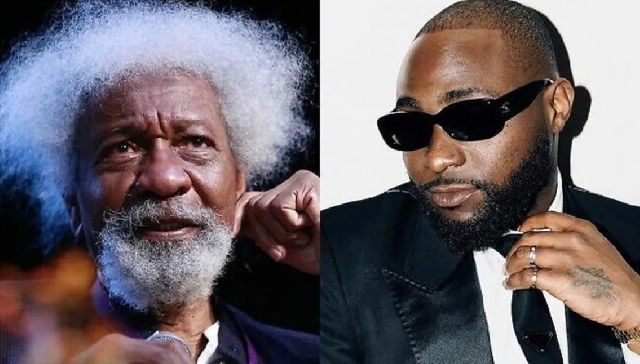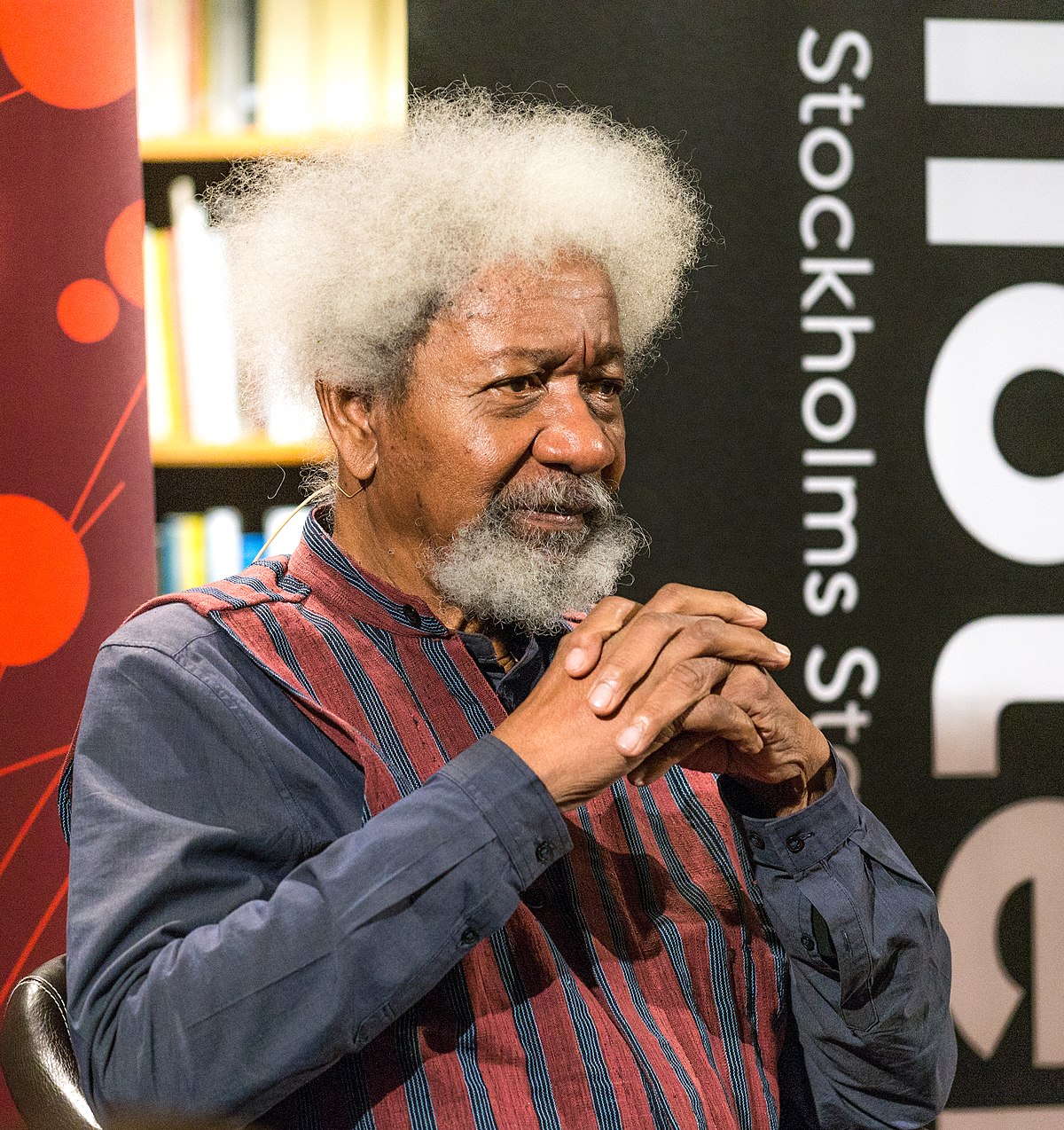
Wole Soyinka is a Nigerian writer, poet, dramatist, and literary critic who won the Nobel Prize for Literature in 1986. He is widely regarded as one of the most influential African writers of the 20th century.
However, his literary achievements were not without a price. Soyinka was imprisoned for 22 months by the Nigerian government during the Nigerian Civil War (1967-1970), also known as the Biafran War, for allegedly supporting the secessionist movement of Biafra.
Soyinka was arrested in August 1967, after he had secretly met with the leader of Biafra, Chukwuemeka Odumegwu Ojukwu, in Enugu, the capital of the breakaway state. Soyinka had hoped to persuade Ojukwu to accept a peaceful resolution of the conflict, but his mission failed. He was accused of being a spy and a traitor by the federal authorities, who detained him without trial and subjected him to interrogation and torture.
Soyinka was held in solitary confinement for most of his imprisonment, in a cell that he described as “a windowless hole.” He was denied any writing materials, books, or contact with the outside world. He suffered from malnutrition, malaria, and depression. He later wrote that he felt like “a man buried alive.”
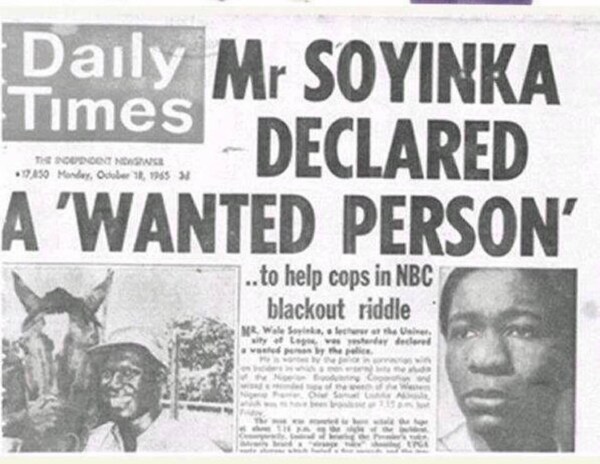
Despite these harsh conditions, Soyinka managed to produce some of his most remarkable works during his incarceration. He wrote poems on tissue paper, cigarette packs, and scraps of paper that he smuggled out of his cell.
He also composed a memoir, The Man Died: Prison Notes of Wole Soyinka, which he memorized and later dictated to his friends after his release.
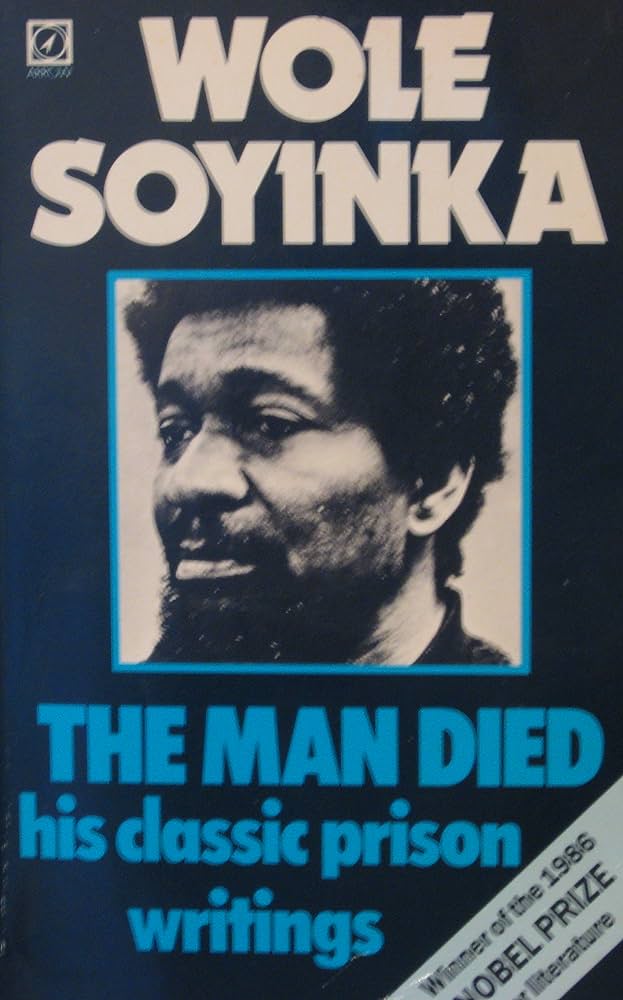
In these writings, he chronicled his experiences in prison, his thoughts on the war and its atrocities, and his reflections on the human condition.
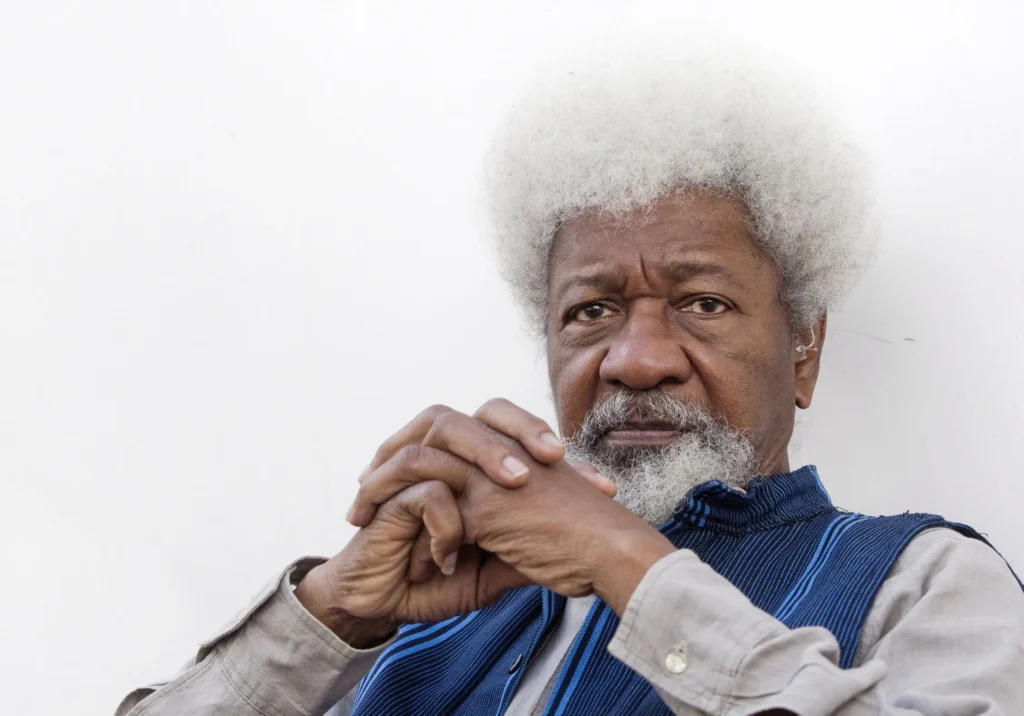
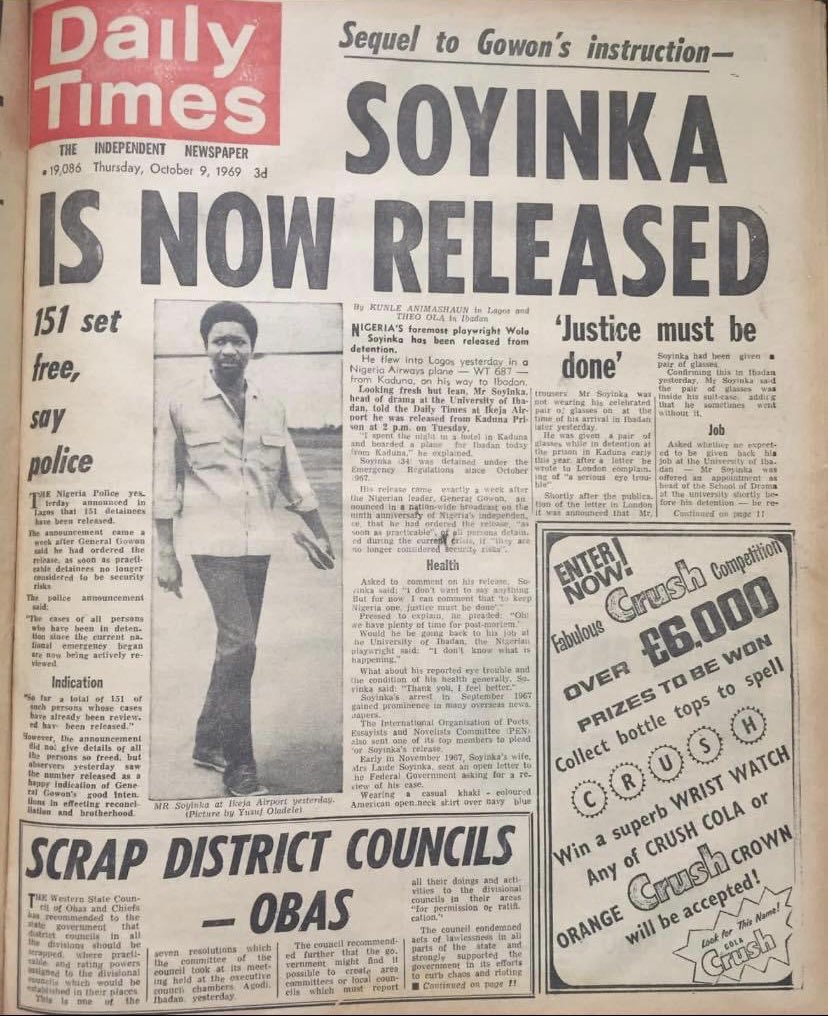
Soyinka was released in October 1969, after the end of the war. He left Nigeria and went into exile in Europe and America, where he continued to write and teach. He returned to Nigeria in 1975, after the military regime that had imprisoned him was overthrown. He resumed his political activism and criticism of successive governments, which led to further arrests and threats to his life. He also founded several cultural organizations and institutions to promote African literature and arts.
Soyinka’s prison writings are widely regarded as some of the most powerful and poignant expressions of political dissent and resistance in modern literature. They also reveal his remarkable courage, resilience, and creativity in the face of oppression and adversity. Soyinka is not only a Nobel laureate, but also a hero of human rights and freedom.