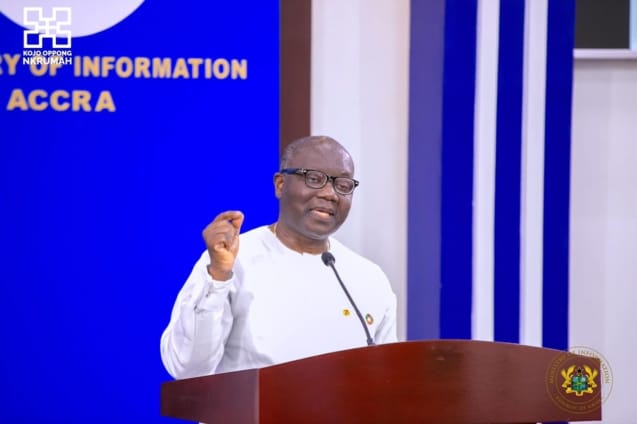
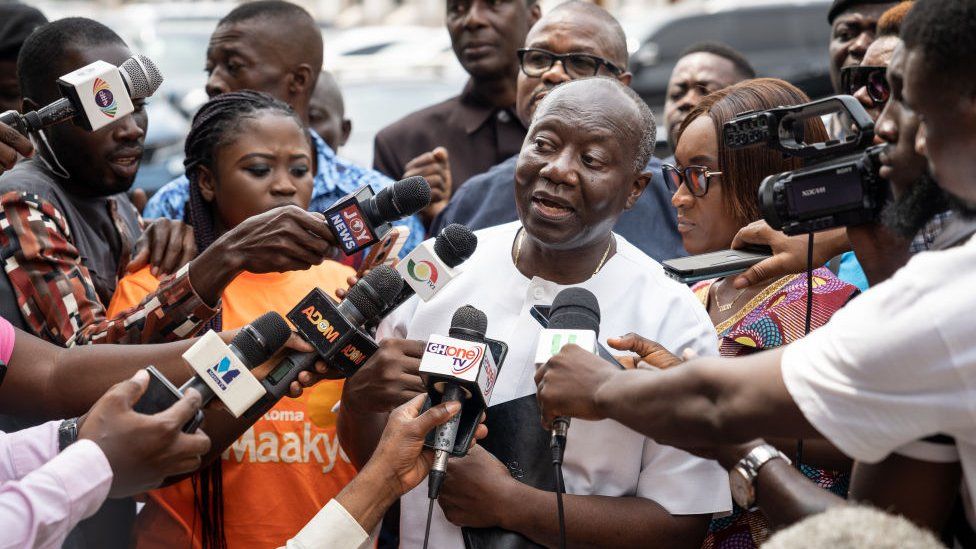
According to the Minister for Finance, Ken Ofori-Atta, the World Bank has committed $250 million to Ghana Financial Stability Fund (GSFS).
While engaging the press in Washington DC, the minister noted that the said amount would hit the country’s account by the third quarter.
“The World Bank has committed $250 million,” he is quoted to have said by JoyNews.
He explained that the stability fund is being established to ensure that government can intervene in the event of any solvency and liquidity issues.
The Finance Minister noted that currently, talks are underway for donor partners such as the African Development Bank for further resources into the fund.
He added that government will also deposit some money into the fund, and further encouraged other multilateral development banks and bilateral partners to assist the Government of Ghana to secure the stability of the country’s financial sector.
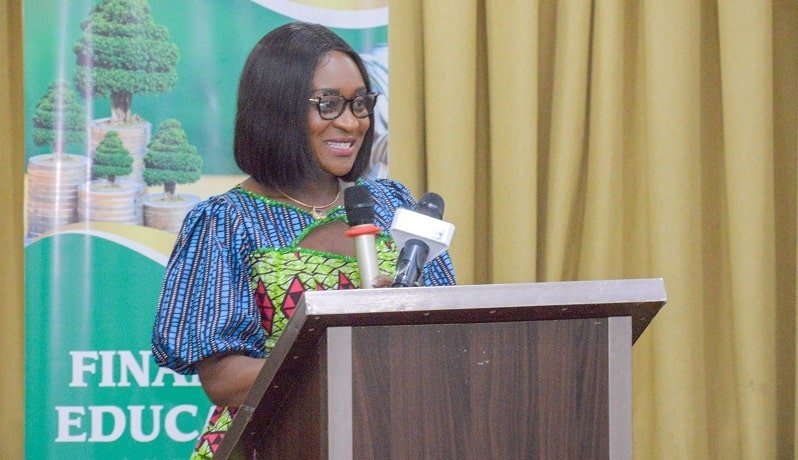
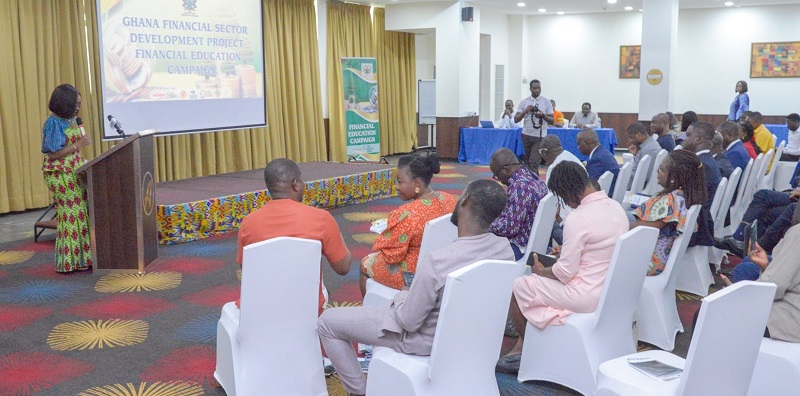
The Ministry of Finance in collaboration with the World Bank, Bank of Ghana, and other financial institutions, has launched the National Financial Education Campaign Programme.
The main aim of the program is to strengthen Ghanaians’ financial capabilities and promote responsible financial behaviours since the current development in the country’s economic and financial sector, underlines the need for a more timely and all-inclusive financial education program which lectures the noticeable problems in the financial sector.
The event saw the congregation of industry players in the financial sector which included representatives from the World Bank, Bank of Ghana, Securities and Exchange Commission, National Pensions Regulatory Authority, National Insurance Commission, and the Ghana Microfinance Institutions Network.
A Deputy Finance Minister, Madam Abena Osei-Asare, in her keynote address commended the World Bank for their continuous support to the development of the Ghanaian economy and, for sponsoring the design and roll-out of the National Financial Education Campaign.
She revealed that, many Ghanaians lacked the basic understanding of key financial issues such as the impact of inflation on the value of their money, computation of interest on loans and investments, awareness and use of financial products and services among other things. This, she noted had made it difficult for them to make any informed financial decision.
“Indeed, financial capability of consumers is a major component to building a strong and resilient economy. Without this, many people will resort to the old and unsecured ways of handling monies, such as keeping monies under pillows and mattresses,” she said.
The structure of the financial education campaign allows for radio and TV discussions, public fora, townhall engagements, and social media campaign. Different educational materials have been developed and translated from English into eleven (11) local languages, namely, Ga, Akwapim Twi, Asante Twi, Ewe, Sefwi, Nzema, Dagomba, Dagaare, Kusaal, Mamprugu and Gonja.
The Deputy Minister who is also the Member of Parliament for Atiwa East further stated that, despite the major impact of global pandemic shocks and the domestic debt exchange programme, the Ghanaian financial sector remained resilient, and that the Monetary Policy Committee, in its most recent release, alluded to the banking industry’s relative stability despite recording some losses from the Domestic Debt Exchange Program (DDEP).
She urged the media to take deliberate steps to evaluate products being advertised by financial institutions before advertising these products. She added that, people were highly influenced by financial products and services advertised on radio and television.
The Director of the Financial Sector Division of the Ministry, Mr. Sampson Akligoh, welcoming participants on behalf of the Chief Director of the Ministry of Finance, Dr. Patrick Nomo noted that, the campaign was designed through a collaborative effort by financial sector regulators and industry associations.
He stated that, some financial institutions were not licensed to provide financial services to the public and but were operating illegally in the country.
This, he regretted had resulted in loss of monies (deposits and investments) of many households and business as these institutions bolted with the monies of their depositors and investors.
“To prevent a full-blown financial crisis, the Government through the financial sector regulators between 2017 and 2019 embarked on a comprehensive reform agenda with the aim of ridding the financial sector off illegal, illiquid and insolvent financial institutions as well as to strengthen the regulatory and supervisory framework of the sector”, Dr Nomo said.
He concluded by urging the general public to ensure the financial institutions they wished to work with, were duly licenced and working under regulatory bodies.
Giving an overview of the financial literacy campaign, the chairperson of the Financial Education Multi-Stakeholder Committee (FEMCOM), Mrs. Patience Arko Boham, disclosed that, Asamoah and Williams Consulting and Trans Media Network, was procured to assist in the design and implementation of a five-year national financial literacy strategy (2021-2025) to serve as a blueprint for bolstering the financial capacity of Ghanaians.
“It is important to mention that throughout the process, the World Bank played a pivotal role by providing technical assistance to the team and providing insights from other country experiences to ensure the design of a campaign that will create lasting impact on Ghanaians” she added.
There were solidarity messages from stakeholders including the Bank of Ghana, Securities and Exchange Commission and National Insurance Commission.
The Campaign is scheduled to be conducted in all the sixteen (16) regions of Ghana and predominantly target the informal sector and youth groups.
Ghana’s projection to secure an Executive Board approval from the International Monetary Fund (IMF) for its $3 billion loan-support programme by the end of the second quarter of 2023 is likely to happen.
This is because Ghana’s largest bilateral creditor, China, which the country owes $1.7 billion, has agreed to speed up processes for its debt treatment.
“China [and all creditors] has agreed that it [debt treatment] has to be speedily dispensed. That is a great step forward because once you recognise that you have to do it in time and at the earliest, it moves faster. So, I expect a resolution for these countries,” Nirmala Sitharaman, Finance Minister, Republic of India said.
She was speaking at a press briefing of the Group of 20 Presidency’s (G20) second Finance Ministers and Central Bank Governors (FMCBG) at the ongoing 2023 IMF/World Bank Group (WBG) Spring Meetings in Washington DC, US.
“We had around the table, Sri Lanka, Zambia, Ghana, Chad [which] has already been attended to, and Ethiopia. So, discussions were to ensure that the resolutions for these countries should happen on time. All stakeholders in this matter should come on board to talk,” she said.
She added that: “The point is that it [debt treatment] is very time-consuming and even when the IMF says it is handling your affair, it does take time, and we found that almost all of them, inclusive of public and private creditors, of them, said it must be addressed at the earliest time.”
During an investor presentation on the sidelines of the spring meetings, Ghana’s Finance Minister, Ken Ofori-Atta, said the Government is expecting an IMF Executive Board engagement and approval in the second quarter of 2023.
The Government is having preliminary and technical discussions with Bondholders Committee Advisors and Bilateral Creditors Secretariat and Technical Teams – as well as Bilateral and Private Creditors – which are expected to conclude by the end of April, to gain financial assurances for the $3bn loan-support programme.
“The restructuring of the external debt is necessary to restore debt sustainability and ensure the full financing of the programme,” Mr Ofori-Atta said.
He emphasised that Ghana’s creditor engagement strategy would be anchored on transparency, good faith efforts for a collaborative process to restore debt sustainability, fair treatment across creditors -consistent with IMF debt sustainability analysis.
Already, the IMF, World Bank Group and the Group of 20 Presidency (G20), have all pledged to increase concessional financing to Ghana to address the country’s current debt challenges.
“Work will be undertaken on principles regarding cut-off dates, formal debt service suspension at the beginning of the process, treatment of arrears, and perimeter of debt to be restructured, including domestic debt [for Ghana and other developing countries],” Kristalina Georgieva, Managing Director, IMF said on Wednesday.
Ghanaian authorities in December last year, reached a Staff-Level Agreement with the IMF, and currently awaiting the Fund’s Executive Board approval for the three-tier $3 billion loan-support programme under the Extended Credit Facility (ECF).
The country completed its Domestic Debt Exchange Programme (DDEP) and engaging its external creditors for debt operations for the loan facility, which is aimed at restoring macroeconomic stability, while protecting vulnerable.
Currently, some officials from Ghana, including Members of Parliament (MPs) and Members of the Economic Management team, are with the Finance Minister and the Governor of the Bank of Ghana, at the ongoing IMF/World Bank Spring Meetings to engage commercial, bilateral, and multilateral creditors to secure the IMF Board approval.
The Ministry of Finance has said that the sector minister Minister Ken Ofori-Atta has had very productive meetings so far at the #SpringMeeting2023 with the International Monetary Fund (IMF), International Finance Corporation (IFC) and Japan International Cooperation Agency (JICA), among others.
“Grateful for the strong cooperation from our bilateral and multilateral partners!<” the Office of the Finance Minister tweeted on Wednesday, April 12.
The 2023 Spring Meetings of the Fund and the World Bank Group commenced on Monday, April 10 and are expected to end on Sunday, April 16 in Washington DC.
The theme for the programme of events is “Reshaping Development for a New Era”.
At the heart of the meetings is a discussion around the progress of the institutions.
The meeting brings together central bankers, ministers of finance and development, parliamentarians, private sector executives, representatives from civil society organizations and academics to discuss issues of global concern, including the world economic outlook, poverty eradication, economic development, and aid effectiveness.
China and the World Bank are exploring compromises over how to restructure billions of dollars of debt held by poor nations, seeking a long-sought breakthrough that could unlock desperately needed aid.
Discussions on Wednesday, April 12, 2023, in Washington, during the World Bank and International Monetary Fund’s Spring Meetings, are aimed at ending a deadlock among the world’s biggest creditor nations on how to renegotiate several poorer nations’ debt, which had become unsustainable amid surging inflation and a stronger dollar.
A proposal under discussion this week would see the World Bank provide fresh low-interest loans — known as concessional lending — and other grants to countries on the verge of default, in exchange for China dropping a key demand and agreeing on a timeline for debt relief. The talks were described by people familiar with the matter, who asked not to be identified because the discussions are private and the outcome is still uncertain.
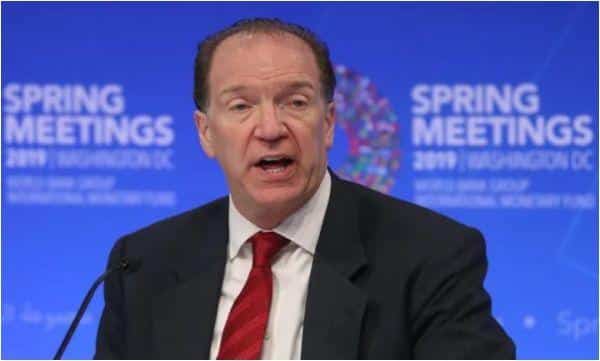
Key to the compromise is the World Bank increasing its emergency assistance to countries in debt distress, something its outgoing president, David Malpass, said on Tuesday that the lender was already intending to do.
Officials from a number of countries cautioned, however, that a major breakthrough is unlikely this week, that China’s position remains unclear and the discussions are focused largely on the overall process.
People’s Bank of China governor Yi Gang is the highest-level official expected from Beijing to attend the talks this week, along with Deputy Governor Xuan Changneng, according to a person familiar with the matter. Finance Minister Liu Kun didn’t travel to Washington, with Beijing opting to send Vice Minister Wang Dongwei instead, said a second person.
The World Bank and US Treasury Department declined to comment, while the PBOC and IMF didn’t immediately respond to requests for comment.
The Wall Street Journal reported earlier on Tuesday on the possible compromise in the talks. Reuters reported late on Tuesday that China would drop its demand on multilateral loans, citing a source it didn’t identify.
The debt-relief efforts, begun by the G20 in late 2020, were intended as a way to coordinate traditional creditor nations, like the US and France, with emerging creditors, particularly China, the biggest lender to emerging economies.
Yet that mechanism, known as the Common Framework, has faced repeated delays over differences about how to treat various forms of debt. Beijing has been pushing for loans from multilateral development banks, such as the World Bank, to be treated the same as other debt — meaning everyone takes a similar “haircut”, or loss, on what’s owed.
That condition has been rejected by the US and others, who argue that such a move would harm multilateral banks’ preferred creditor status, which allows them to borrow and lend cheaply.
Debt distress
More than 70 low-income nations face a collective $326-billion burden. About 15% of low-income countries are already in debt distress and another 45% face high debt vulnerabilities, and the list is growing.
Among the compromises under discussion is a three-month deadline from when the IMF reaches a staff-level agreement with a debtor country for creditors to offer financing assurances, said two of the people. Such assurances are essential for the IMF’s board to sign off on any loans.
If consensus isn’t reached in that time frame, the IMF would be able to invoke its so-called lending into official arrears policy to disburse money. That provision seeks to prevent a creditor from blocking assistance to a cash-strapped country that’s shown commitment to meet loan conditions.
To help the Common Framework process work more smoothly going forward, Malpass said this week that the IMF and World Bank also might provide their joint debt sustainability analysis for debtors with all creditors at the same time, increasing transparency. China had earlier raised questions about the institutions’ analysis, further slowing the efforts to reach a consensus.
A breakthrough in talks this week could open the way for restructurings in nations including Zambia — the first African nation to default on its debt during the pandemic era — and help speed up the deployment of billions of dollars in IMF aid. The African country has been in talks to rework $12.8-billion in loans for more than two years.
The International Monetary Fund (IMF) has doubled down on its plea to wealthier nations to support Ghana and other weaker economies to help such countries extricate themselves from the shackles of debt.
The call also comes at a time when the fund has seen a $1. 6 billion shortfalls in its funding in the face of the seemingly global economic crises where funding to debt-distressed countries was at its highest.
Speaking ahead of the IMF and World Bank Spring Meetings in Washington, Kristalina Georgieva, the
IMF’s Managing Director said the fund and wealthier countries needed to make it easier for vulnerable ones to restructure their debts to help minimise the effects of the debt crises on lives and livelihoods of their people.
Developed economies must also commit more resources to the fund’s Poverty Reduction and Growth Trust (PRGT) – a concessionary lending window for low-income countries (LICs) – to help strengthen the global response to debt vulnerabilities, Ms Georgieva said in a curtain raiser speech before the meetings that opened yesterday, Monday, April 10.
Ghana’s case
The one-week meetings in Washington D.C. in the United States of America (USA) come off at a time when Low-Income Countries (LICs) are battling extreme debt pressures worsened by the COVID-19 pandemic and Russia’s invasion of Ukraine. Ghana, with a debt stock of GH$575.7 billion in November last year, is one of more than 10 LICs in debt distress.
The country defaulted in servicing its debt last year and is now working with bilateral creditors to restructure their component to be able to earn a US$3 billion IMF assistance to help slow down inflation, prop up the currency and return the economy to the path of growth.
Although discussions with some bilateral creditors under the G20 Common Framework are underway, talks with China, which holds US$1.9 billion of Ghana’s debts have dragged, fuelling doubts over the country’s ability to secure a package before May.
Costly delays
The IMF MD said such delays to debt restructuring requests were costly to the countries and the global economy in general, hence the need for additional support from wealthier countries for these “weakest members of our global family.”
“I wish to make a double plea on their behalf: help them to handle the burden of their debts, which has been made so much harder by the shocks of the past years; and secondly, help ensure that the IMF continues to be in a position to support them in the years ahead. Start with debt”, she pleaded.
About 15 per cent of low-income countries are already in debt distress and another 45 per cent face high debt vulnerabilities. And about a quarter of emerging economies are at high risk and facing “default-like” borrowing spreads.
This has raised concerns over a potential wave of debt restructuring requests—and how to handle them at a time when current restructuring cases are facing costly delays, Zambia being the most recent example,” she said.
Zambia started its debt restructuring in December 2022 but the inability to reach a consensus with China largely means that the process is yet to be concluded.
Stronger support
Beyond this, Ms Georgieva said the IMF needed more resources from wealthier nations “to bolster the IMF’s capacity to help our poorest member countries.”
“To support them, we have increased our interest-free lending more than four-fold to US$24 billion since the beginning of the pandemic. Now, we are urgently calling on our wealthier members to help address fundraising shortfalls in our PRGT,” she said.
In April 2020, the fund disbursed US$1 billion to Ghana under its Rapid Credit Facility (RCF) of the PRGT to fight the COVID-19 pandemic and its effects.
It said earlier this year that increased demand by countries hit by the twin effects of the pandemic and the war in Ukraine meant that the PRGT faced funding shortly of about US$1.6 billion.
As a result, Ms Georgieva said support from wealthier nations was critical to ensure that the IMF can continue to provide vital support and help catalyse financing from others.
“It is now more important than ever to step up cooperation—to strengthen the ropes that tie us together—on this issue and the full range of economic challenges, we face. Only then can we climb these hills together.
Growth
The IMF MD said global growth was also headed for the weakest since 1990.
She said as the debt pressures surged, the growth prospects remained subdued with the fund’s latest estimates showing that the global economy would grow below three per cent in the next five years.
“This makes it even harder to reduce poverty, heal the economic scars of the COVID-19 crisis and provide new and better opportunities for all,” Ms Georgieva said.
For countries like Ghana and Ethiopia, which have a higher inflation differential, growth recovery in 2023 would be accompanied by rising inflation, the World Bank has said in its April 2023 the African Pulse report.
“In those countries, the rising cost of living is already weighing on consumers and investors and may hamper economic growth”.
The report said amid high inflation and weak growth prospects in 2023, the fear of stagflation is rising across some countries in the region.
The report noted that Sub-Sahara African economies as well as the global economy are experiencing an episode of high inflation that is driven by the COVID-19-related lockdowns and supply chain disruptions, and exacerbated by the war in Ukraine, among other factors.
The war in Ukraine, it pointed out, escalated supply chain disruptions further and intensified volatility in energy and commodity prices.
Many central banks across the globe responded by tightening their monetary policies to curb inflation.
For example, the US Federal Reserve has increased its monetary policy rate by 450 basis points since March 17, 2022.
However, inflation declined slowly to 6.4 per cent by January 2023—a rate that is still above the Fed’s 2 per cent inflation target.
The slow disinflationary process can be attributed not only to remaining supply chain issues but also rising wages and higher consumer savings from government stimulus checks.
Further interest rate hikes to curb inflation add more pressure to tighten global financial conditions and elevate the risk of a global economic slowdown, the report indicated.
It said one of the salient features in the current inflationary episode is the increase in food prices— which had started prior to the pandemic—due to pent-up demand as the global economy lifted COVID-19 restrictions and harsh weather conditions.
Many Sub-Sahara African countries have experienced high headline inflation fueled primarily by food inflation.
Nearly three-quarters of the countries in the region with available data for January 2023 recorded a two-digit year-over-year rate of food inflation—with Zimbabwe (264 per cent), Sudan (58.7 per cent), and Ghana (61 per cent) exhibiting the highest rates.
It noted that rising inflation erodes purchasing power, holds back growth, and, if not addressed, leads the government to run the risk of de-anchoring inflationary expectations—with dire consequences for financial markets.
“Many countries have also accumulated mounting debt burdens since the pre-pandemic era. In this context, what are the risks of stagflation in Sub-Sahara African countries, and what are the policies needed to engage in a sustainable growth path with a stable macroeconomic environment?”
“It considers countries at risk of stagflation as those that meet two criteria: (1) their income per capita in 2023 is still below that of 2019 (prior to the pandemic), and (2) the projected average inflation rate in 2023 is higher than the corresponding rate for advanced economies”.
The report said evidence shows that about 38 per cent of Sub-Saharan African countries have a greater risk of stagflation.
“Many countries in this group have also recorded two-digit unemployment rates—particularly Southern African countries, Angola, and Nigeria, among others”.
Countries with a low inflation deviation from advanced countries (say, less than 0.025) show moderate to robust growth under a relatively stable inflationary environment.
According to theWorld Bank‘s April 2023 Africa Pulse Report, Ghana’s growth rate has been reduced to less than 2.0% in 2023, ranking it 29th in Sub-Saharan Africa.
This is lower than the 2.7% it earlier projected.
According to the Bretton Wood institution, the expected low growth rate in the country is due to deleterious global shocks and heightened macroeconomic instability.
“In Ghana, more timely data highlight the weakness of economic activity amid the deleterious global shocks and heightened macroeconomic instability”.
It further said government consumption has declined on the back of high debt service and restricted access to international capital markets, adding, business and consumer confidence slumped in late 2022. However, the Purchasing Managers Index is gradually picking up and signaling an expansion in economic activity (50.2 in February 2023).
Continuing, it pointed out that the Ghanaian economy has been struggling with high levels of public debt and elevated inflation fueled by a sharp weakening of the cedi.
“Growth in Ghana is expected to have slowed in 2022 to 3.2%, down from 5.4% in 2021 and far below the country’s average pre-pandemic performance (6.1%)”.
“The economy has been struggling with high levels of public debt and elevated inflation (52.8 percent in February 2023) fueled by a sharp weakening of the cedi (a cumulative depreciation of 40 percent in 2022 and about 20 percent in 2023 so far)”, it added. World Bank lowers Ghana’s growth rate to below 2% in 2023
To curb the rising inflation, it said the Bank of Ghana raised its policy rate by a record 1,500 basis points to 29.5% in March 2023, from 14.5% in December 2021.
The World Bank added that the recovery of economic activity in Sub-Saharan Africa is multispeed, with wide variation across countries.
Sub-Saharan African countries growth characterised as divergent and multispeed
Congo DR will become the fastest growing country in Sub-Saharan Africa in 2023.
The World Bank said the recovery of economic activity in Sub-Saharan Africa is multispeed, with wide variation across countries.
“The region’s moderate growth in 2022 was associated with large countries on the continent registering growth rates that were lower than their long-term average”.
Broadly, more than half of the countries in the region are growing at rates below their long-term average. Among the 10 largest economies in Sub-Saharan Africa—which represent more than three quarters of the region’s GDP—eight are growing at rates that are below their long-term average growth.
Sudan, Nigeria, Angola, and Ethiopia are among the countries with weaker performance compared to their long-term growth rates.
Economy to grow at 2.8% in 2023 – Finance Minister
Finance Minister, Ken Ofori-Atta during the presentation of the 2023 Budget in November said the economy will expand by 2.8% in 2023.
“The economy is expected to rebound from 2024 and grow steadily in the medium term to record an average growth of 4.8 percent over the period (between) 2024 and 2026,” he said.
The services sector would “remain the dominant sector over the medium term in percentage contribution to overall national output, followed by industry and agriculture,” he pointed out.
According to the BBC, the World Bank’s president is worried about some of the loans China has been providing to developing nations in Africa.
The terms and conditions need to be “more transparent,” according to David Malpass.
It happens amid concerns that some nations, including Ghana and Zambia, are having trouble paying back their debts to China.
According to China, all such lending complies with international laws.
Developing nations frequently take out loans from foreign countries or multilateral organizations to fund economic growth-oriented industries like infrastructure, education, and agriculture.
However steep increases in interest rates in the US and other major economies over the last year are making loan repayments more expensive because lots of that borrowing is done in foreign currencies such as US dollars or euros.
It is a particularly acute problem for developing economies who can struggle to find the extra money that is required as the relative value of their own currency falls.
China refutes suggestions that it is exploiting other countries with its financial support.
At a press conference this week Foreign Ministry Spokesperson Mao Ning said China “respects the will of relevant countries, has never forced any party to borrow money, has never forced any country to pay, will not attach any political conditions to loan agreements, and does not seek any political self-interest”.
Image caption,Ghana’s Finance Minister Ken Ofori-Atta travelled to Beijing this month for talks on restructuring its debt repayments. The country also got $3bn from the IMF in December.
Mr Malpass said the problems were not unique to Chinese financing but things were improving.
“If you think of the history of Western lending, sometimes it’s not for the full benefit of the people in the countries [being lent to]. Even World Bank loans haven’t always been for the best that could have been done in a country.”
“So what we’re trying to do, and I think everyone should be trying to do, is improve the quality of the lending.
“One of the techniques is to unbundle the loan, meaning if there’s an investment project, let’s say you’re building a train, describe the project and what the cost will be. And then separately, arrange the financing.
“If you bundle them together, it makes it very hard to know, am I getting a good deal on the train or on the financing.”
Food and energy concerns
The outgoing World Bank president is also concerned that higher food, fertiliser and energy prices, as a result of the war in Ukraine, are sapping government budgets in poorer countries. While that could deepen the economic challenges they face there is relief that price rises are now starting to ease.
“The immediate crisis is over but one thing that’s been left is that countries didn’t use enough fertiliser, so their soil is depleted. So the yields are expected to be lower next year than normal.”
“So a farmer that was just making ends meet, she didn’t get fertiliser, and now her land is not as productive. And so where’s the food going to come from for the family and for the community? That’s the big immediate problem. What we’re trying to do is help countries directly with fertiliser [and] with food.”
Image caption,Many of the world’s poorest economies have been hit hard by higher food prices as a result of the war in Ukraine
The World Bank is concerned that these challenges will worsen a first-ever increase in the global extreme poverty rate – people getting by on less than $1.90 per day. As a result of the coronavirus pandemic it rose from 8.4% to 9.3%.
The planet’s leading development body hopes that its upcoming showpiece joint Spring Meetings with the IMF in Washington will help it raise more money to tackle its key mission.
“The ambition is there,” says Mr Malpass, “but the needs are much bigger than the amount of flows” of money coming in.
It is a “double whammy and it means that [economic] growth is going to be slower”, says Mr Malpass.
US-China rivalry
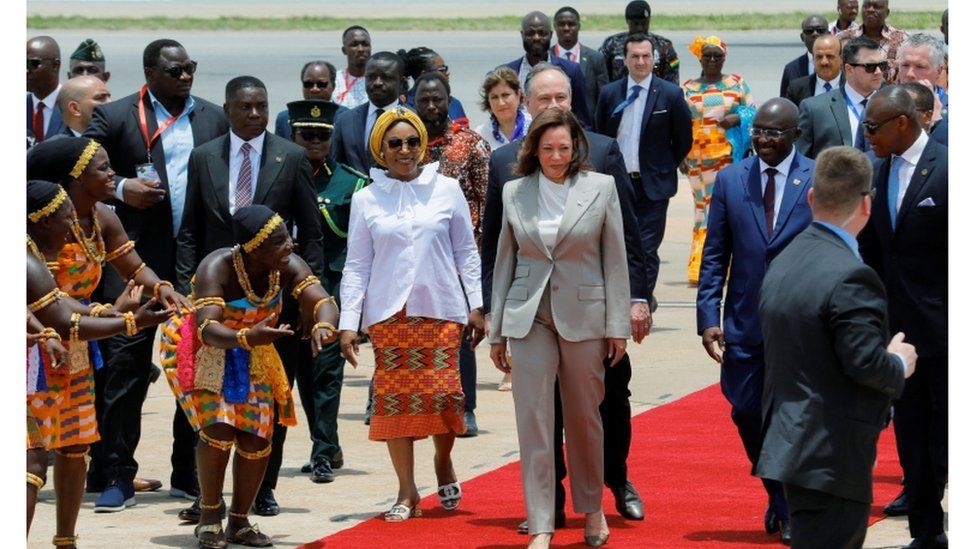
Tackling that challenge and its consequences was one of the main reasons for this week’s visit by US Vice-President Kamala Harris to three African countries. It is a visit that comes with big commitments of financial support to Tanzania and Ghana.
There is a growing rivalry with China for influence in the continent, whose abundance of natural resources include the metals, such as nickel, crucial for the batteries needed for technology such as electric cars.
Speaking in Ghana’s capital, Accra, she said “America will be guided not by what we can do for our African partners, but what we can do with our African partners”.
While highlighting a new nickel processing facility in Tanzania Ms Harris said the project would be supplying the US and other markets by 2026 and that it would “help address the climate crisis, build resilient global supply chains, and create new industries and jobs”.
Image caption,US Vice-President Kamala Harris was warmly welcomed in Ghana’s capital, Accra, by Vice-President Mahamudu Bawumia as she sought to strengthen economic ties
That collaborative approach was praised by Mr Malpass who said the competition between the world’s two biggest economies was “maybe healthy for developing countries” as it provided different options.
“What I encourage strongly is that they be transparent in their contracts. That’s been one of the problems; if you write a contract and say ‘but don’t show it to anybody else’, that’s a minus. So get away from that.”
There was also a warning that “for governments in Africa, they shouldn’t be offering collateral as an inducement to make a loan, because it locks it up for generations. That’s been happening with China.”
Beijing has become one of the biggest sources for loans to developing economies in recent years. A new study led by the Kiel Institute for the World Economy shows that globally China lent $185bn (£150bn) in bailouts to 22 countries between 2016 and 2021.
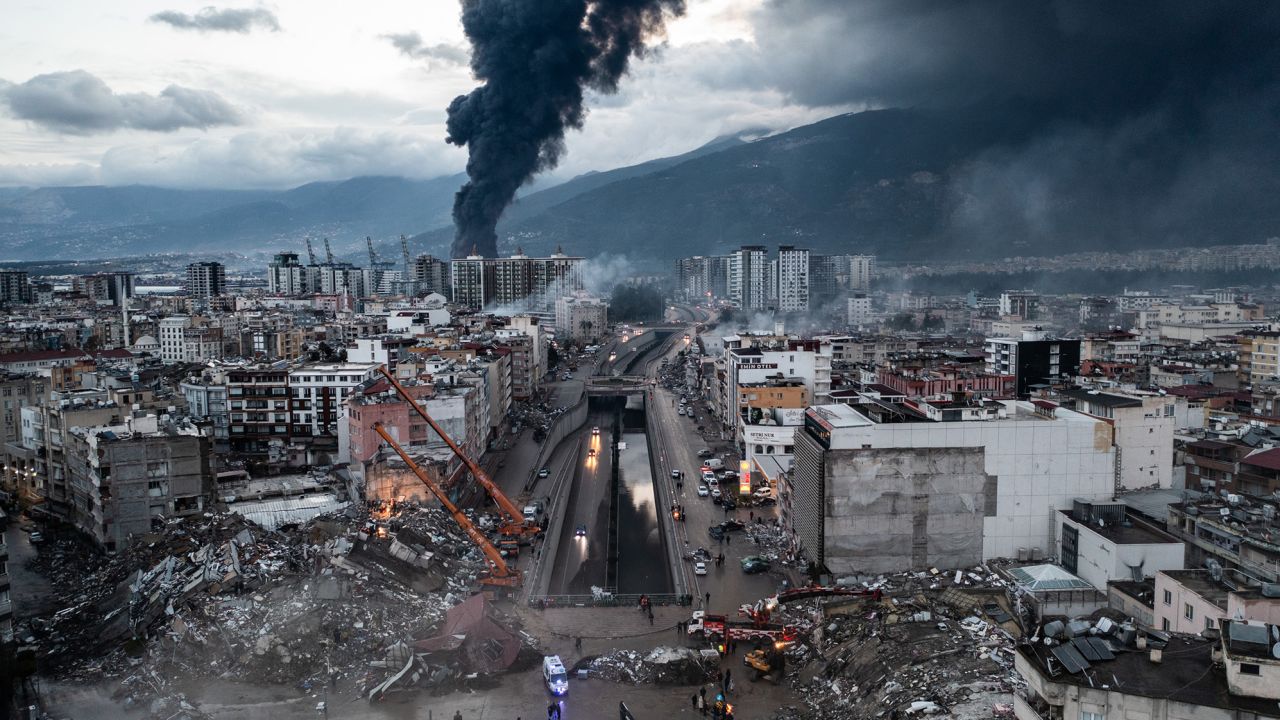
As reported by the World Bank, the terrible earthquake that struck Turkey on February 6 killed at least 45,000 people, made millions of people homeless across almost a dozen cities, and resulted in immediate damage estimated at $34 billion, or around 4% of the nation’s annual economic output.
Yet, the quake’s indirect costs could be far greater, and recovery won’t be simple or quick.
The Turkish Enterprise and Business Confederation places the total cost of the earthquake at $84.1 billion, with housing accounting for the lion’s share of that amount at $70.8 billion. The organization also places the cost of lost national income at $10.4 billion and the cost of lost working days at $2.91 billion.
“I do not recall… any economic disaster at this level in the history of the Republic of Turkey,” said Arda Tunca, an Istanbul-based economist at PolitikYol.
Turkey’s economy had been slowing even before the earthquake. Unorthodox monetary policies by the government caused soaring inflation, leading to further income inequality and a currency crisis that saw the lira lose 30% of its value against the dollar last year. Turkey’s economy grew 5.6% last year, Reuters reported, citing official data.
Economists say those structural weaknesses in the economy will only get worse because of the quake and could determine the course of presidential and parliamentary elections expected in mid-May.
Still, Tunca says that while the physical damage from the quake is colossal, the cost to the country’s GDP won’t be as pronounced when compared to the 1999 earthquake in Izmit, which hit the country’s industrial heartland and killed more than 17,000. According to the OECD, the areas impacted in that quake accounted for a third of the country’s GDP.
The provinces most affected by the February 6 quake represent some 15% of Turkey’s population. According to the Turkish Enterprise and Business Confederation, they contribute 9% of the nation’s GDP, 11% of income tax and 14% of income from agriculture and fisheries.
“Economic growth would slow down at first but I don’t expect a recessionary threat due to the earthquake,” said Selva Demiralp, a professor of economics at Koc University in Istanbul. “I don’t expect the impact on (economic) growth to be more than 1 to 2 (percentage) points.”
There has been growing criticism of the country’s preparedness for the quake, whether through policies to mitigate the economic impact or prevent the scale of the damage seen in the disaster.
How Turkey will rehabilitate its economy and provide for its newly homeless people is not yet known. But it could prove pivotal in determining President Recep Tayyip Erdogan’s political fate, analysts and economists say, as he seeks another term in office.
The government’s 2023 budget, released before the earthquake, had planned for increased spending in an election year, foreseeing a deficit of 660 billion liras ($34.9 billion).
The government has already announced some measures that analysts said were designed to shore up Erdogan’s popularity, including a near 55% increase in the minimum wage, early retirement and cheaper housing loans.
Economists say that Turkey’s fiscal position is strong. Its budget deficit, when compared to its economic output, is smaller than that of other emerging markets like India, China and Brazil. That gives the government room to spend.
“Turkey starts from a position of relative fiscal strength,” said Selva Bahar Baziki of Bloomberg Economics. “The necessary quake spending will likely result in the government breaching their budget targets. Given the high humanitarian toll, this would be the year to do it.”
Quake-related public spending is estimated at 2.6% of GDP in the short run, she told CNN, but could eventually reach as high as 5.5%.
Governments usually plug budget shortfalls by taking on more debt or raising taxes. Economists say both are likely options. But post-quake taxation is already a touchy topic in the country, and could prove risky in an election year.
After the 1999 quake, Turkey introduced an “earthquake tax” that was initially introduced as a temporary measure to help cushion economic damage, but subsequently became a permanent tax.
There has been concern in the country that the state may have squandered those tax revenues, with opposition leaders calling on the government to be more transparent about what happened to the money raised. When asked in 2020, Erdogan said the money “was not spent out of its purpose.” Since then, the government has said little more about how the money was spent.
“The funds created for earthquake preparedness have been used for projects such as road constructions, infrastructure build-ups, etc. other than earthquake preparedness,” said Tunca. “In other words, no buffers or cushions have been set in place to limit the economic impacts of such disasters.”
The Turkish presidency didn’t respond to CNN’s request for comment.
Analysts say it’s too early to tell precisely what impact the economic fallout will have on Erdogan’s prospects for re-election.
The president’s approval rating was low even before the quake. In a December poll by Turkish research firm MetroPOLL, 52.1% of respondents didn’t approve of his handling of his job as president. A survey a month earlier found that a slim majority of voters would not vote for Erdogan if an election were held on that day.
Two polls last week, however, showed the Turkish opposition had not picked up fresh support, Reuters reported, citing partly its failure to name a candidate and partly its lack of a tangible plan to rebuild areas devastated by the quake.
The majority of the provinces worst affected by the quake voted for Erdogan and his ruling AK Party in the 2018 elections, but in some of those provinces, Erdogan and the AK Party won with a plurality of votes or a slim majority.
Those provinces are some of the poorest in the country, the World Bank says.
Research conducted by Demiralp as well as academics Evren Balta from Ozyegin University and Seda Demiralp from Isik University, found that while the ruling AK Party’s voters’ high partisanship is a strong hindrance to voter defection, economic and democratic failures could tip the balance.
“Our data shows that respondents who report being able to make ends meet are more likely to vote for the incumbent AKP again,” the research concludes. “However, once worsening economic fundamentals push more people below the poverty line, the possibility of defection increases.”
This could allow opposition parties to take votes from the incumbent rulers “despite identity-based cleavages if they target economically and democratically dissatisfied voters via clear messages.”
For Tunca, the economic fallout from the quake poses a real risk for Erdogan’s prospects.
“The magnitude of Turkey’s social earthquake is much greater than that of the tectonic one,” he said. “There is a tug of war between the government and the opposition, and it seems that the winner is going to be unknown until the very end of the elections.”
Nadeen Ebrahim and Isil Sariyuce contributed to this report.
This article has been corrected to say that the research, not the survey, was conducted by the academics.
Sub-Saharan African countries repatriate citizens from Tunisia after ‘shocking’ statements from country’s president
Sub-Saharan African countries including Ivory Coast, Mali, Guinea and Gabon, are helping their citizens return from Tunisia following a controversial statement from Tunisian President Kais Saied, who has led a crackdown on illegal immigration into the North African country since last month.
Background: In a meeting with Tunisia’s National Security Council on February 21, Saied described illegal border crossing from sub-Saharan Africa into Tunisia as a “criminal enterprise hatched at the beginning of this century to change the demographic composition of Tunisia.” He said the immigration aims to turn Tunisia into “only an African country with no belonging to the Arab and Muslim worlds.” In a later speech on February 23, Saied maintained there is no racial discrimination in Tunisia and said that Africans residing in Tunisia legally are welcome. Authorities arrested 58 African migrants on Friday after they reportedly crossed the border illegally, state news agency TAP reported on Saturday.
Why it matters: Saied, whose seizure of power in 2021 was described as a coup by his foes, is facing challenges to his rule at home. Reuters on Sunday reported that opposition figures and rights groups have said that the president’s crackdown on migrants was meant to distract from Tunisia’s economic crisis.
Iranian Supreme Leader says schoolgirls’ poisoning is an ‘unforgivable crime’
Iranian Supreme Leader Ayatollah Ali Khamenei on Monday said that the poisoning of schoolgirls in recent months across Iran is an “unforgivable crime,” state-run news agency IRNA reported. Khamenei urged authorities to pursue the issue, saying that “if it is proven that the students were poisoned, the perpetrators of this crime should be severely punished.”
Background: Concern is growing in Iran after reports emerged that hundreds of schoolgirls had been poisoned across the country over the last few months. On Wednesday, Iran’s semi-official Mehr News reported that Shahriar Heydari, a member of parliament, said that “nearly 900 students” from across the country had been poisoned so far, citing an unnamed, “reliable source.”
Why it matters: The reports have led to a local and international outcry. While it is unclear whether the incidents were linked and if the students were targeted, some believe them to be deliberate attempts at shutting down girls’ schools, and even potentially linked to recent protests that spread under the slogan, “Women, Life, Freedom.”
Iran to allow further IAEA access following discussions – IAEA chief
Iran will allow more access and monitoring capabilities to the International Atomic Energy Agency (IAEA), agency Director General Rafael Grossi said at a press conference in Vienna on Saturday, following a trip to the Islamic Republic. The additional monitoring is set to start “very, very soon,” said Grossi, with an IAEA team arriving within a few days to begin reinstalling the equipment at several sites.
Background: Prior to the news conference, the IAEA released a joint statement with Iran’s atomic energy agency in which the two bodies agreed that interactions between them will be “carried out in the spirit of collaboration.” Iranian President Ebrahim Raisi said he hopes the IAEA will remain neutral and fair to Iran’s nuclear energy program and refrain from being affected “by certain powers which are pursuing their own specific goals,” reported Iranian state television Press TV on Saturday.
Why it matters: Last week, a restricted IAEA report seen by CNN said that uranium particles enriched to near bomb-grade levels have been found at an Iranian nuclear facility, as the US warned that Tehran’s ability to build a nuclear bomb was accelerating. The president of the Atomic Energy Organization of Iran (AEOI), Mohammad Eslami, rejected the recent IAEA report, which detected particles of uranium enriched to 83.7% at the Fordow nuclear facility in Iran, saying there has been ‘“no deviation” in Iran’s peaceful nuclear activities.
A new sphinx statue has been discovered in Egypt – but this one is thought to be Roman.
The smiling sculpture and the remains of a shrine were found during an excavation mission in Qena, a southern Egyptian city on the eastern banks of the River Nile.
The shrine had been carved in limestone and consisted of a two-level platform, Mamdouh Eldamaty, a former minister of antiquities and professor of Egyptology at Ain Shams University said in a statement Monday from Egypt’s ministry of tourism and antiquities. A ladder and mudbrick basin for water storage were found inside.
The basin, believed to date back to the Byzantine era, housed the smiling sphinx statue, carved from limestone.
Eldamaty described the statue as bearing “royal facial features.” It had a “soft smile” with two dimples. It also wore a nemes on its head, the striped cloth headdress traditionally worn by pharaohs of ancient Egypt, with a cobra-shaped end or “uraeus.”
A Roman stela with hieroglyphic and demotic writings from the Roman era was found below the sphinx.
The professor said that the statue may represent the Roman Emperor Claudius, the fourth Roman emperor who ruled from the year 41 to 54, but noted that more studies are needed to verify the structure’s owner and history.
The discovery was made in the eastern side of Dendera Temple in Qena, where excavations are still ongoing.
Sphinxes are recurring creatures in the mythologies of ancient Egyptian, Persian and Greek cultures. Their likenesses are often found near tombs or religious buildings.
It is not uncommon for new sphinx statues to be found in Egypt. But the country’s most famous sphinx, the Great Sphinx of Giza, dates back to around 2,500 BC and represents the ancient Egyptian Pharoah Khafre.
The President of the World Bank will step down from his post in June, leaving the organisation almost a year before his term was due to end.
David Malpass announced his decision on social media, without providing a specific reason for his departure.
The pick of former US President Donald Trump has been criticised as a climate change denier.
Last year, the White House rebuked him after he said he did not know if fossil fuels were driving climate change.
He later apologised for the remarks.
Malpass started his five-year term in April 2019, after serving in the US Department of Treasury during the Trump administration.
In a statement, Malpass said he was proud of what he had accomplished at the bank, which oversees billions of dollars in lending to developing countries each year.
Financing “including climate financing” had reached record levels under his leadership, he added.
“By the end of the fiscal year, we will be well-positioned to feature sustainability more clearly in the mission of the World Bank Group, align the mission with resources, and set in motion an effective evolution to increase the institution’s impact on people in the developing world,” he wrote in a statement shared on LinkedIn.
Malpass, who was sceptical of multilateral institutions, had long been seen as a controversial pick to lead the World Bank.
At an event in September, former US vice-president Al Gore called for his replacement, saying the bank was not doing enough to raise funding for climate issues and it was “ridiculous to have a climate denier as the head of the World Bank.”
Asked later to respond, Malpass defended himself, but declined to say that fossil fuels caused climate change.
In a subsequent interview with CNN, he said he had not done a good job answering or hearing the question and that man-made emissions were “clearly” contributing.
US Treasury Secretary Janet Yellen, who has been pressing for reform at the World Bank and other development banks, thanked Malpass for his service in a statement that alluded to the controversy.
“While we all must continue to raise our collective ambitions in the fight against climate change, during President Malpass’ tenure the World Bank has made important recent advances in this area,” she said.
She said the US would put forward a new candidate to lead the bank soon.
The US is the World Bank’s largest shareholder and a major source of its funding.
An American has led the institution since its start in the 1940s, when it was created to help rebuild Europe in the aftermath of the Second World War.
Ghana’s Speaker of Parliament, Alban Bagbin, has asked the World Bank and the International Monetary Fund not to sideline Parliament in their negotiations with the Executive.
In his submission, the Speaker indicated the IMF and the World Bank must be more democratic than they are.
He said in negotiating deals with Ghana, they must engage the parliament.
The Speaker noted that “the two institutions should know that in negotiating these things, they must hear from this House and get our stamp, and then they carry the whole country along.”
He lamented that “when it is only with the Executive, then it means that the world’s structures we’ve established have outlived their usefulness, and we now have to get new structures, including the United Nations. We have to change those structures to respond to the current relatives of our time. That is a notice to the IMF and the World Bank.”
To the Finance Minister, he admonished him to seek approval from parliament before implementing any policy or policies.
He told him that the Jubilee House represents the state, whereas the Parliament of Ghana represents the people.
“This is where the powers are, and this is where sovereignty resides. Sovereignty is in the people, and we represent the people. And the powers of government are also in the people. So anytime there is any key issue like a key policy, you need the approval of this House; very important.
“You can get the go-ahead from the Jubilee House, but this house is the one that would approve and say it is in the interest of the people so go ahead and implement it,” he said.
The Government has received praise for its investments and initiatives in the education sector from Dr. Jaime Saavedra, the World Bank’s Global Director for Education.
According to him, initiatives like the Free Senior High School Policy and STEM (Science, Technology, Engineering, and Mathematics) had made some progress in the sector in terms of enhancing the effectiveness and accessibility of education in the nation.
The Global Education Director made these comments following a two-day trip to Ghana from Thursday, February 9, 2023, to Friday, February 10, 2023, to learn firsthand about Ghana’s education system and to examine World Bank-funded projects in the field.
Dr Saavedra also commended the Ministry of Education for the roll out of the Ghana Accountability for Learning Outcomes Project (GALOP), saying the project was improving learning outcomes in less privileged schools.
The GALOP Is a five-year project with the objective to improve the quality of education in low-performing basic schools and strengthen equity and accountability in the education sector.
The project targets the 10,000 lowest-performing basic schools and all special schools with direct interventions.
Dr Saavedra said the Bank would continue to partner and complement the efforts of the Government in improving the quality of education.
“Our interventions are to leverage and complement efforts of State governments,” he added.
Dr Saavedra on Thursday, February 09, first called on Dr Yaw Osei Adutwum, Minister of Education, in Accra before embarking on field visits to the Bank’s funded GALOP School site at the Mantse Tackie 1 and 2 Primary School, and a STEM Centre at the Accra High Senior High School.
On his second day, he visited the West African Centre for Crop Improvement and the West African Centre for Cell Biology of Infectious Pathogens at the University of Ghana, which forms part of the Africa Center of Excellence for Development Impact project of the Bank.
This is the second time the World Bank Global Education Director has visited the country.
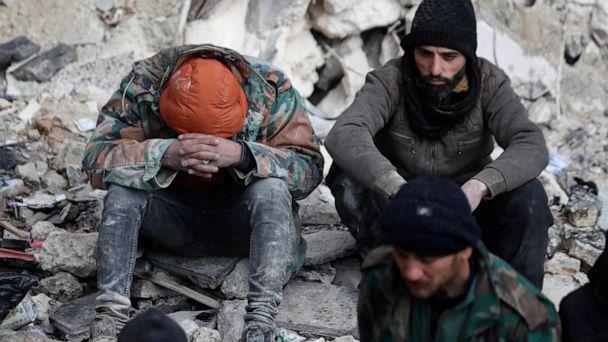
Though the UN warned that the extent of the disaster is still not entirely clear, it is now known that more than 21,000 people died in the earthquakes that occurred on Monday in Turkey and Syria.
Rescuers are still looking through the rubble for survivors, but more than four days after the initial earthquake, optimism is waning.
After losing their homes, tens of thousands of people have spent a chilly fourth night in temporary shelters.
The president of Turkey dubbed the earthquake “the disaster of the century.”
A significant global relief effort is intensifying. The World Bank committed $1.78 billion (£1.38 billion) in aid to Turkey on Thursday, including immediate funding for the restoration of essential infrastructure and assistance for those impacted by the earthquakes.
Another donation came from the US, which pledged a package of $85m to both countries.
Meanwhile, the efforts of 100,000 or more rescue personnel on the ground are being hampered by logistical hurdles including vehicle shortages and devastated roads.
UN chief Antonio Guterres warned the full extent of the catastrophe was still “unfolding before our eyes,” especially in Syria, where a long-running civil war has devastated the country.
On Thursday, the first UN humanitarian aid crossed the border into north-western Syria through Idlib’s Bab al-Hawa crossing.
The crossing is the only way UN aid can reach the region without travelling through areas controlled by Syrian government forces.
Mr Guterres promised more help was on the way, and he urged the UN Security Council to allow supplies to be delivered through more than one border crossing.
“This is the moment of unity, it’s not a moment to politicise or to divide, but it is obvious that we need massive support,” he said.
Munira Mohammad, a mother of four who fled Aleppo in Syria after the quake, told Reuters on Thursday that her family was in desperate need of heating and more supplies, saying: “Last night we couldn’t sleep because it was so cold. It is very bad.”
The White Helmets rescue group said the only UN convoy that reached the region did not contain specialised equipment to free people trapped beneath the rubble.
Warnings of second disaster
Officials said on Friday that 18,342 people had died in Turkey, surpassing the more than 17,000 killed when a similar quake hit northwest Turkey in 1999.
An earlier update from Syria had put the toll there at 3,377.
The tremor ranks among the most deadly natural disasters of the century – surpassing others such as the 2011 earthquake and tsunami in Japan.
Resat Gozlu, a survivor in south-eastern Turkey who is now living on the floor of a sports complex with his family, said rescue workers did not arrive until three days after the quake.
He said many remain trapped under the rubble and others died of hypothermia.
“If this continues there could be serious health issues and illness,” he told the BBC.
The World Health Organization (WHO) earlier warned a second humanitarian disaster will strike unless survivors can get access to shelter, food, water and medicine “very fast”.
The WHO’s Regional Director for Europe, Dr Hans Kluge, told the BBC the organisation’s staff in Turkey’s Gaziantep were sleeping in cars because “there’s still hundreds and hundreds of aftershocks”.
Dr Kluge said communities in Syria depended on water reservoirs, which were the first to fall. He said the reservoirs need to be replaced or the country faces cholera outbreaks – which he said was an issue before the earthquake.
The International Monetary Fund also cautioned Ghana that if its borrowing continued, it posed a serious threat of becoming a high-debt crisis country.
The use of borrowed money primarily for consumption rather than for capital projects or investments generated concerns among the international organizations.
Country Director of World Bank, Pierre Frank Laporte speaking to the media said, “Countries especially developing countries have to borrow because most of us do not have adequate resources, we have to borrow to develop but we have to borrow responsibly. At the moment, Ghana’s debt situation according to World Bank description is a country at moderate rate to high risk of debt distress; of course, yes, the country has to be careful”.
Read the full story originally published on February 7, 2020 by Classfm
This comes a day after the country successfully raised US$3 billion Eurobond which was five times oversubscribed.
The International Monetary Fund has also warned the nation that it is at a high risk of becoming a debt-distressed country.
According to the Fund, the Debt Sustainability Analysis is mainly driven by debt service to revenue exceeding the threshold throughout the forecast horizon, though all other indicators also exceed their threshold at some point over the horizon.
Concerns have also been raised regarding the borrowed funds being used mainly for consumption rather than capital projects or investments.
Speaking to the media after a courtesy call on the Speaker of Parliament, the Country Director of World Bank, Pierre Frank Laporte said though every country will have to borrow it must be cautious of the quantum of borrowing.
“Countries especially developing countries have to borrow because most of us do not have adequate resources, we have to borrow to develop but we have to borrow responsibly. At the moment, Ghana’s debt situation according to World Bank description is a country at moderate rate to high risk of debt distress; of course, yes the country has to be careful”, said Mr. Laporte.
He added that : “I’m confident the Finance Minister and his team are fully aware of that, we discussed all the time and borrowing as I said is not always a bad thing but you must borrow at the right terms, as best as most favorable as possible and the right amount and the right way.”
He however applauded the country for the economic progress made over the last couple of years, but added there are important challenges that the nation needs to address.
Ghana’s total public debt stock increased by GHS6.3 billion between September and November 2019 to reach GHS214.9 billion in November 2019.
Of the total debt stock, domestic debt was GHS101.4 billion, of which GHS11.2 billion (3.8 per cent of GDP) represented bonds issued to support the financial sector clean-up.
In 2019, interest payments on loans were expected to be GHS19.756 billion. Out of this, GHS4.60 billion was spent on the external debt while GHS15.156 billion was used to service loans contracted from the domestic market.
Ghana received $4,862,280 from the Forest Carbon Partnership Facility (FCPF) of the World Bank for lowering its carbon emissions for the program’s first monitoring period, which totaled 972,456 tons (June to December 2019).
“This payment is the first of four under the country’s Emission Reductions Payment Agreement (ERPA) with the World Bank to demonstrate potential for leveraging results based payments for carbon credits,” said Pierre Laporte, World Bank Country Director for Ghana, Liberia, and Sierra Leone. “Subject to showing results from actions taken to reduce deforestation, Ghana is eligible to receive up to $50 million for 10 million tons of CO2 emissions reduced by the end of 2024.”
“The many years of dialogue, consultations, and negotiations with local communities, traditional authorities, government agencies, private sector, CSOs, and NGOs have paid off,” said Samuel Abu Jinapor, Minister for Lands and Natural Resources.
“This emission reductions payment will further promote confidence in Ghana’s REDD+ process for action to reduce deforestation and forest degradation while empowering local community livelihoods. The road to global 1.5 degrees cannot be achieved without healthy standing forests, and Ghana is committed to making it possible.”
Ghana is the world’s second-largest cocoa producer. Cocoa drives the economy, but it is also one of the main causes of deforestation and forest degradation in the southeast and western regions of the country.
Stakeholders are working to help some 140,000 Ghanaian farmers increase cocoa production using climate-smart agro-forestry approaches, rather than slash and burn land-clearing techniques that decimate forests. More sustainable cocoa farming helps avoid expansion of cocoa farms into forest lands and secures more predictable income streams for communities.
Ghana’s Cocoa Board is participating in the REDD+ process, as are some of the most important cocoa and chocolate companies in the world, including World Cocoa Foundation members like Mondelēz International, Olam, Touton, and others.
Their combined actions are not only helping bring change to the cocoa sector, but they are also helping Ghana meet its national emissions reductions commitments under the Paris Agreement.
This level of collaboration is also reflected in the benefit-sharing plan underpinning Ghana’s’ ERPA with the World Bank. Prepared through extensive consultations with local stakeholders and civil society organizations throughout the country, the plan ensures all participating stakeholders are fairly recognized and rewarded for their role in reducing emissions.
The Forest Carbon Partnership Facility (FCPF) is a global partnership of governments, businesses, civil society, and Indigenous Peoples’ organizations focused on reducing emissions from deforestation and forest degradation, forest carbon stock conservation, the sustainable management of forests, and the enhancement of forest carbon stocks in developing countries, activities commonly referred to as REDD+.
Launched in 2008 the FCPF has worked with 47 developing countries across Africa, Asia, and Latin America and the Caribbean, along with 17 donors that have made contributions and commitments totaling $1.3 billion.
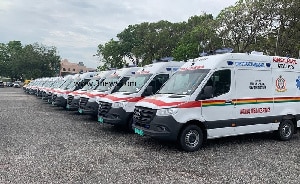
The ambulances, worth US$4,049,460.12, were supposed to be delivered by January 15, 2022, however they were delayed because of various technical issues.
“We took note of the Ministry’s entry into a contract for the supply of 26 Toyota Hiace Deluxe Ambulances valued at US$4,049,460.12 signed on December 15, 2021, of which US$607,419 was paid via PV No. IPF 22-007 dated September 2, 2022, and is due to be delivered on January 15, 2022. The ambulances, however, were still undeliverable as of November 28, 2022, according to the report on the audit of COVID-19 government expenditure for the months of March 2020 to June 2022.
It added also that “The Chief Director explained that the supplier applied for an extension to meet some technical specifications.”
“Under the current economic difficulties, the supplier could apply for price variation to unduly increase the cost of the contract which could have been avoided if the ambulances had been supplied as scheduled,” it added.
However, the contract has been extended to March 2023. “Management has indicated that upon technical inspection by the World Bank, additional specifications have been recommended and the contract has, therefore, been extended to March 2023,” the report indicated.
The A-G recommended that the Chief Director should ensure that the ambulances are delivered no further than the extended date of March 2023.
The Auditor General’s special report on Ghana’s COVID-19 expenditure has revealed that the Ministry of Health paid over GH¢10 million in insurance premiums to cover 10,000 frontline health workers and allied health professionals without a life insurance policy document.
The report which spans between March 2020 and June 2022 scrutinizes how monies received from the various institution including the World Bank, AFDB, EU and the contingency fund summing up to the tune of 21.8 billion were utilized.
“General principles of insurance require that when an employer or organisation purchases Group Life Insurance Policy to cover employees in case of death, accident, temporary/permanent disability and critical illness, the employer or organisation may keep the master agreement, but the identified employees should receive Certificate of Coverage which could be used by the beneficiary or next of kin to apply for the claims when the need arises.
Additionally, the National Insurance Commission Guidelines on Life Insurance Products require that as a standard, all Life Insurance Policy documents must have the name of the person(s) insured by the policy and the name of the policy owner, the amount of insurance coverage (face amount and sum assured) provided by the policy and the effective date of the policy.
We observed that the Ministry paid GH¢10,309,919.94 as premium for Special Life Insurance Cover for 10,000 Health Workers and Allied Health Professionals working on the COVID-19 pandemic without any Life Insurance Policy document detailing the beneficiaries, their location, next of kin in case of death, nature of the benefit and the term of the coverage.” a portion of the report read.
This development according to A-G meant that workers could not have triggered any processes to get compensation if the insurance companies had defaulted in taking care of them in the instance where they had been infected by the virus.
“Health Workers and Allied Health Professionals working on the COVID-19 pandemic who have not signed any insurance policy document will find it difficult to access any benefit under this blanket premium payment arrangement. In the event of default by the insurance companies in payment of benefit, the employees will not have the legal capacity to seek legal redress in Court” the report added.
Other Infraction by the Ministry of Health cited in the report include;
Payment of an amount of US$81,870,379.80 to UNICEF/AVAT for the supply of 16,025,650 vaccines that have still not been delivered.
“In the heat of the COVID-19 pandemic, the Government of Ghana through the Ministry of Health entered into an agreement with The United Nations Children’s Fund (UNICEF) for the procurement of COVID-19 vaccines and related supplies based on second additional credit financing of US$200,000,000.00 by the World Bank (Credit 6923-GH). Page 3 of the signed agreement stated that the Government intends to apply a portion of the proceeds of the financing, up to an amount of US$147,483,170.16 (the “total funding ceiling”) to eligible payments under this Agreement. We noted that the Ministry of Health on behalf of Government of Ghana paid an amount of US$120,192,379.80 to UNICEF/AVAT for the supply of 16,025,650 vaccines under the agreement. However, 5,109,600.00 doses of vaccines valued at US$38,322,000.00 were supplied to the National Cold Room, resulting in an outstanding amount of US$81,870,379.80 with UNICEF/AVAT” page 73 & 74 of the report captured.
The report also cited the Health Ministry for increasing the cost of five contracts with total contract sum of GH¢24,256,500.00 by GH¢4,017,000.00 through variation orders without approval of the Central Tender Review Committee and also entering into four contracts for the supply of PPEs at a cost of GH¢9,280,300.00 through single-source procurement without the approval of the Board of the Public Procurement.
Additionally, the Ministry also on 15 December 2021 entered a contract signed for the supply of 26 Toyota Hiace Deluxe Ambulances valued at US$4,049,460.12 out of which US$607,419.02 was paid on 2 September 2022 to be delivered by 15 January 2022. The ambulances remain undelivered.
The Ministry of Health is also cited for entering into a 25-year Finance Lease Agreement with QHC Project Limited at a total lease value of GH¢15,265,000.00 in April 2020 for uncompleted buildings in Adaklu in the Volta Region which was to be used as an isolation centre during the peak of the COVID-19 pandemic without recourse to the Minister of Finance and financial assessment by the Debt Management Unit. The facilities were not used for the intended purpose and is therefore being remodelling at an additional cost of GH¢20,382,247.70 out of which GH¢13,726,079.86 had been paid.
Again, medical equipment valued at US$110,088.00 and GH¢27,895.00 were issued to a private hospital by name Christleads & Specialist Hospital belonging to Dr. C. K. Amenuveve in Madina which did not serve as a COVID-19 isolation centre or did not receive any COVID-19 patient.
Also, Medical equipment valued at US$247,404.79, procured and received at the Temporary Central Medical Stores and subsequently issued to some specific health facilities between January 2021 and June 2022 are yet to be received by the health facilities.
One Isolation centre, the report reveals that three treatment, isolation and holding centre completed at a total cost of GH¢29,173,259.90 was yet to be put to use while seven isolation and treatment centres being constructed at a cost of GH¢158,072,331.23 had not been completed at the time of the audit, 30 months after the construction had commenced in April, 2020.
Meanwhile a Contractor for the design, construction and equipment of Nalerigu treatment and holding centre in North East Region awarded on 11 May 2020, at a cost of GH¢15,000,000.00 abandoned site three months after starting work after an advance mobilisation of GH¢4,500,000.00, constituting 30 percent of the contract had been paid from GoG sources.
The World Bank has warned that the Ghana cedi may continue to come under pressure in 2023 against the U.S dollar if efforts are not directed at controlling the country’s current account deficit to a sustainable level.
The caution was captured in the World Bank’s January 2022 Global Economic Prospects report.
“Large current account deficits are likely to keep currencies under pressure in several countries, adding to inflation and external vulnerabilities (Gambia, Ghana)”, the report said.
The report encouraged government to take extra measures to manage its current account deficit in 2023.
It further pointed out the need to institute policies that will boost exports to narrow the current account deficit, while controlling imports.
It stated that introducing these actions together with policies aimed at checking inflation in the coming months will help stabilise the economy and deal with some of the threats that will impact negatively on the local currency.
Cedi recent performance
The Ghana cedi was on January 10, 2023 selling at ¢12 to the US dollar in the retail or forex market, following days of sustained stability.
This was about 0.86% loss in value since the beginning of the year.
The Bank of Ghana, however quoted a dollar for ¢9.00 on the interbank forex market.
Checks by Joy Business at some forex bureaus at the time indicated that the pound was the major currency that had lost more value so far in 2023. One pound was going for ¢14.20.
The euro had also depreciated by a little over 1%, trading at ¢12.50.
The warning appeared in the January 2023 Global Economic Prospects report from the World Bank.
The research stated that “large current account deficits are anticipated to keep currencies under pressure in a number of countries, adding to inflation and external vulnerabilities (Gambia, Ghana)”.
The World Bank also stressed the implementation of policies targeted at boosting exports to narrow the current account deficit, while controlling excessive importation.
It noted that the implementation of these measures and policies must check rising inflationary pressures which could peak in the coming months thereby negatively impacting the local currency.
Meanwhile, the cedi has begun to experience some marginal depreciation against the US dollar since the start of 2023.
The currency is selling for around GH¢12.45 to $1 on the forex market while going for GH¢9.00 on the Bank of Ghana interbank forex market.
As of January 12, 2023, the British Pound is selling at GH¢14.70 on the forex retail market while the Euro is going for GH¢12.80 on the forex retail market.
He claims that the action is being taken to help those people affected by the debt swap scheme by using development partners, such as the World Bank, as leverage.
He also said that other nations had done the same thing in the past during hard financial circumstances.
The US he noted made a profit of US$3 trillion when it sold the ‘bad’ bonds after the crisis.
“This is what happened during the global financial crisis where governments stepped in. We can prevail on the development partners – the World Bank and others who have had experience in this to set up a fund to pay those who are really in need or set up a ‘bad bank’ and when the time is good you can buy back the bonds,” he is quoted by myjoyonline.com.
“Look, the US Treasury – Federal Reserve when it bought the bad debt from the banks, it offloaded those bonds when the condition improved and made 3 trillion US$ profit which was given to the treasurer and the US put the funds aside,” he added.
“The solution may be fiscal or monetary. There are financial institutions, especially those we called primary dealers, those who buy the most government bonds – the ones who can even come in and stand in for the government when the auction is failing. They may be more liquid, so we may want to prevail on them to set up funds.
“If somebody wants to offload out of hardship, we can determine the criteria for those who have to pay children’s school fees and whatever we invested in the bonds for various reasons. They [bondholders] can go to these institutions, offload their bonds for a discount, and when the conditions improve, they can sell at a higher rate,” he said.
Three significant irrigation sites have been redeveloped by the Ghanaian government and the World Bank to accommodate various sorts of crops.
The Kpong Left Bank near Torgome in the North Tongu district of the Volta region is one such location.
To avoid the negative effects of climate change, agricultural enterprises would be protected year-round here, as they would be everywhere else.
Now that the Torgome region has access to a necessary component for crop farming, it resembles the nectar described in the Bible as the land flowing with milk and honey. A call for prospectors received more responses than it could handle, yet 14 of the agribusinesses were chosen.
The first to start operations on the Kpong Left Bank Irrigation is a French company that is cultivating bananas on approximately one-fifth of the 2,500 hectares of the serviced plots. The additional works had doubled cultivable lands.
The French company, which speedily moved to the site, is aware of the potential. It is set to mark the 20th anniversary of similar operations on irrigated lands on the Kpong Right Bank. Its sole interest is banana farming on a commercial scale for export to Europe. On the left bank, newly planted crop seedlings are expected to gestate in 8 months.
The Cameroonian farm manager, Jean-Marie Tchonang names labour and the painstaking agronomy associated with banana cultivation as the main challenges, but that which stands to be overshadowed by the rush on the produce once they hit the international market.
He invited the Traditional ruler (Mankralor), Torgbui Gidi to meet with him for further discussion on how best the local population may be integrated into the project.
French investors, Messrs Benjamin Rich and Olivier Chassang are not looking back on this mission on account of the country’s political stability and fertile lands. It is projected that the new site could offer 600 jobs, adding up to the existing 3,500 on the right bank. 100,000 tons of bananas are expected to be lifted in annual banana exports.
The Banana Exporter guarantees the use of its export terminal at the Tema harbour by other food produce exporters, for good turnaround time and as a cost-cutting measure.
Adding his voice, the Coordinator of the Ghana Commercial Agriculture Project, GCAP, Mr Osei Owusu Agyemang said, if what you are seeing and hearing whets your appetite, it is time for you as a Ghanaian to brace up for the opportunity and become worthy partakers. He said agriculture is a very serious venture that requires that significant operators are given prestigious titles on the label “Ghanaian Farmer” as pertains in South Africa, Zimbabwe, and other places. The journey of a thousand miles begins with one step, he told Ghanaians.
Cameroon and Cote D’Ivoire are the other locations of French Banana farms in Africa.
The PROBLUE programme, an overarching Multi-Donor Trust Fund Partnership that fosters integrated and sustainable economic development of healthy oceans, is where the Bank would provide financial and technical help.
With the aid, Ghana will be able to properly manage its coastal and marine environments, promote economic development, lessen poverty, and prepare for the effects of climate change.
“The reason behind this implementation is to eliminate extreme poverty and boost shared prosperity equitably and sustainably, thereby, reduce the negative effects of plastic pollution on livelihoods, the fisheries and tourism sectors.”
Mr Sahai disclosed that a World Bank team have been on the ground for the past few weeks for the advancement of PROBLUE activities and stocktaking of the existing landscape in Ghana for a successful implementation of the programme.
He noted that the choice of Ghana as the Chair of the African Group of Negotiators of the Intergovernmental Negotiating Committee positioned the country to play a prominent role in addressing the devastating menace of plastic pollution.
“The PROBLUE support programme that the World Bank Group is providing to the Ministry of Environment, Science, Technology, and Innovation (MESTI), would effectively address the menace of plastic pollution in Ghana.
“This is perhaps the most significant and most ambitious attempt that the world is making to combat the devastating menace of plastic pollution,” he said.
Mr Grzegorz Peszko, a Lead Economist with the World Bank, called for partnerships within the plastic value chain to guarantee an integrated approach to addressing the problem to stimulate environmental, health and economic growth.
He also urged the Government to increase public financing and provide an enabling environment, including incentives for private sector investment, to support efforts to end the plastic waste threat.
Mr Peszko highlighted the need to put deliberate mechanisms in place to cause behavioural change to make Ghanaians see plastics as investment material rather than waste.
The World Bank Lead Economist said that such behavioural change would serve as the catalyst for the reduction of the indiscriminate disposal of plastic to reduce long-term environmental, health and economic impacts.
The World Bank has received a grant of US$1.5 million for the execution of measures aimed at combating marine and plastic pollution in Ghana.
A multi-donor trust fund partnership known as PROBLUE, which promotes integrated and sustainable economic growth in ocean health, provided the funding for the project.
On Friday, December 16, the acting Country Manager of the World Bank, Mr Dhruval Sahai, made this known at a one-day workshop aimed at enhancing the regulatory framework for minimizing marine litter and pollution in the Greater Accra Region.
According to Mr. Sahai, a World Bank team has been in Ghana for the past weeks to enhance PROBLUE efforts and take an inventory of the country’s current landscape in preparation for the program’s successful implementation.
He added that Ghana has achieved significant improvements in its collection and treatment of plastic trash and is now serving as a role model to other countries in terms of the recycling and reuse of waste.
“The reason behind this implementation is to eliminate extreme poverty and boost shared prosperity equitably and sustainably, thereby, reduce the negative effects of plastic pollution on livelihoods, the fisheries and tourism sectors,” he stated.
The World Bank’s two main objectives, he said, are eradicating extreme poverty and fostering shared prosperity in an equitable and sustainable manner.
The acting Country Manager of the World Bank emphasized that these goals were in conflict with the project due to plastic pollution, hence threatening public health by increasing flooding risks.
The COVID-19 pandemic, according to him, has had a significant toll on waste management efforts.
The operations of PROBLUE, as per Special Advisor to the Minister of Environment, Science, Technology, and Innovation, Mr. Oliver Boachi, will provide Ghana’s efforts to minimize marine pollution and protect the environment an additional boost.
He pointed out that Ghana’s selection to lead the African Group of Negotiators under the Intergovernmental Negotiating Committee provided it a unique opportunity to lead the fight against the dire threat of plastic pollution.
“The PROBLUE support programme that the World Bank Group is providing to the Ministry of Environment, Science, Technology, and Innovation (MESTI), would effectively address the menace of plastic pollution in Ghana.
“This is perhaps the most significant and most ambitious attempt that the world is making to combat the devastating menace of plastic pollution,” he said.
The World Bank’s Lead Economist, Mr. Grzegorz Peszko, called for collaborations along the plastic value chain to ensure an integrated strategy for tackling the issue and to promote growth in the areas of the environment, human health, and the economy.
Additionally, he asked the government to increase public funding and create an environment that is supportive of measures to reduce the threat posed by plastic trash, especially by offering incentives for private sector investment.
Mr. Peszko emphasized the necessity of putting deliberate procedures in place to bring about a behavioral change so that Ghanaians regard plastics as investment materials rather than waste.
He concluded that this would decrease the open dumping of polyethylene, thus having a negative impact on the environment, human health, and the economy in the long run.
The World Bank is a global financial organization that offers grants and loans to governments in low- and middle-income nations so they can carry out major projects.
Ghana has received a $13 million grant from the World Bank to boost its efforts to maintain a sustainable environment that depends on recycling and reuse of plastic products.
Speaking to the media after a workshop organised by the World Bank, an advisor to the Minister of Environment, Science, Technology and Innovation, Oliver Boachie, disclosed that the World Bank funded Ghana’s plastic recycling economy through its programme ‘PROBLUE’.
PROBLUE is a multi-donor trust fund run by the World Bank with the goal of reducing plastic waste and promoting the sustainable use of marine and coastal resources.
According to Mr. Boachie, the fund would assist Ghana in creating a system where participants in the plastic manufacturing and consumption area will be given more responsibility in the use of recovered goods.
“The World Bank is helping us develop a framework establishment together with an EPR (Extended Producer Responsibility) scheme which addresses Ghana’s needs.”
The goal of the workshop was to aid the government in creating a framework that would support an economic system based on the recycling and regeneration of materials or goods as a method of sustaining or environmentally friendly continuous manufacturing.
He also emphasized the necessity for custom policies that reflect Ghana’s culture and socioeconomic environment.
Grzegorz Peszko, an economist at the World Bank, advised the government to take into account tax incentives that would make the use of recycled plastics more cost-effective.
He contends that tax incentives for businesses using recycled plastics will promote the use of recycled plastics.
“Ghanaian producers don’t see the incentives to use the recycle content because Europe has policies in place; virgin plastic taxes on packaging. More and more European countries can introduce these taxes. It means that plastic products made from recycled content are cheaper and the difference is the tax.”
The World Bank has provided an additional finance support of US$150 million under the Ghana Productive Safety Net Project, according to Pierre Laporte, the bank’s country director, in an effort to expand Livelihood Empowerment Against Poverty (LEAP) benefits and coverage.
The Country Director for Ghana stated at the learning event to conclude the Ghana Productive Safety Net Project (GPSNP): “Through a request from the Ministry of Finance, the World Bank will further support government with additional financing to the GPSNP 2, which will aid in increasing Livelihood Empowerment Against Poverty (LEAP) benefits and coverage and expanding to reach other significant social protection programmes.
“These efforts are key to aiding us make gains in poverty alleviation and economic growth, despite setbacks in the agenda as a result of the COVID-19 pandemic,” he stated.
Since 2010, the World Bank has consistently supported Ghana’s government in its efforts to protect the poor and boost economic growth. These include the Ghana Social Opportunities Project (GSOP) with US$138.6million; subsequently, the Ghana Productive Safety Net Project (GPSNP) with US$60million; and currently GPSNP 2 with USS$100million initiated in 2022 and closing in 2025. These interventions have cumulatively reached over 2 million poor and vulnerable Ghanaians.
According to the World Bank, government through the Ministry of Gender, Children and Social Protection (MoGCSP) and Ministry of Local Government and Rural Development (MLGRD) has achieved significant milestones in reducing poverty by delivering effective social protection systems as an effort to achieve the Sustainable Development Goals, especially Goal 1.
During the COVID-19 pandemic, existing GPSNP programmes and systems were critical as they were used to speedily identify poor and vulnerable people, and Cash Transfers were successfully delivered to those in need; and there was the Single Window Citizens Engagement Services through which individuals were able to call and seek assistance.
The Country Director mentioned that phone surveys undertaken during and after the COVID-19 pandemic’s peak provided evidence the existing social protection systems were effective in supporting the poor and vulnerable.
The GPSNP was implemented in 2018 and closes in December 2022 – after enhancing Ghana’s efforts toward eradicating poverty and vulnerability through improved social protection systems and services to citizens and strengthening safety net systems that improve productivity for the extreme poor.
The Project interventions included: (i) Productive Inclusion activities; (ii) Labour-intensive Public Works; (iii) Livelihood Empowerment Against Poverty (LEAP) Cash Transfers; (v) Social Protection Systems strengthening including the Ghana National Household Registry (GNHR), the Single Window Citizen Engagement Service (SWCES), and development of management information systems and electronic payments platforms.
As such, the Learning Event will highlight achievements in the digitisation of social protection delivery services; challenges confronting the sector; and lessons learned.
Mr. Laporte highlighted efforts to focus on the strengths of intentionally promoting a digitisation agenda for GPSNP.
“My team tells me that in 2012 LEAP cash transfers were monitored by using paper which was stored in a building at the Headquarters. Today, all services are inputted and tracked by a virtual management information system – which allows the minister, by the click of a button, to know what is happening on the ground. Additionally, the financial capabilities of beneficiaries have been increased because of introductions to bank accounts and saving schemes.”
“Looking ahead with an estimation that about 1 million more Ghanaians could fall into poverty by 2050, as a result of climate change, this calls for the development of robust systems. Leveraging technology becomes even more important to first support relief, enable recovery and, most importantly, build resilience among the poor and most vulnerable,” the Country Director stated.
Taliban has carried out their very first public execution since assuming power in Afghanistan last year.
According to a Taliban government spokesperson, a man was killed after confessing to murder at a crowded sports stadium in south-western Farah province.
The hanging was attended by dozens of leaders, including the majority of their government’s top ministers.
It comes just weeks after judges were told to fully implement Sharia law.
Haibatullah Akhundzada, the Taliban’s supreme leader, issued the edict last month, ordering judges to impose punishments that could include public executions, amputations, and stoning.
However, the exact crimes and corresponding punishments have not been officially defined by the Taliban.
While several public floggings have been carried out recently – including that of a dozen people before a crowded football stadium in Logar province last month – it marks the first time the Taliban have publicly acknowledged carrying out an execution.
According to their spokesperson Zabihullah Mujahid, the execution was attended by several Supreme Court justices, military personnel and senior ministers – including the justice, foreign and interior ministers.
Mohammad Khaled Hanafi, charged with imposing the Taliban’s strict interpretation of Islamic law as minister for vice and virtue, was also present. However, Prime Minster Hasan Akhund did not attend, the statement said.
According to the Taliban, the executed man named Tajmir, a son of Ghulam Sarwar and a resident of Herat province, had stabbed a man named Mustafa about five years ago.
He was subsequently convicted by three Taliban courts and his sentence was approved by Mullah Akhundzada.
Before the execution, a public notice was issued publicising the event and “asking all citizens to join us in the sport field”.
The murdered man’s mother told the BBC that Taliban leaders had pleaded with her to forgive the man, but she had insisted upon his execution.
“Taliban came to me and begged me to forgive this infidel,” she said. “They insist me to forgive this man in sake of God, but I told them that this man must be executed and must be buried the same as he did to my son.”
“This could be a lesson to other people,” she added. “If you do not execute him he will commit other crimes in the future.”
During their rule from 1996-2001, the Taliban were condemned for regularly carrying out punishments in public, including executions at the national stadium in Kabul.
The Taliban vowed that they would not repeat the brutal repression of women. Since they seized power, women’s freedoms have been severely curbed and a number of women have been beaten for demanding rights.
At present, no country has recognised their new government and the World Bank has withheld around $600m (£458m), after the Taliban banned girls from returning to secondary schools.
The US has also frozen billions of dollars held by Afghanistan’s central bank in accounts around the world.
The goal of the initiative run by the African Environment Health and Pollution Management Programme (AEHPMP), a project of the Ministry of Environment, Science, Technology and Innovation and the Environmental Protection Agency (EPA), is to enhance the small-scale miners’ artisanal practices.
Michael Teye Amartey reports that the Africa Environmental Health and Pollution Management Programme is a World Bank sponsored programme aimed at reducing environmental health risks related to harmful chemicals and waste by strengthening institutional partnerships and building capacities in pollution management in some selected African countries including Kenya, Senegal, Tanzania, Zambia and Ghana.
In Ghana it is, being implemented by the Ministry of Environment, Science, Technology and Innovation.
The Eastern Regional Director for Environmental Protection Agency, Mr. Felix Addo- Okyireh urged the miners to stop drinking local gin popularly known as Akpeteshie, milk, soda drinks and eating hot pepper to treat effect of mercury since it has no scientific prove.
The Deputy Executive Director of EPA, Mr. Ebenezer Appah-Sampong disclosed that Artisanal and small-scale gold mining is estimated to be responsible for over 700 tonnes of mercury emissions to the atmosphere annually.
He said mercury exposure and contamination has serious health implications on affected persons including tremors and sleep disorders.
The Eastern Regional Women Coordinator for Small Scale Miners, Madam Susan Dankwa Titi called for more awareness sessions unsafe Mining practices.
The Chief of Bunso, Osabarima Abiam Brakatu said the menace of unregulated use of mercury in small-scale mining in the country is a concern for traditional rulers since such activities find their roots in communities where resources are put in the hands of Chiefs to ensure their development.
He is pleased that Ghana is joining forces with four other countries to address pollution from mercury use in small-scale gold mining and mismanagement of e-waste that are posing serious risks to human health and the environment.
Mr Alban Sumana Kingsford Bagbin the Speaker of Parliament, subsequently referred the loan agreement to the Committee on Finance of Parliament for consideration and report to the House.
The bank claims that the COVID-19 pandemic’s experiences and lessons have increased the need for governments to be more strategic in responding to shocks, not only by identifying appropriate interventions but also by ensuring that systems that can be modified for the delivery of these interventions are present.
At a knowledge-sharing workshop for stakeholders, Senior Social Protection Specialist at the World Bank, Christabel Dadzie, noted that social protection interventions are fundamental in responding to shocks such as national disasters, economic crises, pandemics, conflicts and forced displacements – which are usually transient in nature – to cushion affected persons, especially the vulnerable, to mitigate impacts of the shock event and prevent them from adopting negative coping mechanisms.
Ghana had a population of 30.8 million in 2021. In 2017, it was reported that 2.4 million people were living in severe poverty. Within the country, poverty levels vary drastically by location – with much higher rates in rural areas and various administrative districts. Rural regions had a poverty rate of 39.5 percent overall in 2016–17 compared to 7.8 percent in urban areas. In rural regions, there were 15.6 percent of people living in extreme poverty compared to 1 percent in urban areas.
“With social protection in particular, we all know that the poorest and most vulnerable are invariably the ones affected by shocks. So actually, even before COVID, we had been working with the Ministry of Gender to take a look at how there can be a systematic response to shocks when they do happen; and then fast forward to COVID-19 taking place, it highlighted the importance for us not to provide only sporadic responses.
“We’re supporting the ministry with other development partners to take a look at this critical issue, which is aimed at responding to shocks in a systematic manner by putting together a national strategy. And so we’re leveraging the World Bank’s convening power to bring people together like you’ve done today,” Ms. Dadzie said.
Ghana’s shock-response in the past has however been sporadic and exposed limitations: including absence of committed funding and ready data for beneficiary targetting; weak coordination among the various stakeholders in the delivery chain; and lack of clarity with respect to channels for delivery and response timelines.
Seth Terkper, a former minister of finance, has described the passing of Professor Kwesi Botchwey as another emotional moment.
According to him, the highest point of his relationship with the late former minister of finance was a humble one.
He said the late Prof Botchwey approved his postgraduate studies and never for once dreamt of stepping into his shoes as a finance minister under the government of John Dramani Mahama.
“RIP, Sir. Another emotional moment when a national and global tribute is also so personal. The HIGHEST point in our relationship was a HUMBLE one: approving my post-graduate studies. Never dreamt then that I will ever step in your oversized Minister shoes,” Seth Terkper tweeted.
Kwesi Botchwey died at the age of 78 after a short illness at the Korle Bu Teaching Hospital in Accra on Saturday, November 19.
As part of his political career, he served in the Rawlings’ Provisional National Defence Council (PNDC) – military regime – and the National Democratic Congress (NDC) – civilian regime – as the Secretary for Finance and Minister of Finance and Economic Planning respectively.
He was described as the longest-serving finance minister in Ghana’s history.
Prof Botchwey attended Presbyterian Boys’ Secondary School before proceeding to the University of Ghana to pursue an LLB. He was at Yale Law School for his LLM and graduated from the University of Michigan Law School with his doctorate.
Prof. Kwesi Botchwey served as an advisor to World Bank on the 1997 World Development Report.
He had vast expertise in economic management as he was a member and Chairman of IMF‘s Group of Independent Experts who conducted the first-ever external evaluation of the Enhanced Structural Adjustment Facility under the Fund.
Meanwhile, tributes continue to pour in for the late scholar, especially from his close associates and sympathizers of the National Democratic Congress.
Efforts to reduce carbon dioxide emissions are on course as the World Bank is set to release up to fifty million United States dollars (US$50,000,000.00) to Ghana to fight carbon dioxide emissions.
Speaking at an event on Ghana’s Forest Solutions to Climate Change, Climate Change Manager of the World Bank, Mr. Erwin DeNys, noted that the payment is in
exchange for a six million hectare area of the West African Guinean Forest being predicted to reduce carbon dioxide emissions by about ten million tonnes by 2024.
The event was organised by the Ministry of Lands and Natural Resources at the ongoing twenty- seventh session of Conference of Parties (COP27) of the United
Nations Framework Convention on Climate Change (UNFCCC), in Sharm El Sheikh, Egypt, on Wednesday, November 9, 2022.
The gesture is to commend Ghana for being an important and active member of the Forest Carbon Partnership Facility since its establishment in 2008.
Ghana is one of the first countries to transition to emission reduction programmes and results-based payments, according to Mr De Nys.
According to Mr. De Nys, the nation will soon receive US$4.8 million for over 970,000 tons of confirmed and documented emission reductions between June and December 2019.
He mentioned that the payment will be used to reward stakeholders in emission reduction, and boost confidence in Ghana’s REDD+ process.
In order to further cut emissions and achieve social inclusion, Mr. De Nys added that Ghana will also profit from the World Bank’s Enabling Access to Benefits while Lowering Emissions (EnABLE) programme.
On his part, the Minister of Lands and Natural Resources, Samuel Abu Jinapor, urged strategic cooperation to close the financing gap for climate change.
He emphasised that the current financial sources are insufficient to address the scale of the issue, and because the $100 billion climate finance pledge made in
Copenhagen was not met, there is an urgent need for stakeholders to collaborate in order to close the gap between ambition and action.
Mr. Jinapor called on governments and all actors to deliver action beyond pledges and declarations. “We are at a stage in the climate struggle where mere talk, commitments, declarations, and/or pledges are not enough.
Consistent with the clarion call of COP27, this is the time the world must “walk the talk” and get on with action and implementation of the many years of unfulfilled climate action promises,” the Minister said.
He said Ghana was committed to forest and nature-based solutions to climate change, which is evidenced by the over 547,000 hectares of degraded forests cultivated between 2017 and 2021, and the over thirty million trees planted under the Green Ghana Project, as well as the verified and validated emission reductionunder the Ghana REDD+ Strategy.
He expressed his confidence in COP27, which has been termed action and implementation COP, to deliver real action towards limiting global warming to the one point five degrees Celsius (1.5oC) target set out in the Paris Agreement.
The UNDP’s Principal Advisor on Climate and Forests, Tim Claris, who also spoke at the event, commended Ghana for its forest solutions to climate change and said the country deserves to be rewarded for actions being taken
in the forestry sector.
This was disclosed by the Climate Change Manager of the World Bank, Mr. Erwin De Nys, on Wednesday, 9th November, 2022.
The amount is in return of some ten million tons of carbon dioxide emissions expected to be reduced by 2024 within a six million hectare stretch of the West African Guinean Forest.
Mr. De Nys was speaking at an event on Ghana’s Forest Solutions to Climate Change, organised by the Ministry of Lands and Natural Resources at the ongoing twenty-seventh session of Conference of Parties (COP27) of the United Nations Framework Convention on Climate Change (UNFCCC), in Sharm El Sheikh, Egypt.
He said Ghana has been an important and active member of the Forest Carbon Partnership Facility since its establishment in 2008, and is one of the first countries to transition to emission reduction programmes and results-based payments.
Mr. De Nys said the country will soon receive US$4.8 million, representing over nine hundred and seventy thousand (970,000) tons of verified and validated emission reductions between June and December, 2019.
He said the payment will be used to reward stakeholders in emission reduction, and boost confidence in Ghana’s REDD+ process. In addition to this payment, Mr. De Nys said Ghana will also benefit from the Enabling Access to Benefits while Lowering Emissions (EnABLE) Programme of the World Bank, to further reduce emissions and ensure social inclusion.
On his part, the Minister for Lands and Natural Resources, Samuel Abu Jinapor, called for strategic collaboration to bridge the climate financing gap. He said existing financing options are inadequate to deal with the enormity of the problem; and having missed the one hundred billion dollars ($100 billion) climate finance pledge made in Copenhagen, there is an urgent need for stakeholders to work together to bridge the gap between ambition and action.
Mr. Jinapor called on governments and all actors to deliver action beyond pledges and declarations.
“We are at a stage in the climate struggle where mere talk, commitments, declarations and/or pledges are not enough. Consistent with the clarion call of COP27, this is the time the world must “walk the talk” and get on with action and implementation of the many years of unfulfilled climate action promises”, the Minister said.
He said Ghana was committed to forest and nature-based solutions to climate change, which is evidenced by the over 547,000 hectares of degraded forests cultivated between 2017 and 2021, and the over thirty million trees planted under the Green Ghana Project, as well as the verified and validated emission reduction under the Ghana REDD+ Strategy.
He expressed his confidence in COP27, which has been termed action and implementation COP, to deliver real action towards limiting global warming to the one point five degrees Celsius (1.5ºC) target set out in the Paris Agreement.
The UNDP’s Principal Advisor on Climate and Forests, Tim Claris, who also spoke at the event, commended Ghana for her forest solutions to climate change, and said the country deserves to be rewarded for actions being taken in the forestry sector.
The 2022 World Bank’s Africa Pulse Report has ranked Ghana as the country with sub-Sahara Africa’s (SSA) highest food prices.
The report was released at the end of last month, October 2022, and indicated that domestic food prices have gone up by 122 percent since January this year.
Indeed, the country’s inflation has been rising to an all-time high of 37.8 percent for September 2022 – driven largely by food prices, according to data from the Ghana Statistical Service(GSS).
With many Ghanaians feeling the heat and cost of food prices running out of control, the situation is being exacerbated as the year-on-year inflation rate for September 2022 from the 16 administrative regions was almost 38 percent.
This means general price levels have soared in September 2022, higher than September 2021 as month-on-month inflation between August 2022 and September 2022 was 2 percent, according to the Ghana Statistical Service.
Correspondingly, panelists in the agribusiness sector during the 11th Ghana Economic Forum (GEF) cautioned Ghanaians to brace for more hikes in cost of food over the coming months.
The panel included Chairperson of the Agribusiness Association of Ghana Industries, Fatima Alimohamed, who disclosed that “there is a looming shortage of foodstuff and its associated high costs”.
The discussions were on the topic ‘Ensuring food sustainability and security: an analytical overview of the PFJ and implications for economic growth’.
Also, the Food and Agriculture Organisation (FAO) has projected in its Finance and Development Journal that food import bills for some 62 vulnerable countries will hit more than US$25 billion this year, putting 1.7 billion people at risk of going hungry in the future.
A chunk of these 62 countries, according to the FAO, are African countries south of the Sahara.
The FAO said rising cost of fertiliser on the global market will negatively affect availability of rice and other staple foodstuffs for the entire 2023, and probably beyond.
The organisation observed that rice production and availability will slump to their lowest from 2023 due to increase in the cost of fertiliser, as prices of the cereal are starting to rise.
“These developments pose risks because rice is a key staple around the world, including sub-Saharan Africa,” the FAO indicated.
The goods will be transported to the ministry from the farms and sold to customers at a lower cost.
Dr. Owusu Afriyie Akoto, the sector minister, stated during a meeting with farmers in Sefwi Wiaso, in the Western North Region, “the ministry itself is going to take its own initiative.”
“We are going to link up with the farm gate so that we make all the arrangements to ensure that we put up kiosks on our compounds at the ministry, specifically for food from here [Sefwi Wiaso] and we are going to give it a lot of publicity,” the minister said.
With a 122% increase in food prices, the nation has achieved the toughest achievement in sub-Saharan Africa.
In recent months, food costs have risen significantly since the beginning of the year in a number of nations throughout the world, primarily as a result of the conflict between Russia and Ukraine.
According to the World Bank, Ghana is the nation in Africa with the highest food prices. According to the World Bank’s October 2022 Africa Pulse report, Ghana is the sub-Saharan African nation with the highest rate of food inflation.
The World Bankhas indicated that it will take legal action against the government of Ghana should it continue to withhold audited reports on the Ghana Accountability Learning Outcomes Project (GALOP).
In a letter to the Finance Ministry dated October 21, 2022, World Bank Country Director, Pierre Laporte, reproached the government, noting that it had failed to provide the audit reports on how funds were utilised for almost 10 months, thereby breaching the agreement reached by the International Development Association and the Republic of Ghana.
On January 17, 2022, the International Development Association and the Republic of Ghana signed a Financing Agreement in connection with the Ghana Accountability Learning Outcomes Project (GALOP-Cr. No. 64820-GH).
Per the agreement, Ghana was to provide its audited financial statements no later than six months after the end of such period.
“In accordance with Section 5.09(b)(II) of the General Conditions incorporated by reference in the Financing Agreement and as specified in paragraph II (ii) of the Disbursement and Financial Information Letter (DFIL), the Recipient is required to furnish the audited financial statements covering the period of one fiscal year of the Recipient no later than six months after the end of such period.”
“We note that as of today, October 18, 2022, the Association has not received the audited financial statements for the year ending December 2021 in compliance with the General Conditions,” portions of the letter to the Ministry read.
In line with the Audit Compliance Guidance, the World Bank has provided Ghana a grace period of 30 days, which commenced on October 21, to tender in the audited reports.
According to the World Bank, “we trust that your personal and immediate attention to this matter will ensure speedy compliance of the audit requirements.”
However, failure to do so, the World Bank warned that “the Association may have no option than to explore the possibility of exercising the appropriate legal remedies under the Financing Agreement.”
President Akufo-Addo in June 2020, launched the Ghana Accountability and Learning Outcomes Project, a US$219 million project.The project sought to enable teachers to be equipped in line with the new curriculum, provide learning materials to schools and train heads of schools in school management techniques.
Issues surrounding the project only surfaced in May this year after the Education Minister, Dr Yaw Osei Adutwum, was accused of misappropriating $1.2 million from the World Bank; a claim he disputed.
He explained that the money remained in the Education Ministry’s account.
There was the need for clarification after the then Director-General of the Ghana Education Service (GES), Prof Kwasi Opoku-Amankwa, noted that he was unaware that the Ghana Accountability for Learning Outcomes Project had trained over 40,000 teachers on the digital literacy platform (GALOP) in response to a letter from the World Bank seeking confirmation of teacher training.
Before reaching out to the Ghana Education Service, sources say the World Bank asked the Education Ministry for slides for the training courses, as well as examples of the self-assessments teachers were expected to do, but none of these were submitted.
Later, the World Bank confirmed that the Minister did not embezzle the funds as purported.
“As per the protocol, the Ministry of Education provided the details of the number of teachers trained in using distance learning methods, which were verified by the Development Partners Group and accepted by the World Bank.The financing was released upon this confirmation. The World Bank remains committed to supporting Ghana in its efforts to improve education for all,” the World Bank stated.
The World Bankhas approved US$275 million in assistance to help Zambia recover from the effects of the Covid-19 pandemic and deal with the fallout from the war in Ukraine.
The money is to help Zambia, which is “over-indebted”, return to sustainable fiscal and debt levels and promote private sector-led economic growth, the World Bank (WB) said in a statement on Thursday.
The funds are made available by the International Development Association (IDA), a subsidiary of the World Bank that helps vulnerable countries through grants or credits at zero or very low interest.
In 2020, Zambia became the first African country to default on its external debt – estimated at $17.3 billion – since the start of the Covid-19 pandemic.
Lusaka had already received approval in September from the International Monetary Fund (IMF), the WB’s sister institution, for a total of $1.3 billion in financial support to help restructure its debt.
The accession to the presidency of Hakainde Hichilema, who was elected in 2021 on promises to root out rampant corruption and resuscitate the economy, has improved Zambia’s relations with its creditors and international donors.
the country’s debt had exploded under his predecessor, Edgar Lungu, who was criticized for taking out massive loans to finance a spate of infrastructure projects during his six-year presidency.
According to the latest IMF data, Zambia, which is one of the world’s largest copper producers, has seen its economy grow by 4.6% in 2021 after the 2.8% GDP contraction recorded in 2020.
The World Bank has warnedthat it is too expensive for governments to assist everyone with their rising energy bills.
According to the bank’s president, Covid support schemes were not targeted enough toward the most vulnerable, and the debt will take decades to repay.
The same policy, according to David Malpass, is being implemented to assist people in dealing with rising energy bills.
“Governments are saying we will take care of everyone, which is just too expensive,” he said.
It is pushing global debt to record levels and people at the bottom of the income scale are hardest hit, he said.
It comes as separate research suggests the UK’s own energy support scheme is far too expensive in its current form.
The government is limiting average bills for households using a typical amount of energy to £2,500 a year for six months but will review the support offered from April.
The National Institute of Economic and Social Research said the current scheme could cost some £30bn because it was untargeted.
It also said households could save up to £20bn per year if they were incentivized to invest in energy-saving measures like solar panels.
Covid comparison
During the pandemic, governments borrowed billions of pounds to get through lockdowns.
They paid for job retention schemes like furlough, increased benefit payments, and loans and grants for businesses that were forced to close.
Mr Malpass told the BBC’s World Service there was an accepted economic view that there should be a social safety net, some protection for people during a crisis.
The subsidies should be temporary and targeted to those who need them most, he said.
But Mr Malpass said many of the Covid subsidies were not targeted. “They went to everyone…and now the consequences are coming home.
“People will be left for years and even decades paying for that debt,” he added.
The Institute of International Finance reports that global debt topped $305 trillion earlier in the year and is expected to increase further.
The war in Ukraine is causing energy prices to spike. Across Europe, governments have introduced energy subsidies to help households pay for rising prices.
The energy crisis comes at a time when governments have already run up large amounts of debt.
Mr Malpass said he was concerned that the additional help for people will push inflation – the measure of rising prices – even higher.
In the UK inflation is at a 40-year high of 10.1%.
The International Monetary Fund expects global inflation to peak this year at 9.5% and says it will not begin to fall until 2024. It’s causing many low-income countries to default on loan repayments and pushing vulnerable people into poverty.
Ghana must demonstrate that its debt levels are manageable, according to the International Monetary Fund, before the organization can accept an economic assistance plan for the nation.
Abebe Aemro Selassie, director of the IMF’s Africa Department, asserts that before an agreement can be achieved, Ghana must also provide a plan for economic transformation.
He continued by saying that the proposed strategy is currently being evaluated along with additional interactions with Ghanaian officials.
Speaking with journalists during a press briefing at the just-ended IMF/World Bank Spring meetings in the USA, the IMF Africa boss said, “so much will depend on how quickly this reform plan can be fleshed out for implementation.”
“There are also important initiatives that have to be taken in terms of how the programme will be financed so that we can move forward,”
Touching on Ghana’s debt sustainability analysis, the IMF Africa Director said the Fund and government are still waiting on the assessment to be completed.
“So, we are waiting for that assessment and I can tell you that we are doing our utmost, and we will do our utmost to make sure that we can provide support to Ghana as speedily as possible. So, that’s why, as I noted earlier, within a few days of the government requesting support, we fielded a mission, and we will do our utmost to avoid any kind of delay in terms of how we can support,” he added.
Ghana is targeting $3 billion from the IMF once an agreement can be reached. The support is expected to address the country’s macro-economic stability and among others.
Abebe Selassie, the African Director at the IMF, claims that Ghana is one of the nations where internal forces are mostly to blame for inflation.
As of September 2022, Ghana’s inflation rate—which has been rising since the year’s beginning—was 37.2%.
However, the government has stated that the COVID-19 epidemic and the Russia-Ukraine war are just two examples of the global events that have contributed to the inflation.
Speaking at a press conference at the recent IMF/World Bank Spring Meetings, Abebe Selassie, said “on inflation, I mean, again, there are always trade-offs when you’re doing policy calibration, and so in our regional economic outlook, we are very careful to flag that there are some countries where inflation has clearly been driven more by domestic factors than exogenous factors. I think Ghana would fall in that camp.”
“But there are also quite a lot of other countries where the inflation we are seeing is more important, so the scope and the space and the ability of monetary policy to address that is limited. So again, it depends on country-specific circumstances, and on time,” he is quoted by myjoyonline.com.
The IMF added that the adjustments of the monetary policy must be done swiftly because the adjustments affect how inflation is driven in the economy.
He said, “exchange rates are moving, commodity prices are moving, so it’s an area where calibration must be very, looked at again and again and again, as the months proceed.”
“That’s why, Central Bank can say you have to be forward-looking, data-driven, so our advice is also, very much, subject to those considerations,” he added.
According to the GSS, the factors that influenced inflation were, Housing, Water, Electricity, Gas and Other fuels (68.8%); Furnishings, Household Equipment, and Routine Household Maintenance (51.1%); Transport (48.6%); Personal Care, Social Protection and Miscellaneous Goods and Services (42.6%) as well as Food and Non-Alcoholic Beverages (37.8%).
Data from the Ghana Statistical Service (GSS) indicates that a total of 8,986,059 individuals in the country live in multidimensionally poor households.
Multidimensional poverty, according to the World Bank, is a measure of poverty that captures deprivations in education and access to basic infrastructure in addition to income or consumption at the $2.15 international poverty line.
Ashanti Region topped the chart as the region with the highest number of people living in multidimensionally poor households, with a total of 1,248,482 people. The Northern region came second with a total of 1,123,529 people.
Meanwhile, the Nkwanta-North district was ranked as the district with the highest poverty rate.
The figures show that this district has a poverty rate of 79.7%, which is more than twice the national average of 29.9%.
Only North East Gonja in Savannah (77.7%) and Sekyere Afram Plains in Ashanti (75.3%) have more than three-quarters of their households living in poverty, joining Nkwanta North.
These data are highlights from the Multidimensional Poverty District League Table released by the GSS in commemoration of this year’s International Day for the Eradication of Poverty, under the theme “Dignity for All in Practice.”
Three of the top 10 districts with the greatest rates of persons living in multidimensionally poor households are in the Northern Region, with two districts each in the North East and Oti areas.
Nanumba North (114,226) and Gusheigu (103,852) municipalities, in the Northern Region are the only districts with over 100,000 personspeople living in multidimensionally poor households.
Four out of the 10 districts with the largest population living in poverty are in the Northern Region, two are in Oti, with Savannah, North East, Western and Volta having one each.
New Juaben South Municipal in the Eastern Region has the lowest poverty rate in the country (4.8%) and is one of the 21 districts with a multidimensional poverty rate of less than 10%. Six out of the 10 districts with the lowest poverty rates are in Greater Accra.
Given that government Debt Sustainability Analysis is yet to be known there are lots of concerns – especially from persons and institutions with high exposure to government debt. The Chief Executive Officer of Crescendo Consult Ltd., Doris Ahiati, holds that transparent conversation between both parties is crucial for minimum damage.
According to the World Bank’s Africa’s Pulse report (October 2022, Volume 26), Ghana’s public debt is set to hit 104.6 percent of GDP by end of the year – automatically putting the economy into the debt-distressed category and further making the debt situation unsustainable; meaning the country will no longer be able to fulfil its debt obligations, even domestically.
Currently, the country’s local and foreign currency ratings have been downgraded from B-/B to CCC+/C with negative outlook from S&P rating agency and ‘CCC’ to ‘CC’ by Fitch, and the country is now seeking a US$1.5billion assistance from the International Monetary Fund (IMF) to shore-up public finances and regain access to credit markets.
These occurrences have affected the confidence of businesses and the financial sector, and raised concerns of persons and institutions with high exposure to government debt.
In an interview with the B&FT, Ms. Ahiati said a transparent stakeholder conversation can lessen the impact.
“There is a need for stakeholder engagements with people that are likely to be impacted because government owes them. A conversation that explains the situation and makes room for the person who has loaned money to government to propose what they can accommodate. Maybe it could be extending the repayment period or renegotiating the interest rate.
“So, I think the stage should be granted to the people who are investing in government bonds. If they are likely to be impacted, we should not sit on one side and just decide something and hit the market with it. It should be through a negotiation whereby they hear each side of the story and reach an agreement or a compromise that is fair for both parties,” she said.
She is also of the view that as government take pragmatic measures to lessen the impact of economic challenges experienced widely, it should be mindful of any action which undermines the financial sector’s confidence.
“I think you are indirectly referencing the rumors about possible a haircut. Personally, my concern is that we do not do anything to undermine the confidence of people in the financial system. That is where we derive our credit ratings and provide for businesses to grow.
“There is already evidence of lower confidence in the sector; people are keeping monies in their homes, people have bought dollars that they are keeping in their homes and these are not in the banking systems. And in the same way, people begin to look at options that will help them avoid being in the main financial system,” she noted.
Already, the central bank’s latest business confidence survey in August 2022 – which gauges the level of optimism among business managers – has revealed a slump in business confidence by a greater extent of 15.8 points from 98.4 points recorded in the previous survey of August 2021.
Mrs. Doris Ahiati is however hopeful that the IMF programme will help salvage the current situation and bring about some levelling.
“I believe that whatever programme the IMF comes with will be mindful not to hurt investor confidence so badly. But we are at a point where we cannot rule out that there will be painful actions which might be taken in order to address the situation – a quite challenging one. So either way, I think people are not going to have it easy.
“We do not know precisely what the government proposals under IMF will be and/or what the IMF will endorse. It might hurt a little bit in the short-term, but eventually it will contribute to our recovery,” she said.
The UK High Commissioner to Ghana, Harriet Thompson has said Ghana is not alone in facing economic challenges.
She said in a tweet that there was the need to take the difficult decisions and come together internationally to get through.
Her tweet comes after the UK’s Minister for Development, Vicky Ford said “Ghana is a great friend of the UK.
“In my meeting with Hon. Minister Ofori-Atta @MoF_Ghana we discussed the global economic challenges and the support we as the international community can offer Ghana, including a possible new @IMFNews programme.”
Harriet Thompson tweeted “Ghana is not alone in facing economic challenges. We must be ready to take the difficult decisions & come together internationally to get through. We look forward to welcoming you back to Ghana in your new role@vickyford(& we’re glad to see you love your made-in-Ghana jacket!”
Ghana is not alone in facing economic challenges. We must be ready to take the difficult decisions & come together internationally to get through 🇬🇭🇬🇧
We look forward to welcoming you back to 🇬🇭 in your new role @vickyford (& we’re glad to see you ❤️ your made-in-Ghana jacket!). https://t.co/qh9CwLB58p
— Harriet Thompson (@HCThompson001) October 14, 2022
Meanwhile, the G7 has asked the World Bank to provide financial support to Ghana and other African countries to enable them deal with the impact of the economic crisis caused by force majeures.
The decision was taken during a meeting with African Finance Minsters with the G7 as part of the ongoing World Bank/International Monetary Fund (IMF) Meetings in Washington D.C.
The G7, an informal grouping of seven of the world’s advanced economies: Canada, France, Germany, Italy, Japan, the United Kingdom, the United States and the European Union.
Representatives from Ghana, Tunisia, Morocco, Senegal were all at the meeting.
Speaking in an exclusive interview with TV3, Ghana’s Finance Minister Ken Ofori-Atta described the meeting as historic because this is the first time African Finance Ministers have been invited to for such discussions.
Mr Ofori-Atta said “It was actually quite a historic meeting because for the first time the G7 has called African Finance Ministers to deliberate on the crisis that they see.
“The trues that these are exogenous factors that have really, even their own economies put it under serious stress and are therefore, looking for ways in which they can add to the capital needs to make sure that things do not deteriorate. So countries such as Ghana, Senegal, Tunisia, Morocco were there.”
He added “The empathy is clear, the need to [introduce] something new and therefore, their interest in encouraging the world Bank to find more resource, tapping into the private sector so that they will stabilize where things are going.
“They have reduced growth rate to 2.7 per cent expecting a grim and difficult period, they don’t want to make sure that things deteriorate from liquidly to insolvency to chaos.”
The meeting brings together central bankers, ministers of finance and development, parliamentarians, private sector executives, representatives from civil society organizations and academics to discuss issues of global concern, including the world economic outlook, poverty eradication, economic development, and aid effectiveness.
Also featured are seminars, regional briefings, press conferences, and many other events focused on the global economy, international development, and the world’s financial system.
The International Monetary Fund (IMF) has projected that Ghana will end the year with a Debt-to-GDP of 90.7 per cent.
This according to myjoyonline.com was captured in its Fiscal Outlook Report released on the sidelines of the on-going IMF/World Bank Annual meetings in Washington DC, USA.
The report, also forecasts that the Debt–to-GDP could reduce to 87.8 per cent in 2023.
According to the IMF, revenue expressed as a ratio of GDP could also hit 14.1 per cent at the end of 2022.
It will subsequently increase to 14.7 per cent in 2023 and 15.4 per cent in 2024”, the report said, classifying Ghana as a Low Income Developing Country.
Ghana is currently undergoing Debt Sustainability Analysis with the IMF and the World Bank. This is expected to help the country ascertain the true levels of the debt stock.
The country was recently classified as a High Risk of Debt Distress by the World Bank and IMF in its Debt Sustainability Analysis.
The two Bretton Wood institutions are currently conducting a new Sustainability Debt Analysis on Ghana – a situation that could influence the outcome of an economic programme with Ghana by the end of 2022.
The Finance Minister, Ken Ofori-Atta, has already indicated that government is working hard to reach a programme with the IMF by November 2022.
The government is hoping to secure a programme with the IMF before the 2023 Budget presentation in parliament within the same period.
In October 2022, data from the Bank of Ghana pegged the country’s debt stock at ₵402 billion as of July 2022, representing 68 per cent of GDP.
Some financial observers have stated that with an expected expansion of the economy and an IMF programme, the country’s debt stock may not reach “unsustainable levels”.
The World Bank in its Africa Pulse Report released in October 2022 projected that Ghana will end 2022 with a Debt –to –GDP ratio of 104 per cent.
The minister emphasized the need for a more proactive and inclusive approach when speaking at the Group of Seven (G7) conference in Washington, DC on October 12, 2022, which was a part of the IMF and World Bank Annual Meetings.
Ofori-Atta asked for more clarity about the G20 common framework and the necessity of more engagement between G7 and African Finance Ministers to develop creative and cooperative solutions in respect to the public debt levels of African nations.
“With the intent of creating an enabling environment for private capital seeking rewarding growth investments, Ghana signed up to the G20 Compact with Africa (CWA) country in June 2017.
“Since then, we have gradually tackled the structural challenges which have inhibited our drive towards becoming Africa’s investment hub through the implementation of targeted interventions,” Ken Ofori-Atta stated at the meeting.
The Ministers were joined by a select group of African countries including South Africa, Senegal, Togo, Zambia, Ghana, Guinea, Rwanda, Chad, Tunisia and Morocco to discuss current challenges being faced across advanced and frontier economies.
There are many worries due to the fact that the government debt sustainability analysis is still unknown, especially from individuals and institutions who have a large exposure to government debt.
Doris Ahiati, the chief executive officer of Crescendo Consult Ltd., believes that an open dialogue between the two sides is essential for minimizing harm.
Ghana’s public debt is expected to reach 104.6 percent of GDP by the end of the year, placing the economy in the debt-distressed category and further making the debt situation unsustainable. This means the country will no longer be able to fulfill its debt obligations, even domestically, according to the World Bank’s Africa’s Pulse report (October 2022, Volume 26).
Currently, the country’s local and foreign currency ratings have been downgraded from B-/B to CCC+/C with negative outlook from S&P rating agency and ‘CCC’ to ‘CC’ by Fitch, and the country is now seeking a US$1.5billion assistance from the International Monetary Fund (IMF) to shore-up public finances and regain access to credit markets.
These occurrences have affected the confidence of businesses and the financial sector, and raised concerns of persons and institutions with high exposure to government debt.
In an interview with the B&FT, Ms. Ahiati said a transparent stakeholder conversation can lessen the impact.
“There is a need for stakeholder engagements with people that are likely to be impacted because government owes them. A conversation that explains the situation and makes room for the person who has loaned money to government to propose what they can accommodate. Maybe it could be extending the repayment period or renegotiating the interest rate.
“So, I think the stage should be granted to the people who are investing in government bonds. If they are likely to be impacted, we should not sit on one side and just decide something and hit the market with it.
“It should be through a negotiation whereby they hear each side of the story and reach an agreement or a compromise that is fair for both parties,” she said.
She is also of the view that as government take pragmatic measures to lessen the impact of economic challenges experienced widely, it should be mindful of any action which undermines the financial sector’s confidence.
“I think you are indirectly referencing the rumors about possible a haircut. Personally, my concern is that we do not do anything to undermine the confidence of people in the financial system. That is where we derive our credit ratings and provide for businesses to grow.
“There is already evidence of lower confidence in the sector; people are keeping monies in their homes, people have bought dollars that they are keeping in their homes and these are not in the banking systems. And in the same way, people begin to look at options that will help them avoid being in the main financial system,” she noted.
Already, the central bank’s latest business confidence survey in August 2022 – which gauges the level of optimism among business managers – has revealed a slump in business confidence by a greater extent of 15.8 points from 98.4 points recorded in the previous survey of August 2021.
Mrs. Doris Ahiati is however hopeful that the IMF programme will help salvage the current situation and bring about some levelling.
“I believe that whatever programme the IMF comes with will be mindful not to hurt investor confidence so badly. But we are at a point where we cannot rule out that there will be painful actions which might be taken in order to address the situation – a quite challenging one. So either way, I think people are not going to have it easy.
“We do not know precisely what the government proposals under IMF will be and/or what the IMF will endorse. It might hurt a little bit in the short-term, but eventually it will contribute to our recovery,” she said.
Joe Jackson, a financial analyst with Dalex Finance, has endorsed remarks made by Pierre Laporte, the country director for the World Bank, who stated that the people and the country’s leadership are responsible for finding answers to Ghana’s economic crisis.
He made the categorical claim that Mr. Laporte had accurately described how Ghana could achieve economic freedom.
“The World Bank Director has spoken the basic truth,” wrote Joe Jackson in a tweet.
Ghanaians and our leadership are responsible for finding a solution to the country’s economic dilemma. Take tough decisions to fix Ghana, which is broken.
The World Bank Country Director at the relaunch of the World Bank, IMF parliamentary network programme said inasmuch as the Bretton Woods institution was poised to financially support Ghana, the way forward to having a thriving economy was based on government and Ghanaians as a whole.
“Today, we bring approximately $500 million annually in support of various sectors including roads, energy, water, health, education and skills, governance, name it….to assist to improve the business environment. But in the end we are only part of the solution, Mr. Laporte said.
“The solution really lies with Ghana, Ghana, and its people. We will be there with whatever we can do to support the new thinking to contribute to the development and to provide financing”, he added.
The World Bank has disclosed that it sanctioned seven Nigerian firms and individuals for corruption during its 2022 fiscal year.
This disclosure was made in the bank’s latest Fiscal Year 2022, which covered July 1, 2021, to June 30, 2022, in the Sanctions System Annual Report.
The sanction list contained three Nigerians and four Nigerian companies who were found guilty of corruption of necessary investigations by the Washington-based bank.
Out of the four companies, two were sanctioned by the African Development Bank, but recognised by other multilateral organizations, including the World Bank under the cross-debarment policy.
A particular Mr Salihu Tijani was blacklisted for three years and two months, while Mr Isah Kantigi was blacklisted for five years.
The third Nigerian, Amin Moussalli, was blacklisted for two years and 10 months, with additional conditional non-debarment (which means the individual is eligible to participate in the bank’s operations) for one year and six months.
The two companies blacklisted by the World Bank were AIM Consultants Limited for two years and two months, and SoftTech IT Solutions and Services Ltd for four years and two months.
The other two firms blacklisted by AfDB but recognised by the World Bank under the cross-debarment policy were Sargittarius Nigeria Limited and Sargittarius Henan Water Conservancy Engineering Ltd for two years and six months each.
The report further disclosed that two Nigerians and two Nigerian firms had been removed from the blacklist after complying with the bank’s conditions.
The Nigerians were Mr. Elie Abou-Ghazaleh and Mr. Fadi Abou-Ghazaleh, while the firms were Abou Ghazaleh Contracting Nigeria Ltd. and Quick Projects Limited.
In his remark in the report, the World Bank Group President, David Malpass, said that corruption could damage the bank’s efforts in financing projects.
He said, “At a moment when every available resource must be deployed for maximum impact, these ill effects of corruption can be especially damaging. For this reason, it is important to recognize the role of the Bank Group’s sanction system, which plays a significant part in our institution’s efforts to maintain oversight and accountability for the financing we provide.
“The offices that comprise the sanctions system—the Integrity Vice Presidency, the Office of Suspension and Debarment, and the Sanctions Board and its Secretariat—work together to send a clear message: corruption has no place in development.”
In total, he said that the bank debarred or otherwise sanctioned 35 firms and individuals.
At the same time, 22 entities had met their conditions for release from sanctions, making them eligible to again participate in projects financed by the bank.
The PUNCH had earlier reported that the World Bank had blacklisted 18 Nigerian individuals and firms for engaging in corrupt practices, fraud, and collusive practices in its 2021 fiscal year.
In another PUNCH report, it was disclosed that the AfDB blacklisted at least 40 Nigerian firms and individuals for engaging in corrupt practices, fraud, and collusive practices between 2017 and 2021.
The AfDB said the firms and individuals were debarred “for coercive, collusive, corrupt, fraudulent, or obstructive practices under its sanctions system or adopted under the Agreement for Mutual Enforcement of Debarment Decisions from other global lenders.”
The 2022 IMF and World Bank Annual Meetings are being attended by Ghana’s Finance Minister, Mr. Ken Ofori-Atta, who is also advancing talks with the IMF on a program to solve Ghana’s structural and macroeconomic problems.
The Finance Minister attended the 108th Meeting of Ministers and Governors of the Group of 24 on October 11, 2022, with the subject “Securing a Sustained Post-Pandemic Recovery” as part of the Annual Meetings Program.
The meeting provided a platform to discuss critical areas where the international community and international financial institutions such as the IMF and the World Bank Group could scale up their support for emerging economies.
This forum comes against the backdrop of a confluence of external shocks – in particular, the covid pandemic, the continuing consequences of the Russia-Ukraine war and deepening concern about the imminent impact of climate change.
“There is the need to put a spotlight on the economic consequences of climate change, particularly as it relates to developing countries who are the least contributors to climate change,” Mr Ofori-Atta told the G-24 Ministers and Governors meeting.
Climate change has wiped out a fifth of the wealth of climate-vulnerable countries over the last two decades alone, meaning that vulnerable countries have lost approximately US$525 billion because of global warming induced by human – or anthropogenic – activity, as opposed to the natural climate cycle.
“This has horrific effects on lives and livelihoods. The time to act is now.” Mr Ofori-Atta said.
Formal negotiations will continue after the Annual Meetings, between the Government of Ghana team, led by Mr Ofori-Atta; and the IMF team, led by the IMF Mission Chief, Stéphane Roudet.
The negotiations will prioritize the implementation of policies that create the conditions for a stable macroeconomic environment, sustainable growth and debt sustainability.
Mr Ofori-Atta told the G-24 to champion the rollout of more debt for climate swaps in order to address the dual crisis of climate change and rising debt in order to build economic resilience amongst climate-vulnerable countries.”
Debt for Climate (DFC) swaps enable countries to make external debt payments in local currency instead of a foreign one, to finance climate projects domestically on agreed terms. DFC swaps can reduce the level of indebtedness as well as free up fiscal resources to be spent on green investments.
The Ghana cedi’s problems persisted, with the retail exchange rate standing at 11.30 to the dollar.
This comes after it crossed the 11 threshold on October 8, 2022, a Saturday.
According to Joy Business’s inspections of a few forex offices in Accra, the nation’s capital, the majority of these offices sell dollars for between 11.10 and 11.35.
The euro and pound, which are both trading at very high levels against the cedi, may be argued to be comparable.
The exchange rates for the cedi against the pound and the euro are 12.30 and 10.83 respectively.
The situation, if not given urgent attention by managers of the economy may be dire for the economy as most businesses have seen a significant increase in their cost of doing business, whilst households have also witnessed substantial rise in their cost of living.
Some of the forex bureaus operators, who spoke to Joy Business on condition of anonymity emphasised the recent action by Bank of Ghana against them as ineffective since the problem is more of an economic issue.
However, some analysts are cautiously optimistic that the $1.13 billion cocoa syndicated loan which the first tranche is expected to come in by the end of this month will help improve supply and slow down the rate of depreciation of the currency.
But that is a temporary measure which will be short-lived if medium to long term measures are not implemented.
Finance Minister, Ken Ofori-Atta, yesterday October 12, 2022 met with the Director for the Africa Department of the IMF, Abebe Aemro Selassie at the ongoing Annual IMF/World Bank Spring Meetings to push for a quick completion of negotiations with the International Monetary Fund for an economic programme.
The IMF move is seen by many as the only measure that will restore Ghana’s macroeconomic and structural challenges.
Though it will come with painful conditionalities, many market watchers believe it will boost the country’s credibility and improve its credit rating, following downgrades by Moody’s and Fitch.
Dollar breaks ¢11 mark; forex bureaus sell a dollar for ¢11.2
The dollar broke the ¢11 mark over the weekend, following days of consecutive fall.
Also a report by Databank Research disclosed that the cedi was likely to endure depreciation pressures in the near term as the foreign exchange market still awaits news on the Debt Sustainability Analysis [DSA] conducted by the IMF
“The local unit [cedi] is likely to endure depreciation pressures in the near term as the market still awaits news on the DSA conducted by the IMF. The syndicated loan of $1.13 billion signed last week is expected to bolster FX supply and provide some reprieve to the cedi”, Databank Research said.
As portfolio outflows drained reserves, Ghana’s gross international reserves fell to 2.9 months of import cover. This is despite impressive earnings from exports of crude oil and gold.