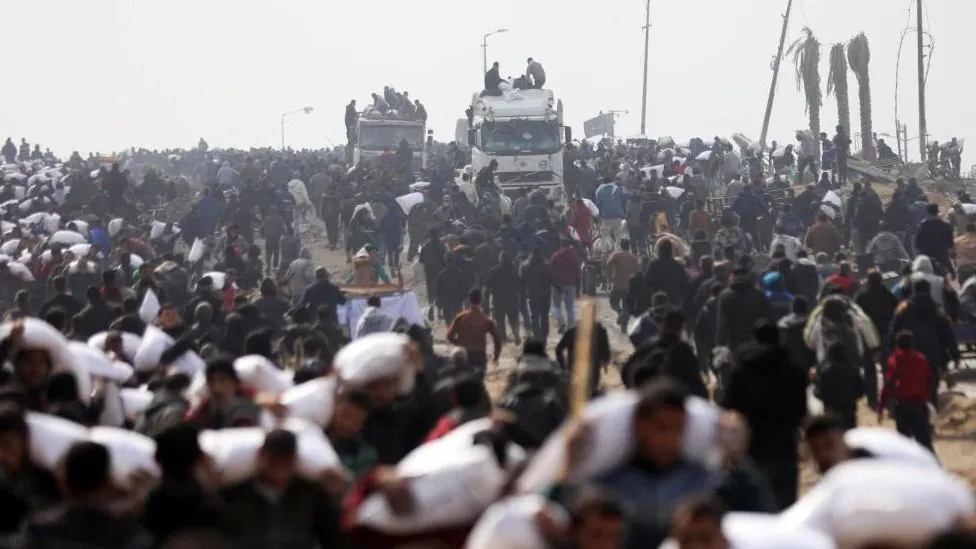
The World Food Programme has stopped giving food to people in northern Gaza because there has been a lot of chaos and violence, and it’s not safe for the aid convoys to deliver the food.
The agency said they made the decision with a lot of thought and the crews had to deal with large groups of people, gunshots, and stealing.
The UN has been saying that there might be a famine in the north since December.
The WFP says that these new reports show a rapid increase in hunger and illness.
The Israeli military told 1. 1 million Palestinian people to leave the north of Wadi Gaza and go to the south when they started their ground attack in October. The area where people had to leave included Gaza City. It was the most crowded place in the territory before the war.
Most people obeyed the Israeli order, but many hundreds of thousands stayed or couldn’t leave when Israeli soldiers surrounded the area and mostly took over Hamas’ bases there.
Last month, the UN agency for Palestinian refugees, Unrwa, said that at least 300,000 people in northern Gaza rely on its help to survive.
Not many aid deliveries have been made to the north because they need approval from the Israeli military for safety reasons.
This weekend the WFP planned to start delivering food for a whole week. They were going to send 10 trucks each day to help stop hunger and desperation.
But last Sunday, when a group of vehicles approached the Wadi Gaza checkpoint, they were surrounded by a lot of hungry people. Some people even tried to get onto the vehicles. When they entered Gaza City, there was gunfire, a lot of tension, and angry outbursts.
Also, some trucks driving from the southern city of Khan Younis to the central town of Deir al-Balah were robbed and a driver was attacked.
The WFP said in the last two days, their teams saw very high levels of desperation in the Gaza Strip.
“There is not enough food and clean water, and many people are getting sick. This is making it harder for women and children to stay healthy, and many are becoming very malnourished. ”
“People are dying because they don’t have enough food to eat,” it added.
A report from WFP and UNICEF says that the situation in the north of Gaza is very bad.
Nutrition checks at shelters and health centers in the north showed that over 15% of children under two years old were very malnourished, according to the WFP.
The agency promised to find a safe way to start sending supplies again and asked for more help for northern Gaza. It said that more food should come into Gaza from many different ways and asked for the crossing points between Israel and northern Gaza to be opened.
It also asked for a system that tells people when there is a need to help others, a strong way to talk to each other, and safety for its workers and friends, and for the people in Gaza.
“Gaza is in a very bad situation and WFP needs to be allowed to prevent thousands of people from starving,” it says.
Israel started fighting in Gaza after Hamas attacked southern Israel on October 7. About 1,200 people were killed, and over 240 others were taken hostage during the attack.
According to the health ministry run by Hamas, 29,000 people in the Palestinian territory have been killed by the Israeli military’s campaign against Hamas.
Tag: World Food Programme
-
World Food Programme halts supplies to northern part of Gaza
-
More aid won’t be sufficient – Oxfam
More help is coming to Gaza because of a deal made by Qatar to stop the fighting.
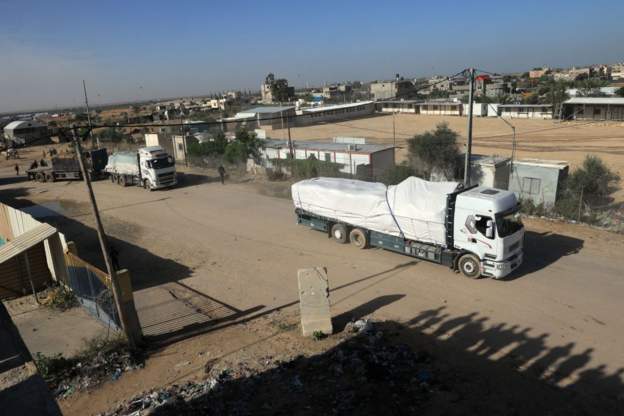
The World Food Programme has over 100 trucks ready to bring food to people.
Egypt will send 130,000 liters of diesel and four truckloads of gas every day.
However, Laila Barhoum from Oxfam told BBC News that the amount of aid deliveries suggested would not be enough to meet the level of need.
“Two million people in Gaza rely on aid. For four days, 200 trucks will bring in food, fuel, and gas to help them. ” “It’s definitely not enough,” she says. -
Twenty relief trucks not enough – World Food Programme
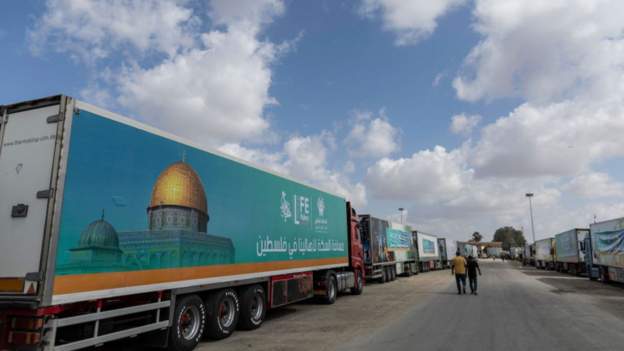
As we mentioned before, the US has announced that a group of 20 trucks filled with aid will be able to enter Gaza from Egypt tomorrow. This is possible because the road has been fixed.
We just heard from Abeer Etefa, who works at the World Food programme in Cairo. She said that having 20 trucks is a good beginning, but it is still not sufficient. She thinks the initial plan is a way to check the system.
Etefa says the situation in Gaza is really bad, with two million people who desperately need help.
The World Food Programme worked with 23 bakeries, but only four are currently open. The rest are either damaged or running out of fuel, and the shops are running out of food. -
World Food Program resumes its operations in Sudan
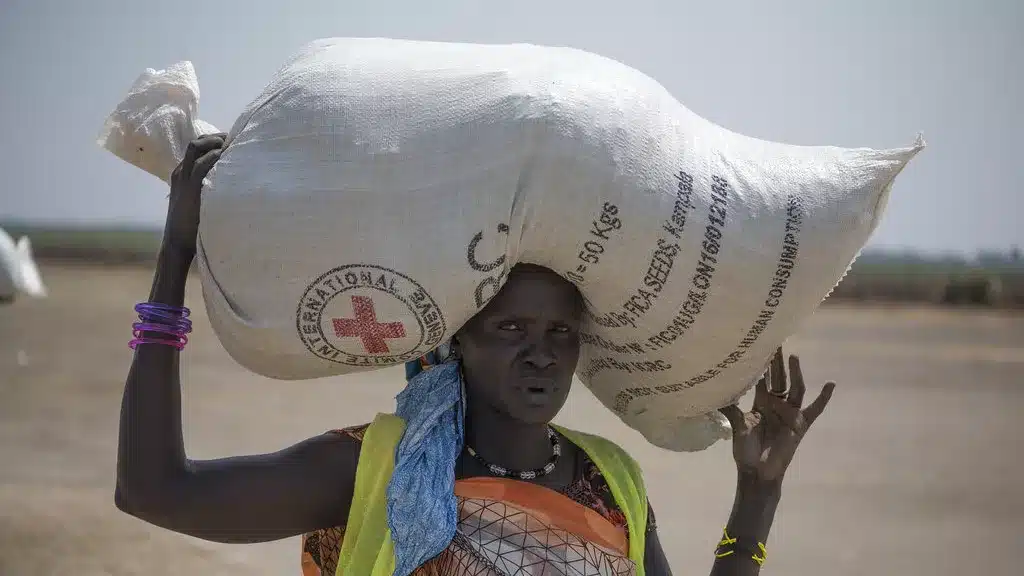
The World Food Programme of the United Nations said that it would immediately resume its operations in Sudan, which had been put on hold following the tragic loss of one of its team members.
“WFP is rapidly resuming our programs to provide the life-saving assistance that many so desperately need right now,” WFP executive director Cindy McCain wrote on Twitter on Monday.
The WFP said on April 16 it had temporarily halted all operations in Sudan after three of its employees were killed in clashes between the Sudanese army and the paramilitary Rapid Support Forces (RSF) a day earlier.
-
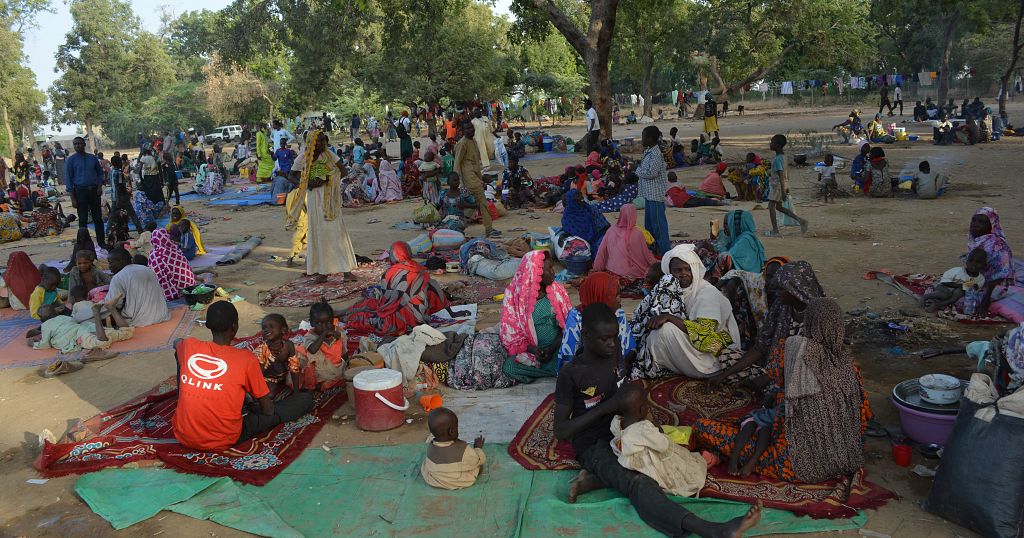
UN cannot feed chad refugees next month
The United Nations warned Friday that it would no longer be able to feed 600,000 refugees in Chad within weeks unless it receives urgent international funding.
The UN’s World Food Programme said Chad was hosting the biggest refugee population in west and central Africa, with the numbers rising due to unrest in neighbouring Sudan.
The WFP said that despite refugees being a priority, it had to reduce its plans to support 455,600 refugees down to only around 270,000 in April.
“We have already done a drastic targeting to ensure that the poorest among the poor will be assisted,” WFP’s Chad country director Pierre Honnorat told reporters in Geneva via video-link from the capital N’Djamena.
However, “we have absolutely no funding from May onwards for the refugees and displaced people. It’s really catastrophic.”
WFP wants $142.7 million for the next six months to feed all crisis-affected populations in Chad, including refugees, the 380,000 internally displaced, and other Chadians who have been hit by extreme weather in recent years.
“If no further funding is received, food assistance will come to a 100 percent halt in May 2023 for both refugees and internally displaced,” the agency said in a statement.
Chad is facing its fourth consecutive year of very high severe food insecurity.
The country suffered the worst lean season in a decade last year, plus the most devastating floods in 30 years. WFP said there were 1.9 million people in Chad who are food insecure.
Meanwhile, the UN refugee agency said it was looking to raise $172.5 million to provide protection and relief assistance to one million forcibly displaced people and their hosts in Chad.
“That is just 15 percent funded so we desperately need money for that country,” UNHCR spokesman Matthew Saltmarsh told reporters.
He said the agency was encouraging Nigeria and Chad to look at voluntary returns of refugees.
“The numbers envisaged might be relatively modest but we think this is an important signal in terms of finding solutions for the displaced in Chad but also for the region.”
-
Food aid entering Tigray after peace deal – WFP
The World Food Programme (WFP) says the first food aid trucks to enter Ethiopia’s northern Tigray region since the signing of a peace deal earlier this month are rolling into the region.
“Critical food assistance will now be delivered to communities in coming days. More food, nutrition, medical cargo will follow,” WFP tweeted, along with a video of the aid trucks driving.
In #Ethiopia @WFP trucks are rolling into #Tigray with critical food assistance—this is the first movement since the peace agreement was signed.
Critical food assistance will now be delivered to communities in coming days. More food, nutrition, medical cargo will follow. pic.twitter.com/NiFrUESM9Q
— WFP Africa (@WFP_Africa) November 16, 2022
On 2 November the warring sides – Ethiopia’s government and Tigrayan fighters – agreed, in a surprise move, to halt their two-year conflict which led to thousands of deaths and warnings of a famine.
Half of Tigray’s 5.5 million people need food aid, with many of them starving.
Read more about the Tigray peace deal here.
Source: BBC