Tag: World Health Organization(WHO)

  • “Chewing gums” contain cancer causing agent – WHO

    “Chewing gums” contain cancer causing agent – WHO

    Cancer research agency of the World Health Organization (WHO) is reportedly going to classify the artificial sweetener aspartame as a potential carcinogen.

    Aspartame, one of the most widely used artificial sweeteners globally, is expected to be given this classification next month.

    This decision will create a contentious situation, pitting the food industry and regulators against the global health body.

    The Reuters news agency has reported these developments.

    Aspartame, used in products from Coca-Cola diet sodas to Mars’ Extra chewing gum and some Snapple drinks, will be listed in July as “possibly carcinogenic to humans” for the first time by the International Agency for Research on Cancer (IARC), the World Health Organization’s (WHO) cancer research arm, the sources said.

    The IARC ruling, finalised earlier this month after a meeting of the group’s external experts, is intended to assess whether something is a potential hazard or not, based on all the published evidence.

    It does not take into account how much of a product a person can safely consume. This advice for individuals comes from a separate WHO expert committee on food additives, known as JECFA (the Joint WHO and Food and Agriculture Organization’s Expert Committee on Food Additives), alongside determinations from national regulators.

    However, similar IARC rulings in the past for different substances have raised concerns among consumers about their use, led to lawsuits, and pressured manufacturers to recreate recipes and swap to alternatives.

    That has led to criticism that the IARC’s assessments can be confusing to the public.

    JECFA, the WHO committee on additives, is also reviewing aspartame use this year. Its meeting began at the end of June and it is due to announce its findings on the same day that the IARC makes public its decision – on July 14.

    Since 1981, JECFA has said aspartame is safe to consume within accepted daily limits. For example, an adult weighing 60 kg (132 pounds) would have to drink between 12 and 36 cans of diet soda – depending on the amount of aspartame in the beverage – every day to be at risk. Its view has been widely shared by national regulators, including in the United States and Europe.

    An IARC spokesperson said both the IARC and JECFA committees’ findings were confidential until July, but added they were “complementary”, with IARC’s conclusion representing “the first fundamental step to understand carcinogenicity”.

    The additives committee “conducts risk assessment, which determines the probability of a specific type of harm (e.g., cancer) to occur under certain conditions and levels of exposure.”

    However, industry and regulators fear that holding both processes at around the same time could be confusing, according to letters from U.S. and Japanese regulators seen by Reuters.

    “We kindly ask both bodies to coordinate their efforts in reviewing aspartame to avoid any confusion or concerns among the public,” Nozomi Tomita, an official from Japan’s Ministry of Health, Labour and Welfare, wrote in a letter dated March 27 to WHO’s deputy director general, Zsuzsanna Jakab.

    The letter, reviewed by Reuters, also called for the conclusions of both bodies to be released on the same day, as is now happening. The Japanese mission in Geneva, where the WHO is based, did not respond to a request for comment.

    DEBATE
    The IARC’s rulings can have huge impact. In 2015, its committee concluded that glyphosate is “probably carcinogenic”. Years later, even as other bodies like the European Food Safety Authority (EFSA) contested this assessment, companies were still feeling the effects of the decision. Germany’s Bayer in 2021 lost its third appeal against U.S. court verdicts that awarded damages to customers blaming their cancers on use of its glyphosate-based weedkillers.

    The IARC’s decisions have also faced criticism for sparking needless alarm over hard to avoid substances or situations. It has previously put working overnight and consuming red meat into its “probably cancer-causing” class, and using mobile phones as “possibly cancer-causing”, similar to aspartame.

    “IARC is not a food safety body and their review of aspartame is not scientifically comprehensive and is based heavily on widely discredited research,” Frances Hunt-Wood, the secretary general of the International Sweeteners Association (ISA), said.

    The body, whose members include Mars Wrigley, a Coca-Cola unit and Cargill, said it had “serious concerns with the IARC review, which may mislead consumers”.

    Aspartame has been extensively studied for years. Last year, an observational study in France among 100,000 adults showed that people who consumed larger amounts of artificial sweeteners – including aspartame – had a slightly higher cancer risk.

    It followed a study from the Ramazzini Institute in Italy in the early 2000s, which reported that some cancers in mice and rats were linked to aspartame.

    However, the first study could not prove that aspartame caused the increased cancer risk, and questions have been raised about the methodology of the second study, including by EFSA, which assessed it.

    Aspartame is authorised for use globally by regulators who have reviewed all the available evidence, and major food and beverage makers have for decades defended their use of the ingredient. The IARC said it had assessed 1,300 studies in its June review.

    Recent recipe tweaks by soft drinks giant Pepsico demonstrate the struggle the industry has when it comes to balancing taste preferences with health concerns. Pepsico removed aspartame from sodas in 2015, bringing it back a year later, only to remove it again in 2020.

    Listing aspartame as a possible carcinogen is intended to motivate more research, said the sources close to the IARC, which will help agencies, consumers and manufacturers draw firmer conclusions.

    But it will also likely ignite debate once again over the IARC’s role, as well as the safety of sweeteners more generally.

    Last month, the WHO published guidelines advising consumers not to use non-sugar sweeteners for weight control. The guidelines caused a furore in the food industry, which argues they can be helpful for consumers wanting to reduce the amount of sugar in their diet.

  • Cameroon limits border activity with Equatorial Guinea due to fever deaths

    Cameroon limits border activity with Equatorial Guinea due to fever deaths

    Authorities in Cameroon stated that the restrictions on border crossing were put in place because of “the high risk of importation” of the unknown illness.

    Following “several unexplained deaths” from an unidentified illness that causes hemorrhagic fever, Cameroon has restricted travel along its border with Equatorial Guinea, according to Minister of Public Health Malachie Manaouda on Friday.

    He stated in a statement that the restrictions were put in place due to “the high risk of importing this disease and in order to detect and respond to any cases at an early stage.”

    With the assistance of specialists from the US Centers for Disease Control and Prevention and the World Health Organization (WHO), investigations are currently underway, and epidemiological surveillance has been strengthened.

    “At the current stage … there is no reason to be worried,” Malachie said.

    Equatorial Guinea said in a statement on Wednesday that it had registered an “unusual epidemiological situation” over the past weeks in its Nsok Nsomo district, Kie-Ntem province, that caused nine deaths in two adjacent communities over a short space of time.

    A crisis commission set up by the health ministry reported a tenth death on Thursday.

    The symptoms observed were fever, weakness, vomiting blood and diarrhoea. A team was sent to isolate contact cases and take samples that were sent to a regional WHO lab for testing. A woman and her two children were taken to hospital, where they recovered after receiving mild treatment, the statement added.

    A WHO spokesperson said the agency was supporting the testing of samples to identify what has caused the deaths and should get results within the coming days.

    Cameroon said approximately 20 deaths had been recorded on Wednesday in villages in Equatorial Guinea’s Kie-Ntem province, which borders Cameroon’s Olamze district.

    The symptoms of the “non-identified illness” were nose bleeds, fever, joint pain and other ailments that caused death within a few hours, the head of health for the district, Ngu Fankam Roland, said in a statement.

    He told Reuters on Friday that no cases had been detected or suspected in Cameroon so far.

  • Freezing weather conditions impedes rescue operation in Turkey-Syria earthquake

    Freezing weather conditions impedes rescue operation in Turkey-Syria earthquake

    Following devastating earthquakes that claimed more than 4,600 lives and toppled buildings across southeast Turkey and northern Syria, President Recep Tayyip Erdogan of Turkey has declared seven days of national mourning, and Syria has asked the UN for assistance.

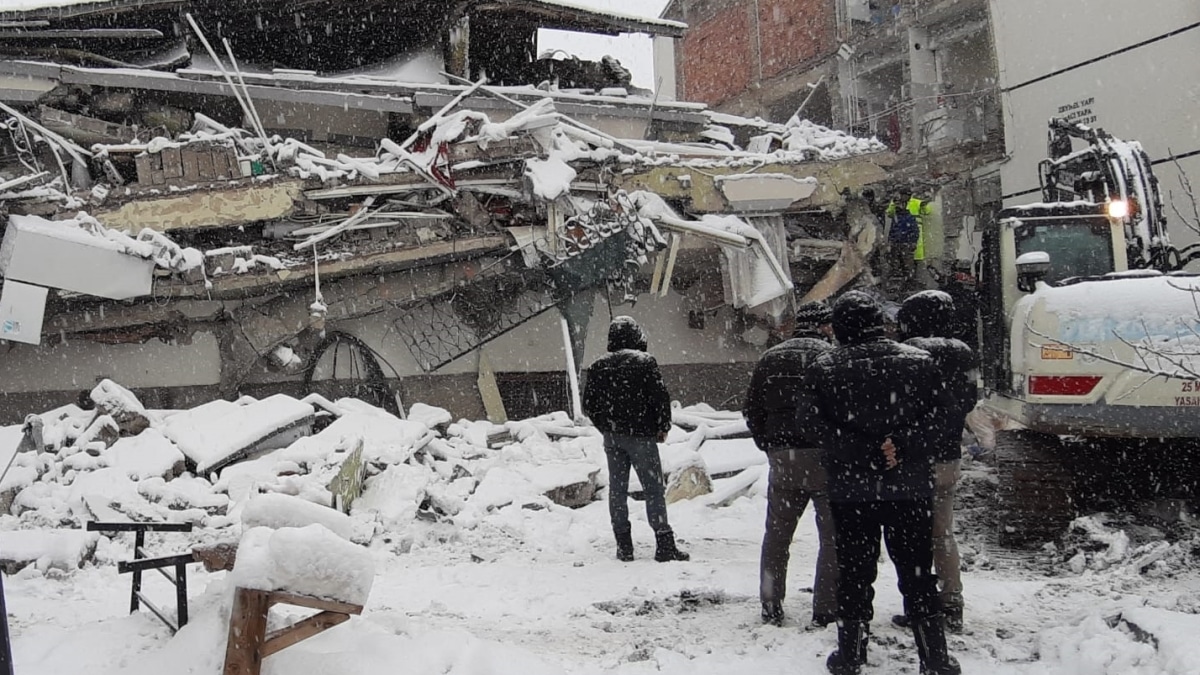
    Authorities worry that the death toll from Monday’s magnitude 7.8 earthquake, which was followed by a magnitude 7.6 earthquake and several aftershocks, will rise as rescuers comb through piles of metal and concrete scattered across a region already troubled by Syria’s 12-year civil war and a refugee crisis in search of survivors.

    Rescuers continued their search into Tuesday morning despite the bitter cold, hoping to find more survivors among the rubble as those who were trapped screamed for help from beneath mountains of debris.

    Rescuers are battling heavy rain and snow as they race against the clock to find survivors of a devastating earthquake in south-east Turkey.

    More than 4,300 people were killed and 15,000 injured in Turkey and over the border in Syria when the quake struck in the early hours of Monday.

    The World Health Organization has warned the toll may rise dramatically as rescuers find more victims.

    As day breaks, rescue teams are stepping up their search for survivors.

    Many people in the disaster zone have been too scared to go back into buildings.

    The 7.8 magnitude tremor struck at 04:17 (01:17 GMT) on Monday at a depth of 17.9km (11 miles) near the city of Gaziantep, according to the US Geological Survey.

    Seismologists say it was one of the largest ever recorded in Turkey, where at least 2,921 people are now known to have died. Survivors say it took two minutes for the shaking to stop.

    A later tremor had a magnitude of 7.5 and its epicentre was in the Elbistan district of Kahramanmaras province.

    As dawn broke on Tuesday, traffic was at a standstill on the main highway to the Turkish city of Maras, close to the epicentre of the quake and believed to be one of the worst-affected areas.

    Cars occasionally crawled forward, the wet road illuminated by glowing red brake lights.

    Few rescuers have made it to this part of southern Turkey yet and everyone is trying to get there as fast as they can to assess the damage and give vital help.

    One search and rescue team on their way to the city, their van loaded with specialist equipment and supplies, told the BBC they were eager to get there and start looking for survivors, but they had no idea how bad the devastation would be when they arrived.

    Almost 8,000 people have been rescued from more than 4,700 destroyed buildings, Turkey’s Disaster and Emergency Management Authority (AFAD) said in its latest statement.

    As aftershocks continue, rescuers in some areas have been digging through rubble with their bare hands looking for survivors.

    But freezing conditions are hampering search efforts.

    In the southern province of Hatay, the Reuters news agency reported that a woman’s voice was heard calling for help under a pile of rubble.

    “They’re making noises, but nobody is coming,” a resident who gave his name as Deniz said while weeping.

    “We’re devastated, we’re devastated. My God… They’re calling out. They’re saying, ‘Save us,’ but we can’t save them. How are we going to save them? There has been nobody since the morning.”

    In the Turkish city of Osmaniye, near the epicentre, pouring rain hampered rescuers as they searched through the rubble looking for survivors.

    The city was without power as the cold and rain set in.

    One family camped on the street – despite the freezing temperatures – as they were scared of the aftershocks triggering another building to collapse.

    Every time they felt an aftershock, the family moved closer into the middle of the street.

    A hotel owner in the city told the BBC that of 14 guests staying that night, only seven had been found.

    Countries around the world are sending support to help the rescue efforts, including specialist teams, sniffer dogs and equipment.

    But the earthquake has caused significant damage to three airports across Turkey, also creating challenges for aid deliveries.

  • WHO – This winter, millions of lives in Ukraine are at risk

    World Health Organization has disclosed that, millions of people’s lives will be jeopardised in Ukraine this winter.

    According to Dr Hans Henri P Kluge, WHO regional director for Europe, half of Ukraine’s energy infrastructure is damaged or destroyed, and 10 million people are currently without power.

    Temperatures in some areas are expected to drop as low as -20C (-4F).

    Since Russia’s invasion began, the WHO has documented 703 attacks on health infrastructure.

    Russia hit more energy installations and civilian buildings last week in one of the war’s heaviest aerial bombardments.

    This has been a recent Russian tactic following setbacks on the battlefield, and its impact is starting to be felt more acutely as winter sets in.

    “Put simply, this winter will be about survival,” Dr Kluge told a news conference in the Ukrainian capital, Kyiv.

    Ukraine’s health system is “facing its darkest days in the war so far”, and the best solution is for the conflict to end, he added.

    Dr Kluge said hundreds of hospitals and healthcare facilities were “no longer fully operational, lacking fuel, water and electricity to meet basic needs” as a result of attacks. The WHO defines an attack as involving violence as well as threatened violence against hospitals, ambulance and medical supplies.

    Maternity wards need incubators, blood banks need refrigerators and intensive care beds need ventilators, Dr Kluge said, adding that “all require energy”.

    Up to three million people could flee their homes in search of warmth and safety, the WHO says.

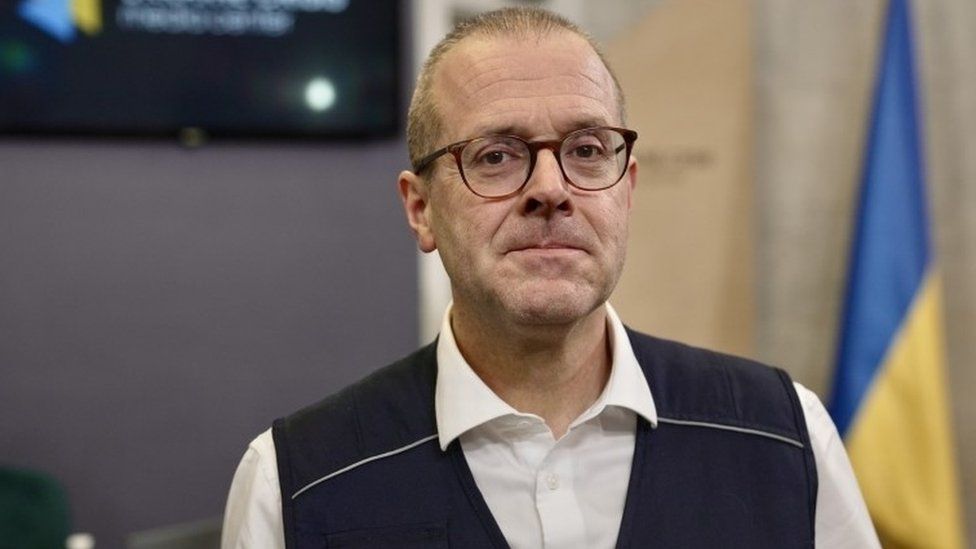
    Dr Hans Henri P Kluge, WHO regional director for Europe
    Image caption, “Put simply, this winter will be about survival,” Dr Kluge told a press conference in Kyiv

    Dr Kluge said he was “very concerned” for 17,000 HIV patients in Donetsk “who may soon run out of critical antiretroviral drugs that help keep them alive”.

    Much of Donetsk is under Russian control and Dr Kluge said he was “urgently calling for the creation of a humanitarian health corridor into all newly regained and occupied areas”.

    There are also concerns about Covid cases rising.

    “With low basic vaccination rates – let alone boosters – millions of Ukrainians have waning or no immunity to Covid,” Dr Kluge said.

    The warnings come as snow has fallen across Ukraine and temperatures have dropped below freezing.

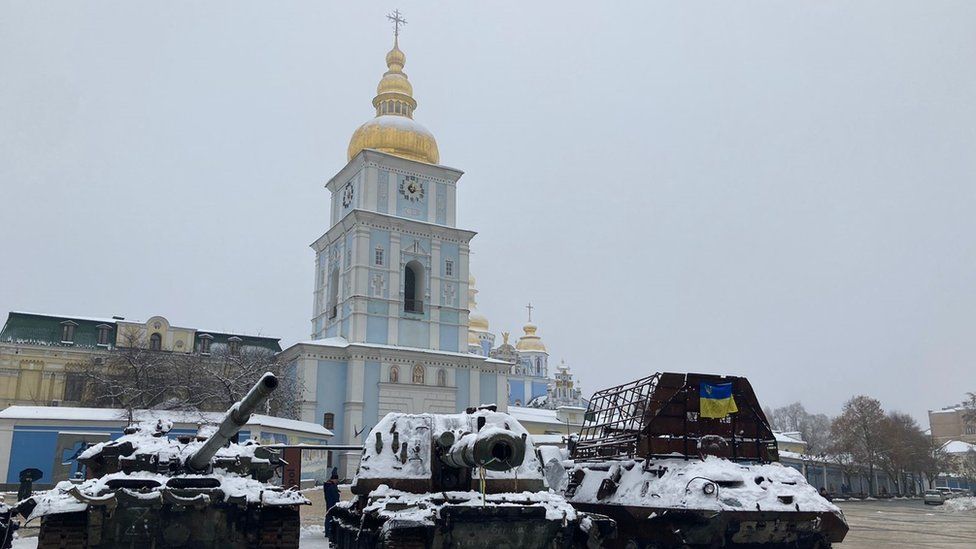
    In Kyiv, snow covers walkways, empty playgrounds and park benches. Few people are on the streets.

    Kyiv
    Image caption, Kyiv is covered in snow, and temperatures will drop further

    Despite the snow, winter has not officially started and temperatures are likely to drop much further.

    The Zaporizhzhia nuclear power plant, which used to produce more than 25% of Ukraine’s electricity, no longer generates power.

    There was renewed shelling at the plant over the weekend.

    The head of the International Atomic Energy Agency (IAEA), Rafael Grossi, condemned the attacks, saying it was another “close call” at Europe’s biggest nuclear power plant.

    IAEA experts toured the site on Monday, and the agency said they found widespread damage, but that there were no immediate nuclear safety or security concerns.

    Russia and Ukraine have accused each other of carrying out the attacks.

    Elsewhere in the war, Ukrainian prosecutors have given details of what they have found in four alleged torture chambers in Kherson after Russian troops left the southern city.

    They say people were “brutally tortured”, and that batons, bullets and an electrocution device were discovered.

    Last week, Ukraine said it had found the bodies of 63 civilians bearing signs of torture near Kherson. The BBC also spoke to two people who said they had been held for more than a month in “torture chambers”.

    Russia denies committing abuses during its invasion.

  • Uganda Ebola cases rise amid 23 deaths, WHO reports

    34 trainee medical personnel claimed they were refusing to work and charged the government with failing to provide them with the necessary safety equipment.

    Since an epidemic was reported last week, the World Health Organization (WHO) reports that there have been 36 Ebola cases in Uganda, including 18 confirmed cases and 18 suspected cases.

    It stated that 23 deaths, of which five were confirmed instances, had happened in three areas of central Uganda.

    The WHO said this was the first Ebola outbreak in Uganda since 2012 caused by the Sudan strain of the disease, for which there are no licensed vaccines.

    On Monday, Uganda denied reports of a strike by medical staff at the Mubende hospital.

    Thirty-four trainee medical staff said they were refusing to work and accused the government of not providing them with appropriate safety kits.