Tag: World Meteorological Organisation

  • The world to be warm more than 1.5 degrees in the next five years – Report

    The world to be warm more than 1.5 degrees in the next five years – Report

    A report by the World Meteorological Organisation, a combination of heat-trapping gases from fossil fuels and an impending El Nio make it more likely than not that the world will reach 1.5 degrees Celsius of warming above pre-industrial levels for the first time.

    According to the WMO, a momentary threshold breach may have occurred. However, it would be a sign of how swiftly climate change is happening and that the globe has passed a crucial climate threshold. And as temperatures soar, the WMO projected that there is a 98% chance that at least one of the following five years and the five-year span as a whole would be the warmest on record.

    Countries pledged in the Paris Climate Agreement to limit global warming to well below 2 degrees – and preferably to 1.5 degrees – compared to pre-industrial temperatures. Scientists consider 1.5 degrees of warming as a key tipping point, beyond which the chances of extreme flooding, drought, wildfires and food shortages could increase dramatically.

    In its annual climate update, the WMO said that between 2023 and 2027, there is now a 66% chance that the global average temperature will breach 1.5 degrees Celsius – or 2.7 degrees Fahrenheit – of warming for at least one year.

    “This report does not mean that we will permanently exceed the 1.5 degrees Celsius level specified in the Paris Agreement which refers to long-term warming over many years. However, WMO is sounding the alarm that we will breach the 1.5 degrees Celsius level on a temporary basis with increasing frequency,” said WMO Secretary-General Professor Petteri Taalas, in a statement.

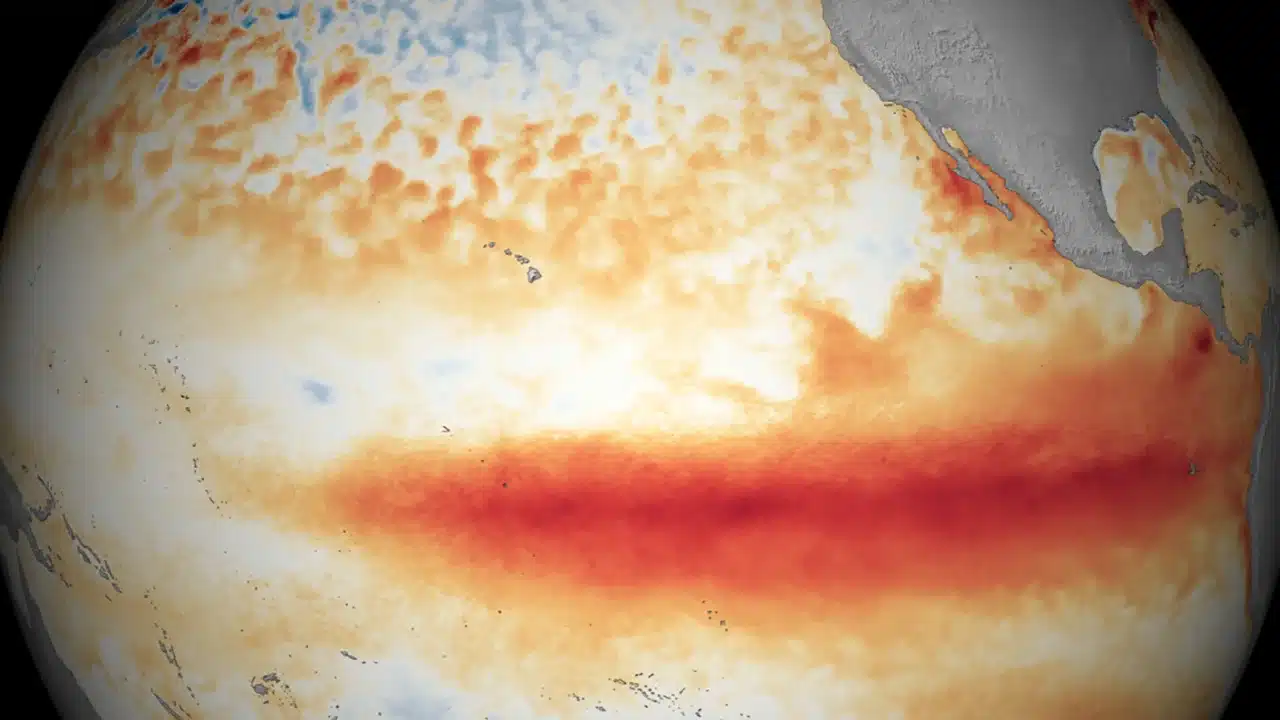
    The temperature increases are fueled by the rise of planet-heating pollution from burning fossil fuels, as well as the predicted arrival of El Niño, a natural climate phenomenon with a global heating effect.

    “A warming El Niño is expected to develop in the coming months and this will combine with human-induced climate change to push global temperatures into uncharted territory,” Taalas said. “This will have far-reaching repercussions for health, food security, water management and the environment. We need to be prepared.”

    The current hottest year on record is 2016, which followed a very strong El Niño event. El Niño tends to ramp up the temperatures the year after it develops, which could put 2024 on track to be the hottest year on record.

    The world has already seen around 1.2 degrees of warming, as humans continue to burn fossil fuels and produce planet-heating pollution. And despite three years of cooling La Niña, temperatures have soared to dangerous levels. The last eight years were the warmest on record.

    The report stated that the chance of temporarily exceeding 1.5 degrees Celsius has risen steadily since 2015, when the WMO put the chance of breaching this threshold at close to zero.

    The annual mean global near-surface temperature for each year between 2023 and 2027 is predicted to be between 1.1 degrees Celsius and 1.8 degree Celsius higher than the 1850-1900 average, said the WMO. That refers to the period before the sharp increase of planet-heating pollution from burning fossil fuels.

    “Global mean temperatures are predicted to continue increasing, moving us away further and further away from the climate we are used to,” said Leon Hermanson, a Met Office expert scientist who led the report, in a statement.


  • Stakeholders to address flooding, drought in West Africa

    Participants from Volta Basin nations have gathered in Accra for a workshop aimed at creating a regional plan for reducing and managing floods and drought in local communities.

    The strategy, which is anticipated to be completed the following year, will include recommendations for adopting climate change in areas where extreme natural phenomena, particularly floods and droughts, have had a negative impact on local residents.

    These disasters have caused great damage to communities, including loss of lives and property in the Volta Basin which covers countries such as Ghana, Togo, Cote d’Ivoire, Burkina Faso and Benin.

    For instance, the Volta Basin Authority (VBA) estimates that more than 30,000 people are affected by flood annually in the basin, with the global climate crisis and population increase expected to push this number to 70,000 in the next few years.

    Added to drought, the number goes up to 4.5 million people and is expected to further increase to 16 million in the next few years if nothing is done to address the climate change impacts.

    Project

    It is in response to the challenges that a project dubbed “Integrating Flood and Drought Management and Early Warning for Climate Change Adaptation in the Volta Basin (VFDM) was started in 2019.

    Funded by the Climate Change Adaptation Fund, the project’s main objective is to provide appropriate solutions to the climate crisis and help to restore sustainable socio-economic livelihood to residents of the basin.

    The strategy

    As a measure to build resilience of communities and ecosystems in the Volta Basin, a strategy for flood and drought risk prevention and management is being developed by stakeholders.

    The strategy draws on knowledge from the implementation of the VFDM project, guidelines, policies and strategies for disaster risk management at the regional, national and local levels as well as stakeholders’ inputs.

    In a speech delivered on her behalf, the Minister of Sanitation and Water Resources, Cecilia Abena Dapaah, described the move to develop the flood and drought risk reduction strategy as a proactive step that would help address the impact of climate change on communities.

    The speech, which was delivered by the Executive Secretary of the Water Resources Commission (WRC), Adwoa Paintsil, urged the stakeholders to bring the varied expertise to bear on the process of developing a strategy.

    For his part, a project officer at the World Meteorological Organisation (WMO), Nikiema P. Michel, underscored the need for countries in the Volta Basin to be committed to the strategy document being developed as it held the key to implementing prudent climate actions to build the resilience of communities to flood and drought.

    He called on national stakeholders to adopt the recommendations of the strategy and develop an action plan for preventing and managing the twin disasters.

    The Executive Director of the VBA, Dessouassi Yaovi Robert, underscored the need for governments within the basin to strengthen collaboration to swiftly tackle the climate crisis.

    He said if countries worked in isolation, they could not make the desired impact in terms of reducing the risks of floods and drought.