Tag: WTO

  • Cost and access to finance hindering Ghana’s trade expansion – WTO

    Cost and access to finance hindering Ghana’s trade expansion – WTO

    The capacity of businesses in Ghana to actively engage in global trade and exports is significantly hampered by challenges related to access to finance and the high cost of funding.

    This issue was highlighted in the World Trade Report 2023, which was released in Geneva, Switzerland, on September 12, 2023, during the World Trade Organization’s (WTO) Public Forum Conference.

    The WTO’s assessment focused on Ghana as one of four West African countries evaluated for their ability to secure financing for trade and exports through banking institutions. The report disclosed that “limited and expensive access to trade finance” significantly restricted these countries’ trade expansion efforts.

    Furthermore, the report revealed that trade finance in Ghana and the other four ECOWAS countries only supported 25 percent of their import and export activities, which was notably lower than the African average of 40 percent and the global average of 60-80 percent.

    It also emerged that there was high rejection rate when it comes to trade finance with “small businesses and women owned SME application” which the report said is “disproportionate”.

    The report suggests that trade finance accessibility for new SMEs could be enhanced to improve coverage. Additionally, it anticipates that the four countries, Ghana included, may experience an annual trade growth of 8 percent, equivalent to US$13 billion.

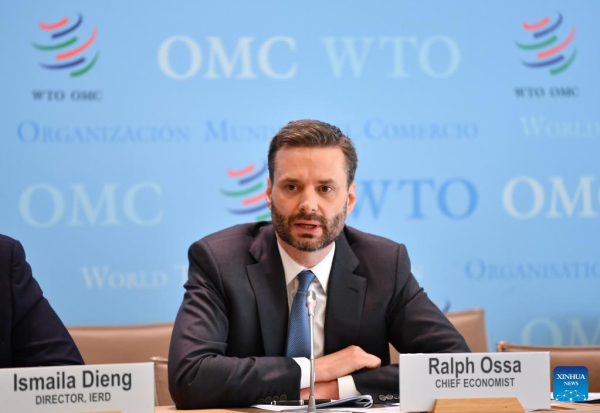
    In an interview with Joy Business, Ralph Ossa, the Chief Economist at the WTO, highlighted that Ghana would need to address market failures that currently restrict trade finance opportunities for businesses.

    “Maybe there might be the need for government to also step in as well as some international institutions to deal with this challenge”, Mr. Ossa said.

    “Is there a reason why banks are not supporting these businesses and what needs to be done to correct this problem? Trade finance overall in Africa is not well developed as trade finance in North America  and this has contributed to this high  trade cost that we are measuring”, he added.

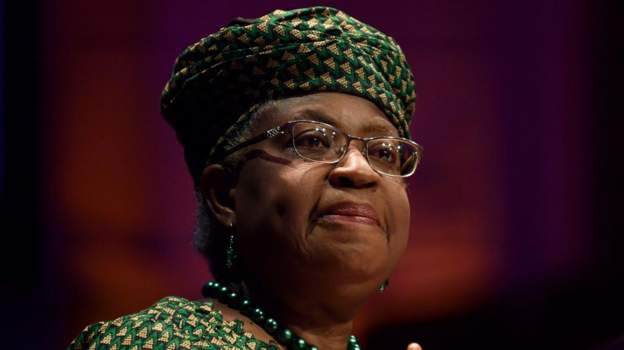
    In her statement, Ngozi Okonjo-Iweala, the Director-General of the World Trade Organization, called for coordinated efforts to address trade financing gaps. She stressed the importance of leveraging technology and training to facilitate knowledge transfer and support capacity building for small businesses.

    The WTO trade report also highlighted several other key issues:

    1. The report advocated for a concept termed “Re-Globalization” in response to early signs of fragmentation in global trade.
    2. It confirmed that geopolitical tensions were starting to impact trade flows.
    3. However, the report argued that despite these challenges, international trade was still thriving, suggesting that claims of de-globalization were not strongly supported by the available data.
    4. The publication pointed out the expansion of digital services trade, the growth of environmental goods trade, and the resilience of global value chains, all of which contributed to trade’s ability to withstand recent global crises.

    Regarding the World Trade Organization’s Public Forum:

    The WTO is utilizing its flagship event, the “WTO’s Public Forum,” to concentrate on promoting sustainable trade.

    The Public Forum serves as the WTO’s most significant outreach event, providing a unique platform for stakeholders worldwide, including civil society, academia, business, government, international organizations, and the media, to engage in discussions about the latest developments in global trade and propose ways to enhance the multilateral trading system. This event brought together more than 2,000 representatives from various sectors.

  • African countries can now produce COVID-19 vaccines – WTO

    African countries can now produce COVID-19 vaccines – WTO

    The World Trade Organisation (WTO) Director General, Dr Ngozi Okonjo-Iweala, has announced that African countries have been granted approval to produce Covid-19 vaccines for the next five years.

    She noted that it was inappropriate that 99% of vaccinations used in Africa are imported.

    As a result, the WTO, after engagement with other countries, has granted African countries permission to produce their own vaccines without worrying about being accused of patent infringement.

    “We were also able at this ministerial to have an agreement to introduce more flexibilities, a waiver on the patent of vaccines so that African countries and other countries can manufacture their vaccines.

    It is not proper that we import 99% of the vaccines we use in the continent and 90% are other pharmaceuticals,” she stated.

    Dr Ngozi made this known during a meeting with Ghana’s Minister for Trade and Industry, Kobina Tahir Hammond.

    She emphasised that the responsibilities of the WTO include protecting the laws and regulations that control international trade and improving people’s lives.

    The WTO boss urged governments to expedite the ratification of a contract to ban dangerous fishing compounds worth $22 million that have an impact on the country’s fisheries industry.

    Mr Hammond, on his part, called for increased capacity so that undeveloped countries could actively engage in WTO discussions and gain from the Multilateral Trading System (MTS). He also proposed the restoration of a fully operational two-tier dispute settlement structure, namely Panels and the Appellate Body, to provide the MTS with the necessary predictability and assurance.

    Furthermore, he called for increased transparency in government trade policies, particularly with regard to export bans and limitations as seen during the height of the COVID-19 issue.

    Source: The Independent Ghana

  • Director-General Okonjo-Iweala for WTO visits Ghana today

    Director-General Okonjo-Iweala for WTO visits Ghana today

    The World Trade Organization‘s (WTO) Director-General, Dr. Ngozi Okonjo-Iweala, will visit Ghana today, Tuesday, April 25.

    The purpose of the two-day visit is to meet policymakers, business leaders and civil society representatives while underscoring the WTO’s commitment to reinforcing support to Sub-Saharan Africa.

    She is expected to meet Ghana’s President Akufo-Addo, interact with female entrepreneurs and participate in a discussion on the theme: “Making Globalisation Work for Africa”.

    The programme will be organised by the Institute of Economic Affairs. She will also hold discussions with the Minister of Trade and Industry. “I am very much looking forward to my visit to Africa. Africa is a vital part of the membership of the WTO,” Dr Okonjo -Iweala, said ahead of her trip, in a press release issued to the Ghana News Agency, in Accra.

    “I look forward to strengthening our partnership with countries in the region. African economies, she noted, had taken major steps towards economic integration over the last few years at a time when the global trade landscape was changing rapidly.

    “We must make sure we all work together to help our members in Africa take advantage of the opportunities offered by re-globalisation.”

    Dr Ngozi Okonjo-Iweala, the seventh Director-General of the WTO, took office on 1 March 2021, becoming the first woman and the first African to serve as Director-General. She is a global finance expert, an economist and international development professional with over 30 years of experience working in Asia, Africa, Europe, Latin America and North America. Dr Okonjo-Iweala was formerly the Board Chair of Gavi, the Vaccine Alliance previously on the Boards of Standard Chartered PLC and Twitter Inc. She was appointed as African Union (AU) Special Envoy to mobilise international financial support for the fight against COVID-19 and WHO Special Envoy for Access to COVID-19 Tools Accelerator. Previously, Dr Okonjo-Iweala twice served as Nigeria’s Finance Minister (2003-2006 and 2011-2015) and briefly acted as Foreign Minister in 2006, the first woman to hold both positions.

    She had a 25-year career at the World Bank as a development economist, rising to the second position of Managing Director, Operations. She is renowned as the first female and African candidate to contest for the presidency of the World Bank Group in 2012, backed by Africa and major developing countries in the first truly contestable race for the world’s highest development finance post.

    As Managing Director of the World Bank, she had oversight responsibility for the World Bank’s $81 billion operational portfolio in Africa, South Asia, Europe and Central Asia.

    Dr Okonjo-Iweala spearheaded several World Bank initiatives to assist low-income countries during the 2008-2009 food crisis and later during the financial crisis. In 2010, she was Chair of the World Bank’s successful drive to raise $49.3 billion in grants and low-interest credit for the poorest countries in the world.

  • Okayonjo-Iweala: WTO is working well

    Okayonjo-Iweala: WTO is working well

    Ngozi Okonjo-Iweala, a Nigerian who in 2021 became the first African and woman to lead the World Trade Organization, has defended her work vehemently at a time when international organizations are facing criticism.

    She said “If you’re looking for a place where multilateralism is working despite the tensions, it’s the WTO.”

    In recent decades, the WTO has worked to lower trade barriers around the world during a period that has been referred to as globalisation. But with protectionism gaining popularity in recent years, that strategy appears to be in jeopardy.

    Furthermore, tensions over Ukraine and other issues pose a threat to multilateral cooperation.

    But Ms Okonjo-Iweala sees her work as vital in maintaining the global system from which people, particularly those in the developing world, can benefit.

    Talking to the BBC’s Stephen Sackur, she cited a number of deals that have improved access to agricultural produce, as examples of the continued effectiveness of the WTO. She also said the organisation was vital in brokering an agreement that allowed for humanitarian access to global food supplies, despite the war in Ukraine.

    She added that she was determined to show that the WTO was relevant for all people.

    “If people in my village do not know what the WTO is about, there is a problem, so we need to bring people back into the WTO.”

    Source: BBC.com
  • ‘Lets do things differently’ – Dr Ngozi Okonjo-Iweala

    Dr Ngozi Okonjo-Iweala, the new Director-General (DG) of the World Trade Organization (WTO), has taken office with a call on members to “do things differently” to achieve reforms necessary to keep the world trade body relevant.

    She promised to start with swift actions to curb harmful fisheries subsidies and to help scale up COVID-19 vaccine production and distribution.

    Dr Okonjo-Iweala in her inaugural address in Geneva, which was made available to the Ghana News Agency by the WTO, noted that high expectations for her tenure could only be met if members were willing to compromise and reach agreements.

    She suggested that prospects for a successful Twelfth Ministerial Conference would be enhanced if members targeted a manageable number of deliverables for this year, and set up longer work programmes to address issues that could not realistically be resolved within that timeframe.

    “I am delighted to be with you in Geneva even if circumstances do not yet permit all of us to meet in the same room,” she said.

    “Let me at the outset express my gratitude to our Chair, Ambassador Walker, incoming Chair Dacio Castillo, and Ambassador Aspelund for their hard work and persistence in getting me here.

    “As I take office as DG, I want to thank you Members once more for the kind wishes and support many of you expressed two weeks ago when you made history by electing me.”

    She said: “I remain honoured and humbled by the confidence Members have placed in me. I will bring all my knowledge, passion, experience, and persistence to the task at hand, reforming the organization and achieving results.”

    The DG said she was conscious that expectations were high and assured to do her utmost to move the WTO forward; stating that “however, this is a membership-driven organization so I cannot do it without you, I cannot do it without the cooperation of staff and management”.

    “What we are involved in is a tripartite partnership. Each partner has to play their part if we are to get results.

    “High expectations of my leadership also means that I have high expectations of you to help me deliver,” she added.

    “I have said it. It cannot be business as usual. We have to change our approach from debate and rounds of questions to delivering results.”

    With regards to COVID-19, Dr Okonjo-Iweala said there was a demand for a Trade-Related Intellectual Property Rights (TRIPS) waiver for COVID-19 vaccines by a growing number of developing countries and that the dialogue was intensifying.

    “Whilst this is happening, I propose that we “walk and chew gum” by also focusing on the immediate needs of dozens of poor countries that were yet to vaccinate a single person,” she said.

    “People are dying in poor countries. We just had our first COVAX shipment to Ghana last week and others will follow but it will not be enough.”
    She said there was serious supply scarcity and some countries were outbidding COVAX and diverting supplies.

    The DG said the world had a normal capacity of production of 3.5 billion doses of vaccines and they now sought to manufacture 10 billion doses.

    “This is just very difficult, so we must focus on working with companies to open up and license more viable manufacturing sites now in emerging markets and developing countries,” she said.
    “We must get them to work with us on know-how and technology transfer now.”

    Dr Okonjo-Iweala said there would soon be a world manufacturing convention where they would seek to build this partnership.

    “I also hope we can initiate a dialogue and information exchange between us and representatives of manufacturers associations from developing and developed countries. This should happen soon so we can save lives.”

    She said that would be an interim solution whilst they continued the dialogue on the TRIPS waiver.

    Source: GNA

  • Coronavirus: ‘Drop in global trade to be worse than 2008 crisis’

    The World Trade Organization (WTO) is predicting a severe decline in international commerce this year.

    The wide range of possibilities reflects the uncertainties about the health crisis.

    It says the impact on trade is likely to exceed the slump caused by the financial crisis just over a decade ago.

    The WTO’s director general Roberto Azevedo described the figures as “ugly”.

    “There is no getting round that”, he said. He said the situation was first and foremost a health crisis and he acknowledged that governments had to take steps to protect people’s lives.

    “The unavoidable declines in trade and output will have painful consequences for households and businesses, on top of the human suffering caused by the disease itself,” he added.

    Relatively optimistic A decline of 13% in trade in goods is described in the report as a relatively optimistic scenario. It reflects a steep drop in trade followed by a recovery starting in the second half of 2020.

    That of course would need to be based on substantial progress over the next few months in getting on top of the health crisis.

    That is obviously not guaranteed, so the report includes a much more pessimistic case which reflects a steeper initial decline and a more prolonged and incomplete recovery.

    The report also warns that “the extent of uncertainty is very high, and it is well within the realm of possibilities that for both 2020 and 2021 the outcomes could be above or below these results”.

    The report says that the growth in global trade had already stalled towards the end of last year. By the final quarter of 2019 goods trade was 1% lower than a year earlier.

    The WTO says this was the result of “persistent trade tensions”, a reference that to a large extent reflects the confrontational approach to international commerce taken by the administration of President Donald Trump.

    Mr Azevedo said trade would be an important ingredient in the economic recovery after the crisis. He said keeping markets open and predictable would be critical.

    Source: reuters.com