Tag: xenophobic attacks

  • Ghanaian in viral South Africa xenophobia attack flown home by government

    Ghanaian in viral South Africa xenophobia attack flown home by government

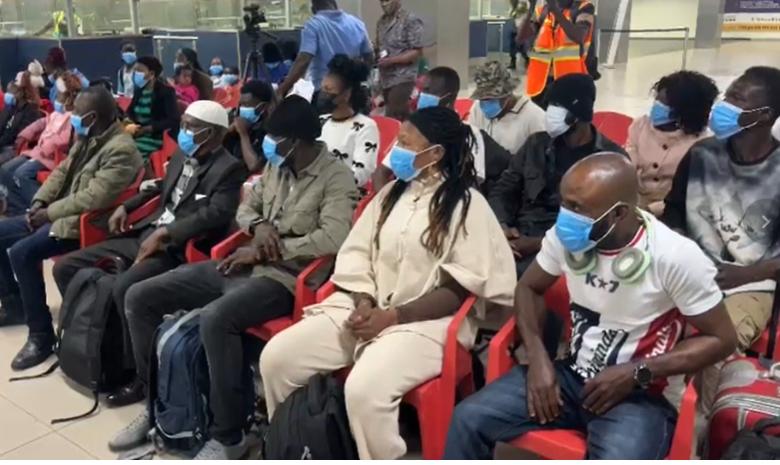
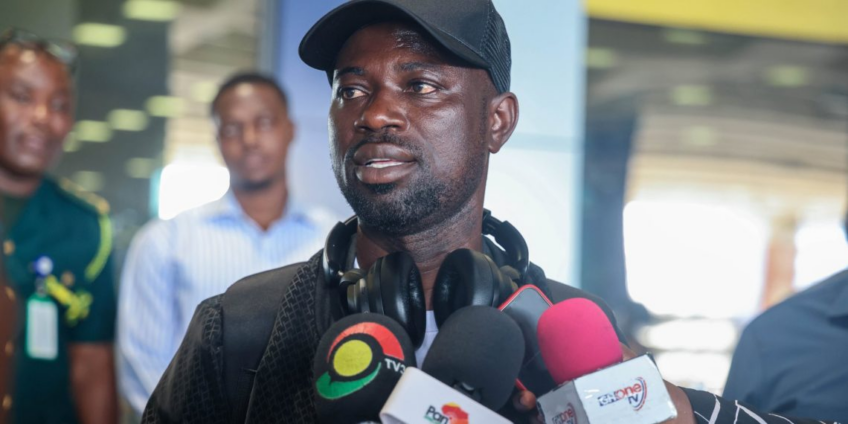
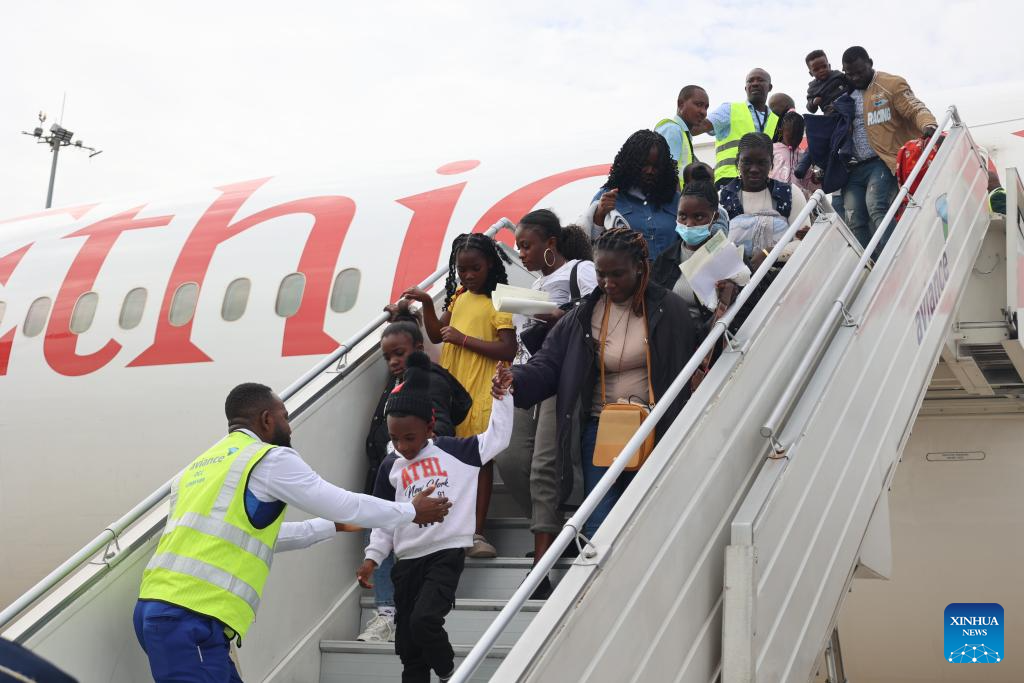
    A Ghanaian national, Emmanuel Asamoah, who was captured in a viral video being harassed by a group of individuals in a xenophobic attack in South Africa, has been flown home by the government.

    The viral video showed several other foreign nationals being intimidated by some South African citizens for allegedly taking jobs meant for locals. 


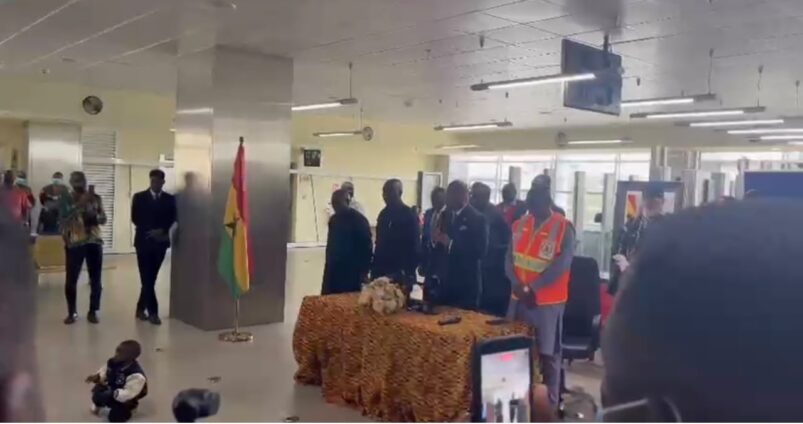
    Addressing the media, the Coordinating Director in charge of Political and Economic Affairs at the ministry, Harold Agyeman, disclosed that Emmanuel Asamoah has successfully made it to Ghana following the government’s intervention.


    “Government is very much conscious and strongly committed to protecting our nationals abroad. And so, under the instructions of the minister, Emmanuel Asamoah has been relocated to Ghana to ensure that he is in a safe space, he added”

    According to him, “We continue to rely on the assurances that the South African government has given that they would stop this activity by their nationals, which can be threatening to the relations with other African countries.” 

     Last week, Ghana’s High Commissioner to South Africa, Benjamin Quarshie, said no Ghanaian has lost his or her life in the ongoing xenophobic attacks. His remarks follow speculation that some Ghanaians may have been killed in ongoing attacks in parts of South Africa, after videos showing locals targeting foreigners went viral online around April 22-27.

    During an interview with Joy News PM Express Show with Evans Mensah on Wednesday, April 30, Mr Quarshie cited that according to official data presented to his outfit by South African authorities, no Ghanaian has lost their life.

    “So the current xenophobic actions that are going on, nobody has lost their lives. The statistics are there; they’ve given it to us,” he stated.

    He went on to further address a video which went viral, capturing a Ghanaian man who had been reportedly killed in East London. According to him, investigations conducted by his outfit showed that the man was attacked and fatally stabbed by armed robbers, stressing that his death was unrelated to a xenophobic violent attack.

    “In fact, there was a story going round about a Ghanaian who had lost his life in East London… We went there yesterday on the instructions of the Foreign Affairs Minister. We got to find out that the gentleman was stabbed to death by armed robbers, and it happened three weeks ago,” he said.

    He disclosed that the case came to the authorities’ attention only weeks later.

    “They just left his body there, and we only got to know after three weeks that the citizen had been stabbed to death,” he added.

    According to him, the Ghanian government has stepped in, calling for a thorough investigation into the fatal attack and halting an attempted mass burial until a full probe is completed.

    The envoy said the Ghanaian government has since intervened at the highest level. “The Foreign Affairs Minister has officially asked them to open an investigation. In fact, they wanted to mass-bury the gentleman, but the Minister again gave instructions that the gentleman should not be buried until a full investigation is completed,” he said.

    He stressed that authorities are seeking clarity and justice. “Until we know who killed him, why he was killed, and compensation given to his family,” he stated.

    Mr Quarshie confirmed that the victim’s family in Ghana has been identified and contacted. “We’ve spoken to them. It has been a difficult one for them, because this is the breadwinner in the family,” he said.

    Describing the circumstances of the killing, he added, “When you hear the story as to how they killed him, it’s really, really pathetic.”

    Despite the incident, he maintained that it should not be conflated with xenophobic violence.

    “But I’m sure that the era of Ghanaians or any other person being killed, and South African authorities just brushing it aside… that era is over,” he said while pledging government’s commitment to Ghana’s diplomatic mission.

    “We would ensure there’s accountability. Will account for every single individual, be it Ghanaian, be it any African person, Until justice is done, we will not stop,” he added.

    When the attacks started in SA and why ?

    News of the xenophobic attacks surfaced after videos of nationals were captured attacking foreign nationals showing harassment and intimidation of foreign nationals, including Ghanaians over economic strain including the over 40% unemployment, housing ptrssures, misinformation including reports of foreign nationals taking over SA markets while groups like Operation Dudula and “Put South Africa First” campaigns openly demand foreigners leave, documented or not.

    Is this the first time xenophobic attacks are happening in SA?

    The recent xenophobic attacks on foreigners by South AFrican nationas isn’t the first. SA has a history of violent xenophobic attacks dating as far back as 1998.

    In 1998, three foreign nationals were killed in Johannesburg. Two years later, seven more were killed in Cape Town.

    After a long quiet in the attacks, the worst in SA’s history happened in 2008 when sixty‑two (62) people lost their lives, 1,700 were injured, and about 100,000 were displaced nationwide cementing xenophobia as a recurring national crisis.

    In 2015, violence flared again after inflammatory remarks by the Zulu King. The unrest spread across the country, forcing the government to deploy the military to restore order.

    By 2019, riots erupted in Durban and Johannesburg, with Nigerian‑owned businesses being specifically targeted.

    More recently, between 2022 and 2025, smaller but persistent flare‑ups were linked to vigilante movements such as Operation Dudula. These included blocking foreigners from accessing health facilities in Gauteng and KwaZulu‑Natal, reflecting how xenophobia had become embedded in everyday life.
  • No Ghanaian has died in xenophobic attacks in South Africa – Ghana High Commisioner refutes speculations

    No Ghanaian has died in xenophobic attacks in South Africa – Ghana High Commisioner refutes speculations

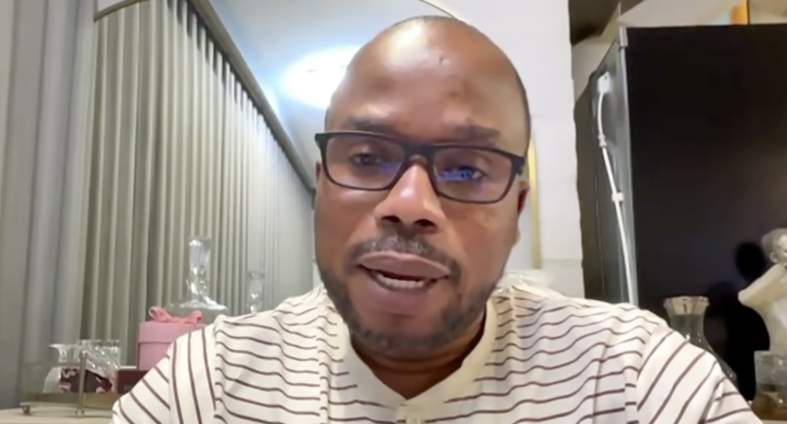
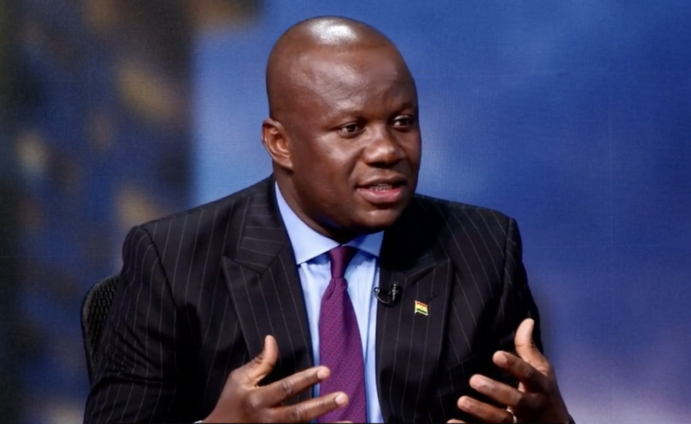
    Ghana’s High Commissioner to South Africa, Benjamin Quarshie, says no Ghanaian has lost his or her life in the ongoing xenophobic attacks.

    His remarks follow speculation that some Ghanaians may have been killed in ongoing attacks in parts of South Africa, after videos showing locals targeting foreigners went viral online around April 22-27.

    During an interview with Joy News PM Express Show with Evans Mensah on Wednesday, April 30, Mr Quarshie cited that according to official data presented to his outfit by South African authorities, no Ghanaian has lost their life.

    “So the current xenophobic actions that are going on, nobody has lost their lives. The statistics are there; they’ve given it to us,” he stated.

    He went on to further address a video which went viral, capturing a Ghanaian man who had been reportedly killed in East London. According to him, investigations conducted by his outfit showed that the man was attacked and fatally stabbed by armed robbers, stressing that his death was unrelated to a xenophobic violent attack.

    “In fact, there was a story going round about a Ghanaian who had lost his life in East London… We went there yesterday on the instructions of the Foreign Affairs Minister. We got to find out that the gentleman was stabbed to death by armed robbers, and it happened three weeks ago,” he said.

    He disclosed that the case came to the authorities’ attention only weeks later.

    “They just left his body there, and we only got to know after three weeks that the citizen had been stabbed to death,” he added.

    According to him, the Ghanian government has stepped in, calling for a thorough investigation into the fatal attack and halting an attempted mass burial until a full probe is completed.

    The envoy said the Ghanaian government has since intervened at the highest level. “The Foreign Affairs Minister has officially asked them to open an investigation. In fact, they wanted to mass-bury the gentleman, but the Minister again gave instructions that the gentleman should not be buried until a full investigation is completed,” he said.

    He stressed that authorities are seeking clarity and justice. “Until we know who killed him, why he was killed, and compensation given to his family,” he stated.

    Mr Quarshie confirmed that the victim’s family in Ghana has been identified and contacted. “We’ve spoken to them. It has been a difficult one for them, because this is the breadwinner in the family,” he said.

    Describing the circumstances of the killing, he added, “When you hear the story as to how they killed him, it’s really, really pathetic.”

    Despite the incident, he maintained that it should not be conflated with xenophobic violence.

    “But I’m sure that the era of Ghanaians or any other person being killed, and South African authorities just brushing it aside… that era is over,” he said while pledging government’s commitment to Ghana’s diplomatic mission.

    “We would ensure there’s accountability. Will account for every single individual, be it Ghanaian, be it any African person, Until justice is done, we will not stop,” he added.

    When the attacks started in SA and why ?

    News of the xenophobic attacks surfaced after videos of nationals were captured attacking foreign nationals showing harassment and intimidation of foreign nationals, including Ghanaians over economic strain including the over 40% unemployment, housing ptrssures, misinformation including reports of foreign nationals taking over SA markets while groups like Operation Dudula and “Put South Africa First” campaigns openly demand foreigners leave, documented or not.

    Is this the first time xenophobic attacks are happening in SA?

    The recent xenophobic attacks on foreigners by South AFrican nationas isn’t the first. SA has a history of violent xenophobic attacks dating as far back as 1998.

    In 1998, three foreign nationals were killed in Johannesburg. Two years later, seven more were killed in Cape Town.

    After a long quiet in the attacks, the worst in SA’s history happened in 2008 when sixty‑two (62) people lost their lives, 1,700 were injured, and about 100,000 were displaced nationwide cementing xenophobia as a recurring national crisis.

    In 2015, violence flared again after inflammatory remarks by the Zulu King. The unrest spread across the country, forcing the government to deploy the military to restore order.

    By 2019, riots erupted in Durban and Johannesburg, with Nigerian‑owned businesses being specifically targeted.

    More recently, between 2022 and 2025, smaller but persistent flare‑ups were linked to vigilante movements such as Operation Dudula. These included blocking foreigners from accessing health facilities in Gauteng and KwaZulu‑Natal, reflecting how xenophobia had become embedded in everyday life.
  • Migrants targeted in South Africa after gang rape outrage

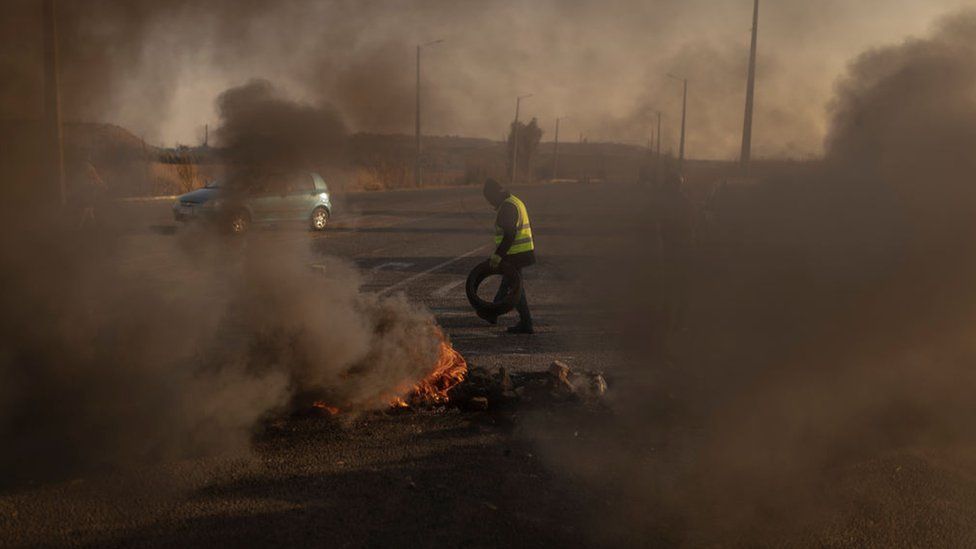
    Residents of a South African township near Johannesburg have set ablaze the homes of migrants they believe are illegally working in disused local mines.

    There has been widespread anger after a large group of miners were accused of the gang rape of eight women last week.

    Dozens of people are being held by police in connection with the assault but none have been charged with rape.

    In recent years, poverty has been one of the drivers of xenophobic attacks.

    Some believe – whether rightly or wrongly – that foreigners are the cause of many of their difficulties.

    People in Kagiso say the foreign miners – known locally as Zama Zamas – are responsible for crime in the area. The sexual assaults last week in nearby Krugersdorp enflamed tensions and residents called for a demonstration.

    Explaining the motivation behind the protest, one resident told the BBC: “I’m scared to go to the shops. Our police are not doing anything.”

    “Let them stop doing what they are doing,” another woman said, blaming the migrants for violent attacks.

    On Thursday morning, police, both on the ground and in helicopters, fired stun grenades and rubber bullets to disperse angry mobs who were chasing the miners.

    People armed with garden tools forced them to seek safety in old underground mine ventilation shafts.

    A journalist from national TV station eNCA described seeing naked men being marched through the area and then beaten.

    The police detained 22 men who had been targets of the violence in a move that may have been to prevent them being lynched.

    There are reports that one person has been found dead, but it is unclear if the death is related to the protest.

    Rocks, rubble and burning tyres have been used to blockade major roads in the township.

    People in Kagiso are now saying they fear reprisal attacks at night time.

    Smoke form a burning tyre
    IMAGE SOURCE,AFP Image caption, Barricades were set up on some of the roads in Kagiso

    Last week, women aged between 19 and 35, who were part of a group reportedly filming a music video near a disused mine, were attacked and raped by dozens of people.

    President Cyril Ramaphosa described the attack on the women as the “ugly and dark side of society”.

    The high levels of sexual violence in the country have led to frequent calls for more to be done to prosecute the perpetrators.

    At least 130 men have been detained following the assault but many are facing charges relating to their immigration status as well as the illegal possession of firearms and explosives.

    The police say they are waiting for DNA tests to be concluded before charging people with rape.

    The miners – most of whom come from neighbouring countries – work in unsafe and unregulated conditions in the abandoned mineshafts that surround Johannesburg.

    Source: BBC

  • Xenophobic attacks across DR Congo denounced

    Congolese Nobel Peace Prize winner Dénis Mukwege and Interior Minister Daniel Aselo have called for an end to reported attacks targeting ethnic Tutsis living in the Democratic Republic of Congo.

    Scenes of people carrying machetes while hunting for Tutsis in the capital, Kinshasa, and other major towns circulated on social media over the weekend.

    Audio and video clips were also shared that identified the whereabouts of Tutsis.

    The attacks come amid rising tensions between DR Congo and neighbouring Rwanda.

    DR Congo accuses Rwanda of backing Congolese rebels and has halted all trade and co-operation agreements.

    Rwanda has denied supporting the M23 rebel group – a Tutsi-led group.

    Last week, an anti-Rwanda demonstration resulted in the looting of Rwandan-owned shops in the eastern town of Goma.

    Source: BBC

  • South Africa apologizes to Ghanaians for xenophobic attacks

    The President of South Africa, Cyril Ramaphosa, has apologized to Ghana for the recent xenophobic attacks against some three Ghanaians in South Africa.

    He sent a special delegation made up of his ministers, Special Envoy, Jeffrey Thamsanqa Radebe, and his Advisor on International Affairs to convey his apologies to the President of Ghana, President Akufo-Addo and the people of Ghana.

    Read: South Africa apologises to Nigeria over xenophobic attacks

    The delegation met with President Akufo-Addo at the Jubilee House in Accra on Tuesday, September 17, 2019, and later addressed Ghanaian journalists at the Ministry of Information.

    Mr. Ramaphosa as his message conveyed to the President of Ghana indicated, expressed deep regrets about the recent attacks on African nationals in South Africa by South Africans.

    He observed that there was no justification for what has happened so far in South Africa.

    The renewed attacks in South Africa started on August 29, 2019 when shops belonging to foreign nationals were looted.

    President Ramaphosa expressed the belief even though economic challenges or poverty were the bottom line to the attacks, there was no need to attack fellow African nationals.

    Read: From elections to xenophobia: African countries grappling with fake news

    He has instructed his security agencies to ensure that the perpetrators are brought to book and Justice is served.

    The strong relationships between both nations should not be undermined by these relationships.

    He observed the compelling need for the promotion of the Agenda 2063 of Africa to ensure economic development for the continent.


    Source: Dailyguidenetwork.com

  • Xenophobic Attacks: South African government must implement urgent steps John Mahama

    Former President of Ghana, John Dramani Mahama is the latest to comment on the barbaric attacks meted on African nationals living in South Africa. John Mahama took to his official Facebook account to express his concern on recent attacks that have attracted mass debate.

    There has been several xenophobic attacks in South Africa, according to its citizens, immigrants are taking over their jobs and also contributing to the high rate of crimes in their country.

    Read: Xenophobic attacks: Ghana urged to cut ties with South Africa

    The recent attack and looting of foreign owned shops have led to governments repatriating their citizens. More than 67 Africans were killed in South Africa from 2000 to 2008. The recent attack has recorded 5 deaths with several properties destroyed.

    Former President, John Dramani Mahama wrote;

    “The xenophobic attacks on Africans in Alexandra, South Africa are condemnable and run absolutely contrary to all our efforts at continental integration. Clearly, and as I have said in the past, the perpetrators of these gruesome attacks are ignorant of the continental solidarity that was required to defeat apartheid and give birth to the new South African nation. Certainly the South African Government must take responsibility for these inhuman actions and implement urgent steps to prevent these attacks from recurring in the future.”


    Source: www.ghanaweb.com