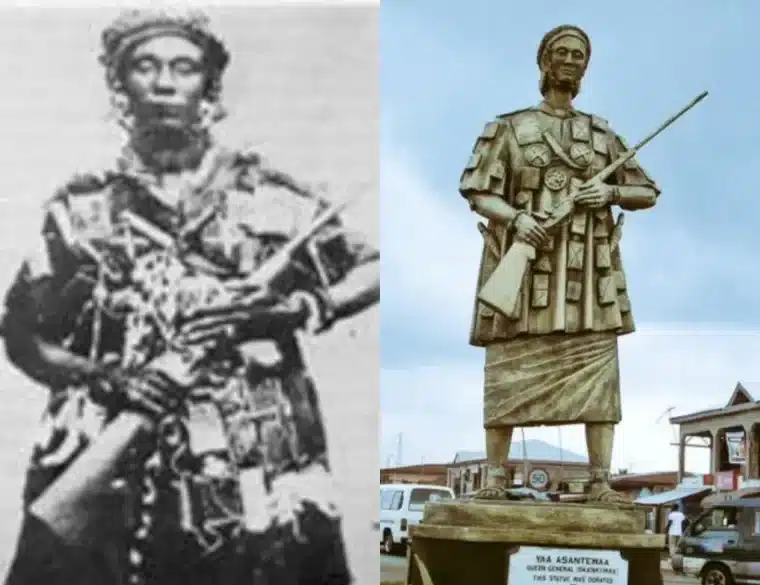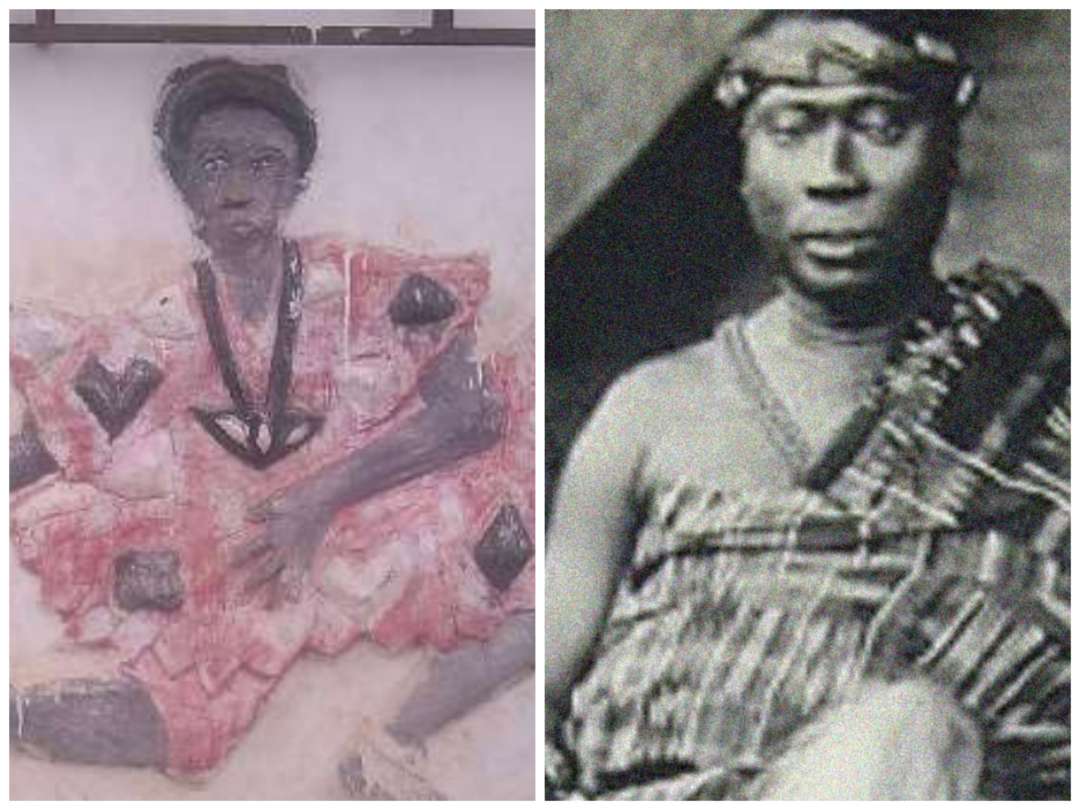
I am the great grand daughter of this great woman but I write this purposely to preserve history devoid of any emotional sentiments and personal association with the character.
Dode Akaabi, the grand daughter of Wettey, the leader of the Obutus(Awutus) one of the Guan tribes and the Guans as a whole, and a princess of Obutus (Awutus) married one of the king of the Gas, Mampon Okai also known as Dua Kwei and bore him a son by name, Okaikwei.
The Obutus (Awutus) established a good relationship with the Gas who before their encounter with the Obutus(Awutus) had their “Wulomos”( Spiritual leaders) leading them. The Obutus had kings and the association of the Gas with them led to their commencement of Kings ruling instead of the Wulomos.
Till now, though the Awutus are Guans, they are also considered as Gas because of Dode Akaabi’s rule in the Ga land and the miscegenation between the Gas and the Obutus (Awutus). The Awutus and Senya Bereku was assimilated into the family of Naiwe in the Ga land and till date, the ruling families of Awutu and Senya Bereku bear the title of ” Nai” in recognition of their blood relationship with the Gas.
The Obutus (Awutus) also inter married with the Akwamus and other tribes and so there are some historians that refer to the Akwamus as Guans. In 1693, the Asamani of Akwamu who is believed to be from the Asamani clan in the Obutu( Awutu)/ Guan tribe led a raid and seized Osu Castle from the Danish colonists. There is also the ” Tutu” shrine in Bereku where it is believed that Manu Kotosii, the mother of Osei Tutu1 went to seek help from the Tutu shrine for a son whom was named Osei Tutu 1.
Dode Akaabi, wife of the Ga mantse, Mampon Okai also known as Dua Kwei and mother of Okaikwei ruled as the first female king of the Gas after the demise of Mampon Okai due to the fact that, the heir to the throne, Okaikwei was too young at the time of the demise of the King. Her rule was repugnant to the Ga customary law of succession which only allowed male rulers. She was the caretaker of the late king ‘s regalia and paraphernalia and doubled as his wife.
Dode Akaabi emerges as a formidable figure whose rise as the first female political leader of the Gold Coast opened a new vistas of power to her gender. She is generally believed to have introduced much display of jewellery and colourful attire into the chieftains institution.
Some even attribute the custom of sitting on stools to Dode Akaabi. Prior to her rule, stools were mainly taken into war and held aloft to lift the spirit of the troops; popularly regarded as having no authority from the deity. She demanded to sit on the war stool to visually symbolize her authority over her people.
She forbade men from using the expression, “bulu” (fool) in reference to their wives. And when they did, she ordered that a live lion or tiger be captured for her just to deter the men from disrespecting their wives.
She led the Guans which comprises the Obutus, Lartehs, Kyereponis, Krachis, Guans, etc to secure so many lands which included Ayawaso, Nsakina, Ablekuma, Amasaman, etc and even helped the Akwamus in so many wars. She had her personal war stools which present day are in Bereku and Larteh which she took to wars and trained most of the Akwamu warriors including Nana Yaa Asantewaa, a renowned Ashanti warrior.
It’s a pity that this HEROINE who is revered amongst her people have been left untouched. I only seek to tell the forgotten story.
The Forgotten People And Heroine Part 2
Oral tradition has it that, the founding fathers of Awutu in the Central Region of Ghana migrated from inland Volta, along the Volta river till they reached the sea shore trekking westward.
They halted at a place called Awutu Ampi(Awutu Rocks) which is sometimes described as Bleku Abo(sky-god Bleku’s rock) at Lanma, about eleven miles west of Accra which today forms the boundary line between Accra and Awutu, popularly called Mile eleven. It is believed that the Awutu arrived somewhat later than the Ga Mashi who settled near Nkorang(Anglicized Accra). The dialect of the Awutu is Guan variants of which are spoken in Gonna and Lartehs.
The word “AWUTU AMASA” which means the three Awutu states refers to Awutu-Effutu-Senya district. These three states have so many things in common. The immigrant Awutu people arrived under the leadership of King Whettey who had a lot of gold and brought his wealth with him( see M.J. Field “Social organization of the Ga people” 1940, p. 143).
At Awutu Ampi, they camped on the Dampa hill and were organised in local patrilineal groups. The leading ones were known as “Dode, “Shiapa” and “Pete” and they worshipped the gods, “Odzobi” , “Afi Tutu” and “Odai Tutu” respectively.
The immigrant leader belonged to the Dode lineage and possessing a stool(Pru) which is round with three handles, coated white annually and being kept in a room of its own apart from the two wars stools, one of which is in Larteh presently. Tradition indicates that the relationship between the various immigrant groups was cordial for each had something valuable to offer the other.
The Adangmes were famous potters, the La were skilled makers of fire, the Ga Mashi supplied maize, the Awutus were renowned rain makers and the Akwamus specialised in warfare and hired themselves out as mercenaries.( see M.J. Field, “Awutu Bereku Story”. Published by Speed will press, 1962, of 4.)
The Ga Mashie under Ayi Kushi coveted the gold trinkets of King Wettey with which he was richly decorated and transferred their allegiance from Ayi Kushi to the Awutu king. This brought about constant quarrels between the two sides till they both died and were succeeded.
Later, Dode Akaabi got married to a rich Ga slave dealer by name, Okai Mampong( already in the part 1).
|The HEROINE, Dode Akaabi.|
“DODE” means ancient and it has no relation with the Adangbe name, Dede.
Her ascension to power as the first major female figure in Ga and indeed Gold Coast, history should certainly rank as a remarkable event attesting to the skills of this powerful personality. Dode Akaabi certainly displayed the ruthless decisiveness that has marked the careers of admired statesmen the world over. Her alleged atrocities aside, Dode Akaabi appears to have kept the kingdom intact.
However, the manner of her death indicates a deeper degree of dissent among her subjects. Her regency and greatness is perhaps best analyzed in the context of her role in the evolution of chiefship in the Gold Coast. Until her ascension to power, chieftancy appeared to have been a male dominated affair.
The chief in the theocratic state of Accra was by definition also a high priest or “wulomo”. As the high priest could only be male, Dode Akaabi’s rise to power necessarily entailed a schism between the powers of the “wulomo” and that of the King; this marked a secularization of Ga-Adangme politics and the concentration of religious authority in the hands of the “wulomei”( plural of wulomo). Since her authority, unlike her predecessors was no longer derived from privileged access to the deity, She had to formulate new methods of governance.
This she did principally through the previous untried method of direct legislation which appears to have drawn the ire of her subjects. She brought a new magnificence to royalty by combining western culture with new standards of culture. She wore gold ornaments just as king Wettey. She emerges as a formidable figure whose rise as the first female political leader of the Gold Coast opened new vistas of power to her gender. She is generally believed to have introduced much display of jewellery and colourful attire into the institution of Chieftancy and some even attribute the custom of sitting on stools to Dode Akaabi. Prior to her rule, stools were mainly taken to war and held aloft to lift the spirit of the troops.
She demanded to sit on the war stool to visually symbolize her authority over her subjects. She led her people to win so many wars and one of her war stools till date remains in the palace of Lartehs. It is accounted that, she led her people to war and were met by rain on their way back. She asked that the stool be taken to the Lartehs palace to prevent it from being beaten by rain and then moved on with her people.
The people of Awutu under Dode Akaabi and other great rulers settled and ruled lands which they discovered like Ayawaso, Apetumi near the Apara hill, Obutu Ofankor, Obutu Dzrano, Awutu Kpehe, present day Kasoa, Kwabenya, Awutuakwa near Odorkor, Gbawe, Nsakina, Ablekuma, Anyaa amongst others. These are all places that were discovered and ruled by the Awutus. (Op. Cit. 1962,pg.3).
|The Tragic Death Of Dode Akaabi.|
Later, her lust for power increased considerably as she grew older and became a tyrant who could punish crime without mercy, often against the Ga people, who she accused of murdering her husband. One day, she ordered the deepening of a well at the foothills of a rock with their bare hands. As the hole deepened, they encountered hard rocks and decided to rebel; so they sent word to her that there was someone obstructing their work. Legend has it that Dode, enraged beyond endurance dashed to the workplace and quickly descended into the well to deal ruthlessly with the intruder. The rebels then closed in and stoned her to death and filled the well with stones.( somewhere around Nsakina stands that well).
The myth is that, her ghost lived in the pit and to pacify her, annual sacrifices were performed till 1939,when a famous medicine man from Northern Ghana was commissioned by the Awutu elders to exorcise the her spirit out of the well and brought among its kinsfolk. The invisible ghost was seated upon a white horse and led in procession to Awutu where it was bidden to rest in peace.( Op. Cit. 1962, pg. 6)
|The Fall of The Awutus.|
Her son, Okaikoi succeeded the Ga throne of his father, Mampong Okai. Since he was not a member of the Dode-patrilineage, he was not eligible to succeed in Awutu. The Akwamuhene who was watching this dangerous event unfold, lost no time as he rushed his troops to take positions around the Okai koi hills during which many of the Awutus and the Gas deserted him. This unfortunate situation compelled Okai Koi to commit suicide on the battlefield by blowing himself up with a gun. Fear led to the scattering of the people and today, most of the Awutus can be found in the Awutu/Effutu/Senya Bereku traditional area in the Central Region of which main Awutu towns like Bawjiase, Obrachire, Bereku, amongst others.
Reference.
Http://gadangmenikasemoasafo.wordpress
http://www.ghanaculture.gov.gh/index1
Credit.
Kwame Ampene( founder of the Guan historical society( writer of the history of the Awutus)
Source: modernghana.com via Mercy Asamani
mercedesrowe.blogspot.com
Columnist@modernghana
mercyasamani@yahoo.com
0263640914
DISCLAIMER: TIGPost.co will not be liable for any inaccuracies contained in this article. The views expressed in the article are solely those of the author’s, and do not reflect those of The Independent Ghana.