In less than a month, China has reported 60,000 COVID-related fatalities, the first significant death toll since the country abandoned its zero-COVID policy.
China reported 59,938 COVID-related deaths between December 8 and January 12, according to officials.
Despite there being evidence of hospitals and crematoriums being overrun, China has frequently been accused of underreporting coronavirus deaths.
Most of those who passed away were older than 80 and had underlying medical conditions.
The figures, include 5,503 deaths caused by respiratory failure directly due to the virus, and 54,435 caused by underlying conditions combined with the virus.
The real total is likely to be higher because which the figures refer only to deaths recorded at medical facilities.
Last month, Beijing changed the way it categorises Covid deaths, only counting towards its total those who died of respiratory failure directly induced by the virus.
The World Health Organisation criticised the definition, describing it as “too narrow”.
Beijing has always contended that its figures are accurate, calling on the WHO to “uphold a scientific, objective and just position”.
Officials said that the peak of patients hospitalised with severe Covid was in early January, although the number subsequently remained high.
They said that they would continue to monitor the situation in rural areas, focusing on early detection and prioritising treatment of the most vulnerable.
Local health officials say, nearly 90% of people in Henan, China’s third most populous province, are now infected with Covid.
Kan Quancheng, a provincial official, revealed the figure, which amounts to approximately 88.5 million people, at a press conference.
After abandoning zero-Covid policies in December, China is dealing with an unprecedented surge in cases.
The move came in response to rare protests against lockdowns, quarantines, and mass testing.
Mr Kan did not provide a timeline for when all of the infections occurred, but given that China’s previous zero-Covid policy kept cases to a minimum, the vast majority of Henan’s infections are likely to have occurred in the last few weeks.
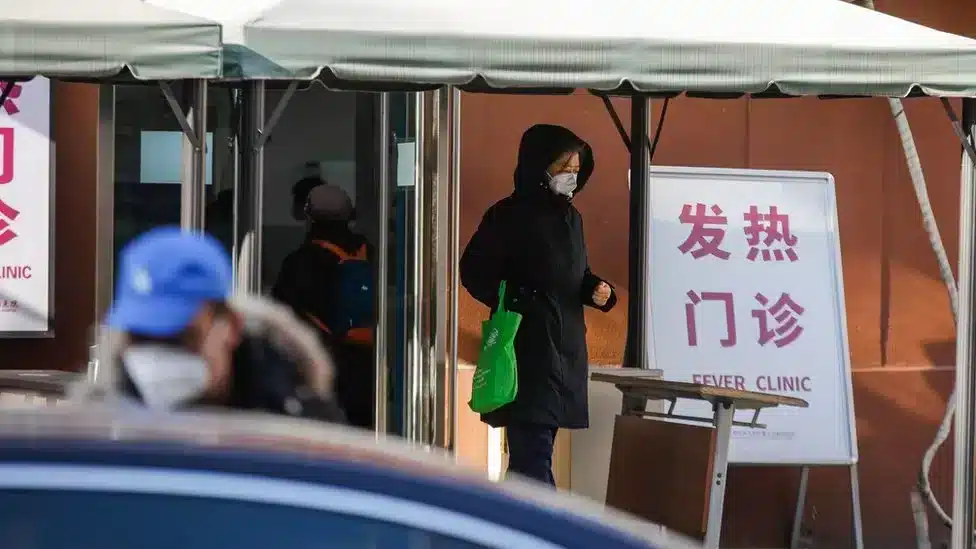
He said visits to fever clinics in Henan province peaked on 19 December “after which it showed a continuous downward trend”.
The Henan provincial figures are in stark contrast to Covid figures from the central government
According to official data, just 120,000 people in the country of 1.4 billion have been infected and 30 died since the shift in Covid policy.
Meanwhile on Sunday, authorities reported three Covid deaths in mainland China, one more than the day before.
However, with the definition of Covid deaths narrowed and mass testing no longer compulsory, government data is no longer reflective of the true scale of the outbreak.
Other local and provincial officials have also been providing very different data to that from the central government. On Christmas Eve, a senior health official in the port city of Qingdao reported that half a million people were being infected each day. Those case figures were swiftly removed from news reports.
Meanwhile Chinese health officials said they would not include Pfizer’s antiviral Covid medicine Paxlovid in its basic medical insurance schemes as a result of the high price quoted by the US firm.
The drug, temporarily covered byChina’s broad healthcare insurance scheme until 31 March, has seen a sharp increase in demand since China’s Covid cases surged last month.
Pfizer would continue to collaborate with the Chinese government and all relevant stakeholders to “secure and adequate supply” of the medicine in China, the company said in a statement.
On Sunday, Beijing also lifted mandatory quarantine for all international arrivals and opened its border with Hong Kong.
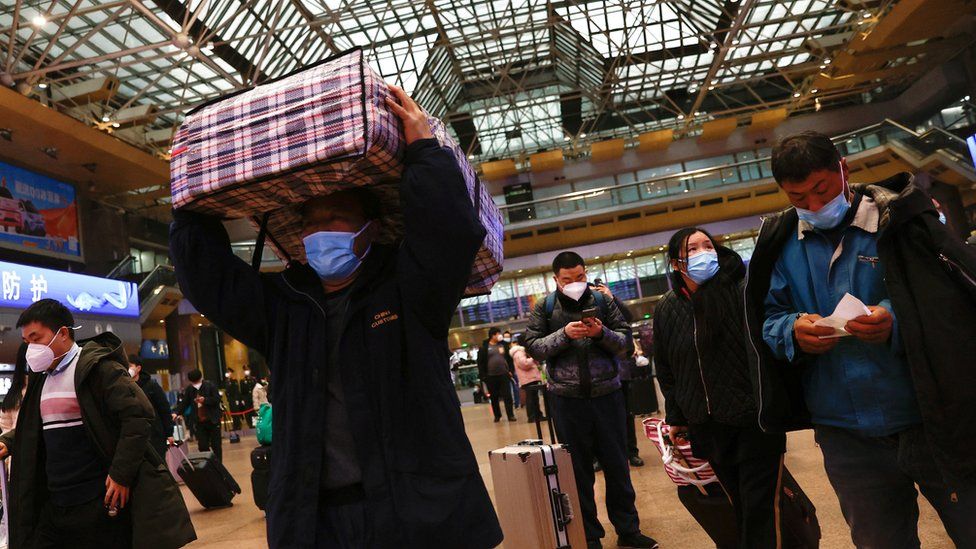
In the first wave of pre-holiday travel, official data showed that 34.7 million people travelled domestically on Saturday. This represented an increase of more than a third compared to last year, according to state media.
Infections are expected to soar as the country celebrates Lunar New Year later this month, with millions expected to travel from big cities to visit older relatives in the countryside.
Overall, more than two billion individual journeys are expected to take place, officials have said.
On the east coast of the United States, as well as in Brazil, Argentina, and the Caribbean, ken place.
Cities throughout Europe, Africa, and Asia have also celebrated the start of 2023 with firework displays.
Cities across Europe, Africa and Asia have also held firework-filled festivities marking the start of 2023.
In China, huge crowds gathered to take advantage of recently-lifted restrictions.
Until recently, the country had been following a zero-Covidapproach, continuing to enforce strict lockdowns even as other nations around the world appeared to return to normal.
However, the disease is surging across the country, and many places are placing travel restrictions on travellers from China – Australia has become the latest to do so.
The president of Taiwan, Tsai Ing-wen, used her New Year address to offer help to China to combat the recent surge in Covid cases.
In London, there was a drone display as part of a tribute to the late Queen Elizabeth, while in Edinburgh, thousands enjoyed the first full Hogmanay celebrations in three years.
There was also a tribute to Ukraine – with the London Eye lit up in blue and yellow, the colours of the Ukrainian flag.
In Ukraine, the conflict with Russia continued as air raid alerts sounded shortly after midnight and there were further strikes on Kyiv, officials said. There were no reports of injuries.
It came shortly after new year addresses from both President Vladimir Putin and President Volodymyr Zelenksy.
Mr Putin delivered a New Year address flanked by soldiers clad in full uniform, saying the country’s future was at stake.
Directly addressing soldiers in Ukraine, the 70-year-old leader praised their efforts since the invasion was launched in February, and told them that “historical rightness” was on their side.
Meanwhile, Mr Zelensky addressed Russians in their own language, telling them their president was “hiding behind you, and he’s burning your country and your future”.
And he pledged to Ukrainians that his troops would fight until “victory”.
“We fight as one team – the whole country, all our regions. I admire you all. I want to thank every invincible region of Ukraine,” he said.
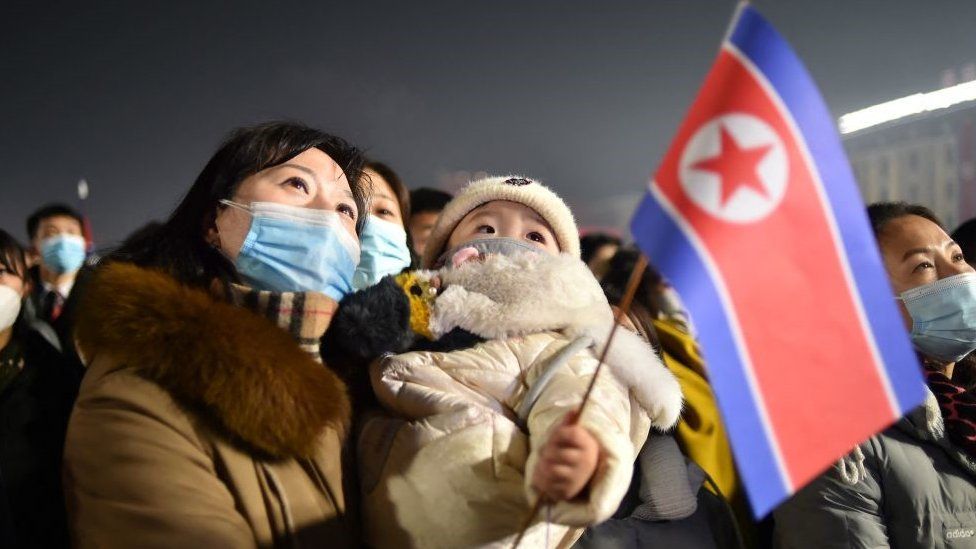
Image caption, A flag-raising ceremony in Pyongyang, North Korea
Meanwhile, the North Korean leader, Kim Jong-Un, pledged to significantly increase the production of nuclear weapons. He also tested his first ballistic missile of the year early on New Year’s Day.
Croatia started 2023 with a new currency, joining the eurozone.
As it dismantles large parts of its repressive zero-Covid policy, China is readying for an unprecedented wave of Covid-19 cases, with a leading expert warning that Omicron variants were “spreading rapidly” and signs of an outbreak rattling the country’s capital.
Authorities announced Monday that the “mobile itinerary card” health tracking function would be deactivated the following day.
The system, which is distinct from the health code scanning system still required in a limited number of places in China, used people’s cell phone data to track their travel history in the previous 14 days in an attempt to identify those who had visited a city designated by authorities as “high-risk.”
It had been a point of contention for many Chinese people, including due to concerns around data collection and its use by local governments to ban entry to those who have visited a city with a “high-risk zone,” even if they did not go to those areas within that city.
But as the scrapping of parts of the zero-Covid infrastructure come apace, there are questions about how the country’s health system will handle a mass outbreak.
Throughout the weekend, some businesses were closed in Beijing, and city streets were largely deserted, as residents either fell ill or feared catching the virus. The biggest public crowds seen were outside of pharmacies and Covid-19 testing booths.
Media outlet China Youth Daily documented hours-long lines at a clinic in central Beijing on Friday, and cited unnamed experts calling for residents not to visit hospitals unless necessary.
As China moves away from zero-Covid, health experts warn of dark days ahead
Health workers in the capital were also grappling with a surge in emergency calls, including from many Covid-positive residents with mild or no symptoms, with a hospital official on Saturday appealing to residents in such cases not to call the city’s 911-like emergency services line and tie up resources needed by the seriously ill.
The daily volume of emergency calls had surged from its usual 5,000 to more than 30,000 in recent days, Chen Zhi, chief physician of the Beijing Emergency Center said, according to official media.
Covid was “spreading rapidly” driven by highly transmissible Omicron variants in China, a top Covid-19 expert, Zhong Nanshan, said in an interview published by state media Saturday.
“No matter how strong the prevention and control is, it will be difficult to completely cut off the transmission chain,” Zhong, who has been a key public voice since the earliest days of the pandemic in 2020, was quoted saying by Xinhua.
Changes, and concerns
The rapid rollback of testing nationwide and the shift by many people to use antigen tests at home has also made it difficult to gauge the extent of the spread, with official data now appearing meaningless.
Authorities recorded 8,626 Covid-19 cases across China on Sunday, down from the previous day’s count of 10,597 and from the high of more than 40,000 daily cases late last month. CNN reporting from Beijing indicates the case count in the Chinese capital could be much higher than recorded.
One note seen on a residential building in Beijing is indicative of the larger situation, reading: “Due to the severe epidemic situation in recent days, the number of employees who can come to work is seriously insufficient, and the normal operation of the apartment has been greatly affected and challenged.”
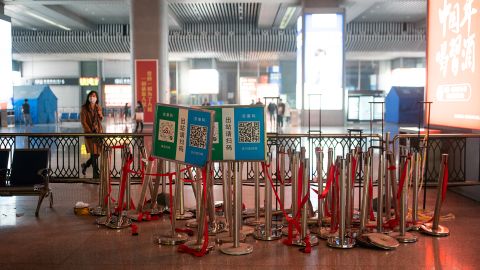
Posters used for health code scanning and barriers used for health screening are seen dismantled at Nanjing South railway station on Friday in Nanjing, China. Yifan Ding/Getty Images
The country is only days out from a major relaxation of its longstanding zero-Covid measures, which came as a head-spinning change for many Chinese living under the government’s stringent controls and fed a longstanding narrative about the deadliness of Covid-19.
Last Wednesday, top health officials made a sweeping rollback of the mass testing, centralized quarantine, and health code tracking rules that it had relied on to control viral spread. Some aspects of those measures, such as health code use in designated places and central quarantine of severe cases, as well as home isolation of cases, remain.
Outside experts have warned that China may be underprepared to handle the expected surge of cases, after the surprise move to lift its measures in the wake of nationwide protests against the policy, growing case numbers and rising economic costs.
While Omicron may cause relatively milder disease compared to earlier variants, even a small number of serious cases could have a significant impact on the health system in a country of 1.4 billion.
Zhong, in the state media interview, said the government’s top priority now should be booster shots, particularly for the elderly and others most at risk, especially with China’s Lunar New Year coming up next month – a peak travel time where urban residents visit elderly relatives and return to rural hometowns.
Health authorities on Sunday ordered improvements in medical capabilities in rural areas by the end of the month.
Measures to be undertaken include increasing ICU wards and beds, enhancing medical staff for intensive care and setting up more clinics for fevers, China’s National Health Commission said in a statement.
‘Over-hyping’
Meanwhile, experts have warned a lack of experience with the virus – and years of state media coverage focusing on its dangers and impact overseas, before a recent shift in tone – could push those who are not in critical need to seek medical care, further overwhelming systems.
Bob Li, a graduate student in Beijing, who tested positive for the virus on Friday said he wasn’t afraid of the virus, but his mother, who lives in the countryside, stayed up all night worrying about him. “She finds the virus a very, very scary thing,” Li said.
“I think most people in rural China may have some misunderstandings about the virus, which may come from the overhyping of this virus by the state in the past two years. This is one of the reasons why people are so afraid,” he said, adding that he still supports the government’s careful treatment of Covid-19 during the pandemic.
There are clear efforts to tamp down on public concern about Covid-19 – and its knock-on effects, like panic buying of medications.
China’s market watchdog said on Friday that there was a “temporary shortage” of some “hot-selling” drugs and vowed to crackdown on price gouging, while major online retailer JD.com last week said it was taking steps to ensure stable supplies after sales for certain medications surged 18 times that week over the same period in October.
A hashtag trending on China’s heavily moderated social media platform Weibo over the weekend featured a state media interview with a Beijing doctor saying people who tested positive for Covid-19 but had no or mild symptoms did not need to take medication to recover.
“People with asymptomatic inflections do not need medication at all. It is enough to rest at home, maintain a good mood and physical condition,” Li Tongzeng, chief infectious disease physician at Beijing You An Hospital, said in an interview linked to a hashtag viewed more than 370 million times since Friday.
They started writing to him shortly after officials announced that key components of zero-Covidwould be abandoned.
Thousands rushed to China’s hero doctor’s social media account to inform him of the news. They poured their hearts out to him, as if they were at the graveside of a family elder.
“On the train, I suddenly remembered you and burst into tears. Dr Li, it’s over now, it’s dawn. Thank you,” said one.
Another wrote: “I’ve come to see you and let you know – the dust has settled. We’re reopening.”
Dr Li Wenliang was the 33-year-old ophthalmologist who’d been among the first to warn people about a new novel coronavirus in Wuhan – the central Chinese city where the first case was detected at the end of 2019.
He was punished by Chinese authorities for spreading “false statements” and later died from Covid as he battled to save patients. His death prompted public grief and anger.
What followed was zero-Covid – Xi Jinping’s campaign to completely eradicate the virus in China. Leaders held it up as a triumph as hospitals elsewhere were overwhelmed. But over time it became a nightmare as restrictions dragged on while other countries reopened following successful vaccination drives.
So after Wednesday’s announcement that many of the most coercive parts of China’s policy were being scrapped, Dr Li’s page became a “wailing wall” for exhausted, burnt-out people to reflect.
From Guangdong in the south to Yunnan and Sichuan further west, people expressed relief and hope but also grief and loss.
“My most youthful college years all disappeared in the pandemic. During that time I went from bright to depressed to helpless,” one user wrote.
“It’s a lie to say there was no impact for three years, it’s a lie to say that it doesn’t matter and no one cares.”
China’s zero-Covid policy kept the country’s death rate low. The country has officially reported around 5,200 deaths in the pandemic while the US has recorded over one million.
But zero-Covid exacted a punishing toll in other ways. There were sudden lockdowns that saw some people struggle to get enough food. People with Covid were separated from family and forced into centralised quarantine. Restrictions banned travel and gatherings. Livelihoods suffered.
On Dr Li’s wall, many questioned what their sacrifice and hardship had been for.
“I took the subway this morning and for the first time did not have to look at the health code,” wrote one user from Sichuan.
“Some people say the epidemic has only started now after three years of hard work.So was it a waste of time? What of all those who paid a huge price, and even their lives for it?”
Another wrote that if he had defied Covid orders only last week, he would have been arrested and hauled off to jail.
“If someone had said to loosen restrictions one month earlier, they would have been punished. Dr Li is not the first, nor will he be the last,” one user wrote.
The loosening of restrictions follows the most widespread protests seen in China for decades.
Some on Wednesday referenced those actions on Dr Li’s page. “We shouted and fought, but fortunately everything will end,” one person wrote.
Others expressed trepidation for China’s elderly population, who have relatively low rates of vaccination.
“Dr Li, the real test of the three-year epidemic has begun. The epidemic is not as serious as yours, but I am exhausted,” one person wrote.
Another asked: “Dr Li, here I come to you again. Our city has been released from lockdown. Many people are shouting that the epidemic is finally over after three years.
Despite high daily case numbers, Chinahas signalled a shift in its Covid stance by moving to relax some virus restrictions.
On Thursday, dozens of districts in Shanghai and Guangzhou, both of which have seen an increase in cases, were released from lockdown.
The country’s vice-premier also declared that it was in a “new situation.”
It comes as China faces widespread opposition to its zero-Covid policy.
The unrest was triggered by a fire in a high-rise block in the western Xinjiang region that killed 10 people last week. Many Chinese believe long-running Covid restrictions in the city contributed to the deaths, although the authorities deny this.
It led to days of widespread protests across various cities, which have since ebbed amid heavy a heavy police presence.
Restrictions in major cities like Guangzhou were abrupted lifted on Wednesday, hours after the city saw violent protests that resulted in clashes between police and protesters.
A community in the capital Beijing also allowed Covid cases with mild symptoms to isolate at home, according to a Reuters report – a far cry from protocols earlier this year which saw entire buildings and communities locked down, sometimes as a result of just one positive case.
Other major cities like Shanghai and Chongqing also saw some rules relaxed.
It comes as one of China’s most senior pandemic officials, vice-premier Sun Chunlan, said the virus’ ability to cause disease was weakening.
“The country is facing a new situation and new tasks in epidemic prevention and control as the pathogenicity of the Omicron virus weakens, more people are vaccinated and experience in containing the virus is accumulated,” she said, according to a Reuters report.
This comes in stark contrast to an earlier message from authorities that the country needed to maintain a strict zero-Covid policy.
Former state media editor Hu Xijin, who now offers pro-Communist Party comments on Twitter, insisted the moves showed China was now “speeding up to cast aside large-scale lockdowns”.
Following the lifting of lockdown measures in many parts of Guangzhou, Lijin Hong, an associate professor at Sun Yat-sen University, said it would “take a while for the city to recover. Yet is is awesome to see Guangzhou city again.”
China has in recent days recorded its highest number of daily Covid cases since the pandemic began – with more than 36,000 cases recorded on Wednesday.
However, the numbers are still tiny for a country of 1.4 billion people and officially just over 5,200 have died since the pandemic began.
That equates to three Coviddeaths in every million in China, compared with 3,000 per million in the US and 2,400 per million in the UK, although direct comparisons between countries are difficult.
Alongside the people gathering in the streets, a major element of protest in China inevitably takes place on social media – which is heavily censored.
But the “Great Firewall” – as the vast regime of automated and human censors is called by some – is by no means flawless, and protest posts do make it through and circulate before being restricted.
BBC News has seen examples of some images with lists of demands being sent around social media. Some of the demands include calls to:
Abolish pandemic monitoring measures such as mandatory mass testing and digital health codes for work and travel
Reverse the policy of closing schools, restaurants, shops or other businesses in the name of preventing Covid spreading
Correctly publicize the danger of the virus “without exaggeration or alarmist talk”
Apologise for “unreasonable” and “unscientific” epidemic prevention strategies
Investigate and prosecute local government officials, testing companies and others involved in Covid restrictions over allegations of corruption, negligence and abuse of power
The deadly firein Urumqi – a city on the western Xinjiang region that has been under Covid restrictions since August – was the trigger for the weekend’s protests. Although state media has insisted people in the block of flats where the fire broke out were able to leave their apartments, many people believe Covid measures may have contributed to the deaths.
But anger at the consequences of zero-Covid had already been building for many months, following other deaths and incidences of suffering that people say could have been avoided:
Earlier this month, a family in Zhengzhou said their baby died because her ambulance was delayed by Covid restrictions
In September, Chengdu residents were barred from fleeing their homes during a 6.6 magnitude earthquake which killed 65 people
Also that month in Guizhou, a bus ferrying residents to a mandatory quarantine centre crashed, killing 27 passengers
In October, a 14-year-old girl in Henan forced into quarantine died after she developed a fever and couldn’t get treatment in the centre, her father said
During Shanghai’s lockdown in April, people complained about the lack of food and difficult conditions faced by elderly people who were forcibly taken to quarantine centres
Chinese leader Xi Jinping has insisted zero-Covid is about saving lives and China has officially recorded just over 5,200 deaths from the virus – far fewer than in other countries.
Angry protests across China have compounded the financial sector’s fears of rising Covid cases and the continuation of Beijing’s strict “zero-Covid” policy.
Stocks: Hong Kong’s Hang Seng shed 4% as markets opened on Monday. China’s CSI 300 index is down more than 2%. Stocks in Australia, South Korea and Japan were also experiencing losses.
Oil: Oil suffered its lowest level of the year. Benchmark brent crude is down 2% at $81.70 per barrel. West Texas Intermediate was down 2.5% at $74.36 per barrel.
Futures: The Nasdaq and S&P 500 futures were also down, a hint that US markets could follow Asia’s lead later in the trading day.
Currency: China’s onshore yuan weakens to 7.23 against the US dollar in early trading, the weakest level since 10 November.
As we’ve reported, China is seeing record case numbers at the moment, and many analysts are concerned about China’s shrinking economy.
China’s National Bureau of Statistics reported profits fell 3.0% in the first 10 months of 2022 compared to the previous year.
The World Cup has received a lot of attention in Chinese state media this week, but the matches are fueling frustrations that people in the country are being left out of the festivities.
Aside from China’s men’s national team failing to qualify, scenes of maskless celebrations and raucous gatherings in Qatar have irritated viewers, who have been discouraged from gathering to watch the games.
Many people have used the World Cup to express their displeasure with China’s current policies. To prevent the virus from spreading, the country maintains a zero-Covid policy, in which entire communities are shut down over single cases of the virus.
China is currently experiencing its worst outbreak in six months, and localised lockdowns have surged over the last couple of weeks. In the past 24 hours, China has recorded more than 28,000 new cases; these are in every single provincial-level region.
Football is very popular in China. President Xi Jinping is known for being a lover of the sport, and he has spoken previously of it being a dream for the country to win the World Cup .
As a result, matches are being shown on national broadcaster CCTV, and state media have sought to amplify China’s “presence”. The Global Times has reported on how China-made products “ranging from buses to the [Lusail] stadium, and even air conditioning units are well represented at the event”.
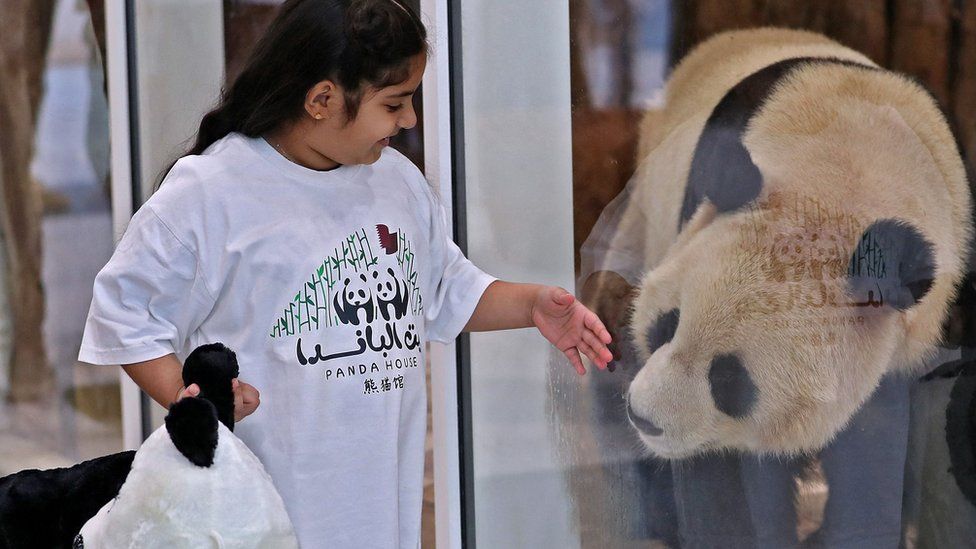
Leading outlets such as CCTV have also promoted the presence of Chinese flagbearers at the opening ceremony, and how two giant pandas arrived in Qatar to “meet” visitors arriving for the event.
IMAGE SOURCE,GETTY IMAGES Image caption, A child plays with one of the Chinese giant pandas given to Qatar to mark the start of the World Cup
But it is evident that Covid-19 has put a damper on the celebrations. In major cities, outbreaks have resulted in non-essential businesses once again closing, and people being urged to limit their movements.
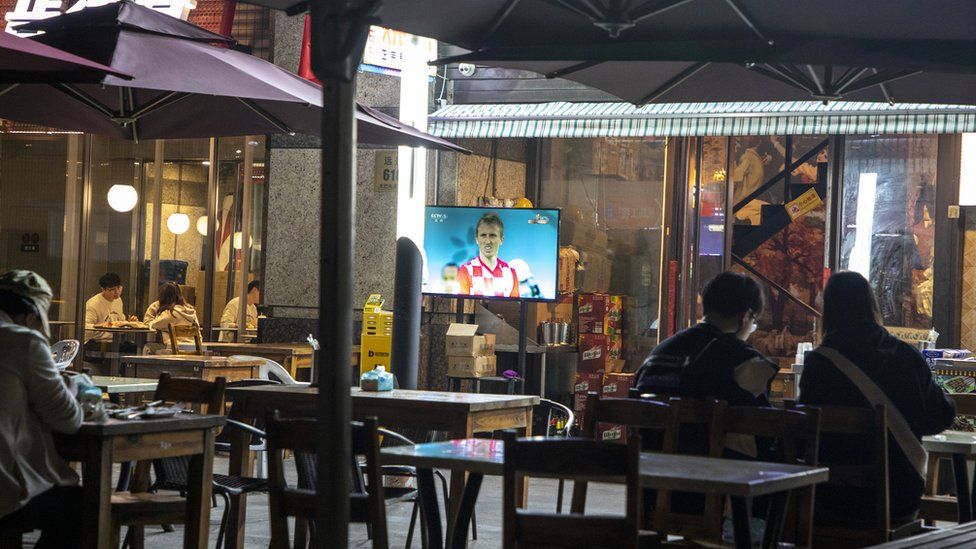
With no bars to go to, the Global Times newspaper says some fans are “choosing to watch the games at home with their families”. Others have also reportedly taken to camping sites.
IMAGE SOURCE,GETTY IMAGES Image caption, This was the scene in a sparsely filled pub in Shanghai while the World Cup was being shown
Many are feeling acute isolation watching this year’s event.
An open letter questioning the country’s continued zero-Covid policies and asking if China was “on the same planet” as Qatar quickly spread on mobile messenger WeChat on Tuesday, before being censored.
Comments on the Twitter-like Weibo social network are rife from viewers who speak about how watching this year’s matches is making them feel divided from the rest of the world.
Some speak of their perception that it is “weird” to see hundreds of thousands of people gathering, without wearing masks or needing to show evidence of a recent Covid-19 test. “There are no separate seats so people can maintain social distance, and there is nobody dressed in white and blue [medical] garb on the sidelines. This planet has become really divided.”
“On one side of the world, there is the carnival that is the World Cup, on the other are rules not to visit public places for five days,” one says.
Some say they have had difficulty explaining to their children why the scenes from the World Cup are so different to those people face at home.
There are many in China, though, who have been critical of countries overseas opening up while the World Health Organization still calls the Covid-19 virus an “acute global emergency”.
However, there is no end in sight to China’s existing measures. This week, the National Health Commission spokesman “warned against any slacking in epidemic prevention and control” and urged “more resolute and decisive measures” to bring cases under control.
Local governments in major cities have reintroduced mass testing and travel restrictions and ultimately delivered a message that people should try to stay at home.
But after three years of such measures, people are frustrated, resulting in protests in the last month in both the cities of Guangzhou and Zhengzhou.
Crowds of residents in Guangzhou, southern China’s industrial metropolis, escaped a mandatory lockdown and clashed with police, as rage over strict coronavirus controls erupted.
Some are seen overturning a police vehicle and tearing down Covid control barriers in dramatic footage. Riot squads have been dispatched to the area.
It comes on the heels of Guangzhou’s worst Covid outbreak since the pandemic began.
In the face of dismal economic data, China’s zero-covid policy is under severe strain.
Tensions had been building in the city’s Haizhu District, which is under stay-at-home orders.
The area is home to many poorer itinerant labourers. They have complained of not being paid if they are unable to turn up for work, and of food shortages and skyrocketing prices while living under Covid control measures.
For several nights, they’d been tussling with the white-clad Covid prevention enforcement officials, and then overnight on Monday the anger suddenlyexploded onto the streets of Guangzhou with a mass act of defiance.
Again, unsubstantiated rumours have played a role. Stories have spread that the testing companies are faking PCR results to artificially boost the number of infections in order to make more money.
In the north of the country, the coronavirus rumour mill is also building pressure.
Officials in Hebei Province announced that the city of Shijiazhuang would halt mass testing. But this led to speculation that the population was going to be used, guinea-pig-style, to monitor what would happen if the virus was allowed to spread unchecked.
Discussion of this has appeared on social media platforms under the hashtag #ShijiazhuangCovidprevention.
IMAGE SOURCE,GETTY IMAGES Image caption, Guangzhou has been under lockdown after a recent spurt in Covid cases
Many panicking locals have stockpiled Chinese medicines which are said to help with Covid infection. Supplies in the city are said to have virtually run out for the moment.
A similar viral rumour led to the mass breakout of workers at the Foxconn complex in the central city of Zhengzhou two weeks ago, which has hit the global supply of Apple iPhones.
Local governments across China are struggling to maintain a zero-Covid approach without trashing their economies. The latest official factory output and retails sales figures show the crushing impact of the pandemic and the government’s policy response to it.
There are no provinces at all which have reported zero cases in recent days.
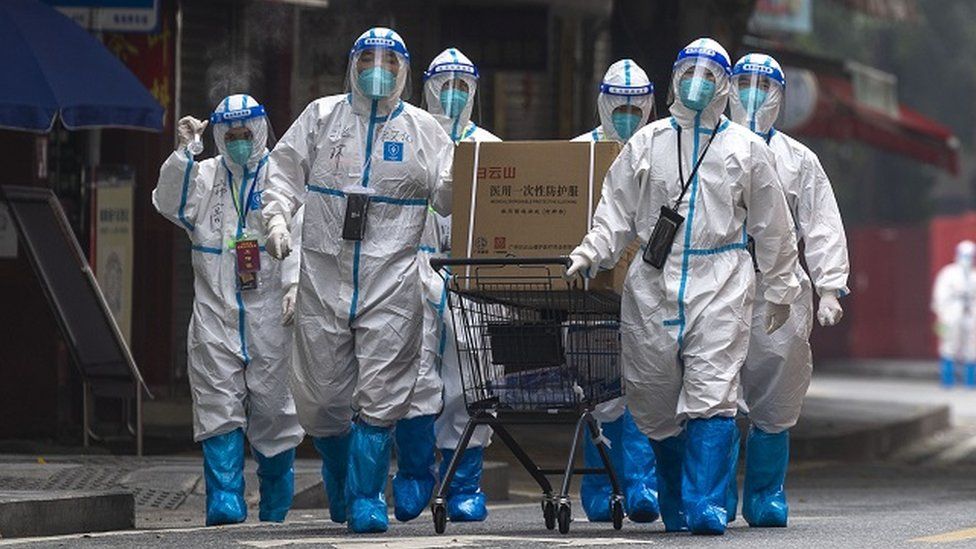
Around 20 million people in the heart of western China’s mega city of Chongqing have been placed under a type of lockdown being referred to ironically by people as “voluntary static management”. This is because, though there has been no official announcement, they’ve been told to remain indoors by community officials.
Online there have been jokes that the Chongqing government didn’t want to announce a mass lockdown on the same day that measures easing zero-Covid rules across China were revealed.
Because Covid amelioration still dominates life here, even a small shift in the way it is being administered can cause consternation and panic.
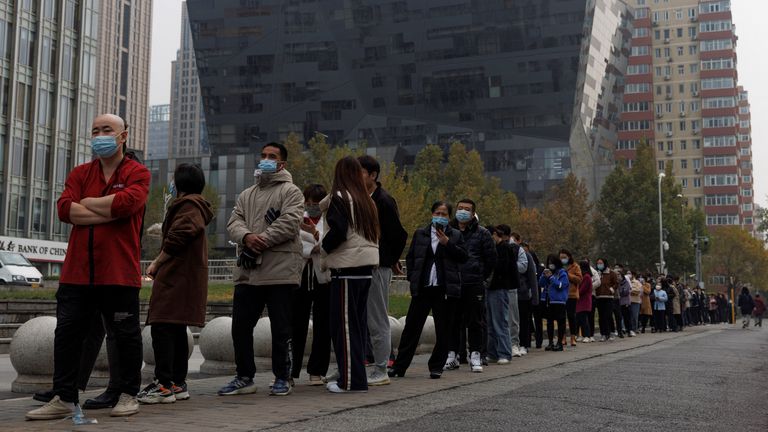
At the beginning of this week, officials in Beijing’s Chaoyang district decided to close many of the street-side testing booths and move them into housing compounds. There was a sudden cut in the number of PCR stations. The problem is that many office buildings require a daily result, or you can’t enter.
So at the booths that were open, the queues were enormous.
From the workers stuck in Tibet who protested to leave Lhasa, to the lockdown of the entire region of Xinjiang, zero-Covid is not going smoothly.
A series of changes announced last week slightly toning down the rules were seen as a sign that more easing was possible down the road. But even if the government is considering this, it may not be soon enough.
Despite the fact that there are more people on Earth than ever before because we are living longer lives, population growth is at its slowest rate since 1950, according to UN data.
According to UN Population Division projections, the world’s eighth billionth resident was born today.
The global population has grown to eight billion people, three times the size it was in 1950, and while there are more people on Earth than ever before because we are living longer lives, population growth is slowing to its slowest rate in more than 70 years.
The global population growth rate will be less than 1% in 2020. This is largely due to a lower birth rate, with women having fewer children as a result of widespread contraception and improved education and mobility opportunities for women and girls.
The global population is also getting older – 10% are aged over 65, and this will increase to 16% by 2050.
By 2050 the number of over-65s will be twice that of those under five.
China and India are the joint-most populated countries in the world, with 1.4 billion people each.
Based on UN projections, India will surpass China for the first time next year.
Image:The population of India is expected to surpass that of China next year
More than half of the projected increase up to 2050 will be concentrated in eight countries: the Democratic Republic of the Congo, Egypt, Ethiopia, India, Nigeria, Pakistan, the Philippines and Tanzania.
Countries in sub-Saharan Africa are expected to contribute more than half of the increase anticipated through 2050.
The biggest increases will come specifically from the Democratic Republic of Congo and Tanzania, with both populations doubling in the next 30 years.
Elsewhere in Africa, the biggest surges will be in Nigeria, Ethiopia and Egypt.
In Asia outside India and China, the biggest growth will happen in Pakistan and the Philippines.
More generally, 46 of the least-developed countries in the world will have the fastest-growing populations between now and 2050.
Most of this growth (two-thirds) will be driven by what has already happened – and the youthful structure of the population.
Image:China has been the most populous country since records began
Where is the population shrinking?
The world population is growing more slowly than it has in decades due to long periods of low fertility.
More than two-thirds of people live in countries where women have 2.1 children or fewer.
This is roughly the level that would produce zero growth worldwide.
The population of 61 countries will decrease by 1% or more between now and 2050 – either due to decreased birth rates or increased levels of migration.
The war in Ukraine is having a huge impact on its population size – with projections showing it will have lost more than 20% of its population by 2050.
Four other central and eastern European countries – Bulgaria, Latvia, Lithuania and Serbia – will experience similar population decreases in the next three decades.
COVID decreases life expectancy
Overall life expectancy fell from 72.8 before the pandemic in 2019 to 71 last year.
COVID’s impact was not the same for every region, however.
Central and southern Asia, Latin America and the Caribbean were hit the most – with life expectancy decreasing by around three years.
But in Australia and New Zealand, which both shut their borders and pursued a “zero COVID” policy for most of the pandemic, life expectancy increased by 1.2 years due to a decreased risk of dying from other causes during successive lockdowns.
Coronavirus may have resulted in some short-term reductions in pregnancies, but there was no evidence of an overall decline, UN experts said.
What’s next?
The global population will continue to grow – to around 8.5 billion people by 2030 and 9.7 billion by 2050.
It will start to peak at around 10.4 billion people in the 2080s and remain at that level until 2100.
After that, trends are uncertain.
Australia, New Zealand, the rest of Oceania, North Africa and Western Asia will still be growing in population by the end of this century.
But the rest of the world, including Europe and North America, will have reached their peak and started to decline before the year 2100.
Antonio Guterres, the UN secretary-general, said of the eight billion milestone: “This is an occasion to celebrate our diversity, recognise our common humanity and marvel at advancements in health that have extended lifespans and dramatically reduced maternal and child mortality rates.”
But he added: “At the same time, it is a reminder of our shared responsibility to care for our planet and a moment to reflect on where we still fall short of our commitments to one another.”
Despite growing public dissatisfaction with the policy and its economic costs, the world’s most populous country has pledged to stick to its hardline zero-COVID policy.
Despite growing public dissatisfaction with the policy and its economic costs, the world’s most populous country has pledged to stick to its hardline zero-COVID policy.
China has reported the most new COVID-19 infections in six months, a day after health officials said they would maintain strict coronavirus controls.
The National Health Commission reported 4,420 new locally transmitted COVID-19 infections in China on Saturday, the most since May 6 and an increase from 3,659 new local cases the day before.
Despite having extremely low case numbers by global standards nearly three years into the pandemic, China has maintained a zero-COVID strategy that includes lockdowns, quarantines, frequent testing, and a drastic reduction in inbound travel.
Despite having extremely low case numbers by global standards nearly three years into the pandemic, China has maintained a zero-COVID strategy that includes lockdowns, quarantines, frequent testing, and a drastic reduction in inbound travel.
At a news conference on Saturday, health officials reiterated their commitment to the “dynamic clearing” approach to COVID cases as soon as they emerge.
Analysts say they do not expect a significant easing of restrictions to begin until after China’s annual parliamentary session in March [File: Thomas Peter/Reuteurs
China’s anti-COVID measures are “completely correct, as well as the most economical and effective”, said disease control official Hu Xiang. “We should adhere to the principle of putting people and lives first, and the broader strategy of preventing imports from outside and internal rebounds.”
The world’s most populous country has pledged to stick to its hardline zero-COVID policy despite growing public frustration with it and its toll on the economy.
President Xi Jinping has said little other than to reiterate the validity of his policy that has made China a global outlier as much of the world tries to coexist with the virus.
Chinese stocks soared last week on rumours of a possible easing of the COVID curbsand media reports that some tweaks to policy could be coming soon.
However, many analysts say they do not expect significant easing to begin until after China’s annual parliamentary session in March.
Goldman Sachs analysts said Saturday’s announcement showed “the government still needs to keep its zero-COVID policy until all preparations are done”.
This may take a few months, in our view,” they wrote, saying their “baseline” expectation was for a reopening in the April-June quarter.
Participants wait before the Beijing Marathon, the first in two years [Tingshu Wang/Reuters]
The southern city of Guangzhou continued to report rising infections, with 66 new locally transmitted symptomatic and 1,259 asymptomatic cases, compared with 111 symptomatic and 635 asymptomatic cases a day before, authorities in the city of nearly 19 million people said.
China’s capital Beijing reported 43 symptomatic and six asymptomatic cases, compared with 37 symptomatic and five asymptomatic cases the previous day.
Nevertheless, about 30,000 runners, some wearing face masks, took part on a chilly and smoggy Sunday in the first Beijing Marathon since 2019.
Runners went past Tiananmen Square as they completed the race through the streets and highways of the Chinese capital.
The mood appeared festive, with some participants wearing colourful wigs, carrying flags, or high-fiving youngsters on the sidelines.
It was the first major sporting event in the Chinese capital since the Winter Olympicsin February.
A rare and dramatic protest against President Xi Jinpingin Beijing has spurred an internet search for the mystery protester’s identity, as well as appreciation for the action.
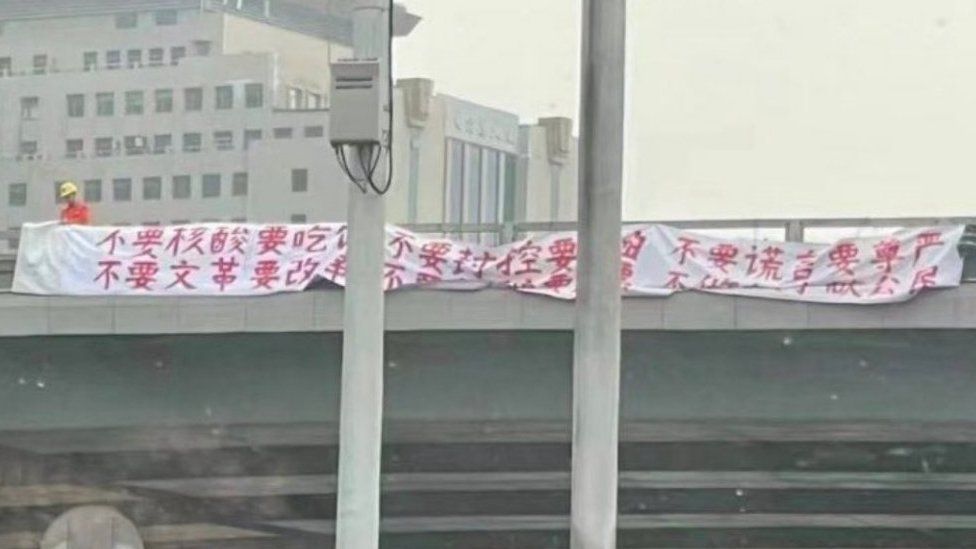
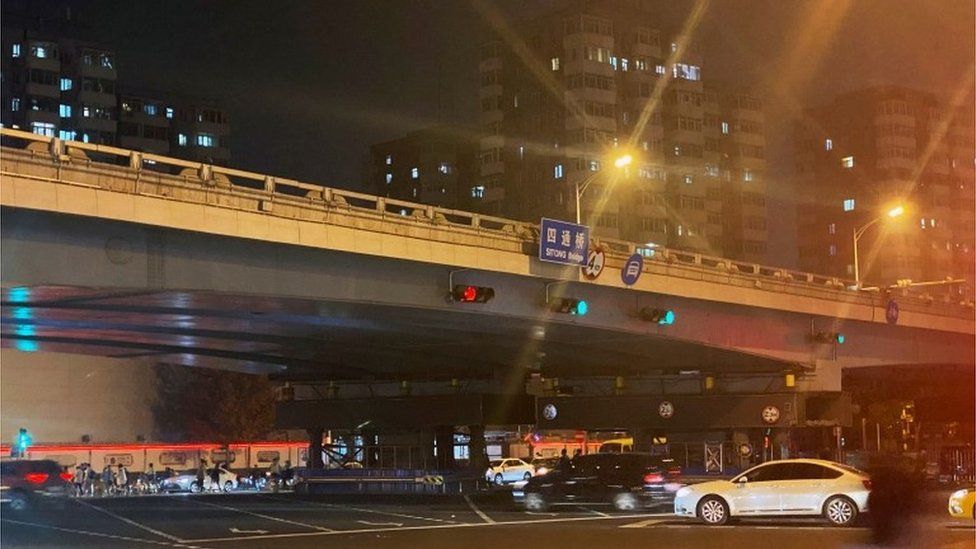
The protester had climbed the Sitong bridge in Beijing’s Haidian area and draped two enormous banners asking for an end to China’s draconian zero-Covid policy and Mr Xi’s removal.
While state media have remained silent, photos and videos of Thursday’s event have circulated widely online, prompting a swift crackdown by censors on social media platforms and the WeChat app used by most Chinese.
Thursday’s protest took place on the eve of a historic Communist Party congress, where Mr Xi is due to be handed a third term as party chief, cementing his hold on power.
The person also set what appeared to be car tyres on fire, and could be heard chanting slogans into a loudhailer.
Reports say one person has been arrested in connection to the protest. Pictures of the incident showed police officers surrounding the person, who wore a yellow hard hat and orange clothing.
The BBC has asked local police for comment.
Many have praised the lone protester’s actions, calling them a “hero” and referring to them as the “new Tank Man” – a reference to the unknown Chinese man who stood in front of tanks during the 1989 Tiananmen protests.
IMAGE SOURCE,TWITTER Image caption, The protester is believed to be the man dressed in an orange worksuit
Online sleuths have attempted to track the person down, focusing on a Chinese researcher and physicist hailing from a village in the northern province of Heilongjiang. A BBC check with village officials confirmed that a man with that name used to live there.
He had posted what appeared to be a manifesto on the popular research site ResearchGate. This was later taken down, though others have since uploaded copies of it.
In the 23-page document, he called for a strike and acts of civil disobedience – such as smashing Covid testing stations – on Sunday. This was to stop “the dictator Xi Jinping from illegally continuing in office, so that China can embark on the road to democracy and freedom”.
Some Chinese have congregated on the man’s two Twitter accounts, posting what they claimed were his pictures and writing hundreds of grateful messages.
“You’re a hero and you have my respect,” wrote one person, while another said: “Salute to the hero of the people! Hope you can safely return!”
The man’s name is among the material related to the protestthat has been censored online. No references to the incident could be found on Chinese social media site Weibo as on Friday morning.
Footage and pictures of the protest and related keywords including “Haidian”, “Beijing protester” and “Sitong bridge” were quickly scrubbed. Phrases tangentially related to the protest, including “bridge” and “hero”, also returned limited results.
IMAGE SOURCE,REUTERS Image caption, By Thursday evening all traces of the protester’s actions had been removed
Although Chinese media have not reported on the incident, former Global Times editor Hu Xijin appeared to refer to it when he tweeted on Thursday evening that the “vast majority” of Chinese people supported Communist Party rule and were “hoping for stability and opposing upheaval”.
Many Chinese have reported that their accounts on social media platformsor WeChat – China’s biggest messaging app – had been temporarily banned after they shared pictures of the protest or posted messages alluding to the protest.
The BBC has reached out to Tencent, WeChat’s parent company, for confirmation.
Such dramatic protest – and public criticism of the government – is rare in China, though China’s tough “zero Covid” policy has fuelled growing public frustration.
In 2018 a woman who defaced a poster of Mr Xi, saying she opposed his “tyranny”, was later admitted to a psychiatric hospital.
The Beijing protester’s actions come at an especially politically sensitive time, with thousands of police officers expected to be mobilised across the capital ahead of the week-long party congress.