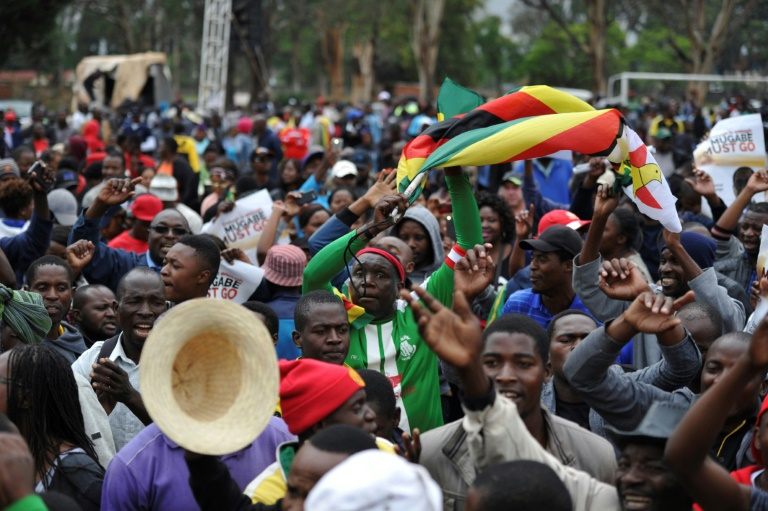
On Wednesday, Zimbabweans will vote for their next president. This election will gauge the country’s young democracy in difficult economic times.
The result of the election will either make the ruling Zanu-PF party stronger or give a chance for the struggling opposition to make a comeback. The ruling party has been in power since 1980, while the opposition has faced challenges like crackdowns, intimidation, and arrests during this election period.
This is only the second time people in a southern African country are voting since their ruler Robert Mugabe was removed from power by the military in 2017.
Zimbabwe has many economic problems, such as a very high inflation rate of 175. 8%It is also struggling with a growing problem of high expenses for daily living. In June, the value of the local currency went down by more than half compared to the US dollar. Additionally, the country has a huge amount of debt that needs to be paid.
Long lines were forming at polling stations in Harare, Zimbabwe’s capital, on Wednesday morning. People were unhappy about the voting starting late.
I have been here since 5 in the morning. “Now it’s almost 9 a. m, and we haven’t started voting yet,” said Stella Maraire at a polling station in Mbare, a Harare neighborhood.
The Electoral Commission of Zimbabwe said that printing ballot papers took longer because of many court cases. This happened in Harare and Bulawayo provinces.
The committee stated that if polling stations open late, they will stay open longer so that people can vote even if they are delayed. Originally, it was planned for voting to stop at 7 p. mLocal time means the current time in a specific place or region.
A considerable number of Zimbabweans, less than 50% of the population, have registered for voting in this election, with many passionately calling for change.
For those people, the polls came at a very important time.
“Zimbabwe has fallen apart in every way. If all of us vote for change in large numbers, it will be very difficult for Zanu PF to cheat in the elections. ” “Please vote in large numbers and let’s defeat Zanu PF together,” a social media user named Lima Mthethwa wrote on X, formerly known as Twitter, before the elections.
Even though Zimbabwe has a lot of valuable resources like gold, diamonds, and lithium, almost half of the people in the country are very poor and have to survive on less than $1. 90 per day
Who are the main people running for the position.
Ten people are trying to replace the current president, who is 80 years old. The current president took over from Mugabe after helping to remove him by force.
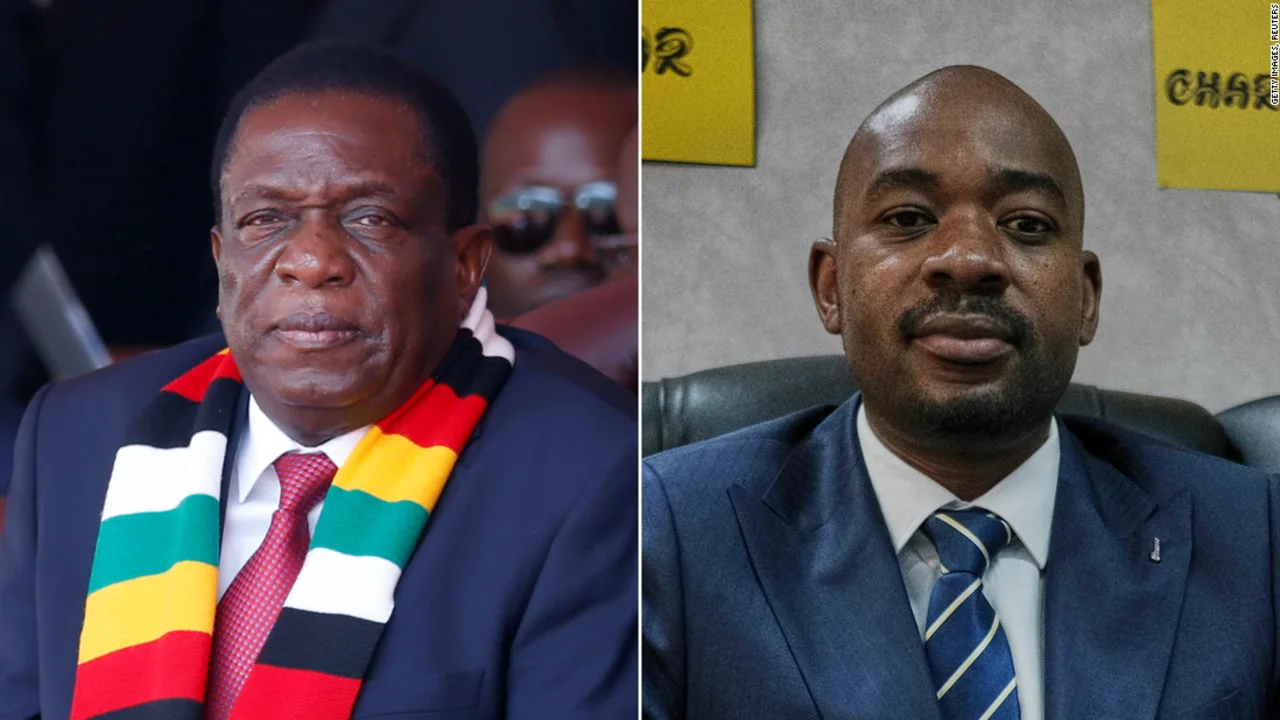
Many people think that the contest will be won by either Mnangagwa or the main opposition candidate, Nelson Chamisa of the Citizens’ Coalition for Change (CCC).
Chamisa is facing a difficult challenge because members of the opposition party are complaining about being heavily controlled and scared in Zimbabwe’s election period, which is something they have experienced before.
The last time they both competed for votes, Mnangagwa got 51% of all the votes and Chamisa got 44%.
Chamisa disagreed with the results of the election and claimed it was dishonest and against the law. He took legal action to challenge the results. But, Mnangagwa became the President of Zimbabwe after the constitutional court confirmed that he won.
Mnangagwa, also known as “The Crocodile,” will depend on his support in rural areas to win again.
Chamisa, who is 45 years old, is a Christian minister and lawyer. He is well-liked by the people who live in Zimbabwe’s cities, especially the young people.
However, experts say he needs to gain support from the countryside to cause a surprise.
Spokesperson for the CCC, Fadzayi Mahere, told CNN that the police have banned some of the party’s rallies and roadshows. This is especially happening in rural areas where Mnangagwa’s party has a lot of supporters.
Mahere said that more than 102 of our rallies were not allowed, and party members were also taken into custody.
Last week, the police in Zimbabwe said they arrested many CCC activists for participating in a car rally that was not allowed.
Earlier in the week, the police said they used tear gas to break up a crowd at a CCC rally because they were worried about people’s safety and security.
Mnangagwa’s government was criticized for bringing in last-minute election rules that were seen as unfair to the opposition.
In June, Zimbabwe’s parliament agreed to raise the amount of money a person needs to pay to participate in the presidential elections. They increased the fee 20 times, from $1,000 to $20,000. This decision was made just a few days before the deadline for candidates to register.
Some political parties said they couldn’t have a candidate for president because they couldn’t afford the higher fees.
Mnangagwa’s party, Zanu-PF, stopped another person from running for president using the legal system.
Savior Kasukuwere, who used to work in the government under Mugabe and was once his supporter, cannot participate in the election. The court decided that he cannot run because the Zanu-PF party filed a complaint against him.
The ruling party argued in court that Kasukuwere had been out of Zimbabwe for over 18 months, so he could not be allowed to run for president.
Kasukuwere said that the winner of this election is benefiting from a process that is not perfect.
Before the elections, political analyst Ibbo Mandaza told CNN that some local people were made to go to the ruling party’s events even if they didn’t want to.
He told CNN that it is clear and obvious that the opposition is facing a lot of violence throughout the country.
“I personally witnessed it last week when a marketplace was shut down completely, and everyone was made to go to the rally in Harare,” he said. He also stated that there is no evidence to suggest that the elections will be unbiased, fair, and trustworthy.
“It’s a bunch of nonsense,” Zanu-PF spokesman Christopher Mutsvangwa said about the allegations.
We will know who the winner of the presidential race is within five days after people finish voting.
To become president, a candidate needs to get more than half of all the votes.
If no candidate gets more than half of the votes in the first vote, another vote will happen six weeks later.
This year, we are having an election for the president at the same time as an election for members of parliament.
A recent survey by the PPRIZ in Zimbabwe showed that over 70% of people who can vote want a different government.
The CCC, which is trying to make the economy stable, thinks that Zimbabwe’s economic situation will be very important for voters.
Mahere, the person who speaks for the opposing party, said to CNN that Zimbabwe was not being run well. She also said that during Mnangagwa’s first term as leader, poverty, unfairness, and corruption had become worse in the country.
The Zanu-PF does not agree. The person in charge, Mutsvangwa, told CNN that Mnangagwa’s government had done very well, especially in making sure there is enough food for everyone.
Mnangagwa talked about the things his government has done well before the election.
We have successfully made sure that everyone has enough food to eat. The government gave us wheat, soya, and maize seeds and other supplies. We are one of only two African countries that can produce enough wheat without needing help from others. Last month, the president wrote on social media platform X that no Zimbabwean will ever go hungry under their leadership.
According to the United Nations’ World Food Programme, almost four million people in Zimbabwe did not have enough food to eat from last year to this year.
Five years ago, Mnangagwa made big promises to improve the economy.
Analysts say he did not succeed in reaching those goals.
According to Eldred Masunungure, a politics and governance expert at the University of Zimbabwe, based on his election promises in 2018, he has not performed well. “Very few of the things he promised in his 2018 manifesto have actually been done. ”