Tag: Zoo

  • Crocodiles wash into community as floods decimate Nigerian zoo

    Crocodiles wash into community as floods decimate Nigerian zoo

    Floods in northern Nigeria have ravaged a major zoo, resulting in the death of over 80% of its animals and causing dangerous wildlife to escape into local communities.

    The Sanda Kyarimi Park Zoo, home to an array of wildlife including lions, crocodiles, buffaloes, and ostriches, reported significant losses due to the recent deluge in Borno state.

    The flooding was triggered by the overflow of the Alau Dam, following heavy rains that led to widespread devastation. “Some deadly animals have been washed away into our communities, like crocodiles and snakes,” the zoo stated, urging residents to exercise caution.

    The floodwaters have not only impacted the zoo but have also severely affected other critical infrastructure in the state capital, Maiduguri. Facilities including the post office and a teaching hospital have been hit by the disaster, which has displaced thousands and caused significant disruptions.

    In response, Nigerian President Bola Tinubu has expressed his condolences to the affected families and communities.

    “President Tinubu extends his heartfelt condolences to the government and people of the state, especially to the families that have lost their means of livelihood due to the disaster triggered by the overflow of the Alau Dam,” his office announced.

    The President’s office assured that efforts would be made to address the humanitarian needs arising from the flood.

    This latest disaster follows a series of severe flooding events in the region. Last month, floods in the northeast claimed at least 49 lives, and a 2022 flood resulted in over 600 fatalities. Borno state, which has long been troubled by insurgency, is now facing additional challenges as it copes with the fallout from these catastrophic floods.

  • Indian zoo ordered to replace names of ‘blasphemous’ lions

    Indian zoo ordered to replace names of ‘blasphemous’ lions

    An Indian court told a zoo in West Bengal to give different names to two lions because a strict Hindu group said the names were offensive to their religion.

    The lioness was named Sita after a Hindu god, and the lion was named Akbar after a Mughal king from the 16th century.

    VHP said it was disrespectful to name the lioness after a goddess.

    It didn’t want the lions to stay in the wildlife park.

    Two large cats currently live at the North Bengal Wild Animals Park in the Siliguri district.

    On Thursday, the court ruled that animals should not be given names that are from Hindu gods, Muslim Prophets, Christian figures, Nobel laureates, and freedom fighters.

    You could have named it lightning or something similar. “Why do we need to call them Akbar and Sita. ” Justice Saugata Bhattacharya wondered.

    The court also wanted to know if it is a good idea to give pets, like dogs, the same names as people. The judge said you could have stayed out of trouble.

    The VHP, which is connected to Prime Minister Narendra Modi’s BJP, complained that people from all over the country had complained about the names of the lions.

    “Sita is the wife of the Hindu god Lord Ram. She is also a very important goddess to Hindus everywhere. ” This is like insulting the Hindu religion and hurting the feelings of Hindu people.

    The group said the government in West Bengal, which is led by a different political party, did this on purpose. They said they would protest if the authorities didn’t change the names and location of the big cats.

    “Sita and Akbar are not allowed to live together,” said Vinod Bansal, a spokesperson for VHP.

  • Zookeeper killed by lion at Nigerian University zoo

    Zookeeper killed by lion at Nigerian University zoo

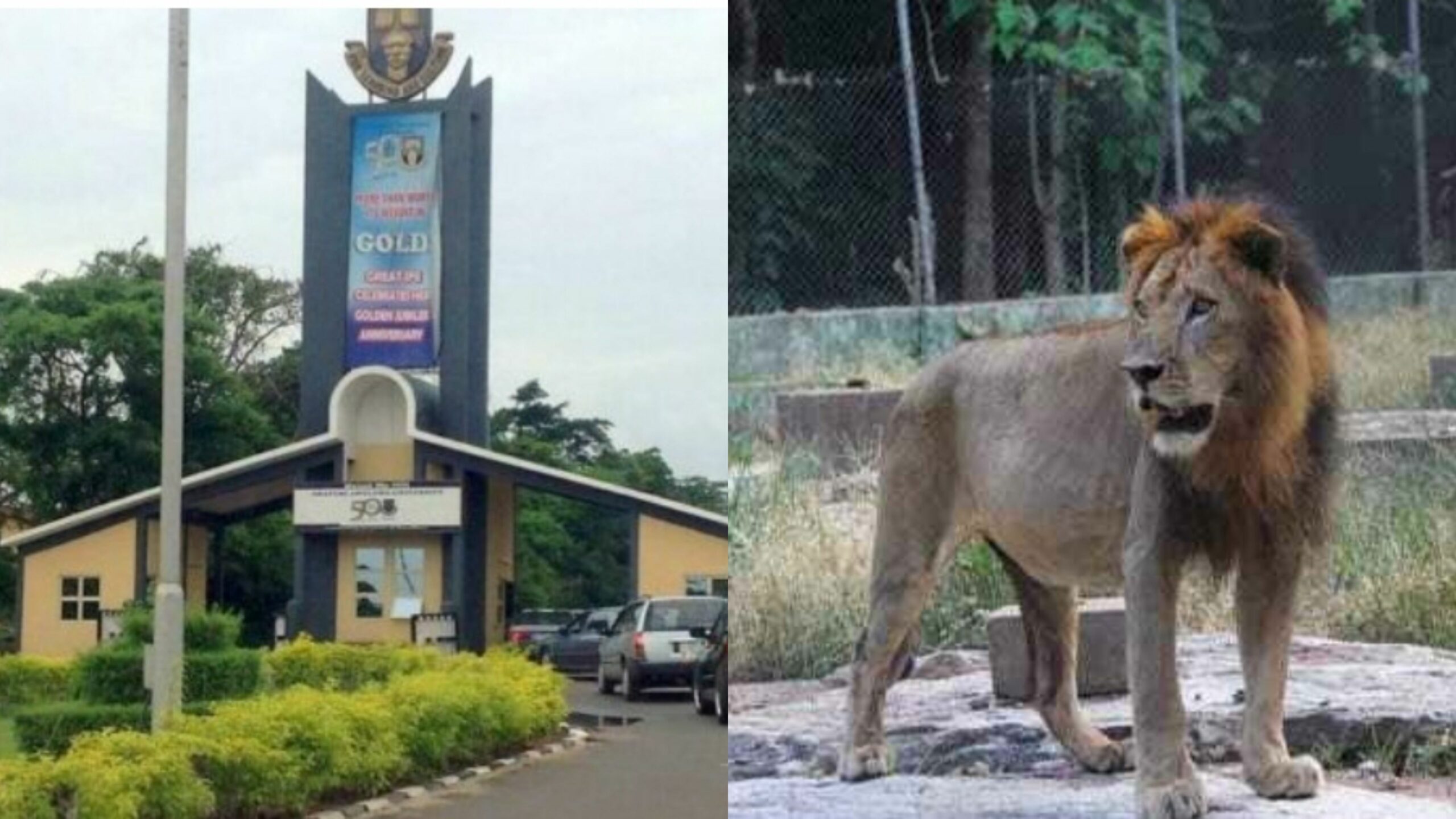
    A tragic incident occurred at Obafemi Awolowo University (OAU) as Olabode Olawuyi, a long-time zookeeper, was fatally attacked by one of the lions under his care.

    The university reported that Olawuyi was attacked while feeding the lions, and despite efforts from his colleagues, he succumbed to the injuries inflicted by one of the lions. The lion responsible for the attack was euthanized following the incident.

    Olawuyi, who had been atending to the lions since their birth nearly a decade ago, was described as a dedicated veterinary technologist by the university’s spokesman, Abiodun Olarewaju. The sudden and tragic turn of events left the university community in mourning.

    The university’s vice-chancellor, Prof Adebayo Simeon Bamire, expressed deep sorrow over the incident and ordered a comprehensive investigation into the matter.

    According to Abbas Akinremi, the students’ union leader, the attack was attributed to a human error when the zookeeper forgot to secure the enclosure after feeding the lions. The incident has sparked discussions about the need for enhanced safety protocols in zoo management.

    In response to the tragedy, condolences were extended to Olawuyi’s family, emphasizing his kindness and dedication. Meanwhile, Abba Gandu, a veteran zookeeper with over five decades of experience, reflected on the unfortunate incident and stressed the importance of implementing stricter safety measures in zoo environments.

  • Visitor to zoo discovered dead after shoe ‘seen in tigers mouth’ in Pakistan

    Visitor to zoo discovered dead after shoe ‘seen in tigers mouth’ in Pakistan

    A partially eaten body was found inside a tiger’s cage at a zoo after a person jumped in, according to reports.

    Workers saw a torn shoe in the mouth of one of the four large cats in the zoo in Bahawalpur, Punjab, Pakistan.

    The dead animals were found on Wednesday morning, and the zoo had to shut down.

    Zaheer Anwar, a senior government official in Bahawalpur, said to the media that when they were cleaning the zoo and the animal areas, they found an (animal) with a shoe in its mouth.

    ‘The workers became wary and then they discovered a dead body inside the cave. ‘

    Mr Anwar said a word that can mean tiger or leopard in Pakistan, and both of these animals are thought to be in the zoo.

    “He seems crazy because only a crazy person would jump into the den,” he said.

    The den is safe and protected. There are stairs behind the room, maybe he jumped from there. All the employees are present.

  • Animals find soothing temperature in Morocco’s biggest zoo

    Animals find soothing temperature in Morocco’s biggest zoo

    As temperatures soar in Morocco, Rabat Zoo has implemented additional measures to ensure the well-being of its animals.

    Staff members have been taking extra precautions by providing frozen meals tailored to each animal’s specific dietary needs, as explained by head veterinarian Saad Azizi in an interview with AfricaNews.

    Considering that mammals and birds are particularly vulnerable to the heatwave, the staff has been advised to regulate the amount of frozen food given to the animals to prevent any potential side effects.

    To help cool down the animals, some are receiving refreshing cold showers, while enclosures are being equipped with blocks of ice.

    These measures aim to mitigate the effects of the scorching temperatures anticipated on Tuesday, with several towns and cities, including Fez, Zagora, and the popular tourist destination of Marrakesh, expecting temperatures to exceed 40°C (104°F).

  • Chile welcomes a new calf from Africa

    Chile welcomes a new calf from Africa

    On Thursday, a calf of the critically endangered African Wild Ass was introduced to the Chilean public, just 17 days after its birth.

    African Wild Asses are classified as “Critically Endangered” by the International Union for Conservation of Nature (IUCN), emphasizing the urgent need for conservation efforts.

    The recent calf was born at Buin Zoo in Chile as part of an international program aimed at preventing the extinction of this African species.

    Named Juniana, the new addition to the family is seen as a significant contribution to a species that has faced severe population decline. Juniana will soon join a family in Mexico, where the opportunity for multiplying this remarkable but dwindling wild species exists.

    While African Wild Asses bear a resemblance to donkeys in terms of body structure, they possess distinct white and striped legs similar to those of a zebra, despite not being a hybrid between the two species.

    Estimates suggest that there are currently between 23 and 200 adult African Wild Ass specimens remaining in the wild, underscoring the critical state of their population.

  • Zoophilist worried over attempts by Ghana Wildlife to shutdown his mini zoo

    Zoophilist worried over attempts by Ghana Wildlife to shutdown his mini zoo

    In Accra, a zoophilist has expressed deep disappointment and a sense of betrayal after the Ghana Wildlife Society (GWS) took unexpected action regarding his plans to obtain a license for operating a mini zoo.

    Solomon Dieudonné Ametepey, the affected individual previously mentioned in a published report, shared with GhanaWeb’s video journalist, Kwame Adzaho-Amenortor, that the GWS had initially assured him of their support in managing his animals and operating the zoo.

    However, during a planned visit by the GWS team to the location where Ametepey keeps his caged animals, he was met with the most shocking revelation. The team informed him that their purpose was to shut down the facility.

    According to Ametepey, the GWS cited safety concerns regarding the environment in which he houses the animals as the primary reason for their decision.

    “I have always had a passion for keeping animals. These animals are all orphans. They were trapped by hunters and their mothers killed. Now, they need help and I cater for them.

    “I have to sacrifice money I use for food to get food for the animals, and to keep them in good health.

    “In Africa, if you want to do something concerning nature, you have to involve the government and so I went to Ghana Wildlife Society to assist me to get a pet license.

    “They promised to assist me. They were supposed to come for a follow-up visit where they would inspect my place and grant me a pet license,” he explained.

  • Ghana reduced to “a circus in a zoo” – KSM mocks government

    A tweet from Kwaku Sintim-Misa on January 7, 2023, described Ghana as a country that has been “reduced to a circus in a zoo”.

    KSM, as the veteran standup comedian is affectionately called, had subtly taunted the New Patriotic Party (NPP) government under the leadership of Nana Addo Dankwa Akufo-Addo for boasting of the availability of ‘the men’ in the party and their ability to manage the economy better than the NDC while in opposition.

    “We in the NPP have the men and the women that will give Ghanaians a decent standard of living,” Akufo-Addo’s tweet in 2015 read.

    Having observed that the Akufo-Addo-led administration has failed woefully, KSM has not hidden his assessment of the party. Through his social media accounts, he has consistently criticized the NPP for mismanaging the economy and worsening the cost of living.

    In his tweet that said Ghana has been reduced to ‘a circus in a zoo’, KSM made a mockery of the ‘we have the men’ mantra.

    He said: “Asem o. I thought “You had the MEN” apparently you just have “THE MAN”.

    Ghana had a torrid 2022 amid an economic crisis that forced the government to seek an International Monetary Fund facility at a time the cedi was rapidly depreciating, inflation was galloping and the government was faced with multiple downgrades by rating agencies.

    The government has serially blamed the crisis partly on the aftershocks of the COVID pandemic and the ongoing Russia-Ukraine war.

    It has promised to turn around the economic fortunes of the country after sealing a Staff-Level agreement with the IMF with the hope that funds from the US$3 billion facility will be released early this year.

    We in the NPP have the men and the women that will give Ghanaians a decent standard of living. #RiseAndBuildTour— Nana Akufo-Addo (@NAkufoAddo) September 4, 2015

    Asem o. I thought “You had the MEN” apparently you just have “THE MAN”. GH now reduced to “A CIRCUS IN A ZOO” ????— Kwaku Sintim-Misa (@KSM_Kwaku_Misa) January 7, 2023

    Happy New Year! pic.twitter.com/FK7EDQkv0e— Nana Akufo-Addo (@NAkufoAddo) January 1, 2023

    Source: Ghanaweb
  • Elderly lioness grows mane, baffles zookeepers

    An 18-year-old lioness has baffled staff at a zoo in Kansas after growing an “awkward teenage mane” after the pride’s last male lion passed away.

    Looking at Zuri, you’d think she was a young lion growing his mane for the first time, but she is actually an 18-year-old female.

    That makes the mane around her neck pretty unusual, with only a handful of similar cases reported in the past. The lioness reportedly started growing a mane soon after the last male lion at Topeka Zoo in Kansas passed away in October of 2020.

    Although zookeepers don’t believe there is any connection between the lack of a male lion and Zuri’s mane, they do admit that the lioness has gotten feistier since growing the new fur, growling, snarling, and roaring more often than before.

    “I don’t think there’s really any kind of evolutionary reason for this, either lack of males or too much competition with other females or anything like that,” Kris Everatt, a conservation scientist, told Live Science. “I think it’s just a random event.”

    But Zuri’s curator, Shanna Simpson, believes that there is some connection between the death of Avus, the last male lion at Toopeka Zoo and the lioness’ awkward mane.

    “She feels like she needs to protect her pride, so her testosterone increases,” Simpson told CJ Online. “And boom, she’s got more fur around her neck.”

    Topeka Zoo has yet to conduct any hormone tests for Zuri, but all standard test results came back normal, so there is no reason to suspect that her mane is a result of any kind of cancer or any other serious condition. Hormonal imbalance could be the cause, given her old age, but the zoo doesn’t plan on conducting invasive testing just to be sure.

    “We have no reason to believe she’s unhealthy in any way with what’s going on with this faux mane,” Simpson said. “She’s just very weird-looking.”

    In 2016, cases of wild lionesses in Botswana growing impressive manes made international headlines, and there were also a 2011 case in South Africa and a 2018 case at the Oklahoma City Zoo, but female lions growing manes is considered extremely rare.

    Source: Complex.com

  • Coronavirus: German zoo may have to feed animals to each other

    Zoos that should have been crowded in the sunny Easter holidays are now hard-up and asking for donations, as the coronavirus lockdown bites.

    A zoo director in northern Germany has even admitted that some animals might soon have to be fed to others, if the zoo is to survive.

    “We’ve listed the animals we’ll have to slaughter first,” Neumünster Zoo’s Verena Kaspari told Die Welt.

    Berlin Zoo has infant panda twins, but their fans can only watch them online.

    The zoo’s spokeswoman Philine Hachmeister told DPA news agency “the panda twins are adorably sweet”.

    “Constantly we’re thinking ‘the visitors should be watching them live’. We don’t want the little pandas to be grown up by the time we finally reopen.”

    Big appetites

    Ms Kaspari at Neumünster Zoo said killing some animals so that others could live would be a last resort, and “unpleasant”, but even that would not solve the financial problem.

    The seals and penguins needed big quantities of fresh fish daily, she pointed out.

    “If it comes to it, I’ll have to euthanise animals, rather than let them starve,” she said.

    “At the worst, we would have to feed some of the animals to others.”

    Ms Kaspari’s zoo belongs to an association, which is not covered by the state emergency fund for small businesses.

    She estimates the zoo’s loss of income this spring will be about €175,000 (£152,400).

    Besides direct appeals for public donations, Germany’s zoos are jointly requesting government aid worth €100m, DPA reports.

    Germany’s national zoo association (VdZ) argues that zoos, unlike many other businesses, cannot go into hibernation and run down costs. Animals still have to be fed daily and looked after, while a tropical enclosure has to be heated above 20C.

    Source: bbc.com