Tag: African Development Bank

  • Ghana and the African Development Bank ink $103m grant agreement

    Ghana and the African Development Bank ink $103m grant agreement

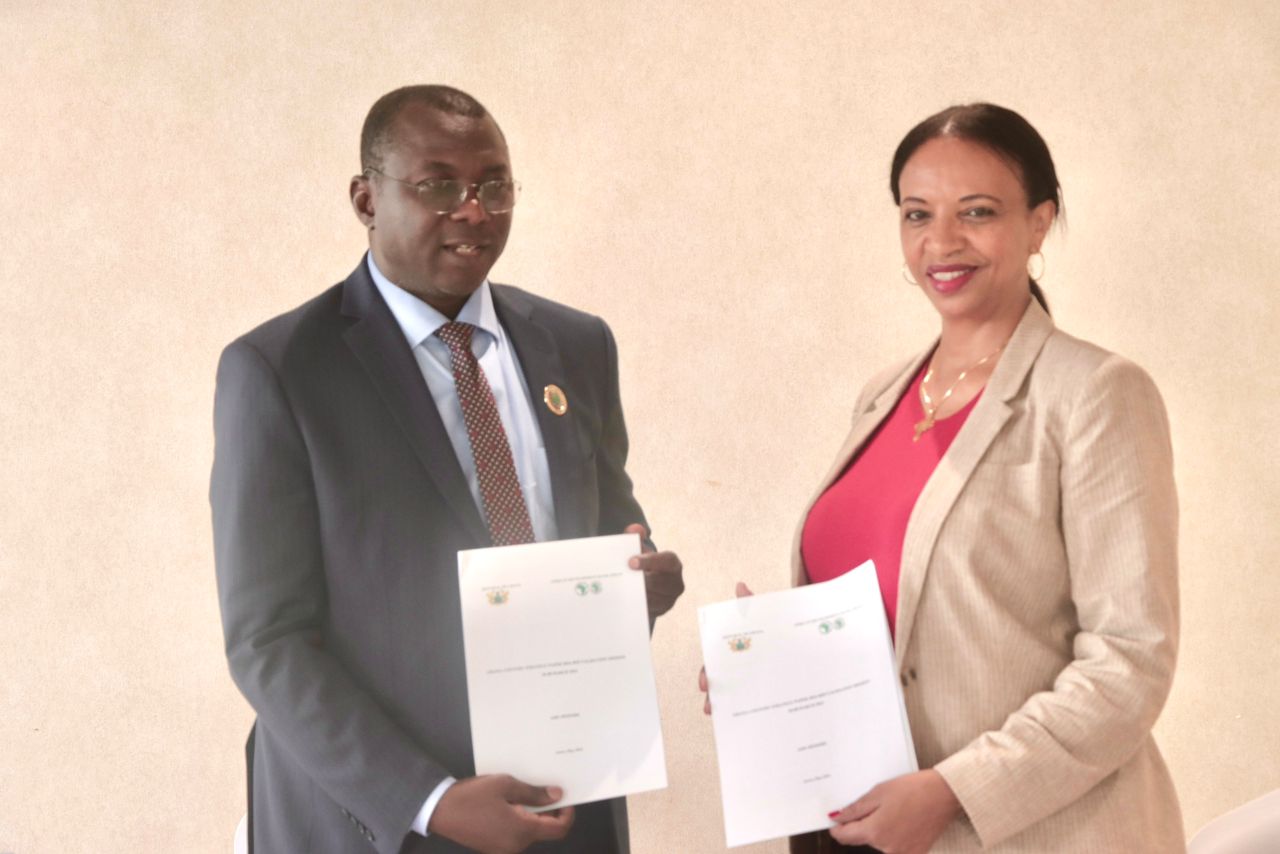
    Ghana and the African Development Bank have inked the Indicative Operations Programmes, mapping out projects slated for execution between 2024 and 2025.

    The proposed initiatives span support for Small and Medium Enterprises, Agriculture, and Skills Development, incorporating digitalization efforts, with a total grant sum of US$103 million.

    Additionally, they endorsed a five-year country strategy document for 2024-2029, delineating the sectors and initiatives to receive backing from the Bank.

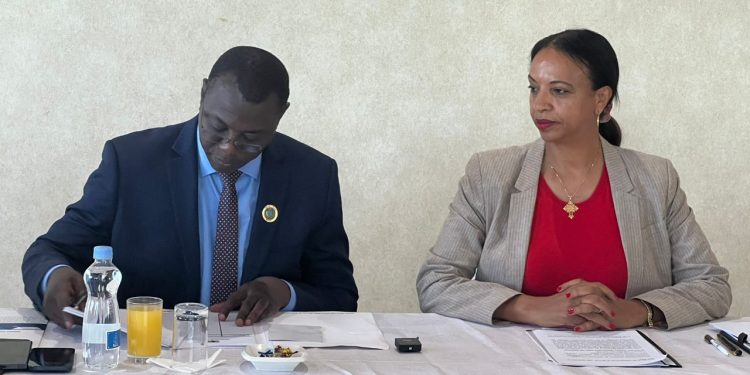
    During a signing ceremony held on the sidelines of the 2024 Annual General Meeting of the African Development Bank in Nairobi, Kenya, Finance Minister Dr. Mohammed Amin Adam praised the Bank’s unwavering dedication to the advancement of African nations.

    Emphasizing the necessity of vigilant monitoring and supervision of projects to ensure efficient resource utilization from development partners, the Minister stressed the significance of scrutinizing projects before contractor certificates were issued to guarantee optimal value for Ghanaian citizens.

    He expressed concern over delays in project fund disbursement by agencies, deeming it an intolerable situation warranting immediate rectification.

    “I am committing to setting up a monthly review of all project loans and funds to be disbursed. The reports will inform us of challenges we face in the execution of these projects. We will then engage the relevant MDAs to see how we can solve these challenges for quicker disbursement,” he said.

    Eyerusalem Fasika, the African Development Bank Country Manager, representing the Bank, highlighted that they have been extending assistance to Ghana through grants from the African Development Fund.

    She underscored the Bank’s extensive stakeholder engagement, encompassing Civil Society Organizations, Ministries, Departments, and Agencies, the National Development Planning Commission, Private Sector Representatives, and other entities.

    This collaborative approach aimed to gather diverse expert perspectives for incorporation into the Country Strategy Document.

    “We needed inclusive and expert views since the Country Strategy Document is the people’s document, so their voices had to be captured.”

    She reassured the government of the Bank’s dedication to building upon the successes outlined in last year’s Country Strategy Document, following the approval of this year’s document by the Board of Directors of the African Development Bank.

    Highlighting the significance of document approval, she emphasized that it would pave the way for the release of funds in the third quarter of this year.

    “This time around, we will be focused, selective, and will mobilize resources from other partners for identified projects. For the next five years, we will benefit from the African Development Fund resources,” the AfDB Country representative indicated.

    Ms. Fasika also hinted at support from the Climate Action Window from the Climate Investment Fund for the Transitional Support Facility Prevention Envelope and other trust funds managed by the Bank.

    “We will work with the Ghana Investment and Infrastructure Fund and the Public Investment and Assets Division of the Ministry of Finance to identify potential public sector partnership projects that can be presented at African Investment Forums,” she noted.

    Present at the signing ceremony were Dr. Alex Ampaabeng, a Deputy Minister for Finance, Ghana’s Ambassador to Kenya, H.E. Damptey Bediak Asare, 2nd Deputy Governor of the Bank of Ghana, Mrs. Elsie Addo Awadzi, Officials of the Ministry of Finance, Bank of Ghana, and the Ghana Investment and Infrastructure.
  • Ghana secures $103m grant from AfDB

    Ghana secures $103m grant from AfDB

    Ghana and the African Development Bank (AfDB) have signed the Indicative Operations Programmes, outlining the projects to be implemented between 2024 and 2025.

    These projects include support for Small and Medium Enterprises (SMEs), agriculture, and skills development, including digitalisation, with a total grant of US$103 million.

    Additionally, a five-year country strategy document for 2024-2029 was signed, defining the sectors and projects that will receive support from the Bank.

    The signing ceremony took place on the sidelines of the ongoing 2024 Annual General Meeting of the AfDB in Nairobi, Kenya.

    Ghana’s Minister for Finance, Dr. Mohammed Amin Adam, commended the AfDB for its continuous commitment to the growth and development of African countries.

    Dr. Adam emphasized the importance of effective monitoring and supervision of projects to ensure value for money for the people of Ghana. He expressed concern over the slow disbursement of project funds by agencies, describing the situation as unacceptable and in need of change.

    “so I am committing to set up a monthly review on all project loans and funds that are to be disbursed and the reports will inform us on challenges we face in the execution of these projects. We will then engage the relevant MDAs to see how we can solve the challenges in other for disbursement to quicken up” he said.

    “this time around, we will be focused, selective and will be mobilising resources from other partners for identified projects, and for the next five years, we will benefit from the African Development Fund resources” the AfDB Country representative indicated.

    AfDB Country Manager, Eyerusalem Fasika, who signed on behalf of the Bank, noted that the AfDB has been supporting Ghana through grants under the African Development Fund.

    She explained that the Bank conducted extensive consultations with various stakeholders, including CSOs, MDAs, NDPC, private sector representatives, and other institutions, to gather expert opinions for the Country Strategy Document.

    Ms. Fasika assured the government of the Bank’s commitment to building on the achievements of the previous Country Strategy Document once the current one is approved by the AfDB Board of Directors. She highlighted that the approval would lead to the release of funds in the third quarter of this year.

    “so we will again work with the Ghana Investment and Infrastructure Fund and the Public Investment and Assets Division of the Ministry of Finance to come out with potential public sector partnership projects that can be presented at African Investment Forums” she noted.

    Present at the signing ceremony were Dr. Alex Ampaabeng, Deputy Minister for Finance; Ghana’s Ambassador to Kenya, H.E Damptey Bediak Asare; 2nd Deputy Governor of the Bank of Ghana, Mrs. Elsie Addo Awadzi; and officials from the Ministry of Finance, Bank of Ghana, and the Ghana Investment and Infrastructure Fund.

  • Let’s invest a minimum of 30% of our reserves in multilateral institutions – Akufo-Addo to African leaders

    Let’s invest a minimum of 30% of our reserves in multilateral institutions – Akufo-Addo to African leaders

    President Akufo-Addo has suggested allocating 30 percent of Africa’s sovereign reserves, currently held in foreign banks, to be invested in the continent’s financial institutions.

    During the Presidential Dialogue on the African Union‘s (AU) Financial Institutions, held on the sidelines of the 37th Ordinary Session of the AU Assembly in Ethiopia, President Akufo-Addo highlighted the importance of strengthening the capital base of institutions like the African Development Bank (AfDB) and Afreximbank.

    “We should decide that a minimum of 30 per cent of the reserves of each one of us, should, be invested in the multilateral institutions,” he said, citing the African Development Bank (AfDB) and Afreximbank.

    The President emphasized that increasing the financial power of African institutions could significantly contribute to financing the continent’s development and growth.

    Currently, many countries hold their reserves in foreign banks, attracting predominantly negative interest rates.

    President Akufo-Addo urged African leaders to consider ratifying the decision to designate Afreximbank as a specialized agency of the AU.

    He acknowledged the critical role played by institutions like AfDB and Afreximbank, citing their contributions during the COVID-19 pandemic.

    “The fundamental fact is that, if we find a way that we can increase the financial power of our own institutions, we are in a better place to finance our development,” he echoed.

    “These are institutions which are ours, and which we can trust. So, if we can find a way of strengthening them, we strengthen ourselves,” he noted.

    While championing global financial architecture reforms, the President stressed the need for a monitoring mechanism to ensure accountability in the utilization of funds invested in African banks.

    He called for collaborative efforts among leaders to develop a robust global financial architecture that prioritizes African development and addresses illicit financial flows from the continent.

    The recent push by African Union Heads of State and Government for the establishment of an African Monetary Union, including the African Central Bank, African Monetary Fund, African Investment Bank, and Pan-African Stock Exchange, aligns with the continent’s aspirations for economic transformation.

    The 37th Ordinary Session of the AU will also witness the launch of the Alliance of African Multilateral Financial Institutions, known as the Africa Club, aimed at fostering collaboration and finding solutions to financing challenges for sustainable economic development in Africa.

  • U.S, African Development Bank partner to broaden Africa’s digital transformation

    U.S, African Development Bank partner to broaden Africa’s digital transformation

    The U.S. Commercial Service and African Development Bank partner for digital transformation in Africa.

    Unveiled at the Africa Tech Festival in Cape Town, discussions will address technology adoption, internet access, skill enhancement, and regulatory innovation. Focus on collaboration between African governments and U.S. tech firms.

    Ashley Ndir, senior U.S. Commercial Liaison to the African Development Bank, emphasized, “We are at a turning point in Africa’s technological advancement. By bridging insights from the U.S. private sector with Africa’s vibrant markets, we aim to drive innovation and economic growth. This partnership is a testament to that mission.”

    Head of ICT Operations Nicholas Williams from the African Development Bank said, “Africa has made significant investments in pivotal infrastructure and policy enhancements to create an innovative digital economy.  As Africa’s premier development finance institution, the African Development Bank will help push Africa’s digital boundaries even further by forging strategic relations, building on historical investments and, more importantly, tapping into the energy of our young population, who are digital natives. We value the insights that the U.S. private sector may bring.”


    The program builds on the African Development Bank’s $2 billion investment in digital infrastructure, covering broadband development, policy improvements, digital skills scaling, and support for innovative enterprises.

    These efforts have lowered internet access costs, improved digital literacy, and created a favorable business and policy environment.

    Leveraging the U.S. Commercial Service’s expertise in international trade, the collaboration aims to lead Africa’s digital transformation, envisioning a future where technology drives growth and prosperity. Both entities affirm their dedication to enhancing digital capabilities and unlocking Africa’s full potential in the digital age through this partnership.

    Distributed by APO Group on behalf of African Development Bank Group (AfDB).

    Media contact: 
    Communication and External Relations Department
    media@afdb.org

    Technical contacts:
    African Development Bank: 
    Uyoyo Edosio
    u.edosio@afdb.org

    US Government Contact:
    Ashley Ndir
    Senior Commercial Liaison to the AfDB
    Ashley.Ndir@trade.gov

    About the U.S. International Trade Administration:
    By advancing American export prospects in international markets, the International Trade Administration (ITA) of the Department of Commerce of the United States of America enhances American competitiveness.

    Through the U.S. and Foreign Commercial Service, our trade experts provide services in more than 100 U.S. cities and 80 international markets. U.S. private sector engagement with the African Development Bank (AfDB) is supported by our U.S. Commercial Service Liaison office.

    About the African Development Bank:
    The African Development Bank (AfDB) (www.AfDB.org) has approved $2 billion in loans, grants, and equity investments for  ICT projects in the past decade. These initiatives focus on regional and national broadband infrastructure development, creating favourable policy environments for private sector investments, scaling digital skills, and nurturing innovative enterprises. The AfDB’s efforts have reduced the cost of internet access, enhanced digital literacy, and fostered a conducive business and policy environment.

  • African Development Bank hosts maiden edition of Civil Society Open Day in Seychelles

    African Development Bank hosts maiden edition of Civil Society Open Day in Seychelles

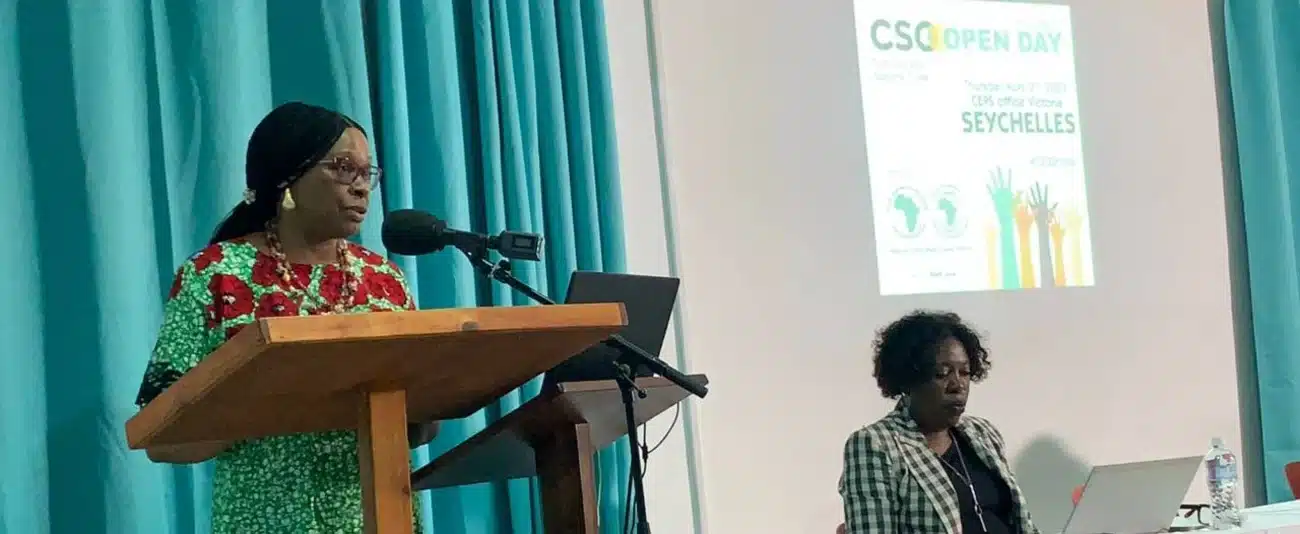
    On Thursday, April 27, 2023, the African Development Bank’s Seychelles Country Team organized its inaugural Open Day for Civil Society Organizations (CSOs) in Seychelles.

    The event was attended by 25 representatives from various CSOs, including the umbrella body, Citizens Engagement Platform Seychelles (CEPS).

    The purpose of the gathering was to discuss the bank’s country strategy and portfolio and explore possibilities for collaboration in achieving sustainable and inclusive development in Seychelles.

    Among the topics addressed were energy transition and youth development.

    Attendees include the African Development Bank’s Director General for East Africa, Mrs. Nnenna Nwabufo, the Principal Secretary for National Planning in Seychelles, Ms. Elizabeth Charles Agathine, the Director for Special Programs at the Office of the President, Ms. Maria Mulindi, and the CEO of CEPS, Mr. Alvin Laurence.

    Mrs. Nwabufo reiterated the Bank’s commitment to engaging civil society organizations in implementing the Bank’s High 5s for inclusive, sustainable growth and development in Seychelles. 

    The bank instituted CSO Open Day as a platform for sharing information on its portfolio, shared learning, and an opportunity for civil society bodies to provide feedback on the Bank’s country engagement.

    Ms. Agathine reaffirmed the government’s commitment to working with CSOs and other stakeholders to solve the country’s development challenges.  “We believe working together can create a more just, inclusive, and sustainable society.”

    Recognizing the role of CSOs in the development process, Ms. Mulindi encouraged the participants to develop a keen interest in the Bank’s development projects.

    This would ensure the realization of the intended social benefits for the people while strengthening the Bank’s impact on livelihoods.

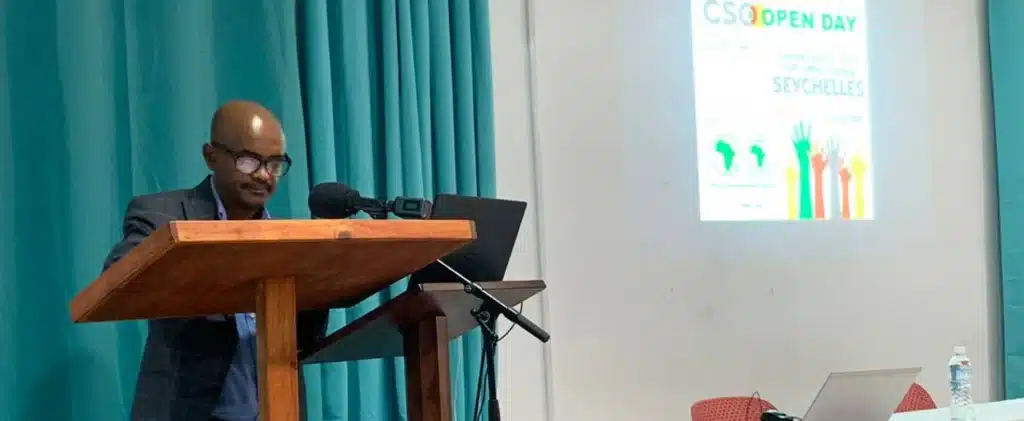
    The Bank presented its strategy and results achieved since 2021. The presentation made by Mr. Tilahun Temesgen, Chief Regional Economist, highlighted the key challenges, including cross-cutting issues.

    Alvin Laurence, Executive Director of the Citizens Engagement Platform Seychelles, an umbrella organization of civil society organizations in Seychelles.

    CEPS CEO Laurence gave an overview of civil society engagement in Seychelles, challenges and possible opportunities for collaboration.

    Some of the critical recommendations raised at the event were:

    1.Request for a more participatory development process. The CSOs recommended a platform for multistakeholder dialogue, which includes government, private sector and civil society with a particular focus on the energy transition and solutions for renewables.

    2. Build capacity on the Bank’s procurement processes, including for AFAWA and ACCF.

    3.Education curricula should match the respective industry, especially in the tourism and renewable energy sectors. They emphasized the need for a transition plan from fossil fuel to clean energy.

    1. The wrong boxes were checked: The ex-AfDB boss diagnoses Ghana malaise

      The wrong boxes were checked: The ex-AfDB boss diagnoses Ghana malaise

      Former president of the African Development Bank (AfDB) Donald Kaberuka has diagnosed Ghana’s economic malaise at an event held by the Rwandan ruling party late last week.

      Kaberuka, whiles sharing views about how African governments take actions that eventually wreck their economies decried economic mismanagement stressing that economic independence is a product of economic discipline.

      Steering clear of mentioning the name of the specific country, he outlined how a West African country had returned to the International Monetary Fund (IMF) and was being forced to implement measures from the multilateral vendor.

      He stressed that the said government was struggling because of failure to save for a rainy day. “A country in West Africa, please no names, which was back to the IMF to begin general economic reforms is back to the IMF today, please no names.

      “Why? A combination of domestic indiscipline, macroeconomic indiscipline and these external shocks. As a result, they have lost what I call political, fiscal and policy space. The decisions they are now implementing are not their decisions.

      “Why? Because during that day when things were very good, they did the wrong things, they ticked the wrong boxes. Massive borrowing for example, massive spending, huge deficit without building the resilience for the day things will be very difficult,” he stressed.

      Kaberuka emphasized that aside from Ghaan, 14 countries in that zone were suffering similar plights, “economic independence begins by economic discipline,” he added.

    2. Africa should be able to feed itself, leaders say

      Africa should be able to feed itself, leaders say

      A summit on food security across Africa has heard calls for the continent to feed itself, rather than relying on aid or imports.

      The current African Union chairman – Senegalese President Macky Sall – told the meeting in Dakar that Africa had huge potential that was not exploited.

      According to the head of the African Development Bank, Akinwumi Adesina, two-thirds of the world’s uncultivated arable land is in Africa.

      He said Africa can and must feed itself.

      Tens of millions of people in East Africa and the Sahel region face hunger because of drought, conflict and a rise in the cost of food and fuel.

      Leaders attending the meeting have been urged to re-commit to a pledge agreed two decades ago to devote 10% of government budgets to agriculture and rural development.

      Source: BBC

    3. Post-COVID-19 recovery programme launched

      Post-COVID-19 recovery programme launched

      Mr Ignatius Baffour-Awuah, the Minister of Employment and Labour Relations, Tuesday launched a Post-COVID Skills Development and Productivity Enhancement Programme (PSDPEP).

      The PSDPEP is a five-year project, which seeks to build health-related skills in higher education, restore livelihoods, strengthen public communication, and create jobs among the youth and women.

      It is also aimed at promoting technical and entrepreneurship for job creation.

      The project is being funded from a grant facility of US $31.34 million, comprising $28.5million from the African Development Bank (AfDB), and 2.8 million from Government of Ghana.

      The Minister said the project was in line with critical government development policy frameworks, such as the Ghana Shared Growth and Development Agenda, Government Coordinated Program of Economic and Social Development as well as the Country Strategy Paper (2019-2013).

      This reflects the development aspirations of the Government of Ghana as required by the 1992 constitution.

      The PSDPEP beneficiaries are: the Ghana News Agency, Social Investment Fund, Microfinance and Small Loans Centre, the Biotechnology Centre, the School of Nursing and Midwifery, and the Microbiology Centre.

       The rest are the Ministry of Gender, Children and Social Protection, the Environmental Protection Agency, and the National Vocational Training Institute.

      The project will be implemented in seven regions in Ghana – Greater Accra, Ashanti, Eastern, Bono, Northern, Central, and Upper West.

      Mr Baffour-Awuah stressed the need for beneficiaries to own the project by mainstreaming it into their programmes.

      That, he said, was necessary for its successful implementation.

      Mr Kofi Frimpong, the Executive Director of the Social Investment Fund and Project Coordinator, indicated that the pandemic disrupted livelihoods at the individual, household and entrepreneurial levels due to lockdowns.

      The project, he said, would, therefore, help to alleviate the plight of those affected.

      Mr. Emmanuel Fordjour, Desk Head of AFDB at the Ministry of Finance, said the Bank was committed to assisting Ghana to recover from the hardships the people suffered as a result of the COVID-19 pandemic.

      Steering and technical committees were inaugurated before the programme launched to supervise its successful implementation.

    4. Plantain processing factory at Agogo not operational as weeds take over building

      The plantain processing factory established by the Trade Ministry with funding from the African Development Bank( AfDB)at Agogo in the Asante Akyem North MUNICIPALITY is not functioning.

      This is contrary to an earlier impression created by the Member of Parliament for Asante Akyem North when he spoke in parliament last Thursday.

      The MP, Hon Andy Appiah Kubi on the floor of Parliament claimed that the factory was operational and had started the production of processed plantain to Canada currently.

      But this reporter during a tour of the facility last Saturday to fact-check the claims by the MP at the house of records was met by weeds that had grown in and around the compound.

      DETAILS:

      Seated on about an acre of land, the processing plant seemed complete but no activity was there as a peep through the main production room showed no sign of machinery.

      With a small gate beside the main one opened, this reporter accompanied by other equally interested media houses gained unimpeded access to film and to inspect the facility.

      Having been officially commissioned four months ago, the facility from careful scrutiny showed no sign of human activity and no person was present during the visit despite waiting there for two hours to ostensibly talk to a caretaker or security staff.

      Noted for being a community where the growing of plantain is a mainstay business, scores of traders who spoke to this reporter at Agogo said they wished the factory was in operation to help them deal with their post-harvest losses.

      MUNICIPAL CHIEF EXECUTIVE:

      During an interview, the Municipal Chief Executive for Asante Akyem North, Hon Francis Oti Boateng said the Assembly was happy with the establishment of the factory but was not functional.

      He noted that they were waiting for the installation of machinery at the factory for work to begin.

      “The Assembly would make use of the facility as soon as machines we are waiting to see arrive in February next year,” the MCE stated.

      CONTROVERSY:

      Speaking to this reporter, former MCE for Asante Akyem North, Mr. George Frimpong wondered why the MP for the area would make non-factual statements about something that was not functioning.

      He claimed that on Saturday morning without prompting, the MP sent some persons to take pictures of his private facility where he is into plantain processing.

      Touring the facility later in the day with this reporter, Hon Frimpong said he built his facility for the processing of plantain into biscuits at Domeabra.

      With the brand name Plameg, the former MCE said he would have been able to make good use of plantain in the area if Exim Bank had funded his private project which the 1D1F secretariat had planned to adopt.

      “Asante Akyem North is predominantly a farming community and we are sure government could use the yet-to-function facility to assist farmers who deal in plantain to prevent post-harvest losses and same way govt could fund my project to equally help,” the former MCE noted.

    5. Climate polluter nations must pay up for losses – ActionAid

      Wealthy polluter nations must pay up for climate-induced losses and damages suffered by most vulnerable and poor nations, Country Director of ActionAid Ghana John Nkaw has proposed.

      Mr. Nkaw, who was addressing participants at the National Climate Change Seminar in Accra, said millions of farmers in vulnerable countries, including Ghana, are losing their investments due to alarming changes in the climate.

      “These sad realities demand our collective action to prevent a further increase in the wealth gap. We must continue our campaign for the establishment of an international financing facility to help vulnerable countries recover and rebuild in the aftermath of climate disasters,” he indicated.

      Indeed, Africa suffers most from the ongoing global climate crisis, though the continent is the least contributor to this phenomenon.

      Africa only contributes about 3.8 percent of carbon emissions’ global volume, while the western world is responsible for 76 percent.

      Since 1960, average annual mean temperature, according to the Ministry of Finance (MoF), has increased by one degree Celsius; with average number of hot days increasing by about 13 percent while the number of hot nights per year has increased by 20 percent.

      In 2017 alone, the effects of climate change on agriculture and the environment, according to the MoF, was estimated at US$6.3billion.

      A recent report by the African Development Bank states that the continent will need some US$3trillion for climate adaptation programmes by 2030, to enable African economies implement nationally determined contributions.

      Already, a World Bank report on Ghana’s climate risk profile states that the country will continue to get warmer – with mean temperature projected to increase by 1°C to 3°C by mid-century, and by 2.3°C to 5.3°C by end of the century.

      The report indicates that projected warming will likely occur more rapidly in the northern and inland areas of Ghana.

      But Mr. Nkaw explained that regular and varied research on climate change is essential to enhancing stakeholders’ understanding of adaption and helping influence public and private actions to attract investment in vulnerable communities.

      “The net effect of ongoing climate change is affecting agricultural production. These changes have impacted negatively on people already living in poverty, who have become vulnerable to prolonged droughts, floods among other climate-induced impacts,” he added.

      Vice Chancellor of the University of Energy and Natural Resources, Professor Elvis Asare Bediako, spoke at the event and said the UENR is open to partnering with government and non-governmental institutions – including ActionAid, Care International, the World Bank and others – in the fight against climate change.

      The conference’s theme, ‘Building Climate Resilience in Ghana Through Multi-stakeholder collaboration’, was meant to highlight the impact of climate change on smallholder farmers; engage government agencies; and disseminate research findings on Ghana’s climate change situation to influence policy.

      Source: Ghanaweb

    6. Africa needs more funds to adapt to climate change – Adesina

      President of the African Development Bank, Akinwumi Adesina, has emphasised that Africa needs more climate support funds to address issues of climate change on the continent as nine out of the 10 most vulnerable countries to climate change are in Africa.

      According to him, with the annual climate financing gap at around US$110billion, adaptation to climate change cannot be implemented in its totality unless there is a paradigm shift to funding.

      He stated further that for Africa to meet its climate actions obligations under the Paris Agreement, and be able to do climate financing, it needs to get between US$1.3trillion to US$1.6trillion by 2030, bringing an average of US$127billion a year in climate finance; and yet Africa gets only US$18billion, leaving a balance of US$110billion, hence, the importance for developed countries to pay up the financing gap.

      “So, putting all these together, Africa is choking from climate change; but again, Africa is underfunded with the finance it needs to tackle its climate change, getting only three percent of the total global climate change finance.”

      “This is highly disproportionate to the needs Africa has. Today, Africa is losing seven to US$15billion of its productivity a year because of climate change. If actions are not taken rapidly, that will draw to US$50billion a year by 2030,” he said.

      He mentioned that a lot of the impact of climate change in Africa is seen in areas of increased levels of drought, flood and heat, affecting crops and livestock production, which will again affect the livelihoods of farmers while threatening food security.

      Africa Climate Action Window

      Furthermore, he stated that AfDB has created a downstream facility – the Africa Development Fund (ADF) – to mobilise US$13billion for the Africa Climate Action Window, aimed at supporting 37 countries in Africa to tackle climate action.

      “This Climate Action Window is very critical for low-income countries in Africa and transition states. This climate window will provide 20 million farmers with access to climate-resilient agriculture technologies. It will also support 20 million farmers and pastoralists to gain access to weather index insurance scores for insuring their livelihoods.

      “This will again provide 18 million people with access to water and sanitation, and also provide 840 billion cubic metres of water because water will be critical for the population,” he said.

      The president concluded that this facility will also provide about 10 million people with access to clean energy.

      Considering all these important interventions and initiatives to tackle climate change, Mr. Adesina reiterated that Africa needs more to tackle climate change; hence, the need to move from words to commitments, commitments to actions, and actions to delivery of money on the table for Africa to deliver on climate change.

      He made these remarks during a virtual pre-COP27 press conference and global launch of the ‘State and Trends in Africa 2022 (STA22)’.

      On his part, CEO of the Global Centre Adaptation (GCA), Prof. Patrick Verkooijen, stated that Africa is on the frontline of a climate emergency it did not create. He added that Africa’s 1.4 billion people, which is about 17 percent of the global population, contribute almost nothing to global warming, and are responsible for less than three percent of the world’s total greenhouse-gas emissions, yet is very vulnerable to its impacts; hence, the need to pay more attention to investments which mitigate the impact.

      “The bottom line is this: if COP27 is to succeed, it needs to ensure that adaptation finance is finally flowing at full scale and pace to Africa. It is clear now that we can no longer afford to wait; adaptation must start happening on a far greater scale with a paradigm shift in investment,” he said.

      State and Trends in Adaptation, Africa Report 2022

      The State and Trends in Adaptation in Africa Report 2022 (STA22) completes the most comprehensive overview of present and projected climate risks and adaptation solutions in Africa. STA22, the third in GCA’s series of annual flagship reports, maintains the dedicated focus on Africa from last year and expands its analysis.

      The report provides a deep dive into the economics and finance of climate change adaptation, with an additional focus on sectors, cross-sectoral themes and country profiles. It sets out the potential costs and benefits of adaptation interventions in Africa, and includes a new analysis of climate change impact on the private sector.

    7. Masloc begins training on nationwide digitalization roll out

      At the Accra digital center, the Micro Credit and Small Loans Center (MASLOC) has begun a two-day training session for its staff as part of the statewide digitization rollout.

      The two-day training course, scheduled for October 5 and 6, 2022, aims to acquaint staff with new software that will enable the institution’s credit department and other affiliated departments to process, disburse, and recover approved loans to our consumers quickly.
      The program will offer the best processing efficiency for loans because to its characteristics.

      The complete implementation of the different phases of the software will allow Masloc to eliminate its manual processes and align its system on an improved platform, compatible to new and complex modern banking systems used globally.

      In an age of technological advancement and with institutions migrating to advanced secure digital platforms, the new Loan Management Software (LMS) training will not only equip and improve service delivery to our clients through a secure database but will also complement our efforts to promote all categories of our customers to patronise our services through simple and personalized solutions such as mobile applications, USSD shortcodes, etc.

      Additionally, the goal is to equip our key users to use the software while we coordinate the full of implementation of the system to benefit our customers.

      The training is for participants from our credit, IT, finance and audit departments as well as sector managers, regional and district credit managers, credit officers and regional accountants.

      Masloc’s digital infrastructure would be leveraged by MSMEs, cooperatives, business associations and individuals to automate, innovate, build capacity and access credit at competitive interest rates.

      The training follows the announcement, of support from the African Development Bank (AfDB) through the Ministry of Finance to boost MASLOC’s determination to establish a strong digital infrastructure to support its operations.

      Participants are expected to leave the program with new knowledge and skills in line with Masloc CEO, Hajia Abibata Shanni Mahama Zackariah, strategic vision to automate all MASLOC operations to create a paperless loan application, loan repayment and efficient recovery system.

    8. Microsoft, AfDB to fast-track youth entrepreneurship in Africa

      Microsoft has commenced the process of expanding its partnership with the African Development Bank (AfDB) to support youth entrepreneurs on the continent.

      The partnership forms part of the bank’s Youth Entrepreneurship Investment Banks (YEIB) Initiative, a unique value proposition set up by the African Development Bank that anchors and integrates efforts to develop entrepreneurship ecosystems in Africa.

      It seeks to bring together all relevant financial and non-financial parties and partners to play their respective roles in supporting youth entrepreneurs through mentorship, coaching, knowledge and experience sharing and more.

      Partnership

      The partnership also forms an important part of Microsoft African Transformation Office’s ATO’s mission to empower 10 million Small and Medium Enterprise SMEs through access to skilling initiatives and investments and to generate the capacity needed to scale and provide digital skills to 30 million Africans.

      Under the partnership, Microsoft will work with the bank to develop youth entrepreneurship ecosystems, creating jobs and dramatically scaling impact in Africa through digital inclusion.

      The partnership seeks to support the establishment of national-level institutions through a public-private collaboration model to scale up technical and financial support for youth entrepreneurs and build their capacity.

      Under the partnership, Microsoft is expected to leverage its partner ecosystem which covers 54 countries across the continent to act on key technology solutions across four key areas including skilling, connectivity, small-to-medium enterprise (SME) digitisation and hardware.

      Skilling

      In the area of skills, the partnership seeks to connect youth to economic opportunity and employability skills, the partnership will provide them with career pathway and learning content.

      This includes the use of existing e-learning platforms such as coding for employment.

      The initiative also aims to build the capacity of enterprise services organisations benefitting youth through the training of trainers.

      Connectivity

      In the area of connectivity, the partnership seeks to leverage successful connectivity solutions such as Microsoft Airband, the partnership will develop effective infrastructure models to help bridge the digital divide.

      At the same time, it will support other innovative solutions on the market either through direct or indirect investment.

      The partnership also aims to improve (SME) digital literacy and business skills by creating access to curated learning content, certifications, business solutions, business skills and specialised digital skills. This will be driven in partnership with LinkedIn and through skilling programmes such as MS Learn and the Cloud Academy.

      SME access to bundled hardware solutions will be created by Microsoft and its partners.

      SMEs will also be able to purchase Microsoft technology at discounted prices.

      Youth

      The General Manager of Microsoft Africa Regional Cluster Wael Elkabbany, explained that his outfit believed much could be done to help foster youth entrepreneurship by collaborating with the African Development Bank, driving greater economic inclusion for this key segment of the population, and ultimately building a more prosperous society.

      Development

      The African Development Bank Vice-President for Private Sector, Infrastructure and Industrialisation, Solomon Quaynor, said the strengthening of the partnership with Microsoft on the YEIB was an important development in the journey towards harnessing Africa’s demographic dividend and facilitating the creation of millions of jobs for young Africans by 2025.

      The Strategic Partnerships Lead, Microsoft ATO, Angela Kyerematen-Jimoh, said “We are excited about the potential of this collaboration to magnify the work Microsoft is doing around digital inclusion in Africa.”

      Source:graphic.com

    9. AfDBank-funded training builds skills for future economy – report


      Three disciplines were employed to construct the program of study for skills-focused training: mechanical engineering, welding and manufacturing, and electronics.

      According to an African Development Bank report, a six-year project to improve industrial skills among Ghana’s workforce has improved young people’s engineering and manufacturing skills, promoted economic competitiveness, and contributed to an improvement in beneficiaries’ quality of life and a decrease in poverty.

      The Development of Skills for Industry Project (DSIP) was implemented between 2013 and 2019 with US$95.2million in financing from the African Development Fund of the African Development Bank. Its goal was to support  government’s efforts to reform the Technical and Vocational Education Training (TVET) sector and enhance technical and professional schools’ capacity at the intermediate level.

      The project achieved significant results. Over the period, 2,010 students enrolled in two technical universities and 10 technical institutes (40.7 percent of which were women) were aided by scholarships, with the goal of increasing the participation of disadvantaged groups. In addition, 2,500 apprentices – more than half of them women – benefitted from this scholarship programme. In total, scholarships were granted to 4,510 people; including 2,173 disadvantaged students, according to the Project Completion Report prepared by a team led by Efua Amissah-Arthur, social development specialist at the African Development Bank.

      “The project improved access to 13 public technical institutions in 38 districts of Ghana’s 10 former regions, through the development of new infrastructure such as laboratories, workshops, classrooms, dormitories and housing for instructors.”

      The project strengthened TVET capacity by training 149 instructors (20 percent of them women) and 800 master-craftspeople in 38 districts to support the traditional apprenticeship programme. Twenty masters-level degree-training sessions focused on a Competency Based Training (CBT) approach to skills training were provided, as were five doctoral programmes for personnel at the College of Technology Education, Kumasi (CoLTEK).  Furnishings, workshop equipment, ICT tools and training manuals were also provided.

      The report emphasises that production units and entrepreneurial operational models for student use were successfully piloted in each of the 10 technical institutes which developed and strengthened students’ entrepreneurial and professional skills.

      The programme of study for skills-focused training was developed in three areas: mechanical engineering, welding and manufacturing, and electronics. The associated training manuals were prepared and printed for distribution. Another area of interest was the hospitality and tourism sector, which received a boost from the project.

      “The project was beneficial for students and for the entire country, as it aligned with government’s TVET reform agenda. Women, girls in particular, benefitted from increased access to high-quality training, especially skills training, at the diploma, masters’ and doctoral levels,” the report concludes.

    10. African Development Bank Appoints Pepin Vougo Acting Director of Corporate Information and Technology

      Management is pleased to announce the appointment of Mr. Pepin Vougo as Acting Director, Corporate Information and Technology Department effective 1 April 2020.
      Pepin Vougo has more than 20 years of experience in technology and its application. He is a seasoned executive with depth and breadth of experience in delivering complex technology solutions on an international scale. He benefits from both private sector and MDB experience.
      Pepin has been with the African Development Bank for 7 years, first as Infrastructure and Telecommunications Manager and then as Business Solutions Development Manager in charge of the Bank’s Application Development portfolio. As well as delivering numerous successful online applications to help digitize the Bank, he led the development of the 2017-2021 Digital Strategy.
      Prior to the African Development Bank, Pepin was Deputy Division Chief at the International Monetary Fund (IMF) where he was responsible for IT service delivery to over 100 offices around the world. He oversaw an IT budget of USD 12 million (capital) and USD 11m (operating) and managed a team of over 100 people. He launched important initiatives while at the IMF, delivering major cost-saving successes for the institution, as well as measured improvement in IT client experience and satisfaction.
      Before joining the IMF, Pepin’s career was in leading private sector companies. He was a Vice-President of Engineering with JP Morgan Chase from 2006 to 2009, in charge of the Global Software & Configuration Management Group supporting over 5,000 developers worldwide. Pepin also led a major workforce reconfiguration exercise, to allow the company to respond to a rapidly changed economic context. Pepin started his career with Symantec, as an Application Integration Engineer. He left as IT Operations Manager for the Information Security and Compliance line of business, supporting over 2000 developers globally.

      Pepin holds a Master of Business Administration from St Thomas University in Houston, Texas and a Bachelor of Science in Electrical Engineering from the University of Houston.

      About the African Development Bank Group
      The African Development Bank Group (AfDB) is Africa‘s premier development finance institution. It comprises three distinct entities: the African Development Bank (AfDB), the African Development Fund (ADF) and the Nigeria Trust Fund (NTF). On the ground in 37 African countries with an external office in Japan, the AfDB contributes to the economic development and the social progress of its 54 regional member states.
      For more information: www.afdb.org 
      Distributed by African Media Agency (AMA) on behalf of the African Development Bank.