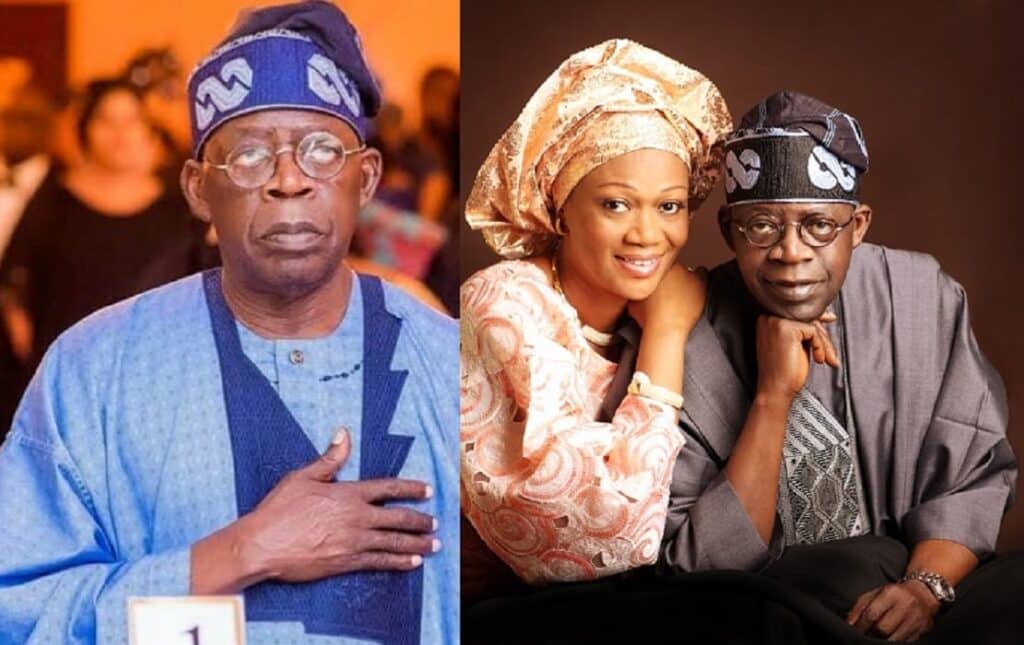
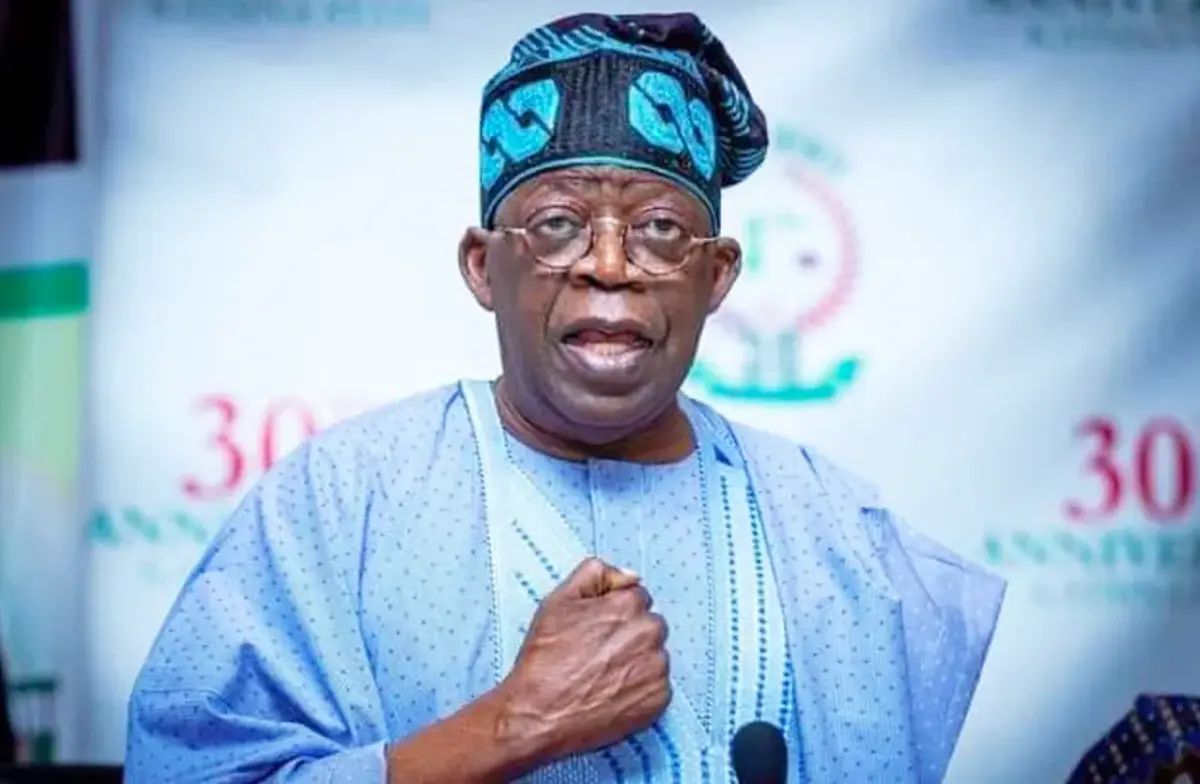
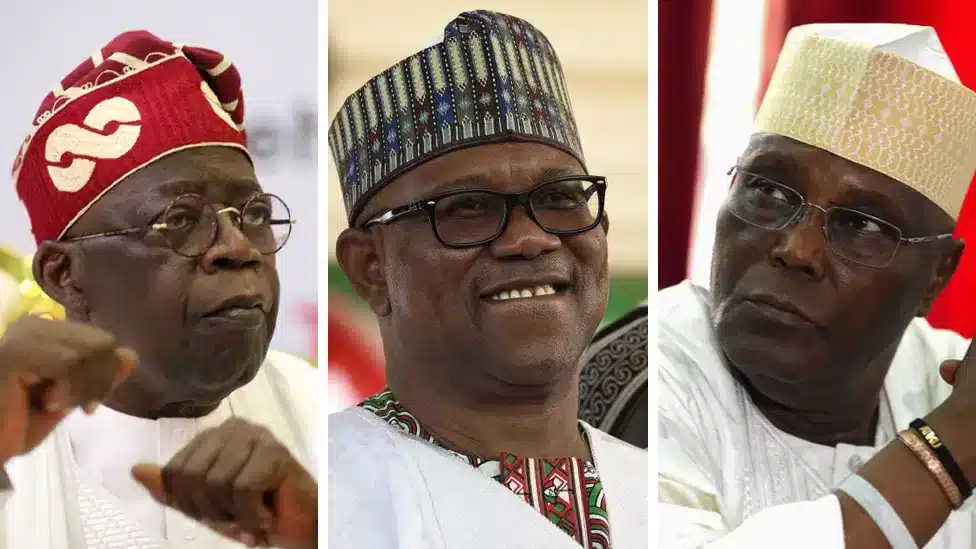
Nigeria’s President-elect, Bola Ahmed Adekunle Tinubu, is a Nigeria politician and a former governor of Lagos who is married to the pastor of Redeemed Christian Church of God (RCCG) and Senator, Oluremi Tinubu.
They got married in the year 1987 and have 6 children.
According to sources, Asiwaju had three children with different women before he got married to Oluremi.
His first three children are Jide Tinubu, Seyi Tinubu, and Shade Tinubu, while his kids with Remi are Zainab Abisola Tinubu, Habibat Tinubu, and Olayinka Tinubu.
According to information gathered by the local media, Bola Tinubu sadly, sadly lost his first child Mr Jide Tinubu in 2017. Therefore, he has 5 children as of May 2022 who are still alive.
Here are the names and details of his children:
OlaJide Tinubu (late)
Folashade Tinubu-Ojo
Seyi Tinubu
Zainab Abisola Tinubu
Habibat Tinubu
Olayinka Tinubu
Olajide Tinubu
Jide Tinubu is the first child and first son of Bola Tinubu whom he had with his alleged first wife. Jide was born on October 12, 1974 (some reports state his year of birth as 1980) and graduated from the University of Liverpool, England where he studied law. Before his death, he practised as a lawyer in Mobil and also spent the majority of his lifetime in London. There he lived with his wife and three sons.
Sadly, he died of cardiac arrest on October 31, 2017, at the age of 43. After his death, Tinubu his dad described him as a “highly intelligent person with a vibrant personality and a zest for life”.
Tinubu’s first son, Jide Tinubu (Late)
Folashade Tinubu-Ojo
Folashade Tinubu, is the second child and first daughter of Bola Tinubu. She graduated from Middlesex University in London with a degree in business administration. Folashade has served as the Iyaloja General of Lagos State since 2013. She has authority over all traders in the markets of Lagos, including the ability to collect taxes from them. Oyetunde Ojo, a former member of the House of Representatives, is currently married to Folashade Tinubu Ojo. The pair has two children together as of May 2022 who were both born through surrogacy.
Iyaloja Folashade Tinubu-Ojo
Seyi Tinubu
Seyi Tinubu is the third child and second son of Bola Tinubu. He was born on October 13, 1985, and is 36 years old as of May 2022. Seyi Tinubu’s mother is allegedly Prophetess Bunmi Oshonike. According to reports, Tinubu had an affair with Bunmi leading to Seyi’s birth.
Seyi Tinubu graduated from the University Of Buckingham where he bagged a degree in Law. Aside from being a lawyer, Seyi is an entrepreneur and also philanthropist. He is the CEO of Loatsad Promomedia LTD, an advertising agency. Seyi is also the founder of the Noella Foundation. His foundation is a non-profit organization that creates job opportunities for Nigerians.
In August 2016, Seyi Tinubu married Nigerian-Lebanese entrepreneur Layal Holm. They had a colourful wedding ceremony at Lake Como, Italy. As of May 2022, Seyi Tinubu and his wife Holm have 2 lovely children.
Meanwhile, Seyi Tinubu allegedly has another child with Freda Francis, a Nigerian socialite and businesswoman who is also known to be an ex-girlfriend of music artist Iyanya. In 2021, there were rumours that Seyi Tinubu had gotten Freda pregnant for the second time. There was also news that his wife Layal Holm left him because of this. However, the Loatsad CEO debunked the rumour.
Seyi Tinubu and wife, Layal Holm
Zainab Abisola Tinubu
Zainab Tinubu is Tinubu’s fourth child. However, she is the first child of Tinubu with his wife Oluremi Tinubu because the first three children were from Asiwaju’s past relationships. Information about Zainab is currently scarce because her parents like to keep her off the media.
Habibat Tinubu
Habitat Tinubu is Tinubu’s fifth child and last daughter. She is Tinubu’s second child from Senator Oluremi. The only information about Habibat that is public is that she is a graduate of music. She graduated from Berklee College of Music, Boston on May 11, 2013.
Olayinka Tinubu
Olayinka Tinubu is Tinubu’s last child and third child from Pastor Oluremi. However, there is no information about Olayinka that is available online apart from his name.
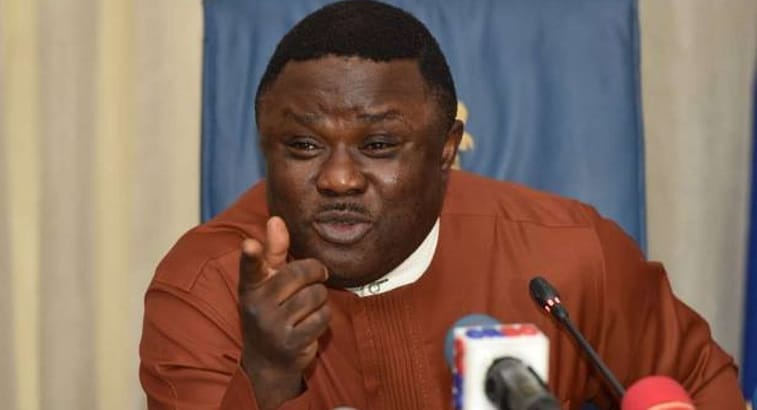
Ayade, who is nearing the end of his second term as governor, was a senator for the Cross River North from 2011 to 2015. He had hoped to serve in that capacity once more.
Sen. Jarigbe Agom-Jarigbe, the incumbent, won the election instead.
Ayade received 56,595 votes, while Agom-Jarigbe of the People’s Democratic Party received 76,145.
“By the powers conferred on me as the Returning Officer of the Northern Senatorial District, I hereby announce Jarigbe Agom-Jarigbe of the Peoples Democratic Party elected for the Northern Senatorial District,” the returning officer, Dr Emmanuel Emanghe, said.
Governor Ayade had risen to power as a member of the Peoples Democratic Party. He was elected into the Senate in 2011 as a candidate of the party in 2011 and as Governor in 2015. He was also re-elected governor as a PDP member.
The governor, however, defected to the All Progressives Congress in 2021. Agom-Jarigbe, however, chose to remain the PDP.
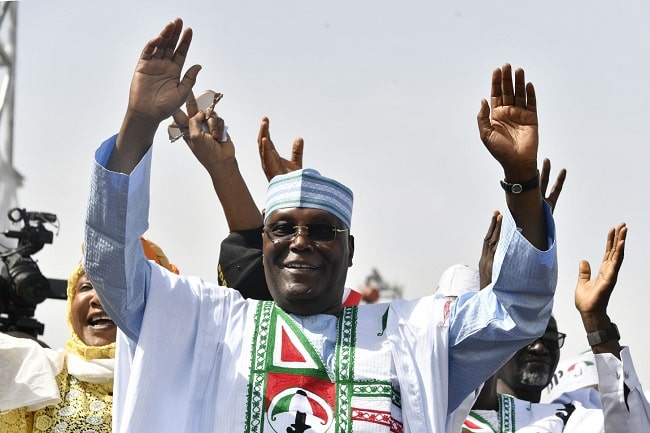
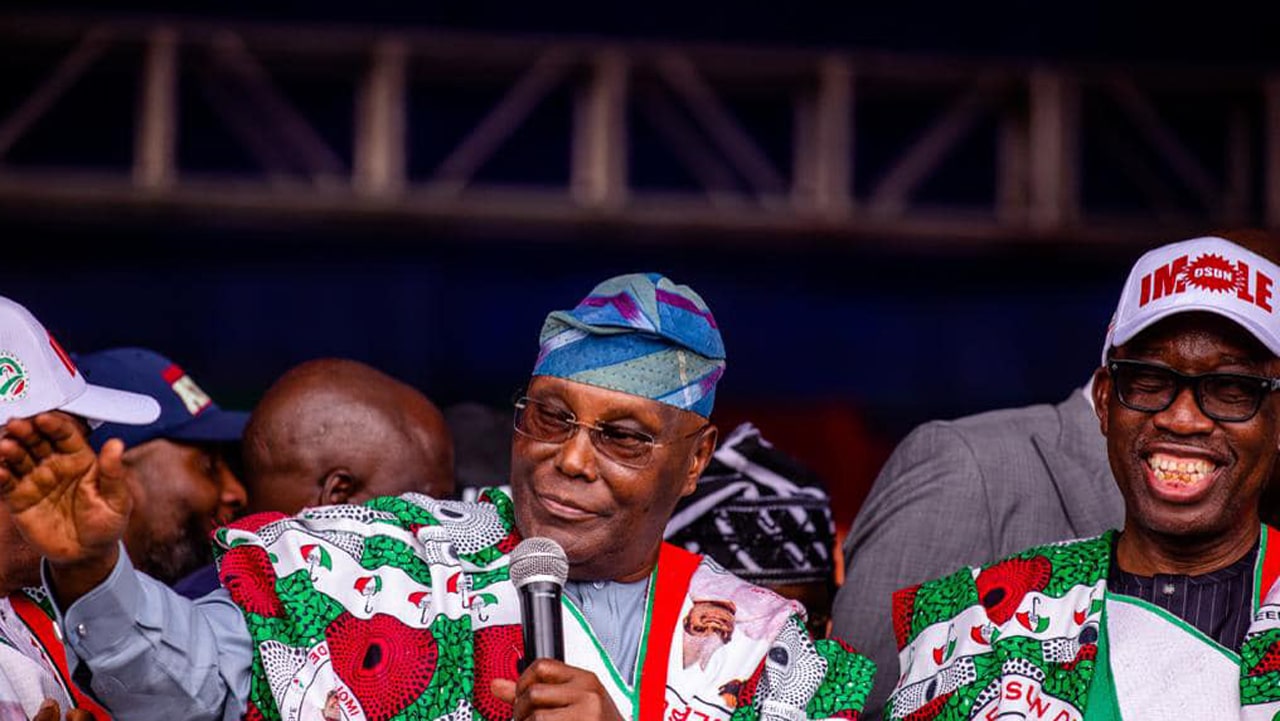
The Peoples Democratic Party’s (PDP) presidential candidate, Atiku Abubakar, won the Gombe State presidential vote on February 25.
In the 11 local government areas (LGAs) of the state, he received 319,123 votes, according to the results released by the Independent National Electoral Commission (INEC).
According to the Gombe State Collation Officer, Prof Maimuna Waziri, who announced the results around 1 a.m. on Monday, the PDP candidate received the most votes in the North-East state.
The former vice president defeated his closest competitors, Peter Obi of the Labour Party (LP), Bola Tinubu of the All Progressives Congress (APC), and Rabiu Kwankwaso of the New Nigeria Peoples Party (NNPP), by a margin of more than 160,000 votes.
When the results from 12 of the state’s 21 local government areas were totaled, the APC received 99,898 votes, PDP 213,117, NNPP 3,609, and LP 56,857.
Atiku Abubakar, the Peoples Democratic Party’s (PDP) nominee for president, is in the lead in his native Adamawa after winning all 12 local government areas (LGAs) that have been declared so far by the Independent National Electoral Commission (INEC).
The former vice president is currently ahead of his closest competitors, Peter Obi of the Labour Party (LP), Bola Tinubu of the All Progressives Congress (APC), and Rabiu Kwankwaso of the New Nigeria Peoples Party (NNPP), by more than 110,000 votes as of 8 o’clock on Monday
The collation of results in the state has since been postponed to Monday, by 10:00 in the morning.
The State collation officer, Professor Mohammed Mele announced the decision for the postponement after over one hour of waiting for the results of the remaining nine local government areas to arrive.
Mele at exactly 1:18 in the morning announced the decision to close the collation centre until 10:00 am.
So far, results from Lamurde, Guyuk, Gerei, Song, Numan, Fufore, Demsa, Yola South, Mayo-Belwa, Ganye and Shelleng local government areas have been collated.
Those remaining are Yola North (state capital), Jada, Gombi, Hong, Madagali, Maiha, Michika, Mubi North and Mubi South local government areas.
See results:
2023 PRESIDENTIAL ELECTION RESULTS FROM ELEVEN (12) LOCAL GOVERNMENT AREAS OF ADAMAWA STATE
01. LAMURDE LGA
TOTAL REGISTERED VOTERS – 76,097 ACCREDITED VOTERS – 25,105
Some Nigerians and Twitter users have gone hard on Nigerian superstar Ayodeji Ibrahim Balogun who is popularly known asWizkid as they dig out an old tweet he made during the EndSars.
Recall that during the EndSARS in 2020, the singer added his voice to the issue stating that they will exhibit actual power and that was by voting the right and capable person into power.
However, many Nigerians and social media users have been expecting to hear the singer come out to declare his political stance or participate in the ongoing presidential and national assembly elections which took place on Saturday, February 25, but nothing was heard about him.
This infuriated Nigerians as they dug out the old tweet made by Wizkid while raining insults on him.
Read the tweets below:
Yingi_d_artiste: “But he has shown real power ???? abi silence is no longer Golden?!”
iam_victorobi: “I unfollowed all those selfish peeps already”
thatgirl_kiki1: “Leave him alone! Tf”
manniexoo: “Wizzy na normal munshi, e nor get level”
enviableresources: “Nobody would be speared in this fight for our freedom”
fhavour_agueze: “Na Una wey dey send this guy I blame”
nembe_boy: “Make una shut up. We de FC and 30BGs are sensible enough to vote Obi. Make una leave these men.”
betina_unusual: “The so insulted rappers in Nigeria came out to vote while the person who was insulting them is in another man country playing drums and it not only him most of them from music industry to Nollywood just few came out The question is are not citizens of Nigeria again.”
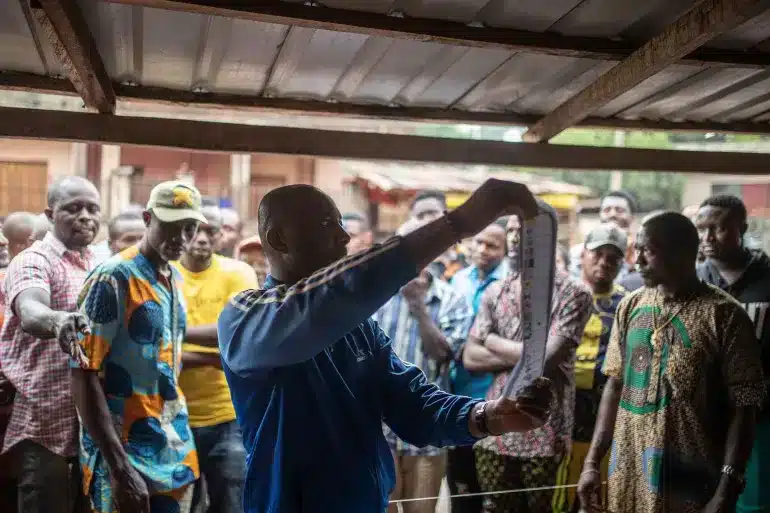
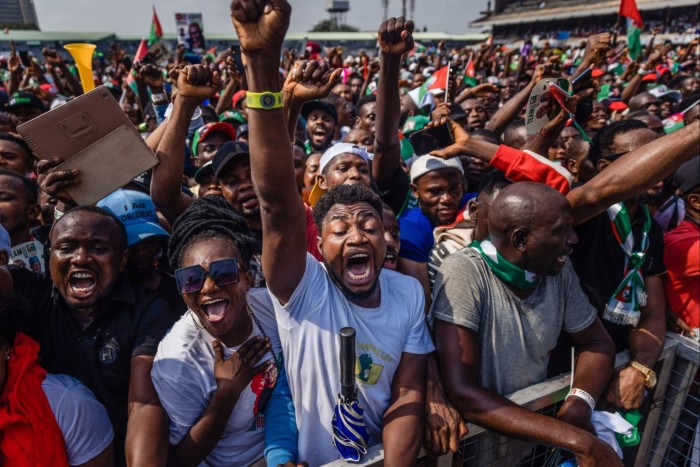
Large crowds of Nigerians hoping for a fresh start after years of escalating violence and hardship under outgoing President Muhammadu Buhari were not deterred, despite the lengthy delays and scattered acts of violence that took place on Saturday in Africa’s most populous country.
The official results could be anticipated late on Sunday, according to the electoral commission. By the time it was time to count the votes, some polling places had already closed, while others were still accepting votes.
Now, Sunday is anticipated to see some voting.
Regardless of the outcome, numerous crises will arise.
Africa’s biggest democracy is struggling with rebels in the northeast, an epidemic of kidnappings for ransom, conflict between herders and farmers, shortages of cash, fuel and power, as well as deep-rooted corruption and poverty.
The ruling All Progressives Congress (APC) and the outgoing administration have been credited for the ongoing cash and fuel crisis that has paralysed economic activity nationwide. Voters said they were showing their dissatisfaction at the polls.
“Everything that has happened in the past eight years has [been] draining for me,” Oyinkan Daramola, 29, told Al Jazeera. She declined to disclose whom she has voted for out of fear of possible reprisals but hinted at a disdain for the two dominant parties.
This was a common feeling in various locations visited by Al Jazeera across six local government areas in Lagos.
“We cannot keep doing the same thing over and over again and expecting different results,” Daramola said.
Buhari, a retired army general, is stepping down after serving the maximum eight years allowed by the constitution. The main contenders to succeed him are former Lagos governor Bola Tinubu, 70, of the APC, former Vice President Atiku Abubakar, 76, of the main opposition Peoples Democratic Party (PDP), and former Anambra State governor Peter Obi, 61, of the smaller Labour Party.
All three voted in their home states, surrounded by chaotic scrums of reporters and supporters.
Some states were expected to announce results on Sunday, and the final tally from all 36 states plus the federal capital Abuja was expected within five days of voting. National Assembly seats are also on the ballot in this election.
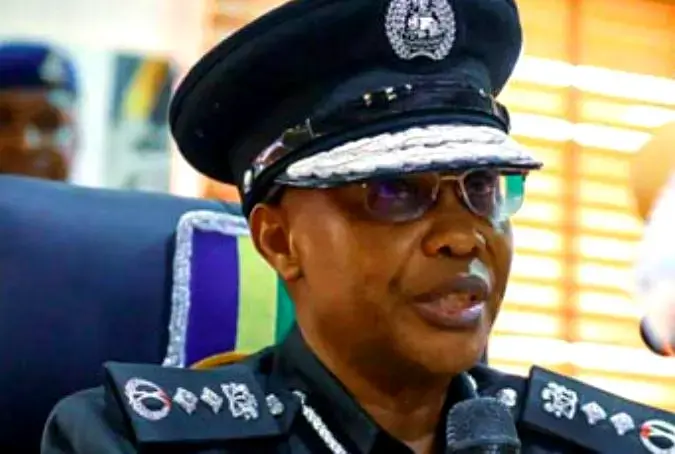
“Polling units in a number of areas closed and sorting and counting of ballot papers have commenced,” Mahmood Yakubu, Independent National Electoral Commission (INEC) chairman, said in a press briefing on Saturday evening.
Voting delays
In Mpape, a largely undeveloped but densely populated district within the capital territory, hundreds of weary voters were seen waiting to cast their votes.
“I’ve been here since 7am today just to vote. I came before the INEC officials even got here, and yet, I’m not ready to leave here until I have voted,” a 45-year-old school teacher, who gave her name only as Patricia, told Al Jazeera at approximately 3pm local time (14:00 GMT). She was one of nearly 700 people waiting to vote.
At 7pm (18:00 GMT), she was still in the queue, waiting her turn.
“I had to go home to feed my family, but I am back now,” she said. She was number 409 on the list of voters standing in the rain to cast their votes.
In Wuye District, a neighbourhood to the west of Abuja city centre, more than 100 people, mostly young, were seen still waiting to vote at nearly 8pm local time (19:00 GMT).
Officials from INEC cited technical problems with a new biometric antifraud voter accreditation system, the late arrival of vehicles to transport them and the absence of voter registers as causes of delays.
“It is frustrating that INEC are not prepared for us. All we want is just to vote,” said Sylvester Iwu, who was among a large crowd waiting at a polling station in Yenagoa, the capital of Bayelsa State in the southern oil-producing Niger Delta.
In a televised news briefing, INEC’s Yakubu said six biometric machines had been stolen in northern Katsina State and two in southern Delta State. He also acknowledged the delays but said voters would be able to cast their ballots.
“The election will hold, and no one will be disenfranchised,” he said.
Yakubu said at a later briefing that voting would take place on Sunday in several wards in Yenagoa that had experienced severe disruption on Saturday.
Morayo Ajayi, a 22-year-old undergraduate student in Akwa Ibom, said she is determined to vote for her candidate no matter how late it got.
“I don’t care if I have to sleep here, but I’m going vote for Peter Obi today,” she said. “Of course, I’ve been waiting for hours, but I don’t mind the wait. I will see this to the end,” she said.
Many youths across Nigeria are supporting the Labour Party’s candidate Peter Obi. Still, the APC’s Bola Tinubu and Atiku Abubakar of the PDP are widely seen as the candidates to beat
In Elegushi, an affluent area of Lagos, 54-year-old banker Osho Adekunle waited in line for five hours. He is voting for Tinubu because of his “antecedents” in Lagos, a fulcrum on which Tinubu’s supporters based his campaign.
“We that know about the history are not voting on sentiment but on practicality,” he said.
Voter frustration
There were reports of scattered violent incidents on Saturday, though not on the scale seen in previous elections in the country of more than 200 million people.
In northeast Borno State, suspected fighters from the Boko Haram group fired mortar shells in the rural Gwoza area, killing one child, wounding four others and disrupting voting, army sources said.
In Abuja, a team from the anti-corruption Economic and Financial Crimes Commission (EFCC) was attacked by thugs just after arresting a man on suspicion of paying for a group of people’s votes using a banking app, the commission said.
In most areas, however, the day appeared to have unfolded peacefully despite frustrations over the delays.
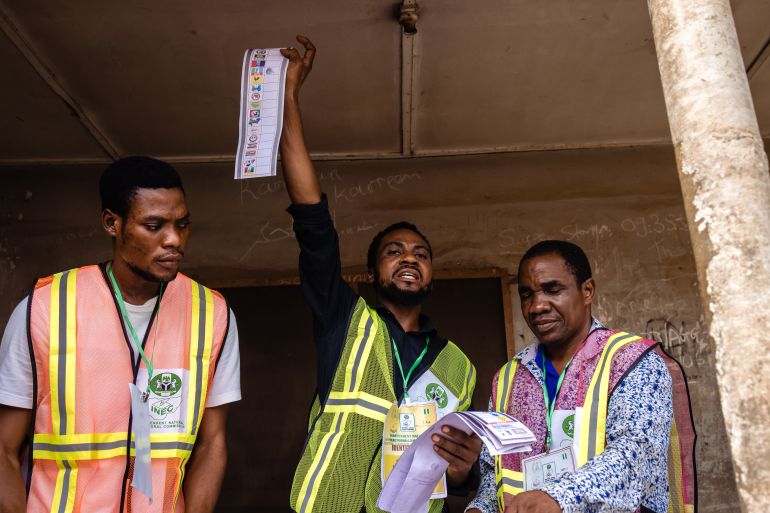
An INEC official holds up a ballot paper during the counting process at a polling station in Egbeda, Lagos, during Nigeria’s presidential and general election [Benson Ibeabuchi/AFP]
In Aguolu, Obi’s hometown in his native Anambra, voting went smoothly. EFCC officials stopped by to monitor voting there for any possible inducement of voters.
Across parts of Onitsha, Anambra’s commercial capital, and portions of nearby Asaba, the administrative capital of Delta state in the Niger Delta region, many old and young people said they were voting for Obi.
This, despite Delta state Governor Ifeanyi Okowa, an Igbo, being deputy governor on the PDP’s ticket alongside Atiku Abubakar, whom Obi ran with in 2019.
“That’s not my problem, ” Emmanuel Edozie-Uno, a 23-year-old student voting for Obi in Asaba, told Al Jazeera. “I voted for Obi.”
The electoral body moved many voters from some polling units to others to decongest units that were considered overpopulated.
Such reassigned voters had been informed by INEC through text messages that they had been moved to units not far from their original voting units, and they were advised to visit a link provided by the electoral umpire to confirm the new polling units.
Bola Tinubu, the All Progressives Congress (APC) candidate for president, cast his ballot at a polling location in Bourdillion, Ikoyi, Lagos State.
He did so along with other party leaders and his wife Remi. Speaking to reporters, he declared that Nigeria’s democracy “is here to stay” and that he is “too confident of victory.”
He claimed that the voting process was “going well” and “going smoothly.”
On the turnout of voters, the APC candidate said, “This is expected; we need a good turnout, and that is the adoption and the commitment to democracy and the democratic process that must take place.”
Asked how certain of victory he is, Tinubu said, “I’m too certain.”
The APC flag bearer is one of the leading candidates in the race for Aso Rock. Tinubu’s major contenders include Atiku Abubakar of the Peoples Democratic Party (PDP), Peter Obi of the Labour Party (LP) and Rabiu Kwankwaso of the New Nigeria People’s Party (NNPP).
Accreditation and voting have commenced in many polling units across Nigeria as the 87.2 million voters with Permanent Voter Cards go to the polls to elect a new president and members of the country’s National Assembly.
Officials of the country’s electoral agency,the Independent National Electoral Commission (INEC), are on the ground at the 176,606 polling units scattered across the 36 states and the Federal Capital Territory that make up Nigeria.
Atiku Abubakar, thePeoples Democratic Party’s (PDP) presidential candidate, and his wife Titi have cast their ballots at Polling Unit 012, Ajiya Ward in Adamawa State’s Yola North Local Government Area.
Speaking to reporters, the former vice president expressed optimism and confidence that he would win the election for president and succeed President Muhammadu Buhari, whose two terms expire on May 29, 2023.
One of the front-runners in the race for Aso Rock is the PDP flagbearer. Bola Tinubu of the All Progressives Congress (APC), Peter Obi of the Labour Party (LP), and Rabiu Kwankwaso of the New Nigeria People’s Party (NNPP) are among Atiku’s top rivals.
Atiku was also the PDP candidate in 2019, and he came in second with over 11 million votes, right behind Buhari, who polled over 15 million votes.
Nationwide, officials of the country’s electoral agency, the Independent National Electoral Commission (INEC) have arrived at some of the 176,606 polling units scattered across the 36 states and the Federal Capital Territory that make up Nigeria.
Accreditation and voting commenced around 8:30 a.m. in some polling units in parts of Nigeria as the 87.2 million voters with Permanent Voter Cards go to the polls to elect a new president and members of the country’s National Assembly.
Welcome to our live coverage of the Nigerian elections! Today is a pivotal day in the country’s history, and we are here to bring you all the latest updates from every polling station. As the day unfolds, we will be keeping a close eye on the situation. Check out this livestream below from News Central and stay tuned to our website and social media platforms for real-time updates.
Ms Agnes Akpe, Head of Voter Education and Publicity Department INEC FCT, told the Newsmen that the non-sensitive materials were distributed weeks ago.
Akpe said that the distribution of sensitive materials began on Feb. 23 and the last batch was distributed to the Abuja Municipal Area Council (AMAC) on Feb. 24.
She said that on Feb. 23, the sensitive materials were collected from the Central Bank of Nigeria (CBN ).
She said that the materials were brought to the six area councils so that stakeholders such as the media, political parties, IPAC and other agents could witness the distribution.
“So, we brought the materials for the six area councils here , the reason for bringing them here was that the media could be a witness and the political parties, IPAC was also present and other agents.
“Aside from that, we also needed to add the Bimodal Voter Accreditation System (BVAS) that was with us because we had to configure them for each of the polling units.
“So, when they brought the ballot papers, we now added the BVAS for each of the area council and sent them under heavy security.
“So far we have concluded that by this morning ,so we are pretty much ready. ”
Akpe, therefore, advised FCT residents to come out and vote for the change they want to see.
“Your prayer points will not count , it is your vote that will count,” she said.
Akpe debunked the notion that people without their vote cards could vote with just the last six digits of their cards.
She said that the electoral Act stipulated that people must be present with their PVCs before voting, “without your PVC, there is no voting,” she said.
She called on residents to come out with their PVCs, locate their polling units ahead of time and vote.
Aare Afe Babalola, Elder Statesman and Founder of Afe Babalola University, Ado-Ekiti (ABUAD), has slammed the Federal Ministry of Education and the National Universities Commission (NUC) for ordering a mass closure of Nigeria’s universities due to the country’s upcoming elections.
Nigeria’s Minister of Education, Mallam Adamu Adamu, had on February 3, 2023, ordered the Executive Secretary of the NUC, Prof. Abubakar Adamu Rasheed, to shut down all universities in Nigeria between Wednesday, February 22, and Tuesday, March 14, 2023, on the ground of “concerns expressed on the security of staff, students, and properties of respective institutions.”
Babalola, a former pro-chancellor of the University of Lagos, was particularly incensed that the ministerial order to close all universities in Nigeria could be given to the NUC, the regulatory body for higher education in Nigeria, without any notice to or consultation with the vice chancellors, owners, and Board of Trustees of all private universities, who are significant players in the country’s educational landscape.
His words: “The forced closure of Nigeria’s universities by the Minister of Education and the NUC has done irreparable damage to students of Nigerian universities. Their problems have been worsened by the scarcity of money caused by banks and Automated Teller Machines (ATM), all of which made transportation back home more dangerous than ever before. Of course, the illegal closure has adversely affected the curriculum, particularly with respect to private universities, which are reputed for their predictable academic calendar and absence of strike actions.”
He was worried that Nigeria appears to be oblivious to the time-honoured maxim that “if you want to destroy a nation, you don’t need bayonets, bombs, or nuclear warheads. All you need is to destroy its education.”
Commending civilised nations for prioritisinghow not to disturb academic calendar of universities, the leading educationist recalled the events surrounding the COVID-19 pandemic, which shook the entire world to its very foundation between November 2019 and the better part of 2020, as a result of which the then British Prime Minister, Mr. Boris Johnson, stated loudly that “Covid 19 is a disaster, while the closure of schools is more disastrous. Keeping schools closed a moment longer than is absolutely necessary is socially intolerable, economically unsustainable, and morally indefensible. Without resumption of formal education, a generation of children is likely to have its employment and earning prospects blighted.”
Terrified by the ministerial directive which was taken by the NUC hook, line and sinker, the legal juggernaut who spoke at the induction of ABUAD’s newly qualified 123 Medical Doctors on Monday, raised the following posers: “Does the Minister of education have the statutory power to direct the NUC to close down universities on the ground of “the forthcoming elections and the concerns expressed on security of staff, students and properties of respective institutions?
“Does the NUC have the statutory authority to close all or any university in light of the upcoming election and the expressed concerns about the security of staff, students, and properties at respective institutions?”
“Are there no provisions in our law to deal with any security report by security agencies which allege concerns on security of staff, students and properties of respective institutions?
“Was the order to close down universities known to the President, the Minister of Defence, the Minister of Interior, or the Executive Council?” In answering these questions, Babalola relied on the combined effects of the NUC Act of 1974 and the Education (National Minimum Standards and Establishment of Institutions) Act of 1985 and returned the verdict that the minister has no statutory power to issue a directive to the NUC to close down Nigeria’s universities for the adduced reasons.
Section 4 (2) of the 1974 (NUC) Act says: “The minister may give the Commission directives of a general character relating generally to particular matters, with regard to the exercise of the Commission of its functions under this Act, and it shall be the duty of the Commission to comply with such directives.”
According to Babalola, the functions in respect of which the minister can give directives under this Act are non-compliance with the regulations on academic matters and not matters connected with election.
“Clearly, the minister has no statutory powerto give a directive to the NUC to close down universities.” he affirmed. Relying on Section 2(1) of the Education (National Minimum Standards and Establishment of Institutions) Act of 1985, Babalola said that: “It is abundantly clear that the NUC has no statutory power to carry out the instruction of the minister to close down all universities.”
It is also clear from the wording of the section of the Education (National Minimum Standards and Establishment of Institutions) Act of 1985 that the power of the NUC to close down a university is severely restricted to an institution which failed to comply with Section 19, 20 and 21 of Education (National Minimum Standards and Establishment of Institutions) Act of 1985 in respect of failure to comply with the NUC law on education.
Section 2 (1) of the Education Act of 1985 provides as follows: “Any institution established otherwise than in compliance with Section 19, 20, or 21 of this Act may be liable to closure by the appropriate authority, but before closing down any such institution, the appropriate authority shall afford the proprietor of the institution an opportunity to make representations for consideration by the appropriate authority not later than 60 days after receipt of notice by the proprietor from the authority of the intention to close down the institution.”
In his view, the time-honoured legal maxim of “Nemo dat quod non habet” which means, “No one can give what he does not have” should have been allowed to apply squarely in this case.
In place of the mass closure of universities, he pointed out that the government and law enforcement agents should have evoked the relevant provisions in the country’s criminal code and other legislations to deal with any person, whatever his class, who the security agents have reasons to believe as likely to put security of staff, students and properties of respective institutions in jeopardy.
Drawing an analogy to drive home his point, he said: “It would be improper to ask a landlord with his family to quit the family house because security agents are aware that some criminals want to attack his house. The prudent thing would be to beef up security around the house.”
The alternative, according to him, is that since security agents are of the view that the election will not be devoid of violence, they should have identified the problems that could engender violence during the election and evoke the law against offenders and not closure of universities.
To prevent a reoccurrence of this trend in future, the countrymust fashion out a new people’s constitution, which will not make politics the only lucrative business in town, but one which will allow only public-spirited and patriotic Nigerians to contest elections without the influence of godfathers and moneybags, thereby giving way to patriotic Nigerians who can serve the country pro bono or earn sitting allowances only. Olofintila writes in from Ado-Ekiti
In an effort to avoid unrest leading up to the February 25 elections, the 18 presidential candidates in Nigeria’s general election have signed a second peace accord in the nation’s capital, Abuja.
The agreement is to “place national interest above personal and partisan concerns” and to “ensure the conduct of free, fair, credible, transparent, and verifiable elections, cognizant of the need to maintain a peaceful environment before, during, and after the 2023 general elections.”
Former military head of state and retired general Abdusalam Abubakar claimed that a prior agreement, which was signed in September 2022, had been broken numerous times.
National Peace Committee and the Kukah Leadership Centre, an Abuja-based think tank, organised the signing on Tuesday night, which was attended by President Muhammadu Buhari and other African and international leaders and diplomats.
Committee officials said the accord was meant to bind political parties, candidates, and their supporters to resort to constitutional means if they are dissatisfied with electoral outcomes.
Abubakar, the chairperson of the National Peace Committee, said 44 percent of the September accord’s violations “were carried out by the spokespersons for political parties, 26 percent by party members, 19 percent by the presidential candidates themselves, 11 percent by the hardcore supporters and four percent by the chairmen of the parties”.
“As a nation, we’ve got to put a stop to all this,” he said, without providing further details about the incidents.
Saturday’s race to succeed Buhari is being keenly contested.
Among the 18 candidates, four are generally accepted to be top contenders.
The ruling All Progressives Congress (APC) candidate, former Lagos governor Bola Tinubu, faces his former associate and Nigeria’s former vice president, Atiku Abubakar, of the main opposition People’s Democratic Party (PDP).
The Labour Party’s Peter Obi, has, however, emerged as a surprise third candidate to challenge a traditional dichotomy in Nigeria’s political landscape. A fourth candidate, Rabiu Kwankwaso of the New Nigeria People’s Party (NNPP), is seen as a wild card in the race.
Tuesday’s signing was held in the presence of domestic and international stakeholders to monitor for potential violence – a common feature in Nigerian elections.
Along with the presidential candidates, members of observer missions from the African Union, European Union and the Commonwealth, and other diplomats were present at the signing.
Also present were Thabo Mbeki, Joyce Banda, Uhuru Kenyatta, John Mahama and Ernest Bai Koroma, the former presidents of South Africa, Malawi, Kenya, Ghana and Sierra Leone respectively who are heading foreign observer missions.
Africa’s richest man, Aliko Dangote, another member of the committee also attended, as was Patricia Scott, secretary-general of the Commonwealth and a representative of the United Nations secretary-general.
President Buhari urged all the contestants to have the “confidence to trust our legal systems”.
”Let me remind all Nigerians not for the first time that this is the only country we have and we must do everything to keep it safe, united and peaceful,” he said. “There should be no riots or acts of violence after the announcement of the election results. All grievances, personal or institutional, should be channelled to the relevant courts.”
Mahmood Yakubu, the chairman of the Independent National Electoral Commission, said election preparations were well under way, with ballot papers and other materials being moved to polling units nationwide.
“By Friday, we will activate the registration area centres so that at first light on Saturday, polling units will open on time.”
It was in January that the comedy routine of Mr Makati began to change. His weekly Saturday night standup at the Memento Lounge in Lagos, Nigeria’s pulsing commercial capital, switched from gags about the daily hassles of living in Africa’s most populous nation to the practicalities of voting.
“He was telling jokes about how to obtain your PVC [Permanent Voter Card], getting people to register to vote,” says the novelist A Igoni Barrett, a regular at the club. Although no names were mentioned, Barrett says, everyone knew what the voter registration drive was all about.
“Ninety per cent of the audience support Peter Obi,” Barrett estimates, referring to the relative political newcomer whose emergence as a credible candidate has electrified young voters and shifted the odds in this month’s presidential election. “Nigerians are trying to take back power through the ballot box,” he adds.
Nigeria is the biggest economy in Africa and home to at least 216mn people, though some sources put the figure closer to 220mn. Its population will nearly double in the next 25 years to 400mn, surpassing the US as the world’s third most populated country.
The success or failure of this oil-rich mammoth matters greatly to Africa and to the rest of the world, says Chidi Odinkalu, a professor at the Fletcher School of Law and Diplomacy at Tufts University. The election is being fought against the backdrop of rampant insecurity and economic stagnation. Crisis-ridden Nigeria is no longer the stabilising force it once was in a region where coups, terrorism and Russian influence are proliferating.
“No one wants to see Nigeria go up in flames,” says Odinkalu. “We have been teetering on the brink for such a long time that Nigerians have come to believe we are defying the laws of gravity. But some day, gravity will have its say.”
In the first round of voting on February 25, Obi, 61, will take on two more seasoned politicians with much deeper pockets and the backing of well-greased party machines. Bola Tinubu, 70, a former governor of Lagos and political kingpin running for the ruling All Progressives Congress party, is considered the man to beat. Atiku Abubakar, 76, a former vice-president, is making his sixth run for president as a candidate for the People’s Democratic party.
A few months ago, most Nigerians assumed the contest was between these two wealthy septuagenarians, a depressing prospect for many in a country where the median age is 18. There is a growing disaffection with big-money politics dominated by the same old faces.
By contrast, Obi, a businessman and former governor with a carefully crafted reputation for shunning the accoutrements of power, is something new. Yet all but Obi’s most loyal supporters, who call themselves “Obidients”, are realistic about him being an urban phenomenon whose chances of converting social media buzz into victory are slim.
Sceptics say Obi’s tiny Labour party, which has no governors and only one senator, lacks the organisational capacity to get the vote out or to properly monitor the country’s nearly 177,000 polling stations to mitigate potential vote-rigging and other election-day tricks. Others deride Obi’s purported popularity as “four people tweeting in a room”.
A string of opinion polls put Obi well ahead of the two would-be frontrunners, whose campaign managers are privately rattled. Yet experts warn that polls, which tend to pick up the views of smartphone-owning urbanites, are unreliable. They may not accurately reflect the broader electorate in a multi-ethnic country where more than 500 languages are spoken. Polls are particularly sketchy outside the big cities, where people are sometimes paid in bags of rice or bundles of notes to vote for a particular candidate.
Many voters are keeping their intentions to themselves. In a recent poll by the data company Stears, 27 per cent said they would vote for Obi, putting him 12 points ahead of Tinubu. But 37 per cent of respondents declined to disclose their voting intention.
All of these factors help explain why political analysts consider this election the hardest to predict since Nigeria returned to democracy in 1999. The serious challenge by Obi, the first third-party candidate to make a dent during the campaign, means there is a possibility of a run-off for the first time in the country’s history.
Obi has won the endorsement of prominent Nigerians, including Olusegun Obasanjo, an elder statesman, and Chimamanda Ngozi Adichie, a celebrated author. In an open letter, Obasanjo, who ran Nigeria in the 1970s as a military general and again as elected president from 1999-2007, told young Nigerians they had the power to change history.
Some 40 per cent of 93mn registered voters are below 35. The more they show up to vote, in a country with a history of low turnout, the higher the chance of an electoral upset. In an interview with the Financial Times, Obasanjo said the youth vote and God would deliver Obi victory.
Odinkalu, of the Fletcher School, puts much of the electoral excitement down to raw hope. “Nigerians are in search of magic,” he says. “They are looking for a miracle.”
Everything at stake
Nigeria is not simply a failing state. Africa’s “sleeping giant” has a swagger and entrepreneurial drive reminiscent of the US.
A Nigerian, Ngozi Okonjo-Iweala, heads the World Trade Organization. Tech start-ups in Lagos, including several unicorns, attract more capital than anywhere else on the continent. Nigeria is a cultural powerhouse whose artists, from author and TED-talk darling Adichie to Burna Boy, an Afrobeats singer, command a global following. Kano-born Aliko Dangote, who made his fortune in salt, flour and cement and is building the world’s largest single-train oil refinery, is Africa’s richest person.
In better times, this has counted. Nigeria has been an engine of regional, if not continental, growth and a democratic, stabilising force. Economically and diplomatically diminished, the country has drifted during the past eight years of President Muhammadu Buhari, a former military leader. A man who campaigned on a ticket of personal integrity has overseen an increase in corruption.
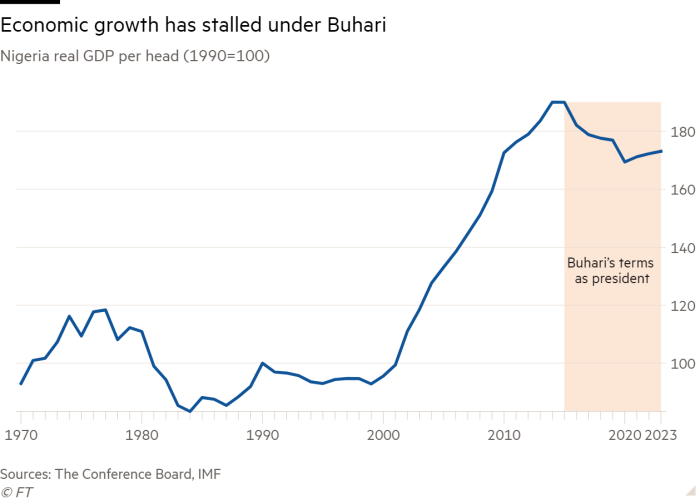
The economy, though still Africa’s biggest, has stalled. Under Buhari, income per capita has fallen and 90mn Nigerians live on less than $1.90 a day. At least a third of the population are out of work and tens of millions hold precarious jobs in the informal sector.
A recent survey by Afrobarometer, a pan-African polling organisation, found that 89 per cent of Nigerians thought their country was heading in the wrong direction. “What’s at stake in this election?” asks Ayoade Alakija, a health expert and critic of the political elite. “Nigeria is at stake,” she says. “Our very statehood is at stake.”
Security is in an appalling state. During Buhari’s presidency, some 60,000 people have been killed by terrorists, criminal gangs or the army, according to data compiled by the Council on Foreign Relations.
Though the threat from Boko Haram has receded, the Islamic State of West Africa Province, an Isis offshoot, kills and plunders with virtual impunity in some northern states. Violent herder-farmer clashes have spread to almost all parts of the country. Secessionist agitations in the south-east, which fought an almost three-year civil war in the late-1960s to create a breakaway Biafra state, has strengthened, causing violence and unleashing state repression.
Kidnappings and extortion have surged. “Almost everybody knows someone who has been abducted,” says Toni Kan, a public relations consultant who has moved to London because of safety concerns, part of a gathering brain drain.
Economic prospects look bleak. Foreign investment has shrunk. The manufacturing base has withered. Nigeria relies on petroleum exports for 80 per cent of government revenue, a structural challenge. But so much oil is stolen by criminals and corrupt state actors that official production is below 1.3mn barrels a day, 500,000 barrels shy of Nigeria’s Opec quota.
Further ahead, the world is turning away from fossil fuels. “I keep telling people that, if you squint now, you can see the end of oil,” says Feyi Fawehinmi, an author and political commentator.
The central bank has compensated for falling revenue by running the printing presses, stoking inflation, now at 22 per cent. The tax base is a dismal 6 per cent of gross domestic product. Almost all government revenue is swallowed up by debt service and payment of government salaries.
Despite decades of oil revenue, much of it stolen, the state has never provided the public goods necessary for economic take-off. More than 10mn children are out of school, two-thirds of them girls. Once prestigious universities, including Ibadan, Ahmadu Bello and Nsukka, are a shadow of their former selves, unable to pay lecturers properly or maintain buildings. Health provision is poor, with Nigeria’s elite relying on foreign hospitals. At 53, Nigeria’s life expectancy is shockingly low, a decade below Ghana’s, a country with a similar income per capita.
“There’s been incredible damage. “We’ve gone back on almost every development index,” says Fakhrriyyah Hashim, a peace and security researcher, referring to the past eight years. “In our entire democracy, things have never been this bad.”
Route to a reset
For decades, most Nigerians have felt powerless to stop the rot, convinced that their lives are at the mercy of venal politicians. This election, unexpectedly, has offered a glimmer of something different.
“Sometimes you go so far in a certain direction that you hit a brick wall,” says Dimieari Von Kemedi, an entrepreneur and former presidential adviser. “Whether in nature or in human life, eventually you must reset.”
That reset, at least politically, may have begun early on in the pandemic when young people took to the streets against state brutality in protests known as EndSARS, referring to a particularly brutal police unit. The EndSARS movement morphed into a broader alliance against the failings of Nigeria’s political elite but was brutally suppressed in October 2020 when members of the Nigerian army opened fire on protesters in Lagos, killing at least 12.
At the time, Tinubu, nicknamed the “godfather of Lagos”, was seen as unsympathetic. Obi by contrast tweeted his support of the protests, a move that enabled him to tap into youth sentiment. “The EndSARS base has effectively become an Obi base,” says Hashim, the researcher. “Young people had to explore other ways of non-violently challenging the government — and elections are the perfect route.”
Obi made a fortune in the import-export business and in banking. He won his political spurs from 2006-2014 as a two-term governor of Anambra state, leaving state coffers in a healthier position than he found them. He ran as vice-president for the People’s Democratic party in Abubakar’s unsuccessful 2019 campaign, somewhat undermining his image as a political neophyte.
Despite his reputation for frugality and probity, Obi’s name appeared in the Pandora Papers, a leaked dossier of offshore wealth, which showed he had registered business entities in tax havens, failing to declare them as required. Obi says the money was legitimate and that he did not know he had to declare assets registered in family members’ names.
His opponents have arguably worse allegations against them. Abubakar was named in a 2010 US Senate committee report in connection with the transfer of $40mn in “suspect funds”. Tinubu had his assets frozen in the 1990s by the US government, which said it had probable cause to believe the money was linked to drugs. Tinubu settled the case with a payment of $460,000. Both men deny wrongdoing.
While Obi has question marks against his name in common with his two main rivals, he is an outsider in other ways. He is an Igbo from Nigeria’s south-east. Although Igbos are the third-largest ethnic group behind the Yoruba and the Hausa, an Igbo has never won the presidency since the return to democracy.
Neither has any presidential candidate outside the two main parties won more than 7.5 per cent of the vote since 1999. Candidates must win at least 25 per cent of the vote in at least two-thirds of Nigeria’s 36 states plus Abuja, the capital, to win.
There are doubts about whether Obi, a Catholic, can muster enough support in the predominantly Muslim north, where his faith and relatively low profile could count against him. He has chosen northern Muslim Yusuf Datti Baba-Ahmed as his running mate, a formula that has proven successful in the past. This time, Tinubu, a southern Muslim, has also chosen a northern Muslim as running mate, a so-called “Muslim-Muslim ticket” that may not play well in his southern heartland.
Experts say Obi’s strong showing, even if limited to the south, has complicated the electoral map, making it harder to predict the winner.
Nigerian elections have rarely been about policy. Politicians frequently swap party allegiance. This time, though, Obi’s participation plus the fact that current policies are clearly not working, mean the level of debate has risen, if only a notch.
Both Obi and Abubakar are promising pro-business policies and a bigger role for the private sector. All three have committed to taking on the two taboos of Nigerian politics: scrapping a ruinously expensive fuel subsidy and freeing up the exchange rate.
Abubakar Suleiman, chief executive of Nigeria’s Sterling Bank, argues that both distortions have warped economic incentives, facilitating corruption and promoting “rent-seeking” over productive activity. “These things have prevented the private sector from growing at a [sufficient] pace and creating employment. If we’d removed those subsidies, we’d have been in a very strong position today,” he says.
Lifting them will not be easy. Big vested interests profit from the opaque currency regime. Although the fuel subsidy benefits the car-owning middle class, poor people regard cheap petrol as one of the few things they get from the state. “Without legitimacy, whoever wins can’t take the decisions the country needs,” says Odinkalu of the Fletcher School. “If the person does not have legitimacy the country is going to burn.”
Dele Olojede, a Nigerian journalist who won the Pulitzer Prize, says it is important not to have unrealistic expectations of Obi, either about his capacity to win the election or to turn the country around if he pulls off a miraculous political upset. Like others, though, he acknowledges that Obi has shaken things up. “It’s a sign of improvement,” he says. “It forces the other two candidates not to take things for granted.”
This election is also likely to be less easy to rig, say political experts, thanks to improvements in the electronic voting system and the recent withdrawal as legal tender of old banknotes that could have been used to bribe voters. Kemedi goes so far as to conclude that “the old party machinery is broken”.
Olojede is more cautious. “I don’t think Obi will win, but there is a possibility of a surprise,” he says. “And any one of these guys will be better than Buhari.”
In preparation for the 2023 general elections, the Nigerian government has ordered all universities and inter-university centers close from February 22 to March 14.
The decision follows concerns about the safety and security of staff and students during the poll.
The directive, which was issued by the National Universities Commission (NUC) was directed by the Minister of Education, Adamu Adamu, local media reported on Thursday.
The Independent National Electoral Commission (INEC) has scheduled the presidential and national assembly elections for 25 February, and governorship and states’ houses of assembly elections for 11th March.
Polls will go ahead despite naira crisis: Nigeria's electoral commission says https://t.co/AiIrgWMtsV
The electoral body has insisted the elections would go ahead as scheduled. This is in spite of the cash and fuel scarcity.
“In view of the foregoing and concerns expressed on the security of staff, students and properties of the respective institutions, the Minister of Education, Mal. Adamu Adamu has, following extensive consultations with the relevant security agencies, directed that all universities and Inter University Centres be shut down and academic activities be suspended between 22 February and 14 March, 2023,” Mr Maiyaki wrote.
Nigerians, Civil Society Organisations (CSOs), and the House of Representatives had raised concerns over the possible disenfranchisement of some Nigerian students whose institutions had scheduled examinations through the period of the elections.
The House of Representatives also asked the government agencies in charge of tertiary institutions to shut them down during elections.
Students make up 40 per cent of the newly registered voters during the Continuous Voters Registrations between June 2021 and June 2022, INEC Chairman Mahmood Yakubu said in October 2022, according to a report by Premium time Nigeria.
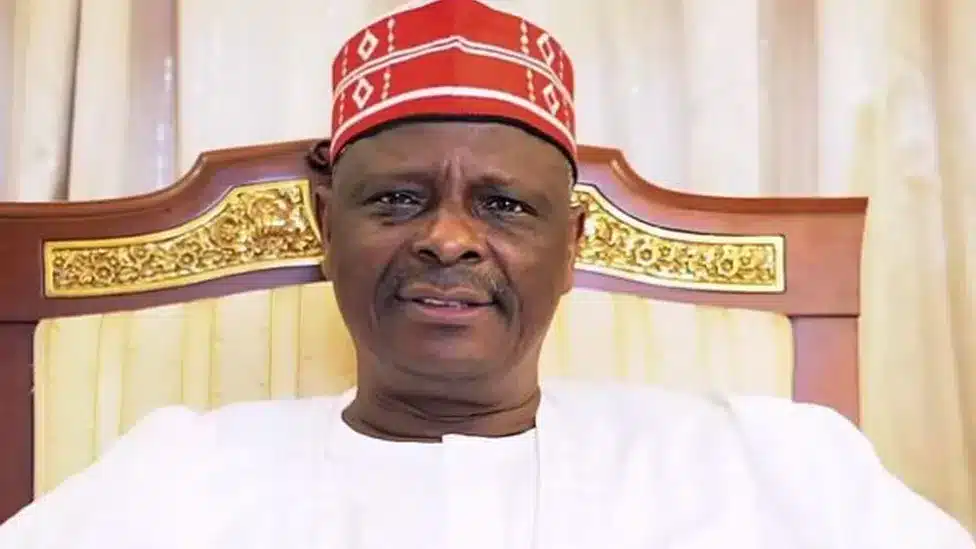
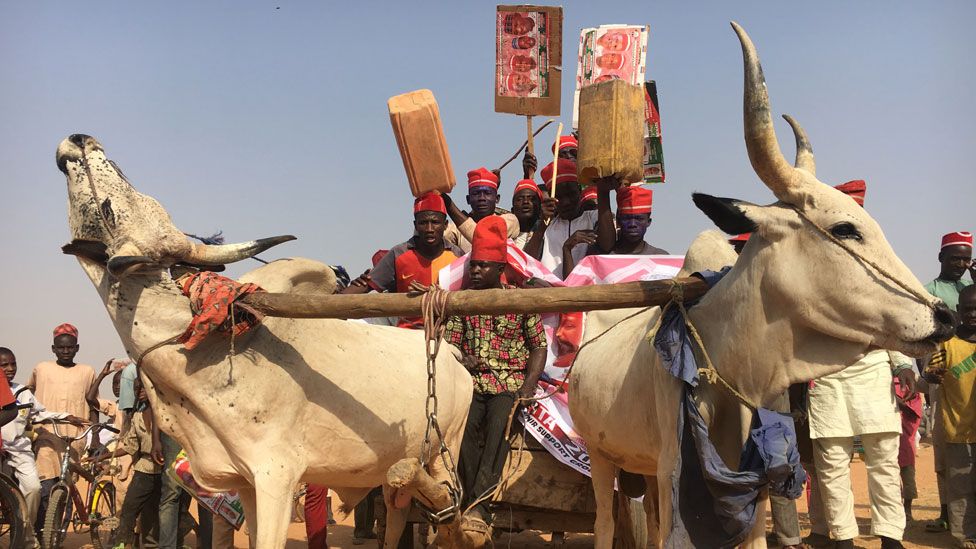
Rabiu Musa Kwankwaso, the 66-year-old politician vying to be Nigeria’s next president, is rarely seen without his red cap. It is a symbol of his ambition and his achievements – he is a former defence minister, former senator and served two-terms as governor of Kano, one of Nigeria’s most populous states.
The hats are also worn by his supporters in Kano who are part of his Kwankwasiyya movement, which translates from Hausa as the “Red Cap Revolution”.
This loyal political fan club has even followed him as he has switched parties – in particular his move in 2013 from the then-governing Peoples Democratic Party to the All Progressives Congress, the current ruling party.
Over his career he was been with five parties, and is now presidential candidate for the New Nigeria People’s Party (NNPP), little known nationally until he joined last year.
Analysts say he has little chance of winning the election outright, given his power base is largely in the north, but could cause a serious political upset by taking northern votes from Bola Tinubu of the APC and Atiku Abubakar, the PDP’s contender.
To win a presidential election a candidate must show they have national support by gaining 25% of votes in two-thirds of Nigeria’s 36 states, as well as having the most votes.
Political analyst Chisom Ugbariwould told the BBC that Mr Kwankwaso would need to make inroads in the south to achieve this.
At one stage a merger had been suggested with the another leading candidate, Peter Obi of the Labour Party, who hails from the south-east. Some said such an alliance stood a chance of wrestling power from the APC.
But in a BBC interview Mr Kwankwaso categorically ruled this out, saying the Labour Party candidate lacked his political pedigree: “You can’t compare him to me who have been in politics for many years.”
Strides in education
However, Ibrahim Sharada, a Kwankasiyya and member of NNPP, thinks his candidate’s fame and influence “stretches beyond northern Nigeria”.
And there is no doubt that he is one of the four leading candidates and should it go to a second round, he could become a king-maker given his loyal following in Kano, where he first became governor in 1999.
This was the year that marked the end of military rule – and he was not donning the famous red cap then.
That came more than a decade later. In fact he lost his gubernatorial re-election bid in 2003, which is when then-President Olusegun Obasanjo made him defence minister.
Image caption,Supporters of Rabiu Kwankwaso wear red hats
He served in this role until 2007 at a time of relative peace in Nigeria. One of his main manifesto pledges to combat the current state of insecurity the country faces – a Islamist militancy in the north, kidnappings, cattle-farmer conflicts and a separatist rebellion in the south-east – is to boost the army’s head count to one million by recruiting 750,000 extra personnel.
After his time in government, he returned to state politics, which is when he formed the Kwankwasiyya movement, taking inspiration from the late renowned anti-colonial freedom agitator Malam Aminu Kano, who became an eminent politician and social reformer in northern Nigeria after independence.
Dressed in red cap and a flowing while kaftan, he was famous for pointing out the inequalities of what was a fairly feudal society in the region – fighting for more equality, including the rights of women.
Kwankwasiyya, Mr Kwankwaso said, embodied those ideals – and the movement attracted a young following which liked to dress like their mentor.
Propelled to a second term as governor, Mr Kwankwaso said he delivered on these ideals in particular though his educational reforms, making education free at all levels to this day.
However, it is only available those that come from Kano and students need an “indigene certificate” to qualify.
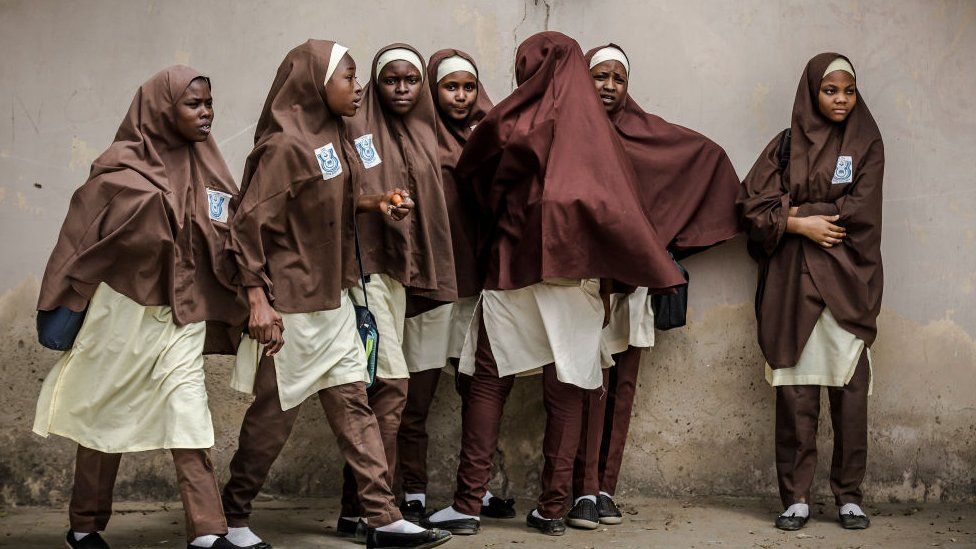
Image caption,Mr Kwankwaso introduced free primary, secondary and tertiary education in Kano
“He declared free education on assumption of office and was one of the first governors across Nigeria to introduce the school feeding programme for indigent pupils,” Kano journalist Yinusa Ahmad told the BBC.
“Hundreds of students also got foreign scholarships and now most of them form the most loyal base of his Kwankwasiyya movement.”
During his time as governor, he says Kano built many schools and invested in teachers, though the UN says the state still has one of the highest numbers of out-of-school children in Nigeria.
Education has clearly been important to Mr Kwankwaso, who is soft spoken but exudes a lot of confidence and charisma.
He thrived at school and went on to university, qualifying as a water engineer – gaining degrees in the UK and India.
He return to worked in that sector, mainly for Kano’s water and engineering agency, before entering the political fray.
Pension allegations
Like many Nigerian politicians, Mr Kwankwaso has faced corruption allegations.
In 2021, two years after completing a term as senator, he was questioned by the Economic and Financial Crimes Commission (EFCC) over the alleged diversion of pension funds while he was governor.
He denies the allegations, saying they are politically motivated, and the case has gone no further.
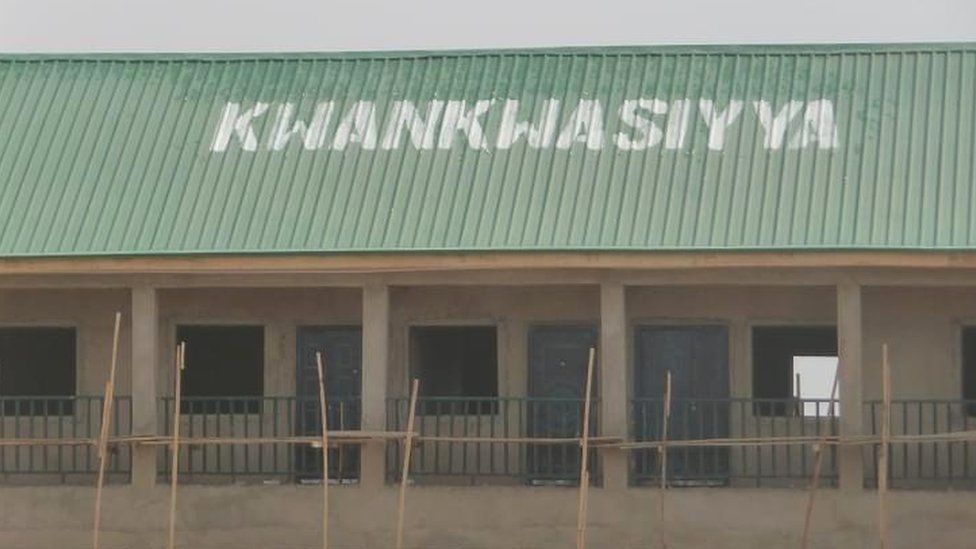
Image caption,Buildings built during Mr Kwankwaso’s second term as governor are emblazoned with the name of his Kwankwasiyya movement
Mr Kwankwaso, who is married with six children, exudes political confidence.
This was most recently demonstrated when he dismissed the need for an alliance to win the presidency. He is a man who likes to make his own mark – and it is something that can still be seen all over Kano city.
All the buildings constructed during his time as governor have “Kwankwasiyya” marked in huge capped letters across the roof. He wants no-one to forget him.
Nigerians voting for a new president next month will have 18 contenders to choose from but the three men seen as the leading candidates have been separately accused of trading in narcotics, money laundering and global tax avoidance.
None of them has ever been indicted, which would rule them out from running for office, but the high-profile allegations have raised questions over their candidacy.
“It is choosing between bad candidates,” said Auwal Rafsanjani, head of the Nigerian branch of anti-corruption watchdog Transparency International, pointing out how widespread corruption has caused devastating levels of underdevelopment and poverty in the oil-rich nation.
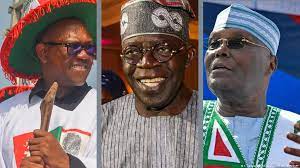
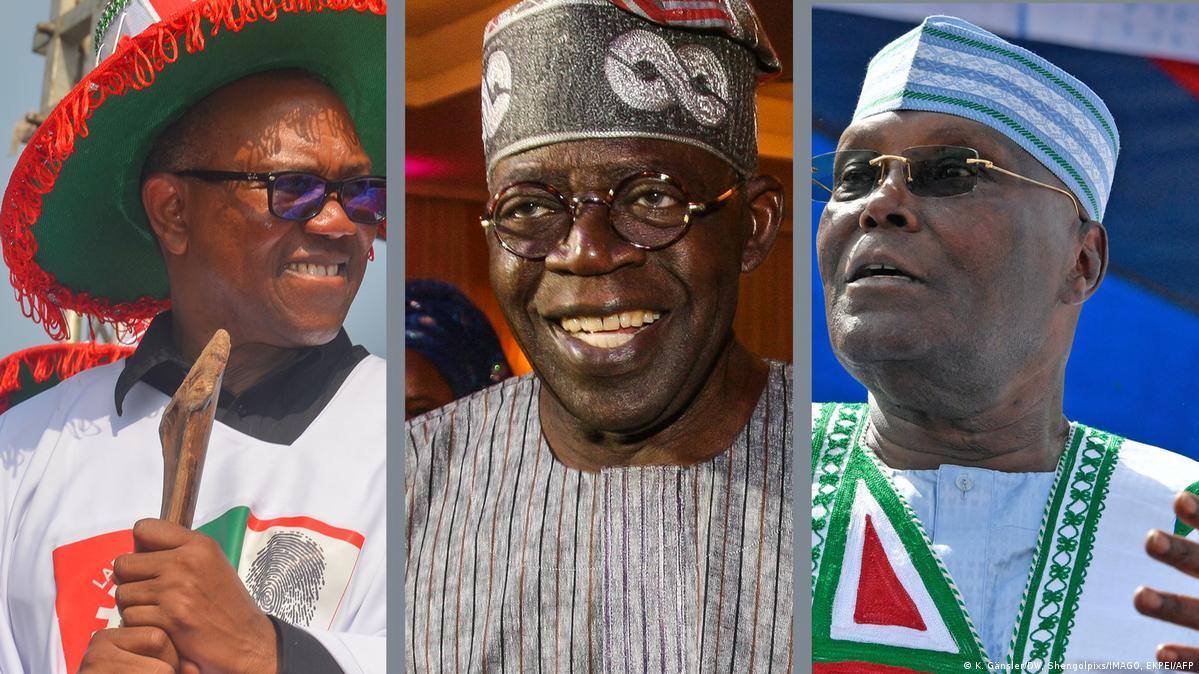
The three top contenders are Bola Tinubu from the governing All Progressives Congress, Atiku Abubakar from the People’s Democratic Party’s and Peter Obi from the Labour Party.
All three say they made their fortunes legitimately and deny any wrongdoing.
The Bola Tinubu files
Mr Tinubu, who served two terms as governor of Nigeria’s richest state Lagos, is probably the most talked-about candidate on the ballot.
There are endless debates about his age, name, health status, work profile and the authenticity of his university certificate, but it is for the source of his wealth over which he has faced the most scrutiny.
Many believe that Mr Tinubu, 70, is one of Nigeria’s wealthiest politicians, though there are no official records.
The most visible extent of his wealth is a mansion that sits in a sprawling compound in the Ikoyi area of Lagos – an upmarket part of Nigeria’s commercial hub. It was here on election day in 2019 that onlookers witnessed the rare sight of two armoured vehicles, similar to bullion vans used by banks to transport cash, driving through his gates. His aides denied the subsequent accusations that he was involved in vote-buying.
But questions about his wealth have been raised. In December, he told the BBC that he inherited some real estate which he then invested, but in the past he also said he became an “instant millionaire” while working as an auditor at Deloitte and Touche.
He said he had saved $1.8m (£1.5m) from his wages and other allowances, nearly the same amount found in accounts linked to him in a 1993 dispute with the US authorities.
In documents that are publicly available, the US Department of Justice alleged that from early 1988, accounts opened in the name of Bola Tinubu held the proceeds of sales of white heroin, a banned substance.
Kevin Moss, the special agent that investigated the operation, alleged that Mr Tinubu worked for their prime suspect Adegoboyega Akande.
The agent said Mr Tinubu initially admitted to him on the phone that he knew Mr Akande, but later recanted and said he had had no financial transactions with him.
While the court confirmed it had cause to believe the money in the bank accounts were the proceeds of drug trafficking, Mr Tinubu and the others denied the allegations, and the court never made a final order about the money’s origins.
Instead, Mr Tinubu, who was not personally charged over the money, reached a compromise settlement with the authorities and forfeited $460,000.
Mr Tinubu has always denied any links to the drugs trade and his spokesman, Festus Keyamo, said the forfeited funds were part of a civil forfeiture and not a criminal one.
Last year, he also reached an out-of-court settlement with accountant Oladapo Apara, who had fallen out with Mr Tinubu.
Mr Apara was a founder of Alpha Beta Consulting, established when Mr Tinubu was governor and given the lucrative contract to track taxes in Lagos state, which it still holds.
The accountant alleged Mr Tinubu had a 70% controlling interest in the company through proxies – and the firm received about a 10% commission on revenues collected, which he estimated to be $3.48bn between 2002 and 2018.
Mr Tinubu denies this, saying he does not receive commissions on taxes received by the Lagos State government.
Mr Apara said he was kicked out of the firm in 2010 after he alleged that some funds had been misappropriated – and began a long legal battle to seek redress.
He argued he could not be sacked as a founder of the firm and demanded compensation from Mr Tinubu, which resulted in a court case in 2021.
In September 2018, he also tweeted that he had written to Nigeria’s financial-crimes regulator, accusing Alpha Beta of tax evasion – the actual letter that accompanied the tweet, which detailed the allegations, has since been deleted from his account.
Alpha Beta denied the allegations and said Mr Apara had been sacked for fraud, which he denied.
Mr Tinubu has consistently denied links to the firm, but was a party to an undisclosed settlement between Alpha-Beta and Mr Apara last June, leading to the termination of the parties’ claims against each other.
The BBC asked Mr Tinubu about the settlement, the US allegations and the questions over his wealth but he did not reply to a request for comment.
Atiku Abubakar and the US Senate
Mr Abubakar touts himself as the most experienced candidate on the ballot, having served as vice-president between 1999 and 2007 – and it is this period around which there is some controversy.
His former boss, ex-President Olusegun Obasanjo, accused him of embezzling $145m from the Petroleum Technology Development Fund (PTDF) in 2003.
Mr Obasanjo, who does not shy away from publicly sharing his opinions about other politicians, dedicated a chapter in his book My Watch, published in 2014, to the alleged transgressions of his former deputy.
Mr Abubakar denied the accusations, saying $145m was placed in commercial banks to accrue interest so it could be ploughed back into PTDF projects.
The 76-year-old said he first made money from farming and owning houses in his home state of Adamawa. A former customs officer, he said that he recognised early in life that he had “a good nose for money”.
It was in the 1980s that he established an oil-servicing firm that catapulted him into the world of the wealthy.
Opponents have accused him of flouting a law that prohibits civil servants from engaging in private business other than farming.
Mr Abubakar’s spokesperson described his venture as a small business that many public servants engage in, such as using their car as a taxi or setting up a shop in front of their house to support their families.
“He only invested his income to earn interest. He was not doing any other work in form of private work like you are inferring,” Paul Ibe told the BBC.
In 2010, a US Senate committee report alleged that between 2000 and 2008, Mr Abubakar, through one of his four wives, transferred more than $40m in “suspect funds” into the US from offshore shell companies.
The report claimed that at least $1.7m of this came from bribes paid by German technology company Siemens, which pleaded guilty to bribery charges in 2008 and agreed to pay a $1.6bn fine.
He was also a major figure in the corruption trial of former US Congressman William Jefferson, who in the Senate report described Mr Abubakar as “really corrupt” and said he needed money to bribe him to approve a US company’s business deals in Nigeria.
Mr Jefferson was convicted in 2009 and sentenced to 13 years in prison, which was subsequently reduced.
Mr Abubakar has repeatedly denied any wrongdoing and neither he nor his now-divorced wife face criminal charges in the US.
“Atiku Abubakar is not on trial for corruption or any other misconduct either in Nigeria or any foreign land,” Mr Ibe said.
“He can only be unfit for public office when he is indicted by a court of law. That is not the situation.”
Peter Obi and the Pandora Papers
Peter Obi, who has also served two terms as governor – in his case in the eastern Anambra state, does not hide his immense wealth, which he says has been made through banking and importing various goods into Nigeria.
Dubbed “Mr Clean” by his supporters for being a rare Nigerian politician without accusations of embezzling public funds, it came as a surprise to many when his name came up in 2021 in the Pandora Papers. This was a leak of almost 12 million documents that revealed the hidden wealth, tax avoidance and, in some cases, allegations of money laundering by some of the world’s rich and powerful.
Nigeria’s Premium Times, one of the newspapers that worked on the Pandora Papers investigation, alleged the documents showed that in 2010, when Mr Obi was Anambra governor, he set up a company, named after his daughter, in the British Virgin Islands to help him avoid tax.
Making use of a tax haven is not illegal, though setting up foreign bank accounts when serving as a public officer is not allowed.
The Premium Times said this showed Mr Obi had failed to declare his assets, and it also alleged that he had failed to resign from the UK-registered company Next International, of which he was director when he became governor – engaging in private business, which is not allowed for public officers. His resignation was registered 14 months into his term.
The 61-year-old has never been charged over any of the revelations.
Mr Obi told the BBC an impeachment trial had investigated the allegations surrounding his business affairs in 2006 and found he had acted within the law.
He added that he had established a blind trust to oversee his business arrangements, including the family’s offshore holdings. “A blind trust is allowed within the law,” he said.
Mr Obi has also been accused of a conflict of interest after investing $20m of state funds while governor in a brewery, in which his family hold shares through Next.
He denies the allegations, saying the investment greatly benefited Anambra over the years.
There has also been criticism that Anambra invested in Fidelity Bank, where he was once chairman.
“Anambra state invested in Fidelity Bank, where I have interests, because it is a public quoted company,” he told the BBC, dismissing any suggestion that any of the revelations about his finances cast doubt about his fitness for office.
President Buhari’s legacy
In the last week, a corruption row has blown up between Mr Abubakar’s and Mr Tinubu’s camps. Each accuses the other’s candidate of siphoning public funds through proxy companies known as special purpose vehicles (SPVs) while in office, saying this makes them ineligible to run, with a campaign spokesman from Mr Tinubu’s APC saying he is taking the case to court.
Both deny the allegations, but the issue is now dominating rallies.
But the general issue about addressing corruption has not been a major talking point during this electoral campaign.
This is in stark contrast to the frenzied anti-corruption promises that saw President Muhammadu Buhari elected in 2015.
The 80-year-old is stepping down this year, but analysts argue he has done little to tackle the problem while in office.
“Maybe Nigerians are too familiar with corruption and have noticed that nothing fundamental is changing,” said Mr Rafsanjani.