Author: Abigail Ampofo

  • Dada KD’s funeral rescheduled, see new date

    Dada KD’s funeral rescheduled, see new date

    The funeral of late Ghanaian highlife legend, Dada Kwaku Duah, popularly known as Dada K.D., has been rescheduled.

    Speaking on behalf of the family, musician Kaakyire Kwame Appiah, during an appearance on Despite Media’s Peace FM during a visit by the family, announced that the final funeral rites have been postponed.

    Initially slated for August 16, 2025, just eight days away, the family said, the state-assisted burial will now take place on Saturday, September 6, 2025, at the Forecourt of the State House in Accra.

    According to the family, the burial and final thanksgiving service will follow on Sunday, September 7, at Agona Asamang in the Ashanti Region, the late musician’s hometown.

    The postponement of the late musician’s funeral is believed to be in response to the national mourning of the tragic passing of the eight heroes who fell in the Adansi helicopter crash on August 6, while on a national assignment.

    Following the three-day state mourning that the president declared for the mourning of the late victims of the crash, the president, John Dramani Mahama, also announced that a state burial would be held for all the victims on August 15, just a day before Dada K.D’s funeral, right was initially scheduled for.

    Dada K.D. passed away on May 17, 2025, after a brief illness, leaving behind a rich musical legacy.

    Dada KD’s untimely death comes just days before his scheduled trip to the UK to perform at the ‘Celebrating Hiplife & Highlife Legends’ event on May 25, at the Dominion Centre in London.

    Circumstances leading to his death are yet to be made public; however, his close friend, Accra FM’s mid-morning show host Nana Romeo, mentioned that a day before his passing, he had accompanied Dada KD to the UK embassy to start his visa process, after which the legend was very excited.

    However, on the morning of May 16, the day set for the finalisation, of his UK visa process, Dada KD’s manager walked in on him, and he was struggling to speak.

    He was quickly rushed to Gbawe Government Hospital, but after a few hours under medical care, doctors pronounced him dead.

    His death has come as a huge blow to Ghanaians and many others beyond the region.

    On social media, fans and fellow musicians have begun pouring in tributes. Gospel singer Empress Gifty posted, “Dada KD,” in a heartfelt tribute.

    Meanwhile, Dada K.D’s one week observation was planned by his family and Musicians Union of Ghana (MUSIGA)

    In late May, the family met with MUSIGA to finalize preparations for a befitting one-week celebration in his honour.

    The memorial event took place on June 21 at the East Legon Executive Club.

    Nana Kaakyire Kwame Appiah, former Vice President of MUSIGA, who led the delegation, has noted that all the necessary preparations needed for the event are going well at the time.

    He expressed heartfelt gratitude to MUSIGA for their unwavering support during this difficult time.

    “We are grateful to MUSIGA for their unwavering support during this difficult time. Their commitment to honouring Dada K.D’s legacy means a lot to us”, he said, urging the public to respect the family while they mourn the death of their brother and relative.

    “As we mourn, we urge the public to refrain from sensationalising the circumstances surrounding his passing. Let’s ensure he receives a dignified and befitting burial.”

    MUSIGA President Bessa Simons reflected on his personal relationship with Dada K.D, which began in the early 2000s after they met in Germany. “Dada K.D was a fine gentleman—affable, humble, and immensely talented.

    Dada KD’s funeral isn’t the only one that is set to hold at the state house in the next few days and months.

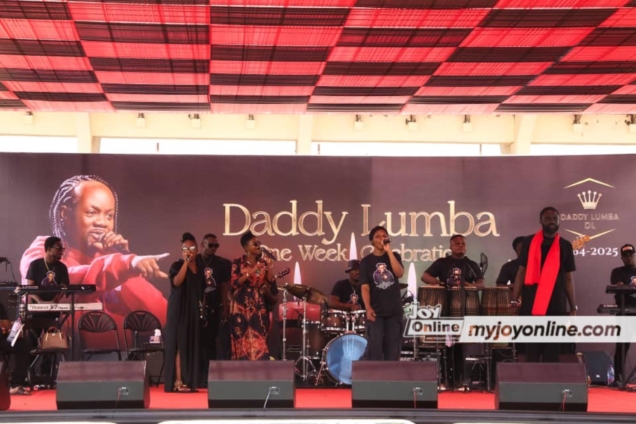
    Highlife legend , Daddy Lumba’s funeral is also reported to be held at the forecourt of the statehouse. His manager expressed optimism in that regard. The news came as a shock to Ghanaians and even the international community, given the legend’s influence over the years.

    The news of Daddy Lumba’s passing hit the world in the early hours of Saturday. Initially, when news of his passing emerged, a journalist of Hitz FM, Andy Dosty, came to deny it, noting that Daddy Lumba was alive. However, barely three hours later, Daddy Lumba (DL) FM released an official statement signed by the legend’s lawyer, confirming his demise.

    A statement by the counsel for the Fosu family confirmed that the music veteran passed on July 26, after a short illness.

    He succumbed to the illness at the Bank Hospital in Accra, per reports.

    The statement reads: “With profound sorrow and deep grief, the Fosu family announces the passing of Ghana’s beloved musical icon, Charles Kwadwo Fosu, popularly known as Daddy Lumba, who passed away earlier today, Saturday, July 26, 2025, after a short illness.”

    “Daddy Lumba was more than a musician; he was a cultural icon whose music touched countless lives. His soulful voice provided the soundtrack to our love stories, and his poignant lyrics captured the poetry of our struggles, dreams, and resilience.”

    The bereaved family has respectfully requested privacy as they navigate this profound grief. Details of funeral arrangements will be shared in the coming days.

    Also the eight fallen gallants who died in the crash’s memorial service will also be held there.

    On Friday, 15th August, an inter-denominational state funeral will be held for the eight individuals who lost their lives.

    Books of condolence will be opened simultaneously at the Ministry of Defence, the Ministry of Environment, Science and Technology, the Ministry of Foreign Affairs, the Ghana Armed Forces Headquarters, the National Democratic Congress headquarters, and the head office of NADMO, from Sunday, 10th August to Thursday, 14th August 2025.

    President John Mahama has assured the bereaved families and the nation that the Ghana Armed Forces has initiated a full and transparent investigation into the circumstances of this crash.

    He made this known after acknowledging that “as we mourn, questions about the cause of this tragedy are natural and important.”

    An Investigative Board of Inquiry has been set up to investigate the cause of the crash, the president revealed. The president further informed Ghanaians that “the flight data and cockpit voice recorders have been retrieved.”

    The president has called on all and sundry to stand united in this difficult time.

    “This is not a time for division, speculation, or political point-scoring. It is a time for strength, for empathy, and for the enduring Ghanaian spirit that still stands tall when all else fails. Let our words be of comfort, our actions be of kindness, and our unity be the tribute we offer to those whose lives have been lost.

    The helicopter crash claimed the lives of eight individuals, including Environment Minister Dr. Ibrahim Murtala Mohammed, and is being described by the government as a national tragedy.

    Other victims included Acting Deputy National Security Coordinator Alhaji Limuna Muniru Mohammed, NDC Vice Chairman Dr. Samuel Sarpong, former Obuasi East parliamentary candidate Samuel Aboagye, Squadron Leader Peter Bafemi Anala, Flying Officer Manaen Twum Ampadu, and Sergeant Ernest Addo Mensah.

    The Minister, MP and the other six, including the pilots serving in the Ghana Armed Forces (GAF), were en route for a state assignment. In the early hours of Wednesday, the GAF announced that the helicopter carrying the deceased had gone off their radar.

    Hours later, reports of a crash were announced until the Chief of Staff, Julius Debrah officially confirmed their demise in a press conference at the Jubilee House in the afternoon.

    Chief of Staff Julius Debrah directed that all flags are to fly at half-mast until further notice as the country mourns the death of the 8 individuals following the crash at Adansi Akrofrom in the Ashanti Region on Wednesday, August 6.

    He revealed the identities of the deceased individuals after the Ghana Armed Forces (GAF) earlier reported that its airforce helicopter Z9, which took off this morning at 0912 hrs from Accra and headed for Obuasi, was off the radar.

    The Ghana Armed Forces has informed the general public that it has commenced investigations into the unfortunate incident.

    President Mahama, who is said to be deeply shaken by the news, expressed his profound sorrow and pledged that the state would honour the memory and service of the departed. “This is not just a loss to the families, but a loss to the nation,” the President said in a brief remark shared through his communications team.

    Following the death of these statemen, several tributes have poured in, some from the general public, members of the Minority and even beyond Ghana.

  • USA suspends visas for Zimbabweans

    USA suspends visas for Zimbabweans

    New visa applicants in Zimbabwe have been hit with disappointing news following Washington’s new directive on visa.

    The directive was communicated through an official statement shared on August 7 by the U.S. Embassy in Harare.

    The statement announced the suspension of tourism (B1/B2 visa), business, studying (F1 visa), visiting family, attending conferences, visas for Zimbabweans, excluding ones for diplomatic and official duties.

    “Effective August 7, 2025, U.S. Embassy Harare has temporarily paused all routine visa services. This pause includes applications for immigrant visas as well as nonimmigrant visas for tourists, business travellers, students, exchange visitors, and most other nonimmigrant categories,” parts of the statement read.

    However, visas would be made available strictly for official diplomatic or international organisation-related purposes.

    “Applications for A-1, A-2, G-1, G-2, G-4, C-2, and C-3 diplomatic and official visas will continue to be processed.”

    A-1 For ambassadors, public ministers, career diplomats, and consular officers travelling to the U.S. on official government business. Includes their immediate family members.
    The A-2 visa is issued for other government officials or employees (e.g., military personnel) travelling on official duty. Also includes their immediate family.

    The G-1 is for permanent mission members of a recognised government to a designated international organisation (like the UN), plus their dependents, while the G-2 is issued for representatives of a recognised government attending meetings at an international organisation, and their dependents. The G-4, on the other hand, is issued for individuals appointed to work at an international organisation (e.g., UN staff) and their dependents.

    The ‘C’ visas, which include the C-2 and C-3 categories, are mostly issued to individuals transiting through the U.S. on their way to the United Nations headquarters. These are very limited-use visas, typically granted to foreign government officials, their families, or staff who are passing through the U.S., not staying for official duties. respectively.

    The USA explained that this measure has been taken as part of measures to sanitise visa process and ensure national security as well a protect the public.

    “The Department of State is committed to ensuring that its visa process upholds the highest standards for U.S. national security and public safety. We are currently reviewing and evaluating existing screening and vetting procedures worldwide,” the statement added.

    The United States Embassy in Zimbabwe has said it is suspending routine visa services. The embassy cited national security and public safety concerns.

    The statement, however, clarified that individuals who already hold US visas are not affected by the pause.

    The Trump-led administration on Monday, June 9, effected an immigration ban on nationals of twelve countries across the world. It noted that these affected nationals will not be able to enter the United States of America (U.S.A).

    The countries affected by the latest travel ban are Afghanistan, Myanmar, Chad, Republic of the Congo, Equatorial Guinea, Eritrea, Haiti, Iran, Libya, Somalia, Sudan and Yemen.

    The entry of people from seven other countries – Burundi, Cuba, Laos, Sierra Leone, Togo, Turkmenistan, and Venezuela – will be partially restricted.

    This follows a directive issued on Wednesday, June 5, by U.S. President Donald Trump banning citizens of 12 countries from entering the United States, citing it as a move to protect his country from “foreign terrorists.”

    The proclamation includes exceptions for lawful permanent residents, existing visa holders, certain visa categories, and individuals whose entry serves US national interests.

    According to Trump, countries that have been subjected to stricter restrictions are known as ones that harbor a “large-scale presence of terrorists,” fail to cooperate on visa security, have an inability to verify travelers’ identities, as well as inadequate record-keeping of criminal histories and high rates of visa overstays in the United States.

    The president made the final call on signing the proclamation after the antisemitic attack in Boulder, Colorado, according to a White House official.

    He was considering it beforehand, but Sunday’s assault put it into motion faster. The suspect in the attack was an Egyptian national, but Egypt, in a twist of events, was excluded from the travel ban.

    This is not the first time Trump has effected such a ban on countries.

    During his first term, he issued a travel ban on January 27, 2017, through Executive Order 13769. According to the order, travelers from seven countries with most of their citizens being Muslims could not stay for more than 90 days in the US.

    The Muslim countries were Iran, Iraq, Libya, Somalia, Sudan, Syria, and Yemen.

    He also suspended refugee resettlement for 120 days and banned Syrian refugees indefinitely.

    His administration justified the ban as a national security measure, arguing that these countries had high risks of terrorism and insufficient vetting procedures. However, the ban faced legal challenges and was revised multiple times before the U.S. Supreme Court upheld a version of it in 2018.

    The recent ban has been met with opposition and displeasure, especially from the people expected to be affected by the ban.

    Many feel disheartened and unfairly targeted.

    Chad President Mahamat Idriss Deby Itno said he had instructed his government to stop granting visas to U.S. citizens in response to Trump’s action.

    “Chad has neither plans to offer nor billions of dollars to give, but Chad has its dignity and its pride,” he said in a Facebook post, referring to countries such as Qatar, which gifted the U.S. a luxury aeroplane for Trump’s use and promised to invest billions of dollars in the U.S.

    Subsequently, the mass deportation exercise by the Trump-led administration affected some Ghanaians.

    In late June, the Ministry of Foreign Affairs announced that about 188 Ghanaians were to be deported from the United States (U.S.) and repatriated to Ghana.

    Engaging the media on Thursday, June 26, the sector minister, Samuel Okudzeto Ablakwa, mentioned that the number was made known through an official communication with the U.S. Their deportation follows an executive order by U.S. President Donald Trump to deport illegal immigrants.

    He added that the government is working to ensure the safe return of the repatriates.

    “We have so far been formally notified of 188 Ghanaians on President Trump’s deportation list. Our embassies in New York and Washington are cooperating with U.S. counterparts, and travel certificates are being promptly issued,” Mr Ablakwa said.

    Ablakwa assured the government’s commitment to providing the affected individuals with the necessary support.“We will be at the airport to welcome our compatriots and ensure they are properly integrated,” he assured.

    “This will be done discreetly to protect their dignity, especially since many are returning under distressing circumstances—some without personal belongings or savings”.

    On January 26, President Trump initiated a comprehensive immigration enforcement operation, enlisting multiple federal agencies. According to U.S. Immigration and Customs Enforcement (ICE), this operation has already resulted in the arrest of nearly 1,000 individuals.

  • Thomas Partey begins training with new club amid legal woes

    Thomas Partey begins training with new club amid legal woes

    Ghana international and former Arsenal player, Thomas Partey, has started training with his new club Villarreal ahead of the 2025/26 season.

    He joined the La Liga side on Thursday, August 7, as a free agent after finalising the move from Arsenal on June 30, 2025, after his contract expired.

    His move to the Yellow Submarine side marks his return to Spain after leaving Atletico Madrid in 2020.

    Less than 24 hours after completing his transfer, the Black Stars midfielder has already started training with his new teammates.

    This comes amid the Ghanaian international’s legal woes after facing rape charges just four days after he departed from Arsenal.

    While concerns have been expressed about Villareal’s deal with Partey as he has a pending case, the club, in reaction, issued a statement yesterday citing their respect for the player’s insistence on his innocence.

    They said, while they await the final verdict, they maintain their stance as strong advocates against acts of violence in all its forms, including gender-based violence, discrimination, racism, xenophobia, or any behaviour that undermines the dignity of individuals.”

    “The club is aware that the player is currently involved in legal proceedings in England. The player firmly maintains his innocence and denies all charges against him. Villarreal CF respects the fundamental principle of the presumption of innocence and will await the outcome of the judicial process, which will be responsible for clarifying the facts of the case.

    Due to the law in England in relation to ongoing proceedings, the club is unable to comment further. Villarreal wishes to reiterate its strong commitment to respect and diversity and firmly condemns any acts of violence in all its forms, including gender-based violence, discrimination, racism, xenophobia, or any behaviour that undermines the dignity of individuals.”

    They went ahead to praise Partey for his stunning football skills, calling him a “complete midfielder with great stamina and exceptional physical attributes”.

    They highlighted his successful spells with Arsenal, Atlético Madrid, and the Ghana national team, where he earned over 50 caps.

    Thomas Partey is currently facing six serious criminal charges in the UK. The charges were formally presented at Westminster Magistrates’ Court on August 5. These charges have been levelled against him by three different women.

    In one of the charges, Complainant 1 claims that, between April and May 2021, Partey penetrated her anally during what began as consensual vaginal intercourse, without her consent. She further claims that between April and June 2021, Partey engaged her in anal sex on on at least four separate occasions without her consent.

    Complainant 2 also alleges that in December 2021, after she refused to engage in sexual activity, Partey raped her vaginally. She also claims that in February 2022, he penetrated her anally after she explicitly declined anal sex. A third allegation from Complainant 2 states that during a trip to Marbella, Spain, in June 2022, Partey raped her vaginally.

    Complainant 3 also claims that in February 2022, Partey lay on top of her, attempted to kiss her, and touched her over her clothes without her consent.

    However, the player has denied all the allegations levelled against him. His lawyer has denied the charges of rape and sexual assault against her client.

    The statement issued by Partey’s lawyer, Jenny Wiltshire, noted:

    “Thomas Partey denies all the charges against him. He has fully cooperated with the police and CPS throughout their three-year investigation. He now welcomes the opportunity to finally clear his name.”

    The lawyer noted that as legal proceedings are ongoing, her client will not make any further comment on the matter.

    Under UK law, rape and sexual assault are prosecuted under the Sexual Offences Act 2003, which sets out clear definitions and penalties for these crimes.
    Rape is defined as intentional penile penetration of the vagina, anus, or mouth of another person without their consent and without a reasonable belief that they consent.

    Sexual assault involves intentionally touching another person sexually without their consent.

    In the case of Thomas Partey, if he is found guilty of the multiple counts of rape and sexual assault, especially involving multiple complainants and repeated offences, he could face a lengthy custodial sentence, potentially 15–25 years or more, depending on the court’s assessment of harm and culpability.

    However, renowned sports journalist Dan Kwaku Yeboah has accused Premier League side Arsenal of playing a role in the rape charges brought against Ghanaian midfielder Thomas Partey.

    According to him, the fact that the charges became public immediately after Partey’s contract renewal talks with the Gunners failed suggests that club officials may have influenced the timing of the revelation.

    The Peace FM journalist also noted that the alleged incidents occurred in 2022 while Partey was still playing for Arsenal, yet the charges were only made public in 2025 after he left the club which he sees as another indication of the club’s involvement.

    Speaking on Radio XYZ, Kwaku Yeboah stated that the charges could negatively impact Partey’s football career as clubs may hesitate to sign him until the case is resolved.

    “With the way the charges surfaced, I believe the person who influenced Arsenal’s decision not to extend Partey’s contract is behind this. At this point, it will reduce his market value and discourage interested clubs.

    “They have decided to destroy his career. How could something that happened in 2022 be kept under wraps until he was out of the club? This is a calculated attempt,” he said.

    He further criticised those urging men to be cautious around women, suggesting such advice can be hypocritical, given the temptations men face.

    “People are advising him and other men to be careful, but that may be hypocritical. Men are moved by sight, so if a woman appears naked, it’s likely the man will be aroused,” he added.

    Partey has made his mark both locally and internationally. In June, Thomas Partey once again won the Player of the Year award at the 2025 edition of the Ghana Football Awards.

    He beat both Antoine Semenyo of Bournemouth and Athletic Bilbao’s Inaki Williams to bag the award.This marked the third time the Ghanaian international has won the award, with the first and second bagged in 2018 and 2019, respectively.

    According to reports, Partey won the award for his exceptional contributions to Arsenal and the Black Stars.


  • Kumasi: Vigil to be held in honour of Daddy Lumba postponed indefinitely

    Kumasi: Vigil to be held in honour of Daddy Lumba postponed indefinitely

    The vigil scheduled to be held in honour of the late highlife legend, Charles Kwadwo Fosu, also known as Daddy Lumba, in Kumasi, has been postponed until further notice.

    The Creative Arts Agency, the organizers, announced this in a statement dated August 7 signed by the acting Executive Secretary of the Agency, Gideon Aryeequaye.

    “The Creative Arts Agency announces the indefinite postponement of the National Candlelight Vigil in honour of the late Charles Kwadwo Fosu, originally scheduled to take place in Kumasi on 9th August 2025,” parts of the statement read.

    The postponement has become necessary as part of the schedule to honour the heroes who lost their lives in the Adansi helicopter crash that occurred on Wednesday August 6.

    “This decision follows the directive of His Excellency, President John Dramani Mahama, declaring three days of national mourning from 7th to 9th August 2025, in memory of the eight individuals who tragically lost their lives in the helicopter crash at Adansi on 6th August”.

    The Creative Arts Agency expressed its condolences to the affected families, citing that a new date will be announced in due course.

    “We extend our deepest condolences to the bereaved families and the entire nation during this difficult time. A new date for the Candlelight Vigil will be communicated in due course”.

    The decision comes after President John Dramani Mahama declared three days of national mourning, from August 7 to 9, 2025, in honour of the victims.

    The vigil, which was scheduled to take place yesterday, follows a successful one held at Independence Square in Accra on Saturday, August 2. Thousands of individuals flooded the Independence Square for the candlelight vigil.

    The event, organised by the Creative Arts Agency, commenced at 6:00 p.m., featuring various dignitaries from the music fraternity.

    The legendary Ghanaian highlife musician passed away in the early hours of Saturday, July 26. A statement by the counsel for the Fosu family confirmed the news to the general public.

    He succumbed to the illness at the Bank Hospital in Accra, per reports.

    The statement read: “With profound sorrow and deep grief, the Fosu family announces the passing of Ghana’s beloved musical icon, Charles Kojo Fosu, popularly known as Daddy Lumba, who passed away earlier today, Saturday, July 26, 2025, after a short illness.”

    “Daddy Lumba was more than a musician; he was a cultural icon whose music touched countless lives. His soulful voice provided the soundtrack to our love stories, and his poignant lyrics captured the poetry of our struggles, dreams, and resilience.”

    The bereaved family respectfully requested privacy as they navigate this profound grief.

    Daddy Lumba’s ex-manager, Roman Fada, has dropped a hint about the possibility of a state burial for the musician under President Mahama’s watch.

    At Daddy Lumba’s private residence in Accra on July 28, Roman Fada told the media that conversations have commenced to ensure the late singer is given a burial that reflects his legacy.

    “We have received positive feedback from the Presidency, and I believe that John Dramani Mahama will respond to the public’s call by granting him a befitting burial,” Roman Fada said.

    He explained that the former President’s close relationship with the late singer and his track record in supporting the arts make him confident that the burial will be taken care of by the state.

    “I know the kind of love the current President, John Dramani Mahama, has for the creative industry and the strong relationship he shared with Daddy Lumba,” he stated.

    The deceased’s family announced that a book of condolence was opened in honour of the late highlife legend beginning Tuesday, 29th July, from 9:00 a.m. to 4:00 p.m.

    In an official statement issued on July 27 by his lawyers, Baba Jamal & Associates, on behalf of the bereaved family, the family invited all well-wishers, friends, fans, and family to sign the condolence book, which will be available at Daddy Lumba’s private residence in East Legon.

    “As part of the arrangements to honour his memory, the Fosu family wishes to announce the following events to be organised in his honour.

    “Book of Condolence in honour of Daddy Lumba: Private residence of the late Daddy Lumba at Kinshasha Crescent, house number 12 (GA-332-9264)” parts of the statement read.

    The New Patriotic Party (NPP) shared a compassionate and commiseratory message with the family and friends of the late highlife legend Charles Kwadwo Fosu, widely known as Daddy Lumba.

    In a statement dated July 26, the opposition party praised the legend for his stunning and unforgettable contributions to the highlife genre in Ghana and beyond.

    Acknowledging the impact of the highlife legend’s contribution to the party’s history, citing the iconic song “Nana Ye Winner,” a campaign song Lumba released for the NPP during their 2008 election campaign. They noted that the powerful lyrics and rhythm of the song were even regarded by their political opponents.

    “For us in the New Patriotic Party, his melodious contribution to our campaigns in 2008, 2012, and 2016, through the famous “Nana Ye Winner track in its original and remix versions, remains deeply etched in the political history of our tradition and the country. The power and inspiration behind those songs were acknowledged even by our political opponents,” parts of the statement read.

    In a heartfelt X post on July 27, President Mahama expressed sorrow and declared that Daddy Lumba’s “unmatched musical genius” would resonate for generations to come.

    “I have learnt with deep sorrow the passing of Ghanaian music legend, Charles Kwadwo Fosu, affectionately known as Daddy Lumba. Lumba’s unmatched musical genius provided the soundtrack to our lives, carrying us through various phases of life,” President Mahama wrote, capturing the collective grief of a nation.

    He continued, “The beats to his memorable songs may have died down, but his enduring legacy will echo through the ages. On behalf of the Government of Ghana, I extend heartfelt condolences to his family and loved ones for this irreplaceable loss.”

    This sentiment expressed by the president captures the deep emotions and connection many Ghanaians had with his music, which highlighted everyday life experiences with unparalleled artistry.

    Former President Akufo-Addo, who has the late legend to be grateful to for his vibrant, energetic, and soul-dancing campaign song, reacted to his death. Taking to his official Facebook page on July 26, he praised him as the greatest among the greats

    “With regret, I have received the sad news of the passing of my dear friend and renowned music icon, Charles Kwadwo Fosu.

    “Daddy Lumba, as we affectionately call him, was a pantheon among musical greats of all-time and had a special connection with his fans and the entire nation.

    “His hit-making songs will remain lasting contributions to my presidential journey and will forever be etched in the annals of political campaign of the New Patriotic Party. He will be sorely missed.

    “May he peacefully rest in the Bosom of the Almighty until the Last Day of the Resurrection, when we shall all meet again,” he expressed.

  • Full text: President Mahama’s speech on heroes lost in helicopter crash

    Full text: President Mahama’s speech on heroes lost in helicopter crash

    The President of the Republic, H.E. John Dramani Mahama, on Thursday night addressed the nation following the tragic helicopter crash that claimed 8 lives at Adansi in the Ashanti Region.

    Below is the president’s full statement.

    Good evening, my countrymen and women.
    It is with a profoundly heavy heart that I address you tonight. Yesterday, a tragic helicopter crash in Adansi Akrofuom claimed the lives of eight cherished members of our Ghanaian family. The victims of this accident include five passengers and three dedicated members of the Ghana Armed Forces.


    Among them were:
    § Dr. Edward Kofi Omane Boamah, Minister for Defence.
    § Alhaji Dr. Murtala Mohammed, Member of Parliament for Tamale Central and Minister for Environment, Science, and Technology.
    § Alhaji Muniru Mohammed Limuna, Acting Deputy National Security Coordinator.
    § Samuel Sarpong, Vice Chairman of the National Democratic Congress.
    § Samuel Aboagye, Deputy Director-General of NADMO.
    § Squadron Leader Peter Anala of the Ghana Air Force
    § Flying Officer Tsum Ampadu of the Ghana Air Force.
    § Sergeant Ernest Addo of the Ghana Air Force.

    This tragedy represents a deep personal loss for me. I shared close bonds with many of these individuals who died. Our nation is grieving. On behalf of the government and the people of Ghana, I extend my deepest condolences to their families, friends, and loved ones. Know that our entire country mourns with you. We share your pain. Your loss is our loss—a loss of dedicated public servants, intellectuals, and individuals who relentlessly worked for a better Ghana.

    These eight individuals dedicated their lives to Ghana’s progress. That their final moments were spent in service is a testament to their unwavering commitment. We have lost some of our nation’s brightest minds.

    This is a moment of shared heartbreak, a need to reflect on the preciousness of life, the sacrifices of public service, and our gratitude for those who dedicate themselves to the well-being of Ghana.

    Squadron Leader Anala, Flying Officer Ampadu, and Sergeant Addo were dedicated members of our Air Force, embodying the best of their profession.

    Alhaji Muniru Mohammed Limuna was a humble yet effective public servant. Samuel Sarpong was a respected statesman, and Mr. Samuel Aboagye was a promising leader. Dr. Omane Boamah was a brilliant and dedicated leader. Alhaji Dr. Murtala Mohammed was a passionate voice for his constituents and a champion for environmental stewardship.
    These gallant men each served Ghana with distinction. As we mourn, questions about the cause of this tragedy are natural and important. I want to assure the families and the nation that the Ghana Armed Forces has initiated a full and transparent investigation into the circumstances of this crash.

    An InvesNgaNve Board of Inquiry has been set up to investigate the cause of the crash. The flight data and cock pit voice recorders have been retrieved. All eight of the bodies of our departed comrades have been retrieved, and the government is in close touch with the bereaved families about identification of the bodies and final interment.

    In this moment of national grief, let us remember that we are, above all, Ghanaians – united not just by nationality but by shared hope, shared humanity, and now, shared sorrow. Let us set aside our differences and offer our collective compassion to the bereaved families.

    This is not a time for division, speculation, or political point-scoring. It is a time for strength, for empathy, and for the enduring Ghanaian spirit that still stands tall when all else fails. Let our words be of comfort, our actions be of kindness, and our unity be the tribute we offer to those whose lives have been lost.

    To the families, to the Ghana Armed Forces, to the Ministries and Departments that have lost dedicated staff, and to the National Democratic Congress, which mourns the passing of valued members, may you find strength in their memory and their legacy.

    May we all be comforted by the knowledge that, though they are gone from our sight, they remain forever in the spirit of the nation they so faithfully served.

    On Saturday, 9th August at 5.00 pm, the nation will gather at the forecourt of the State House for an Evening of Reflection and Memorial in honour of our departed colleagues.

    Books of condolence will be opened simultaneously at the Ministry of Defence, the Ministry of Environment, Science and Technology, the Ministry of Foreign Affairs, the Ghana Armed Forces Headquarters, the National Democratic Congress headquarters, and the head office of NADMO, from Sunday, 10th August to Thursday, 14th August 2025.

    On Friday, 15th August, an inter-denominational state funeral will be held for the eight heroes at the Black Star Square.

    My brothers and sisters, countrymen and women, may God bless their souls.

    May God bless Ghana.

  • Police Hospital calls on general public to identify 7 persons brought in for medical care

    Police Hospital calls on general public to identify 7 persons brought in for medical care

    The Ghana Police Hospital in Accra has called on the public to assist in identifying and finding the relatives of some patients currently receiving medical care at the facility.

    In a post shared on their Facebook page dated August 1, the Police noted that these patients, some of whom were still receiving treatment and others who had been declared fit and discharged, are still around the hospital. The police shared images of seven patients, some of whose names were attached to their pictures and others described by suspected circumstances that led to their admission at the hospital.

    The first patient was found unconscious by the roadside, and he is labelled as a suspected victim of a hit-and-run. He was found on July 28, 2025, by police officers on patrol. This male patient is estimated to be about 35 years old. He has an average height of approximately 5 feet and is dark in complexion. He was found unconscious by the roadside, with multiple bruises, a fractured leg, and a head injury, believed to have been caused by a hit-and-run incident. He remains in a critical but stable condition at the hospital.

    The second patient is also believed to be an assault victim, who was abandoned in Labadi.

    According to the police, on July 31, 2025, Chief Inspector Robert Marfo, accompanied by two lawyers, brought in a male patient found lying on the side of the road near Suncity, Labadi. The patient, approximately 32 years old, was reportedly thrown out of a moving taxi by unknown men on Saturday, July 26. He is receiving medical attention but has been unable to recall or share any information about his identity or family.

    The third man was also found at Haatso with severe sores and was brought in by Chief Inspector George Amoah of the Westland Police Station on July 31, 2025. The Police found him lying in front of Fidelity Bank in Haatso with multiple sores and were unable to provide any details that could help trace his relatives. The medical staff is continuing his treatment.

    An elderly man identified as Yaw Obour is the fourth patient on the list. He is estimated to be 65 years old and has been on admission since January 30, 2025, after being found at Awoshie last stop. Though he mentioned having a wife and children, he struggles to speak and has not been able to provide further information. He is now medically fit for discharge but remains at the hospital due to the inability to reach his family.

    They also named an unidentified woman who was found at Achimota. This female patient was brought to the Police Hospital by Corporal Diamond Ahiagbabu from the Tesano District MTTD after being found at Achimota. She has been receiving care since November 9, 2024, but remains unidentified and unable to recall or share any personal or family details.

    Another female, an accident victim from Amasaman, believed to be about 55 years old, has been in the hospital since March 27, 2023, following the accident. Despite her long-term stay and several television appeals, the hospital’s Social Services Department has been unable to trace her family due to her inability to communicate her identity.

    The final one on the list is a male who identifies as Efo, an accident victim awaiting family. He is a 45-year-old man who was brought to the emergency unit on August 23, 2023, after a road accident. He was rescued and brought in by two bystanders. Although he has since been discharged, Efo remains at the hospital after eight months, as all efforts, through both electronic and print media, to locate his family have been unsuccessful.

    The hospital charged that all relatives of these patients should act swiftly while their medical condition is stable, warning that further stay of patients in the hospital exposes them to the risk of contracting infections.

    Anyone with information about these individuals or their relatives is kindly urged to contact the Public Affairs Unit or the Social Services Department of the Ghana Police Hospital via the following numbers: 0201777513 or 0246535172.

    Meanwhile, Ghana Police Hospital is expected to undertake a mass burial for 300 unclaimed bodies deposited in the hospital’s morgue on August 11, 2025. In a statement signed by Public Affairs Officer C/Inspr. Faustina Afia Nunekpeku, the hospital noted that the unidentified and unclaimed bodies are made up of paupers, unknown former patients, abandoned dead bodies, and accident and crime victims.

    “This solemn task is part of our ongoing efforts to ensure that the deceased are laid to rest with dignity in line with public health guidelines,” a part of the statement issued last month read.

    The hospital noted that the occurrence of such unclaimed bodies is a reminder of the importance of proper identification. It entreated all and sundry to be vigilant in safeguarding personal details, especially when travelling or engaging in daily activities. In light of this, the Ghana Police Hospital has issued a number of preventive measures to avoid falling into the category of unknown deceased persons.

    These include carrying an identification card always. The police noted that regardless of age or location, one must have their national identification or that of any organisation on them to help the police or others easily identify them whenever they are involved in any crisis.

    Members of the general public have been encouraged to share emergency contact information with close family and friends. “These contacts can be used to reach out in case of a medical emergency or any unforeseen incident. For those who live alone, we advise keeping a list of emergency contacts in easily accessible places,” the statement noted.

    Also, the hospital urged the public to stay abreast of the legal and safety requirements in the country. The hospital stated that there is a need to “always keep updated on local guidelines regarding health, safety and public transport, particularly in rural or less-patrolled areas where emergency services may be delayed.”

    Furthermore, the Ghana Police Hospital advocated for families and friends to make a collective effort to “maintain regular communication and keep records of loved ones’ whereabouts, particularly the elderly, minors and individuals with mental health challenges who may be more vulnerable to disappearing without a trace.”

    “…We believe that this serves as a reminder to all of us about the importance of securing our identification and taking necessary precautions for our safety. We urge the general public to adhere to these messages to ensure their safety and prevent such unfortunate incidents,” it added.

  • 3-day national mourning: Evening of reflections and memorials slated for August 9

    3-day national mourning: Evening of reflections and memorials slated for August 9

    The government has released the itinerary for the three days of national mourning declared by the presidency on Wednesday in honour of the departed souls who were involved in the fatal helicopter crash at Adansi on August 6.

    In a statement dated August 7, the Presidency declared that the period has been dedicated to honouring the eight who died while en route to fulfil an official duty. It added that it is a period to reflect and remember these comrades as a nation.

    “Government wishes to announce programmes for the three days of national mourning, from Thursday, 7 August, to Saturday, 9 August 2025. This solemn period is dedicated to honouring the departed and providing an opportunity for national reflection and remembrance,” the statement mentioned.

    On the first day of mourning, which began yesterday, Thursday, August 7, a public laying of flowers and lighting of candles at the Ceremonial Garden at the front of the Presidency took place to honour victims of the tragic GAF helicopter crash. Members of the public, families, and friends were present. President John Dramani Mahama and the Chief of Staff Julius Debrah shed tears while laying a wreath in honour of the eight victims.

    The event continues today, August 8, and although no time was provided, it is presumed to be open throughout the day for public participation. It will still be held at the Ceremonial Garden, Presidency. This is anticipated to provide more time and space for citizens unable to attend Day 1 to pay their respects and join the national act of mourning.

    The final day of the mourning period is scheduled for Saturday, marked by an event titled “Evening of Reflections and Memorials.” It will take place at the Forecourt of the State House, starting promptly at 5:00 PM. The event is open to all Ghanaians, including the general public, friends, and family of the departed. “We urge all citizens to observe the period of national mourning with dignity and respect,” the Presidency entreated.

    The schedule for the state mourning comes after President John Dramani Mahama on Wednesday declared a three-day national mourning in honour of the victims of the Adansi fatal helicopter crash yesterday, including high-profile government officials.

    In a statement dated August 6, shared by the Presidency, President John Dramani Mahama ordered that all his scheduled meetings be cancelled for the rest of the week. “The government, through the Chief of Staff, has meanwhile directed that all flags must fly at half-mast until further notice”.

    The fatal helicopter crash claimed the lives of eight individuals, including two ministers, Defence Minister Dr Omane Boamah and  Environment Minister Ibrahim Murtala Mohammed, and it is being described by the government as a national tragedy.

    Other victims included Acting Deputy National Security Coordinator Alhaji Limuna Muniru Mohammed, NDC Vice Chairman Dr. Samuel Sarpong, former Obuasi East parliamentary candidate Samuel Aboagye, Squadron Leader Peter Bafemi Anala, Flying Officer Manaen Twum Ampadu, and Sergeant Ernest Addo Mensah.

    The Minister, MP and the other six, including the pilots serving in the Ghana Armed Forces (GAF), were en route for a state assignment. In the early hours of Wednesday, the GAF announced that the helicopter carrying the deceased had gone off their radar.

    Hours later, reports of a crash were announced until the Chief of Staff, Julius Debrah, officially confirmed their demise in a press conference at the Jubilee House in the afternoon.

    The Ghana Armed Forces has commenced investigations into the unfortunate incident. Following the death of these statesmen, several tributes have poured in, some from the general public, members of the Minority and even beyond Ghana.

    The Council of State described the victims as “patriotic individuals who served our country with honour, diligence, and devotion,” urging citizens to uphold the values they embodied. The Minority Caucus in Parliament issued a heartfelt statement: “Your loss is our loss; your grief is our grief,” and praised the ministers for their intellect, patriotism, and commitment to Ghana’s future.

    Former Vice President Dr. Mahamudu Bawumia posted on X: “The fallen men paid the ultimate price in the service of our motherland, leaving a shocked nation in pain.” Minister Emelia Arthur wrote, “Farewell, my brother. I will remember the specific conversation we had forever.” Education Minister Haruna Iddrisu honoured Murtala Mohammed, saying, “Your commendable efforts have created a legacy that inspires and uplifts our nation.”

    Globally, leaders and institutions expressed solidarity. Namibian President Netumbo Nandi-Ndaitwah said the loss was not just Ghana’s but Africa’s. Former Nigerian President Goodluck Jonathan called the ministers “committed public servants” whose legacy should inspire future generations. The African Development Bank President Akinwumi Adesina described the tragedy as “devastating.”

    The United Nations in Ghana, through Resident Coordinator Zia Choudhury, mourned the loss as a “national wound” and pledged continued support for Ghana during its mourning period. Kenyan President William Ruto extended condolences and assured Ghana of Kenya’s prayers and solidarity.

    Ghana is in a state of mourning, and the incumbent is putting in measures to ensure the deceased are provided a befitting burial.

  • Transport operators suspend proposed 20% hike in fares

    Transport operators suspend proposed 20% hike in fares

    The proposed adjustment in transport fares, which was expected to take effect on Friday, August 8, has been suspended by the transport operators.

    This comes after the General Secretary of the Ghana Road Transport Coordinating Council (GRTCC), Emmanuel Ohene-Yeboah, on August 4th announced an imminent increase in transport fares during an interview on Adom News on Monday.

    Ghana Road Transport Coordinating Council (GRTCC) informed the public to brace themselves for a 20% increase in public transport fares.

    He affirmed the decision, adding that his outfit will issue an official press release soon.

    Mr Emmanuel Ohene-Yeboah attributed the proposed fare adjustment to the hike in operational costs faced by transport operators.

    However, in a twist of events, GRTCC, in a statement, announced a suspension of the adjustment following a crunch meeting with the Ministry of Transport on Wednesday, August 6, 2025.

    “Transport Operators have agreed to suspend the purported 20% increment in public transport fares as a result of the lack of broader consultations on the decision,” the statement read.

    As a result, all operators have been directed to strictly enforce the 15% reduction in transport fares, which has been in effect since May 24, 2025.

    The decision comes amid widespread public concern and criticism over the lack of broader stakeholder engagement in the lead-up to the planned fare adjustment.

    the Ghana Private Road Transport Union (GPRTU) has opposed the directive, announcing that it is unaware of the proposed increase in fares as being purported and circulated by its sister union, GRTCC. 

    During an interview on Adom News’ Midday News yesterday, Tuesday, August 5, the Deputy Public Relations Officer of the GPRTU, Samuel Amoah, expressed surprise at the announcement, stating that the union was not part of any consultations leading to such a decision.

    “We only got the news yesterday, and we were surprised. We were not involved in any discussions or decision-making process regarding this fare increment by the GRTCC,” Mr. Amoah said.

    According to him, for such adjustments to be made and announced, a thorough engagement is held with all relevant stakeholders, including the Ministry of Transport. “Usually, we sit around the table with all stakeholders, including the Ministry of Transport, before arriving at any decision on fare adjustments. But in this case, we were not part of it,” he added.

    Mr. Amoah said the GPRTU will be engaging the Ministry of Transport in the coming days to discuss the matter and determine the appropriate way forward. On his path, the proposed 20% does not look very feasible. “As it stands, the increment announced by the GRTCC, which is supposed to take effect from August 8, 2025, may not be possible,” he noted.

    Also, the Chamber of Petroleum Consumers (COPEC) has opposed the pending increment in transport fares as announced by GRTCC.

    “For the avoidance of doubt, fuel prices which used to sell for around Ghc15/litre as of January 2025, when it declined to around ghcll and Ghc12/litre saw a section of drivers who were magnanimous in reducing transport fares by some 15% though a cross section of other driver Unions did not reduce their fares and had to be literally chased by the local assemblies. On the balance of odds or numbers, the pricing levels as of today are still not anywhere near the January prices from which transport fare discussions could be had, and such is our surprise at the attempts by a section of transport operators to justify a further increase in fares as of this time,” part of a statement issued by COPEC read.

    Referring to the recent implementation of the GH₵1 Energy Sector Levy on Wednesday, July 16, the General Secretary of the GRTCC, mentioned that as a key contributory factor to the impending increase.

    He said the levy has caused an increase in expenses such as fuel, spare parts, and vehicle maintenance.

    “The introduction of the GH₵1 Energy Sector Levy has significantly increased our operational costs—fuel, spare parts, and maintenance are all more expensive now. This has made it necessary for us to adjust fares to keep the transport business running,” he stated.

    He urged the public to accept the fare increase, explaining that it is necessary to keep transport businesses operational. He noted that the union had previously responded positively to the government’s call to reduce fares when fuel prices dropped and the cedi strengthened, hoping it would lead to lower operating costs. However, they are now facing even greater challenges

    “This decision should not come as a surprise to the public. In May, we responded to government’s request to reduce fares, anticipating a decrease in the cost of doing business. Unfortunately, the situation has worsened instead,” Mr. Ohene-Yeboah explained.

    He stressed that transport unions are equally burdened and appealed to the public to remain calm and cooperate with the new fare structure.

    “Maintenance costs are overwhelming and are significantly affecting our operations. Without this increase, the transport business will suffer greatly,” he added, noting that the decision was made in consultation with other major transport unions.

    The 20% fare increment was to be effected by all categories of public transportation, such as taxis, intra-city “trotro” services, intercity long-distance buses, and haulage trucks.

    In mid-July, the Coalition of Commercial Transport Operators threatened to increase transport fares by 30% should the government proceed with its GH¢1.00 per litre fuel levy.

    The implementation of the new GHS1 Energy Sector Shortfall and Debt Repayment Levy on petroleum products commenced on Wednesday, July 16.

    Before the implementation of the fuel levy, the government urged the transport operators to reduce fares due to the appreciation of the cedi, coupled with its effect on economic business transactions. Around May 20, GPRTU announced that commuters are to expect a 15% drop in transport fares, effective Saturday, May 24.

    The government insists the levy is crucial for the financial recovery of Ghana’s energy sector. President John Mahama, while speaking at the presentation of the final report of the National Economic Dialogue 2025 on June 4, announced the government’s decision to clear the accumulated legacy debts in the power sector with part of the revenue generated by the yet-to-be-implemented levy.

    Before the implementation of the fuel levy, the government urged the transport operators to reduce fares due to the appreciation of the cedi, coupled with its effect on economic business transactions.

    Around May 20, GPRTU announced that commuters are to expect a 15% drop in transport fares, effective Saturday, May 24. This was made known by the Industrial Relations Officer of the Ghana Private Road Transport Union (GPRTU), Abass Imoro, while speaking to the media.

    “We have finally agreed to reduce lorry fares by 15%, but it will take effect from Saturday. Although currently, spare parts sellers have promised to reduce some of their prices for now, which hasn’t taken effect, and none of the lubricants that went up have been reduced currently, but we decided to peg the reduction at 15%,” he added.

  • Kofi, my faith is shaken, please answer your call! – Sam George cries over Defense Minister’s death

    Kofi, my faith is shaken, please answer your call! – Sam George cries over Defense Minister’s death

    Ghana’s Minister for Communication, Digital Technology, and Innovations, who doubles as the current Member of Parliament, has shared a heart-wrenching and emotional tribute following the death of his mentor and friend, the late Defence Minister Dr Edward Omane-Boamah.

    Taking to his page on X (formerly Twitter), he begins with questions of who to turn to at this time, where everyone seems to be shattered and grief-stricken by the tragic death of the Minister and the other seven statemen.

    Unable to hold back his emotions, he says the pain he feels is so deep that words can’t fully explain it.

    He eulogised his calm nature and the extraordinary support and mentorship he’s offered him in his political career, calling him “the elder brother I didn’t have”.

    Sam George expressed worry about Omane’s wife and children, including his mother, since he is the only child of his mother. he mentioned how the Minister had always expressed concern about what would become of his mother in his absence.

    The Communications Minister, who is known as an ardent Christian believer, referred to the Holy Book, which admonishes us to give thanks to God in all things. However, the death of his brother and friend, he said, has shaken his faith, clouding his mind with several questions, serious questions for God.

    He begins, “Where do I start, and to whom do I turn? Everyone else is distraught and in despair? How does such a tragedy befall a man so calm and warm? How do you leave me and the squad like this? The tears flow even when I try to compose myself. Composure is a distant reality for me, as the pain I feel cannot be expressed fully.
    Kofi, why? How? This is not what we agreed!

    You always asked me who would take care of your Mum if anything were to ever happen to you. What did you know that you had from me? Rita and the kids? Who can be there for them like you? Oh why?

    No one has been of greater help or support to me in my political career. I call you Boss and you call me Bro. You didn’t just care about my politics, you cared and loved my family. You chose the school for my kids and even ask me every term about their performance. You were not a Colleague, you were the elder brother I didn’t have.

    You would call me and admonish me when you saw a social media post of mine. Who would guide me now? You have been my compass and guiding light these past 7 months since I was appointed Minister. Preparing me for the Cabinet and showing me the ropes. Who do I turn to now?

    My faith is shaken. My belief is gone. We are told to give thanks in all things. How can I give thanks in this? How do I say it is well? It is certainly not well! I have questions to ask God. Very serious questions. How does this happen?

    Kofi Omane Boamah, wake up and tell me to activate all body cameras. Call me and say, Dzata, you have done your thing again. Just pick your call, Boss. Please! 😭😭😭” he ended with tears emoji.
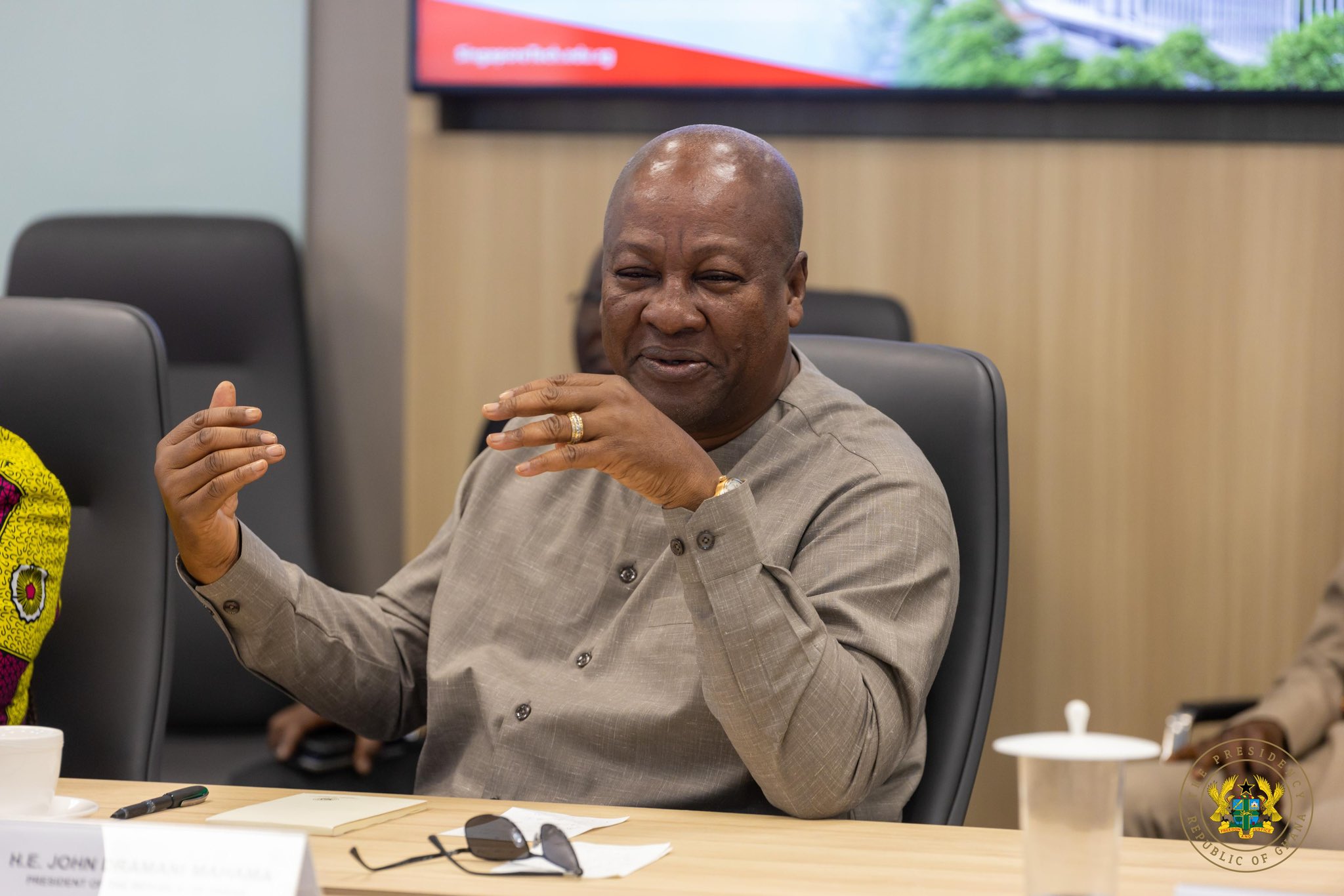
    Meanwhile, President John Dramani Mahama has declared a three-day national mourning in honour of the Minister and the rest of the victims of the Adansi fatal helicopter crash yesterday.

    In a statement dated August 6, shared by the Presidency yesterday, the president ordered that all his scheduled meetings be cancelled for the rest of the week.

    “President John Dramani Mahama has suspended all his scheduled activities and programmes for the rest of the week, following Wednesday’s national tragedy involving eight persons who died in a helicopter crash.

    “There will be three days of national mourning starting tomorrow, Thursday, 7 August 2025”, parts of the statement read.

    The president reiterated that all flags must be flown at half-mast until further notice.

    “The government, through the Chief of Staff, has meanwhile directed that all flags must fly at half-mast until further notice”.

    The directive comes after a fatal helicopter crash claimed the lives of eight individuals, including Environment Minister Dr. Ibrahim Murtala Mohammed, and is being described by the government as a national tragedy.

    Other victims included Acting Deputy National Security Coordinator Alhaji Limuna Muniru Mohammed, NDC Vice Chairman Dr. Samuel Sarpong, former Obuasi East parliamentary candidate Samuel Aboagye, Squadron Leader Peter Bafemi Anala, Flying Officer Manaen Twum Ampadu, and Sergeant Ernest Addo Mensah.

    The Minister, MP and the other six, including the pilots serving in the Ghana Armed Forces (GAF), were en route for a state assignment. In the early hours of Wednesday, the GAF announced that the helicopter carrying the deceased had gone off their radar.

    Hours later, reports of a crash were announced until the Chief of Staff, Julius debrah officially confirmed their demise in a press conference at the Jubilee House in the afternoon.

    Chief of Staff Julius Debrah directed that all flags are to fly at half-mast until further notice as the country mourns the death of the 8 individuals following the crash at Adansi Akrofrom in the Ashanti Region on Wednesday, August 6.

    Following the death of these statemen, several tributes have poured in, some from the general public, members of the Minority and even beyond Ghana.

    The Council of State described the victims as “patriotic individuals who served our country with honour, diligence, and devotion,” urging citizens to uphold the values they embodied. The Minority Caucus in Parliament issued a heartfelt statement: “Your loss is our loss; your grief is our grief,” and praised the ministers for their intellect, patriotism, and commitment to Ghana’s future.

    Former Vice President Dr. Mahamudu Bawumia posted on X: “The fallen men paid the ultimate price in the service of our motherland, leaving a shocked nation in pain.” Minister Emelia Arthur wrote, “Farewell, my brother. I will remember the specific conversation we had forever.” Education Minister Haruna Iddrisu honored Murtala Mohammed, saying, “Your commendable efforts have created a legacy that inspires and uplifts our nation”.

    Globally, leaders and institutions expressed solidarity. Namibian President Netumbo Nandi-Ndaitwah said the loss was not just Ghana’s but Africa’s. Former Nigerian President Goodluck Jonathan called the ministers “committed public servants” whose legacy should inspire future generations. The African Development Bank President Akinwumi Adesina described the tragedy as “devastating”.

    The United Nations in Ghana, through Resident Coordinator Zia Choudhury, mourned the loss as a “national wound” and pledged continued support for Ghana during its mourning period. Kenyan President William Ruto extended condolences and assured Ghana of Kenya’s prayers and solidarity.

  • President Mahama declares a 3-day state mourning in honour of helicopter crash victims

    President Mahama declares a 3-day state mourning in honour of helicopter crash victims

    President John Dramani Mahama has declared a three-day national mourning in honour of the victims of the Adansi fatal helicopter crash yesterday, including high-profile government officials.

    In a statement dated August 6, shared by the Presidency yesterday, the president ordered that all his scheduled meetings be cancelled for the rest of the week.

    “President John Dramani Mahama has suspended all his scheduled activities and programmes for the rest of the week, following Wednesday’s national tragedy involving eight persons who died in a helicopter crash.

    “There will be three days of national mourning starting tomorrow, Thursday, 7 August 2025”, parts of the statement read.

    The president reiterated that all flags must be flown at half-mast until further notice.

    “The government, through the Chief of Staff, has meanwhile directed that all flags must fly at half-mast until further notice”.

    The directive comes after a fatal helicopter crash claimed the lives of eight individuals, including Environment Minister Dr. Ibrahim Murtala Mohammed, and is being described by the government as a national tragedy.

    Other victims included Acting Deputy National Security Coordinator Alhaji Limuna Muniru Mohammed, NDC Vice Chairman Dr. Samuel Sarpong, former Obuasi East parliamentary candidate Samuel Aboagye, Squadron Leader Peter Bafemi Anala, Flying Officer Manaen Twum Ampadu, and Sergeant Ernest Addo Mensah.

    The Minister, MP and the other six, including the pilots serving in the Ghana Armed Forces (GAF), were en route for a state assignment. In the early hours of Wednesday, the GAF announced that the helicopter carrying the deceased had gone off their radar.

    Hours later, reports of a crash were announced until the Chief of Staff, Julius Debrah, officially confirmed their demise in a press conference at the Jubilee House in the afternoon.

    Chief of Staff Julius Debrah directed that all flags are to fly at half-mast until further notice as the country mourns the death of the 8 individuals following the crash at Adansi Akrofrom in the Ashanti Region on Wednesday, August 6.

    He revealed the identities of the deceased individuals after the Ghana Armed Forces (GAF) earlier reported that its airforce helicopter Z9, which took off this morning at 0912 hrs from Accra and headed for Obuasi, was off the radar.

    The Ghana Armed Forces has informed the general public that it has commenced investigations into the unfortunate incident.

    President Mahama, who is said to be deeply shaken by the news, expressed his profound sorrow and pledged that the state would honour the memory and service of the departed. “This is not just a loss to the families, but a loss to the nation,” the President said in a brief remark shared through his communications team.

    Following the death of these statemen, several tributes have poured in, some from the general public, members of the Minority and even beyond Ghana.

    The Council of State described the victims as “patriotic individuals who served our country with honour, diligence, and devotion,” urging citizens to uphold the values they embodied. The Minority Caucus in Parliament issued a heartfelt statement: “Your loss is our loss; your grief is our grief,” and praised the ministers for their intellect, patriotism, and commitment to Ghana’s future.

    Former Vice President Dr. Mahamudu Bawumia posted on X: “The fallen men paid the ultimate price in the service of our motherland, leaving a shocked nation in pain.” Minister Emelia Arthur wrote, “Farewell, my brother. I will remember the specific conversation we had forever.” Education Minister Haruna Iddrisu honored Murtala Mohammed, saying, “Your commendable efforts have created a legacy that inspires and uplifts our nation”.

    Globally, leaders and institutions expressed solidarity. Namibian President Netumbo Nandi-Ndaitwah said the loss was not just Ghana’s but Africa’s. Former Nigerian President Goodluck Jonathan called the ministers “committed public servants” whose legacy should inspire future generations. The African Development Bank President Akinwumi Adesina described the tragedy as “devastating”.

    The United Nations in Ghana, through Resident Coordinator Zia Choudhury, mourned the loss as a “national wound” and pledged continued support for Ghana during its mourning period. Kenyan President William Ruto extended condolences and assured Ghana of Kenya’s prayers and solidarity.

    Profile of Defense Minister

    Dr. Edward Kofi Omane Boamah is a prominent Ghanaian politician, medical doctor, and Health Policy Planning and Financing Analyst with a rich background in strategic negotiation, solution-oriented leadership, environmental security and ICT including cybersecurity.

    He possesses a strong educational foundation from esteemed institutions, including the University of Ghana Medical School, the London School of Economics and Political Science, the London School of Hygiene and Tropical Medicine and Harvard University.

    His diverse educational background empowers him to merge his medical expertise with a deep understanding of financial planning and strategic analysis when solving complex challenges.

    Dr. Omane Boamah has consistently demonstrated exceptional leadership in various key roles. As Minister for Communications and Spokesperson for the President of Ghana, he championed several vital cybersecurity initiatives including Child Online Protection and led the rollout of the Government of Ghana’s 4G LTE network (GOTA) which provides enhanced communication capabilities for security agencies.

    As a former Civilian Employee of the Ministry of Defence, he has an unwavering commitment to national and human security. His innovative thinking and excellent negotiation skills, positions him as a forward-thinking leader, ready to address the complexities of modern security challenges and an advocate for the institution’s dignity and well-being of service women and men.

    Profile of Environment Minister

    Ibrahim Murtala Mohammed was a distinguished Ghanaian politician, educator, and public servant who played a significant role in shaping national policy and advocating for sustainable development.

    Born on December 14, 1974, in the Northern Region of Ghana, he pursued his education at Tamale College of Education, the University of Ghana, and Kwame Nkrumah University of Science and Technology, earning a Master of Arts in Development Studies along with additional qualifications in international relations and development planning.

    He began his political career as a Member of Parliament for the Nanton Constituency in 2013 and later represented the Tamale Central Constituency.

    Over the years, he served as Deputy Minister for Information and Media Relations and Deputy Minister for Trade and Industry. In February 2025, he was appointed Minister for Environment, Science, Technology and Innovation, a role in which he championed environmental sustainability and technological advancement.

    Murtala Mohammed was known for his bold speeches, grassroots engagement, and commitment to public service. He was deeply religious, respected within both political and Islamic communities, and maintained a private family life as a married father of three.

  • “He was the only child of his mother”- Defence Minister’s counsin speaks

    “He was the only child of his mother”- Defence Minister’s counsin speaks

    One of the victims of the tragic helicopter crash at Adansi Akrofrom in the Ashanti Region, Ghana’s Defence Minister, Dr Omane-Boamah, has been confirmed as the only child of his mother.

    During an emotional interview on Asempa FM’s Ekosii Sen, which was aired on August 7, the Member of Parliament (MP) for Effiduase/Asokore, Dr. Nana Ayew Afriyie, who is a cousin of the late minister, expressed his disbelief, citing that his death is even more painful because he is the only surviving child of his mother, Leticia Omane Boamah.

    “He was the only child of his mother. This is just too painful,” he said.

    In grief, he expressed concern about the devastating impact Dr Omane’s death would have on his family, particularly his wife and children.

    According to him, he cannot fathom how Dr. Boamah left home on Wednesday morning for national duty, unaware it would be his final goodbye.

    “You just left the house this morning, and everybody was saying, you know, ‘bye to Daddy,’ thinking that Daddy will come back home,” he said, his voice cracking. “I just don’t know how Rita and the family are taking it. It’s devastating.”

    Dr. Afriyie revealed that the Minister has left behind three children, describing him as a hard-working man whose death leaves a heavy void not only in his family but also in national service.

    “You just can’t say you don’t like him. Kofi is genuine. I’m just shocked. I’m just shocked.”

    Recounting one of their recent interactions, the MP revealed that the minister had attended a Defence and Interior Committee sitting in Parliament just last week.

    “I didn’t know that would be the last time I would be speaking to my brother,” he noted.

    Speaking on the benevolence and philanthropic deeds of the late Minister, Dr Afriyie divulged that, he had great relationship with people in other professions.

    He mentioned that the late Defence Minister was supporting one senior journalist financially after he suffered leukaemia. He described him as a brother, friend to many beyond just being a politician.

    “He was more than a politician; he was a friend, a brother.”

    The pained relative questioned why this should be the fate of the Defence Minister and the other victims of the fatal crash, whose quest was to serve the country but ended up meeting such an untimely and horrid death.

    “Why should it be that those who choose to serve with integrity are the ones tragedy strikes? It’s heartbreaking. Kofi gave everything to this country, and this is how it ends?”

    He expressed worry about his children calling their father a promising man who didn’t deserve such a death.

    “What at all will calm the children down? I just don’t. You want to make a good name. He was very promising, very promising. Why should this happen?”

    Dr Afriyie’s remarks come after a fatal helicopter crash claimed the lives of eight individuals, including Environment Minister Dr. Ibrahim Murtala Mohammed, and is being described by the government as a national tragedy.

    Other victims included Acting Deputy National Security Coordinator Alhaji Limuna Muniru Mohammed, NDC Vice Chairman Dr. Samuel Sarpong, former Obuasi East parliamentary candidate Samuel Aboagye, Squadron Leader Peter Bafemi Anala, Flying Officer Manaen Twum Ampadu, and Sergeant Ernest Addo Mensah.

    On Wednesday, August 7, the Chief of Staff Julius Debrah confirmed the unfortunate demise of 8 individuals who have passed away following a tragic helicopter crash at Adansi Akrofrom in the Ashanti Region.

    Engaging the general public, Julius Debrah revealed the identities of the deceased individuals after the Ghana Armed Forces (GAF) earlier reported that its airforce helicopter Z9, which took off this morning at 0912 hrs from Accra and headed for Obuasi, was off the radar.

    Profile of Defense Minister

    Dr. Edward Kofi Omane Boamah is a prominent Ghanaian politician, medical doctor, and Health Policy Planning and Financing Analyst with a rich background in strategic negotiation, solution-oriented leadership, environmental security and ICT including cybersecurity.

    He possesses a strong educational foundation from esteemed institutions, including the University of Ghana Medical School, the London School of Economics and Political Science, the London School of Hygiene and Tropical Medicine and Harvard University.

    His diverse educational background empowers him to merge his medical expertise with a deep understanding of financial planning and strategic analysis when solving complex challenges.

    Dr. Omane Boamah has consistently demonstrated exceptional leadership in various key roles. As Minister for Communications and Spokesperson for the President of Ghana, he championed several vital cybersecurity initiatives including Child Online Protection and led the rollout of the Government of Ghana’s 4G LTE network (GOTA) which provides enhanced communication capabilities for security agencies.

    As a former Civilian Employee of the Ministry of Defence, he has an unwavering commitment to national and human security. His innovative thinking and excellent negotiation skills, positions him as a forward-thinking leader, ready to address the complexities of modern security challenges and an advocate for the institution’s dignity and well-being of service women and men.

    Profile of Environment Minister

    Ibrahim Murtala Mohammed was a distinguished Ghanaian politician, educator, and public servant who played a significant role in shaping national policy and advocating for sustainable development.

    Born on December 14, 1974, in the Northern Region of Ghana, he pursued his education at Tamale College of Education, the University of Ghana, and Kwame Nkrumah University of Science and Technology, earning a Master of Arts in Development Studies along with additional qualifications in international relations and development planning.

    He began his political career as a Member of Parliament for the Nanton Constituency in 2013 and later represented the Tamale Central Constituency.

    Over the years, he served as Deputy Minister for Information and Media Relations and Deputy Minister for Trade and Industry. In February 2025, he was appointed Minister for Environment, Science, Technology and Innovation, a role in which he championed environmental sustainability and technological advancement.

    Murtala Mohammed was known for his bold speeches, grassroots engagement, and commitment to public service. He was deeply religious, respected within both political and Islamic communities, and maintained a private family life as a married father of three.

  • Everton makes loan move for Man City’s Grealish, treble winners want permanent move – Sources

    Everton makes loan move for Man City’s Grealish, treble winners want permanent move – Sources

    Everton has joined the race to sign Man City’s Jack Grealish, anticipating a loan deal with the central striker.

    This is as reported by ESPN, following information from their sources.

    According to reports, discussions are currently underway between the two Premier League clubs, but Everton is allegedly proposing a season-long deal, a loan spell.

    But Man City is reportedly interested in negotiating a permanent deal, though they have not ruled out a temporary agreement.

    Jack Grealish joined Man City in 2021 in a £100m deal from Aston Villa, which was described as the most expensive in the history of football at the time. Jack Grealish spent a total of 19 years at Aston Villa, including his youth and senior career. He joined the club’s academy in 2002 at the age of six and remained there until 2021.

    Grealish signed a six-year deal with Man City; however, before the expiry of the contract, he dipped in form, which led to his being sidelined and omitted from Pep Guardiola’s squad for the FIFA Club World Cup after being told he would struggle for opportunities next season.

    Before being axed for the Club World Cup, he was omitted from the matchday squad for the final game of the Premier League season against Fulham.

    Grealish has been with the club for four seasons, from 2021 to 2025. During his stint at City, he scored 17 goals in 157 appearances across all competitions.

    He played a significant role in Manchester City’s success, including their treble-winning campaign in the 2022–23 season, and contributed to three consecutive Premier League titles.

    Meanwhile, Everton are the first club to make a formal approach for Grealish, although there has been other interest from the Premier League and Europe since the transfer window opened.

    According to reports, clubs from both the Premier League and Europe, including West Ham, Napoli, Tottenham Hotspur, Newcastle United, AC Milan, Aston Villa.

    Jack Grealish was reported to be training alone about a month ago despite his return to Manchester City.

    In early June, he was omitted from the squad for the FIFA Club World Cup after being informed by the club that he could leave.

    According to reports, his exit was by mutual agreement, signalling that a summer exit was being prepared.

    Since then, Grealish has been training individually while awaiting a transfer, with interest from clubs like West Ham, Napoli, and Everton.

    Despite interest from multiple clubs, he remains at the Etihad while a deal is explored.

    According to sources, the club seeks a permanent sale of but it’s reported that a more realistic option remains a loan spell, given Grealish’s wages and valuation.

    This situation makes things harder for clubs that want to sign him, especially teams that are not in England.

    Also, another reason why a loan is more preferable is that this will help him secure more play time in the other interested club and help him gain his spot in Gareth Southgate’s squad, some reports have suggested.

    The report also suggested that Grealish has been working with personal trainer Jamie Reynolds to stay sharp during the off-season. He will now continue his training at City’s Etihad Campus, ahead of a potential move.

    Meanwhile, the future of Grealish came under discussion after his limited play time in Pep’s squad, which partly caused his snub from the England squad.

    Pep addressed that, admitting that Grealish’s limited play time was solely due to a dip in form and nothing relating to off-field behaviour.

    He noted that he wants the ‘Grealish from the days they won the treble’.

    Meanwhile, former Liverpool manager Jurgen Klopp has criticised the Club World Cup as “the worst idea ever implemented in football,” citing concerns over players’ welfare.

    This isn’t the first time Jürgen has made such complaints about the tournament. During his stint at Liverpool, he cited player exhaustion, particularly when Liverpool had to juggle the Club World Cup and domestic competitions.

    During an exclusive interview with German newspaper Welt am Sonntag, Klopp talked about the expanded format and player development.

    According to Klopp, these people sit in comfort and come up with ideas like the Club World Cup, which puts extra pressure on players and teams.

    “It’s all about the game and not the surrounding events – and that’s why the Club World Cup is the worst idea ever implemented in football in this regard,” he said.

    “People who have never had or do not have anything to do with day-to-day business anymore are coming up with something.

    Acknowledging the financial benefits of participating in the Club World Cup, Klopp also highlighted the exclusivity terms as far as the tournament is concerned, saying, “There is insane money for participating, but it’s also not for every club.”

    “Last year it was the Copa [America] and the European Championship, this year it’s the Club World Cup, and next year the World Cup. That means no real recovery for the players involved, neither physically nor mentally.”

    Klopp added, “I have serious fears that players will suffer injuries they’ve never had before next season. If not next season, then it will happen at the World Cup or afterwards.

    “We constantly expect the players to go into every game as if it were their last. We tell them that 70 or 75 times a year. But it can’t go on like this.

    “We have to make sure they have breaks, because if they don’t get them, they won’t be able to deliver top performances – and if they can’t achieve that anymore, the entire product loses value.”

    Man City’s coach, Pep Guardiola, made similar complaints about player exhaustion and intense player schedules, citing potential jeopardy in player performance in the upcoming season.

    He said players hardly rest after the end of the Premier League season (May 25) and the start of the Club World Cup (June 18).

    The players union, FIFPro, on June 12, recommended a one-month mandatory off-season break for professional footballers.

    This year’s Club World Cup is the first to feature 32 teams and 48 games and saw Salzburg knocked out in the group stage.

    In September, a week prior to suffering an ACL injury, Manchester City midfielder Rodri said players were close to going on strike because of the increase in games, while teammate Manuel Akanji suggested he would have to retire at age 30 as a result of the lack of breaks in the calendar.

  • DVLA announces a roll-out of e-license

    DVLA announces a roll-out of e-license

    The Driver and Vehicle Licensing Authority (DVLA) has revealed that it will soon roll out an e-license. This innovation is part of DVLA’s broader digital transformation agenda targeted at modernising service delivery and improving convenience for Ghanaian drivers.

    This was announced by the Chief Executive Officer (CEO) of the Driver and Vehicle Licensing Authority (DVLA), Julius Neequaye Kotey, on Tuesday, August 5, 2025, during the launch of the DVLA Lorry Terminal Project at Circle.

    He said: “The launch of the Lorry Terminal Project aims to bring DVLA services closer to drivers. The services provided are acquisition of a driver’s licence, renewal of licence, replacement of missing and expired licences, conversion of a foreign driver’s licence.”

    According to him, the institution has upped its game as it advances with the adoption of more digital solutions, as the world advances in terms of technology. He noted that the roll-out of e-licence will allow drivers to show proof of their eligibility to drive a vehicle without necessarily carrying their hardcopy license.

    “Most of us don’t carry our licenses with us, and it shouldn’t be the case that the police or any other party takes advantage of that. If I don’t have my license with me and I am a driver, I’m still a driver. I should have an app that allows me to identify myself as a legitimate driver on the street and that’s what the e-licence is about.”

    He further clarified that the e-licence will not replace the traditional one but would serve as a complement.

    “It is not here to replace the physical licence but rather to provide an additional option to access your licence on your Android or iPhone.”

    The Driver and Vehicle Licensing Authority (DVLA) has also warned the public against using the’ Defective Vehicle (DV). Giving insight into the appropriate usage of the number plate, he noted that it is designated for car dealers only when the car hasn’t been certified to be worthy to hit the road.

    Speaking during an interview with the Chief Executive Officer (CEO) of the Driver and Vehicle Licensing Authority (DVLA), Julius Neequaye Kotey, on Tuesday, August 5, 2025, he stated that DV plates are exclusively for use by car dealers.

    “Only car dealers are supposed to use DV plates. It stands for ‘Defective Vehicle’ because the vehicle hasn’t yet been inspected by us for roadworthiness. That’s why we call it a DV plate. It’s not meant for any other person, only for dealers when they’re working on the vehicle,” the DVLA CEO stated.

    He explained that, in partnership with the SIC, a two-week insurance cover is given to cars at the ports, which are given the DP sticker after this period; the vehicle must be registered.

    “SIC is providing two weeks of insurance cover. After that, you must register your car because DV plates are not supposed to be used by ordinary citizens,” he explained.

    The use of DV and DP plates is governed by the Road Traffic Act 683/04, as amended by Act 761/08, and the Road Traffic Regulations 2012, L.I. 2180.

    Speaking on the long-standing presence of “goro boys”, a group of unofficial middlemen involved in activities related to DVLA offices, he explained that they often pose as helpers to individuals navigating vehicle registration, licensing, and other administrative processes, usually for a fee.

    These “goro boys” are not employed by the DVLA; however, they have been a consistent part of the Authority’s day-to-day environment since the era of the late Jerry John Rawlings through to the current Mahama-led administration. They have long operated within the informal ecosystem surrounding the Authority.

    He suggested that since the presence of “goro boys” seems to have become embedded in the DVLA’s operations, it would be practical to officially integrate and regulate them. This, he believes, would help monitor their activities and better protect consumers.

    “Let’s regularise what they do, then we can control how much they charge the public. You and I will admit that they overcharge our people, and I’m against it. But before you can regulate, you must have some level of authority and control over them. Let’s bring them on board, control what they do and regularise how much they charge, so it aligns with what the ultra service also charges. That way, they can’t overcharge. That is all.”

    In a related development, DVLA announced a new directive concerning Drive from Port (DP) plates, the aluminium number plates that are temporarily attached to imported vehicles when cleared at entry points like Tema and Takoradi.

    In a statement titled “DVLA goes fully digital with issuance of sticker drive from port numbers” and issued on Monday, July 28, the licensing authority announced that, effective August 1, it will phase out these metal plates in place of digital sticker-based DP numbers. These are adhesive labels placed on the vehicle’s windshield, not physical metal plates. 

    “The Driver and Vehicle Licensing Authority (DVLA) is excited to announce to the general public that with effect from 1st August, 2025, there will be no more issuance of aluminium plates at the Ports.

    DVLA will ONLY issue sticker DP numbers at the ports of entry for vehicles that are imported into the country. This move is aimed at making DVLA services secure and efficient for our clients. DVLA will ONLY issue sticker DP numbers at the ports of entry for vehicles that are imported into the country,” the statement read.

    The move comes after what DVLA describes as a “successful pilot program” of the issuance of the sticker from Port (DP) at the Tema and Takoradi Ports. The digitisation of the DP numbers is to enhance the safety and speed of DVLA services for all users, according to the authority.

  • DV number plates exclusive to car dealers, not for public – DVLA warns

    DV number plates exclusive to car dealers, not for public – DVLA warns

    The Driver and Vehicle Licensing Authority (DVLA) has warned the public against using the’ Defective Vehicle (DV). Giving insight into the appropriate usage of the number plate, he noted that it is designated for car dealers only when the car hasn’t been certified to be worthy to hit the road.

    Speaking during an interview with the Chief Executive Officer (CEO) of the Driver and Vehicle Licensing Authority (DVLA), Julius Neequaye Kotey, on Tuesday, August 5, 2025, during the launch of the DVLA Lorry Terminal Project at Circle, he stated that DV plates are exclusively for use by car dealers.

    “Only car dealers are supposed to use DV plates. It stands for ‘Defective Vehicle’ because the vehicle hasn’t yet been inspected by us for roadworthiness. That’s why we call it a DV plate. It’s not meant for any other person, only for dealers when they’re working on the vehicle,” the DVLA CEO stated.

    He explained that, in partnership with the SIC, a two-week insurance cover is given to cars at the ports, which are given the DP sticker after this period; the vehicle must be registered.

    “SIC is providing two weeks of insurance cover. After that, you must register your car because DV plates are not supposed to be used by ordinary citizens,” he explained.

    The use of DV and DP plates is governed by the Road Traffic Act 683/04, as amended by Act 761/08, and the Road Traffic Regulations 2012, L.I. 2180.

    Speaking on the long-standing presence of “goro boys”, a group of unofficial middlemen involved in activities related to DVLA offices, he explained that they often pose as helpers to individuals navigating vehicle registration, licensing, and other administrative processes, usually for a fee.

    These “goro boys” are not employed by the DVLA; however, they have been a consistent part of the Authority’s day-to-day environment since the era of the late Jerry John Rawlings through to the current Mahama-led administration. They have long operated within the informal ecosystem surrounding the Authority.

    He suggested that since the presence of “goro boys” seems to have become embedded in the DVLA’s operations, it would be practical to officially integrate and regulate them. This, he believes, would help monitor their activities and better protect consumers.

    “Let’s regularise what they do, then we can control how much they charge the public. You and I will admit that they overcharge our people, and I’m against it. But before you can regulate, you must have some level of authority and control over them. Let’s bring them on board, control what they do and regularise how much they charge, so it aligns with what the ultra service also charges. That way, they can’t overcharge. That is all.”

    Also, DVLA have upped their game as it advances with the adoption of more digital solutions as the world advances in terms of technology. The DVLA CEO hinted at an imminent roll-out of e-licence, where drivers would have the opportunity to show proof of their eligibility to drive a vehicle without necessarily carrying their hardcopy license.

    “Most of us don’t carry our licenses with us, and it shouldn’t be the case that the police or any other party takes advantage of that. If I don’t have my license with me and I am a driver, I’m still a driver. I should have an app that allows me to identify myself as a legitimate driver on the street and that’s what the e-licence is about.”

    He further clarified that the e-licence will not replace the traditional one but would serve as a complement.

    “It is not here to replace the physical licence but rather to provide an additional option to access your licence on your Android or iPhone.”

    In a related development, DVLA announced a new directive concerning Drive from Port (DP) plates, the aluminium number plates that are temporarily attached to imported vehicles when cleared at entry points like Tema and Takoradi.

    In a statement titled “DVLA goes fully digital with issuance of sticker drive from port numbers” and issued on Monday, July 28, the licensing authority announced that, effective August 1, it will phase out these metal plates in place of digital sticker-based DP numbers. These are adhesive labels placed on the vehicle’s windshield, not physical metal plates. 

    “The Driver and Vehicle Licensing Authority (DVLA) is excited to announce to the general public that with effect from 1st August, 2025, there will be no more issuance of aluminium plates at the Ports.

    DVLA will ONLY issue sticker DP numbers at the ports of entry for vehicles that are imported into the country. This move is aimed at making DVLA services secure and efficient for our clients. DVLA will ONLY issue sticker DP numbers at the ports of entry for vehicles that are imported into the country,” the statement read.

    The move comes after what DVLA describes as a “successful pilot program” of the issuance of the sticker from Port (DP) at the Tema and Takoradi Ports. The digitisation of the DP numbers is to enhance the safety and speed of DVLA services for all users, according to the authority.

    For a successful and sustainable transition of the roll-out, DVLA has partnered with the State Insurance Company (SIC). This partnership has become necessary to give the vehicle a legal cover before it hits the road.


    “To make this transition as smooth as possible and safe, we have teamed up with the State Insurance Company (SIC) to ensure that vehicles that are issued with DP stickers are provided with insurance cover before they leave the Ports”, DVLA said.

    “The public is encouraged to cooperate with DVLA and SIC to ensure that this transition to innovative and seamless services becomes a success. For further enquiries, contact Customer Service Centre on 0302746760, Our Concern” the statement concluded.

    DVLA’s issuance of the aluminium metal plates, particularly the temporary “Drive from Port” (DP) plates, is a long-standing practice by the regulatory authority as part of its vehicle registration process at ports of entry. 

    DP number plates were given to vehicle owners right after they were cleared from the port to allow them to drive legally while awaiting full registration. Over time, several challenges emerged with the use of these metal plates. Fraud was one of the major issues coupling the DP plates. It was easy to be duplicated and counterfeited, making it susceptible to misuse.

    Criminal networks exploited loopholes in the system, producing fake plates and distributing them illegally. Investigations revealed that thousands of plates went unaccounted for monthly, suggesting large-scale theft and black-market activity. Additionally, some individuals who were not authorised dealers used DP plates to avoid registration fees or insurance requirements, undermining road safety and regulatory compliance.

    According to the regulations governing the DP plate, it is supposed to be used for ten days from the date of issuance. Within the ten days, the vehicle should always be used with a logbook that records its movements and driver details. Any use beyond the ten-day window is considered illegal and subject to enforcement action.


  • NIA removes GRA from Identity Verification Platform over GH₵376m debt

    NIA removes GRA from Identity Verification Platform over GH₵376m debt

    The National Identification Authority (NIA) has blocked the Ghana Revenue Authority (GRA) from using its identity verification system over the Authority’s GH₵376 million debt owed to them.

    The National Identification Authority officially announced the disconnection of the Ghana Revenue Authority (GRA) from its Identity Verification Service (IVS) platform during an interview with JoyNews during their midday news.

    During the interview, the Head of Corporate Affairs at the NIA, Williams Aumman Dallas, stated that the NIA will restrict GRA’s access to their identity verification platform due to the Authority’s failure to settle the financial obligations to the NIA. He noted that GRA has not made any financial commitments to the NIA over the last three years.

    “Effective 1st August, we have restricted them — we’ve cut them off, we’ve unplugged them from our identity verification platform. For over three years, their financial obligations to the National Identification Authority have not been fulfilled,” Williams Aumman Dallas stated.

    The NIA explained that before the disconnection, the GRA was using its system to register taxpayers for Personal Identification Numbers (PINs), now rebranded as Ghana Card numbers, in line with government policy. The government had earlier directed GRA and other institutions to cease issuing separate ID cards and instead integrate the use of the Ghana Card and the NIA database into their operations.

    GRA began integrating NIA data into its systems around 2021, when the two agencies started harmonising databases. By September 30, 2021, over 14.7 million individuals had already been migrated from the NIA database to GRA’s systems. To assist the GRA, the NIA had provided bulk biometric data to enable them to perform identity matching with client records. However, the GRA was never fully onboarded onto the NIA’s system via the standard API integration.

    With no payments forthcoming and no signs of commitment to resolve the matter, the NIA has taken further steps by writing to the Data Protection Commission for approval to access GRA servers and delete the data previously provided.

    “The data belongs to us,” the spokesperson stressed. “Once we retrieve it, we will know we have no further obligations to them,” he fumed. 

    “Our contact centre is inundated with calls from people asking for help to clear their goods. But from where we stand, there’s nothing we can do. The authority must fulfil its financial obligations. Once that is done, we can reconnect them and resume normal business,” he added.

    While GRA has not responded to NIA’s gesture, the impact of the move has already started being felt by many importers and exporters. They have been left stranded, as they are unable to clear goods at the country’s ports.

    This is because the NIA’s Identity Verification Service (IVS) platform is essential for verifying individuals’ identities using the Ghana Card database, which is a critical step in customs clearance and tax-related processes.

    Without access to the IVS, GRA cannot confirm the identities of traders, which means goods cannot be processed or released. This has resulted in frozen operations at key clearance points, a situation that the Executive Secretary of the Importers and Exporters Association, Samson Asaki Awingobit, has described as a disaster. He said that many of his members have been directly affected by this action.

    Williams Aumman Dallas contends that “the verification platform needs to be maintained, and we need money.” In a press conference held on the morning of August 5 at the Tomreik Hotel in Accra, Ghana, Mr Dallas announced the current financial constraints the NIA is facing due to the heavy debt from various public institutions.

    “Let me state that there are institutions that are owing us. These are public institutions, and I’ve been advised not to mention names. So I will not mention names, but it is honestly affecting our operations as an authority,” Dallas said.

    He further went on to charge all indebted public institutions to fulfil their financial obligations without delay or risk facing the same fate as GRA is currently facing. “And so by this press briefing, we are appealing to these public institutions to fulfil their financial obligations owed to us so that we can maximise our operations. Failure to fulfil their financial obligations; we will be left with no other choice but to deny them the services,” he stated.

    The NIA’s financial woes have been a recurring issue. The authority, which operates on a semi-commercial basis, generates revenue from providing identity verification services and the issuance of Ghana Cards.

    However, a significant portion of its operational budget is often tied up in delayed payments from government agencies. In 2024, the NIA reported an estimated debt of over GH₵ 150 million from various government entities, a figure that has likely grown.

    The continuous debt has hampered the NIA’s ability to maintain its systems, expand its services, and even pay staff salaries on time. Meanwhile, a total number of 648,862 Ghana cards printed by the National Identification Authority (NIA) are yet to be collected by their respective holders.

    The NIA made this known on its Facebook platform when it released recent data on the national identification registration exercise as of May 9. Per the data, a total of 18,713,474 individuals have been enrolled onto the National Identification System. So far, some 18,197,477 Ghana cards have been printed, whereas 17,548,615 cards have been issued.

    The NIA is urging individuals who have yet to claim their Ghana Cards to do so. “Still Haven’t Collected Your Ghana Card? Thousands of cards are ready and waiting! Check. Collect. Be Identified. Visit your nearest NIA District Office today, we’re Open and Operational!” the NIA stated.

  • Stalled La General Hospital to be completed in 2027 – La Dadekotopon MP assures 

    Stalled La General Hospital to be completed in 2027 – La Dadekotopon MP assures 

    The La General Hospital, which faced intermittent stalls during the Akufo-Addo-led administration, is set to be completed in two years, according to the Member of Parliament for the La Dadekotopon constituency, Rita Naa Odoley Sowah.

    Speaking to the media during a site visit yesterday, Tuesday, August 5, the Member of Parliament gave a firm assurance that the hospital is likely to be completed in two years. She said it will not cross 2028 without completion.

    “…And so, erm, I believe in 2 years, we are about 30% work done so far—I believe in 2 years it should be completed so that we will be able to use the health facility so that it will not go to 2028,” Rita Naa Odoley Sowah said.

    Addressing reports that the La General Hospital project had stalled, Member of Parliament Rita Naa Odoley Sowah clarified that work was still ongoing when the current National Democratic Congress (NDC) government assumed office, contrary to widespread claims. She emphasised that the Mahama-led administration has no intention of abandoning the project.

    “So the work wasn’t stalled when we came to power; work was still going on. Like I said, they raised certificates, and so the certificates are yet to be honoured,” she added.

    However, she explained that the government is committed to following due process, including auditing and reviewing existing documents, to assess the project’s current state before officially resuming work.

    “When there’s a new government, we have to look into the documents of the old. Been in touch with the former Health Minister. We came into office January 7th… His Excellency appointed ministers, and so the ministers have to look through their documents,” adding that as the Member of Parliament for La Dadekotopon, she has been in constant communication with Health Minister Kwabena Mintah Akandoh to ensure the project is captured in the Ministry’s plans.

    “Despite that, I have been in touch with them to ensure that I went to him to ensure that he will not forget us, and he has assured us that he has not forgotten us because we were in this thing together, coming into the hospital premises to ensure that even work commenced here at the La General Hospital,” she continued.

    The Health Minister Honourable Mintah Akandoh, according to Rita Naa Odoley Sowah, is interested in the completion of the project. She expressed optimism regarding the completion of the hospital, citing that 

    “And we are in it together — the Honourable Minister, Akandoh — we’ve been in this hospital case together. There’s no way he would abandon it, and I believe in his words because we have a father who cares. That’s why we are coming up with the Mahama Cares.”

    The Mahama Cares initiative, officially launched on April 29 at the University of Ghana Medical Centre (UGMC) in Accra, is a flagship health support programme aimed at providing financial assistance to Ghanaians battling chronic illnesses not adequately covered under the National Health Insurance Scheme (NHIS).

    At the launch, President Mahama committed to donating 50 percent of his annual salary to the Fund, signalling strong leadership and personal commitment to healthcare equity. Health Minister Mintah Akandoh has also followed suit, announcing a three-month salary donation to back the initiative. He further disclosed that several cabinet colleagues had joined the cause, including Trade, Agribusiness and Industry Minister Elizabeth Ofosu-Agyare and Gender Minister Naa Momo Lartey, who have both pledged one month’s salary each.

    To ensure broad-based participation, the President has directed all government appointees to contribute the equivalent of at least one month’s salary to the Fund. Vice President Professor Naana Jane Opoku-Agyemang has pledged four months of her salary to support the fund.

    In addition, the general public has been encouraged to make contributions through the short code *255#, accessible on all mobile networks. The Ghana Medical Trust Fund Bill, 2025, also known as MahamaCares, has been passed by Parliament.

    The Bill, which was laid before Parliament on Monday, July 21, was opposed by the Minority; the caucus warned that it could put a strain on the National Health Insurance Scheme (NHIS) budget and its operations. The Mahama Cares fund is expected to play a pivotal role in enhancing healthcare access for many Ghanaians, particularly those battling chronic diseases and unable to afford the necessary medical treatment.

    The development journey of the La General Hospital

    The La General Hospital was originally established as a Polyclinic in the 1960s. During the first term of President John Dramani Mahama, he upgraded the hospital to a General Hospital in 2015 to expand access to quality healthcare for residents of La and surrounding communities. The hospital operated for approximately 55 years before its transformation into a general hospital. It became a vital health facility in the Greater Accra Region, offering outpatient services, maternity care, and emergency treatment.

    Five years after the upgrade, the hospital was demolished by the government led by President Nana Addo Dankwa Akufo-Addo following concerns of safety and durability. There were structural assessments that deemed the building unsafe for continued use. The government promised to replace it with a more modern, ultra-standard hospital that would better serve the growing population and meet international healthcare standards.

    However, the reconstruction faced significant delays. Although the sod-cutting ceremony was held in 2020, actual construction did not begin until January 2024. The delay was attributed to funding challenges, particularly with securing insurance for the loan from the Chinese company Sinosure. These issues stalled progress for nearly two years, causing frustration among residents and stakeholders.

    The Majority Leader in Parliament explained that funding was withheld by sponsors after Ghana entered into an engagement with the International Monetary Fund (IMF). This made it difficult for the government to access approved funds.

    In February 2024, during his State of the Nation Address, President Akufo-Addo announced that construction had officially commenced and that a 15% advance mobilisation fee had been paid to the contractor. Following this announcement by the president, many labelled the move as a political gimmick focused on getting votes instead of genuinely showing a commitment to fulfilling long-standing healthcare promises.

    The new hospital is designed to be a 160-bed facility with advanced medical departments including surgical units, maternity and neonatal services, imaging centres, and a mortuary. 

  • GPRTU objects GRTCC’s 20% increase in transport fares on August 8

    GPRTU objects GRTCC’s 20% increase in transport fares on August 8

    The Ghana Road Transport Coordinating Council (GRTCC) has entreated members of the general public to brace themselves for a 20% increase in public transport fares, effective Friday, August 8, 2025.

    During an interview on Adom News on Monday, August 4, the General Secretary of the GRTCC, Emmanuel Ohene-Yeboah, attributed the proposed fare adjustment to the hike in operational costs faced by transport operators, adding that his outfit will issue an official press release soon.

    He referred to the recent implementation of the GH₵1 Energy Sector Levy on Wednesday, July 16, as a key contributory factor to the impending increase. He said the levy has caused an increase in expenses such as fuel, spare parts, and vehicle maintenance.

    “The introduction of the GH₵1 Energy Sector Levy has significantly increased our operational costs—fuel, spare parts, and maintenance are all more expensive now. This has made it necessary for us to adjust fares to keep the transport business running,” he stated.

    He urged the public to accept the fare increase, explaining that it is necessary to keep transport businesses operational. He noted that the union had previously responded positively to the government’s call to reduce fares when fuel prices dropped and the cedi strengthened, hoping it would lead to lower operating costs. However, they are now facing even greater challenges

    “This decision should not come as a surprise to the public. In May, we responded to the government’s request to reduce fares, anticipating a decrease in the cost of doing business. Unfortunately, the situation has worsened instead,” Mr. Ohene-Yeboah explained.

    He stressed that transport unions are equally burdened and appealed to the public to remain calm and cooperate with the new fare structure. “Maintenance costs are overwhelming and are significantly affecting our operations. Without this increase, the transport business will suffer greatly,” he added, noting that the decision was made in consultation with other major transport unions.

    According to the GRTCC, the 20% fare increment will affect all categories of public transportation, such as taxis, intra-city “trotro” services, intercity long-distance buses, and haulage trucks.

    However, the Ghana Private Road Transport Union (GPRTU) has opposed the directive, announcing that it is unaware of the proposed increase in fares as being purported and circulated by its sister union, GRTCC. 

    During an interview on Adom News’ Midday News yesterday, Tuesday, August 5, the Deputy Public Relations Officer of the GPRTU, Samuel Amoah, expressed surprise at the announcement, stating that the union was not part of any consultations leading to such a decision.

    “We only got the news yesterday, and we were surprised. We were not involved in any discussions or decision-making process regarding this fare increment by the GRTCC,” Mr. Amoah said.

    According to him, for such adjustments to be made and announced, a thorough engagement is held with all relevant stakeholders, including the Ministry of Transport. “Usually, we sit around the table with all stakeholders, including the Ministry of Transport, before arriving at any decision on fare adjustments. But in this case, we were not part of it,” he added.

    Mr. Amoah said the GPRTU will be engaging the Ministry of Transport in the coming days to discuss the matter and determine the appropriate way forward. On his path, the proposed 20% does not look very feasible. “As it stands, the increment announced by the GRTCC, which is supposed to take effect from August 8, 2025, may not be possible,” he noted.

    In mid-July, the Coalition of Commercial Transport Operators threatened to increase transport fares by 30% should the government proceed with its GH¢1.00 per litre fuel levy.

    The implementation of the new GHS1 Energy Sector Shortfall and Debt Repayment Levy on petroleum products commenced on Wednesday, July 16.

    Speaking to the media on Monday, July 14, the Chairman of the Ghana Committed Drivers Association, Charles Danso, emphasised that the fare increase will take effect on Wednesday, July 16. According to him, this will ensure that the cost of the tax is distributed between drivers and commuters. The association has described the levy as “reckless and retrogressive,” intended to derail their business.

    “This is not just a GH¢1 tax. We are already paying a 17.2% tax component on electricity, which includes drivers. Now the government wants to impose another levy on fuel—it’s unbearable.

    “If the government refuses to listen to us, we will have no option but to pass the cost onto commuters by increasing fares by 30%,” he said.

    Before the implementation of the fuel levy, the government urged the transport operators to reduce fares due to the appreciation of the cedi, coupled with its effect on economic business transactions. Around May 20, GPRTU announced that commuters are to expect a 15% drop in transport fares, effective Saturday, May 24.

    Also, the Chamber of Petroleum Consumers (COPEC) has opposed the pending increment in transport fares as announced by GRTCC.

    “For the avoidance of doubt, fuel prices which used to sell for around Ghc15/litre as of January 2025, when it declined to around ghcll and Ghc12/litre saw a section of drivers who were magnanimous in reducing transport fares by some 15% though a cross section of other driver Unions did not reduce their fares and had to be literally chased by the local assemblies. On the balance of odds or numbers, the pricing levels as of today are still not anywhere near the January prices from which transport fare discussions could be had, and such is our surprise at the attempts by a section of transport operators to justify a further increase in fares as of this time,” part of a statement issued by COPEC read.

    Meanwhile, the Ghana Revenue Authority (GRA) has directed all petroleum sector stakeholders to comply strictly with the new rates. This move comes under the Energy Sector Levies (Amendment) Act, 2025 (Act 1141), which was assented to by President John Dramani Mahama on June 5 to settle energy sector shortfalls, reduce legacy debts, and stabilise power supply across the country, following parliamentary approval.

    GRA had announced earlier implementation of the levy; however, it was postponed after strong opposition from oil marketing companies. Initially set to take effect on Monday, June 9, it was rescheduled to start on Monday, June 16. It was then rescheduled again due to the tensions between Iran and Israel. According to Tariff Interpretation Order (TIO) No. 2025/003, issued by the GRA, the new levy affects several key fuel products.

    The levy on petrol (motor spirit, super) and diesel (gas oil) will rise from GHS0.95 and GHS0.93 respectively, to GHS1.95 and GHS1.93 per litre.

    Marine gas oil (local) will increase from 0.3 to 0.23, Marine gas oil(foreign) from 0.93 to 1.93, and heavy fuel oil 0.04. Petroleum products lifted before June 9, 2025, will be charged the old levy rates.

    However, all cash-and-carry transactions where products are lifted on or after the effective date will attract the revised levies.

    The government insists the levy is crucial for the financial recovery of Ghana’s energy sector. President John Mahama, while speaking at the presentation of the final report of the National Economic Dialogue 2025 on June 4, announced the government’s decision to clear the accumulated legacy debts in the power sector with part of the revenue generated by the yet-to-be-implemented levy.

  • Transport fares to see 20% increase effective August 8

    Transport fares to see 20% increase effective August 8

    Transport operators have announced an imminent increase in transport fares in the next few days.

    According to the Ghana Road Transport Coordinating Council (GRTCC), the public is informed to brace themselves for a 20% increase in public transport fares, effective Friday, August 8, 2025.

    During an interview on Adom News on Monday, August 4, the General Secretary of the GRTCC, Emmanuel Ohene-Yeboah, affirmed the decision, adding that his outfit will issue an official press release soon.

    Mr Emmanuel Ohene-Yeboah attributed the proposed fare adjustment to the hike in operational costs faced by transport operators.

    Referring to the recent implementation of the GH₵1 Energy Sector Levy on Wednesday, July 16, the General Secretary of the GRTCC, mentioned that as a key contributory factor to the impending increase.

    He said the levy has caused an increase in expenses such as fuel, spare parts, and vehicle maintenance.

    “The introduction of the GH₵1 Energy Sector Levy has significantly increased our operational costs—fuel, spare parts, and maintenance are all more expensive now. This has made it necessary for us to adjust fares to keep the transport business running,” he stated.

    He urged the public to accept the fare increase, explaining that it is necessary to keep transport businesses operational. He noted that the union had previously responded positively to the government’s call to reduce fares when fuel prices dropped and the cedi strengthened, hoping it would lead to lower operating costs. However, they are now facing even greater challenges

    “This decision should not come as a surprise to the public. In May, we responded to government’s request to reduce fares, anticipating a decrease in the cost of doing business. Unfortunately, the situation has worsened instead,” Mr. Ohene-Yeboah explained.

    He stressed that transport unions are equally burdened and appealed to the public to remain calm and cooperate with the new fare structure.

    “Maintenance costs are overwhelming and are significantly affecting our operations. Without this increase, the transport business will suffer greatly,” he added, noting that the decision was made in consultation with other major transport unions.

    Meanwhile, the 20% fare increment is expected to be effected by all categories of public transportation, such as taxis, intra-city “trotro” services, intercity long-distance buses, and haulage trucks.

    In mid-July, the Coalition of Commercial Transport Operators threatened to increase transport fares by 30% should the government proceed with its GH¢1.00 per litre fuel levy.

    The implementation of the new GHS1 Energy Sector Shortfall and Debt Repayment Levy on petroleum products commenced on Wednesday, July 16.

    Speaking to the media on Monday, July 14, the Chairman of the Ghana Committed Drivers Association, Charles Danso, emphasized that the fare increase will take effect on Wednesday, July 16.

    According to him, this will ensure that the cost of the tax is distributed between drivers and commuters.

    The association has described the levy as “reckless and retrogressive,” intended to derail their business.

    “This is not just a GH¢1 tax. We are already paying a 17.2% tax component on electricity, which includes drivers. Now the government wants to impose another levy on fuel—it’s unbearable.

    “If the government refuses to listen to us, we will have no option but to pass the cost onto commuters by increasing fares by 30%,” he said.

    Meanwhile, the Ghana Revenue Authority (GRA)has directed all petroleum sector stakeholders to comply strictly with the new rates.

    This move comes under the Energy Sector Levies (Amendment) Act, 2025 (Act 1141), which was assented to by President John Dramani Mahama on June 5 to settle energy sector shortfalls, reduce legacy debts, and stabilize power supply across the country, following parliamentary approval.

    GRA had announced earlier implementation of the levy; however, it was postponed after strong opposition from oil marketing companies.

    Initially set to take effect on Monday, June 9, it was rescheduled to start on Monday, June 16. It was then rescheduled again due to the tensions between Iran and Israel.

    According to Tariff Interpretation Order (TIO) No. 2025/003, issued by the GRA, the new levy affects several key fuel products.

    The levy on petrol (motor spirit, super) and diesel (gas oil) will rise from GHS0.95 and GHS0.93 respectively, to GHS1.95 and GHS1.93 per litre.

    Marine gas oil (local) will increase from 0.3 to 0.23, Marine gas oil(foreign) from 0.93 to 1.93, and heavy fuel oil 0.04.

    Petroleum products lifted before June 9, 2025, will be charged the old levy rates.

    However, all cash-and-carry transactions where products are lifted on or after the effective date will attract the revised levies.

    The government insists the levy is crucial for the financial recovery of Ghana’s energy sector. President John Mahama, while speaking at the presentation of the final report of the National Economic Dialogue 2025 on June 4, announced the government’s decision to clear the accumulated legacy debts in the power sector with part of the revenue generated by the yet-to-be-implemented levy.

    Before the implementation of the fuel levy, the government urged the transport operators to reduce fares due to the appreciation of the cedi, coupled with its effect on economic business transactions.

    Around May 20, GPRTU announced that commuters are to expect a 15% drop in transport fares, effective Saturday, May 24.

    This was made known by the Industrial Relations Officer of the Ghana Private Road Transport Union (GPRTU), Abass Imoro, while speaking to the media.“We have finally agreed to reduce lorry fares by 15%, but it will take effect from Saturday. Although currently, spare parts sellers have promised to reduce some of their prices for now, which hasn’t taken effect, and none of the lubricants that went up have been reduced currently, but we decided to peg the reduction at 15%,” he added.

    The reduction followed successful deliberations between the Ministry of Transport and transport operators.

    Other factors include the recent macroeconomic developments, specifically the Ghanaian cedi experiencing sustained appreciation against the US dollar.

    As of May 13, the Ghana cedi appreciated by 16.7% against the US dollar, making it the world’s best-performing currency so far this year.

    However, Minister for Finance Dr. Cassiel Ato Forson, has cited stringent monetary policy, complemented by aggressive liquidity sterilization, and disciplined fiscal stance anchored around prudent public finance management.

    “In fact, our foreign exchange reserves at the Bank of Ghana reached a record high in April 2025, surpassing targets set under the IMF-supported programme ahead of schedule,” he added.

  • COCOBOD announces no syndicated loan for 2025/26 cocoa season

    COCOBOD announces no syndicated loan for 2025/26 cocoa season

    The Ghana Cocoa Board (COCOBOD) says it would not secure any syndicated loan to finance cocoa purchases for the 2025/26 crop season.

    According to them, the shortage of cocoa beans on the global level has informed such a decision.

    “We’re not doing syndication…this year [2025], we’re not doing syndication. What has necessitated us not to do syndication is that we’re experiencing a global shortage of the cocoa bean.”

    He made these revelations during an interview with Accra-based radio station, Citi FM, on Monday, August 4. The Head of Public Affairs at COCOBOD, Jerome Kwaku Sam, stated explicitly stated, that the Board had not sought syndicated financing for the 2024/2025 season and had no intention of doing so this year.

    “…To be very honest, last year [2024], we didn’t do syndication, and this year [2025], we’re not doing syndication.

    Mr Sam further noted that the move also reflects a strategic effort to reduce costs under prevailing market conditions.

    “We’re not doing syndication whereby we’re going to incur additional expenses and what have you. That is out of the system or table for now,” he emphasised.

    His remarks follow the recent announcement by Finance Minister Dr Cassiel Ato Forson on a new producer price for cocoa.

    The producer price of cocoa for the 2025/2026 season has been increased to $5,040 from $3,100, representing a 62.58% increase in dollar terms.

    This information was made available by the Finance Minister, Dr Cassiel Ato Forson on Monday, August 4. He explained that the decision was met following an engagement with the The Producer Price Review Committee (PPRC) on cocoa.

    According to the Minister, the adjustment is to fulfill the National Democratic Congress (NDC) government’s pledge of setting the fee on the board (FOB) of 70% of the price.

    “The Producer Price Review Committee, the PPRC on cocoa, under my chairmanship, met and agreed on the producer price for cocoa for the 2025/2026 season, which opens on Thursday, 7th August 2025. Subsequently, government is pleased to announce an increase in the producer price of cocoa from $3,100 per tonne to $5,040 per tonne.

    “Let me repeat, subsequent to this meeting, the Bank of Ghana is pleased to announce an increase in the producer price of cocoa from $3,100 per tonne to $5,040 per tonne. It is instructive to know that the government has, by this decision, increased the producer price significantly by 62.58% in U.S. dollar terms.

    “This increase in the producer price represents 70% of the gross Fee from the Board of $7,200 dollars per tonne and aligns with the NDC’s manifesto and President Mahama’s promise to pay the cocoa farmer 70% of the FOB price.It is significant to note that for the 2024/2025 crop season the previous administration set an FOB value of $4,850 per tonne of cocoa and the producer price at $3,100 per tonne, representing 63.9% of the FOP,” the minister added.

    The season, which officially begins on Thursday, August 7, is expected to boost the cocoa industry.

    In June, the Chief Executive Officer (CEO) of COCOBOD, Dr. Randy Abbey, hinted at ongoing engagement with authorities to ensure that farmers receive a fair producer price that reflects current global market trends.

    Although he bemoaned how the appreciation of the local currency could derail farmers’ earnings, he remained optimistic that their income and livelihoods would be protected following the conclusion of the ongoing discussions.

    “The truth is that we are convinced and it is going to happen. On the dollar side, we will see in its impact. Based on the strength of the cedi, in cedi terms, you may not see anything significant. What we are seeing now is a situation where global prices are high, and that would normally translate into higher incomes for our farmers. But with the cedi appreciating sharply, the gains could be reduced when translated into Ghana cedis.

    “We must strike a balance. Farmers deserve to benefit from the favorable market conditions, and we are working with stakeholders to ensure the final producer price reflects both global trends and domestic realities,” he added.

    From April 14 to June 2 this year, the interbank interest rate remained relatively stable, moving slightly from 27.01% to 27.02%.

    The Bank of Ghana (BoG) has stated that no bank currently offers loans to individuals at interest rates below 20%. According to BoG data, the cedi appreciated by 19% in April and May alone.

    In a statement at the Bank’s 124th Monetary Policy Committee meeting on May 21, BoG Governor Dr. Johnson Asiamah said the central bank is committed to maintaining fiscal and monetary policies that support the cedi’s stability.

    Dr. Asiamah noted that the Bank will continue implementing reforms to monitor the forex market and prevent illegal practices that threaten the currency’s strength.

    The cedi, he said, had gained “significant value — almost 19% — between April and May,” attributing the appreciation to “a combination of factors, including prudent monetary policy, improved market sentiment, and external sector gains.”

    Meanwhile, Forbes has reported an 8% depreciation of the US dollar in 2025, while gold prices have increased by 23%, as investors seek safe-haven assets — a trend that has also strengthened the Ghanaian cedi.

    The average interbank rates as of Wednesday, June 4, show the US dollar buying at GH₵10.22 and selling at GH₵10.23. The British pound is buying at GH₵13.86 and selling at GH₵13.88. The euro is currently being bought at GH₵11.68 and sold at GH₵11.69.

    “What we are seeing now is a situation where global prices are high, and that would normally translate into higher incomes for our farmers.

    “But with the cedi appreciating sharply, the gains could be reduced when translated into Ghana cedi,” Dr. Abbey explained.

    Ghana Cocoa Board (COCOBOD) has expressed its commitment to ensuring that cocoa farmers receive a meaningful and fair boost in their income, despite the hike in the dollar.

    A significant increase in Ghana’s cocoa producer price, valued in dollars, is anticipated ahead of the next crop season. The upward adjustment is believed to be an effort to match local prices with gains in the global cocoa market.

    The current cocoa producer price in Ghana is GH¢3,100 per 64kg bag, which translates to GH¢49,600 per tonne. This price was after it saw a rise on November 8 last year, when the Ghana Cocoa Board announced an increase from GH¢48,000 per tonne to GH¢49,600.

    However, cocoa farmers nationwide are hopeful of a significant hike in the price of their produce, following President John Dramani Mahama’s assurance of new prices in August.

    “And to cocoa farmers, the CEO of COCOBOD has informed me that by August, they will announce the new cocoa producer price. And I can assure you, the price is going to be very good.”

    With his confidence in the satisfaction the price review would give farmers, he entreated all individuals contemplating venturing into the cocoa farming business to do so. “To those of you who don’t have cocoa farms, go and start looking for land and start planting cocoa,” he said.

    The Board in April revealed that the absence of a functional Board of Directors and Producer Price Review Committee makes it impossible for a producer price to be adjusted.

  • 2025/26 Ghana Premier League: GFA releases fixtures

    2025/26 Ghana Premier League: GFA releases fixtures

    The Ghana Football Association (GFA) has released the full fixture list for the 2025/26 Premier League season.

    This allows fans and teams to know what to expect in the upcoming season.

    Under a 34-matchday timetable, the 18 teams in the league will each play every other team twice, once at home and once away, to ensure fairness and balance.

    Defending champions Gold Stars FC will start the season with a title defence fixture against Bechem United at the Duns Park in Bibiani, setting the tone for what promises to be another thrilling season of top-flight football in Ghana.

    Asante Kotoko will clash with Berekum Chelsea in their opening encounter, while Hearts of Oak will start the campaign with a home clash against newly promoted Hohoe United.

    Match Day 1 also features intriguing away assignments for former champions: Medeama SC visit Young Apostles, while FC Samartex make a trip to face Vision FC.

    Premier League returnees Swedru All Blacks FC and Eleven Wonders FC begin their campaigns on the road, visiting Nations FC and Basake Holy Stars, respectively. Heart of Lions, last season’s runners-up, will host Dreams FC in their first fixture, while Karela United entertain Aduana FC.

    The first leg of the iconic clash between Accra Hearts of Oak and Asante Kotoko SC is scheduled for Match Day 5 at the Accra Sports Stadium, with the reverse fixture set for Match Day 22 at the Baba Yara Sports Stadium in Kumasi.

    On Match Day 9, Nations FC will play against Asante Kotoko at home and visit the Porcupine Warriors’ home for a return leg in Kumasi for Match Day 26 in the Ashanti Derby.

    Hohoe United will host Kpando Heart of Lions on Match Day 17, before making the trip to Kpando for the reverse fixture on the final day of the Premier League, Match Day 34, marking the return of the Volta derby after several years.

    A string of Brong Ahafo regional battles is set to heat up the calendar.

    Young Apostles will face Bechem United on Match Day 5, Berekum Chelsea on Match Day 7, and Aduana FC on Match Day 16. Return fixtures are set for Match Days 22, 24, and 33, respectively. Aduana FC are also scheduled for a match against Bechem United on Match Day 9 and Berekum Chelsea on Match Day 11.

    Bechem United is scheduled to lock horns with Eleven Wonders on Match Day 14 and Berekum Chelsea on Match Day 17. Eleven Wonders will travel to Berekum Chelsea on Match Day 16 for a clash at the Golden City Park.

    Medeama SC will host FC Samartex on Match Day 6, with the reverse fixture scheduled for Match Day 23. On Match Day 15, Medeama will welcome Basake Holy Stars, before travelling for the return leg on Match Day 32. Meanwhile, FC Samartex will face Basake Holy Stars away on Match Day 14, with the return leg of the Western Derby set for Match Day 31.

    The 2025/26 Premier League season is set to begin on September 12, 2025 and end on the weekend of May 23/24, 2026.

    The eight-month schedule is in alignment with the 23rd FIFA World Cup 2026, slated for June 11 to July 19, 2026.

    The FIFA World Cup will start about seventeen days after the 2025/26 Ghana Premier League season ends.

    This helps ensure that all elite domestic competitions end before the beginning of the global showpiece.

    With the 31st Ordinary Session of the Ghana Football Association (GFA) Congress, scheduled for Tuesday, August 12, 2025, at the Ghanaman Centre of Excellence in Prampram, the Football Association has confirmed that the Premier League will start as planned and finish in May 2026, following FIFA’s official calendar.

    Matches will mostly be played on weekends, while midweek games will be used to make up for any matches that were postponed—just like in the 2024/25 season.

    Meanwhile, President of the Ghana Football Association (GFA), Kurt Okraku, has revealed that efforts are underway to clinch a new headline sponsor and broadcast partner for the Ghana Premier League (GPL).

    The top professional football league has been without a main sponsor for the past year and a half since betting company betPawa abruptly ended its agreement with the GFA.BetPawa on November 7, 2023, ended the three-year deal just one year and three months into the contract.

    Speaking during a live interview on GHOne TV on Sunday, May 25, the GFA president, who also doubles as the 2nd vice president of the Confederation of African Football (CAF), hinted that the football governing body will soon secure new partnerships, which would be announced soon.

    “The Ghana Football Association has been working around the clock to get sponsors for the league, and it will come soon.”

    He is confident of the league’s quality, arguing that it would make it attractive for TV partners.

    “Our Premier League is interesting enough to attract TV partners, and we will announce a new partner soon.”

    He went on to reiterate the termination of the contract with StarTimes following the two parties’ failure to reach an agreement on a contract extension after the 2024/2025 season, following negotiations in March 2025.

    In late May, the Ghana Football Association announced that it had officially ended negotiations with Chinese broadcaster StarTimes in relation to the renewal of its media broadcast rights agreement. This comes after GFA and StarTimes failed to reach an agreement on contract extension after the 2024/2025 season, following negotiations in March 2025.

    In a statement dated May 23, the football governing body confirmed that talks to renew the contract with the broadcaster. Consequently, the GFA formally requested StarTimes to reimburse it an outstanding amount of USD 842,173.36, which it says is due under the previous agreement.

    The association has engaged legal counsel and initiated formal procedures to recover the debt.

    “The Association remains committed to securing a transparent, fair, and mutually beneficial media partnership that aligns with the interests of our clubs, the Association, and our stakeholders,” the GFA stated.

    The termination of talks with StarTimes marks a significant development in the GFA’s ongoing efforts to establish new broadcast arrangements for Ghanaian football.

  • Jota and Silva’s boyhood club honours brothers in new kit

    Jota and Silva’s boyhood club honours brothers in new kit

    Former and boyhood club, Gondomar SC, of late Liverpool player, Diogo Jota and FC Penafiel’s Andre Silva have honoured them with a special kit for the 2025-26 season for the two brothers.

    The tribute kit by Gondomar SC was officially announced on August 3 via the club’s Instagram account and other social media platforms.

    The club posted images of the new 2025–26 home, away, and third kits, each featuring large portraits of Diogo Jota and André Silva on the front, with their names appearing on the back beneath an infinity symbol, symbolising eternal remembrance.

    The caption of the post read,

    “Our new jersey brings in the great image of Diogo Jota and his brother André Silva, two sons of Gondomar who left us too soon, but who will live forever in the history of our club and our football. Every time our athletes put on this jersey, it’s like stepping on the field with them”.

    According to Gondomar SC, though the goal of football, as many perceive, is just notching goals and earning victories, they explain it as one that goes beyond this.

    “Because football is more than victories and goals, it’s legacy, it’s family, it’s love for our land.”

    The fourth-tier Portuguese side added: “More than a jersey, a tribute eternal.

    The move comes after the brothers were killed in a tragic car crash on July 3 in the Spanish province of Zamora in the early hours of Thursday, July 3, at approximately 12:35 a.m. local time.

    Gondomar SC isn’t the only club that has honoured the brothers, but Jota’s club Liverpool also, in early July formally announced that they will retire the number 20 shirt in honour of late forward Diogo Jota.

    The Reds announced this on their X platform yesterday, Friday, July 11, after consulting with Jota’s wife Rute Cardoso and his family, which means the Portugal international “will forever be Liverpool’s number 20”.

    In a statement released by Liverpool, it noted that the number “will be retired in honour and memory of Diogo across all levels”, including the women’s team and throughout the academy.

    They added: “The move is recognition of not only the immeasurable contribution our lad from Portugal made to the Reds’ on-pitch successes over the last five years, but also the profound personal impact he had on his team-mates, colleagues and supporters and the everlasting connections he built with them.”

    Marking their 20th top-flight crown, they reiterated their commitment to retiring the jersey. And in a video shared on X at 20:20 BST on Friday, they wrote,

    “As a club, we were all acutely aware of the sentiment of our supporters – and we felt the same way,” said Fenway Sports Group’s chief executive of football, Michael Edwards.

    “It was vitally important to us to involve Diogo’s wife, Rute, and his family in the decision and to ensure they were the first to know of our intention.

    “I believe this is the first time in Liverpool’s history that such an honour has been bestowed upon an individual. Therefore, we can say this is a unique tribute to a uniquely wonderful person.

    “By retiring this squad number, we are making it eternal – and therefore never to be forgotten.”

    The 20th top-flight crown means that a football team has won its national top division league title for the 20th time in its history.

    The funeral of Liverpool forward Diogo Jota and his brother, André Silva, was held on July 5 at 10 a.m. local time in the Portuguese town of Gondomar.

    According to reports from ESPN, the funeral was held at the Matriz de Gondomar church, located 33 kilometres from Porto.

    There was a wake from 4 p.m. local time on Friday.
    The bodies of Diogo Jota and his brother André Silva were sent to Gondomar, Portugal, on the night of Friday, July 4, just after 11:00 p.m. local time.

    A convoy of hearses transported them from Puebla de Sanabria, Spain, near the site of the tragic crash, and they were met with quiet applause and mourning crowds outside the local chapel.

    According to ESPN, as reported by Spain’s Guardia Civil (Civil Guard). An investigation team reported that the two’s accident occurred when they overtook a car, their tire blew, which led to their veering off the road and crashing into a barrier, and then immediately burst into flames.

    The Spanish government official, Ángel Blanco, revealed that the car was completely burned and that the two players were inside the vehicle.

    According to Miguel Gonçalves, a Portuguese physiotherapist who had recently treated Jota, the Liverpool forward had been advised to travel by car instead of flying after undergoing minor surgery on his right lung at the end of the season. Jota won the UEFA Nations League with Portugal last month.

    Due to the severity of the fire, authorities had to use DNA testing and documents found in the wreckage to confirm their identities.

    The brothers were reportedly en route to Santander to catch a ferry to the UK, as Jota had been advised not to fly following recent lung surgery.

    Diogo recently got married two weeks ago to his long-term girlfriend, Rute Cardoso. He is survived by three children. Diogo Jota’s brother was a 25-year-old Penafiel player in the Portuguese 2nd League.

    Tributes poured in to mourn the talented players.

    Portuguese team player Ronaldo, who was shocked by the news, expressed his condolences to the bereaved family.

    Liverpool noted that the club is devastated by the news and refused to make further comment at this time.

    The club, however, requested the privacy of Diogo and Andre’s family, friends, teammates, and club staff be respected as they try to come to terms with an unimaginable loss.

    The Portuguese football federation has paid tribute to Diogo Jota and his brother Andre Silva.

    “The Portuguese Football Federation and all of Portuguese football are utterly devastated by the deaths of Diogo Jota and his brother Andre Silva this morning in Spain.

  • T-Bill: Gov’t sees 42% oversubscription, investor demand surges

    T-Bill: Gov’t sees 42% oversubscription, investor demand surges

    The government has seen another significant oversubscription in its primary T-bill auction, the Bank of Ghana (BoG) has announced, following the August 1 auction.

    This comes after demand surged 42.07 per cent above the target.

    Reports from the Bank of Ghana suggest that the latest figures indicate the government had planned to raise GHS 3.86 billion through Treasury bills, but it, however, accepted a total of GHS 5.48 billion. This was a result of investor interest exceeding expectations.

    Specifically, GHS 4.32 billion was taken from GHS 4.86 billion in bids for the 91-day bill, GHS 823 million from GHS 1.15 billion for the 182-day bill, and GHS 343 million out of GHS 774 million for the 364-day bill.

    Experts say the high demand happened because big investors, like banks and companies, want to buy Treasury bills now while the interest rates are still high. They believe that interest rates and inflation might go down soon, so they want to secure the good returns before that happens.

    Interest rates on short-term government securities are still going down. The interest on the 91-day bill fell to 10.29%, which is 0.54% lower than before. The 182-day bill dropped from 13.22% to 12.35%, and the 364-day bill also went down by 1.06% to 13.24%.

    According to recent reports, the Ghanaian government announced plans to borrow GHS 8.58 billion through treasury bills in its upcoming auction. This figure was cited in a Bank of Ghana issuance calendar for August 2025, which outlines the government’s short-term borrowing strategy.

    This oversubscription adds to the recent oversubscription spree the government has recorded in the last three months consecutively.

    The most recent T-bill auction in Ghana took place on Friday, July 25, and it recorded a massive 160% oversubscription.

    Earlier this year, when the government assumed office, T-bill auctions were struggling, with eight consecutive weeks of undersubscription. Among some of the reasons for the undersubscription were investor liquidity constraints, where financial institutions and investors faced cash flow challenges, diminishing their interest in investing in government securities.

    Another reason for the undersubscription was other attractive competing investment options, such as the Bank of Ghana’s OMO bills, which were offering higher interest in comparison to t-bills institutions and the public’s preference. The Bank of Ghana’s OMO bills are short-term debt instruments used in Open Market Operations (OMO)—a key tool for managing money supply and interest rates in the economy.

    Market uncertainty was another undersubscription challenge. Due to the previous government’s Domestic Debt Exchange Programme (DDEP) and other concerns about inflation, fiscal discipline all made investors tread cautiously by monitoring fiscal decisions in that regard by the new government.

    Tight monetary conditions, with less money circulating in the system, the demand for short-term debt instruments also dropped accounting for undersubscription.

    In April, the government failed to meet its Treasury bill target for the third week in a row. It fell short by GH¢2.69 billion after rejecting GH¢2.37 billion worth of bids, likely because the interest rates offered by investors did not meet the government’s expectations.

    According to the Bank of Ghana’s data, the government aimed to raise GH¢4.39 billion through short-term borrowing but only received GH¢1.69 billion in bids. This represents a shortfall of 61.46%.

    For the 91-day bill, the government received GH¢3.38 billion in bids but accepted only GH¢1.45 billion.For the 182-day bill, GH¢501.17 million was tendered, but only GH¢81.09 million was accepted.

    The 364-day bill saw GH¢176.26 million in bids, with GH¢161.26 million accepted.

    Interest rates on these short-term bills remain between 15% and 18%. Specifically:

    The 91-day bill rate dropped slightly to 15.65%.

    The 182-day rate declined to 16.50%.

    The 364-day rate edged down to 18.83%.

    This comes after the Bank of Ghana at the time increased its policy rate from 27% to 28% to help control inflation.

    Although the government is rejecting more bids and trying to keep interest rates lower, experts believe this is part of a strategy to manage short-term interest rates, control liquidity in the system, and prepare for issuing longer-term bonds.

    Meanwhile, in March this year, Ghana’s Finance Minister, Dr Cassiel Ato Forson, mentioned that Ghana has saved approximately GH¢1 billion following a decline in Treasury bill (T-bill) rates.

    In a speech at the National Economic Dialogue on Monday, March 3, Dr Forson described the reduction as a significant financial relief, enabling the government to reallocate funds towards essential sectors of the economy.

    “The recent reduction in T-bills alone is saving Ghana about one billion Ghana Cedis, and that money can be channelled to critical areas of the economy,” he stated.

    He emphasised that lowering T-bill rates is part of broader fiscal management efforts aimed at reducing borrowing costs and ensuring economic stability. He further noted that responsible financial policies are necessary to ease the burden on the government and free up capital for productive investments.

    Despite the progress, Dr Forson called for continued fiscal discipline and policy interventions to strengthen Ghana’s financial standing. He urged stakeholders to support ongoing economic reforms that are geared towards restoring macroeconomic stability.

    In a related development, Ghana’s economic status has seen significant stability in the past few months. Inflation has reduced, cedi has seen a massive decline against major trading currencies.

    The Ghana cedi has seen a remarkable appreciation against major trading currencies worldwide over the past six months.

    During the presentation of the 2025 Mid-Year Fiscal Policy Review yesterday, July 24, the Minister for Finance, Dr. Cassiel Ato Forson, revealed that the cedi has recorded a remarkable turnaround in the first six months of 2025, appreciating by 42.6% against the US dollar. 

    Dr Forson described the cedi’s performance as “impressive” and the first of its kind in the history of Ghana’s economy. The cedi, which was initially always experiencing depreciation, is currently showing resilience against the dollar. He noted that the cedi, which was previously trading at about GH¢17.0 to the US dollar, had strengthened to GH¢10.4 as of July 23.

    “Mr. Speaker, the cedi’s performance in the first half of this year has been impressive! The Ghana cedi experienced significant appreciation against all major trading currencies in the first six months of 2025. I am happy to inform the House that our precious cedi, which once upon a time was trading at about GH¢17.0 to the US dollar, was trading at about GH¢10.4 as of yesterday, 23rd July, 2025,” he revealed.

    In high spirits, the minister adopted the catchphrase from Ghanaian highlife musician King Paluta’s energetic party anthem “For the Popping (Apicki),” released on December 27, 2024, and said, “This level of appreciation of the Ghana cedi has never happened in the history of our nation. Ghanafo, cedi no apicki! Apicki apicki apicki!”

    He continued that the strength of the cedi has not appreciated against just the US dollar but against the British pound as well. The cedi also gained 30.3% against the British pound and 25.6% against the euro during the same period. This marks a sharp contrast to the same period in 2024, when the cedi depreciated by 18.6% against the dollar, 17.9% against the pound, and 16.0% against the euro.

    “Similarly, the cedi, which was once trading at GH¢21.0 to the Great British Pound, was trading at about GH¢14.1 as of yesterday, 23rd July, 2025. Mr. Speaker, as of end-June 2025, the cedi appreciated by 42.6% against the US dollar, 30.3% against the British pound, and 25.6% against the euro,” he added.

  • Recruitment priority to be given to athletes – President Mahama tells Minister of Interior

    Recruitment priority to be given to athletes – President Mahama tells Minister of Interior

    Priority is set to be given to athletes, according to President Mahama, in a new directive to the Minister of Interior, Muntaka Mubarak.

    The president gave this directive on July 30 during a meeting at the Jubilee House with the Ghana Football Association (GFA) and the Black Queens, who had just returned from winning bronze at the 2024 Women’s Africa Cup of Nations.

    He believes such opportunities could help develop them for future national team call-ups.

    “I have asked the Minister of Interior to give priority to sportspeople when we do recruitment into the security services.
    “In the past, when we brought sports people into the services, it gave them the opportunity and equipment and facilities to train and improve themselves”, he noted.

    He emphasised that athletes deserve structured opportunities to combine their sporting careers with professional roles and called for the revival of the Security Services Sports Association (SESSA) games to help scout talent.

    “We must reintroduce the Security Services Sports Association (SESSA) games and let the security services compete amongst themselves, and then Kurt (GFA President) and co will be standing there, watching and picking the talents and forming the national teams.”

    The Security Services Sports Association Games are inter-agency sporting competitions among Ghana’s national security services. It was established in 1987 to promote fitness, discipline, and camaraderie among personnel from the Ghana Armed Forces, Ghana Police Service, Ghana Prisons Service, Ghana National Fire Service, Ghana Immigration Service, and Customs Division of the Ghana Revenue Authority (GRA).

    Somewhere in 2014, the sporting competition was suspended, reportedly due to a lack of coordination, funding, and institutional support for the Games.

    However, in October last year, the Games were relaunched in October 2024 at the University of Ghana Sports Directorate.

    They serve as a talent discovery platform, helping identify athletes who can represent Ghana at national and international levels.

    Referring to the School Feeding Programme, the president made another pledge to the Queens that they are planning to set up a fund earmarked for sports, only stressing the need for consistent investment in sports infrastructure, logistics, and athlete welfare.

    “We are thinking about a dedicated source for funding sports.”

    This is good news for the Black Queens, as over the years, there have been instances where these athletes have complained about unpaid bonuses and other financial commitments.Over the years, sports development in Ghana has been hampered by inconsistent funding, poor infrastructure maintenance, and delayed payments of bonuses and allowances.

    President John Dramani Mahama also announced plans to designate selected schools for training budding sports talents.

    Aside the president’s warm reception and token to the Black Queens for their performance at WAFCON, the Minority Caucus in Parliament gifted the team a GHS100,000 cash donation as a gesture of appreciation and motivation.

    Minority leader and Member of Parliament for Effuttu Afenyo-Markin led the donation at Parliament House in Accra on Monday, July 29, 2025, which was also coordinated by his Deputy, Patricia Appiagyei, Member of Parliament for Asokwa Constituency.
    He handed over the cash, neatly packed in a brown envelope, to the team and their technical staff.


    The gesture was received with cheers across the chamber.
    “The Black Queens have not only represented Ghana with dignity but have reignited belief in women’s football,” said Afenyo-Markin. “This donation is our way of saying thank you for lifting the flag of Ghana high.”

    Although the Black Queens didn’t have a very encouraging start on July 7 in their 2024 WAFCON campaign, after a 0-2 loss to South Africa, they regained some ground on July 11 by drawing 1–1 with Mali.

    They made a resounding comeback on July 14 with a convincing 4–1 win over Tanzania, securing second place in the group and a spot in the quarterfinals. The victory capped off the group stage on a strong note.

    On July 19, they faced Algeria in a tightly contested quarterfinal that ended 0–0 in regulation time. The Queens held their nerve in the penalty shootout, winning 4–2 to advance to the semifinals.

    Their semifinal clash with tournament hosts Morocco took place on July 22. After an intense 1–1 draw in extra time, Ghana unfortunately fell short in the shootout, losing 4–2, which placed them in the third-place playoff.

    In a dramatic rematch against South Africa on July 25, Ghana again drew 1–1 in regulation time but triumphed 4–3 on penalties, clinching the bronze medal, their first since 2016. It was a tournament full of grit, redemption, and historic pride.

    The recent attention the Black Queens have gained following their thrilling performance at WAFCON shows signs of visibility and public engagement. Over the years, Women’s football have received less than 10% of total football reporting in Ghana.

    Meanwhile, Ghana’s Black Stars has once again fallen about six places in latest FIFA rankings.

    The team last year fell six places following their loss to Angola and a 1-1 draw with Niger during the 2025 Africa Cup of Nations (AFCON) qualifiers in September during the international break.

    In the recent ranking, Ghana sits 76th in the FIFA World Rankings released on Thursday, July 10.

    This leaves the former Africa giant out of the top 10 national teams as they continue the push to rejoin the continent’s elite.

    According to the latest ranking, Argentina still holds its spot as number one, followed by Spain, France, and then England, with Brazil taking the fifth spot.

    In Africa, Morocco sits on top with it’s 12th position on the global level with 1,698.72 points. Senegal have also moved a spot up from its 19th position last year. Egypt dropped to 34 on the global scale but remains 3rd in Africa despite its slight dip from the 32nd position, which was caused by a quiet international window with no matches played since March.

    Meanwhile, other teams gained points through qualifiers and friendlies, allowing them to climb higher in the rankings.

  • President Mahama to convert some schools into sports school

    President Mahama to convert some schools into sports school

    President John Dramani Mahama has announced plans to designate selected schools for training budding sports talents.

    He made this announcement on July 30 during a meeting at the Jubilee House with the Ghana Football Association (GFA) and the Black Queens, who had just returned from winning bronze at the 2024 Women’s Africa Cup of Nations.

    President Mahama disclosed that his administration would oversee the scouting of talented students, bring them together in designated schools, and provide them with the necessary infrastructure.

    He hinted at their potential to be trained well enough to represent the senior national teams in the future.

    “We are also going to equip some of the schools around the country as sports schools. We will give them all the infrastructure they need. [We will] assemble the best talents from the schools so that they can train and study at the same time and build their talents to join the senior team,” he said.

    The initiative is expected to create a clear pathway for young athletes to balance academic pursuits with elite sports training.

    President Mahama’s meeting with the Black Queens came after Ghana’s Black Queens ended the 2024 Women’s Africa Cup of Nations in third, clinching a bronze medal for the first time since 2016.

    They made a courtesy visit to the president to present their medals and thank him for the government’s support during the tournament.

    They were warmly received by the president and the Vice President Jane Naana Opoku-Agyemang, who praised them for their resilience and stunning performance during the tournament.

    President Mahama commended them for their efforts in securing the bronze medals, acknowledging the difficulty in clashing with a team in their home.

    He said, but for the penalties, the Queens would have been the reigning champions by now.

    “It was just unfortunate that you came up against the host nation at a very critical time. Playing against a home team is never easy, but you held them throughout.”

    “It was only the penalties that let us down. So, all is not lost. Your best days are still ahead of you.”

    He told them to go for gold. “I’m an optimist. I know I’ll see you here before I leave office as President with a gold medal.”

    The president also revealed that his outfit will give priority to athletes during security service recruitment.

    “I have asked the Minister of Interior to give priority to athletes when recruiting the security services.”

    He emphasised that athletes deserve structured opportunities to combine their sporting careers with professional roles and called for the revival of the Security Services Sports Association (SESSA) games to help scout talent.

    “We must reintroduce the Security Services Sports Association (SESSA) games and let the security services compete amongst themselves, and then Kurt (GFA President) and co will be standing there, watching and picking the talents and forming the national teams.”

    The Security Services Sports Association Games are inter-agency sporting competitions among Ghana’s national security services. It was established in 1987 to promote fitness, discipline, and camaraderie among personnel from the Ghana Armed Forces, Ghana Police Service, Ghana Prisons Service, Ghana National Fire Service, Ghana Immigration Service, and Customs Division of the Ghana Revenue Authority (GRA).

    Somewhere in 2014, the sporting competition was suspended, reportedly due to a lack of coordination, funding, and institutional support for the Games.

    However, in October last year, the Games were relaunched in October 2024 at the University of Ghana Sports Directorate.

    They serve as a talent discovery platform, helping identify athletes who can represent Ghana at national and international levels.

    Referring to the School Feeding Programme, the president made another pledge to the Queens that they are planning to set up a fund earmarked for sports, only stressing the need for consistent investment in sports infrastructure, logistics, and athlete welfare.

    “We are thinking about a dedicated source for funding sports.”

    This is good news for the Black Queens, as over the years, there have been instances where these athletes have complained about unpaid bonuses and other financial commitments.Over the years, sports development in Ghana has been hampered by inconsistent funding, poor infrastructure maintenance, and delayed payments of bonuses and allowances.

    Black Queens and their WAFCON journey

    Although the Black Queens didn’t have a very encouraging start on July 7 in their 2024 WAFCON campaign, after a 0-2 loss to South Africa, they regained some ground on July 11 by drawing 1–1 with Mali.

    They made a resounding comeback on July 14 with a convincing 4–1 win over Tanzania, securing second place in the group and a spot in the quarterfinals. The victory capped off the group stage on a strong note.

    On July 19, they faced Algeria in a tightly contested quarterfinal that ended 0–0 in regulation time. The Queens held their nerve in the penalty shootout, winning 4–2 to advance to the semifinals.

    Their semifinal clash with tournament hosts Morocco took place on July 22. After an intense 1–1 draw in extra time, Ghana unfortunately fell short in the shootout, losing 4–2, which placed them in the third-place playoff.

    In a dramatic rematch against South Africa on July 25, Ghana again drew 1–1 in regulation time but triumphed 4–3 on penalties, clinching the bronze medal, their first since 2016. It was a tournament full of grit, redemption, and historic pride.

    The recent attention the Black Queens have gained following their thrilling performance at WAFCON shows signs of visibility and public engagement. Over the years, Women’s football have received less than 10% of total football reporting in Ghana.

    Meanwhile, Ghana’s Black Stars has once again fallen about six places in latest FIFA rankings.

    The team last year fell six places following their loss to Angola and a 1-1 draw with Niger during the 2025 Africa Cup of Nations (AFCON) qualifiers in September during the international break.

    In the recent ranking, Ghana sits 76th in the FIFA World Rankings released on Thursday, July 10.

    This leaves the former Africa giant out of the top 10 national teams as they continue the push to rejoin the continent’s elite.

    According to the latest ranking, Argentina still holds its spot as number one, followed by Spain, France, and then England, with Brazil taking the fifth spot.

    In Africa, Morocco sits on top with it’s 12th position on the global level with 1,698.72 points. Senegal have also moved a spot up from its 19th position last year. Egypt dropped to 34 on the global scale but remains 3rd in Africa despite its slight dip from the 32nd position, which was caused by a quiet international window with no matches played since March.

    Meanwhile, other teams gained points through qualifiers and friendlies, allowing them to climb higher in the rankings.

    Algeria (36th), Nigeria (44th) and Ivory Coast (45th) follow closely, despite the latter’s recent AFCON success.

  • A longer lifespan could have tarnished Lumba’s reputation – Mystic Twins hints

    A longer lifespan could have tarnished Lumba’s reputation – Mystic Twins hints

    Ghana’s twin spiritualists, McMaine and McKenzie, said Ghanaian highlife, Charles Kwadwo Fosu, widely known as Daddy Lumba in the entertainment space, died at a timely moment.

    According to them, if Daddy Lumba had lived any longer, his reputation would have been ruined. They believe legends like Daddy Lumba barely live long.

    During an interview on Daybreak Hitz on Hitz FM, hosted by Kwame Dadzie, the twin brothers said that Lumba’s death at age 60 is proof that indeed legends do not live long.

    spoiled“If Daddy Lumba had lived up to 70 or 80, his name would have been spoilt. Legends don’t live for long. He lived too long,” they explained.

    They emphasised that artists like Lumba are spiritually sent to deliver messages through music, and once that mission is complete, their time ends. “We are messengers from God; you’ll go after you’re done delivering your message,” they stressed.

    They continued that while Lumba was alive, some people had already begun circulating negative stories about the legendary highlife musician.

    On remarks about seeing things in the spiritual realm, particularly about other people and their lives, the twins stressed that any vision or prophecy uttered about other people’s lives without permission is regarded as a “spiritual rape.”

    They label it as ridiculous and a lie. “But mostly you will have to need permission to enter into people’s lives, and see, that’s why prophets who prophesy about eternity—we say they are fake, they are ridiculous, and they are lies. It’s the same as forcing a girl and removing her panty to have your way with her,” they disclosed.

    According to them, the prophecies of death by these pastors about celebrities would have no impact on them.

    Making reference to a recent death prophecy about Shatta Wale by Counselor DY Donkor, they mentioned that when the time for dancehall artiste Shatta Wale to die comes, “he’ll go, but not based on fake prophecies.”

    The Mystic Twins, known in private life as Nana Akwasi Agyemang Panyin (McMaine) and Nana Akwasi Agyemang Kakra (McKenzie), describe themselves as spiritual figures who believe that music carries spiritual energy.

    Their comments come on the back of the death of Daddy Lumba, born Charles Kwadwo Fosu, who passed on Saturday July, 26 July while receiving treatment at the bank hispital. His death was confirmed by a family representative through his radio station, DLFM after it began speculating on social media in the early hours of that day.

    He died at 60 leaving behind thirty-three (33) albums to his name.

    He is celebrated as one of Ghana’s greatest Highlife musicians with a career spanning more than three decades.

    A book of condolence has been opened in honour of the late highlife legend Charles Kojo Fosu, popularly known as Daddy Lumba, the family of the musician has announced.

    In an official statement issued on July 27 by his lawyers, Baba Jamal & Associates, on behalf of the bereaved family, the family invited all well-wishers, friends, fans, and family to sign the condolence book, which will be available at Daddy Lumba’s private residence in East Legon.

    “As part of the arrangements to honour his memory, the Fosu family wishes to announce the following events to be organised in his honour.

    “Book of Condolence in honour of Daddy Lumba: Private residence of the late Daddy Lumba at Kinshasha Crescent, house number 12 (GA-332-9264)” parts of the statement read.

    The book was opened on Tuesday, 29th July. Loved ones and sympathisers throng to his residence from 9:00 a.m. to 4:00 p.m. daily.

    Also, a candlelight vigil will be held in honour of him on Saturday, August 2, at Independence Square from 6:00 p.m.

    Since the news of his passing, scores of Ghanaians have poured in tributes to honour his memory and the legacy he leaves behind.

    The New Patriotic Party (NPP) shared a compassionate and commiseratory message with the family and friends of the late highlife legend Charles Kwadwo Fosu.

    In a statement dated July 26, the opposition party praised the legend for his stunning and unforgettable contributions to the highlife genre in Ghana and beyond, which “without a shred of doubt, have touched countless people”.

    Acknowledging the impact of the highlife legend’s contribution to the party’s history, citing the iconic song “Nana Ye Winner,” a campaign song Lumba released for the NPP during their 2008 election campaign.They noted that the powerful lyrics and rhythm of the song were even regarded by their political opponents.

    “For us in the New Patriotic Party, his melodious contribution to our campaigns in 2008, 2012, and 2016, through the famous “Nana Ye Winner track in its original and remix versions, remains deeply etched in the political history of our tradition and the country. The power and inspiration behind those songs were acknowledged even by our political opponents,” parts of the statement read.

    According to NPP, Lumba’s “melodious contribution remains deeply etched in the political history of our tradition and the country.”

    Also, President John Dramani Mahama has shared a heartfelt message following the death of Daddy Lumba.

    The news came as a shock to Ghanaians and even the international community, given the legend’s influence over the years.

    In a heartfelt X post on July 27, President Mahama expressed sorrow and declared that Daddy Lumba’s “unmatched musical genius” would resonate for generations to come.

    “I have learnt with deep sorrow the passing of Ghanaian music legend, Charles Kwadwo Fosu, affectionately known as Daddy Lumba. Lumba’s unmatched musical genius provided the soundtrack to our lives, carrying us through various phases of life,” President Mahama wrote, capturing the collective grief of a nation.

    He continued, “The beats to his memorable songs may have died down, but his enduring legacy will echo through the ages. On behalf of the Government of Ghana, I extend heartfelt condolences to his family and loved ones for this irreplaceable loss.”

    This sentiment expressed by the president captures the deep emotions and connection many Ghanaians had with his music, which highlighted everyday life experiences with unparalleled artistry.

    Former President Akufo-Addo, who has the late legend to be grateful to for his vibrant, energetic, and soul-dancing campaign song, reacted to his death. Taking to his official Facebook page on July 26, he praised him as the greatest among the greats

    “With regret, I have received the sad news of the passing of my dear friend and renowned music icon, Charles Kwadwo Fosu.

    “Daddy Lumba, as we affectionately call him, was a pantheon among musical greats of all-time and had a special connection with his fans and the entire nation.

    “His hit-making songs will remain lasting contributions to my presidential journey and will forever be etched in the annals of political campaign of the New Patriotic Party. He will be sorely missed.

    “May he peacefully rest in the Bosom of the Almighty until the Last Day of the Resurrection, when we shall all meet again,” he expressed.

    Also, Reigning Telecel Ghana Music Awards (TGMA) Artiste of the Year, King Promise, shared a goosebumps-inducing tribute about his late mentor. His heart weeps as the duo’s dream of collaborating on a project has now become a crushed hope following the death of Daddy Lumba.

    Photos of the two hugging, hinting at the cooking of another great album, emerged about two months before Lumba’s passing.

    King Promise, in a social media post, wrote, “I write this with a heavy heart,” his tribute began. “Two months ago, the legend and I decided to work on a joint album together. He stayed away from the public eye but invited me into his home.”

    According to him, the legend admired his style and was enthusiastic about blending it with his own classic touch.

    “We were going to sample some of his classics and create a new fusion sound, as he loved what I have already done.”

  • Asantehene provides 1.2 acres of land for new law school in Kumasi

    Asantehene provides 1.2 acres of land for new law school in Kumasi

    The Asantehene, Otumfuo Osei Tutu II, has presented to the Ghana School of Law over 1.12 acres of land to be used for the construction of an ultramodern campus in Adum, Kumasi, to expand legal education in the country.

    In an official handing over held on Monday, July 28, in Kumasi, Nana Samgba Gyafla II, the Paramount Chief of the Sampa Traditional Area, who attended in the Asantehene’s stead, announced that education is one of the most valued assets in the Ashanti Kingdom. Delivering a speech on behalf of the Asantehene, Nana Samgba Gyafla II, expressed the King’s commitment to supporting equal access to legal literacy in the Region.

    He said, “With the support of key individuals and personalities, I decided to donate this parcel of land to support the flourishing future of legal education in the region and the northern part of Ghana, thereby ensuring equitable access to professional legal training. Legal education is deeply cherished in the Ashanti Region… Asanteman continues to produce legal minds, making Kumasi a beacon for legal excellence in the nation.”

    Referring to the Kingdom’s history and legal system, the Paramount Chief of the Sampa Traditional Area stressed that Asanteman’s legal heritage dates back to the precolonial era, when their ancestors were already practicing law within their communities way before the formal court systems were introduced by the colonial master.

    “Long before the British formalised their legal systems, our royals and elders were already dispensing justice with wisdom and fairness. The Ashanti Region’s legal heritage dates back to the 1930s and beyond—it is woven into our very identity.” He stressed that it is only fair that equal legal access be granted to all, as it paves the way for growth and development.

    “Legal education is not a privilege—it is a pathway to upliftment. By establishing this campus, we are opening doors for brilliant minds across the northern parts of Ghana who deserve the same opportunities to rise and serve,” he remarked.

    Consequently, he called on the general public, including corporate entities, to support the project, expressing his hope that construction would begin “in earnest” to fulfil this “noble objective.”

    The gifting of the Adum land was budded about over two and a half decades ago. The Ghana School of Law, since its establishment in 1958 by Ghana’s first President Osagyefo Dr Kwame Nkrumah, has had Makola as its main and only campus. The facility to be built in Kumasi will provide a second campus.

    When completed, the new campus will have lecture halls, staff offices, a moot court, hostel accommodation, a banking facility, law firms, legal shops for all regalia for lawyers, and a clinic, among others.

    The acting Chief Justice, Justice Paul Baffoe-Bonnie, in a speech, also lauded the Asantehene for the good gesture as the project’s completion will offer students with practical learning experience as they will be close to courts, “where justice is administered,” saying that  “it is a milestone not only for Kumasi but for Ghana as a whole.” 

    He added that the campus would ensure that professional legal education remains accessible and relevant across the country and stated that the facility would not only be brick and mortar but would represent collective aspirations for a Ghana governed by the rule of law.

    “This campus will provide the next generation of lawyers with greater opportunities for practical training while keeping them close to the courts where justice is administered. It is a milestone not only for Kumasi but for Ghana as a whole. It will ensure that professional legal education remains accessible and relevant across the country. The facility will not only be brick and mortar but will represent our collective aspirations for a Ghana governed by the rule of law. It will be a place where future lawyers are imbued with the values of integrity, service, and community leadership,” he noted.

    He went further to call on all stakeholders to join forces to see the successful realisation of the project. “While calling on all stakeholders, including faculty, the bar, the bench, and public and private sector partners, to work together for the full realisation of the project, I believe this campus will be a place where future lawyers are imbued with the values of integrity, service, and community leadership.”

    The Director of the Ghana Law School, Nana Barima Yaw Kodie Oppong, said that the Kumasi ‘Makola’ will see students who have been forced to relocate to Accra for legal training eased of that burden, particularly those who complete the LLB programme at KNUST and are compelled to make a temporary stay in Accra for professional law programmes.

    “Even after completing the LLB programme at KNUST, students were compelled to relocate to Accra for professional law training. Indeed, professional legal training became so much attached to Makola that it was almost an abomination for anyone to claim to have become a lawyer without having gone through the Ghana School of Law at Makola.”

    To address it, he said approval was secured in 2010, leading to the establishment of the Kumasi campus at KNUST, saying “this year is the 15th anniversary of the realisation of this noble objective.”

    In a related development, Attorney-General and Minister for Justice, Dr. Dominic Ayine, has announced that Ghana’s legal education system is set for a massive overhaul, citing the cancellation of the current Ghana School of Law admissions structure and replacing it with a national bar examination.

    He revealed that the proposed changes during the Government Accountability Series in Accra on Monday, July 28, 2025, are part of a new legal education bill expected to be submitted to Cabinet in August. The changes are meant to make legal training easily accessible and offer all qualified law graduates a better chance to become lawyers.

    With the new system, students who earn a law degree (LLB) from accredited universities will do a one-year practical training program at their schools. After that, they will take the same national exam, which will determine their qualification to be lawyers.

    “The bill will abolish the Ghana School of Law system,” Dr. Ayine stated, adding, “Universities will be allowed to provide practical legal education internally, and successful students will write a national bar exam, just like what is done by the Institute of Chartered Accountants.”

    Following the news, some stakeholders, such as the Vice President of IMANI Africa, Kofi Bentil, have expressed their support for the government. “This action should have been taken long ago. The Ghana School of Law has become a bottleneck in the legal education system, and removing it opens the door to broader access and reform.”

  • DVLA to phase out metallic DP plates for digitised stickers effective August 1

    DVLA to phase out metallic DP plates for digitised stickers effective August 1

    The Driver and Vehicle Licensing Authority (DVLA) has announced a new directive concerning Drive from Port (DP) plates, the aluminum number plates that are temporarily attached to imported vehicles when cleared at entry points like Tema and Takoradi.

    In a statement titled “DVLA goes fully digital with issuance of sticker drive from port numbers” and issued on Monday, July 28, the licensing authority announced that, effective August 1, it will phase out these metal plates in place of digital sticker-based DP numbers. These are adhesive labels placed on the vehicle’s windshield, not physical metal plates. 

    “The Driver and Vehicle Licensing Authority (DVLA) is excited to announce to the general public that with effect from 1st August, 2025, there will be no more issuance of aluminium plates at the Ports.

    DVLA will ONLY issue sticker DP numbers at the ports of entry for vehicles that are imported into the country. This move is aimed at making DVLA services secure and efficient for our clients. DVLA will ONLY issue sticker DP numbers at the ports of entry for vehicles that are imported into the country,” the statement read.

    The move comes after what DVLA describes as a “successful pilot program” of the issuance of the sticker from Port (DP) at the Tema and Takoradi Ports. The digitisation of the DP numbers is to enhance the safety and speed of DVLA services for all users, according to the authority.

    For a successful and sustainable transition of the roll-out, DVLA has partnered with the State Insurance Company (SIC). This partnership has become necessary to give the vehicle a legal cover before it hits the road.

    “To make this transition as smooth as possible and safe, we have teamed up with the State Insurance Company (SIC) to ensure that vehicles that are issued with DP stickers are provided with insurance cover before they leave the Ports”, DVLA said.

    “The public is encouraged to cooperate with DVLA and SIC to ensure that this transition to innovative and seamless services becomes a success. For further enquiries, contact Customer Service Centre on 0302746760, Our Concern” the statement concluded.

    DVLA’s issuance of the aluminium metal plates, particularly the temporary “Drive from Port” (DP) plates, is a long-standing practice by the regulatory authority as part of its vehicle registration process at ports of entry. 

    DP number plates were given to vehicle owners right after they were cleared from the port to allow them to drive legally while awaiting full registration. Over time, several challenges emerged with the use of these metal plates. Fraud was one of the major issues coupling the DP plates. It was easy to be duplicated and counterfeited, making it susceptible to misuse.

    Criminal networks exploited loopholes in the system, producing fake plates and distributing them illegally. Investigations revealed that thousands of plates went unaccounted for monthly, suggesting large-scale theft and black-market activity. Additionally, some individuals who were not authorised dealers used DP plates to avoid registration fees or insurance requirements, undermining road safety and regulatory compliance.

    According to the regulations governing the DP plate, it is supposed to be used for ten days from the date of issuance. Within the ten days, the vehicle should always be used with a logbook that records its movements and driver details. Any use beyond the ten-day window is considered illegal and subject to enforcement action.

    In addition, DVLA, in the last days of January, launched the 2025 DV plates across all its offices nationwide, introducing cutting-edge security enhancements to curb counterfeiting and guarantee authenticity. Speaking on the release, DVLA’s Chief Executive, Julius Neequaye Kotey, emphasised that the upgraded plates mark a significant milestone in vehicle registration and licensing.

    “We are excited to introduce the 2025 DV plate, which represents a significant improvement in vehicle registration and licensing in Ghana. The new plate demonstrates the Authority’s commitment to leveraging technology to enhance security and convenience for its customers,” he stated.

    The 2025 plates feature advanced security elements such as holograms, watermarks, and QR codes, all designed to prevent unauthorised duplication and protect vehicle owners. Now available at all DVLA operational offices, the new DV plates can be acquired by vehicle owners, automobile dealers, distributors, freight forwarders, and agents.

    In collaboration with the Motor Traffic and Transport Department (MTTD) of the Ghana Police Service, the DVLA has also issued a stern warning against the use or sale of fake DV plates. Authorities are actively working to identify and prosecute individuals involved in such illegal activities.

    In addition, excavator owners and operators who have failed to register their machines with the Driver and Vehicle Licensing Authority (DVLA) were warned in early June that they risk losing them to the state, as the government intensifies efforts to clamp down on illegal mining activities.

    The Chief Executive Officer (CEO) of DVLA, Julius Neequaye Kotey, issued the directive in Accra, warning that effective June 1, any excavator not registered with the DVLA will be confiscated.

    Speaking at a press briefing, Mr. Kotey announced that the Ghana Police Service and the DVLA’s operational team will begin nationwide enforcement after the deadline, arresting and impounding excavators being used at mining sites or for commercial purposes without proper documentation.

    “This exercise will help identify every excavator that enters the country and trace how it is being used. The goal is to ensure we can monitor and hold people accountable,” Mr. Kotey said.

    The directive falls in line with Section 38 of the Road Traffic Act, 2004 (Act 683), which mandates the registration of all motor vehicles and trailers, including farm and heavy-duty equipment. Despite the law, the DVLA has found many unregistered excavators operating in mining areas, some of which have been used in illegal activities.

    Mr. Kotey emphasised that the DVLA, with its 34 offices nationwide, can register all excavators and farm machinery within two weeks and is ready to strictly enforce the directive.

    He stressed the environmental toll caused by unregulated excavator use in illegal mining, saying, “Excavators in the hands of illegal miners have worsened the destruction of our environment. This is why we must act.”

  • GTA shuts down 6 hospitality businesses; over 200 risk closure over non-compliance with regulatory standards

    GTA shuts down 6 hospitality businesses; over 200 risk closure over non-compliance with regulatory standards

    Non-compliance with regulatory standards by businesses in the hospitality industry has led to the closure of six (6) establishments by the Ghana Tourism Authority (GTA).

    The Ghana Tourism Authority has commenced a one-month compliance exercise, and on the first day, Tuesday, July 29, six facilities—Champion International Hotel, located at Santasi; Nana Sarbeng Memorial Hotel, at Dichemso; Chasfab Guest House, at Duase; Ayigya Hotel, at Ayigya; Saga City Hostel, also located at Ayeduase; and Lienda Ville Hostel, at Ayeduase—were put out of business. Patrons have since been cautioned to avoid these tagged facilities.

    Closure tags were affixed to the entrances, signalling shutdowns for failing to meet requirements under legislative instruments L.I. 2238 and 2239, and cautioning the public to stay away. L.I. 2238 deals with registration and licensing of accommodation regulations, whereas L.I. 2239 deals with registration and licensing of food, beverage, and entertainment enterprises.

    The Ghana Tourism Authority announced the exercise in a press briefing held at Miklin Hotel in Kumasi on Monday, July 28, where it disclosed its scope and the urgency of the enforcement exercise aimed at clamping down on illegal tourism enterprises.

    At the conference, the Ashanti Regional Director of the Ghana Tourism Authority (GTA), Mr. Frederick Adjei-Rudolph, warned that “no tourism enterprise is permitted by law to operate without a valid operational license issued by the Ghana Tourism Authority. Licenses from other agencies are not a substitute for GTA certification.”

    Mr. Adjei-Rudolph also noted that some operators had repeatedly ignored compliance notices and even threatened enforcement officers. He stressed, “This exercise is not meant to punish, but to protect both consumers and compliant businesses from the negative impact of illegal operators. A regulated and safe tourism environment is key to our collective success.”

    The exercise has been initiated to clamp down on over 200 unlicensed and substandard tourism facilities, including hotels, guest houses, hostels, and entertainment centres operating in breach of the Tourism Act 817 of 2011.

    The regulatory compliance taskforce targets hotels, guest houses, food and beverage joints, recreational centres, and travel trade joints breaching key regulatory requirements and operating under the blind oversight of the Authority.

    According to reports, upon GTA’s interaction with many facility caretakers, they appeared completely naive of the industry’s minimum regulatory requirements and the breaches they were perpetrating. At some locations, caretakers fled upon spotting the enforcement team. Others offered no justification for their non-compliance, having ignored previous warnings and notices.

    Ashanti Regional Director of the Ghana Tourism Authority, Frederick Adjei-Rudolph, expressed disappointment and concerns at the findings, quizzing why consumers patronise these substandard facilities despite their poor, substandard service and unsafe places.

    “A major worry from this operation is the exposure to the many substandard facilities we have in Ghana. We are doing our best for the facilities to operate within the minimum standard, but it looks like some of them are just not willing. Another shock is that the guests are okay with the services they receive. So they don’t protest.”

    He says the Authority cannot guarantee the safety and security of patrons using unlicensed or unregulated facilities. “These categories of illegal operators are the most dangerous to patronise by unsuspecting clients because no form of assessment has been done by any regulatory body, and therefore, safety and security cannot be guaranteed in such facilities,” he said.

    The Ghana Tourism Authority has vowed to maintain its intensified efforts to clamp down on substandard businesses until the hospitality landscape in Ghana reflects internationally accepted safety and operational standards.

    “The regulation is backed by the law. And we want to make sure operators are compliant and are operating on a fair and level playing field so that, whilst others do the right thing, others also get away with doing the wrong things,” he said.

    The Ghana Tourism Authority in May embarked on a cleanup exercise at the National Park, located near the Accra Sports Stadium and Independence Square. The initiative, spearheaded by the Deputy Chief Executive Officer (CEO) of the Ghana Tourism Authority, Gilbert Abeiku Santana Aggrey, brought together key figures, including Jones Aruna Nelson, Director of Corporate Affairs, and Nana Agyenim Boateng, Director of Administration. They were joined by local volunteers and the civic group, Bus Stop Boyz, to restore the cleanliness and vibrancy of the symbolic national park.

    In appreciation of their efforts, the Ghana Tourism Authority lauded the Bus Stop Boyz for their patriotic spirit in supporting the maintenance of public spaces. Speaking to journalists after the exercise, Mr. Aggrey emphasised the critical need for inter-agency collaboration to preserve Ghana’s historical landmarks.

    “We call on the Korle Klottey Municipal Assembly and all MMDAs to prioritise the cleanliness, safety, and eco-friendliness of our historic structures. Under H.E. John Dramani Mahama’s Reset Agenda, GTA is fully committed to protecting, marketing, and maintaining all tourism sites to offer a world-class experience to every visitor,” he stated.

    Meanwhile, His Excellency President John Dramani Mahama charged the Minister of Tourism, Culture and Creative Arts, Abla Dzifa Gomashie, to organise a special event to celebrate veteran highlife musician Agya Koo Nimo. He made the call during the launch of the Blackstar Experience held on Thursday, May 1, at the Blackstar Square in Accra.

    After enjoying a performance by the Legon Palmwine Band at the event, the president used the opportunity to acknowledge Agya Koo Nimo, who is known as one of the pioneers of palmwine music in Ghana. “We watched the palmwine music and I asked if the King of Palmwine music was still alive – Agya Koo Nimo, and I hear he is alive. This is a man we must honour before he passes. Because that was a genre of music that has become a part of our musical archive and our folklore. For people like this, we should not wait till they die and we go and cry at their funerals,” he said.

    The President, therefore, proposed that a ceremony be held to celebrate the music legend. “So wherever Agya Koo Nimo is, Dzifa, you and your team should organise some ceremony, let’s honour him. I know he has been honoured in the past. Let’s honour him again before God calls him,” he said.

  • McBrown explains screen absence, says it’s to heal from 5th surgery

    McBrown explains screen absence, says it’s to heal from 5th surgery

    Renowned Ghanaian actress and TV presenter, Nana Ama McBrown, has put speculations to rest after she clarified the main reason behind her recent disappearance on TV and being away from hosting her show on OnuaTV.

    During a live stream on TikTok on Monday, July 28, she explained that her arm injury had worsened, causing her excruciating pain in the past few days. Consequently, she had to undergo surgery on the arm for a fifth time.

    Drawing fans’ attention to her contorted hand, she explained that all the times she was seen working and recording skits, she was in pain and struggling heavily, relying on painkillers.

    “You all saw that my arms were not looking good, and if you watched McBrown’s Kitchen lately, you would see that I was struggling, and those were my last recordings, and before I could finish, I had to take a lot of painkillers,” she said.

    McBrown was on TikTok to update her fans, stating that her arm had become crooked and she couldn’t continue working without relying heavily on painkillers.

    Nana Ama McBrown shared the challenges she’s faced with recurring pain and multiple surgeries, emphasising that only those who’ve experienced similar struggles can truly understand her plight.

    “Until you go through a fracture or a surgery like mine, that is how you can understand me because apart from that you can’t understand my feeling, the pain I went through.

    “My doctors and fans have given me a lot of cautions to take care, stay home and heal properly so I’m going to be home for some time and go through the process of healing,” she stated.

    Nana Ama McBrown humbly appealed to her fans for continued prayers as she focuses on her recovery, while also expressing sincere appreciation for the overwhelming love and support she’s received during this challenging period.

    “In the healing process, I go for physiotherapy every day. The treatment and the medications haven’t been easy for me, so now I will ask that you all pray for me so I can heal completely. People saw videos I took last year and thought I was in Dubai chilling, yes I was, but it wasn’t just chilling, I was i pain” she added.

    Mostly known as the fans’ favourite, she was showered with love in the comments, with

    McBrown is affectionately addressed as Her Excellency’s injury woes began after she was involved in a car crash in January 2013 on the George Walker Bush Highway near Lapaz, around 2 a.m. Among the injuries she suffered was a fractured right arm, which has since caused her persistent pain and complications.

    After her first surgery, which she underwent on January 30, 2013, in Ghana following the 2013 accident, Nana Ama McBrown underwent three more procedures—two of which were also done in Ghana somewhere between 2013 and 2016.

    She then travelled to Germany to have her fourth surgery due to complications she was facing with the ones she had previously had in Ghana. She sought advanced treatment due to ongoing complications with the metal plates and screws in her arm.

    She revealed that her arm contains metal plates and screws, which sometimes shift or break, requiring further surgical intervention.

    Aside from her health challenges, McBrown remains one of the most active and vibrant figures known for her multiple associations with brands.

    Currently, many refer to her as ‘Queen of Endorsements, ‘ which she quite deserves. Currently, she works as a brand ambassador for at least 11 major brands, spanning industries from cosmetics to electronics and food.

    In 2024, she joined about three brands, including Sintex Ghana, Ghandour Cosmetics, Kivo Products.

    Nana Ama McBrown began her journey as a brand ambassador with Kasapreko Royal Drinks in 2018, marking the start of her influence in the advertising space. A year later, she landed another deal with Tasty Tom and Hisense in 2019.

    She added another deal with Royal Couture and Royal Aroma Rice, adding fashion and staple foods to her endorsements. She later teamed up with McBerry Biscuits in 2021, and in 2022, she embraced Loncha and Softcare. Most recently, in 2024, she signed on with Sintex Ghana, Ghandour Cosmetics, and Kivo Products, diversifying into water solutions, cosmetics, and household items.

    Quite recently, she announced a new milestone after she joined textile company Hollantex as its newest brand ambassador.

    She made the announcement on her social media platforms, posting stunning photos of herself in vibrant Hollantex fabric. In her Instagram caption, McBrown expressed gratitude and enthusiasm for the new role, describing it as “big news” she had been eager to share.

    “Glory be to God. Big news, I am happy to join the @hollantex_official family as the newest brand ambassador in Ghana alongside @ann_ita1,” she wrote.

    The celebrated actress joins award-winning broadcaster Anita Akua Akuffo in representing the brand in Ghana.

    Highlighting the company’s creative focus, McBrown added: “#Hollantex – Together we take creativity, culture, style, and colours to the next level.”

    Her appointment has been met with widespread praise from fans and followers across social media.

    View this post on Instagram A post shared by Great&MIGHTY on YouTube (@iamamamcbrown).

    A mother of one, Nana Ama McBrown in February 2024, launched a “Kids Lounge by McBrown”, a haven for children at East Legon, Accra. The kids’ haven was a special birthday gift to her daughter, Maxin, on her fifth birthday.

    Nana Ama McBrown’s daughter, Maxin Mawushi Mensah, popularly known as Baby Maxin, was showered with love after photos of her birthday photoshoot in celebration of her sixth birthday in grand style, captivating social media with her elegant birthday photos.

    “Your smile to me every day reminds me to always thank God. HAPPY BIRTHDAY, BABY GIRL. Medowo dodo. Thank you, God!” McBrown added, celebrating her little princess with gratitude and love.

    Meanwhile, the actress and screen goddess had quite a tough time conceiving after her marriage to her husband, Maxwell Mensah, who is currently rumoured to be her ex after an alleged divorce.

    She tried several In Vitro Fertilisation (IVF’s) which failed, until Maxin became her miracle. However, during an interview, she disclosed she was ready to choose surrogacy if her attempts at In Vitro Fertilisation (IVF) had failed.

    Speaking on the DivaDocLetsTalk podcast, released on March 24, 2025, McBrown shared her struggles with infertility and the difficult decisions she had to make on her journey to motherhood.

    “I was offered the choice between IVF and surrogacy, but I said I will do IVF first, even if it takes five attempts. If it doesn’t work, then I will go for surrogacy,” she disclosed.

  • “Youths will lead the future, but who is training them now?”

    “Youths will lead the future, but who is training them now?”

    I had a conversation with an old man recently who had given birth to 13 children, and I was intrigued by it and wanted to know why such a man would give birth to that number of children in this world, where small families are most attractive to many couples. He responded that “the youth are the roots of a strong family and the architects of a thriving nation”

    He mentioned how countries like Japan, South Korea, where a large portion of the population is aged, and  has a low birthrate, are currently giving incentives for childbirth and running free preschool just to encourage more births for a youthful population because “a country without youth is like a lantern without a flame.”

    The foundation of a strong family is the number of youth they have; this is no different from a country, as families come together to build every empire.

    Ghana’s “Greatest asset”

    With an estimated population of 35.4 million, about 57% of Ghanaians are reported to be youth based on Ghana’s age distribution. Though the term youth is defined differently in different contexts, in Ghana, youth is typically defined as individuals aged 15 to 35 years, according to the African Youth Charter and the national policy frameworks. Due to the country’s youthful population, Ghana is described as one of the youngest populations globally.

     During the World Population Day 2025 celebration, Tourism Minister, Hon. Abla Dzifa Gomashie and Mrs. Angelina Kodua Nyanor emphasised that Ghana’s greatest asset is its youth. Gomashie called for systems that “enable young people to take charge of their lives,” while Nyanor described youth development as a national emergency. The United Nations Population Fund (UNFPA) highlighted that Ghana’s greatest natural resource may not be gold or cocoa, but the potential of its young people. Having emphasised that the youth is the future, the question remains, Who is training them now, and what are the challenges they are facing that threatens their future?

     Just like a prince in a monarchy is identified as an heir to a throne, and groomed right from infancy to fit the role which he is expected to fit in the future, what training or education is the youth in Ghana being given currently to build them for a better future? And who is giving them this training? Several institutions including the family, the education system, government agencies and policies, private and civil society groups all play a role in modelling the youth for the future.

    Who is training the youth now?

    Of all the training that an individual could get, the first place where an individual gets their training from is the family. The role of family cannot be overemphasised as the youth’s grooming cannot be discussed without emphasis on their immediate informal institution, i.e. the family. It is the family that trains an individual in the anchors of character, morality and integrity. Individuals who grow up in families that are particular on moral values such as humility, honesty, and a sense of communal living and responsibility tend to carry these traits into adulthood, which helps them become responsible adults and leaders.

    Findings from a collaborative research by three Chinese researchers that was published in May last year in the Journal of Youth and Adolescence titled “Leadership Blossoms in Parental Warmth: Positive Parenting Practices Shape Adolescent Leader Emergence via Intrapersonal and Interpersonal Mechanisms” revealed that children who grow up with available and supportive parents often become leaders later in their lives. This cements the undeniable role of family in the training of the youth. Our education system also remains a major training system for the youth. Our education system serves as the formal sector to acquire the requisite skill set.

    Over the years, our education system has gone through a major overhaul. With the changing world order where academic excellence is measured by skill set and value addition, several youth-centred programs focusing on Technical and Vocational Education and Training (TVET), Science, Technology, Engineering, and Mathematics (STEM), mentorship, and personal development seminars have been introduced to equip the youth with employable and problem-solving skills.

    The government, through agencies such as the Youth Employment Agency (YEA) and the National Youth Authority (NYA), have rolled out programs which offer free fashion, agricultural, ICT, and other vocational programmes to serve the youth in preparing them for the future. The current government is also focused on training approximately one million youth in digital skills by 2030, starting with the training of around 560 trainees out of the 90,000 Ghanaian youth who have applied for the training. Other institutions that train the youth in Ghana include civil society organisations. These groups mostly give youth opportunities to explore leadership opportunities within their circles, offering them a platform to learn advocacy, patriotism and instil in them a sense of responsibility.

    The internet also has a way of training the youth. Online youth programs, free courses such as the Kectil Leadership Programs and MTN Skills Academy, contribute to providing relevant skills for the youth to be able to match up to future job opportunities in the digital space. A 2024 study by Sarah Akosua Ampong involving 350 Ghanaian youth found that having digital skills and reliable internet access significantly boosts their chances of getting a job. Digitally literate young people are more confident navigating online job platforms and adapting to tech-driven workplaces. The research showed a clear link between digital competence and employability in both formal and informal sectors. It also highlighted that internet access helps youth explore broader career options and remote work opportunities. Overall, digital literacy acts as a bridge between education and meaningful employment for Ghanaian youth.

    Challenges and recommendations


    Meanwhile, despite the training programmes, policies, and family contributions in training and shaping the youth, Ghana still faces some challenges in fully realising the results of investments made in the modelling of its youth. The economic pressures and parents’ search for money cause limited parent-child engagement, which leaves the youth at the mercy of other training channels, including unhealthy social media content, negative peer influence, among others. Also, changing family structures with ballooning single-parent homes tend to limit the shared supervisory role played by both parents (mother and father) in the grooming of the young ones.

    However, some of the recommendations that could help resolve the current challenge include the introduction of flexible work policies for parents, particularly during the formative years of children. Also, the extension of maternity leave to a year, just like it is done in developed countries and expedited action for the passage of the bill that includes a minimum of 7 days paid leave and a maximum of 4 weeks. Though not enough, a passage of the bill and an amendment to give fathers about 6months to a year leave will go a long way in their children’s upbringing.

    Aside from the mismatch in education and real job skills needed, there are concerns about the absence of a long-term policy plan for the future of education in Ghana, leaving the sector to changing administrations and their consistent change in approaches, which affects stability and consistency in delivery at various levels in our education system. Some students also struggle with access to vocational training and the private sector, making it harder for them to transition into relevant jobs after graduation. Also, a support system such as seed capital for graduate of TVET, among others and job opportunities should be readily available to be given to the youth who receive training in various fields be readily available for their employment.

    While the internet or digital ecosystem trains many Ghanaian youth, those particularly in rural areas struggle with poor internet access and unreliable connectivity, which limits their ability to take advantage of digital opportunities. The high cost of data and devices like smartphones and laptops makes it difficult for many young people to participate fully in the digital world.

    A suggested recommendation that could go a long way in dealing with this challenge includes investing in expanding affordable, reliable internet infrastructure and providing subsidies for digital devices to improve access for all youth. Also, the organisation of digital literacy and online programs will help prevent the negative impact of social media

    In summary, the family, education system, and the internet are among the key institutions shaping the training of Ghana’s youth. While each has made important contributions toward preparing the next generation of leaders, significant challenges remain. Addressing these obstacles will be crucial to ensuring Ghana develops a well-equipped and capable generation of leaders for the future.

    DISCLAIMER: Independentghana.com will not be liable for any inaccuracies contained in this article. The views expressed in the article are solely those of the author, and do not reflect those of The Independent Ghana

  • UG SRC presidential aspirant Nkunimadom develops WhatsApp Bot to improve access to past questions 

    UG SRC presidential aspirant Nkunimadom develops WhatsApp Bot to improve access to past questions 

    A University of Ghana Students Representative Council (UGSRC) presidential aspirant, Nkunimadom Kwabena Yebah, has developed a WhatsApp bot to make it easier for students to access past questions.

    The level 300 Public Administration and Information Studies student seeks to bring an end to students buying past questions, photocopying old question papers, which are sometimes difficult to come by, or joining WhatsApp platforms that flood them with irrelevant materials.

    Engaging the Independent Ghana, he revealed that the app was developed in collaboration with Quiver Tech.

    The app takes away the pattern of a third-party involvement and delay in getting past questions.

    “Prior to the study bot, student activists needed to be supplying hundreds of past questions daily and would be worn-out. The balme library website would be utilized but may get jammed and delay in presenting past questions,” he said.

    With regard to how the app works, he explained that all one has to do is to save the number 0209287534, send a hi via WhatsApp, and follow the prompts. It would request one’s email, first name, and last name.

    Nkunimadom Kwabena Yebah seeks to live out his slogan, which is to ‘#Redefine the Status Quo,’ a call to challenge what has come to be accepted as normal or regarded as the best available option for students.

    Over the years, past questions have become a strategic tool for identifying, practicing, and mastering exam formats, while also building students’ confidence in answering questions.

    While the University of Ghana (UG) has created a dedicated portal for accessing past exam papers, Nkunim seeks to introduce students to a more convenient, familiar, and conversational interface, the WhatsApp Bot.

    With WhatsApp already ranking as the most widely used social media platform while in school, Nkunim believes this would save students the stress of going through tons of past questions just to select ones related to their courses and access these past questions with low data consumption.

    The Nkunimadom WhatsApp Bot is more fun to engage with and offers instant replies with minimal typing.

    Aside from the Bot, Nkunimadom presents the student body with an all-inclusive policy program that focuses on transparency in SRC expenditure, open forums, and periodic updates on the SRC’s work.

    “Through this, students will be well informed about the current and potential activities that the school has and will be embarking on. This will also serve as a means for the leadership to communicate with the people and reveal the hindrances faced in the process to deliver on the promises and what the alternative mechanism would be deployed.”

    Nkunim’s “Redefining the Status Quo” policy also focuses on setting up outreach programmes in senior high schools to build a connection with students to increase enrollment in UG and also help students make informed decisions while preparing for the university.

    See more of his policies in the document below:

  • I’m sorry – Counsellor apologises to Shatta Wale after death prophecy

    I’m sorry – Counsellor apologises to Shatta Wale after death prophecy

    City of Wisdom’s prophet and counsellor, Counsellor D.Y. Donkoh, who prophesied the death of Ghanaian dancehall artist Shatta Wale, has issued a formal apology to the singer.

    In a statement dated July 27, Counsellor D.Y. Donkoh acknowledged the need for him to offer an apology for the trauma and panic he has caused Shatta Wale following the doom prophecy he gave in a video shared on his official Facebook page on Tuesday, July 22.

    “I, Counsellor D Y DONKOH, find it right to address the recent prophecy I shared concerning Ghanaian music icon Shatta Wale. The prophecy, which was delivered on all my social media platforms, has since sparked widespread concern, and I find it necessary to offer an apology on the matter,” parts of the statement read.

    The pastor’s apology has become necessary after he shared the video of how he received two visions about the musician’s fate. In the first vision, Shatta Wale was attacked by armed men but managed to escape and later thanked God on social media. In the second vision, the prophet said three gunmen ambushed Shatta Wale and fatally shot him.

    Just a day after the Reverend’s prophecy went viral, Shatta Wale took to his official X (formerly Twitter) account on Wednesday, July 23, and said he was traumatised, calling for the arrest of the pastor, which the Ghana Police swiftly responded to and apprehended the pastor on July 26.

    Aside from Shatta Wale’s reaction, social media was thrown into a frenzy over the ‘Gringo’ hitmaker’s death prophecy, drawing police arrest calls from his fans.

    Although he admitted that the vision he saw about the artist was divine and not concocted, he highlighted that he should have exercised discretion, citing the fear and trauma it might have caused the dancehall artist.

    “I deeply regret the trauma my message may have caused Shatta Wale and his team,” Counsellor D.Y. Donkoh said.

    Consequently, he has pledged to do better in the future. “Going forward, I will exercise greater spiritual discretion and sensitivity in the delivery of any such message”.

    He acknowledged the gravity of his words, particularly in the public scope, while extending his apologies to Shatta Wale.

    “As a servant of God, I understand the weight of my words, especially when shared on a public platform. I empathise deeply with Shatta Wale and his loved ones. I extend my heartfelt apologies for any fear or mental distress caused.

    Moving forward, I commit to exercising greater caution, discretion, and spiritual sensitivity in how prophetic revelations are shared, especially on public forums,” he added.

    He expressed his commitment to “delivering God’s message in truth, love, and always guided by wisdom.”

    Meanwhile, Shatta Wale’s management has confirmed the dancehall artist’s emotional distress, a disruption of his peace of mind, which has prompted immediate calls for psychological support and therapy.

    Shatta Wale’s management team, through Sammy Flex, his immediate past manager and current Public Relations Officer (PRO), announced on social media through a statement on Friday, July 25, and interviews with local media outlets.

    The post read, “Shatta Wale is really traumatised… and it’s worrying to the whole management team. Remedy and therapy are needed immediately for him. On God.”

    This is not the first time Shatta Wale has received a death prophecy. In October 2021, a Ghanaian pastor named Jesus Ahuofe, born Bishop Stephen Kwesi Appiah, gave a prophecy that Shatta Wale would be shot and killed on October 18, 2021—the same day as the late Tupac Shakur’s birthday.

    In response, Shatta and his team announced on social media that the dancehall artist had been attacked and shot by unknown gunmen on the evening of October 18 and was receiving treatment.

    His aide at the time, Nana Dope, shared updates of his staged attack on social media, fueling the hoax.

    The news spread rapidly, causing panic nationwide, particularly among his fanbase.

    After police launched an investigation, it was revealed that Shatta Wale had staged the incident to draw attention to the prophecy.

    Shatta Wale was then arrested and charged with publication of false news and causing fear and panic

    He was remanded in custody and later fined GH₵2,000 or faced a 3-month jail term.

    The prophet, Jesus Ahuofe, was also arrested and detained briefly.

    Death prophecies in Ghana, particularly among celebrities, are nothing new. Popular musicians such as Sarkodie, Wendy Shay, Stonebwoy, among others, have received prophecies from different men of God in the past years.

    In 2018, Ghanaian rapper and legend Prophet Cosmos Walker Affran gave a death prophecy about him, saying he would die in a car crash, and hence urged him to pray. Though he did not reply, fans and netizens slammed the pastor, calling the prophecy fear-mongering.

    Ebony Reigns (Priscilla Opoku-Kwarteng) also met an untimely death after she was involved in a car crash on the Sunyani road in February 2018. This was after Prophet Nigel Gaisie, widely called Eagle Prophet, prophesied in late 2017 that the dancehall artist would die in a car crash.

    He was not the only pastor who had predicted her death. Several others, including Rev Owusu Bempah, founder and leader of Glorious Word Power Ministry International, issued a prophecy that a “great musician” will die soon. Another prophecy about Ebony’s death, which was met with heavy backlash, was one from Prophet Agyei Agyeman Fredua of Rafa Ministries posted on Facebook in 2017 that “God will soon strike Ebony down.”

    Wendy Shay was also prophesied to by Jesus Ahocfe in 2020 that if she doesn’t give her life to Christ, she will be kidnapped and killed for money rituals.

    “Tell Wendy Shay that if she does not give her life to God before December, some people will kidnap her to acquire powers. Spiritually, I see her being kidnapped and placed in a small room for 21 days and crying, after which she will be sacrificed. Wendy Shay, this is a bad year for her—tell her.”

    Wendy, in response, visited the pastor’s church and stated that “God’s grace and favour can exceed common sense.”

    She explained that while many fans urged her to ignore the prophecy and rely on logic, she believed that divine intervention could go beyond human reasoning. Wendy added, “God reveals to redeem.”

    Stonebwoy also received a prophecy from Nigel Gaisie about an impending spiritual attack, urging him to pray.

    The ‘Jejereje’ singer did not respond publicly; however, netizens did, with some questioning the authenticity of the prophecy.

    Former IGP Dampare, following the rise in doom prophecies and predictions from pastors, issued a directive banning public declarations of doom prophecies in December 2021. This was to deal with the rise in death prophecies, which was causing fear and panic, especially during the 31st December watchnight services.

    Since then, the police have reiterated and enforced the directive annually, with December 27th now recognised as “Prophecy Communication Compliance Day.”

  • Family announces opening of book of condolence for late Daddy Lumba

    Family announces opening of book of condolence for late Daddy Lumba

    A book of condolence has been opened in honour of the late highlife legend Charles Kojo Fosu, popularly known as Daddy Lumba, the family of the musician has announced.

    In an official statement issued on July 27 by his lawyers, Baba Jamal & Associates, on behalf of the bereaved family, the family invited all well-wishers, friends, fans, and family to sign the condolence book, which will be available at Daddy Lumba’s private residence in East Legon.

    “As part of the arrangements to honour his memory, the Fosu family wishes to announce the following events to be organised in his honour.

    “Book of Condolence in honour of Daddy Lumba: Private residence of the late Daddy Lumba at Kinshasha Crescent, house number 12 (GA-332-9264)” parts of the statement read.

    The book will be open on Tuesday, 29th July, from 9:00 a.m. to 4:00 p.m. daily.

    Also, a candlelight vigil will be held in honour of him on Saturday, August 2, at Independence Square from 6:00 p.m.

    The iconic musician passed away at age 60 on the morning of Saturday, July 26, while receiving treatment at the Bank Hospital in Accra, following a short illness, as announced by the family through their lawyer.

    Since the news of his passing, scores of Ghanaians have poured in tributes to honour his memory and the legacy he leaves behind.

    The New Patriotic Party (NPP) shared a compassionate and commiseratory message with the family and friends of the late highlife legend Charles Kwadwo Fosu, widely known as Daddy Lumba.

    In a statement dated July 26, the opposition party praised the legend for his stunning and unforgettable contributions to the highlife genre in Ghana and beyond, which “without a shred of doubt, have touched countless people”.

    Acknowledging the impact of the highlife legend’s contribution to the party’s history, citing the iconic song “Nana Ye Winner,” a campaign song Lumba released for the NPP during their 2008 election campaign.They noted that the powerful lyrics and rhythm of the song were even regarded by their political opponents.

    “For us in the New Patriotic Party, his melodious contribution to our campaigns in 2008, 2012, and 2016, through the famous “Nana Ye Winner track in its original and remix versions, remains deeply etched in the political history of our tradition and the country. The power and inspiration behind those songs were acknowledged even by our political opponents,” parts of the statement read.

    According to NPP, Lumba’s “melodious contribution remains deeply etched in the political history of our tradition and the country.”

    Also, President John Dramani Mahama has shared a heartfelt message following the death of Daddy Lumba.

    The news came as a shock to Ghanaians and even the international community, given the legend’s influence over the years.

    In a heartfelt X post on July 27, President Mahama expressed sorrow and declared that Daddy Lumba’s “unmatched musical genius” would resonate for generations to come.

    “I have learnt with deep sorrow the passing of Ghanaian music legend, Charles Kwadwo Fosu, affectionately known as Daddy Lumba. Lumba’s unmatched musical genius provided the soundtrack to our lives, carrying us through various phases of life,” President Mahama wrote, capturing the collective grief of a nation.

    He continued, “The beats to his memorable songs may have died down, but his enduring legacy will echo through the ages. On behalf of the Government of Ghana, I extend heartfelt condolences to his family and loved ones for this irreplaceable loss.”

    This sentiment expressed by the president captures the deep emotions and connection many Ghanaians had with his music, which highlighted everyday life experiences with unparalleled artistry.

    Former President Akufo-Addo, who has the late legend to be grateful to for his vibrant, energetic, and soul-dancing campaign song, reacted to his death. Taking to his official Facebook page on July 26, he praised him as the greatest among the greats

    “With regret, I have received the sad news of the passing of my dear friend and renowned music icon, Charles Kwadwo Fosu.

    all time”Daddy Lumba, as we affectionately call him, was a pantheon among musical greats of all-time and had a special connection with his fans and the entire nation.

    “His hit-making songs will remain lasting contributions to my presidential journey and will forever be etched in the annals of political campaign of the New Patriotic Party. He will be sorely missed.

    “May he peacefully rest in the Bosom of the Almighty until the Last Day of the Resurrection, when we shall all meet again,” he expressed.

    Also, Reigning Telecel Ghana Music Awards (TGMA) Artiste of the Year, King Promise, shared a goosebumps-inducing tribute about his late mentor. His heart weeps as the duo’s dream of collaborating on a project has now become a crushed hope following the death of Daddy Lumba.

    Photos of the two hugging, hinting at the cooking of another great album, emerged about two months before Lumba’s passing.

    King Promise, in a social media post, wrote, “I write this with a heavy heart,” his tribute began. “Two months ago, the legend and I decided to work on a joint album together. He stayed away from the public eye but invited me into his home.”

    According to him, the legend admired his style and was enthusiastic about blending it with his own classic touch.

    “We were going to sample some of his classics and create a new fusion sound, as he loved what I have already done.”

    “Imagine Daddy Lumba telling me how much he loved me and was proud of me. I was dumbfounded… sitting in his living room alone with him, getting advice, and planning this big surprise.”

    But that dream was tragically cut short. King Promise revealed that he was devastated when he heard of Lumba’s death, initially hoping it was another false rumour.

    “I was hoping this morning’s story was a hoax after so many of them… but this time, sadly, it wasn’t.”

    He ended his tribute with “RIP Papa. Heartfelt condolences to the family. We will forever keep your name and legacy flying. Sleep well.”

    Artistes such as Stonebwoy, media personalities, and his fans have shared their tributes in honour of the late ‘Aben Wo Ha’ singer.

  • 2025 PANAFEST: Vice President inaugurates 17th edition in Cape Coast

    2025 PANAFEST: Vice President inaugurates 17th edition in Cape Coast

    Vice President Professor Naana Jane Opoku-Agyemang formally inaugurated this year’s Pan African Historical Theatre Festival (PANAFEST) in Cape Coast on Saturday, July 27.

    The ceremony marked the grand opening of the 17th edition of the Pan African Historical Theatre Festival and Emancipation Day celebrations. In a speech, the vice president called on African leaders to tap into the potential of their youth and train them to prepare them for the future.

    She said governments in Africa must be deliberate about investing in their youth through various youth-centred policies to enhance their potential. “When we say that the youth are our future, we must mean it, and it must reflect in everything we do. That is what this government—which I am proud to be part of—is striving for,” she insisted.

    The vice president also urged the general public to strive to learn the country’s history. On her part, she said the narratives are still alive, and the elders will be more than willing to share if they are asked humbly. “History is important. Studying is important. Nobody has forgotten. The narrative is still alive if we want to find it. Our elders have the history, and if we approach them with humility, they will teach us. History must teach us. It will only teach us when we do the hard work of telling our own story.”

    She also called on all Africans worldwide to come together to promote the continent to become a desired destination to all and sundry. “We are in Europe, we are in Asia, we are in the Caribbean, we are in the Americas and beyond. When we talk about the African family, we need to connect all the dots, or we will not make the progress we need to make,” she added.

    This year’s PANAFEST celebration, marking the 17th edition, is on the theme “Let us speak of reparative justice—Pan-African artistic activism.” In light of the theme, the vice president also mentioned that reparations must go beyond money to include dignity, justice, and opportunity.

    “It has moral, political, and economic implications. We want to see a time when Africans are not living at the razor’s edge of life, no matter where they are—rich or poor,” she emphasised.

    The ceremony, held at the historic Jubilee Park, was filled with colour, pomp, and pageantry. The Oguaamanhene, together with some chiefs of the Oguaa Traditional Area and Paramount Chiefs from other traditional areas in the region, earlier embarked on a procession through some principal streets of Cape Coast, led by the seven Asafo companies to the ceremonial park.

    With the national colours of red, gold, green, and black used to beautify the park, the white theme perfectly complemented the colourful apparel of the traditional leaders, dignitaries, and the hundreds of other celebrants to create a picturesque scene. A vivid re-enactment of the slave trade, which ended in freedom, rekindled the spirit of Pan-Africanism and the commitment to African liberation and development among the people, particularly those from the Diaspora.

    Also, the Queen Mother of Effutu and Krontihemaa of the Oguaa Traditional Area, Nana Amba Eyiaba I, led a sacred ritual to welcome the African returnees back home, marking them with white clay to signify victory and joy. The ceremony saw activities like musicals, dance and fashion concerts, spirituality and interfaith dialogues, colloquiums, artists’ workshops, a Pan African food fair, and a women’s day celebration.

    Professor Naana Jane also urged the participation of more young people in PANAFEST and related festivities to inform and empower them for the present and the future, insisting that history must be taught and learnt. “History must teach us. It will only teach us when we do the hard work of telling our own story. When we continue to tell our story as others have told us, we will not make the progress we are supposed to make,” she said.

    Osabarimba Kwesi Atta shared stories of the torture and cruelty our forefathers suffered at the hands of past colonialists, indicating that PANAFEST was not merely a festival but a spiritual journey, a homecoming, and a platform for true healing, cultural expression, and solidarity.

    He noted that repatriation, beyond the return of Africans in the Diaspora, also concerned economic, spiritual, intellectual, and cultural reconnection. “Let us move from nostalgia to nation building; from return to restoration. Development is no longer a dream; it is a shared responsibility. It is about creating an Africa where all Africans feel they belong and are safe,” he added.

    That included creating safe and sustainable spaces for investment by Diaspora returnees and forming lasting economic partnerships between local communities and Diasporan investors to stimulate growth and employment.

     “Development is no longer a dream; it is a shared responsibility,” he stressed, urging the African in the diaspora to feel at home and see themselves as natives. He urged the Diasporan community to see themselves as indigenes, not strangers, saying, “…your place in our future is not optional; it is essential. Let us move from nostalgia to nation building, from return to restoration.”

    Minister for Tourism, Arts, and Culture Madam Abla Dzifa Gomashie added her voice to the call for reparations, saying it is not just about compensation but about facing the truth of our history and making things right for the future. She stressed the need to change the narrative and restore pride and dignity to African people, both those on the continent and those living abroad.

    “We can do that through art, culture, storytelling, and music; through fashion and films; dance and drumming; and through the cultural and creative industries, which are tools for resilience, remembrance, and reclamation,” she stated.

    Speaking at the event, Madam Sutherland-Addy reflected on how far PANAFEST has come and emphasised the need for it to truly become a people’s festival—one that belongs to and is shaped by the communities it celebrates. She encouraged wider public involvement to ensure its growth and relevance.

    Turning her attention to the youth, she urged them to take to heart the stories and lessons embedded in the festival’s history, using them as a compass to guide their paths and choices. She also thanked past and present governments for standing by the festival over the years and expressed hope that this support would continue, saying, “Let’s keep pushing to make it even bigger.”

    In his remarks, Central Regional Minister Mr. Ekow Panyin Okyere Eduamoah called on Ghanaians to stay committed to the country’s progress, stressing that as they advocate for reparations, they must also remain patriotic and hold themselves accountable.

    President John Dramani Mahama has thrown his full weight behind the African Union’s agenda this year to seek justice for Africans and people of African descent who have been directly and indirectly affected by colonialism and slavery.

    Delivering his African Day 2025 message based on the Union’s theme this year, “Justice for Africans and People of African Descent through Reparations,” the President emphasized the need for a united front in addressing the lingering effects of slavery, colonialism, and neo-colonialism, which he described as historical injustices that have cast a shadow on the lives and progress of Africans and Africans in the Diaspora.

    “As the AU Champion for this critical cause, I am deeply committed to working with you all to achieve this vital objective. Reparations are not merely about financial compensation. They are about acknowledging the profound and enduring damage inflicted upon our people,” he said.

    The president further outlined an approach to justice that involves official apologies from complicit nations and institutions, cancellation of unjust debt burdens, and return of stolen cultural artefacts, encouraging increased investment in African education and development as part of the reparation process.

     “We seek justice—justice that encompasses a comprehensive range of measures. Addressing the crippling debt burden that continues to stifle economic growth in many African nations—a direct consequence of exploitation and unfair trade practices—is essential,” he said.

    President Mahama urged fellow African leaders, civil society organisations, youth groups, and members of the diaspora to join hands in pushing for reparations, stressing the importance of advocacy, dialogue, and solidarity.

    “Let us work together to build a future where justice prevails, where the wounds of the past are healed, and where the potential of every African and person of African descent is fully realised,” he said. He called on African leaders, civil society, and the diaspora to forge a united front. “Let Africa Day 2025 be a turning point. Let the pursuit of reparations be a testament to our resilience and belief in a brighter future,” he remarked.

  • Ashanti REGSEC bars use of smocks and motorbikes after 7pm following unsolved murder cases

    Ashanti REGSEC bars use of smocks and motorbikes after 7pm following unsolved murder cases

    The recent unsolved murder cases in the Ashanti Region have compelled the Ashanti Regional Security Council (REGSEC) to launch a barrage of tough new security measures aimed at restoring calm and preventing further violence in the community.

    The Council, following a crunch meeting on July 24, released a statement on Friday, July 25, ordering a ban on the usage of motorbikes after 7 pm. REGSEC said the interventions are intended to maintain public order and ensure that justice is served in the wake of the tragic killing.

    “In response to the recent security incident involving the fatal shooting of Alhaji Abdul-Malik Azenbge, which occurred at Asewase on Tuesday, 22nd July, the Regional Security Council (REGSEC) convened an emergency meeting on Wednesday, 24th July 2025, to assess the situation and determine immediate action.”

    No motorbikes shall be permitted on the roads after 7:00 pm until further notice. The use of unlicensed motorbikes or motorbikes without lights is strictly prohibited. Also, it is prohibited to wear a smock while riding a motorcycle. The Council believes it has become a hiding place for deadly weapons used in the perpetration of such heinous crimes.

    Aside from the ban on the movement of motorbikes after 7 pm, REGSEC also ordered the cancellation of all inter-tribal football competitions until further notice. The inter-tribal football competition in Kumasi was actively underway until July 24.

    The inter-tribal football competition was officially put into effect on Saturday, June 29, 2024, with the opening match between Zabarma and Dagomba at the Madina Zongo astroturf in Accra. This marked the beginning of a month-long tournament targeted at promoting peace, unity, and inter-tribal harmony ahead of Ghana’s 2024 elections. The inter-tribal competition, according to sources, was underway in Kumasi, and now, following REGSEC’s order, it is expected to be suspended indefinitely. 

    The statement further added that heavy security shall be deployed and surveillance increased at places identified as hotspots of violence. “There will be a strong security presence in identified hotspots, involving joint Police and Military patrols, to safeguard lives and property,” the statement said.

    The Ashanti Regional Minister Dr. Frank Amoakohene who signed the statement, reaffirmed the government’s commitment to security and justice, urging the public to support ongoing investigations.

    “We also urge the public to support the ongoing investigations. The doors of the Security Services remain open to receive credible information that can assist in identifying and apprehending those responsible. The REGSEC remains ready and committed to serving the public in line with its mandate,” the statement concluded.

    The Kusasi community in the Ashanti Region and the entire traditional leadership of the Kusaug area were thrown into a state of mourning following the assassination of Naa Abdul-Malik Azenbe, the Kusasi Chief in the Ashanti Region and the Kaadi Divisional Area Chief in the Binduri District of the Upper East Region, on Tuesday night, July 22.

    He was murdered by some unknown assailants at Asawase, according to media reports. It is said that some gunmen on separate motorbikes approached the chief and fatally shot him at close range. The attackers fled the scene, and reports indicate that the Police have begun a manhunt for the culprits to bring justice to the people of Kusasi.

    “We therefore urge the public to remain calm and call on anyone with relevant information to contact the nearest police station or reach us through our emergency lines: 191, 18555, and 112,” a statement reported to have been shared by the Police admonished.

    The Police shared details of where the Kusasi Chief passed on. Naa Abdul-Malik Azenbe, according to GraphicOnline, was “initially rushed to the Manhyia District Hospital and later referred to the Komfo Anokye Teaching Hospital, where he was pronounced dead.”

    DCOP Mr Emmanuel Teye-Cudjoe, the Ashanti Regional Police Commander; ACP Mr Ebenezer Boyor, the Regional Crime Officer; and a team of officers are said to have visited the crime scene. At the scene, the police retrieved two empty shells believed to have been shot from an AK-47 assault rifle.

    The murder of Naa Abdul-Malik Azenbe has sent shockwaves to many and left several personalities in sorrow. Member of Parliament for Asawase, Muntaka Mohammed-Mubarak, who also doubles as the Minister for Interior, expressed his condolences to the bereaved family.

    “As a Member of Parliament for Asawase and on behalf of the good people of the constituency, I extend my deepest condolences to the bereaved family, the Kusasi community in the Ashanti Region, and the entire traditional leadership of the Kusaug area,” he wrote.

    The legislator noted that “this heinous act is not only an attack on a revered traditional authority but also a grievous wound to the peace and security we all cherish.” He further assured the family and the people of Ghana that the security agencies are fully committed to ensuring that the perpetrators of this crime are swiftly apprehended and made to face the full rigours of the law.

    “We remain resolute in protecting every citizen and upholding the rule of law. I call on all residents, particularly within the Asawase constituency and its environs, to remain calm and cooperate with the security agencies by providing any information that may assist in the ongoing investigations,” he added.

    He prayed for the eternal rest of the late Naa Abdul-Malik Azenbe and strength for his family and community during this difficult time. “Let us all stand together to ensure that justice is served and that peace continues to prevail in our beloved constituency and nation,” Muntaka Mohammed-Mubarak admonished. 

    According to reports, distant relatives, sympathisers, distinguished personalities, residents, and neighbours last Wednesday morning thronged the residence of the late chief to mourn with the bereaved family. Also, security at the residence of the late chief has been beefed up with personnel of the Ghana Police Service. The Kusasi people are an ethnic group primarily located in the Bawku Traditional Area of Upper East Region.

    Following the chief’s death, a 60-year-old man, identified as Mohammed Madi Suleman, was shot and killed by unknown assailants. According to reports, the armed men were riding on a motorbike and opened fire on the victim, who was entering his pickup truck after eating at a food joint. The police are investigating these two incidents.

    Amid investigations, the Inspector General of Police (IGP), Christian Tetteh Yohuno, visited Asawase on a fact-finding mission. The IGP has pledged to apprehend the perpetrators. In his engagement with the police officers in the Ashanti Region, he tasked them to stay vigilant.

    “You have to be vigilant at all times. And when they realise that this one did not work they can use tricycle or vehicle to commit the same crime. If offence can occur in the day, it can occur in the night. The first one occurred in the night after 8 o’clock in the night. And then this very one at Sabon Zongo, it was in a hot afternoon,” he cautioned.

  • BoG confirms GHc2.14bn loss under Gold for Oil programme

    BoG confirms GHc2.14bn loss under Gold for Oil programme

    The Bank of Ghana (BoG) has revealed that it lost a total of GH¢2.14 billion from the now-ended Gold for Oil (G4O) Programme, which was implemented by the erstwhile government.

    This was revealed in a response from the central bank following a formal request made by Kwadwo Poku, a member of the New Patriotic Party (NPP) and an energy analyst. He requested it while invoking the country’s Right to Information laws.

    In the bank’s official reply (dated July 2025), they explained that the losses happened over two years, i.e., spanning between the 2023-2024 fiscal year. In 2023, the country lost GH¢320 million, and a further GH¢1.82 billion was lost in 2024, totalling GH¢2.14 billion.

    The Bank of Ghana officially announced the cancellation of the programme on March 13, 2025, citing severe financial losses totalling over GH¢2 billion since its launch. Before that, there were hints of a gradual wind-down as early as November 28, 2023, when former Bank of Ghana Governor Ernest Addison described it as a crisis-era intervention that had served its purpose.

    The Bank of Ghana attributed the losses to two major components: gold transactions and petroleum trading. On gold transactions, the report says that the Bank of Ghana’s unrealistic exchange rate caused the losses. It said that it lost about GH¢1.80 billion, mainly because the exchange rate used by the bank was different from the rate on the gold market. 

    Also, on the losses recorded from petrol trading, from which they lost GH¢340 million, the report mentioned that under the G4O, BoG purchased large volumes of fuel just before global oil prices fell. When the prices dropped, the fuel they had stocked up became less valuable.

    Despite the losses, the report acknowledged the G4O initiative. According to BoG, the programme was not a total failure but made some returns before it dwindled in the later years, citing its positive impact during the first year of implementation in 2023. It noted that the programme helped reduce demand for US dollars from Bulk Oil Distributors (BDCs), alleviating pressure on the interbank foreign exchange market.

    G40 saved the country by preventing an estimated $1.66 billion in additional FX demand, which would have been required to deliver 56 cargoes totalling over 1.84 million metric tonnes of petroleum products by December 2024. Also, the initiative spurred competition in the fuel supply market. Prior to G4O, petroleum premiums ranged between $150 and $170 per metric tonne. These figures dropped to between $50 and $80 due to the programme, resulting in lower ex-pump fuel prices.

    The central bank also highlighted that the removal of forward exchange rate pricing under the G4O programme helped stabilise domestic fuel prices. Aside from the losses the programme made, which was cited as part of the reasons for its discontinuation, the Bank of Ghana also explained that the G4O programme was financially unsustainable and did not align with the International Monetary Fund’s (IMF) fiscal recommendations.

    Going forward, according to the central bank, it will refocus on its core mandate, with renewed emphasis on the Domestic Gold Purchase Programme to build foreign reserves organically.

    The Domestic Gold Purchase Programme (DGPP) is a strategic initiative launched by the Bank of Ghana on June 17, 2021, aimed at strengthening the country’s foreign exchange reserves and stabilising the local currency.

    Additionally, the central bank confirmed that a new operational framework will be introduced to shorten the cash cycle and transfer the trading and financing of fuel to the Bulk Oil Storage and Transportation Company (BOST) and its financial partners.

    With G4O being a temporary solution to cushion Ghana’s foreign exchange reserve, the government launched a permanent authority, GoldBod, officially on April 2, 2025, following the passage of the Ghana Gold Board Act (Act 1140). The Act makes GoldBod the sole authority empowered and mandated to purchase, sell, assay, grade, weigh, and export gold from artisanal and small-scale miners.

    It replaces the Precious Minerals Marketing Company (PMMC) and assumes its assets, liabilities, and workforce. During the 2025 Mid-Year Budget Review presented on July 24, the Finance Minister, Dr. Cassiel Ato Forson, made several key statements about GoldBod and the results it has been producing since it came into effect.

    He announced that GoldBod had already recorded a 51.5-tonne surge in small-scale gold exports valued at US$5 billion, which marked a 100% increase in volume and a 180% increase in value compared to the same period in 2024. “Mr. Speaker, we have established the Ghana Gold Board, through Act 1140, to accumulate foreign exchange to support the stability of the Ghana cedi,” the sector minister said.

    He continued that the recent appreciation of the cedi also has the GoldBod initiative to thank. “GoldBod’s reforms have contributed to the cedi’s 16.7% appreciation against the US dollar as of May 13, 2025,” Dr Cassiel Ato Forson said.

    Dr. Forson attributed this growth to GoldBod’s reforms, including a revamped licensing regime and new aggregation systems that improved gold collection from artisanal and small-scale miners. He emphasised that GoldBod is a strategic vehicle for currency stability, noting that its operations contributed.

    GoldBod is now the sole buyer and assayer of gold in Ghana. It has exclusive rights to license and regulate gold trade, replacing the fragmented system previously involving PMMC, Bank of Ghana, MIIF, and private aggregators.

    The government on July 8 launched a new task force to clamp down on illicit gold-smuggling activities in the country. The task force, according to the Chief Executive Officer (CEO) of the Ghana Gold Board (GoldBod), Sammy Gyamfi, forms part of broader measures to combat smuggling and illegal trading of gold in the country.

    His Excellency President John Dramani Mahama cautioned the Ghana Gold Board task force against abusing their office to undertake unlawful activities. “To the task force, let me be clear. Abuse of your authority will not be tolerated. If any of you is found engaging in misconduct, you will face immediate sanctions, and this could include dismissal, prosecution, and forfeiture of your entitlement,” he said.

    The president also announced the government’s decision to provide an incentive to members of the general public who serve as whistleblowers to aid in clamping down on illicit gold-smuggling activities in the country. At the launch, the president noted that informants are eligible to receive 10 percent of the seized gold in cash value.

    “So whistleblowers, get ready. If you blow the whistle on anybody and gold is retrieved or cash is received, you’d get 10 percent of the value of both,” he said. The task force will be given a special mandate with specific powers as police officers to wage war against smuggling and all forms of illegal gold trading activities in the country.

    According to Finance Minister Dr Cassiel Ato Forson, “at the peak of our economic crisis in 2022, 60 tonnes of gold worth an estimated $1.2 billion at the time, left Ghana through illegal channels.” It is estimated that about 600 tonnes of gold have been smuggled out of the country in the last ten years, valued at over $12 billion.

    According to the Acting Chief Executive Officer of the Goldbod, Sammy Gyamfi, this will save the government from any leakages in revenue mobilisation in the sector, helping to generate and invest revenue for economic development.

    “(This will) help the state combat and defeat the phenomenon of gold smuggling, the canker of illegal gold trading, and price disruptions that deprive the state of the needed revenue, profit, and the needed forex for our economy and the development of our country,” he announced.

    He thus cautioned traders to secure the appropriate licence to engage in any form of gold trading in the country, saying, “But for those who are hell-bent on trading illegally without the licenses, we are serving notice that we are coming after you”.

    Earlier, the GoldBod CEO on June 5 warned that persons who trade without licenses would be prosecuted, adding that his outfit takes no bribes before the said licenses are issued.

    Lauding his outfit’s results-oriented reforms and initiatives since his takeover as CEO, Sammy Gyamfi, during a media engagement, revealed that GoldBod has exceeded the $5 billion mark in gold export value for the first half of 2025, surpassing the $4.6 billion recorded for the entire year of 2024.

    He expressed optimism that GoldBod would hit the 60-tonne export mark by the end of July 2025, driven by stronger compliance, improved oversight, and the streamlined licensing regime under the Ghana Gold Board Act, 2025 (Act 1140).

    “In the whole of 2024, gold exports stood at 66 tons with an export value of $4.6 billion. We have done only six months, and yet we have crossed the $4.6 billion. We have gone beyond $5 billion, and in terms of volumes, we have done 50 tons and over, and we are optimistic that by the end of next month, we will have hit 60 tons,” he said.

  • 30-member medical team undertakes UGMC’s first-ever pinhole obesity surgery

    30-member medical team undertakes UGMC’s first-ever pinhole obesity surgery

    The University of Ghana Medical Centre (UGMC) has made history after a successful surgery for weight loss in Ghana—the first-ever pinhole surgery conducted by the health facility on an obese person. 

    The laparoscopic gastric sleeve surgery, a type of weight-loss (bariatric) surgery where a large portion of the stomach is removed to create a smaller sleeve-shaped stomach, was carried out on a patient at the facility on Friday, July 25. The surgery was conducted by a team of thirty medical professionals, including surgeons, anaesthetists, perioperative and recovery nurses, nutritionists, and other supporting medical staff.

    The team was led by the Head of the Surgery Department of the Kenyatta National Hospital in Nairobi, Kenya, Dr Kenedy Ondede. The operation saw to the successful removal of about 80 percent of the patient’s stomach with the goal of limiting the quantity of food to be eaten by the individual. This is intended to result in weight loss. A general surgeon consultant at the UGMC, Dr Dominic Darkwa, and the Head of the Surgery Department at UGMC, Dr Emmanuel Nachelleh, were key members of the team that undertook the surgical procedure.

    The surgical process

    Explaining the details of the surgery and what it takes for the surgery to be carried out, Dr Ondede explained that the laparoscopic gastric sleeve surgery was done through a small opening, referred to as a pinhole, of not more than one centimetre.

    “We have five of these small holes; one takes the camera; we turn inside to be outside so that we see everything like what we do in open surgery. Through these openings, we are able to manoeuvre to release the stomach from its attachment – that is where food is stored, and allow patients to put on a lot of weight.”

    “We release the stomach from its attachment, and we are able to split it. About 60 to 80 per cent of the stomach is removed, and that narrows the tube and also means that the patient can eat little,” he explained.

    Dr Ondede explained that the fat in the body of the patient would be used as long as they did not eat more, “and in no time, you will lose all the fat in your body.” Asked about the possibility of a side effect, the doctor detailed that “the adverse effect we want to create is weight loss, and that is positive to achieve.”

    With almost the whole size of the person’s stomach gone and the perceived negative effects it is likely to have on the patient’s body, Dr Ondede stated that it was not unhealthy or harmful. He added, “We make sure that the rest of the diet is balanced, and we give supplements where necessary, and the patient lives a normal life,” citing that the advantages of the surgery exceed the disadvantages.

    As an obese person, according to the surgeon, one risks suffering heart problems, diabetes, and several other health troubles compared to having a normal weight for a healthier life. “If you are obese, you will have heart problems; you will have sugar control problems; joint problems; breathing problems, among others. When patients reduce weight, they stand the chance of avoiding these situations and have renewed life,” he said.

    Dr. Darkwa said the successful surgery was a good record for UGMC’s goal of providing advanced medical care to the public. He expressed excitement over the UGMC leading the way in offering modern medical treatments in Ghana.

    “For UGMC, this is the first time the surgery has been done, and I am not aware that it has been done in any facility in the country,” he added. The motive behind the surgery, according to Dr Darkwa, was a result of the hike in non-communicable diseases, including obesity.

    He cautioned members of the public to watch their diets and avoid a sedentary lifestyle to prevent getting overweight or obese. “The first thing is reducing your caloric intake to make sure that you do not get obese. Cut down the in-between meals, sugary and fatty foods; but if you happen to be obese and you cannot use the conventional way to reduce it, you can come, we will assess you and see whether the surgery is the best way out for you.

    He continued that in Ghana, about 17 to 25 percent of the population was obsessed, which was why the new dawn was critical. According to the World Heart Report 2025 – Obesity & Cardiovascular Disease, published by the World Heart Federation, the overall adult obesity prevalence in Ghana is estimated at 17.1% in 2025, affecting approximately 2.85 million people. 

    Also, among women aged 20–49 years, 22% are obese, and when combined with overweight, the figure reaches 50%. This is as reported by the Ghana Demographic and Health Survey 2022, published in 2024 by the Ghana Statistical Service (GSS) and ICF.

    About 3.9% of men aged 20–49 years are obese, and 16.8% are overweight, totalling 20.7% with excess weight, according to the Ghana Demographic and Health Survey.

    Statistics from the World Obesity Federation—Missing the 2025 Global Targets: Ghana, published in 2025, suggest that, for children and adolescents aged 5–19 years, the obesity rate is 3.6%, with projections indicating continued growth. The gender disparity is notable: 19.3% of adult women and 5.6% of adult men aged 18+ are obese, according to the Global Nutrition Report—Country Nutrition Profile: Ghana, published in 2022.

    Obesity is more prevalent in urban areas, among older adults, and among those with higher income levels. A Report Card—Adults: Ghana, from the Global Obesity Observatory, published in 2024, has announced.

    According to the World Health Organisation (WHO), overweight and obesity are defined as abnormal or excessive fat accumulation that presents a health risk. A body mass index (BMI) over 25 is considered overweight, and over 30 is considered obese. In 2019, an estimated 5 million noncommunicable disease (NCD) deaths were caused by higher-than-optimal BMI.

    The global health body adds that from 1990 to 2022, the percentage of children and adolescents aged five to 19 years living with obesity increased four-fold from two percent to eight percent globally, while the percentage of adults 18 years of age and older living with obesity more than doubled from seven percent to 16 percent.

  • NPP to open 2028 flagbearer nominations tomorrow

    NPP to open 2028 flagbearer nominations tomorrow

    The New Patriotic Party (NPP) will, on Tuesday, July 29, open nominations for its 2028 flagbearer position.

    The party’s National Organiser, Henry Nana Boakye, known as Nana B, confirmed the date for the nominations opening during an appearance on Asempa FM’s Ekosii Sen.

    “We are opening nominations on Tuesday, July 29, in line with our constitutional mandate. Every aspirant will have a full month to submit their forms. This process is not just about picking forms—it’s about demonstrating readiness to lead our great party into the future. The National Executive Committee has approved the full timetable, and we are committed to a transparent and fair process,” he said.

    This comes after the opposition party officially released its presidential primaries timetable on Friday, July 25, following a National Executive Committee (NEC) meeting held at the Alisa Hotel in Accra. The statement informed interested candidates to pick up their forms by Tuesday. It also noted that by August 28, all forms should have been submitted, as the party is expected to move into the vetting mode by September, approximately a month after they close the flagbearer nomination. 

    “Nominations will be opened on July 29, 2025, for all persons interested in contesting for the flagbearer to pick their forms. Vetting will be conducted from September 15 to 22, and the election to choose our flagbearer will be held on January 31, 2026.”

    NEC has urged both candidates and supporters to uphold the tenets of the party to uphold peace and harmony. “All aspirants and their supporters are reminded to uphold the values of the party and refrain from divisive conduct during the campaign period.”

    The earlier-than-usual opening of nominations for the flagbearer position, according to the party, forms part of their restructuring and strategic measures taken to ensure transparency and discipline in the selection process, as well as give ample time to the flagbearer to engage members, stakeholders, and other members of the international community to set the required tone for the 2028 elections. 

    The nominations’ opening comes about six months ahead of the party’s presidential primaries, scheduled for January 31, 2026. Ahead of the 2016 general elections, the NPP opened nominations in March 2014 and held flagbearer elections on October 18, 2024, marking 25 months ahead of the elections.

    However, in 2025, they have declared nomination openings in July and a primary set for January 2026, which is about 35 months ahead of the presidential elections. According to the party’s constitution, it is required that at least six months’ notice be given ahead of the primaries.

    Meanwhile, several prominent party figures have already publicly signalled their intent to contest, including Dr. Yaw Osei Adutwum (former Education Minister and Member of Parliament for Bosomtwe), Bryan Acheampong (Member of Parliament for Abetifi), Kennedy Agyapong (former Member of Parliament for Assin Central), and former party General Secretary Kwabena Agyepong.

    Dr. Mahamudu Bawumia, former vice president and the NPP’s flagbearer in the 2024 election, is widely considered the frontrunner, followed by the former Assin North Member of Parliament and Kennedy Agyapong, a former contender for the flagbearer primaries. 

    The former vice president has already declared his intention to run again. His popularity among the party’s grassroots is strong, and recent endorsements have added momentum to his campaign.

    Kennedy Agyapong’s position as the strongest contender for Dr. Bawumia has been complemented by a recent survey conducted by Sanity Africa, a Pan-African civil society organisation, between April and June 2025, which showed Kennedy Agyapong leading with 51.4% delegate support, ahead of Dr. Mahamudu Bawumia, who had 42.2%.

    Meanwhile, Dr Mahamudu Bawumia has received backing from 268 former Metropolitan, Municipal, and District Chief Executives (MMDCEs), who visited him in June to pledge their support. That is a major boost, especially from party operatives who served under the previous administration.

    Ahead of the flagbearership race, Ken Agyapong has received prophecies about his victory. Prophet Bernard El-Bernard has prophesied his win.

    “In the conclusion of the vision, I will witness Kennedy Ohene Agyapong elected as the flagbearer of the party. A new movement will emerge, one that brings renewed strength, unity, and energy to the New Patriotic Party. I will marvel at how the choice of one man could revive the party and prepare it with vigor for the 2028 election,” the prophet shared on May 3, 2025.

    Ahead of the 2024 elections, he predicted that current president John Mahama would win the election by a landslide. Prophet Bernard Nelson-Eshun shared the prophecy on several occasions, but the most notable was on October 22, 2024, via a Facebook post titled “My Third Vision Concerning Ghana’s 2024 Presidential Elections.” He stated that he saw President Mahama as number 8 on the ballot paper and being declared the winner after the December 7 election.

    Following the Electoral Commission’s balloting event on September 21, 2024, President Mahama drew the number 8 slot. 

    Indeed, President Mahama won the election. John Dramani Mahama (NDC) bagged 6,328,397 valid votes, representing 56.55%, and Dr. Mahamudu Bawumia of the NPP secured 4,657,304 votes, representing 41.61%. The National Democratic Congress (NDC) presently has absolute Majority in Parliament.

  • 2026 budget presentation slated for October 

    2026 budget presentation slated for October 


    The Mahama-led administration will present its 2026 budget and economic statement to Parliament in October 2025, instead of November 2025.

    Parliament would have about an additional month to debate the 2026 budget before the House goes on recess in late December. Finance Minister Dr Cassiel Ato Forson, who revealed this information, noted that the timeline for the presentation of the budget will aid thorough deliberation, allowing room for alterations before the budget comes into force from the beginning of 2026.

    “We are aiming to present the 2026 budget to Parliament by the end of October 2025. Preparations are already underway. We want to avoid the delays and uncertainties of the past. This government is committed to proper planning and transparency,” he disclosed during an appearance on a special edition of PM EXPRESS with host Evans Mensah on July 24.

    The Finance Minister explained that this should also help government programmes and initiatives to fully take off immediately from the beginning of next year. The presentation of the year ahead’s budget is per the Public Financial Management Act, 2016 (Act 921) of Ghana, which was passed by Parliament and assented to on August 25, 2016, and it governs how public funds are managed across all government entities.

    The Act mandates that the Finance Minister, acting on behalf of the President, lay before Parliament, not later than the 15th of November of each financial year, estimates of the revenues and expenditures of the government.

    When asked about the government’s review of the 2025 budget targets, Dr Forson, without mincing words, outrightly warned that the government wants to tread cautiously. “We want to remain cautiously optimistic rather than behave that we have gotten there. We have not gotten out of the woods yet,” Dr. Forson added.

    He was, however, optimistic that Ghana would now achieve the 11.9% inflation target before the end of this year. “I am of the firm belief that by the end of the year, we will be entering single digits—for a reason. Based on the trajectory, we are now at 13.7%. The Producer Price Inflation, for example, moved from 10-point-something to 5.9% last month. And based on that, I expect that next month inflation will go down, and if it does, then I believe that by the end of December, we should be able to achieve that.” Dr Forson said.

    Concerning growth and other indicators, he insisted that the government will stick to what was announced earlier this year. “We are not changing course. The growth target, the fiscal deficit, the inflation target—all of it remains as announced in the 2025 Budget. We are sticking to it.” “The economy is responding well. We’ve seen 5.3% GDP growth in Q1, inflation is falling, and the cedi is stable. So there’s no need to revise the framework.”

    His comments come a few weeks after the Ghana Statistical Service (GSS) announced the sixth consecutive reduction in the inflation rate this year so far. According to GSS, as of June, the country recorded a 13.7 percent rate, a 4.7 percent decline from the 18.4 percent rate reported in May. This is also the lowest rate recorded since February 2022. Government Statistician, Dr. Alhassan Iddrisu, following data released on July 2, noted that the reduction in rate was due to the decline in prices of foodstuffs and items.

    “The downward inflationary trend over the last 6 months provides some consistency and assurance of a real, sustained shift in prices,” Dr Alhassan said. Due to the appreciation of the cedi, the prices of goods and services have seen a relative decline. Food inflation fell by 6.5 percentage points to 16.3 percent, down from 22.8 percent in May, whereas non-food inflation dropped by 3 percentage points to 11.4 percent.

    Ghana ended the year 2024 with 23.8% inflation. In January 2025, inflation slightly declined to 23.5%. And since then, it has continued to ease. In February, inflation declined to 23.1%; it saw another decrease in March to 22.4% and declined again in April to 21.2%.

    With the 2025 macroeconomic targets being real GDP growth of at least 4.0%, non-oil real GDP growth of at least 4.8%, an end-year inflation rate of 11.9%, a primary balance on a commitment basis at a surplus of 1.5% of GDP, and gross international reserves covering not less than three months of imports, the Finance Minister noted that “the first half of 2025 has demonstrated the government’s commitment to recovery.”

    He noted that the government does not intend to just run the economy but to make the necessary changes and effect lasting growth. “This government did not come to simply manage the decline. We came to reverse it and reset our country. The signs of recovery are obvious, evident, noticeable, visible, tangible and being felt” he noted.

    The minister’s appearance on JoyNews was after he had presented the 2025 Midyear Budget Review on the floor of Parliament earlier on July 24. The presentation of the budget is by Section 28 of the Public Financial Management Act, 2016 (Act 921), to inform the country on its economic performance and fiscal strategy halfway through the year.

    The Ghana cedi, the minister noted, had seen a remarkable appreciation against major trading currencies worldwide over the past six months. During the presentation of the 2025 Mid-Year Fiscal Policy Review on July 24, the Minister revealed that the cedi has recorded a remarkable turnaround in the first six months of 2025, appreciating by 42.6% against the US dollar. 

    Dr Forson described the cedi’s performance as “impressive” and the first of its kind in the history of Ghana’s economy. The cedi, which was initially always experiencing depreciation, is currently showing resilience against the dollar. He noted that the cedi, which was previously trading at about GH¢17.0 to the US dollar, had strengthened to GH¢10.4 as of July 23.

    “Mr. Speaker, the cedi’s performance in the first half of this year has been impressive! The Ghana cedi experienced significant appreciation against all major trading currencies in the first six months of 2025. I am happy to inform the House that our precious cedi, which once upon a time was trading at about GH¢17.0 to the US dollar, was trading at about GH¢10.4 as of yesterday, 23rd July, 2025,” he revealed.

    In high spirits, the minister adopted the catchphrase from Ghanaian highlife musician King Paluta’s energetic party anthem “For the Popping (Apicki),” released on December 27, 2024, and said, “This level of appreciation of the Ghana cedi has never happened in the history of our nation. Ghanafo, cedi no apicki! Apicki apicki apicki!”

    He continued that the strength of the cedi has not appreciated against just the US dollar but against the British pound as well. The cedi also gained 30.3% against the British pound and 25.6% against the euro during the same period. This marks a sharp contrast to the same period in 2024, when the cedi depreciated by 18.6% against the dollar, 17.9% against the pound, and 16.0% against the euro.

    “Similarly, the cedi, which was once trading at GH¢21.0 to the Great British Pound, was trading at about GH¢14.1 as of yesterday, 23rd July, 2025. Mr. Speaker, as of end-June 2025, the cedi appreciated by 42.6% against the US dollar, 30.3% against the British pound, and 25.6% against the euro,” he added.

    With these gains over the past few months, Dr Cassiel stated that all the losses in the previous years had been reversed. “Mr. Speaker, I repeat, so far, we have almost reversed all the cedi depreciation in 2022, 2023, and 2024,” he mentioned.  

  • You will forever be remembered in our party’s history – NPP mourns Daddy Lumba

    You will forever be remembered in our party’s history – NPP mourns Daddy Lumba

    The New Patriotic Party (NPP) has shared a compassionate and commiseratory message with the family and friends of the late highlife legend Charles Kwadwo Fosu, widely known as Daddy Lumba.

    In a statement dated July 26, the opposition party praised the legend for his stunning and unforgettable contributions to the highlife genre in Ghana and beyond which “without a shred of doubt, have touched countless people”.

    This message comes after the passing of the 60-year-old singer in the morning of Saturday, July 26, at the Bank hospital in Accra following a short illness, as announced by the family through their lawyer.

    “Daddy Lumba, celebrated for his distinctive voice and timeless melodies, has long stood as a symbol of cultural pride. Through his music, he masterfully told stories of love, hope, and resilience, creating a legacy that continues to resonate across generations” the opening parts of the statement read.

    It continued that “His exceptional ability to connect with people from all walks of life was a testament to his extraordinary talent and dedication to his craft”.

    Acknowledging the impact of the highlife legend’s contribution to the party’s history, citing the iconic song “Nana Ye Winner” campaign song, Lumba released for the NPP during their 2008, 2012, and 2016 election campaigns, they noted that the powerful lyrics and rythm of the song was even regarded by their political opponents.

    “For us in the New Patriotic Party, his melodious contribution to our campaigns in 2008. 2012. and 2016, through the famous “Nana Ye Winner track in its original and remix versions, remains deeply etched in the political history of our tradition and the country. The power and inspiration behind those songs were acknowledged even by our political opponents” parts of the statement read.

    According to NPP Lumba’s “melodious contribution remains deeply etched in the political history of our tradition and the country,” the statement said.

    The NPP went further to express their condolence to all grieveing parties following the passing of the musician.

    “We mourn this great loss together with his family, friends, and the millions of fans who found joy, comfort, and meaning in his music. In this difficult time, we stand in solidarity with all who are grieving, and we pray for strength and peace for his loved ones” the statement added.

    The party stated that Daddy Lumba’s influence will endure, inspiring future generations of artists and music lovers.

    “In the years to come, Daddy Lumba will be remembered not only for his immense contributions to music but also for his role in uplifting and uniting the Ghanaian spirit. His influence will endure and continue to inspire future generations of artists and music lovers.

    “Our thoughts and prayers are with his family, friends, and fans as we honour the life and legacy of this distinguished music star.

    “May his soul rest in perfect peace until the last day of resurrection. Amen!” the Secretary Justin Kodua ended.

    Lumba’s death has sent shocking waves all across Ghana and the world at large.Several tributes have poured in for him.From people he’d trained, politicians and political parties, other musicians as well as mediapersonalities like GhOne’s Serwaa Amihere who appeared to be very close to the highlife legend and his family.

    Among those that have paid their respect to the musician is the president Mahama who took to his official X (formerly Twitter) platform to express his condolence to the family, highlighting Lumba’s unmatched contribution to the Ghanaian music industry’s growth.

    “I have learnt with deep sorrow the passing of Ghanaian music legend, Charles Kwadwo Fosu, affectionately known as Daddy Lumba. Lumba’s unmatched musical genius provided the soundtrack to our lives, carrying us through various phases of life,” President Mahama wrote, capturing the collective grief of a nation.

    He continued, “The beats to his memorable songs may have died down, but his enduring legacy will echo through the ages. On behalf of the Government of Ghana, I extend heartfelt condolences to his family and loved ones for this irreplaceable loss.”

    The news of Daddy Lumba’s passing hit the world in the early hours of Saturday. Initially, when news of his passing emerged, a journalist of Hitz FM, Andy Dosty, came to deny it, noting that Daddy Lumba was alive. However, barely three hours later, Daddy Lumba (DL) FM released an official statement signed by the legend’s lawyer, confirming his demise.

    A statement by the counsel for the Fosu family later confirmed that the music veteran passed on July 26, after a short illness.

    He succumbed to the illness at the Bank Hospital in Accra, per reports.

    The statement reads: “With profound sorrow and deep grief, the Fosu family announces the passing of Ghana’s beloved musical icon, Charles Kwadwo Fosu, popularly known as Daddy Lumba, who passed away earlier today, Saturday, July 26, 2025, after a short illness.”

    Daddy Lumba was born 60 years ago to Mr. Johnson Kwadwo Fosuh and Madam Comfort Gyamfi, also known as Ama Saah, in Nsuta, near Mampong in the Ashanti Region of Ghana. Both of his parents were teachers, and he was the second of three siblings.

    His educational journey began in Nsuta Kyebi, and he completed junior high school at Suame Methodist, Kumasi in 1979. Subsequently, he attended Adu Gyamfi Senior High School in Jamasi, but later transferred to Juaben Senior High School, where he completed his secondary education in 1984.

    Daddy Lumba’s music career took off in the early 80s when he formed the Nkwanta Wesley Singers, gaining fame at the Anokye Krom Cultural Center.

    During his time at Juaben Senior High School, he led the school choir and composed the song “Lumba Lumba,” dedicated to the freedom fighters in South Africa. This song’s popularity earned him the nickname “Daddy Lumba,” which later became his stage name. He also formed the Lumba Brothers band during his school days, which included his girlfriend at the time, Theresa.

    After completing school, Daddy Lumba, with the help of his high school sweetheart Theresa Abebrese, traveled to Germany. There, he met Ernest Nana Acheampong, and they formed another Lumba Brothers group, recording their debut album, “Yee Ye Aka Akwantuom,” in 1986. Financial constraints delayed the album’s release until 1989, and eventually, the duo split.

    Daddy Lumba then launched his solo career and released his debut solo album, “Obi Ate Meso Buo,” in 1990. The album received immense popularity and critical acclaim, featuring classics like the title track and “Theresa,” dedicated to his ex-lover. He has since released 33 albums, including notable ones like “Sika Asem,” “Aben Wo Ha,” “Wo Ho Kyere,” “Awosoo,” “Give Peace A Chance,” and “Ahenfo Kyiniye.” His latest project, “Ofon Na Edi Asem Fo,” was released in December 2022, reuniting him with longtime collaborator Kweku Mensah.

    In addition to his own success, Daddy Lumba is renowned for nurturing the careers of budding artists who went on to become legends in their own right.

    Some of these artists include Felix Owusu, for whom he produced the debut album “Vida” in 1992, Afia Ampofowaa, Kwabena Sunkwa, Ofori Amponsah with the “Wo Ho Kyere” album in 1999, Selina Orleans, Akua Serwaa Bonsu, Borax, Ateaa Tina, and many others.

    His contributions to Ghanaian music and the support he provided to upcoming talents have solidified his status as an iconic figure in the country’s music industry.

    With his passion, talent, and dedication to the craft, Daddy Lumba continues to be a role model for aspiring musicians, leaving an indelible mark on the rich musical landscape of Ghana.

    Daddy Lumba’s passing serves as a stark reminder of the enduring power of Highlife music as a cultural heritage.

    Highlife, indigenous to Ghana, has evolved over the decades, reflecting the nation’s social, political, and economic landscapes.

    Artists like Daddy Lumba played a pivotal role in modernising the genre, ensuring its relevance and appeal across generations.

    He was just two months away from celebrating his 61st birthday following the grand celebration he had last year, which saw the appearances of many notable personalities.

    “The celebration of his 60th birthday took place on Sunday, September 29, 2024, with a grand event held at Bayview Village, near Atomic Junction in Accra. This marked his first-ever public birthday celebration, which he described as deeply emotional and spiritually significant.”

    Also, his protégés including Ofori Amponsah, Kofi Nti, and Borax were present.

    Media personalities such as Serwaa Amihere, Nana Ama McBrown, Okyeame Kwame, Empress Gifty, Ras Kuuku, gospel stars like Selina Boateng and Daughters of Glorious Jesus, AJ Poundz, Abena Pokuaa Ahwenee, and Kojo Kinn, as well as Ghanaian actress Nadia Buari, and others from the creative arts scene, all made an appearance at the legend’s birthday party.

    Before he performed his last song for the night that day, he rebuffed allegations against his wife, which suggested she had poisoned him.

    He thanked one Mr. Twum and his Agric teacher for being there for him when he wasn’t feeling well.

    “Many accuse my wife, Akosua Serwa, of poisoning me. My wife will not do that. I had a spine surgery. It was Mama Acheampong who took me to the hospital, and Nana Twum paid all my bills. I am grateful to you all.”

  • You provided the soundtrack to our lives – President Mahama mourns Daddy Lumba

    You provided the soundtrack to our lives – President Mahama mourns Daddy Lumba

    President John Dramani Mahama has shared a heartfelt message following the death of Highlife legend Charles Kwadwo Fosu, widely known as Daddy Lumba. The legend passed on yesterday, July 26, after a short illness.

    The news came as a shock to Ghanaians and even the international community, given the legend’s influence over the years.

    In a heartfelt X post today, July 27, President Mahama expressed sorrow and declared that Daddy Lumba’s “unmatched musical genius” would resonate for generations to come.

    “I have learnt with deep sorrow the passing of Ghanaian music legend, Charles Kwadwo Fosu, affectionately known as Daddy Lumba. Lumba’s unmatched musical genius provided the soundtrack to our lives, carrying us through various phases of life,” President Mahama wrote, capturing the collective grief of a nation.

    He continued, “The beats to his memorable songs may have died down, but his enduring legacy will echo through the ages. On behalf of the Government of Ghana, I extend heartfelt condolences to his family and loved ones for this irreplaceable loss.”

    This sentiment expressed by the president captures the deep emotions and connection many Ghanaians had with his music, which highlighted everyday life experiences with unparalleled artistry.

    The news of Daddy Lumba’s passing hit the world in the early hours of Saturday. Initially, when news of his passing emerged, a journalist of Hitz FM, Andy Dosty, came to deny it, noting that Daddy Lumba was alive. However, barely three hours later, Daddy Lumba (DL) FM released an official statement signed by the legend’s lawyer, confirming his demise.

    A statement by the counsel for the Fosu family confirmed that the music veteran passed on July 26, after a short illness.

    He succumbed to the illness at the Bank Hospital in Accra, per reports.

    The statement reads: “With profound sorrow and deep grief, the Fosu family announces the passing of Ghana’s beloved musical icon, Charles Kwadwo Fosu, popularly known as Daddy Lumba, who passed away earlier today, Saturday, July 26, 2025, after a short illness.”

    “Daddy Lumba was more than a musician; he was a cultural icon whose music touched countless lives. His soulful voice provided the soundtrack to our love stories, and his poignant lyrics captured the poetry of our struggles, dreams, and resilience.”

    The bereaved family has respectfully requested privacy as they navigate this profound grief. Details of funeral arrangements will be shared in the coming days.

    Daddy Lumba was born 60 years ago to Mr. Johnson Kwadwo Fosuh and Madam Comfort Gyamfi, also known as Ama Saah, in Nsuta, near Mampong in the Ashanti Region of Ghana. Both of his parents were teachers, and he was the second of three siblings.

    His educational journey began in Nsuta Kyebi, and he completed junior high school at Suame Methodist, Kumasi in 1979. Subsequently, he attended Adu Gyamfi Senior High School in Jamasi, but later transferred to Juaben Senior High School, where he completed his secondary education in 1984.

    Daddy Lumba’s music career took off in the early 80s when he formed the Nkwanta Wesley Singers, gaining fame at the Anokye Krom Cultural Center.

    During his time at Juaben Senior High School, he led the school choir and composed the song “Lumba Lumba,” dedicated to the freedom fighters in South Africa. This song’s popularity earned him the nickname “Daddy Lumba,” which later became his stage name. He also formed the Lumba Brothers band during his school days, which included his girlfriend at the time, Theresa.

    After completing school, Daddy Lumba, with the help of his high school sweetheart Theresa Abebrese, traveled to Germany. There, he met Ernest Nana Acheampong, and they formed another Lumba Brothers group, recording their debut album, “Yee Ye Aka Akwantuom,” in 1986. Financial constraints delayed the album’s release until 1989, and eventually, the duo split.

    Daddy Lumba then launched his solo career and released his debut solo album, “Obi Ate Meso Buo,” in 1990. The album received immense popularity and critical acclaim, featuring classics like the title track and “Theresa,” dedicated to his ex-lover. He has since released 33 albums, including notable ones like “Sika Asem,” “Aben Wo Ha,” “Wo Ho Kyere,” “Awosoo,” “Give Peace A Chance,” and “Ahenfo Kyiniye.” His latest project, “Ofon Na Edi Asem Fo,” was released in December 2022, reuniting him with longtime collaborator Kweku Mensah.

    In addition to his own success, Daddy Lumba is renowned for nurturing the careers of budding artists who went on to become legends in their own right.

    Some of these artists include Felix Owusu, for whom he produced the debut album “Vida” in 1992, Afia Ampofowaa, Kwabena Sunkwa, Ofori Amponsah with the “Wo Ho Kyere” album in 1999, Selina Orleans, Akua Serwaa Bonsu, Borax, Ateaa Tina, and many others.

    His contributions to Ghanaian music and the support he provided to upcoming talents have solidified his status as an iconic figure in the country’s music industry.

    With his passion, talent, and dedication to the craft, Daddy Lumba continues to be a role model for aspiring musicians, leaving an indelible mark on the rich musical landscape of Ghana.

    Daddy Lumba’s passing serves as a stark reminder of the enduring power of Highlife music as a cultural heritage.

    Highlife, indigenous to Ghana, has evolved over the decades, reflecting the nation’s social, political, and economic landscapes.

    Artists like Daddy Lumba played a pivotal role in modernising the genre, ensuring its relevance and appeal across generations.

    He was just two months away from celebrating his 61st birthday following the grand celebration he had last year, which saw the appearances of many notable personalities.

    “The celebration of his 60th birthday took place on Sunday, September 29, 2024, with a grand event held at Bayview Village, near Atomic Junction in Accra. This marked his first-ever public birthday celebration, which he described as deeply emotional and spiritually significant.”

    Also, his protégés including Ofori Amponsah, Kofi Nti, and Borax were present.

    Media personalities such as Serwaa Amihere, Nana Ama McBrown, Okyeame Kwame, Empress Gifty, Ras Kuuku, gospel stars like Selina Boateng and Daughters of Glorious Jesus, AJ Poundz, Abena Pokuaa Ahwenee, and Kojo Kinn, as well as Ghanaian actress Nadia Buari, and others from the creative arts scene, all made an appearance at the legend’s birthday party.

    Before he performed his last song for the night that day, he rebuffed allegations against his wife, which suggested she had poisoned him.

    He thanked Mr. Twum and his Agric teacher for being there for him when he wasn’t feeling well.

    “Many accuse my wife, Akosua Serwa, of poisoning me. My wife will not do that. I had a spine surgery. It was Mama Acheampong who took me to the hospital, and Nana Twum paid all my bills. I am grateful to you all.”

  • Medikal confirms romantic relationship with Eazzy, announces marriage soon

    Medikal confirms romantic relationship with Eazzy, announces marriage soon

    Ghanaian rapper Medikal has confirmed that he is in a romantic relationship with singer Eazzy.

    His confirmation ends months of swirling rumours and fan speculation following their being seen together at different locations and times in suggesting they are love birds.

    In recent times, the pair have been spotted enjoying cosy moments together, from club appearances to intimate car rides, to posing for seeming loved up couple pictures, sparking rumours of a budding romance.

    During a live interview on Hitz FM with host Andy Dosty on the morning of Thursday, July 24.

    During the interview on Hitz FM, Andy Dosty asked Medikal what was going on between himself and Eazzy as they have been seen together a lot of times lately.

    Medikal in response quizzed,

    “Eazzy First Lady?That’s my woman”. Andy probed further for explanation as to what Medikal meant by “my woman” and he responded by singing “My woman, my everything / My woman oh oh, I go fit buy you anything” , a hit song by Patoranking, featuring Wande Coal.

    “She’s my girlfriend now… my babe, my rib” adding that he is going to marry her a grand wedding soon.

    “Will I marry her? Yes. Hard. Very, very soon. Definitely. I don’t know how to hide things. I’m open with my life… I hope she will be my last stop. I don’t believe in polygamy,” he said.

    Andy Dosty further went on to ask Medikal why he hadn’t collaborated musically with Eazzy, especially since he had done so with his previous partners like Fella Makafui and Sister Deborah.

    He intends to take a different turn with Eazzy unlike he did with his former partners like Fella Makafui and Sister Derby whom he featured in songs.He explained that, though he loves to involve his partners in his business or what he does, this time around he would like to do things differently.

    He however confirmed they both have projects together but that is not the focus currently, but what matters is how “they feel about each other”. According to the ‘Omo Ada’ hitmaker, he is not one who hides his relationships hence once he starts making romantic post or other things on his social media platforms, people can easily make meanings out of them.

    Recounting how they met, Medikal revealed that, it all started on Instagram. Where he initiated contact, after which she eventually said yes.

    While some fans have raised questions about the timeline of their relationship, especially in light of his recent divorce from actress Fella Makafui, Medikal declined to comment on whether his romance with Eazzy began before his marriage ended.

    Meanwhile, Medikal denied asertions that, his love life revolves around people in the industry given his previous relationships with celebrtities like his former wife and actress, Fella Makafui and singer and model Sister Deborah. He said, his career exposes him to such people adding that, he has been in relationships with people who were not in the entertainment industry.

    It would be recalled that, Medikal tied the knot with his girlfriend Fella in a beautiful and simople ceremony in March 2020. The ceremony held at Odekye Gardens in East Legon saw the appearances of friends and family including celebrities like Ghanaian dancehall artist Shatta Wale and singer Sista Afia.

    The couple announced the welcome of their daughter, Island Frimpong and celebrated their one year anniversary in 2021.

    Before the wedding in 2020, Medikal drove with Shatta Wale to go and plead for a second chance with Fella after a fallout which nearly caused their seperation.

    Shatta Wale after speaking with Fella, went on his knees to drive home his pleas. “I dey beg give Medikal,” the singer was heard saying.

    A supposed fan who was present at the scene also kneelt down saying, if Shatta Wale is kneeling down then it is prudent they all have to follow suit. This gesture earned him a $100 note from his idol.

    The dancehall artist apology came days after Medikal went public to apologise to fella to forgive him and to accept his apology.

    “Somebody tell Fella I’m sorry, I know say people go bore me but I still go fight for love, Chuck Norris I still love you, you’re my baby,” Medikal had said in his new song El Chapo.

    In a previous video that surfaced in an earlier week, the AMG crew went visited Fella’s wine shop but were sent away by the Yolo Actress.

    However, barely 5 years into the marriage, they announced their separation in March 2024 revealing that they’d be co-parenting.

    The two had a tumultuos start, as the ex of Medikal, Sister Derby used to throw subtle jabs at Fella suggesting she was a man snatcher

    Sister Derby did release a song called “Talk to Your Boyfriend” featuring Enam, where she seemingly took shots at Fella Makafui. Some of the lyrics include:

     “Na wo nim s3 he dey plus me / Nanso you want minus me / Then we get plus multiply, But you take adwenfi come divide

     “Match wei wo one outcome p3 / Ebi b3 y3 wo ama w’aka how come p33 / Otwea, koo kyea meko / Kakalika love spray, m’ato”.

    Her song suggested that, Fella knew very well Medikal was with her but she mischieviously caused a divide.She then went on to warn her to expect a betrayal from Medikal, just as he had done with her, he will do same with her saying, “the match they are playing has just a single outcome, Fella will be served the same pill she was served and she’d wonder and say how come”? she sang in Twi.

    Fella Makafui also released a song called “Over” where she jabbed Sister Derby, with lyrics like, “If it’s yours, come collect”.

    Meanwhile, Medikal’s recent song ‘Shoulder’ featuring Shatta Wale and Beeztrap is making waves in Ghana and beyond with a catchy dance style.

    It has gained momentum on leading platforms like YouTube Ghana, Audiomack, and Spotify, with fans praising the chemistry and top-shelf visuals by Yaw Skyface.

    However, he was threathened with a lawsuit by DJ Azonto for infriengement after use “Ala Woyo” in his track.

    According to Azonto, he owns the catchphrase and Medikal is supposed to pay him for adopting it.

    He released a statement with a tall list of unrealsitic demands including three Rolls Royce, a diplomatic pastor for his mother among other benefits for his three daughters.

    Medikal in reaction to this, took to his social media platform, X and wrote “Killa ntua” a popular phrase which suggests he has nothing to give him.

  • He needs immediate therapy, he is not okay – Shatta Wale’s on musician’s state after death prophecy

    He needs immediate therapy, he is not okay – Shatta Wale’s on musician’s state after death prophecy

    Dancehall artist, Shatta Wale’s management have confirmed that the dancehall is indeed traumatised following a death prophecy shared by Reverend Daniel Yaw Donkoh who is a pastor of the City of Wisdom Centre in Ghana.

    In a video shared on his official Facebook page on Tuesday, July 22, he was seen sharing how he received two visions about the musician’s fate.

    In the first vision, Shatta Wale was attacked by armed men but managed to escape and later thanked God on social media. In the second vision, the prophet said three gunmen ambushed Shatta Wale and fatally shot him.

    This prophecy according to Shatta Wale has traumatised him speaking about the emotional toll and stress it has had on him.

    Taking to his social media page on Thursday, July 24, the ‘Gringo’ hitmaker expressed his anguish in a short but powerful Facebook post, written in white text on a black background he wrote, “I am traumatised.”

    His emotional distress, a disruption of his peace of mind, has prompted immediate calls from his management for psychological support and therapy.

    Shatta Wale’s management team, through Sammy Flex, his immediate past manager and current Public Relations Officer (PRO), announced on social media through a statement on Friday, July 25, and interviews with local media outlets.

    The post read, “Shatta Wale is really traumatised… and it’s worrying to the whole management team. Remedy and therapy needed immediately for him. On God.”

    This is not the first time Shatta Wale has received a death prophecy. In October 2021, a Ghanaian pastor named Jesus Ahuofe born Bishop Stephen Kwesi Appiah gave a prophecy that Shatta Wale would be shot and killed on October 18, 2021 — the same day as the late Tupac Shakur’s birthday.

    In response, Shatta and his team announced on social media that, the dancehall artist had been attacked and shot by unknown gunmen on the evening of October 18, and was receiving treatment.

    His aide as at the time,Nana Dope,shared updates of his staged attack on social media, fueling the hoax.

    The news spread rapidly, causing panic nationwide particularly among his fanbase.

    After police launched an investigation, it was revealed that Shatta Wale had staged the incident to draw attention to the prophecy.

    Shatta Wale was then arrested and charged with publication of false news and causing fear and panic

    He was remanded in custody and later fined GH₵2,000 or faced a 3-month jail term.

    The prophet, Jesus Ahuofe, was also arrested and detained briefly.

    Death prophecies in Ghana, particularly among celebrities is nothing new.Popular musicians such as Sarkodie, Wendy Shay, Stonbwoy among others have received prophecies from different men of God in the past years.

    In 2018, Ghanaian rapper and legend, Prophet Cosmos Walker Affrangave a death prophecy about him saying he will die in a car crash hence urged him to pray. Though he didn’t reply, fans and netizens slammed the pastor calling the prophecy as fear-mongering.

    Ebony Reigns (Priscilla Opoku-Kwarteng) also met an untimely death after she was involved in a car crash on the Sunyani road in February 2018.This was after Prophet Nigel Gaisie, widely called Eagle Prophet prophesied in late 2017 that the dancehall artist will die in a car crash.

    He wasn’t the only pastor that had predicted her death.Several others including rev Owusu Bempah, Founder and Leader of Glorious Word Power Ministry International, issued a prophecy that, a “great musician” will die soon. Another prophecy about Ebony’s death which was met with heavy backlash was one from Prophet Agyei Agyeman Fredua of Rafa Ministries posted on Facebook in 2017 that “God will soon strike Ebony down.”

    Wendy Shay was also prophesied to by Jesus Ahocfe in 2020 that if she doesn’t give her life to Christ, she will be kidnapped and killed for money rituals.

    “Tell Wendy Shay that if she does not give her life to God, before December, some people will kidnap her to acquire powers. Spiritually, I see her being kidnapped and placed in a small room for 21 days and crying, after which she will be sacrificed. Wendy Shay, this is a bad year for her—tell her.”
    Wendy in response visited the pastor’s church and stated that “God’s grace and favour can exceed common sense.”

    She explained that while many fans urged her to ignore the prophecy and rely on logic, she believed that divine intervention could go beyond human reasoning. Wendy added:

    “God reveals to redeem.”

    Stonebwoy also received a prophecy from Nigel Gaisie about an impending spiritual attack urging him to pray.

    The ‘Jejereje’ singer did not respond publicly however netizens did with some questioning the authenticity of the prophecy.

    Former IGP Dampare following the rife in doom prophecies and predictions from pastors, issue a directive in banning public declaration of doom prophecies in December 2021. This was to deal with rise in death prophecies which was causing fear and panic, especially during 31st December watchnight services.

    Since then, the police have reiterated and enforced the directive annually, with December 27th now recognized as “Prophecy Communication Compliance Day”.

    Meanwhile, Shatta Wale has tipped Ghanaian rapper, Sarkodie born Michael Owusu Addo, as the ‘Greatest of All Time (GOAT) of all time in the rap industry.

    Naming Medikal as his favourite Ghanaian rapper, the ‘Gringo’ hitmaker also acknowledged Sarkodie’s consistency and longevity, which he said have cemented the rapper’s influence and dominance in Ghana’s entertainment industry.

    “My favourite rapper is Medikal. His music is for Gen Z, but if we are talking about the best of all time, I would give it to Sarkodie,” Shatta Wale stated, he revealed during an interview with U.S.-based Ghanaian fashion critic Firestick, which was published on June 25.

    He believes Medikal can take over Sarkodie’s reign if the ‘yes Sir’ hitmaker decides to resign from doing rap music in Ghana.

    According to him, many of the new generation rappers copy Medikal’s style and energy.

    “Medikal will be able to succeed Sarkodie hands down. What Medikal does is what most of the boys learn. The way Medikal raps is how plenty of the boys also rap. It’s just that we don’t speak the truth here,” he said.

  • Shatta Wale says he is traumatised after death prophecy

    Shatta Wale says he is traumatised after death prophecy

    Ghanaian dancehall artist Shatta Wale has spoken out about the emotional toll a death prophecy has had on him.

    He said he is traumatised. Taking to his social media page on Thursday, July 24, the ‘Gringo’ hitmaker expressed his anguish in a short but powerful Facebook post, written in white text on a black background, he wrote, “I am traumatised.”

    His post comes as a reaction to a death prophecy shared by Reverend Daniel Yaw Donkoh’s just two days before his response.

    Reverend Daniel Yaw Donkoh is a pastor of the City of Wisdom Centre in Ghana. In a video shared on his official Facebook page on Tuesday, July 22, he was seen sharing how he received two visions about the musician’s fate.

    In the first vision, Shatta Wale was attacked by armed men but managed to escape and later thanked God on social media. In the second vision, the prophet said three gunmen ambushed Shatta Wale and fatally shot him.

    Just a day after of the Reverend’s prophecy went viral, Shatta Wale took to his official X (formerly Twitter) account on Wednesday, July 23.

    Without mincing words, he accused the former Inspector General of Police (IGP), Dr George Akuffo Dampare for his supporting and promoting of these doom prophecies by pastors.

    He called on the Ghana Police Service to arrest the man of God within a week or be ready to see him take matters in his own hands. He disclaimed that he plans not to be violent in his response to the prophets doom prophecy but said it would be “a lesson to this country”.

    “Men of God indeed. This is what Dampare supported, and it escalated. Ghana Police, if you don’t arrest this man within 1 week, nobody should blame me for what I am capable of doing—and it won’t be violence but a lesson to this country.”

    He also criticized Ghanaian pastors for exploiting religion for personal gain, writing:

    “Self-acclaimed men of which god, I don’t know, keep brainwashing people looking for trends just to cash out from innocent souls… Deh play with Shatta Wale, and one day I will show you all the power I have spiritually. Lazy men!!!”

    In a swift response, the Reverend was arrested on July 26.

    Meanwhile, Shatta Wale’s management has confirmed the dancehall artist’s emotional distress, a disruption of his peace of mind which has prompted immediate calls for psychological support and therapy.

    Shatta Wale’s management team, through Sammy Flex, his immediate past manager and current Public Relations Officer (PRO), announced on social media through a statement on Friday, July 25, and interviews with local media outlets.

    The post read, “Shatta Wale is really traumatised… and it’s worrying to the whole management team. Remedy and therapy needed immediately for him. On God.”

    This is not the first time Shatta Wale has received a death prophecy. In October 2021, a Ghanaian pastor named Jesus Ahuofe, born Bishop Stephen Kwesi Appiah, gave a prophecy that Shatta Wale would be shot and killed on October 18, 2021 — the same day as the late Tupac Shakur’s birthday.

    In response, Shatta and his team announced on social media that, the dancehall artist had been attacked and shot by unknown gunmen on the evening of October 18, and was receiving treatment.

    His aide as at the time,Nana Dope,shared updates of his staged attack on social media, fueling the hoax.

    The news spread rapidly, causing panic nationwide particularly among his fanbase.

    After police launched an investigation, it was revealed that Shatta Wale had staged the incident to draw attention to the prophecy.

    Shatta Wale was then arrested and charged with publication of false news and causing fear and panic

    He was remanded in custody and later fined GH₵2,000 or faced a 3-month jail term.

    The prophet, Jesus Ahuofe, was also arrested and detained briefly.

    Death prophecies in Ghana, particularly among celebrities, are nothing new. Popular musicians such as Sarkodie, Wendy Shay, Stonebwoy, among others, have received prophecies from different men of God in the past years.

    In 2018, Ghanaian rapper and legend, Prophet Cosmos Walker Affrangave a death prophecy about him, saying he would die in a car crash, hence urged him to pray. Though he didn’t reply, fans and netizens slammed the pastor, calling the prophecy fear-mongering.

    Ebony Reigns (Priscilla Opoku-Kwarteng) also met an untimely death after she was involved in a car crash on the Sunyani road in February 2018. This was after Prophet Nigel Gaisie, widely called Eagle Prophet, prophesied in late 2017 that the dancehall artist would die in a car crash.

    He wasn’t the only pastor who had predicted her death. Several others, including Rev Owusu Bempah, Founder and Leader of Glorious Word Power Ministry International, issued a prophecy that a “great musician” will die soon. Another prophecy about Ebony’s death, which was met with heavy backlash, was one from Prophet Agyei Agyeman Fredua of Rafa Ministries posted on Facebook in 2017 that “God will soon strike Ebony down.”

    Wendy Shay was also prophesied to by Jesus Ahocfe in 2020 that if she doesn’t give her life to Christ, she will be kidnapped and killed for money rituals.

    “Tell Wendy Shay that if she does not give her life to God before December, some people will kidnap her to acquire powers. Spiritually, I see her being kidnapped and placed in a small room for 21 days and crying, after which she will be sacrificed. Wendy Shay, this is a bad year for her—tell her.”
    Wendy, in response, visited the pastor’s church and stated that “God’s grace and favour can exceed common sense.”

    She explained that while many fans urged her to ignore the prophecy and rely on logic, she believed that divine intervention could go beyond human reasoning. Wendy added: “God reveals to redeem.”

    Stonebwoy also received a prophecy from Nigel Gaisie about an impending spiritual attack urging him to pray.

    The ‘Jejereje’ singer did not respond publicly however netizens did with some questioning the authenticity of the prophecy.

    Former IGP Dampare, following the rise in doom prophecies and predictions from pastors, issued a directive banning public declarations of doom prophecies in December 2021. This was to deal with the rise in death prophecies, which was causing fear and panic, especially during the 31st December watchnight services.

    Since then, the police have reiterated and enforced the directive annually, with December 27th now recognised as “Prophecy Communication Compliance Day”.

  • Singing is easier – Camidoh on why he switched from rap

    Singing is easier – Camidoh on why he switched from rap

    Ghanaian Afro-Fusion artist, Camidoh, born Raphael Kofi Attachie, has shared the story behind his transition from rapping to singing.

    Camidoh had been rapping from 2008 to 2017—almost a decade of lyrical grind—until he decided to switch lanes in December 2017.

    Sharing the reasons behind the switch, Camidoh, during an interview on Hitz FM, the Sugarcane hitmaker explained that the rap scene became too demanding for him as an independent artist.

    Efforts to make hit songs as an independent artist without the support of a record label that will take charge of production, promotion, among others, weren’t easy, Camidoh said.

    “I just felt that rap became a lot of work for me because, as time went on, I had to be reading a lot. I had to be doing so much work because the bar is always being raised. So that was a lot of work for me

    “It’s not like we had big labels that were signing us, and when you are signed, everything else is done for you. It’s like, bro, we are hustling for ground up, so there is no time for luxury,” he said.

    Unlike rap, Camidoh said singing comes easily. Rap often demands ‘bars’ mostly to impress, but when it comes to singing, he can sing and also produce independently.

    “I am not here to say I am writing raps to catch up. I can do this one. I can produce and I can sing. And the singing comes to me easily,” he said.

    The former member of the Belce group added that now “I cannot freestyle a rap, but I can freestyle singing.”

    Camidoh began his musical journey with the intention to project the Volta culture to the world in collaboration with a friend called KD Bakes, whose real name is Wisdom Rudge Dela. They formed a group called Belce.

    The duo was first signed to Myco Music in December 2008, shortly after they began collaborating at Bishop Herman College in the Volta Region.

    After working with Myco for about eight years, they were later signed by 3FS Productions, a UK-based record label, in April 2016, after impressing the team with a live performance at the Mercedes-Benz African Fashion Festival. They remained with 3FS until December 24, 2017, when the group split and Camidoh took his path career-wise.

    Before their signing in 2016, Belce released their debut song Richlove, in 2015.

    The first song released by Camidoh right after his separation from Belce, “For My Lover”, which dropped in December 2018.

    Later, in April 2016, they were signed by 3FS Productions, a UK-based record label, after impressing the team with a live performance at the Mercedes-Benz African Fashion Festival. They remained with 3FS until December 24, 2017, when the group split and Camidoh launched his solo career.

    Camidoh kept the momentum, releasing about 8 songs, including an EP. The EP was just him with no features from other artists. However, he had a few songs featuring artists like Kelvyn Boy, Kwesi Arthur and Eugy.

    Camidoh released ‘The Best’ featuring Kelvyn Boy in 2019, marking one of his early collaborations that helped him gain traction. In 2020, he dropped ‘Maria’ as part of his Contingency Plan EP, a project that showcased his vulnerability and songwriting depth. That same year, he also released ‘Dance With You’ featuring Kwesi Arthur, which quickly gained popularity on YouTube and expanded his fan base.

    ‘Mama (Nana Refix), a heartfelt reinterpretation of Peruzzi’s original, came out in 2019 and highlighted Camidoh’s ability to infuse emotion into covers. ‘Available’ featuring Eugy was released in April 2021 and became a smooth Afropop anthem that resonated across streaming platforms. ‘Find Me and Yawa’, both from the Contingency Plan EP, were released in 2020 and reflected Camidoh’s introspective side, blending soulful melodies with honest lyrics.

    Subsequently, Camidoh’s breakthrough came in 2021 after he released his hit song ‘Sugarcane’ on November 19 that year. The song, produced by Phantom, became a massive success across Africa and beyond, especially after the remix featuring King Promise, Mayorkun, and Darkoo dropped in April 2022.

    In 2023, he released his debut album L.I.T.A (“Love Is The Answer”), a 15-track project that blended Afrobeats, R&B, and soul. The album featured collaborations with Stonebwoy, King Promise, Mayorkun, Kwesi Arthur, and Eugy, and explored themes of love, resilience, and growth.

    That same year, he earned a BET Awards nomination for Viewer’s Choice: Best New International Act, placing him alongside global stars like Asake and Libianca. He also performed in Portugal and hinted at a surprise collaboration with Snoop Dogg, which had already been filmed by late 2023.

    2024 appeared to be a challenging year for Camidoh. He suffered a broken heart after his fallout in a relationship he said he built his life around. It took a great toll on him emotionally, so he had to see a therapist as part of his recovery.

    The emotional journey, as painful as it could be, however, inspired some of his hit songs like “Nothing Lasts Forever (Breakfast)”, “NFL (No Fake Love)”, which were released in June 2024.

  • ‘Too Late’ is frustration turned into music – Wendy Shay on story behind song

    ‘Too Late’ is frustration turned into music – Wendy Shay on story behind song

    Ghanaian female artiste, Wendy Shay, has shared how her recent hit song, “Too Late,” came about.

    She had gotten to a time in her life where everything seemed to be frustrating. One of the fuels behind that frustrating stage of her life was the drama that unfolded after the release of her rendition of “Vivian,” the popular Cameroonian song that made waves recently.

    It became a beloved anthem in Cameroon and even in the global community, where Ghana was no exception, known for its emotional lyrics about heartbreak and betrayal.

    Speaking during an interview on 3Music TV on Tuesday, July 22, Wendy revealed that before she was able to use the ‘Vivian’ sound for he rendition, her team and she reached out to the originator of the “Vivian” song – Prince Aimé, to seek licensing to be able to use it.

    Prince stated his price, quite huge, Wendy said, but didn’t disclose the amount, which they paid.

    Soon after, another self-acclaimed owner of the song by name Waxy Kay, claiming ownership of the song instead, made fresh demands from Wendy, which she paid as well.

    Thinking all dust had settled, Wedy continued that, for the second time, Waxy Kay reached out again to demand more money, after discovering the song was doing well, which is likely to translate into monetary value.
    She said Waxy Kay was threatening to remove the song from all streaming platforms if they failed to meet his demands.

    All these situations coming together, she decided to pour out her frustrations into a new project.

    However, the song, for some unknown reason, didn’t do as well as she expected.

    ‘Too Late’ broke the internet between the first and second half of 2025 after a young girl named Tracy Shay danced to it in a viral TikTok video. That moment catapulted the song into mainstream success, leading to over 18.7 billion views and 21 million TikTok creations within just 90 days.

    To show her appreciation following Tracy’s dance to the song, she adopted her and promised to see her through school from her current grade (5) to the university. She also paid a surprise visit to Ridoana School Complex, where the young fans’ school is in Ashaiman.

    Wendy Shay added that Tracy has been nothing but a blessing since their paths crossed and she’s particularly grateful “this child came into my life as a blessing and to show gratitude to God, to the universe, whatever connected us, I just need to do something for her in return.”

    Wendy Shay released the song on November 7, 2024. The song was produced by MOG Beatz and distributed under Rufftown Records.

    Wendy hasn’t been kind only towards Tracy, but also to her father and her siblings.

    Following her visit to Tracy’s school on April 9, she paid a visit to her god-daughter’s father at his furniture shop on Friday, May 9, 2025. She gifted him a white envelope containing an undisclosed amount of cash, and the emotional moment was captured in a video shared by Tracy on Instagram.

    Excited, he lifted it into the air and offered praise to God while showering Wendy Shay with gratitude. But the day did not end there.

    Wendy Shay treated Tracy and her three younger siblings to lunch, where they enjoyed an assortment of gourmet dishes.

    Taking to Instagram, Tracy wrote, “@wendyshayofficial came to visit my father’s shop and also took my siblings and I out for lunch 🍕🍹🥳🥰,”.

    Shay has consistently been expressing gratitude to Tracy for making her song go viral.

    Speaking on Hitz FM on April 11, 2025, Wendy described the teenager as a blessing to her music career.

    “She has really been a blessing. That video changed everything,” Wendy said.

    “People can say whatever they want, but the fact is that video helped me. The song is now playing in over 50 countries,” she explained.

    Wendy noted that although Tracy’s video garnered some backlash, the exposure the song received proved to be valuable.

    “I realised that the song she was dancing to is Too Late, which I released three months ago. And the video caught my attention and has shed light and brought so much attention to my song.

    Right now, it is chatting in over 50 countries, which is mind-blowing. I was overwhelmed. I am so grateful to God and the little girl. She is a blessing to me,” she added.

    Meanwhile, hanaians are quick to associate any physical body change with artificial procedures, stressing that several African women are originally endowed with big buttocks.

    “So y’all want to tell me before BBL Africans didn’t have a natural shape like mine? What’s with this BBL tag… Is it because I have gained at the right places? Y’all should get a life and stop being naive. What you are seeing is 100% natural and it is not my fault y’all didn’t realise it earlier because of the Bullying when I stepped in the game.”

    “I’ve got it since! Clearly, humans will always have something to say. It’s either your booty is too big, too small, or too fake. Mind your business! Africa, Wake Up!” Wendy Shay wrote.

    Months ago, the singer called on Ghanaians to change the way they are quick to associate negativity with even genuine situations.

    Wendy also advised ladies to cultivate the habit of acknowledging, appreciating, and supporting their partners who are working hard to succeed or improve their lives.

    “Before the day ends, I want to tell my ladies that if you are with a guy who is trying and grinding soo hard to build something or make ends meet, encourage them and don’t leave them and chase a wealthy man because their money is not your money,” she wrote on X.

    Her message was shared to mark Father’s Day, which was observed on June 15.

    “On this Father’s Day, I want to celebrate the good men out there who are also grinding and going out of their way to make it happen for their women. We appreciate you, and we pray you reap the fruit of your labour,” she added.

    Last year, Wendy Shay opened up about the heartbreak that inspired her hit song ‘Survivor’.

  • Full list of roads to be upgraded, constructed, and rehabilitated across 166 constituencies

    Full list of roads to be upgraded, constructed, and rehabilitated across 166 constituencies

    Major roads across the country are set to see a facelift, and others are to be newly constructed, the Minister of Finance, Dr. Cassiel Ato Forson, has announced.

    He revealed this during the presentation of the 2025 Mid-Year Budget Review on the floor of Parliament on Thursday, July 24.

    He mentioned that the government has identified and targeted specific road networks that are in “dire need of road infrastructure”.

    “Mr. Speaker, the Mahama administration has identified 166 constituencies in dire need of road infrastructure,” he said.

    Dr. Forson said the government had programmed the rehabilitation of 10 kilometres of roads annually in each of the selected constituencies over the next three years.

    “In response, we have programmed to rehabilitate 10km of roads annually in each of these constituencies,” he told Parliament.

    According to the finance minister, this initiative will see a total of 5,000 kilometres of roads reconstructed across the 166 constituencies by 2028.

    “This translates to approximately 5,000 kilometres of roads to be constructed in these 166 constituencies over the next three years. Simply put, over the next three years, we will build 5,000 kilometres of road in these critical areas.”

    He gave a long list of the roads that will be built and those that will be rehabilitated.

    1 Construction of a new bridge on the Oti River at Dambai
    2 Rehabilitation of Wa–Han Road
    3 Upgrading of Tumu–Hamile Road
    4 Upgrading of Tumu – Han – Lawra Road
    5 Reconstruction of the Navrongo–Tumu Road
    6 Rehabilitation of Techiman – Nkonsia – Wenchi Road
    7 Rehabilitation of Wenchi – Sawla Road
    8 Construction of Sungani Outer Ring Road
    9 Construction of Kumasi Outer Ring Road (Eastern Quadrant)
    10 Rehabilitation of Gibitri – Nakpanduri Road
    11 Rehabilitation of Dodo Pepesu – Nkwanta Road
    12 Rehabilitation of Atimpoku – Asikuma Junction Road
    13 Rehabilitation of Asikuma Junction – Anyirawasi Road
    14 Reconstruction of Anyirawasi – Ho Titrinu Road
    15 Upgrading of Akosombo–Gyakiti–Kudikope Road
    16 Upgrading of Asikuma to Anum Boso–Kpalime Road
    17 Upgrading of Adomi Bridge to Akwamufie Road
    18 Rehabilitation of Ho–Kpetoe Road
    19 Rehabilitation of Kpetoe – Afiadenyigba Road
    20 Rehabilitation of Afiadenyigba – Penyi Road
    21 Rehabilitation of Penyi – Aflao Road
    22 Dualisation of Winneba – Mankessim Road
    23 Dualisation of Cape Coast – Takoradi Road
    24 Rehabilitation of Mankessim – Ajumako – Breman Asikuma – Agona Swedru Road
    25 Rehabilitation of Tema – Aflao Road (Section 1)
    26 Reconstruction of Dodowa – Afienya – Dawhenya Road
    27 Upgrading of Ojubji – Appolonia – Afienya Road
    28 Construction of Enchi – Elubo Road
    29 Construction of Dadieso – Akomtomra Road
    30 Upgrading of Adwofua – Oseiokjokrom Road
    31 Upgrading of Enchi – Kudjouru – Pekyi Road
    32 Upgrading of Bediako Junction – Camp 15 – Sefwi Adabokrom Road

    Despite the government’s commitment to fixing roads, contractors are heavily owed by the state.

    Minister for Roads and Highways Kwame Governs Agbodza revealed earlier this month that the government owes road contractors GH¢21 billion.

    According to him, the government will settle GH¢4 billion out of the large debt owed to road contractors, the Roads Minister revealed on Tuesday, July 8, during a press conference where he provided updates on the many road projects in the country.

    “On record, we are intending to pay some GH¢4 billion towards retiring part of the 21 billion from this month. I have no doubt that will be on record to be one of the biggest payments at a particular time to make sure that we are serious about clearing the debt, and then also making provision to start the new work we are talking about,” Kwame Governs Agbodza said.

    President John Dramani Mahama, during a meeting with members of the Council of State at the Presidency on Monday, July 7, announced the government’s decision to begin paying debts owed to road contractors within this month.

    This, he said, would help revive road construction projects that have been abandoned. “The Ministry of Finance has made dedicated financial allocations to address a substantial portion of the outstanding debts. We expect this to bring much-needed relief to the contractors and help accelerate the delivery of critical infrastructure,” the President stated.

    President Mahama emphasised his government’s commitment to infrastructure development under his administration’s 24-hour economy agenda. On his part, prioritising road construction and the swift resumption of stalled road projects holds the key to promoting economic growth and productivity by ensuring adequate regional connectivity.

    The announcement has been met with excitement and optimism by many stakeholders in the construction sector. The Ghana Institute of Engineers and the Association of Road Contractors have largely welcomed the president’s announcement, but they have called for transparency.

    They have called on the government to publish clear timelines and payment schedules to ensure that contractors can plan and mobilise resources effectively.

    The Roads and Highways Minister announced that the government will settle GHC4 billion out of the large debt owed to road contractors.

    “On record, we are intending to pay some GH¢4 billion towards retiring part of the 21 billion from this month. I have no doubt that will be on record to be one of the biggest payments at a particular time to make sure that we are serious about clearing the debt, and then also making provision to start the new work we are talking about,” Kwame Governs Agbodza said.

    He also reaffirmed the government’s commitment to unlocking the economic potential of the Afram Plains, with a major infrastructure plan that includes a 3.6-kilometre bridge over the River Afram and an estimated 100 kilometres of road network across key communities.

    The initiative forms part of President John Dramani Mahama’s ambitious “Big Push” infrastructure agenda, designed to drive inclusive growth, reduce rural poverty, and strengthen Ghana’s agricultural value chain.

    Among the roads under consideration are routes connecting Mpraeso – Obomeng – Nkawkaw, Abooso – Mpaem, Mpaem – Kwahu – Adawso, and Feyiase – Kwahu Tafo. Other priority roads include Ekye Amanfrom – Takoratwene, Takoratwene – Dome, Takoratwene – Donkorkrom, and Donkorkrom – New Kyeiase.

    On Monday, April 28, the Minister for Roads and Highways led a team of engineers to survey the proposed bridge site and inspect strategic roads across the Eastern Region.

    During a media interaction in Donkorkrom after the tour, the Minister reiterated the President’s determination to transform the Afram Plains into a hub for agribusiness and investment.

    “The bridge when completed will connect Eastern, Ashanti and OTI regions in a very strategic way. It will open up the place for big time agriculture and investment in agro-processing,” Hon. Agbodza said.

  • Free Primary Healthcare Policy to begin in September – Health Minister

    Free Primary Healthcare Policy to begin in September – Health Minister

    Ghanaians, particularly the aged and vulnerable, will be eased of the burden of healthcare costs as the government’s Free Primary Healthcare (FPHC) is poised to kick off in the next two months.

    The Free Primary Healthcare Policy is Ghana’s bold initiative to ensure that every resident, especially vulnerable populations, can access essential health services without paying out-of-pocket at the point of care. The government is poised to officially roll out the Free Primary Healthcare (FPHC) initiative on September 1, 2025. This forms part of the key steps adopted towards achieving Universal Health Coverage (UHC) by 2030.

    The start date for the program implementation was announced by the Health Minister Kwabena Mintah during the Government Accountability Series press conference held at the Presidency in Accra on Friday, July 18.

    “We are fully committed to making free primary health care a reality for every Ghanaian, breaking down barriers to essential services. The MahamaCares initiative is no longer just a promise—it is a lifeline growing stronger every day. Beginning September 1, 2025, we will roll out the Free Primary Healthcare Policy to ensure that every Ghanaian—especially the aged and vulnerable—can access essential health services without paying out-of-pocket.”

    Mr Akandoh highlighted the government’s dedication to removing all barriers limiting Ghanaians’ access to essential, basic healthcare services. He emphasized that “the MahamaCares initiative is no longer just a promise—it is a lifeline growing stronger every day.”

    “We are fully committed to making free primary health care a reality for every Ghanaian, breaking down barriers to essential services.” Ahead of ensuring the timely roll-out of the programme, Mr Akandoh revealed that discussions and deliberations are currently underway to finalise the implementation framework and address any logistical or financial concerns. 

    “We are engaging with relevant stakeholders to design, finalise, implement, and monitor the programme. Looking ahead, this initiative has the potential to transform primary healthcare access in Ghana, ensuring that quality services are delivered equitably and sustainably across all communities,” he continued.

    In a related development, Senior Director in charge of special initiatives at the National Health Insurance Authority (NHIA), who serves as the FPHC focal person, Dr. Anthony Gingong, pledged his outfit’s commitment to support the successful rollout and sustainability of the FPHC at a Technical Committee meeting held in Accra yesterday, Thursday, July 24.

    “We are fully committed to supporting the successful rollout and long-term sustainability of the Free Primary Healthcare Policy. Our technical teams are working tirelessly to ensure that every Ghanaian can access essential health services without financial barriers,” he expressed.

    He threw light on the respective eight specialized subcommittees set up to shape Ghana’s Free Primary Healthcare Policy framework. The committees include the Service Package and Delivery Models, Community Engagement and Communication, Financing and Sustainability, Strategic Purchasing and Health System Efficiency, Human Resources and Capacity Building, Governance, Accountability, Legal and Regulatory Framework, Digital Health, Data, and Performance Monitoring, and Pharmaceutical Value Chain and Supplies.

    These committees have been tasked to ensure that the policy is technically sound, community-driven, financially sustainable, and legally enforceable. The meeting brought together key stakeholders from the Ministry of Health, NHIA, Ghana Health Service, WHO, and other partners to finalise implementation strategies ahead of the September 1 rollout.

    The high-level meeting brought together representatives from the Ministry of Health, the Ghana Health Service (GHS), the National Health Insurance Authority (NHIA), the Health Facilities Regulatory Agency (HeFRA), the Christian Health Association of Ghana (CHAG), the World Health Organisation (WHO), and Results for Development (R4D).

    Dr. Chris Atim, Senior Technical Advisor to the Chief Executive of the NHIA, underscored the need for alignment on the principles and modules underpinning the policy. “Today is about learning the delivery mechanisms for free primary healthcare because there is a need for alignment for us. We need alignment on the principles and the modules itself on what it contains and what we are going to roll out come 1st September 2025,” he said, noting that all services at the CHPS level will be free under the policy.

    He added that setting up primary care networks across the country would be a priority. Dr. Koku Awoonor, Technical Advisor to the Minister of Health, said the meeting’s outcome would shape a blueprint to guide the national rollout.

    “The outcome of this meeting is going to guide the technical committee to be able to come out with a pathway for which Free Primary Healthcare will follow. There are a lot of communities that are deprived and disadvantaged, and they need health services,” he stressed.

    He also emphasised the importance of Primary Care Networks (PCNs) in strengthening service delivery at the frontline. During her presentation, Elizabeth Hammah, Associate Director of the Health Systems Strengthening Accelerator project at R4D, explained that the original intent of primary care networks was to support health financing reforms that enable CHPS facilities to function effectively.

    “Primary Care Networks bring facilities together so that they can deliver a broader package of services with a shared, patient-focused system of delivery,” she noted.

    PCNs were set up as pilot programs between 2017 and 2019 in the Volta Region and later launched officially in 2023, with implementation research launched to evaluate their rollout across 34 districts nationwide. Mr. Robert Adatsi, former Head of Clinical Services at the Volta Regional Directorate of GHS, outlined a phased approach to forming Primary Care Networks.

    “Phase one is sensitization—adequately informing healthcare providers, managers, and staff about the reasons and potential benefits the network will bring,” he said. Dr. Alphonse Makafui Dzakpasu, Acting Director for Clinical Services of GHS in Ho, recounted the improvements seen under primary care networks.

    “There were challenges such as a poor referral system and unhealthy competition among health workers. The networks have helped to improve referral systems and overall healthcare delivery,” he explained. In her closing remarks, Dr. Caroline Reindorf Amissah, Acting Deputy Director General of GHS, called for a stronger focus on preventive and promotive care.

  • Cedi appreciated by 42.6% against the dollar in first half of 2025 – Finance Minister

    Cedi appreciated by 42.6% against the dollar in first half of 2025 – Finance Minister

    The Ghana cedi has seen a remarkable appreciation against major trading currencies worldwide over the past six months.

    During the presentation of the 2025 Mid-Year Fiscal Policy Review yesterday, July 24, the Minister for Finance, Dr. Cassiel Ato Forson, revealed that the cedi has recorded a remarkable turnaround in the first six months of 2025, appreciating by 42.6% against the US dollar. 

    Dr Forson described the cedi’s performance as “impressive” and the first of its kind in the history of Ghana’s economy. The cedi, which was initially always experiencing depreciation, is currently showing resilience against the dollar. He noted that the cedi, which was previously trading at about GH¢17.0 to the US dollar, had strengthened to GH¢10.4 as of July 23.

    “Mr. Speaker, the cedi’s performance in the first half of this year has been impressive! The Ghana cedi experienced significant appreciation against all major trading currencies in the first six months of 2025. I am happy to inform the House that our precious cedi, which once upon a time was trading at about GH¢17.0 to the US dollar, was trading at about GH¢10.4 as of yesterday, 23rd July, 2025,” he revealed.

    In high spirits, the minister adopted the catchphrase from Ghanaian highlife musician King Paluta’s energetic party anthem “For the Popping (Apicki),” released on December 27, 2024, and said, “This level of appreciation of the Ghana cedi has never happened in the history of our nation. Ghanafo, cedi no apicki! Apicki apicki apicki!”

    He continued that the strength of the cedi has not appreciated against just the US dollar but against the British pound as well. The cedi also gained 30.3% against the British pound and 25.6% against the euro during the same period. This marks a sharp contrast to the same period in 2024, when the cedi depreciated by 18.6% against the dollar, 17.9% against the pound, and 16.0% against the euro.

    “Similarly, the cedi, which was once trading at GH¢21.0 to the Great British Pound, was trading at about GH¢14.1 as of yesterday, 23rd July, 2025. Mr. Speaker, as of end-June 2025, the cedi appreciated by 42.6% against the US dollar, 30.3% against the British pound, and 25.6% against the euro,” he added.

    With these gains over the past few months, Dr Cassiel stated that all the losses in the previous years had been reversed. “Mr. Speaker, I repeat, so far, we have almost reversed all the cedi depreciation in 2022, 2023, and 2024,” he mentioned.  

    The cedi’s appreciation, the minister continued, can be attributed to the government’s strategic economic policies and programmes, including strong fiscal consolidation, tight monetary policy, improved external sector balances, renewed investor confidence, positive market sentiments, recent credit rating upgrades, and the successful completion of the IMF programme’s fourth review.

    He said, “Mr. Speaker, these gains are largely due to strong fiscal consolidation, tight monetary policy, improved external sector balances, renewed investor confidence, positive market sentiments, credit rating upgrades, and successfully securing staff-level agreement and subsequent Board approval on the 4th Review of the IMF programme.”

    The current status of the cedi is proof of a growing economy whose foundations are being stabilized. “The cedi’s rebound signals that Ghana’s economic foundations are once again beginning to firm up.”

    To maintain the cedi’s appreciation, Dr Ato Forson recommended, “Sustaining this stability will require continued fiscal discipline, supportive monetary policy, strong liquidity sterilisation, robust reserve accumulation supported by activities of the GoldBod and the credible implementation of structural reforms.”

    In a related development, Bank of Ghana Governor Dr. Johnson Asiama also highlighted the cedi’s appreciation during the Graphic Business/Stanbic Bank Breakfast Meeting held on Tuesday, 15th July, at the Labadi Beach Hotel under the theme “Sustaining Forex Gains: Business and Economic Impact.”

    Delivering his keynote address, the Governor stated, “the Ghanaian Cedi has appreciated by over 42% year-to-date as of June 2025, reversing nearly all the losses incurred in 2022 and 2023,” stressing that the rising cedi must go beyond numbers and lead to real change.

    The Governor further noted that Ghana’s gross international reserves now stand at US$11.1 billion, representing 4.8 months of import cover, up from US$8.98 billion at the end of 2024. He added that the country recorded a trade surplus of US$4.14 billion in the first four months of 2025, driven by export growth of over 60%, mainly from gold, cocoa, and oil.

    According to him, the current account surplus also saw significant improvement, reaching US$2.12 billion in Q1 2025, compared to just US$66 million during the same period in 2024. Dr. Asiama noted that remittance inflows remain resilient, and Ghana’s IMF-supported programme has successfully passed all reviews. These achievements, he said, have contributed to a sovereign credit rating upgrade by S&P Global Ratings from Selective Default to CCC+.

    He emphasised that these outcomes “represent more than just statistical improvement. They are a restoration of macroeconomic credibility, the kind that markets, investors, and citizens respond to with confidence.” Following the cedi appreciation, Fitch Ratings officially upgraded Ghana’s Long-Term Foreign-Currency Issuer Default Rating (IDR) from ‘Restricted Default’ to ‘B-’ with a Stable Outlook on Monday, June 16, 2025.

    Fitch credited the upgrade to the country’s successful restructuring of $13.1 billion in Eurobond debt, steady fiscal consolidation, and the country’s improving macroeconomic outlook. The agency also highlighted falling inflation, a strengthening cedi, and a rebound in investor confidence as key indicators of Ghana’s economic turnaround.

    The Fitch report also forecasts real GDP growth of 4% in 2025, supported by a recovery in agriculture, expansion in industry, and strong performance in the services sector. Ghana’s economic reform efforts have received a major boost with Fitch’s rating—an assertion confirmed by President John Dramani Mahama and Finance Minister Dr Casiel Ato Forson.

    According to the Finance Ministry, the upgrade is an endorsement of the decisive fiscal and debt management measures led by Finance Minister Dr. Cassiel Ato Forson. Finance Minister Dr. Cassiel Ato Forson described the upgrade as a significant milestone and a vote of confidence in Ghana’s future:

    “I assure you—this is only the beginning. We are unwavering in our resolve to fully revive the economy and deliver lasting relief and shared prosperity to you, the good people of Ghana.”

  • Finance Minister presents 2025 mid-year budget review today

    Finance Minister presents 2025 mid-year budget review today

    Finance Minister Dr. Cassiel Ato Forson is expected to deliver to Parliament the 2025 Mid-Year Budget Review today, Thursday, July 24.

    This is in accordance with Section 28 of the Public Financial Management Act, 2016 (Act 921), to inform the country on its economic performance and fiscal strategy halfway through the year.

    The delivery of the budget by the Finance Minister was announced by Deputy Majority Leader George Kweku Ricketts-Hagan during the presentation of the Business Statement on the floor of Parliament on Friday, July 11.

    “The mid-year again will happen on the 24th of July. I think the committee is on the selection issue. Right Honourable Speaker has been engaging with it. He is out of the jurisdiction, and so when he comes back, I am sure he will get it sorted out,” he said on the floor of the House.

    The minister’s update is expected to include a detailed assessment of government expenditure since the start of the year (January–date).

    This would include updates on revenue generation, spending, debt servicing, policy direction, and fiscal policies and decisions so far. 

    It will also outline any proposed amendments or adjustments to fiscal plans in light of current economic conditions.

    It would also address the country’s macroeconomic performance, including issues such as inflation status, exchange rate stability, and progress on structural reforms.

    As part of his delivery, the sector minister is expected to officially inform Parliament about the government’s engagement with the International Monetary Fund (IMF) and current arrangements with bilateral creditors.

    Meanwhile, the Bank of Ghana has confirmed the receipt of $367 million from the International Monetary Fund (IMF), credited to its account on Tuesday, July 9. 

    This forms part of the fifth disbursement under the IMF’s $3 billion Extended Credit Facility programme, which Ghana entered into in May 2023.

    This comes after the Executive Board of the International Monetary Fund (IMF) on July 7 completed the fourth review of the US$3 billion, 36-month Extended Credit Facility (ECF) Arrangement, which was approved by the Board in May 2023.

    Following the Executive Board discussion on Ghana, Deputy Managing Director Bo Li issued the following statement:

    “The authorities are strongly committed to restoring fiscal discipline and addressing the structural weaknesses that led to the slippages. This should be supported by continued efforts to enhance domestic revenue mobilisation and streamline non-priority expenditure while creating space for development priorities and enhanced social safety nets.”

    This brings Ghana’s total disbursements under the arrangement to about US$2.3 billion. Ghana received its first disbursement from the International Monetary Fund (IMF) under the $3 billion Extended Credit Facility on Friday, May 19, 2023.

    Ghana’s growth in 2024 and the first quarter of 2025 was higher than expected, reflecting robust activity in the mining, agricultural, ICT, manufacturing, and construction sectors.

    Ghana’s economy grew by 5.3% in the first quarter of 2025, higher than the 4.9% recorded during the same period in 2024.

    According to the Ghana Statistical Service (GSS), growth was driven by strong performance in the services sector and a rebound in the agricultural sector over the period.

    However, the industry sector recorded a slow growth of 3.4% as a result of low activities and slow growth in the oil and gas sector. 

    Under the incumbent government, the country has observed a continuous decline in inflation from over 20% to 13.7% as of June 2025.

    Peasant farmers have made calls for a 50% allocation of funds allocated for the Big Push infrastructure initiative to the agricultural sector ahead of the mid-year budget review.

    They argue that prioritising agriculture—one of the government’s core policy objectives—could be a transformative move, driving economic growth and job creation.

    The farmers highlighted the Feed Ghana Programme, which aims to boost food production, supply raw materials to agro-processing industries, and create employment opportunities, particularly for the country’s growing youth population.

    The initiative includes plans to establish farmer service centres nationwide, offering mechanisation support, quality inputs, financing, market access, and training.

    In a related development, the Finance Minister, Forson, after the budget presentation on Tuesday, March 11, 2025, promised Ghanaians that the 2025 budget is not a paper of unrealistic possibilities but is designed to prioritise their concerns and improve their livelihoods.

    Speaking in Parliament during the conclusion of discussions on the Budget Statement, he reaffirmed the government’s commitment to seeing its proposals fully executed.

    “This budget reflects our determination to put the people first, and we will ensure its successful execution for the benefit of all Ghanaians,” he stated.

    He emphasized that the document is not just a collection of economic projections but a strategic framework aimed at addressing the challenges citizens face.

    “This budget is not just figures on paper; it is a comprehensive plan to address the real concerns of Ghanaians. We have listened, and we are responding with practical solutions,” he added.

    Dr. Forson acknowledged Ghana’s persistent economic difficulties and stressed that resolving them requires a methodical and sustainable approach.

    “The problems of this country did not arise overnight, but we have begun the process of resolving them systematically and sustainably,” he noted.

    He urged Ghanaians to support the government’s plans, highlighting that the budget is a crucial step toward long-term economic stability and national progress.

    He received applause for the removal of some controversial taxes, such as the e-levy, betting tax, which was a major concern for the youth, as many young males argued that, erstwhile government left many unemployed and decided to charge them for the income they were earning without government’s intervention.

    Consequently, social media was buzzing with hashtags like #AbanPapaAba trended on platforms such as X (formerly Twitter), with youth and traders celebrating what they saw as a pro-poor budget.

    Also, following engagements with market women, particularly at Makola, they praised the Finance Minister for its grassroots approach, showing a commitment to listening to everyday citizens.

    Despite the loud applause, the Minority slammed the government for hypocrisy, claiming some tax removals were misleading as the Betting Tax had never been implemented.

    Some economists also questioned the sustainability of the tax cuts, asking how it would affect fiscal discipline.