Author: Abigail Ampofo

  • Ghana Month Focus: Ahenema – The royal slippers walking through time

    Ghana Month Focus: Ahenema – The royal slippers walking through time

    Ahenema come in two main styles: Asansan Tuo, the curved design, and Atine, the straight form. Both have long been worn by chiefs and royalty during festivals, funerals, weddings, and other ceremonial gatherings. The slippers are often marked with the number eight carved into the sole, symbolising stability and balance.

    Beyond style, Ahenema carry deep meaning within the institution of chieftaincy.

    “It is very traditional. When a chief’s Ahenema is removed from their feet, it signals that their rule has ended,” Daniel explained.

    Yet what was once confined to palace courtyards has gradually entered everyday cultural expression. Across Ghana, Ahenema are now worn at weddings, festivals, funerals, and even church services, often paired with kente and other traditional attire.

    Daniel believes this growing popularity reflects a renewed appreciation for Ghanaian culture, especially among younger generations.

    “People now want to wear them for weddings, naming ceremonies, and church,” he said. “But we shouldn’t focus on ‘Made in Ghana’ only during Ghana Month. We should integrate it into our lifestyle to promote Ghanaian craftsmanship.”

    As Ghana celebrates another Ghana Month, the quiet craft of Ahenema making continues in roadside workshops like Daniel’s. Leather, rubber, and tradition come together to produce slippers that carry history beneath every step.

    What once walked only the courts of kings now walks confidently among the people, a strong reminder that Ghanaian culture, like Ahenema, continues to live on in everyday life.

    DISCLAIMER: Independentghana.com will not be liable for any inaccuracies contained in this article. The views expressed in the article are solely those of the author, and do not reflect those of The Independent Ghana

  • These are AI-generated photos – Baba Jamal reacts to images of him sleeping in Parliament

    These are AI-generated photos – Baba Jamal reacts to images of him sleeping in Parliament

    Almost immediately after Ayawaso East Member of Parliament (MP), Baba Jamal, was sworn into Parliament by the Speaker, Alban Bagbin, on Tuesday, March 10, images of the newly sworn-in MP sleeping began circulating online. 

    Reacting to the images, the former High Commissioner to Nigeria indicated that they were manipulated and do not reflect what actually occurred during parliamentary proceedings.

    “There are several of the photos going around. Even one of them had me with my mouth wide open. These are AI-generated photos,” he explained during an interview with Accra-based Okay FM.

    Baba Jamal suggested the circulation of the images is part of efforts by some individuals to discredit him following what he described as a significant moment in his political journey.

    “People would always want to dent every beautiful thing when it happens,” he added.

    His swearing-in came after constituents in Ayawaso East on Tuesday, March 3, elected the National Democratic Congress (NDC) candidate Mohammed Baba Jamal Ahmed as their MP.

    More than 49,000 registered voters participated in the by-election conducted at 113 polling stations. Baba Jamal polled 10,884 votes to beat the New Patriotic Party’s (NPP) Yussif Baba Ali, who secured 4,009 votes.

    The three other contestants were the Liberal Party of Ghana’s (LPG) candidate, Ibrahim Iddrisu, who polled 43 votes; Independent candidate Alhaji Mohammed Umaru Sanda secured 1,885 votes; and another Independent candidate, David Kanor, had 104 votes.

    Ahead of the by-election, a poll by Global InfoAnalytics predicted victory for Baba Jamal. The survey projected that the NDC candidate would secure about 75 per cent of the votes, ahead of his main contender, the NPP’s Baba Ali.

    The by-election saw low voter turnout. The NDC now has 186 seats in Parliament.

    “At the end of the voting exercise for the parliamentary by-election for the Ayawaso East constituency, five candidates contested in the polls. The first one is Baba Jamal Mohammed, and he polled 10,884 votes; the second candidate on the ballot, Ibrahim Iddrisu Mohammed, also polled 43 votes; Yusuf Ali Baba polled 4,009 votes.

    “The fourth candidate, Mohammed Umah Sunda, also polled 1,885 votes. The fifth candidate, an independent candidate, David Kanor, polled 104 votes.

    “In all, we had 16,928 valid votes, 120 votes were rejected, and in that case, the total votes cast amount to 17048. Looking at the just announced results, I, Samuel Anim Ofori, the retaining officer of the Ayawaso East constituency, hereby announce to you your new MP elect Baba Jamal Mohammed,” the retaining officer stated.

    Reacting to the announcement, Baba Jamal noted, “In the first place, I want to thank the almighty Allah for giving us this victory. Let me say that I dedicate this victory to my 93-year-old mother. I also want to thank my wife and my children for standing beside me and supporting me this far”.

    For months, the constituency had been without representation following the death of its long-serving legislator, Alhaji Mahama Naser Toure. He was reported dead on January 4 after a short illness at the Korle Bu Teaching Hospital. In accordance with Islamic customs, he was buried within 24 hours of his passing.

    Naser Toure Mahama was widely regarded as a grassroots politician whose parliamentary work focused on urban renewal in Nima and youth empowerment within Zongo communities.

    Baba Ali was projected to trail with 21%, independent candidate Umaru Sanda Muhammed expected to poll 3% of the vote, with the other remaining candidates, Ibrahim Iddrisu and David, to garner less than 1%.

    Independent aspirant Umaru Sanda Muhammed, who recently severed ties with the NDC, was projected to secure about 3 per cent of the vote.

    The by-election attracted heightened attention in recent days amid internal developments within the NDC, including allegations of vote buying during its parliamentary primary.

    On February 7, Baba Jamal won the Ayawaso East Constituency primary following the party’s internal primary held.

    After the close of polls, provisional results showed that Baba Jamal polled 431 votes out of the total votes cast, followed by the widow of the late Ayawaso MP, Naser Toure Hajia Amina Adam, who secured 399 votes.

    Mr Mohammed Ramne, the Ayawaso East NDC Constituency Chairman, placed third with 88 votes. Dr Yakubu Azindow received 45 votes, while Mr Najib Mohammed Sani received 1 vote.

  • ICOLMS-Ghana: Unlicensed courier services have until April 1 to register or face sanctions

    ICOLMS-Ghana: Unlicensed courier services have until April 1 to register or face sanctions

    Ghana has launched its first-ever digital system for monitoring and regulating courier operations. The platform, Integrated Courier and Logistics Management System–Ghana (ICOLMS-Ghana), which was developed by the Postal and Courier Services Regulatory Commission (PCSRC)  is set to effectively check courier services in the country to ensure excellent service delivery and the growth of Ghana’s e-commerce ecosystem.

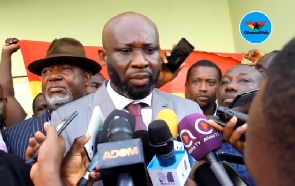
    Speaking at the launch of the platform on Thursday, March 12, the Minister for Communications, Digital Technology and Innovations, Samuel Nartey George, announced April 1 as the deadline for industry players to register on the platform or face sanctions after the deadline.

    He noted that sector players no longer have an excuse after an earlier intervention in August 2025 temporarily halted enforcement actions. The Minister said players now have a 19-day grace period to register and onboard onto the ICOLMS-Ghana platform before nationwide enforcement begins.

    “Once we have launched the ICOLMS today, the grace period runs from today [March 12] until March 31, 2026. This gives you exactly 19 days, whether you are a company or a single biker, to register on the ICOLMS-Ghana platform. 

    The Ningo-Prampram MP issued a stern warning that the Ghana Police Service will enforce compliance from April 1, and stressed that he will not intervene on behalf of companies that fail to integrate their systems.

    “All existing courier companies have that same period to onboard and integrate their systems with the ICOLMS digital platform. If you fail to do that, it will attract regulatory sanctions.

    “Enforcement with the Ghana Police Service will start on April 1, 2026, and there will be no moratorium. There will be no excuses. I will not intervene, I make a solemn pledge,” he said.

    According to the new directive, courier companies and single-bike delivery services must register digitally to continue operating legally.

    Smaller operators will need to pay a one-time application fee (around GHS 570) to be licensed.

    Meanwhile, on August 20, 2025, the Postal and Courier Services Regulatory Commission (PCSRC), in collaboration with the Ghana Police Service, launched a strict enforcement operation in Accra on unlicensed courier operators, particularly motorbike riders. This led to the arrests of several motor riders whose bikes were also seized.

    Given the sudden launch, with no prior heads-up, it sparked widespread protests. Delivery riders argued that the licensing requirements were unfair and had been introduced too suddenly. Many claimed they had not been given enough time or clarity to comply with the new regulations, and the arrests only heightened tensions.

    By August 21–22, 2025, the situation had escalated enough to draw ministerial intervention. Sam George, the Minister for Communication, Digital Technology and Innovation, ordered an immediate suspension of the enforcement exercise. His directive halted the arrests and bike seizures, effectively pausing the licensing drive. He emphasized that stakeholders needed more time to prepare for the upcoming digital regulatory system, ICOLMS-Ghana, which was being developed to modernize courier regulation.

  • Shatta Wale demands apology from EOCO boss over Lamborghini controversy

    Shatta Wale demands apology from EOCO boss over Lamborghini controversy

    Ghanaian dancehall artiste Charles Nii Armah Mensah, popularly known as Shatta Wale, is demanding an apology from the Executive Director of Ghana’s Economic and Organised Crime Office (EOCO), Raymond Archer, citing reputational and brand damage regarding investigations into a Lamborghini linked to former National Signals Bureau Director-General, Kwabena Adu-Boahene.

    He made these remarks during an appearance on Asempa FM’s Ekosii Sen on Wednesday, 11 March, stating that the controversy took a toll on his brand both internationally and locally, leading to his loss of some major deals and gigs.

    “I want to boldly say that the EOCO boss needs to apologise to my brand, not me, Shatta Wale, because they have really tarnished my image in Ghana and even abroad,” he stated.

    He believes the case could have been handled differently and even better if the EOCO boss had dealt with him privately and not made the case public.

    Referring to how an Elantra that was gifted to him by the embattled MenzGold boss, Nana Appiah Mensah (NAM 1), around 2017-2018 was taken from him by authorities after the former was implicated in some fraud cases.

    “The best thing they could have said was, ‘Shatta, come and take your car,’ but to hear another story that the car is proceeds of crime, I was like, ‘where is this coming from?’ At a point, I felt like I was not safe in this country.”

    Shatta Wale was arrested at his residence in Accra on 20 August 2025 by Ghana’s Economic and Organised Crime Office (EOCO) over his Lamborghini Urus, which authorities alleged was linked to a $4 million U.S. fraud case.

    Shatta Wale maintained that he has no dealings with the former state official and questioned why the issue was not handled privately. He said the situation has created the impression that he knowingly purchased a stolen vehicle, which he described as unfair.

    He also expressed fears over his safety in the country after EOCO gave him about 3 different reasons behind his arrest and seizure of his Lambo. According to him, when EOCO first raided his house, the reason was as a result of his involvement with Adu Boahene; however, later he was told to change his story from one criminal being prosecuted by US authorities, when he thought he could leave with his Urus, he was informed the car was a proceeds of crime and that somebody had been shot in the said car.

    Meanwhile, EOCO revealed that Shatta Wale did not have any documentation that shows that he owns or purchased a 2019 Lamborghini Urus, a car which was identified by the FBI and the US Justice Department as proceeds of a $4 million crime.

    The documentation being referenced is in terms of receipt or transfer documents.

    According to EOCO, he rather has a customs declaration document in his possession bearing the name of Nana Kwabena Amuah, who is currently in jail.

    The singer was also unable to identify the person from whom he purchased the car in question.

    He is reported to have said he purchased it from the “Street” and from someone possibly called “ZAK” who may have contacted him on WhatsApp but whose identity he does not know and whose contact he has thrown away.

    Shatta Wale’s EOCO interrogation delayed by scheduling issues

    According to EOCO in a press statement issued on August 21, an invitation was issued to Charles Nii Armah Mensah to report on August 13.

    This was, however, rescheduled for August 20, 2025 at 10am.

    “Counsel for Charles Nii Armah Mensah, indicated to EOCO officers that they would prefer to report at 11am. EOCO readjusted its schedule to align with their time. Shortly before 11am, Counsel for Nii Armah called EOCO to claim that his client was not available and that he was also busy,” a part of the statement noted.

    EOCO indicated to the singer’s Counsel that he and his client were expected to report as scheduled.

    Charles Nii Armah Mensah arrived in the Office around 3pm and, according to EOCO, insisted that he was not going to cooperate until his counsel arrived, a right which he is entitled and was accorded him.

    “EOCO investigators and Charles Nii Armah Mensah waited from 11am till 5pm before his Counsel showed up. Incidentally, EOCO’s closing time is 5pm. Nevertheless, EOCO staff and the entire operational team chose to carry on with the interrogation, which ended around 9pm. Officers eventually left the Office around 11pm,” the statement further revealed.

    Shortly after interrogation ended, Shatta Wale was on Wednesday night granted bail of GHC10,000,000 with two sureties to be justified.

    Charles Nii Armah Mensah would only leave EOCO’s custody after it undertakes surety inspection, which is a standard protocol.

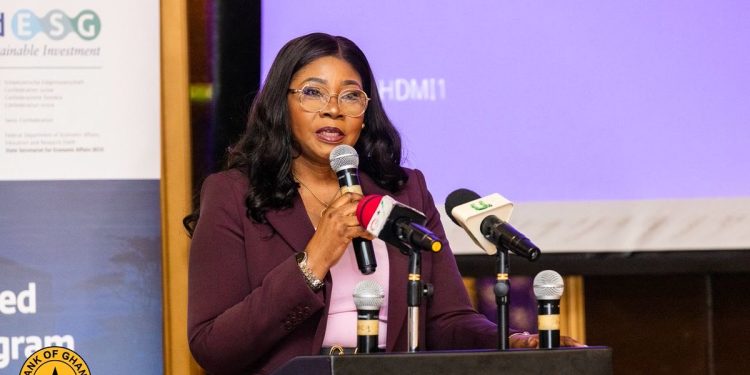
  • T-Bills made up 62% of banks’ investments in 2025 – BoG

    T-Bills made up 62% of banks’ investments in 2025 – BoG

    In 2025, banks invested more in treasury bills than in 2024. This is according to the Bank of Ghana’s January 2026 Monetary Policy Report.

    According to the BoG, its share increased from 40.3% in December 2024 to 62.3% in December 2025, whereas the share of long-term securities declined from 59.3% in December 2024 to 37.2% in December 2025, marking a 37.3% year-on-year decline.

    This was in line with the growth moderation recorded during the reference period. The report also stressed that the share of equity investments remained negligible but increased marginally from 0.4% percent in December 2024 to 0.5% in December 2025.

    Meanwhile, the share of deposits in banks’ liabilities and shareholders’ funds decreased to 72.8% in December 2025 from 75.1% in December 2024, reflecting the slowdown in deposit growth in 2025.

    The increase in borrowings, however, translated into an increased share of 8.5% in December 2025 from 7.6% in December 2024.

    The proportion of shareholders’ funds in banks’ total funding also improved to 13.1% in December 2025 from 10.8% a year earlier, while the share of other liabilities declined from 6.3% to 5.4% during the same comparative period.

    Investor interest and confidence in government treasuries remain high as the treasury bill auction exceeds the target by over 60%.

    In auction results posted by the Bank of Ghana, the government accepted GH¢12.8 billion in bids at the latest auction, above its GH¢9.8 billion target, although investors submitted bids worth GH¢15.9 billion.

    The reports also show that the majority of investors preferred the 364-day (one-year) treasury bill, for which they offered about GH¢7.4 billion, making up nearly half of all the money investors offered.

    Out of this amount, the government accepted just over GH¢5.0 billion.

    Also, for the 182-day (six-month) treasury bill, investors offered about GH¢4.29 billion, and the government accepted almost all of it, around GH¢4.28 billion.

    For the 91-day (three-month) bill, investors offered about GH¢4.1 billion, of which the government accepted about GH¢3.4 billion.

    On the other hand, interest rates continued to rise at the longer end of the yield curve.

    The yield on the 91-day bill remained at 11.19%.

    That of the 182-day bill, however, went up to 12.66% from 12.64% the previous week.

    Additionally, the yield on the 364-day bill increased by eight basis points to 13.06%.

    Meanwhile, the iversubscription has been a trend in the last few months.Government saw another significant oversubscription in its primary T-bill auction, the Bank of Ghana (BoG) announced, following its August 1 auction last year.

    This comes after demand surged 42.07 percent above the target.

    Reports from the Bank of Ghana indicated that the latest figures showed the government had planned to raise GHS 3.86 billion through Treasury bills, but it, however, accepted a total of GHS 5.48 billion. This was a result of investor interest exceeding expectations.

    Specifically, GHS 4.32 billion was taken from GHS 4.86 billion in bids for the 91-day bill, GHS 823 million from GHS 1.15 billion for the 182-day bill, and GHS 343 million out of GHS 774 million for the 364-day bill.

    Experts say the high demand happened because big investors, like banks and companies, wanted to buy Treasury bills then, while the interest rates were still high. They believe that interest rates and inflation might go down soon, so they want to secure the good returns before that happens.

    Interest rates on short-term government securities are still going down. The interest on the 91-day bill fell to 10.29%, which is 0.54% lower than before. The 182-day bill dropped from 13.22% to 12.35%, and the 364-day bill also went down by 1.06% to 13.24%.

    According to reports, the Ghanaian government announced plans to borrow GHS 8.58 billion through treasury bills that month. This figure was cited in a Bank of Ghana issuance calendar for August 2025, which outlined the government’s short-term borrowing strategy.

    This oversubscription adds to the recent oversubscription spree the government has recorded in the last three months consecutively.

    T-bill auction on Friday, July 25, recorded a massive 160% oversubscription.

    How was t-bill auction earlier in 2025?

    In early 2025, when the government assumed office, T-bill auctions were struggling, with eight consecutive weeks of undersubscription. Among some of the reasons for the undersubscription were investor liquidity constraints, where financial institutions and investors faced cash flow challenges, diminishing their interest in investing in government securities.

    Another reason for the undersubscription was other attractive competing investment options, such as the Bank of Ghana’s OMO bills, which were offering higher interest in comparison to T-bills and influencing institutions’ and the public’s preferences. The Bank of Ghana’s OMO bills were short-term debt instruments used in Open Market Operations (OMO), a key tool for managing money supply and interest rates in the economy.

    Market uncertainty was another undersubscription challenge. Due to the previous government’s Domestic Debt Exchange Programme (DDEP) and other concerns about inflation and fiscal discipline, investors treaded cautiously, closely monitoring fiscal decisions by the new government.

    Tight monetary conditions, with less money circulating in the system, also caused demand for short-term debt instruments to drop, accounting for the undersubscription.

  • EOCO-Lamborghini controversy ruined my brand – Shatta Wale

    EOCO-Lamborghini controversy ruined my brand – Shatta Wale

    Ghanaian dancehall artiste Shatta Wale says the controversy surrounding his Lamborghini, which involves the Economic and Organised Crime Office (EOCO), regarding investigations into a Lamborghini linked to former National Signals Bureau Director-General, Kwabena Adu-Boahene, has caused significant damage to his reputation and brand.

    Shatta Wale was arrested at his residence in Accra on 20 August 2025 by Ghana’s Economic and Organised Crime Office (EOCO) over his Lamborghini Urus, which authorities alleged was linked to a $4 million U.S. fraud case.

    Speaking in an interview on Ekosii Sen on Wednesday, 11 March, the Gringo hits maker noted that the controversy has taken a heavy toll on his brand, causing him to lose several deals both locally and internationally.

    “…because they have really tarnished my image in Ghana and even abroad,” he stated.

    He continued that, for the damage caused to him, there is a need for the anti-crime agency to formally apologise to his brand, citing that the damage could have been avoided if the matter had been handled privately.

    “I want to boldly say that the EOCO boss needs to apologise to my brand, not me, Shatta Wale, The best thing they could have said was, ‘Shatta, come and take your car,’ but to hear another story that the car is proceeds of crime, I was like, ‘where is this coming from?’ At a point, I felt like I was not safe in this country.”

    He recounted how EOCO officials raided his house, claiming to verify that some vehicles belonging to Mr Adu-Boahene were in his possession, but he insisted the only car found at his house was his Lamborghini.

    Shatta Wale maintained that he has no dealings with the former state official and questioned why the issue was not handled privately. He said the situation has created the impression that he knowingly purchased a stolen vehicle, which he described as unfair.

    EOCO and Shatta Wale

    The EOCO in June seized a 2019 Lamborghini Urus used by Shatta Wale after its Surveillance and Asset Recovery Unit (SARU) conducted a lawful search of a home at Trassaco Valley Phase 1 in Accra.

    The search, said to be “professional and civil,” was conducted on a 2023 request from the Federal Bureau of Investigations (FBI) and the United States Justice Department.

    EOCO clarified that “it is a standard safety protocol practice for officers of the Surveillance and Asset Recovery Unit (SARU) to carry weapons whilst on operation for the safety of officers.”

    According to the EOCO, the FBI and the Justice Department have tied the seized vehicle to the proceeds of the criminal enterprise of one Nana Kwabena Amuah, who is currently serving an 86 month sentence for several financial crimes in the United States of America (USA).

    It is reported that Nii Armah pleaded with officers that he did not want the seizure to be made public because “the vehicle was a big part of his brand, and if his supporters saw the vehicle being driven away in the company of EOCO, it would destroy his brand.”

    In light of this, Nii Armah was allowed to surrender the vehicle himself, which is currently in the possession of the Economic and Organized Crime Office.

  • Ghana will not experience fuel shortage despite Middle East tensions – TOR

    Ghana will not experience fuel shortage despite Middle East tensions – TOR

    The price of fuel saw a sharp rise with speculated threats of shortage globally following the Israel-US corporate attack on Iran on February 28, which disrupted oil supplies from one of the world’s most energy-rich regions. Crude oil jumped from about $67 per barrel before the war (Feb 28) to nearly $97 by March 10, sending gasoline, diesel, and jet fuel prices soaring worldwide.

    Ghana, being one of the dependents of the global oil supply, stakeholders began to express concerns about a possible shortage of fuel across the country. However, the Corporate Affairs Officer of the Tema Oil Refinery (TOR), Godwin Mahama Ayaba, during an appearance on  March 11, indicated that Ghana is unlikely to experience fuel shortages despite rising tensions in the Middle East, citing the country’s diversified sources of petroleum imports and growing local refining capacity.

    According to him, the NPA recently issued a statement indicating that the situation in the Middle East will not lead to shortages of petroleum products in the country.

    “The National Petroleum Authority, which is the regulator, some three to four hours ago issued an official statement assuring all of us that as for shortage, there is no way the Iran–Israel conflict is going to affect us,” he said.

    Mr Ayaba explained that Ghana’s fuel import structure significantly reduces the risk of supply disruption because the country imports most of its finished petroleum products from Europe.

    “Ghana largely imports from two different areas: Europe and the Arabian region. Where we import most is Europe,” he noted.

    “We import about 80 per cent of our finished petroleum products from Europe and about 20 per cent from the Arabian region, where this conflict may have an impact.”

    While acknowledging that the Middle East tensions could affect that 20 per cent supply, he said Ghana’s domestic refining capacity is expected to fill the gap.

    “So we are likely to lose that 20 per cent, but with TOR coming on stream, we will be able to block that gap,” he said.

    Mr Ayaba revealed that the refinery is currently producing about 28,000 barrels and expects output to increase significantly after ongoing upgrades.

    “Currently, we are producing about 28,000 barrels. After the tie-in, we will move to about 45,000 and further move to 60,000,” he explained.

    He added that increased output from other refineries in the country will also contribute to stabilising supply.

    “Sentuo is doing around 36,000 to 40,000 barrels a day, Akwaaba is doing somewhere less than 10,000, and Platon is around a little below 3,000,” he stated.

    “Together, all these companies will be able to block that 20 per cent that would have come from the Arabian region.”

    Mr Ayaba emphasised that Ghana will still maintain the bulk of its imports from Europe, further ensuring supply stability.

    “We will still have the 80 per cent from Europe coming in,” he said.

    He therefore urged the public not to panic, reiterating the assurances provided by the National Petroleum Authority.

    “I will add my voice to the official communiqué from the NPA that we should rest assured that we are not going to record fuel shortages,” he stated.

    Meanwhile, in a separate interview about 3 days ago, Mr Ayaba revealed that TOR is eyeing a sixty-one (61%) percent increase in its production capacity as part of renewed efforts to strengthen operations and improve output at the facility.

    Currently, the refinery seeks to expand its crude distillation capability from 28,000 barrels per stream day to 45,000 barrels per stream day.

    Speaking during an interview on Citi FM’s Eyewitness News on Monday, March 9, he stated that,

    “The refinery is currently undertaking technical processes aimed at expanding its processing capability from 28,000 barrels per stream day to 45,000 barrels per stream day. This represents a sixty-one percent increase in capacity, and it forms part of our broader plans to revitalise operations and enhance TOR’s contribution to Ghana’s petroleum sector.”

    He continued that, the planned increase will be achieved through the integration of an additional processing unit, known as the F61 unit, which will operate alongside the existing F1 unit.

    Both units will be connected to the refinery’s crude distillation system to improve overall efficiency and output.

    Mr Mahama also noted that engineers are currently carrying out some temporary technical steps to connect a new unit to the refinery’s main processing system, which is expected to increase the refinery’s output from the current level.

    The refinery is presently operating under a tolling arrangement, a system in which private companies supply crude oil to the facility for processing.

    Under this arrangement, the refinery refines the crude and charges a processing fee, while the refined petroleum products are returned to the companies that provided the crude.He explained that under the tolling system, the refinery does not control the marketing or distribution of the finished products, as those decisions are taken by the crude oil suppliers.

    Mr Ayaba added that while the refinery’s current nameplate capacity stands at 28,000 barrels per stream day, the introduction of the F61 unit will push output to 45,000 barrels per stream day.

    He further indicated that management is also considering plans to expand capacity to about 60,000 barrels per stream day in the medium term.

    After several years of inactivity, the management of Tema Oil Refinery announced the resumption of operations. The resumption was possible following the completion of extensive Turnaround Maintenance (TAM) works on the refinery’s Crude Distillation Unit (CDU). Maintenance works began on August 1 and on October 30 in 2025. This information was contained in a press statement released by the management on Saturday, December 27.

    TOR’s resumption was expected to boost energy security, industrial growth and national development, potentially saving Ghana up to $10.2 billion in oil import bills annually.

  •  Under no circumstances can we ​participate in the World Cup – Iran Sports Minister

     Under no circumstances can we ​participate in the World Cup – Iran Sports Minister

    Barely 24 hours after FIFA boss Gianni Infantino announced that Iran can participate in the 2026 FIFA World Cup, which is being co-hosted by Mexico, Canada and the USA, with most of the matches being played in the Donald Trump-led country.

    A few hours after Infantino announced that Trump doesn’t have a problem with Iranians visiting the USA for the global tournament from June 11 to July 19.

    However, Iran’s Sports Minister, Ahmad Donyamali, announced on Wednesday, March 11, during a state television interview in Tehran that Iran would not participate in the 2026 FIFA World Cup.

    According to him, his country cannot take part in the tournament following the United States’ coordinated airstrikes on Iran with Israel on February 28.

    The United States and Israel launched airstrikes on Iran nearly two weeks ago, killing ​the Islamic Republic’s supreme leader, leading to a ​region-wide conflict in the Gulf.

    “Considering that this corrupt regime ⁠has assassinated our leader, under no circumstances can we ​participate in the World Cup,” the minister told state television.

    The World ​Cup will be held in the United States, Mexico and Canada from

    “Our children are not safe, and, ​fundamentally, such conditions for participation do not exist. Given the malicious actions they have carried out against Iran, they ‌have ⁠forced two wars on us over eight or nine months and have killed and martyred thousands of our people. Therefore, we certainly cannot have such a presence,” Donyamali ​said.

    In the draw ​last December, ​the Iranians ⁠were grouped with Belgium, Egypt and New Zealand. All three of their Group G matches ​were scheduled to take place in the ​U.S., ⁠two in Los Angeles and one in Seattle.

    Iran was the only nation missing from a FIFA planning summit for World ⁠Cup ​participants held last week in Atlanta.

    Iran are due to play all three of their group games in the U.S. and could even face the co-hosts in the round of 32 if both teams finish second in their respective groups.

    This is the fourth consecutive time Iran have qualified for a World Cup, and they are scheduled to open their campaign against New Zealand and Belgium in Los Angeles before their final group game against Egypt in Seattle.

    The last time they qualified, they didn’t pull out of the competition despite their grappling with the effects of bomb attacks on three nuclear facilities at the time.

    However, given the seriousness of their current situation, the head of Iran’s football federation, Mehdi Taj, has reportedly cast doubt on their participation.

    Taj told Iranian television that it was “far from our expectations that we can look at the World Cup with hope”. He added the country’s sports officials would decide if any action was necessary.

    FIFA’s general secretary, Mattias Grafstrom, said on Saturday: “Our focus is to have a safe World Cup with everybody participating.”

    Meanwhile, the White House on Tuesday, January 21, announced that World Cup ticket holders can now access the priority visa appointments to travel to the United States.

    This forms part of the US government’s efforts to help ticket holders secure priority visa appointment dates, as citizens of some qualified countries may otherwise be unable to obtain visas in time for the 2026 World Cup.

    The FIFA Prioritised Appointment Scheduling System (FIFA PASS) is a special visa‑interview scheduling program created by the U.S. government and FIFA for the 2026 World Cup. It gives ticket holders priority access to U.S. visa appointments, ensuring fans can travel to matches in North America despite existing visa backlogs.

    Speaking during a joint press briefing with FIFA President Gianni Infantino at the White House in Washington, D.C., on 17 November,last year President Donald Trump mentioned that “I’ve directed my administration to do everything within their power to make the 2026 World Cup an unprecedented success.”

    The WhiteHouse however, warned that, a ticket isn’t a visa. Detailing how the ‘World’ will gain access into the US, the Secretary of State Marco Rubio noted that, ticket-holders for the tournament, set for next June and July in the US, Canada and Mexico, will not be automatically granted a tourist visa.

    But foreign nationals with tickets to World Cup football matches could get an interview at an embassy or consulate within six to eight weeks of applying, Rubio said.

    “Your ticket is not a visa; it doesn’t guarantee admission to the US. We’re going to do the same vetting as anybody else would get. The only difference here is we’re moving them up in the queue,” the Secretary noted the first time the FIFA pass was announced in last year.

  • André Ayew: Should he make Ghana’s 2026 World Cup squad?

    André Ayew: Should he make Ghana’s 2026 World Cup squad?

    Just over 90 days remain until Ghana’s Black Stars storm the BMO Field in Toronto for a potentially banana-skin clash against Panama in their opener at the 2026 FIFA World Cup.

    But discussion around the team is dominated by one player, André Ayew, whether or not he should be handed a call-up to what may be his final dance at the global showpiece.

    The former captain of the senior national team has not donned the Ghana jersey for two years, and coach Otto Addo has been very clear about “seeing others ahead” of the veteran forward.

    After spending a long period unattached to a club, the 36-year-old is now playing competitive football for NAC Breda in the Eredivisie, with four starts in nine matches, scoring one goal with a header just a few days ago.

    Recency bias, coupled with nearly two decades of service for Ghana, has fueled intense debate among politicians, coaches, journalists, and fans over his possible inclusion.

    Why does Otto Addo no longer prefer André Ayew?

    The relationship between Andre and Otto Addo initially looked like a match made in heaven when the former Dortmund assistant coach took over the reins of the Black Stars ahead of the 2022 FIFA World Cup.

    Andre featured in almost every game, from the pre-tournament friendlies to the global showpiece itself.

    He scored in Ghana’s 3–2 defeat to Portugal and also missed a crucial penalty in the 2-0 loss to Uruguay as Ghana exited at the group stage at the last World Cup.

    However, after fielding him for the last time in a friendly against Uganda in March 2024, Otto Addo appeared to feel the forward’s time with the national team had come to an end.

    Speaking to the press, Otto said: “I had a long talk with Andre. He is a living legend of Ghana. It was a difficult decision but this is the decision we took and I gave him the explanation. I have to take the best decision for the team.”

    There was a sense of “when a bird becomes too big for its cage, you let it go” situation regarding André, who had long been influential in the dressing room and, at times, appeared almost impossible to bring to heel without risking backlash or offence.

    Three-time Ghana Journalist Association Sports Journalist of the Year, Benedict Owusu supports the idea of selecting the attacker but “key though, have a conversation with him and define his role in the squad before you take him.”

    Another factor is tactical flexibility. Otto Addo frequently deploys systems such as 4-2-3-1 and 3-5-2, which demand high pressing, mobility and quick transitions. These systems often favour younger and more energetic forwards capable of leading counter-attacks, an area where Andre, at 36, may naturally struggle compared to younger options.

    Is André Ayew needed in the Black Stars squad?

    “Experience is always the best teacher,” they say, and Andre has 17 years of that with Ghana.

    He is the most-capped Black Stars player with 120 appearances, scoring 24 goals since making his debut in 2007.

    But in the twilight of his career, Andre is no longer the player he was a decade ago when he walked straight into Swansea City in the Premier League with an appetite for destruction, scoring 12 goals, including strikes against giants like Manchester United and Chelsea.

    It is true the former West Ham United forward can still pop up with crucial goals when needed,  something that has been a trademark of his career, but the tendency to come up with those moments regularly has doubtlessly dwindled.

    Besides, goalscoring has not been a major problem for the Black Stars, particularly when looking at their recent performances in the 2026 FIFA World Cup qualification, scoring 23 goals in 10 matches – atleast two goals per game.

    “He might be a very, very good player but you ask yourself in this current setup, is he needed?” Sudan assistant coach Ignatius Osei-Fosu told Luv FM.

    “For me, no. Dede is my man, but for me you leave when the applause is high,” he added.

    Others who clamour for his inclusion believe it should be about rewarding players who have served the nation faithfully, rather than purely judging them on current form.

    Member of Parliament for Ketu North, Eric Edem Agbana, told Citi FM, “We need to reward sacrifice, hard work and loyalty.”

    What are the options in Andre’s absence?

    Since Andre’s last appearance for Ghana, Otto Addo has made nine international call-ups for various assignments, from World Cup qualifiers and Africa Cup of Nations qualifiers to friendlies.

    It is fair to say that, given the style of play he intends, there is a plethora of options – both newcomers and regulars – who are proficient enough to torment any backline in the world.

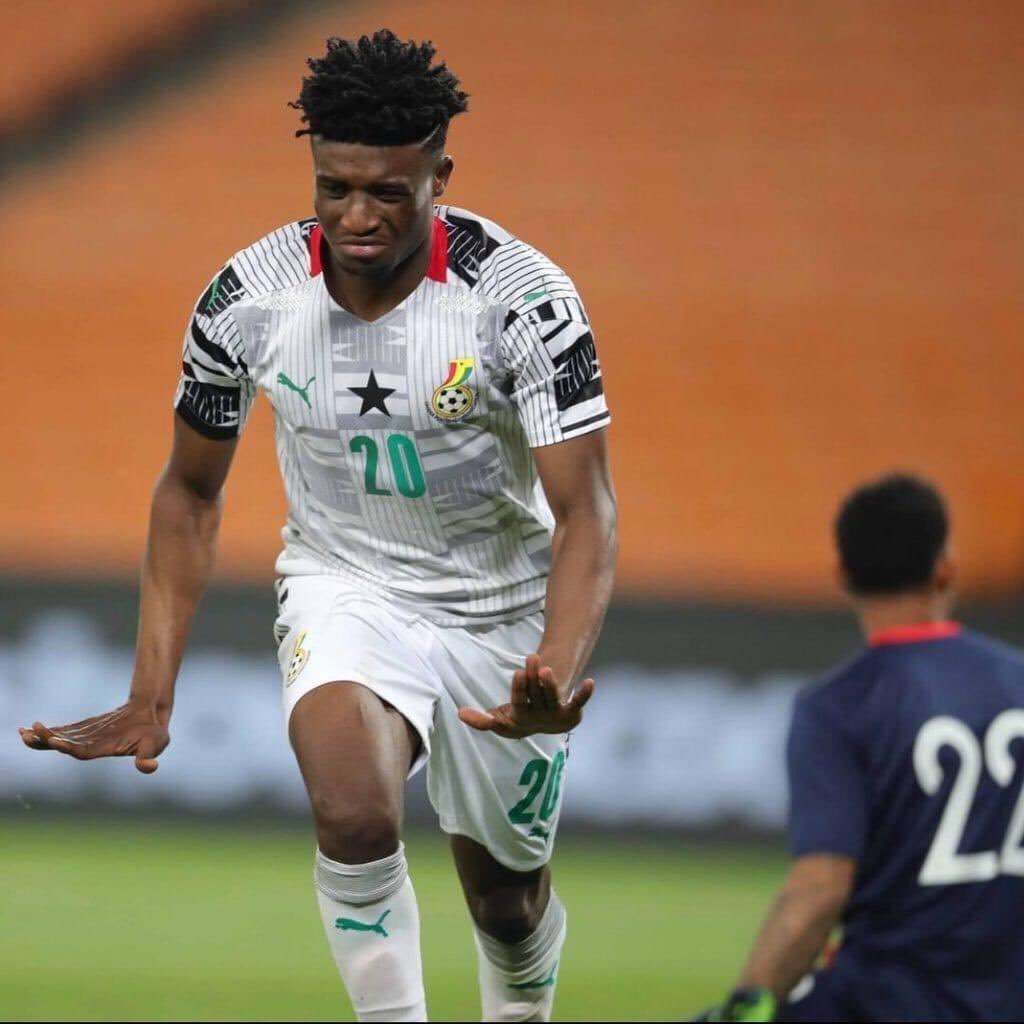
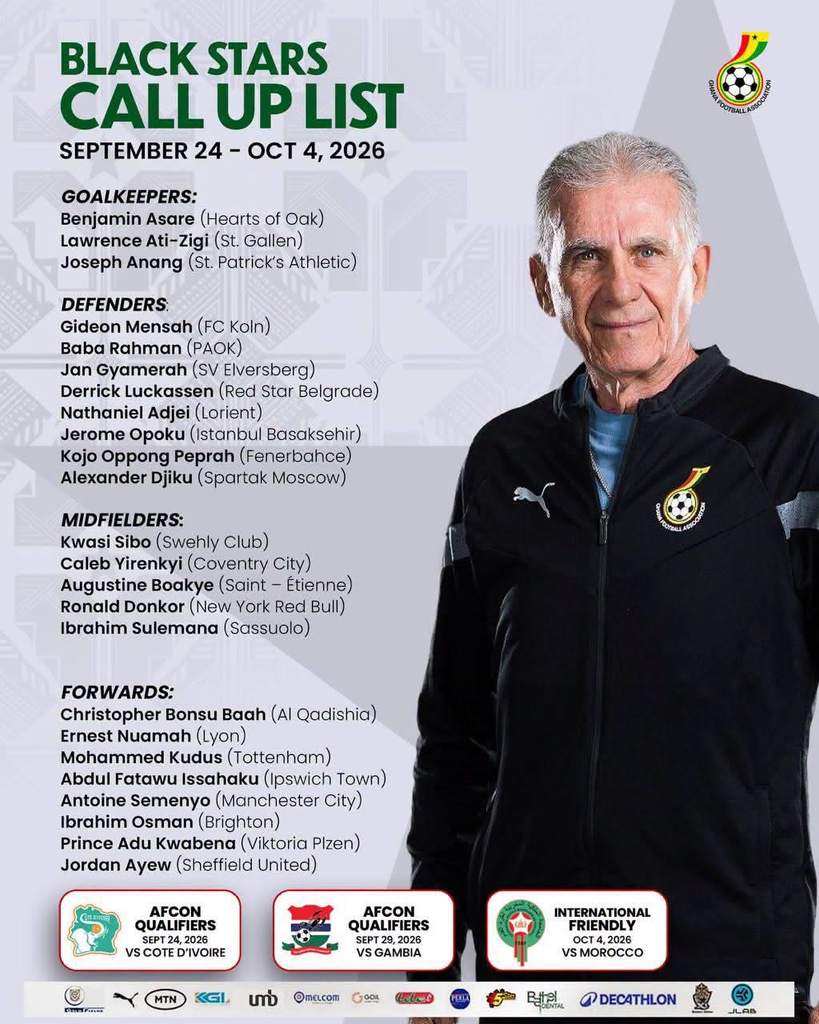
    Mohammed Kudus, whose dribbling skill and creativity is highly rated, has essentially locked down the number 10 role. Kudus is also capable of operating on the right-hand side, where he set up five goals for Tottenham Hotspur before sustaining an injury this term.

    Antoine Semenyo, who is the most-inform Ghanaian in the Premier League this season, has scored 15 goals –  the third-highest tally this term – and is ambidextrous, able to feature across the front three.

    Captain and brother of Andre, Jordan Ayew, is equally versatile, having been involved in 14 goals during the World Cup qualifiers.

    Other forwards waiting in the wings include Ernest Nuamah (if he recovers from injury), Abdul Fatawu Issahaku, Christopher Bonsu-Baah, Brandon Thomas-Asante, Joseph Paintsil, and others.

    Ultimately, the decision rests with Otto Addo on whether or not to select Andre for the World Cup.

    However, the team is well-stacked in attack even in his absence, blending youth and experience, with strong unity in camp – which is in no way to suggest that Andre is a troublemaker.

    Meanwhile, Ghana will face Austria on March 27 at Ernst Happel Stadium, before taking on Germany in their second friendly on March 30 in Stuttgart.

    The Black Stars will then travel to North America for a friendly against Mexico on May 22 at a venue yet to be announced, before the final preparatory clash against Wales on June 2 at Cardiff City Stadium.

    These matches are all part of Ghana’s preparation for the FIFA World Cup.

  • 2026 WC: Maintain the current squad, we need no additions –Jordan Ayew

    2026 WC: Maintain the current squad, we need no additions –Jordan Ayew

    Conversations are rife, particularly about which players will make the Black Stars squad that will represent Ghana at the 2026 FIFA World Cup.

    One player making the headlines lately is former Black Stars captain Andre Dede Ayew, who hasn’t represented Ghana since he last played for the Black Stars at the 2023 Africa Cup of Nations (AFCON) in Côte d’Ivoire.

    Speaking during an interview on Adom TV’s Fire for Fire, the brother of former team captain and current Black Stars captain Jordan Ayew said the current squad has what it takes to compete without major additions.

    He insists that the current squad that secured the country a spot in the global football tournament should be maintained, as they are more than enough.

    “I think the players who played during the qualifiers have done extremely well. I don’t think we need any additions. I believe we have a good team and, as time goes on, we are improving,” he told Adom TV’s Fire for Fire in an exclusive interview.

    He added that the squad’s cohesion continues to improve despite limited training time together. “We haven’t had much time to train together, but the unity is getting better, and everything is improving,” Ayew added.

    The Leicester City forward also suggested that introducing significant changes at this stage may not be ideal, though he acknowledged that the final call lies with the technical team.

    “I don’t think this is the right time to make changes. But to be honest, on the technical side, the coach will know whom to add or select,” he said.

    “Whoever is added must be ready to give their all and put on a show,” Ayew added.

    After Ghana sealed their place in the global tournament, to be staged in the United States, Mexico, and Canada, several players have publicly indicated their desire to be part of the squad.

    Among them is Ayew’s elder brother, Andre Ayew, who has not featured for the Black Stars in the past three years.

    In preparation for the tournament, Ghana is expected to hold a training camp in March, with friendly matches scheduled against Austria and Germany. Further warm-up games are planned against Mexico in May and Wales on June 2.

    During the competition, the squad will be based at Bryant University in the United States.

    After group-stage exits at the 2014 FIFA World Cup and the 2022 FIFA World Cup, Ghana will be aiming to deliver a stronger performance when the tournament kicks off in North America.

    Meanwhile, Otto Addo, the head coach of the Black Stars, is expected to announce his final squad for the tournament on June 1.

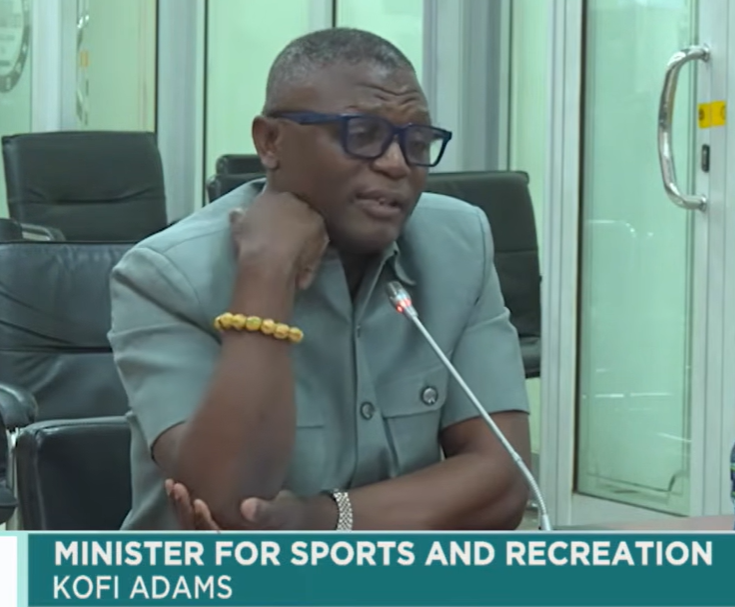
    The Minister for Sports and Recreation, Kofi Adams, has charged the national team’s technical team to make squad selections based on competence and talent rather than sentiment. His remarks come on the back of Ghana’s draw with England, Panama, and Croatia.

    Speaking during an interview with Sporty FM, the Buem Member of Parliament (MP) emphasised that Ghana must select the best players for the 2026 FIFA World Cup squad.

    “We must call up the best, as I have always insisted. A lot of it is emotional, but you also need technical capabilities and sound judgment. You have to decide based on performance and readiness, not just history or popularity. The country must go with its best,” he noted.

    He pledged his support for the coach in whatever decisions he makes to ensure the best outcome for the team.

    “Wherever we find it, the coach has my support. Whoever is responsible for the team will have my support,” he added.

    Ghana has been drawn in Group L alongside England, Croatia, and Panama, opening their campaign against Panama on June 17, 2026, in Toronto, Canada.

    Meanwhile, one of the concerns expressed after Ghana fell into Group L following the group draw held on Friday at the John F. Kennedy Centre for the Performing Arts in Washington, D.C., is the Black Stars being placed in the same group with England.

    Black Stars head coach Otto Addo himself affirmed that among the three other teams, England remains the favourite. However, he added that Croatia and Panama should not be underestimated.

    During a media engagement, Addo emphasised the importance of consistency and concentration.

    “I look forward to every game as special. It is very important for us that we don’t underrate any team. For sure, England is the favourite in that group, but as a coach, I’m looking at every game equally.”

    Addo highlighted Ghana’s opening match against Panama as a crucial opportunity to gain momentum.

    “I’m hoping that we have a good start against Panama, which will be very, very crucial. A strong start will make the other games a little easier psychologically. We will use the March window for test matches and then assess where we are,” he noted.

    Referring to the team’s strong performance during the qualifiers and its preparations, Otto Addo said, “We did very well in the qualifiers. We didn’t lose a single official game—one draw and the rest wins. It was a good year in 2025 after a difficult 2024,” commending his squad.

  • World Cup: Trump says Iran is welcome to US – FIFA boss

    World Cup: Trump says Iran is welcome to US – FIFA boss

    Iran can freely participate in the upcoming June 2026 World Cup despite escalating tensions with the USA, according to FIFA president, clearing doubts about the Islamic state’s participation in the tournament.

    It will be recalled that, barely a week ago, President Donald Trump was asked about his stance on Iran’s participation in the World Cup, and he said he “does not care” while speaking during an interview with Politico on Tuesday, March 3.

    “I really don’t care”. I think Iran is a very badly defeated country. They’re running on fumes,” he said.

    However, his ‘friend’ and president of the World football governing body, Gianni Infantino, has revealed that, after his outfit met with Trump, he confirmed he has no problem with Iran being there.

    “This evening, I met with the President of the United States, Donald J. Trump, to discuss the status of preparations for the upcoming FIFA World Cup, and the growing excitement as we are set to kick off in just 93 days,” Infantino wrote on Instagram.

    “We also spoke about the current situation in Iran, and the fact that the Iranian team has qualified to participate in the FIFA World Cup 2026. During the discussions, President Trump reiterated that the Iranian team is, of course, welcome to compete in the tournament in the United States.”

    According to Gianni, “We all need an event like the FIFA World Cup to bring people together now more than ever, and I sincerely thank the President of the United States for his support, as it shows once again that Football Unites the World.”

    Gianni’s clarification comes at a time where the team’s participation has been cast in doubt due to the Istarli-USA corporate attack on Iran on Feb. 28.

    The conflict has now drawn in other Middle East nations, with Iran retaliating by striking U.S. military bases in the region. Iran have been drawn in a group with New Zealand, Belgium and Egypt. 

    Iran are due to play all three of their group games in the U.S. and could even face the co-hosts in the round of 32 if both teams finish second in their respective groups.

    This is the fourth consecutive time Iran have qualified for a World Cup, and they are scheduled to open their campaign against New Zealand and Belgium in Los Angeles before their final group game against Egypt in Seattle.

    The last time they qualified, they didn’t pull out of the competition despite their grappling with the effects of bomb attacks on three nuclear facilities at the time.

    However, given the seriousness of their current situation, the head of Iran’s football federation, Mehdi Taj, has reportedly cast doubt on their participation.

    Taj told Iranian television that it was “far from our expectations that we can look at the World Cup with hope”. He added the country’s sports officials would decide if any action was necessary.

    FIFA’s general secretary, Mattias Grafstrom, said on Saturday: “Our focus is to have a safe World Cup with everybody participating.”

    Meanwhile, the White House on Tuesday, January 21, announced that World Cup ticket holders can now access the priority visa appointments to travel to the United States.

    This forms part of the US government’s efforts to help ticket holders secure priority visa appointment dates, as citizens of some qualified countries may otherwise be unable to obtain visas in time for the 2026 World Cup.

    The FIFA Prioritised Appointment Scheduling System (FIFA PASS) is a special visa‑interview scheduling program created by the U.S. government and FIFA for the 2026 World Cup. It gives ticket holders priority access to U.S. visa appointments, ensuring fans can travel to matches in North America despite existing visa backlogs.

    Speaking during a joint press briefing with FIFA President Gianni Infantino at the White House in Washington, D.C., on 17 November,last year President Donald Trump mentioned that “I’ve directed my administration to do everything within their power to make the 2026 World Cup an unprecedented success.”

    The WhiteHouse however, warned that, a ticket isn’t a visa. Detailing how the ‘World’ will gain access into the US, the Secretary of State Marco Rubio noted that, ticket-holders for the tournament, set for next June and July in the US, Canada and Mexico, will not be automatically granted a tourist visa.

    But foreign nationals with tickets to World Cup football matches could get an interview at an embassy or consulate within six to eight weeks of applying, Rubio said.

    “Your ticket is not a visa; it doesn’t guarantee admission to the US. We’re going to do the same vetting as anybody else would get. The only difference here is we’re moving them up in the queue,” the Secretary noted the first time the FIFA pass was announced in last year.

  • Increase salaries of public sector workers to eliminate corruption – Ex-pres Kuffour

    Increase salaries of public sector workers to eliminate corruption – Ex-pres Kuffour

    Ghana has a long-standing history of struggling with pervasive corruption, particularly in the public sector.

    A problem, the former president of Ghana, John Agyekum Kuffour, believes has become pervasive and institutionalised due to poor remuneration and low salaries and wages.

    Speaking during an interview with JoyNews on Tuesday, March 10, the former President recommended higher salaries and better pay structures to annihilate this canker, which has eaten into the pubic sector as a way to curb this problem, arguing that fair compensation would reduce the temptation to engage in corrupt practices while strengthening accountability and governance.

    “Given our situation, I have thought about corruption and identified two major sources of it. One is the poor pay and poor remuneration system that our society somehow seems to be shy of tackling. The pay system is really not good.

    If I go to a ministry of government, for example, a highly trained director who has served for 10 or 20 years, in current times, the monthly net take-home pay might not even go beyond 30,000 Ghana cedis. Given the inflationary situation we are in, such a director perhaps has a family, a wife and maybe four children.

    Naturally, the father would want the children to have some of the best education. He would want to live decently, have a decent home, not something exaggerated, and would want a car. He is also a social person, so naturally, he would want to bear the social responsibilities that come with our traditions, such as supporting the extended family”, the former president said, citing the case of a high-ranking police officer.

    He believes that a well-paid public servant helps improve governance while enforcing strict penalties for those who still engage in corrupt practices, citing the famous Lee Kuan Yew, who insisted that ministers and senior public officials should be paid salaries just as heads and bosses of top corporate executives to attract and retain the best talent in government.

    “The people I used to fashion these policies are as good as the people in the corporate world getting fat salaries, so they must be paid like the people in the corporate world,” Mr Kufuor quoted Lee Kuan Yew as saying.

    Per reports, Members of Parliament earn about GH₵ 15,000–18,000 per month, including allowances, while heads of major corporate institutions such as Chief Executive Officers (CEOs), earn vastly more, averaging GH₵ 338 million to GH₵ 1 billion annually, depending on the sector and company size.

    He suggested that by that standard, Ghana’s top political offices are significantly underpaid compared to the level of responsibility and expertise required.

    Mr Kufuor, however, stressed that better salaries must be matched with strict accountability measures.

    “When you choose to be in the public sector, to be well-paid, and you allow yourself to be tempted into red tape and corruption, and they catch you, some of the worst punishments would be visited on you,” he said.

    Citing the Ghana Police Service and their possible take-home, Mr Kuffour added that,

    “if you look at our police system, for example, I don’t think a superintendent’s take-home pay goes beyond 5,000 Ghana cedis a month. Yet these are people who are supposed to uphold law and order in our system.

    So again, they also try to top up their income. The same thing happens in the courts, among lawyers, politicians, and even academics. Corruption is therefore so pervasive in the system, and I have traced much of it largely to remuneration that is not realistic.”

    Mr Kufuor, who served two terms as president from 2001 to 2009 under the New Patriotic Party, said a comprehensive rethink of how Ghana compensates its public servants is necessary if the country wants to reduce corruption and improve efficiency in public administration.

    Ghana’s corruption Index

    Ghana has seen a marginal decline in corruption, ranking 43 out of 100 in the 2025 Corruption Perceptions Index.

    This was contained in a report shared by Transparency International on Tuesday, February 10, 2026. According to the report, out of the 182 nations assessed, Ghana ranked 76th globally, but this, according to experts, indicates little to no improvement in Ghana’s fight against corruption.

    The 43% marks a one-point increase from the 42 recorded in 2024. However, according to the organisation’s methodology, this does not constitute a significant change.

    The organisation’s Board Chair, François Valérian, highlighted the need for local and international collaboration in tackling corruption.

    “In an interconnected world, we need both national action and multilateral cooperation to protect the public interest and tackle shared challenges like corruption. At a time when we’re seeing a dangerous disregard for international norms from some states, we need to protect a rules-based global order that is grounded in transparency, accountability to citizens and respect for human rights,” he said.

    Ghana has remained stuck at a CPI score of 43 since 2020, except for the dip to 42 last year. The country’s highest score was 48 in 2014, after which it experienced a downward trajectory until 2018.

    The assessment comes at a time when many still raise concerns about Ghana’s politicised judicial system and law enforcement agencies.

    The dismissal of the former Chief Justice, petitions for the removal of heads of independent institutions, and the discontinuation of corruption cases through a controversial 60:40 settlement arrangement have raised questions about executive interference.

    The “60:40 corruption case settlement arrangement” in Ghana refers to a controversial practice where corruption-related prosecutions were reportedly discontinued if the accused agreed to return 60% of the misappropriated funds while retaining 40%.

    This has created a decline in confidence in the government and the judicial system following a well-sold launch of Operation Recover All Loot (ORAL).

  • Congo FA President, wife and son sentenced to life imprisonment over misappropriation of FIFA funds

    Congo FA President, wife and son sentenced to life imprisonment over misappropriation of FIFA funds

    A Congolese court in Brazzaville has slapped the president of the Congolese Football Federation (FECOFOOT), Jean-Guy Blaise Mayolas, with a life prison term after being found guilty of money laundering, embezzlement, forgery, and misuse of FIFA funds.

    The ruling, delivered on Tuesday, March 10, in absentia, also sentenced the president’s wife and son, as they were implicated in the charges for which they were found guilty.

    Mayolas was accused of diverting around $1.3 million in funds provided by FIFA. It was alleged that he siphoned about $500,000 through a network of shell companies, which was earmarked for the country’s women’s national team.

    When his woes began

    Mayola’s woes started in the middle of last year, when the presidents of the clubs competing in the Congolese Women’s Championship submitted a formal complaint to the Central Intelligence and Documentation Office, claiming that the $500,000 sent by FIFA to FECOFOOT in 2021 as part of its Covid-19 relief programme, only $20,000 had reached them, meaning $30,000.

    Following this, FIFA’s audit reports flagged irregularities in the use of funds allocated to FECOFOOT. 

    The court also handed prison terms to several senior federation officials. 

    FECOFOOT’s general secretary, Badji Mombo Wantete, and treasurer, Raoul Kanda, were each sentenced to five years behind bars for their involvement in the financial irregularities.

    Prosecutors said the verdict followed an eight-month investigation that examined banking records, financial documents and the federation’s internal administrative and accounting procedures.

    The developments come as the DR Congo national football team prepares for a crucial fixture in the race for a place at the 2026 FIFA World Cup.

    The side is scheduled to play its final inter-confederation playoff match on March 31, 2026, at Akron Stadium in Zapopan, Mexico, with a World Cup spot at stake.

  • Government pays GHS2.6bn to clear NHIS debts to health providers

    Government pays GHS2.6bn to clear NHIS debts to health providers

    The government has disbursed GH¢2.6 billion to the National Health Insurance Scheme (NHIS) to settle outstanding claims and debts owed to health service providers.

    This was announced by the Minister for Health, Kwabena Mintah Akandoh, on March 9 during a presentation on the floor of Parliament.

    Addressing Parliament, the minister explained that the payment was aimed at settling arrears accumulated from previous years and restoring confidence among healthcare providers who rely on the scheme for reimbursements.

    He also disclosed that the government has disbursed another GH¢1.5 billion to the Ghana Medical Trust Fund, popularly known as Mahama Care, as part of efforts to strengthen healthcare delivery across the country.

    “Government has paid a total of GH¢2.6 billion to the National Health Insurance Scheme this year to clear claims and debts owed to service providers,” Mr Akandoh told the House while giving an account of the government’s disbursement to settle the debt owned the nation’s health insurance scheme.

    The Health Minister disclosed while responding to questions from the Minority Leader, Alexander Afenyo-Markin, during proceedings on the floor of Parliament.

    He also criticised what he described as the persistent build-up of NHIS arrears under the previous administration, noting that although GH¢5.68 billion was paid in claims between 2020 and 2023, debts continued to accumulate within the system.

    The minister argued that the current payments are intended to address those structural challenges while improving the financial sustainability of the scheme.

    Meanwhile, the headquarters of the Ghana Medical Trust Fund has officially been commissioned by the Minister of Health, Kwabena Minta Akandoh, together with the Administrator of the Trust Fund, Obuobia Darko-Opoku, and her team.

    This marks a significant milestone in establishing a home for the Fund’s growing operations and nationwide initiatives.

    The occasion represents more than the opening of a building. It signifies a foundation of hope, a commitment to sustainability, and a future where every Ghanaian can access quality healthcare with dignity and ease.

    From the provision of essential medical equipment to the training and capacity building of health professionals, financial support mechanisms, direct patient care, and the development of research and data systems, the Fund continues to advance its mandate to combat Non-Communicable Diseases (NCDs) and strengthen Ghana’s healthcare system.

    With visionary leadership and the unwavering support of our partners, the Ghana Medical Trust Fund stands ready to deliver on its mission to heal, to serve, and to build a healthier nation, one life at a time.

    Meanwhile, the Ghana Medical Trust Fund, part of the MahamaCares initiative, was officially unveiled to offer financial assistance to individuals battling long-term and life-threatening illnesses.

    The launch ceremony was held at the University of Ghana Medical Centre (UGMC) in Accra on Tuesday, April 29.

    The fund has been designed to ease the financial burden on patients suffering from chronic conditions, including kidney disease, cancer, and cardiovascular ailments.

    The MahamaCares initiative is expected to enhance access to critical treatment for vulnerable groups across the country, providing timely support where medical costs often become a barrier to care.

    President John Dramani Mahama became the first major contributor to the initiative as he pledged to donate half of his annual salary.

    He recalled how his father died of prostate cancer in 2001, followed by his mother’s passing in 2016 due to hypertension-related complications. He also shared the case of a staff member whose child requires expensive weekly dialysis to survive.

    Calling on businesses to follow suit, the president urged the private sector to consider supporting the fund as part of their Corporate Social Responsibility (CSR) efforts.

    “I want to encourage corporate Ghana, businesses, the mines, the banks, and all the other companies that the Ghana Medical Trust Fund is coming to your clients who save their money in your banks or do business with you. Some of them are even your own staff.

    “So, as part of your Corporate Social Responsibility (CSR), if you give anything, consider that you are giving to your own staff or customers. So, I would like to encourage all corporations in Ghana, both private and public, to, at the end of the year, donate some portion of their annual CSR to the Ghana Medical Fund because it is going to do a lot of good to the country,” he stated.

  • TOR targets 60% production boost, aims for 45,000 barrels per day

    TOR targets 60% production boost, aims for 45,000 barrels per day

    The Tema Oil Refinery (TOR)  is eyeing a sixty-one (61%) percent increase in its production capacity as part of renewed efforts to strengthen operations and improve output at the facility.

    Currently, the refinery seeks to expand its crude distillation capability from 28,000 barrels per stream day to 45,000 barrels per stream day.

    Speaking during an interview on Citi FM’s Eyewitness News on Monday, March 9, Corporate Affairs Officer of TOR, Godwin Mahama Ayaba, stated that, 

    “The refinery is currently undertaking technical processes aimed at expanding its processing capability from 28,000 barrels per stream day to 45,000 barrels per stream day. This represents a sixty-one percent increase in capacity, and it forms part of our broader plans to revitalise operations and enhance TOR’s contribution to Ghana’s petroleum sector.”

    Officials say the planned increase will be achieved through the integration of an additional processing unit, known as the F61 unit, which will operate alongside the existing F1 unit.

    Both units will be connected to the refinery’s crude distillation system to improve overall efficiency and output.

    Mr Mahama also noted that engineers are currently carrying out some temporary technical steps to connect a new unit to the refinery’s main processing system, which is expected to increase the refinery’s output from the current level.

    The refinery is presently operating under a tolling arrangement, a system in which private companies supply crude oil to the facility for processing.

    Under this arrangement, the refinery refines the crude and charges a processing fee, while the refined petroleum products are returned to the companies that provided the crude.

    He explained that under the tolling system, the refinery does not control the marketing or distribution of the finished products, as those decisions are taken by the crude oil suppliers.

    Mr Ayaba added that while the refinery’s current nameplate capacity stands at 28,000 barrels per stream day, the introduction of the F61 unit will push output to 45,000 barrels per stream day.

    He further indicated that management is also considering plans to expand capacity to about 60,000 barrels per stream day in the medium term.

    After several years of inactivity, the management of Tema Oil Refinery announced the resumption of operations. The resumption was possible following the completion of extensive Turnaround Maintenance (TAM) works on the refinery’s Crude Distillation Unit (CDU). Maintenance works began on August 1 and on October 30 in 2025. This information was contained in a press statement released by the management on Saturday, December 27.

    TOR’s resumption was expected to boost energy security, industrial growth and national development, potentially saving Ghana up to $10.2 billion in oil import bills annually.

    Tema Oil Refinery halted its operations in 2018 citing lack of crude oil which serves as a raw material in maintaining the refinery. Other factors that influenced the closure include broken equipment, piled debt, among others.

    Addressing party delegates in 2023, President Mahama assured the creation of jobs through the revamping of the refinery.

    He pledged to revive the Oil Refinery to its former glory which he claimed was collapsed by the then Akufo-Addo government.

    “Since we (NDC) left office, TOR has never processed crude oil again. I remember before we left office, we sent to TOR the first batch of Ghanaian crude oil from our own oil fields for TOR to process. That oil sat there for several years, eventually, they discounted the oil and sold it out without processing it. I can assure you, when NDC comes back, TOR will stand on its feet again”, he noted.

    In June, this year, Managing Director of TOR Mr. Edmond Kombat has revealed refinery operations will commence in October.

    He informed the Parliamentary Committee on Energy on Sunday, June 22, when he briefed the committee on the leadership’s mandate, work plans for the year 2025, and their operational challenges.

    The engagement forms part of the committee’s oversight responsibility of the agencies under the Ministry of Energy and Green Transition.

    In his submission, Mr. Edmond Kombat indicated that TOR will continue with the gantry and terminal upgrade.

    He noted that the current leadership will also complete ongoing projects commenced by the previous administration as well as work on their debt and financial restructuring as well as retooling of their laboratory.

    He noted that the refinery was wallowing in debt worth $517 million after being inactive for the past four years. The current debt is as of December 2024.

    The Managing Director said: “There were times that the Ministry of Finance in the past had given some funds to TOR and some of it, for example, was grants and then when they entered into the agreement with the IMF, the IMF asked them to reclassify it as debt.

    “So, those things have accumulated to that amount of money and I think the last time TOR traded, some of the trades were not hedged,” he said.

    “We are doing that verification and once we do that verification and authentication of what we have been able to bring down, that will be communicated publicly,” Mr. Edmond Kombat.

    According to him, for the past 6 months, TOR had not audited its financial accounts.

    The Managing Director made a special appeal to the parliamentary committee to help them resolve some of their challenges.

    They include restructuring of their debts with the ESLA receivables, converting GOG debts into equity,reinstating the TOR portion of the ESLA Levy, allowing TOR to participate in the primary distribution margin, and giving TOR a representation on the Laycan Committee, among others.

  • Anny Osabutey: What is Daddy Lumba’s crime

    Anny Osabutey: What is Daddy Lumba’s crime

    On Sunday evening, just before retiring to bed, I made a quick surf on X(formerly Twitter), to update myself on what else was being said, and what was trending. I went through the first few files, and just as I was about to log off, I came across a headline: “Counsellor Lutterodt incites Ga youth against Odo Broni.” I paused, read the headline again. Especially in an environment where headlines are perpetually opposed to the actual content, I decided to click the video to hear things for myself- and I was horrified by the things that came out of his vocal cords.

    Did he say that? That was the first question I asked myself. For those familiar with Counselor Lutterodt and his social commentaries, making controversial comments isn’t beyond him. That is how he fuels his presence on mainstream and social media platforms. He thrives in the ecosystem of outlandish commentaries. But what he said about the late Daddy Lumba’s young wife, Odo Broni, asking Ga Youth to pick up weapons and enter her residence at East Legon, and “exhume” the late musician’s body, is a clear call for violence against Mrs Priscilla Fosu (Odo Broni and her children).

    Post Daddy Lumba’s death and the unfortunate issues surrounding his private life, which has empowered dimwits to be attacking his legacy on Titkok shows as well as his young wife( and the family head, Opanyin Kofi Wusu aka Abusuapanyin Tupac), Counselor Lutterodt has taken a ringside seat, right in the heart of it, denigrating Daddy Lumba’s young wife, and including unprintable words against her person. Counselor Lutterodt belongs to the so called Team Legal Wives, a group of disgruntled characters and their assigns, partly empowered by some relatives of the late musician, who have made it their business to not only drag the late musician’s personal life and artistry through their own condescending private lives, but that of his wife, Odo Broni, the children, and those associated with them.

    And this very group organised two smelly press conferences, and, in the presence of one of his nephews, Miller attacked the musician’s memory. The pressers were so smelly, and that was evident in how the texts were read by those assigned to come into the light and speak. Ironically, and without any shame, this group is desperately trying to organise a so-called “celebration of life” in honour of the musician, the very same person they continue to denigrate from the very first day, forgetting their actions negatively impact the mental health of his children. And it will be naive for anyone not to know the motive behind the desperation to “celebrate” him.

    Not too long ago, Counsellor Lutterodt and a section of his Team Legal Wives (most of whose prominent members have multiple partners and also THIRD and FOURTH wives, husband-snatchers, etc.) organised a fundraising activity to raise money, but nobody knows how much was raised. So for him to now come back and incite Ga Youth against Odo Broni, shows the desperation to keep the existing feud alive, whilst profiting from it. “ We will not wait for the police,” he said on the entertainment show of a private radio station, and further went ahead to ask the Ga youth to pick up weapons, including “Pckaxe,” enter the late musician’s hometown and exhume his body.

    Counsellor Lutterodt clearly has zero respect for the Ga youth he wants to force themselves onto the compound. Since gaining prominence on the media scene, have never heard him say there are job opportunities for the many jobless youth in the Ga land, but when it comes to violence, he thinks they are specialists in that. How sickening. It’s sad, but Counsellor Lutterodt wouldn’t say what he said if some disgruntled relatives of the late musician didn’t feed his stupidity with fake news, just to attack his young wife. Just to cyberbully her and think he can get away with it.

    Unfortunately, and this time around, he will be made to face the law for inciting violence against the household. And I pray the family takes him on…. Counsellor Lutterodt and his assigns were in this country when Daddy Lumba was bringing Odo Broni in and out of the country, introducing her to his legion of fans, and publicly praising her in their presence. Why didn’t he and the marauding assigns confront Daddy Lumba? Why didn’t he even publicly call Lumba out for desecrating the sanctity of his “marriage” to another woman? Why didn’t he? He is a man who doesn’t shy away from speaking on matters he feels strongly about.

    Why didn’t he confront Lumba? Why didn’t he confront Lumba when he was introducing the young wife to the high-profile persons in this country? He didn’t see it, or didn’t exist on planet earth? Suddenly, and with the unfortunate demise of Lumba, he has developed cojones and “springing up” from platform to platform, attacking his memory and that of the surviving partners. Being an egghead cyberbully is not a strength. It is crass. It is FOOLISHNESS. And it is MORONIC. And madness has to end. At some point. But then again i ask: WHAT CRIME DID LUMBA COMMIT? WHAT WAS HIS OFFENSE against Lutterodt and his friends? Was Lumba the only man to have had children with different women or to have walked out of a marriage? He alone knows the reason why. Or is this a paid assignment to ruin his legacy?

    But how does one think he or she can ruin the legacy of a man whose music didn’t need much push to spike into our social lives? With over 30 albums and countless hits, how does one think he can undermine that? From his mainstay highlife to gospel, his legendary Status is established, and, over time, as well as from his painful absence, that will be abundantly clear. It’s unfortunate that some of the relatives who ought to be the vanguard of his legacy are partly contributing to the assault on his legacy. But they will fail.

    Fela Anikulapo Kuti, now a Grammy Lifetime Achievement winner, was known for his strange private life. If Daddy Lumba had attempted a fraction of what he did in private life, knowing the countless assaults on his memory, only the heavens can tell what else we may be witnessing. After his death, and out of common sense, the family has kept his legendary AFROBEAT status alive. Fela is noted for his artistic prowess, not necessarily because he had multiple wives. His AFROBEAT has become a platform for many Nigerian artists, who are performing to a global audience and taking big DOLLARS.

    Then there was Bob Marley and his issues, but his legacy is an unwavering buffer of GRACE, FINANCIAL EMPOWERMENT and endless DOOR OPENING moments for his lineage. Daddy Lumba is in the same legendary status or close to it. We were witnesses to how the world received his unfortunate passing and the tributes thereafter. We saw the amazing tribute paid to his memory by Davido, the award-winning and globally recognised Nigerian AFROBEAT artist.

    The issues after Daddy Lumba’s death are annoying, but not without a solution. And the solution lies with the young wife, the children, his manager (he wants to be known as Lumba’s boy), the well-meaning relatives, including Abusuapanyin Tupac, friends who played prominent roles in his musical life, to protect his legacy. The Legion of his countless fanbase scattered around the world must also take an active part in this. They honoured him during his lifetime without being forced; this is the time when the family needs them the most.

    They should not allow unhappy souls to run a filthy rake through that which he built with sweat and pain. It should never happen. It must be protected for the NOW and the FUTURE.

    DISCLAIMER: Independentghana.com will not be liable for any inaccuracies contained in this article. The views expressed in the article are solely those of the author’s, and do not reflect those of The Independent Ghana
  • Dede is not needed now in Black Stars – Coach Ignatius Osei-Fosu

    Dede is not needed now in Black Stars – Coach Ignatius Osei-Fosu

    Former Ghana Assistant coach Ignatius Osei-Fosu has expressed his objection to the possible return of former Black Stars captain Andre Dede Ayew to the squad, as Ghana gears up for the 2026 FIFA World Cup in June.

    The Sudan assistant coach believes that Ayew has paid his dues to the team and served the country well enough to step out for a new generation of players to carry the fort.

    “He might be a very, very good player,” he said. “But you ask yourself in this current setup, is he needed? Is he needed? For me,” he said in an interview with Luv FM.

    According to him, “Dede himself should let it go and then focus on his club football. Dede is my man, but for me, you leave when the applause is high”. 

    However, Osei-Fosu believes national team decisions should be based on the team’s current needs rather than reputation.

    According to Ignatius, stepping aside at the right time can preserve a player’s legacy.

    “That’s why I like these white people.” At a point, Totti was him [Andre] to the national team of Italy, but he said, ‘No, I want to focus on club football.’

    Mr Ignatius’ comments come just a few days after the Minister of Sports and Recreation, Kofi Adams, sparked speculation about the potential return of former Black Stars captain Andre Dede Ayew, who has been sidelined since the AFCON 2023, which was played in the Ivory Coast.

    Speaking during an appearance on Adom FM, the Buem Constituency Member of Parliament (MP) indicated that he won’t be surprised to see Andre Ayew included in Ghana’s squad for the 2026 FIFA World Cup.

    “Dede Ayew, too, is picking up, and as long as he has not retired, I won’t be surprised if he makes it into the [2026 World Cup] squad,” Adams said on Adom FM.

    Ayew has started the last three games for NAC Breda in the Eredivisie as he chases a first goal since joining the Dutch club.

    Ayew on retirement speculations

    Meanwhile, the former Black Stars captain Andre Ayew says speculation about his imminent retirement is unfounded, insisting he feels fit, healthy, and not ready to hang up his boots.

    Ayew is currently playing for Dutch Eredivisie outfit NAC Breda after parting ways with French side Le Havre AC at the end of last season. His deal with his current side is a short one, set to last till the end of this campaign.

    Ayew’s last game for Ghana was with the Black Stars at the 2023 Africa Cup of Nations in Côte d’Ivoire, and since then, he hasn’t received a call-up.

    Speaking during an interview with ESPN, the midfielder explained that he focuses on maintaining his fitness and improving each day, both on and off the pitch.

    “I never thought about it (retirement) because my body is good, I feel good. I live my life day to day, so I prepare myself every time to have a better tomorrow on the field and off the field,” he said.

    “I don’t think about that. When the moment comes, your body will tell you,” he added.

    Since joining NAC Breda, Ayew has made six league appearances, including one start, as he works toward regaining full match fitness.

    Ayew’s stance on retirement is similar to Al-Nassr’s Cristiano Ronaldo, who in 2025 noted that he could play for another 10 years with his ‘kind of body’.

    This was after he shared his excitement after learning about his physiological age.

    The Whoop platform, a wearable fitness and health tracking platform designed to help users monitor and improve their performance, recovery, and overall well-being, analysed Ronaldo and discovered that his physiological age is 28.9 years old.

  • CLOGSAG nationwide strike takes effect today

    CLOGSAG nationwide strike takes effect today

    The Civil and Local Government Staff Association, Ghana (CLOGSAG) strike is expected to take effect today, Monday, March 9. 

    The Association announced on March 5 in a formal press release addressed to key government offices that it will embark on a nationwide strike over what they describe as a delay in the government’s failure to implement a unique salary structure and improved conditions of service.

    The notice, signed by Executive Secretary Isaac Bampoe Addo, ordered all members of the Civil Service and Local Government Service to stay home until further notice.

    The circular, addressed to the Head of Civil Service, the Head of Local Government Service, regional secretaries, and all members of the association across the country, simply instructed: “Stay at home until further notice.”

    According to the Executive Secretary of CLOGSAG, Isaac Bampoe Addo, negotiations on the proposed salary framework began as far back as 2019, i.e, seven (7) years ago, following which two separate Memoranda of Understanding were signed between the association and government representatives.

    Under the agreement, the government was supposed to implement the new salary structure effective January 1, 2023. However, authorities later requested additional time, pushing the implementation date to January 1, 2025. That deadline also passed without the agreed-upon changes being implemented. 

    Consequently, Mr Addo said his outfit had to take the necessary steps to ensure their demands were met, leading to the strike after several attempts to secure an audience with the Ministry of Labour, Jobs and Employment and the Fair Wages and Salaries Commission through multiple letters requesting action, but without a satisfactory response.

    Mr Addo continued that, before they announced the industrial action on March 5,  they had informed the National Labour Commission (NLC) of their intention to strike after a National Executive Council meeting held on February 19.

    The association said the government was given nearly three weeks to demonstrate what Mr Bampoe Addo described as “good intentions” before the strike took effect.

    However, the National Labour Commission has described the strike as illegal and has directed the union to appear before it on Wednesday, March 11, 2026, at 2:00 p.m. to discuss the matter.

  • Cabinet approves new SIM registration  exercise – Sam George announces

    Cabinet approves new SIM registration exercise – Sam George announces

    The Cabinet has given the green light for a completely new SIM registration exercise following an extensive review of the previous process.

    This was announced by the Communication Minister, Samuel Nartey George, during high-level discussions with the Ghana Chamber of Telecommunications and the National Communications Authority on March 9.

    Between 2021 and 2023, the erstwhile government ordered a SIM registration exercise in Ghana, which required all mobile subscribers to re‑register their SIM cards using the Ghana Card; an exercise aimed at checking fraud and enhancing national security, but was plagued by weak biometric enforcement, data inconsistencies, long queues, and widespread complaints, leaving many citizens frustrated and some SIMs blocked over incomplete processes or unsuccessful registration process.

    Consequently, the Ningo Prampram MP revealed that the imminent exercise will not be a continuation of the previous one, which was undertaken by the former government, but will be a completely new reset exercise.

    How different is this exercise from the previous one?


    Detailing the difference between the previous registration and the yet to be conducted one, Mr Nartey noted that the imminent exercise will feature centralised data under the National Communications Authority, strict biometric enforcement, cross‑network fraud prevention, and new legislation

    The Minister said, “A Central Equipment Identity Register (CEIR) will be introduced to enable cross-network blocking of stolen or fraud-linked devices”, adding that, “a revised Legislative Instrument (L.I.) is being prepared to regulate the exercise.”

    Telecom operators who participated in the meeting welcomed the initiative but raised some operational concerns.

    However, it is not yet clear when the new registration exercise will commence or who will bear the cost of implementing it.

  • 2026 WAFCON: Tournament postponed to July – CAF confirms

    2026 WAFCON: Tournament postponed to July – CAF confirms

    The Confederation of African Football (CAF) has announced that the anticipated 2026 Women’s Africa Cup of Nations (WAFCON), which was set for this month ending, has been postponed to July, four months away from its original kick-off date.

    The football governing body, yesterday announced in a statement that it will give its final verdict concerning the Women’s tournament within 48 hours after speculations began to swell concerning Morcco’s indecision to host the regional tournament. 

    In less than 48 hours, it has announced in a formal statement that the tournament that was scheduled to be played out from March 17 to April 3 in Morocco has been rescheduled to run from July 25 to August 16.

    “After discussions between CAF and its partners, FIFA and other stakeholders, CAF decided to reschedule the dates of the Total Energies CAF WAFCON 2026, to 25 July – 16 August 2026; to ensure the success of this important women’s competition, in the light of certain unforeseen circumstances.”

    Ghana’s Black Queens have qualified to compete in the tournament and are competing in the Pink Ladies Cup in preparation for the competition. The Black Queens won bronze at the last Women’s AFCON.

    CAF also reassured all stakeholders that despite the change in schedule, they were confident the competition will be successful in July.

    South Africa Minister of Sports, Arts and Culture Gayton McKenzie recently blasted Morocco’s attitude towards the competition and stated that South Africa was ready to step in as hosts.

    Amid the uncertainty, South Africa has expressed its readiness to take over the hosting role from Morocco if it remains uncertain The country’s Minister of Sport, Arts and Culture, Gayton McKenzie, emphasised South Africa’s capability and infrastructure.

    “If Morocco is ready to host the WAFCON because they had a brilliant AFCON, they should do so. But if they are not ready, we want to tell them we (South Africa) are not a country that doesn’t host games. We are not a country with less infrastructure. We will never be held hostage by countries that have less than what we have,” McKenzie said.

    “We don’t wait for anyone. We will not allow women’s football to be treated this way. If Morocco is not going to host it, South Africa is standing ready because, at the end of the day, we will embarrass the President of CAF.”

    In an unrelated development, the Confederation of African Football (CAF) condemned the conduct of some players, match officials and even coaches during the 2025 AFCON final between Senegal and Morocco yesterday, Sunday, January 18.

    In a statement dated January 19 and shared by the African Football governing body, it slammed the conduct of the players and all other parties involved in the chaos as “unacceptable”, stating that

    It said, “The Confédération Africaine de Football (“CAF”) condemns the unacceptable behaviour of some players and officials during the TotalEnergies CAF Africa Cup of Nations Morocco 2025 Final between Morocco and Senegal in Rabat last night.”

    It went on to register its displeasure about what it also labelled as inappropriate behaviour towards referees.

    “CAF strongly condemns any inappropriate behaviour which occurs during matches, especially those targeting the refereeing team or match organisers”, parts of the statement noted, adding that it will review all footage from the game to exact the right penalties against offenders.

    Events that happened during the gameThe final of the 2025 Africa Cup of Nations (AFCON) was nothing short of controversial, chaotic and tense; however, the side widely alleged to be at the centre of it all was Senegal.

    This followed Morocco being awarded a penalty after their player, Ayoub El Kaabi, tumbled in the box following contact with Senegal defender Abdou Diallo. The referee initially waved play on, but later intervened after a VAR review.

    Following the check, Morocco were awarded a penalty, which clearly upset Senegal’s players, who believed the contact was minimal and that El Kaabi had gone down too easily.

    Consequently, they staged a walk-off in protest on the pitch, but the intervention of their captain, former Liverpool forward Sadio Mané, persuaded them to continue the game. Their return, many believe, wasn’t just as a result of Mane’s intervention but also due to Morocco missing the penalty.

    Diaz missed the resulting penalty as he bizarrely clipped a Panenka effort down the middle and straight at Edouard Mendy.

    In an interesting turn of events, Pape Gueye notched a goal in stoppage time, giving Senegal a lead in the 94th-minute securing the team their second AFCON title.

    Sadio explains the motive behind his actionFollowing their victory over Morocco, Mane, during an interview with the media, explained that even though the referee’s decision might have been wrong, the most important thing is to respect the game and keep playing, hence his decision to call his teammates back o the pitch to play as football is widely love globally and it will have been unfair to the people watching to see the game called off over one disputed call.

    He said, “When they decided to go out and not play, I stayed and asked some people, ‘What do you think about this? Is it a good idea or not?’ Then I decided to go and bring everyone back to the pitch. I think it is the best thing to do.

    “Because this is just football, I think the referee sometimes can make mistakes. People around the world are watching. It could be a penalty or not, but that is not the most important thing. What matters is respecting the game. It is not fair to stop a match like this.”

  • NIA resumes nationwide printing of Ghana Card after technical challenges

    NIA resumes nationwide printing of Ghana Card after technical challenges

    The National Identification Authority (NIA) has announced that it has fully resolved the technical challenges that were affecting Ghana Card printing.

    This comes after the identity regulator, on March 3, announced that it was experiencing technical issues which were affecting the card printing process.

    However, today, March 5, the NIA, in a formal statement, announced that the challenge has been resolved; hence, card printing has resumed at all of its offices nationwide, and it thanked the public for their patience while their system was down.

    “Printing services have resumed at all NIA offices nationwide. We appreciate your patience and understanding,” parts of the statement read.

    Meanwhile, in January this year, the National Identification Authority (NIA) announced a hike in its service charges.

    The NIA announced the hike in a flier shared on their official Facebook page on Wednesday, January 22. The statement listed five crucial services that will see a price increase soon, though no timeline or specific amounts were provided.

    The Authority said the price adjustments are necessary to support the sustainability and efficiency of its operations.

    The statement noted that, “We wish to respectfully inform the general public that there will be an adjustment in the prices of the following services: First-time Registration, Personal Information Update, Replacement Service, Nationality Update, and Non-Citizen Card Registration.”

    Last year, the NIA announced that it was set to upgrade the Ghana Card into an electronic wallet, allowing holders to use it not only as a national ID but also for digital financial transactions.

    Executive Secretary of the NIA, Yayra Korku Deku, shared the news with Joy News’ James Avedzi, where he intimated that the initiative will help the authority generate revenue to support its activities. He is optimistic that this will optimise the operations of the authority.

    “What it means is that you can put money on your Ghana Card and use it to do transactions, that is, to pay for anything that you do. And we are hoping that that one will generate a huge sum of money for us,” he stated.

    Adding that the e-wallet initiative will be a significant move that will reshape the NIA’s operations while boosting electronic money transfers in Ghana.

    He noted that several financial institutions are eager to partner with the NIA to ensure the initiative succeeds.

    As of May last year, a total of 648,862 Ghana Cards printed by the National Identification Authority (NIA) were yet to be collected by their respective holders.

    The NIA made this known on its Facebook platform when it released recent data on the national identification registration exercise as of May 9.

    Per the data, a total of 18,713,474 individuals have been enrolled in the National Identification System.

    So far, some 18,197,477 Ghana Cards have been printed, whereas 17,548,615 cards have been issued.

    The NIA urged individuals who have yet to claim their Ghana Cards to do so.

    “Still Haven’t Collected Your Ghana Card? Thousands of cards are ready and waiting! Check. Collect. Be Identified.”

    “Visit your nearest NIA District Office today; we’re open and operational!” the NIA stated.

    Last month, the Ghana Revenue Authority responded to claims that it had been disconnected from the National Identification Authority (NIA)’s Identity Verification System (IVS).

    The NIA disconnected GRA from its Identity Verification Service (IVS) platform on Tuesday, August 5, 2025, due to the GRA’s failure to settle a GH₵376 million debt.

    In a statement released on August 5, 2025, the GRA clarified that the current administration seemed to have inherited a legacy debt due to some services rendered to the GRA by the NIA before 2025.

    However, “from the GRA’s present assessment, there were no regulatory and governance approvals for the transaction that created the purported debt. GRA’s principles of transparency, compliance, and governance protocols do not permit enforcement of transactions that do not meet regulatory requirements, particularly as demanded by the reset vision of the President and the Government,” the statement read.

    BoG makes the Ghana Card the sole identity document for banking and digital transactions nationwide.

    The Bank of Ghana (BoG) has issued a revised Supervisory Guidance Note on the use of the Ghana Card in banking and digital financial transactions across the country. In a 19-page document shared on January 8, the central bank announced the Ghana Card as the primary and, in most cases, the sole form of identification for financial transactions nationwide.

    The new directives replace the June 2022 guidance, which introduced the Ghana Card as the primary ID for financial transactions. The October/November 2025 revision, however, makes the Ghana Card mandatory and exclusive, requiring biometric verification through the National Identification Authority (NIA) database and removing alternative identification options. The 2025 directive takes immediate effect, fully replacing the 2022 framework.

    BoG noted that, “This Guidance Note provides clarity to Bank of Ghana Notice Number BG/GOV/SEC/2025/36, issued on 13th November 2025, and aims to ensure compliance with Know Your Customer (KYC) and Customer Due Diligence (CDD) requirements. This revised Supervisory Guidance Note on the use of the Ghana Card for Accountable Institutions, October 2025, comes into effect from the date of issue and replaces the Supervisory Guidance Note on the use of the Ghana Card for Accountable Institutions, June 2022.”

    Under the new directive, Accountable Institutions (AIs) are required to use only the Ghana Card to identify and verify all customers, including Ghanaian citizens living in Ghana and abroad, permanent residents, and ECOWAS nationals who are residents during onboarding. Foreign directors, shareholders, and non-residents who are signatories to accounts must also be verified using the Ghana Card.

    Institutions are required to verify customers biometrically using features embedded in the card and to update records directly from the NIA database. Any discrepancies in customer information must be handled carefully: primary data, such as name, date of birth, and nationality, must be corrected at the NIA, while secondary data, including phone numbers and address

  • KIA renaming: It was long overdue, a step in the right direction – Nii Moi Thompson

    KIA renaming: It was long overdue, a step in the right direction – Nii Moi Thompson

    Despite the Minority’s objection to the renaming of the Kotoka International Airport, some other stakeholders, including the Chairman of the National Development Planning Commission (NDPC), Dr Nii Moi Thompson, have backed the government’s decision, describing the move as long overdue and appropriate.

    The renaming of the airport was announced in a formal statement dated February 3 by the Transport Ministry and released on Monday, 23.

    The statement read, “The Ministry hereby informs the general public that the Government of Ghana has officially reverted the name of Kotoka International Airport to its original name, Accra International Airport. The facility was originally known as Accra International Airport before its redesignation. The government has considered it appropriate to restore the Airport to its former and internationally recognised name”.

    Reacting to the development in an interview with Bernard Avle on Channel One TV’s The Point of View on Wednesday, March 4, Dr Thompson endorsed the decision and noted that the Convention People’s Party (CPP) had long advocated for the change.

    “It is the right decision the government finally made. The Convention People’s Party had always advocated that. Some people had said it should be named after Nkrumah, but personally, I wasn’t in favour of it. I think Nkrumah, to a large extent, is synonymous with Ghana. Nkrumah doesn’t really need an airport named after him,” he said.

    The Transport Minister, on the other hand, explained that the name change would not affect operations or any existing travel arrangements; however, it will involve the systematic update of official documentation, statutory instruments where necessary, airport signage, digital platforms, aviation publications, and related communication materials.

    “This change will not affect airport operations, safety standards, or international travel arrangements. Notably, within the records of the International Civil Aviation Organisation (ICAO), the airport code has remained “ACC”.

    “ The general public, stakeholders, and international partners are kindly requested to support and cooperate with the relevant authorities to ensure a smooth and seamless transition. The Ministry appreciates the continued cooperation of all stakeholders”, the statement noted.

    About Kotoka and the redesignation to Accra International Airport

    The renaming of Accra International Airport to Kotoka International Airport was done in 1969, after it was opened in 1961, when the then military government redesignated the facility in honour of Lieutenant General Emmanuel Kwasi Kotoka, a Ghanaian army officer who played a key role in the 1966 coup that overthrew President Kwame Nkrumah.

    The airport originally served as a military base for the British Royal Air Force during World War II before being handed over to civilian authorities. In 1956, under President Kwame Nkrumah, a project was launched to convert the site into a passenger terminal.

    The project was completed in 1958, transforming the former military installation into a civilian airport capable of handling about 500,000 passengers a year.

    The renaming was announced on February 3 by Majority Leader Mahama Ayariga during a parliamentary leadership briefing, noting that the Minister for Transport, Joseph Nikpe, was going to present a bill in Parliament to legally effect the name change.

    The proposed name change is intended to honour the Ga people, reclaim Ghana’s historical identity, and reflect democratic values other than glorifying a coup leader, Lt. Gen. Emmanuel Kwasi Kotoka, a military officer who played a central role in the 1966 coup d’état that overthrew Ghana’s first president, Dr Kwame Nkrumah.

    He explained that the airport was originally called Accra International Airport, but its name was later changed.

    “It is not fair to the people of Accra that they gave out their land for the construction of an airport that was named after them, and the one who received the land changed it and named it with his name,” he said.

    “To honour the people who gave the land, government is going back to using it,” he added.

    Minority reacts to name change

    However, some members of the Minority Caucus in Parliament, including its leader, Afenyo-Markin. Speaking during a media engagement yesterday, February 3, he defended the current name of the airport and criticised the decision to rename it.

    On his part, the name “Kotoka” is among the very few names on national monuments, such as the airport, that celebrate the heroism of Voltarians; therefore, renaming it would deny the people of the Volta Region the recognition they deserve.

    He said, “All these years, we’ve had General Kotoka’s name on the airport, and suddenly it’s being changed. The name Kotoka International Airport, Accra, is already there, so you don’t need to remove Kotoka’s name.

    “How many prominent Voltarians have their names on national assets or monuments? This is the only thing the people of Volta can also see as something that recognises heroism from the Volta Region, and they’re being denied.”

    He added that successive governments had retained the name and accused current NDC leaders from the Volta Region of remaining silent on the issue.

    He described the move as an indictment of the National Democratic Congress (NDC) and urged key figures within the party, particularly those from the Volta Region, to oppose the proposal.

    “Majority Chief Whip Rockson-Nelson Dafeamekpor, NDC General Secretary Fifi Kwetey, Foreign Affairs Minister Okudzeto Ablakwa, First Deputy Speaker Bernard Ahiafor, they’re from Volta, they’re in government and are watching Volta lose its pride. It’s up to them,” he said.

    In February last year, the Democracy Hub, in partnership with the Convention People’s Party (CPP), took legal action at the Supreme Court to push for a change in the name of Ghana’s international airport, Kotoka.

    They asserted that associating the facility with Emmanuel Kwasi Kotoka goes against the country’s democratic values, as he was instrumental in the 1966 government takeover.

    “For 59 years, Ghana has lived with the contradiction of denouncing coups while honouring one of the architects of the first military overthrow of an elected government,” the group stated.

    The CPP and advocacy group Democracy Hub contended that the continued use of Kotoka’s name for the country’s main airport represents an official approval of military takeovers. They argue that renaming the facility would reinforce Ghana’s dedication to democratic governance.

    “It is time for Ghana to make a clear statement that it stands against unconstitutional rule, not just in rhetoric but in practice,” the statement added.

    This court case, initiated with the support of legal professionals from Merton & Everett LLP, follows in-depth historical and legal examinations.

  • School fees, charcoal, plantain main drivers of Ghana’s 3.3% inflation in February

    School fees, charcoal, plantain main drivers of Ghana’s 3.3% inflation in February

    The latest data from the Ghana Statistical Service (GSS) shows that charcoal, plantain and school-related costs were the main drivers of inflation in February. However, overall price pressures continued to ease.

    According to GSS, the top 20 items alone accounted for the bulk of the 3.3 percent year-on-year inflation recorded last month.

    The commodity that contributed the most is charcoal, posting a 53.1 per cent year-on-year increase. Although prices dipped slightly month-on-month, its weight in household consumption kept it at the top of the inflation table.

    The second driver of inflation was unripe plantain, which saw year-on-year prices shoot up by 67.9 percent, reinforcing continued volatility in staple food markets. River fish and smoked herrings also recorded double-digit increases, highlighting persistent pressure on protein sources.

    Another driver of last month’s inflation was educational expenses. Public and private secondary school fees rose 10 percent year-on-year and increased 4 percent between January and February. Pre-primary and primary education costs also contributed to overall price growth.

    On the other hand, housing-related costs saw a 7.4 percent year-on-year increase, with a sharp month-on-month rise of 5.3 percent. Resold tap water and refuse disposal charges also added to inflationary pressures.

    Other notable contributors included vegetable oil, cooked rice, tomato paste, yams, beef, hotel accommodation, and local dishes such as fufu with soup and kenkey with fried fish.

    Despite the easing in headline inflation to its lowest level since the 2021 rebasing, the item-level breakdown suggests that price pressures remain concentrated in food staples, household energy substitutes, and education services, key areas that directly affect household disposable income and consumer spending.

    For businesses, the data point to continued cost sensitivity in food retail, hospitality, housing, and private education, even as macroeconomic stability gradually improves.

    A member of the Minority in Parliament, Bosome-Freho, Nana Asafo-Adjei Ayeh, has argued that the recent improvements in Ghana’s key economic indicators, such as the appreciation of the Cedi, the decline in inflation and others, have not translated into better living conditions for Ghanaians.

    Addressing the media on Wednesday, February 4, the Member of Parliament (MP) for Bosome-Freho, Nana Asafo-Adjei Ayeh, indicated that all these economic indicators are only visible on paper.

    “The only thing the NDC has done well is their records on paper. They have been very tactical with everything on paper. I won’t even be surprised if inflation goes to zero because everything looks good on paper.

    “The cedi is depreciating on paper, inflation is going down on paper, and interest rates are reducing on paper. But the reality on the ground is different. They can celebrate the inflation rate on paper, but as far as we are concerned, the inflation that is affecting our pockets and daily lives is far worse than it was in 2023,” he said.

    His comment is a reaction to the recent drop in Ghana’s inflation rate for January 2026. Ghana recorded its 13th consecutive decline in inflation, with the rate easing from 5.4% in December to 3.8% in January 2026, according to the latest data from the Ghana Statistical Service (GSS).

    The Statistical Service has attributed the development to a slower rise in the prices of essential food items, largely due to improved availability. Ghana ended 2025 with an inflation rate of 5.4 per cent, a 0.9 percentage decline from 6.3 per cent recorded in November 2025.

    The downward trend of inflation has been attributed to easing food prices. Food inflation fell to 4.9 per cent in December, down from 6.6 per cent in November, as price increases for several key food items slowed.

    Also, food inflation was been attributed as a major driver in the falling inflation rate, providing some relief to households after months of heightened cost-of-living pressures.

    Charcoal and staple foods such as plantains and bread have been identified as major contributors to the country’s cost-of-living pressures, which pushed up the November 2025 inflation rate.According to the last Consumer Price Index breakdown, other factors that affect inflation are basic household goods and utility-related expenses.

    The breakdown highlighted charcoal as the number one inflation driver after its year-on-year contribution increased to 9.2%. The second-largest contributor, smoked herrings, recorded a 7.6% increase in inflation. Unripe plantain, placed third, recorded 6.8%, making it the third biggest contributor to food inflation in November.

    The inflation rate for November 2025 saw a decrease from the 8.0% recorded in October to 6.3% in the same period, according to the Ghana Statistical Service (GSS). This marks the eleventh month in a row since October 2021.

    Addressing the media on Wednesday, December 3, the Government Statistician, Dr. Alhassan Iddrisu, mentioned that broad-based improvements in both food and non-food inflation, supported by stabilising market conditions, significantly caused the decline.

    In October, the GSS announced an 8.0% inflation rate, down from 9.4% recorded in September. The 1.4 percentage point drop from the previous month marks the lowest level since June 2021, sustaining ten consecutive months of consistent decline.

  • Trump says he “really doesn’t care” if Iran plays at the 2026 World Cup

    Trump says he “really doesn’t care” if Iran plays at the 2026 World Cup

    Iran’s participation in the 2026 World Cup is in doubt now as it sends retaliatory attacks on the US-allied states in the Gulf in an escalating conflict following the latter’s collaborative attack on the Islamic Republic on February 28.

    This year’s World Cup will be hosted in three countries, Mexico, Canada, and the USA, with most of the games set to be played in the US between 11 June and 19 July.

    With the current tensions, President Donald Trump was asked about his stance on Iran’s participation in the World Cup, and he said he “does not care” while speaking during an interview with Politico on Tuesday, March 3.

    “I really don’t care”. I think Iran is a very badly defeated country. They’re running on fumes,” he said.

    This is the fourth consecutive time Iran have qualified for a World Cup, and they are scheduled to open their campaign against New Zealand and Belgium in Los Angeles before their final group game against Egypt in Seattle.

    The last time they qualified, they didn’t pull out of the competition despite their grappling with the effects of bomb attacks on three nuclear facilities at the time.

    However, given the seriousness of their current situation, the head of Iran’s football federation, Mehdi Taj, has reportedly cast doubt on their participation.

    Taj told Iranian television that it was “far from our expectations that we can look at the World Cup with hope”. He added the country’s sports officials would decide if any action was necessary.

    FIFA’s general secretary, Mattias Grafstrom, said on Saturday: “Our focus is to have a safe World Cup with everybody participating.”

    Meanwhile, the White House on Tuesday, January 21, announced that World Cup ticket holders can now access the priority visa appointments to travel to the United States.

    This forms part of the US government’s efforts to help ticket holders secure priority visa appointment dates, as citizens of some qualified countries may otherwise be unable to obtain visas in time for the 2026 World Cup.

    The FIFA Prioritised Appointment Scheduling System (FIFA PASS) is a special visa‑interview scheduling program created by the U.S. government and FIFA for the 2026 World Cup. It gives ticket holders priority access to U.S. visa appointments, ensuring fans can travel to matches in North America despite existing visa backlogs.

    Speaking during a joint press briefing with FIFA President Gianni Infantino at the White House in Washington, D.C., on 17 November,last year President Donald Trump mentioned that “I’ve directed my administration to do everything within their power to make the 2026 World Cup an unprecedented success.”

    The WhiteHouse however, warned that, a ticket isn’t a visa. Detailing how the ‘World’ will gain access into the US, the Secretary of State Marco Rubio noted that, ticket-holders for the tournament, set for next June and July in the US, Canada and Mexico, will not be automatically granted a tourist visa.

    But foreign nationals with tickets to World Cup football matches could get an interview at an embassy or consulate within six to eight weeks of applying, Rubio said.

    “Your ticket is not a visa; it doesn’t guarantee admission to the US. We’re going to do the same vetting as anybody else would get. The only difference here is we’re moving them up in the queue,” the Secretary noted the first time the FIFA pass was announced in last year.

    Roll out of the FIFA pass

    The U.S. Department of State formally rolled out the system in January 2026, announcing its launch in Washington, D.C., and later detailed by the U.S. Department of State and FIFA.

    US State Department has stressed that a Fifa Pass appointment does not guarantee a visa will be approved, with all ticket holders having to “undergo thorough security screening and vetting”.

    Most citizens of countries under the US visa waiver programme, which covers much of Europe, including the UK, along with Japan, Australia and others, can ordinarily travel visa-free for up to 90 days, so do not need to use the Fifa Pass. Travellers from those countries would need to apply instead for an Esta – an Electronic System for Travel Authorisation.

    A senior State Department official said the new Fifa Pass system will cut wait times, with applicants in “over 80%” of countries now able to schedule a visa appointment in “less than 60 days”.

    It added: “At the visa appointment, the applicant must show they qualify for the visa and plan to follow our laws and leave at the end of the tournament. America’s safety and the security of our borders will always come first.”

  • 2026 WAFCON fate to be decided in 48 hours – CAF

    2026 WAFCON fate to be decided in 48 hours – CAF

    Africa awaits the final verdict from the Confederation of African Football (CAF) on which country will host the upcoming 2026 Women’s Africa Cup of Nations (WAFCON).

    The tournament, originally scheduled to be hosted in Morocco later this month, faces a potential change in host country or postponement.

    To clarify football fans’ doubts and uncertainty regarding the host country, the region’s football governing body has announced a 48-hour ultimatum to reveal the next step of action.

    Some sources say CAF is thinking about relocating the tournament. This competition is important because it will also help decide which teams qualify for the 2027 Women’s World Cup in Brazil.

    Even though CAF has not officially confirmed the reports, its Head of TV and Commercial, Luxolo September, has told fans that an official announcement will be made very soon.

    “CAF will communicate within the next 48 hours on the situation regarding the Women’s Africa Cup of Nations,” he wrote on X, formerly Twitter.

    “There have been several discussions for weeks. The matter is receiving urgent and high-level attention.”

    Amid the uncertainty, South Africa has expressed its readiness to take over the hosting role from Morocco if it remains uncertain  The country’s Minister of Sport, Arts and Culture, Gayton McKenzie, emphasised South Africa’s capability and infrastructure.

    “If Morocco is ready to host the WAFCON because they had a brilliant AFCON, they should do so. But if they are not ready, we want to tell them we (South Africa) are not a country that doesn’t host games. We are not a country with less infrastructure. We will never be held hostage by countries that have less than what we have,” McKenzie said.

    “We don’t wait for anyone. We will not allow women’s football to be treated this way. If Morocco is not going to host it, South Africa is standing ready because, at the end of the day, we will embarrass the President of CAF.”

    The tournament is currently scheduled to run from March 17 to April 3, with qualified nations already preparing for the competition.

    In an unrelated development, the Confederation of African Football (CAF) condemned the conduct of some players, match officials and even coaches during the 2025 AFCON final between Senegal and Morocco yesterday, Sunday, January 18.

    In a statement dated January 19 and shared by the African Football governing body, it slammed the conduct of the players and all other parties involved in the chaos as “unacceptable”, stating that

    It said, “The Confédération Africaine de Football (“CAF”) condemns the unacceptable behaviour of some players and officials during the TotalEnergies CAF Africa Cup of Nations Morocco 2025 Final between Morocco and Senegal in Rabat last night.”

    It went on to register its displeasure about what it also labelled as inappropriate behaviour towards referees.

    “CAF strongly condemns any inappropriate behaviour which occurs during matches, especially those targeting the refereeing team or match organisers”, parts of the statement noted, adding that it will review all footage from the game to exact the right penalties against offenders.

    Events that happened during the gameThe final of the 2025 Africa Cup of Nations (AFCON) was nothing short of controversial, chaotic and tense; however, the side widely alleged to be at the centre of it all was Senegal.

    This followed Morocco being awarded a penalty after their player, Ayoub El Kaabi, tumbled in the box following contact with Senegal defender Abdou Diallo. The referee initially waved play on, but later intervened after a VAR review.

    Following the check, Morocco were awarded a penalty, which clearly upset Senegal’s players, who believed the contact was minimal and that El Kaabi had gone down too easily.

    Consequently, they staged a walk-off in protest on the pitch, but the intervention of their captain, former Liverpool forward Sadio Mané, persuaded them to continue the game. Their return, many believe, wasn’t just as a result of Mane’s intervention but also due to Morocco missing the penalty.

    Diaz missed the resulting penalty as he bizarrely clipped a Panenka effort down the middle and straight at Edouard Mendy.

    In an interesting turn of events, Pape Gueye notched a goal in stoppage time, giving Senegal a lead in the 94th-minute securing the team their second AFCON title.

    Sadio explains the motive behind his actionFollowing their victory over Morocco, Mane, during an interview with the media, explained that even though the referee’s decision might have been wrong, the most important thing is to respect the game and keep playing, hence his decision to call his teammates back o the pitch to play as football is widely love globally and it will have been unfair to the people watching to see the game called off over one disputed call.

    He said, “When they decided to go out and not play, I stayed and asked some people, ‘What do you think about this? Is it a good idea or not?’ Then I decided to go and bring everyone back to the pitch. I think it is the best thing to do.

    “Because this is just football, I think the referee sometimes can make mistakes. People around the world are watching. It could be a penalty or not, but that is not the most important thing. What matters is respecting the game. It is not fair to stop a match like this.”

  • ORAL: Assets worth GH¢1.5bn frozen so far – Kwakye Fosu

    ORAL: Assets worth GH¢1.5bn frozen so far – Kwakye Fosu

    The government has announced a new development in its anti-corruption fight, with assets worth about GH¢1.5 billion frozen as part of investigations under Operation Recover All Loot (ORAL).

    This was revealed by the Minister for Government Communications, Felix Kwakye Ofosu, on Tuesday, March 3, during the debate on the State of the Nation Address (SONA) in Parliament.

    He detailed that the government has discovered money and properties believed to have been acquired illegally; however, the persons involved currently cannot be thrown in jail without being prosecuted, and found guilty first.

    He explained that although the government has found and secured money and property believed to have been obtained illegally, they cannot permanently take the assets back yet. The people involved must first be taken to court and found guilty before the funds can be fully recovered.

    Mr Kwakye Ofosu made the remarks while contributing to the debate on the State of the Nation Address delivered by John Dramani Mahama on Tuesday, March 3. He dismissed claims that the Economic and Organised Crime Office (EOCO) had recovered only GH¢600 million under the ORAL initiative.

    According to him, the GH¢600 million figure being cited relates to recoveries made by EOCO through its routine anti-corruption and financial crime operations, and not funds specifically retrieved under ORAL.

    President Mahama officially launched ORAL on December 18, 2024, barely two-weeks after he won the 2024 elections. Ghanaians have received the Operation Recover All Loot (ORAL) initiative with a mix of optimism and scepticism. While many welcomed it as a bold anti‑corruption drive to reclaim billions in stolen assets, others criticised it as politicised, slow, and more of a performance than a genuine legal process. However, Dr Ayine clarified that his outfit, in collaboration with the Economic and Organised Crime Office (EOCO) and the National Intelligence Bureau (NIB) are working both locally and internationally to track and recover misappropriated state funds.

    He noted that, very soon, their coordinated efforts would produce tangible results and the anticipated results Ghanaians want to see, and in turn draw some money into state coffers, reinforcing the government’s commitment to accountability and the protection of public resources.

    “Extensive work is currently underway, both locally and internationally, to track and recover misappropriated state funds. On the local front, my office is working closely with the Economic and Organised Crime Office (EOCO) and the National Intelligence Bureau (NIB). In addition, there is a special clandestine investigations team that reports directly to me. I am confident that the coordinated efforts of local agencies and foreign partners will soon translate into tangible financial recoveries for the state, reinforcing our commitment to accountability and the protection of public resources.”

    Meanwhile, President John Dramani Mahama in June last year, stated that in due course, 33 former government appointees have been implicated in corruption-related cases in the Operation Recover All Loot (ORAL) Team report will face prosecution.

    President Mahama, while addressing the African Union Advisory Board Against Corruption at the Jubilee House on Tuesday, 3 June, noted that the Attorney General (A-G), Dr Dominic Ayine, is preparing the cases for judicial proceedings.

    “We set up the ORAL Committee, and they have identified 33 cases, which were handed over to the Attorney General. We have created special investigative teams to investigate each of them,” he said.

    “Some of them have found a lot of evidence of the procurement of properties with illicit wealth. Many of them are just at the point of beginning prosecution. Some have also started the prosecution, and others are being lined up.”

    Operation Recover All Loot (ORAL)is an initiative set up by the president to gather information on corruption to the appropriate government institutions for further investigation.

    The committee is chaired by Samuel Okudzeto Ablakwa, who also serves as the Member of Parliament (MP) for North Tongu.

    The other members include former Auditor-General Daniel Domelevo, retired Police Commissioner Nathaniel Kofi Boakye, legal practitioner Martin Kpebu, and investigative journalist Raymond Archer — all renowned for their integrity and strong stance against corruption.Currently, the hundreds of issues presented by the ORAL team to President John Mahama are being investigated by the Attorney-General and Minister for Justice, Dr. Dominic Ayine.

    Additionally, its work has increased public awareness about the importance of protecting state resources.

    The committee’s report has revealed that approximately $21.19 billion in p

  • “I am glad to report that so far no Ghanaian has been killed or injured” in Middle East tensions – Ablakwa

    “I am glad to report that so far no Ghanaian has been killed or injured” in Middle East tensions – Ablakwa

    The Middle East is in turmoil following the Israeli-US attack on Iran, sparking retaliatory attacks by neighbouring countries such as Lebanon and Yemen, as well as in Gaza.

    Amid these attacks, civilians are suffering the most. So far, about 50 deaths have been reported in Lebanon, with injuries and additional fatalities recorded in other countries.

    Governments worldwide, including that of Ghana, continue to intensify efforts to ensure the safety of their citizens. 

    In an update on the current state of Ghanaians in the Middle East, the Minister for Foreign Affairs, Samuel Okudzeto Ablakwa, has stated that no Ghanaian has been killed or injured amid the escalating tensions in the Gulf countries.

    He stated on Tuesday, March 3, in a formal statement, that the government had taken proactive steps to assess the situation and strengthen consular protection for citizens.

    “I convened a virtual meeting with our Ambassadors and Consuls General in the Middle East to assess the latest developments and explore additional consular interventions towards the protection of Ghanaians,” he stated.

    The meeting was attended by Heads of Mission in Israel, Saudi Arabia, Qatar, Kuwait, the United Arab Emirates, Iran, and Turkey.

    “I am glad to report that so far no Ghanaian has been killed or injured,” he added.

    Mr Ablakwa disclosed that a comprehensive database of Ghanaians in the affected countries had been compiled, including residents, short-term visitors, and those in transit.

    “We have put together a reliable database of all Ghanaians in these countries, including those who were on short visits and those who were transiting,” he noted.

    According to the Minister, all diplomatic missions have been instructed to identify citizens who may wish to be evacuated for urgent consideration by the government.

    He further revealed that Ghana’s missions are currently assisting several nationals to exit through strategic border crossings.

    “All missions have been tasked to identify Ghanaians within their jurisdictions who wish to be evacuated for the urgent consideration of the government,” he said, adding that “our diplomatic missions are currently assisting a considerable number of Ghanaians escape across certain strategic border crossings.”

    The North Tongu MP emphasised the government’s commitment to ensuring the safety of its citizens.

    “The safety and welfare of all Ghanaians remains our utmost priority,” he emphasised.

    The government has indicated that it will continue to monitor developments closely as tensions persist in the region.

    Meanwhile, Ghana has closed its embassy in Tehran indefinitely and evacuated all diplomatic staff in response to escalating tensions involving the United States, Israel, and Iran.

    Announcing the decision on social media on Monday, March 2, Foreign Affairs Minister Samuel Okudzeto Ablakwa confirmed that all Ghanaian embassy staff have been safely evacuated from Iran.

    “The safety, welfare, and protection of Ghanaians remains our utmost priority in these tempestuous times,” he stated. On Monday, March 2, the Ghanaian Embassy in Doha directed all Ghanaian nationals residing in Qatar to register with the mission as part of emergency preparedness measures amid escalating tensions in the Middle East.

    The Embassy in a statement explained that this forms part of ongoing efforts to ensure the safety of Ghanaian nationals. The Embassy of Ghana Doha, State of Qatar on Sunday, March 1, advised Ghanaians living in the area to exercise caution and remain vigilant during this period.

    A press statement from the Embassy of Ghana Doha, State of Qatar read, “Due to missle attack and its impact in Doha, please take shelter until further notice, obtain information from official sources. We urge everyone to stay from military states, remain indoors, avoid crowded areas for any exposure to danger and keep essentials supplies like medication and food”.

    “The Embassy of the Republic of Ghana in Doha hereby urges all Ghanaian nationals residing in the State of Qatar who have not registered to immediately do so, as part of ongoing emergency preparedness measures.

    “In view of the heightened tensions and unrest within the region, this registration will enable the Embassy to effectively communicate with, assist, and, if necessary, coordinate evacuation arrangements for Ghanaian citizens,” it noted.

     Foreign Affairs Ministry has advised prospective pilgrims to temporarily suspend their travel to Saudi Arabia for their Umrah due to the widespread instability and disrupted air travel restrictions in the Gulf States.

    The Ministry said, “The Ministry of Foreign Affairs wishes to advise prospective Umrah pilgrims in Ghana that travel arrangements for Umrah may be affected by the rapidly evolving security situation in parts of the Middle East.”

    It continued that “The Ministry therefore advises all prospective Umrah pilgrims who are currently in Ghana and yet to commence their journey to temporarily hold on with travel plans until the situation stabilises. The safety and well-being of Ghanaian nationals remain the Government’s utmost priority.”

    To ensure the safety of all Ghanaians who are currently in the Gulf, stay calm and keep in touch with the Consulate there.

    “Ghanaians who are already in the Kingdom of Saudi Arabia for Umrah are advised to remain calm, comply strictly with directives issued by local authorities, and maintain regular contact with their travel agents, the Embassy in Riyadh and the Consulate General in Jeddah.

    Prospective pilgrims and Ghanaian nationals requiring further information or emergency consular assistance may contact the Embassy in Saudi Arabia or Ghana,” the statement added.

  • Ayawaso East: This win is a fulfilment of my mother’s prophecy – Baba Jamal

    Ayawaso East: This win is a fulfilment of my mother’s prophecy – Baba Jamal

    Mimi, the mother of the newly elected Ayawaso East Member of Parliament, Baba Jamal Mohammed Ahmed, has taken the spotlight following her son’s victory in the just-ended by-elections. 

    The former High Commissioner to Nigeria won against five other contenders in the race for the Ayawaso East election yesterday, Monday, March 3, following the death of MP Naser Toure Mahama.

    Speaking during a post-election victory, the former Akwatia MP revealed that his 93-year-old mother had promised to ensure his return to Parliament, a promise that has now been fulfilled.

    “I want to thank the Almighty Allah for giving us this victory. Let me state that I dedicate this victory to my 93-year-old mother, Mimi, for promising to support me and ensuring that one day I would go back to Parliament,” he declared.

    He noted that for years, she carried the conviction that her son would return to the House. Tuesday’s result, he said, was more than a political comeback; it was the fulfilment of a promise.

    “Today, her vision and wish have come true. And I thank Allah for her life, and I dedicate this victory to her.”

    Although Madam Mimi stayed out of the spotlight during her son’s campaign ahead of the election, he insists that her resilience shaped his campaign. He then went on to remind his supporters that the win belonged to the constituency as much as to his family.

    “I want to state that this victory is not for me, Baba Jamal, alone; it’s for the good people of Ayawaso East. I want to thank all of them for having confidence in me and electing me as their parliamentary candidate-elect,” he added.

    More than 49,000 registered voters participated in the by-election conducted at 113 polling stations. Baba Jamal polled 10,884 votes to beat the New Patriotic Party’s (NPP) Yussif Baba Ali, who secured 4,009 votes.

    The three other contesters: the Liberal Party of Ghana’s (LPG) candidate, Ibrahim Iddrisu, polled 43 votes, Independent candidate Alhaji Mohammed Umaru Sanda secured 1,885 and another Independent candidate, David Kannor.

    Ahead of the by-election, a poll by Global InfoAnalytics predicted victory for Baba Jamal. The survey projected that the NDC candidate would secure about 75 per cent of the votes, ahead of his main contender, the NPP’s Baba Ali.

    The by-election was marked by low voter turnout. The NDC now has 189 seats in Parliament.

    “At the end of the voting exercise for the parliamentary by-election for the Ayawaso East constituency

    Five candidates contested in the polls, the first one is Baba Jamal Mohammed, and he polled 10,884 votes; the second candidate on the ballot, Ibrahim Iddrisu Mohammed, also polled 43 votes; Yusuf Ali Baba polled 4,009 votes.

    “The fourth candidate, Mohammed Umah Sunda, also polled 1,885 votes. The fifth candidate, Tanoh, also an independent candidate, polled 104 votes.

    “In all, we had 16,928 valid votes, 120 votes were rejected and in that case total votes cast amount to 17048. Looking at the just announced results, I, Samuel Anim Ofori, the retaining officer of the Ayawaso East constituency, hereby announce to you your new MP elect Baba Jamal Mohammed,” the retaining officer stated.

    For months, the constituency had been without representation following the death of its long-serving legislator, Alhaji Mahama Naser Toure. He was reported dead on January 4 after a short illness at the Korle Bu Teaching Hospital. In accordance with Islamic customs, he was buried within 24 hours of his passing.

    Naser Toure Mahama was widely regarded as a grassroots politician whose parliamentary work focused on urban renewal in Nima and youth empowerment within Zongo communities.

    Baba Ali was projected to trail with 21%, independent candidate Umaru Sanda Muhammed expected to poll 3% of the vote, with the other remaining candidates, Ibrahim Iddrisu and David, to garner less than 1%.


    Independent aspirant Umaru Sanda Muhammed, who recently severed ties with the NDC, was projected to secure about 3 per cent of the vote.

    The by-election attracted heightened attention in recent days amid internal developments within the NDC, including allegations of vote buying during its parliamentary primary.

    On February 7, Baba Jamal won the Ayawaso East Constituency primary following the party’s internal primary held.

    After the close of polls, provisional results showed that Baba Jamal polled 431 votes out of the total votes cast, followed by the widow of the late Ayawaso MP, Naser Toure Hajia Amina Adam who secured 399 votes.

    Mr Mohammed Ramne, the Ayawaso East NDC Constituency Chairman, placed third with 88 votes. Dr Yakubu Azindow obtained 45 votes, while Mr Najib Mohammed Sani recorded one vote.

    The closely contested primary attracted more than 1,100 accredited delegates from across the constituency, reflecting the high stakes involved in selecting a candidate for the by-election in a seat widely regarded as a stronghold of the governing NDC.

    Five aspirants contested the race: Hajia Amina Adam, Mr Baba Jamal, Dr Yakubu Azindow, who had previously contested the late MP in the 2023 primary, Mr. Mohammed Ramne, and Mr Mohammed Sani.
    Although the race was initially considered open, it later narrowed into a tight contest among Mr Jamal, Hajia Amina Adam and Dr Azindow.

    Even though the election was peaceful on Saturday, reports of vote buying emerged on the eve of the election and on election day, involving some candidates, including Baba Jamal, who at the time was Ghana’s High Commissioner to Nigeria and allegedly offered television sets and other items to delegates.

    Videos circulating on social media showed some delegates leaving polling centres carrying television sets and other items. Reacting to the vote-buying allegations, the NDC, in a statement signed by its Secretary, Fiifi Kwetey, announced that it would investigate the allegations.

    It noted that a three-member committee had been set up to probe the matter.
    In a statement issued on the same day, the NDC said its national executives had taken note of what it described as widespread incidents of inducement and vote buying allegedly perpetrated by some aspirants.

    The party condemned the acts, describing them as an affront to its values and principles, and announced that it had launched investigations into the matter.

  • Banks recorded GhS1.64bn as loan losses in 2025 – BoG

    Banks recorded GhS1.64bn as loan losses in 2025 – BoG

    Banks in Ghana are still grappling with customers not repaying loans on time, or in some cases defaulting altogether, with a recent report from the Bank of Ghana (BoG) affirming that the challenge persists.

    This was deduced after the central bank published its Domestic Money Banks (DMBs) Income Statement, i.e., the annual financial report that the BoG publishes to show how Ghana’s commercial banks performed over the year.


    According to the statement, Banks in Ghana wrote off GH¢1.64 billion in 2025, marking a reduction of 57.1% in 2024.

    Given the history of the banking sector’s  Non-Performing Loans (NPL), the banks made a provision of GH¢3.82 billion as bad debt in 2024. The total provision was made for loan losses, depreciation & others.

    According to the January 2026 Banking Developments Report, the asset quality risks of banks remained elevated in December 2025, although the industry’s Non-Performing Loans (NPL) ratio declined to 18.9% in December 2025, from 21.8% in December 2024.

    Similarly, the NPL ratio adjusted for the fully provisioned loan loss category declined from 8.5% to 5.0% during the same comparative period.

    The NPL stock, however, increased by 0.8% to GH¢21.0 billion in December 2025 compared with a growth of 31.4% recorded in December 2024.

    A decomposition of the NPLs showed that the private sector emerged as the leading contributor, due to its dominant share of total credit. The statement also noted that the proportion of NPLs attributable to the private sector increased to 97.5% in December 2025, from 96.2% in December 2024, marking a 1.35

    % while that of the public sector declined to 2.5%, from 3.8% a year earlier.

    Amid the private sector’s poor performance in paying back its loans, the Bank of Ghana (BoG), in its statement, indicated that there has been an improvement in the percentage of bad loans in the banking industry year-on-year. 

    Accordingly, the NPL ratios in the construction and agriculture, forestry and fishing sectors increased from 29.8% and 38.0% to 30.7% and 46.3%, respectively. All other sectors recorded improvements in asset quality during the review period.

    Meanwhile, in August 2025, the Bank of Ghana (BoG) announced a ‘name and shame’ approach to promote responsible borrowing among wilful loan defaulters in a new directive. The financial institution announced this in a formal directive issued to all regulated financial institutions on August 14.

    In the new directive, the Bank of Ghana instructed all regulated financial institutions to publish the names of individuals who deliberately refuse to repay loans (wilful loan defaulters), despite having the means, twice a year in national newspapers and on their websites.

    “All banks and other regulated lenders will be required to publish the names of such defaulters twice a year, on June 30 and December 31, in at least two national newspapers and on their official websites, using a format provided by the BoG.”

    These measures form part of BoG’s latest regulatory actions to curb rising non-performing loans (NPLs) and reduce risks to the profitability, liquidity, and solvency of the banking sector. The central bank has already notified all regulated financial institutions of the directives and published explanatory notes for the public.

    Also, not only will the names of the defaulters be published, but they will also be barred from getting any loans from any accredited financial institution for up to about half a decade.

    “People in Ghana who deliberately refuse to repay loans… could soon be banned from borrowing from any licensed bank or financial institution for up to five years.” Borrowers who default on more than two occasions will face a five-year credit ban.

    “Borrowers listed as wilful defaulters on two or more occasions within ten years will face a mandatory five-year ban, or longer if the calculated prohibition period exceeds that duration,” it added. The restrictions also target directors of companies found to have engaged in fund diversion, misrepresentation, falsified accounts, or fraudulent transactions.

    “Directors of companies that are wilful defaulters, where RFIs have identified siphoning/diversion of funds, misrepresentation, falsification of accounts, and fraudulent transactions with the directors’ consent or connivance, shall also be deemed wilful defaulters and prohibited from accessing credit for the same period as the defaulting company,” it said.

    Who is a wilful defaulter

    According to the Bank of Ghana, “A wilful defaulter is defined as a borrower who deliberately breaks loan agreements… or obtains it through fake documents or false collateral.”

    According to the new directive, the BoG outlined the conditions under which an action will be classified as wilful default. BoG explained that a wilful default would be deemed to have occurred if any of the following events were noted:

    i. The borrower has defaulted on their repayment obligations to the RFI even when they have the capacity to honour the said obligation;

    ii. The borrower has defaulted on their repayment obligations to the RFI and has siphoned or diverted the funds for other purposes;

    iii. The borrower has defaulted on their repayment obligations to the RFI and has provided falsified or misrepresented collateral or any other documentation in support of the loan application, thereby securing the facility through fraudulent means;

    iv. The borrower has defaulted on their repayment obligations to two (2) or more RFIs concurrently. However, the borrower may be exempted as a wilful defaulter if evidence is provided to the RFI that their inability to meet repayment obligations is due to loss of employment, force majeure, or disability.

    v. The borrower has defaulted on their repayment obligations and has relocated without the RFI’s knowledge of the new address; or

    vi. The borrower has defaulted on their repayment obligations to the RFI and has, without the RFI’s knowledge or consent, disposed of or removed the movable or immovable assets pledged as security for the facility.

  • Full text: Govt’s statement on the revocation of appointments made after December 7, 2024

    Full text: Govt’s statement on the revocation of appointments made after December 7, 2024

    The government has revoked the appointments of about 541 persons who were taken in by the erstwhile few months before it bowed out of office after the 2024 elections.

    The revocation sparked wide concerns and backlash, particularly from the Minority in Parliament. Their leader, Alexander Afenyo-Markin, described the move as unfair and politically motivated.

    Addressing the media in response to the misconception about the mass appointment revocation, he explained why the government decided to revoke the appointments of 541 persons who were appointed by the then outgoing Akufo-Addo administration.

    In a statement read during the Government Accountability Series on March 3, Mr Ofosu said the decision was taken after a thorough investigation by a committee set up by the Chief of Staff, Julius Debrah.

    Please read full statement below:

    STATEMENT ON THE REVOCATION OF APPOINTMENTS AND RECRUITMENTS MADE AFTER 7TH DECEMBER, 2024.

    Good afternoon, friends from the media, and thank you very much for honouring our invitation to this week’s instalment of the Government Accountability Series.

    It would be recalled, that at the very first meeting of the Joint Transition Team formed after the 2024 elections, on 17th December, 2024, the side of the incoming Government raised concern about reports of rushed and unlawful recruitments being made into public institutions in the immediate aftermath of the elections and substantial payments to contractors and other creditors.

    The incoming Government’s side of the Transition Team left the meeting under the clear impression that an agreement had been reached by both sides for all ongoing recruitments, promotions, significant statutory payments, and related activities to be submitted for the joint Team’s review.

    Following the total disregard of this agreement by the outgoing Government, I authored a statement on behalf of the incoming Government stating our intent to revoke all such appointments and subjecting same to thorough investigations.

    Sponsored Content

    On 10th February 2025, the Chief of Staff issued a letter directing that all appointments and recruitments made unlawfully after 7th December, 2024 should be revoked.

    Shortly after, reports filtered in that some persons who were lawfully employed before 7th December, 2025 or whose recruitment processes had commenced but had not been concluded before the elections also had their appointments revoked.

    To ensure fairness and prevent innocent persons from suffering unduly, the Chief of Staff, established a Committee to investigate all affected recruitments, appointments and promotions, assess their compliance with established public sector processes, and make recommendations. The members of the committee were: Nana Oye Bampoe Addo – Deputy Chief of Staff and Chairperson of the Committee; Dr. Prince Edward Darah – Commissioner, Public Service Commission; Ms Roda Gavor – Director HR, Ministry of Labour, Jobs and Employment; Mr. Bernard Adjei – Representative of Organized Labour; Mr. C.W. Ayiku – Secretary, Director, Finance and Administration, Office of The President.

    The Terms of Reference (ToR) for the Committee were as follows:

    Determine whether the prescribed procedures for recruitment and promotion were followed in the recruitments and promotions made after 7th
    Establish the dates on which the process leading to these recruitments and promotions commenced and ended.
    Identify and categorise recruitments and promotions that complied with the stipulated procedures and those that did not.
    Provide case-by-case recommendations for the Government’s consideration.
    Based on the ToR, the Committee developed a checklist of indicators to assess whether the cases under investigation complied with the prescribed processes for recruitment, appointments and promotion. The committee set the passmark for procedural compliance at 80%. The Committee also requested relevant documentation and interviewed appropriate officers in the Organisations concerned. The documents and information requested by the Committee included:

    Evidence of declaration of vacancy
    Copy of advertisement
    Copy of approved scheme of service
    Copy of technical clearance
    Copy of financial clearance
    Copy of interview report
    Copy of appointment letter
    Copy of acceptance letter
    Copy of payslip (where necessary)
    The Committee’s work spanned 21st March, 2025 to 30th April 2025. It received 43 reports from institutions and individual petitioners. Of the 43 institutions, 36 appeared before the Committee as follows:

    Remove ads
    Institutions that appeared before the committee
    Office of the Administrator-General
    Ghana-India Kofi Annan Centre of Excellence in ICT
    Ghana Post Company Limited
    Ghana Revenue Authority
    Ghana Ports and Harbours Authority
    Ghana Shippers’ Authority
    National Health Insurance Authority
    Office of the Head of Local Government Service
    Ministry of Gender, Children and Social Protection
    Ministry of Energy and Green Transition
    Ministry of Food and Agriculture
    Office of the Attorney-General and Ministry of Justice
    Petroleum Commission
    Public Procurement Authority
    National Communications Authority
    Ghana Meteorological Agency
    Northern Electricity Distribution Company
    National Pensions Regulatory Authority
    Tema Oil Refinery
    Ministry of Health
    Ghana National Gas Company
    Volta River Authority
    Bui Power Authority
    Ghana TVET Service
    Ghana Investments Promotion Centre
    Electoral Commission
    Gaming Commission of Ghana
    Aircraft Accident and Incident Investigation and Prevention Bureau
    Ghana Maritime Authority
    PSC Tema Shipyard Limited
    Ghana Civil Aviation Authority
    Metro Mass Transit Limited
    SD Dombo University of Business and Integrated Development Studies
    Minerals Income Investment Fund
    Social Security an National Insurance Trust
    University of Energy and Natural Resources

    Some affected Individuals submitted petitions about the revocation of their appointments to the following organisations;
    Forest Plantation Development Fund
    National Investment Bank (NIB)
    National Development Planning Commission
    Ghana Exim Bnak
    GCB Bank
    Volta Lake Transport Company Limited
    Ghana Investment Fund for Electronic Communications
    Collective Petition from the NDC Disability Desk.

    At the end of its work, the Committee made the following recommendations findings.
    Of the thirty-six (36) institutions that appeared before the committee, twenty-eight (28) had commenced the recruitment process before the 7th December directive.
    A total of nineteen (19) institutions REVOKED appointments made in response to the 7th of December 2024 revocation directive.
    Seventeen (17) institutions did not revoke their appointments but sought guidance from the President’s Office.
    Sixteen of the cases reported by the institutions were mainly payroll-related.
    In total, two thousand and eighty (2,080) recruitments, appointments and promotions were reported by the institutions when they appeared before the Committee.
    Of these 2,080 recruitments, appointments and promotions, 879 were revoked by the institutions themselves, while 1,201 appointments were not revoked.
    After the hearing, the Committee recommended that 1,539 of the recruitments, appointments and promotions be upheld, complied with the prescribed recruitment and promotion procedures and received appointments letters before 7th December, 2024. This implies that they achieved a pass mark of 80% or above.

    The Committee recommended that the recruitments, appointments and promotions of 541 persons be revoked because the recruitment processes ended after 7th December, 2024 and failed to meet the pass mark.

    Advertisement
    Also, the number of recruitments, appointments and promotions recommended for revocation by the committee (541) was lower than the number that the institutions themselves revoked (879). This is because the committee paid special attention to vulnerable groups, including Persons with Disabilities, particularly within the Ghana Education Service.

    Obviously, the recruitments, appointments and promotions revoked were made in clear breach of procedures and directives issued during the transition period and did not comply with the Regulatory Framework and Guidelines for Recruitments, Appointments and Promotions in the Public Service.

    Hence, the decision to revoke these appointments was not a witch-hunt and had no political motive beyond a desire to uphold due process and ensure compliance with the rules and proper procedures governing such recruitments and appointment. It was done without malice or ill-feeling towards anyone.

    It was a necessary step to uphold the rule of law and ensure accountability. The previous government was fully aware that basic requirements were not met in those cases and still went ahead to sanctions same. They completely disregarded the incoming administration when we requested to be consulted on same leaving us no choice but to carry out this review.

  • 2026 World Cup: Sports Minister hints at Andre Ayew’s possible return to Black Stars

    2026 World Cup: Sports Minister hints at Andre Ayew’s possible return to Black Stars

    The Minister of Sports and Recreation, Kofi Adams, has sparked speculation about the potential return of former Black Stars captain Andre Dede Ayew, who has been sidelined since the AFCON 2023, which was played in the Ivory Coast.

    Speaking during an appearance on Adom FM, the Buem Constituency Member of Parliament (MP) indicated that he won’t be surprised to see Andre Ayew included in Ghana’s squad for the 2026 FIFA World Cup.

    “Dede Ayew, too, is picking up, and as long as he has not retired, I won’t be surprised if he makes it into the [2026 World Cup] squad,” Adams said on Adom FM.

    Ayew has started the last three games for NAC Breda in the Eredivisie as he chases a first goal since joining the Dutch club.

    Ayew on retirement speculations

    Meanwhile, the former Black Stars captain Andre Ayew says speculation about his imminent retirement is unfounded, insisting he feels fit, healthy, and not ready to hang up his boots.

    Ayew is currently playing for Dutch Eredivisie outfit NAC Breda after parting ways with French side Le Havre AC at the end of last season. His deal with his current side is a short one, set to last till the end of this campaign.

    Ayew’s last game for Ghana was with the Black Stars at the 2023 Africa Cup of Nations in Côte d’Ivoire, and since then, he hasn’t received a call-up.

    Speaking during an interview with ESPN, the midfielder explained that he focuses on maintaining his fitness and improving each day, both on and off the pitch.

    “I never thought about it (retirement) because my body is good, I feel good. I live my life day to day, so I prepare myself every time to have a better tomorrow on the field and off the field,” he said.

    “I don’t think about that. When the moment comes, your body will tell you,” he added.

    Since joining NAC Breda, Ayew has made six league appearances, including one start, as he works toward regaining full match fitness.

    Ayew’s stance on retirement is similar to Al-Nassr’s Cristiano Ronaldo, who in 2025 noted that he could play for another 10 years with his ‘kind of body’.

    This was after he shared his excitement after learning about his physiological age.

    The Whoop platform, a wearable fitness and health tracking platform designed to help users monitor and improve their performance, recovery, and overall well-being, analysed Ronaldo and discovered that his physiological age is 28.9 years old.

    In reaction to the results from Whoop, the Al-Nassr forward expressed satisfaction, suggesting that he could play for the next decade.

    “I can’t believe it is so good. This means I will play for another ten years. When you’re young, you think you will live forever, that you will always be strong, that you’re unbreakable,” he told Whoop.

    He, however, acknowledged the effect ageing has on the body, particularly as a footballer.

    In order to keep his form and shape for optimal performance on the pitch, he shared how he “prioritizes recovery and sleep much more than before.

    .”…at 25, it is not the same as when you’re 30, especially in football. I still feel good.”

    Ronaldo stated that his ability to remain strong physically at 40 years old is a remarkable feat, and he hopes to continue in the same form to play football for a longer period than expected.

    The former Real Madrid legend is taunted for his fitness and form even at age 40 as Ronaldo continues to be one of the most prolific goal scorers for Al Nassr in the Saudi Pro League, having scored 24 goals in 29 appearances.

  • Govt warns potential Umrah pilgrims against travels amid Middle East tensions

    Govt warns potential Umrah pilgrims against travels amid Middle East tensions

    The Middle East is in chaos, with missiles flying and thunderous blasts echoing across major cities following escalating tensions after the US attacks on Iran, which reportedly led to the death of its Supreme Leader,  Ayatollah Ali Khamene on February 28.

    This has sparked retaliation from Iran and its allies, making travelling either by air or land a major safety concern.

    Consequently, Ghana’s Foreign Affairs Ministry has advised prospective pilgrims to temporarily suspend their travel to Saudi Arabia for their Umrah due to the widespread instability and disrupted air travel restrictions in the Gulf States.

    The Ministry said, “The Ministry of Foreign Affairs wishes to advise prospective Umrah pilgrims in Ghana that travel arrangements for Umrah may be affected by the rapidly evolving security situation in parts of the Middle East.”

    It continued that “The Ministry therefore advises all prospective Umrah pilgrims who are currently in Ghana and yet to commence their journey to temporarily hold on with travel plans until the situation stabilises. The safety and well-being of Ghanaian nationals remain the Government’s utmost priority.”

    To ensure the safety of all Ghanaians who are currently in the Gulf, stay calm and keep in touch with the Consulate there.

    “Ghanaians who are already in the Kingdom of Saudi Arabia for Umrah are advised to remain calm, comply strictly with directives issued by local authorities, and maintain regular contact with their travel agents, the Embassy in Riyadh and the Consulate General in Jeddah.

    Prospective pilgrims and Ghanaian nationals requiring further information or emergency consular assistance may contact the Embassy in Saudi Arabia or Ghana,” the statement added.

    Hajj arrangements in Ghana

    The Pilgrims Affairs Office of Ghana (PAOG) officially announced that it has closed all operational activities needed to prepare pilgrims for this year’s pilgrimage. The operational activities include completing key administrative processes, such as payments, documentation, and passport submissions.

    The pilgrimage coordinators, in a formal press release on Wednesday, February 18, with the title “Pilgrims Affairs Office of Ghana officially closes 2026 Hajj arrangements with immediate effect,” noted that the closure of the arrangements is to relieve organisers of pressure from the high volume of applications and operational demands, ensuring that all processes leading up to this year’s Hajj, could be completed efficiently.

    Parts of the statement read, “The Administration of the Pilgrims Affairs Office of Ghana (PAOG) wishes to officially announce the closure of its activities regarding the 2026 Hajj arrangements to ease the immeasurable pressure on administrators.

    All operational processes leading to this year’s Hajj, including payments, documentation, and submissions, have been duly concluded, barring any unforeseen circumstances.”

    On visa arrangements and issuance, PAOG noted that only prospective pilgrims who submitted all required documents and passports on time will be considered, emphasising that early payment and medical screening are key to ensuring a smooth and efficient 2026 Hajj exercise.

    “We wish to emphasise that only prospective pilgrims who submitted their passports and all required documents within the stipulated time frame were considered for the visa process. Visa processing could not commence without full compliance with the documentation requirements. It is important to note that early payment, effective medical screening, and timely passport submission significantly contribute to a smoother, more efficient process for the 2026 Hajj exercise”, the statement added.

    PAOG also reminded pilgrims to complete all medical screening in the selected regions nationwide, noting that remaining screening for both Greater Accra and Kumasi is slated for the next three days. It also highlighted the lessons it has learned from this year’s travel arrangements and logistics handling, among other things, which they believe will help reshape and create a smooth run for the subsequent year’s processes.

    “Medical screening has been completed in the selected regions and centres. The remaining screenings for the Ashanti and Greater Accra Regions are scheduled for February 22 and 28, respectively. We further wish to state that lessons learned from this year’s operations will strengthen future Hajj arrangements to ensure greater efficiency, transparency, and improved service delivery”, the Hajj organisers said.

    Also, “…prospective pilgrims under special arrangements (Protocol) are reminded to submit their passports as soon as possible to complete the process. They are also required to participate in the medical screening in Kumasi or at the Hajj Village in Accra.

    Prospective pilgrims and stakeholders are advised to await further official communication regarding subsequent phases of the pilgrimage.The annual Hajj pilgrimage, one of the five pillars of Islam, attracts thousands of Ghanaian Muslims each year, with the Pilgrims Affairs Office overseeing coordination, documentation and travel arrangements.

  • Government clears one-year rent allowance owed to security services

    Government clears one-year rent allowance owed to security services

    Personnel of Ghana’s security services are set to receive relief as the government announces payment of their 2025 rent allowance, which has been in arrears for the past year.

    In a formal statement shared by the Ministry of the Interior on Monday, March  2, it revealed that it has released funds to settle outstanding rent allowance arrears owed to personnel of the Ghana Prisons Service, Ghana National Fire Service, and Ghana Immigration Service for the 2025 financial year.

    It said, “The Ministry of the Interior wishes to inform the public, particularly personnel of the Ghana Prisons Service, Ghana National Fire Service, and Ghana Immigration Service, that the Government has released funds for the payment of the outstanding rent allowance for the year 2025. This payment covers the arrears owed to eligible personnel across these services”.

    The statement continued with a statement of gratitude and appreciation to the security service for their patience during the last year.

    “The Ministry appreciates the patience and understanding demonstrated by the affected officers during this period. Furthermore, the Ministry wishes to announce that the payment process for rent allowance has been mechanised going forward,” the statement added.

    This payment covers all eligible officers across the three security services who were affected by the delay.

    In a statement issued by the Ministry’s Public Affairs and Communications Unit, the government expressed appreciation to the affected personnel for their patience and understanding during the period the allowances remained outstanding.

    The Ministry also announced a major reform in the payment system to prevent future delays. Beginning March 2026, rent allowance payments will be mechanised and processed alongside officers’ monthly salaries.

    The Ministry reaffirmed its commitment to the welfare of officers under its supervision and assured that it will continue to work with the Ministry of Finance and other relevant stakeholders to ensure all entitlements are paid promptly.

    While, the rent allowance for Ghana’s security services is not a constitutional entitlement written directly into the 1992 Constitution, it is a policy-based allowance that has been part of the conditions of service for these agencies for many years. It is meant to support personnel who do not have government-provided accommodation, helping them cover housing costs.

    Given the essentiality of their services, accommodation is considered a major condition of service to ensure stability and welfare.

    History behind security service barriers, challenges so far

    Sometime in the 1800s, during the colonial era, was when the first police and military barracks were built. The government, at the time, adopted it as a policy-based allowance to help house officers close to their duty stations, ensuring that they could be mobilised quickly when needed.

    After independence in 1957, successive governments continued the practice of building barracks and service quarters for the Police, Prisons, Fire, Immigration, and Armed Forces.

    However, despite these efforts, the rapid expansion of the security services meant that the available housing stock could never keep pace with recruitment. As the number of officers grew, the demand for accommodation far outstripped supply, creating a persistent shortfall that continues to this day.

    In an unrelated development, the Ghana Police Service (GPS) received a boost as President John Mahama handed over 100 pickup vehicles to the service.

    Speaking during the handing over event held at the Police Headquarters in Accra on Thursday, January 8, President Mahama described the move as one of the many efforts by his outfit to strengthen capacity and improve the assets and equipment of the police force.

    According to President Mahama, this presentation marks the first batch of the many vehicles the government will present to the police force. This, he highlighted, will enhance police visibility and accessibility.

    He said, “These 100 pickups are the first batch of several pickups that we shall be presenting to the Police Service. These are operational necessities. They will improve patrols, reduce response time, extend policing to hard-to-reach areas, and strengthen police visibility nationwide,” the President said.

    He explained that the vehicles will enable officers to respond to emergencies more efficiently and operate more safely, particularly in remote and underserved communities.

    “In simple terms, they will get the police to where they are needed faster and safer,” President Mahama added.

    President Mahama also charged the Inspector-General of Police and the leadership of the Police Service to maintain the vehicles and ensure their proper use, promoting responsibility and professionalism while avoiding public waste, emphasising that his government will not tolerate any form of misuse.

    “To the Inspector-General of Police and the leadership of the Police Service, these vehicles are entrusted to you on behalf of the people of Ghana. They are instruments of service, not symbols of power. They must be properly deployed, professionally used, carefully maintained, and fully accounted for. This administration will not tolerate misuse, waste, or indiscipline. Every resource provided for national security must deliver real value to the Ghanaian people.

    “As we strengthen capacity, we are equally committed to professionalism and accountability. A strong police service must be lawful. Authority must always be exercised with restraint, and respect for human rights is non-negotiable. The uniform confers authority, but it also demands responsibility,” he said.

    Inspector General of Police, Christian Tetteh Yohuno, expressed deep appreciation to the President and reaffirmed the Police Service’s commitment to safeguarding the assets and using them effectively.

    “I wish to express the heartfelt appreciation of the Ghana Police Service to you,” the IGP said. “We assure you of our loyalty and our commitment to protect these assets, deploy them wisely, and use them relentlessly in the service of peace, safety, and national stability.”

    IGP Yohuno further assured that the Ghana Police Service remains committed to playing its role in national development and reform.

    “As we move forward, the Ghana Police stands to do its part in the national reset, firm in law enforcement, conduct, and in the defence of our nation,” he stated.

  • Ayawasi East by-election currently underway

    Ayawasi East by-election currently underway

    The highly-anticipated Ayawaso East by-election isset for today, Tuesday, March 3.
    The by-election follows the death of the constituency’s Member of Parliament, Naser Toure Mahama, leaving the seat unrepresented.

    Five aspirants, including former Ghana’s High Commissioner to Nigeria, Baba Jamal, are contesting the race.

    The National Democratic Congress (NDC) candidate, Baba Jamal, is projected to win in the upcoming Ayawaso East by-election scheduled for Tuesday, March 3, 2026.

    According to a new poll by Global InfoAnalytics, Baba Jamal will secure about 75% of the votes ahead of his main contender, Baba Ali of the New Patriotic Party (NPP).

    The New Patriotic Party’s (NPP) Baba Ali has been projected to trail with 21%, independent candidate Umaru Sanda Muhammed is expected to poll 3% of the vote, with other remaining candidates, Ibrahim Iddrisu and David, to garner less than 1%.

    Independent aspirant Umaru Sanda Muhammed, who recently severed ties with the NDC, is projected to secure about 3 per cent of the vote.

    The EC scheduled the Ayawaso East by-election for March 3, 2026. The by-election has attracted heightened attention in recent days amid internal developments within the NDC, including allegations of vote buying during its parliamentary primary.

    Mr Baba Jamal Mohammed Ahmed won the Ayawaso East Constituency primary and is set to represent the NDC as its parliamentary candidate in the March 3 by-election, following the party’s internal primary held on February 7, 2026.

    After the close of polls, provisional results showed that Baba Jamal polled 431 votes out of the total votes cast, followed by the widow of the late Ayawaso MP, Naser Toure Hajia Amina Adam who secured 399 votes. Mr Mohammed Ramne, the Ayawaso East NDC Constituency Chairman, placed third with 88 votes.

    Dr Yakubu Azindow obtained 45 votes, while Mr Najib Mohammed Sani recorded one vote.

    The closely contested primary attracted more than 1,100 accredited delegates from across the constituency, reflecting the high stakes involved in selecting a candidate for the by-election in a seat widely regarded as a stronghold of the governing NDC.

    Five aspirants contested the race: Hajia Amina Adam, Mr Baba Jamal, Dr Yakubu Azindow, who had previously contested the late MP in the 2023 primary, Mr. Mohammed Ramne, and Mr Mohammed Sani.

    Although the race was initially considered open, it later narrowed into a tight contest among Mr Jamal, Hajia Amina Adam and Dr Azindow.

    Even though the election was peaceful on Saturday, reports of vote buying emerged on the eve of the election and on election day, involving some candidates, including Baba Jamal, who at the time was Ghana’s High Commissioner to Nigeria and allegedly offered television sets and other items to delegates.

    Videos circulating on social media showed some delegates leaving polling centres carrying television sets and other items.Reacting to the vote-buying allegations, the NDC, in a statement signed by its Secretary, Fiifi Kwetey, announced that it would investigate the allegations. It noted that a three-member committee had been set up to probe the matter.

    In a statement issued on the same day, the NDC said its national executives had taken note of what it described as widespread incidents of inducement and vote buying allegedly perpetrated by some aspirants.

    The party condemned the acts, describing them as an affront to its values and principles, and announced that it had launched investigations into the matter.

    “In line with the Party’s commitment to internal democracy, transparency, and ethical political conduct, the Committee will investigate the allegations and make appropriate recommendations, including sanctions where necessary,” the statement said.

    The Presidency has announced the recall of Ghana’s High Commissioner to Nigeria, Baba Jamal, over voter inducement during the just-ended Ayawaso East primaries held on Saturday, February 7.

    In a statement titled “President recalls Ghana’s High Commissioner to Nigeria,” shared by the Spokesperson to the President, Felix Kwakye Ofosu, and dated February 7, it noted that “President John Dramani Mahama has directed the immediate recall of Mohammed Baba Jamal Ahmed (Baba Jamal) from his position as Ghana’s High Commissioner to the Federal Republic of Nigeria.

    The decision follows allegations of voter inducement during today’s National Democratic Congress (NDC) primaries in the Ayawaso East Constituency, in which Mr Baba Jamal, a candidate, participated.”

    The President stressed that reports of vote buying were made against several candidates seeking to win the Ayawaso East seat, but Baba Jamal stood out because he was the only serving public officer at the time, making his case a peculiar one.

    “In his directive to the Minister for Foreign Affairs recalling Mr Baba Jamal as High Commissioner, the President noted that while allegations of vote-buying were made against multiple candidates who contested the primaries, Baba Jamal was the only serving public officer among them.”

    Consequently, to protect the integrity of public office and to avoid any public suspicion of misconduct or violation of the Government’s Code of Conduct for Political Appointees, the President stated:

    “Without prejudice to the ongoing internal party processes, and strictly in view of the standards of conduct expected of public officers, the President considers it necessary to act decisively to preserve the integrity of public office and to avoid any perception of impropriety or conflict with the Government’s Code of Conduct for Political Appointees.”

  • The Canadian Nightmare: How some Ghanaians are lured, trapped and enslaved in silence

    The Canadian Nightmare: How some Ghanaians are lured, trapped and enslaved in silence

    He thought he was travelling to Canada for a better life.
    Instead, his passport was taken.
    His phone was monitored.
    His salary was seized.

    And the dream he proudly announced to family and friends in Ghana became a silent prison in a foreign land.
    This is not fiction. This is happening here in Canada.

    And many of the victims are our own Ghanaians without status, trapped between fear and survival.

    For many in Ghana, Canada represents opportunity, education, employment, stability and dignity. Parents sell land. Families borrow heavily. Churches pray over passports. Entire communities celebrate departures as success stories in the making. But behind some of those celebrations lies a dark and disturbing reality.

    Kwame [not his real name] believed he was coming to Canada on a genuine visa arranged through his sister. He was promised a job, stability, and eventual permanent residency. Upon arrival, his documents were seized. He was told he owed thousands of dollars for visa processing, airfare, medical exams, and “arrangements.” He was placed in a factory job. His wages were collected by his sponsor. He was warned not to speak to authorities. He had no status. He had no power. He had no freedom.

    [Not her real name] Yaa was promised something different: marriage, stability, and a successful family life. She later discovered her sponsor had accepted money from a man in Canada who expected her to become his wife. She was forced into a relationship she did not consent to, financially dependent and socially isolated. Her immigration status was used as a weapon to control her.

    Kwaku [not his real name] was certain he was arriving as an international student. The admission letter was fake. The school did not exist. The plan was never educational; it was labour exploitation. He now works long hours in a factory, undocumented, paying off an ever-growing “debt” to the very person who deceived him.

    These are not isolated cases.

    Investigations and community testimonies reveal a troubling pattern where some sponsors, sometimes even relatives or trusted community members, confiscate passports upon arrival, demand repayment of exaggerated or fabricated expenses, restrict movement, and threaten deportation if victims seek help.

    Let this be clear: “No ordinary individual has the legal authority to seize your passport in Canada.” Only official authorities such as Immigration, Refugees and Citizenship Canada, law enforcement, or the courts can lawfully hold immigration documents under specific circumstances. Anyone else who takes your passport is violating the law.
    Yet fear keeps many victims silent.

    Those without legal status often believe reporting abuse will automatically result in deportation. Traffickers exploit this fear. They isolate victims from the Ghanaian community. They control communication. Some force victims into unsafe jobs. Others channel wages directly to themselves. In extreme cases, victims are denied healthcare, education opportunities, and basic freedoms.

    This is human trafficking. It does not always involve chains. Sometimes it involves manipulation, debt bondage, coercion, and abuse of vulnerability. Here in Ontario, law enforcement is responding.

    The Hamilton Police Service has launched a dedicated online reporting portal for human trafficking. This initiative is designed to provide victims with a discreet, secure way to seek help without physically attending a police station.

    According to police, trafficking victims often face enormous psychological and practical barriers to reporting abuse. Fear of retaliation, immigration consequences, and community shame prevent many from coming forward. The new online system allows individuals to report safely when they are ready, while enabling investigators to begin gathering evidence and connecting victims to support services.

    Anyone experiencing or aware of human trafficking can file a report through the Hamilton Police online platform. In emergencies, call 9-1-1. Those seeking support without immediately filing a formal complaint can contact Hamilton Police Victim Services. Anonymous tips can also be submitted through Crime Stoppers.

    The message is clear: “You are not alone, and help exists.”
    But prevention must begin within our own community.
    Ghanaians planning to migrate must verify admission letters directly with institutions. Confirm job offers independently. Refuse to surrender passports to private individuals. Understand visa categories before departure. Ask difficult questions. Demand transparency.

    Families back home must also stop glorifying migration without scrutiny. A Canadian address does not equal success. Silence does not equal prosperity.
    Community leaders, churches, and Ghanaian associations in cities like Toronto and Hamilton must open conversations about exploitation. We must protect the vulnerable instead of shielding perpetrators because they are “our own.”

    Human trafficking thrives in secrecy.
    It thrives in shame.
    It thrives when victims fear deportation more than abuse.
    Canada has strong anti-trafficking laws. Victims can receive protection and support, even without permanent status. Police and victim services are trained to approach cases with compassion and dignity. Reporting abuse does not automatically mean deportation. In many cases, it can open doors to safety and legal protection.
    Kwame is still paying off a debt that should never have existed.

    Yaa is rebuilding her life after escaping a forced marriage.
    Kwaku is seeking legal advice, hoping to regularise his status and expose those who deceived him.
    Their stories are warnings.

    To every Ghanaian in Canada without status: Your vulnerability does not erase your rights. No one owns you. No one has the right to confiscate your documents. No one has the right to force you into labor or marriage.

    And to those orchestrating these schemes, exploiting desperation for profit, know that the law is watching. The community is waking up. And silence is breaking.
    The Canadian dream should never become a Ghanaian nightmare.

    If you see something, say something.
    Freedom begins with one voice.
    …End…

    DISCLAIMER: Independentghana.com will not be liable for any inaccuracies contained in this article. The views expressed in the article are solely those of the author, and do not reflect those of The Independent Ghana
  • Give them red cards – FIFA boss on players who cover their mouths

    Give them red cards – FIFA boss on players who cover their mouths

    FIFA is set to introduce new rules to regulate the on-pitch behaviours of players. This comes after Benfica’s Gianluca Prestianni confronted Vinicius Jnr during his side’s clash with Real Madrid, where he covered his mouth with his jersey while speaking, and Vinicius insist that the player called him a monkey, a remark mostly linked to racism.

    Following the incident, UEFA launched a probe into it to ascertain the truth, as the Benfica forward insists he didn’t racially abuse Vini.

    In reaction to this, the president of the global football governing body, Gianni Infantino, has opined that players who cover their mouths in on-pitch confrontations should be sent off, as there should be a presumption they have said something they “shouldn’t have.”

    “If a player covers his mouth and says something, and this has a racist consequence, then he has to be sent off, obviously. There must be a presumption that he has said something he shouldn’t have said; he wouldn’t have had to cover his mouth.

    There are situations which we did not foresee [Prestianni case]. Of course, when you deal with a disciplinary case, you have to analyse the situation, you have to have evidence, but we cannot just be satisfied with that going forward.”

    In light of this, Gianni Infantino revealed that his outfit will introduce new measures to prevent players from covering their mouths during a fracas on the pitch. FIFA announced at Saturday’s meeting of the International Football Association Board (IFAB).

    “You can see when a player is talking to an opponent, there are very few circumstances where they should need when they’re confronting them to cover their mouth,” Mark Bullingham, English FA CEO and IFAB member, said.

    Measures could be agreed and implemented in time for use at this summer’s World Cup, with next month’s FIFA Congress in Vancouver the next important staging post.

    Infantino, meanwhile, wants to encourage guilty parties to take public responsibility.

    Gianluca Prestianni responds to racially abusing Vini

    Responding to the allegations of racism, the Benfica midfielder has denied calling Vini a monkey. He said,

    “I want to clarify that at no time did I direct racist insults at Vinícius Júnior; he unfortunately misinterpreted what was said. I have never been racist towards anyone. I was never racist with anyone, and I regret the threats I received from Real Madrid players”

    Despite his denial, Real Madrid’s Mbappe insists that he heard Estadio call Vini a monkey about 5 times, asking that he be banned from the Champions League.

    Before Estadio’s response, Vini Jr posted on his Instagram, calling racists cowards.

    His post read, “Racists are, above all, cowards. They need to put their shirts in their mouths to show how weak they are.

    “But they have the protection of others who, theoretically, have an obligation to punish them. Nothing that happened today is new in my life or in my team’s life.

    “I received a yellow card for celebrating a goal. I still don’t understand why. On the other hand, it was just a poorly executed protocol that served no purpose.”

    In a post on their official X account, alongside a video of the alleged incident, Benfica defended Prestianni.

    “As the images demonstrate, given the distance, the Real Madrid players could not have heard what they claim to have heard,” was the Portuguese club’s message.

    Mourinho’s remarks on incident

    Benfica manager Jose Mourinho was captured having an interaction with Vinicius Jnr after he walked off the pitch following the interaction with Prestianni.

    Speaking during a post-match interview, he indicated that he had been told different stories by both Vini and his player, Prestianni. However, he insists that he remains neutral and wouldn’t take sides.

    In addition to expressing his belief that Vinicius had been disrespectful with his goal celebration, he pointed to the club’s legendary striker Eusebio as proof that Benfica is not a racist club.

    Asked if he felt Vinicius incited the crowd, Mourinho said: “Yes. I believe so.

    “It should be the crazy moment of the game, an amazing goal. Unfortunately, he was not just happy to score that astonishing goal. When you score a goal like that, you celebrate respectfully.”

    He continued, “I told [Vinicius], when you score a goal like that, you just celebrate and walk back. When he was arguing about racism, I told him the biggest person in the history of this club [Eusebio] was black.

    “This club, the last thing that it is, is racist. If in his mind there was something in relation to that, this is Benfica.

    “They [Vinicius and Prestianni] told me different things. But I don’t believe in one or another. I want to be independent.”

    Vinicius Jr has been a subject in many cases of racial abuse over the years during his career, especially in Spain’s La Liga, and most recently in European competition.

  • It’s obviously tough, but I’m embracing it – Semenyo on life at Man City

    It’s obviously tough, but I’m embracing it – Semenyo on life at Man City

    Ghana international Antoine Semenyo has been phenomenal since he joined Man City in early January. Following his side’s 1-0 win against Leeds on Saturday, February at Elland Road.

    Given his strong start since joining Man City, many believed he had settled in easily and adapted to all play styles, among other things; however, the Ghanaian-British has explained that adjusting to his new surroundings and role has been challenging.

    “It’s a lot, you dream to play at this level. It’s obviously tough, but I’m embracing it. It’s pretty different, I’m usually just a wide man, but I’m adapting, and I’m just doing whatever I can for the team,” he added while speaking in his post‑match interview.

    Semenyo notched the winner for Man City after his composed finish of Rayan Aït‑Nouri’s low cross in the 45+2 minute (first‑half stoppage time).

    Reflecting on the match, Semenyo described the goal as a milestone in his City career.

    “Definitely [my most important goal for City]. Every game is important, happy for the win, but still a lot of games to go, so we just need to keep going. All we can do is win our games,” he said.

    The 26-year-old now boasts 14 goals and four assists from 27 Premier League appearances this season.

    In the Premier League, he has made 27 appearances, scoring 14 goals and providing 4 assists, showing his consistency in England’s top flight. In the FA Cup, he has played 2 matches, contributing 1 goal and 1 assist, while in the EFL Cup, he has appeared 3 times and scored once.

    Altogether, across all competitions, Semenyo has played 32 matches, delivering 17 goals and 5 assists. This tally highlights his strong impact in a relatively short time, underlining both his adaptability and importance to City’s attack.

    He will look to extend his impressive form when Manchester City host Nottingham Forest at the Etihad Stadium on Wednesday night.

    Before his move to Man City, he had attracted the attention of several European clubs, including Manchester United, Liverpool, and Real Madrid. However, little to no news emerged about his move to Man City, and he eventually completed the switch.

    Addressing these links during an interview with Sky Sports, which aired on October 30, Semenyo said he had seen the reports but denied the purported links, adding that he was enjoying his stay at Bournemouth.

    “I don’t think about it too much,” he said. “I try to stay present as much as I can. You see the news all the time; I see it as well. I’m not oblivious, but I try to keep focused. I’m enjoying my football here. If I’m not scoring goals, all of that goes away. I try to stay present, do the best I can for the team, score goals, and whatever happens in the future happens.”

    Semenyo explained that he was convinced to stay after being encouraged by the club’s vision and summer recruitment.

    “When they all left in the summer, there was a lot of interest and back and forth with the club. But I knew in my head that the manager had something up his sleeve this year.

    “How we finished off the season last year was so good, and we could continue, especially with the players we’ve brought in as well. I wasn’t too sure at the start, but we’ve kicked on like a house on fire. I’m glad I committed to staying here because I’m enjoying every moment,” he added.

    With his impressive form at his new club, Ghana’s former Sports Minister Edwin Nii Lantey Vanderpuye says he is hopeful that Semenyo can replicate his club form for the Black Stars as the 2026 FIFA World Cup approaches.

    Speaking during an interview with Citi Sports on Thursday, February 5, the National Coordinator for the District Road Improvement Programme (DRIP) stated that the striker still has more to prove in national colours.

    “I would just pray that he’s able to transfer whatever he’s doing with Manchester City to the Black Stars… up to now, he’s not been able to convince Ghanaians so much about his prolific performance when it comes to the Black Stars.”

    Since making his Ghana debut in 2022, Semenyo has featured at the 2022 World Cup and the 2023 AFCON, earning 32 caps and scoring three goals.

    He continued that Semenyo’s roots in England could be a big motivation for him to outdo himself during England’s game with Ghana Black Stars.

    “You know he was born in England, and I think it is good… that is enough motivation for him to perform better when he plays the English,” he added

    With the World Cup drawing closer, attention is steadily turning to Semenyo and his Black Stars teammates as Ghana looks to make a strong impression on the global stage.

  • Baba Sadiq Abdulai appointed as High Commissioner to Nigeria

    Baba Sadiq Abdulai appointed as High Commissioner to Nigeria

    Exactly, 22 days since President Mahama recalled the immediate past Ghana High Commissioner to the Federal Republic of Nigeria, Baba Jamal, his successor has been announced.

    In a formal document dated March 1 and shared by the Ministry of Foreign Affairs, it announced Baba Sadiq Abdulai Abu as Ghana’s High Commissioner-designate to the Federal Republic of Nigeria.

    His appointment is subject to the completion of diplomatic processes, including agreement from the Nigerian government, before he officially assumes office in Abuja.

    Confirming the new appointment, Minister for Foreign Affairs, Samuel Okudzeto Ablakwa, congratulated Baba Sadiq Abdulai Abu and expressed confidence in his ability to represent Ghana effectively on the international stage.

    As High Commissioner-designate, Baba Sadiq will represent Ghana’s interests in Nigeria, promote bilateral cooperation, and strengthen economic, cultural, and political ties between the two countries.

    He noted that the appointment highlights the government’s confidence in Baba Sadiq’s leadership and commitment to national service.

    “Congratulations, Baba Sadiq, on your well-deserved appointment by President Mahama as High Commissioner-designate to the Federal Republic of Nigeria. I have no doubt you will hold Ghana’s flag aloft and make the youth of our continent proud,” he stated.

    Baba Jamal, Ayawaso-East by-election and vote-buying allegations

    The Presidency announced a recall of Ghana’s High Commissioner to Nigeria, Baba Jamal, over voter inducement during the just-ended Ayawaso East primaries held on Saturday, February 7.

    In a statement titled “President recalls Ghana’s High Commissioner to Nigeria,” shared by the Spokesperson to the President, Felix Kwakye Ofosu, and dated February 7, it noted that:

    “President John Dramani Mahama directed the immediate recall of Mohammed Baba Jamal Ahmed (Baba Jamal) from his position as Ghana’s High Commissioner to the Federal Republic of Nigeria. The decision followed allegations of voter inducement during the National Democratic Congress (NDC) primaries in the Ayawaso East Constituency, in which Mr Baba Jamal, a candidate, participated.”

    The President stressed that reports of vote-buying were made against several candidates seeking to win the Ayawaso seats, but Baba Jamal stood out because he was the only person who was a serving public officer at the time, making his case a peculiar one.

    “In his directive to the Minister for Foreign Affairs recalling Mr Baba Jamal as High Commissioner, the President noted that while allegations of vote-buying were made against multiple candidates who contested the primaries, Baba Jamal was the only serving public officer among them.”

    Consequently, to protect the integrity of public office and to avoid any public suspicion of misconduct or violation of the Government’s Code of Conduct for Political Appointees, the President stated:

    “Without prejudice to the ongoing internal party processes, and strictly in view of the standards of conduct expected of public officers, the President considered it necessary to act decisively to preserve the integrity of public office and to avoid any perception of impropriety or conflict with the Government’s Code of Conduct for Political Appointees.”

    The statement further indicated that “the recall took effect immediately, and the Minister for Foreign Affairs was directed to take the necessary administrative and diplomatic steps to give effect to this directive.”

    Meanwhile, Baba Jamal won the party’s internal primary held ahead of the by-election scheduled for March 3.

    After the close of polls, provisional results showed that Baba Jamal secured 431 of the total votes cast, followed by the widow, Hajia Amina Adam, of the late Ayawaso MP, Naser Toure, who obtained 399 votes. Mr Mohammed Ramne, the Ayawaso East NDC Constituency Chairman, placed third with 88 votes.

    Dr Yakubu Azindow obtained 45 votes, while Mr Najib Mohammed Sani recorded one vote.

    Ahead of the elections, a survey conducted by the research and data analytics company Global InfoAnalytics predicted that 58% of members of the ruling NDC supported the widow of the late Mahama Naser Toure, former Member of Parliament (MP) for the Ayawaso East Constituency.

  • ECG 5-day maintenance: Dome, Darkuman,Tema, others to be affected

    ECG 5-day maintenance: Dome, Darkuman,Tema, others to be affected

    The Electricity Company of Ghana (ECG) has released a formal statement announcing a disruption in power supply as it has begun its 5-day maintenance works in some communities and key industrial enclaves across the capital.

    The scheduled works commenced on Sunday, March 1, and continue through Thursday, March 5, according to the country’s power supply company.

     This, planned maintenance and emergency interventions, they said, form part of broader efforts to strengthen infrastructure and improve stability on the national grid.

    “ECG will undertake maintenance works to improve service delivery”, parts of the statement said adding that the company “regrets the inconvenience that will arise as a result of this exercise.”

    The first operation will affect residents and businesses in parts of the Greater Accra Region, particularly those living in the Trassaco Valley Enclave. They are expected to experience a six-hour interruption from 9:00 a.m. to 3:00 p.m. In the Tema Region, power will be cut along the Western Road industrial stretch, affecting major businesses such as Early Power, Apollo Steel, Tropical Cable and Cal Bank.

    Also, while the works are going on in the Tema and Trassaco areas, the same emergency repair works will be carried out in sections of the Accra West Region to address what the company described as critical equipment faults. Communities including La, Darkuman and Kokompe are expected to be impacted during this phase.

    According to ECG, Tuesday, March 3, is likely to witness the most widespread disruptions, as works will be undertaken simultaneously in Accra East, Tema and Accra West. In Accra East, areas such as Santana Market, Zion Police Station, Teshie Camp 2, Labone and Dome Pillar 2 will be without power between 9:00 a.m. and 5:00 p.m.

    In Tema, Spintex Kotobabi, Community 11 (Monte Carlo area) and Community 3 are scheduled for outages from 9:00 a.m. to 3:00 p.m. Meanwhile, Red Top, Old Barrier and Kings University in Accra West will also be affected within similar hours.

    The final phase on Thursday, March 5, will extend across a broader geographical area. In the Tema Region, communities from Jericho and Adjei Kodjo to Ada Foah, Big Ada and Aqua Safari will experience power cuts.

    Accra East residents in Ashongman Estate, Oyarifa and Ashiyie will also be affected, while in Accra West, Medie, Sarpeiman, Tabora, and the Rockstar Area at Tantra Hills should brace for up to eight hours without electricity.

    ECG has advised customers in all affected locations to treat all electrical installations as live during the outage period, noting that power supply may be restored before the scheduled closing time.

    Businesses operating within the impacted industrial zones have been encouraged to adjust production schedules to safeguard equipment and minimise potential losses, the statement added.

    https://www.facebook.com/share/p/1CGYLoTv3o

  • 2026 SONA: Gov’t undertaking 50 major road projects at GHC 50bn under Big Push – Pres Mahama

    2026 SONA: Gov’t undertaking 50 major road projects at GHC 50bn under Big Push – Pres Mahama

    Ghanaians are set for safe, smooth and fast travel as President John Mahama has announced a massive infrastructure expansion of roads under one of his flagship “Big Push” initiatives, stating that the project covering 1,144 kilometres is currently underway at an estimated cost of GH¢50 billion.

    He made this revelation while delivering the 2026 State of the Nation Address (SONA) on Friday, February 27, describing the programme as the most extensive road-sector investment in Ghana’s history, explaining that the project will unlock key economic corridors, stimulate employment, and reduce the cost of transporting goods and services.

    The president continued that, aside from the new projects, the government is competing for 23 road contracts inherited from the previous administration, which cover 573 kilometres at GH¢15 billion. In total, nearly 2,000 kilometres of roads are being upgraded or rehabilitated across all 16 regions, with 73 projects already showing measurable progress.

    One of the major projects is the Accra-Kumasi highway. The government has proposed a 198.7-kilometre six-lane Accra–Kumasi Expressway aimed at reducing travel time from about 5-6 hours to just 2 and a half hours. Also, one of the country’s busiest and oldest expressways will see a facelift and feature eight interchanges and advanced safety systems.

    To oversee the project, the government has established Accra-Kumasi Expressway Limited, a subsidiary of the Ghana Infrastructure Investment Fund, to manage design, financing, construction, and long-term operation under a concession arrangement of up to 50 years. Feasibility studies and detailed engineering designs are ongoing.

    Other strategic undertakings include the completion of the Eastern Corridor Road by 2027, the transformation of the Accra–Tema Motorway into a four-lane expressway with service roads and interchanges, and upgrades to the Kumasi Inner Ring Road. Bridge infrastructure is also progressing, notably the Dambai Bridge across the River Oti and the Adawso Bridge over the River Afram.

    Derailing how these road projects will be financed, President Mahama revealed that the cabinet has approved the reinstating of tolls this year, but adopting digital technology to check accountability and block any leakages in revenue, adding that the toll system will take effect later this year.

    On the transport system

    Rapid urbanisation in recent years has outpaced the availability of buses, leading to overcrowding, long waiting times, and unreliable service. This sparked a national debate with the Minority in Parliament slamming the government for failing to provide enough buses under Metro Mass Transit and Ayalolo, saying this has left ordinary Ghanaians “standing in endless queues, waiting for buses that never come.”

    In reaction to this, President Mahama has detailed that the government has acquired 300 buses for Intercity STC Coaches Limited, Metro Mass Transit Limited, and selected private operators, with the first 100 scheduled for delivery by the end of the first quarter.

    “In aviation, passenger traffic handled by the Ghana Airports Company Limited rose to 3.625 million in 2025, up from 3.4 million the previous year. To manage congestion at Terminal 3, Terminal 2 at Kotoka International Airport will be remodelled into a dual domestic and international facility, supported by a new concourse, multi-storey car park, hotel facilities, and retail outlets. Runway expansion works are also underway,” he added.

    Plans are also in motion to develop new regional airports in Sunyani, Bolgatanga, and Wa. Rail modernisation continues with efforts to operationalise the Tema–Pakadan line and upgrade both western and eastern corridors.

    “At the ports, a 24-hour operational system has commenced at Tema Port to reduce congestion and improve trade efficiency. Cabinet has also reviewed feasibility studies for the proposed Keta Port project,” President Mahama noted.

    He underscored that the integrated transport overhaul is central to national transformation, declaring that “the whole of Ghana is going to become a construction site” as infrastructure development accelerates across the country.

    Meanwhile, early this year, the Big Push received financial support from the African Development Bank (AfDB). The information was made public following an agreement signed between the Bank and the Minister for Finance, Dr Cassiel Ato Forson, on Thursday, January 29.

    The US$12.83 million grant supported detailed feasibility studies, including full designs, costings, and environmental and social impact assessments.

    Last year, the government allocated GH¢30.8 billion to its flagship Big Push road construction initiative in the 2026 national budget. President John Dramani Mahama disclosed this while cutting the sod for the Wa Big Push Project on Tuesday, November 11.

    The allocation was more than double the funding for the same programme the previous year, which stood at GH¢13.8 billion. According to President Mahama, the allocation was aimed at reviving stalled projects, particularly within the northern transport corridors, as well as developing new road networks.

    “This initiative is a cornerstone of our long-term national development agenda,” he declared, emphasising that the success of the Big Push depended on quality work, fiscal discipline, and public accountability.

    “To our contractors and engineers, let me be clear: the day of poor construction, inflated claims, and abandoned projects is over. Ghana deserves better. You must deliver quality on schedule and within budget, and the Ghanaian taxpayer must see value in every kilometre of road we construct,” President Mahama said.

    Meanwhile, the Minister for Roads and Highways, Kwame Governs Agbodza, projected a two-year timeline for the completion of all current and upcoming road projects under the government’s Big Push initiative.

    In an interview with the media on Friday, July 31, Mr Agbodza stated that the era of abandoned road projects was ending, as the government remained committed to completing all ongoing and future works within the stipulated timeframe. According to him, all Big Push projects were expected to begin by the end of August, excluding the Dambai Bridge, which was to commence once its structural work had been finalised.

    “The average Ghanaian had come to accept something that was completely unacceptable, because they saw road projects start around their communities without clear completion timelines. We wanted to reset that narrative. All the projects were deliberately structured to span two years, or 24 months, and would not exceed that period,” he said.

  • SONA 2026: See some photos

    SONA 2026: See some photos

    President John Dramani Mahama on Friday, February 27, delivered his second State of the Nation Address (SONA) in his second term before Parliament.

    The SONA delivery is in accordance with Article 67 of the 1992 Constitution, giving the President the opportunity to update the state on the economic, social, and financial state of the country, highlighting achievements, challenges, and outlining government plans for the year. It serves as both an accountability mechanism reporting to citizens through Parliament and a policy roadmap setting out the government’s agenda.

    At today’s delivery, President Mahama declared that Ghana’s economy is stabilising and returning to growth, telling Parliament that “Ghana is back” and “Ghana is working again.” He also mentioned that his government will tackle one of the country’s setbacks, i.e., the “no bed syndrome” in the country’s health facilities, which has recently claimed the life of 29-year-old engineer Charles Amissah, who reportedly died after being turned away from multiple hospitals due to a lack of beds.

    The address was attended by Vice President Naana Jane Opoku-Agyemang, Chief Justice Baffour-Bonnie, Chief of Staff Julius Debrah, First Lady Lordina Mahama, members of the Council of State, heads of security agencies, the diplomatic corps, and other dignitaries.

  • 2026 WC: Don’t overstay your visa to jeopardise our exemption from the ban – Mahama tells supporters

    2026 WC: Don’t overstay your visa to jeopardise our exemption from the ban – Mahama tells supporters

    President Mahama has urged supporters travelling to the USA for the 2026 World Cup to respect their visa duration and return at the designated time. 

    According to the President, the government put in a lot of effort to ensure safe and smooth travel for fans attending the 2026 FIFA World Cup in the United States, Canada, and Mexico.

    Consequently, during his delivery of the State of the Nation Address (SONA) on February 27, on the floor of Parliament, President Mahama explained the challenges Ghana faced following US travel restrictions affecting several African countries.

    “Supporters and others interested in going to support the team would have to submit visa requests to the American Embassy. We were informed that we must ensure supporters who travel [to the tournament] return on their visas. It has taken extensive work to restore Ghana’s five-year non-immigrant visas and to remove us from the ban list.”

    Mahama urged fans to strictly follow visa regulations, warning that violations could have broader diplomatic consequences.

    “I hope that this event will not result in thousands of Ghanaians going to America and jeopardising our position on the visa list.”

    The Ghana Football Association has confirmed that the team will be based at Bryant University in the United States throughout the competition.

    The US govt warns Ghanaians about visa stay

    The president’s remarks come just a few days after the Charge d’Affaires, Mr Rolf Olson, gave the warning at a media engagement on Friday in Accra to clarify visa procedures and appointment availability ahead of the tournament.

    He stressed that travellers must depart the United States before the authorised stay expires.

    “People who have exceeded the terms of their visa are breaking the law, and we will take that very seriously,” Mr Olson noted.

    He indicated that overstaying a visa could negatively affect future applications, as U.S. immigration law treated such violations with gravity.

    Govt to sponsor some supporters in partnership with private sector investors

    Sports Minister, Kofi Adams, has announced a new twist in supporters’ sponsorship by the government for the 2026 FIFA World Cup.

    Ghana sealed their place at the 2026 World Cup with a hard-fought 1-0 victory over Comoros in their final Group I qualifier at the Accra Sports Stadium on Sunday, October 12, marking the country’s fifth appearance at football’s biggest tournament, which will be hosted in the United States, Mexico, and Canada.

    Past governments have mostly offered some form of financial support, be it full or partial, for supporters who travel to attend the World Cup. However, it has become a challenge over the years due to financial constraints.

    Consequently, in early November last year, Kofi Adams noted that, although it has been a long-standing practice, he “doesn’t recommend” it.

    However, in a recent radio interview on Asempa FM’s Ultimate Sports Show in Accra on February 5, he acknowledged the tradition of sponsoring fans to support the Black Stars, adding that it is for that reason that his outfit has set up a fundraising committee.

    “The policy that we should take for fans is clear. It is clear that we should work at it, and that is why we have set up a fundraising committee. The number we would take ultimately will depend on how much we raise,” he stated.

    He explained that the government seeks to sponsor some Ghanaian fans for the 2026 World Cup so Ghana will have strong support at the tournament.

    The government believes Ghana should not only be represented by its team but also by its fans. However, he detailed that the number of supporters will be heavily dependent on the funds available to the government.

    He continued that, as part of the fundraising committee’s task, is to raise resources to cover travel and accommodation for supporters who will journey to back the Black Stars at the tournament.

    He acknowledged, however, that the plan requires significant financial backing, prompting the government to appeal to the private sector and the general public for support.

    “This is why we are appealing to corporate bodies, companies, mining firms and well-meaning individuals to come on board and support this initiative,” he said.

    Earlier, Mr Adams explained his objection to the government funding supporters to the World Cup, citing the need for the government to prioritise investment in the country’s sports infrastructure instead of spending it on fan sponsorship.

    “We are in a period of austerity. We need money to build sports infrastructure in Ghana. If we are going to spend money to transport supporters all the way to America, that same amount can build five multipurpose parks in some communities,” he stated.

    While confirming that government funding is off the table, Mr Adams encouraged individuals and corporate organisations to step in.

    “I believe there are a lot of Ghanaians in those areas. Anyone who wants to go should find their own resources; we can facilitate their travel documents. Or we can mobilise support from corporate bodies, both private and public, to assist the fans.

    “Government can collaborate with corporations to support, which would be a good idea, but putting government money into the budget to take supporters, I don’t think so,” he added.

  • Agradaa set to be released on March 3, instead of July – Lawyer explains why

    Agradaa set to be released on March 3, instead of July – Lawyer explains why

    Ghanaian fetish priestess-turned-evangelist, Patricia Asiedua Asiamah, popularly known as Nana Agradaa, had her 15-year sentence reduced by 14 years by the Amasaman High Court on Thursday, February 5, following an appeal by her lawyers.

    After the slash, she was expected to be released on July 3 this year, but speculation began to swirl about her imminent release in March 2026 which has stirred reactions with some netizens citing ‘special treatment’ of Agrdaa. However, her lawyer, Richard Asare Baffour, has clarified that the anticipated release of evangelist Patricia Asiedua Asiamah is in line with Ghana’s standard remission policy and not due to any special treatment.

    The remission policy generally refers to rules or legal provisions that allow for the reduction, suspension, or cancellation of certain obligations, most commonly criminal sentences, fines, or government service fees. Its purpose is to ensure fairness, recognise good conduct, or account for special circumstances.

    The lawyer explained that the remission policy allows qualifying prisoners to serve only two-thirds of their sentence, with the remaining one-third remitted by the state. Consequently, Nana Agradaa, who was sentenced to 12 months, would therefore serve eight months under this provision.

    “The sentence took effect retrospectively from July 3, 2025, the date of conviction and imprisonment. Serving eight months from that date sets her release for March 3, 2026,” he said.

    He emphasised that the remission policy applies to all eligible prisoners and is not a special dispensation for any individual.

    “There is no special treatment given to anyone. It applies to all prisoners, including Mama Pats,” he added.

    Agradaa was sentenced to 15 years’ imprisonment each on two counts of defrauding by false pretence, with the court ordering her to serve the two sentences concurrently and fined GH¢300 for charlatanic advertisement on her TV station, Today’s TV.

    Agradaa was officially transferred to the Nsawam Female Prison on Saturday, July 5, just two days after she was sentenced by Judge Evelyn E. Asamoah at the Accra Circuit Court ‘10’ on Thursday, July 3, 2025.

    The Circuit Court in Accra delivered its sentence after confirming that she is not pregnant.

    In 2022, she was accused of luring her victims through claims that she possessed spiritual powers to double their money.

    Initially admitting guilt to charges including fraudulent advertising and obtaining money under false pretences, she spent two weeks in remand before being granted bail of GH₵150,000 with three sureties, one requiring justification.

    Why was she sentenced?

    She tricked members of her church into handing over their cash during a night vigil service in Weija, Accra, on October 7.

    According to the prosecution, Assistant Superintendent of Police (ASP) Emmanuel Haligah, it was confirmed that Agradaa, on October 5, advertised on her TV station that she was organising a night vigil on October 7, intended to share GH¢300,000 with all participants who needed money for business or to pay rent. According to the prosecution, the former priestess displayed large sums of money during the advert while encouraging the public to turn up in their numbers for support.

    Consequently, many came from far and near in attendance for the service. During the service, she directed the congregation to form groups of 20 members, and each member was to pay monies starting from GH¢1,000 and above, after which some groups would be given GH¢50,000 to share, while other groups would receive GH¢40,000, and GH¢25,000.

    The prosecution said some of the groups gave Agradaa 25,000 cedis, while other people parted with various sums of money.

    Agradaa, after obtaining those monies, left the service and ordered her bouncers to block any access to her. She failed her promise, resulting in the complainants getting stranded at the church premises, the prosecution said.

    Her husband’s remarks on wife’s sentence. In a statement made after the verdict, Pastor Asiamah claimed that the allegations of fraud stemmed from the offertory collected during that service.

    On the other hand, her legal team described her sentence as “excessive,” noting that the amount in question was only GH¢540, vowing to file an appeal on Monday, claiming the punishment is more about who Agradaa is than what she is alleged to have done.

    The Circuit Court in Accra delivered its sentence after confirming that she is not pregnant.

    Also on January 20, this year, the Tema High Court directed Nana Agradaa to pay GH¢100,000 in damages to gospel musician Empress Gifty Adorye following a defamation action.

    The decision concludes a legal battle that started in May 2025, when Empress Gifty instituted a GH¢20 million lawsuit, accusing Nana Agradaa of making defamatory remarks about her.

    The matter was determined at the Tema High Court “A”, with Justice Janet Marfo presiding, after both parties reached an agreement to resolve the case outside the courtroom.

    As part of the settlement, the court further ordered Nana Agradaa to withdraw all claims made against Empress Gifty and render an unreserved public apology.

    According to Adom News reporter Mike Two, the ruling effectively brings the dispute between the two personalities to an end.

    Nonetheless, Nana Agradaa has been slapped with a fine of GHS12,000 for displaying nude photos of fellow pastor Emmanuel Appiah Fumum, also known as Osofo Biblical.

    She has been further ordered to pay GHS50,000 as compensation to the complainant. Agradaa’s conviction resulted from a plea bargain agreement with the State, concluding a legal battle that had dragged on for nearly three years.

    The case stems from claims that Nana Agradaa, a former fetish priestess turned evangelist, aired nude images of Pastor Emmanuel Appiah Fumum (widely known as Osofo Biblical) on her television channel and social media pages without his permission.

    Prosecutors say the images were broadcast during a live programme where panellists mocked the complainant, conduct they argue violates the Cybersecurity Act, 2020 (Act 1038), which prohibits the sharing of intimate images without consent.

  • Cannabis cultivation license not transferable – Interior Minister 

    Cannabis cultivation license not transferable – Interior Minister 

    Ghana yesterday, Thursday, February 26, formally launched Ghana’s Medicinal Cannabis Programme, to allow cannabis cultivation and management strictly for industrial and medicinal purposes under tight regulation.

    Speaking at the launch in Accra on Thursday, February 26, of the Minister for the Interior, Muntaka Mohammed- Mubarak, mentioned that the launch of the programmes comes after the passage of the Narcotics Control Commission Amendment Act, 2023 and the Narcotics Control Cultivation and Management of Cannabis Regulation, 2023, which together establish the legal and regulatory regime for the cultivation and management of cannabis strictly for industrial and medicinal purposes.

    According to him, there are 11 licenses for different activities linked to the cannabis business. From the cultivation, to processing, transportation, import and export, each licence is activity-specific and non-transferable.

    “You cannot cultivate and assume you can transport. You need another licence for that,” he said.

    He highlighted that “Today’s event marks a significant milestone in Ghana’s commitment to responsible drug control, public health and safety and economic development.”

    Although the new cannabis programme allows the cultivation of cannabis but for medicinal purposes, Mr Muntaka stressed that recreational use of cannabis remains illegal under Section 45 of the Narcotics Control Commission Act, 2020.

    Consequently, investors seeking licences in the sector must provide proof of their offtakers before being issued operational licenses.

    “We won’t give you the licence if you don’t show us who you are going to sell it to. You need to have an off-taker,” he said.

    He further disclosed that Ghana does not yet produce the specialised low-THC cannabis seeds required under the programme. As a result, seeds must be imported under licence.

    “Government is not positioning itself to provide the seeds. It is a business opportunity for those who want to import,” he said, encouraging research institutions to develop local seed capacity over time.

    To ensure compliance, the Interior Ministry, in collaboration with the Narcotics Control Commission and other security agencies, will deploy surveillance and enforcement mechanisms, including GPS tracking, drone monitoring and unannounced inspections of licensed facilities.

    Agencies such as the Police, Immigration Service, Prisons Service and the National Investigations Bureau will support enforcement.

    Licensed facilities must also not be located within 100 metres of schools or residential areas, and operators are required to submit quarterly returns.

    Mr Mohammed-Mubarak warned that regulatory breaches could damage Ghana’s international standing.

    “If we get it wrong, Ghana could easily be blacklisted, and all the efforts will come to nothing,” he said.

    While acknowledging the revenue potential of the sector, he emphasised that public safety remains the government’s primary concern.

    “Our emphasis is more on security and public safety than the money. If we do it right, the benefits will come,” he said.

    The introduction of the off-taker requirement is expected to reshape participation in the emerging industry, raising the entry threshold for prospective operators and limiting licences to investors who can demonstrate full commercial readiness from production to sale.

    Mr Mohammed-Mubarak said the government remains open to engagement but firm on enforcement.

    “Our doors are open 24-7, but we will make sure the intent of the law is fully achieved,” he said.

    Meanwhile, ahead of the launch of the programme, the government announced that NACOC will implement a licensing regime for medicinal and industrial cannabis cultivation containing no more than 0.3% tetrahydrocannabinol (THC).

    This comes after the Chamber of Cannabis Industry in 2025 urged the government to invest in the cannabis sector, highlighting its lucrative potential to generate substantial revenue. This call for investment aligns with the government’s reset agenda and aims to diversify Ghana’s cash crops, ultimately supporting the nation’s economy.

    Speaking at the launch of the Chamber of Cannabis Training Centre and Sky Bridge Pharmaceuticals in Accra on January 21, Dr. Mark Darko, Chief Executive Officer of the Chamber, emphasized that Ghana boasts one of the best climates globally for cultivating cannabis. He revealed that the global cannabis market, valued at $50 billion, offers Ghana an opportunity to generate up to $1 billion annually.

    “One can make no less than $10,000 from just one hectare of cannabis. This is a $50 billion industry. If Ghana is able to generate at least $1 billion annually from cannabis, you can imagine what that could do for our country. Cannabis has the potential to reset Ghana’s economy,” he said.

    Dr. Darko also encouraged the government to explore cannabis for medicinal and industrial purposes, following the approval of the Narcotics Control Commission Bill, 2023, which permits industrial cannabis cultivation. He pointed out that medicinal cannabis is vital for the sector’s growth, citing its benefits in managing chronic pain, treating epilepsy, and addressing other health conditions.

    “The United States recorded over $11 billion in medicinal cannabis revenue in 2021, and that figure is set to more than double by 2025. Europe, projected to become the largest medicinal cannabis market in the world, is expected to reach $45 billion within the next five years,” he said.

    In addition to this, Dr. Darko highlighted the role of the Chamber’s Training Centre, supported by Sky Bridge Pharmaceuticals, in equipping farmers and processors with sustainable cultivation and processing techniques for cannabis and hemp. The Centre will also encourage research and innovation to create products for global markets while promoting ethical practices.

    The offtaker requirement, the Minister said, is to check the potential diversion of cannabis into the illegal market and safeguard public safety. Authorities will not permit cultivation without proof of a secured market.

    The directive applies across the cannabis value chain, affecting farmers, processors and investors. different activities linked to cannabis cultivation.

  • Why banks won’t lend to farmers – And how to fix it in the new age

    Why banks won’t lend to farmers – And how to fix it in the new age

    In a country where agriculture contributes 21 percent of GDP, and the crops sub-sector alone adds nearly GHS 32 billion to national output, one would expect farmers to be among the banking sector’s most valued clients. Yet, smallholder farmers like Kojo in Ejura, who needs GHS 50,000 for maize inputs despite having a confirmed buyer, often face repeated rejection. The sector that feeds Ghana remains under-financed, and the consequences are national.

    Data from the Ghana Statistical Service and the Bank of Ghana show the scale of the problem: agriculture receives only 3–5 percent of total banking sector credit, despite its economic importance and the livelihoods it sustains.
    Banks’ Risk Perception

    Banks are not indifferent; they are cautious. Farming income is seasonal, unpredictable, and highly dependent on rainfall, pest cycles, and market prices. A delayed rainy season in Tamale, a pest outbreak in Techiman, or a sudden drop in maize prices can wipe out projected income.

    Credit committees are trained to evaluate steady cash flows and formal records. Many farmers operate without audited accounts, documented sales contracts, or formal bookkeeping. From a banker’s perspective, the uncertainty is high—and the conventional tools for assessing creditworthiness fall short.

    The Collateral Challenge

    Collateral requirements remain a major barrier. Many farmers work on customary land without formal titles, and equipment like tractors or irrigation systems often cannot be used as bankable security. Until land documentation is digitized and movable asset registries are fully operational, these structural barriers will continue to exclude even creditworthy farmers.

    High Costs and Small Loans

    Monitoring rural farmers is expensive, and the individual loan sizes are small. For banks, it is often cheaper and more profitable to lend large sums to urban businesses than to hundreds of small agricultural loans scattered across the country. This is not negligence—it is a commercial calculation. But when economic sectors are sidelined for efficiency, the cost is ultimately borne by the broader economy.

    Modern Solutions for Agricultural Finance

    The challenge is not that agriculture is too risky. The challenge is that risk has been measured with the wrong tools.

    1. Data as the New Collateral

    Mobile money records, digital input purchases, satellite mapping, and off-take agreements provide measurable indicators of farmers’ creditworthiness. Banks that integrate this data can more accurately assess risk and extend financing with confidence.

    2. Make Insurance Standard

    Weather-index and crop insurance should be a default part of agricultural loans. When loans are insured, banks can manage risk, and farmers are protected against catastrophic losses. Public-private partnerships can further encourage lending and adoption.

    3. Finance the Value Chain, Not Just the Farmer

    Linking farmers to processors, aggregators, or exporters ensures repayment can flow directly from sales. This reduces risk and improves financial discipline. Ghana’s drive to reduce food imports and boost agro-industrialization makes this model particularly urgent.

    4. Policy Must Reflect Priority

    Agriculture is strategic. Credit guarantees, regulatory incentives, digitized land records, and operational movable asset registries are all necessary enablers. Capital allocation must match agriculture’s contribution to GDP and the economy.

    A National Imperative

    Ghana spends billions on food imports while domestic farmers struggle to access capital. This is not merely a banking issue—it is an economic one.
    Agriculture is not unbankable. It is underserved. Modern data, structured insurance, value chain financing, and supportive policy can transform the sector.

    Until capital flows deliberately to the farmers who feed the nation, Ghana’s agricultural ambitions will remain aspirational. The question is not whether banks should lend to farmers—it is whether Ghana can afford not to.

  • Cannabis cultivation licences to be issued only to investors with offtakers -Interior Minister

    Cannabis cultivation licences to be issued only to investors with offtakers -Interior Minister

    Government has formally launched Ghana’s Medicinal Cannabis Programme, to allow cannabis cultivation and management strictly for industrial and medicinal purposes under tight regulation.

    Speaking at the launch in Accra on Thursday, February 26, of the Minister for the Interior, Muntaka Mohammed-Mubarak,mentioned that the launch of the programmes comes after the passage of the Narcotics Control Commission Amendment Act, 2023 and the Narcotics Control Cultivation and Management of Cannabis Regulation, 2023, which together establish the legal and regulatory regime for the cultivation and management of cannabis strictly for industrial and medicinal purposes.

    He highlighted that “Today’s event marks a significant milestone in Ghana’s commitment to responsible drug control, public health and safety and economic development.”

    Although the new cannabis programme allows the cultivation of cannabis but for medicinal purpose, Mr Muntaka stressed that recreational use of cannabis remains illegal under Section 45 of the Narcotics Control Commission Act, 2020.

    Consequently, investors seeking licences in the sector must provide proof of their offtakers before being issued operational licenses.

    “We won’t give you the licence if you don’t show us who you are going to sell it to. You need to have an off-taker,” he said.

    The offtaker requirement, the Minister said it to check the potential diversion of cannabis into the illegal market and safeguard public safety. Authorities will not permit cultivation without proof of a secured market.

    The directive applies across the cannabis value chain, affecting farmers, processors and investors. different activities linkd to the cannabis cultivation. They are 11 licenses he said, for different activities linked to the cannabis business.From the cultivation, to processing, transportation, import and export each licence is activity-specific and non-transferable.

    “You cannot cultivate and assume you can transport. You need another licence for that,” he said.

    He further disclosed that Ghana does not yet produce the specialised low-THC cannabis seeds required under the programme. As a result, seeds must be imported under licence.

    “Government is not positioning itself to provide the seeds. It is a business opportunity for those who want to import,” he said, encouraging research institutions to develop local seed capacity over time.

    To ensure compliance, the Interior Ministry, in collaboration with the Narcotics Control Commission and other security agencies, will deploy surveillance and enforcement mechanisms, including GPS tracking, drone monitoring and unannounced inspections of licensed facilities.

    Agencies such as the Police, Immigration Service, Prisons Service and the National Investigations Bureau will support enforcement.

    Licensed facilities must also not be located within 100 metres of schools or residential areas, and operators are required to submit quarterly returns.

    Mr Mohammed-Mubarak warned that regulatory breaches could damage Ghana’s international standing.

    “If we get it wrong, Ghana could easily be blacklisted, and all the efforts will come to nothing,” he said.

    While acknowledging the revenue potential of the sector, he emphasised that public safety remains the government’s primary concern.

    “Our emphasis is more on security and public safety than the money. If we do it right, the benefits will come,” he said.

    The introduction of the off-taker requirement is expected to reshape participation in the emerging industry, raising the entry threshold for prospective operators and limiting licences to investors who can demonstrate full commercial readiness from production to sale.

    Mr Mohammed-Mubarak said the government remains open to engagement but firm on enforcement.

    “Our doors are open 24-7, but we will make sure the intent of the law is fully achieved,” he said.

    Meanwhile ahead of the launch of the programme, government announced that NACOC will implement a licensing regime for medicinal and industrial cannabis cultivation containing no more than 0.3% tetrahydrocannabinol (THC).

    This comes after the Chamber of Cannabis Industry in 2025 urged the government to invest in the cannabis sector, highlighting its lucrative potential to generate substantial revenue. This call for investment aligns with the government’s reset agenda and aims to diversify Ghana’s cash crops, ultimately supporting the nation’s economy.

    Speaking at the launch of the Chamber of Cannabis Training Centre and Sky Bridge Pharmaceuticals in Accra on January 21, Dr. Mark Darko, Chief Executive Officer of the Chamber, emphasized that Ghana boasts one of the best climates globally for cultivating cannabis. He revealed that the global cannabis market, valued at $50 billion, offers Ghana an opportunity to generate up to $1 billion annually.

    “One can make no less than $10,000 from just one hectare of cannabis. This is a $50 billion industry. If Ghana is able to generate at least $1 billion annually from cannabis, you can imagine what that could do for our country. Cannabis has the potential to reset Ghana’s economy,” he said.

    Dr. Darko also encouraged the government to explore cannabis for medicinal and industrial purposes, following the approval of the Narcotics Control Commission Bill, 2023, which permits industrial cannabis cultivation. He pointed out that medicinal cannabis is vital for the sector’s growth, citing its benefits in managing chronic pain, treating epilepsy, and addressing other health conditions.

    “The United States recorded over $11 billion in medicinal cannabis revenue in 2021, and that figure is set to more than double by 2025. Europe, projected to become the largest medicinal cannabis market in the world, is expected to reach $45 billion within the next five years,” he said.

    In addition to this, Dr. Darko highlighted the role of the Chamber’s Training Centre, supported by Sky Bridge Pharmaceuticals, in equipping farmers and processors with sustainable cultivation and processing techniques for cannabis and hemp. The Centre will also encourage research and innovation to create products for global markets while promoting ethical practices.

    Cannabis, also known as marijuana, is a herbal medicine derived from Cannabis plants. It is used to treat a variety of symptoms and conditions, including cancer, chronic pain, and mental disorders.

    According to Allied Market Research, the global cannabis market was valued at $25.7 billion in 2021 and is expected to grow to $148.9 billion by 2031.

  • Withdraw all alcoholic energy drinks from Ghanaian market by March ending – FDA

    Withdraw all alcoholic energy drinks from Ghanaian market by March ending – FDA

    The Food and Drugs Authority (FDA) has issued a new directive ordering all importers, manufacturers, and distributors of alcoholic beverages mixed with stimulants to withdraw such products from the Ghanaian market by the end of March 2026.

    The product regulatory authority announced this in a formal statement dated February 25, indicating that the withdrawal has become a necessity after it conducted an assessment on the safety of these beverages and their health implications on the public.

    In the statement FDA said, it“….has concluded a post-registration review of mixed drinks containing both depressant substances (alcohol) and stimulants such as caffeine, inositol, glucuronolactone, ginseng, and guarana. The assessment took into account international and regional regulatory precedents, where several countries have restricted, suspended, or banned alcoholic energy drinks due to their associated public health risks.”

    It continued that the review was in compliance with  Public Health Act, 2012 (Act 851), under Sections 81 and 82(a). Section 8 empowers the FDA to conduct post-market surveillance and safety reviews of regulated products. This allows them to reassess products already approved if new evidence shows health risks while Section 82(a) authorizes the FDA to withdraw, suspend, or revoke approval of products that pose risks to public health.

    One of FDA’s major concerns is the hike in serious psychological health challenges particularly among the youth.

    “The review assessed the safety and regulatory compliance of these products on the Ghanaian market. It was conducted under Sections 81 and 82(a) of the Public Health Act, 2012 (Act 851), which empowers the FDA to enforce standards necessary to protect public health and safety. Growing scientific and public health evidence links the combination of alcohol and stimulants to serious health risks and adverse psychosocial behaviours, particularly among the youth, young adults, and unsuspecting consumers.”

    Consequently, the FDA has given all supply chain operators to withdraw all such beverages from the market in the next 33 days or face serious sanctions for non-compliance.

    “Findings from the review were supported by the FDA’s Food Expert Committee, specifically the Technical Advisory Committee on Food Safety and Nutrition. Consequently, the FDA has directed all importers, manufacturers, and distributors of mixed drinks containing both alcohol and stimulants to clear such products from the Ghanaian market by the end of March 2026 without sanction. Beyond this deadline, non-compliant products will attract regulatory sanctions, including withdrawal from the market. This directive takes effect immediately.”, the statement continued.

    FDa also ordered “Manufacturers and producers are further required to re-formulate their products to conform strictly to the approved standards for Alcoholic Beverages and Energy Drinks as separate product categories” emphasisng its commitment to public safety and urging the general public to report any suspicious product for the required investigations to be conducted.

    “ The FDA remains committed to safeguarding public health and safety, and ensuring that all food and beverage products on the Ghanaian market meet approved safety, quality, and regulatory standards. Consumers are encouraged to remain vigilant and report any suspicious or non-compliant products to the FDA for necessary investigation and enforcement action, the statement concluded”.

    The FDA has up their game in their crackdown on non-compliant and unregulated eateries and other consumer services in the last few months.

    Sixteen (16) food service establishments operating without valid hygiene permits in the Greater Accra Region were closed by the Food and Drugs Authority (FDA) on Wednesday, February 18.

    Cheesecake House, Dolce Frizzante, Onda, and Alora Beach Resort, among others, were the affected facilities.

    They were shut down for failing to meet regulatory requirements. Before the exercise, the FDA had issued a two-week public notice to all food service establishments in operation, instructing them to acquire a valid Food Hygiene Permit effective February 1, 2026.

    The FDA had consistently warned against the sale, distribution, and consumption of unregistered and unapproved products on the Ghanaian market, particularly drugs, herbal medicines, cosmetics, and food items that had not undergone proper safety and quality checks.

    In 2025, the FDA shut down Famude Catering Services in the Ashanti Region and revoked its licence for illegally producing two alcoholic drinks, Kings Orange Flavoured Liqueur and Jupiter 1990.

    These drinks were unregistered and were found to contain marijuana (cannabis) extracts, according to the FDA.

    The matter was referred to the Suntresu District Police for investigation and prosecution.

    Meanwhile, about 3 months ago, the FDA ordered a market recall of the Herbal medicine, Omama Herbal Mixture. This was after the safety authority, in collaboration with the Ghana Police Service, conducted a market surveillance and laboratory tests on the medicine, after which they discovered it contained some harmful substances.

    In a statement issued by the FDA on Friday, October 31, the regulatory body warned the public to desist from patronising the medicines.

    The FDA mentioned that, while the herbal mixture has been registered as a medication for malaria and loss of appetite, it has been “ has been adulterated with Diazepam, Metronidazole, Paracetamol, and Niacinamide, which are allopathic medicines, warning that consumption of the mixture without a proper prescription has the potency to cause harm to the consumers.

    “The Food and Drugs Authority (FDA), in collaboration with the Ghana Police Service, carried out market surveillance and laboratory analysis of Omama Herbal Mixture. The laboratory analysis revealed that Omama Herbal Mixture….It is important to note that Omama Herbal Mixture is registered as a herbal medicinal product indicated for malaria and loss of appetite, and is not expected to contain any allopathic medicines.

    The medicines found in Omama Herbal Mixture are dangerous when taken without a prescription and/or advice from a qualified health professional. The public is, therefore, advised not to patronise Omama Herbal Mixture,” parts of the statement read.

    Consequently, to ensure public safety, the FDA noted that it was working in collaboration with the Herbal Company to recall the products from the market.

    “Meanwhile, the FDA is working with Omama Herbal Group Limited to recall all products on the market for safe disposal and appropriate regulatory actions, including criminal prosecution. The FDA wishes to assure the public that it will not relent in its efforts to ensure public health and safety”, the statement added.

    The FDA also admonished the public to help promote consumer safety by reporting any person, pharmacy or entity that will be found selling the herbal mixture.

    “The public is advised to provide information on persons, pharmacies, and over-the-counter medicine sellers (OTCMS) offering Omama Herbal Mixture for sale to the nearest FDA office”, the statement concluded.

  • Ghana has the squad to get us to finals – John Paintsil on 2026 World Cup

    Ghana has the squad to get us to finals – John Paintsil on 2026 World Cup

    The Black Stars’ assistant coach, John Paintsil, is confident Ghana has the ‘men’ to advance to the final stage of the 2026 FIFA World Cup slated for June.
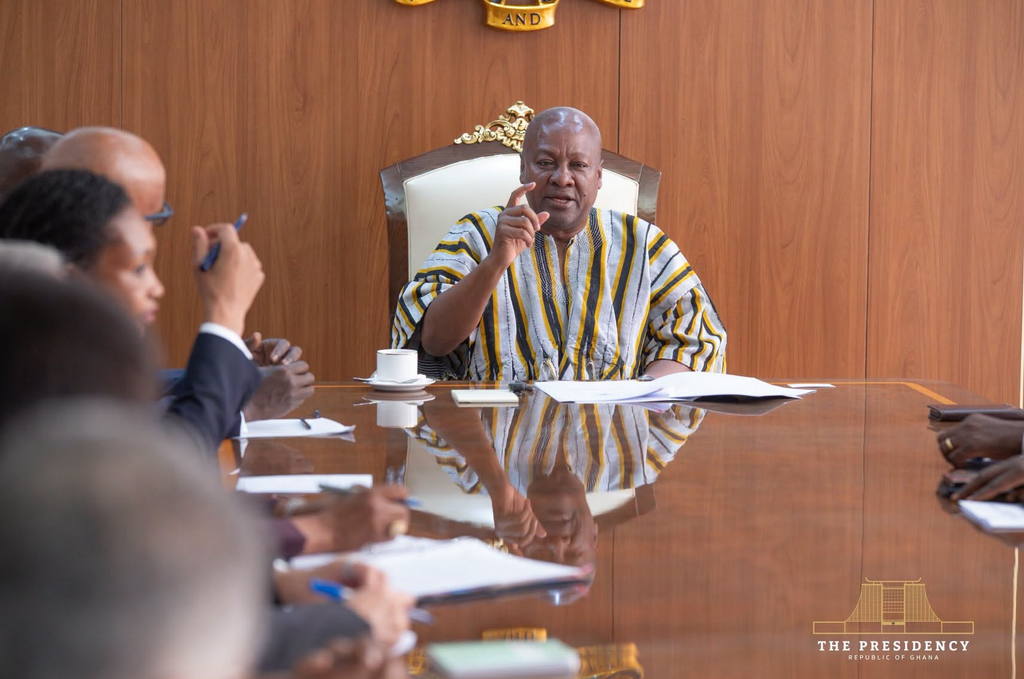
    The last time the Black Stars went close to getting to the semi-finals was in 2010 when they reached the semi‑finals of a FIFA World Cup in South Africa. 

    16 years down the line, the team’s assistant coach is optimistic that the squad to represent Ghana this year are more experienced now.

    Reflecting on past setbacks, including group-stage exits in Brazil 2014 and Qatar 2022, Paintsil believes the squad is now better prepared to compete in the latter stages of the competition.

    “We have enough experience to be in the semi-finals or final of the 2026 World Cup,” he noted during an interview with 3Sports.

    Ghana will open its campaign against Panama on June 17, 2026, face England on June 23, and conclude the group stage with a match against Croatia on June 27.
    As part of their preparations, the Black Stars will regroup in March for international friendlies against Austria and Germany, before taking on Mexico ahead of the tournament.

    Govt to sponsor some fans for the tournament 

    Sports Minister, Kofi Adams, announced a new twist in supporters’ sponsorship by the government for the 2026 FIFA World Cup.

    Ghana sealed their place at the 2026 World Cup with a hard-fought 1-0 victory over Comoros in their final Group I qualifier at the Accra Sports Stadium on Sunday, October 12, marking the country’s fifth appearance at football’s biggest tournament, which will be hosted in the United States, Mexico, and Canada.
    Past governments have mostly offered some form of financial support, be it full or partial, for supporters who travel to attend the World Cup. However, it has become a challenge over the years due to financial constraints.

    Consequently, in early November last year, Kofi Adams noted that, although it has been a long-standing practice, he “doesn’t recommend” it.

    However, in a recent radio interview on Asempa FM’s Ultimate Sports Show in Accra on February 5, he acknowledged the tradition of sponsoring fans to support the Black Stars, adding that it is for that reason that his outfit has set up a fundraising committee.

    “The policy that we should take for fans is clear. It is clear that we should work at it, and that is why we have set up a fundraising committee. The number we would take ultimately will depend on how much we raise,” he stated.

    He explained that the government seeks to sponsor some Ghanaian fans for the 2026 World Cup so Ghana will have strong support at the tournament.
    The government believes Ghana should not only be represented by its team but also by its fans. However, he detailed that the number of supporters will be heavily dependent on the funds available to the government.

    He continued that, as part of the fundraising committee’s task, is to raise resources to cover travel and accommodation for supporters who will journey to back the Black Stars at the tournament.

    He acknowledged, however, that the plan requires significant financial backing, prompting the government to appeal to the private sector and the general public for support.

    “This is why we are appealing to corporate bodies, companies, mining firms and well-meaning individuals to come on board and support this initiative,” he said.

    Earlier, Mr Adams explained his objection to the government funding supporters to the World Cup, citing the need for the government to prioritise investment in the country’s sports infrastructure instead of spending it on fan sponsorship.

    “We are in a period of austerity. We need money to build sports infrastructure in Ghana. If we are going to spend money to transport supporters all the way to America, that same amount can build five multipurpose parks in some communities,” he stated.

    While confirming that government funding is off the table, Mr Adams encouraged individuals and corporate organisations to step in.

    “I believe there are a lot of Ghanaians in those areas. Anyone who wants to go should find their own resources; we can facilitate their travel documents. Or we can mobilise support from corporate bodies, both private and public, to assist the fans.

    “Government can collaborate with corporations to support, which would be a good idea, but putting government money into the budget to take supporters, I don’t think so,” he added.

  • Coaching, refereeing in Ghana football doesn’t impress me – Kurt Okraku
    Coaching, refereeing in Ghana football doesn’t impress me – Kurt Okraku
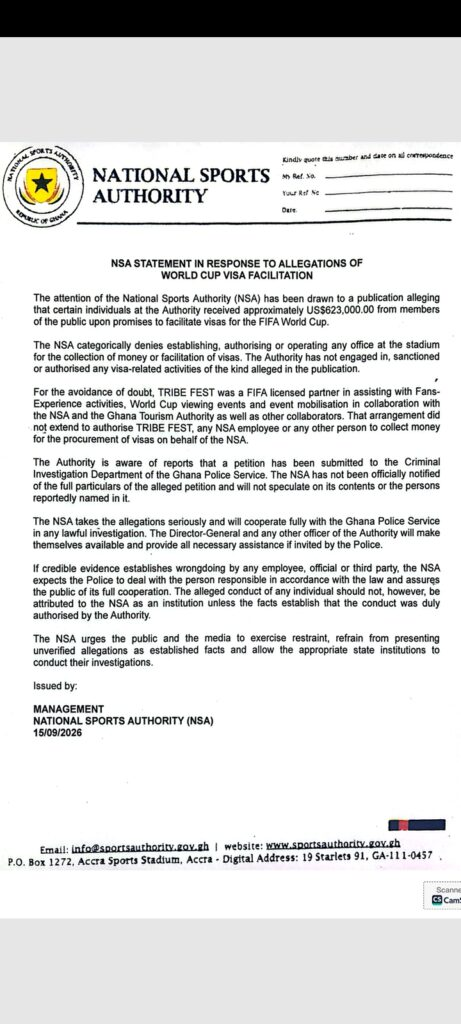
    President of the Ghana Football Association (GFA), Kurt Okraku, has expressed worry about the “poor” quality of coaching skills in Ghana, which he believes is impeding the growth of football in the country.

    Ghanaian football has long grappled with concerns over declining coaching standards, with stakeholders citing outdated training methods, limited access to advanced coaching education, and inconsistent development pathways as persistent challenges.

    During a speech at the CAF License, A coaching course at the Ghanaman Soccer Centre of Excellence in Prampram, Mr Okraku mentioned that one challenge his outfit has identified is linked to coaching and refereeing which they consider a priority  that needs urgent reforms.

    He made reference to measures the local football body adopted during the GFA’s 2023 Congress in Kumasi to tackle these impediments to local football growth.

    “These two key areas are refereeing and coaching. I have never, never, never been happy with coaching, and I have not stopped talking about this.

    “When I say coaching standards in Ghana have been poor, I really mean it,” Mr Okraku added.

    The CAF License A programme is part of the GFA’s wider strategy to elevate technical standards in Ghanaian football. It aims to equip coaches with modern training techniques, advanced tactical knowledge, and best practices to enhance player development at every level.

    President of the Ghana Football Association (GFA), Kurt Edwin Simeon-Okraku, last year secured a seat on the Confederation of African Football (CAF) Executive Committee (EXCO).

    His tenure will last four years, from 2025 to 2029.

    Okraku was elected unopposed and will now be part of the 24-member committee responsible for overseeing African football.

    His appointment reflects recognition of his leadership at the GFA, where he has prioritized transparency, grassroots football, women’s football, and youth development since taking charge in 2019.

    With Ghana’s strong football tradition, his role on the CAF EXCO is expected to strengthen the country’s influence in shaping football policies across Africa.

    He now joins a distinguished list of Ghanaians who have served on the committee, including Ohene Djan, Kobina Hagan, Nana Fredua Mensah, Samuel Okyere, and Kwesi Nyantakyi.

    Meanwhile, Okraku’s journey in football administration began with his involvement in club football. He was the Executive Chairman of Dreams FC, a club he helped establish and develop.

    His success at the club level paved the way for his election as GFA President, where he has focused on revitalizing domestic football, enhancing youth development, and promoting women’s football.

    Kurt speaks on Ghana Black Stars’ 2023 AFCON

    Ghana Black Starshad a very disappointing run of form during the 2023 Africa Cup of Nations (AFCON) in the Ivory Coast, leading to their early exit at the group stage, marking their second consecutive early exit after also crashing out in the group stage of the 2022 World Cup in Qatar under the leadership of the then coach, Chris Houghton.

    After playing three games, they won none, securing only two points. About three (3) years down the line, the President of the Ghana Football Association (GFA), has revealed that he anticipated the Black Stars’ disappointing performance.

    Speaking during an appearance on Asaase Radio, Okraku admitted: “To be honest, going into that tournament, I was not expecting something different, and I told people close to me that it would not work for us because I knew the team and knew the happenings, and we exited the competition at the group phase.

    “When we came home, there was a need for us to look at what we did, but unfortunately, we started declining as well, and we failed to qualify for the last AFCON.”

    He added that the team’s struggles continued upon returning home, ultimately resulting in Ghana missing qualification for the next AFCON.

    Reflecting on recent successes, Okraku praised the GFA Executive Council for taking decisive action that helped the team secure qualification for the 2026 World Cup.

    “Ghana spoke after that, and it was very loud, and as a leader, I listened to everybody, and we all agreed that there was a need for a reset and to be honest with ourselves.

    “We needed to know what was fundamentally wrong with us and fix it. After listening to the Executive Council, we made the right decisions, and we qualified for the 2026 World Cup,” he added.

  • GFA announces alternative plans as friendlies against Mexico threatened by unrest

    GFA announces alternative plans as friendlies against Mexico threatened by unrest

    Mexico is currently plagued by violence, chaos and unrest in the capital, reportedly involving drug cartel members following the killing of one of their leaders, Nemesio “El Mencho” Oseguera, who was the boss of the Jalisco Cartel, raising concerns of safety particularly of fans and tourists.

    This is because this year’s global football tournament, FIFA World Cup, is set to be hosted in three countries, USA, Canada and Mexico.

    The tournament is scheduled to start in June and the first match will be played in Mexico, at the country’s historic Estadio Azteca.

    Ahead of that, Ghana is scheduled to face Mexico in a friendly on Friday, May 22. Although it has been confirmed the game will be played in Mexico, the exact venue is yet to be announced.

    Reacting to these concerns,Senior Communications Manager of the Ghana Football Association (GFA), Sheikh Tophic Abdul-Kadir Sienu, revealed that alternative plans are in place should the Black Stars’ friendly against Mexico national football team be cancelled.

    Speaking on The Arena on Woezor TV, Sienu said the GFA is prepared to adjust its plans if necessary.

    “Certainly, and that is why when budget items are being picked and discussed, it becomes a bit awkward because it is a budget and it has not been approved,” he said.

    He added that discussions surrounding budgets for upcoming fixtures are ongoing, with official approvals still pending.

    “We have planned to play against Mexico, but certainly we have options. In case the Mexico friendly does not happen, other teams will be considered. It is all part of preparations toward the World Cup,” Sienu stated.

    Meanwhile, Ghana’s head coach, Otto Addo, is expected to release the final squad list for the 2026 World Cup in June next year.

    This was confirmed by the Communications Director of the Ghana Football Association (GFA), Henry Asante Twum, in an interview with Accra-based radio station Asempa FM on December 15. He explained that all qualified nations are required by FIFA to announce their provisional squads on April 11, 2026, with final lists due before midnight on June 1, 2026.

    “All qualified teams, including the Black Stars of Ghana, are mandated by FIFA to announce their provisional squad on April 11, 2026. The final squads for the tournament must be announced before midnight on June 1, 2026,” he said.

    He added that players performing well both domestically and abroad will be considered for selection.

    “Every Ghanaian player with a strong performance is closely monitored by the technical team, and regardless of where they play, they will be given a call-up,” Asante Twum noted.

    Ghana has been drawn in Group L alongside Panama, England and Croatia following the draw held at the John F. Kennedy Centre for the Performing Arts in Washington, D.C. The ceremony was attended by high-profile figures including President Donald Trump, entertainers Kevin Hart and Heidi Klum, as well as sports icons Tom Brady, Shaquille O’Neal, Rio Ferdinand and Ghana legend Asamoah Gyan.

    The Black Stars will open their campaign against Panama on June 17 in Toronto, before facing England on June 23 in Boston. They will conclude the group stage against Croatia on June 27 in Philadelphia.

    Ghana legend Asamoah Gyan has expressed confidence that the Black Stars can advance beyond the group stage at the 2026 World Cup, despite being placed in a challenging Group L.

    “It’s a tricky group. We will do our possible best to qualify from the group stage,” Gyan, who remains Ghana’s all-time leading goalscorer, said.

    Gyan, who represented Ghana at three World Cups from 2006 to 2014, has six goals in the competition, making him the continent’s top scorer in World Cup history.

    One of the many concerns that has been expressed after Ghana fell in Group L following the group draw is the Black Stars’ falling in the same group (Group L) with England.

    Black Stars head coach Otto Addo himself affirmed that among the 3 other teams, England remains the favourite. However, he added that, while that has been affirmed, he wouldn’t recommend that any of the other opponents, that is, Croatia and Panama, be underestimated

    During a media engagement, Addo emphasised the importance of consistency and concentration.

    “I look forward to every game as special. It is very important for us that we don’t underrate any team. For sure, England is the favourite in that group, but as a coach, I’m looking at every game equally.”

    Addo highlighted Ghana’s opening match against Panama as a crucial opportunity to gain momentum.

    “I’m hoping that we have a good start against Panama, which will be very, very crucial. A strong start will make the other games a little easier psychologically. We will use the March window for test matches and then assess where we are,” he noted.

    Referring to the team’s stunning performance during the qualifiers and its preparations so far, Otto Addo mentioned that, “We did very well in the qualifiers. We didn’t lose a single official game, one draw, and the rest wins. It was a good year in 2025 after a difficult 2024,” he said, commending his squad for the union in the squad so far.

    He also commended the unity within the squad. “Even though we have a very young team, we did really well. There was good harmony and good union.”