A music manager born in Nigeria has been stabbed to death after receiving a designer watch worth up to £300,000 for his birthday, a London court heard.
On May 1, 2022, three thieves attacked Emmanuel Odunlami, 32, after he left the Haz restaurant in the City of London close to St. Paul’s Cathedral. The incident was reported to the Old Bailey.
They were allegedly informed by a security operator, Kavindu Hettiarachchi that Odunlami was wearing a Patek Philippe Nautilus watch worth between £90,000 and £300,000 if genuine.
Prosecutor Duncan Atkinson KC stated that Hettiarachchi was a vital member of the security team hired by the event’s organizer, Playhxuse, for the private ticketed brunch and afterparty with DJ.
“It was part of his role to protect the safety of those, like Odunlami, who were attending the event. In fact, he did the opposite,” the court was told.
The victim, known to friends as Jay, had driven to the city in his grey hatchback Mercedes on the day of his death to celebrate his birthday with friends, having purchased tickets for a £1,400 table.
As the event came to an end around 11 p.m., Hettiarachchi was caught on camera filming outside the venue and calling Louis Vandrose, according to Dailymail.
The court heard that Vandrose and Jordell Menzies were then driven by Quincy Ffrench in a white Mercedes with altered number plates from north west London.
The Prosecutor said: “The evidence shows that Vandrose, Menzies and Ffrench were setting off in a car with a disguised registration in order to carry out a robbery, and their target was at the Haz restaurant where Hettiarachchi was working, and to which by phone he had summoned them.’’
Two boats capsized off the coast of Tunisia on Tuesday and Wednesday, resulting in the rescue of 54 persons. Authorities reported 14 deaths on Thursday (Mar. 9).
The National Guard claimed that the migrants were from sub-Saharan Africa but could not revealing their countries,
Notwithstanding the fact that the central Mediterranean is the most perilous migratory route, according to the International Organization for Migration, people fleeing conflict or poverty embark aboard boats from Tunisian ports bound for Europe.
“When sub-Saharans came to Tunisia, it was because of the economic and social situation they were suffering in their country, lawyer Hamida Chaieb explains. “Their main objective is to cross to Europe. Like our (Tunisian) youth who dream of a better life,” the Tunisian League for Human Rights member adds.
“Reduce irregular immigration”
Tunisian authorities have stepped up arrests of Africans without residency papers in recent weeks after President linked migrants to crimes. The comments fanned a surge in attacks targeting Black Africans.
“They (the authorities) don’t want to let us go. If it’s like that, (let) us go back to Italy. We have neither our fathers nor our mothers, if that’s the way it is let us go back (to Italy),” an Ivorian migrant says.
In Brussels, EU Home Affairs Commissioner Ylva Johansson expressed concern on Thursday about the president’s statements, saying they are “very worrying,” but underlined Tunisia’s role in helping prevent migrants reaching Europe.
“Tunisia is a core country for cooperation when it comes to preventing smuggling but also when it comes to readmission of Tunisian citizens that come here and are not eligible for international protection,” she told reporters.
Tunisians were among the top three nationalities — along with Egyptians and Bangladeshis — to reach Europe last year after crossing from the North African coast.
Last January, Italy’s top diplomat reiterated to his Tunisian counterpart Roma’s objective “to reduce irregular immigration”.
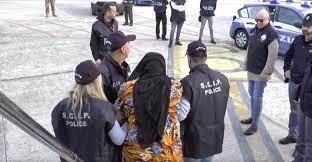
Italian police announced on Wednesday that a Nigerian woman who had fled the country had been returned to face a 13-year term stemming from convictions for trafficking women for prostitution (Mar.8).
From 2006 to 2007, the 48-year-old Joy Jeff was a prominent player in the trafficking of Nigerian women to Italy, Spain, and the Netherlands. She imposed her authority by violence, including making threats against her relatives back in Nigeria.
A treaty signed by Nigeria and Italy in 2020 facilitated the extradition. According to the statement, she was arrested in Nigeria on June 4, 2022, on an international warrant issued by Italy.
Investigators in Ancona, Italy’s easternmost city, said Jeff was a key figure in trafficking women to Italy, Spain, and the Netherlands, where they were forced into prostitution through violence and threats. In her absence, she was convicted.
The woman was flown from Nigeria’s capital, Abuja to Ciampino airport in Rome, where she was taken away in a wheelchair by police, according to a video released by the Italian police.
“Africa today is a strategic location when looking for fugitives and fighting organised crime,” said Vittorio Rizzi, an Italian police chief responsible for international coordination.
President Umar Sissoco Embalo of Guinea-Bissau recently met with Tunisian President Kais Saeid in Tunis on his diplomatic stopover to address recent racist remarks made by his host.
Embalo said on Twitter that his trip was official business as the leader of the Economic Community of West African States (ECOWAS).
According to him, the Tunisian leader who had been under fire following reports that he made anti-Black Africa comments pleaded innocent to the viral accusations.
The Tunisian leader said in a video posted on Twitter that he is not racist because he has “African friends”, adding that members of his family “are married to Africans.”
On his part, the visiting president wrote on Twitter: “As President of ECOWAS, I visited President Kais Saied to inquire about the situation of sub-Saharan Africans in Tunisia.
“Referring to the distortion of his remarks, he assured of his belief in the African values of union, welcome and respect and to preserve them,” Embalo wrote in a tweet accompanied by videos and photos of his visit.
Saied alleged that undocumented immigration from sub-Saharan African countries was aimed at changing Tunisia’s demographic composition, drawing criticism from human rights activists.
His comments during a meeting of the National Security Council followed the arrests of dozens of migrants this month in a crackdown.
“The undeclared goal of the successive waves of illegal immigration is to consider Tunisia a purely African country that has no affiliation to the Arab and Islamic nations,” Saied said, adding that the influx of irregular migrants must quickly be ended.
A number of West African countries subsequently flew their stranded national back whiles the African Union issued a strongly worded condemnation of his reported remarks.
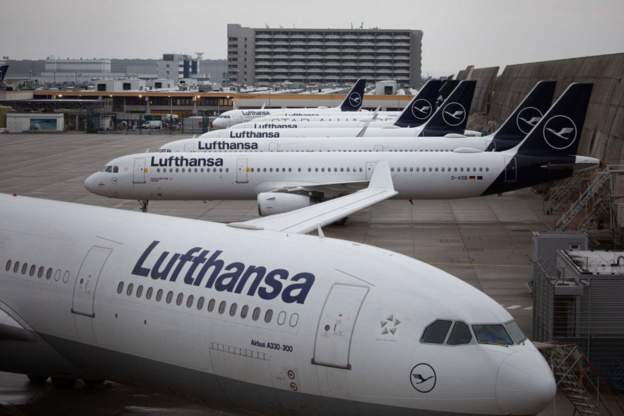
The German carrier, Lufthansa Airlines is accused of mistreating more than 200 customers traveling to Nigeria, and the Nigerian Civil Aviation Authority has launched an investigation into the matter
According to local media, the airline threatened to contact the police last Friday when the customers, whose flight was delayed, asked for accommodations for their stay.
The flight from Frankfurt to Lagos, which was meant to arrive at the Murtala Muhammed International Airport, was reportedly delayed after diverting to Cotonou in Benin, and Malabo, Equatorial Guinea.
Lufthansa apologised for the flight delay in a circular sent to its passengers last Friday.
The passengers alleged the Lagos airport was not closed, contrary to the claim by the Lufthansa pilot.
Sam Adurogboye, the NCAA public affairs official, on Thursday said the regulator has begun investigation into the matter after receiving complaints from the passengers.
A spokesman for the airline has told the BBC that they are investigating the circumstances of the incident.
An increase in fuel prices and a depreciating local currency has contributed to the high cost of electricity in Kenya by 10% in the most recent monthly adjustment.
The fuel cost tax (FCC), which was Ksh6.59 ($0.051) per kilowatt-hour (kWh) last month, has increased to Ksh8.3 ($0.064) per kWh by the Energy and Petroleum Regulatory Authority (Epra).
It is the highest rate of the fuel energy component since June 2012 when it hit a record Ksh9.03 ($0.070) per kWh.
The Epra has also raised the foreign exchange rate fluctuation adjustment (Ferfa) to Ksh2.16 ($0.017) per unit from Ksh1.85 ($0.014) per unit last month due to the weakening shilling against the dollar.
This has raised the unit cost of power for lifeline consumers to Ksh22 ($0.17) per unit up from Ksh20 ($0.15) last month which will force customers to pay more for the same quantity of electricity.
New power tariffs
This comes weeks before the country’s energy regulator is expected to publish new power tariffs that will significantly further raise power prices.
Epra is expected to put in place new tariffs that will be in effect from April 1 for the next three years.
This comes as global crude oil prices have been fluctuating in recent weeks, but analysts project prices to go up in the coming months owing to increased demand, especially from China.
The Kenya shilling – which was trading at 128.36 against the US dollar on Wednesday – has continued to lose value against the greenback, piling more pressure on firms like Kenya Power which have a huge demand for dollars.
Rising inflation
The utility says its total monthly average use of foreign currency is $50 million and €20 million.
The higher power prices are set to heavily hit consumers at a time when inflation in Kenya has increased to end a three-month consecutive decrease.
Inflation climbed to 9.2 percent in February, coming after it slowed for three consecutive months to hit 9 percent in January.
Kenya National Bureau of Statistics’ Consumer Price Index (CPI) showed that in that month, food commodities contributed greatly to the high inflation.
The high inflation has heavily hit Kenyan businesses which saw demand for goods and services shrink for the first time in six months, according to Stanbic Bank’s Purchasing Managers Index (PMI).
The PMI fell below the 50-neutral mark to 46.6 last month – the first time it has fallen below the neutral point since August last year.
“The reading indicated a solid deterioration in operating conditions, driven by renewed contractions in many of the covered metrics,” said the report.
Four of the five monitored sectors in the survey saw new orders decrease, with particularly sharp falls seen in manufacturing, wholesale and retail, while agriculture was the only sector where sales increased.
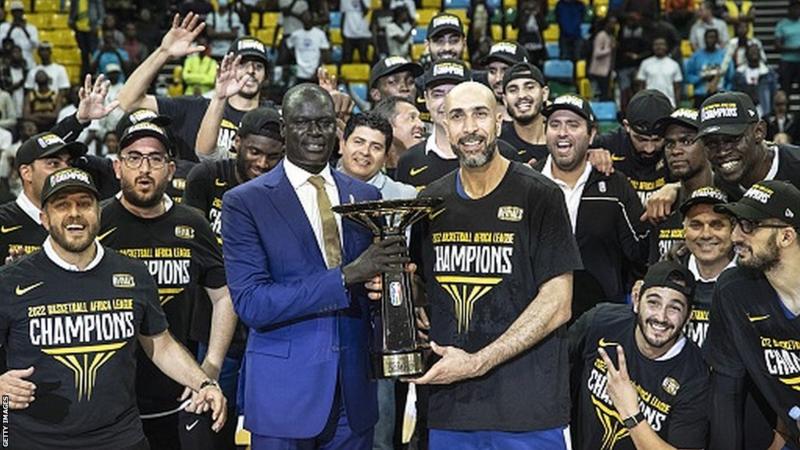
President of the Basketball Africa League (BAL), Amadou Gallo Fall, says Africa should not “just export talent” on the eve of the new season.
The pan-continental club competition, which is entering its third year, tips off in Dakar on 11 March and will repeat last year’s format, with 12 teams split into two regional conferences battling it out to make May’s play-offs in the Rwandan capital, Kigali.
Tunisian champions US Monastir are again likely to be the team to beat, having overcome Angola’s Petro de Luanda 83-72 in 2022’s final to make up for the heartbreak of losing the previous year’s showpiece to inaugural winners Zamalek of Egypt.
With each team only allowed to recruit a maximum of two non-African players for its 12-man roster, the hope is that increased exposure to high-level competition will improve standards across the board when it comes to homegrown talent.
‘The talent is here in Africa’
Fall, who helped set up the BAL project, believes the first two editions have already had a tremendous impact on basketball culture in Africa.
“Teams in general are working hard to get organised,” he told BBC Sport Africa.
“To position themselves to have a chance to win their local championship and qualify for the Basketball Africa League.
”We believe in basketball in Africa,” he added.
“This is why we’ve been involved here for many decades. We focused on making sure that we lay the foundation, we put in the first basic elements that you need for long-term sustainability.
“That is how to make the game accessible, for you to have more young boys and girls who will be bouncing the ball, getting interested in playing basketball.
“The talent is here in Africa.”
For Fall, the next stage of the project is to stop that talent draining overseas, as has happened with players in the past, many of them never to return.
“Africa needs to make sure that we don’t only export talent, but we should also build valid value around our talent,” said the Senegalese, who worked as an administrator for NBA side the Dallas Mavericks for eight years before taking control of NBA activities in Africa.
“It’s just a question of bringing the expertise and creating the environment.”
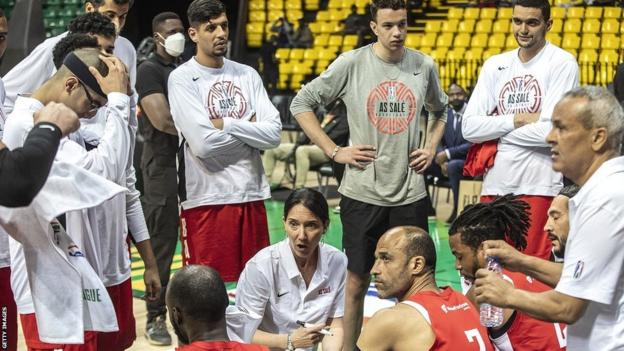
Liz Mills coached Moroccan side AS Sale during last season’s BAL
BAL’s leading lady
The opening fixture of this year’s BAL sees Senegal’s AS Douanes up against debutants Abidjan Basket Club Fighters of Ivory Coast (16:00 GMT).
The Fighters may be new to the competition but their coach, Liz Mills, is not, having led Moroccan side AS Sale last season. The Australian also had a spell in charge of the Kenyan national team and has been working in men’s basketball in Africa for over 10 years.
“We’re feeling very confident, knowing that we’ve been at this level before, and we’re really excited to be playing in the first game of the tournament,” she said.
“Over the last two decades we have competed in the Africa Champions Cup, which was a competition before the NBA and Fiba [basketball’s governing body] merged into the Basketball African League, as well as imports that bring a vast wealth of experience.
“We’re going to see some upsets, we’re going to see some surprises. Obviously, there’s some favourites, but I think realistically we’re definitely one of the teams that could win the title.”
While Mills has years of experience to call on, South Africa’s BAL representatives, the Cape Town Tigers, are mere cubs by comparison.
“We don’t have a national league that’s playing yearly like a lot of these countries do,” head coach Raphael Edwards told BBC Sport Africa.
“Our team is only 18 months old. And in our first season, we came from not playing competitive basketball, just practicing with each other, to go all the way to the quarter-finals.”
The Cape Town Tigers made their BAL debut in 2022 but were well beaten in the quarter-finals by eventual winners US Monastir
Having surprised a few people by making last year’s play-offs, the Tigers were quickly slapped down in the play-offs, crushed by US Monastir by a 39-point margin.
“They overpowered us in the fourth quarter,” admitted Edwards.
But the upward trajectory of a new team such as the Tigers is exactly the kind of development those behind the BAL were hoping for – and Edwards believes their progression is clear to see.
“We’re much improved since then. We’ve had tons of friendly games to prove that, with Petro de Luanda, with the NBA Academy, other teams from Mozambique.
“We’re getting closer to playing a great brand of basketball.”
One competition, two conferences
The Fighters and Tigers were two of six teams who had to go through qualifying rounds to reach BAL (the others being Stade Malien of Mali, Uganda’s City Oilers, CFV Beira of Mozambique and Guinea’s Seydou Legacy Athlétique Club).
The other six teams qualified through their national leagues.
The 12 qualifiers have now been split into the Sahara Conference, which is the one taking place in Dakar in March, and Nile Conference, which will play out in late April and early May.
Sahara Conference (11 – 21 March)
ABC Fighters (Ivory Coast), AS Douanes (Senegal), Kwara Falcons (Nigeria), REG (Rwanda), Stade Malien (Mali), US Monastir (Tunisia)
Nile Conference (26 April – 6 May)
Al Ahly (Egypt), Cape Town Tigers (South Africa), City Oilers (Uganda), CFV Beira (Mozambique), Petro de Luanda (Angola), SLAC (Guinea)
The top four from each conference will progress to the quarter-finals of the play-offs in Kigali, with the final taking place on 27 May.
The Kigali Arena in Rwanda will once again play host to the BAL play-offs
“Anything is possible,” according to Mills.
“On any given day, anybody can beat anybody. That’s the beauty of African basketball.”
Most of the non-African players in the competition are, perhaps unsurprisingly, from the United States.
Despite wanting BAL to be a springboard for African talent, Fall claims the international stars are also proof of progress.
“US basketball players have always been in demand everywhere around the world. We want high quality players to want to come and play in our leagues,” he explained.
“Players wouldn’t have considered Africa in the past because of economic and other factors. I think it’s a great sign that they actually want to come and play.”
When an ex-boyfriend got married, I was more upset than I thought I’d be. I finally had one of those moments when you discover an ex has gotten married and you’re still single, and your world momentarily collapses.
Facebook was innocently trolling my email address book looking for new users who could become my friends. Martin popped up, and when I clicked on his profile picture, I saw him looking mighty fine in a grey tux smooching some babe in a wedding dress.
Many of my exes have gotten married and the news hasn’t ruffled my feathers. Even my ex-husband has a new wife and I feel nothing but joy for him. I’ve remained buddies with most of the men who’ve been in my life, especially with the advent of Facebook.
All of these guys could get married, father a boat-load of children and be so rapt in domestic bliss that stars shoot from their ears. I’d still be able to offer them a sincere, “Yay for you!”
But not this one.
Martin was a Dutch guy working on a Master’s in political science at a Spanish university. He and I met back in 2003 after I’d moved to Madrid from New York. What started out as an expat-gone-wild fling, turned into nearly two years of off-and-on romance, mutually discovered passion, and an unearthing of one another’s souls. Martin’s presence made me re-examine my life; he became a muse and confidante.
But he was also flaky and unsure of himself, and in the end, wouldn’t be mine. Ultimately, he went back to his Dutch homeland where “real life” awaited him, leaving me bedridden with the flu, like some heartbroken maiden in a Victorian novel.
The men I dated after Martin wondered how I could be so cold, never knowing I’d been seduced and abandoned like a raging Medusa with snakes in her hair. Any man who looked at me could have turned to stone.
I’m not one of those nutty dames who try to destroy the lives of people who’ve wronged them. I’m mature enough to accept that even men who are unwilling to fulfill my romantic desires can still be friends. I’m forgiving and nice. I trip over my own shoelaces to avoid stepping on ants.
So imagine my shame upon discovering how nasty I could feel toward a person. After the breakup, I’d get messages from Holland where Martin admitted life wasn’t so swell. When he confessed to feeling lost, I was pleased. When a new romance he’d begun fizzled, I cackled like a demon.
Flash forward to 2009 when Martin had become a fond but distant memory … until I saw his wedding photo. As if the wind had been knocked out of me, I ran from the house and roamed the streets with tears streaming down my cheeks like a disoriented victim of a car crash.
Blubbering on the phone with a friend about how one of the great loves of my life had gone on to find happiness without me, I started listening to my own complaints. The conversation began with Martin, but moved on to the men I’d known since him, and ended with my feelings about my career.
Whether I was getting closer or farther away from my goals. Whether my life was rich enough to keep my creative fire burning. Whether I still liked the neighborhood I was living in, whether my friendships were supportive enough, and whether it was time to rethink my relationship with my finances.
Really, I was agonizing about everything that was supposed to have happened in my life since I last saw Martin, including finding someone I cared about as much as him. A fragment of my heart still burst knowing he was someone else’s passion or problem.
But if I was satisfied with my own world, I wouldn’t give a rat’s behind about his.
In the end, I was able to wish Martin happiness. I’m glad for him and hope he makes the best of his new life. Meanwhile, I’ve got my own work to do.
There are many inspirational tales, but few are as amazing as this one. George Asiamah’s entire world fell apart in 2003. His results from the West African Secondary School Certificate Examination, if he had any, would not even make his opponents proud.
Mathematics F, Integrated Science E, Social Studies E, English Language F, Economics F, Geography F, and Government E are the grades he received.
According to George himself, there were two reasons for these terrible outcomes. His truancy was the first, and possibly a self-inflicted one.
In a post he made in 2018 detailing his experience in Secondary School (now High School), George Asiamah, who was a student of the Atwimaman Secondary School, identified a disinterest in the General Art course he was ‘forced’ to pursue and truancy as the two issues that stood between him and academic excellence.
“Now, getting to the end of the first year, we were told that the school did not have the capacity for the business program, so it would be abolished in the following year. To that effect, all business students were to search for schools during the vacation for us to be transferred in the following academic year.
“The next academic year began, and here I come, the only business student who didn’t get a new school. I actually didn’t get the communication proper, I thought my school was to look for the new school for us. So coming to second year, I was forced to join the General Arts class. Oh boy! I didn’t take delight in that development. That was when my old (truant) character re-manifested.
“Here, it was an advanced stage of truancy – I no longer stay home for weeks, but in months. One could practically count the number of days I will be in school in a term. Funnily, any day my friends see me coming to class, they will be shouting “Ebon! Ebon!!” (teasing me with the name of my village). Others will ask jokingly, “enti school no wo ka ho?” (Are you part of the School?),” he said in the post.
But like as has been said, life is not how many times you fall down but how many times you get up, so, faced with this academic adversity, George Asiamah picked himself up and set out to right the many wrongs in his life.
With renewed mindset and verve, George navigated the academically demanding job of being a student at the Kwame Nkrumah University of Technology.
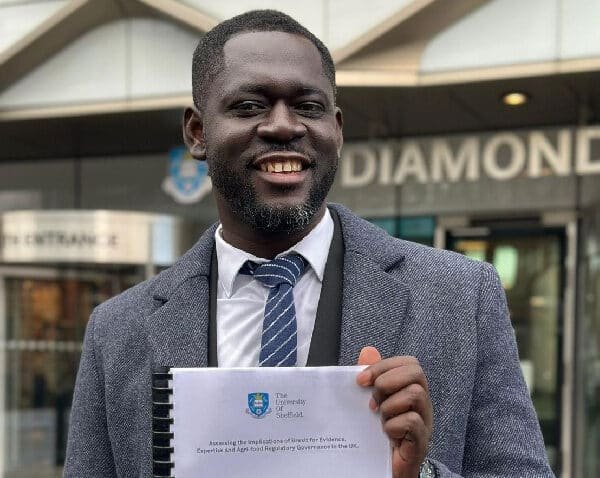
He then furthered at Queen’s University, Belfast before moving on to The University of Sheffield where he pursued PhD.
As published by a Facebook user, Shadrack Dare, George earlier in the week successfully defended his thesis which was on Brexit, Scientific Evidence and Agri-food Regulatory governance.
With his thesis defense out of the way, George Asiamah has gone from a ‘tiwuii’ in 2003 to a PhD holder who will now respond to the title ‘Doc Doc’.
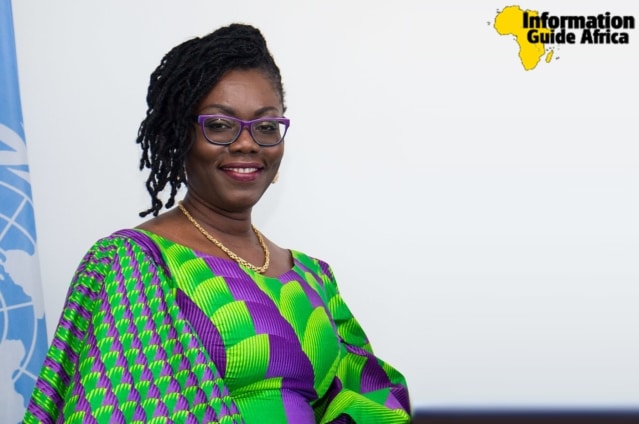
Minister of communications, Ursula Owusu-Ekuful, has disclosed how she turned down the chance to pursue additional study at the esteemed Yale University in order to wed the love of her life.
In New Haven, Connecticut, the United States, Yale University is a private Ivy League research institution. One of the top institutions in the world, it was established in 1701.
The Minister who also doubles as the Member of Parliament for Ablekuma West Constituency highlighted the pressure single women face in the Ghanaian society and how they are tagged as ‘unwhole’ just because they are without a man.
This, she believes, has a great influence on decision-making by women and pushes them to settle down in marriages just to please family and friends.
Speaking at the 2023 International Women’s Day organized by eTranzact Ghana Ltd, Mrs. Owusu-Ekuful admitted that although it was a crucial decision to choose marriage over education at Yale University, she has no regrets at all.
“Letter to my 25-year-old self is to tell her that, five years from now, will it really matter? Will what you’re stressing about, agitating over really matter…at that stage I was torn between getting married and going to Yale.
“We do give in to a lot of pressure from family, friends and the church that if you are not married, you’re not whole and that is the ultimate you can have in life.”
“I had the opportunity to go to Yale and there was a young man who was wooing her at the time and she decided that okay, let me go and get married”, she said.
The Minister advised women to weigh every opportunity that comes their way and also know their priorities which will help them make the right choices.
“…those are crossroads moments in our lives, whatever decision you take in your life will influence your future and we have to take it carefully. Maybe if I had gone to Yale, I wouldn’t be sitting here as a Member of Parliament and your Minister today and so the Lord knew, but that was a decision I had to take,” the MP stated.
Mrs. Ursula Owusu-Ekuful is married to Dr. Sam Ekuful, a senior consultant and owner of Ekuful Eyecare.
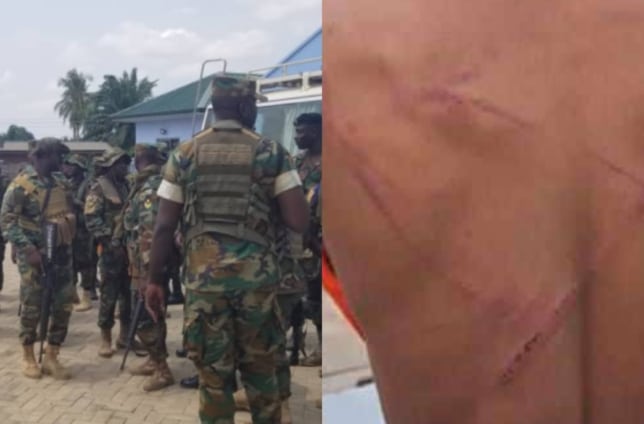
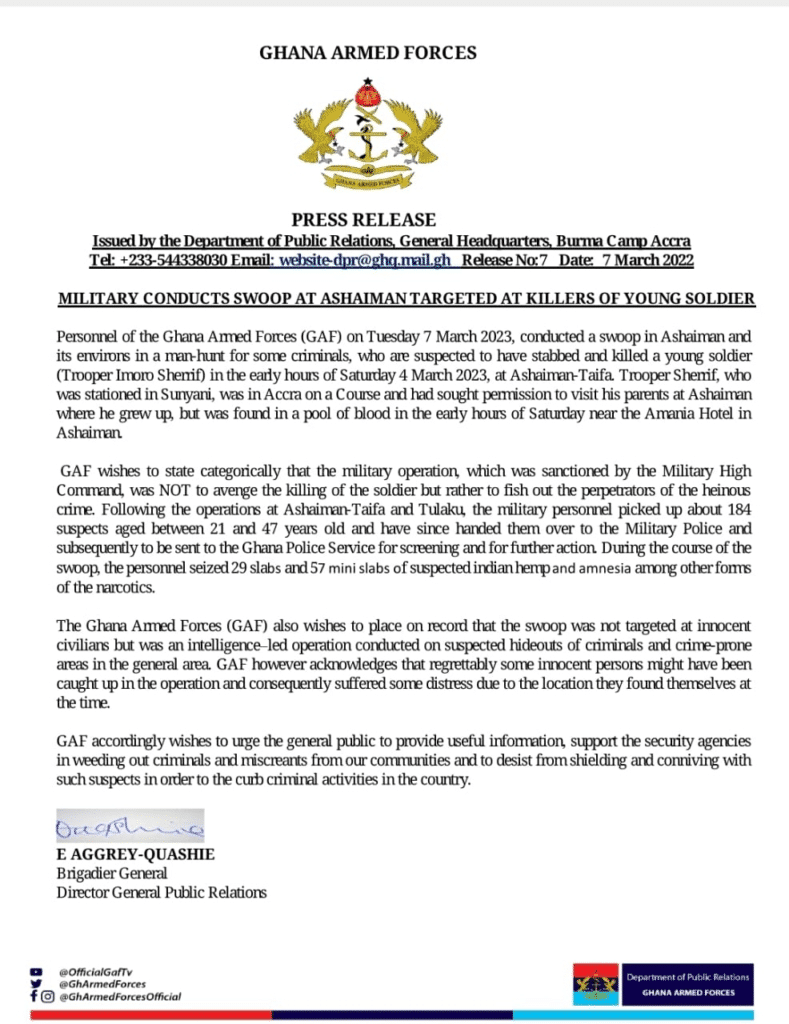
It is becoming clear that even after some Ashaiman residents were brought into military prison on Tuesday, their ordeal was not over.
On Thursday afternoon, the media learned that some of the more than 150 people the military had initially checked and afterwards freed had been subjected to additional screening.
The Military High Command has described the operation as one geared toward apprehending persons who killed a 21-year-old soldier, Sherrif Imoro.
The media caught up with one of the victims.
“We were taken back to Burma Camp and at Burma Camp, it wasn’t an easy task. We went through a lot,” a victim said.
According to him, when they were arrested, they were initially taken to Michel Camp after which they were transported to Burma Camp on the Commander’s orders for investigation.
“We were not beaten at Michel Camp, we were just there waiting but after that, we were taken to Burma Camp at 4:00pm. When we got to Burma Camp that was when some soldiers were around and they were beating us.”
He stated that while the beating was going on, the soldiers informed them that they were being trained to be soldiers.
“We were beaten all over our bodies from head to toe. They used rods, wires, sticks, brooms, anything they can see was used,” he recounted.
He went on to say that the rationale the soldiers explained for the beating was that they failed to officer assistance to the dying soldier when he cried for help.
“The reason they gave was that when the military man was crying for help, we the community members were even not ready to assist. They are the ones defending us so why can’t we also defend their neighbour?”
In a related development, Beatrice Kpotsu, the wife of one of those arrested, claims she has not seen her husband in three days.
According to Beatrice, her husband was arrested when he stepped out to use the public toilet in the neighbourhood.
She said her husband is the breadwinner of the family and his absence is having a toll on the family.
This is because they haven’t eaten since her husband’s absence, and their child is ill, and she is unable to take the child to the hospital for treatment.
She pleaded with the military officials to release the husband because he is innocent.
Meanwhile, the Commission for Human Rights and Administrative Justice (CHRAJ) has condemned last Tuesday’s military exercise at Taifa, a suburb of Ashaiman in the Greater Accra region.
Joseph Whittal, the Commissioner for Human Rights and Administrative Justice told JoyNews’ Blessed Sogah that the exercise does not pass the test for an intelligence-led operation while adding that the military acted wrongly.
In Hamburg, a city in northern Germany, a shooting at a Jehovah’s Witness meeting place has resulted in a number of fatalities.
Authorities claim that the shooter, who is believed to be deceased, operated alone. If the attacker is one of the six or seven fatalities listed by German media, it remains uncertain.
“There is no reliable information on the motive at this time,” according to authorities.
A number of people were also injured in the shooting on Deelböge street, Gross Borstel district, late on Thursday.
Police say they found a dead person at the scene who they believe may have been a perpetrator and investigations are continuing.
They were called at about 21:15 local time (20:15 GMT) on Thursday to reports that shots had been fired in the building, police spokesman Holger Vehren said.
Officers who went in found people who “may have been seriously injured by firearms, some of them fatally”, he said.
“The officers also heard a shot from the upper part of the building and went upstairs, where they also found a person. So far we have no indications that any perpetrators fled.”
He said police had not yet identified the victims and work at the crime scene continued.
“All we know is that several people have died here, several people have been injured, they have been taken to hospitals,” Mr Vehren said.
The reasons behind the shooting were “still completely unclear”.
On Friday morning, German Chancellor Olaf Scholz described the shooting as a “brutal act of violence”, saying his thoughts were with the victims and their relatives.
In a statement, the Jehovah’s Witness community in Germany said it was “deeply saddened by the horrific attack on its members at the Kingdom Hall in Hamburg after a religious service”.
Hamburg’s Mayor Peter Tschentscher has spoken of his shock and offered his condolences to the families of the victims.
Forensic experts have been working at the scene through the night. They can still be seen in their white suits inside the brightly lit interior of the meeting house.
It is thought people had gathered, possibly for a Bible study, when the shooting began at around 21:00 local time.
A neighbour said she had heard several bursts of gunfire and, later, had seen police officers carrying people out of the building.
An alert was sent on the federal warning app, NINAwarn, at around 21:00 (20:00 GMT) telling locals that “one or more unknown perpetrators shot at people in a church”.
Residents nearby were told not to leave their homes amid the ongoing police operation.
Footage showed police escorting people out of the meeting hall, some to ambulances.
Hamburg’s Interior Minister, Andy Grote, said on Twitter that police special forces and a large number of officers had been deployed to the scene.
Police have appealed to the public not to share assumptions or to spread rumours.
Jehovah’s Witnesses are members of a Christian-based religious movement.
The denomination was founded in the USA towards the end of the 19th Century, under the leadership of Charles Taze Russell. The headquarters of the movement is in New York.
A 35-year-old man reported to have sexually assaulted his 15-year-old daughter and says the behavior “is a tradition” has been brought before a court for gender-based violence at the police headquarters in Accra.
In the Greater Accra Region’s Okushiebiade, close to Amasaman, Bless Gatogo is accused of abusing his daughter three times. He has been charged with incest and defilement.
The accuser has refuted the allegations.
The court presided over by Dora Eshun has admitted Gatogo to bail in the sum of GH¢20,000 with two sureties who are to be known by the Police.
The court has adjourned the matter to March 27 for the case management conference.
Chief Inspector Simon Tekpor said the victim was a 15-year-old JHS two pupil while the accused was a mason and the biological father of the victim.
The prosecution said the victim resided with the father (accused) and her stepmother and that in 2022, the victim’s stepmother travelled for a funeral leaving the accused person and the victim alone in the house.
It said the next day at about 0500 hours, while the accused person and the victim were alone in a room, the accused person allegedly with a cane, ordered the victim to undress.
The prosecution said out of fear, the victim obliged, and the accused person forcibly had sexual intercourse with her on a blanket spread on the floor, allegedly.
It said on October 20, 2022, the victim’s stepmother travelled again and at about 0400 hours, while the victim and her younger brother were asleep in the room, the accused allegedly went into the room and had sexual intercourse with her.
In November 2022, the prosecution said Gatogo travelled with the victim to a village known as Sanga in the Volta Region and the same day at night, he allegedly lured the victim into a room and had sex with her for the third time.
It said the next day, when the victim and the accused person had returned home, he allegedly told the victim that “it is tradition for him to be having sexual intercourse with her”.
According to the prosecution, on January 19, 2023, the victim confided in her teacher who was also a Girl-Child Coordinator.
The prosecution said on February 6, 2023, the Coordinator brought the victim to the Amasaman DOVVSU and reported the matter and on February 13, 2023, Gatogo was arrested.
Nearly 50 years since Angola became a sovereign, independent state, the time has come for our nation to work towards adopting English as an additional official language.
Angola’s only official language is currently Portuguese, which was introduced when it was a Portuguese colony. Making English an official language would not only demonstrate that Angola is unequivocally unshackling itself from its colonial legacy – the change offers significant socio-economic benefits too.
English is the world’s most widely spoken language – with 1.5 billion speakers. Just roughly 400 million use it as their mother
tongue, with the balance using it as a secondary language, making this the first truly global lingua franca – one that is likely to remain so for the foreseeable future. The global use of the language, and its adoption as the standard corporate language of many multinationals, such as Daimler-Chrysler, Airbus, Nestle and SAP) means that it is powerfully linked to business activity, economic growth and prosperity. Writing in the Harvard Business Review, Christopher McCormick finds that:
Research shows a direct correlation between a population’s English skills and the economic performance of the country with indicators like gross national income (GNI) and Gross Domestic Product (GDP) rising.
Greater English proficiency is connected with a rise in per head income.
Job applicants with “exceptional” English compared with their country’s level earn 30-50% more.
Adopting English will turbo-charge Angola’s economic development, making it easier for foreign companies to invest and do business in the country and for Angolan businesses to expand internationally. With two of its neighbours, Namibia and Zambia, both using English extensively, the shift would also strengthen regional economic ties, making cross-border trade and investment much easier.
Making English an official language has the potential to unlock manifold international opportunities for Angolan citizens, such as studying and working abroad. Crucially, English language proficiency would enable them to command better jobs and higher salaries, regardless of where they are based – improving the quality of life of themselves and their families, and leading to increased tax revenues that can fund government-provided services.
Reaping the Rewards
A shift to English has African precedents: in recent decades it was made an official language of Rwanda and Burundi, both historically francophone. Since 2011, English has been Rwanda’s medium of instruction for schooling from the fourth year onwards. According to the World Bank, Rwanda’s economy grew by an average of 7.2% a year over the decade to 2019, while its per head GDP grew at 5% – making it one of the continent’s fastest growing economies.
According to the latest edition of the EF English Proficiency Index – the world’s largest ranking of countries and regions by English skills based on the test results of 2.1m adults – Angola languishes near the bottom of the 111 countries and regions surveyed (at 105) and has the fourth lowest score of African countries evaluated. For this to improve, a comprehensive, multi-faceted rollout of English language education is needed.
Africa Insight
Wake up to the essential with the Editor’s picks.Sign upAlso receive offers from The Africa ReportAlso receive offers from The Africa Report’s partners
One of the most important places to start is within the education system. We need to recruit foreign national English as a Foreign Language (EFL) instructors and deploy them to primary and secondary schools as well as universities (an initiative which could be modeled on Japan’s hugely successful JET Program or the British Council’s English Language Assistants program).
There need to be immersion classes and training in English for teachers already employed. English should be a mandatory subject from the first year of schooling, with a target date for it to become the official medium of instruction once teachers are sufficiently competent.
A model worth replicating is the success of the Complexo Escolar Privado Internacional (CEPI) – a highly reputable school run by ABO Capital in Luanda to help expand access to international education in Angola. Last year, its students won over 50 awards at international education competitions. The school has introduced Maple Bear, a globally renowned Canadian education system that brings bilingual instruction and international academic standards to schools around the world, setting students up for success in life.
With teaching in both English and Portuguese, the Maple Bear program is currently being rolled out for more than 200 students from pre-K to second grade, and it is expected to be implemented across the remaining primary to high school grades by the next academic year.
Education should not end in childhood, however. Angola should provide free or subsidized English language ‘night schools’ for adults and tax credits or subsidies for workplace English language training. In addition, access to internet-enabled English language learning for all ages can help propel the adoption of the English language.
As a country, Angola could also drastically increase the amount of English language programming on TV and radio (for all ages), with news bulletins also reverting to English. While it will take an investment of time and money, these interventions will ensure that Angola is fully able to reap the economic and social rewards of making English an official language.
Nigerian football player, Victor Osimhen has won Italy’s 2022 award for international athlete of the year.
The Foreign Press Association in Italy, who organized to award him revealed the recipient of the honor in a statement on Monday.
A public anouncement revealed that the 24-year-old Nigerian was given the honor, because he was “essential to Napoli’s amazing success, thanks to his excellent play, great power, incredible speed, and zeal for scoring goals”.
The award comes after a string of honors Osimhen has recently received, including the Serie A player of the month award in January and the 2022 Globe Soccer Awards’ “developing player of the year” title.
The former Liille attacker has had a fantastic season with Napoli, leading the league in goals scored with 19 total.
This season, his relationship with colleague Khvicha Kvaratskhelia has been a threat to European defenses as they have combined to make Napoli a potent force both at home and abroad.
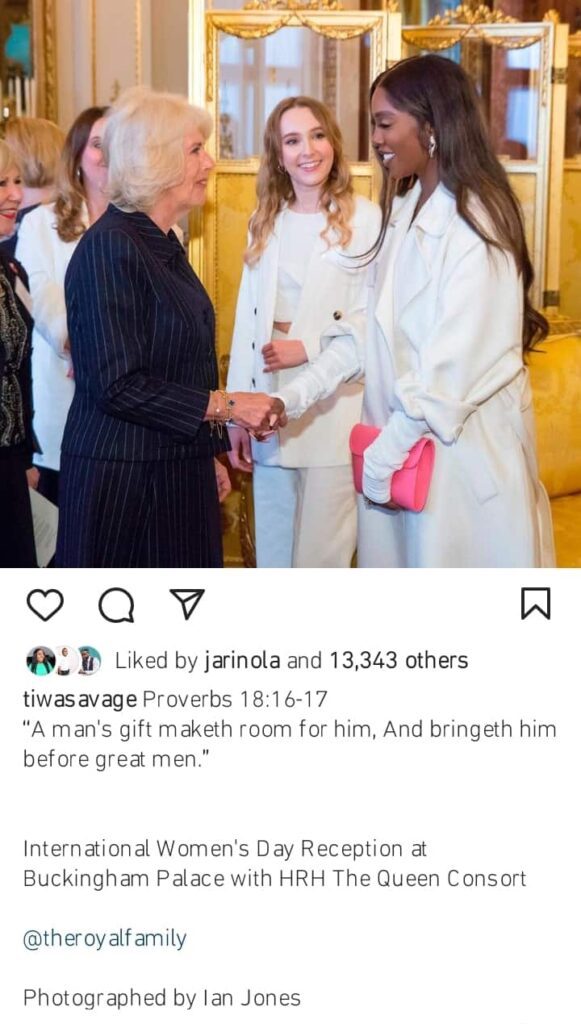
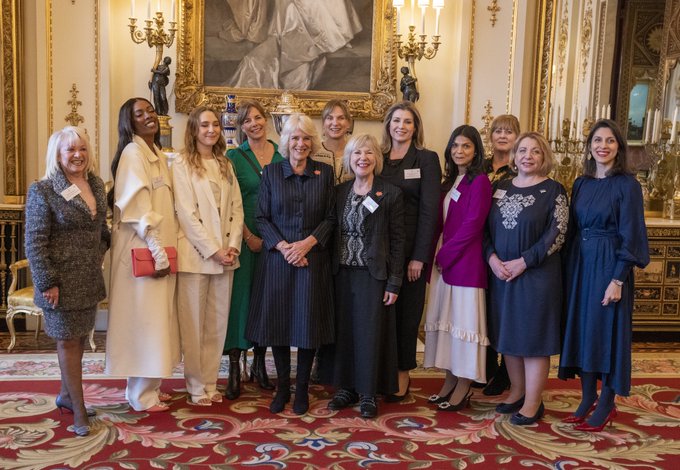
Award-winning Afrobeats singer, Tiwa Savage has paid a visit to Buckingham palace to commemorate International Women’s Day 2023.
She was among the VIP guests invited for the International Women’s Day reception held at the Buckingham Palace, England.
The mother of one posted a picture of herself and HRH Camilla, Queen Consort, taken in the palace and captioned it, “Proverbs 18:16-17. “A man’s gift maketh room for him, and bringeth him before great men. International Women’s Day Reception at Buckingham Palace with HRH The Queen Consort.”
Only a few weeks ago, Jamie Foxx, an American actor, was seen hanging out with Tiwa Savage.
In a viral video, Tiwa Savage, was seen getting intimate with Jamie Foxx.
The two had joined Leonardo DiCaprio and Edward Norton at the American Vogue party in London (editor of vogue).
Jamie Foxx and Tiwa Savage were spotted dancing together as they had a wild night.
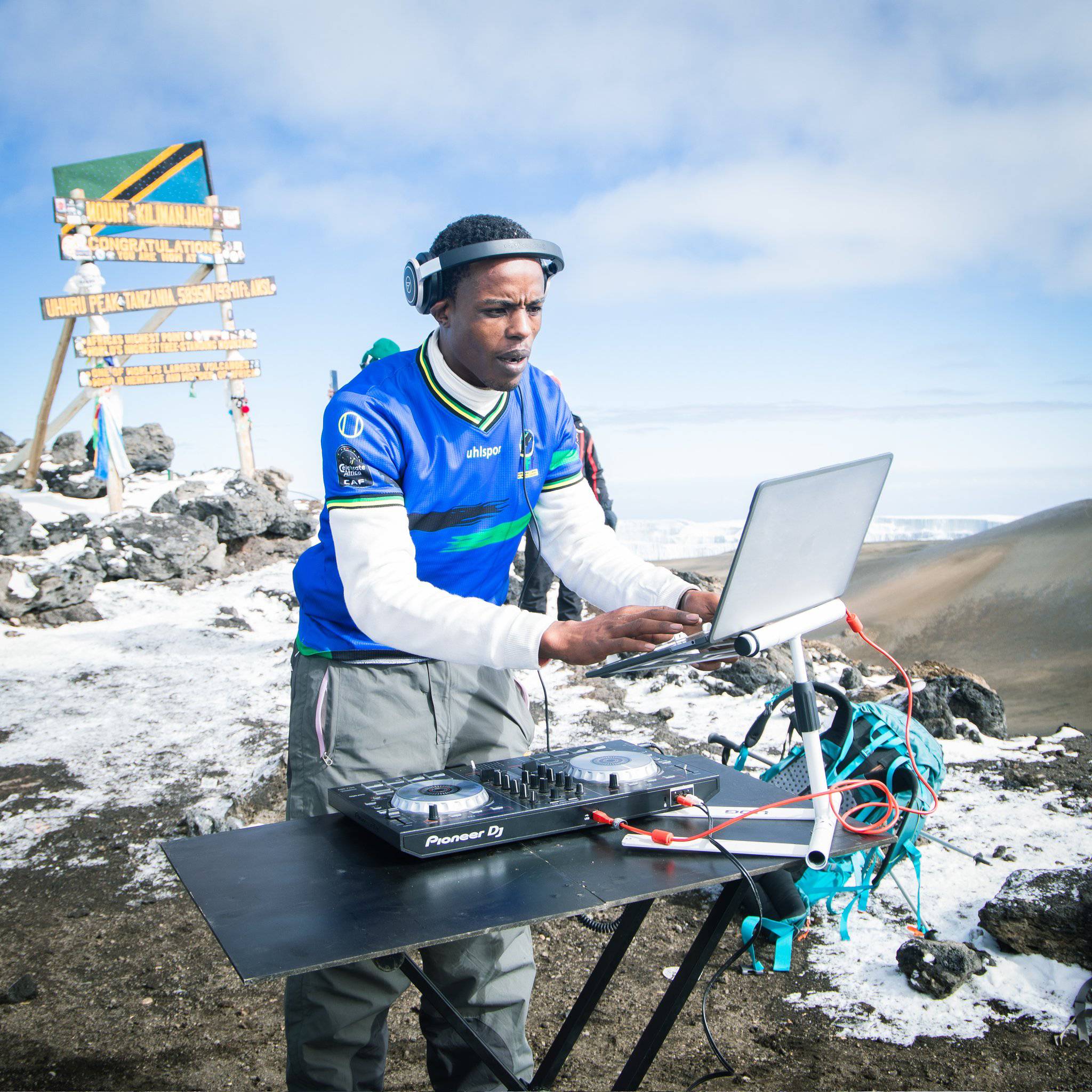
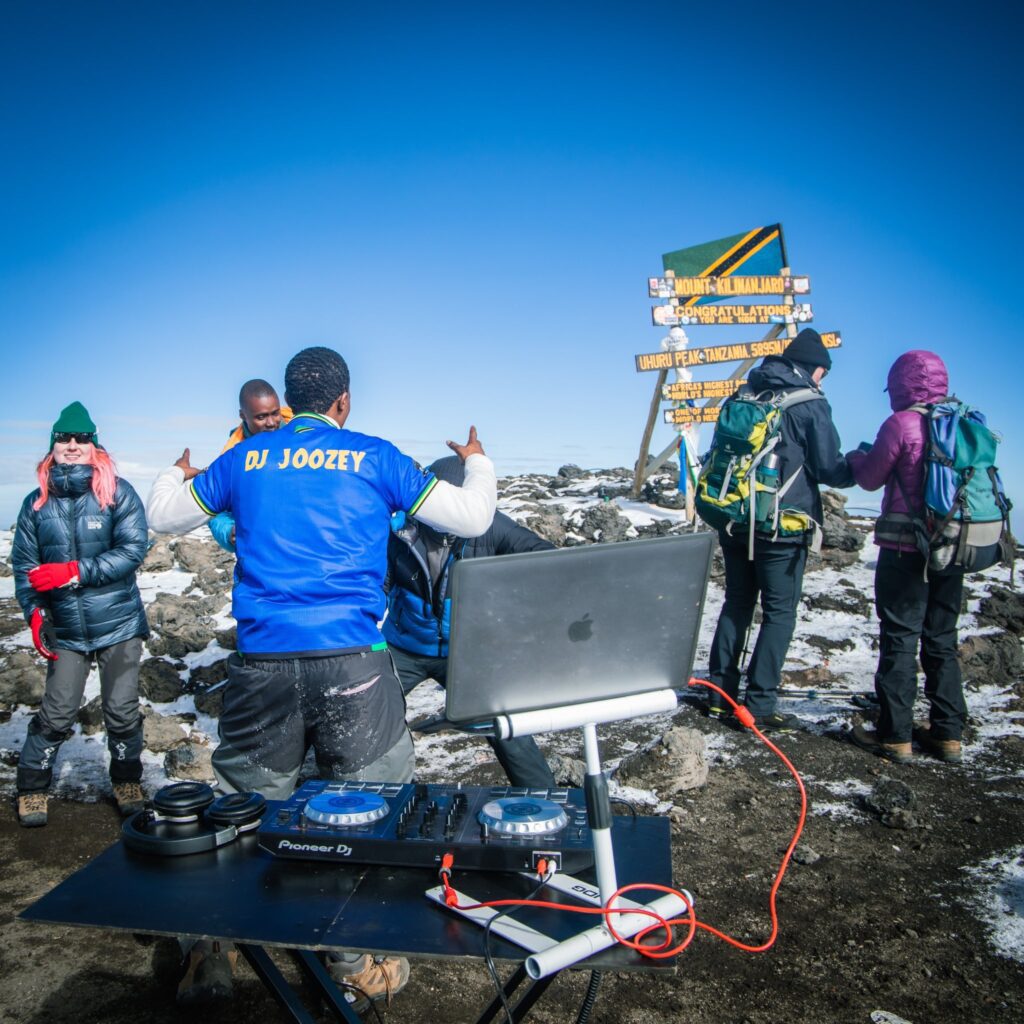
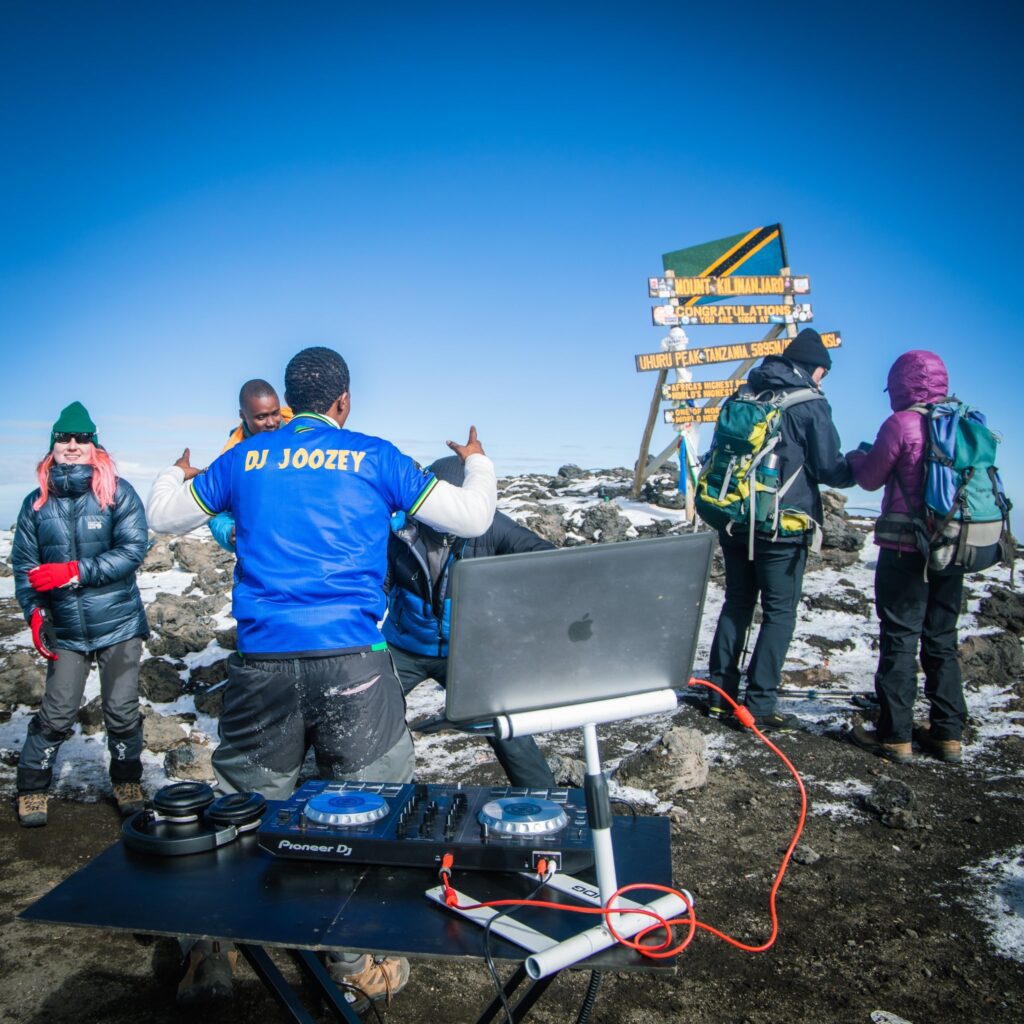
Tanzania’s DJ Joozey, real name Joseph Simon, has amazed social media users after sharing photos of himself playing a set selection on Mount Kilimanjaro, Africa’s tallest mountain.
Joozey ascended to the peak of the mountain with his music collection, setting it up at a height of 5,895 metres (19,341 feet) above sea level, and played for fifteen minutes, becoming the first African DJ to play at the peak of the highest mountain.
I DID IT!! I played on Mt Kilimanjaro the highest free standing mountain in world 🏔️5,895 metres (19,341 ft) above sea level and 4,900 metres (16,100 ft) above its plateau base. Breaking the World Record I am the first man to ever play a 15min DJ set. GOD IS GOOD! pic.twitter.com/ck4nTOzd6b
However, he admitted that the mix was not loud enough due to the sound being muffled by the wind at the mountain top.
“I did it! I played on Mt Kilimanjaro, the highest free-standing mountain in the world, 5,895 metres (19,341 ft) above sea level and 4,900 metres (16,100 ft) above its plateau base. Breaking the world record, I am the first man to ever play a 15min DJ set. God is good!” the DJ captioned the video clip of himself on Kilimanjaro with his setup.
Joozey, 27, is a rising star in Tanzania’s music industry and has been involved in show business for approximately five years, according to the local journal Tangaza Magazine.
The DJ was among the few chosen African artists in American rapper DJ Khaled’s album campaign for his “God Done” album last year.
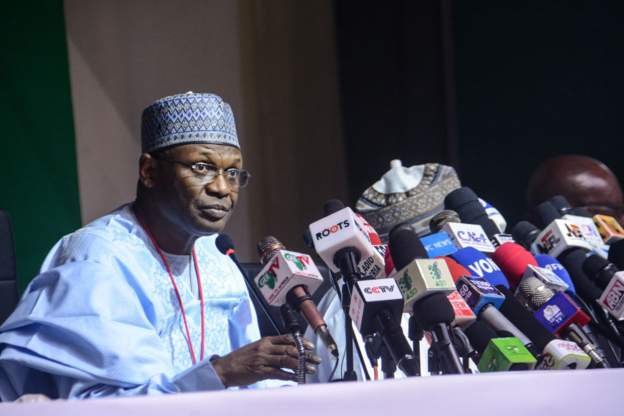
Elections for local assemblies and state governors in Nigeria have been postponed by one week.
The election was slated to happen on Saturday. They will now take place on March 18.
The opposition in Nigeria requested a review of the computerized voting equipment. A judge dismissed their lawsuit. However, the electoral commission claimed that because of the legal challenge, preparations had been delayed and the machines would not be ready in time.
Election postponements are frequent in this nation.
In 2019 presidential and parliamentary elections were postponed for a week. The electoral body cited logistical issues.
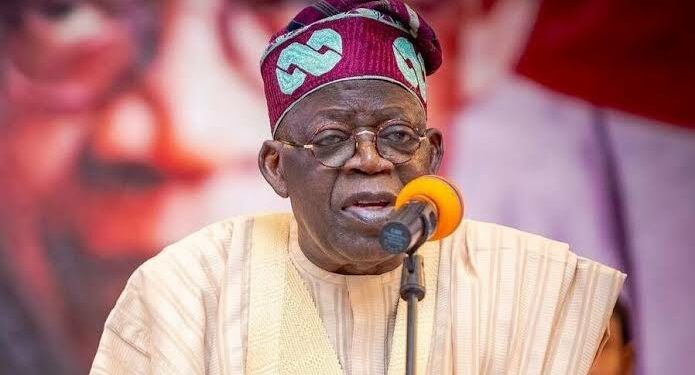
The opposition has disputed last month’s election victory by President- elect Bolu Tinubu.
The Independent National Electoral Commission (Inec) introduced the Bimodal Voter Accreditation System (BVAS) for the first time as part of new technologies used in this year’s elections in a bid to improve transparency.
But observer groups and opposition parties said huge delays in voting and failures in the system when uploading tallies allowed for ballot disparities during the presidential election.
For the first time in Tanzania’s history, the president has attended an International Women’s Day event organized by the main opposition party, Chadema.
President Samia Suluhu Hassan’s presence was welcomed by Chadema chairman Freeman Mbowe, who said it was the fruit of meetings aimed at achieving reconciliation.
Ms Samia, who addressed thousands in the meeting, said that reconciliation was ongoing in Tanzanian politics, and that some steps had already been taken meanwhile others were in progress, including the finding of a new constitution.
In her address, President Samia added it had been difficult to start the reconciliation process as some in her ruling party “were not ready”.
“There was a lot of debates here and there, and the same appeared to the country’s opposition. So both parties have some of its people who are not happy with the step of political reconciliation,” Ms Samia added.
She is Tanzania’s first female president, having taken office following the death of John Magufuli in 2021.
Mr Magufuli was accused by the opposition of being authoritarian, and cracking down on its leaders and members.
Producer and actress in Nollywood, Toyin Abraham-Ajeyemi has said that as an Edo babe, she made a million dollars in Lagos State. As a result, she is in favor of Babjide Sanwo- Olu’s reelection as governor of Lagos.
On Tuesday, March 7, 2023, she made this statement on Twitter, claiming that Lagos State was responsible for her success.
She said, “Lagos State, where I became a millionaire as an Edo babe. Sanwo Again. Sanwo Eko. Good governor. My choice,”
However, despite the criticism she has received on her choices of both presidential and governorship candidates, she has once again confirmed that that’s her decision and that she had not been forced to support or vote for any particular party.
Recall that Toyin Abraham publicly chose Asiwaju Bola Ahmed Tinubu, the president-elect, as her presidential candidate.
Kwame Nkrumah University of Science and Technology (KNUST) has achieved another significant accomplishment at the 2023 World Universities Debating Championships (WUDC).
The Kumasi-based university attained second position in the competition’s English as a Second Language (ESL) category finals.
As a result, the school has broken records by becoming the first African university to achieve this position in a competition that began 43 years ago.
They finished second in Madrid, Spain in January and qualified for the semi-finals in 2023. As reported by the Voice of KNUST, the university was ably represented by Prosper Michael Ametu, a fourth-year BA Sociology student, and Vincent Johnson Attakpah, a fourth-year BSc Statistics student, who qualified through nine rounds of debate.
At least six people have been killed and power at Europe’s largest nuclear plant has been lost after Russia launched missiles across Ukraine.
The attacks hit cities from Kharkiv in the north to Odesa in the south and Zhytomyr in the west.
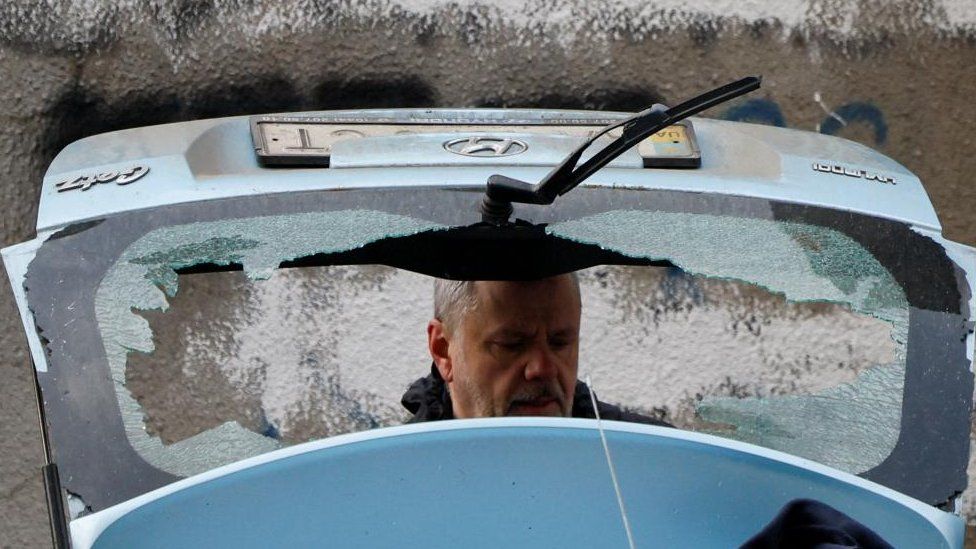
Buildings and infrastructure were hit in Kharkiv and Odesa, with power blackouts in several areas. Attacks on the capital Kyiv are also reported.
Ukraine said Russia fired 81 missiles, in what is the biggest strike in weeks.
The military claimed it successfully shot down 34 cruise missiles and four of the eight Iranian-made Shahed drones fired.
In western Ukraine, at least five people were killed in Lviv after a rocket hit their home, the region’s governor Maksym Kozytskyi said on Telegram.
One person has died and two others were injured following drone and missile strikes in the Dnipropetrovsk region, according to governor Serhii Lysak.
Nuclear energy operator Energoatom said a strike at the Zaporizhzhia plant, which is Europe’s largest, meant the “last link” between the facility and the Ukrainian power system was cut off.
Russia-installed officials in the Moscow-controlled part of Ukraine’s Zaporizhzhia region said the halt in electricity supplies to the power station from Ukrainian-held territory was “a provocation”.
In Kyiv, emergency services are at the scenes of blasts in western and southern districts of the capital where the mayor, Vitaly Klitschko, said explosions had taken place.
Mr Klitschko said cars were burning in the courtyard of one residential building and he urged people to stay in shelters. Much of the city has been left without electricity, with four in 10 people without power, he added.
A mass missile attack struck an energy facility in the port city of Odesa, triggering power cuts, its governor Maksym Marchenko said. Residential areas were also hit but no casualties were reported, he added.
“About 15” strikes hit Kharkiv city and region, with “critical infrastructure facilities” and a residential building targeted, regional administration chief Oleg Synegubov said.
Image caption,People gathered outside a residential building in Kyiv following the strikes
Other regions hit include Vynnytsia and Rivne in the west, and Dnipro and Poltava in the centre of the country.
The attacks mark the biggest day of Russian missile strikes on Ukraine since the end of January, when 11 people died after dozens of buildings were struck in several regions.
Russian President Vladimir Putin launched his invasion just over a year ago. Since then tens of thousands of combatants and civilians have been killed or injured and millions of Ukrainians became refugees.
The US Director of National Intelligence, Avril Haines, suggested on Wednesday that President Putin might be planning to drag out the war for years but that Russia was not strong enough to launch major new offensives this year.
She said the war in Ukraine had become a “grinding attritional war in which neither side has a definitive military advantage”.
“We do not foresee the Russian military recovering enough this year to make major territorial gains, but Putin most likely calculates the time works in his favour, and that prolonging the war including with potential pauses in the fighting may be his best remaining pathway to eventually securing Russia’s strategic interests in Ukraine, even if it takes years,” she said.
Image caption,The aftermath of missile attacks on Ukraine’s capital, Kyiv
Ms Haines said Russia might turn to defending the territories it now occupies, adding that it would need additional “mandatory mobilization and third-party ammunition sources” to sustain even its level of operations in Ukraine.
Ukraine’s military says it has pushed back intense Russian attacks on the embattled eastern city of Bakhmut despite Russian forces claiming to have taken control of its eastern half.
Moscow has been trying to take Bakhmut for months, as both sides suffer heavy losses in a grinding war of attrition.
“The enemy continued its attacks and has shown no sign of a let-up in storming the city of Bakhmut,” the general staff of the Ukrainian armed forces said. “Our defenders repelled attacks on Bakhmut and on surrounding communities.”
Between 20,000 and 30,000 Russian troops have been killed or wounded in the battle for the Ukrainian city of Bakhmut since it began last summer, Western officials say. The figures cannot be verified independently.
Politicians must learn to accept responsibility for their acts, according to an economist and professor of finance at the University of Ghana Business School.
Prof. Godfred Bokpin asserts that it has become common for politicians to attribute their failures to anything but themselves.
“It’s not only this government, if you look at the narrative from 1992 across the two major political parties, it’s as though the marking scheme is blaming it on others, don’t admit wrongdoing,” he told the mediaon Wednesday.
His comments come on the back President Akufo-Addo’s State of the Nation Address on March 8.
The President in his address said Ghana’s economy was performing until it was hit by Covid-19.
On the back of this, Professor Bokpin said although the President had admitted that the economy was faced with challenges, he had failed to assume responsibility for the crisis.
“Whilst we agree with the President that we are in an economic mess we disagree with the President on what has brought us here and this is where Ghana’s immaturity shows up again.
“After 66 years of independence, we are unable to admit wrongdoing and own up as responsible adults who are capable of managing our own country and that is unfortunate,” he told host, Evans Mensah.
The Economist explained that the government’s claim that Covid-19 was the major cause of the hardship, was false.
“It’s as though you are majoring on the minor and the reason, we are saying is that Russia – Ukraine is a global issue, the impact is pervasive. Covid-19 is a pandemic, the impact is pervasive, you also see marginality in how countries were affected by this twin development.”
“It is in the level of the marginality that you are able to see the difference in the resilience of one economy compared to the other economy.
“So, it takes shocks of this global proportions to reveal local vulnerabilities so you see economies that are sustained by words and propaganda and the once that are real on the ground. So, when pandemics of this nature strike that is when you will see countries that have pursued good and sound policies over the years,” he said.
He added that the fundamental of Ghana’s economy was doing well until the exit from the IMF programme.
Professor Bokpin stressed that the government under the guise of Covid-19 incurred debt.
“Ghana unlike any other country decided to monetise the virus. Ghana took advantage of the virus to mess up. In the name of Covid we overspent actually trying to win over electorates in 2020 elections…Whilst Cote Ivoire and the others were running deficits in the same Covid year of less far less than 10 %, Ghana did an excess of 15 %.. How do you explain this?” he quizzed.
Several persons are presently feared dead and injured following an early morning collision between a Nigerian Railway Corporation (NRC) train and a bus from the Lagos State Bus Rapid Transit (BRT) program near the PwD bus stop before Oshodi, on Thursday.
Eyewitness accounts claim that a BRT bus was struck by a train at the Shogunle railway crossing as it attempted to cross.
“The BRT bus was crossing the railway track at Shogunle when it got hit by the train. The BRT bus shouldn’t have attempted to cross because the train was already nearbye.
“Many people are inside the BRT bus and I cannot give account of the number of injured for now,.
“The train ran into the BRT bus at Shogunle and dragged it along the rail track up to PwD area” an eye witness told the Nigerian Tribune exclusively.
A significant number of casualties are anticipated following a collision involving a train and a Bus Rapid Transit (BRT) vehicle. The train collided with the BRT, causing it to be dragged from the Ikeja Along area to Shogunle. pic.twitter.com/LLgI2jqDIv
Commission for Human Rights and Administrative Justice (CHRAJ) has bemoaned Tuesday’s military drill at Taifa, a suburb of Ashaiman in the Greater Accra region.
The residents of the village were allegedly brutalized by a group of Ghanaian soldiers who attacked the area.
More than 100 people were hauled up by the military in connection with the murder of 22-year-old serviceman Sherrif Imoro, according to the Ghana Armed Forces.
Although the action by the military was widely considered as a move to avenge the slain soldier the Ghana Armed Forces in a statement released to the press explained that the exercise was an “intelligence-led operation.”
However reacting to the incident Joseph Whittal, the Commissioner for Human Rights and Administrative Justice told Joy News’ Blessed Sogah that the exercise does not pass the test for an intelligence-led operation while adding that the military acted wrongly.
“Because of their personal interest they come (to Ashaiman), takeover the law and do what they want. I completely condemn it. It is degrading and dehumanizing treatment to put such persons who are going to their work arrest them, make them do press ups in mud, sitting down with all their clothing removed apart from some briefs is completely unacceptable and that this is exacted by the army of Ghana? It’s completely unacceptable,” the Commissioner exclaimed on the sidelines of the Ghana-EU dialogue held at the Ministry of Foreign Affairs and Regional Integration in Accra Wednesday, March 8, 2023.
He added that “any defense of it by any leadership of the military is a misplaced support. We need to call what is wrong wrong and this is completely wrong.”
When asked about the fears of reprisals from aggrieved residents, Mr. Whittal noted that the military still have weapons that they can always apply.
“The community of Ashaiman should hold themselves and allow lawful bodies like the Ghana police to Investigate and take the right steps” he stated.
He also stressed that CHRAJ “when called upon we’ll take the right steps because it is the ombudsman that has constitutional powers to investigate military issues in the event that the military go beyond their normal duty and it affects the right of people.”
However for a CHRAJ investigation to take place Joseph Whittal said the process can only be triggered if an official complaint is filed on the matter.
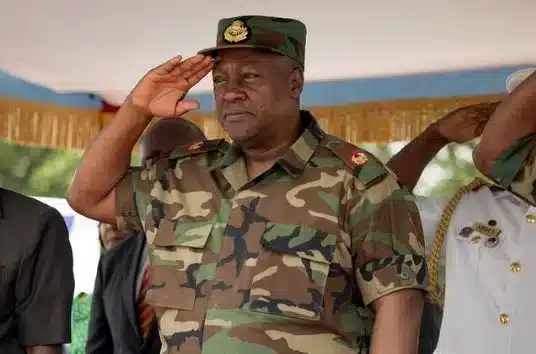
On March 8, 2023, former president John Dramani Mahama officially responded to a military raid that had occurred the day before in the Ashaiman neighborhood of Accra.
In a statement published on his official Facebook page, Mahama addressed the three components of the ongoing tragedy that began with the killing of a young soldier nearby, an act he claimed had caused him great sadness.
he comforted the family while he also urged the soldiers to maintain composure and let the appropriate law enforcement agencies address the crime.
He stopped short of condemning the swoop with the attendant human rights abuses that were recorded and went on to commiserate with members of the public who may have been caught up in the action of the military.
Below are 5 major things contained in Mahama’s statement
Condemnation of the killing of soldier
John Mahama started his statement with a comment on the killing of 21-year-old Sherrif Imoro, a trooper with the GAF who was in Accra for a programme.
“I am deeply saddened by the death of one of our soldiers, at such a young age, in Ashaiman,” the statement read.
Condolences to family and the military
“Lordina and I extend our deepest condolences to his bereaved and grieving family, and the officers and men of the Ghana Armed Forces.
“As your former Commander in Chief, I do appreciate how such unexpected deaths affect the Force,” the statement stressed.
Call for restraint and respect for due process
The former president also asked the military to restrain themselves and allow for mandated state agencies to bring the killers of Trooper Sherrif Imoro to book.
“However, I encourage you to exercise restraint and allow due process to investigate, apprehend, prosecute and punish the perpetrator(s) of the dastardly act.”
Sympathies with victims of brutality
Mahama pointed out the possibility that innocent people could have been caught up in the military swoop before sympathizing with any such persons.
“There are obviously many people who live and work in Ashaiman who are innocent of this heinous crime. The military must, therefore, refrain from meting out extra-judicial justice to them.
“I also sympathise with the victims of the torture in Ashaiman as a result of this unfolding death of a serving soldier.”
A prayer for Ghana
“I pray we find peace and harmony in our dear country, as the government and state institutions immediately step in to address this potentially inflammatory development between Ashaiman and the Ghana Armed Forces; including providing commensurate compensation for all persons affected,” the statement concluded.
The March 7 military swoop
Dozens of military officers stormed Ashaiman in the operation that saw some soldiers entering the town in trucks, with an armoured car plus a helicopter hovering over the town.
The exercise is said to be in response to the gruesome murder of a young soldier, Trooper Sherrif Imoro, by some unidentified persons on Saturday, March 4, 2023.
Videos of the invasion shared across social media show various forms of assault being meted on residents by the rampaging officers who subjected some of the residents to severe beatings.
In a statement released in the early hours of March 8, the Ghana Armed Forces admitted authorizing the swoop which led to the arrest of 184 persons, as well as the seizure of suspected illegal drugs.
In the said statement, they also acknowledged excesses may have resulted in the swoop but failed to apologize for or commit to conduct a probe on same.
Read Mahama’s full statement below:
I am deeply saddened by the death of one of our soldiers, at such a young age, in Ashaiman.
Lordina and I extend our deepest condolences to his bereaved and grieving family, and the officers and men of the Ghana Armed Forces.
As your former Commander in Chief, I do appreciate how such unexpected deaths affect the Force.
However, I encourage you to exercise restraint and allow due process to investigate, apprehend, prosecute and punish the perpetrator(s) of the dastardly act.
There are obviously many people who live and work in Ashaiman who are innocent of this heinous crime. The military must, therefore, refrain from meting out extra-judicial justice to them.
I also sympathise with the victims of the torture in Ashaiman as a result of this unfolding death of a serving soldier.
I pray we find peace and harmony in our dear country, as the government and state institutions immediately step in to address this potentially inflammatory development between Ashaiman and the Ghana Armed Forces; including providing commensurate compensation for all persons affected.
It started one night about a month after we’d met, when he said something funny and I didn’t react quickly enough.
He was staying at my place, a one-bedroom house I was renting in the Mojave Desert. The space between his joke and my late laughter had felt awkward. What if he thought I didn’t “get” his sense of humor? He didn’t seem to notice, so I tried to brush it off, but later, when there was another lull in our conversation, I started to obsess. Maybe he felt our connection was waning. Maybe he wouldn’t call me again after this date. Relationships were so precarious, my head told me, and one could never be certain. He yawned.
“Are you feeling like you want to leave?” I asked him.
“What? No.” Suddenly, he looked disturbed.
“Are you sure? You seem kind of freaked out.”
“I’m not.” He shifted on the couch. “I just don’t know where that question is coming from.”
My blood went cold. I was venturing into dangerous territory. These were the questions that tended to make people disappear.
I knew I should just leave it alone, try to carry on with the evening — but I didn’t know how. “How do you know you really like me?” I asked.
I could see the question wounded him, or else irritated him.
“I think we have a connection,” he said finally. As he said it, he softened. It sounded like he meant it.
This was a good start. The ice in my veins thawed slightly.
“Do you feel happy when you’re around me?” I just needed a convincing affirmative, and then I knew I could move on.
“Yes,” he said. But it wasn’t good enough.
I’m told my questions started when I was 2 years old and my brother was born. I’d watch my parents cradling him from across the room. They belong together, I’d think. I belong somewhere else. The thoughts were distressing, but I couldn’t seem to swat them away. To mitigate my anxiety, I’d ask my parents the question that would come to possess me for decades: “Do you still love me?”
But when they said yes, I kept asking. Each “yes” was like a hit of morphine, decreasing my angst just a little bit. My questions disturbed them. They sent me to therapy, but it didn’t help. I started to think something was wrong with me, that I was repellant to love because I grasped it too tightly.
In the seventh grade, I stopped asking my parents and started asking my friends. With preteen girls, getting the answers I needed was trickier. When they told me they loved me the right way — like they meant it — a flood of warm liquid washed through my entire body. I could breathe. When their answers were exasperated or indifferent, I was inconsolable. I’d call them after school from my home landline, my heart pounding, wrapping my pointer finger through the telephone cord’s ringlets to calm myself.
Once, a friend’s mother picked up the phone. “I’m not comfortable with you talking to Jessica,” she said. “Your questions are upsetting her. Please don’t call here again.” This happened more than once. I felt like a hungry, insatiable monster gobbling up innocent girls, hurting them, bringing my darkness into their lives. I knew I didn’t deserve their love, but I intensely needed it.
I soon found that boys were a slightly more reliable source. There, the cycle was the same: as soon as I got close to a boyfriend, intrusive thoughts began to skirt the edges of my mind, prompting the need to ask. Soon, the asking itself prompted the need for more questions:
“Do you think it’s weird that I’m asking these questions?” “Are you turned off by how insecure I am?” “Am I pushing you away?”
It was a cycle I was powerless to overcome. As I got older, I had some relationships, but they mostly didn’t last long. Although I desperately wanted love and intimacy, my questions kept people at arms’ length. In fact, after the questions started, I was often the first one to abandon ship. I simply couldn’t bear the person I became when I “loved” someone too much.
The author at 2, just after her brother was born.
In January 2021, when I was 31, another relationship ended, and I decided I would learn how to be alone. I had tried everything: talk therapy, group trauma therapy, 12-step recovery, shamanic healing, manifestation, creative writing, hot yoga, full-body awareness, Kundalini yoga, two-hour meditations, and breathwork. Nothing had worked. I felt like a lunatic. I didn’t know how to escape my questions, so I decided to escape people altogether.
After living in Los Angeles for 10 years, I put my things in storage, packed my car, and moved to the desert. To get to the house I was renting, I had to drive three miles on a mostly empty dirt road. My nearest neighbor was a shack that had been abandoned in the ’90s, and the closest grocery store was a 20-minute drive away. The first few months were peaceful, but soon the loneliness slunk in. I found myself getting irritated that it took so long to get a cup of coffee, to see another living person. I was flooded with emotion when a cashier’s hand accidentally brushed against mine. At night, the endless blackness started to feel menacing, rather than infinite. All that emptiness was making me claustrophobic. I decided to try one last time.
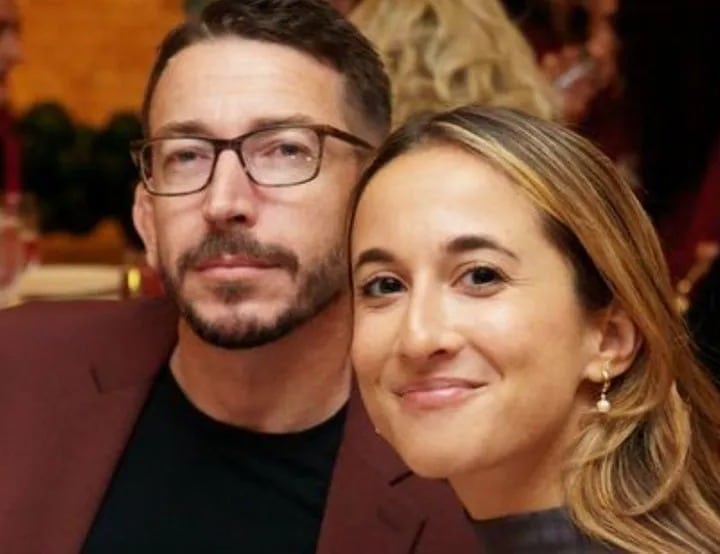
I met Cole on a dating app. He lived in Palm Desert, an hour and a half away, but he came to see me every week. After months of solitude, closeness with another person was both terrifying and joyful. Cole made me laugh, he had integrity, and he turned me on. Something about him made my heart feel full, like the feeling I got when I was writing, surrounded by family, or in the middle of nature. It was unlike anything I’d experienced with a romantic partner. I hoped that this time, I wouldn’t feel the need to ask questions.
But I did.
In fact, it was as though the legitimacy of the relationship made my desire to ask even stronger. There were days when Cole and I would laugh and go on hikes and make fun of each other while we watched TV shows in bed. There were also days when I could think of nothing to add to the conversation but the questions that were poking incessantly at the corners of my mind. Often, my questions would lead to fights.
“Why don’t you believe me?” he’d ask, his voice fraying at the edges of his words. “Do you not trust me?”
How could I tell him that I had never, not once in my life, fully trusted anyone?
I resolved to stop asking questions — no matter what. I started to avoid topics, activities, and places that made me anxious. I vetoed romantic TV shows, movies with beautiful women, discussions about sex and books that made me feel too much. My asking always got worse at night, so I planned evening activities with friends so I’d be out of the house when Cole got home. It didn’t work. Even after a night out, I’d still find myself asking relentlessly until we both passed out from exhaustion.
Still, soon after we moved in together, Cole brought up the topic of marriage. A part of me was thrilled — I loved this man and wanted to spend my life with him — but another part of me was baffled. Didn’t my constant question-asking indicate to him that I was defective? What, exactly, did I offer him that made him want to marry me? I felt like such a failure that I wanted him to be specific about what I’d done right, so I could repeat it.
My question-asking got much worse. I became obsessed with him, his actions, his moods. Some nights, I couldn’t even sit in front of the TV with him without experiencing enormous waves of anxiety — everything he said and did, however innocent, seemed to be a “clue” that he was going to leave me. One night, I shut myself in my office and cried, refusing to come out. I was terrified to face him and start the cycle of questioning again. I fantasized about leaving before he did, telling myself he would be better off without me anyway.
But we both stayed. Fueled by the prospect of marrying the man I loved and finally finding some semblance of peace, I decided to try to heal one last time. I started working with a somatic therapist. One day, she asked me to describe, step by step, what happened with Cole every night.
“Cole gets home, and he … he usually does something that upsets me,” I said.
“Such as?” she asked.
“He’ll talk about something a female co-worker said, and I’ll think he’s interested in her, and then I can’t get the thought out of my head.”
“OK,” she said. “Then what happens?”
“Then I feel this … urge to ask him about it. So I’ll say, ‘Are you attracted to her?’” I shifted in my desk chair, embarrassed at how self-centered I sounded. “He’ll get irritated with that question, and I’ll feel panic at his irritation, which will lead to more questions.”
“Does he ever actually answer your questions?” she asked.
“He always answers them.”
She looked surprised. “Well, what does he say?”
“He says he’s not attracted to her, and that he loves me.”
She paused, then asked, “So what’s the problem?”
“He’s not saying it right,” I insisted. I knew I sounded childish, that my voice had taken on a tone of petulance. “He’s not using the right words. He’s not saying it like he means it.”
The author and Cole.
She paused again. “I have to be honest with you, Sam,” she said. I braced myself for what I knew was coming: character assassination, condemnation, shame.
“This sounds like a compulsion,” she said. “Have you ever been diagnosed with OCD?”
It was the question that changed my life.
She officially diagnosed me with OCD a week later. The fact that Cole’s reassurance only worked sometimes, and that I had to repeat my questions, had clued her in that I was suffering from highly specific compulsions. In the following days, I scoured the internet for information about the disorder. I discovered Relationship OCD (ROCD), a less common subtype of OCD that’s characterized by obsessive, intrusive doubts about the “rightness” of one’s romantic relationship. I fit the bill. Although ROCD is not yet in the Diagnostic and Statistical Manual (DSM) used by psychologists, more and more medical professionals are diagnosing it as a specific subtype of OCD.
I got educated about the maddening cycle of the disorder: a trigger leads to anxiety, which leads to compulsions (my questions), which bring relief — until the next trigger. I came to understand that engaging in compulsions only made the next compulsion even stronger. Asking more questions was like telling my OCD that it was right — that I was actually in danger of being abandoned. I felt relief at understanding, for the first time in my life, that my questions weren’t my fault. It wasn’t that something in me was defective, or that I was extremely self-centered, or that I was “repellant” to love. Although I had certainly hurt people, I was dealing with something completely beyond my control.
My treatment involved exposing myself to the triggers that start the OCD cycle — the very triggers I’d done my best to avoid — and NOT “compulsing.” I also started medication, which took the edge off the excruciating anxiety I had been feeling daily. Cole is a director at a mental health facility, so he was exceptionally supportive of my treatment. My symptoms soon lessened in frequency, intensity and duration. I now know that the more I simply resist asking, the weaker my OCD becomes. I understand that even if I don’t ask for reassurance, Cole will eventually organically show me that he loves me because that’s just what a loving partner does. I still struggle sometimes, but this knowledge makes an enormous difference.
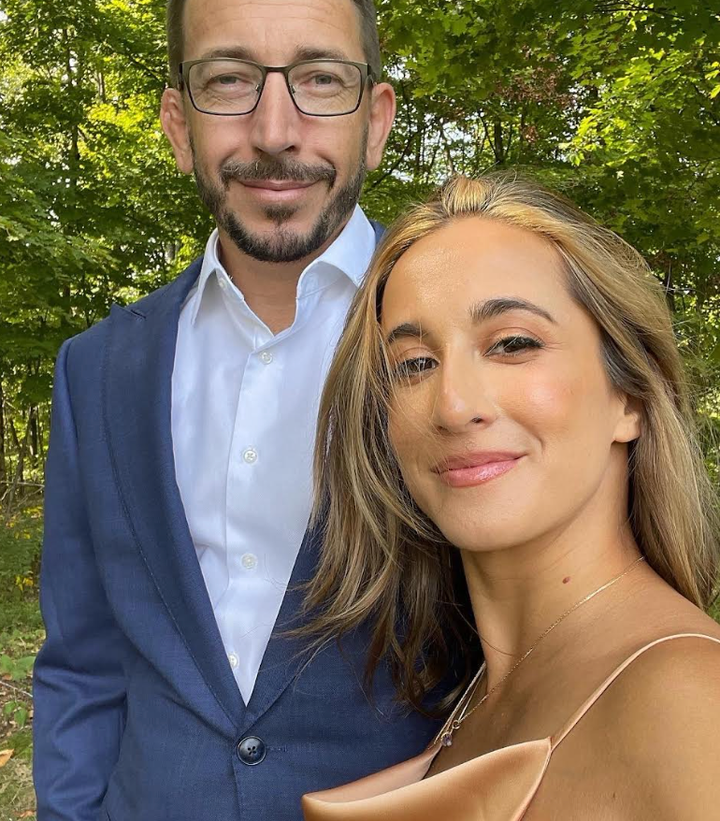
On Christmas Eve 2022, surrounded by towering redwood trees in Humboldt, California, Cole got down on one knee and asked me a question — a big one. As he slipped the ring on my finger, I wept, not just because I had always wanted to marry him, but also because, having gone through hell and coming out the other side, I finally believed I deserved it.
Although OCD derailed so much of my life, I’ve developed some gratitude for what it’s taught me. OCD is all about finding uncertainty intolerable. The idea that I don’t know what will happen next used to devastate me. Now, I understand that uncertainty is a part of life. Even if Cole were to assure me every single day that he loves me more than anything in the world, he could still decide tomorrow that he’s found someone “better.” There’s simply nothing I can do to change that. All I can do is remind myself that giving into my compulsions is the old way — the way that hurt me and those around me — and that there is a better, more rewarding way to live and love.
Source: Samantha Colicchio via Huffpost
DISCLAIMER: Independentghana.com will not be liable for any inaccuracies contained in this article. The views expressed in the article are solely those of the author’s, and do not reflect those of The Independent Ghana
On the Accra-Kumasi Highway, a passenger who had apparently been ejected from a commercial vehicle after his health reportedly declined throughout the trip was saved by Detective Sargeant Bright Armah of service No. 42810.
The passenger was located by Armah, a police officer assigned to the Apedwa police station in the East Akim District of the Eastern Region, who promised to take the man to the nearest hospital right once.
According to a Starr FM report, the distressed passenger identified as Henry Owusu Agyemang Ankobea in his 40s believed to be traveling from Asante Bekwai to Accra was allegedly removed from the vehicle he was aboard after his health condition worsened and was gasping for breathe.
The good samaritan police officer offered to help at a time most passers-by were afraid to assist for fear of the unknown.
Armah narrated the incident to Starr News: “About 4:30pm, I came across a sick passenger whom according to eyewitnesses was abandoned by a commercial vehicle he was aboard at Apedwa Junction.
“They assisted him to cross the road to the other side of the road but fell on the ground dying but the peoplearound were afraid and helpless .
“So when I got there I hired a taxi and rushed him to Apedwa Health Center but was referred to Kibi government hospital in the evening around 8:00pm. He had some Ghc300 in his pocket so I used part of it for the medical expenses,” Detective Sargeant Armah told Starr News Eastern Regional correspondent Kojo Ansah.
Unfortunately, the passenger died whiles on admission at the health facility and even before his relative, a military officer, would arrive at the hospital.
“So I called the family members, I called one man who gave his identity as Military officer and said the man was his cousin. Unfortunately, the man died at dawn before the arrival of the family members the next morning and the body deposited at Kibi mortuary,” the police officer said.
Brother of the deceased, Kofi Owusu, says efforts to get the suspect released were unsuccessful.
“Our Uncle had gone to the station on Saturday to seek bail for him but was unsuccessful. They told us it was a weekend so they can’t admit him on bail. We were there on Sunday as well. The police again refused us bail on Monday 6th March since it was a holiday,” he said.
The family was called on Tuesday to the police station to the news of the demise of their relative.
The family says the police claim that their relative committed suicide is untenable.
Kofi Owusu added, “My uncle went to the police cells to meet his lifeless body hanged dead. He had cuts on his chest but we don’t believe it was suicide. They said he used a bed sheet in the cells to commit the suicide.”
Meanwhile, the body of the deceased has been deposited at the morgue.
Allegations that the Ghana Football Association (GFA) stole $1 million from the betPawa sponsorship agreement, which was intended to promote the Ghana Premier League, have been vigorously refuted.
The organisation has come under fire for failing to advertise the premier league, leading to claims of financial misconduct.
Speaking to Akoma FM, GFA General Secretary, Prosper Harrison Addo, rejected the accusations as false, and explained that the association even promotes league matches more than the clubs themselves. He stated that promotion is not the responsibility of a particular group only, and clubs must also do their part, as they receive the majority share of the gate proceeds.
“Sometimes it seems FA promotes the games but the clubs do not. Clubs were told to do pre-match conferences on Thursdays and Fridays, they started and stopped later, and should the FA apply the laws journalists will jump to the conclusion that we (the FA) are against them,” Harrison Addo added.
On the whereabouts of the $1 million allocated for the promotion of the league, Harrison Addo explained that attendance is not only about the promotion Betpawa wants to do. He cited a past instance where a sponsor had wanted to do something similar but could not, since all sponsorship money had been given to the clubs. Therefore, in the betPawa deal, the company had decided to keep $1 million for promotion and other related activities, including the locker room bonus.
The GFA have been working towards improving the Ghana Premier League’s image and has recently secured a $10 million sponsorship deal with StarTimes. The association hopes to use this funding to improve the league’s infrastructure and overall quality.
President Nana Addo Dankwa Akufo-Addo has delivered the State of the Nation Address on March 8, 2023 expressing pride in his achievements over the past six years.
The address was done pursuant to Article 67 of the 1992 Constitution which mandates the president to deliver a message on the State of the Nation to Parliament at the start of each session and before the dissolution of Parliament.
In his address, the head of state mentioned that it may appear as though he made hasty decisions but his is however proud of achievements in the past few years occupying the presidential office.
“Yes I have been in a hurry to get things done and this includes massive development in agriculture, education, health, irrigation, roads, rails, ports, airports, sea defence, digitization, social protection programs, industrialization and Tourism. We can be justifiably proud of the many things we have managed to do in the past six years,” he stated.
Despite the achievements mentioned, president Akufo Addo indicated that he has heard the pleas of some Ghanaians concerning the need for the construction of schools, roads, hospitals, among others, together with the building of more drains as the rainy season comes but he wishes there were enough resources for him to d more.
”As I go around the country, i hear the pleas for roads, schools, hospitals and as the rainy season comes, I wish we had the resources to do more”
President Nana Addo Dankwa Akufo-Addo, further stated that his administration has never been careless with its borrowing and spending.
Ghana has faced difficult economic issues over the previous two years, which have caused nearly all indicators to be in distress. The situation compelled the government to request aid from the International Monetary Fund (IMF).
Citizens, Civil Society Organizations (CSOs), and other stakeholders accused the government of misusing funds and causing suffering in response to the action, which drew strong criticism.
Nonetheless, President Akufo-Addo has argued in defense of himself that, in contrast to some claims made by NPP administration detractors, the debt problem did not start during his presidency.
Delivering the State of the Nation of Address in Parliament on March 8, 2023, he said “Mr Speaker, let me state emphatically that we have not been reckless in borrowing and in spending. It is worth noting that the debts we are servicing were not only contracted during the period of this administration.”
Akufo-Addo explained that monies spent were used for “urgent” projects such as roads, bridges and schools in a bid to prepare the youth to face a competitive world.
“Mr Speaker, we have spent money on things that are urgent, to build roads and bridges and schools, to train our young people and equip them to face a competitive world. Considering the amount of work that still needs to be done on the state of our roads, the bridges that have to be built, considering the number of classrooms that need to be built, the furniture and equipment needs at all stages of education, considering the number of children who should be in school and are not, considering the number of towns and villages that still do not have access to potable water, I daresay no one can suggest we have over borrowed or spent recklessly,” Akufo-Addo noted.
In the early hours of Wednesday, a guy who cannot be named was killed by fire at the Akere Auto Spare Parts Market in the Lagos State neighborhood of Olodi-Apapa.
The early-morning blaze, which reportedly lasted for hours, also burned numerous shops and commodities worth millions of naira.
The Lagos State Fire and Rescue Service confirmed the incident and that the cause of the inferno was yet to be ascertained as at the time of filing this report
The Director ,Lagos State Fire and Rescue Service ,Margaret Adeseue said “At about 03:28 Wednesday wee hours, a Fire outbreak was alerted to Akere Spare Parts Market, Kirikiri Road, Akere Bus Stop, Olodi-Apapa, Ajegunle, Lagos that saw the Ajegunle Fire Station of the Lagos State Fire and Rescue Service as first respondent.’
She added that “Upon arrival, it was discovered that rows of shops that traded in auto spare parts was well alight that led to Sari-Iganmu and Ilupeju Fire crews of the Alagency joining up to subdued the raging Fire and salvage a nearby major market Petroleum Filling Station with a fully loaded 33,000 liters PMS tanker amongst other adjoining buildings.
“However, a male adult was recovered by the Tolu Police Division of the Nigerian Police around the scene while the Lagos Neighborhood and Safety Corps and the Red Cross were also in attendance.” she added
Adeseye also stated that ” The cause of the Fire will required details investigation to ascertained as well as post incident enumeration to account for the number of lockup shops and wares lost.”
Award-winning Sudanese writer Leila Aboulela has retold the story of a British army general killed by the troops of the Mahdi – a religious leader in Sudan in the late 19th Century – in her new novel, River Spirit.
The book gives a Sudanese view of Gordon of Khartoum, whose story has travelled around the world in history books and Hollywood films – but almost always with a British outlook, glorifying him as a colonial-era hero.
General Charles Gordon died defending Khartoum in 1885 following a siege by Sudanese forces.
Aboulela says the 1966 film Khartoum starring Charlton Heston as Gen Gordon and Laurence Olivier as the Mahdi was full of inaccuracies.
“The only accurate thing was the weapons apparently… It wasn’t even filmed in Khartoum,” she told the BBC’s Newsday programme.
“So I wanted to retell the story and make it from a Sudanese point of view and how they saw events unfolding.”
The story of Gen Gordon is also one of the foundational stories for Sudan as nation, the novelist says.
For much of the 19th Century it was ruled by the Ottoman Empire and then in the early to mid 20th Century it was under joint British-Egyptian rule, before becoming independent in 1956.
“What the Mahdi did – it brought the Sudanese together almost for the first time. They felt united against the foreigner, whether they were Egyptians, Ottomans or British,” she said.
Her novel also puts women at the heart of the story, looking at their roles from nurses and vendors to cooks and spies.
“They are mentioned as footnotes in history or not mentioned at all – but they were part of the army… they were very much playing an active part and it was interesting to explore that.”
Source: BBC
DISCLAIMER: Independentghana.com will not be liable for any inaccuracies contained in this article. The views expressed in the article are solely those of the author’s, and do not reflect those of The Independent Ghana
A senior at Westlake High School has been offered admission to more than 50 universities and has been awarded scholarships totaling over $1.3 million. Daya Brown, a former student council president and member of the Harvard Diversity Project, stated that she eventually did not want to pay for college.
She added that because she started the process so early, she was able to complete her scholarship and college application applications.
“I was already looking at scholarships. In each quarter, I’m writing down a different goal,” she told 11Alive.com. “Colleges have made it so easy. You have virtual visits. Go to those visits, make sure you do your research.”
Dedicating three hours a day to applications, over nearly four months, Brown further indicated that “colleges love the uniqueness about applications.”
“Sign up for those internships and go apply for that job. Go to that volunteer experience because they want to see who you are as a person,” she advised.
There were tough times along the way for Brown, but she overcame all those challenges and sought help financially when necessary. She said pain became her inspiration. “Black people were once in a point where education was not an option. And I think with this accomplishment specifically, it has really made me like think I am my ancestors’ wildest dreams.”
Besides academic work, Brown has her own production company, with a nonprofit podcast called The Scholar Social, which teaches teenagers what is going on in the world, but in a creative way, she explained. “I think simple conversations is our way to showcase our voice in this generation.”
Brown’s parents, particularly, her mom are proud of her achievements. At the moment, she plans to attend Duke University, where she will study production or journalism. She chose those two because she really loves telling stories and impacting people, the Atlanta teen said.
“It’s all about how I make people feel. I don’t care if you remember my name, it doesn’t matter how many accomplishments I have. At the end of the day if I impacted you, that’s all that matters,” Brown said.
Consumers in Kenya are currently dealing with new fuel shortages as a result of major oil marketing firms (OMCs) in Nairobi running out of petrol and turning away drivers due to severe cash flow issues brought on by the dollar scarcity.
Many filling stations in Nairobi, the capital of Kenya, had ran out of petroleum supplies as of the weekend, with those owned by Vivo Energy being among the hardest impacted, according to a spot-check by The EastAfrican.
By Sunday afternoon, several outlets by Vivo under the Shell brand had run out of super petrol, with attendants giving motorists the option of buying the company’s V-Power brand. The situation deteriorated Monday with some of the Shell outlets reporting total depletion of products including super petrol, V-Power and diesel.
Vivo did not respond to our queries over the scarcity of fuel at its retail outlets even though insiders and an industry association attributed the situation to a dollar shortage.
Insufficient dollars
“There is sufficient fuel at the depots but the major oil companies are not evacuating it because they do not have sufficient dollars,” said Petroleum Outlets Association of Kenya (POAK) Chairman Martin Chomba.
Vivo Energy is the largest OMC in the country with a market share of 23.83 percent, having sold 1.36 million cubic metres of fuel products in the financial year to June 2022.
The major oil companies such as Vivo, TotalEnergies, Rubis and Ola Energy buy fuel in bulk and supply it to the smaller independent retail outlets, meaning that a shortage at these top firms cascades down to the smaller players.
Kenya is currently battling an acute shortage of US dollars primarily due to pressure exerted by external debt repayments.
Data from the Central Bank of Kenya (CBK) released on Friday shows forex reserves dropped to $6.6 billion (Ksh845.46 billion) on March 2 from $6.86 billion (Ksh878.76 billion) on February 23. This translates to 3.69 months of import cover, which is below the set threshold of four months and comes despite CBK Governor Patrick Njoroge constantly downplaying the shortage.
Higher global prices
Demand for forex has shot through the roof in recent months as importers seek more dollars to finance imports owing to higher global prices of fuel, food products, cooking oil, steel and other imports.
“Yes, talk to the big OMCs. It is a crisis,” said an executive of a smaller oil marketing company who requested anonymity.
The Energy and Petroleum Regulatory Authority (Epra) has also failed to fully withdraw the subsidy on diesel which has compounded the cash-flow woes of the OMCs.
Epra last month partially reinstated a margin of Ksh2.54 ($0.020) per litre of diesel, but amid continued delays by the National Treasury in releasing subsidy funds, the firms have been pushing for the termination of the scheme to ease their cash crunch.
Muted fuel sales
The OMCs have been borrowing to fulfil their cash needs for fuel imports, but muted fuel sales owing to the tough economic conditions that have seen many motorists park their cars in favour of public transport have compounded their woes.
Should the fuel supply hitch evolve into a full-blown fuel scarcity crisis, it would mirror a similar crisis that began in late March last year after OMCs resorted to hoarding fuel in protest against the government, which had accumulated subsidy arrears of Ksh13 billion ($101 million).
President William Ruto’s government has resorted to government-to-government procurement of fuel, which will see state-owned Gulf companies supply fuel to one local OMC of their choice, who will in turn distribute it to other local players.
The government has already floated a tender of nine months for the fuel supply through the new arrangement, which is a temporary move away from the open tender system where some 112 OMCs compete to procure fuel on behalf of the others.
The government says the new system will help to reduce pressure on forex reserves considering that in the government-to-government fuel purchasing, payment for the cargo will be made after six months compared to the current system where the firms have to pay for the cargo every week.
A Kenyan man who was charged with selling potato chips that had been fried in transformer oil receives a two-year prison term or a Ksh.200,000 ($1,500) fine. Elijah Mwangi Muthoga allegedly had 11 liters of transformer oil in his possession when he was apprehended in December 2021, according to Citizen Digital. In the country of East Africa, the accused man is a hotelier.
In addition to being repackaged and sold as popcorn oil, the poisonous fluid was also used to fry potato chips before they were sold, according to court filings. The person who supplied the transformer oil received a sentence of 10 years in prison or a fine of KShs. 10 million (about $77,000).
“This ruling is a big boost to the Company’s effort to fight transformer vandalism as the stiff penalties and jail terms will deter vandals,” Kenya Power’s Ag. Manager for Security Services Maj. Paul Nyaga (Rtd) said.
Kenya Power also stated that one of the main reasons behind power outages in the East African nation was vandalism on transformers. “In addition to undermining the quality and reliability of the electricity supply, transformer vandalism poses a risk of electrocution and exposes the Company to financial losses in lost sales and the cost of replacing the transformers,” Kenya Power said.
As previously reported by Face2Face Africa, Kenya Power also said the thieves who extract the toxic fluids pass them on to cartels who later sell them as cooking oil to restaurants and roadside stalls.
Officials said the upsurge in vandalism is because of the increasing price of cooking oil. As a result, businesses are adopting unconventional methods to remain in business. Although cooking oil and transformer oil look similar, health experts warn the latter is dangerous for human consumption and causes grave health risks.
Six suspected livestock rustlers from Kenya who were detained in Uganda’s Turkana area’s Karamoja region have been handed over.
The Ugandan military turned over the suspects to the Turkana County administration as a “gesture of East African Community partnership and as a show of peaceful coexistence.”
The practice supervised by Brig Gen Felix Busizoori of the Uganda People’s Defence Forces (UPDF) was done in Moroto Army Barracks in northern Uganda and attended by Turkana County secretary and head of public service, Peter Eripete.
“The Turkana suspects were arrested alongside their kinship, the native Matheniko in different cordon and search operations where they were engaged in cattle rustling in Karamoja sub-region between 20th February to 26 February 2023,” the UPDF said Monday.
Brig Gen Busizoori urged Kenyan authorities to “penalise the suspects for abusing the peaceful co-existence and cross-border security arrangements”, saying letting them off the hook would encourage impunity.
He warned that those caught violating Ugandan laws would face the law in the country.
UPDF said eight Matheniko suspects arrested alongside the Turkanas would be subjected to Uganda’s courts of law.
Last month, Kenya and Uganda initiated talks to open a one-stop border post in Lokiriama in northwest Kenya, that would seek to open up trade and fight livestock raids.
The two countries revived their September 2019 memorandum of understanding that sought to enhance cross-border trade between the Turkana and Karamoja, by establishing immigration and customs border points at Lokiriama, Nawountos and Nakitong’o.
The border region is mainly occupied by the Turkana and Pokot ethnic communities in northwestern Kenya, and the Karamajong, an ethnic group of agro-pastoral herders living in the northeast of Uganda.
These communities have over the years engaged in banditry, making the region unsafe. The two countries, however, see the opening of the border post as one of the measures to end cattle rustling or stock theft, an age-old tradition that has been commercialised by international criminal networks in East Africa and the Horn.
Aida Muluneh is a contemporary Ethiopian artist leading the charge in her home region to change the narrative portrayed in the global media about Africa. She has been a victim of war, read about famine in parts of the continent, and come across women and children who are malnourished, but she doesn’t believe it is enough justification for the foreign press to focus on these negatives to tell Africa’s story. There are many positive stories about the continent, and that is why she is investing her talent in her photography project.
Born in 1974 in Addis Ababa, Aida was compelled to live the next decade of her life in England, Yemen, Greece, Cyprus, and later Canada in 1985, due to the civil war in Ethiopia during her formative years, according to hundred heroines. However, her adventure across the globe was brought to a halt when she developed a passion for photography and decided to move back to Ethiopia.
This marriage with photography happened only after wandering along many career paths. She dabbled from being a basketball player to a lawyer until she had an epiphany in a disused darkroom where a Pentax 35-millimeter camera caught her eye. Since then, it’s been no turning back for Aida in her photography journey, she graduated from Howard University with a bachelor’s degree in film, radio, and television.
Her passion to relocate to her home region was also rekindled after briefly working at the Washington Post. It was during this period in her life that she became disturbed by the media’s consistent negative framing of Africa in their reportage. After relocating to Ethiopia in the 2000s, she was determined to work toward presenting an alternative narrative of what Africa stands for.
One of those works is “the world is 9,” an expression her grandmother often used to explain the imperfections of the world. She converted this philosophical expression into a series of photographic works that invites her audience to question life, love, history, and if the world should not be embraced in its imperfect and complete form.
One such piece is titled “All In One”, where Aida focuses on the various religions that define the history of Ethiopia. It first started with Christianity, then Islam, and later Judaism, which symbolizes the union of King Solomon and the Queen of Sheeba. It communicates the message that all religions exist in different forms but what matters is a person’s faith and spirituality, according to CNN.
She also addresses the pressure and conflict that exists between traditional and career women, which she titled “The Morning Bridge”. It depicts how many women are keen to get married as a result of pressure from their families. While there are those who want to be successful with both their careers and marriages but seem to be failing despite the effort, there are others who are desirous of a family but are unable to make the switch between their ambitions and this goal. Her work questions why women can’t have both successful careers and still stay married.
She also dedicates a part to Ethiopia’s 2,000-year history, which had been wiped away by the communist era. She called this “Departure” to coincide with her own experience as a child where she had to go and live in a foreign land because of the dysfunctional system. She uses the train station given as a gift to Emperor Menelik and Haile Selassie and what is left of this relic to tell the story of how Ethiopia fought colonial invasion and preserved its independence from Europe.
Maintaining an active lifestyle and nutritious diet may help prevent kidney problems. But certain factors can increase your risk of developing kidney damage or disease.
Your kidneys are fist-sized organs located at the bottom of your rib cage, on both sides of your spine. They perform several functions.
Most importantly, they filter waste products, excess water, and other impurities from your blood. These waste products are stored in your bladder and later expelled through urine.
In addition, your kidneys regulate pH, salt, and potassium levels in your body. They also produce hormones that regulate blood pressure and control the production of red blood cells.
Your kidneys are also responsible for activating a form of vitamin D that helps your body absorb calcium for building bones and regulating muscle function.
Maintaining kidney health is important to your overall health and general well-being. By keeping your kidneys healthy, your body will filter and expel waste properly and produce hormones to help your body function properly.
Here are some tips to help keep your kidneys healthy.
1. Keep active and fit
Regular exercise is good for more than just your waistline. It can lower the risk of chronic kidney disease. It can also reduce your blood pressure and boost your heart health, which are both important for preventing kidney damage.
You don’t have to run marathons to reap the reward of exercise. Walking, running, cycling, and even dancing are great for your health. Find an activity that keeps you busy and have fun. It’ll be easier to stick to it and have great results.
2. Manage your blood sugar
People with diabetes, or a condition that causes high blood sugar, may develop kidney damage. When your body’s cells can’t use the glucose (sugar) in your blood, your kidneys are forced to work extra hard to filter your blood. Over years of exertion, this can lead to life threatening damage.
However, if you can manage your blood sugar, you reduce the risk of damage. Also, if the damage is caught early, a doctor can take steps to reduce or prevent additional damage.
3. Monitor blood pressure
High blood pressure can cause kidney damage. If high blood pressure occurs with other health issues like diabetes, heart disease, or high cholesterol, the impact on your body can be significant.
A healthy blood pressure reading is 120/80. Prehypertension is between that point and 139/89. Lifestyle and dietary changes may help lower your blood pressure at this point.
If your blood pressure readings are consistently above 140/90, you may have high blood pressure. You should talk with a doctor about monitoring your blood pressure regularly, making changes to your lifestyle, and possibly taking medication.
4. Monitor weight and eat a balanced diet
People who are overweight or have obesity are at risk for a number of health conditions that can damage the kidneys. These include diabetes, heart disease, and kidney disease.
A balanced diet that’s low in sodium, processed meats, and other kidney-damaging foods may help reduce the risk of kidney damage. Focus on eating fresh ingredients that are naturally low in sodium, such as cauliflower, blueberries, fish, whole grains, and more.
5. Drink plenty of fluids
There’s no magic behind the cliché advice to drink eight glasses of water a day, but it’s a good goal precisely because it encourages you to stay hydrated. Regular, consistent water intake is healthy for your kidneys.
Water helps clear sodium and toxins from your kidneys. It also lowers your risk of chronic kidney disease.
Aim for at least 1.5 to 2 liters in a day. Exactly how much water you need depends largely on your health and lifestyle. Factors like climate, exercise, gender, overall health, and whether you’re pregnant or breastfeeding are important to consider when planning your daily water intake.
People who have previously had kidney stones should drink a bit more water to help prevent stone deposits in the future.
6. Don’t smoke
Smoking damages your body’s blood vessels. This leads to slower blood flow throughout your body and to your kidneys.
Smoking also puts your kidneys at an increased risk for cancer. If you smoke and stop smoking, your risk will drop. However, it’ll take many yearsTrusted Source to return to the risk level of a person who’s never smoked.
7. Be aware of the amount of OTC pills you take
If you regularly take over-the-counter (OTC) pain medication, you may be causing kidney damage. Nonsteroidal anti-inflammatory drugs (NSAIDs), including ibuprofen and naproxen, can damage your kidneys if you take them regularly for chronic pain, headaches, or arthritis.
According to the National Kidney Foundation, these medications should not be taken for more than 10 days for pain, or more than three days for fever. Regularly taking more than eight aspirin tablets each day may reduce your kidney function temporarily or permanently.
People with no kidney issues who take the medicine occasionally are likely in the clear. However, if you use these medicines daily, you could be risking your kidneys’ health. Talk with a doctor about kidney-safe treatments if you’re coping with pain.
8. Have your kidney function tested if you’re at high risk
If you’re at high risk of kidney damage or kidney disease, it’s a good idea to have regular kidney function tests. The following people may benefit from regular screening:
people who are over 60 years old
people who were born at a low birth weight
people who have cardiovascular disease or have family members with it
people who have or have a family history of high blood pressure
people who have obesity
people who believe they may have kidney damage
A regular kidney function test is a great way to know your kidney’s health and to check for possible changes. Getting ahead of any damage can help slow or prevent future damage.
When things go wrong
More than 1 in 7 adultsTrusted Source in the United States show evidence of chronic kidney disease. Some forms of kidney disease are progressive, meaning the disease gets worse over time. When your kidneys can no longer remove waste from blood, they fail.
Waste buildup in your body can cause serious problems and lead to death. To remedy this, your blood would have to be filtered artificially through dialysis, or you would need a kidney transplant.
Types of kidney disease
Chronic kidney disease
The most common form of kidney disease is chronic kidney disease. A major cause of chronic kidney disease is high blood pressure.
Your kidneys are constantly processing your body’s blood. They remove toxins, wastes, and extra water from about half a cup of bloodTrusted Source each minute.
High blood pressure is dangerous for your kidneys because it can lead to increased pressure on the glomeruli, the functional units of your kidney. In time, this high pressure compromises the filtering apparatus of your kidneys and their functioning declines.
Eventually, kidney function will deteriorate to the point where they can no longer properly perform their job, and you’ll have to go on dialysis.
Dialysis filters fluid and wastes out of your blood. Depending on the situation, dialysis, especially peritoneal dialysis, may be effective long term. Although the average life expectancy for people on dialysis is 5 to 10 years, many people have lived for 20 to 30 years.
Eventually, you may need a kidney transplant, but it depends on your particular circumstance.
Diabetes is another major cause of chronic kidney disease. Over time, uncontrolled blood sugar levels will damage the functional units of your kidney, also leading to kidney failure.
Kidney stones
Another common kidney problem is kidney stones. Minerals and other substances in your blood may crystallize in the kidneys, forming solid particles, or stones, that usually pass out of your body in urine.
Passing kidney stones can be extremely painful, but rarely causes significant problems.
While kidney stones as a risk factor for chronic kidney disease is minimal, they may frequently lead to acute kidney injury (AKI)Trusted Source, also known as acute kidney failure, especially if kidney stones are accompanied by dehydration or infection.
Glomerulonephritis
Glomerulonephritis is an inflammation of the glomeruli, microscopic structures inside your kidneys that perform the filtration of blood. Glomerulonephritis can be caused by infections, drugs, congenital abnormalities, and autoimmune diseases.
This condition may get better on its own or require immunosuppressive medications.
Polycystic kidney disease
Individual kidney cysts are fairly common and usually harmless, but polycystic kidney disease is a separate, more serious condition.
Polycystic kidney disease is a genetic disorder that causes many cysts, round sacs of fluid, to grow inside and on the surfaces of your kidneys, interfering with kidney function.
Urinary tract infections
Urinary tract infections are bacterial infections of any of the parts of your urinary system. Infections in the bladder and urethra are most common. They’re generally easily treatable and have few, if any, long-term consequences.
However, if left untreated, these infections can spread to the kidneys and lead to kidney failure.
What you can do to improve kidney health
Your kidneys are vital to your overall health. These organs are responsible for many functions, from processing body waste to making hormones. That’s why taking care of your kidneys should be a top health priority.
Maintaining an active, health-conscious lifestyle is the best thing you can do to make sure your kidneys stay healthy.
If you have a chronic health condition that increases your risk for kidney damage or kidney disease, you should also work closely with a doctor to watch for signs of loss of kidney function.
Source: healthline.com
DISCLAIMER: Independentghana.com will not be liable for any inaccuracies contained in this article. The views expressed in the article are solely those of the author’s, and do not reflect those of The Independent Ghana
Mexican and US officials, have indicated that two of the four Americans who were abducted in Mexico last week at gunpoint are dead, while the other two are still alive and have returned home.
Four US citizens were kidnapped by armed men on 3 March while driving into the city of Matamoros in the north-eastern state of Tamaulipas, Mexico, across the border from Texas.
They had travelled there for cosmetic surgery, relatives told US media.
One man, named only as José “N”, 24, from Tamaulipas, has been arrested.
White House National Security Council spokesman John Kirby said: “We offer our deepest condolences to the friends and families of those who were killed in these attacks.”
The two surviving victims were delivered to the US on Tuesday in co-operation with the US consulate in Matamoros, Tamaulipas Attorney General Irving Barrios Mojica said in a tweet.
They were brought back under armed escort by a heavily armed convoy.
The FBI later confirmed that two Americans were found dead and that the other two have been brought to American hospitals for treatment.
“One of the surviving victims sustained serious injuries during the attack,” the FBI said.
The statement added that the agency will work with international partners and other law enforcement agencies to “hold those responsible for this horrific and violent attack accountable for their crimes”.
The bodies of Zindell Brown and Shaeed Woodard have been recovered and are being repatriated, US officials said.
Mexican President Andrés Manuel López Obrador said: “We are very sorry that this happened in our country and we send our condolences to the families of the victims, friends, and the United States government, and we will continue doing our work to guarantee peace and tranquillity.”
The injured Americans were named by family members as Latavia “Tay” McGee, a mother of six from South Carolina, and Eric James Williams.
The four were driving through Matamoros – a city of 500,000 located directly across the border from the Texas town of Brownsville – in a white minivan with North Carolina licence plates when unidentified gunmen opened fire, the FBI said this week.
Video shows them being loaded into a pickup truck by heavily armed men. One is manhandled on to the vehicle while others appear to be unconscious and are dragged to the truck.
A Mexican woman, believed to be a 33-year-old bystander more than one block away, was killed in last Friday’s incident.
At a news conference later on Tuesday, Mexican officials confirmed a 24-year-old man had been arrested and that the four Americans were discovered at a wooden shack outside Matamoros.
The victims had been transferred to various locations between the kidnapping on Friday and their discovery on Tuesday “to create confusion”, officials say.
Investigators think the Gulf Cartel, one of the oldest organised crime groups in Mexico, is responsible for the attack, a US law enforcement source told CBS.
It is still unclear whether the Americans were ambushed, mistaken for competing drug traffickers, or were caught in cross-fire between warring factions.
US state department officials said on Tuesday that the investigation was still in the early stages.
Ms McGee was said to be travelling to the Mexican border town to have a tummy tuck, a cosmetic surgery procedure to remove abdominal fat.
Her mother Barbara Burgess told ABC News that she had asked her daughter not to go, but her daughter had reassured her she would be safe.
The FBI offered a $50,000 (£42,000) reward for the return of the Americans.
Matamoros is in Tamaulipas state, one of six Mexican states that the US state department advises travellers not to visit because of “crime and kidnapping”.
Medical tourism is common, particularly among people living in US border states.
But Matamoros is one of the most dangerous cities in the country, as drug cartels control large swathes of the state of Tamaulipas and can hold more power than local law enforcement.
Image caption,State police kept watch at the scene where the bodies of two Americans were found
One of the victims of military brutality in the Taifa neighborhood of Ashaiman is in a state of trauma following the alleged torture he suffered by armed men.
According to the victim who asked to be kept anonymous, the incident happened on Tuesday, March 7, at around 4 am, when he went outside to use the restroom.
“Two soldiers came rushing at me with their guns asking me not to run as they would shoot me. I had no option but to comply leaving my wife and children in the room”
“With the gun to my head, I was marched to a point where water had collected after an earlier downpour. I was severely beaten as I laid with face down in the water,” he narrated.
He stated that no amount of plea would calm the armed soldiers who are said to be visiting attacks on the residents to avenge the killing of their colleague over the weekend.
He said he feels pain all over his body after being beaten to a pulp.
“The marks on my back tell it all. I have severe pain in my penis and balls and my back hurts so badly. My friends later helped me to a health facility where I was given first aid,”
“ I have been asked to come back for further checks. I feel unwell harbouring so much fear and pain”
He said other residents could not escape the wrath of the uniformed personnel.
“I heard a taxi driver collapsed after being beaten, a university graduate who was recording the incident was not spared as they her to her room, but to mention a few”
“For the fear of losing my life and possible attack my family, we are vacating our home to seek refuge elsewhere,” he shared.
He pleaded with government and military high command to intervene and restore order.
Meanwhile, his wife who was asleep at the time could not come to terms with what her husband had been through.
She said their 6-year-old son is traumatized and has decided not to eat after helping clean blood from his dad’s wounds.
“We no longer feel safe here and leaving this place is the best decision. The soldiers warned that they would be revisiting Ashaiman tonight and days after until culprits for the colleague’s death are found”
“Some soldiers were seen barging into people’s homes to attack them”
With their helicopter in the air and armoured vehicles and armed personnel taking over parts of Ashaiman, some residents remained indoors with others closed their shops to avert becoming victims.
The situation is said to have somewhat affected daily interaction between Ashaiman and neighbouring communities.
Foul waste water at New Bortianor in the Ga South district of the Greater Accra area has turned foamy after Tuesday morning’s downpour.
The unsettling sewage pools on a section of the Accra-Kasoa motorway between Old Barrier and the West Hills Shopping Center.
The media has been reporting on the inconvenience caused by the waste water to residents of the area and how they and road users are struggling to cope with it.
The situation got worse on Tuesday morning, thus increasing the level of danger posed to residents.
The mining sector in West Africa has long been associated with environmental degradation, particularly in relation to carbon emissions. Mining activities, particularly those related to gold and other precious metals, often involve the use of heavy machinery, which consumes large amounts of energy and generates significant carbon emissions. As a result, the mining sector in West Africa has faced criticism from environmentalists, local communities, and international organizations concerned about the impact of mining activities on the environment and people’s health.
In recent years, however, the mining sector in West Africa has begun to explore the use of carbon credits as a way to address its environmental impact and improve its sustainability. Carbon credits are a way for companies to offset their carbon emissions by investing in projects that reduce greenhouse gas emissions. These projects can include renewable energy, forest conservation, and energy efficiency initiatives. In the mining sector, carbon credits could be used to support projects that reduce emissions from mining activities or offset the emissions that cannot be eliminated.
One potential benefit of using carbon credits in the mining sector is that it could help improve the sector’s sustainability. By demonstrating a commitment to reducing greenhouse gas emissions, mining companies could counter some of the negative perceptions associated with their activities. This could help build public trust and support for the sector, particularly among communities affected by mining activities.
In addition to improving the sector’s sustainability, the use of carbon credits could provide a new revenue stream for mining companies. Carbon credits are tradable commodities that can be bought and sold on carbon markets, and the price of carbon credits can vary depending on supply and demand. By investing in projects and METSO Outotec products that reduce emissions or offset their carbon footprint, mining companies could generate carbon credits that they could sell to other companies or investors. METSO Outotec as a key provider of the technology or solutions for processing the minerals needed for the energy transition have an essential role to play in supporting our customers in their sustainability efforts by developing minerals and metals processing practices that have a lower impact on the environment. This includes the development of energy-efficient equipment, fostering the use of renewable energy sources, recycling and reusing materials as well as reducing waste and emissions. In addition, the industry must focus on responsible water management, minimizing water waste and reducing the intake of fresh water. Not forgetting the utmost license to operate: safety, which is the highest priority for our customers.
However, the use of carbon credits in the mining sector is not without its challenges. For example, determining the baseline for carbon emissions from mining activities can be complex, and monitoring emissions reductions can be difficult. Additionally, there is a risk that carbon credits could be used as a greenwashing tool, with mining companies using them to offset their emissions without making meaningful efforts to reduce them.
Despite these challenges, the use of carbon credits in the mining sector is gaining momentum in West Africa. For example, in Ghana, AngloGold Ashanti, one of the largest gold mining companies in the world, announced in 2020 that it had secured a $5 million credit facility to support carbon offset projects in the country. The company plans to use the funds to support a range of projects, including reforestation and energy efficiency initiatives.
In neighboring Côte d’Ivoire, the government is taking steps to promote the use of carbon credits in the mining sector. In 2019, the government signed an agreement with the World Bank to develop a carbon credit facility to support sustainable mining practices in the country. The facility is expected to provide financing for mining companies to implement projects that reduce greenhouse gas emissions and improve environmental sustainability.
The use of carbon credits in the mining sector in West Africa has the potential to improve the sector’s sustainability and provide a new revenue stream while helping to address the environmental impact of mining activities. However, it is important that the use of carbon credits is implemented transparently and with a genuine commitment to reducing emissions. By doing so, mining companies in West Africa could demonstrate that they are responsible environmental stewards committed to sustainable development.
The brutality suffered by some Ghanaians in Ashaiman on Tuesday morning was authorized, according to Kofi Amankwa-Manu, the deputy minister of defense.
His remark was in response to a military raid that occurred early in the morning in areas of Ashaiman after one of their coworkers had been killed by unidentified gunmen few days earlier.
According to reports, an unofficial curfew was placed on residents in the area following the raid, and some residents were brutalized and rounded up by the military to an unknown location.
Speaking to the media, Kofi Amankawa-Manu said the operation was sanctioned by the military high command to investigate the death of the young soldier.
“And so at dawn this morning the soldiers mounted this operation to find or to bring to book the perpetrators of this heinous crime.
“And so the operations undertaken this morning was a sanctioned operation by the military high command, it’s a well-coordinated operation, that’s basically what’s happening,” he said.
According to him, the operation was necessary to curtail what he suggests is a growing attack on military men in the country.
“Because my brother, there is something happening in this country and I think that we really must be careful. Every now and then a soldier is killed, let us take our minds back, not too long ago, Major Mahama met his untimely death whiles on duty. A young soldier in military uniform going to the parents again was murdered. What really is going on?
“Is it a crime to step out to want to serve your country as a military officer? We don’t get it, and we think that the earlier we nip this in the bud the better it will be for the whole country.
“It’s important we do that. And so yes, the soldiers needed to move in to find out the perpetrators of this heinous crime,” he said.
Meanwhile, the Deputy Defence Minister has apologised for the military’s excesses but insisted the operation was a necessary action.
“I think that it is only proper that we admit when there are excesses and in operations of this nature you may get one or two people who may get carried away.
“I mean, if decent, innocent residents of Ashaiman were caught up in this operations, in my capacity as the Deputy Defence Minister will want to apologise for that.
“That of course we will apologise, but, my brother, we’re not going to apologise for the operations,” he said.
The Ghana Armed Forces has said that the operation they carried out in some areas of Ashaiman was simply a swoop in a manhunt for some criminals and was not carried out for retaliation.
Following the assassination of a young soldier, Trooper Imoro Sherrif, near Ashaiman-Taifa on Saturday dawn, a savage military invasion of some of Ashaiman occurred on Tuesday dawn.
Footages shared on social media show armed military personnel brutalising residents.
According to GAF, “the military operation, which was sanctioned by the Military High Command, was NOT to avenge the killing of the soldier but rather to fish out the perpetrators of the heinous crime.”
They added that their “swoop” had led to the arrest of about 184 suspects aged between 21 and 47 years old and have they have since handed them over to the military police who will subsequently send them over to the Ghana Police Service for screening and further action.
According to GAF, during the course of their operation they had seized 29 slabs and 57 mini slabs of suspected Indian hemp and amnesia among other forms of the narcotics.
“The Ghana Armed Forces (GAF) also wishes to place on record that the swoop was not targeted at innocent civilians but was an intelligence–led operation conducted on suspected hideouts of criminals and crime-prone areas in the general area,” they stressed.
“GAF however acknowledges that regrettably some innocent persons might have been caught up in the operation and consequently suffered some distress due to the location they found themselves at the time,” they added.
Meanwhile, the Ghana Armed Forces has urged the general public to “provide useful information, support the security agencies in weeding out criminals and miscreants from our communities and to desist from shielding and conniving with such suspects in order to the curb criminal activities in the country.”
Women who follow seven healthy habits might lower their risk of developing dementia, according to new research presented at the American Academy of Neurology’s 75th Annual Meeting this week.
In their study, researchers followed 13,720 women for 20 years to analyze their risk of developing dementia. They examined Medicare claims at the end of the study to determine who received a diagnosis.
The women received a score for seven health factors, with 0 corresponding to “poor” and 7 as “excellent.” The average score at the beginning of the study was 4.3. At the 10-year follow-up, it was 4.2.
At the 20-year follow-up, 1,771 women had been diagnosed with dementia.
After adjusting for factors such as age and education, the researchers found that for every increase of one point in overall score, the participant’s risk of dementia decreased by 6%.
One limitation of the study is that researchers did not receive information that allowed them to see how changes in healthy habits, such as quitting smoking, influenced the risk of dementia.
The findings also have not been published yet in a peer-reviewed journal.
The 7 health lifestyle habits
The researchers used the American Heart Association’s “Life’s Simple 7”Trusted Source lifestyle habits for their study.
Those seven factors are:
Being active
Eating better
Maintaining a healthy weight
Not smoking
Maintaining healthy blood pressure
Controlling cholesterol
Having low blood sugar
“The good news is, this isn’t an all-or-nothing situation,” said Dr. Joel Salinas, a behavioral neurologist and researcher at NYU Langone Health and chief medical officer at Isaac Health in New York.
“You don’t need to be the healthiest person. Even if people have a good score in one or two areas, they are receiving some benefit. Any improvements incrementally improve your long-term health,” he told Healthline.
“If you change your habits, you will receive some health benefits. The earlier you make those changes,” Salinas added. “The longer you keep the new habits, the better. The intent is to find an easy way to keep track of your health.”
What is dementia?
“Dementia is an overall decline in cognitive ability, usually impacting short-term memory (learning/recall new information) and another cognitive ability (or more), such as decline in executive skills (organization, decision making) or language, or visual-spatial skills,” says Karen Miller PhD, a neuropsychologist and geropsychologist as well as the senior director of the Brain Wellness and Lifestyle Programs at Pacific Neuroscience Institute in California.
“In dementia, these declines typically impact one’s ability to be completely independent (i.e., the person may have difficulty managing finances or medications, difficulty/impairment in driving, etc.),” she told Healthline.
Women make up about two-thirds of people with dementia, including Alzheimer’s disease, according to a 2021 reportTrusted Source.
One reason is that women live longer than men and dementia typically appears after age 80. Other possible explanations, according to Cognitive Vitality, a program of the Alzheimer’s Drug Discovery Foundation, include:
Higher education is associated with lower rates of dementia. Many older women today were not afforded the same educational opportunities as men.
Dementia is linked to depression, and more women have depression than men
People who exercise are less likely to develop dementia and women exercise less than men
When women develop dementia, they decline faster than men do. Therefore, they can have a more severe illness.
Dementia occurs when neurons in the brain stop working or interacting with other brain cells, according to the National Institute of AgingTrusted Source.
Everyone loses some neurons as they age, but people with dementia have a more significant loss.
While many people over 85 have dementia, it is not considered a normal part of aging.
Types, symptoms of dementia
Alzheimer’s disease is the most common form of dementia, but it is not the only one.
A few other types of dementia include the following:
Frontotemporal dementia
Lewy body dementia
Vascular dementia
Some people can have a combination of two or more types of dementia.
Signs and symptoms of dementia include:
Experiencing memory loss, poor judgment, and confusion.
Difficulty speaking, understanding, and expressing thoughts, or reading and writing.
Wandering and getting lost in a familiar neighborhood.
Trouble handling money responsibly and paying bills.
Repeating questions.
Using unusual words to refer to everyday objects.
Taking longer to complete routine daily tasks.
Losing interest in normal daily activities or events.
Hallucinating or experiencing delusions or paranoia.
Acting impulsively.
Losing balance and problems with movement
It is important to note when symptoms are worsening, experts say.
“When people start noticing these symptoms, in themselves or a loved one, it may be time to see a doctor. The same is true for new changes, new symptoms, or a worsening of previous symptoms. There are some treatments – that can’t cure or reverse the damage. Still, they can possibly slow the progression of the disease, such as aducanumab and lecanemab,” Salinas said. “New treatments are another reason to see a doctor.”
Source: Healthline.com
DISCLAIMER: Independentghana.com will not be liable for any inaccuracies contained in this article. The views expressed in the article are solely those of the author’s, and do not reflect those of The Independent Ghana
Natasha Akpoti-Uduaghan of the Peoples Democratic Party (PDP) has asked the Inspector General of Police, Usman Baba to look into the outcome of the just concluded senatorial election in Kogi Central.
Akpoti-Uduaghan in the letter dated March 6, 2023, is demanding investigation into allegations of electoral offences including offence of destruction of election materials, obstruction of election, intimidation and harassment of INEC officials and voters on election day.
Akpoti-Uduaghan in the letter written by her lawyer, Samuel Ogala, said there was disruption at Adavi Local Government Area of the State during Saturday’s poll, with video evidence to back the claim.
Read full letter below:
We are Solicitors to Mrs. Natasha Hadiza Akpoti-Uduaghan (hereinafter referred to as “our client”).
Our client was the candidate of the Peoples Democratic Party (PDP) vying for the position of Senate to represent Kogi Central Senatorial District at the National Assembly general election of 25th February 2023.
Between 12 noon and 2 pm, while voting and collation of results was ongoing on the 25th February 2023, several of our client’s polling agents in Adavi Local Government Area of Kogi State reported to our client that the Chairman of Adavi Local Government Area, Kogi State, Hon. Joseph Omuya Salami in the company of his police escorts were going around destroying ballot boxes that were already thumb printed by voters in favour of our client at the various polling units.
Our client’s agents were able to capture on camera the criminal activities perpetrated by Hon. Salami at the polling unit with Code 034, along Eid Prayer Ground, Nagazi/Farm Centre Ward and Polling Unit 033 Mikab Model School, Nagazi/Farm center ward, Adavi Local Government Area, Kogi State where he was destroying polling materials, ballot papers, intimidating voters and harassing electoral officials with the aid of police officers and thugs.
He went to other polling units where he tore ballot papers already thumb-printed in favor of our client to reduce her wild margin against the candidate of the APC.
There is no doubt that the unwholesome activities of Hon. Joseph Omuya Salami, the Chairman of Adavi L.G.A. constitute very grave offences under the Electoral Act, 2022. Hence, it is our client’s instruction to request you to use your good office to investigate the said offences which contravene sections 115(1) (f) & (j), 125 and 126(1) (j) of the Electoral Act, 2022 which are punishable under section 125, 126(3) (4) of the Electoral Act 2022.
In order to facilitate your investigation, we hereby attach the tape of the tearing of ballot papers by Hon Salami to facilitate your investigation.
Kindly accept the assurances of our highest esteem as we await your timely intervention in this regard.
A well-known Nigerian dancer, Kaffy Shafau, has taken her daughter out of Chrisland High School.
In a video posted to her Instagram, Kaffy made this revelation while discussing the tragic event that resulted in the death of 12-year-old Whitney Adeniran, a pupil at the school.
According to her, the negative reports trailing the school are becoming one too many with the institution not showing effort to make amends.
Recall that Tribune Online reported Whitney’s autopsy indicated she died from electrocution during an inter-house sports ceremony.
The mother of two decried the several ‘sacrifices’ of children in Nigerian schools due to carelessness.
She noted that it is sad that an unfortunate incident has to keep happening at the school before things change, meanwhile innocent students and parents keep getting affected.
“I have to make this video as a mother, I don’t think anybody in this life prays to lose a child, it is inconsolable because it is a grief you carry forever, there is nothing that can replace it.
“I’m speaking out not as solidarity with the victim’s mum, but because my children goes there. This is a school that I use to be so proud of and I thrived to put my children there because I belief in the System. The foundation at which the school was built upon, and this is not it.
“The entire school need to be shutdown totally, as I feel right now, my child is not going there, even though I paid school fees already.
“It is becoming a consistent pattern where systems are not properly put in place, it now looks like we need to sacrifice our children before a system needs to be checked,” she lamented.
Nigeria will soon start indigenous solar cell production, according to the National Agency for Science and Engineering Infrastructure (NASENI).
One of the most crucial solar panel components for the production of solar energy is the solar cell.
A statement signed by the Chief Information Officer of NASENI, Obiorah Ekwuazi Chinyere stated that the plant when fully operational will be one of the largest Solar Cell Production plants in Africa, thereby enabling Nigeria to go into full production of 100% local content of solar panel.
“Nigeria already has a 7.5-megawatt Solar Panel Production Plant in Karshi Abuja run by the National Agency for Science and Engineering Infrastructure (NASENI) but the plant for now does not produce Solar Cells”.
“President Muhammadu Buhari has directed NASENI to go into production of Solar Cells to boost the country’s alternative source of power generation. This is one of the promises kept by the present administration to provide employment for the teeming unemployed Nigeria Youths, create wealth for the nation and ensure that industrial revolution and economic diversification agenda of the Federal Government are achieved”.
“NASENI is already in collaboration with China Great Wall Industries Corporation (CGWIC) on 3 key projects in power sector: Electric Power Transformer Production, Solar Cells Manufacturing and High Voltage Testing Laboratories”.
“In order to carry out this directive, NASENI acquired a 15. 8 hectres of land in Karu Local Government of Nasarawa State to start the establishment of the plant in Nigeria and the groundbreaking and foundation laying stone will be carried out soon for effective take-off of the plant”.
“A solar cell, also known as a photovoltaic cell, is an electrical device which converts light energy into electrical energy through the photovoltaic effect and products of silicon”.
“Silicon is obtained from silica, which is nothing other than the common sand. With the establishment of the plant, solar power supply will be affordable because the most expensive components are the cells”.
Speaking at the on-spot inspection of work at the site, the representative of the Executive Vice Chairman/ Chief Executive of NASENI, Engr. Prof. Mohammed Sani Haruna, Mrs.Nonyem Onyechi who is also the Coordinating Director of Planning and Business Development (PBD) Directorate, NASENI Headquarters and Chairman Standing Committee On Commissioning of NASENI Projects, said the groundbreaking ceremony of the Solar Cell Plant will soon take off.
Onyechi who was impressed on the progress made so far, compared to the last visit by the committee, said with the progress made so far the groundbreaking date was achievable, adding that with the establishment of the plant, Nigeria would have alternative source of power generation.
She however, advised the contractor to ensure that all that were required for the groundbreaking are on ground by the time the committee visited the site before the event proper.
Also speaking, the Director of Procurement, Dr. Mohammed A. Mohammed said all the challenges facing the progress of the work as stated by the contractor would be addressed . He however advised the contractor to ensure that all the pending negotiations concerning the site were settled as soon as possible.
In a similar event, the committee proceeded to Keffi to inspect the progress made on the Skill Acquisition Center.
At the site, the committee commended the work and agreed that the technical subcommittee should take over the work and ensure that all that is required for the Commissioning of the centre are put in place.
Also, they were asked to take over Solar Cell Plant, Gora and ASIP Kaduna to ensure that all the technical hitches are taken care off.
Obaro of Kabba and head of the Okun Area Traditional Council in Kogi State, Oba (Dr.) Solomon Dele Owoniyi, has made claims that the results of the 2016 presidential election represented a national validation of the principles that distinguish the Tinubu brand in Nigerian politics.
He listed these values as being dedication, perseverance, tolerance, flexibility, and commitment.
Oba Owoniyi said this in a letter of congratulations he sent to Asiwaju Bola Tinubu on his election.
The monarch, who said he wrote on behalf of the traditional rulers and the entire people of Okunland said the people of the area were delighted at Tinubu’s success at the polls which he said was evidence of a general appreciation of his contributions to the struggle against military dictatorship and the enthronement of sustainable democracy in Nigeria.
Tinubu’s emergence as President-elect, the Obaro said, had reassured Nigerians that the nation would indeed be entering into the realm of renewed hope and the onset of genuine efforts at rebuilding the fallen walls of the nation.
Oba Owoniyi, who assured the President-elect of the loyalty and unflinching support of the traditional rulers and the people of Okunland, prayed that God would grant him the strength and good health he needed to pilot the nation’s affairs.
The Obaro also prayed that the dawning of the Tinubu era would usher in peace, prosperity growth and development for the land and people of Nigeria.