Author: Andy Ogbarmey-Tettey

  • FLASHBACK: Mahama is a very good magician who makes our money disappear – Bawumia

    FLASHBACK: Mahama is a very good magician who makes our money disappear – Bawumia

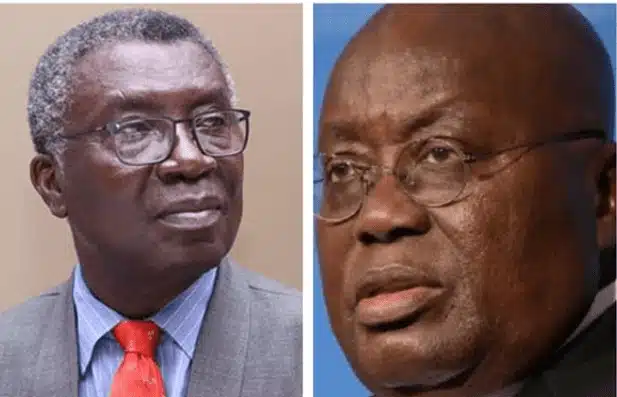
    The 2024 Presidential candidate of the New Patriotic Party, Dr Mahamudu Bawumia, in 2016 stated that Ghanaians no longer desire a ‘dead goat’ for a President.

    He described a ‘dead goat’ as a President who is indifferent to the hardships and sufferings that citizens endure daily.

    Speaking at the NPP’s Volta Regional Rally in Aflao, Dr. Bawumia criticized the government of former President Mahama for exacerbating the plight of ordinary Ghanaians. He highlighted the unprecedented level of unemployment under President Mahama’s administration.

    Dr. Bawumia noted that despite having more revenue, including loans and taxes, than all previous governments combined, President Mahama’s government failed to pay nursing and teacher training allowances. Additionally, the government owed hospitals several months of NHIS claims.

    “They cannot pay for School Feeding, they cannot pay for Mass Cocoa Spraying. The National Youth Employment Programme has collapsed under their watch and they cannot pay contractors. That is why we are saying they are an incompetent government,” he said.

    According to Dr. Bawumia, with Ghanaians desperately yearning for their problems to be solved, “he (President Mahama) tells us he’s not a magician. He says he’s not a magician to solve the problem of unemployment. But, he’s a very good magician when it comes to the disappearance of Ghana’s money under create, loot and share schemes like SADA, Woyome, Ameri, Karpower, GYEEDA, Waterville, ISOFOTON, etc.”

    He continued, “President Mahama is a very good magician at making our money disappear. We want change. We want to elect a new President. We don’t want a dead goat as a president. A dead goat is a dead goat, whether in Ashanti, Volta, Greater Accra, Brong Ahafo, Eastern, Upper West, Upper East, Western, Central or Northern. We don’t want to vote for a dead goat.”

    Dr. Bawumia was confident that the people of Ghana “don’t want to vote for a president who cannot think far. Of what use is a president who cannot think far be to this country? We want a farsighted President. We don’t want to vote for a president whose government is corrupt, and we definitely don’t want to vote for an incompetent President.”

    He assured the people of the Volta Region that “in 18 days’ time a new Ghana will be born, and we will begin to see the restoration of a leadership of vision, integrity and incorruptibility under Nana Addo Dankwa Akufo-Addo. In 18 days’ time, we will have a new President-Elect of the Republic of Ghana. We will replace this corrupt and incompetent government of President Mahama.”

    Dr. Bawumia added that “in 18 days’ time, you will begin to see the process of the restoration of the teacher training and nursing allowances. We will begin the process of transformation of the economy which brings down unemployment and brings jobs to our people.”

    He therefore urged residents of Aflao and the populace of the Volta Region to unite and ignore the tribal and ethnocentric politics being waged by President Mahama.

    “Let us all come together as one country, and let us not allow President Mahama to divide us. He has no message, he has lost the argument. You cannot govern with propaganda and tribalism. Away with tribalism and let’s get together with unity under Nana Addo Dankwa Akufo-Addo,” he appealed.

    Thanking the people of Aflao who turned out in their thousands to attend the rally, Dr. Bawumia stated that “from what I am seeing today, I can see why some people are panicking. I can see why they are making nonsensical statements, and I can see why, Insha Allah, Nana Addo Dankwa Akufo-Addo will be the next President of Ghana.”

  • FLASHBACK: 170 economic questions Bawumia asked Mahama

    FLASHBACK: 170 economic questions Bawumia asked Mahama

    Eight years ago, then-New Patriotic Party (NPP) Vice-Presidential candidate, Dr Mahamudu Bawumia, who is currently Ghana’s Vice President posed some 170 questions on the economy to then President John Mahama.

    He described the then Mahama-administration as incompetent. Now, Vice President Bawumia faces same allegation of being incompetent due to the current state of the country’s economy.

    For 2 years, the country has seen a drastic increase in its inflation rate, exchange rate among others.

    A press release attached to the 2016 statement by Dr Bawumia said, “a comprehensive response from government will be in the interest of the larger Ghanaian populace who are eager to hear from government officially on the true state of the economy and the economic record of the government”.

    Below is the 170 point statements attached to the release:

    STATE OF THE GHANAIAN ECONOMY: THE FACTS AS PRESENTED IN DR. BAWUMIA’S LECTURE

    1. Under the 8 years of the NPP government, from 2001-2008, taxes and loans amounted to GH¢20 billion. In contrast, taxes, oil revenue, and loans alone over the 8-year period of 2009-2016 would amount to some GH¢248billion.   2. Between December 2000 and December 2008, without oil, economic growth increased from 3.7% to 9.1%. After declining to 4.8% in 2009, real GDP growth increased to 7.7% in 2010 and 14% in 2011 following the onset of oil production. Since 2011 however, real GDP growth has declined steadily and drastically to 3.9% in 2015. 3. Between 2000 and 2008, the size of Ghana’s economy increased from some $5.1 billion to $28.5 billion, a 459% increase in eight years. Even in the face of a global economic and financial crisis in 2007/8 (with oil prices reaching a record high of $147/barrel), economic growth in 2008 rose to 9.1%. However, Ghana’s GDP, notwithstanding the discovery of oil, has only increased from $28.5 billion in 2008 to a projected $40 billion in 2016 (a 40% increase in eight years). However, between 2012 and 2016 i.e. during John Mahama’s tenure as president, the economy, in dollar terms, shrunk by 5%.  4. Under the NDC, GDP per capita has recorded a growth of 17% (from $1,266 in 2008 to a projected $1,481 in 2016) with oil revenue. Under John Mahama’s tenure as president (2012-2016), GDP per capita has declined by 12%.  Under NPP on the other hand, GDP per capita recorded a growth of 187% in 8 years (from $440 to $1,266) without oil revenues. While the NPP increased per capita incomes by $826 during its term, the NDC, with twelve times more resources, has increased per capita incomes by only $215 5. In dollar terms, under the NDC, the minimum wage declined from $2.12 to $2.02 by 2016 (i.e. by 4.6%). Between 2012 and 2016 (during the tenure of President Mahama) the minimum wage in dollar terms declined by 23.6%! In comparison, the NPP increased the minimum wage from the equivalent of $0.62 in 2000 to $2.12 in 2008 (i.e. by 244%). 6. While income inequality as measured by the change in minimum wage relative to the change in national income improved (by 1.8%) during the 2001 to 2008 period, it has seen a major decline since 2008, with the worst decline (-5%) occurring during John Mahama’s tenure as President.  7. According to the United Nations Human Development Index (a measure of progress in income, literacy and life expectancy), for the period 2000-2014, Ghana made the most progress in human development between 2000 and 2010.  The average growth rates of Ghana’s UNDP Human Development Index has declined from 1.33 (between 2000-2010) to 1.13 (between 2010-2014).  8. Ghana’s food import bill has increased dramatically from US$600 million in 2008 to $2.1 billion in 2015 (Figure 7). Rice imports, for example, rose by 52% from 395,400 metric tonnes in 2008 to over 600,000 metric tonnes in 2015. 9.  We should recall that the economy ended in 2012 with a fiscal deficit (on a commitment basis) of 12.2% of GDP, 11.7% of GDP in 2013 and 11.9% of GDP in 2014 This was the first time in Ghana’s history that double-digit fiscal deficits were recorded for three consecutive years (and this occurred under John Mahama’s presidency) 10. Taxes on businesses have increased dramatically and new taxes have been introduced. For example, increases in capital gains tax (from 10% to 25%), withholding tax (from 15% to 20%) and the introduction of the Energy Levy (10%), VAT on Electricity (17.5%), VAT on Financial Services (17.5%), Special Import Levy, etc. Taxes have also been introduced on ambulances and bicycles.  11.  As a resort of the deep fiscal hole, the government has resorted to cutting and abolishing all forms of allowances and expenditure that cross their mind as “abolishable”. These insensitive cuts have included cuts to research allowances for lecturers, nursing training, and teacher training allowances. 12. The government is also accumulating arrears in payments to contractors and other service providers.  13. Ghana is experiencing is a unique type of fiscal consolidation which has defied all expectations. Ghana’s fiscal consolidation is apparently taking place in the midst of unsustainably high public debt levels, inflation that is stubbornly high and is currently at 16.7% (the 8th highest in Africa).   14. A rising black hole of state-owned enterprise (SOE) debt, which together with the debts owed by the government to the bulk oil distribution companies (BDCs) and the lack of adequate supervision of microfinance companies can potentially collapse the banking system. In addition, we have rising interest rates, crowding out of the private sector, reduced business confidence, and declining economic growth.  15. The IMF has stated that it has not concluded the third review of Ghana’s program which was expected to go to the Board in June this year. Amongst the reasons stated by the IMF for the nonconclusion of the third review is that the fiscal data for 2015 is yet to be “reconciled”.  16. The 2016 supplementary budget has further muddied the waters by revealing a large unexplained “Discrepancy” of GH¢1.7 billion in 2016. It is a figure that the government has been unable to explain.  17. Following the adoption and implementation of the HIPC initiative and the Government’s policy framework of fiscal discipline, the country’s debt to GDP ratio had declined from 189% in 2000 to 32% of GDP. At the end of 2008, Ghana’s total debt amounted to GH¢9.5 billion.  However, in the last seven years alone under this NDC government, Ghana’s total debt has ballooned from GH¢9.5 billion to GH¢100 billion by the end of 2015 and GH¢105 billion in May 2016!

    18. 66% of Ghana’s debt, GH¢69 billion of it, has been accumulated under the presidency of John Dramani Mahama in just last three and a half years!  19. In terms of the dollar equivalent of the money borrowed at the time of borrowing, this government has borrowed some $39 billion in eight years.  By December 2016 the amount will be at least $42 billion. 20. With this major increase in debt, Ghana’s debt to GDP ratio (using the book value of the debt) has increased from 32% in 2008 to 72% at the end of 2015 . 21. In the presentation of the supplementary budget in July 2016, the Minister of Finance stated that Ghana’s debt to GDP ratio has declined from 72% in December 2015 to 63% in May 2016. Unfortunately, and sadly, this is untrue. If the Minister had reported accurately, it would be obvious that the debt to GDP ratio for Ghana at the end of March 2016 was 71.1% (With the debt stock at GH¢103 billion and first quarter GDP at GH¢144 billion). So this is what we know at the end of the first quarter of 2016. Ghana’s debt to GDP ratio is at 71.1%, and not the 63% reported by the Minister for May 2016 for which he used projected December GDP data.  22. In 2015, interest payments amounted to more than GH¢9.6 billion. That figure was more than the total debt stock of GH¢9.5 billion in 2008.  23. To put the interest payments on the debt in context, we should note that the entire allocations in the 2016 budget to the Ministries of Roads and Highways, Trade and Industry, Food and Agriculture, Water Resources, Works and Housing, Youth and Sports, and Ministry of Transport amounted to a total of GH¢2.1 billion. Interest payments in 2016 (GH¢10.5 billion) would be five times what was allocated to these six key ministries combined.  As interest payments go up, the space for development shrinks, and this is all due to financial indiscipline.  24. At the end of 2008, Ghana’s total interest payments amounted to GH¢680 million. 25. The interest payments on the debt stock in 2015, was six times Ghana’s oil revenue.  26. Ghana’s interest payments as a percentage of GDP declined from 7.9% in 2001 to 2.3% by 2008. It has since increased to 6.5% by 2015. It is worth noting that Ghana’s interest payments have doubled under the Presidency of John Dramani Mahama.  27. The data also shows that during the NPP period of governance, capital expenditure far exceeded interest payments. Infrastructure expenditure as a percentage of GDP declined sharply after 2008 as interest payments increased. From 2014 to date, interest payments have now incredibly exceeded infrastructure expenditure.  28. Interest payments have also incredibly overtaken key agricultural production (Cocoa, Livestock, Fishing, Forestry & Logging) in Ghana  29. With such large scale borrowing, the government is crowding out the private sector which is unable to borrow to grow their business. Risk-free Treasury Bill rates are around 23% (up from 10.6% in 2011) and bank lending rates are on the rise because of excessive government borrowing. Lending rates of financial institutions are now as high as 40%.  30. Under the NPP, Treasury Bill rates were reduced from 42% at end 2000 to 24.7% at end 2008 (a reduction by 17 percentage points). Under the NDC, Treasury Bill rates have only been reduced from 24.7% in 2008 to 23% in August 2016 (a reduction of only 1.7 percentage points).  31. The cedi has depreciated from some GH¢1.2 to the dollar in 2009 to GH¢ 3.95 (almost GH¢4) to the dollar currently (Figure 14). This is in contrast to the remarkable stability of the cedi during the eight years of NPP government. 32. In terms of exchange rate depreciation, the worst performance between 2001 and 2016 has been between 2012 and 2016 (during the tenure of John Mahama as President).   33. Akosombo has constantly been over-drafted, thermal plants are frequently breaking down, and all our plants operate below capacity.  34. The Takoradi 3 thermal plant has been shut down although it was commissioned only two years ago. Therefore, in spite of the fact that our country has a total installed capacity of about 3000MW, available capacity is under 2000MW.  35. The very existence of our biggest electricity generator, the Volta River Authority, is under serious threat, as its debts continue to increase.  VRA’s debt is reported to be between US$1.5 billion to US$2billion .  36. The cost of electricity to the industry has been alarmingly high, and this has led to the collapse of some factories and relocation of others to our neighbouring Ivory Coast.  37. The problems in the energy sector have led to five years of “dumsor” which has brought unprecedented devastation on our industries (particularly small businesses), job losses, income losses, deaths in our hospitals, disruption of life and destruction of electrical appliances of businesses and homes cannot be fully quantified.  38. Bad loans in the banking sector have risen significantly. Economic and Financial data from the Central Bank, show that non-performing loans have risen sharply from 11.2% in May 2015 to a critically high 19.3% in May 2016.  39. Available information shows that due to non-payment of these loans, the banks have declared GH¢2.4 billion of the outstanding stock of loans as a complete loss and are making provisions against profits.  40. The Asset Quality Review of Banks conducted in 2015 shows the significant vulnerability of banks to current economic conditions, and that if the affected banks were to provision fully for all bad loans, a significant number of them would collapse. Eight (8) banks were identified to exhibit significant weaknesses, with capital adequacy ratios below 10% ( some below 5%) and nearing collapse.   41. Real credit to the private sector is on the decline. As at May 2015, the annual flow of credit to the private sector was GH¢4.5 billion (around $1.7 billion). For the same period in May 2016, the yearly flow of credit from the banks to the private sector had declined substantially to GH¢1.7 billion (around $445 million).  42. One of the reasons the John Mahama government has given for requesting an IMF bailout was to help it regain policy credibility.  43. The government appears to have reneged on an understanding it had with the IMF with regards to the recently passed Bank of Ghana Act and the Public financial Management Act. This quite clearly is bad faith and undermines the credibility of Government. 44. There is also the big question of the use of the 2015 $1 billion Eurobond proceeds.  The prospectus to the Eurobond issue clearly specified what the money was to be used for. Specifically, the prospectus states that:  a. “The Republic expects the net proceeds of the issue of the notes to amount to approximately US$958,517,630, which the Republic expects to utilize to repay outstanding domestic debt of the Republic” (Page 29 of Prospectus) 45. What is now clear is that the government did not quite use the proceeds for the purpose that was stated in the prospectus and the basis on which investors bought the bond. In what is a clear admission that this is in fact the case, the Minister of Finance during a press conference on August 24th 2016, stated that out of the $1 billion Eurobond : “We spent just about $500 million, and carried the remaining $500 million as a buffer as we go into zero financing. So that when we have uncovered auction, we are able to use the World Bank money which we should have used entirely for domestic to get into that policy to ride on that policy”  46. When Ghana issued its first Eurobond under the NPP in 2007, the spread (i.e. the difference) between the interest rate on the bond and US treasuries of similar tenor was 3.87%. The second and third bonds were issued under the NDC in 2013 and 2014 at higher spreads of 5.4% and 5.72% respectively.  47.  In 2015, notwithstanding a World Bank guarantee, the spread was the highest so far at 8.34%. Clearly, confidence in the management of our economy has eroded in the eyes of the international investor community, as the years have gone by under the NDC’s economic management. It comes therefore as no surprise that our fifth Eurobond was rejected by the market when it tried to borrow.  Ghana attracted the highest interest rates on its borrowings among its peers in sub-Saharan Africa in 2015.  48. President John Mahama and the NDC government have also made several statements which have either turned out to be untrue or are contradictory. Either way they have served to undermine the credibility of government and its economic management team. These include: a. The denial that government would ask for a bailout from the IMF

    b. The promises to end DUMSOR

    c. His flip-flops on ECG Privatisation

    d. The promise to put cash in the pockets of Ghanaians

    e. The denial that civil servants are likely to be laid off under a rationalisation program to be implemented in 2017

    f. The promise by President Mahama not to make any more promises 49. Graduate unemployment has reached crisis proportions with a reported 60% of graduates unable to find a job three years after graduation. 50. GYEEDA, for example, was used as a vehicle to syphon public funds and not for job creation. 51. Under the NPP (Jan 2001 to December 2008), cocoa prices ranged between $965 and $3,021 per metric tonne. The NPP enjoyed cocoa prices of above $3,000 for only 1 month in all the 8 years.  52. Under the NDC, (Jan 2009 to July 2016), cocoa prices have ranged from a low of $2,113 and a high of $3,522. The NDC has enjoyed cocoa prices of $3,000 or more for 42 months (more than half of the time they have been in office). 53. While the average cocoa price under the NPP was $1,729; the average cocoa price under the NDC has been $2,873 – 66% more than under the NPP! 54. Under the NPP (from Jan 2001 to Dec 2008), gold prices ranged from a low of $260 to a high of $968 per ounce. Under the NDC on the other hand (from Jan 2009 to July 2016), gold prices have ranged from a low of $858 to a high of $1,770. 55. While the average gold price under the NPP was $486; the average gold price under the NDC has been $1,317 – 170% more than under the NPP. 56. The fact is that cocoa and gold prices have been 66% and 170% higher respectively under the NDC, on the average, than under the NPP. 57. Cote d’Ivoire next door which has come through a civil war after an electoral dispute has, thanks to disciplined, honest and prudent management, recovered dramatically. Its GDP growth was 8.4% while Inflation was 1.2% in 2015. Cote d’Ivoire is now the largest producer of cashew in the world and its economy is being transformed dramatically.  58.  Contrary to the claims by the President, except for the fiscal deficit, on virtually every single indicator such as GDP growth, inflation, exchange rate, exports, Eurobond interest rates, debt/GDP ratio, etc. the performance of the economy in 2013 was better than in 2014 and 2015.  59. In December 2013, after a meeting with the Council of State in Aburi, President Mahama stated that his government will “transit from first to second gear in 2014 after using this year to lay a very solid foundation for the economy”,  60. In fact, the evidence is that for President Mahama, since he was sworn in after the 2012 election, 2013, the year of the election petition, represents his best economic performance!  61.  If you sum the cost of all the infrastructure expenditure undertaken by this NDC government from loans, grants and taxes between 2009 and 2015 it is less than $7 billion.  Meanwhile, the government has borrowed the equivalent at the time of borrowing of some $39 billion; so where is the rest of the money? 62. Indeed, according to the Managing Director of the IMF, most of Ghana’s borrowing has been used for consumption and not for investment.  63. I saw two virtually identical sets of Teachers bungalows in Dambai Teacher Training College this year; one constructed under the NPP in 2007 and the other by the NDC in 2011. These two buildings are side by side. The one constructed by the NPP cost some GH¢195,000 whereas the one constructed by the NDC cost some GH¢ 900,000, 4.6 times more. 64. Another example is a runway rehabilitation alone at Kumasi airport which cost this country $23.8 million, whereas a proposed airport at Ho is estimated at $25 million. It is on record that Ethiopia is building its Shire Airport at a cost of $21 million.  65. The issue of the Ameri Power Deal is one episode of issues bordering on corruption and the failure to ensure value for money for the people of Ghana. In this deal, Ghana is basically purchasing 10 Gas Power Plants for $510 million even though the same Plants can be acquired for $220 million on the market.   66. An amount of GH¢3.65 million, from oil funds, was used for the rebranding of 116 Metro Mass Rapid Transit buses. Money was earmarked for a supposed Osu railway. Meanwhile, the company that actually did the work of employing Ghanaians to do the branding of the buses says it charged GH¢11,600 as the cost for the branding of all the 116 buses.  67.  Egypt is constructing a 1,800 Megawatt gas power plant at a cost of $1.3 billion.  Abu Dhabi is constructing a 1,600 Megawatt gas power plant at a cost of $1.5 billion. Together, Ameri and Karpower will cost Ghana over $2 billion over five years and yet will give us 505 Megawatts.  68.  The University of Ghana has acquired a loan facility of US$217m from the Israeli Government to build a 600-bed teaching hospital at Legon. The cost of building a new 600-bed teaching hospital by the University of Ghana is $30m less than the cost of renovating and expanding Ridge Hospital from 200-bed to 420. 69. Indeed, given the resources at its disposal, one should expect at least four to five times the quantum of investment that the NDC claims to have undertaken.  The close to $33 billion of borrowing that was not used for projects could have, inter alia: Solved the water problems in Ghana.

    Solved the energy problem and not put the country through 5 years of Dumsor at the cost of human lives and collapsing businesses and unemployment.

    Put in place at least 1000 kilometres of asphalt road in each region. There would be no major road problem left in any region after this.

    Transformed Agriculture in the Northern regions, Afram Plains and the rest of Ghana through investment in machinery, irrigation and dams.

    Put in place one world class hospital in each region.

    Buy at least 1000 ambulances for the Ghana Ambulance Service.

    Set up factories with the private sector across the country to add value to our raw materials and create jobs create.

    Equip our existing health and education institutions with the state of the art facilities.

    Build an additional 600 of the Senior High Schools the government is currently trying to build.

    Construct the Accra-Kumasi-Paga railway as well as the Western Railway line. 70. The evidence shows that notwithstanding the massive increase in the debt stock, capital expenditure as a percentage (%) of GDP has actually been on the decline from 9.1% of GDP in 2008 to 3.9% by 2015 .  Capital expenditure as a percentage of GDP averaged 11% for 2001-2008 (without oil) while that for 2009-2015 has averaged 5.7% (with oil). 71. Indeed, it was His Excellency President Mahama who told us that any government touting infrastructure projects as achievements is engaging in an exercise in mediocrity.  72.   The NPP government of 2001-2008 undertook significant infrastructure investment across the various sectors: education, health, roads, energy, etc.   WATER PROJECTS (EXAMPLES)  73.   Cape coast  74.   Tamale  75.    Ada/Sege

    76.    Winneba 77.    Barekese system expansion 78.    Weija system expansion 79.    Baafikrom water expansion

    80.    Akwapim. Ridge  81.    Akim Oda Water

    82.    Koforidua Expansion

    83.    New Tafo Rehabilitation

    84.    Winneba Expansion

    85.    Kwanyaku Expansion

    86.    Bawjiase Water Extension

    87.    Brimsu Dredging

    88.    Sekondi Takoradi Expansion

    89.    Kumasi Expansion

    90.    East-West Accra Interconnection EDUCATION PROJECTS (EXAMPLES) 91.   Construction of Bolgatanga Polytechnic

    92.   Construction of Wa Polytechnic

    93.   Established the University of Mines and Technology at Tarkwa

    94.   38 Teacher training colleges upgraded to diploma awarding institutions with massive infrastructure upgrade and 15 designated as science colleges

    95.   56 model senior secondary schools started and 31 completed

    96.   130 classrooms for polytechnics 97.    31 lecture Theatre halls built at various university campuses

    98. Medical school at University of Cape Coast 99. 1,334 new JHS blocks

    100. 1,331 primary schools HEALTH (EXAMPLES) Construction and rehabilitation of Hostels, Classroom blocks, offices, and doctors’ flats in various Nursing Training Colleges (NTCs), Midwifery Training Schools (MTS), Community Health Nursing Training Schools in places such as:

    101. Rehabilitation of Sefwi Wiawso hospital

    102. Construction of 4 hospitals at Juabeso Bia, New Edubiase,  Bimbila, Nkwanta,

    103. 37 Military Hospital was expanded and considerably   refurbished

    104. Construction of College of Physicians and Surgeons

    105. The introduction of a National Ambulance System 106. Secured €54million Dutch grant for the upgrade of Tamale Regional Hospital) to Tamale Teaching Hospital 107. New district hospitals initiated at Wa, Kumasi South, Manhyia, Konongo Odumasi, Adenta/Madina, Tepa, and Salaga. Polyclinics at Karaga, Kpandai, Tatale, Buipe, Janga and Chereponi ROADS AND HIGH WAYS (EXAMPLES -2001-2008) 108. Accra-Yamorasa

    109. Accra-Aflao

    110. Kadjebi-Pepesu

    111. Manso-Asankragwa 112. Axim Junction- Tarkwa

    113. Abuakwa – Bibiani

    114. Tinga-Bole

    115. Pantang- Mamfe

    116. Kpando-Worawora/Dambai

    117. Wenchi-Sampa

    118. Tamale- Yendi

    119. Malam interchange

    120. Mallam-Tetteh Quarshie (N1)

    121. Jasikan-Brewenkese

    122. Axim Junction- Tarkwa

    123. Pantang – Mamfe

    124. Tetteh Quarshie Interchange

    125. Ashaiman – Motorway Flyover  126. Achimota Interchange  127.

    126. Achimota Interchange

    127. Alajo – Avenor

    128. Asafo Interchange

    129. Ofankor – Nsawam (17.6 km)

    130. Apedwa – Bunso (22.0km)

    131. Bunso Anyinam (11.5km)

    132. Anyinam – Konongo (89.1km)

    133. Konongo – Ejisu – Kumasi (44.6km)   ENERGY SECTOR PROJECTS (EXAMPLES) 134. Oil Discovered in commercial quantities

    135. West African Gas Pipeline Project.  136. Bui Dam 137. June 2007, in response to the energy crisis, a total of 200 megawatts of generation capacity had already been installed through the Emergency Power as well the Mines Reserve Plants of 126 MW and 80 MW capacities respectively 138.  Other plants were initiated, designed, negotiated and contracted by the Kufuor government to be installed, and were at various stages of implementation. These include the 126 megawatts VRA Tema Thermal 1 Plant, the 50 megawatts Tema Thermal 2 Plant, the 220 megawatts Kpone Thermal Plant as well as the 126 megawatts Osono Plant. 139. The construction of the 132 megawatts Plant at Aboadze called Takoradi 1 Plant was initiated in 2007 as a 220 megawatts plant by the Kufuor government. 140. The 220 megawatts Sunon Asogli Plant was completed towards the end of the Kufuor administration,

    OTHER PROJECTS 141. Golden Jubilee House or Flagstaff House

    142. World class stadia rehabilitation in Accra and Kumasi

    143. New stadia built in Essipong (Takoradi) and Tamale

    144. Jubilee Parks in all regional capitals

    145. Accra-Tema Commuter Railway line

    146. Peduase Lodge renovation

    147. Rehabilitation of Tamale, Kumasi and Takoradi airports

    148. Rehabilitation and expansion works at the Kotoka International Airport, Tema and Takoradi Harbours

    149. Kofi Annan Centre of Excellence for IT 150. A key difference between NPP and NDC, however, is that the impact of the NPP’s infrastructure investment along with structural reforms and prudent economic policies of President J.A. Kufuor was felt positively in the economy with: 151. A significant increase in GDP growth from 3.7% to 9.1% without oil 152. Reduction in corporate taxes to boost business growth

    153. A massive improvement in cocoa production

    154. The National Youth Employment Programme –providing opportunities and jobs for the youth to get a start in the job market

    155. The School Feeding Programme to provide food to pupils in basic schools

    156. A Capitation Grant to make education affordable and accessible

    157. The National Health Insurance Scheme (NHIS) to provide accessible healthcare to the population.

    158. Free maternal care for all pregnant women under the NHIS.

    159. The introduction of a Metro Mass Transit transport service for urban areas to provide subsidised transport for commuters and a free bus ride for basic school pupils.

    160. Introduction of the Livelihood Empowerment Against Poverty (LEAP) programme under which welfare grants are paid to the extreme poor.

    161. Payment of nursing and teacher training allowances even when the country was HIPC

    62. The massive expansion in the financial sector

    163. A fall in lending rates and wide access to credit for the private sector to expand 164. We should recall that on August 30th, 2012, President Mahama stated during his acceptance speech in Sunyani that “The NDC government for the past three and a half years has been laying the foundation for a transformational take off of the country’s development”  165. On December 5th, 2012, President Mahama’s Information Minister stated with regards to the economy that “we want to invest in jobs and in people, in the economy which is part of the prevailing better Ghana agenda. We have already laid the foundation, we have taken off and we want to soar”  166. The NDC 2012 Manifesto states that “This Manifesto is based on the achievements over the last four years, during which period we established firm foundation for delivering a program of economic recovery and sustained welfare for the people of Ghana” 167. The fact is that the worst period of economic performance since 2001 has been under President Mahama’s stewardship between 2012 and 2016.   168. Indeed, during the NPP tenure between 2001 and 2008, corporate taxes were slashed from 32% to 25% and tax revenue actually increased!  169. The data shows that notwithstanding (or because of) the high level of taxes, there is a revenue shortfall of GH¢700 million for the first half of 2016 170. The Auditor General’s Report has indicated that between 2012 and 2014, GH¢5.9 billion of government funds cannot be accounted for.
  • Leave gov’t scholarship meant for the poor alone – Joyce Bawah tells politicians, rich officials

    Leave gov’t scholarship meant for the poor alone – Joyce Bawah tells politicians, rich officials

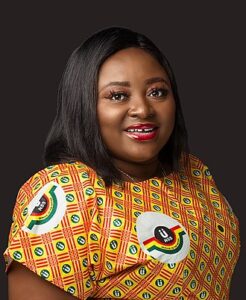
    A Special Aide to the flagbearer of the National Democratic Congress (NDC), Joyce Bawah Mogtari, has underscored the importance of preserving government-sponsored scholarships for those truly in need.

    During an interview on JoyNews AM Show on Thursday, April 4, she urged politicians and financially capable individuals to refrain from seeking state scholarships for their children’s education.

    Bawah Mogtari emphasized that these scholarships are meant for those genuinely in need of financial assistance. She stated that diverting them to well-off individuals tarnishes the integrity of the Scholarship Secretariat.

    The former Deputy Transport Minister warned that failing to adhere to this principle would result in undue hardship for deserving but disadvantaged students.

    “It is for very good reason the scholarship secretariat was created. It’s for those who are brilliant but cannot afford but it is sad that persons who are doing well and can fund their ward’s education are now taking over. My advice to them is that they should leave it for those who need it.”

    Her remarks come in the wake of a recent expose by the Fourth Estate, alleging that scholarships are unfairly awarded to well-connected affluent individuals in the country.

    Meanwhile, Dr. Kingsley Agyemang, the registrar of the Scholarship Secretariat, has called for the prompt enactment of legislation to regulate the allocation of scholarships.

    Dr. Agyemang emphasized the current challenges faced by officials in determining eligibility, citing the lack of clear legislative guidelines defining the criteria for needy individuals.

    He underscored the importance of scholarship legislation to clarify eligibility standards and remove any ambiguity in the distribution process.

    “I think a scholarship legislation is so eminent and that will set out everything that we need to do or how the funds need to be managed.”

    “It’s been managed over the years by the dexterity of leaders. What I think is so important – so in conjunction with maybe National Development Planning Commission and DPC to really identify priority areas that as Ghanaians, we need to.”

  • FLASHBACK: You stole from Northerners but want them to vote for you – Bawumia tells Mahama

    FLASHBACK: You stole from Northerners but want them to vote for you – Bawumia tells Mahama

    The Vice President, Dr. Mahamudu Bawumia, eight years ago criticized former President Mahama for tarnishing the reputation of the Northern brand, which was once known for its integrity and honesty, with corruption.

    Addressing the people of Balungu in the Bongo constituency, Dr. Bawumia urged the Northern community not to vote for Mr. Mahama and the NDC.

    He argued that a vote for them would signify a continuation of the extensive corruption and theft witnessed over the past 8 years.

    “John Mahama’s government is the most corrupt government in the history of Ghana. Dollar for dollar, cedi for cedi, this government is the most corrupt in our history. And yet he tells the people of the North to vote for him because he is our brother. Why does your government steal from Northerners if you care for Northerners and why do you want us to give you another opportunity to steal more from the people you say you are trying to protect?”, he asked.

    1116201624130937646266441352

    Dr. Bawumia remarked that due to the President’s actions and those around him, he had compromised the longstanding belief that Northerners are averse to corruption and are known for their honesty.

    He reminisced about the Northerners of the past, highlighting their dedication, integrity, and selfless service to their communities. They worked in various roles without seeking personal gain.

    Dr. Bawumia expressed regret over how the current government, led by someone who proudly identifies as a Northern President, has abandoned these principles.

    “Let us face it; John Mahama’s government is a disgrace to Northerners. Northerners were always a proud people. We value our integrity. We don’t have money but we have pride. We are seen as honest people. This is the way our fathers worked; honesty was the guiding principle of Northerners. We are honest and value our integrity. But today thanks to John Mahama, the people of Ghana are viewing us very differently”, he stated.

    He added: “Therefore it is time to restore the pride of Northerners and the way we are going to restore that pride is to get rid of this John Mahama’s corrupt government. It is not doing Northerners any good and this is why we have to vote for Nana Akufo-Addo.”

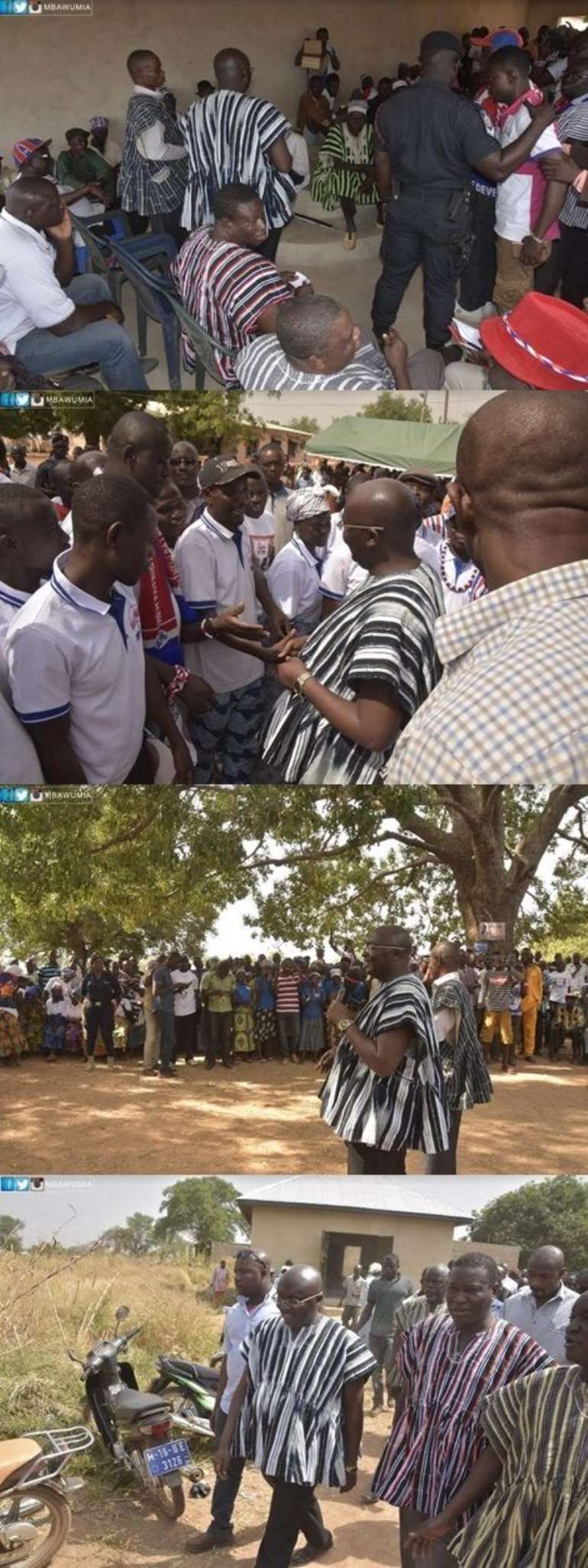
    Dr Bawumia is on campaign tour of the Upper East Region that comes on the back of a month long tour of the Northern Region which saw him visit 27 constituencies in the Region.

  • Upper West and Upper East Regional Ministers reshuffled

    Upper West and Upper East Regional Ministers reshuffled

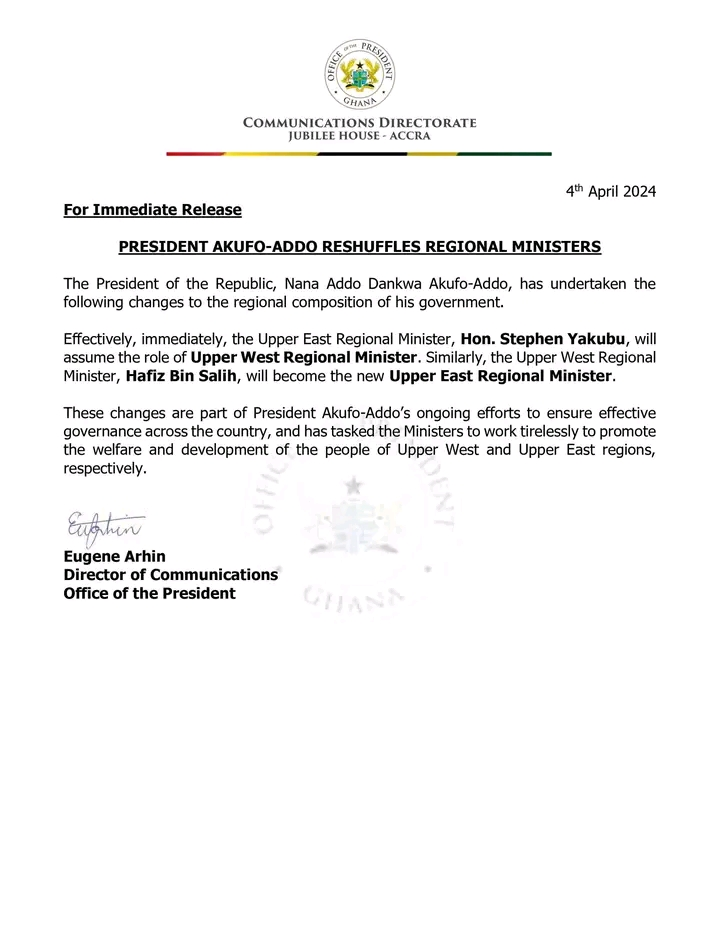
    President Akufo-Addo has announced a reshuffle in the regional composition of his government, effective Thursday, April 4, 2024.

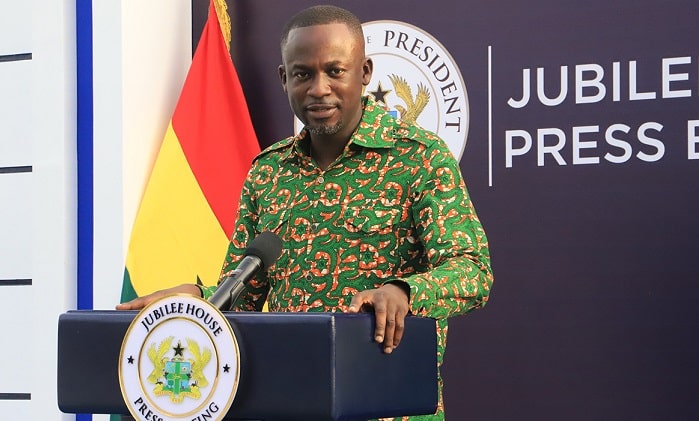
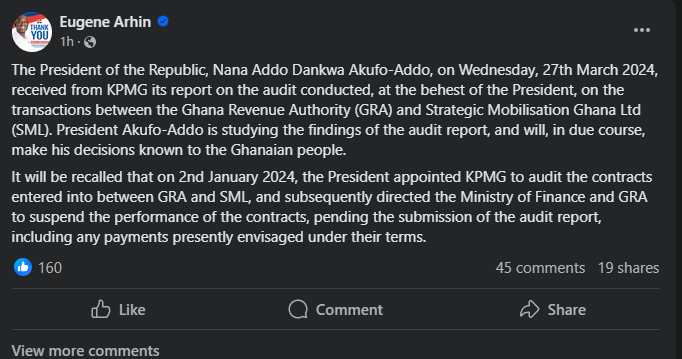
    A statement issued by Eugene Arhin, the Director of Communication at the Office of the President, conveyed the changes. According to the statement, the Upper East Regional Minister, Stephen Yakubu, has been reassigned to serve as the Upper West Regional Minister.

    Conversely, Hafiz Bin Salih, the current Upper West Regional Minister, will assume the role of the Upper East Regional Minister.

    The statement explained that these changes are part of the ongoing efforts of the Akufo-Addo-led administration to ensure effective governance throughout the country.

    President Akufo-Addo has charged the ministers with working diligently to promote the welfare and development of the people in the Upper West and Upper East regions.

  • 2024 election is a spiritual battle, whoever wins will ascend to presidency – Rev. Owusu-Bempah 

    2024 election is a spiritual battle, whoever wins will ascend to presidency – Rev. Owusu-Bempah 

    Reverend Isaac Owusu-Bempah, the founder and leader of Glorious Word Power Ministries International, has highlighted the importance of caution for anyone attempting to predict the outcome of the 2024 general election.

    He emphasized that the election, which will be spiritually decided, is currently enveloped in uncertainty. Therefore, any prophecy regarding the outcome is likely to be inaccurate.

    “As I speak to you, what has made Ghana’s election in 2024 scary is that whoever would boldly assert that a certain individual is the destined winner should be very careful because things keep changing…,” he told Kwame Nkrumah Tikese of Okay FM in an interview on Wednesday, April 3, 2024.

    He stressed that the upcoming election is primarily a spiritual battle rather than a physical one. He believes that the candidate with the strongest spiritual support will emerge victorious.

    “There is a fight in the spiritual realm, so whoever wins the spiritual battle will ascend the presidency. So if you get someone who is spiritually strong or a coach who can guide you spiritually, you will definitely emerge victorious,” he stated.

    Owusu-Bempah‘s statement comes shortly after the New Patriotic Party (NPP) flagbearer, Dr. Mahamudu Bawumia, visited his church during the Easter season.

    During the vice president’s visit, Owusu-Bempah provided Dr. Bawumia with a special chair to sit on and offered a prayer for him.

    “Nobody understands what I have done; only heavens do. God bless you. You’re a good man, and you have a good heart,” the preacher said.

    His statement and actions have been widely seen as a moment of endorsement for Dr. Bawumia. However, according to Owusu-Bempah, there was no symbolic intent behind his gesture.

    In an interview with Okay FM, the prophet clarified that he gave Dr. Bawumia a chair simply because he appeared tired from his Easter engagements.

  • Meet Samira Bawumia’s personal assistant who ‘wasted’ gov’t’s £17,355 scholarship

    A recent exposé by The Fourth Estate, spearheaded by investigative journalist Manasseh Azure on the awarding of scholarships has revealed how a financial loss to the state worth over £17,000 occurred during the peak of COVID-19.

    The investigation has unveiled the identities of affluent individuals who allegedly obtained scholarships meant for academically gifted but financially disadvantaged Ghanaians.

    Per reports, one Fawzy Ramadan, a relative and personal assistant to Second Lady, Samira Bawumia, was awarded GBP17,355 to cover the cost of tuition at Brunel University in the UK.

    Fawzy was to study MSc in Global Supply Chain Management. However, Fawzy, per The Fourth Estate never pursued the course.

    It is reported that “he claimed he was involved in an accident during the peak of COVID-19 and could not defer the course.”

    “Neither he nor the state benefitted in any way from the tuition fee paid to the Brunel University on his behalf,” the Fourth Estate further reported.

    It is reported that the school later wrote to him demanding the cost of accommodation from him for not stepping foot on the university’s campus.

  • Gov’t ‘cools off’ food suppliers with GHC150m to curb food shortage in SHSs

    Gov’t ‘cools off’ food suppliers with GHC150m to curb food shortage in SHSs

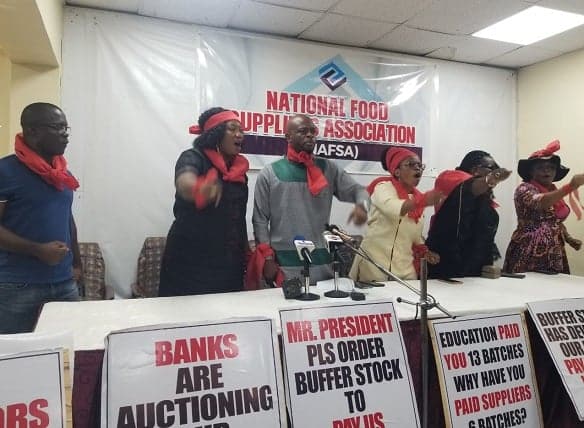
    The government has disbursed GH¢150 million to the Ministry of Education to settle outstanding arrears owed to the National Food Suppliers Association.

    Kwaku Amedome, spokesperson for the National Food Suppliers Association, confirmed this on Adom FM’s morning show, Dwaso Nsem, on Thursday.

    This action comes after the Association had threatened to protest at the Finance Ministry if their demands were not addressed.

    Mr. Amedome expressed appreciation to the government for swiftly responding to their request, highlighting the significance of this disbursement in easing the financial burden on the association’s members.

    “We are grateful to the government for releasing the funds to settle our arrears. It will remove a lot of burden from us. This will not only enable us to repay our debts but also enhance our economic activities and support the successful implementation of free SHS,” Mr. Amedome said.

    He recommended a stakeholder meeting to ensure equitable distribution of the funds among all food suppliers.

    “They should share the money equally and not give it to a selected few. A stakeholder meeting should be held on how to share the money fairly” he added.

    In March, the National Food Suppliers Association issued a two-week ultimatum to the Ministry of Education to settle a debt of two hundred million cedis owed to them.

    The suppliers threatened to picket if the Ministry did not comply with their demand.

    Kwame Amedume stated that out of the 180 million cedis agreed to be paid to the suppliers, only 10 million cedis had been released by the Ministry to the National Food Buffer Stock Company.

    He warned that failure to pay would lead to food shortages in various Senior High Schools.

  • We will ensure Ghana is peaceful even if it costs our lives – IGP

    We will ensure Ghana is peaceful even if it costs our lives – IGP

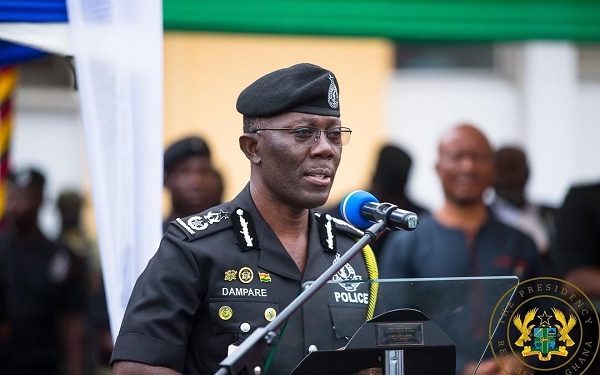
    The Inspector General of Police (IGP), Dr George Akuffo Dampare, has reaffirmed the police service’s commitment to maintaining the current state of peace in the nation.

    Dr Dampare stated that police personnel are dedicated to risking their lives to ensure peace during the upcoming December 7 presidential and parliamentary elections.

    “As long as there is Ghana, we the police service will continue to put our lives on the line to ensure that our country which is our beloved country continues to enjoy peace and continue to be at peace with itself,” the IGP said.

    Inspector General of Police made the statement during the inauguration ceremony of a new brick modular police station in Kwahu Asakraka in Eastern Region.

    Dr. Dampare reiterated this commitment during the inauguration ceremony of a new modular brick police station in Kwahu Asakraka in the Eastern Region.

    Vice President Dr. Mahamudu Bawumia, who also chairs the police council, praised the introduction of the modern modular police station, marking a departure from conventional sand block structures.

    He emphasized the government’s dedication to modernizing and enhancing both the infrastructure and personnel of the police service to support its transformative agenda for improving peace and security nationwide.

    Nana Somuah Mireku Nyampong III, Chief of Kwahu Asakraka, commended the IGP for establishing the police station in the community, stating that it will enhance security and improve the safety of the people.

  • Gov’t gave £18,450 scholarship for the ‘poor’ to NSS Deputy Director to study in UK – Report

    Gov’t gave £18,450 scholarship for the ‘poor’ to NSS Deputy Director to study in UK – Report

    The Deputy Director of the National Service Secretariat (NSS), Gifty Oware-Mensah, has been implicated in a recent exposé by The Fourth Estate, spearheaded by investigative journalist Manasseh Azure.

    The investigation has unveiled the identities of affluent individuals who allegedly obtained scholarships meant for academically gifted but financially disadvantaged Ghanaians.

    Per reports, Gifty who has denied receiving any scholarship, “obtained a government scholarship of GBP18,450 (GBP means Great British Pound) to study at the University of Birmingham in the United Kingdom in 2020 to pursue an MSc in Development Policy and Politics.”

    It is said that she received the scholarship three years after she started working for the Secretariat.

    According to the Fourth Estate, they reached out to her on January 19, 2024, and her response was “From 2019, my name has been Gifty Oware-Mensah. Let me call Kingsley [Agyemang] and get back. I don’t know what you’re talking about. Let me speak to them and get back to you.”

    The Fourth Estate further reported that “She later sent a text message that she was driving to Sunyani and would revert. Subsequent calls to her did not yield result.”

    Madam Gifty is said to own Berry Ladies FC, a female football formerly known as Halifax Ladies FC, which is currently playing in Ghana’s women premier league.

    In other matters, the 2023/24 NSS personnel are calling on the government to settle the allowance arrears owed them. Per reports, government has not payed personnel for the previous two months.

  • Meet former NHIA Board member, Dennis Addo, who received scholarship for the ‘needy’

    Meet former NHIA Board member, Dennis Addo, who received scholarship for the ‘needy’

    Dr. Dennis Addo, CEO of the Claron Hospital and co-founder of Bisa, an internationally acclaimed health app, has been implicated in a recent exposé by The Fourth Estate, led by investigative journalist Manasseh Azure.

    The investigation has revealed the identities of prominent and wealthy individuals who have reportedly secured scholarships intended for academically gifted but financially disadvantaged Ghanaians.

    Per the report by The Fourth Estate, Dr Dennis Addo, who was appointed to the board of the National Health Insurance Authority from 2017-2020, managed to secure a scholarship through the Scholarship Secretariat to pursue a degree in Public Administration at Harvard University.

    The report indicates that the Secretariat “paid USD50,031 for his tuition and living expenses in the United States in 2019”, even when he served as a Board member of the NHIA.

    Dr Addo is said to have had two streams of financial support – one from the Scholarship Secretariat and the other, Cheng Fellowship, from Harvard University – during his 2-year tuition.

    Dr Addo is a member of the governing New Patriotic Party, according to The Fourth Estate.

    “Dr Addo describes himself as a pioneer member of the New Patriotic Party’s (NPP) students’ wing, TESCON. He recently contested in the NPP’s parliamentary primary at Atwima Nwabiagya South in the Ashanti Region but lost,” the report said.

  • We are looking at data to avoid propaganda – Atta Akyea on energy sector crisis

    We are looking at data to avoid propaganda – Atta Akyea on energy sector crisis

    Chairman of the Energy Committee of Parliament, Samuel Atta Akyea, has announced that the committee is prepared to investigate the cause of the recent intermittent power supply disruptions in the country.

    He emphasized that the committee will rely on data and facts, and will not entertain any attempts to politicize the issue of power outages.

    During an interview on JoyNews’ PM Express, Samuel Atta Akyea stated that key stakeholders in the energy sector will meet with parliament’s energy committee on Saturday, April 6, 2024, to discuss strategies for addressing the power supply challenges.

    “It is important to know that the Energy Committee wants to interrogate this matter critically… We looking at data which is apolitical so you cannot come and do propaganda with facts, it won’t work,” he stated.

    Samuel Atta Akyea further said, “If you do not have the power, you can’t conjure some propaganda and noise to bring the power. So you need to own up as to why we are having this challenge then those who are experts will look at it and say look, these are the obvious challenges…these are the solutions.”

    The Public Utilities Regulatory Commission (PURC), Electricity Company of Ghana (ECG), Volta River Authority (VRA), Chamber of Independent Power Producers, Ghana Grid Company Limited (GRIDCo), Energy Commission, and Minister of Energy, Dr. Matthew Opoku Prempeh, along with his technical team, are expected to participate in the meeting on Saturday.

    This development follows the Public Utilities Regulatory Commission’s directive to the Electricity Company of Ghana (ECG) to provide a load management timetable by April 2, 2024.

    Amidst growing concerns over persistent power cuts nationwide, some Ghanaians have called for ECG to release a load-shedding timetable. However, ECG’s management has maintained that the power outages are due to technical challenges and that no formal load-shedding schedule will be implemented.

    In response to public outcry, the PURC issued a directive on March 18, instructing ECG to publish a load-shedding timetable by April 2, 2024. This move aims to provide clarity and transparency regarding the power supply challenges faced by consumers.

  • Gov’t finally reveals belated contracts given to ‘sacked’ GRA boss, Rev. Amisshaddai

    Gov’t finally reveals belated contracts given to ‘sacked’ GRA boss, Rev. Amisshaddai

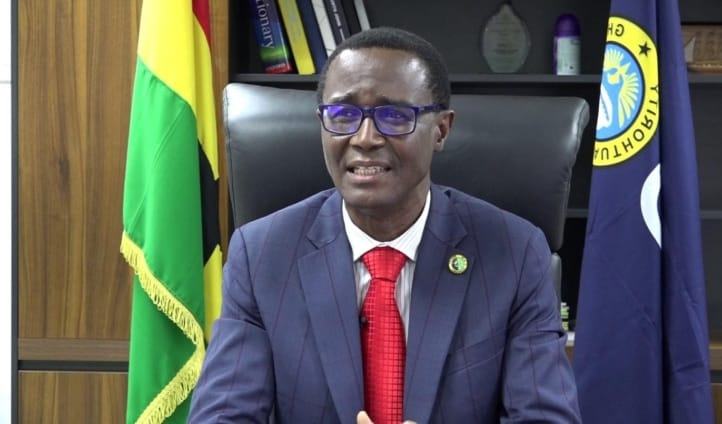
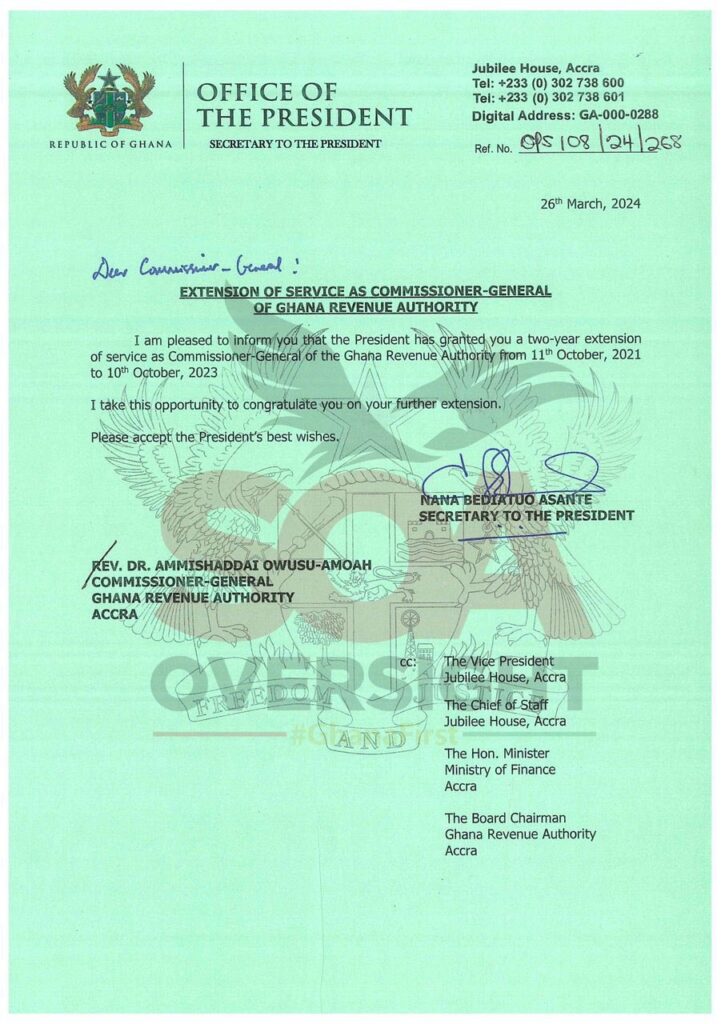
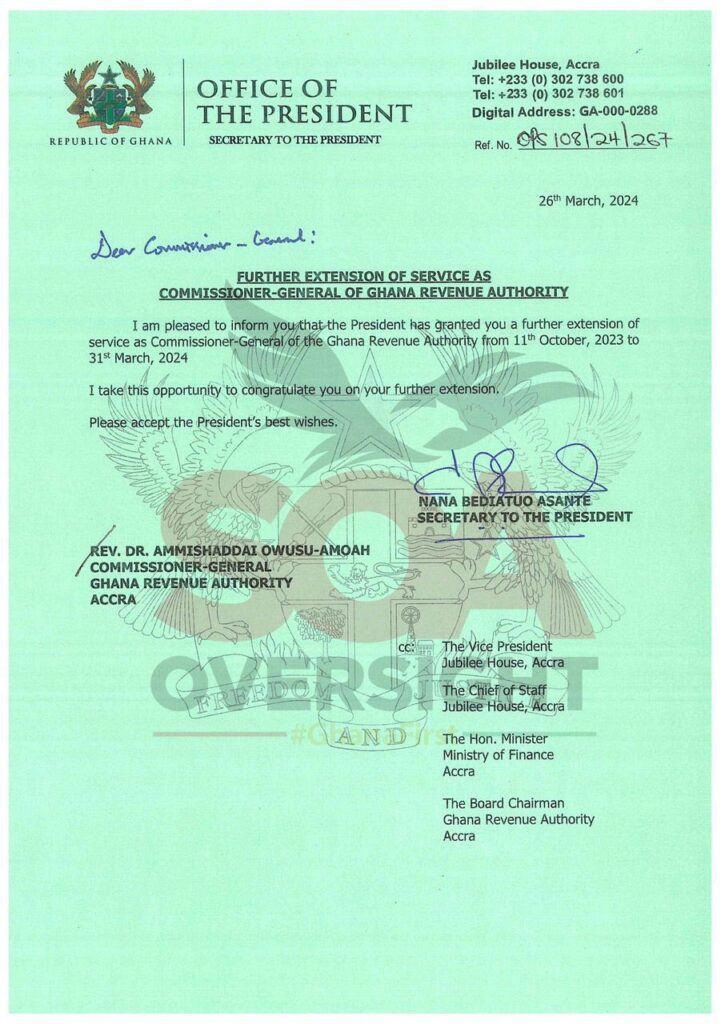
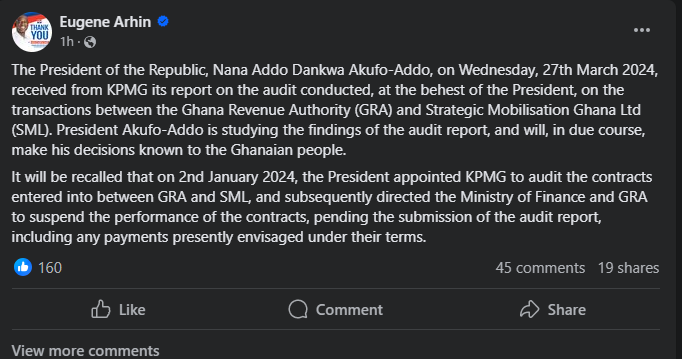
    Documents detailing the contract extension of the recently sacked Commissioner General of the Ghana Revenue Authority (GRA), Rev. Dr Amisshaddai Owusu Amoah , have finally surfaced.

    On March 27, it was reported that the President had sacked Rev. Dr Amisshaddai Owusu Amoah after Member of Parliament for Ningo Prampram, Sam George, in January 2024, called on Parliament to declare the Commissioner-General a persona non grata as he had exceeded the mandated 60 years, suggesting he had no contract with the state.

    But JoyBusiness reported that Rev. Dr Amisshaddai Owusu Amoah had not been sacked by President Akufo-Addo as the Commissioner General’s contract was extended by two years, from 11th October 2021, when he was said to have achieved the retirement age, to 10th October, 2023. 

    The media house further reported that he was then given a further contract which should end by March 31, 2024.

    Now, Member of Parliament for North Tongu, Samuel Okudzeto Ablakwa, has shared what he describes as “two belated contracts” meant for the retired former GRA boss. He believes these contracts were drafted for Rev. Amisshaddai “to cover his tracks.”

    The contracts shared by Mr Ablakwa corroborate earlier reports by JoyBusiness.

    Per reports, Rev. Dr Amisshaddai Owusu Amoah’s time in office ended on Sunday, March 31, 2024, as he handed over to Deputy Commissioner of the Ghana Revenue Authority, Julie Essiam.

  • NPA orders OMCs to apply 16 pesewas per litre on petrol, 14 pesewas on diesel

    NPA orders OMCs to apply 16 pesewas per litre on petrol, 14 pesewas on diesel

    The National Petroleum Authority (NPA) has decided to reverse the suspension of the Price Stabilization and Recovery Levy on petroleum products, as outlined in a letter dated April 3, 2024, addressed to various players in the oil marketing and distribution industry.

    According to the directive, effective April 4, 2024, a levy of 16 pesewas per litre on petrol, 14 pesewas per litre on diesel, and 14 pesewas per kilogram on Liquefied Petroleum Gas (LPG) should be applied.

    The reasons behind this reversal are not explicitly stated. The NPA had previously announced the suspension of the Price Stabilization and Recovery Levy on March 28, 2024, following a directive from the Finance Ministry in collaboration with the Energy Ministry. This suspension was intended to be in effect from April 1 to June 30, 2024.

    The decision to reinstate the levy could lead to an increase in the prices of petroleum products from April 4, 2024. This is because the adjustments made by Oil Marketing Companies on April 1 did not include the Price Stabilization and Recovery Levy in their price build-up calculations.

    The Energy Sector Levies Act 2015 (Act 899) empowers the National Petroleum Authority to stabilize petroleum product prices for consumers over a specific period. The current levy rates are 16 pesewas per litre for petrol, 14 pesewas per litre for diesel, and 14 pesewas per kilogram for LPG.

    The government has previously used the suspension of this levy as a means to cushion consumers from the impact of rising international market prices. When prices reach a certain level, the government freezes the application of the levy to mitigate the impact on consumers. However, when prices drop to a certain level, the levies are reinstated.

  • Don’t contest NPP’s Ejisu primary if you have a conscience – Vitus Azeem tells Kwasi Nyantakyi

    Don’t contest NPP’s Ejisu primary if you have a conscience – Vitus Azeem tells Kwasi Nyantakyi

    Anti-corruption advocate Vitus Azeem has voiced criticism against Kwasi Nyantakyi, the former President of the Ghana Football Association (GFA), for his intention to contest the upcoming New Patriotic Party (NPP) parliamentary primary in the Ejisu constituency of the Ashanti region.

    Azeem has raised moral concerns regarding Nyantakyi‘s candidacy, highlighting the lingering allegations of corruption that could tarnish his suitability for political office. While there are no legal barriers to Nyantakyi’s candidacy, Azeem emphasized the importance of considering the ethical implications of his bid.

    During an interview on Citi News on April 3, 2024, Azeem advised Nyantakyi to carefully weigh the potential consequences before proceeding with his political aspirations.

    “Whether he has been prosecuted or not, it is a dent on him and it cannot easily be wiped away. It may not be possible to legally bar him from contesting but as somebody interested in parliament, he should even consider contesting for an election.

    “It is not even the fact that you come out to admit that you paid money but the mere fact that at the very beginning, he was the key player in the Anas investigations and even though he has not been investigated and prosecuted, he too has not been able to exonerate himself and has now implicated himself by admitting that he paid money to Anas to stop him from airing the exposé because it contained information that will further implicate him. If he has a conscience, he should not stand,” citinewsroom.com quoted him to have said.

    The Ejisu parliamentary seat has become vacant following the passing of Member of Parliament and Deputy Minister of Finance, John Kumah.

  • Gov’t to introduce chip-embedded passports in 6 months – Foreign Ministry

    Gov’t to introduce chip-embedded passports in 6 months – Foreign Ministry

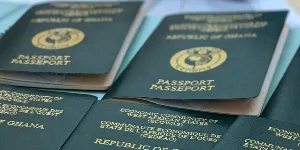
    Deputy Minister for Foreign Affairs and Regional Integration, Kwaku Ampratwum-Sarpong, has revealed government’s plans to introduce chip-embedded passports in Ghana within the next six months.

    The Minister highlighted that this move is in accordance with a directive from the International Civil Aviation Organization (ICAO) in Canada.

    During an interview on JoyNews on Wednesday, April 3, Mr. Ampratwum-Sarpong clarified that despite the introduction of the new chip-embedded passports, the current biometric passports will remain valid for a period of time.

    “When we bring in the chip embedded, both passports can be used for a period of about a minimum of one year or more. So still you have the biometric, you can use it until a year and half or about two years’ time. We are yet to decide on it”he said.

    The Deputy Minister also stated that the new chip-embedded passports will not come with extra cost.

    “It will all stay the same. At least that 100 extra will be able to take care of the extra cost in introducing the chip embedded. The chip embedded cost more but even if we introduce it, we will still be able to charge the same GH₵500 and be able to operate without too much challenges or difficulties.”

    Mr. Ampratwum-Sarpong highlighted that Ghana’s current passport fees are among the lowest in the West African sub-region. He stated that increasing the fees would help align them with the cost of passport issuance in neighboring countries.

    “Benin is charging $50 for a passport, Burkina Faso charges $80 which is about GH₵ 960, Cameroon charges $180 that is about GH₵ 2,160, Ivory Coast charges $123, which is about GH₵ 1,500, Gambia charges 50%, Guinea charges $57. Guinea Bissau charges $65, Mali $91, Nigeria $54, Sierra Leone $100, Togo $50, Liberia $40 lowest, Ghana $7 or $8,” he said.

    He pointed out that Ghana’s passport fees are notably lower than those of Liberia, which is presently reviewing its fees and contemplating an increase.

    The Deputy Foreign Affairs Minister further stated that while Ghanaians may be displeased with the increase in passport fees, it is a necessary measure.

    “The bottom line is we want to increase and improve service delivery. We are not happy with the level of service we are providing. We have to be very honest about it,” he said.

  • We will not reduce increased fees for passport application – Deputy Foreign Minister tells Ghanaians

    We will not reduce increased fees for passport application – Deputy Foreign Minister tells Ghanaians

    Deputy Foreign Affairs Minister Kwaku Ampratwum-Sarpong has affirmed that the Ministry of Foreign Affairs and Regional Integration will not reconsider the recently adjusted passport fees.

    The fee adjustment, which took effect on April 1, raised fees for passport applications from GH¢100 to GH¢500 for the 32-page booklet and to GH¢644 for the 48-page booklet under the standard service.

    In response to public outcry over the new prices, Samuel Okudzeto Ablakwa, the Member of Parliament for North Tongu and Ranking Member on the Foreign Affairs Committee of Parliament, has suggested that the fees be reviewed, as they add to the already burdensome expenses for Ghanaians.

    Amidst Ablakwa’s pledge to demand a review of the fees upon the resumption of Parliament, Ampratwum-Sarpong maintains the Ministry’s stance, asserting that the revised fees are not up for reconsideration.

    “It is a matter we will revisit. We will summon the Ministers and officials from the Ministry to see what can be done because this is really terrible. It is going to add on to the already excruciating hardship and anguish that Ghanaians are going through,” he said.

    “If he wants us to come to the committee, we will respect the committee, we will appear before the committee, we will repeat the reasons behind the request and the approval given by parliament for the passport fees,” he said in an April 3 interview with JoyNews.

    He described Mr Ablakwa’s call for a reduction as “noise”, indicating that his concerns will not be regarded.

    “These figures with the support of the majority of Ghanaians have come to stay. There is nothing he can do about it. He can make his noise out there. If he wants to bring it to the committee, to Parliament, we will meet him on the floor of Parliament. We will discuss it, we will debate it, and at the end of the day, he will fall flat on his face,” the deputy minister stressed.

    He defended the fee hike, stating that the increased charges are essential for generating revenue to enhance service delivery at passport offices nationwide.

    “We would have money to be able to invest to buy the equipment, the printers, and whatever other stuff that we need to be able to give excellent service.

    “With the cash revenue flow, it will become possible for us to approach the suppliers of this equipment and materials and whatever that we need in our work.

    “So once we get more computers, once we get more laminating machines, once we get more capturing machines, we will be able to capture more biometrics and therefore the six months, seven months, or eight months appointment days would be reduced.

    “At the moment, it is out of control because we don’t have the capturing machines. We do have some but it is not enough,” he added.

  • You can do nothing except make noise – Foreign Minister tells Ablakwa over hiked passport fees

    You can do nothing except make noise – Foreign Minister tells Ablakwa over hiked passport fees

    Deputy Foreign Affairs Minister Kwaku Ampratwum-Sarpong, has affirmed that the Ministry of Foreign Affairs and Regional Integration will not reconsider the recently adjusted passport fees.

    The fee adjustment, which took effect on April 1, raised fees for passport applications from GH¢100 to GH¢500 for the 32-page booklet and to GH¢644 for the 48-page booklet under the standard service.

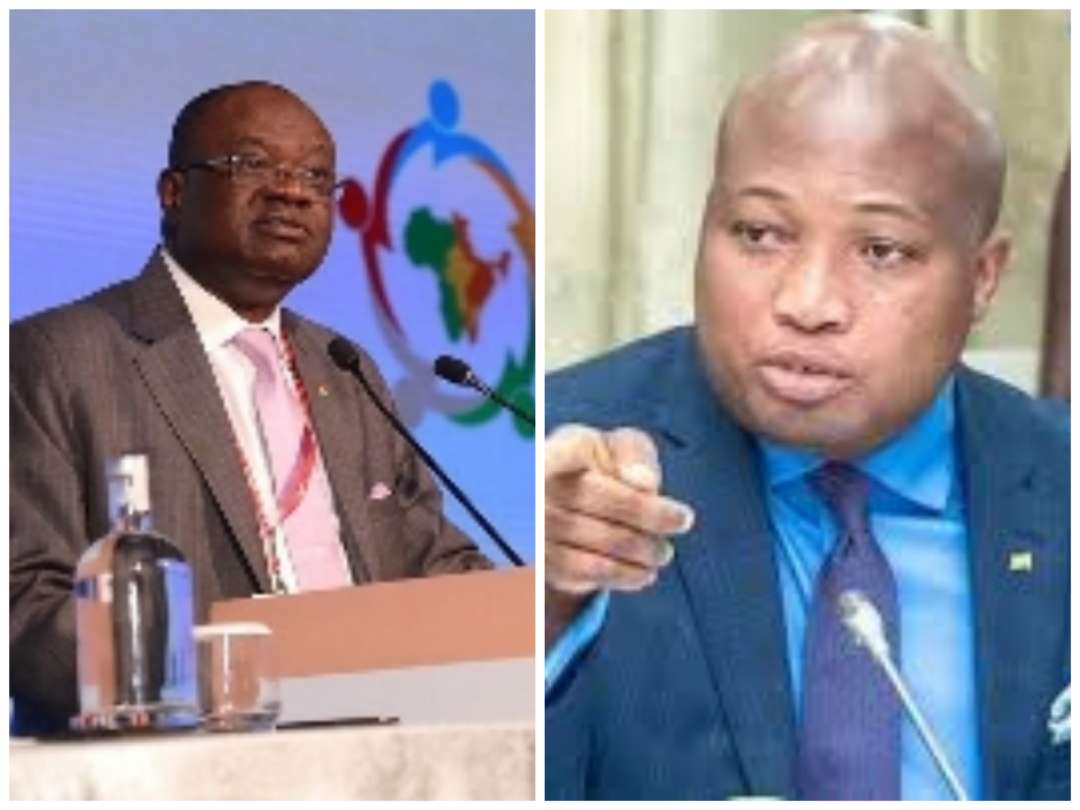
    In response to public outcry over the new prices, Samuel Okudzeto Ablakwa, the Member of Parliament for North Tongu and Ranking Member on the Foreign Affairs Committee of Parliament, has suggested that the fees be reviewed, as they add to the already burdensome expenses for Ghanaians.

    Amidst Ablakwa’s pledge to demand a review of the fees upon the resumption of Parliament, Ampratwum-Sarpong maintains the Ministry’s stance, asserting that the revised fees are not up for reconsideration.

    “It is a matter we will revisit. We will summon the Ministers and officials from the Ministry to see what can be done because this is really terrible. It is going to add on to the already excruciating hardship and anguish that Ghanaians are going through,” he said.

    “If he wants us to come to the committee, we will respect the committee, we will appear before the committee, we will repeat the reasons behind the request and the approval given by parliament for the passport fees,” he said in an April 3 interview with JoyNews.

    He described Mr Ablakwa’s call for a reduction as “noise”, indicating that his concerns will not be regarded.

    “These figures with the support of the majority of Ghanaians have come to stay. There is nothing he can do about it. He can make his noise out there. If he wants to bring it to the committee, to Parliament, we will meet him on the floor of Parliament. We will discuss it, we will debate it, and at the end of the day, he will fall flat on his face,” the deputy minister stressed.

    He defended the fee hike, stating that the increased charges are essential for generating revenue to enhance service delivery at passport offices nationwide.

    “We would have money to be able to invest to buy the equipment, the printers, and whatever other stuff that we need to be able to give excellent service.

    “With the cash revenue flow, it will become possible for us to approach the suppliers of this equipment and materials and whatever that we need in our work.

    “So once we get more computers, once we get more laminating machines, once we get more capturing machines, we will be able to capture more biometrics and therefore the six months, seven months, or eight months appointment days would be reduced.

    “At the moment, it is out of control because we don’t have the capturing machines. We do have some but it is not enough,” he added.

  • If you try that nonsense, I will let people beat you – ‘Angry’ Cpt Smart tells Bongo Ideas

    If you try that nonsense, I will let people beat you – ‘Angry’ Cpt Smart tells Bongo Ideas

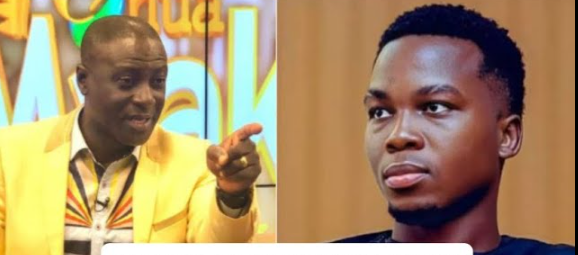
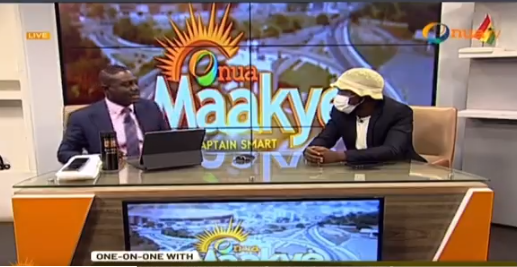
    Onua TV presenter, Captain Smart, has threatened to have social media personality Albert Nat Hyde, known as Bongo Ideas, beaten should he find him taking pictures of him while unaware.

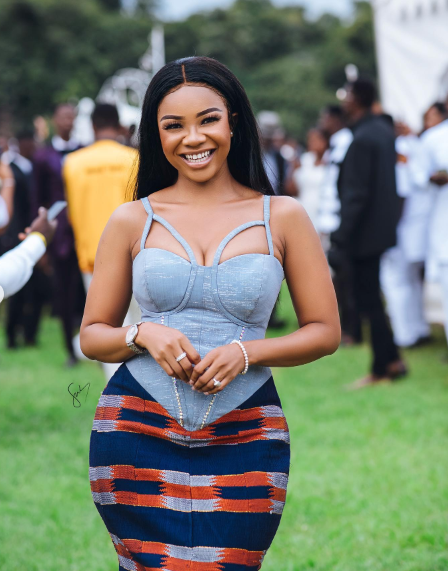
    In an interview on Onua TV’s Maakye show, Bongo Ideas revealed that he visits hotels to gather information on their customers who are also celebrities. He revealed that broadcast journalist and news presenter who currently works with GHOne TV, Serwaa Amihere is one of the individuals he tracks.

    Displeased with this information, Captain Smart noted that he would not allow himself to be subjected to such an infringement of privacy.

    He noted that he would destroy the gadget used and beat the individual involved.

    “If you like, try me and see. I will smash your phone. You don’t have the right. Why are you hiding to take a photo of me,” Captain Smart said.

    Bongo Ideas replied, “Why are you also taking the phone and breaking it if you don’t have anything to hide.”

    With a comeback, Captain Smart said, “Why are you hiding and taking pictures of me if you have good intentions. That is wrong.”

    He added, “If that is what you doing stop. I won’t tolerate it. If you try that on me, I will hurt you. We shouldn’t do things like that.
    Serwaa Amihere and a public figure have gone to a hotel, and so what.”

  • I am no longer safe in Ghana – Bongo Ideas begs ECOWAS, UN for support

    I am no longer safe in Ghana – Bongo Ideas begs ECOWAS, UN for support

    Bongo Ideas has raised concerns about his safety in Ghana following a recent incident involving individuals impersonating police officers.

    In an interview on the Onua Maakye show with Captain Smart, the activist shared that his forceful arrest and mistreatment have left him feeling unsafe in Ghana.

    Feeling vulnerable, he has sought assistance from organizations such as ECOWAS and the African Union.

    To reduce the risk of similar incidents, he has chosen to stay at the homes of friends and family instead of his own residence.

    In a bid to improve his security situation, he mentioned that he would consider traveling to the United States if possible.

    It was last reported that Bongo Ideas was apprehended by some men who identified themselves as police officers.

    He recounted that he was beaten and warned against peddling into the affairs of President Akufo-Addo.

  • 12 state-of-the-art trains assembled in Poland arrive in Ghana

    12 state-of-the-art trains assembled in Poland arrive in Ghana

    Ghana’s transportation sector reached a significant milestone as the first batch of 12 state-of-the-art trains, assembled in Poland, arrived at the Tema Port.

    These trains are destined for use on the new Tema-Mpakadan standard-gauge railway line, marking a major advancement in Ghana’s railway infrastructure.

    The Tema-Mpakadan railway line, stretching 97 km, is a vital corridor facilitating the movement of goods and people along Ghana’s Eastern corridor.
    This railway line is part of a larger plan for the Ghana-Burkina Faso interconnectivity project, aiming to connect Ouagadougou to the Port of Tema, totaling 1000 km.

    Construction of the railway line is nearly complete, with a targeted completion date of 2024. The trains will transport passengers from Mpakadan through Kpong, Juapong, Doryumu to the Tema Port, where passengers can transfer to a narrow-gauge line leading to Accra.

    During the handover ceremony in Poland, CEO of the Ghana Railways Development Authority, Yaw Owusu, emphasized the importance of a robust railway system for industrialization and development. He thanked the Polish manufacturer, PESA, for their support and highlighted the benefits of a long-term relationship between Ghana and PESA for future business and maintenance.

    These trains, designed for both regional and long-distance travel, are the first standard-gauge rolling stock in Ghana. They are expected to last over 30 years with consistent maintenance. Ghana has signed a 5-year agreement with PESA, with plans to extend the maintenance period to 10 years.

    This procurement of modern trains is part of a comprehensive framework contract between Ghana Railways and PESA, with the option to order an additional 10 vehicles in the future. These modern trains are expected to enhance connectivity, efficiency, and passenger experience, contributing to the overall economic development of the railway network.

    With the arrival of these modern trains, Ghana’s rail sector is poised for growth, aligning with the government’s agenda to develop a network of 4000 km of railway across the country. System testing, trial runs, and commissioning by the President are expected to take place in June 2024, heralding a new era of improved connectivity and economic growth in Ghana.

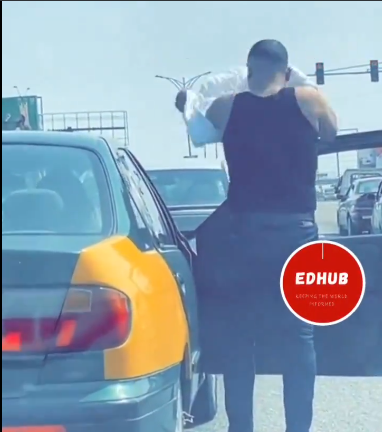
  • Accra: Scorching sun forces white man to go almost half-naked in the middle of the road

    Accra: Scorching sun forces white man to go almost half-naked in the middle of the road

    In the bustling streets of Accra, a scene unfolded that left bystanders amused and sympathetic in equal measure.

    It was a scorching hot day, the kind that makes even the most seasoned locals break a sweat just by stepping outside. But for one unsuspecting visitor, the heat proved to be an unexpected challenge.

    As the taxi came to a halt amid the midday heat, a white gentleman emerged from the vehicle, his face flushed with discomfort.

    His attire now clung uncomfortably to his body. In a moment of sheer desperation, the man made a bold decision.

    Right there in the middle of the bustling street, he removed his shirt. It was a sight that drew curious glances from passersby.

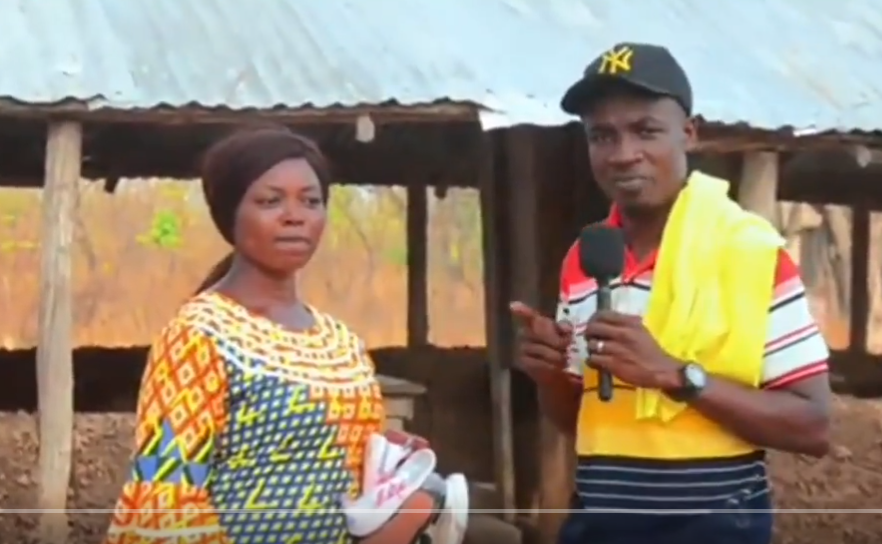
  • This teacher ‘fights’ scorpions and snakes to teach 140 students in Afram Plains

    This teacher ‘fights’ scorpions and snakes to teach 140 students in Afram Plains

    Many teachers who are posted to rural areas to help educate children turn down the directive of the Ghana Education Service (GES), but that was not the case for one female teacher who is making an impact in the lives of over a hundred children.

    Yeboah Agnes Agyapong, a dedicated teacher posted to a village school in Hlihadzi in the Afram Plains, has been teaching eight classes single-handedly for the past three years.

    Despite the challenges of teaching in a remote village with no electricity, access to clean water, or transportation, Agnes has remained committed to educating the children in her care.

    Remarkably, she receives the salary of one teacher, not eight, for her efforts. The school’s makeshift classrooms are not without hazards, as poisonous animals like snakes and scorpions sometimes find their way inside.

    Despite these dangers, Agnes continues to teach diligently, driven by her passion for education and the wellbeing of her students.

    Agnes explained that she accepted the posting because the students are not difficult to manage. She starts teaching at 8 am and allocates 30 minutes to each class, totaling about 140 students.

    Agnes is married, but her husband resides in Tamale, highlighting the sacrifices she makes to fulfill her teaching duties.

  • Daughter of farmer and petty trader refused scholarship due to protocol from Presidency, Parliament and Ministers – Report

    Daughter of farmer and petty trader refused scholarship due to protocol from Presidency, Parliament and Ministers – Report

    An exposé by The Fourth Estate has detailed how brilliant but needy Ghanaians are denied scholarships due to a list of favoured individuals coming from government officials.

    In a recent report dubbed “Scholarships bonanza: The powerful grab as double scholarships flow”, Franklina Mensah (not her real name) who obtained an undergraduate degree with First-Class honours, is said to be a victim of the “protocol” system.

    Franklina is said to have submitted her application to the government-run Scholarship Secretariat, seeking funding for a master’s degree programme in the United Kingdom (UK).

    “If the scholarship was going to be awarded on merit, she felt she stood a very good chance. Her sense of optimism soared higher when she received plaudits from the interview panel, who were full of praise for her excellent proposal and academic credentials,” The Fourth Estate reported.

    Sources say she heard no update from the Scholarship Secretariat weeks after her interview, prompting an “anxious” Franklina to reach out.

    At the offices of the Scholarship Secretariat, Franklina is said to have met an official whose name she couldn’t recall.

    “I mentioned my name, and he said, ‘Your name was on the list but there is so much protocol they had to take people out.’”

    The official claimed requests come from highly influential offices including that of the President, Parliament and ministers “for this same scholarship.”

    “You should understand that people will have to go off the list,” official is said to have told Frankina.

    In other words, she had been shortlisted for the scholarship but a protocol list from some higher office or authority had forced her name to be taken off the shortlist.

    “I was dumbfounded,” Franklina told The Fourth Estate.

    Testament to her perseverance and the quality of her graduate proposal, Franklina obtained a different scholarship which enabled her to pursue her studies that same year – and in the UK as planned.

  • Acquiring a passport isn’t a right but a privilege – Appiah Kubi

    Acquiring a passport isn’t a right but a privilege – Appiah Kubi

    Chairman of the Foreign Affairs Committee of Parliament, Andy Appiah Kubi, has justified the recent increase in passport application fees, citing the low demand for travel among passport holders.

    He pointed out that only around 20% of passport holders actually use the document for travel, making passport acquisition more of a privilege than a necessity.

    Speaking to reporters in Accra on Wednesday, April 3, Mr. Appiah Kubi argued that individuals seeking passports should bear the full cost, considering it a privilege rather than a fundamental right or requirement.
    He emphasized that the government cannot subsidize privileges for passport applicants.

    “We agree that it is only about 20% of Ghanaians that need passports to travel out of the country. And, therefore, looking at it from that context, the passports then become a privilege, not a right or need.

    “So, if it is a privilege, who should bear the cost of passports? To be honest with you, within the subregion, passports in Ghana are the cheapest and indeed it is incomparable with anywhere else.”

    “The most immediate cost element is from Liberia, and they are charging GH499.50, which is the equivalent of $50 for passports that span for five years…

    “Indeed how fair will it be for only 20% of us to surcharge all of us, the 80% for what they want for their purpose of travelling? It is not fair,” he said.

    “Today as we speak, we have the National Identification that is working very well, so that’s our primary source of identification. No longer the passport.”

    “And even those who have the National ID can travel into the country with it. So, then I’m asking humbly Ghanaians that please, if you do not need a passport because you cannot afford it.”

    “Please, humbly, I’m asking you not to go for a passport because it’s no longer your primary source of identification.”

    The Ministry of Foreign Affairs’ recent increase in passport acquisition fees has faced criticism from Ghanaians.

    According to the new pricing structure, a standard 32-page passport will now cost GH¢500, up from GH¢100, while a 48-page booklet will be priced at GH¢644, a significant increase from GH¢200.

    Expedited services will also incur higher charges, with citizens required to pay GH¢700 for a 32-page booklet and GH¢800 for a 48-page booklet.

  • Registrar for Scholarship Secretariat calls for legislation to streamline distribution of scholarships 

    Registrar for Scholarship Secretariat calls for legislation to streamline distribution of scholarships 

    Registrar of the Scholarship Secretariat, Dr. Kingsley Agyemang, has called for swift legislation to streamline the distribution of scholarships in the country.

    He highlighted that the current challenges faced by officers in making decisions are due to the absence of clear legislation defining who qualifies as a needy individual for the scholarships.

    Dr. Agyemang’s statement was made in response to a recent publication by the Fourth Estate, which alleged that scholarships are unfairly distributed to well-connected affluent individuals in the country.

    He emphasized the necessity of scholarship legislation to dispel any misconceptions about eligibility criteria.

    “I think a scholarship legislation is so eminent and that will set out everything that we need to do or how the funds need to be managed. 

    “It’s been managed over the years by the dexterity of leaders. What I think is so important – so in conjunction with maybe National Development Planning Commission and DPC to really identify priority areas that as Ghanaians, we need to.”

    He questioned whether those referred to as middle-income earners, such as public sector workers, are middle-income earners in line with best practices or economic conditions.

    The registrar of the Scholarship Secretariat emphasised that even civil servants fall within the category of people who genuinely need scholarship support, saying “Every Ghanaian except the high earners is a needy person.”

  • Akufo-Addo has shared belated contracts of retired GRA Boss, Rev. Dr Amisshaddai, to cover his tracks – Ablakwa

    Akufo-Addo has shared belated contracts of retired GRA Boss, Rev. Dr Amisshaddai, to cover his tracks – Ablakwa

    Member of Parliament for North Tongu, Samuel Okudzeto Ablakwa, has shared documents detailing the contract extension of the recently sacked Commissioner General of the Ghana Revenue Authority (GRA), Rev. Dr Amisshaddai Owusu Amoah.

    On March 27, it was reported that the President had sacked Rev. Dr Amisshaddai Owusu Amoah after Member of Parliament for Ningo Prampram, Sam George, in January 2024, called on Parliament to declare the Commissioner-General a persona non grata as he had exceeded the mandated 60 years, suggesting he had no contract with the state.

    But JoyBusiness reported that Rev. Dr Amisshaddai Owusu Amoah had not been sacked by President Akufo-Addo as the Commissioner General’s contract was extended by two years, from 11th October 2021, when he was said to have achieved the retirement age, to 10th October, 2023. 

    The media house further reported that he was then given a further contract which should end by March 31, 2024.

    Now, Mr Ablakwa has shared what he describes as “two belated contracts” meant for the retired former GRA boss. He believes these contracts were drafted for the Rev. “to cover his tracks.”

    The contracts shared by Mr Ablakwa corroborates the earlier reports by JoyBusiness.

    Per reports, Rev. Dr Amisshaddai Owusu Amoah’s time in office ended on Sunday, March 31, 2024, as he handed over to Deputy Commissioner of the Ghana Revenue Authority, Julie Essiam.

  • Serwaa Amihere’s recent tweet amidst romantic controversy

    Serwaa Amihere’s recent tweet amidst romantic controversy

    Ghanaian media personality Serwaa Amihere is currently in the spotlight over a romantic video that has been associated with her.

    An alleged bedroom video has ignited a wave of online attention. The scandalous footage, which reportedly includes an image claimed to be that of her ex-boyfriend, has surfaced on the internet, causing a stir among netizens.

    According to reports, the person shown in the video is said to be Serwaa Amihere’s former romantic partner named Henry.

    Although there is no official confirmation regarding the authenticity of the video, it has nevertheless prompted a flurry of reactions online, with users engaging in playful teasing directed at the outspoken female presenter.

    Amidst the controversy, Serwaa Amihere shared what she calls “The Dialy Stoic” and it is titled “Deceived and Divided”.

    The Daily Stoic by Seneca which was shared by Serwaa discusses how circumstances can deceive individuals, leading to conflicting desires and actions.

    People often say they want one thing but act in a way that contradicts their stated goals. This internal conflict, according to the Stoics, arises from the conflicting desires and biased thoughts. To resolve this, one needs to reflect on our true desires and align their actions with them to stop working against ourselves.

  • Akufo-Addo is studying findings of KPMG audit report on GRA/SML deal – Eugene Arhin

    Akufo-Addo is studying findings of KPMG audit report on GRA/SML deal – Eugene Arhin

    President Akufo-Addo is poised to reveal his stance on the controversial revenue mobilisation contract between the Ghana Revenue Authority (GRA) and Strategic Mobilisation Ghana Ltd (SML).

    Eugene Arhin, the Director of Communications at the Presidency, disclosed that President Akufo-Addo has received the audit report conducted by KPMG on the contract.

    In a Facebook post on Wednesday, April 3, Mr. Arhin announced that the report was delivered to the President on Wednesday, March 27. President Akufo-Addo is currently scrutinizing the report’s findings before communicating his decision to the public.

    “The President of the Republic, Nana Addo Dankwa Akufo-Addo, on Wednesday, 27th March 2024, received from KPMG its report on the audit conducted, at the behest of the President, on the transactions between the Ghana Revenue Authority (GRA) and Strategic Mobilisation Ghana Ltd (SML).”

    “President Akufo-Addo is studying the findings of the audit report, and will, in due course, make his decisions known to the Ghanaian people.”

    After the audit period ended, calls from various quarters, including Minority Leader Dr. Cassiel Ato Forson, for the release of the report intensified.

    The delay by President Akufo-Addo in addressing the report has raised suspicions of an intentional effort to conceal what critics describe as a “questionable” deal.

    Dr. Cassiel Ato Forson, speaking on behalf of the Minority, expressed determination not to allow any attempt to cover up the issue. He affirmed their commitment to ensuring that Parliament promptly investigates the matter.

    A report by the Fourth Estate alleged irregularities in a multi-million dollar contract awarded to SML by the Ghana Revenue Authority (GRA). Despite the allegations, both the GRA and SML vehemently deny any wrongdoing.

    In response to the accusations, SML has taken legal action against the Fourth Estate, alleging defamation.

    Following concerns raised regarding the contract between the GRA and Strategic Mobilisation Ghana Ltd (SML), President Akufo-Addo directed KPMG to conduct an audit into the matter.

  • VIDEO: ‘Hearty’ Akufo-Addo congratulates Senegal’s youngest president

    VIDEO: ‘Hearty’ Akufo-Addo congratulates Senegal’s youngest president


    President Nana Addo Dankwa Akufo-Addo travelled to Dakar for the April 2 swearing-in ceremony of President Bassirou Diomaye Faye.

    The event marked Senegal’s celebration of its fifth president, following President Faye’s victory in the March 24 presidential elections with over 54% of the votes.

    The ceremony was attended by almost all leaders from the West African bloc, ECOWAS, including ECOWAS President Bola Ahmed Tinubu of Nigeria.

    In a video on social media platform X, President Akufo-Addo walked to the podium to greet President Faye, following the protocol observed by other leaders at the event center in the city of Diamniadio.

    After exchanging pleasantries, President Akufo-Addo stood side-by-side with President Faye for photographs.

  • I will beat you mercilessly if you hide to take photos of me at hotels – Captain Smart ‘threatens’ Bongo Ideas

    I will beat you mercilessly if you hide to take photos of me at hotels – Captain Smart ‘threatens’ Bongo Ideas

    Onua TV presenter, Captain Smart, has threatened to beat social media personality Albert Nat Hyde, known as Bongo Ideas, should he find him taking pictures of him while unaware.

    In an interview on Onua TV’s Maakye show, Bongo Ideas revealed that he visits hotels to gather information on their customers who are also celebrities. He revealed that broadcast journalist and news presenter who currently works with GHOne TV, Serwaa Amihere is one of the individuals he tracks.

    Displeased with this information, Captain Smart noted that he would not allow himself to be subjected to such an infringement of privacy.

    He noted that he would destroy the gadget used and beat the individual involved.

    “If you like, try me and see. I will smash your phone. You don’t have the right. Why are you hiding to take a photo of me,” Captain Smart said.

    Bongo Ideas replied, “Why are you also taking the phone and breaking it if you don’t have anything to hide.”

    With a comeback, Captain Smart said, “Why are you hiding and taking pictures of me if you have good intentions. That is wrong.”

    He added, “If that is what you doing stop. I won’t tolerate it. If you try that on me, I will hurt you. We shouldn’t do things like that.
    Serwaa Amihere and a public figure have gone to a hotel, and so what.”


  • Dr Riverson Oppong secures Association of Oil Marketing Companies CEO position

    Dr Riverson Oppong secures Association of Oil Marketing Companies CEO position

    Dr. Riverson Oppong, former Manager in charge of Commercial Operations at the Ghana National Gas Company, has assumed the role of Chief Executive of the Association of Oil Marketing Companies and LPG Marketing Companies.

    He succeeds Kweku Agyeman-Duah, who retired from the position on March 31, 2024, after serving for over 8 years.

    Dr. Oppong brings a wealth of experience to his new role, having worked on various oil and gas fields and projects, including North Busachi Fields in Kazakhstan, Independence Field in Cote d’Ivoire, Djata Fields in Ghana, and West Quarna2 Gas Field in Iraq.

    He joined the Ghana National Gas Company in 2020 before transitioning to his current position.

    Prior to joining the Ghana National Gas Company in 2020, Dr. Riverson Oppong gained extensive experience working on various oil and gas fields and projects. His previous assignments include work on the North Busachi Fields in Kazakhstan, Independence Field in Cote d’Ivoire, Djata Fields in Ghana, and West Quarna2 Gas Field in Iraq.

    Dr. Riverson Oppong, the new Chief Executive of the Association of Oil Marketing Companies and LPG Marketing Companies, has a rich background in the oil and gas industry. With 15 years of global experience, he has worked on notable projects such as the Croatian LNG Project, where he served as a Project Economist for the Croatian Government.

    At the Ghana National Gas Company, Dr. Oppong was responsible for Economic Modeling, Risk Modeling, and Planning. He is also actively involved in academia, serving as an Adjunct Lecturer at the Ghana Technology University College and a Visiting Lecturer at the University of Cape Coast (UCC) and Ghana Institute of Management and Public Administration (GIMPA). Additionally, he is a member of the E&P Committee of the International Gas Union (IGU) and holds leadership positions in the Society of Petroleum Engineers (SPE), including Section Director for the Ghana Section and Advisory Committee Member for SPE Africa.

    Dr. Oppong’s educational background is equally impressive, with a Ph.D. and Post Doctorate Degree in International Oil and Gas Management – Finance and Economics from Gubkin University of Oil and Gas. He also holds a Diploma in Earth GeoScience from Stanford University, USA; a Masters (with honors) in Petroleum Engineering from Gubkin University of Oil and Gas, with a Masters Exchange Program in Arctic Development from the Norwegian University of Nordland; and a Bachelors degree in Materials (Industrial) Science and Engineering from K.N.U.S.T., Ghana. Additionally, he holds a Diploma in Project Management from the Institute of Commercial Management, UK.

    The Association of Oil Marketing Companies (AOMCs) is an industry association representing the collective interests of companies involved in oil marketing and petroleum products in Ghana. It serves as an advocacy institution to help direct downstream policy, legislation, and regulation, as well as pursue research for the development of the downstream sector. The AOMCs work closely with major stakeholders in the industry, including the Ministry of Energy, Ministry of Finance, Bank of Ghana, National Petroleum Authority (NPA), The Energy Commission, Environmental Protection Agency (EPA), Tema Oil Refinery (TOR), Ghana Standards Authority (GSA), Ghana Fire Service, Ghana Revenue Authority (GRA), and Bulk Oil Storage and Transportation Co. Ltd (BOST).

    The association was formally established in October 2003, with a Constitution adopted by all its Members. It is led by a Chief Executive Officer, referred to as the Industry Coordinator, and has a Governing Board comprising representatives from both OMCs & LPGMCs.

  • Akufo-Addo gets hold of KPMG’s report on GRA/SML contract

    Akufo-Addo gets hold of KPMG’s report on GRA/SML contract

    President Akufo-Addo has received the KPMG audit report on the revenue mobilisation contract between the Ghana Revenue Authority (GRA) and Strategic Mobilisation Ghana Ltd (SML).

    The report was delivered to him on Wednesday, March 27, as announced in a Facebook post by Eugene Arhin, the Director of Communications at the Presidency, on Wednesday, April 3.

    Mr. Arhin also mentioned that President Akufo-Addo is currently reviewing the findings of the audit report and will communicate his decisions to the Ghanaian public in due course.

    “The President of the Republic, Nana Addo Dankwa Akufo-Addo, on Wednesday, 27th March 2024, received from KPMG its report on the audit conducted, at the behest of the President, on the transactions between the Ghana Revenue Authority (GRA) and Strategic Mobilisation Ghana Ltd (SML).”

    “President Akufo-Addo is studying the findings of the audit report, and will, in due course, make his decisions known to the Ghanaian people,” he posted.

    After the audit period ended, calls for the release of the report came from various quarters, including Minority Leader Dr. Cassiel Ato Forson. The delay by President Akufo-Addo in addressing the report has raised suspicions of an intentional effort to conceal what critics describe as a “questionable” deal.

    Dr. Cassiel Ato Forson, speaking on behalf of the Minority, expressed determination not to allow any attempt to cover up the issue. He affirmed their commitment to ensuring that Parliament promptly investigates the matter.

    A report by the Fourth Estate alleged irregularities in a multi-million dollar contract awarded to SML by the Ghana Revenue Authority (GRA). Despite the allegations, both the GRA and SML vehemently deny any wrongdoing.

    In response to the accusations, SML has taken legal action against the Fourth Estate, alleging defamation. Following concerns raised regarding the contract between the GRA and SML, President Akufo-Addo directed KPMG to conduct an audit into the matter.

  • Akufo-Addo has not won corruption fight – Prof Frimpong Boateng

    Akufo-Addo has not won corruption fight – Prof Frimpong Boateng

    Former Minister for Science and Environment, Professor Frimpong Boateng, has raised skepticism about President Akufo-Addo’s declaration of victory in the fight against corruption.

    He believes that there is still much work to be done to eradicate the deeply rooted corruption in Ghanaian society.

    During an interview on the JoyNews AM Show on Wednesday, April 3, Professor Frimpong Boateng expressed concern about the widespread nature of corruption.

    He highlighted instances where party members demanded bribes in exchange for votes. Given these challenges, he argued that the Akufo-Addo government cannot be considered successful in addressing corruption.

    “We have not started the fight against corruption. Corruption is the biggest challenge that we face. Not in this country but in Africa as a whole. It is the biggest thing that is worrying us.

    “It is the denominator in everything that we do. The system is already corrupted when you need to bribe delegates to elect you as MP or flagbearer or whatever it is. So we have to be serious with the corruption fight and whatever it entails.”

    “We have not started the fight. I don’t think the President can say or has said he has won the battle against corruption. He won’t say that. He knows that there is a fight to be fought and battles to be won.”

    In a recent interview with JoyNews on Thursday, March 14, 2024, Dr. Nyaho Nyaho-Tamakloe, a founding member of the New Patriotic Party (NPP), made a bold statement, suggesting that President Akufo-Addo has overseen the most corrupt administration in Ghana’s history.

    Expressing his disillusionment with the President’s leadership, Dr. Nyaho-Tamakloe emphasized a substantial gap between the President’s campaign promises to combat corruption and the actual record of his government since taking office in 2017.

    “We promised the people of this country that we shall put a stop to it. He’s been now the worst in the history of this country,” he said.

  • Minor married to Wulomo is not 12 – Chieftaincy Minister

    Minor married to Wulomo is not 12 – Chieftaincy Minister

    Chieftaincy and Religious Affairs Minister, Stephen Asamoah Boateng, has clarified that the new wife of Ga priest Nuumo Borketey Laweh XXXIII is not 12 years old, as previously reported.

    He stated that she will be 16 years old in July 2024.

    Minister Asamoah Boateng emphasized that even if the girl is nearly 16 years old, the age difference between her and the priest is still too significant.

    “We seem to be unraveling some few things. For instance, the age of 12 which we were made to believe is incorrect. The child is almost 16 [but] still a minor,” he said.

    Chieftaincy and Religious Affairs Minister, Stephen Asamoah Boateng, speaking on Joy FM’s Top Story on Tuesday, April 2, clarified that although the new wife of Ga priest Nuumo Borketey Laweh XXXIII is older than initially reported, she is still a minor whose rights must be protected by the state.

    He mentioned that his office, in collaboration with other ministries, is working to ensure the protection of the young girl’s rights. They plan to verify her age using her birth certificate or school records to establish the truth.

    Mr. Boateng’s comments come in the wake of the purported marriage of Naa Okromo, now known as Naa Yomo Ayemuede, to the 63-year-old Gborbu Wulomo priest over the weekend in Nungua.

    While earlier reports identified Naa Okromo as a 12-year-old girl, civil society groups and others have condemned the act and called for the arrest of the priest.

    Mr. Boateng emphasized that understanding the culture and traditions of the Nungua people is crucial in comprehending the ceremony. He explained that the traditional rite was performed about a week ago, with the public outdooring occurring on Saturday, March 30, but the marriage has not been consummated.

    He urged the public to refrain from calling for the priest’s arrest until the full details of the situation are understood.

    “Those who are calling for the arrest and all that, I will say hang on for a while. It’s an option that is available, I would not close it because that is not my job. The Ministry of the Interior will advise and the Attorney General will advise and I will give them the version I have heard, then we arrive at the conclusion on what is the next step,” he added.

    The Chieftaincy Minister added he would meet the Gborbu Wulomo tomorrow April 3 and by Thursday, April 4, he would be able to speak conclusively on the matter.

  • Bawumia misquotes Bible verse at Owusu-Bempah’s church

    Bawumia misquotes Bible verse at Owusu-Bempah’s church

    Vice President Dr Mahamudu Bawumia marked the Easter period with a series of visits to churches, where he extended Easter greetings to Christians.

    One notable visit was to the premises of Rev. Isaac Owusu-Bempah, the founder of Glorious Word Power Ministries International, in Accra.

    During his visit, Bawumia received prayers and sat on Rev. Owusu-Bempah’s chair, a gesture symbolizing blessings and respect. The reverend also commended Bawumia, affirming his character as good and his heart as pure.

    After the prayer session, Bawumia addressed the congregation briefly, sharing a message of hope and encouragement before departing.

    A short video clip of Bawumia’s address, in which he reportedly referenced a verse from the Holy Scriptures, has been circulating on social media.

    “If you go to the Book of Zachariah 4:1, what does it say, “It is not by might nor by power, but by the spirit of the Lord Almighty” he stated to applause.

    Those sharing the video of Vice President Dr. Mahamudu Bawumia’s address have questioned whether he correctly quoted the verse from the Bible, suggesting a mix-up.

    According to those referencing the New King James Version of the Bible, Bawumia quoted Zechariah 4:6 instead of Zechariah 4:1.

    Zechariah 4:6 NKJV reads: “So he answered and said to me: “This is the word of the LORD to Zerubbabel: ‘Not by might nor by power, but by My Spirit,’ Says the LORD of hosts.”

    Zechariah 4:1 NKJV, on the other hand, reads: “Now the angel who talked with me came back and wakened me, as a man who is wakened out of his sleep.”

  • Netizens slam Gabby Otchere-Darko over child marriage remarks

    Netizens slam Gabby Otchere-Darko over child marriage remarks

    A prominent member of the New Patriotic Party (NPP), Gabby Otchere-Darko, is currently the subject of attack after questioning why individuals seeking to protect Ghana’s family values have not called for harsher sentences for individuals caught engaging and promoting child marriage.

    Mr Otchere-Darko made the comment amidst investigations into a contentious marriage between a minor and Nungua’s elder, Nuumo Borketey Laweh Tsuru XXXIII, aged 63. 

    Per the Children’s Act 1998 (Act 560), an adult caught forcing a minor into marriage face a maximum jail term of 12 months or fines up to 5 million cedis (500 Ghana Cedis).

    In a post on the X platform, wondered why the country is seeking to impose a “stiffer” sentence on consenting adults in the LGBTQ community who decide to have an amorous relationship, or any promotion, sponsorship or support of LGBTQ activities when a situation such as child marriage which involves an adult and a minor prescribes a lighter sentence.

    In what appears to be a jab to anti-LGBTQ bill promoters including Ningo-Prampram MP, Sam George, Gabby Otchere-Darko wrote, “In Ghana, you face a maximum jail term of 12 months if you force a minor into marriage, according to Children’s Act 1998 (Act 560).”

    “Once assented, the law that seeks to presumably protect our family values (which ignores child marriage by the way) will impose a prison sentence of up to five years for the “wilful promotion, sponsorship or support of LGBTQ+ activities”. In fact two consenting adults of same sex face a stiffer sentence if they are found kissing in public than the 70-year old man who marries a 14-year old girl.”

    But his concern has not been welcomed by some users on X platform who believe that Mr Otchere-Darko cannot be selective of national issues in his calls for a better governance for the country.

    Some users noted that it is imperative the NPP member also clarify some allegations levelled against him that are said to have cost the taxpayers a significant amount of money.

    Former Minister for Energy, Boakye Agyarko, during an interview on Kumasi-based Asanteman FM, reportedly shared some alleged incidents that occurred during the re-negotiation of the 250 Megawatts Ameri Power Plant.

    According to a news report by energynewsafrica.com, Agyarko claimed that Gabby Asare Otchere-Darko, a prominent figure in the NPP, renegotiated the Ameri deal without obtaining consent from the government committee assigned to work on the deal.

    Upon confronting Gabby about the matter, Agyarko asserted that he was told to keep quiet because President Nana Addo Dankwa Akufo-Addo was already informed about the actions taken by Gabby.

    Agyarko recounted that he received a call from Gabby while he was on a flight to the United States, during which Gabby expressed frustration at not being able to reach him.

    Gabby has refuted this claim.

    Child marriage

    The Children’s Act 1998 (Act 560), amended in 2016, safeguards children’s rights against forced betrothal and marriage.

    The Constitution of Ghana also defines anyone below 18 as a child, ineligible for marriage. Sections 14 and 15 of the Children’s Act explicitly state the right of children to reject betrothal and marriage, setting the legal marriage age at 18.

    The recent alleged marriage has ignited a fierce debate, with many condemning the act on social media and demanding the arrest of the Ga-Dangme States’ Overlord. Despite the uproar, some authorities have defended the marriage, citing cultural practices.

    Presently, the Supreme Court is set to hear the unconstitutional claims levelled against the anti-LGBTQ bill which has been approved by Parliament but yet to receive a presidential assent by Nana Akufo-Addo.

  • Gabby Otchere Darko calls for lighter sentence for LGBTQ  members, supporters

    Gabby Otchere Darko calls for lighter sentence for LGBTQ members, supporters

    A prominent member of the New Patriotic Party (NPP), Gabby Otchere-Darko, has questioned why Ghana, seeking to protect her family values have not called for harsher sentences for individuals caught engaging and promoting child marriage but done so for LGBTQ members.

    Mr Otchere-Darko made the comment amidst investigations into a contentious marriage between a minor and Nungua’s elder, Nuumo Borketey Laweh Tsuru XXXIII, aged 63. 

    Per the Children’s Act 1998 (Act 560), an adult caught forcing a minor into marriage faces a maximum jail term of 12 months or fines of up to 5 million cedis (500 Ghana Cedis).

    In a post on the X platform, wondered why the country is seeking to impose a “stiffer” sentence on consenting adults in the LGBTQ community who decide to have an amorous relationship, or any promotion, sponsorship or support of LGBTQ activities when a situation such as child marriage which involves an adult and a minor prescribes a lighter sentence.

    In what appears to be a jab to anti-LGBTQ bill promoters including Ningo-Prampram MP, Sam George, Gabby Otchere-Darko wrote, “In Ghana, you face a maximum jail term of 12 months if you force a minor into marriage, according to Children’s Act 1998 (Act 560).”

    “Once assented, the law that seeks to presumably protect our family values (which ignores child marriage by the way) will impose a prison sentence of up to five years for the “wilful promotion, sponsorship or support of LGBTQ+ activities”. In fact two consenting adults of same sex face a stiffer sentence if they are found kissing in public than the 70-year old man who marries a 14-year old girl.”

    The Children’s Act 1998 (Act 560), amended in 2016, safeguards children’s rights against forced betrothal and marriage.

    The Constitution of Ghana also defines anyone below 18 as a child, ineligible for marriage. Sections 14 and 15 of the Children’s Act explicitly state the right of children to reject betrothal and marriage, setting the legal marriage age at 18.

    The recent alleged marriage has ignited a fierce debate, with many condemning the act on social media and demanding the arrest of the Ga-Dangme States’ Overlord. Despite the uproar, some authorities have defended the marriage, citing cultural practices.

    Presently, the Supreme Court is set to hear the unconstitutional claims levelled against the anti-LGBTQ bill which has been approved by Parliament but yet to receive a presidential assent by Nana Akufo-Addo.

  • 12 months jail term for child marriage but 5 years for supporting LGBTQ activities – Gabby chides Sam George, others

    12 months jail term for child marriage but 5 years for supporting LGBTQ activities – Gabby chides Sam George, others

    A prominent member of the New Patriotic Party (NPP), Gabby Otchere-Darko, has questioned why individuals seeking to protect Ghana’s family values have not called for harsher sentences for individuals caught engaging and promoting child marriage.

    Mr Otchere-Darko made the comment amidst investigations into a contentious marriage between a minor and Nungua’s elder, Nuumo Borketey Laweh Tsuru XXXIII, aged 63. 

    Per the Children’s Act 1998 (Act 560), an adult caught forcing a minor into marriage faces a maximum jail term of 12 months or fines of up to 5 million cedis (500 Ghana Cedis).

    In a post on the X platform, wondered why the country is seeking to impose a “stiffer” sentence on consenting adults in the LGBTQ community who decide to have an amorous relationship, or any promotion, sponsorship or support of LGBTQ activities when a situation such as child marriage which involves an adult and a minor prescribes a lighter sentence.

    In what appears to be a jab to anti-LGBTQ bill promoters including Ningo-Prampram MP, Sam George, Gabby Otchere-Darko wrote, “In Ghana, you face a maximum jail term of 12 months if you force a minor into marriage, according to Children’s Act 1998 (Act 560).”

    “Once assented, the law that seeks to presumably protect our family values (which ignores child marriage by the way) will impose a prison sentence of up to five years for the “wilful promotion, sponsorship or support of LGBTQ+ activities”. In fact two consenting adults of same sex face a stiffer sentence if they are found kissing in public than the 70-year old man who marries a 14-year old girl.”

    The Children’s Act 1998 (Act 560), amended in 2016, safeguards children’s rights against forced betrothal and marriage.

    The Constitution of Ghana also defines anyone below 18 as a child, ineligible for marriage. Sections 14 and 15 of the Children’s Act explicitly state the right of children to reject betrothal and marriage, setting the legal marriage age at 18.

    The recent alleged marriage has ignited a fierce debate, with many condemning the act on social media and demanding the arrest of the Ga-Dangme States’ Overlord. Despite the uproar, some authorities have defended the marriage, citing cultural practices.

    Presently, the Supreme Court is set to hear the unconstitutional claims levelled against the anti-LGBTQ bill which has been approved by Parliament but yet to receive a presidential assent by Nana Akufo-Addo.

  • iPhone thieves forced to roll on the ground by military officer at Kwame Nkrumah Circle

    iPhone thieves forced to roll on the ground by military officer at Kwame Nkrumah Circle

    A noteworthy incident unfolded at Kwame Nkrumah Circle in Accra, where a military officer took decisive action against two individuals attempting to steal phones.

    A viral video circulating on the internet captured the moment when the officer disciplined the culprits, compelling them to lie flat on the ground.

    Demonstrating his authority, the military man directed the individuals to roll from one end to the other as a punishment for their attempted theft.

    The video has sparked widespread attention online, with many commending the officer for his vigilance in addressing crime.

  • Ahenkorah Marfo appointed Deputy Trade Minister

    Ahenkorah Marfo appointed Deputy Trade Minister

    President Akufo-Addo has implemented a minor reshuffle in his government, by appointing Kofi Ahenkorah Marfo, Member of Parliament for Achiase, as Deputy Minister-designate for Trade and Industry.

    He did this after reassigning Deputy Trade and Industry Minister Stephen Amoah to the Finance Ministry.

    This decision, effective immediately as of Tuesday, April 2, was announced in a press statement by Eugene Arhin, the Communications Director at the Presidency.

    The reshuffle comes after the untimely passing of Deputy Finance Minister and MP for Ejisu, Dr. John Kumah, on Thursday, March 7.

    “The President of the Republic, Nana Addo Dankwa Akufo-Addo, has reassigned the Deputy Minister for Trade and Industry and Member of Parliament for Nhyiaeso, Hon. Stephen Amoah, as Deputy Minister for Finance.”

    “Hon. Stephen Amoah, until his re-designation, was the Deputy Minister for Trade and Industry, and he takes over from the late Hon. John Kumah, who passed away on 7th March 2024. His appointment takes effect immediately.”

    Meanwhile, the President is urging Parliament to quickly vet the nominees and approve the appointments, enabling the new appointees to assume office promptly.

    “President Akufo-Addo is hopeful that Parliament will, once again, on a bi-partisan basis, expedite the approval of his nominee, so he can join the government forthwith, and assist in the delivery of his mandate for his second term in office.”

  • “Don’t expect everyone to love you” – Ofori-Atta reveals why he didn’t resign as Finance Minister

    “Don’t expect everyone to love you” – Ofori-Atta reveals why he didn’t resign as Finance Minister

    Former Finance Minister Ken Ofori-Atta has revealed why he remained resilient in the face of calls for his resignation.

    According to Mr Ofori-Atta, he decided to focus on solving economic issues and not be deterred by public pressure since it is impossible to receive the needed support from all Ghanaians.

    He said, “With our work, you don’t expect everyone to love you, and I was focused on crossing the Jordan with the whole community. So if some people dislike you, it’s fine. Recently, the numbers show that we went through a very difficult patch and we have turned the corner. I am hopeful that God will lead us to the right way so that in the 2024 elections, we [NPP] shall prevail Mr. Ofori-Atta in a media interview.”

    Mr. Ofori-Atta faced scrutiny during his tenure, with members of the Minority Caucus in Parliament petitioning President Akufo-Addo to remove him due to economic challenges.

    However, it wasn’t until February 14, 2024, during a ministerial reshuffle, that he was replaced by Dr. Mohammed Amin Adam.

    Mr. Ofori-Atta holds the record as the longest-serving Finance Minister in the 4th Republic.

    Reflecting on the prospects of the New Patriotic Party (NPP) in the upcoming elections, he expressed optimism, attributing his confidence to the economic progress achieved under the party’s leadership.

  • Bawumia and NHIA’s dubious, deadly digitalization initiatives have cost Ghana over GHC2 billion – Ablakwa

    Bawumia and NHIA’s dubious, deadly digitalization initiatives have cost Ghana over GHC2 billion – Ablakwa

    Member of Parliament for North Tongu, Samuel Okudzeto Ablakwa, has accused the government of significant expenditure in the health sector, describing its initiatives as “dubious, duplicative, and deadly so-called digitalization.”

    In a detailed Facebook post on April 3, 2024, Mr Ablakwa stated that these initiatives amounted to GH¢2.67 billion. He expressed concern over repeated reports of deprivation in health facilities nationwide in recent years.

    “With this shambolic state of health care in Ghana, one wonders why the current Akufo-Addo/Bawumia-led government will ignore the priorities begging for urgent solutions and rather be fixated on dubious, duplicative and deadly so-called digitalization initiatives at a heartless cost of GHS2.67 billion?” a portion of his post read.

    He noted that the National Health Insurance Authority has submitted a 2024 allocation formula to Parliament that prioritizes the following in a “thoughtless and unpatriotic manner”:

    1. Biometric ID Cards and Authentication System — GHS405.74 million (despite the substantial amount already spent on Ghana Cards)
    2. Management Information System — GHS343.92 million
    3. Capturing of Claims Data — GHS112 million
    4. Ministry of Health (Health Provider – E-Health Solution) — GHS80 million
    5. Claims Processing Centres and E-Claims — GHS76 million
    6. Archival System and Document Management— GHS38.58 million
    7. Telecare Services Platform — GHS30 million
    8. Transfer of Data from NIA GHS10 million
    9. E-Pharmacy — GHS11 million

    Mr Ablakwa questioned whether it was right for a “struggling health insurance scheme which is unable to pay claims on time, a scheme owing hospitals, a scheme operating in dilapidated hospitals without critical equipment, with many analysts indicating that cash-and-carry is back in many parts of Ghana, be spending over GHS1.1billion on non-core interventions in the name of digitalization?”

    “Note also that after the NHIA allocated over GHS1.1 billion in 2024 to shady and misplaced digitalization deals, they callously and shamelessly allocated only a paltry GHS2 million for desperate dialysis patients,” he added.

  • Ablakwa writes: The GHS2.6 billion dubious, duplicative & deadly digitalization deals in Ghana’s health sector – Part 1

    Ablakwa writes: The GHS2.6 billion dubious, duplicative & deadly digitalization deals in Ghana’s health sector – Part 1

    Ghana’s health sector has been in the news lately for all the wrong reasons.

    A few months ago, 19 renal patients lost their lives at the Korle-Bu Renal Unit because government was unable to provide just GHS4million. The dialysis crisis has still not been resolved even as private companies like the First Sky Group come to the rescue.

    Doctors at the Komfo Anokye Teaching Hospital (KATH) have warned that all their dialysis machines except one and half have broken down without government intervention to replace them for several months.

    KATH has been without a mammography machine to diagnose early signs of breast cancer for several years.

    Prominent chiefs and opinion leaders continue to agitate about their abandoned hospital projects — most of which were almost completed by 2016.

    Not too long ago, the Akufo-Addo/Bawumia government could not provide childhood vaccines leading to a national emergency. Ghana had to fall on Nigeria for a bailout albeit under deceitful circumstances.

    Numerous government hospitals are lamenting the lack of critical medical equipment needed to save lives. If MRI machines at prestigious hospitals such as 37 and Ridge have broken down for months without resources to repair or replace them, then one can imagine the situation in less endowned facilities.

    Indeed, former Health Minister Kwaku Agyeman-Manu told Parliament not too long ago that Ghana has only 4 functioning MRIs in government hospitals across the entire country.

    Funding for President Akufo-Addo’s flagship Agenda 111 has remained a huge challenge as he repeatedly misses his completion deadlines since the peak of COVID-19.

    Doctors, nurses, midwives and other health workers continue to agitate for better working conditions. The Ghana Registered Nurses and Midwives Association (GRNMA) revealed this week that already some 6,000 nurses have left Ghana since August 2023 in search of the proverbial greener pastures.

    The GRNMA President, Mrs. Perpetual Ofori-Ampofo left many Ghanaians further depressed when she revealed that many heroic nurses who put their lives at great risk on the frontlines of the covid war have still not received the package they were promised by the Akufo-Addo/Bawumia government.

    Ghanaians are yet to recover from the tragedy at the Tema General Hospital NICU which occurred a few days ago when the hospital was subjected to DUMSOR. Apparently, the standby generator to protect babies on oxygen was faulty. One mother insists she lost her precious baby because of this national disgrace.

    Health facilities which were hitherto exempted from ECG disconnections no longer enjoy that dispensation.

    As a Member of Parliament, I have been compelled to rely on my external network to equip hospitals and establish a surgical block in my beloved constituency.

    With this shambolic state of health care in Ghana, one wonders why the current Akufo-Addo/Bawumia-led government will ignore the priorities begging for urgent solutions, and rather be fixated on dubious, duplicative and deadly so-called digitalization initiatives at a heartless cost of GHS2.67billion?

    To our utter shock, the National Health Insurance Authority has submitted a 2024 allocation formula to Parliament which mindlessly and unpatriotically prioritizes the following:

    1. Biometric ID Cards and Authentication System — GHS405.74million (this is despite the billions we have already spent on Ghana Cards)

    2. Management Information System — GHS343.92million

    3. Capturing of Claims Data — GHS112million

    4. Ministry of Health (Health Provider – E-Health Solution) — GHS80million

    5. Claims Processing Centres and E-Claims — GHS76million

    6. Archival System and Document Management— GHS38.58million

    7. Telecare Services Platform — GHS30million

    8. Transfer of Data from NIA GHS10million

    9. E-Pharmacy — GHS11million

    The NHIA’s dubious and duplicative digitalization expenditure for 2024 alone amounts to an incredible GHS1,107,240,000. (See attached relevant extracts from NHIA’s Allocation Formula submitted to Parliament)

    The fundamental question is — should a struggling health insurance scheme which is unable to pay claims on time, a scheme owing hospitals, a scheme operating in dilapidated hospitals without critical equipment, with many analysts indicating that cash-and-carry is back in many parts of Ghana be spending over GHS1.1billion on non-core interventions in the name of digitalization?

    Note also that after the NHIA allocated over GHS1.1billion in 2024 to shady and misplaced digitalization deals, they callously and shamelessly allocated only a paltry GHS2million for desperate dialysis patients.

    What is even more disturbing, my investigations reveal that most of the items the NHIA is spending over a billion Cedis on are already catered for in another massive US$100million (GHS1.3billion) single-sourced contract awarded in 2017 by the Ministry of Health under Hon. Kwaku Agyeman-Manu to a company known as Lightwave eHealthcare Solutions Limited. The 20th November, 2015 registered company is owned by Sampson Djaba and Vincent Attabuatsi (see incorporation documents attached).

    The US$100million Lightwave project is described as the E-Health Project with Bio-Surveillance (Early Warning) System. The launch took place at the Winneba Trauma and Specialist Hospital on November 21, 2017 and was headlined by Chief of Staff, Hon. Akosua Frema Osei-Opare as the Special Guest of Honour, Minister of Health, Kwaku Agyeman-Manu as Keynote Speaker and Dr. Anthony Nsiah-Asare, Director General of the Ghana Health Service.

    At this launch, and from further documentation in my possession, the scope of the US$100million (GHS1.3billion) Lightwave deal encompasses the following 8 key features:

    �i) Centralised data centre with 24hr recovery

    ii) Networking and connectivity of ALL hospitals clinics, and community health clinics in every region/district/sub-district in Ghana�(iii) Networking of ALL agencies�(iv) Provide electronic medical records�v) Develop real-time bio-surveillance system�(vi) Develop patient management system.�(vii) NHIS Integration platform�(viii) Develop a centralised laboratory system.

    (The claims above as contained in the launch brochure are duly attached.)

    Even before the November 21, 2017 launch, Health Minister Kwaku Agyeman-Manu signed a 2nd June, 2017 letter addressed to the Ghana Health Service Director General confirming his ministry’s engagement of Lightwave and how the roll out will ensure that “hospital data is integrated with claims management system of the National Health Insurance Scheme.” (Intercepted letter is attached).

    The Akufo-Addo/Bawumia government should be explaining to Ghanaian taxpayers why we should be paying over GHS2.6billion Cedis on needless, duplicative and wasteful digitalization deals at the NHIA, Lightwave and another as will de disclosed tomorrow, particularly taking into account other more important and basic unresolved challenges in the health sector.

    Strangely, the then Health Minister’s 2nd June, 2017 letter practically killed the businesses of all other Electronic Medical Records (EMR) and Patient Management System (PMS) providers in the space, considering that all heads of facilities were warned in the minister’s letter not to renew any existing EMR contract. (See last paragraph of intercepted letter).

    My further probing confirms that the Lightwave sweetheart deal is still very much active and is costing the Ghanaian taxpayer a fortune.

    In 2023 alone, at a time the Akufo-Addo/Bawumia government said they didn’t have GHS4million to save the lives of 19 dialysis patients at Korle Bu, Ghanaian taxpayers coughed a staggering GHS246.8million to pay Lightwave for digitalization — largely the same digitalization we are about to pay billions for again via the NHIA — absolutely unconscionable!

    The unimpeachable and irrefutable breakdown of the GHS246.8million 2023 payments to Lightwave are provided below:

    LIGHTWAVE 2023 PAYMENTS

    Date: 29-Dec-23

    Invoice Number: MOH/HQ/GS/095/23/RW

    Amount: 62,364,068.07

    Date: 18-April-23

    Invoice Number: MOH/HQ/CEA/002/23/RW

    Amount: 33,844,469.46

    Date: 9-Nov-23

    Invoice Number: MOH/HQ/GS/073/23/RW

    Amount: 69,267,118.15

    Date: 23-Aug-23

    Invoice Number: NHIA/FA/MOH/SEP23/5177/TOM

    Amount: 11,982,270.92

    Date: 23-Jun-23

    Invoice Number: NHIA/FA/MOH/JUN23/2903/DOK

    Amount: 17,775,000.00

    Date: 30-May-23

    Invoice Number: NHIA/FA/MOH/MAY23/2901/DOK Amount: 16,450,000.00

    Date: 30-Oct-23

    Invoice Number: NHIA/FA/MOH/NOV23/3179/DOK

    Amount: 25,000,000.00

    27-Nov-23

    NHIA/FA/GS/DEC23/5304/TOM

    10,210,781.84

    TOTAL ——————– 246,893,710

    Additional evidence of how active the US$100million Lightwave deal is can be gleaned from the recent 29th February, 2024 letter signed by Ghana Health Service Director General, Dr. Patrick Kuma-Aboagye addressed to selected regional health directors. (See intercepted letter attached).

    Very instructively, I am not the only one detecting and raising genuine concerns about the lack of value for money, duplication and wasteful expenditures with this misguided craze for digitalization. Two weeks after the Health Minister’s 2nd June, 2017 letter instructing all health facilities to open their doors to the almighty Lightwave, the Communications and Digitalization Minister in the same Akufo-Addo/Bawumia government, Hon. Ursula Owusu-Ekuful, promptly issued a strongly worded notice to all Ministries, Departments and Agencies dated 16th June, 2017 in which she condemns the canker and urged her colleagues to consult NITA before engaging in these costly digitalization procurements. (See intercepted Notice attached).

    It is obvious the Communications and Digitalization Minister’s Notice was contemptuously ignored then, and continues to be ignored to this day.

    The much touted digitalization drive has obviously become the new conduit for create-loot-and-share schemes.

    I am most delighted that Parliament before going on recess ordered a parliamentary probe into all the alarming digitalization contracts within the health sector.

    It is time for President Akufo-Addo to suspend the plethora of dubious, doubtful, duplicative, deadly, amorphous, needless and extremely wasteful GHS2.6billion digitalization shady deals in the health sector. I shall be writing to him demanding his urgent intervention in this regard.

    In Part 2 of this exposé to be released on Thursday April 4, 2024 at 6am, I shall reveal how another very powerful crony company is cashing in on this lucrative digitalization looting spree in the health sector, even as the real healthcare challenges are abandoned, and the much bigger dangers for our collective security.

    The digitalization looting cabal shall be defeated!

    For God and Country.

    DISCLAIMER: TIGPost.co will not be liable for any inaccuracies contained in this article. The views expressed in the article are solely those of the author’s, and do not reflect those of The Independent Ghana.

  • Major stakeholders to hold crunch meeting on Saturday over energy sector crisis

    Major stakeholders to hold crunch meeting on Saturday over energy sector crisis

    All major stakeholders in the energy sector are scheduled to appear before Parliament’s Energy Committee this Saturday, April 6, as announced by the Committee’s Chairman, Samuel Atta Akyea.

    In an interview on JoyNews’ PM Express, Mr. Atta Akyea explained that the meeting was prompted by recent power outages, commonly referred to as ‘dumsor‘, experienced in various parts of the country.

    The gathering of key players in the energy sector, including representatives from Ghana Gas, the Public Utilities Regulatory Commission (PURC), the Electricity Company of Ghana (ECG), the Volta River Authority (VRA), the Chamber of Independent Power Producers, the Ghana Grid Company Limited (GRIDCo), the Energy Commission, and the Minister of Energy, Dr. Matthew Opoku Prempeh, accompanied by his technical team, aims to comprehensively address the current challenges in the energy value chain.

    Mr. Atta Akyea stressed the importance of evidence-based discussions over mere propaganda, highlighting the Committee’s commitment to identifying the root causes of the power outages and formulating effective solutions to resolve them.

    “It is important to know that the Energy Committee wants to interrogate this matter critically… You cannot do propaganda with facts. If you do not have the power, you can’t conjure noise to bring the power,” he said on Tuesday.

    The Chairman also highlighted the expertise and research conducted by committee members, expressing confidence that a collaborative effort among stakeholders would lead to tangible solutions.

    “You need to own up as to why we are having these challenges then those who are experts will say “These are the obvious challenges, and these are the solutions,” that is when we come back to normalcy and we can have enough electricity to export as we have done before.”

    Ghana has been dealing with inconsistent electricity supply recently, causing disruptions in various sectors and inconveniences for consumers.

  • Akufo-Addo appoints Stephen Amoah as Deputy Finance Minister

    Akufo-Addo appoints Stephen Amoah as Deputy Finance Minister

    President Akufo-Addo has implemented a minor reshuffle in his government, reassigning Deputy Trade and Industry Minister Stephen Amoah to the Finance Ministry.

    This decision, effective immediately as of Tuesday, April 2, was announced in a press statement by Eugene Arhin, the Communications Director at the Presidency.

    The reshuffle comes after the untimely passing of Deputy Finance Minister and MP for Ejisu, Dr. John Kumah, on Thursday, March 7.

    “The President of the Republic, Nana Addo Dankwa Akufo-Addo, has reassigned the Deputy Minister for Trade and Industry and Member of Parliament for Nhyiaeso, Hon. Stephen Amoah, as Deputy Minister for Finance.”

    “Hon. Stephen Amoah, until his re-designation, was the Deputy Minister for Trade and Industry, and he takes over from the late Hon. John Kumah, who passed away on 7th March 2024. His appointment takes effect immediately.”

    As a result, President Akufo-Addo has nominated a replacement for Stephen Amoah at the Trade Ministry in the person of Kofi Ahenkorah Marfo. The President is urging Parliament to quickly vet the nominee and approve the appointment, enabling the new appointee to assume office promptly.

    “Following the reassignment of Hon. Stephen Amoah as Deputy Minister for Finance, President Akufo-Addo has appointed, subject to parliamentary approval, Hon. Kofi Ahenkorah Marfo, Member of Parliament for Achiase, as Deputy Minister-designate for Trade and Industry.”

    “President Akufo-Addo is hopeful that Parliament will, once again, on a bi-partisan basis, expedite the approval of his nominee, so he can join the government forthwith, and assist in the delivery of his mandate for his second term in office.”

  • Bow your head in shame – Majority Chief Whip chides Alan for religious comment

    Bow your head in shame – Majority Chief Whip chides Alan for religious comment

    Parliament’s Majority Chief Whip, Frank Annoh-Dompreh, has criticized independent presidential aspirant Alan Kwadwo Kyerematen for suggesting that Ghanaians should elect a Christian president in the upcoming general elections due to the nation’s Christian majority.

    Kyerematen made these remarks during the Easter Sunday Convention at the Dr. Thomas Wyatt Assembly of the Church of Pentecost, where he emphasized the importance of choosing a Christian leader who embodies Christlike qualities, stating that he was the most suitable candidate to lead the nation’s socioeconomic transformation.

    Annoh-Dompreh, who represents Nsawam-Adoagyiri in the Eastern Region, described Kyerematen’s comments as highly inappropriate and detrimental to Ghana’s development.

    “This is backwards, terrible and ugly, to say the least. The NPP has truly ‘suffered’ in bearing and tolerating you over the years. Show me one country globally who has succeeded by using your theory. Alan is clearly not relevant in our ‘modern’ body politics! Bow in shame!” the post said.

    The former ruling New Patriotic Party (NPP) Minister of Trade and Industry said, “As a predominantly Christian nation, as Christians, it is our responsibility that we elect a Christian leader who is also a Christlike leader.”

    “If God touches your heart and you vote for Alan Kyrematen, the transformative leader, then I can assure you, as our Lord Jesus did on the cross, promise that ye shall be in paradise with him; you shall also be in paradise when I come into power,” he added. 

  • NPP truly suffered tolerating you over the years – Annoh-Dompreh slams Alan over ‘Christian President’ comment

    NPP truly suffered tolerating you over the years – Annoh-Dompreh slams Alan over ‘Christian President’ comment

    Parliament’s Majority Chief Whip, Frank Annoh-Dompreh, has criticized independent presidential aspirant Alan Kwadwo Kyerematen for suggesting that Ghanaians should elect a Christian president in the upcoming general elections due to the nation’s Christian majority.

    During the Easter Sunday Convention at the Dr. Thomas Wyatt Assembly of the Church of Pentecost, Mr Kyerematen emphasized the importance of Ghanaians selecting a Christian leader who embodies Christlike qualities, stating that he was the most suitable candidate to lead the nation’s socioeconomic transformation.

    Mr Annoh-Dompreh, who is the Member of Parliament (MP) for Nsawam-Adoagyiri in the Eastern Region, described the comments as highly inappropriate and detrimental to Ghana’s development. 

    “This is backwards, terrible and ugly, to say the least. The NPP has truly ‘suffered’ in bearing and tolerating you over the years. Show me one country globally who has succeeded by using your theory. Alan is clearly not relevant in our ‘modern’ body politics! Bow in shame!” the post said.

    The former ruling New Patriotic Party (NPP) Minister of Trade and Industry said, “As a predominantly Christian nation, as Christians, it is our responsibility that we elect a Christian leader who is also a Christlike leader.”

    “If God touches your heart and you vote for Alan Kyrematen, the transformative leader, then I can assure you, as our Lord Jesus did on the cross, promise that ye shall be in paradise with him; you shall also be in paradise when I come into power,” he added. 

  • This is what will happen to you if you marry a minor in Ghana

    This is what will happen to you if you marry a minor in Ghana

    There have been widespread calls for legal action to be taken following the report of the marriage between the Gborbu Wulormo of Nungua and a 12-year-old bride.

    Ghana has strict laws against child marriages, and both governments and NGOs have worked to eradicate the practice. Relevant sections of the Children’s Act 1998, which was amended in 2016, dictate what should happen to an individual who seeks to have a minor as a spouse.

    Any person who contravenes Section 15 of the Children’s Act 1998 commits an offence and is liable on summary conviction to a fine not exceeding 5 million cedis (500 Ghana Cedis) or to a term of imprisonment not exceeding one year or to both.

    The original act sets out in Section One by defining who a child is: “Section 1. Definition of child. For purposes of this Act, a child is a person below the age of eighteen years,” it reads.

    Two main sections, 14 and 15, deal with the issue of children entering marital relations. They are produced below in full.

    Section 14: Right to refuse betrothal and marriage.

    (1) No person shall force a child:

    (a) to be betrothed;

    (b) to be the subject of a dowry transaction; or

    (c) to be married.

    (2) The minimum age of marriage of whatever kind shall be eighteen years.

  • Investigate alleged child marriage to enable our Office to do the needful – A-G to Police

    Investigate alleged child marriage to enable our Office to do the needful – A-G to Police

    The Office of the Attorney-General has instructed the Ghana Police Service to look into the alleged celebration of marriage between one Nuumo Borketey Laweh Tsuru XXXIII and Naa Okromo, a 12-year-old.

    This directive by the A-G in a statement dated April 2, 2024, was sighted hours after the Ghana Police Service reacted to the marriage between a 12-year-old girl and the traditional leader of Nungua, Nuumo Borketey Laweh Tsuru XXXIII.

    The issue of the marriage sparked widespread public outcry when videos of a full-blown marriage ceremony surfaced on March 30, 2024, leading to demands for the arrest of the 63-year-old and the annulment of the union.

    In response to this, the Ghana Police Service in a statement dated in the early hours of April 2, 2024, the police issued their first statement regarding the matter.

    The police in the statement revealed that, “it has identified and located the 12-year-old girl who is alleged to have been married to the 63-year-old Gborbu Wulomo in Nungua, Accra. The girl and her mother are currently under Police protection”.

    It added that “the Ministry of Gender, Children, and Social Protection and the Department of Social Welfare to provide her with the necessary support while the matter is being investigated”.

    The A-G has assured the Police of its assistance in the investigation.

    Ghanaian laws strictly prohibit marriage for individuals under the age of 18. A part of this article examines the relevant sections of the Children’s Act 1998, specifically Act 560, which was amended in 2016.

    The act includes provisions to protect children’s rights, including the right to refuse betrothal and marriage. 

    It defines a child as a person under the age of 18 and prohibits child 

    According to the 1992 Constitution of Ghana, a person under the age of 18 is considered a child and cannot legally marry or be given off in marriage.

    Also, two main sections, 14 and 15, deal with the issue of children entering marital relations. They are produced below in full.-

    Section 14: Right to refuse betrothal and marriage.

    (1) No person shall force a child:

    (a) to be betrothed;

    (b) to be the subject of a dowry transaction; or

    (c) to be married.

    (2) The minimum age of marriage of whatever kind shall be eighteen years.

    Any person who contravenes a provision of this Sub-Part commits an offence and is liable on summary conviction to a fine not exceeding 5 million cedis (500 Ghana Cedis) or to a term of imprisonment not exceeding one year or to both.

    Meanwhile, the Nungua Traditional Council has clarified that Naa Yoomo Ayemuede, the spouse of Gborbu Wulomo of Nungua, Nuumo Borketey Laweh Tsuru XXXIII, is currently 16 years old, not 12 as initially reported.

    This statement contradicts the age of 13 given by the Mankralo of the Nungua traditional area in earlier reports.