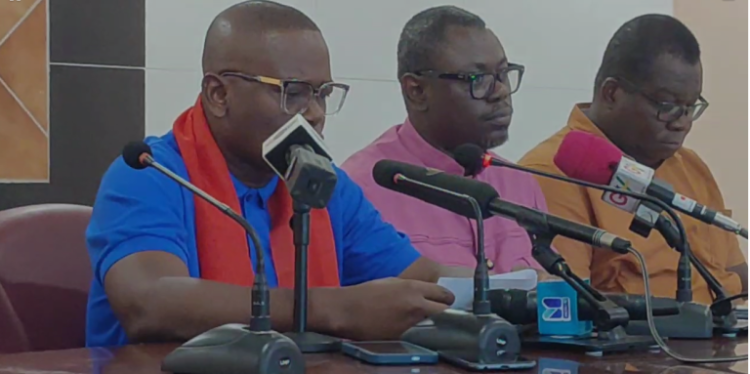
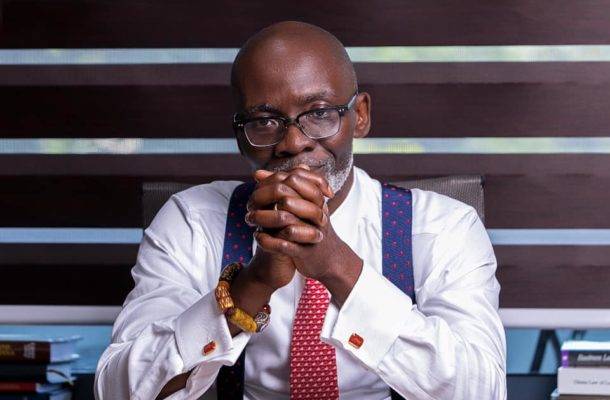
Former Attorney-General and leading member of the opposition National Democratic Congress (NDC), Betty Mould Iddrisu, has criticized the current Attorney-General, Godfred Dame, for allegedly advising the President wrongly on the anti-LGBTQI Bill.
Ms. Mould Iddrisu stated that the President’s decision to prevent Parliament from transmitting the bill was incorrect.
Her comments follow a debate over the next steps for the bill to become law, with disagreements between the Legislature and the Executive.
In an exclusive interview with 3News the former A-G expressed disagreement with Godfred Dame’s handling of the matter.
“That’s the opinion of the Attorney-General. He’s clearly wrong. But that’s his opinion and he’s entitled to it. …..I am not in his position. I would do so many things differently if I were in his position now. Not only about this. About everything…….the interpretation of the law is fundamental, and you know, you don’t sit there only as Attorney-General, and you spout out the law yourself. The way Mr. Dame is going about it, its’s as if he’s the only one who’s talking,” she said.
The controversial bill has sparked debate among both local and international commentators regarding the President’s decision to assent to it.
While many religious leaders and proponents of the bill in Parliament are advocating for its assent to become law, some international partners, led by the Centre for Democratic Development Ghana, argue that the bill is retrogressive.
A member of the Minority in Parliament, Nelson-Rockson Dafeamekpor, is currently in court seeking an expedited hearing of a case filed against the bill by journalists and lawyer Richard Dela Sky.
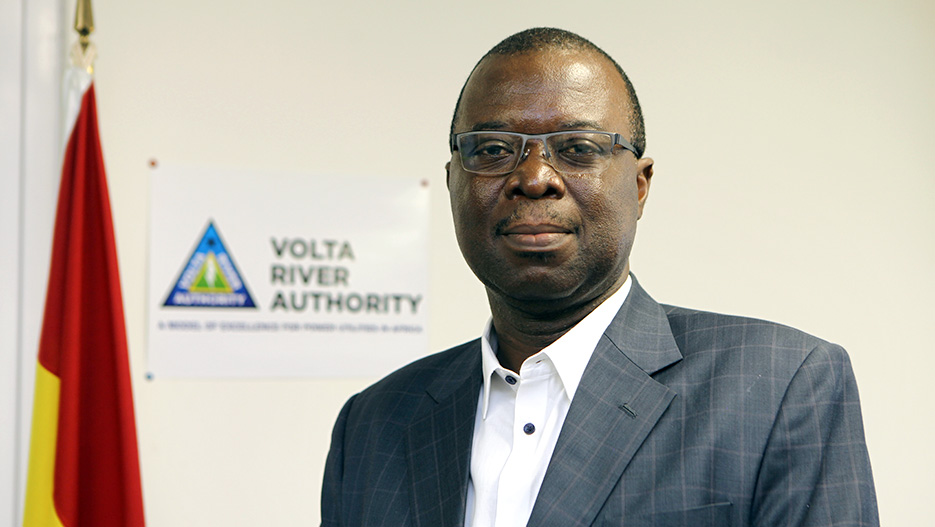
Member of Parliament for North Tongu, Samuel Okudzeto Ablakwa, has called for the immediate sacking of the Chief Executive Officer of the Volta River Authority (VRA) Emmanuel Antwi-Darkwa.
According to Mr Ablakwa, Emmanuel Antwi-Darkwa is incompetent and has also hit the retirement age hence; he should not be allowed to remain at post.
In a social media post, the North Tongu MP accused the VRA boss of abandoning the victims of the Akosombo Dam spillage, an incident he said was caused by the VRA.
He noted that instead of working on the construction of resettlement homes, he was busily organising karaoke and jams.
“Ghanaians expect GRA boss Rev. Dr. Amishadai Owusu-Amoah to be prosecuted instead of a mere cozy send off so he can return to his favourite hide-out in São Tomé and Príncipe.
“Also, why is his 63-year-old counterpart at VRA, Mr. Emmanuel Antwi-Darkwa still at post as CEO? This VRA CEO after creating the biggest man-made-disaster in September last year, had no difficulty with his conscience in organizing a VRA end-of-year carnival, karaoke and jams.
“6 months after his catastrophic spillage, the VRA CEO hasn’t commenced the construction of resettlement homes neither has he compensated his victims most of whom are sheltering in tents.”
He therefore said the “VRA CEO Mr. Emmanuel Antwi-Darkwa must be fired now! “
Mr Ablakwa opined that with no work to do at VRA, “he can organize more private carnivals as a retirement hobby.”
He stressed that the way must be paved for responsible young citizens to take the many mantles to lead.
“Retirees, particularly the non-performing ones, should stop desperately clinging on and give able young people a chance to move our nation forward.
“Leaders must have respect and empathy for the people they serve — it’s the people’s right.”
Ghanaians expect GRA boss Rev. Dr. Amishadai Owusu-Amoah to be prosecuted instead of a mere cozy send off so he can return to his favourite hide-out in São Tomé and Príncipe.
Also, why is his 63-year-old counterpart at VRA, Mr. Emmanuel Antwi-Darkwa still at post as CEO?
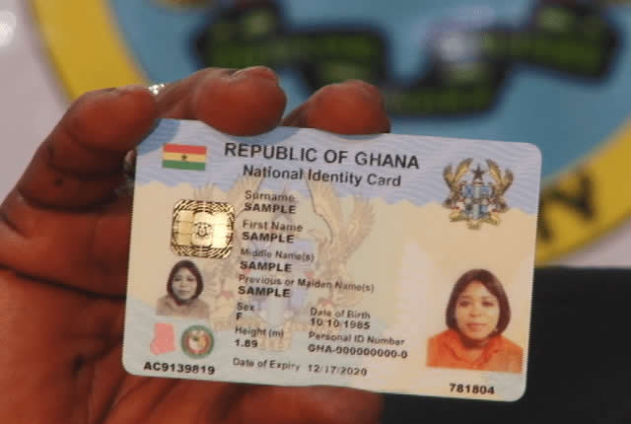
Vice President of IMANI Africa, Bright Simons, has indicated that Ghana would forfeit the revenue generated from Ghana’s National Identification System, also known as the “Ghana Card” to one Margins Group.
He alleged that the Ghana National Identification System is owned by a company called Margins Group and not the government of Ghana.
Mr Simons noted that due to Margins Group’s ownership of the Ghana Card, each unit costs Ghana nearly 20 times what a similar smartcard costs Rwanda.
He made this claim in an article in which he provided an extensive analysis of his research.
“The Ghana Card Public Private Partnership (PPP) agreement between NIA was supposed to be cost-neutral to the government. It was to pay a startup contribution of $124 million and then recoup over time as revenues come in. However, the “revenues” are a sham since they come from the same government.”
“Government of Ghana is therefore going to end up paying up all the $1.44 billion revenues the system is designed to generate by 2033, and Margins will get virtually all of the money.”
According to him, this makes it impossible for the government to save money by using smart procurement to obtain the printed cards, biometric devices, and system integrations.
“It must get everything from Margins alone. Ghana Card, as a system, cannot be operated without Margins, so the idea that the government “owns” the data is meaningless.”
He is of the view that the National Identification Authority (NIA) is no longer useful, describing it as a “zombie” as “it lacks the capacity to develop specifications and to exercise serious oversight.”
1/ Most Ghanaians think that Ghana Card is the greatest thing since sliced bread. They don't know that they are being ripped off. The lack of awareness is a product of "State Enchantment". This essay is the first attempt to de-hypnotise the masses.https://t.co/cbUVQpTRvU
The National Identification System (NIS), project contract is being executed under a Public Private Partnership (PPP) agreement between NIA and Identity Management Systems (IMS), a subsidiary of the Margins Group of companies.
The cost of the project is jointly shared by the parties. NIA’s component of the contract sum is $124 million, which caters for operations in both Ghana and abroad to register and issue smart, biometric, chip-embedded ID cards to all Ghanaians aged 15 years and over, and 2-dimentional bar code cards to all Ghanaians under 15 years old. The cost of the project to IMS is $169 million. All subsequent costs will be covered by proceeds from the project over the contract term of 15 years.
Unlike other traditional contracts, IMS will not be given any money by the Government of Ghana.
It will be recalled that the Minority in Parliament issued a press statement on 10 June 2018 in which it admitted to having received documents from NIA which it subsequently approved, showing the total life cost of the project over 15 years as $1.2bn with tax exemption of $176million. It is baffling that the NIA will be accused of bloating the contract sum which it presented to all members of Parliament. th
It must be emphasised that the cost per smart card issued to Ghanaians 15years and above is $5.40, while the cost per 2D bar code card issued to Ghanaians under 15years is $1.50.
It is factually not correct that nationals of India are issued with a biometric ID card. What India issues to its nationals is merely a Personal Identification Number; India does not provide its citizens with any form of identity cards whatsoever.
The closest national ID cards that can be compared to the Ghana Card, in terms of their physical characteristics and technical functionalities, are those of Rwanda and Nigeria. The Rwandan national ID card is a multipurpose card with a 64-kilobyte chip which contains the bearer’s passport, driving licence and health insurance information. The Ghana Card has a 148-kilobyte capacity chip and greater functionalities than the Rwandan card. The Ghana Card also has 14 applets, and far transcends Rwanda’s, and it also has a passport for travel within West Africa. There are also three international ID profiles on the Ghana Card. Information from other data silos, such as the DVLA, NHIA, SSNIT and GIS may be incorporated onto the Ghana card.
The Rwandan biometric ID card will be optionally available at a cost of $18.17 while the Ghana card costs $5.40, and is issued free of charge to Ghanaian citizens in Ghana.
The NIA-IMS contract costs have undergone Value-For-Money (VFM) audits by the Public Procurement Authority (PPA) and have also been thoroughly assessed by the Public Investments Division of the Ministry of Finance. The contract has also been reviewed by the Attorney-General’s Department and the Legal Unit of the Ministry of Finance. In addition, the contract has been reviewed and given approval by the Public Private Partnership Approval Committee (PPPAC) of the Ministry of Finance, as well as the Economic Management Team of Government. It has also received Cabinet approval.
Copies of the draft Contract were distributed to all 275 members of Parliament, and appropriate waivers for import duty exemptions were also granted by Parliament prior to the contract being executed by the parties in April 2018.
Further information on the NIS project could be found on NIA’s website www.nia.gov.gh
Ghanaian media personality Eunice Naa Amerley Nortey, also known as Aunty Naa or Judge Kampala, has reportedly tied the knot with a Canadian-based lawyer.
Reports suggest that the award-winning radio presenter’s wedding was a private affair, with attendance strictly by invitation and held at a discreet location.
According to an insider, Aunty Naa’s new husband is a successful lawyer with a thriving career, currently residing in Canada but frequently visiting Ghana.
Aunty Naa was previously married to the popular Ghanaian radio presenter known as Bonshayka. Their marriage, which lasted over a decade, ended amicably, leading to their separation.
Both Aunty Naa and Bonshayka have been prominent figures in the media industry, with Aunty Naa earning the nickname “Judge Kampala” for her outspoken nature on the radio.
Below is an old video that talks about Aunty Naa’s marriage.
Vice President of IMANI Africa, Bright Simons, has alleged that Ghana’s National Identification System, also known as the “Ghana Card” is owned by a company called Margins Group and not the government of Ghana.
He made this claim in an article in which he provided an extensive analysis of his research.
“Ghana Card’s main technology asset base belongs to Margins Group, not the government of Ghana,” he wrote.
According to him, this makes it impossible for the government to save money by using smart procurement to obtain the printed cards, biometric devices, and system integrations.
“It must get everything from Margins alone. Ghana Card, as a system, cannot be operated without Margins, so the idea that the government “owns” the data is meaningless.”
Mr Simons noted that due to Margins Group’s ownership of the Ghana Card, each unit costs Ghana nearly 20 times what a similar smartcard costs Rwanda.
“The Ghana Card Public Private Partnership (PPP) agreement between NIA was supposed to be cost-neutral to the government. It was to pay a startup contribution of $124 million and then recoup over time as revenues come in. However, the “revenues” are a sham since they come from the same government,” he added.
He asserts that by 2033, the Ghana card system would have generated revenue of $1.44 billion. However, this money, he said will be paid to Margins Group.
“Government of Ghana is therefore going to end up paying up all the $1.44 billion revenues the system is designed to generate by 2033, and Margins will get virtually all of the money.”
He is of the view that the National Identification Authority (NIA) is no longer useful, describing it as a “zombie” as “it lacks the capacity to develop specifications and to exercise serious oversight.”
1/ Most Ghanaians think that Ghana Card is the greatest thing since sliced bread. They don't know that they are being ripped off. The lack of awareness is a product of "State Enchantment". This essay is the first attempt to de-hypnotise the masses.https://t.co/cbUVQpTRvU
The National Identification System (NIS), project contract is being executed under a Public Private Partnership (PPP) agreement between NIA and Identity Management Systems (IMS), a subsidiary of the Margins Group of companies.
The cost of the project is jointly shared by the parties. NIA’s component of the contract sum is $124 million, which caters for operations in both Ghana and abroad to register and issue smart, biometric, chip-embedded ID cards to all Ghanaians aged 15 years and over, and 2-dimentional bar code cards to all Ghanaians under 15 years old. The cost of the project to IMS is $169 million. All subsequent costs will be covered by proceeds from the project over the contract term of 15 years.
Unlike other traditional contracts, IMS will not be given any money by the Government of Ghana.
It will be recalled that the Minority in Parliament issued a press statement on 10 June 2018 in which it admitted to having received documents from NIA which it subsequently approved, showing the total life cost of the project over 15 years as $1.2bn with tax exemption of $176million. It is baffling that the NIA will be accused of bloating the contract sum which it presented to all members of Parliament. th
It must be emphasised that the cost per smart card issued to Ghanaians 15years and above is $5.40, while the cost per 2D bar code card issued to Ghanaians under 15years is $1.50.
It is factually not correct that nationals of India are issued with a biometric ID card. What India issues to its nationals is merely a Personal Identification Number; India does not provide its citizens with any form of identity cards whatsoever.
The closest national ID cards that can be compared to the Ghana Card, in terms of their physical characteristics and technical functionalities, are those of Rwanda and Nigeria. The Rwandan national ID card is a multipurpose card with a 64-kilobyte chip which contains the bearer’s passport, driving licence and health insurance information. The Ghana Card has a 148-kilobyte capacity chip and greater functionalities than the Rwandan card. The Ghana Card also has 14 applets, and far transcends Rwanda’s, and it also has a passport for travel within West Africa. There are also three international ID profiles on the Ghana Card. Information from other data silos, such as the DVLA, NHIA, SSNIT and GIS may be incorporated onto the Ghana card.
The Rwandan biometric ID card will be optionally available at a cost of $18.17 while the Ghana card costs $5.40, and is issued free of charge to Ghanaian citizens in Ghana.
The NIA-IMS contract costs have undergone Value-For-Money (VFM) audits by the Public Procurement Authority (PPA) and have also been thoroughly assessed by the Public Investments Division of the Ministry of Finance. The contract has also been reviewed by the Attorney-General’s Department and the Legal Unit of the Ministry of Finance. In addition, the contract has been reviewed and given approval by the Public Private Partnership Approval Committee (PPPAC) of the Ministry of Finance, as well as the Economic Management Team of Government. It has also received Cabinet approval.
Copies of the draft Contract were distributed to all 275 members of Parliament, and appropriate waivers for import duty exemptions were also granted by Parliament prior to the contract being executed by the parties in April 2018.
Further information on the NIS project could be found on NIA’s website www.nia.gov.gh
Manchester City will face Arsenal this weekend without key players Kyle Walker and John Stones, confirmed Pep Guardiola in his pre-match press conference.
The England duo sustained injuries during the international break, with Walker suffering a hamstring problem against Brazil and Stones coming off with an adductor issue against Belgium.
When asked ahead of the game about team news, Guardiola said: “Kyle and John, out.”
He was then asked if he had a timescale for either, but he couldn’t provide one.
BREAKING: 🚨 Kyle Walker and John Stones are both out of Manchester City's game against Arsenal on Super Sunday, live on Sky Sports. pic.twitter.com/Yo1pqGlU0Z
Advocacy and Policy Engagement Director at the Ghana Center for Democratic Development (CDD-Ghana), Dr. Kojo Pumpuni Asante, is urging Ghanaians to move beyond the traditional two-party rhetoric and make informed voting decisions.
He is encouraging citizens to bravely support candidates who offer real solutions to the country’s current challenges.
During a Point of View interview on Citi TV with Bernard Avle, Dr. Asante highlighted that Ghana is facing an economic crisis unprecedented since the 1980s, and there is a lack of explanation from candidates on how they plan to address these issues.
He noted that some candidates are making vague promises that do not align with the nation’s challenges.
He thus urged Ghanaians to bravely make the right decisions to avoid future hardships.
“I really hope that Ghanaians tackle this business as usual two-party kind of sloganeering. We are in an election year. Already you will hear people putting out very empty promises that have nothing to do with the problems that we are facing.
“We have an economic crisis that we haven’t seen since the 80s and nobody is coming to tell us how are they going to fix that problem.”
“So I am hoping that in this election we would have lot more courage because if people will go and throw these things about and then they get into government, we are the ones that are going to pick up the pieces because then they cannot offer any solutions,” he stated.
This is a fairly long essay, so here is the quick take for those too busy to read.
Ghana Card’s main technology asset base belongs to Margins Group, not the government of Ghana.
This makes it impossible for the government to save cost by using smart procurement to obtain the printed cards, biometric devices, and system integrations. It must get everything from Margins alone.
Ghana Card, as a system, cannot be operated without Margins, so the idea that the government “owns” the data is meaningless.
The government agency in the Ghana Card PPP, NIA, has become a “zombie”; it lacks the capacity to develop specifications and to exercise serious oversight. Some senior parliamentarians are also mere praise-singers of Margins.
Due to the stranglehold Margins has over the Ghana Card, each unit costs Ghana nearly 20 times what a similar smartcard costs Rwanda.
The Ghana Card PPP was supposed to be cost neutral to the government. It was to pay a startup contribution of $124 million and then recoup over time as revenues come in. However, the “revenues” are a sham since they come from the same government.
Government of Ghana is therefore going to end up paying up all the $1.44 billion revenues the system is designed to generate by 2033, and Margins will get virtually all of the money.
Now, let us get into the meat.
Some senior MPs are making it hard to take Ghana’s Parliament seriously
A few weeks ago, members of the “subsidiary legislation” committee of Ghana’s Parliament visited one of the factories of Margins Group, the company that owns Ghana’s National Identification System, the so-called “Ghana Card”. The powerful committee makes virtually all the administrative and regulatory laws that govern many day-to-day functions of the administrative state and its government.
Even though concerns about Ghana Card are a matter of periodic inquiries before the Parliament, the Chair of the Committee, the Member for Bolgatanga East, could not contain his enthusiasm to declare the Opposition Party’s unrestrained support for anything Ghana Card. Given his premature and prejudicial excitement, one wonders how anyone can expect the Parliament, as presently constituted, to exercise any serious oversight in the matter.
The MP’s behaviour is reminiscent of another visit to another company, whose business relationship with Ghana has come under severe scrutiny, SML. Even whilst the matter was under investigation by Parliament, and concurrently by the Presidency, the Chair of a powerful parliamentary committee rushed to the premises of the company to pass very prejudicial comments about the ongoing investigations. He insisted that he had observed “world class monitoring” activity on the premises, the very issue being probed. This was curious since the President of Ghana had announced a suspension of the company’s activities whilst investigations continued.
How then was the MP, the Honourable Member for Akim Abuakwa South, able to observe “world class monitoring” in an operation halted by no mean person than the President of the Republic? How?
State Enchantment
It has become clear for some time now that the institutions set up to safeguard the public interest in Ghana have been performing below par. In some cases, the results suggest that they may even have become compromised.
Even more concerning is a trend best described by this term: “state enchantment”, a process by which projects primarily intended to enrich private actors are wrapped up in spectacular clothes of national glory, so radiant that the public is perpetually blinded as to the underlying commercial motives. The “haze of glory” surrounding these projects makes any call for scrutiny easily dismissible as bizarre negativity.
Such state enchantment programs benefit massively in an environment such as Ghana, where the official watchdogs like Parliament and the anti-graft institutions have powerful actors within who compromise these institutions’ oversight functions in relation to these same programs.
This author recently had the opportunity to talk about this at an event organized by some respected institutions. One of the case studies highlighted in the talk was, unsurprisingly, Ghana Card.
Ghana Card, for reasons to be offered shortly, is one of the most brazenly potent examples of state enchantment ever conceived.
What is Ghana Card?
Creating a general-purpose ID card for Ghanaians is a national dream of old. The military regime after the Second Republic acted on this and distributed some cards starting with areas around Ghana’s land borders. Not much progress was made thereafter.
After various fits and starts, the National Identity Authority was set up in 2003 and its enabling legislation passed in 2006 (Act 707). A strategy was taken to issue cards to both Ghanaians at home and abroad.
In the perennial confusion and amidst the jostling for rents by elites that attend every public project in Ghana, the project got stuck. Even though loans sourced from France for French contractor, Sagem Morpho, and “counterpart funding” from the Ghanaian government, led to a $60 million budget being put together by 2008, time was too short; the government of the day lost elections at the end of that year and the new government, as is customarily, decided to restructure the entire project. Margins was a subcontractor to Sagem in that initial run.
After 8 years, some progress had been made, but significant challenges remained. Activist organisations like IMANI pointed out a wide range of defects in the prevailing regime which unchecked would undermine outcomes over time. Before the sitting government could get a grip on the project, they also lost power.
Wastefulness
When the new government arrived on the scene in 2017, 15 million Ghanaians were already captured in the national database, and the entire infrastructure (except the foreigners segment) was primarily controlled by the State.
What remained was the development of value-adding authentication modules on top of the national database, the perfection of a higher-spec physical card production process, and a distribution system to ensure that printed cards could get to their owners. So weak was the initial logistics solution that even though 2.7 million cards had already been produced by 2013, only 900,000 had been distributed by then. By the end of 2016, 50% of the 3 million printed cards remained uncollected. A new biometric data collection system held data for 4.5 million Ghanaians (less than 30% target penetration).
Fixing project challenges, the Ghana Way
When the new government took the reins of power in 2017, the usual review of programs occurred. Having identified the problem as being one of inadequate resources, all that was necessary was to determine the right level of government financial commitment, prioritise efficient procurement, and cut out waste due to poor logistics planning.
Instead, the government decided to start all over again, discard the old databases on grounds of forward-incompatibility of the technology stack, and enter into a new public-private partnership (PPP) contract with the Margins group. This is the precise moment when the state enchantment effort began.
What had been a routine bureaucratic program of identifying citizens, something that many Francophone countries have been doing for decades without fanfare, suddenly became a messianic affair of Marian proportions. All of a sudden, every problem in Ghana was only solvable by “Ghana Card”.
Many have been swayed by these antics, and the more hard-nosed among the population merely dismiss the hype as the usual dross of PR-centric Ghanaian political showboating. In this essay, however, the intent is to show how the PPP model by its very design requires such high levels of state enchantment to operate. It also explains why all levers of state power has been brought to bear to force the Ghana Card on the population in order to artificially inflate its importance.
How did Margins get in? (Nice contract if you can get it)
The subsidiary of the Margins group that entered into the PPP with the NIA to roll out the Ghana Card solution is Identity Management Services (IMS). IMS got its muscle from a joint venture it initiated with American and Danish investors to print cards for the first incarnation of the Ghana Card in 2003 when the design was based on State control of the system, with contractors just producing the cards and selling equipment. IMS had the local relationships, the Danes and Americans had the technology and fund-raising capacity.
With both local and international connections in place, the Margins Group would benefit from a million-dollar grant from the Danish government to cover its part of the joint investment. In total, $3.5 million in Danish funding went to the partners in a nice blend of grant funding and commercial credit. The Danish development finance institution, IFU, doubled down on the project with additional credit of $5 million by 2015.
With financial muscle comes influence, and so Margins was able to convince the NIA to enter into a PPP in 2013 to handle just the registration of foreigners in Ghana. The template was thus set for the current wide-ranging relationship consummated with the 2018 PPP agreement.
Why PPPs can unblock resources in Ghana
The impression created that somehow the PPP for the national ID card program in Ghana unlocked fresh private sector resources and saved the government money is of course abject nonsense. regardless of the precise model, in the end, the money would have come from the government.
What is true however is that crafting the program as a PPP did make the government more willing to release money. Somehow, just having a big private beneficiary driving outcomes propels government institutions to unlock large amounts of money they would never otherwise had released if a government agency was the one driving the project. Furthermore, entrusting the asset base of the project to a private businessman appeared to have created the necessary motivation across all levels for the project to succeed. This is the only reason why Ghana Card issuance has successfully been boosted to ~17 million Ghanaians.
Who owns the Ghana Card Assets
There are a number of key systems that make the Ghana Card work:
A datacenter to store the data, including the biometrics.
Database software to organize the data effectively for retrieval, validation and updating.
A special memory chip to contain the identification information stored on the physical smartcard.
Unique cryptographic and encryption solutions, plus the accompanying cybersecurity techniques, to prevent manipulation of the data and enable authentication of the individual.
A stack of security features to prevent unauthorized issuance, alteration and duplication of cards.
Biometric capturing, de-duplication, and validation systems.
As mentioned previously, the data collected is meaningless unless organized and deployed by such assets. That is why the 15 million citizen data points collected by 2016 did not translate into much; the asset base was not adequate.
When Margins Group says that “government of Ghana” owns the Ghana Card data, it is not being candid. It owns the assets and infrastructure that makes the data usable.
The best way to emphasise the reality of things as currently pertains in Ghana is to say that WITHOUT MARGINS, GOVERNMENT OF GHANA CANNOT OPERATE THE GHANA CARD.
The licenses covering the critical technologies and the service contracts for their maintenance are all owned and controlled by the Margins Group and not the government of Ghana. The government can easily put minds at ease by publishing the inventory of technologies with a map of ownership.
Ghana’s fingers are in Margins’ mouth
To underscore the point about ownership, let us ask a simple question: could the government of Ghana ask another contractor to print Ghana Cards or to supply biometric authentication devices for any purpose related to national identification, such as a mass registration campaign, service center setup (offices where one can go to replace their Ghana Cards or seek technical assistance), or integration into the information system of another government agency without the Margins Group? The answer is an emphatic, NO. It cannot.
And the issue is not just about requiring the expertise of to provide technical support. We are talking here about the actual provision of goods and services related to national identification. No other company can produce the physical cards for the government, supply biometric devices, or handle data integration activities for any national identification purpose in Ghana EXCEPT Margins group. No matter how cheaper any other company can print ID cards (which, by the way, is a commodity business today), procure and supply biometric devices, or handle integration between another agency and the National Identity Register, the government of Ghana is bound to use Margins.
This is absolutely not the kind of PPP most have in mind when they hear about the Ghana Card project, and yet that is what the country is saddled with.
Of course, a rational strategist designing a Ghana Card system purely in the public interest would have unbundled the architecture such that the underlying registry containing the biometric data would have been entirely government controlled.
They would then have ensured that assets purchased and configured by the private contractor for authentication and validation would have been transferred to the government.
And, no doubt, they would have ensured that the peripherals such as the physical ID cards and biometric devices are uncoupled from the core infrastructure such that anytime the government or any of its agencies want to acquire some cards or biometric terminals, they would simply issue a tender and award the contract to the most cost-effective and technologically advanced vendor. This is how it is done in Malaysia. This is how it is done in Indonesia. And this is how it is done in South Africa. And, in fact, this is how it is done in every serious jurisdiction concerned about fiscal prudence and fairplay. Even Rwanda’s card production (even though it was coupled with data collection) was subject to open tender. Of course, tenders can be rigged, but without even the option to tender, a country is essentially locked in a pattern of poor procurement.
Pretend Nationalisation
Constant complaints by a few activists like this author about the way the National Identification System was set up finally convinced the authorities to act. In 2022, they began the process of migrating the Ghana Card database to the national datacenter and transferring the Public Key Infrastructure (PKI) associated with the project to the National Information Technology Agency (NITA).
However, this effort has been cosmetic because the essential design and structure of the database system makes it very difficult for the government to pursue a flexible vendor strategy: letting anyone other than Margins print cards remains a practical impossibility. As for the PKI model, it has never been fully implemented, except for the deposit of Ghana’s public keys in Montreal, with ICAO, as part of the comical e-Passport fiasco. This year, the Ministry of Communications is requesting yet more money to build this mysterious PKI thing. Ghana Card’s encryption and cryptographic domains remain the exclusive province of Margins.
In fact, Margins simply used the half-hearted nationalisation process to secure more lucrative contracts. They billed the government more than 55 million GHS to establish the Disaster Recovery System that they claimed the transfer required to be successful.
Furthermore, the authentication software is still closely-coupled with the data system (with related licenses, such as those covering the Entrust technology and its durashield module, remaining with Margins). The net effect of all these is that any vendor brought in to compete for jobs like cards production, biometric device supply, and API integrations for government agencies, will be entirely reliant on Margins. In fact, they will be redundant.
This pretense of a transfer continues unchallenged because of the extreme opacity of the entire architecture and process.
Some readers may still be unconvinced at this point about whether these serious institutional defects are having any tangible adverse effects. And the answer is, yes. Plenty.
Ghana Card has become a MASSIVE rip-off
The big justification for the PPP model used in rolling out the National identification System is that it unlocked private resources and thus overcame the old “no money” syndrome bedeviling so many public sector initiatives. But this is a big lie. It merely UNLOCKED GOVERNMENT MONEY.
As part of the April 2018 Agreement signed between Margins and the government of Ghana, which was never published for the benefit of the general public, the government of Ghana agreed to make guaranteed payments every month to Margins. These payments are due if the fantastic revenue amounts anticipated under the agreement do not materialise.
Since the agreement was based on agencies like SSNIT (the public pensions fund), Ghana Revenue Authority, the National Health Insurance Authority (NHIA), the Drivers & Vehicles Licensing Authority (DVLA) and others paying Margins hundreds of millions of Ghana Cedis over the 15-year lifecycle of the project, it was always a foregone conclusion that the burden would ultimately be transferred to the central government. NHIA, GRA, CAGD and the likes are not primarily profit-making institutions. To buttress the point, note NIA’s projected revenue from Ghana Card operations of barely 8 million GHS in 2024.
Source: Ministry of Finance, Ghana
The projected 2024 figures are based on a recognition that the premium services forced down the throats of Ghanaians in the last few years at 250 GHS per person, and the integrations forced on some state institutions, leading to revenues of nearly 78 million GHS in 2023, have ceased having attraction, with premium service centers now lying mostly empty.
Source: Ministry of Finance, Ghana
It was thus a ruse to pretend that there was something financially innovative about how the PPP was set up. Government was always going to have to pay for the system, except that in the specific type of PPP model selected, the cost burden on the government was heavily inflated just so that a private company can make fantastic returns that other private companies struggle to make in any industry.
It is mind-boggling reflecting on the whole financial design of the Ghana Card
The April 2018 agreement was based on the premise of the setup of the card costing a little less than $300 million, and operations and maintenance costing another $900 million over the 15-year period (i.e. 780 million Ghana Cedis a year). The private partner was guaranteed a minimum 17% return.
For the numbers to work out, the system must generate income of at least $93 million a year (far more than that, actually, if one considers the time value of money, which we are ignoring to keep things simple). If the system doesn’t, then the government is indebted to Margins since the “profits” and “losses” are shared in a way whereby Margins is guaranteed a profit only. Essentially, the government bears all the risks, and Margins has none of the downside. On top of all these, Margins has already been granted tax exemptions of at least ~$177 million.
It was thus highly deceitful when the impression was earlier created that the government’s liability was limited to the $124 million it had to contribute to setting up NIA’s offices, buying vehicles, and hiring people. The approval of the PPP by Cabinet and the Ministry of Finance (and later by Parliament) was based on this erroneous impression of a one-off cost and self-sustenance thereafter.
In the end, the government of Ghana had to hire roughly 1400 more people to provide the NIA with the manpower needed for national operations. Actually, the NIA wanted to hire 3265 people, but the Ministry of Finance refused. The total personnel cost of running the government side of the system was barely 5.2 million GHS in 2017. Total admin costs in 2019 were 3.3 million Ghana Cedis in 2019. Today, the goods and services budget alone is over 165 million GHS per annum and compensation has gone up by more than ten times.
Source: Ministry of Finance
The idea of a one-time cost has now been thrown out of the window and government contributions both to the NIA and Margins keep ballooning even as arrears pile up.
The government’s maximal exposure could well exceed $1 billion if the evasive revenues don’t show up. Remember, however, that the revenues are mostly supposed to come from government agencies that often struggle to balance their books, and whose liabilities always end up being transferred to the government anyway. Like the NHIA policy that was supposed to find innovative financing through “insurance” but is today 98% tax-funded, the Ghana Card project is today predominantly tax-financed.
One-half of the Ghana Card PPP, the portion focused on the Ghanaian diaspora, had already racked up losses of nearly $300 million by 2021. Losses that the government of Ghana is expected to make whole for Margins.
Source: Ministry of Finance, Ghana
How then can one attribute the successful issuance of 17 million cards as an outcome of some innovative PPP, except for the fact that the mere existence of private incentives has made the government more willing to spend money that in the past it was not willing to spend?
Squeezing every drop from Ghanaians
Margins, with the strong support of the NIA and various other elite enablers, constantly find ways to squeeze more money from Ghanaians. It’s justification is that it invested massively to set the system up and as a private investor, it is entitled to recoup. But this claim is dubious in a number of respects.
It is true that the PPP strategy envisaged an upfront investment of $169 million by Margins. But no one has ever audited the actual expenses made. Even though Margins was supposed to be totally responsible for the entire technical infrastructure setup, including all equipment etc., the situation right now is that government agencies are buying the equipment and paying for activities that per the April 2018 agreement Margins was expected to fund.
Heavily incentivized to make the most money possible, Margins constantly induces the NIA to shift strategy towards approaches that cost more money.
For example, an earlier decision was made to produce 2D barcoded cards (instead of cards with chips) for children under 15 years since their risk of impersonation and identity fraud in general is so low. A plastic card without a smart chip can cost about one-tenth of the price of one that has a chip. Imagine the surprise of analysts then when it was recently announced that NHIA will procure smartcards from Margins for children.
It stopped being surprising, however, when the cost was revealed. Just for the physical cards, NHIA will pay 81.9 Ghana Cedis per unit, that is nearly $9 at the time the procurement decision was made. Just for the cards. Adding ancillary costs like equipment and data capture, which are also being billed to the NHIA, take the cost to nearly $20, about the same price Margins and NIA charges for those who want to acquire the Ghana Card outside the government’s poorly organized mass registration campaigns. Rwanda, because it could use open tender to obtain smartcards and data capture services spends just $0.9 per card.
The unconscionable unit costs reflect in the total NHIA budget for the Ghana Card for Children project.
Source: Parliament of Ghana
NHIA’s Parliament-approved allocation model for the NHIF levies all Ghanaians pay when they buy VAT-rated products for 2023 shows that the 4th largest budget item, at 405 million GHS, was for spending on Ghana Card. Thus, every time anyone in Ghana pays NHIL on any item, a massive amount is pumped through schemes like this into Margins’ ever-ready pocket.
In the end, instead of the 6.87 billion GHS spending plan, the total budget for 2023 came down to 4.53 billion GHS, of which 4.37 billion GHS was actually spent. The allocation to Ghana Card thus reduced to 180 million GHS, but it still remained the 4th largest budget item. Consider that the entire call center operation of the NHIA, so essential to customer service, was allocated just 1 million GHS. NHIA’s entire sensitization budget was just 3 million GHS. Only 42 million GHS was spent on emergency medical care. Public education, social marketing and sensitization was lucky to get 9 million GHS.
In 2024, the NHIA intends to spend more than 300 million GHS on Ghana Cards.
Why on Earth would a health insurance service prioritise ID cards to such a great extent when everyone knows that its anti-fraud concerns are not about people impersonating other people (no point in doing that as packages are virtually identical) but about service providers inflating costs? In most countries, ID cards don’t even merit their own line item in the budgets of public health insurance bodies. Why couldn’t Parliament push back when confronted with these mind-boggling figures? Simple answer: State Enchantment.
The NHIA is of course not the only organisation being squeezed to ensure that the $1.2 billion revenue target (plus extra return) is reached at all cost by 2033 so that Margins can make its guaranteed returns. Organisations like SSNIT, GRA and others have large bills outstanding for so-called integration services. As at 2022, GRA alone owed Margins at least $12 million. And, of course, citizens must bear the inconvenience of being denied services like banking and drivers’ licenses if they can’t show a Ghana Card in order to induce them to part with nearly $20 for the privilege.
Somehow, someone has been able to hypnotise the whole country into believing that Ghana Card is actually saving government entities money. That somehow GRA needed to pay tens of millions of dollars just to integrate into a national identity system. And that impersonation is such a big problem that instead of a cheap plastic card with a 2D barcode costing about 20 cents ($0.2), NHIA instead needs a $9 smartcard.
When the previous government secured a loan promise from China of $115 million in 2013 to rollout a truly national system, many were those who criticized the government for profligacy. Yet, in the name of an innovative PPP, the government is on course to spend a billion dollars for an identical system.
The NIA is a zombie partner
It is not entirely clear how much the NIA sees its role as simply facilitating the profit margins of Margins Group versus defending the public interest.
One thing, however, is for sure, the NIA is quite clueless in serving as some kind of technical bulwark to Margins in the defence of the national interest. It is clear that it is simply out of its depth and cannot shadow the shrewd Margins operators in this fairly complex domain.
How do we know? In attempting to shed a bit of light on the notoriously opaque Ghana Card system, NIA simply went over to the websites of various government agencies in the United Arab Emirates and copied everything verbatim, a clear sign that they had no hand in designing the specifications. Because of a history of webpages disappearing in the heat of national debates, we have ensured that the screenshots below have the exact web addresses so that readers can make their own screenshots (here, for example).
We have NOTHING against Margins Group
No one is disrespectful of the entrepreneurial acumen of the people behind Margins Group. In fact, many of us with an exposure to entrepreneurship in Africa admire their tenacity and shrewdness. Most businesspeople who get the chance to milk an unserious client, who seems all too happy to be milked, will do so. The founders of Margins are in business to make money.
The people who deserves our ire are the politicians in Parliament and elsewhere who are busily working to throw wool in the eyes of the citizens, even as the hypnotic effect of state enchantment works to siphon off hundreds of millions of dollars into private pockets.
DISCLAIMER: TIGPost.co will not be liable for any inaccuracies contained in this article. The views expressed in the article are solely those of the author’s, and do not reflect those of The Independent Ghana.
He shared a photo of the flagbearer and his running mate, whom he alleges are in London, UK.
In a post on X, Mr Anyidoho, who is now a heavy critic of the NDC noted that the duo are no longer in the country due to the recent comments made by the Ahwoi family.
“So the Flagbearer and the Running Mate of the NDC are NOT in Ghana as we walk into Good Friday and the Easter weekend? Laaaa eeee lala. They have left Ghana to go and cool off in London after the Awhois destroyed their campaign huh? They shd stay there forever,” he wrote.
So the Flagbearer and the Running Mate of the NDC are NOT in Ghana 🇬🇭 as we walk into Good Friday and the Easter weekend? Laaaa eeee lala🔥🔥🔥🔥. They have left Ghana 🇬🇭 to go and cool off in London after the Awhois destroyed their campaign huh? They shd stay there forever. pic.twitter.com/JiXFQxEh0O
At an event in Accra for Prof. Opoku-Agyemang, Mr. Kwesi Ahwoi suggested that she should be prepared for any scenario that could lead to her presidency as Mahama became a President owing to the death of former President Atta Mills.
In a statement on Sunday, March 24, Kwesi Ahwoi clarified that he had no intention of wishing harm upon the former President. He acknowledged his mistake and expressed regret over the misunderstanding caused by his comments.
Meanwhile, Koku Anyidoho suspects that there is a rift between the flagbearer of the party, John Mahama, and his running mate, Jane Naana Opoku-Agyemang.
According to him, the “body language and facial expressions” indicate that the cordial relationship that existed between the duo years back no longer exists.
“Friends today, enemies tomorrow. Indeed, Anything Can Happen. Look at the body language and facial expressions and you will know for sure that, Anything Can Happen,” he wrote in a post on X.
Former Deputy General Secretary of the National Democratic Congress (NDC), Koku Anyidoho, has suspected that there is a rift between the flagbearer of the party, John Mahama, and his running mate, Jane Naana Opoku-Agyemang.
He shared a photo of the flagbearer and his running mate, whom he alleges are in London, UK.
According to him, the “body language and facial expressions” indicate that the cordial relationship that existed between the duo years back no longer exists.
“Friends today, enemies tomorrow. Indeed, Anything Can Happen. Look at the body language and facial expressions and you will know for sure that, Anything Can Happen,” he wrote in a post on X.
Friends today, enemies tomorrow. Indeed, Anything Can Happen. Look at the body language and facial expressions and you will know for sure that, Anything Can Happen. pic.twitter.com/Hbms8dzXm8
So the Flagbearer and the Running Mate of the NDC are NOT in Ghana 🇬🇭 as we walk into Good Friday and the Easter weekend? Laaaa eeee lala🔥🔥🔥🔥. They have left Ghana 🇬🇭 to go and cool off in London after the Awhois destroyed their campaign huh? They shd stay there forever. pic.twitter.com/JiXFQxEh0O
Renowned Ghanaian playwright Uncle Ebo Whyte, along with his esteemed theatre production house Roverman Productions, has something special in store.
Their new play, “Dubai or No Sex,” not only promises a captivating theatrical experience but also offers the chance to win an unforgettable adventure to Dubai.
The play delves into the lives of its characters, exploring themes of love, sacrifice, and the pursuit of dreams. Set against the backdrop of modern-day Ghana, it follows a young couple facing a dilemma: a dream trip to Dubai or the intimacy of their relationship.
“Dubai or No Sex” will be staged at the National Theatre from Friday, March 29th to Sunday, April 7th, 2024. Showtimes are Fridays at 7 pm, Saturdays at 4 pm and 8 pm, and Sundays at 1 pm, 4 pm, and 8 pm.
Tickets can be purchased by dialing *365535# to enjoy the play and stand a chance to win the Dubai experience.
In addition to the thrilling play, one lucky audience member will win a once-in-a-lifetime trip to Dubai, including six nights in a luxurious 4-star hotel, a desert safari with BBQ dinner, a marina cruise dinner, and a visit to the Wild Wadi Waterpark.
Roverman Productions is proud to collaborate with Koppan Hospitality & Timewise Expo to bring this exciting opportunity to theatre enthusiasts.
Liverpool is expecting Xabi Alonso to remain at Bayer Leverkusen this summer and is exploring other options to replace manager Jurgen Klopp.
The 42-year-old Spaniard Alonso has been strongly linked with the role at Anfield since Klopp announced his departure. However, Leverkusen is on the verge of securing their first Bundesliga title and remains unbeaten in all competitions this season.
Bayern Munich‘s honorary president Uli Hoeness has suggested that a move for Alonso this summer is “probably impossible.” Alonso was also considered a candidate for the managerial position at Bayern Munich, where Thomas Tuchel will leave at the end of the season.
“[Alonso] is more inclined to stay at Bayer Leverkusen in view of their current successes, because he would not want to leave them behind,” Hoeness said.
Alonso, known for his elegant style in midfield, made 210 appearances for Liverpool between 2004 and 2009.
He departed Anfield to join Real Madrid, a club he has recently been linked with, before moving on to Bayern Munich, where he spent three successful years before retiring from playing.
Alonso transitioned into coaching, starting with Real Madrid’s under-14s in 2018. He then spent three years in charge of Real Sociedad’s B team.
In October 2022, Leverkusen appointed him as their head coach, marking his first role in first-team football. Despite taking over with the club in a challenging position, he guided them to a commendable sixth-placed finish in the Bundesliga in his debut season.
In his first full season in charge, Leverkusen, under Alonso’s leadership, currently sit 10 points clear of champions Bayern Munich with eight games remaining in the Bundesliga. They are also progressing in the German Cup, reaching the semi-finals, and the Europa League, advancing to the quarter-finals.
During a visit by Nana Kwame Bediako, founder of the New Force Movement, to seek blessings from chiefs for his presidential bid, Togbe Adzie Lãkle Howusu XII, the Aʋafiagã of Asogli state, made a bold proclamation calling for a paradigm shift in Ghanaian leadership.
Togbe Howusu XII emphasized the need for a “third force” in Ghanaian politics and advocated for the empowerment of the youth, asserting that it is time for the younger generation to take the lead in governance.
Nana Kwame Bediako’s nationwide tour, which began on March 1, 2024, at Frankie’s Hotel in Accra, has gained significant momentum. Traveling through over 10 regions, Bediako has engaged with various communities, listening to their concerns and aspirations.
This grassroots approach aims to inform the drafting of a comprehensive manifesto that addresses the pressing needs of the Ghanaian populace.
Togbe Howusu XII encouraged the youth to support Nana Kwame Bediako‘s presidential aspirations, recognizing his potential to bring about positive change.
During a meeting with Zongo chiefs in Ho, Sariki Yushau Bashiru Turawah, the Sariki Zongo of Ho and President of the Volta Regional Council of Zongo Chiefs, offered valuable counsel to Bediako.
Sariki Turawah stressed the importance of surrounding oneself with visionary individuals and highlighted “The New Force” as a transformative third force in Ghanaian politics.
He emphasized the necessity for visibility, community interaction, and diligent effort to effect meaningful change.
Expressing concerns over the Fulani herdsmen menace, Sariki Turawah urged the government to provide adequate resources for Fulani communities, including designated reserves for animal rearing.
He advocated for equitable access to educational opportunities, lamenting the allocation of scholarships to those who may not require them while overlooking deserving candidates from Zongo communities.
Furthermore, Sariki Turawah decried the exploitation of Zongo communities for electoral gains, emphasizing the need for sustained engagement and support beyond election cycles.
He commended the emergence of youth voices in the political landscape, recognizing a pivotal shift towards inclusivity and representation.
Nana Kwame Bediako’s tour extended to the bustling Ho main market, culminating in a town hall meeting at the Ho Technical University where he engaged with the youth, imparting knowledge, empowering individuals, and actively listening to their perspectives, underscoring his commitment to inclusive governance and youth empowerment.
As The New Force gains momentum, backed by endorsements from esteemed traditional leaders and community figures, the political landscape of Ghana braces for a transformative journey towards youth-driven leadership and inclusive governance.
Zverev advanced to the semi-finals of the Miami Open for the first time since 2018, securing a 6-3, 7-5 victory over Hungary’s Fabian Marozsan.
The Olympic champion showcased his strong serving skills and capitalized on four out of seven break points against the 57th-ranked Marozsan. Marozsan had previously defeated top-10 players Holger Rune and Alex de Minaur to reach the quarter-finals.
“I’m happy to be back in these late stages of these tournaments, playing the best players in the world, I think there are only those left,” said Zverev, 26.
“I’m looking forward to the challenge.”
Italian second seed Jannik Sinner and Russian third seed Daniil Medvedev secured spots in the Miami Open semi-finals on Wednesday, setting up a rematch of their recent Australian Open final.
Zverev, aiming for his first Grand Slam title, was defeated by Medvedev in the Melbourne semi-finals. Despite this, Zverev has consistently showcased his talent, reaching his 17th Masters 1,000 semi-final by defeating Marozsan.
In terms of Masters semi-finals appearances, Novak Djokovic, Rafael Nadal, and Andy Murray are the only active players who have more appearances than Zverev, further highlighting his status as one of the ATP Tour’s top players.
Pressure is mounting on the Electricity Company of Ghana (ECG) to release a load-shedding timetable, with the Ghana Medical Association (GMA) adding its voice to the calls.
The move comes after a video went viral on social media, in which a woman claimed that her three-day-old baby, who was in an incubator at the Tema General Hospital, died following erratic power outages. However, the hospital has denied that the power outage was linked to the baby’s death.
According to the Acting General Secretary of the GMA, Dr. Richard Selormey, the erratic power outages not only affect hospital administration but also impact treatment and all aspects of operations.
Dr. Selormey emphasized on Joy FM’s News Night on March 28, that the entire healthcare sector relies heavily on stable electricity. Therefore, when there are unexpected power cuts, it can lead to serious consequences.
“And so, across the country, most of the hospitals the government has rolled out, what is called the links and electronic management system. And so power outages disrupt all these processes because, for example, patients need to be verified, those with NHIS and other private insurance need to be verified on the system before they start the journey through the hospital.
“When these systems are off, it disrupts this because they cannot be verified or it takes much, much longer to get this done for them to begin to procure services within the facility. Beyond this are those patients who may be on the theatre table who may be undergoing dialysis, and various forms of treatment that require power to power machines and equipment that serve these patients.
“And so it is very important that we put the issue into context. It’s not about when only somebody dies, but people may even suffer irreparable damage just because the power has been broken. I’m sure you read the Tema General Hospital statement where they said it took two hours to solve the problem,” he said.
Dr. Selormey highlighted the challenges faced by health facilities, including the need to rely on torch lights during surgeries due to power outages, which poses a significant issue.
He emphasized that the Ghana Medical Association (GMA) is not concerned about the name given to the current power outages but rather about their timing and impact.
Furthermore, Dr. Selormey noted that the effects of the erratic power outages extend beyond patient care to the financial burden of running generators using fuel, especially with the current escalation in fuel prices.
He explained that these additional costs would strain hospital budgets, underscoring the importance of having a load-shedding timetable. Such a timetable would allow hospitals to reschedule procedures and plan their budgets accordingly.
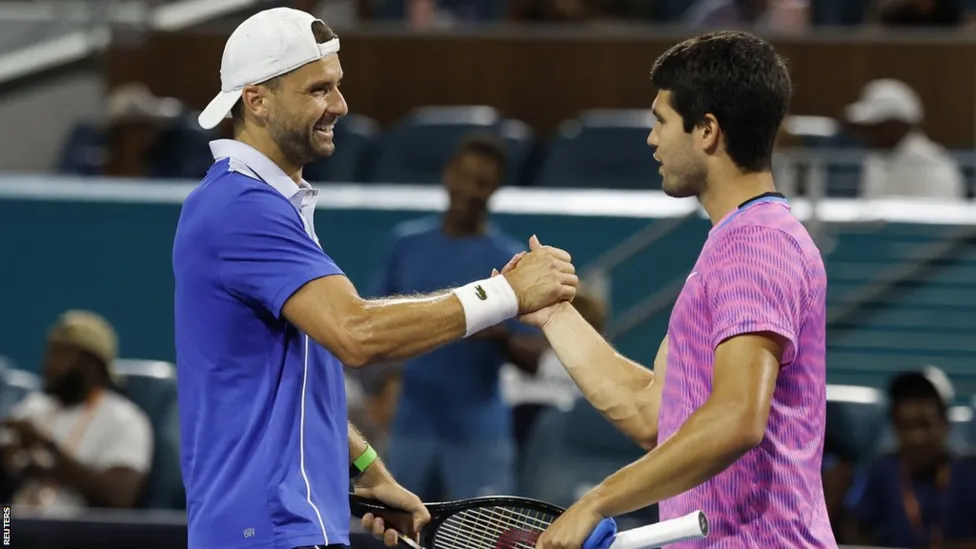
Carlos Alcaraz expressed feeling like a “13-year-old” after being defeated by Grigor Dimitrov in the quarter-finals of the Miami Open.
Dimitrov, from Bulgaria, secured a 6-2, 6-4 victory, advancing to the semi-finals where he will face Germany’s fourth seed, Alexander Zverev.
“He played amazing tennis, almost perfect,” said top seed Alcaraz, 20.
Carlos Alcaraz had set his sights on achieving the ‘Sunshine Double,’ aiming to become the first man since Roger Federer in 2017 to win back-to-back titles at Indian Wells and Miami.
But 11th seed Dimitrov upset the Spaniard and Alcaraz added: “I couldn’t find solutions. I couldn’t find a way to make him feel uncomfortable on the court. It was a great game from his side.
“It was crazy. I was talking to my team, saying that I don’t know what I have to do. I don’t know his weakness. I don’t know anything.”
Dimitrov took control of the match early on, breaking Alcaraz’s first service game and then securing another break at 5-2 to win the opening set.
Although Alcaraz staged a comeback in the second set after being down 4-1, Dimitrov managed to break him for a fourth time to secure a second successive win over the Spaniard. The match concluded in 92 minutes.
“To win against him, you have to play at your best – that’s just how it is,” said Dimitrov, who also beat Alcaraz at October’s Shanghai Masters.
“Sometimes simplicity is genius. It’s very hard to do it, especially when you play against an opponent like that, but I was able to dictate the game, read the game a bit better than the last time.”
Dimitrov will return will return to the top 10 for the first time since 2018 if he beats Zverev to reach the Miami final.
Grigor Dimitrov’s reaction to hearing he made Carlos Alcaraz feel like a 13 year old:
The radio community mourns the loss of the talented female radio presenter, Labaika Yahaya, whose passing has saddened radio lovers.
Labika passed away at the hospital after a brief illness, leaving behind a legacy of excellence in broadcasting.
She was known for her work as a morning show host at Accra-based Breeze FM. Prior to joining Breeze FM, Labika had a successful career at Winners FM and GBC Radio.
Fans and colleagues of the late radio presenter have expressed their condolences on social media, offering support to her grieving family during this difficult time.
President Akufo-Addo has urged motorists to drive carefully during the Easter festivity to prevent a rise in road accidents.
“In this season, let us drive carefully on the roads, and keep the nation in our prayers at all times,” he wrote in his Easter message.
Data released by theNational Road Safety Authority (NRSA) reveals that in January 2024, a total of 174 individuals tragically lost their lives.
During the same period, there were 1,142 reported road traffic accidents, involving 1,991 vehicles of various types, and resulting in 1,504 casualties, including 174 fatalities and 1,330 injuries.
Of the reported accidents, 55% (631) were categorised as minor, 33% (375) as serious, and 12% (136) as fatal.
Among the deceased, 9% (16 individuals) were under the age of 18, while the remaining 91% (158 individuals) were adults.
The president, accompanied by his wife Rebecca, family, and on behalf of the government, has extended Easter greetings to all Ghanaians.
The president expressed his hope that the Easter celebration would bring healing to the nation and cleanse it from all wrongdoing.
In his address, President Akufo-Addo highlighted the significance of the Crucifixion and Resurrection of Jesus Christ, emphasizing that it should herald a new season characterized by faith, hope, growth, prosperity, reconciliation, and sacrifice for everyone in Ghana and around the world.
“I wish all Ghanaians a Happy Easter with the hope that the blood spilled on the cross will heal our land, and cleanse us of our iniquities,” he wrote.
President Akufo-Addo encouraged Ghanaians to participate in various Easter activities, including conventions, social gatherings, picnics, and the traditional Kwahu Easter celebrations, while adhering to established safety measures.
President Akufo-Addo, accompanied by his wife Rebecca, family, and on behalf of the government, has extended Easter greetings to all Ghanaians.
The president expressed his hope that the Easter celebration would bring healing to the nation and cleanse it from all wrongdoing.
In his address, President Akufo-Addo highlighted the significance of the Crucifixion and Resurrection of Jesus Christ, emphasizing that it should herald a new season characterized by faith, hope, growth, prosperity, reconciliation, and sacrifice for everyone in Ghana and around the world.
“I wish all Ghanaians a Happy Easter with the hope that the blood spilled on the cross will heal our land, and cleanse us of our iniquities,” he wrote.
He also stressed the importance of safety during the holiday season, urging caution while driving and encouraging continuous prayer for the nation’s well-being.
President Akufo-Addo encouraged Ghanaians to participate in various Easter activities, including conventions, social gatherings, picnics, and the traditional Kwahu Easter celebrations, while adhering to established safety measures.
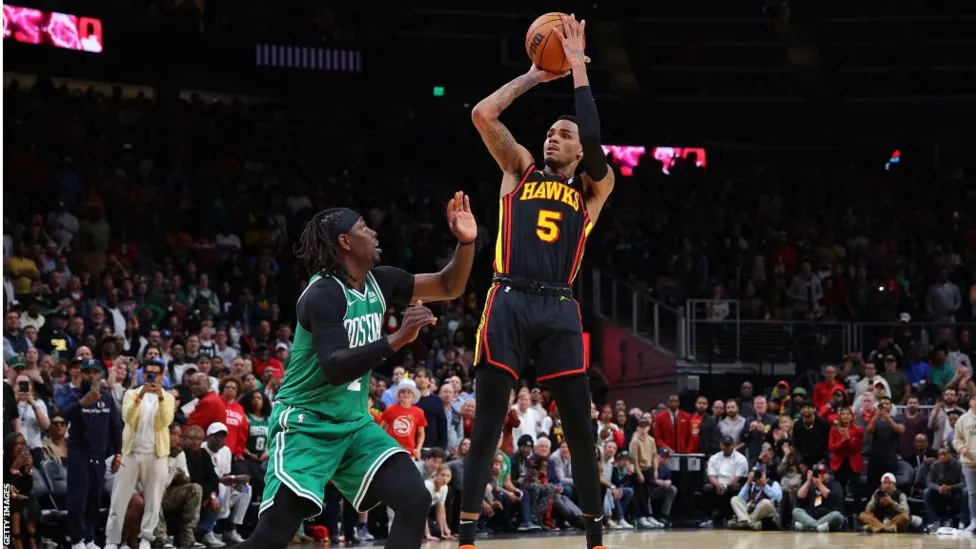
Boston Celtics entered their recent matchups with Atlanta Hawks on a nine-game winning streak but suffered back-to-back defeats. Despite this, they are assured of a top seed in the upcoming season-ending play-offs in the Eastern Conference.
In another game, the New Orleans Pelicans secured a 107-100 victory against the Milwaukee Bucks at the Smoothie King Center.
Zion Williamson led the Pelicans with 28 points, supported by CJ McCollum’s 25 points, while Giannis Antetokounmpo top-scored for the Bucks with 35 points.
“[Williamson] is putting the team on his shoulders,” said Pelicans coach Willie Green.
“That was a gutsy win on our home floor. It was a good defensive performance by us. We played with force from start to finish.”
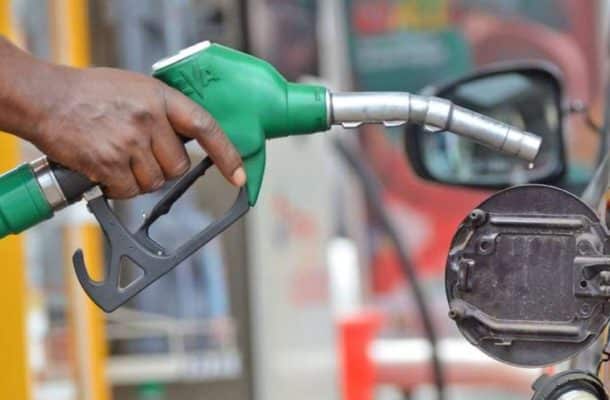
The Government has directed the National Petroleum Authority (NPA) to suspend the implementation of the Price Stabilization and Recovery Levy (PSRL) on the price build-up of petroleum products.
This suspension will freeze the levy charged on every liter of petroleum products and kilogram of LPG from Monday, April 1, to June 30, 2024.
The directive, conveyed in a letter from the National Petroleum Authority to all players in the oil marketing and distribution sector, follows a directive from the Finance Ministry in collaboration with the Energy Ministry.
The suspension is expected to result in a reduction in the price build-up of petrol by 16 pesewas, diesel by 14 pesewas, and LPG by 14 pesewas per kilogram.
However, despite this action, there are projections that prices of petroleum products may still increase from April 1, 2024. Nonetheless, the suspension is aimed at mitigating the expected price hikes for consumers, insulating them from paying higher fuel prices at the pumps due to rising global market prices.
The Energy Sector Levies Act 2015 (Act 899) empowers the National Petroleum Authority to implement the PSRL to stabilize petroleum product prices for consumers over a specified period. Currently, the levy charges 16 pesewas per liter on petrol, 14 pesewas per liter on diesel, and 14 pesewas per kilogram on LPG.
This intervention by the government is part of its strategy to cushion consumers of petroleum products. Whenever prices rise to a certain level, the government decides to suspend the application of the levy. Conversely, when prices drop to a certain level, the levies are restored.
Ghana’s President, Nana Akufo-Addo, is celebrating his 80th birthday today, receiving warm wishes and accolades from netizens across the country.
Akufo-Addo, born on March 29, 1944, has been a prominent figure in Ghanaian politics for decades and is currently serving as the President of Ghana.
During his presidency, which began in January 2017, Akufo-Addo has touted his efforts to improve the country’s economy, promote education, and fight corruption.
His administration implemented several key initiatives, including the Free Senior High School program, which has provided free education to thousands of students across the country despite the numerous challenges including scarcity of food and subpar food provided to students.
Netizens have taken to social media to celebrate Akufo-Addo’s milestone birthday, using the hashtag #NanaAt80 to share personal anecdotes and memories of his time in office.
Also, the First Lady, Rebecca Akufo-Addo also used the opportunity to thank God for the life of her husband. Akufo-Addo responded saying, “Thank you my beautiful Rebecca.”
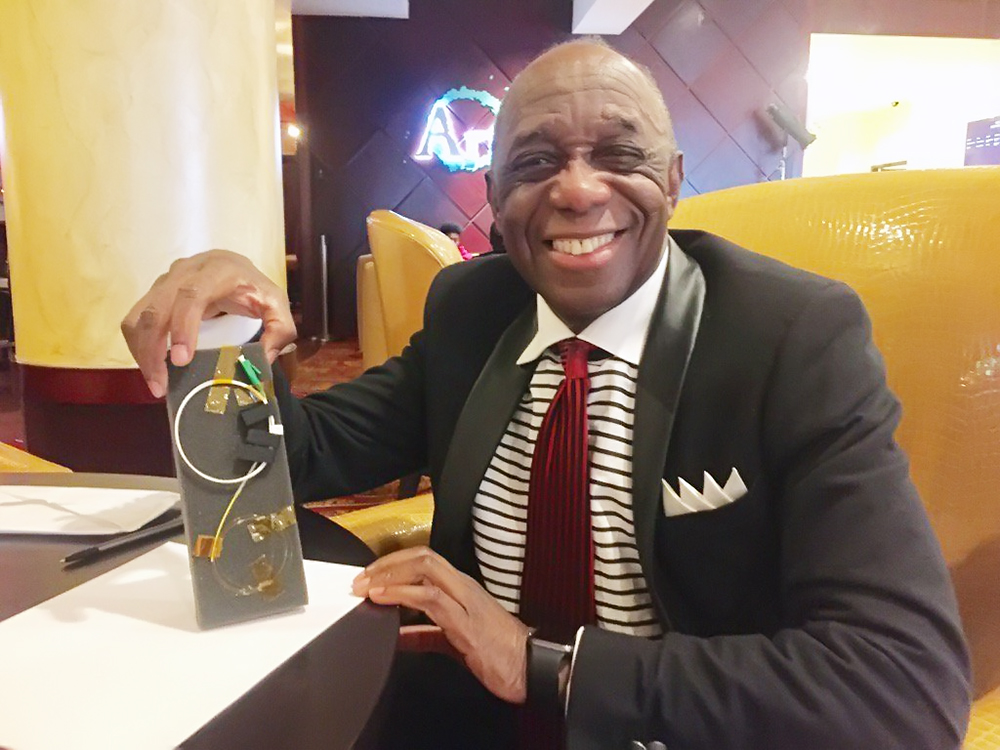
Dr. Thomas Mensah, the pioneering Ghanaian-American inventor renowned for his groundbreaking contributions to fiber optics, has sadly passed away.
At the age of 74, he succumbed to a brief illness on Wednesday, March 27, 2024. Dr. Mensah was undergoing treatment at the Kumasi Catholic Hope Exchange Hospital in the Ashanti Region at the time of his passing.
Profile
Dr. Thomas Mensah, a globally renowned Ghanaian-American inventor and chemical engineer, was celebrated for his pioneering work in fiber optics and nanotechnology, among other scientific fields. Despite his extensive travels, Mensah resided in Atlanta, Georgia, with his wife and two children, Kimberly and Michelle.
Born in Kumasi, Ghana, in 1950, Mensah demonstrated exceptional intelligence and curiosity from a young age, becoming fluent in French through interactions with his father’s French business associates. He attended the prestigious Adisadel College in Cape Coast for his primary education, excelling in mathematics and science.
Mensah later received a scholarship to study chemical engineering at the University of Science and Technology in Kumasi, Ghana, graduating with honors in 1974. He then earned a fellowship from the French government to study at the University of Science and Technology in Montpellier, where he participated in a program at the Massachusetts Institute of Technology (MIT) and obtained a certificate in Modeling and Simulation of Chemical Processes in 1977, followed by a PhD in 1978.
In 1980, Mensah moved to the United States and began working as a research engineer at Air Products and Chemicals in Allentown, Pennsylvania. By 1983, he had joined Corning Glass Works in Sullivan Park, New York, as a fiber optics research engineer, where he developed a revolutionary fiber optics draw and coating process, setting a record speed of 50 meters per second and receiving four patents for his innovation.
In 1986, Mensah joined AT&T Bell Laboratories, where he spearheaded the development of fiber optics for guided missiles, leading to the successful deployment of a fiber optics system at speeds of up to Mach 1 and earning him three more patents.
Mensah was also the founder of Supercond Technology, a high-tech firm specializing in advanced structural materials for supersonic fighter aircraft.
He was a founding member of the Emerging Technologies area of the American Institute of Chemical Engineers (AIChE) and the only black person to have served as the National Chairman of the Materials and Engineering Sciences Division of the AIChE. Mensah was elected as a director and member of the Council of the Board of Directors for the AIChE in 1987, serving until 1990. Additionally, he was a member of the visiting committee and advisory board for chemical engineering at MIT from 1988 to 1992.
Mensah served as the President and CEO of Georgia Aerospace Systems, an advanced aerospace nano-manufacturing company, and Chairman of Lightwave Systems, a fiber optics company building broadband networks in the United States and Sub-Saharan Africa. He also worked on specialized projects for NASA, the U.S. Army, and the U.S. Department of Energy, and led a team in designing an advanced high vacuum radio frequency sputtering system for manufacturing electronic products.
Mensah was focused on next-generation Micro Electro-Mechanical Systems (MEMS) and nanotechnology, as well as developing Success Amusement Parks, a program promoting culture and achievement for people of color. He was a sought-after speaker who presented worldwide and organized numerous symposia for the American Institute of Chemical Engineers.
Dr. Thomas Mensah passed away, leaving behind a legacy of innovation and inspiration in the field of science and technology.
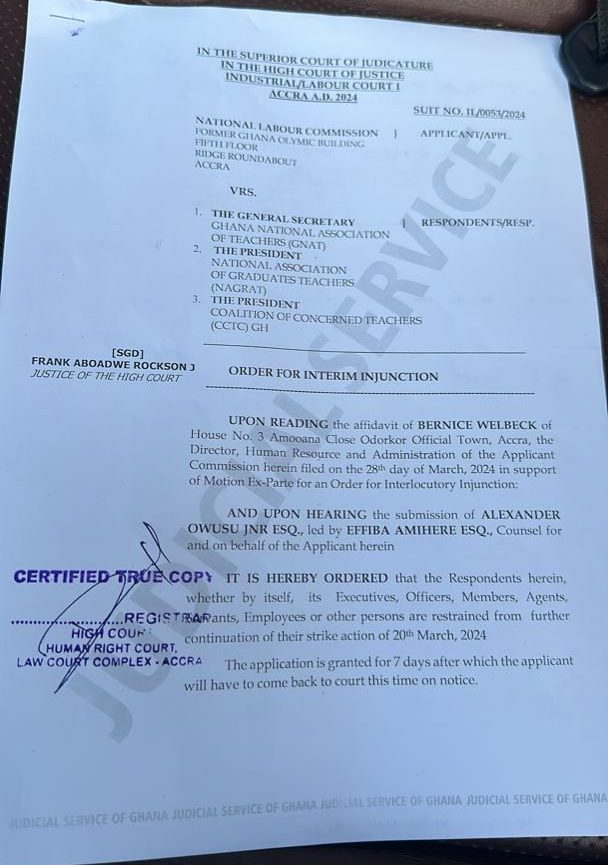
On March 20, 2024, the teacher unions withdrew their services, citing the poor working conditions.
There were meetings among the relevant stakeholders such as the Employment Ministry, NLC and teacher unions to come to a Middle ground, but those were unsuccessful.
This prompted the NLC to head to a High Court, which has barred the teachers from extending their strike any further.
“It is hereby ordered that the Respondents herein, whether by itself, its Executives, Officers, Members, Agents, Employees or other persons are restrained from further continuation of their strike action of 20th March, 2024.”
On Tuesday, March 26, the teacher unions made some progress as the government agreed to address three of their grievances.
These include the full distribution of laptops to all teachers by the end of June, and the provision of a draft of the scheme of service to the unions for review by April 8.
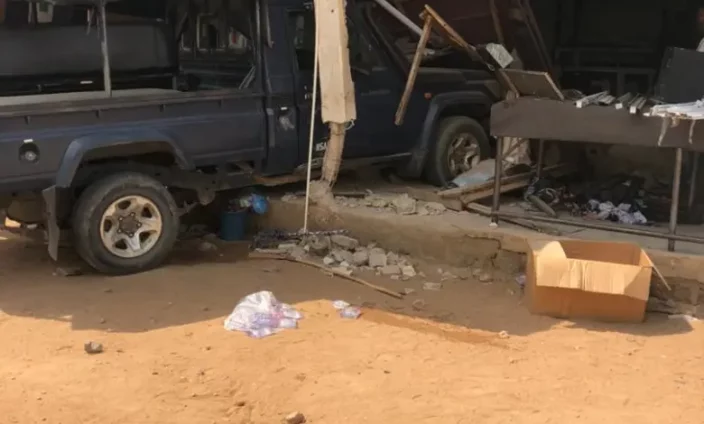
A police patrol team from the Nsawam Police en route to Nsawam from Adeiso in the Eastern Region has been involved in an accident.
The incident, which occurred on March 27, is said to have involved a Toyota pickup that experienced a mechanical fault at Uptown on the Adeiso-Nsawam road.
“On 27/03/2024 about 1345hrs, C/Inspr. Rose Kyeremaa in-charge No. 46230 G/Sgt. George Boye, No. 35494 G/Cpl. Asare Akoto and No. 57945 G/Const. Bernard Dede Ofosu on board S/V. Toyota Pick-up no. GP 3030 driven by Issaka Yakubu all of the Nsawam Police District Day Patrols team were involved in a motor accident while driving from Adeiso direction to Nsawam,” a police incident report read.
“On reaching a section of the road at Uptown on Adeiso-Nsawam road, the police vehicle developed a mechanical fault and the suspect driver lost control of his vehicle, veered off his lane and ran into a Hyundai i10 taxicab with registration No. GG 4512-21 driven by suspect driver Felix Akuffo aged 30 with four (4) occupants on board from Nsawam to Adeiso direction,” the statement added.
Five of the officers have been admitted to the Nsawam Government Hospital for treatment.
The vehicles involved in the accident have also been impounded for testing as part of ongoing police investigations.
Former Minister of Finance, Ken Ofori-Atta, has addressed calls from some quarters suggesting that Apostle Lilian Kumah, the wife of the late John Kumah, should be allowed to run for the Ejisu seat unopposed.
Mr Ofori-Atta stated that he cannot explicitly state his position on the matter, as it is a decision that must be made by the leadership of the New Patriotic Party (NPP) in collaboration with President Akufo-Addo.
He urged the public to await the decision regarding the contest and to welcome it peacefully, to avoid any chaotic situations as the party prepares for the 2024 general elections.
Speaking in an interview with Oyerepa TV at the One-Week celebration of the late John Kumah, the journalist asked, “In the Ashanti Region, especially some constituents in Ejisu believe that the party should allow John Kumah’s wife (Lilian) to run unopposed; do you agree with them?
Ofori-Atta responded: “This is a decision that has to be taken by the party leaders and the president. Let’s wait for their decision so that it will be very respectful, not chaotic. We want it to be in a peaceful manner so that the party will remain united ahead of the elections.”
Meanwhile, reports emerged recently that former Ghana Football Association (GFA) President Kwesi Nyantakyi is among those who may contest for the Ejisu seat.
John Kumah passed away on Thursday, March 7, 2024, at the Suhum Government Hospital. According to an autopsy report, the deputy minister had been ill for some time before his death, and it was clarified that his passing was not due to poisoning. Kumah was 45 years old.
He was considered one of the rising stars in the ruling New Patriotic Party (NPP) and was seen by some factions in the party as a potential running mate to the party’s flagbearer, Vice President Dr. Mahamudu Bawumia.
Recently, Kumah overwhelmingly won the party’s parliamentary primaries in his constituency to represent it in the upcoming general elections. He was known as an entrepreneur, preacher, and lawyer.
Kumah previously served as the Chief Executive Officer of the National Entrepreneurship and Innovation Programme (NEIP) before entering parliament in 2020. He is survived by his wife, Apostle Mrs. Lillian Kumah, and six children.
Vice-President Dr Mahamudu Bawumia asserts that he has nearly fulfilled all his promises, underscoring the importance of supporting his leadership bid in the 2024 elections.
He highlighted approximately thirty initiatives he pledged and successfully implemented during his seven-year tenure as vice president.
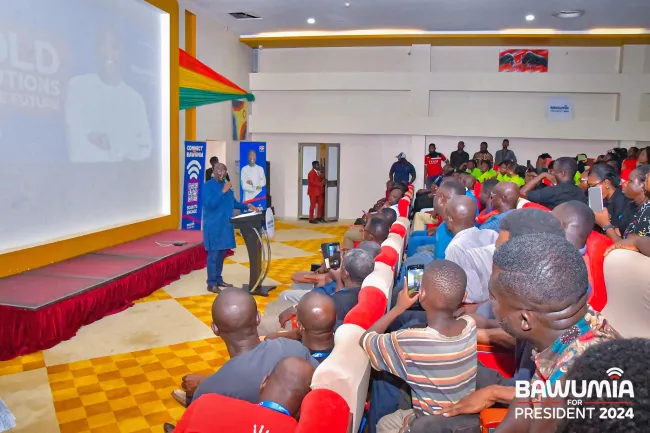
Addressing traders’ associations and magazine leaders in Sunyani, Bono Ahafo Region, on Wednesday (27 March), Bawumia cautioned against voting for the NDC.
“I have never been a president, I’m just the vice-president, but I have really worked. My opponent has been a president before, but I have really delivered on my promises.”
“When I said we will roll out Ghana Card, we delivered. When I said children will be issued with Ghana Card at birth, it has come to pass. When I promised a digital address system it was fulfilled…..”
“When I said we will introduce a paperless port, it came to pass, when I said Zipline will deliver medicines with drones in Ghana, it was fulfilled . . . I promised removing ghost names from government payroll, we executed it…,” Bawumia said.
Rashida Abubakar Tetteh, a distressed mother whose three-day-old baby tragically passed away, has spoken out about the incident, attributing it to a power outage at the Tema General Hospital on the evening of Tuesday, March 26.
The 24-year-old mother, currently receiving care in the Post C-S ward of the hospital, shared her heartbreaking experience during an interview on Adom FM’s morning show Dwaso Nsem on Thursday, March 28.
She recounted how, upon visiting her newborn son, a doctor informed her that the child could not survive due to the lack of functional medical equipment during the power outage.
“I went to visit my son but I didn’t see him. I was waiting outside when one doctor came to inform me that they were sorry but due to the lights out, my child could not survive because the incubator was not working.
“The lights went off on Tuesday evening. No staff has spoken to me, and they haven’t said anything to me,” she narrated.
Rebecca Johnson, the grandmother of the deceased, also expressed her grief during the same show.
“It’s painful, they have killed my child because of dumsor; I am in pain. We have nothing to say to the hospital. A hospital like Teme General said they didn’t have petrol in the generator. Is this how we are going to act in this country,” she cried.
In a press release issued on Wednesday, March 27, the hospital dismissed these claims as baseless and urged the public to disregard them.
“It is worth noting that no lives were lost as a result of this power outage,” an excerpt of the statement said.
The statement emphasised the hospital’s unwavering commitment to prioritizing the health and safety of its patients above all else.
“The Tema General Hospital assures the general public that the Facility will continue to put the health and safety of its patients at the core of its business,” the statement concluded.
On Wednesday, March 27, the Supreme Court heard the case filed by South Dayi MP, Rockson-Nelson Dafeamekpor over the Parliamentary approval of new ministers appointed by President Akufo-Addo.
The National Democratic Congress (NDC) has raised concerns about the scheduling of political cases in the Supreme Court, accusing the Chief Justice of bias against them. They argued that the writ of summons in the Supreme Court challenging the constitutionality of the Sexual Rights and Family Values Bill, 2024, on March 5, should have been heard first since Rockson Dafeamekpor filed his writ of summons on March 18.
Recent information indicates that the apex court did so because the Attorney-General and Minister for Justice, Godfred Dame applied for a speedy hearing of the injunction application by the South Dayi MP, Rockson-Nelson Dafeamekpor.
Speaking to journalists on Wednesday following the dismissal of the application, Mr. Dame clarified that both the court’s actions and the constitution permit such proceedings. He expressed bewilderment at the criticism directed at the Supreme Court for promptly addressing the issue.
“The duty to fix the date for the hearing rests with the registry of the Supreme Court and I do not understand where this business of people actually scrutinizing when applications are fixed for hearing or why this case has not been fixed for hearing, came from.
“Back in the day, if you file an application in the Supreme Court of Ghana it takes you even three months for you to get a date for a hearing. It is only after a party has made an application for an expeditious determination of the process that the matter will come up for hearing. Even the record shows that in this particular case, I specifically applied for an expeditious determination of the matter so it is not the Supreme Court of Ghana picking and choosing which case they should hear and not to hear.
“My first application for an expedited hearing of a matter in the Supreme Court, I did it way back in 2006 and I did another one in 2013 when we were in opposition. So it is always the prerogative of the Supreme Court registry to fix applications for hearing and if the date for the hearing has not been fixed or it is too far, it is incumbent on the party to apply to the CJ in accordance with the court act and constitution for an expedited hearing.”
When asked why it appears he is taking an interest in only matters that favor the government and not filing for an expedited hearing in the application against the anti-gay bill, Mr Dame said “we have filed a relevant affidavit in opposition in that matter, so I think all these comments are unwanted and indeed are baseless. We actually filed our opposition to the affidavit in answer to the Richard Sky matter before we filed the affidavit in answer today to this one.
“It is most instructive that Parliament itself was opposed to this application for interlocutory injunction by Dafeamekpor and I find it very interesting because the same Speaker of Parliament who earlier on adjourned proceedings in my view wrongly, on account of the pendency of this application then later on somersaulted and came to the Supreme Court and opposed the application and that is a point of interest to me. I think it shows clearly that the application clearly was frivolous and it ought not to be any manipulation of what went on in court, even Parliament itself was opposed to the application.”
He added “It is most unfortunate that persons who file processes before the court and then fail to take an interest in it. Indeed even when the same application for interlocutory injunction is pending or has not been determined, a day before they proceed to go and file another application for interlocutory injunction, there cannot be a greater demonstration of a desire to abuse the court process than this. Clearly, it shows an attempt to frustrate the Republic from pursuing its business and all. That is why it is necessary that as lawyers for the Republic, we take a keen interest in what happens and we make sure that such things are dealt with so that the state business can proceed.”
Mr. Dafeamekpor filed a lawsuit against the Speaker of Parliament (1st defendant) and the Attorney General (2nd defendant), arguing that the President should have sought parliamentary approval before reassigning ministers whose appointments were revoked. The apex court deemed the application frivolous and an abuse of court processes.
Despite the absence of Mr. Dafeamekpor and his lawyer, the court proceeded with the case and ruled against it. The five judges presiding over the case were Justice Kingsley Koomson, Justice Mariama Owusu, Chief Justice Gertrude Torkonoo (Presiding), Justice Amadu Tanko, and Justice Yaw Darko Asare.
The National Youth Organizer of the National Democratic Congress (NDC), George Opare Addo Esq., also known as Pablo, has blamed Ghanaian electorates for the current energy sector crisis the country is experiencing.
According to him, if Ghanaians had voted for the NDC’s John Mahama and not the New Patriotic Party’s Akufo-Addo, the country would have been spared from the erratic power supply being experienced.
He made this statement in a post on X while reacting to a report indicating the Electricity Company of Ghana (ECG) has started an exercise to check on various power transformers across the country to identify and fix faults that can help sustain power.
“I blame y’all for this nonsense. Y’all who queued and voted for Akuffo Addo and Bawumia twice are accomplices of this sheer disrespect to our intelligence.”
He chastised the governing party for disrespecting Ghanaians by failing to admit that the country is experiencing “dumsor” owing to mismanagement of the energy sector.
Mr Opare Addo also condemned the government for failing to pay the Independent Power Producers (IPPs) what it owes them. He believes the current erratic power supply is due to debt owed IPPs and not faulty distribution transformers.
“You’re shedding load because you’ve incompetently mismanaged the energy sector yet you wouldn’t take responsibility and fix things. Pay the IPP’s, it’s not faulty distribution transformers!”
The power sector is likely to experience an exacerbated debt of about $1.8 billion to the Independent Power Producers by 2024, the Chamber of Independent Power Generators has disclosed.
Meanwhile, ECG’s integrity checks on the transformers will help identify actual loads and others that need upgrades upon reaching their full capacity.
Gabby Asare Otchere-Darko, a prominent member of Ghana’s New Patriotic Party (NPP), has raised concerns about the sudden emergence of erratic power supply, known locally as ‘dumsor’, just months before the general elections.
Mr Otchere-Darko questioned why the government, which had successfully provided stable electricity for the past seven years, was now facing challenges in the energy sector.
In a Facebook post, Mr. Otchere-Darko remarked, “There is something mysteriously amiss somewhere. You have managed to keep the lights on for 7 years, even during the height of the economic crisis in 2022. Why now? Still scratching my head…”
The power outages have been causing disruptions in various parts of the country, affecting businesses and daily activities. Despite these challenges, the government has maintained that there is no need for a timetable to assist people in planning their daily routines.
Meanwhile, the National Youth Organizer of the National Democratic Congress (NDC), George Opare Addo Esq., also known as Pablo, has condemned the government for failing to pay the Independent Power Producers (IPPs) what it owes them.
He believes the current erratic power supply is due to debt owed IPPs and not faulty distribution transformers.
“You’re shedding load because you’ve incompetently mismanaged the energy sector yet you wouldn’t take responsibility and fix things. Pay the IPP’s, it’s not faulty distribution transformers!”
The power sector is likely to experience an exacerbated debt of about $1.8 billion to the Independent Power Producers by 2024, the Chamber of Independent Power Generators has disclosed.
A prominent member of the New Patriotic Party (NPP), Gabby Asare Otchere-Darko, has expressed suspicion regarding the nationwide erratic power supply, known locally as ‘dumsor‘.
He questioned why the government was able to provide stable electricity to Ghanaians for the past seven years, only for unstable power supply to emerge just months before the general elections.
In a Facebook post, Mr. Otchere-Darko remarked, “There is something mysteriously amiss somewhere. You have managed to keep the lights on for 7 years, even during the height of the economic crisis in 2022. Why now? Still scratching my head…”
Ghana is currently facing challenges in its energy sector, with frequent power outages affecting various parts of the country.
Despite this, the government has maintained that Ghanaians do not need a timetable to help them plan their daily activities.
The Electricity Company of Ghana (ECG) has initiated an exercise to inspect various power transformers nationwide, aiming to identify and rectify faults to ensure uninterrupted power supply.
These integrity checks on transformers are crucial for identifying those operating at full capacity and in need of upgrades, which will help maintain a steady power supply.
The upgrades to transformers operating at full capacity are expected to play a significant role in ensuring a reliable power supply.
The ECG has begun upgrading transformers in areas where high demand has led to full capacity. As part of this effort, 630 faulty transformers have been identified in various communities across the country.
These checks are crucial in identifying faults that may be contributing to recent power outages. Benjamin Antwi, the ECG PRO for Ashanti West, explained that the inspections target both ground-mounted and poll-mounted transformers to identify overloads for replacement.
“When our team visits the transformer they will check the integrity of the transformer to see if the fuses are intact. this will help us know the actual load on a transformer and identify those reaching its capacity for us to put measures in place to upgrade them” he said.
Mr. Antwi indicated that upon identifying faulty transformers, the exercise will contribute to efforts to sustain power.
“Once we identify a transformer getting to its full capacity we will replace them by bringing a bigger transformer. once we can load the transformer to a much bigger capacity, we can accommodate any load that is coming on board that will help us keep the lights on” he indicated.
Benjamin Antwi admonished customers to desist from tempering with the distribution transformers but rather channel their concerns to the ECG for redress.
A Ghanaian woman identified as Yaa Tabby, has recounted a troubling experience at the Ghanaian Consulate General (Ghana Embassy) in New York.
Tabby, who is said to have been a participant in the US edition of #OccupyJubileeHouse protest in October 2023, described feeling deliberately overlooked and made to wait for an extended period, despite arriving before others who were served promptly.
In a series of tweets detailing her visit on Wednesday, March 27, 2024, Tabby explained that she had gone to the embassy to collect her brother-in-law’s visa, which had not been mailed to them as expected.
However, she found herself waiting while others received preferential treatment from staff and a man in dreadlocks who was not employed but was distributing passports.
Tabby expressed frustration when an unauthorized individual repeatedly entered and exited a ‘Staff Only’ room to retrieve passports for other visitors, exacerbating her sense of unfair treatment.
“Upon arriving, I wrote down his name and number and was asked to take a seat, which I did. A lady came out and started calling out names for the visas. Three gentlemen were there to pick up other people (one for his daughter and the other two for a group). She called out the names and asked who she was missing, so I politely told her my brother-in-law’s name again. She asked if I had written his name down, and I said yes. She told me to wait for the next batch of names, and I obliged.
“As I sat down again to wait for my turn, a young lady came in and asked if they had mentioned her mum’s name because she had missed it, and she was asked to wait for the next round of names like I was told to. Five minutes later, a guy with dreadlocks came in and spoke… to the young lady waiting (they seemed to know each other well). This guy proceeded to go into the office that read STAFF ONLY (DO NOT ENTER UNLESS AUTHORIZED), so I assumed he worked there when he entered. No wahala! He came out and spoke to the same young lady again and went back in the second time. This time, he returned with a passport in his hands and handed it to the girl, and she said, “Oh, thank you, anka mɛtena ha akyɛ.” Sis got up and left. A guy who also came to meet me was…” she tweeted.
Yaa Tabby revealed that she confronted the man with dreadlocks upon realizing he was not authorized to distribute passports. Despite some officials’ attempts to calm her down, she returned to her seat and waited to be called.
When her turn finally came, Tabby was shocked by the request made at the counter, finding it so amusing that she burst into laughter.
“I calmly sat down and waited to be called, and finally, the short, chubby lady (the one that calls out names) called me to the window. I got up and walked there, thinking I was just picking it up like THE REST OF THE PEOPLE DID. Still, no, this lady looked me in the eye and said, and I quote, “I need an authorization letter from the person you are picking it up for and let him send it to ghanaconsulate@aol.com” I just started laughing out loud because, ma’am, please make it make sense!
“Several people walked in here and picked up passports and visas on behalf of other people, but you didn’t even ask for an ID! I went out and called my brother-in-law, and he wrote the letter and sent it to the email. 2 minutes later, I walked up there and told the other gentleman that the letter was sent, so if they can check and verify it, I can get out, please. That was when this short, dark lady (according to my investigation, she’s called Mimi) came to the window and said I should go and print out the letter because they don’t have printers in the Embassy. She said ‘watɔ printer wɔha sɛ yɛmfa printi papers ɛmma wo, sɛ wokaasɛ wo nkoara na wonim mmara.’
“That was when I lost it, so because I spoke up about something bad that I have witnessed, you are trying to frustrate me. The ladies at the back were speaking Ga and laughing, and I know damn well they were talking shit about me, so me too. I gave it to them! She even told me it wouldn’t go anywhere when I said I would file a complaint,” she added.
In her tweets, she tagged the Ministry of Foreign Affairs and demanded a response to the unprofessional behavior of its officials.
The National Youth Organizer of the National Democratic Congress (NDC), George Opare Addo Esq., also known as Pablo, has condemned the government for failing to pay the Independent Power Producers (IPPs) what it owes them.
He believes the current erratic power supply is due to debt owed IPPs and not faulty distribution transformers.
“You’re shedding load because you’ve incompetently mismanaged the energy sector yet you wouldn’t take responsibility and fix things. Pay the IPP’s, it’s not faulty distribution transformers!”
The power sector is likely to experience an exacerbated debt of about $1.8 billion to the Independent Power Producers by 2024, the Chamber of Independent Power Generators has disclosed.
Mr Opare Addo made this statement in a post on X while reacting to a report indicating the Electricity Company of Ghana (ECG) has started an exercise to check on various power transformers across the country to identify and fix faults that can help sustain power.
He blamed Ghanaians for failing to elect the right leaders, hence the mismanagement of the energy sector.
“I blame y’all for this nonsense. Y’all who queued and voted for Akuffo Addo and Bawumia twice are accomplices of this sheer disrespect to our intelligence.”
Meanwhile, ECG’s integrity checks on the transformers will help identify actual loads and others that need upgrades upon reaching their full capacity.
The one-week observation of the late Ejisu Member of Parliament (MP), John Kumah, was a somber occasion as family, friends, and sympathizers gathered to pay their respects.
The event, held at Ejisu-Onwe in the Ashanti Region, was marked by tears and heartfelt condolences from dignitaries and attendees.
Despite the support of her relatives, the widow of the late MP, Apostle Mrs. Lilian Ampontua Kumah, was inconsolable, grieving deeply for her loss.
Also, the six children of the couple per reports, could not also hold back their tears as they mourned their father.
John Kumah passed away on March 7, 2024, at the age of 45, leaving behind his wife and six children. Details regarding his funeral arrangements are yet to be announced by his family.
Former General Secretary of the New Patriotic Party (NPP), John Boadu, has asserted that the position of running mate within the party is not open to competition.
He dismissed the idea that lobbying or vying for the position would be successful, stating that the final decision rests with the National Council of the party.
“The presidential candidate has a preference but if the National Council rejects it, he has to elect a new person,” the former NPP scribe said on Accra-based Peace FM.
Boadu’s remarks come amidst speculation and debates over potential candidates for the position of running mate to NPP’s flagbearer and Vice President, Dr. Mahamudu Bawumia.
Some of the prominent figures considered as contenders include Energy Minister Mathew Opoku Prempeh, Education Minister Dr. Yaw Adutwum, Chief of Staff Frema Osei Opare, Communications Minister Ursula Owusu-Ekuful, and Member of Parliament for Bekwai Joseph Osei Owusu.
Boadu emphasized that even if the flagbearer has a preference for a running mate, the National Council has the authority to make the final decision, suggesting that the leading contenders may be disappointed when the official announcement is made.
John Boadu expressed that the choice for the NPP’s running mate will be someone who can support Dr. Bawumia and the party in retaining power and achieving the goal of breaking the eight-year cycle.
Co-founder of the Ghana Center for Democratic Development (CDD-Ghana), Prof. Baffour Agyeman-Duah, has suggested that the frequent power outages in 2016 contributed to the electoral victory of the then-opposition party, the New Patriotic Party (NPP).
His remarks come as Ghana experiences a resurgence of these outages, commonly known as ‘Dumsor,’ in another election year.
Speaking on JoyNews on March 28, the professor expressed serious concern about the recent impact of this situation on electricity supply to the Tema General Hospital.
“At times, I wonder whether there is any organization so to speak in what we do and whether public professionals are mindful of how citizens feel because the reaction is coming from all over. In fact, the one that you read from the hospital reminds me of what is going on in Gaza, where there is a brutal war against Palestinians and hospitals we show on the street, where babies are dying, but here we are; we are not in a war condition. We have experienced this before; why will we sit down eight years later and have a repeat?” he quizzed on the AM Show.
He emphasized that the government must be more transparent with citizens so that they can collaborate to find a solution.
Prof. Agyeman-Duah stated that while the current situation is unacceptable, citizens would be more understanding if the government were open and honest with them.
“But when there is no transparency in how our public sector provides our services, then, of course, we are going to have all this kind of speculation, but it is such a tragic situation for a government that came to power by and large with this kind of problem under the previous government.
“You come in eight years, and you come back to zero. That for me is a tragedy; it means this country either does not learn, we do not go forward, or we have people who are running our affairs; we are not competent,” he said.
A police officer identified as Clement Suputuor, who allegedly chopped off the ear of a young lady to force her to confess in police custody, has been accused of being engaged in a fraud scheme.
A foreigner named Jan Koning, said to be living in Europe, alleges that he has been defrauded of an amount of GHC600,000 by the said officer who he said was involved in a land dispute case.
Engaging Ghana Check Crimes, Jan noted that he got acquainted with Clement when he filed a complaint against one Bob, whom he had tasked to secure a plot of land, for defrauding him.
Clement, who he said pledged to ensure he saw justice, began to ask for more money in order to ensure he received his plot of land. This was about three years ago.
“We reported to the police and the officer at that time was Clement. And Clement says I’m going to assist you, justice will come for you. Clement arrested Bob. Bob made the confession that he took a lot of money from me.
“Three years went on and Clement was asking money for everything. I sent GH600, 000 or more to Clement.”
Asked why he sent such money to a law enforcer, he said Clement kept pushing him and due to his determination to get his land he hoped to build a hospital on, he gave in to the requests.
“He said if you don’t do it now. I need to pay this and the land excavation and this. Everytime, it was a new story. I cannot be there. He was pushing me.”
A complaint has formally been filed against Clement Suputuor, Jan said.
More troubles for Clement Suputuor, the police officer who allegedly chopped off the ear of a young lady, as he has been accused by a White man of defrauding him of 600,000 cedis. https://t.co/LDz10D5BIWpic.twitter.com/Uq9oOTWnWt
As reported by Crime Check Ghana, the lady visited her boyfriend, who was already in police custody for theft. Upon arriving at the station, the lady was arrested and interrogated to confess what she knew concerning her boyfriend’s criminal activities.
During the process, Clement allegedly pulled her ear with a knife, tearing a part of her ear.
The Ghana Police Service is mourning three of its officers, Chief Inspector Michael Adzaho, PW Inspector Theresa Zampiah, and General Corporal Emmanuel Asamoah, following a tragic accident that claimed their lives.
The deceased officers were involved in the fatal incident on March 27, 2024, near Kyekyewere, close to Suhum in the Eastern Region, along the Accra-Kumasi Highway.
The officers, all serving with the Formed Police Unit (FPU) of the Ghana Police Service, were on their way to their operational duties when the accident occurred.
Another officer, General Corporal Samuel Jude Koufie, who was traveling with them, sustained injuries and is currently receiving medical treatment.
Inspector General of Police (IGP) George Akuffo Dampare personally spoke with the family members of the fallen officers, extending sympathies and offering words of comfort during this difficult time.
The Service issued a statement on March 28, expressing deep sorrow over the loss of the gallant officers and reaffirming their commitment to stand by the families of the deceased.
The West African Examinations Council (WAEC) has commenced registration for the 2024 Basic Education Certificate Examination (BECE), West African Senior Schools Certificate Examination (WASSCE), and General/Advanced Business Certificate Examination candidates.
Registration for BECE candidates opened on Monday, March 11, 2024, and will close on Friday, April 19, 2024. The BECE exams are scheduled to be administered from Monday, July 8 to Friday, July 12, 2024.
WASSCE examinations will start on Monday, August 5, 2024, and conclude on September 27, 2024. The General/Advanced Business Certificate Examination (G/ABCE) is set to take place from Friday, August 2, 2024, to Monday, September 2, 2024.
John Kapi, Head of Public Affairs at the National Office of WAEC, made this announcement at a press conference in Accra. He also mentioned that the registration site for the G/ABCE opened on Tuesday, March 5, 2024, and will close on Friday, April 19, 2024.
Kapi explained that due to changes in the syllabus following the introduction of the common core curriculum, school candidates for BECE will be examined differently from private candidates.
“While school candidates would be examined based on the common core curriculum, the private candidates would be examined on the old syllabus. All private candidates are therefore to note and be careful when selecting their subjects.”
According to Mr. Kapi, the registration fee for the BECE per candidate is GH¢214.01, while the WASSCE registration fee for entry in seven to nine subjects is GH¢465.00.
“The figure is exclusive of the fees for practical or oral tests which range between GH¢14.50 and GH¢19.50 per test,” he added.
Mr. Kapi stated that the WASSCE examination would be a “Ghana-only version,” with registration for private candidates taking place between Friday, October 25, 2024, and Wednesday, December 18, 2024.
The registration portal will be open from April 2 to August 30, 2024, and the examination fees will vary depending on the number of subjects a candidate registers for.
He emphasized that despite the change in the examination period, the standard of the exam would remain unchanged.
“Question papers are compiled by officers across the member countries. At the end of the examination, international preliminary coordination meets are held to finalise draft marking schemes.
“Furthermore, right after the marking scheme, the International Awards Committee meets to determine the grade boundaries for all subjects. These processes ensure that the examination written by Ghana only still maintains its international status,” he said.
Mr. Kapi clarified that the WASSCE and BECE for school candidates are only available to students in their third or final year of regular Senior and Junior High School.
He emphasized that it is against the examination’s rules and regulations for schools to register students who have not been enrolled in Senior/Junior High schools from their first years and have progressed to the third year without the required continuous assessment records.
“The grading for the school examination is 70 per cent external examination score and 30 per cent continuous examination score. If for some reason some students were transferred from one school to another, they should have evidence of the necessary continuous assessment / cumulative records.”
Mr. Kapi explained that WASSCE students aiming to improve their grades in one or more subjects were required to register as private candidates.
He also highlighted that the council had implemented reasonable adjustments to ensure that candidates with special educational needs could access the examination.
Furthermore, he mentioned that the council, as part of measures to ensure test security, had conducted inspections of schools that had requested accreditation to present candidates for the examination.
The Ghana Police Service is in mourning following a tragic accident that claimed the lives of three of its officers.
The deceased officers, Chief Inspector Michael Adzaho, PW Inspector Theresa Zampiah, and General Corporal Emmanuel Asamoah, were involved in the fatal incident on March 27, 2024, near Kyekyewere, close to Suhum in the Eastern Region, along the Accra-Kumasi Highway.
The officers, all serving with the Formed Police Unit (FPU) of the Ghana Police Service, were on their way to their operational duties when the accident occurred.
Another officer, General Corporal Samuel Jude Koufie, who was traveling with them, sustained injuries and is currently receiving medical treatment.
Inspector General of Police (IGP) George Akuffo Dampare personally spoke with the family members of the fallen officers, extending sympathies and offering words of comfort during this difficult time.
The Service issued a statement on March 28, expressing deep sorrow over the loss of the gallant officers and reaffirming their commitment to stand by the families of the deceased.
The one-week observation of the late Ejisu Member of Parliament (MP), John Kumah, will be held today, March 28, 2024, at Ejisu-Onwe in the Ashanti Region.
The ceremony is expected to be attended by a multitude of dignitaries who will come to offer their condolences to the family.
Government appointees, Ministers, Members of Parliament, leading members of the governing New Patriotic Party (NPP), as well as political figures from other parties, are also expected to be present.
John Kumah, who served as a Deputy Finance Minister, passed away on Thursday, March 7, 2024, at the age of 45.
He is survived by his wife, Apostle Lilian Kumah, and six children.
The Controller and Accountant General’s Department has instructed retired military personnel and military widows who receive government pension under Cap 30 to participate in quarterly validation exercises at a Veterans Administration, Ghana (VAG) District of their choice.
This validation is necessary to ensure the continuation of their monthly pension payments.
According to a statement released by VAG on Wednesday, March 27, 2024, all Cap 30 Pension Associations, including VAG, must validate their members quarterly and submit the returns to the Controller and Accountant General for the processing of pension payments.
Failure to comply with this requirement may result in individuals being removed from the payroll.
The statement, signed by Major (Retired) Amadu Anicks Lawson Dinko on behalf of the Executive Director, urged all military veterans and military widows receiving government pensions to promptly register with a VAG District to avoid any disruptions to their pension payments.
The $300 million World Bank facility earmarked for various projects in 2024 has finally been transferred to the Bank of Ghana’s (BoG) account.
Ghana fulfilled all necessary conditions, including securing approvals from Cabinet and Parliament, to facilitate this transfer. According to Joy Business, the funds were transferred on the morning of March 27, 2024.
The BoG is now expected to convert the dollars into cedis and distribute the equivalent amount to government agencies and ministries.
The foreign exchange component of this facility is expected to bolster the international reserves of the Bank of Ghana. Data from the BoG indicates that its Gross International Reserves exceeded $6 billion by the end of February 2024.
Finance Minister Dr. Mohammed Amin Adam recently stated during a media engagement that the government anticipates receiving around $1.2 billion from development partners before the year ends. This disbursement is crucial for expediting infrastructure projects outlined in the 2023 Budget that were delayed due to the late arrival of donor support.
Originally scheduled for disbursement late last year, the World Bank’s release of this facility was delayed as Ghana struggled to reach an agreement with its bilateral creditors, hampering the approval process for the $300 million loan.
This inflow is expected to curb the depreciation of the cedi by signaling to the international market that the Central Bank is better equipped to stabilize the local currency.
The $300 million Development Policy Financing, the initial tranche of a three-part series, is aimed at crisis response and resilience-building in Ghana. Its primary objectives include restoring fiscal sustainability, enhancing financial sector stability and private sector development, improving energy sector financial management, and bolstering social and climate resilience.
This disbursement is expected to enhance domestic revenue mobilization, control expenditures, ensure financial sector stability, facilitate private investment, stabilize the energy sector financially and operationally, fortify the country’s social protection system, and integrate climate adaptation and mitigation into policies.
Background: This disbursement is part of the overall financial support from Ghana’s donors as part of the IMF program secured by the country in May 2023. The IMF has already provided approximately $1.2 billion to Ghana under the FUND program.
According to the World Bank, this initial tranche of the Resilient Recovery Development Policy Financing is a crucial contribution from the Bank’s International Development Association. It is designed to assist Ghana in its economic recovery and promote resilient and inclusive growth.
The World Bank approved this facility in January 2024 following an agreement in principle by the Official Creditors’ Committee under the G20 Common Framework on the key parameters of Ghana’s proposed debt restructuring. This agreement aligns with the Joint World Bank-International Monetary Fund Debt Sustainability Framework, marking a significant step toward restoring debt sustainability.
A Democracy Scholar at the Hoover Institute and Stanford University, Professor Larry Diamond, has cautioned Ghana about the potential consequences of passing the controversial anti-gay bill into law.
The Ministry of Finance has advised President Akufo-Addo to refrain from approving the anti-LGBTQ+ bill recently endorsed by Parliament. The Ministry has cautioned that the bill’s enactment could result in significant financial repercussions for Ghana.
According to the Ministry, Ghana stands to lose a substantial amount of World Bank funding, estimating a potential loss of USD$3.8 billion over the next five to six years.
During an interview with Bernard Avle on Citi TV’s The Point of View, Professor Diamond argued that passing the bill would have severe economic implications for Ghana. He highlighted the restrictions that foreign investors might impose on a country seen as violating the rights of a minority group.
Professor Diamond further asserted that Western nations are primarily driving the anti-gay agenda in Africa.
“I would remind people of what some friends of Ghana have been saying. This act will be a disaster for Ghana economically [if passed into law]. Because Western companies are not going to come and invest in a country that is pummeling minority rights.
“The extreme religious rights have failed to achieve this religious agenda in the United States. And so now they are coming to Africa to try and push the agenda. People who complain about neo-colonialism? Shouldn’t they be asking questions about this? he asked.
The Presidency halted the transmission of the anti-LGBTQ+ Bill for assent to Parliament on March 18, citing legal issues.
Speaker of Parliament Alban Bagbin criticized President Akufo-Addo for this decision.
Head coach of the Black Satellites, Desmond Ofei, has set his sights on guiding Ghana to the 2025 FIFA U-20 World Cup in Chile.
Ofei took over as head coach of the Satellites in September 2023, succeeding Samuel Boadu, whom he had served as assistant for nine months.
At 36 years old, Ofei believes that the team has the necessary quality to secure a spot in the next edition of the U-20 World Cup.
“Personally it’s day by day, step by step, and competition by competition. For us, the most important competition now is the WAFU because we really want to partake in the next World Cup which takes place in 2025.”
“We still have a lot of work to do. Now we have a good base and we can build on it. The next objective is the WAFU in October. We will prepare well and scout extensively to get all the hidden gems to come and help the team progress to the World Cup,” he said.
Ofei’s tenure began successfully as he led the team to victory in the African Games, where they secured the gold medal by defeating Uganda in the final.
This achievement marked Ghana’s first gold medal in the African Games since 2011 in Maputo, where they also emerged victorious.
“We are very proud of this achievement. We are happy we added an extra gold to the country’s tally,” Ofei told 3Sports as he talked about his success.
“I need some good rest. It’s been intense. It’s my first time working in Africa on this level. It’s not easy because I coach with passion and give everything. It took a lot but now I have to go back and get enough energy. I have to get back with my family; my wife and kids.”
Despite Ghana’s recent gold medal win at the African Games, Desmond Ofei, the head coach of the Black Satellites, is focused on an even bigger goal: qualifying for the U-20 World Cup. Ghana’s last appearance in this competition was in 2005, and Ofei is determined to change that.
At 36 years old, Ofei believes that the team has the necessary quality to secure a spot in the next edition of the U-20 World Cup.
“Personally it’s day by day, step by step, and competition by competition. For us, the most important competition now is the WAFU because we really want to partake in the next World Cup which takes place in 2025,” he added.
“We still have a lot of work to do. Now we have a good base and we can build on it. The next objective is the WAFU in October. We will prepare well and scout extensively to get all the hidden gems to come and help the team progress to the World Cup.”
The Ghana Center for Democratic Development (CDD-Ghana) has called on the media to hold politicians accountable for their statements and actions as the December elections approach.
The Center has urged the media to question politicians about their plans to address the country’s current challenges, rather than allowing them to evade responsibility for their statements.
Advocacy and Policy Engagement Director at CDD-Ghana, Dr. Kojo Pumpuni Asante, emphasized this during an interview on the Point of View on Citi TV with Bernard Avle on Wednesday.
He highlighted that the nation is at a critical juncture and that the media should not promote mere sloganeering and campaigning, but rather focus on substantive issues.
“I think that the media has to be bold and courageous to really call people out and say what exactly do you want to do to solve the problems and not let people get away with it. To hold people accountable. Because we haven’t really renegotiated our external debts as of now.”
“So we are really in a bad state and we shouldn’t let it get worse and get drowned in this fanfare of a campaign,” he said.
The Minister-designate for Works and Housing, Kojo Oppong-Nkrumah, has revealed that there are currently 10,720 housing units in various stages of development in the Greater Accra Region.
These units aim to help alleviate Ghana’s housing deficit. Mr Oppong-Nkrumah disclosed this during an inspection of ongoing construction works with Ministry staff on Tuesday, March 26, 2024.
He highlighted that Ghana’s urban population stands at 58%, with an urbanization rate of 3.3%, and a housing deficit of 1.8 million units, making housing a critical developmental challenge.
The Minister-designate outlined several housing projects, focusing on areas such as the Tema Development Company (TDC) Affordable housing enclave in Kpone, Community 22, Pokuase, Tessano, and Lartebiokorshie. These initiatives aim to address the pressing need for housing in the country.
“More than 10,000 units of property are under development in various stages. Under the TDC Affordable Housing enclave, we’ve already done about 1,072 and we’re just about to start work on phase IV which is about 800.
“In Community 22 we’ve already done 300 heading to 400 and then they’re going to start the next phase which brings it to about 600.
“In Pokuase, there are about 8,000 though they’re behind schedule. In Tessano we’ve got about 320 that are almost completed and in Lartebiokorshie we’ve got about 100 units.
“So by the time all of it is completed, this should give us more than 10,000 units,” the Minister-designate said.
The housing deficit in Ghana has long been a critical issue, leading to inadequate living conditions for many citizens due to the lack of affordable housing.
However, the Minister-designate highlighted that the construction of these new housing units is part of a broader government initiative to increase the housing stock and reduce rental prices.
He mentioned that the housing units under construction include single-family homes and subsidized 1, 2, and 3-bedroom units, aiming to accommodate the diverse needs and income levels of the population.
Mr. Oppong-Nkrumah emphasized that the Ministry is collaborating with private sector developers and stakeholders to accelerate construction and make these housing units available as soon as possible.
Additionally, the government is exploring other avenues to construct more affordable houses to address the 1.8 million-unit deficit.