At the end of the third quarter of 2022, 33,870 people in Ghana had tested positive for HIV, with 24,017 of them being female and 9,853 of them being male.
Dr. Stephen Ayisi Addo, Programme Manager, National AIDS/STI Control Programme (NACP), reported that a total of 9,160 adult males and 693 male children, as well as 23,294 adult females and 723 female children, tested positive.
In total, 1,441,986 persons were tested throughout the time period, and 33,870 of them, or 2.3 percent, tested positive, he said. 17,846 non-pregnant women and 5,448 pregnant women tested positive, according to the data.
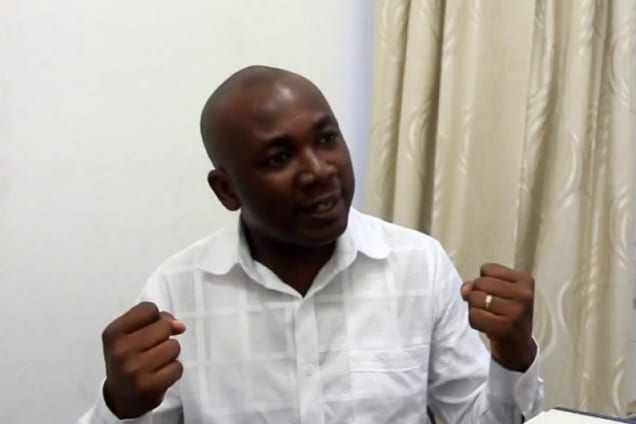
Dr. Ayisi Addo made this statement at the Ghana News Agency Tema Industrial News Hub Boardroom Dialogue Platform at the pre-launch of a practical national campaign focusing on HIV Self-Test (HIVST) kits.
The HIV Self-Test Kits bundle includes a test device, a preservative, a developer vial, and a test stand, as well as an instruction manual for use that is written in both English and Twi. The instruction booklet also includes just eleven easy-to-follow instructions and clear graphics to help the individual administer themselves without the assistance of anyone else.
Dr. Ayisi Addo gave the Ghana News Agency Tema Regional Team a demonstration of how to use the HIVST kits and urged them to lead the advocacy for its use before the national launch and campaign in the coming year of 2023.
At the conclusion of the third quarter, Greater Accra had 6,863 HIV-positive cases, followed by Ashanti with 6,735, Eastern had 4,968, Central had 2,572, Bono hit had 2,182, Western had 1,960, Volta had 1,830, Bono East had 1,697, and the Western North had 1,260.
The rest were: Ahafo with 905; Northern recorded 733; Oti had 621; Upper East recorded 620; Upper West hit 507; Savannah recorded 273; and North East with the least cases of 144.
The data available to the Ghana News Agency Tema Regional Office indicate that in 2016 a total of 739,920 and 38,582 tested positive representing 5.2 percent; in 2017 896,042 people were tested out of which 43,200 representing 5.0 percent tested positive; and in 2018 a total of 1,226,299 people were tested out of which 53,779 representing 4.0 percent tested positive.
A total number of 1,397,379 were tested in 2019 out of which 53,996 representing 3.9 percent tested positive; while in 2020 the number tested was 1,322,446, and 39,318 representing 3.0 percent tested positive; in 2021, a total number of 1,403, 015 were tested and 38,906 representing 2.8 percent tested positive.
Dr. Ayisi Addo, while admitting that the figures were dropping, expressed concern that the rate was very slow, which called for enhanced advocacy to fast-track the drop.
He called for attitudinal change as HIV is still prevalent, “people need to change their way of life for us to reduce the number drastically…am afraid the figures would hit over 40,000 by the time we collate the figures for the fourth quarter of 2022”.












































&w=707&quality=100)
&w=707&quality=100)
&w=707&quality=100)